Yanmar marine engine 6LPA-STP2, 6LPA-STZP2. Manual - part 10
 

  Index      Engines     Yanmar marine engine 6LPA-STP2, 6LPA-STZP2 - service manual


Search            


Content   ..  8  9  10  11   ..


Yanmar marine engine 6LPA-STP2, 6LPA-STZP2. Manual - part 10


ENGINE OPERATION

6LPA Series Operation Manual

39

12/05

NOTICE

• Contact your authorized Yanmar Marine 

engine dealer or distributor if the engine 
will be operated outside of this standard 
temperature range.

NEVER engage the starter motor while the 
engine is running. Damage to the starter 
motor pinion and / or ring gear will result.

STARTING THE ENGINE

1. Open the seacock (if equipped).
2. Open the fuel cock.
3. Put the remote control handle in 

NEUTRAL.

Note:  Safety equipment should make 

it impossible to start the engine 
in any other position than 
NEUTRAL.

4. Turn the battery master switch (if 

equipped) to ON. 

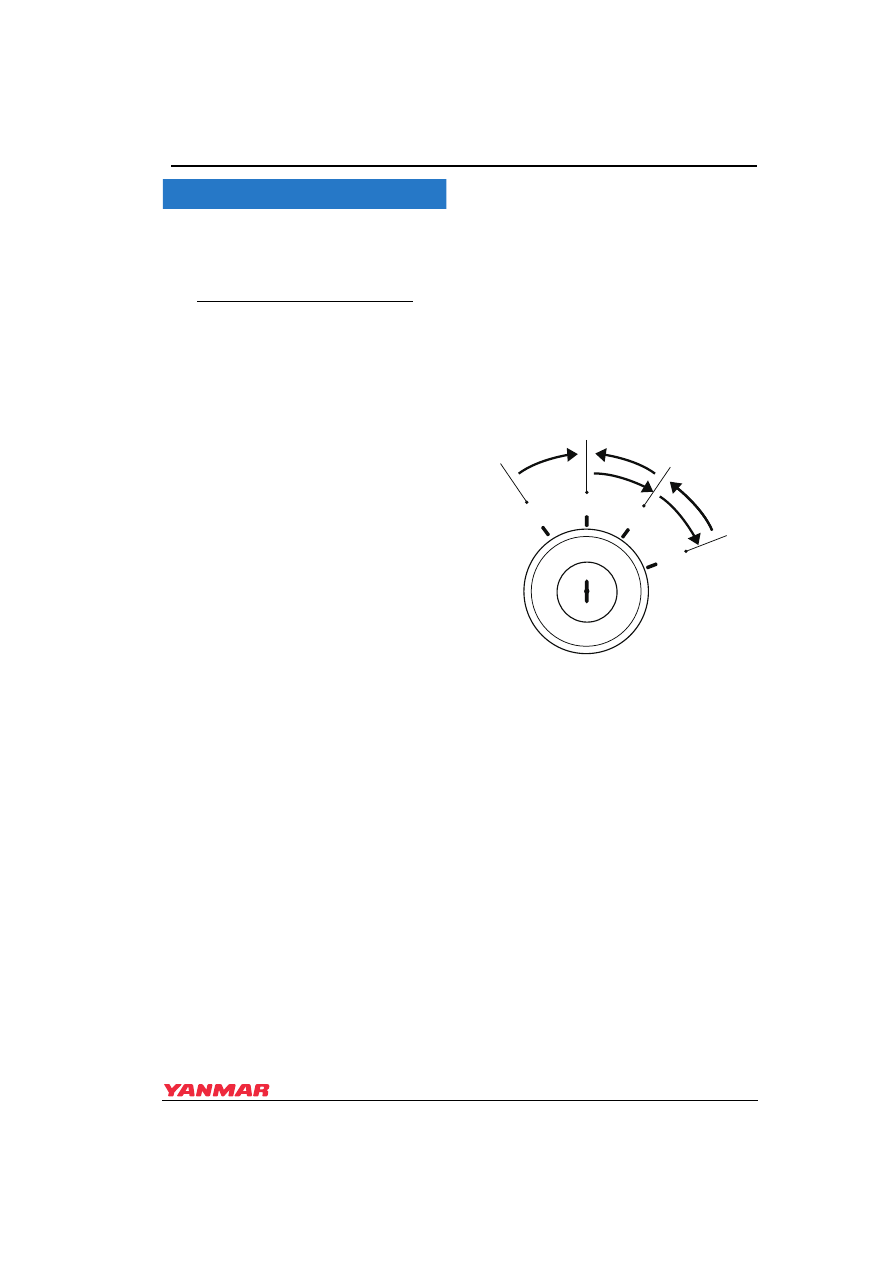
 Figure 1

Figure 1 

5. Turn key switch to ON (Figure 1, (3))

Ensure that the instrument panel 
indicators light and the alarm sounds. 
This indicates that indicators and alarm 
are working correctly.

Note:  The coolant high temperature 

alarm indicator does not come 
on during start-up.

6. Turn the key switch to START 

(Figure 1, (4))

. Release the key switch 

when the engine has started.

0003622

(1)

(2)

(3)

(4)

ENGINE OPERATION

40

6LPA Series Operation Manual

NOTICE

NEVER hold the key in the START 
position for longer than 15 seconds or 
the starter motor will overheat.

7. The alarm should stop and the 

indicators should go out.

NOTICE

If any indicator fails to illuminate when 
the key switch is in the ON position, see 
your authorized Yanmar Marine dealer 
or distributor for service before operating 
the engine.

Note: When the engine has not been 

used for a long period of time, 
check that the key can move 
from the START position to the 
ON position smoothly.

If the Engine Fails to Start

Before turning the key switch again, be 
sure to confirm that the engine has 
stopped completely. If an attempt to restart 
is made while the engine is running, the 
pinion gear of the starter motor will be 
damaged. 

NOTICE

NEVER hold for longer than 15 seconds or 
the starter motor will overheat.

NEVER attempt to restart the engine if the 
engine has not stopped completely. Pinion 
gear and starter motor damage will occur.

Note: Hold the key switch for a 

maximum of 15 seconds. If the 
engine does not start the first 
time, wait for about 15 seconds 
before trying again. 

NOTICE

If the vessel is equipped with a water lift 
(water lock) muffler, excessive cranking 
could cause seawater to enter the 
cylinders and damage the engine. If the 
engine does not start after cranking for 15 
seconds, close the thru-hull water intake 
valve to avoid filling the muffler with water. 
Crank for 10 seconds at a time until the 
engine starts. When the engine does start, 
stop the engine immediately and turn off 
the power switch. Be sure to re-open the 
seacock and restart the engine. Operate 
the engine normally.

ENGINE OPERATION

6LPA Series Operation Manual

41

12/05

Air Bleeding the Fuel System After 
Starting Failure

If the engine does not start after several 
attempts, there may be air in the fuel 
system. If air is in the fuel system, fuel 
cannot reach the fuel injection pump. 
Bleed the air out of the system. See 
Priming Pump on page 29

.

Starting at Low Temperatures

Comply with local environmental 
requirements. Use engine heaters to avoid 
starting problems and white smoke. Do not 
use starting aids. 

NOTICE

NEVER use an engine starting aid such as 
ether. Engine damage will result.

To limit white smoke, run the engine at low 
speed and under moderate load until the 
engine reaches normal operating 
temperature. A light load on a cold engine 
provides better combustion and faster 
engine warm-up than no load.

Avoid running the engine at idling speed 
any longer than necessary.

Starting with Air Heater 
(If Equipped)

1. Open the seacock (if equipped).
2. Open the fuel tank cock.
3. Put remote control handle in 

NEUTRAL.

4. Turn the battery switch on (if 

equipped)..

 Figure 2

Figure 2 

5. Turn key switch to GLOW 

(Figure 2, (1))

 for 15 seconds.

NOTICE

NEVER run the air heater (GLOW 
position) for more than 20 seconds at a 
time or engine damage will result.

6. Turn key switch to ON (Figure 2, (3))

Ensure that the instrument panel 
indicators light and the alarm sounds. 
This shows that indicators and alarm 
are working correctly.

Note: The coolant high temperature 

alarm indicator does not come 
on during start-up.

7. Turn key switch to START 

(Figure 2, (4))

. Release the key switch 

when the engine has started. The 
alarm should stop and the indicators 
should go out. 

NOTICE

NEVER hold the key in the START 
position for longer than 15 seconds or 
the starter motor will overheat.

0003622

(1)

(2)

(3)

(4)

ENGINE OPERATION

42

6LPA Series Operation Manual

After the Engine has Started

1. After the engine has started, ensure the 

remote control handle is in NEUTRAL.

 Figure 3

MT-3

Figure 3           

1 – Neutral
2 – Low  Speed
3 – High Speed
4 – Throttle Handle

 Figure 4

MV

Figure 4           

1 – High Speed
2 – Low  Speed
3 – Neutral
4 – Free Throttle Button

2. MT-3: Pull out the handle lever 

(Figure 3, (4))

 and adjust the speed to 

no more than 1500 rpm and run the 
engine at low speed with no load.

3. MV: Pull out the free throttle button 

(Figure 4, (4))

 and adjust the speed to 

no more than 1500 rpm and run the 
engine at low speed with no load.

4. Allow engine to run for approximately 5 

minutes.

Check the following items at a low engine 
speed:

1- Check that the gauges, indicators 

and alarm are normal. 

• Normal coolant operating temperature 

is approximately 70° to 90°C (158° to 
194°F).

• Normal oil pressure at 3000 min

-1

 is 

0.34 to 0.54 MPa (48 to 78 psi).

1- Check for water, fuel or oil leakage 

from the engine.

2- Check that the smoke color, engine 

vibration and sound are normal.

3- When there are no problems, keep 

the engine at low speed with the boat 
still stopped to distribute engine oil to 
all parts of the engine.

4- Check that sufficient cooling water is 

discharged from the seawater outlet. 
Operation with inadequate seawater 
discharge will damage the impeller 
of the seawater pump. If seawater 
discharge is too low, stop the engine 
immediately. Identify the cause and 
repair. 

NOTICE

The engine will seize if it is operated when 
seawater discharge is too small or if load is 
applied without any warming up operation.

(4)

(1)

(2)

(3)

0004888

(1)

(2)

(3)

(4)

0004889


Content   ..  8  9  10  11   ..