Yanmar marine engine 6LPA-STP2, 6LPA-STZP2. Manual - part 11
 

  Index      Engines     Yanmar marine engine 6LPA-STP2, 6LPA-STZP2 - service manual


Search            


Content   ..  9  10  11  12   ..


Yanmar marine engine 6LPA-STP2, 6LPA-STZP2. Manual - part 11


ENGINE OPERATION

6LPA Series Operation Manual

43

12/05

For troubleshooting assistance, see 
Troubleshooting After Starting on page 69 


or Troubleshooting Chart on page 71 . I
necessary, see your authorized Yanmar 
dealer or distributor.

REMOTE CONTROL 
HANDLE OPERATION

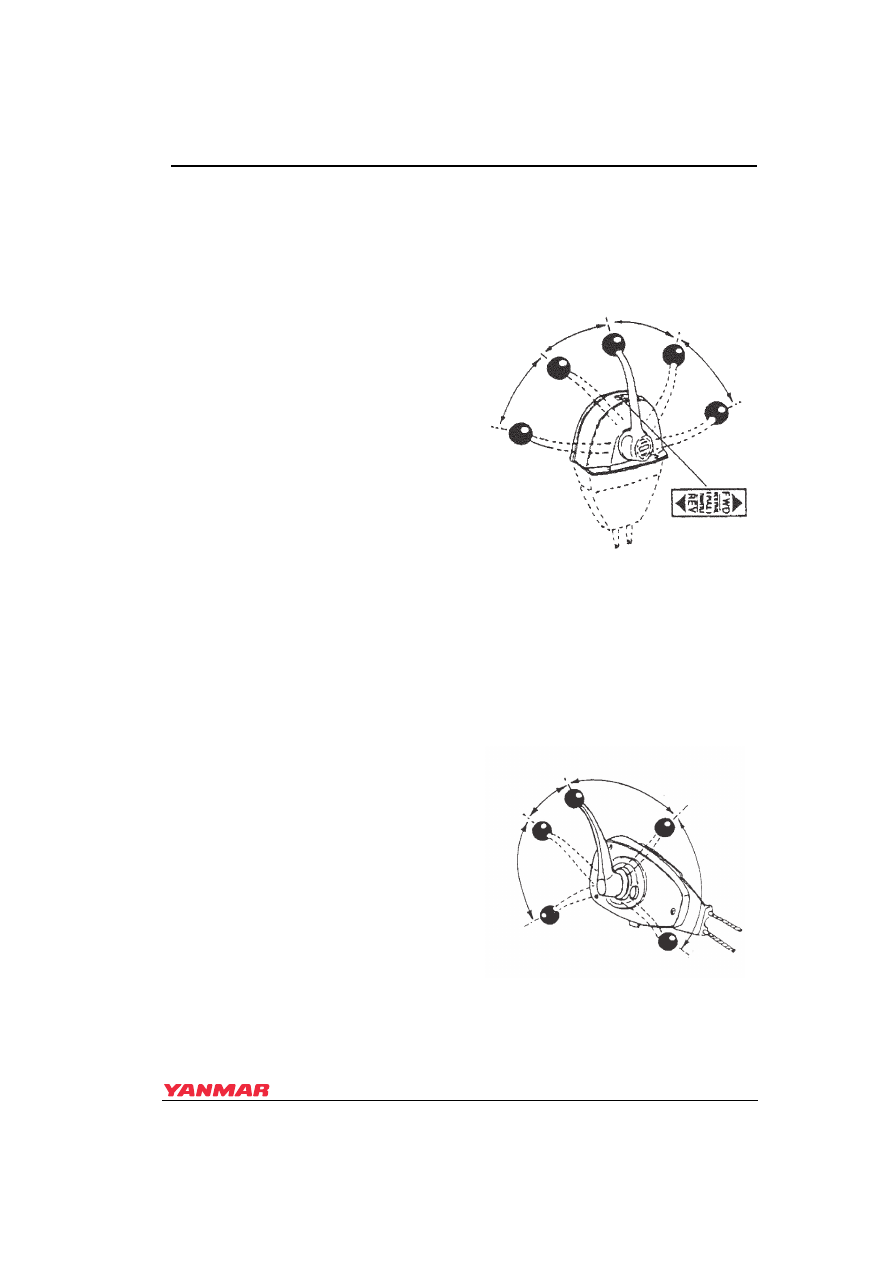
Acceleration and Deceleration

 Figure 5

MT-3 Top Mount

Figure 5           

1 – Reverse High Speed
2 – Reverse Low Speed
3 – Reverse
4 – Neutral
5 – Forward
6 – Forward Low Speed
7 – Forward High Speed

 Figure 6

MV Side Mount

Figure 6           

(1)

(2)

(3)

(4)

(5)

(6)

(7)

0004886

(1)

(2)

(3)

(4)

(5)

(6)

(7)

0004887

ENGINE OPERATION

44

6LPA Series Operation Manual

1 – Forward High Speed
2 – Forward Low Speed
3 – Forward
4 – Neutral
5 – Reverse
6 – Reverse Low Speed
7 – Reverse High Speed

Note: Direction of travel will vary 

depending on installation 
location.

Use the throttle handle to control 
acceleration and deceleration. Move the 
handle slowly and smoothly.

Shifting the Engine

WARNING

Sudden Movement Hazard. 
The boat will start to move when the 
marine drive is engaged:

• Ensure the boat is clear of all 

obstacles forward and aft.

• Quickly shift to the FORWARD 

position then back to the NEUTRAL 
position.

• Observe whether the boat moves in 

the direction you expect.

NOTICE

Shifting the marine drive while operating at 
high speed or not pushing the handle fully 
into position (partial engagement) will 
result in damage to marine drive parts and 
abnormal wear.

1. Before using the marine drive, be sure 

to move the throttle handle to a low idle 
position (less than 1000 min

-1

). Move 

the throttle handle slowly to a higher 
speed position after completing marine 
drive engagement.

2. When moving the handle between 

FORWARD (Figure 6, (1 to 2)) and 
REVERSE (Figure 6, (6 to 7)), bring 
the handle to NEUTRAL (Figure 6, (4)) 
and pause before slowly shifting to the 
desired position. NEVER shift abruptly 
from FORWARD to REVERSE or vice 
versa.

NOTICE

• NEVER shift the marine gear at high 

engine speed. During normal 
operation, the marine gear should only 
be shifted with the engine at idle. 

• When sailing, set the remote control 

handle in NEUTRAL. Not doing so 
WILL introduce slippage or any 
damage and void your warranty.

Morse Remote Control Handle 
(Optional)

• Move the handle to the NEUTRAL 

(middle) position to stop the boat. The 
engine will idle at low speed.

• Move the handle to the FORWARD 

position to go forward. When the clutch 
is engaged in forward, the speed will 
decrease.

• Move the handle to the REVERSE 

position to go in reverse. When the 
clutch is engaged in reverse, the speed 
will decrease.

ENGINE OPERATION

6LPA Series Operation Manual

45

12/05

CAUTIONS DURING 
OPERATION

NOTICE

Engine trouble can arise if the engine is 
operated for a long time under overloaded 
conditions with the control handle in the full 
throttle position (maximum engine speed 
position), exceeding the continuous rated 
output engine speed. Operate the engine 
at about 100 min

-1

 lower than the full 

throttle engine speed.

Note: If the engine is in the first 50 

hours of operation, see New 
Engine Break-In on page 10 

.

Always be on the lookout for problems 
during engine operation.

Pay particular attention to the following:

• Is sufficient seawater being discharged 

from the exhaust and seawater outlet 
pipe?

If the discharge is small, stop the engine 
immediately; identify the cause and 
repair.

• Is the smoke color normal? 

The continuous emission of black 
exhaust smoke indicates engine 
overloading. This shortens the engines 
life and should be avoided.

• Are there abnormal vibrations or noise? 

NOTICE

Excessive vibration may cause damage 
to the engine, marine gear, hull and 
onboard equipment. In addition, it 
causes able passenger and crew 
discomfort.

 Depending on the hull structure, engine 
and hull resonance may suddenly 
become great at a certain engine speed 
range, causing heavy vibrations. Avoid 
operation in this speed range. If you hear 
any abnormal sounds, stop the engine 
and inspect.

• Alarm buzzer sounds during operation.

NOTICE

If any alarm indicator with audible alarm 
sound appears on the display during 
engine operation, stop the engine 
immediately. Determine the cause and 
repair the problem before you continue 
to operate the engine.

• Is there water, oil or fuel leakage, or are 

there any loose bolts?

Check the engine room periodically for 
any problems.

• Is there sufficient diesel fuel in the diesel 

fuel tank?

Replenish diesel fuel before leaving the 
dock to avoid running out of fuel during 
operation.

• When operating the engine at low speed 

for long periods of time, race the engine 
once every 2 hours.

ENGINE OPERATION

46

6LPA Series Operation Manual

NOTICE

Racing the engine: With the gear in 
NEUTRAL, accelerate from the 
low-speed position to the high-speed 
position and repeat this process about 
five times. This is done to clean out 
carbon from the cylinders and the fuel 
injection valve. Neglecting to race the 
engine will result in poor smoke color 
and reduce engine performance.

• If possible, periodically operate the 

engine at near maximum engine speed 
while underway. This will generate higher 
exhaust temperatures, which will help 
clean out hard carbon deposits, 
maintaining engine performance and 
prolonging the life of the engine.

NOTICE

 NEVER turn off the battery switch (if 
equipped) or short the battery cables 
during operation. Damage to the electric 
system will result.

SHUTTING DOWN THE 
ENGINE

Normal Shutdown

1. Reduce engine speed to low idle and 

put remote control handle in NEUTRAL.

2. Accelerate from low speed to high 

speed and repeat five times. This will 
clean out the carbon from the cylinders 
and the fuel injection nozzles.

3. Allow engine to run at low speed 

(approximately 1000 min

-1

) without load 

for 5 minutes.

NOTICE

 For maximum engine life, Yanmar 
recommends that when shutting the 
engine down, you allow the engine to 
idle, without load, for 5 minutes. This will 
allow the engine components that 
operate at high temperatures, such as 
the turbocharger and exhaust system, to 
cool slightly before the engine itself is 
shut down.

Figure 7 

4. With the key in the ON position, push and 

hold the STOP button (Figure 7, (1))
After the engine has stopped, turn the 
key awitch to OFF.

(1)

(2)

(3)

(4)

(5)

0004890


Content   ..  9  10  11  12   ..