Yanmar marine engine 6LPA-STP2, 6LPA-STZP2. Manual - part 9
 

  Index      Engines     Yanmar marine engine 6LPA-STP2, 6LPA-STZP2 - service manual


Search            


Content   ..  7  8  9  10   ..


Yanmar marine engine 6LPA-STP2, 6LPA-STZP2. Manual - part 9


BEFORE YOU OPERATE

6LPA Series Operation Manual

35

12/05

NOTICE

ALWAYS tighten reservoir cap securely 
after checking reservoir. Steam can 
spray out during engine operation if the 
cap is loose..

Note: The coolant level rises in the 

reservoir during operation. After 
stopping the engine, the coolant 
will cool down and the extra 
coolant will return to reservoir.

 Figure 8

Figure 9 

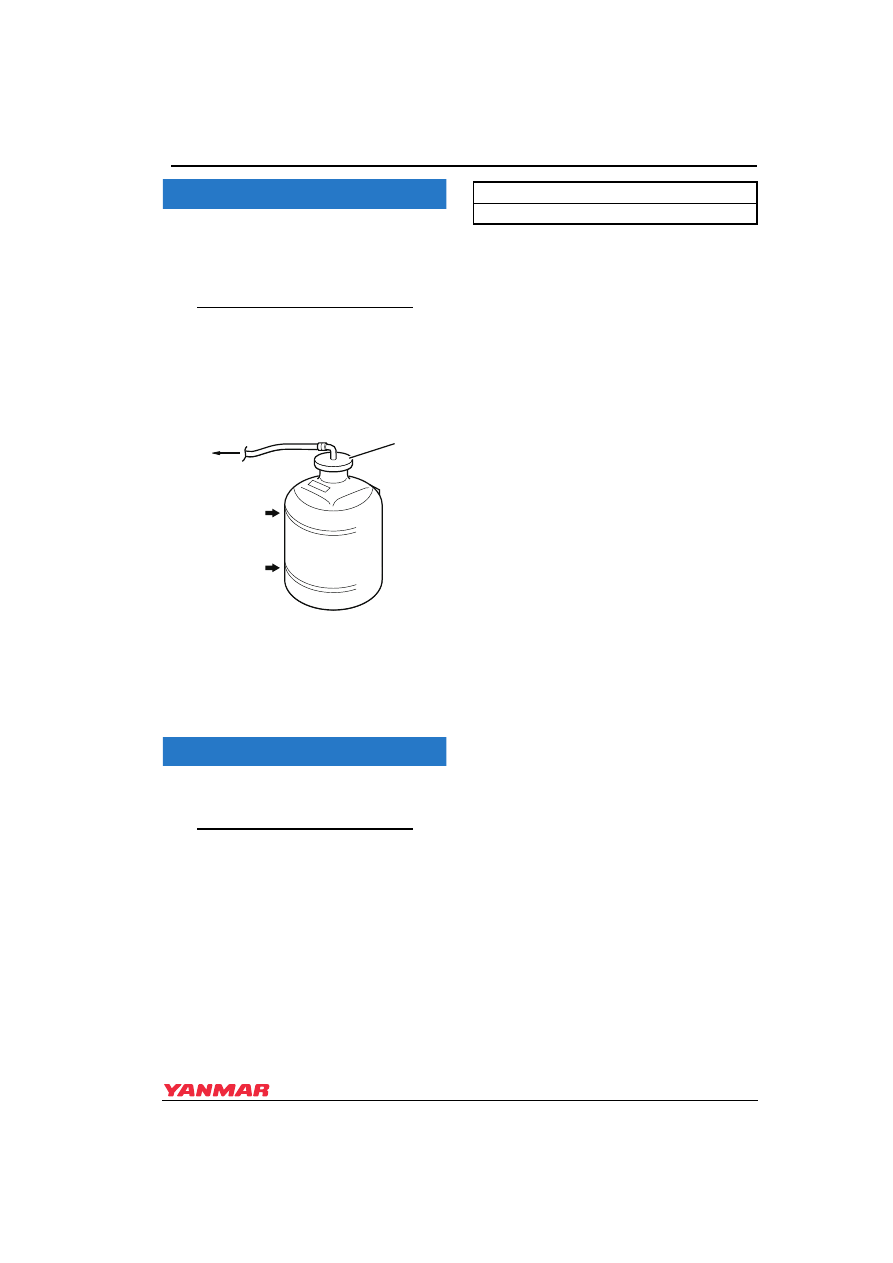
5. Check the coolant level in the reservoir.

The level should be at the FULL mark 
(Figure 9, (2)). Add coolant if 
necessary.

NOTICE

NEVER pour cold coolant into a hot 
engine.

6. Remove reservoir cap (Figure 9, (4)) to 

add coolant if necessary. Do not add 
water.

7. Replace filler cap and tighten it firmly.

Failure to do so will cause water 
leakage.

8. Check the rubber hose(Figure 9, (1)) 

connecting the reservoir to the coolant 
tank / heat exchanger. Replace if 
damaged.

Note: If the coolant runs low too often 

or the coolant level in the coolant 
tank drops without any change 
in the level in the reservoir, there 
may be water or air leaks in the 
cooling system. See your 
authorized Yanmar dealer or 
distributor.

LOW

FULL

(4)

(1)

(2)

(3)

0004493

Reservoir Capacity

0.8 L (0.85 qt)

BEFORE YOU OPERATE

36

6LPA Series Operation Manual

CRANKING THE ENGINE 

NOTICE

When the engine has not been used for a 
long period of time, engine oil will not be 
distributed to all of the operating parts.
Using the engine in this condition will lead 
to seizure. After a long period of no use, 
distribute engine oil to each part by 
cranking. Perform in accordance with the 
following procedures before beginning 
operation.

1. Open the seacock.

2. Open the fuel cock.

3. Put the remote control shift lever in the 

NEUTRAL See Starting the Engine on 
page 39
.

4. Turn on the battery switch (if equipped).

 Figure 9

Figure 10 

5. Turn key to ON (Figure 10, (3)). It is 

normal for the alarm to sound and the 
warning indicators to light during 
cranking.

Note: If the engine has not been 

operated for a long period of 
time, check that the key can be 
moved from START to ON 
positions smoothly.

6. While pushing the STOP button 

(Figure 10, (1)), turn the key to the 
START position (Figure 10, (2)).

NOTICE

NEVER hold the key in the START 
position for longer than 15 seconds or 
the starter motor will overheat.

7. When the key is in the START position, 

the engine will begin cranking.
Continue cranking for about 5 seconds 
and listen for abnormal noise during 
that time.

Note: If the STOP button is released 

during the cranking procedure, 
the engine will start. Do not start 
the engine in this mode.

8. Move key to OFF position 

(Figure 10, (4)). The engine will stop 
cranking.

WARNING

Never touch or allow your 
clothes to touch the 
moving parts of the 
engine during operation. If 
a part of your body or 

clothing is caught in the front drive 
shaft, V-belt, propeller shaft, etc. 
serious injury may result.
Check to see that no tools, pieces of 
cloth, etc. are left on or around the 
engine.

(1)

(2)

(3)

(4)

(5)

0004890

6LPA Series Operation Manual

37


ENGINE OPERATION

INTRODUCTION

This section of the Operation Manual 
describes the diesel fuel, engine oil and 
engine coolant specifications and how to 
replenish them. It also describes the daily 
engine checkout.

SAFETY PRECAUTIONS

Before performing any operations within 
this section, review the Safety section on 
page 3.

ENGINE OPERATION

38

6LPA Series Operation Manual

WARNING

Fire and Explosion 

Hazard

NEVER jump-start the 
engine. Sparks caused by 
shorting the battery to the 
starter terminals may cause 
a fire or explosion.
ONLY use the start switch 
on the instrument panel to 
start the engine.

Sudden Movement Hazard

Be sure the boat is in open water away 
from other boats, docks or other 
obstructions before increasing engine 
speed. Avoid unexpected equipment 
movement. Shift the marine gear into 
the NEUTRAL position any time the 
engine is at idle.

To prevent accidental equipment 
movement, NEVER start the engine in 
gear.

Sever Hazard

Keep children and pets away 
while the engine is operating.

NOTICE

If any indicator illuminates during engine 
operation, stop the engine immediately. 
Determine the cause and repair the 
problem before you continue to operate the 
engine.

If the alarm indicater with audible alarm 
fails to display and go out about 3 seconds 
after the ignition switch is turned on, see 
your authorized Yanmar Marine dealer or 
distributor for service before operating the 
engine

If the vessel is equipped with a water lift 
(water lock) muffler, excessive cranking 
could cause seawater to enter the 
cylinders and damage the engine. If the 
engine does not start after cranking for 10 
seconds, close the thru-hull water intake 
valve to avoid filling the muffler with water. 
Crank for 10 seconds at a time until the 
engine starts. When the engine does start, 
stop the engine immediately and turn off 
the switch.

Be sure to re-open the seacock and restart 
the engine. Operate the engine normally.

Observe the following environmental 
operating conditions to maintain engine 
performance and avoid premature engine 
wear: 

• Avoid operating in extremely dusty 

conditions.

• Avoid operating in the presence of 

chemical gases or fumes.

• NEVER run the engine if the ambient 

temperature is above +40°C (+104°F) or 
below -16°C (+5°F).

•  If the ambient temperature exceeds 

+40°C (+104°F), the engine may 
overheat and cause the engine oil to 
break down.

• If the ambient temperature is below 

-16°C (+5°F), rubber components such 
as gaskets and seals will harden causing 
premature engine wear and damage.


Content   ..  7  8  9  10   ..