Technology of watch production - part 90
C o p p e r - p 1 a t i n g is used as an undercoating for nickel, chromium ,
or silver plating. The copper-coating thickness does not exceed 1 5
!l .
The
use of copper-plating for protective and decorative coatings is not advisable ,
a s copper has a high electropositive potential and cannot protect iron
against corrosion. In addition, copper is easily oxidized and tarnished in
atmospheric air.
Electrolytes used for copper-plating are of the acid o r the cyanide type.
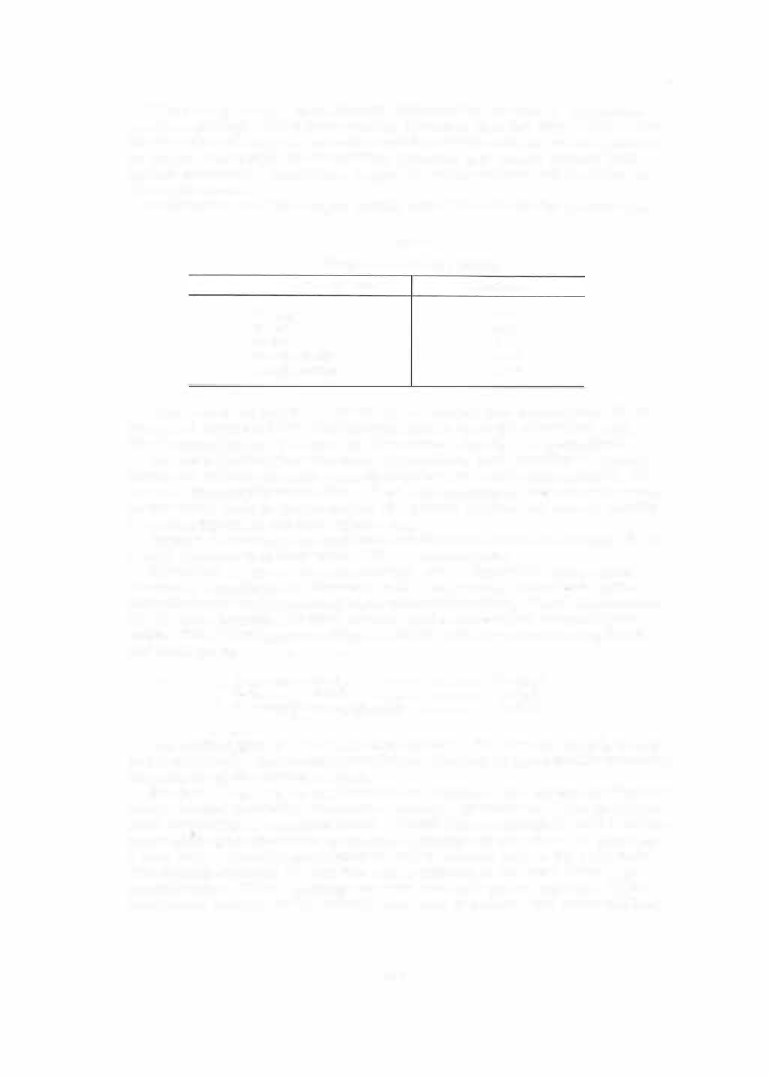
TABLE 1 1
The
pH numbers of various solutions
Reaction of solution
pH number
Strongly acid
Weakly acid
Neutral
Weakly alkaline
Strongly aikaline
1- 3
4-6
7
8-1 0
11- 14
T h e a c i d c o p p e r e l e c t r o l y t e s include two components: 2 00 to
2 5 0 g/1 of copper sulfate (CuS04· 5Hz0 ) and 50 to 6 0 g/1 of sulfuric acid.
The temperature is 18 to 2 5°C and the current density 1 to 3 amp / dm 2 .
The acid electrolytes are stable in operation, less s ensitive to contami
nation a n d suitable f o r high current densities (up to 2 0 t o 3 0 amp/ dm2 ) . The
current efficiency is near 1 00 % . Their shortcoming is their poor throwing
power which leads to the formation of a coarse- grained and porous coating
of uneven thicknes s and poor adherenc e .
Cyanide electrolytes are therefore gene rally used for the first layer ( 2 - 3
!l
thick), which is then increased to 2 0 ft in an acid bath.
C y a n i d e c o p p e r e 1 e c t r o 1 y t e s give a deposit of fine - grained
s tructure, showing good adherence to the base metal . They have better
throwing power and operate at lower current densities . Their sho rtcoming
lies in their toxicity . Various coppe r cyanide electrolyte compos itions
exist . The following composition is widely used for copper-plating b rass
and steel parts :
Copper cyan ide CuCN
. . . . . . . . . • .
. . . . . . . .
Sodium cyanide NaCN,
. . . . . . . . . . . • . . .
Sodium hyposulfite Na2s2o3 ·5H20 . . . . . . . . .
.
12-18 g/1
4-6 g/1
1-2 g/1
The holding time is 1 to 2 min at 3 0 to 4 0°C . The current density is 0 . 5
to 0 . 8 amp / dm 2 . Satisfactory results are obtained by periodically revers ing
the polarity of the plating current.
N i c k e 1 - p 1 a t i n g is used both as an underlayer for chrome-plating and
as an external protective - decorative coating. Its wide use is due to the phy
sical prope rties of deposited nickel. Nickel like chromium readily becomes
pass ivated and is therefore corrosion- resistant and preserves its gloss for
a long tim e . It can be well polished, and it adheres well to the base m etal .
The deposit structure is very fine and is difficult to see even under high
magnification. Nickel coatings are very hard and wear- resistant. Nickel
coatings on iron are of the cathodic type and, if porous , will cause the base
3 5 7