Technology of watch production - part 83
motion is imparted to the funnel body by an eccentric shaft driven by pul
ley (5 ), and by the spring of the supporting center (6 ) placed inside the
head (7 ). The machine head ( 7 ) and the connecting arm ( 3 ) are fastened to
the machine bed.
Pulley (5) revolves at 145 rpm . A block is filled in 0 . 5 to 2 minute s .
A fter the machine has stopped the funnel body i s drawn back t o the left,
released from pin (4 ), rotated 90°, and the block removed. The holes which
remain empty are filled with screws manually.
Shellac or rosin is then poured onto the block. The block is first heated
on an electric heating plate till the shellac (or rosin ) melts , and then the
s crews are pressed against the block by means of a press . A fter the blocks
cool down, they are mounted on the S - 1 5 machine . Fastening by means of
shellac or rosin causes no deformation of the parts .
Tin+ antimony
!}Jf6
Cast iron
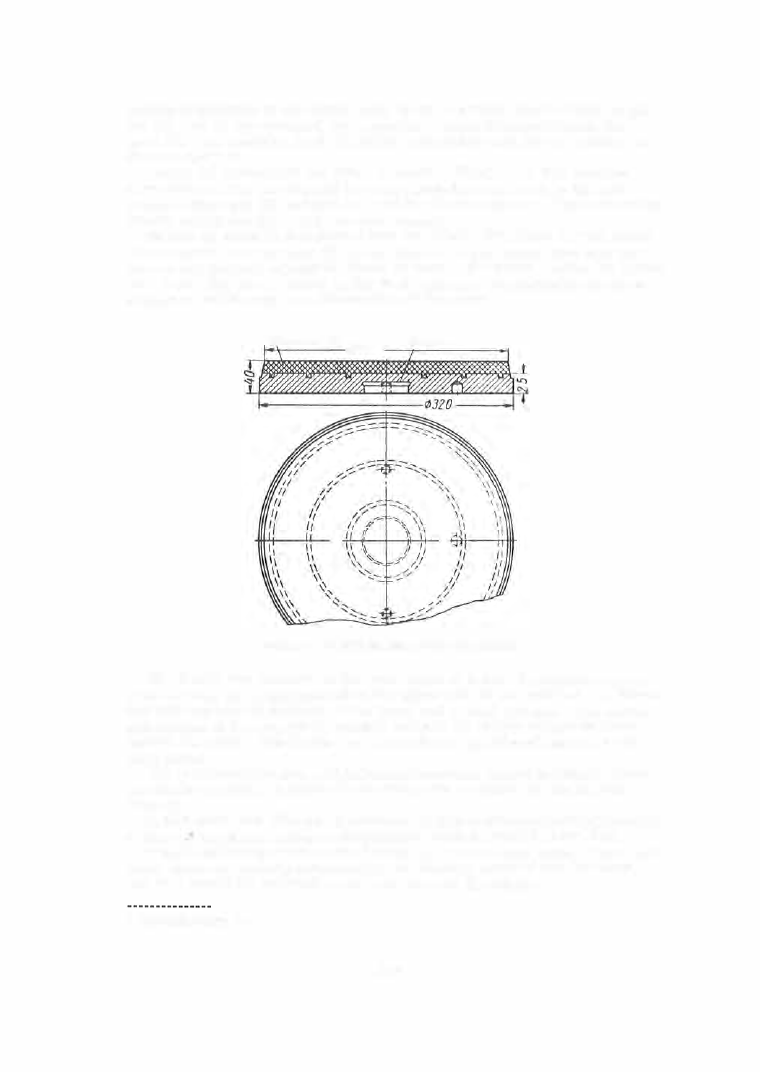
FIGURE 5. Polishing disk used in the S-15 machine
The blocks are mounted on the round table of the S - 1 5 machine and are
pressed down by weights placed on the upper ends of the spindles . A driver
bar with two pins is fastened to the lower end of each spindle . The conical
extremities of the pins fit the central holes of the blocks and press them
against the table . The blocks are automatically positioned relative t o the
table plane .
The S - 1 5 machine uses a finish-faced cast- iron disk of hardness 1 2 0 to
1 5 0 HB for lapping. A layer of abrasive paste is applied to the lap (see
Table 2 ).
A disk made of a 9 9 o/o tin 1
o/o
antimony alloy is used for polishing (Figure 5 ).
A layer of chromium oxide or diamantine':' paste is applied to the disk.
Wooden polishing disks made of beech o r lime are also used. Their flat
ness , however, quickly deteriorate s , the block is pres sed into the wood,
and as a result the polished parts have burrs at the edges .
• [See Tab!e 2 , Sect. 3 . ]
3 2 9