Amtrak. Service Standards Manual for Train Service and On-Board Service Employees (Version 6, 2011) - page 10
a) Information from Delay Reports is used for the
following:
• To quantify and identify the causes of all
delays.
• To determine host railroad and Amtrak
compliance with FRA on-time performance
and delay standards.
• To guide host railroad and Amtrak strategies
for reducing delays.
• To guide infrastructure investment decisions
by Amtrak, host railroads, and State or Federal
government agencies.
• To provide data for reports to Congress and
Federal and State agencies on Amtrak and
host railroad performance.
• To determine performance-incentive payments
to host railroads.
• To record the actual arrival, departure, and/or
passing times at stations and other points.
2.
Delay Reports — How They Are Designed
a)
Delay Report Design - Delay Report forms are
designed so that the Conductor can compare the
train’s actual point-to-point running times against
the optimum running times between stations
(called “Pure Running Time”), and the actual
station times against designated station dwell
time, in minutes. If actual times are greater than
the amount of time allowed, delay has occurred
and must be accounted for.
b) Calculation of Time Lost - The “Calculation of
Time Lost” section of the Delay Report form is the
Conductor’s personal worksheet for determining
whether or not the train has lost any time, and
therefore whether delay must be reported. This
section of the form MUST be completed.
c)
Station Dwell - The station dwell times pre-printed
on Delay Report forms represent the allowed
dwell time at each station. Where both arrival
and departure times are shown for a station in
public or Arrow System schedules, the designated
time on the Delay Report form represents that
amount of time, in minutes.
d) Public Schedule - Public schedule times may
also be shown on the Delay Report, but only as
a reminder. Public-schedule times should NOT be
used as a basis against which to figure delays
(except for Initial Terminal Delay, which is
7-52
Policies & Procedures
explained below). This is because all public
schedules contain extra time, called “Recovery
Time”, to help the train maintain or “recover”
to its schedule in the event of delay.
3.
Lateness vs. Delay
a) Lateness of a train as compared to the public
schedule is not itself a delay, but is instead the result
of delays exceeding the available recovery time.
• In schedule segments containing recovery time,
reporting only the amount of time lost against
schedule as delay would understate the amount
of delay that actually occurred.
• Delay is the additional time taken at or between
stations, beyond Pure Running Time or
allowed dwell time.
b) Late arrival of a train at an intermediate crew
change point is not itself a delay. It is the result
of delays already encountered by the previous
crew(s), and which should already be accounted
for in their delay reports. However, if a delay
occurs AT the crew change point, it must be
accounted for.
4.
Accuracy of Time
Conductor(s) must use an accurate and reliable watch
equipped with a second hand or readout, and known
to be accurately set, at or prior to the beginning of
each tour of duty.
The Conductor will compare time with other crew
members during the job briefing to assure that they
all have accurate time to the second. Phone numbers
ATS 729-4116, 777-4000 and toll-free (866) 493-5252
are a direct dial-in to correct-time recording from the
U.S. Naval Observatory in Boulder, CO. All railroad
watches should be set for local time to the second,
based on the time provided by the official time
recording.
5.
Rounding of Times
Arrival, departure or passing times at stations and
other locations designated on the Delay Report will
be rounded down to the previous whole minute if the
event occurs at 30 seconds or less. For example, if a
train arrives at a station at 3:34:23 p.m., it should be
shown as 3:34. If the event occurs at 31 seconds or
greater, it will be rounded up to the next whole minute.
Service Standards Manual No. 6
7-53
• In some cases, this may result in a train shown as
arriving and departing a station at the same
whole-minute time; this is acceptable.
• All arrival and departure times must be entered
using the correct local time zone used in Arrow
or public schedules.
6.
Train Origin Date
Conductors must always show the Train Origin Date
on the Delay Report. This is always the date the
train was scheduled to depart its initial station, as
shown in the Arrow System (the “TS” schedule). The
actual date of operation over the Conductor’s crew
district must also be shown, if different from the
Train Origin Date.
7.
Initial Terminal Delay; Final Terminal
a) Late Departure - If a train departs late, per public
schedule, from the first station on its route, it has
been delayed, because it should have departed on
time. This is the one instance where public-schedule
time is directly used to calculate delay; the “clock
starts” when the train is due to depart.
• Initial Terminal Delay must be accounted for
on a Delay Report, just like any other delay.
• In the “Between” coding column, Initial
Terminal Delay entries must always reference
the Initial Station, no matter what the specific
location or cause of the delay(s).
• The Specifics-of-Delay column will then be
used to explain those specifics.
b) Temporary Initial Terminal - Sometimes a station
along a train’s route will be temporarily designated
the Initial Terminal in its schedule due to an M of
W project track curfew, rail-line blockage, etc. In
this case, the Conductor must use the train’s
scheduled departure time from the Temporary
Initial Terminal as a basis for calculating the
Initial Terminal Delay.
c) Final Terminal - When the a train arrives at
the last station on its route so that it can begin
discharging passengers, it has fulfilled its schedule.
Events occurring after this time must NOT be
entered on the Delay Report as if they were
delays to that train.
8.
“Waiting-For-Time” or “Killing Time” Delays
a) Wait-For-Time - A train, which exceeds its normal
7-54
Policies & Procedures
dwell at a station because it is waiting for its
scheduled departure time, has incurred a
“Wait-For-Time” delay.
b) Kill-Time - A train, which operates at slower-
than-normal speed into a station to avoid an
early arrival, has incurred a “Kill-Time” delay.
c) Both types of delay must be accounted for, under
delay-code “NOD.”
9.
Delay Report Forms
On the Delay Report forms, each delay must be shown
in the Explanation Of Delays section, in the following
manner (unless otherwise specified on the form):
a)
“BETWEEN” column - for delays occurring
between two stations, enter the three-character
Arrow codes for the nearest two stations on the
route. It does not have to be a station where the
train is scheduled to stop, and “X-coded” (non-
station) locations are also acceptable. For example,
“XOR-CVS” means the delay occurred between
Orange and Charlottesville, VA. For delays
occurring at a station, enter the station code twice.
For example, “RMT-RMT” means the delay
occurred at the station at Rocky Mount, NC. A
single delay entry must never cover a segment in
the “BETWEEN” column which overlaps two or
more Host Railroads. For example, an entry such
as “CHI-SOB” (Chicago Union Station to South
Bend, IN) would not be acceptable because two
Host RR’s are located in the territory: Amtrak
Chicago Terminal (“AM”) from CHI (Union
Station) to XTF (21st Street), and Norfolk
Southern (“NS”) from 21st St. to South Bend.
At least two entries would be required for this delay,
with XTF as the break-point. Use only three-
character Arrow-System location codes in this
column. Mileposts, Control-Point or siding names,
etc., go in the Specifics of the Delay Column.
b) “CODE” - choose the most appropriate three-
letter cause code for each delay. These codes are
listed and explained below. If in doubt about which
delay code to use for a given delay, choose the code
which matches the most-direct cause of the delay.
Also, be sure that the delay code corresponds
with, and is supported by, the explanation.
c)
“MINS” - the total minutes for each delay. Do not
show any symbols such as (‘) or (”) in the “MINS”
blocks; show only the number of minutes. Also, do
Service Standards Manual No. 6
7-55
not show “hours and minutes”, show minutes only.
d) “RR” - two-letter Railroad code (codes are listed
below) - this is the railroad on which the train
was operating, or was entering, when the delay
occurred, regardless of whom or what caused the
delay. (Exception: See section on “Detoured
Train” below.) Railroad codes are listed below.
Also, at some specific locations where trains may
operate over a very short segment of a railroad
which is different from the primary Host Railroad’s
line, Conductors may be instructed to code delays
for the main Host Railroad.)
e)
“SPECIFICS OF THE DELAY” - Briefly and
clearly describe every delay. Milepost(s) and
Control Point, interlocking or siding names can
be shown here. For other trains which cause
delay, those trains’ engine numbers with railroad
initials, and/or train number or symbol, and type
of train involved (e.g., local frt., lite engine, psgr,
commuter, etc.), should be entered if known.
Specific locations must be shown for all signal,
train-meet, and routing delays. Milepost locations
and MPH speeds must be shown for slow order
(“DSR”) delays. Signal delays involving Stop
Signals must specifically note the name or aspect.
Delays known to be heat or cold orders must be
labeled as such. Mechanical delays must note the
engine or car number (E/__ or C/__) involved. For
crossover delays, the location and the track numbers
of the route must be shown; for example, “X/O, 1 to
2 at Abex.” The delay explanation must always
conform to, support, and explain, the delay code
used. Do not cite operating rule, special instruction,
or operating-bulletin items by number alone,
without additional explanation. A list of
abbreviations which may be used to save space
in the “Specifics” column are listed below. These
are NOT to be used as Delay Codes.
10.
Examples of Abbreviations for Specifics-of-Delay
Explanations
7-56
Policies & Procedures

Examples of Abbreviations for Specifics-of-Delay
Explanations
(These are NOT Delay Codes. To be used ONLY in the Specifics-of-Delay section).
Abb.
Stands for:
& or +
“and”
@
“at” or “at the rate of”
a/c
“account of” or “due to”
A.C.
air conditioning
Appro.
Approach, as in “Approach Signal”
Ar. or Arr.
arrive
B/O
bad-ordered
Bgge
baggage
C & I
Customs and Immigration (do not confuse this with the delay code “CUI”)
Cdr.
Conductor
Clr.
Clear, as in “Diverging Clear” or “Medium Clear” signal
C/O
“Cut-Out” or “Change-out”
CP
Controlled Point (Also may be used for “Canadian Pacific Railroad.”)
DD
defect detector
DED
dragging equipment detector
D.I.B.
delayed in block
Draw
drawbridge/movable bridge
Dp.
depart
DS or Dispr.
Train Dispatcher
Dvrg.
diverging, as in “Diverging Clear”, “Diverging Approach,” etc
E., N., S.,
east, north, south or west
or W.
EMS or
Emergency Medical Service; Emergency Medical Technician (s)
EMT
Eng
engine
Engr
Engineer
E.E./W.E.
east end/west end
Frt
freight
Frmn
(MofW) Foreman
HBD
hot box detector
hcpd
handicapped (passenger)
Hwy.
Highway
H/O or H.O.
heat order
int. or intg.
interlocking
K.T.
“kill time” (wait for sch’d departure time or killing time into a station)
Ltd. Clr.
Limited Clear (signal)
L.O.R.
lost on run (can’t make running time)
Med. Clr.
Medium Clear (signal)
MP
milepost
Service Standards Manual No. 6
7-57
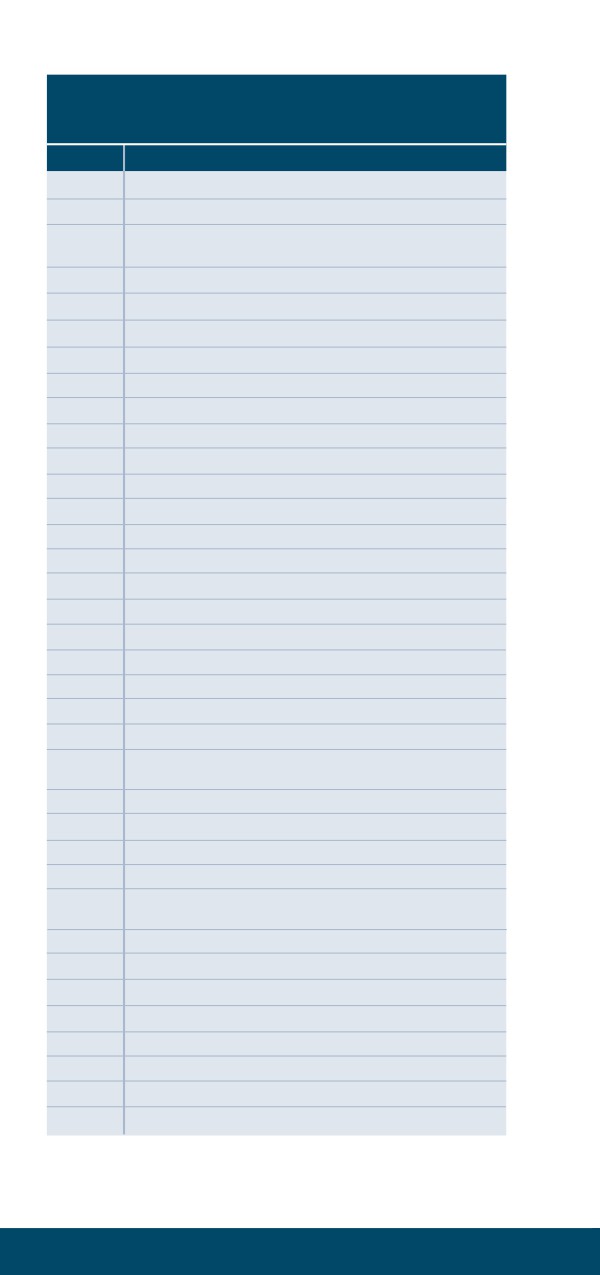
Examples of Abbreviations for Specifics-of-Delay
Explanations (continued)
(These are NOT Delay Codes. To be used ONLY in the Specifics-of-Delay section).
Abb.
Stands for:
M.T.
Main Track
M of E
maintenance of equipment
MW or
maintenance of way
M of W
N. A. R.
no apparent reason
N. F. W.
nothing found wrong
N.E./S.E.
north end/south end
# or No.
number
N/S
temporary speed signs not displayed for this slow order
O.O.S.
out of service
Pax or Psgrs
passengers
Psgr
Passenger (as in “psgr train”)
P & B
passengers and baggage
P/U or P/Up
pick up or picked up
Pvt.
private (as in “pvt. car”)
Rcv.
receive or receiving
Rd.
Road
Rd. Xing
road crossing
R.F.E.
Road Foreman of Engines
R.O.W.
right-of-way
RR
railroad
R. Railer
RoadRailer
S/O or S/R
slow order or speed restriction
S/O (2nd
set out (as in setting out a defective car)
meaning)
Sgl.
signal
St.
Street
Sta.
station
Sub.
Subdivision
Sub. (2nd
substitute (as in an engine or car)
meaning)
T.M.
Trainmaster
Tk. or Trk.
Track
TW
Track Warrant
UG
undergrade, as in "Undergrade Bridge"
W/
with
Xing
crossing, as in "road crossing"
X-O or X/O
crossover (routing) move
Yd.
yard
7-58
Policies & Procedures
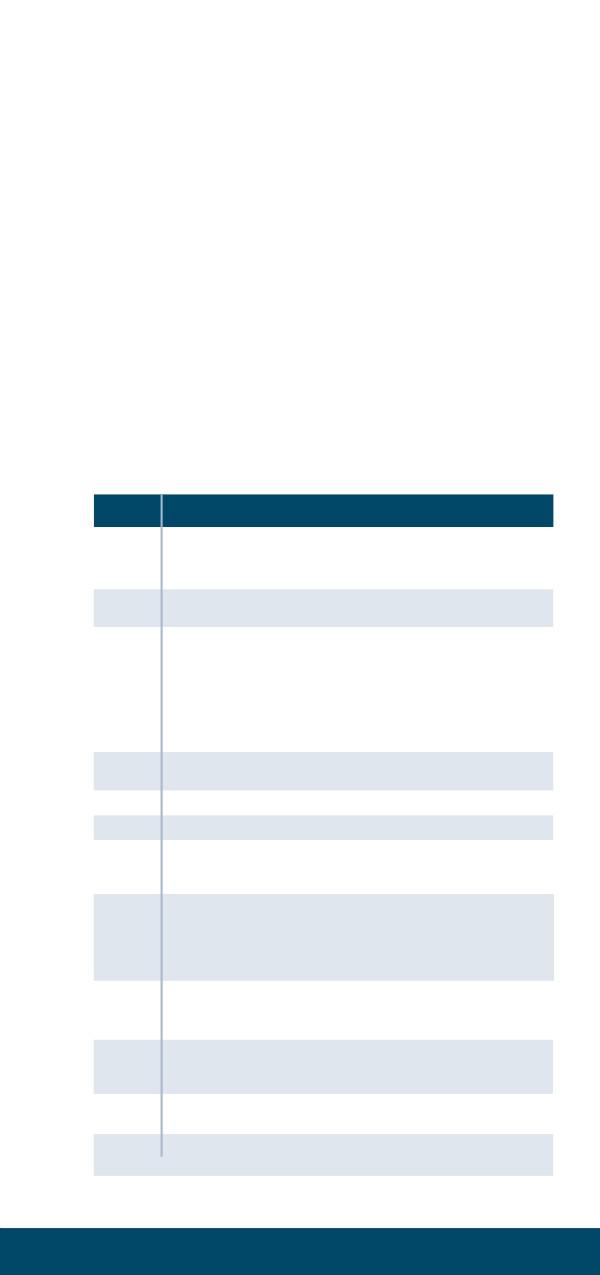
a) Mandatory Data - All columns in the
“Explanation of Delays” section must be filled
out in order for the delay to register in Amtrak’s
On-Time Performance Reporting System and
provide other vital information.
b) General Versus Specific -With delay explanations,
avoid being too general. For example, the term
“Running Time” should be used only to mean
the train is losing time on the run for no apparent
reason; otherwise, the term can be used too
generally and becomes meaningless. Avoid being
too specific or citing operating rule numbers or
Timetable Special Instruction numbers without
explanation.
11. Categories of Delay
The following category codes may be used:
Code
Title, Reason or Examples
ADA
Passenger-Related delays specifically related to
disabled passengers (wheelchair lifts, exercising guide
dogs, etc.)
CAR
Car Failure (includes HEP failure, legitimate HBD or DED
actuations, set out/pick up defective/repaired cars)
CCR
Cab Car Failure (all en route delays caused by mechanical
failure of working cab cars.) A non-working cab car, i.e.,
one being used simply as another passenger car in the
trailing consist of a train, will not be considered a Cab Car
for purposes of delay coding. “Cab Car” includes NPCU’s
(de-powered F-40’s) and all variations of passenger type
Cab Cars.
CON
Hold for Connection (holds for train or bus connections,
including en route holds)
CUI
Customs and Immigration delays
CTI
Commuter Train Interference (meets, following, overtakes)
DBS
Debris Strike (emergency braking, damage, set-outs from
same also debris blocking track ahead, or removal of
debris from train).
DCS
Signal Delays (false wayside detector actuations, defective
road crossing protection, restrictive wayside or cab signals
from unknown cause or from signal, power-switch or CTC-
system failure; efficiency tests of the crew; drawbridge
stuck open).
DET
Delays caused by catenary or wayside electric-power-system
failure. (Note: This Delay Code is to be used ONLY between
XSH and NHV (by Conductors working between NYP and NHV).)
DMW
M of W Work (holding for defect repair or M of W forces to
clear; inability to contact M or W Foreman on radio; routed
around M of W work).
DSR
Temporary Speed Restrictions (slow orders, slows through M
of W site) Exception: heat/cold orders; see “WTR.”
DTR
Detour Delays (all delay or time lost while operating on a
detour, regardless of actual cause).
Service Standards Manual No. 6
7-59
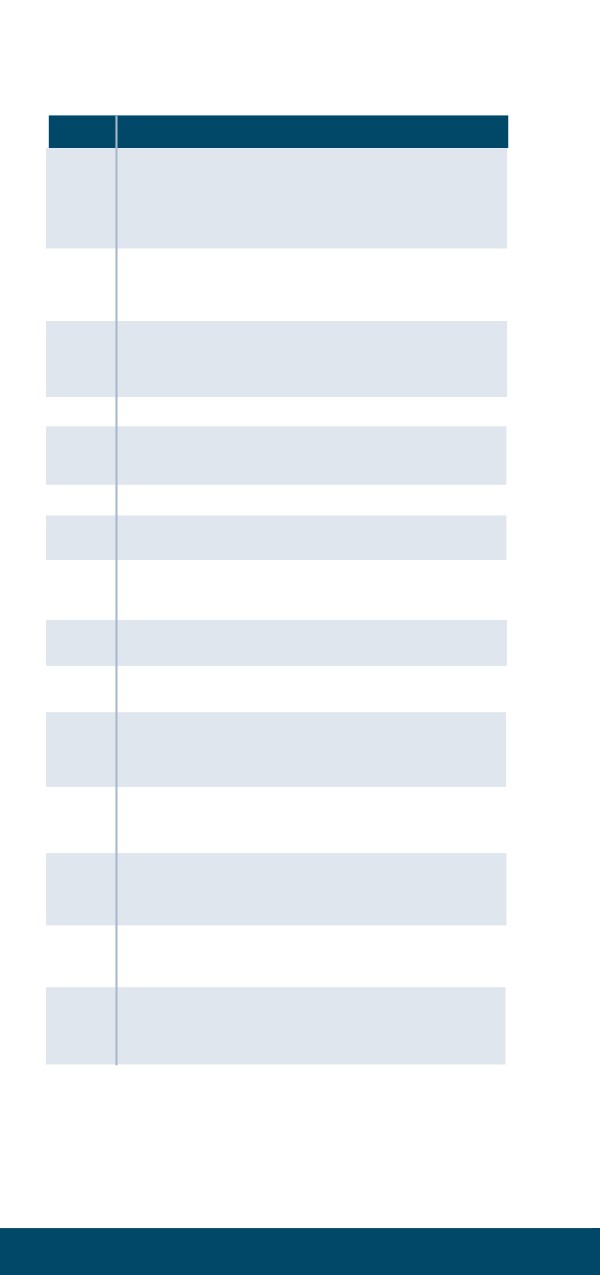
Categories of Delay (Continued)
Code
Title, Reason or Examples
ENG
Engine Failure (HEP Failure, legitimate HBD or DED
actuations, or any on-board HBD alarm, cab signal failure on
engine, set out/pick up defective/repaired engines, operating
with freight engine, undesired emergency applications, air
problems, radio failure on engine)
FTI
Freight Train Interference (meets, following, overtakes,
restrictive signals known to be caused by freight trains,
holds due to freight train derailments, non-scheduled stop
to pick-up/drop-off freight train crew)
HLD
Passenger Related (multiple spots, checked bags, large
groups, smoke breaks, EMS, disorderly, other passenger-
related delays; except for disabled passengers, see delay
code “ADA”; or sick/injured, see “INJ”)
INJ
Injury Delays (injured or sick passenger or employee).
ITI
Initial Terminal Delay due to late-arriving inbound train
causing late release of equipment or late crew rest, where
mechanical-failure delay is NOT involved.
MBO
Drawbridge openings for marine traffic
NOD
Wait for scheduled departure time at stations, kill time to
prevent early arrival at stations.
OTH
Miscellaneous Amtrak-responsible delays (unable to make
normal speed, heavy train, isolation of engine[s] for fuel
conservation, etc. Also, person pulling emergency cord)
POL
Police Related (DEA; police/fire department holds on right-
of-way, bomb threat delays).
PTI
Passenger Train Interference (meets, following, etc.—does
not include commuter trains)
RTE
Routing (crossover moves, lining manual or spring switch, run
via siding, late track bulletins, inability to contact DS,
dispatcher-holds). Also includes delays resulting directly from
being routed to abnormal track at stations.
SVS
Servicing (fuel, water, toilet/trash dumping, inspections,
switching private/office cars or section of train, normal engine
changes, loading/ unloading non-carload express).
SYS
System (late crew, unscheduled re-crew, single engineer
copying authorities or restroom break, hold due to
passenger train derailment; alleged crew rules violation;
delayed-in-block after station stop)
TRS
Trespasser Incidents (includes crossing accidents, trespasser
or animal strikes, vehicle on track ahead; “near-miss”
delays; bridge strikes by vehicle or boat)
WTR
Weather (includes heat/cold orders; storms, floods, fallen
trees, washouts, landslides; earthquake-related delays;
slippery rail due to leaves; burning leaves caught under truck
of car; snow-removal equipment working ahead).
7-60
Policies & Procedures
12. Host-Railroad Codes
Use the following codes to denote the railroad on
which the delay occurred:
AM
Amtrak (includes Washington Terminal, Empire
Connection, N.O.U.P.T., Chicago Terminal, St. Louis
Station, Amtrak Line in Michigan, Hell-Gate Line)
BB
Buckingham Branch Railroad
BN
Burlington Northern Santa Fe
BR
Belt Railway of Chicago
CC
CN-IC — Former Illinois Central and GTW Railroads
CN
Canadian National (CN’s Canadian operations only)
CP
CP Rail (former Soo Line portion only)
CR
Conrail Shared Assets (DER-XVI = Detroit vicinity)
CS
CSX Transportation
DH
Delaware & Hudson (CP Rail)
FE
Florida East Coast
FL
Florida DOT (South Dyer (XDY) - Miami, FL)
GT
Pan Am Railways (formerly Guilford)
GW
Gateway Western / (KCS) (XWI-XWR = Chicago - St. Louis)
KC
Kansas City Terminal
KS
Kansas City Southern
MC
Minnesota Commercial
ME
Metra
MN
Metro-North Railroad
MT
MBTA
NE
New England Central
NM
New Mexico D.O.T.
NS
Norfolk Southern
SN
San Diego Northern
SC
S.C.R.R.A. (Moorpark-LAX; LAX-XRJ; Fullerton-
County Line (X98); El Monte-LAX via Metrolink route)
TR
Terminal Railroad Ass’n of St. Louis (T.R.R.A.)
UP
Union Pacific
VR
Vermont Railway (Clarendon & Pittsford)
Service Standards Manual No. 6
7-61
13.
Crew-Change Points
Unless otherwise instructed, the Conductor going
on-duty is responsible for recording both the arrival
and departure times, and any delays incurred, at the
crew-change point. The Conductor going off-duty must
also record the arrival time. The arrival time recorded
by both Conductors MUST be the same.
14.
Coordinating Times with Station Agents
When practicable, Conductor(s) should notify station
agents or stationmasters of their arrival/departure
times at that station so that the agent may enter the
exact same times into the Arrow system.
15.
Joint Amtrak/Host-Railroad Efficiency Tests
(This particular delay must never be combined with
other DCS delays.)
If delayed by an efficiency test (code “DCS”)
conducted jointly by Amtrak and host-railroad
officers, state the fact that is a joint test and include
the name(s) of the Amtrak officer(s) involved, in the
delay explanation.
16.
Unscheduled Re-Crew En Route
The Delay Report must be turned over to the relieving
Conductor, who will complete it for the remaining
portion of the crew district or trip. The Conductor
going off duty must show the time the train arrived
at the re-crew point. If no report form is available,
the relieving Conductor will keep track of times and
delays in writing in the best possible manner. Delay
Report must make notation of the re-crew, including
the names of the new crew; and the amount of delay,
under category “SYS”.
17.
Planned Crew Swaps
For trains stopping to exchange crews, delay from
meeting the other train (code “PTI”) must be shown
separately from delays caused by exchanging the
crews (code “SYS”). For a train already stopped or
slowing for the meet, only the standing-time dedicated
to the crew swap is “SYS”, all other delay is “PTI”. If
a train’s delay is only to exchange crews, all such delay
will be reported as “SYS”.
7-62
Policies & Procedures
18.
Police Activity On-Board Trains
Delay Code “POL” is usually reserved for delays
caused by police or fire department activities
extraneous to the train. However, under certain
conditions, “POL” may be used for police activity
on-board the train, including involvement with
passengers and/or removal of person(s) from the
train. To qualify for Code “POL,” the situation must:
• Include police involvement directed at an
alleged or potential crime. (Example: theft, drug
trafficking, escaped convict, criminal suspect,
bomb threat, etc.)
• Involve at least one police agency. (Example:
Amtrak Police; FBI, DEA or U.S. Marshall;
sheriff; local, county or state police.)
Delays due to a trespasser or “stowaway” - that is, a
person with no intent of being a legitimate passenger
or assisting a passenger on or off the train with luggage
should be coded “POL.” If a situation is resolved
without removing the passenger from the train, it
should be coded “HLD.” Police activity involving
U.S. Customs, Border Patrol, INS, etc., should be
coded “CUI.” Delays involving sick or injured persons
on the train, whether passengers or employees,
including EMS and/or removal from the train, will
be coded “INJ.”
19.
Name(s) of Host-Railroad Pilot(s)
If a Host Railroad Engineer and/or Conductor Pilot
is/are used for any reason, their name(s), position(s)
(rank), RR and points- between must be shown on
the top of the Delay Report in addition to the
Amtrak crew. Example: “KCY-NEW, A.B. Smith,
BNSF Engr. Pilot.”
20.
Abnormal Routing, Diversions, etc.
If train is delayed due to being routed abnormally
through a diversion (crossover), through a siding,
against the current of traffic or via other abnormal
track or route, show the reason, if known. If the reason
is not known, show “No Apparent Reason,” or
“N.A.R.”, in the Specifics-Of-The-Delay column of the
Delay Report. (The delay code for this situation will be
Service Standards Manual No. 6
7-63
“RTE.”) Delays caused by diversions should not be
coded “DCS” unless the reason for the diversion is
known to be due to signal failure or is otherwise signal-
related. If the normal or optimum route for the train to
access station platforms includes one or more diversions,
and if time is lost and no other cause is apparent, the
delay should be coded “OTH.” If delay is incurred
at a station solely because the train was routed to
an abnormal track at that station by a host railroad’s
dispatching decision, the delay should be coded “RTE”
and the explanation must show why the abnormal
track routing was the cause. If the normal track was
blocked by another train or by MofW work, etc., the
delay code should be FTI, CTI, PTI, DMW, etc., as
appropriate. However, if Amtrak requested the routing
to an abnormal track at the a station, any delay from
related diversions should be coded “OTH” and any
station delay should be coded appropriately (eg.,
“SVS”, “CAR”, etc.).
21.
Alternate Routes
On certain specific segments, a train may be routed by
either of two alternate routes, and it is not considered a
detour. The Delay Report or local instructions may
specify that taking the longer of the two alternates
should be considered a Routing Delay (“RTE”).
Some examples of alternate routes are:
• Savannah - Burroughs, GA - via “East Route”
or “West Route”
• San Antonio - Craig Junction, TX - via Track
1(former MoPac) or Track 2 (former M-K-T)
• St. Louis, MO - WR Tower, IL (“XWR”) - via
Q-Tower / MacArthur Bridge (UP-TRRA) or
Merchants Bridge (TRRA)
22.
Detoured Train
A train is considered “detoured” if it is re-routed off
of its normal rail line, Subdivision, District, etc. (Re-
routing onto another track on the same rail line is not
a detour delay.) If this occurs, all delays or time lost
against schedule on the detour route must be coded
“DTR” (Detour Delays), regardless of the cause.
Note the specific locations where the train left and
returned to its normal rail line in “Specifics-of-Delay”
column. (These may not be at Amtrak stations.)
7-64
Policies & Procedures
a) In the “Between” Column - Show the last
Arrow-coded location on the normal rail line
before the detour begins, and the first Arrow-
coded location after the detour ends.
b) For Host-Railroad Code - Use the RR code(s)
of the train’s normal rail line, NOT the detour
line. (If the normal rail line included two or more
RR’s, this will require just as many separate delay
entries, each breaking at the location where the
normal line would change RR’s.)
23.
Combined-Cause Delays
For delays with two or more distinct types of causes,
show the minutes associated with each cause.
NEVER combine two or more types of delay into
one entry. For a delay-event caused by first meeting
a freight train and then a passenger train, or vice
versa, the delay for meeting the second train begins
at the time the first train clears the meet point.
24.
Slow-Order (DSR) Delays
The beginning and endpoint limits and MPH speeds
for every slow order causing delay must be shown in
the Specifics-of-Delay column. In double-track or
multiple-track territory, the track number must also be
specified. Multiple slow orders in the same contiguous
segment between two stations may be combined into
one delay entry, and the explanation should read as
shown in this example: “25 - 43.0-43.1 Tk.1; 60 -
57.7-57.8; 30 - 62.6-62.7; 10 - 73.1-73.5 Tk.2”
On Host Railroads which use temporary speed signs,
boards or flags, the lack of signs for any given slow
order must be noted by including “N/S” in the
explanation. This abbreviation means: “No temporary
signs displayed for this slow order.” Delay entries for
slow orders given by a MofW Foreman in the field
must include the Foreman’s name in the delay
explanation. - for example, “Per Frmn Smith.” If a
slow order is given en route by the Dispatcher (as
opposed to being on a Track Bulletin, Dispatcher
Bulletin, etc.), that fact must be stated in the delay
explanation - for example (on CSX): “per EC-1,
Dispr ADF.”
Service Standards Manual No. 6
7-65
Conductors must take care not to understate or
overstate Slow Order Delays. Delay time must not
be lumped into Slow Order Delays (DSR) if it was
known to be caused by something else, and vice
versa. Some slow orders will cause negligible delay.
Example: A 0.1-mile, 60-MPH slow order in a 70-MPH
timetable-speed segment will delay a short passenger
train only 0.1 minute. If no minutes are lost in a
given segment, it is permissible to show “0” (zero)
minutes delay from such a slow order.
If a train is required to operate at Restricted Speed,
the delay must not be coded “DSR” unless the reason
is slow-order-related. Restricted-Speed delays are
usually signal-related.
25.
Heat Order or Cold Order Delays (Code “WTR”)
If a heat order or cold order is milepost- based and
does not cover the entire segment between two
stations, state the milepost limits in the explanation -
for example, “H/O, MP A-86.0 - A-112.5.”
26.
Two or More Types of Delay at Same Location
If two or more types of delay occur at the same
location, the Delay Code and explanation should
match the delay requiring the slowest speed.
Example: If a train has a 30-MPH slow order but is
operating at Restricted Speed through the same area
due to signal failure, the delay would be entered as
Signal Delay, “DCS.” The exception is for Heat Order
or Cold Order Delays (code “WTR”). Example: If a
train in normally-79-MPH territory has, a 60-MPH
heat order but also a 25-MPH slow order, the time
shown for the Slow Order (DSR) Delay should be
only the difference between 60 MPH and 25 MPH -
not the difference between 79 and 25 MPH.
27.
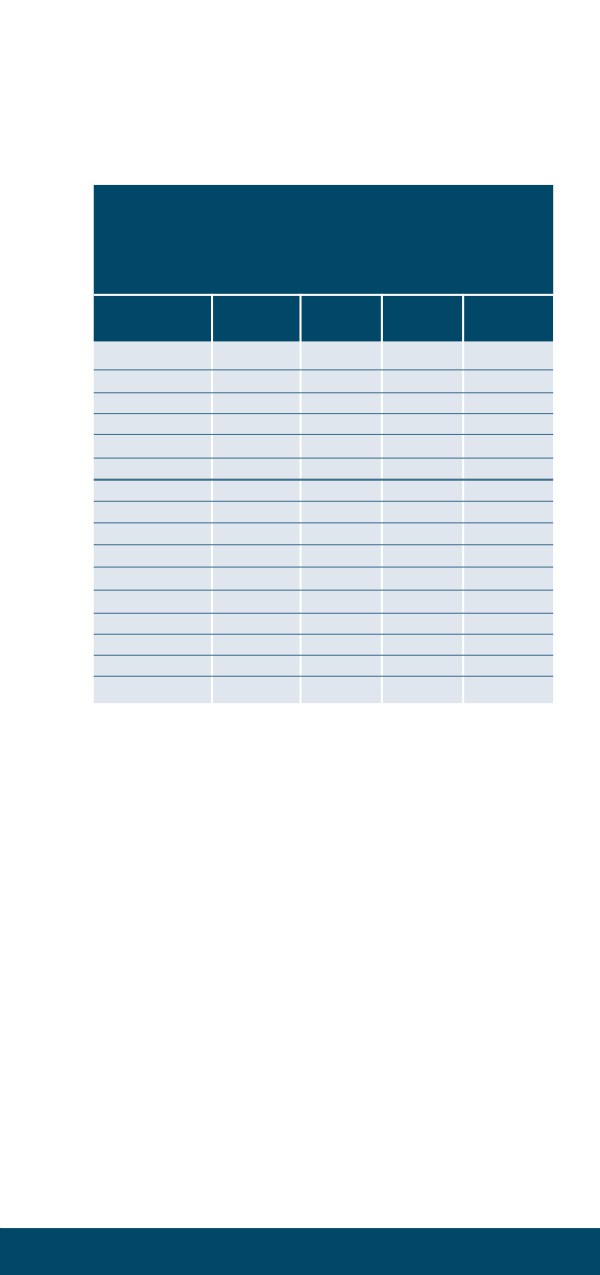
Sample Guide For Estimating Delay-Minutes Caused by
Slow Orders or Other “Simple” Delays
The following table may be used as a rough guide for
estimating the amount of delay from either a Slow
Order or any other type of single delay in which the
train decelerates rapidly from Normal (Timetable)
Speed, runs at a fixed slower speed for a given
distance plus its own train-length, and then rapidly
resumes the same Normal Speed. (A more-detailed
7-66
Policies & Procedures
“Conductor Slow Order Calculation Table,” based on
one P-42 engine and 12 single-level cars, is available.
Conductors desiring a copy should contact their local
supervisor.)
Samples of (Approximate) Minutes of Delay
with Various Train-Consists, Normal Speeds
and Slow-Order Speeds:
Assumes prompt train-handling, level grades, and good weather
and engine(s).
Type of Train:
Normal T.T.
Slow-Order
Slow-Order
Approx. Min’s
Speed:
Speed:
Mileage:
of Delay:
1 eng, 3 to 5 cars
60-79 MPH
15 MPH
0.1 mile
2"
“
60-79 MPH
15 MPH
0.5 mile
3 to 4"
“
60-79 MPH
30 MPH
0.1 mile
1"
“
60-79 MPH
30 MPH
0.5 mile
1 to 2"
“
79 MPH
60 MPH
0.1 mile
less than 1"
“
79 MPH
60 MPH
0.5 mile
less than 1"
2 engs, 10-12 cars
60 MPH
15 MPH
0.1 mile
2"
“
60 MPH
15 MPH
0.5 mile
3"
“
79 MPH
15 MPH
0.1 mile
3"
“
79 MPH
15 MPH
0.5 mile
4 to 5"
“
60 MPH
30 MPH
0.1 mile
1"
“
60 MPH
30 MPH
0.5 mile
2"
“
79 MPH
30 MPH
0.1 mile
1 to 2"
“
79 MPH
30 MPH
0.5 mile
2"
“
79 MPH
60 MPH
0.1 mile
less than 1"
“
79 MPH
60 MPH
0.5 mile
less than 1"
28.
Signal Delays
Delays from restrictions caused by a problem or issue
with automatic road-crossing warning apparatus, or by
a slide fence being taken out of service, are considered
Signal Delays (Code “DCS”).
29.
Recording Delays Caused by Checked Firearms
Delays due to the carriage of firearms or ammunition
in checked baggage will be coded “HLD” because they
are considered a type of Passenger-and-Baggage Delay.
However, the explanation for any such delay entries
must begin with the word “FIREARM” so the delay
can be easily distinguished from other types of “HLD”
delays.
30.
Mechanical Delays (Codes “CAR”, “CCR” or “ENG”)
All mechanical delays must be documented by the
following specific information in the delay explanation:
- The car and/or locomotive number(s) of equipment
Service Standards Manual No. 6
7-67
which caused the delay, if known (including the
“800000” car number, as listed on the train
manifest, if the equipment was a private car); and
- The specific reason(s) why the delay was a
mechanical failure, if known.
Planned switching moves (such as set-outs or pick-ups
of locomotives or private or office cars) which are
NOT related to current or previous mechanical failure,
are Servicing Delays (Code “SVS”). However, if any
delay due to a mechanical failure occurs during the
move, that delay must be broken-out, coded as a
mechanical delay, and explained.
Delays due to equipment damage caused directly by
debris strikes or road crossing accidents are NOT
considered mechanical delays.
31.
En Route Change to Daylight Saving Time or
Standard (Winter) Time
The change to Daylight Saving Time (DST) may cause
some overnight trains to become up to one hour late
on their schedules. Conductors are reminded that
en route schedule lateness is not the same as delay;
therefore, lateness caused by the change to DST must
not be shown as a delay. However, the change from
DST to Standard Time in late autumn may cause an
overnight train to have to wait for its new scheduled
departure time at the next station. This is actual
delay, and must be shown under Delay Code “NOD”
and explained as “Time change due to Standard Time.”
32.
Fuel Conservation Measures and Delays
Delays caused by isolation of one or more locomotive
units for fuel conservation must be accounted for,
under Delay Code “OTH.” The Specifics-Of-The-
Delay column of the Delay Report form should
include the notation “Eng. No. ____ isolated, fuel
conservation.” It is not necessary to show specific
mileposts or other locations to account for this.
However, any time lost must be broken down between
passenger stations or “X”-code (non-station) points
on the Delay Report form. The Conductor should
confer with the Engineer during job briefing or trip as
necessary to become aware of which unit(s) is (are)
7-68
Policies & Procedures
isolated and on which trip segments. Time lost due
to fuel conservation measures must NEVER be shown
as if it were caused by an engine failure (code “ENG”).
33.
Single Engineer Copying Authority or Restriction
If a delay is due to a single Engineer copying an
authority or a restriction from the Dispatcher (which
will be coded “SYS”), the delay explanation must
include the reason the authority or restriction was
issued. Examples: “for S/O”; “for 2 S/O’s”; “for heat
ord.”; “for flash-flood warning”; “for xing active. fail.”
34.
Arithmetic
All actual time in excess of allotted minutes must
be shown in the “Calculation of Time Lost” or other
designated section of the Delay Report and must be
explained as delay, regardless of cause.
35.
Legibility
All entries on Delay Report must be written or printed
clearly and legibly, in black ink. (A good-quality
photocopy original of a Delay Report originally
written in pencil, clearly showing all information,
may be used for faxing purposes.) The symbol [ “ ]
should be used only in the Specifics-of-Delay column
(the delay explanation) to denote “minutes.” All
time entries in the Calculation section and in the
Explanation of Delays should be shown only in
“Minutes” - not in “Hours-and-minutes.” For example,
a delay of two hours 11 minutes must be shown as 131
minutes. Also, do not use symbols (‘) or (”) in the
“MINS” column, use only the numerals for minutes.
All coded columns for every delay entry must be
completed with the Location Codes, Delay Code,
Minutes, and RR Code. Ditto marks, lines, vertical
arrows or other marks must not be used in lieu of
completing all delay entries. For a delay entry in
which the explanation takes two or more lines, a
diagonal slash-mark may be used across the coded
columns, or they may be left blank.
36.
Amtrak Special Trains
Delay Reports for Amtrak Special Train Movements
(charter trains) containing a train schedule (TS) in
the Arrow System must include the Amtrak train
Service Standards Manual No. 6
7-69
number. The normal Amtrak train number for the
route, if pre-printed on the Delay Report form,
must be scratched out and the Special Train’s number
substituted. Amtrak Special Trains are always assigned
an 800-series or 900-series train number in the Arrow
System. Delay Reports for Special Trains must be
faxed to CNOC or other designated DelayReporting
Office, so that delays can be entered into Arrow,
and must also be faxed to the Host Railroad(s) as
applicable. (Some Host Railroads require that a
Delay Report be submitted for any special movement.)
37.
1000-Series or 1100-Series Train Numbers
Occasionally a train, or part of a train’s route, will
be assigned a 1000-series or 1100-series prefix to the
train number in the Arrow System. For example, if
Train 79’s schedule is truncated (cut) between
Richmond, VA and Rocky Mount, NC due to an M
of W project on CSX, the remaining Rocky Mount-
Charlotte portion of the train’s schedule may be
assigned “Train 1079” or “Train 1179” in Arrow.
Conductors on those segments should change the
pre-printed train number on the Delay Report
form, to match that shown in the Arrow System,
to prevent confusion when the delays are entered.
Occasionally the entire route of an individual train
will be prefixed with 1000 or 1100 in its schedule in
the Arrow System. This will most likely occur around
the date of a schedule change. Again, the full train
number in Arrow must be shown as the train number
on all Delay Reports for that train.
38.
Bus Substitution for Train
If a bus (or other alternate transportation) is
substituted for a train, either planned or unplanned,
Conductors should NOT show arrival or departure
times, or delay information, for the bus on Delay
Reports, unless otherwise instructed. If it is absolutely
necessary to show this information, it must be clearly
stated on the Delay Report that it is for a bus
instead of a train.
39.
Movement of Deadhead Equipment of Terminated or
Cancelled Train
If a train is terminated or cancelled and the equipment
is moved to destination without passengers, a Delay
7-70
Policies & Procedures
Report must still be filled out and submitted. The
Report must also clearly state that it is for a dead-
heading movement. For example: “Train No.____
terminated at______, all psgrs taken off & bussed;
DH-equipment move to____.” To account for passing
times at stations where no stop is made, show the same
AM-PM time in the Arrival and Departure blocks,
and show “0” Minutes in the Calculation section.
40.
“On-Time” or “Advance” Section of a Train
If operating a so-called “on-time” or “advance” section
representing the schedule of a delayed train, write
“On-Time Section” at the top of the Delay Report
next to the train number.
41.
Second Page of Delay Report
If the amount of delays requires continuation onto a
second page, it must be done on a Delay Report form
with the train number, origin date, engine number(s),
crew segment and crew names filled out. The pages
must be marked “Pg. 1 of 2” and “Pg. 2 of 2” and both
must be faxed to all offices required. (For some trains, a
“Continuation Sheet” is available for this purpose.)
42.
Delays Entered on Report
Delays must be entered in the designated section(s)
and nowhere else on the report, and in geographic
(chronological) order. This includes all delays at
stations. Delay entries such as “see footnote” etc.,
must be avoided; each delay entry must have its own
brief explanation.
43.
Reverse Side of Delay Report Form
Conductor must enter the following information on
the reverse side of all Delay Report pages: train
number, Train Origin Date, operating date (if
different), engine no.(‘s), crew segment, and
Conductor’s name. This is to enable identification
of the Delay Report by fax recipients, in case the
reverse side is faxed by mistake.
44.
Disposition of Completed Delay Report
Completed report must be turned in to Agent,
forwarded to terminal and/or faxed to Amtrak and
host railroad offices, as instructed. The Conductor is
Service Standards Manual No. 6
7-71
responsible for ensuring that the a completed, intact,
and legible copy of the Delay Report is sent to all
required offices. Conductor faxing Delay Report
must take care to insert it into the fax machine so
that the front side will be faxed; and must also save
and turn-in a copy of the fax receipt coupon showing
an “OK” transmission, if one is provided. (Note:
Some host railroads may accept fax-machine coupon
showing “OK”, as proof that the Delay Report was
sent.) Unless otherwise instructed, Conductor must
also retain a legible copy of the Delay Report for at
least seven (7) calendar days after the completion
date of the train segment.
45.
Corrections to Delay Reports
If an error or omission is discovered on a Delay
Report, it must be corrected in a legible manner,
even if the report has already been submitted. If a
Delay Report is corrected after it has been submitted,
the words “CORRECTED COPY” must be printed
across the front side (preferably at or near the top),
and it must be re-submitted to all parties who were
sent the original copy. The individual corrected or
added items must be circled or otherwise highlighted
so that they can easily be distinguished from the
original copy.
46.
Major Off-Corridor Delay-Input Offices Toll-Free Fax
Numbers
• CNOC Delay Reporting Office: (877) 714-8378
• Oakland Operations: (866) 247-2684
47.
“X”-Code Locations
a) These are railroad incentive checkpoints,
Electronic Data Interchange (EDI) reporting
points, or servicing points at locations other than
passenger stations. They are shown in “TS T”
schedules in the Arrow system by a three-letter
code beginning with “X”. Arrival/ departure or
passing times at X-code points must always be
recorded if required on the Delay Report.
b) “Alpha-Numeric” X-Codes: Some X-code
combinations may use a number instead of a letter,
as the second and/or third character. Example:
“XB0” (third character is “zero,” not the letter “O”)
7-72
Policies & Procedures
is “Baron Interlocking, Michigan.” When using an
X-code containing the number “0”, put a diagonal
slash ( / ) through the character, so that Delay
Clerks will recognize it as a Zero. In the above
example, trying to write “XB0” but using the letter
“O” by mistake, would wrongly identify the
location as “Bowie Interlocking, Maryland” -
obviously not anywhere on or near the intended
route.
c)
If the X-Code point is the boundary between two
host railroads, always show both an Arrival Time
and a Departure Time. If your train is not delayed,
the two times should be the same. Example: “Arr.
6:38PM, Dp. 6:38PM.” If your train is held or other-
wise delayed at such an X-Code point, the actual
standing-time delay (arrival to departure) should
be RR-coded for the railroad the train is about to
enter. However, any delay due to an “Approach”
signal prior to arrival at the X-Code point should
be RR-coded for the railroad the train is about
to leave.
48.
Train Status Initiative
To enhance Amtrak’s ability to estimate the times of
arrival or departure of trains at down-line stations to
our passengers and others, Conductors should make
every effort to report their arrival and departure
times at un-staffed stations within five (5) minutes
after the event, using cell phones or other designated
and available means.
J.
Real-Time Reporting of En Route Delays
Conductors must report en route delays to the
Customer Support Desk and National Operations,
on a real-time basis when possible. Delay information
is used to update Arrow and notify down-line stations
of expected train delays and estimated arrival times.
This is particularly important when the train is
operating on a rail line not controlled by an Amtrak
Train Dispatcher.
1.
Rail Lines Dispatched by Amtrak
Conductors working on rail lines dispatched by
Amtrak (CETC or PSCC dispatched Northeast
Corridor or Amtrak Michigan Line) must ensure
Service Standards Manual No. 6
7-73
that a member of the crew promptly reports all
delays or anticipated delays to the Amtrak Train
Dispatcher via radio or other means.
2.
Rail Lines NOT Dispatched by Amtrak
Conductors working on rail lines not dispatched by
Amtrak and who are equipped with an Amtrak-
issued cellular phone, must report delays using the
following methods.
a)
All trains except Pacific Surfliner, Capitol
Corridor, San Joaquin, Amtrak Cascades and
Coast Starlight trains.
• If train is delayed, or is expected to be delayed,
between 15 and 30 minutes between passenger
stations, Conductor must telephone the Customer
Support Desk at (800) 205-0711, and provide
the reason(s) for the delay and the amount or
expected duration of the delay.
• If the delay(s) or expected delay(s) exceeds 30
minutes, the Conductor must instead telephone
the CNOC Operations Desk at (800) 424-0217,
and provide the reason(s) for the delay(s),
whether all causes are known or not. This call
must be made, whether or not all the facts
pertaining to the cause(s) of the delay(s) are
known. Multiple calls may sometimes be
necessary as the situation or additional
information develops. The Conductor should
also provide an estimated time of arrival
(ETA) at the next passenger station, based
on delays encountered and anticipated.
b) Pacific Surfliner, Capitol Corridor, San Joaquin,
Amtrak Cascades and Coast Starlight trains. If
train is delayed, or is expected to be delayed,
15 minutes or more, Conductor must telephone
Oakland Operations at (800) 726-1999 as described
in Instruction (a) above.
c) Conductors experiencing a delay at an unstaffed
(by an Amtrak Station Agent) station must
phone-in with information as described in
Instructions (a) or (b) above. If the delay occurs at
a staffed station, Conductor must also phone-in the
delay, unless advised that the Station Agent has
7-74
Policies & Procedures
already contacted CNOC or Oakland Operations
and has given them the required information.
d) Safety and operating-rule responsibilities of
Conductors will always take precedence over
phoning-in delays.
e) Nothing in this instruction is intended to contradict
or over-ride any Amtrak or Host-Railroad operating
rule or Special Instruction. If an operating rule,
special instruction or operating bulletin prohibits a
Conductor from using a cellular phone in a specific
circumstance, that rule or instruction will govern.
Service Standards Manual No. 6
7-75
Chapter 8
Accounting
This chapter has two sections, which focus on accounting
procedures use by Train Service and On-board Service
employees.
•
Section 1 Train Service Accounting Procedures
(page 8-5)
This chapter covers the responsibilities of the
Conductor and Assistant Conductor as they relate to
the financial accountabilities of their position. The
chapter is arranged in chronological order relevant
to accounting and revenue responsibilities during a
tour of duty (i.e., reporting to work, preparing for a
trip, pre-trip activities, en route activities, post-trip
activities and remitting). The chapter covers, but is
not limited to:
• forms and documentation.
• types of tickets, passengers and services.
• lifting tickets.
• selling and upgrading tickets.
• finalizing and remitting documents.
•
Section 2 - On-Board Service Accounting
Procedures (page 8-149)
This chapter details the accounting policies and
procedures that Amtrak employees working in Food
Service Cars are required to follow. The accounting
policies and procedures apply to all On Board
Service crews who handle Amtrak corporate funds,
stock and inventory. On-Board Service employees
must be proficient in these accounting procedures.
Introduction
All employees are expected to be courtesy and use tact
when interacting with passengers. In some cases, a policy or
procedure, which must be applied to a particular passenger,
may displease that passenger. It is your responsibility to
acknowledge the passengers issue, explain the rationale
for the policy or procedure and determine the best course
of action while protecting the corporation’s revenues.
It is the responsibility of all employees to ensure that
all requirements outlined in this document be completed
in a clear and legible manner. Illegible or incomplete
information limits the corporation’s ability to properly
Service Standards Manual No. 6
8-1
document transactions and can lead to financial loss.
Any loss incurred by the corporation due to illegible or
incomplete transactions or documents will be debited to
the responsible employee.
Employees are to provide a safe and on time travel
experience. The safe operation of the train will always
take precedence over ticket collection and examination.
8-2
Accounting
Chapter 8
Section 1
Train Service
Accounting
Procedures
Introduction
This chapter covers the responsibilities of the Conductor
and Assistant Conductor as they relate to the financial
accountabilities of their position. The chapter is arranged
in chronological order relevant to accounting and revenue
responsibilities during a tour of duty (i.e., reporting to
work, preparing for a trip, pre-trip activities, en route
activities, post-trip activities and remitting). The chapter
covers, but is not limited to:
• forms and documentation.
• types of tickets, passengers and services.
• lifting tickets.
• selling and upgrading tickets.
• finalizing and remitting documents.
A. General Information
a)
The Conductor must brief and supervise the
Assistant Conductor(s) as needed.
b) The safe operation of the train will always take
precedence over ticket collection. However, any
loss incurred by the Corporation due to illegible or
incomplete transactions or documents, or negligence,
will be charged to the responsible employee.
c)
Conductors and Assistant Conductors who need
assistance interpreting tariff, ticketing or revenue
procedures can telephone the nearest ticket
office, their immediate supervisor or the support
desk at (800) 205-0711.
d) Conductors and Assistant Conductors are
responsible for:
• adhering to all requirements in this chapter.
• legible and complete information on all
revenue and ridership documents.
• prompt revenue collection and remittance.
• proper care and handling of all tickets, money,
revenue tools and transportation documentation.
• using courtesy, tact and good judgment when
interacting with passengers.
• maintaining a sufficient amount of change
(coins and bills) in small denominations
sufficient for the type of service worked.
e)
Condition of Carriage (Refer to Chapter 7
“Policies and Procedures”)
Service Standards Manual No. 6
8-5
B.
Forms, Documents and Supplies
a)
When reporting for duty, train service employees
must ensure that they have in their possession all
of the forms and documents required to properly
perform service.
b) During crew briefings, the Conductor will
be responsible for the interpretations of all oral
and written instructions.
c)
The Conductor will review the responsibilities
required for the trip and discuss what documents
and supplies they will need while working in
revenue service.
d) The following revenue items (listed in alphabetical
order) are required, in sufficient quantities:
(Required non-revenue related items can be found
in Chapter 6 “Crew Functions & Responsibilities”.)
•
“Advance Paid Ticket Conductor Issuance
Record” (NRPC 3152)
•
“Coach Tickets Envelope (Long Haul)”
(NRPC 218)
•
“Coach Tickets Envelope (Short Haul)”
(NRPC 183)
•
“Conductor/Asst. Conductor Sales Report”
(NRPC 193)
•
Conductor On-Board Ticket Stock (COTS)
•
Discount Table for On-Board Sales
•
“First Class Tickets Envelope (Long Haul)”
(NRPC 219)
•
“First Class Tickets Envelope (Short Haul)”
(NRPC 181)
•
Manifest
•
“On-Board Passenger Record” (NRPC 3085)
•
“Pass Abuse Incident Report” (NRPC 1502)
•
“Private Car Passenger Record” (NRPC 3160)
•
“Record of Tickets Honored But Not Lifted”
(NRPC 157)
•
“RRB Service Voucher Envelope” (NRPC 2953)
•
Seat Checks
•
“Self-Certification Of Mobility Impairment”
(NRPC 3055)
•
“Service Adjustment” (NRPT 27)
•
Tariff Books and Supplements
•
Ticket Punch
•
“Train Earnings Reports Envelope” (NRPC 158)
•
“Uncollected Fare Report” (NRPC 3008)
8-6
Train Service Accounting Procedures
C. Ticket Verification Procedures
1. Random On-Board ID Verification
The following procedures will govern on all Amtrak
trains.
a) At each train's initial terminal, the Conductor
must select a number between 0 and 9, or other
designation (e.g., “odd” or “even”), as required by
the prevailing threat level, communicating that
number to the train crew during the job briefing.
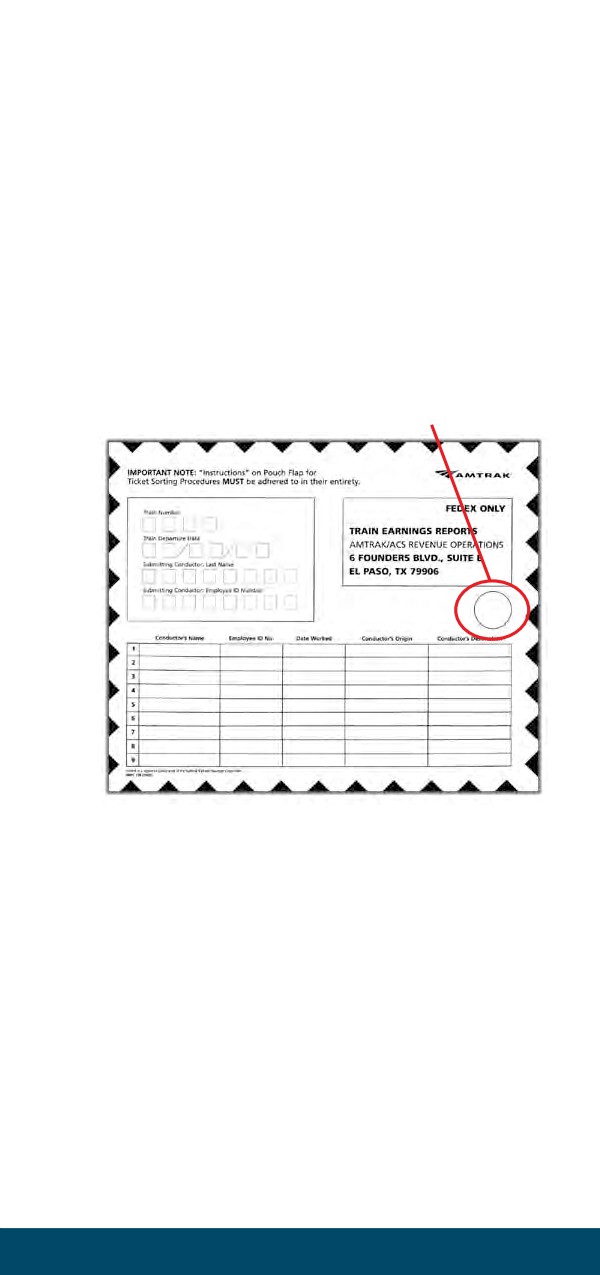
b) The randomly-selected number must be
prominently written in the circle on the “Train
Earnings Reports Envelope” (NRPC 158) for
permanent recording by Revenue Accounting.
(Refer to Figure 8-2)
Add Randomly Selected Number in Circle
Figure 8-2 - “Train Earnings Reports Envelope” (NRPC 158)
c) During the course of the ticket lift, any ticket
presented with the last digit of the ticket number
matching the number pre-selected by the
Conductor will trigger a request to the passenger to
produce valid photo identification to match against
the passenger name on the ticket.
• If the name on the ticket does not match the
name on the ID, and the passenger explains that
someone else paid for the ticket at a Quik-Trak
kiosk, the Conductor or Assistant Conductor
should lift the ticket. The Conductor or Assistant
Conductor should use tact and courtesy when
they explain that this situation can be avoided
in the future by making a reservation prior to
purchasing the ticket at a Quik-Trak kiosk.
Service Standards Manual No. 6
8-7
• If the passenger does not have valid identification,
or if the passenger's identification does not match
against the name on the face of the ticket, and
there is no reasonable explanation for the
discrepancy, the Amtrak police must be notified
by the quickest available means away from the
passenger.
• Failure to possess the proper photo identification
is not, by itself, sufficient reason to have the
passenger removed from the train.
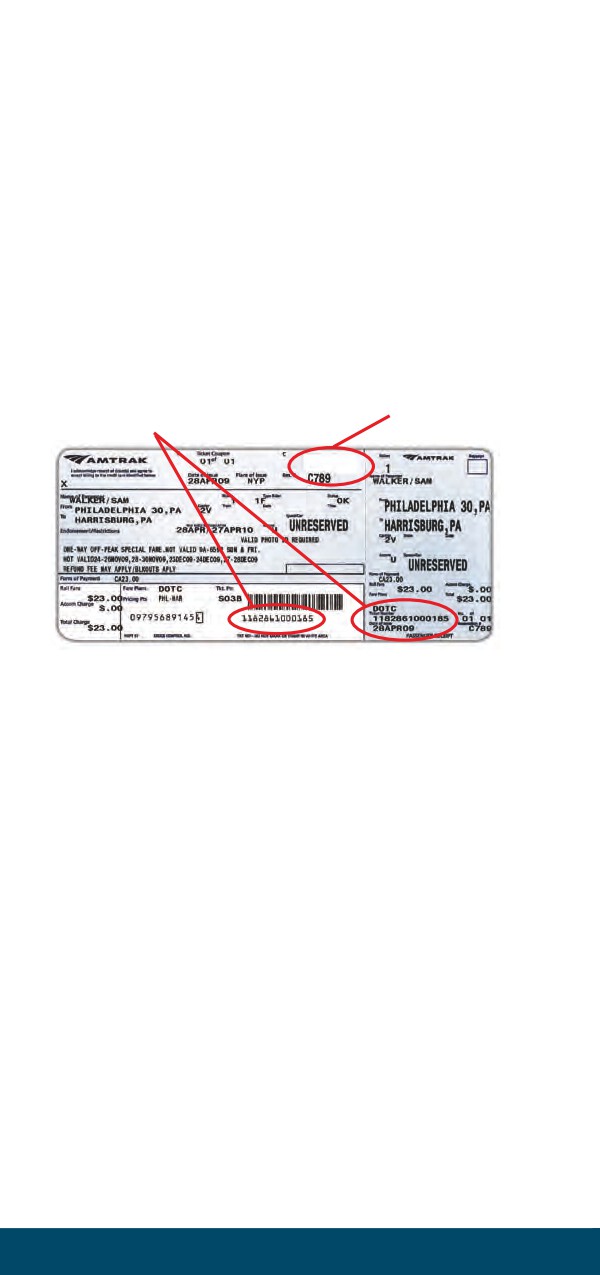
d) The ticket number can be found on the face of the
ticket and attached receipt. (Refer to Figure 8-3)
Punch Cut Area for Random
ID Verification
Ticket Number
Figure 8-3 - Location of Ticket Number and Punch Cut
e)
A punch cut must be made in the upper white
field for every ticket where a random verification
is performed, in addition to the normal cancellation
punch cut. On travel agent tickets, the punch cut
must be made on the upper right-hand corner.
(Refer to Figure 8-3)
f)
The Conductor must include the random on-board
ticket verification information in the “Conductor’s
Departure” announcement from Chapter 10,
“On-Board Announcements and Signage” when
the train departs from the initial terminal and
major intermediate stations.
g)
Relieving train crews must use the same number
chosen by the initial terminal Conductor, which
can be obtained from either the Conductor being
relieved, or from the “Train Earnings Reports
Envelope” (NRPC 158).
h) The relieving Conductor is required to communicate
the number to all of the Assistant Conductors.
i)
If, when the relieving Conductor takes charge of a
train, they find that a random number has not been
assigned, it is their responsibility to establish one.
8-8
Train Service Accounting Procedures
The procedure to establish a random number
en route or at the initial terminal is the same.
• Select a random number between 0-9, or other
designation (e.g., “odd” or “even”), as required
by the prevailing threat level.
• Communicate the random number or other
designation to the train crew during the job
briefing or on-board the train prior to the first
ticket lift.
• Print the number or other designator in the
circle on the front of the “Train Earnings
Reports Envelope” (NRPC 158).
• Legibly sign your name and indicate on the front
of the “Train Earnings Reports Envelope”
(NRPC 158) the location the random number
was generated.
2.
Acceptable Forms of Identification (ID)
The Transportation Security Administration (TSA)
issued Security Directive RAILPAX-04-02 (SD) on
May 20, 2004. This SD applies specifically to Amtrak
and the Alaska Railroad Corporation. Under
Security Measure 16 of the SD, the following is
deemed acceptable identification (ID) for persons
who appear to be 18 years or older:
• One piece of original, current photo identification
issued by a government authority, or
• Two pieces of original, current identification, at
least one of which is a non-photo ID issued by a
government authority.
The acceptable identification examples that are listed
are not an exclusive list. Any identification meeting
the above basic policy is acceptable, unless excluded
as shown under the section titled “Unacceptable
Identification Examples”.
a) Government Authority means -
• USA: Federal, state, county or local government.
• Canada: Federal, provincial, county or local
government.
• Other countries: The country’s national
government or a subdivision thereof. Local
Government includes entities such as public
school districts.
b) Original Identification means an original document.
Photocopies, facsimiles or any other type of copy,
are not acceptable except for certified copies of
birth certificates.
c) United States Residents - Examples of
Government-Issued Photo Identification (One
required)
Service Standards Manual No. 6
8-9
• State-issued driver’s license
• State-issued identification card issued by the
same agency that issues driver’s licenses
• U.S. Passport
• U.S. Resident Alien Card
• University, college or middle/high school photo
identification - public or private
• United States Armed Forces military
identification
• Job Corps photo identification
• Veterans Access Card issued by the U.S.
Department of Veterans Affairs
• Tribal identification (Native American/First
Nations, etc.)
• Law enforcement (police, etc.) photo
identification
• Amtrak employee photo identification
• Federal, state, county or local government
employee photo identification
d) Canadian Residents - Examples of Government-
Issued Photo Identification (One required)
• Provincial driver’s license
• Provincial identification card issued by the
same agency that issues driver’s licenses
• Canadian Passport
• Canadian Citizenship Card
• Canadian Permanent Resident Card
• Provincial health insurance card
• Other identification similar to that shown for
United States residents
e)
Mexican Residents - Examples of Government-
Issued Photo Identification (One required)
• Mexican driver’s license
• Mexican government issued photo identification
card
• Mexican Passport
• Other identification similar to that shown for
United States residents
f)
Residents of Other Countries - Examples of
Government-Issued Photo Identification
(One required)
• Passport
• Driver’s license issued by a foreign government
or subdivision thereof, if it has a photo
• Other identification similar to that shown for
United States residents
g)
Examples of Non-Photo or Non-Government
Issued Identification (Two required. One must be
government issued.)
• Non-photo driver’s license (must describe the
8-10
Train Service Accounting Procedures
named person by physical characteristics that
match the person presenting the license)
•
Temporary driver’s license (must describe the
named person by physical characteristics that
match the person presenting the license)
•
Social Security card
•
Voter registration card
•
Certified copy of birth certificate issued by a city,
county, state, provincial, or federal government;
must have raised, embossed seal and a dated
certification stating that it is a true copy of the
original on file at the issuing office
•
Public assistance card
•
Medicare/Medicaid card
•
Concealed Carry Permit card
•
Professional or Occupational License (nurse,
doctor, lawyer, hairdresser, etc.)
•
Police report of lost or stolen identification if
no more than 30 days old (second piece of
identification not required)
•
Prison release papers if no more than 30 days old
(second piece of identification not required)
•
Employee identification card with photo, from
a major employer such as a bank
•
AAA/CAA membership card
•
Student Advantage card
•
International Student Identity Card (ISIC)
h) Unacceptable Identification Examples
The following are examples of unacceptable
forms of identification.
• Expired identification
• Photocopies, facsimiles or any other type of
copy are not acceptable except for certified
copies of birth certificates
• Identification not that of the passenger
• Non-employee photo identification issued by a
private company or merchant (in particular,
photo ID cards issued by check cashing stores)
• Prison release papers if more than 30 days old
• Police report of lost or stolen identification if
more than 30 days old
i)
Passengers 14 and Under
A child 14 and under does not need identification
at any time.
j)
Passengers 15-17
• Unaccompanied travel is permitted for children
15 years of age and over.
• A child 15-17 who has acceptable identification
may obtain his or her own tickets and check
his or her own baggage.
Service Standards Manual No. 6
8-11
• A child 15-17 who does not have identification
must have another person 15 or over purchase
his or her tickets. That person must show his or
her own identification when obtaining the tickets.
• Tickets purchased on board for a child 15-17
traveling alone: If the child does not have his
or her own identification, another person 15
or over must wait with the child for the train
to arrive, then pay the Conductor the fare on
behalf of the child, showing his or her own
identification. The person waiting with the
child may not leave until the train has arrived,
the fare has been paid, and the child is safely
on board.
• Crews must be mindful not to delay trains
when verifying identification.
• After acceptable identification has been
presented for the purchase of an on-board ticket
for a child; the receipt will be recognized as
acceptable identification if the child needs to
make subsequent ticket purchases as part of
the same trip.
k) Passengers 18 and Over
• A passenger 18 and over must have acceptable
identification to obtain tickets and check baggage.
• He or she must also be prepared to show that
identification on-board the train if asked.
• Each passenger traveling under a group
reservation must have his or her own individual
identification.
• Passengers who do not drive still need a valid
photo identification. Normally, a non-driver
photo identification card can be issued from
the same agency that issues driver’s licenses.
D. Ticket Lift Announcement - En Route
Departure announcements from Chapter 10 “On-
Board Announcements & Signage” include information
that passengers need regarding the ticket lift process.
Conductors need to ensure that these announcements
are made at the proper time.
E.
Ticket Lift vs. Ticket Sweep
1.
Ticket Lift
A Ticket Lift is the process of examining and punching
the ticket of every passenger that just boarded the train,
whether at the initial terminal or an en route station.
8-12
Train Service Accounting Procedures
2.
Ticket Sweep
a)
A ticket sweep is the process of verifying that all
tickets have been lifted from each passenger that
had previously boarded the train.
• A sweep is performed after an en route train
crew change.
• A sweep can also be performed if it is believed
that there is a stow-away on-board, or that not
all tickets have been lifted.
• The Conductor and Assistant Conductor(s)
walk through the train checking ticket receipts
(stubs) and corresponding seat checks.
• During the sweep, some passengers waiting in
line or seated in the Café or Dining Car may
not be able to produce a receipt on the spot.
The crew member should make a mental note
and check with them later.
• If a passenger cannot produce a ticket or ticket
receipt, nor can they prove that their ticket was
taken, a COTS must be sold. In this situation, the
train crew must use utmost discretion.
b) Since each Sleeping Car has an assigned OBS
Attendant, there is more control over who is
traveling in the car. Therefore, except in extreme
situations, it is advisable to avoid a ticket sweep
through the Sleeping Cars, thereby minimizing
the disturbance of those passengers.
F.
Tickets
1.
Introduction
Tickets are evidence of fare paid. Passengers must
surrender tickets or their equivalent to the
Conductor or Assistant Conductor for cancellation
or examination whenever requested. Tickets are good:
• for transportation of the purchaser or other
person for whom originally purchased.
• between the stations indicated.
• for the type of service and accommodations paid for.
• subject to any other restrictions indicated.
• within the limits stated on the ticket or in Amtrak
tariffs.
2.
General Instructions
These procedures are to be followed by all
Conductors and Assistant Conductors to ensure the
proper collection and reporting of on-board sales.
a) The Conductor and the Assistant Conductor(s)
must control the flow of boarding to ensure that
all passengers are ticketed.
Service Standards Manual No. 6
8-13
• The examination of a passenger ticket is
permitted as the passenger is boarding the train
to ensure they are boarding the correct train.
• The collection of the passenger’s ticket at the
door before the passenger has boarded the
train is permitted only on an exception basis,
and only with the approval of the
Transportation Superintendent.
• For short-travel, high-volume trains, the most
common practices used to collect tickets are for
a train crew member to start at each end of the
train and meet in the middle, or back-to-back
with another train crew member starting from
the middle and working to each end of the train.
b) It is the Conductor’s responsibility to have the
Assistant Conductor(s) assist with the collection of
all revenue and to verify the origin, destination,
accommodation and correct fare type. (The correct
fare type might include the examination of separate
documentation, such as some type of pass, permit,
signature or age verification.)
c)
When the examination of the ticket clearly shows
the passenger is being dishonest, the full one-way
fare must be collected.
• If there is any doubt, consult with the
Conductor or management.
• If a passenger is chronically dishonest with
Amtrak, the matter must be taken up with a
Passenger Services Department Supervisor
and/or the Amtrak Police.
• The Conductor and Assistant Conductor(s)
will act on specific instructions and must act as
a team to control the situation.
d) Tickets that bear any alterations or erasures, or
which have more than one destination indicated
are invalid, and must be confiscated by the
Conductor.
e)
With the exception of some multi-ride tickets,
tickets are non-transferable and, if presented by
anyone other than the passenger for whom it was
originally purchased, must be confiscated.
f)
One-way regular un-reserved tickets are good in
either direction. However, the ticket must be
used entirely in one direction.
g)
Individual ticket coupons of all other tickets are good
only in the direction indicated by the stations shown.
h) All tickets and receipts must be punched by the
Conductor or Assistant Conductor, as required,
at the time of collection in view of the passenger.
• Certain types of tickets are examined and
8-14
Train Service Accounting Procedures
returned, such as:
• stopovers.
• multi-ride.
• monthly tickets.
• A Coach or Sleeping Car Attendant may only
collect passengers' tickets when directed by the
Conductor.
• The Conductor must later ensure the tickets
are correct for space provided.
i)
Transportation collection/examination includes
tickets that:
• cover the entire journey.
• must be accompanied by some type of
document, pass or card.
• cover part of the journey.
• may or may not cover an accommodation.
• may be rejected because they are not good for
that train (good judgment is required).
• are recorded but are left with the passenger.
• are station-generated carry orders.
• can be made good with additional collection.
• cover groups.
• are authorized on the manifest, such as for private
railroad cars and their occupants.
• are from a wide variety of sources that look
very different.
j)
Transportation collection/examination can
include employee passes that require:
• no ticket collection.
• Amtrak’s photo passes.
• permits that are valid without a ticket.
• documents presented for collection that
require certain forms to be completed, such as
other railroad companies’ orders.
k) Employees must carefully examine tickets requiring
identification when there is an obvious reason for
doubt. An example would be a young person trying
to use a senior citizen discount ticket.
l)
A Conductor or Assistant Conductor will be held
accountable for loss of revenue due to negligence.
Fraudulent conduct will not be tolerated and will be
grounds for dismissal.
• Loss of coins and currency.
• Incorrect or incomplete check and credit card
information.
• Incorrect or incomplete payment due.
• Incorrect or incomplete railroad bill documents.
• Incorrect or incomplete fares charged for
on-board sales or upgrades.
• Loss of company property.
Service Standards Manual No. 6
8-15
• Loss due to a mathematical error or a mistake
in giving change.
3.
Valid, Lost, Stolen, Found, Expired or Counterfeit
a)
Valid Amtrak tickets, good for Amtrak use, are
issued by Amtrak, travel agencies or by an airline.
• A ticket is Amtrak’s property until payment is
received.
• A ticket is the passenger’s property until the
passenger uses the ticket for travel.
• A ticket is Amtrak’s property once it has been
collected by the Conductor or Assistant
Conductor.
b) Lost or stolen tickets.
• Tickets without a name or identifier on the
ticket are considered the same as lost cash
and, therefore, are the property of the person
possessing the tickets.
• Tickets with a name or identifier on the ticket
are considered to be the property of the person
who purchased the ticket.
c)
Tickets found by an Amtrak employee:
• must be turned over to a ticket office or the
Ticket Receiver’s Office.
• must never be refunded for cash or for the
cash value.
d) Expired tickets are Amtrak or non-Amtrak
issued tickets with a valid date that has expired.
• Confiscate the ticket and place it in the “Train
Earnings Reports Envelope” (NRPC 158)
separate from the “valid” tickets.
• Issue COTS for a full one-way fare including
the on-board fare.
e)
Counterfeit tickets are very difficult to duplicate on
both sides of the ticket; therefore, it is important to
examine both sides.
• Any indication that the ticket is counterfeit must
result in the ticket being confiscated.
• Paper weight is not card stock.
• Reverse side is blank.
• Reverse side has obviously been pasted or
glued to the front side.
• The first 3 digits of the 13 digit tracking
number under the barcode is the Julian date
of the “Date of Issue”. (Example: 01 OCT 09
has a Julian date of 274.)
• The stock control number in the lower left
portion of the ticket always begins with the
digits 097 or 098 and the entire stock control
number will have a raised feel to it on both
sides of the ticket.
8-16
Train Service Accounting Procedures