Harley Davidson 1999-2005 Harley Dyna Models. Repair Manual - page 8
-------------------------------------------------------------------------------------------------------------------------------------------------------------
140
CHAPTER FOUR
Piston Inspection
134
1. If necessary, remove the piston rings as de-
scribed in this chapter.
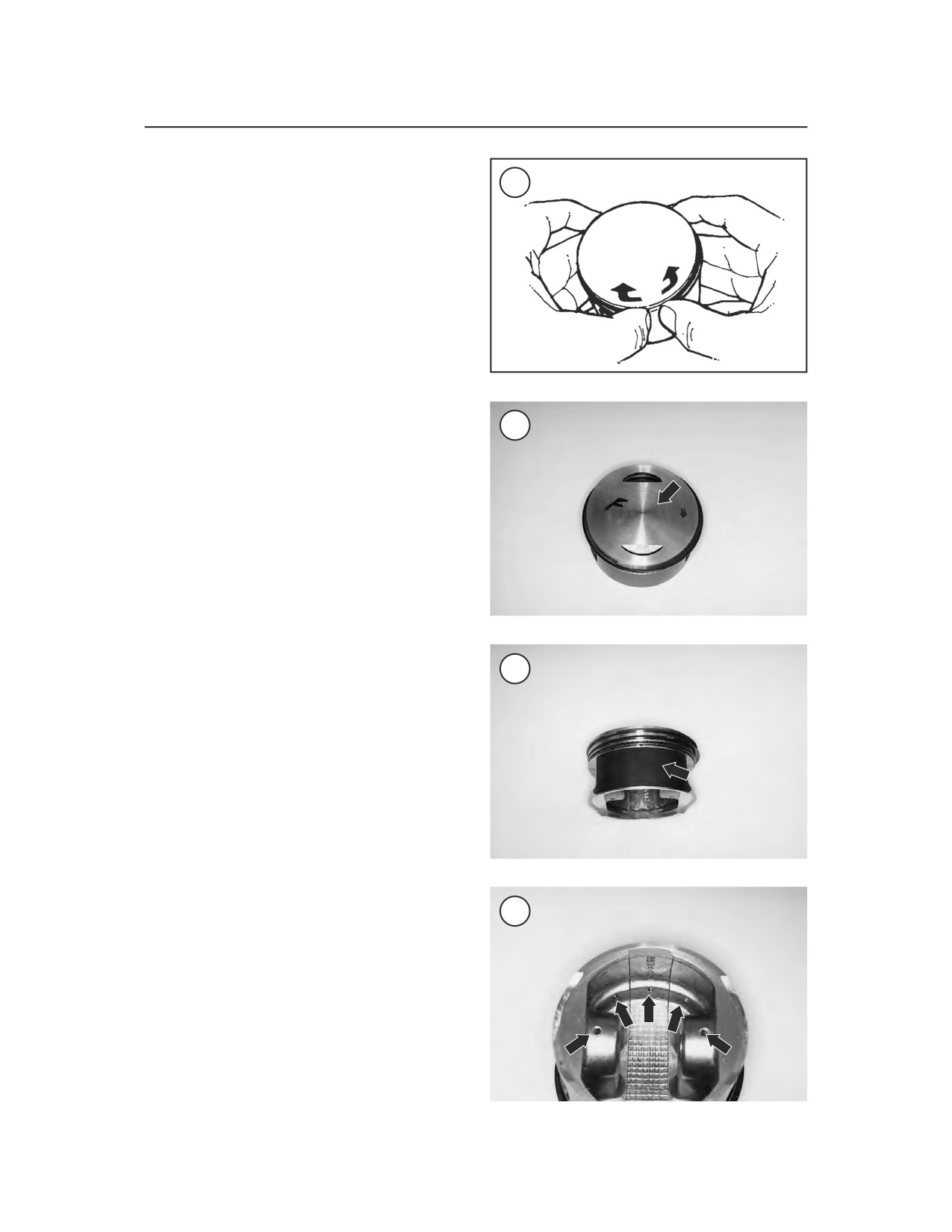
2. Carefully clean the carbon from the piston
crown (Figure 135) with a soft scraper. Large car-
bon accumulations reduce piston cooling and result
in detonation and piston damage. Re-letter the pis-
ton as soon as it is cleaned to keep it properly identi-
fied.
CAUTION
Be very careful not to gouge or other-
wise damage the piston when
removing carbon. Never use a wire
135
brush to clean the piston ring grooves.
Do not attempt to remove carbon from
the sides of the piston above the top
ring or from the cylinder bore near the
top. Removal of carbon from these
two areas may cause increased oil
consumption.
CAUTION
The pistons have a special coating on
the skirt (Figure 136). Do not scrape
or use any type of abrasive on this
surface as it will be damaged.
3. After cleaning the piston, examine the crown.
136
The crown should show no signs of wear or dam-
age. If the crown appears pecked or spongy, check
the spark plug, valves and combustion chamber for
aluminum deposits. If these deposits are found, the
engine is overheating.
4. Examine each ring groove for burrs, dented
edges or other damage. Pay particular attention to
the top compression ring groove as it usually wears
more than the others. The oil rings and grooves gen-
erally wear less than compression rings and their
grooves. If there is evidence of oil ring groove wear
or if the oil ring assembly is tight and difficult to re-
move, the piston skirt may have collapsed due to ex-
137
cessive heat and is permanently deformed. Replace
the piston.
5. Check the oil control holes (Figure 137) in the
piston for carbon or oil sludge buildup. Clean the
holes with wire and blow out with compressed air.
6. Check the piston skirt (Figure 136) for cracks or
other damage. If a piston shows signs of partial sei-
zure (bits of aluminum build-up on the piston skirt),
the piston should be replaced to reduce the possibil-
ity of engine noise and further piston seizure.