Ford Orion. Manual - part 43
1
General information
To minimise pollution of the atmosphere
from incompletely-burned and evaporating
gases, and to maintain good driveability and
fuel economy, a number of emissions control
systems are used on these vehicles. They
include the following:
a)
The engine management system
(comprising both fuel and ignition
sub-
systems) itself.
b)
Positive Crankcase Ventilation (PCV)
system.
c)
Evaporative Emissions Control (EVAP)
system.
d)
Pulse-air system.
e)
Catalytic converter.
The Sections of this Chapter include
general descriptions, checking procedures
within the scope of the home mechanic, and
component renewal procedures (when
possible) for each of the systems listed above.
Before assuming an emissions control
system is malfunctioning, check the fuel and
ignition systems carefully (see Chapters 4 and
5). The diagnosis of some emissions control
devices requires specialised tools, equipment
and training. If checking and servicing
become too difficult, or if a procedure is
beyond the scope of your skills, consult your
dealer service department or other specialist.
This doesn’t mean, however, that emissions
control systems are particularly difficult to
maintain and repair. You can quickly and
easily perform many checks, and do most of
the regular maintenance, at home with
common tune-up and hand tools. Note: The
most frequent cause of emissions problems is
simply a loose or broken electrical connector
or vacuum hose, so always check the
electrical connectors and vacuum hoses first.
Pay close attention to any special
precautions outlined in this Chapter. It should
be noted that the illustrations of the various
systems may not exactly match the system
installed on your vehicle, due to changes
made by the manufacturer during production
or from year-to-year.
Vehicles sold in some areas will carry a
Vehicle Emissions Control Information (VECI)
label, and a vacuum hose diagram located in
the engine compartment. These contain
important specifications and setting
procedures for the various emissions control
systems, with the vacuum hose diagram
identifying emissions control components.
When servicing the engine or emissions
systems, the VECI label in your particular
vehicle should always be checked for the
latest information for your vehicle.
2
Electronic control systems -
description and precautions
Description
The sophistication of the emissions control
systems fitted, and hence their method of
electronic control, is dependant on the
emissions level that the engine has been
designed to meet. The engines covered in this
manual are all designed to meet one of the
three current emissions levels, namely, 15.04,
NEEC 5th, and US ‘83. The European 15.04 is
the least stringent of the three, and its
requirements are met by carburettor engines
having engine management systems
controlling the ignition-related components
only. Some of the additional emissions
systems described in this Chapter may also
be fitted. The US ‘83 regulations are the most
stringent. To meet these, an engine will need
a full engine management system, electronic
fuel injection (to allow precise control of the
air/fuel mixture ratio) a regulated catalytic
converter, and one or more of the additional
emissions systems described in this Chapter.
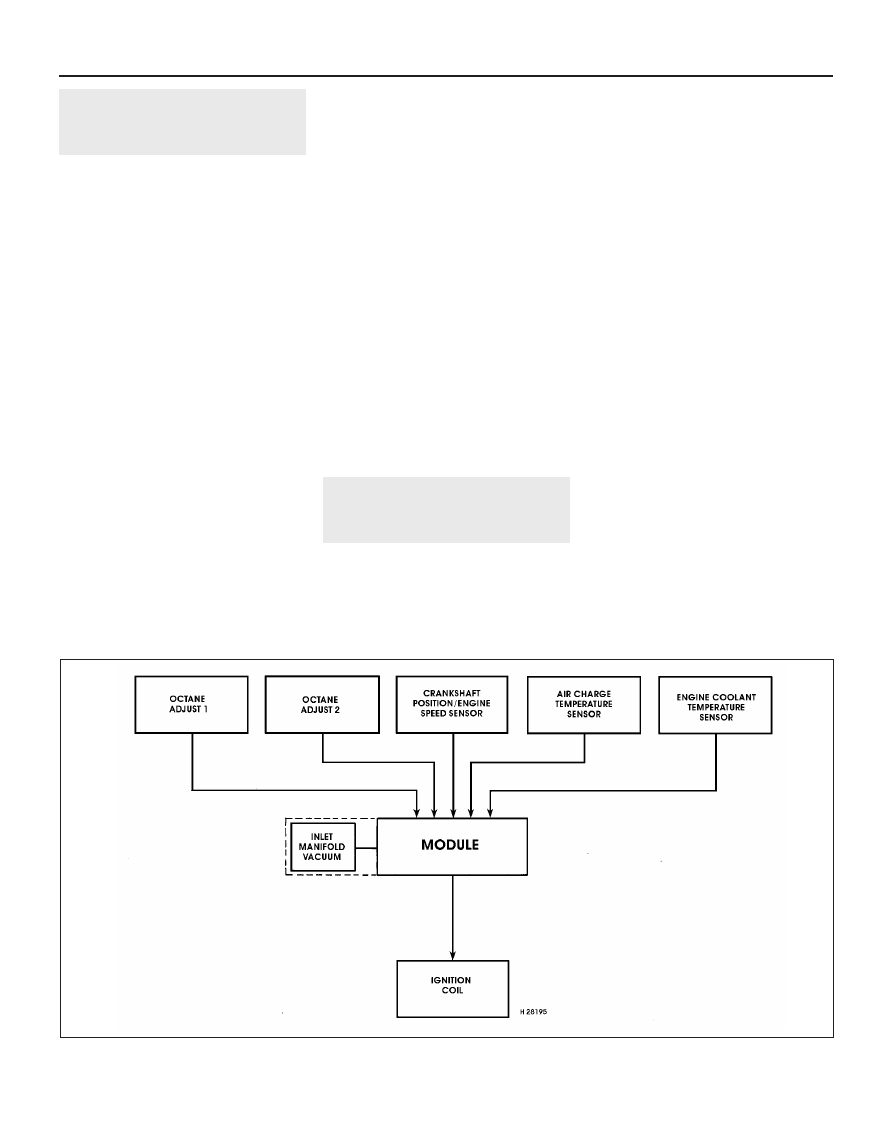
On carburettor engines, the exhaust
emissions requirements are met mainly by
precise control of the ignition timing, by
means of an ignition module receiving inputs
from sensors monitoring various engine
parameters, and additionally by the use of a
pulse-air system and unregulated catalytic
converter (see illustrations). The ignition
module fitted varies according to engine type,
but all operate in a similar fashion. Further
information on ignition module types and their
functions will be found in Chapter 5.
On fuel-injected engines, a highly-
sophisticated engine management system is
fitted, controlled by the EEC-IV microcomputer
in conjunction with an ignition module.
The EEC-IV (Electronic Engine Control,
fourth-generation) engine management
system controls fuel injection by means of a
microcomputer or ECU (Electronic Control
Unit) (see illustrations).
The ECU receives signals from various
sensors, which monitor changing engine
6•2 Emissions control systems
2.2A Diagram of engine monitoring sensors and actuators used on 1.3 litre carburettor engine models