Technology of watch production - part 52
 

  Index      Books     Technology of watch production (Tarasov) 1964 year


Search            


Content   ..  50  51  52  53   ..


Technology of watch production - part 52


C h a p t e r   VI 

BASIC  MA CHINING  OPERA TIONS  FOR  PLA TES, 

B RIDGES  AND  COCKS 

The pillar plate  is the foundation on which pocket- and  wristwatches 

movements  are mounted.  The  pillar plate  is  2 . 30  to  2 .  7 5  mm  thick,  with 

recesses  and p rojections  of  various  shapes  and heights ,  and with a  large 

numbe r  of through  and blind holes ,  s ome of them  threaded. 

Plates  have  various  shapes ,  depending on the general arrangement  of 

the movement parts .  A  circular plate is us ed in pocket watches  and in the 

majority  of wristwatches .  Certain  brands  of  wris twatche s ,   both  men ' s  

and ladies ' ,   have plates o f  noncircular shapes:  s quare ,   rectangular,  be­

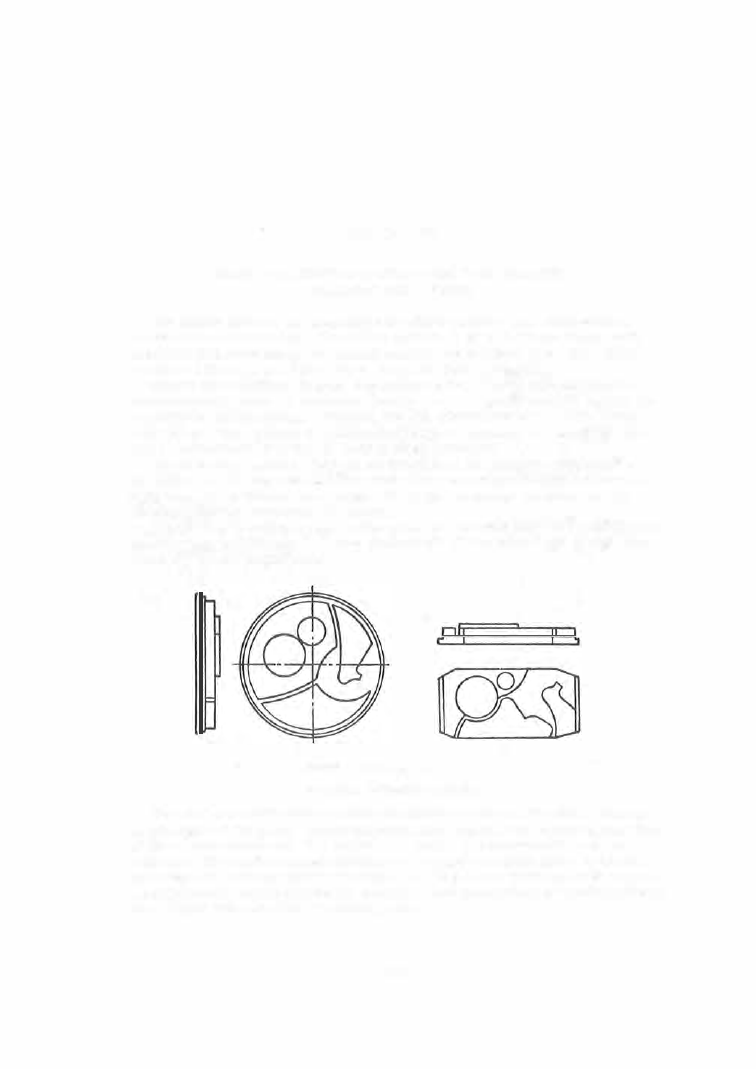
veled  rectangular (Figure  1 ),  barrel - shaped o r  o val . 

The  size o f  a  watch  is  defined as  the  s ize o f  the  mounting shoulder on 

the plate.  A  2 6 - mm  size  (K- 2 6 )  watch has a  m ounting-shoulder diameter 

of 26 m m .   In a  1 8 -mm  size watch  (K- 1 8 )  the  mounting shoulder on the 

small s ide  of the  rectangle  is  1 8  m m .  

Figure  2 ,  a  is a  photograph  of the  plate  of a  2 6 -mm  size  "Pobeda" brand 

wristwatch,  and  Figure  2,  b  is a  photograph of the  plate  of an  1 8  mm  size 

" Zvezda" b rand  wris twatch. 

FIGURE 

1. 

Plate  shapes : 

a -circular;  b- beveled  rectangular . 

The  dial  side of the  plate  carries the  m otion work and  the  dial .  The  op­

posite  s ide  of the plate,  called the cock side,  carries  the basic ass emblies 
of  the watch movement:  the  barrel,  the  train,  the  es capem ent  and the 

balance .   The  movement assemblies  are supported on the plate by m eans 

of cocks  and bridges ,  which are  plates  0 . 4  to 4 . 2  mm  thick  and with  various 

configurations  and  having holes,  reces s es  and projections  of  various  shapes 

and heights for  mounting  the watch parts . 

205 

Wrist- and  pocket watches  usually have four main  c ocks  and  bridge s :  

the  barrel  bridge  which  supports  the  barrel , the  center wheel  and the 
keyless  (winding)  wheels ;   the  train b ridge  which  supports  the  third,  fourth 
and  es cape  wheels;  the pallet  cock which supports  the pallet fork;  and  the 

balance  cock  which  supports  the  balance  with  the  hairspring and  regulator .  

The  large number  of recesses i n  the plate,  which  o verlap  t o  a  cons ider­

able  extent,  considerably weaken the plate cross  s ection in certain  opera­

tions  and  reduce  its  rigidity.  A  drawing of a  wristwatch plate  is  given in 

Figure  3,  a, while Figures  3,  b,  c,  d  show various  s ections .  The wall 

thickness  in s ection AA  (drawing b )  is  0 . 3  mm,  while  the  total  plate thick­

ness  is  2 . 3 5  mm .  In s ection BB (drawing c )  there is  a  s tepped cylindrical 

counterbore with  run- out tolerance  0 . 0 3  mm  relative  to hole III .  In s e ction 

CC there  is  a  c ontoured through hole with  recesses  on both  sides .  

FIGURE 2.  Wristwatch plates,  cocks and bridges 

a-dial and cock sides of the plate of " Pobeda"  brand lvatches;  b-dial and cock sides of the plate of 
" Zvezda"  brand watches;  c-pallet cock ;  d-balance cock;  e-train bridge;  f-barrel bridge. 

The  various  contoured  recesses  must be  very accurately made.  The 

width  between  the  restricting projections  for  the  pallet  fork  must be  1 . 3 8 1  ± 
± 0. 005 mm  (drawing  e ) .   The  tolerance for the  holes  for  the  j ournals ,  pin­

ions,  and  cock  pins  must not  exceed  0 . 005 m m .   The  tolerances  for the 

center distances  of  gear pairs ,  and es capement and  balance  ass emblies 

must not exceed  0 . 0 0 7 5  to  0 . 0 1  mm .  C orresponding holes  in plates  and 

cocks  ass embled in  s tacks  must  be  true  (concentric ),  and  the location de­

viations  mus t  not exceed the  center- distance  tolerances . 

The  surfac e -finish quality  of  the  holes for axes ,  arbors  and  pins  must 

correspond  to  class  9 

-

10  and  the  finish quality of the cock s ide  of the plate 

and of the  cocks  thems elves  must be  class  8 .   The  surface  quality  of the 

remaining,  less  critical ,  parts  must be no  poorer than class  7 .  

2 06 

Section AA 

FIGURE  3.  Wristwatch plate  (cock side): 

a-general viev1;  b-section AA;  c-section BB;  d-section CC;  e-banking projections 
for the pallet fork . 

2 0 7  

The  plate  and  b ridges  are  made  of  a  special bras s ,   type  LS6 3 - 3 .  

The  rigid  and  diverse  requirements  relative  to watch plates  and  cocks 

(bridges ) have  led to  the  development  of  s uitable  machining p roces s es . 

Sixty operations  are involved  in  the  p rocess  of  machining  the plate:  blank­

ing,  contour shaving,  center punching  (pointing),  drilling holes  according 
to  the  center-punch  marks  and tapping them,  turning and  counterbo ring, 

milling  recesses and  shoulders ,  and  shaving  the  holes . 

The  machining of  bridges  is  simpler,  but  includes  the  additional  opera ­

tions  of  ma rking and  texturing. 

The  plate-machining operations  are  divided  up  as  follows :  2 0 "/o  s tamping 

operations ,  3 5 "/o  drilling operations ,  3 0 "/o  turning and milling operations , 

1 5 %  shaving  and  cleaning operations ,  and  aging. 

The  stamping operations :  blanking,  shaving and  center punching,  were 

des c ribed in Chapter III  (s tamping operations ) .   The  other  operations  are 

described below. 

FIGURE  4.  Base holes 

1o 

z, 

on the " Pobeda"  brand 

wristwatch pillar plate 

The  machining  of  the  plates  is  carried out with  reference to  three  bas e 

holes 

P� o  P2 ,  P8 

(Figure  4 ).  Before  thes e  holes  are s haved the  plate is 

blanked  and  contour-shaved.  The  winding-pinion window is  pierced and 

center-punch  marks  for  the  three bas e  holes  are made.  A fter  s tress-re­

lieving,  the three bas e  holes  are drilled  and  countersunk  and  the plate is 

turned on both the  cock and  the  dial  s ides .  The plate of  "Pobeda "  brand 

wristwatches ,  shown  in Figure  4,  is  s ubjected to  further  machining after 

thes e  preparatory  operations . 

The  s tepped holes  for the  fitting pins ,  situated  on  the  dial  side  of  the 

plate,  are machined  first.  The largest  diameter is  d rilled first ( Figure 

5,  a),  in o rder to  decreas e  the  thickness  which remains  to  be  pierced by 

the  s mall- diameter punche s .   The  smaller holes  are  then pierced,  and  the 

next group  of holes  are  simultaneously center-punched  (Figure  5,  b ) .   An 

allowance  of  0. 1 0 - 0 . 1 5  mm  is  left for s ubs equent shaving  of the  holes .  Now 

the plate  is  machined.  C enter-punched holes ,  designated  in  the drawing by 
the s ymbols  S, B,  7,  etc . ,  are then drilled,  counterbored,  counters unk and 

bored (Figure  5,  c ) .  

The  drilling i s  followed b y  preliminary  counterboring of the barrel  re­

cesses  and  the  milling of  recesses for the  train�'.  escapement  and  balance .  

• 

Train - the  toothed-wheel transmission connecting the  barrel with the escapement. 

2 0 8  


Content   ..  50  51  52  53   ..