The Use of Computer-Aided Design (CAD) in Clockmaking - part 4
10
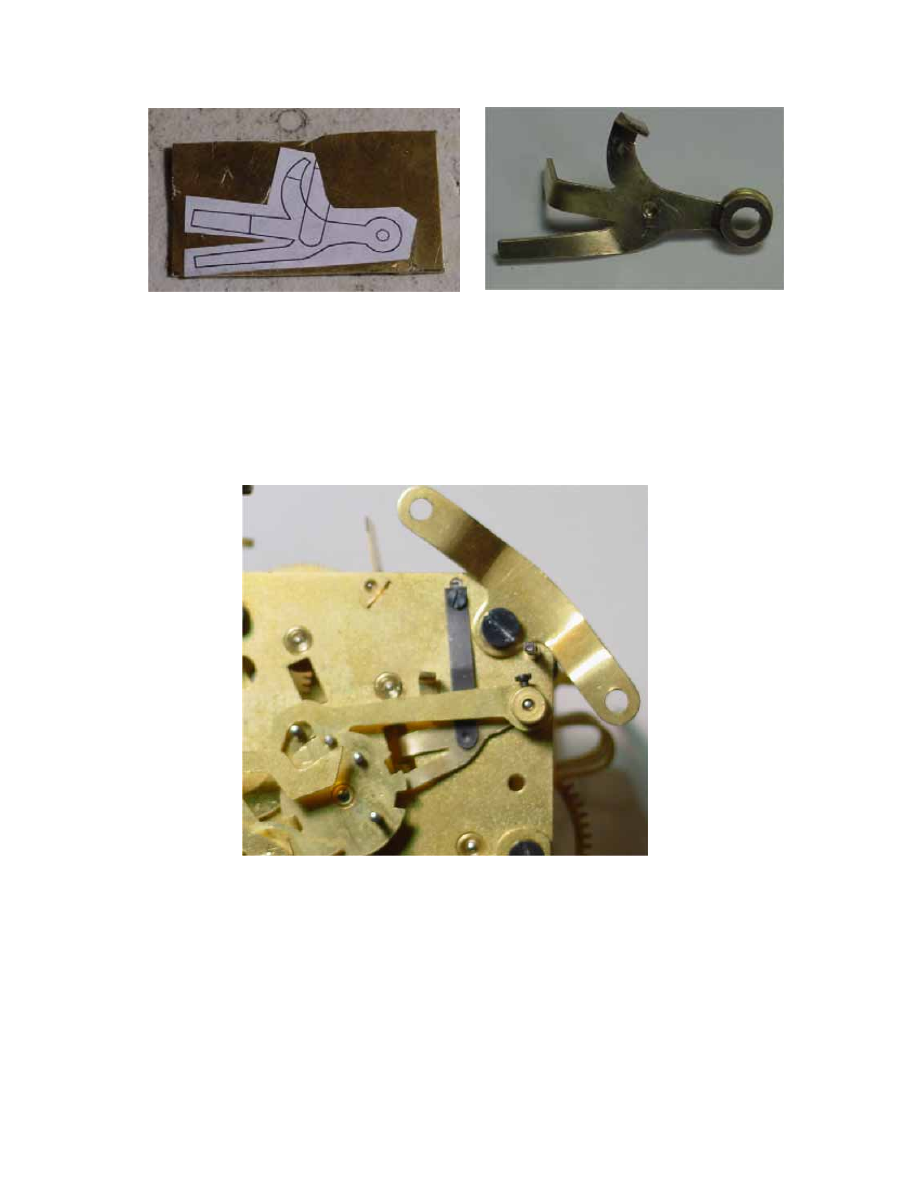
CAD made the fabrication of a lever with three acting arms a routine task. (Fig. 26)
There was no “starting over” or wasted time with “trial and error”. The spring and lever
function just as they should and, in addition, bear a close resemblance to their original
counterparts. (Fig. 27)
These are but a few of the uses of CAD and an in-depth study would take volumes. It is
like any other tool and becomes more valuable with use. The more one becomes familiar
with its capabilities, the more diverse CAD uses will become. In the future, using CAD
as a tool in clockmaking is sure to become as commonplace as using a screwdriver.
Whether it is used for design, theory, fabrication, or some as yet unknown purpose, CAD
will save time and money for the 21
st
century clockmaker as it would have for Goodrich
had it been available in 1950.
Fig. 25: The scaled template can be glued to a piece of
brass to aid in the fabrication process.
Fig. 26: Only minor adjustments and polishing is
left to do. The project went much quicker and easier
using CAD.
Fig. 27: The fabricated parts look and function just like they’re
supposed to.