Military reference books and manuals (2009-2023, Volume 7) - page 25

Insurgents
be fleeting, mission dependent, event- or agenda-oriented, mutually coordinated, and/or coerced for a
specific temporary purpose. There may be loose coordination of certain actions, after which the
organizations revert back to their independent modes.
LOCAL
INSURGENT
ORGANIZATION
DA CELL
DA CELL
DA CELL
DA CELL
(Multi-
(Assassin/
(Kidnapping
(Information
Function)
Sniper)
& Extortion)
Warfare)
DA CELL
CI & INTERNAL
INTELLIGENCE
PLANNING
(Mortar
SECURITY
CELL
CELL
& Rocket)
CELL
INFORMATION
TECHNICAL
COMMS &
LOGISTICS
WARFARE
SUPPORT
TRADECRAFT
CELL
CELL
CELL
CELL
SHELTER
FINANCE
TRAINING
RECRUITING
CELL
CELL
CELL
CELL
(Safe Houses)
CIVIL
TRANSPORT
MEDICAL
AFFAIRS
CELL
CELL
CELL
Note. While this organization chart appears in a hierarchical format, that is only for convenience.
In actuality, a network structure is most likely in an insurgent organization. Also, the numbers of
each type of subordinate cell can vary, and some may not be present at all in a particular
organization.
Figure 2-4. Local insurgent organization
Dispersion
2-71. Direct action cells and supporting cells disperse as a norm. They are not normally colocated with
each other or with the leader(s) of the local insurgent organization. Although in some cases direct action cells
may come together to provide mutual support, they usually carry out their mission independent of other cells.
Dispersion enhances the security and survivability of the local insurgent organization and its individual cells. It
also distributes the influence of the insurgency to a wider area and a larger segment of the population.
17 January 2014
TC 7-100.3
2-13
Chapter 2
Leadership
2-72. Leadership in a local insurgent organization may reside in one individual or more than one
individual. Advisors or a small council may exist but are not always present in a local insurgent
organization to assist the leader or leaders. (See Advisors under Higher Insurgent Organization, above.)In
some cases, command directives can be very specific and focused. In other cases, the leadership may
purposely issue only general guidance to allow initiative at the cellular level for specific actions.
Insurgent Network Example
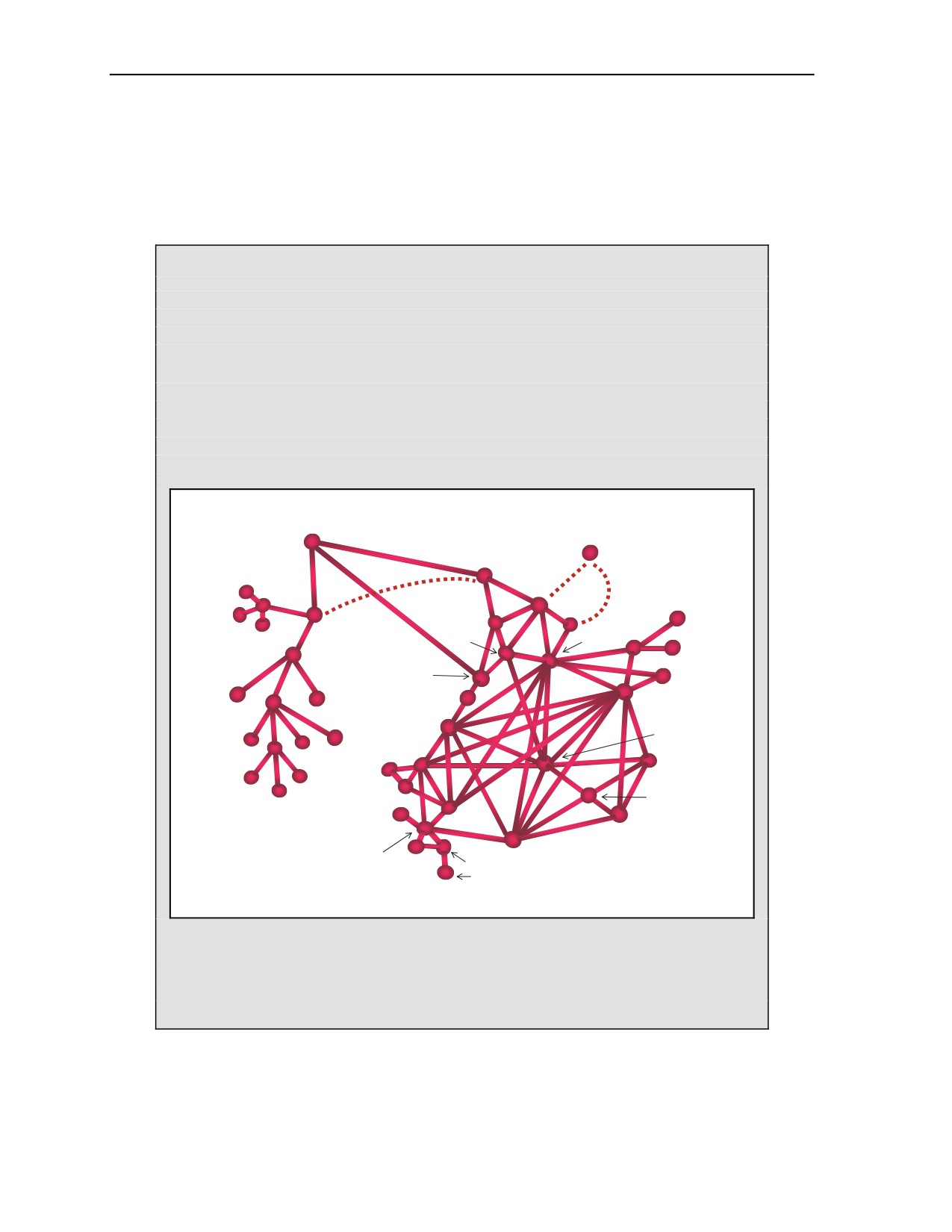
The C2 structure of a local insurgent organization can be a network, hierarchy, and/or
a combination of networked and hierarchical systems. However, a network is the
most likely structure. An example of a network in figure 2-5 includes—
• A higher insurgent organization.
• A local insurgent organization (subordinate to the higher insurgent organization).
▪ Direct action cells (some broken down into teams).
▪ Supporting cells (some broken down into teams).
• Guerrilla units (subordinate to the higher insurgent organization and affiliated with
the local insurgent organization).
• A criminal organization (affiliated with the local insurgent organization).
Higher Insurgent Organization
Local
Criminal
Insurgent
Organization
Organization
(Affiliated)
Guerrilla
Platoons
Planning
Guerrilla
Cell
Company
Mortar
Finance
DA Cell
CI and Internal
Team
Cell
(Mortar
Security Cell
and
Guerrilla
Intelligence
Rocket)
Battalion
Training
Guerrilla
Cell
Rocket
(Affiliated)
Cell
Team
HK Company
Comms and
Tradecraft
DA Cell
Guerrilla
Cell
(Kidnapping
HK Groups
Recruiting
and Extortion)
Cell
INFOWAR
Civil Affairs
Cell
Cell
Guerrilla
DA Cell
Logistics
HK
(Assassin
Sections
Cell
and Sniper)
Assassin
Shelter
and Sniper
Cell
Guerrilla
Team
HK Teams
Assassin and Sniper
Transportation
Team
Cell
DA Cell
Suicide IED Team
(INFOWAR)
(Individual
Medical
and Vehicle)
DA Cell
Cell
Technical
(Multifunction)
Support
Demolition,
WMD
Cell
Sabotage
Support
Team
and IED Teams
In this example, the local insurgent organization appears to be self-sufficient, relying
on its own supporting cells for support. In some cases, supporting cells of the local
insurgent organization would also have links to their counterpart cells in the higher
insurgent organization. In other cases, the local insurgent organization may lack
some supporting cells if it relies on the higher organization for this support.
Figure 2-5. Local and higher insurgent organizations network (example)
2-14
TC 7-100.3
17 January 2014

Insurgents
Cellular Structure
2-73. As with a higher insurgent organization, local insurgent organizations have a cellular structure.
However, there are several differences in functions and scope of operations. Figure 2-4 and 2-5 show the
types of cells that may be present in a local insurgent organization. Local insurgent organizations are
typically composed of anywhere from 3 to more than 30 direct action and supporting cells. However, a
smaller insurgent organization may consist of as few as one direct action cell (see figure 2-6).
2-74. Cellular structure in the local insurgent organization comprises two basic types of capability. These
cells are—
z
Direct action cells.
z
Supporting cells.
INFO
Direct Action Cell
Direct Action Cell
WAR I
I
Multifunction
Information Warfare
Direct Action Cell
Assassination/Sniper
I
A
S
Assassination
Sniper
I
I
Team
Team
Direct Action Cell
Kidnapping and Extortion
I
K
Kidnapping
Extortion
I
Team
S
I
Team
Direct Action Cell
Mortar and Rocket
I
Mortar Team
Rocket Team
I
I
(60-mm)
(107-mm)
Note. If the I (for insurgent) does not fit in the diamond-shaped unit symbol, it is placed to the right of the
diamond. For multifunctional cells or teams and those with a specific function for which standard military
symbology has no functional symbol, it is necessary to either include an abbreviation for that function
inside the diamond or to identify the nature of the cell or team with a note outside the diamond. The
kidnapping and extortion cell can use different symbols for the currency of a particular state or region,
rather than the U.S. dollar sign. Subordinate teams of the mortar and rocket cell can be identified with a
specific mortar team or rocket team symbol when performing those functions separately. Using the symbol
for the mortar and rocket cell indicates that the cell is operating with both mortar and rocket capabilities.
Figure 2-6. Insurgent direct action cell and team graphic symbols
17 January 2014
TC 7-100.3
2-15
Chapter 2
Direct Action Cells
2-75. Direct action cells are the backbone of the insurgency movement. They contain the actual fighters of
the insurgency. Some direct action cells have a multifunction purpose, while others are organized to
perform a specialty function. Specialties can include, but are not limited to, assassination, sniper,
kidnapping, extortion, INFOWAR, or mortar and/or rocket attacks. Every direct action cell is capable of
performing all the missions listed above, to some degree. All cells are capable of sabotage and IED
emplacement and detonation.
2-76. Typical types of direct action cells that may be present in a local insurgent organization are—
z
Multifunction.
z
INFOWAR.
z
Assassination and sniper.
z
Kidnapping and extortion.
z
Mortar and rocket.
2-77. The types of direct action cells and numbers of each can vary greatly from one local insurgent
organization to another. Some may have—
z
All multipurpose cells.
z
All specialized cells, each with a different focus.
z
All specialized cells with a single focus.
z
Any mixture of the above.
Most insurgent organizations have a mix of separate specialty cells and multifunction cells. All these cells
are designed to operate independently (if necessary) once they have started their mission.
2-78. Direct action cells do not have a fixed structure. The structure, personnel, equipment, and weapons
mix all depend on specific mission requirements. The size, specialty, and number of cells employed also
depend on the size, number, and specialties required for specific missions. A cell typically contains from 6
to 10 personnel. However, a cell can be as small as 2 people or consist of over 20 people. Direct action
cells easily lend themselves to be broken down into subordinate teams whenever necessary.
2-79. All direct action cells record key events and successful results on digital video and/or still cameras.
In some cases, the key event may be staged for the camera. Upon mission completion, the direct action
cells turn the information over to the INFOWAR cell for manipulation and exploitation. The videographers
or camera operators try to blend in with crowds and disassociate themselves from the operation.
Sympathizers in the local population may also serve in this role.
2-80. Direct action personnel may be a mixture of men, women, and children. Local women and children
may be used as runners, messengers, scouts, guides, drivers, porters, snipers, lookouts, videographers,
camera operators, or in other roles. They may also emplace and/or detonate IEDs, signal flares, and mines.
Women (and possibly children) may be fighters and participate in assassinations, ambushes, or assaults.
They may also serve (willingly or unwillingly) as suicide bombers.
Multifunction Cell
2-81. The direct action cell (multifunction) is the basic direct action cell structure. It can employ functional
tactics or terrorism, as necessary. It possesses all the capabilities of specialized cells (such as assassination
and sniper; kidnapping and extortion; INFOWAR; and mortar and rocket) but normally to a lesser degree.
When not engaged in specialized activities the, specialized cells can serve as multifunction direct action
cells.
2-82. Bombs (especially IEDs) are the weapon of choice for multipurpose direct action cells. They can be
used in support of assassination, maiming, sabotage, and producing mass casualties. The cells usually
acquire IEDs from the technical support cell as unassembled, pre-manufactured components. The
multifunction cell assembles them and adds fuzes and detonators. Within the multifunction cell, an IED
team usually includes at least three people: a lookout, the IED emplacer, and a triggerman. In some cases, a
small multifunction cell of three or four personnel may act as an IED cell. The team or cell emplaces the
2-16
TC 7-100.3
17 January 2014
Insurgents
IEDs, and the triggerman detonates them at the appropriate time. If additional assistance or IED expertise is
required, they receive it from the technical support cell.
2-83. Insurgents often use IEDs as secondary devices, to detonate on the arrival of personnel responding to
another attack or IED. IEDs can be detonated by a variety of means, including remote, command, electrical,
trip wire, pressure, time, and others.
Assassination and Sniper Cell
2-84. The primary mission of the direct action cell (assassination and sniper) is to terrorize a relevant
population and/or to assassinate preselected persons.
(See chapter
6 on Terrorism.) In either the
assassination or the sniper task, the cell creates a psychological impact to intimidate and demoralize the
population. The cell may indiscriminately select individual targets in crowded marketplaces or religious
and political gatherings with the sole intent to terrorize.
2-85. An assassination is a deliberate action to kill political leaders or very important people rather than
killing common people, which is considered murder. The insurgent assassinates or murders people it cannot
intimidate, who have left the group, or who have some symbolic significance for the enemy or world
community. Insurgent organizations may refer to these killings as “punishment.”
2-86. Many targets of assassination are symbolic and often have a great psychological impact on the
enemy. For example, assassinating an enemy negotiator or successful businessperson can demonstrate the
enemy’s inability to protect its own people.
2-87. The assassination and sniper cell consists of two teams. The cell leader serves as a team leader of
one team, and another insurgent serves as the assistant cell leader and team leader of the other team. The
structure, personnel, equipment, and weapons mix all depend on specific mission requirements. Weapons
appropriate to each mission are selected. The other equipment is left behind or cached.
2-88. The cell could select its own targets based on opportunity, as long as hitting such targets supports (or
does not conflict with) the overall goals of the insurgent organization. Assassination methods include
remotely-detonated bombing, the use of firearms, and poisoning. The target’s vulnerabilities determine the
method of assassination. The insurgent leadership and/or the planning cell can exercise centralized control
as necessary in order to orchestrate concerted action or to achieve a specific goal in its area of influence.
2-89. When not engaged in specialized activities, the assassination and sniper cell serves as a
multifunction direct action cell. Depending on mission requirements, the assassination and sniper
cell may also serve as a reconnaissance element, a stay-behind element, or provide security for
other direct action cells.
Kidnapping and Extortion Cell
2-90. The primary mission of the direct action cell (kidnapping and extortion) is to conduct kidnapping,
extortion, hijacking, and hostage-taking. These acts help to finance the insurgent organization and serve to
influence and/or terrorize the population.
(See chapter
6 on Terrorism.) Each action, particularly a
kidnapping, requires detailed planning and support by a number of other cells.
2-91. The kidnapping and extortion cell may be authorized to identify victims as targets of opportunity as
long as hitting such targets supports
(or does not conflict with) the overall goals of the insurgent
organization. However, the insurgent leadership can exercise centralized control as necessary, in order to
orchestrate concerted action, and might identify certain targets or types of targets in order to achieve a
specific goal in its area of influence. For a mission directed by the leadership, this cell may receive
augmentation of insurgents from other cells.
2-92. The kidnapping and extortion cell leader coordinates with the intelligence cell for reconnaissance and
surveillance of targets. The intelligence cell provides information on the target’s vulnerabilities,
weaknesses, and routine behavior. Every member of the insurgent organization as well as sympathizers can
help gather this target information. The intelligence cell must thoroughly analyze the target so that it can
advise the insurgent leadership, the planning cell, and/or the kidnapping and extortion cell on selection of
the target site and method of kidnapping. Human intelligence is vital when planning and conducting a
17 January 2014
TC 7-100.3
2-17
Chapter 2
kidnapping. The intelligence cell continuously conducts surveillance on the target to identify potential
security flaws and identifies vulnerabilities that the direct action cell can exploit.
2-93. The intelligence cell and/or the kidnapping and extortion cell conducts detailed
reconnaissance/surveillance of potential kidnap sites to determine the best site, considering cover,
concealment, and escape routes. Once the target and site are selected, the kidnapping and extortion cell
(and/or the planning cell and intelligence cell) conducts detailed analysis to provide the kidnapping and
extortion cell with the requisite data on the target. The information required depends on the location of the
target and site, but typically includes—
z
The exact route the target uses.
z
The method of conveyance and its specific characteristics.
z
The number of security personnel, their location, disposition, and types of weapons used.
z
The target’s likes, dislikes, allergies, habits, and routines.
2-94. After planning and reconnaissance, the kidnapping and extortion cell conducts the actual action. For
a kidnapping, the cell leader designates a specific team to conduct the kidnapping. After receiving
intelligence, the team rehearses specific kidnapping techniques, such as an ambush or abduction, and
finalizes planning. The team plans the escape route in great detail because of the complexities of
transporting the victim. It usually disables the victim to make the escape easier. The team determines the
best method of disabling the victim (such as drugging, stunning, or binding him).
2-95. The kidnapping and extortion cell coordinates with the shelter cell for a safe house when kidnapping
and/or hostage-taking is the mission. The INFOWAR cell helps create and maintain the fear caused by
kidnapping and extortion through its propaganda and media manipulation means.
Information Warfare Cell
2-96. The direct action cell (INFOWAR) supports the insurgent organization’s INFOWAR plan. It may or
may not receive guidance and assistance from the local insurgent organization. INFOWAR cell or its
counterpart in a higher insurgent organization. (See appendix A for more detail on INFOWAR.)
2-97. There may be as few as one direct action cell (INFOWAR) to over 20 such cells depending on the
mission, the targets within a relevant population and governing authority, and topics to be exploited. The
cells can be broken down into teams when necessary. The structure, personnel, equipment, and weapons
mix, all depend on specific mission requirements. Personnel select weapons appropriate to the mission.
Other weapons and equipment are added as required, such as computers, computer-rigged vehicles,
specialized antennas, and communications.
2-98. Depending on the size, nature, and focus of the insurgent organization, the cell may be capable of
several functions. Examples of functions performed by the INFOWAR cell are—
z
Selective sabotage actions.
z
Information management (internal methods, links, and security).
z
Media manipulation (misinformation and disinformation).
z
Communications (cyber embeds via Internet sites, propaganda and indoctrination videos;
broadcast successes of the direct action teams).
z
Civic actions popular to a relevant population.
z
Cyber-mining for information and intelligence.
Some of the functions may require specialized expertise. For example, the media manipulation function
may require expertise and/or advice from a cleric; a political, tribal, ethic, or cultural leader; or other
subject matter experts. Some functions can also be performed by personnel outside of the INFOWAR cell.
Several members of the cell may be hired INFOWAR specialists or “gun fighters.”
Mortar and Rocket Cell
2-99. The primary purpose of the direct action cell (mortar and rocket) is to either terrorize or influence
the local populace and governing authorities. It may indiscriminately fire into crowded marketplaces
and religious gatherings with the intent to terrorize and influence a relevant population. Targets may
2-18
TC 7-100.3
17 January 2014
Insurgents
include religious or national icons and/or landmarks. These attacks are often used to support the
overall INFOWAR plan. They may also be used in a manner to shift blame for the attack to the
enemy. The cell can provide indirect fires in support of insurgent missions. When insurgents need
additional mortar and rocket fires, they may look to affiliated guerrillas for support.
2-100. The rocket and mortar cell typically consists of a mortar team and a rocket team. Each team may
have approximately six personnel. The mortar team of the cell may have light and/or medium mortars.
When it uses medium mortars, it may require additional ammunition bearers and possibly a light truck for
transporting the weapon. The rocket team normally fires medium rockets, sometimes from improvised
rocket launchers. The mortar team and rocket team can conduct missions as a cell or conduct mortar and
rocket missions as separate teams. The normal plan is for the team(s) to execute a fire mission and quickly
disperse from the firing point.
2-101. When not engaged in specialized activities, the mortar and rocket direct action cell can serve
as a multifunction direct action cell. The mortars, rockets, and associated equipment may be
cached or left behind, in which case the cell members carry weapons and munitions similar to the
multifunction cell.
Supporting Cells
2-102. Supporting cells support and assist operations of the direct action cells or the insurgent
organization as a whole. At the local level, the supporting cells either support the roles of the direct action
cells or exploit their successes. The same types of supporting cells may be present in a higher insurgent
organization. Figure 2-7 shows the graphic symbols of supporting cells.
2-103. Supporting cells that may be present in the insurgent organization are—
z
Intelligence.
z
Counterintelligence and internal security.
z
Planning.
z
INFOWAR.
z
Technical support.
z
Logistics.
z
Communications and tradecraft.
z
Finance.
z
Shelter.
z
Training.
z
Recruiting.
z
Transportation.
z
Civil affairs.
z
Medical.
2-104. The local insurgent organization normally possesses the supporting capabilities listed here.
However, some of these functions may be combined, rather than having separate cells. Also, supporting
cells are not limited to these types.
Intelligence Cell
2-105. The intelligence cell plans, coordinates, and implements the insurgent intelligence collection plan
and provides intelligence and information to support insurgent operations. The cell also conducts
reconnaissance to obtain information about the activities, tactics, and resources of the enemy and potential
supporters of the insurgency. Reconnaissance methods include surveillance, use of informants, and
infiltration of organizations. Observation is the most common method used to conduct reconnaissance.
2-106. The insurgent organization usually produces its own general intelligence and targeting
information. Every member of the insurgent organization is an intelligence-gathering mechanism.
Intelligence cell personnel may serve in any occupation (such as a taxi or delivery driver, or truck driver)
that allows them to blend in with the population and still provides them the flexibility and mobility needed
17 January 2014
TC 7-100.3
2-19

Chapter 2
to gather information. Information in raw form may be freely provided by sympathizers conducting
surveillance on behalf of the insurgent organization while living, traveling, or working near either a target
area or the enemy. Raw information may also be purchased locally from affiliated insurgents, guerrillas, or
criminal organizations. The intelligence cell analyzes all this information and turns it into intelligence.
2-107. In addition to conducting intelligence analysis, typical activities of an intelligence cell may
include—
z
Tracking enemy movements.
z
Determining enemy tactics, techniques, and procedures.
z
Scouting potential targets.
z
Establishing enemy vulnerabilities.
z
Selecting attack locations.
z
Stalking potential assassination targets.
MI
Intelligence
I
Finance
I
CI
Counterintelligence
SAFE I
Shelter
and Internal Security
I
Planning
Training
I
I
INFO
Recruiting
WAR I
I
IED
Technical
I
Transportation
Support
I
Logistics
INFO
I
I
Civil Affairs
Cell
WAR
Communications
I Medical
and Tradecraft
I
Note. If the I (for insurgent) does not fit in the diamond-shaped unit symbol, it is placed to
the right of the diamond. For cells or teams with a specific function for which standard
military symbology has no functional symbol, it is necessary to either include an
abbreviation for that function inside the diamond or to identify the nature of the cell or team
with a note outside the diamond.
Figure 2-7. Insurgent supporting cell graphic symbols
2-20
TC 7-100.3
17 January 2014
Insurgents
2-108. Collecting information is a continuous function performed by every insurgent organization. Overt
activities include the open collection of information by individuals who circulate among the people. Other
activities involve secret collection of information. This can include information collected through the use of
extortion, bribery, or coercion. Insurgents also collect information using electronic devices and human-
intelligence agents who may join or infiltrate popular organizations, government organizations, and
nongovernmental organizations. The intelligence cell of a local insurgent organization may further
disseminate the information to its counterpart intelligence cell in a higher insurgent organization.
2-109. When planning any action, an intelligence cell analyzes information from all available sources.
Sleeper agents, members of the insurgent organization, or active supporters and sympathizers who may
have resided within the target area for years often have the specific mission of gathering information. This
information may later serve to support direct action missions.
2-110. The information gathered by the insurgent organization is used to plan future activities and
determine the feasibility of planned actions. In the offense, efforts are concentrated on the enemy at his
location and the area surrounding the target. In the defense, the reconnaissance effort is to determine when
and where the enemy will conduct offensive actions against insurgent forces.
2-111. The insurgent organization’s intelligence may be superior to the enemy’s. This is because
insurgents may have—
z
More intimate first-hand knowledge of all aspects of the local environment.
z
Close relationships with the population.
z
Penetration of governmental structures.
z
Ability to maintain observation across the countryside or urban area.
Counterintelligence and Internal Security Cell
2-112. The counterintelligence (CI) and internal security cell conducts internal CI and operations security
(OPSEC) activities. Members of this cell infiltrate other cells to identify security weaknesses or breaches,
and enforce proper security measures. The cellular structure of the insurgent organization helps ensure
against the compromise of the identity, location, or activities of leaders and members of other cells should
there be a breach of internal security.
2-113. The local insurgent organization must place great emphasis on the conduct of internal CI activities
because of the criticality of maintaining cohesion within the hazardous environment in which it operates. It
is susceptible to infiltration by enemy agents. If the local insurgent organization is infiltrated, it will not
survive.
2-114. It is within the CI and internal security cell that all OPSEC measures for the organization’s
activities, as well as other security measures, are developed, disseminated, and enforced. In most insurgent
organizations, violation of these security rules can result in immediate death to the violator and/or his
family members. This cell is responsible for maiming or assassinating current or former insurgent members
who commit breaches. Paranoia among the members actually increases security, since all members desire
to remain free of suspicion. Individuals assigned to the CI and internal security cell are usually mature,
experienced, or senior in the organization.
Planning Cell
2-115. The planning cell conducts near-, mid-, and long-term planning for missions of the insurgent
organization. This cell plans current and future actions of direct action and other supporting cells that
contribute to the goals of the overall organization. It coordinates cooperation among cells, when necessary.
It works closely with the intelligence and training cells to coordinate capabilities and minimize the impact
of organizational limitations on insurgent operations.
2-116. The cellular structure of the insurgent organization helps ensure against the compromise of the
plans and actions of direct action and/or supporting cells should there be a breach of internal security.
Communication between and among cells may use intermediaries to provide additional security from
infiltration and/or identification of key leaders and planners.
17 January 2014
TC 7-100.3
2-21
Chapter 2
Information Warfare Cell
2-117. The information warfare (INFOWAR) cell plans, coordinates, and implements the local insurgent
organization’s INFOWAR activities. (See appendix A for more detail on INFOWAR.) This cell also
provides guidance and assistance to the direct action cells (INFOWAR) whenever required. Portions of the
cell may be dispersed.
2-118. Depending on the size, nature, and focus of the insurgent organization, the INFOWAR cell may be
capable of several functions. Some example functions are—
z
Information management (internal methods, links, and security).
z
Media manipulation (misinformation and disinformation).
z
Public affairs designed to influence the population
z
Communications (cyber embeds via Internet sites, propaganda videos, broadcast successes of
direct action teams, and printing).
z
Rumor control.
z
Sabotage actions.
z
Civic actions.
z
Fund-raising (including international).
z
Recruiting.
z
Indoctrination training.
z
Assistance in cyber-mining for intelligence.
All these functions are integrated to further short- and long-range goals. Some of the functions may require
specialized expertise. For example, the media manipulation function may require expertise and/or advice
from a cleric; a political, tribal, ethic, or cultural leader; or other subject matter experts.
2-119. IED and other attacks are often used to support the overall INFOWAR plan. In all direct action
cells, key events (especially successes) are recorded on digital video and still cameras. Upon mission
completion, the recordings are turned over to the INFOWAR cell for manipulation and exploitation.
Although the direct action cell has a video camcorder and digital camera capability within its cell, an
INFOWAR cell may be tasked to provide video or digital collection of the event for rapid media
distribution in the insurgent INFOWAR campaign.
Technical Support Cell
2-120. The technical support cell is responsible for all acquisition, manufacturing, and storage of bombs,
mines, and other tactical demolitions and fuze materiel. It is the primary bomb factory for the insurgent
organization. Bombs can include—
z
IEDs.
z
Signal flares (actually a subcategory of IEDs).
z
Bombs configured for individual and vehicular suicide tasks.
z
Even a WMD, when materiel and expertise is available in the insurgent organization.
2-121. Bombs (specifically IEDs) are a preferred weapon of choice for the insurgent organization. This
is because—
z
They are inexpensive.
z
The materials are readily available.
z
They are relatively easy to build.
z
They are extremely destructive.
Bombs (IEDs) may be very sophisticated or extremely simple. They easily lend themselves to
terrorizing the population. They are used in support of assassination, maiming, sabotage, mass
casualties, and mass destruction.
2-122. Although members of the technical support cell are very capable of emplacing and detonating
IEDs and other demolitions, they normally do not do so. Their expertise is far too critical for them to
routinely go on direct action missions. Direct action cells emplace and trigger the devices. On occasion, a
2-22
TC 7-100.3
17 January 2014
Insurgents
representative from the technical support cell may be required to accompany the direct action cell to
properly emplace and detonate the device, especially when dealing with WMD IEDs. Those insurgents
requiring specific expertise in the fabrication, emplacement, and detonation of WMD such as radiation
(dirty bombs) and biological weapons may acquire the expertise and material from outside the local
insurgent organization.
2-123. The number of teams subordinate to the technical support cell is not fixed and varies depending on
the specific missions. Types of teams that may comprise the technical support cell are—
z
Demolition, sabotage, and IED team.
z
Suicide IED team (individual and vehicular).
z
WMD support team.
2-124. Demolition, Sabotage, and IED Team. The demolition, sabotage, and IED team is the primary
IED and tactical munitions factory for the technical support cell. This team is responsible for all
acquisition, manufacturing, and storage of IEDs, suicide bombs, side-attack (antitank and anti-vehicle)
mines, and other tactical demolitions and fuzing for munitions. The team prepares these devices for
distribution to other elements of the insurgent organization or affiliated organizations and/or persons. Some
demolition, sabotage, and IED teams may be located in factories in small villages (or other remote areas or
local accommodations) where they build their IEDs and then smuggle them into cities, where suppliers may
then distribute them (or sell them) to insurgent organizations or other customers.
2-125. This team provides IEDs (usually unassembled, pre-manufactured components) to direct action
cells. The direct action cell then assembles and adds a fuze or detonator to the IEDs. Some direct action
cells may not have access to the expertise or products (IEDs) provided by the technical support cell. In
these cases, the team trains, advises, and provides expertise to direct action cells. The team may also train
direct action cells to manufacture limited qualities of IEDs for their own use.
2-126. The demolition, sabotage, and IED team may train, advise, and provide expertise to direct action
cells (especially the multifunction cells) on how, where, and when, to emplace and detonate munitions and
on the proper assembly, fuzing, and detonation of the devices. The team also provides instruction on
remotely detonated mines.
2-127. Suicide IED Team. A suicide IED team (individual and vehicular) is responsible for acquisition,
manufacturing, and storage of IEDs and/or vehicle borne improvised explosive devices (VBIEDs) for
suicide missions. The number of such teams in a technical support cell is not fixed and varies depending on
specific missions. All suicide IED/VBIED team personnel are cross-trained to perform all functions
necessary to fabricate IEDs and VBIEDs including automotive welding and fabrication. Members of the
team are very capable of detonating IED/VBIEDs and other demolitions, but they normally do not do so—
even to detonate a device carried or driven by someone else.
2-128. Direct action cells are responsible for the emplacement and detonation of the IED/VBIEDs.
Suicide bombers/drivers are recruited by the recruiting cell, and turned over to direct action cells to
properly emplace the individual-carried IEDs and VBIEDs. Once the direct action cell has ensured the
proper emplacement of the IED/VBIED, they can either trigger the IED/VBIEDs remotely or use other
detonation methods. On occasion, a representative from the suicide IED/VBIED team may be required to
accompany the direct action cell to ensure proper emplacement and detonation of the device.
2-129. WMD Support Team. The WMD support team has the primary purpose of creating weapons to
either terrorize or influence a relevant population and governing authorities. Insurgent organizations use
indiscriminate techniques to create mass casualties and mass disruption. Chemical, biological, radiological,
and nuclear (CBRN) weapons are the potential weapons of choice for organizations employing terror
tactics. Insurgent organizations may obtain or use CBRN weapons for a variety of motives. They might
threaten the use of these weapons as “saber rattlers” to raise the ante in response to political or military
actions of the governing authority or foreign powers. They may actually use such weapons to achieve a
specific objective or to terrorize.
2-130. Use of a WMD such as a radiological (dirty bomb) and biological weapon can require specific
expertise in fabrication, emplacement, and detonation or activation of the WMD. The WMD support team
17 January 2014
TC 7-100.3
2-23
Chapter 2
acquires necessary expertise and material from outside the local insurgent organization. Other types of
WMD may be relatively simple to fabricate and use with devastating effects.
2-131. Toxic industrial chemicals (TICs) and/or toxic industrial material (TIM) can be used as a WMD to
cause mass casualties and psychological stress and anxiety. Most WMD support teams have easy access to
TICs and TIM. TICs are highly toxic commercial chemical substances with acute toxicity that are produced
in large quantities for industrial purposes. They can be solid, liquid, or gas. These are the normal weapons
of choice for the WMD support team. TIM has similar toxicity and can be used as a complement to TICs or
other mass effects on an enemy such as officials of a governing authority and/or a relevant population. Even
though a mass release of TICs or TIM causing numerous noncombatant casualties was due to an IED explosion,
the insurgent organization might be able to blame the casualties on the enemy as an intentional act.
2-132. Once an insurgent organization acquires the ability to produce WMD IEDs, a WMD support team
will normally have at least one such weapon fabricated and available at any given time. It may also have
others in various stages of manufacture.
2-133. All WMD support team personnel are cross-trained to perform all functions necessary to fabricate
WMD IEDs. However, team members do not normally emplace and detonate WMD IEDs because their
expertise is too critical to risk in direct action missions. Direct action cells emplace and trigger the WMD
IEDs. On occasion, a representative from the WMD support team may need to accompany the direct action
cell to ensure proper placement and detonation of the weapon.
Logistics Cell
2-134. The logistics cell is the resource planner for the insurgent organization. This cell is responsible for
the planning, acquisition, and distribution of all resources human and materiel. Resources can come from
sources outside of the insurgent area of interest, or can be obtained from within the geographic area. In
addition to the direct purchase of materiel and/or support and services, the insurgent organization can
obtain logistics in ways to include the following:
z
Theft from the governing authority.
z
Voluntary donations from a supportive relevant population.
z
Tax and/or levy on local and area populations.
z
Specified materiel from a relevant population in exchange for social services and/or health
welfare support.
z
Self-manufacturing of designated materiel.
Communiciations and Tradecraft Cell
2-135. The communications and tradecraft cell is the communications planner for the insurgent
organization. The cell advises insurgent organization leaders on the feasibility of all insurgent activities
from a communications perspective. It also determines the internal communications equipment necessary
for the success of direct action missions.
2-136. This cell facilitates communications inside and outside of the organization with a courier service,
dead-drop locations, and other tradecraft (clandestine) communications. It also provides multiple electronic
means for digital and secure communications. It is equipped with computers, radios, small satellite
communication antennas, and long-range cordless telephones. The cell is a source of communications,
Internet, electronic tradecraft, and steganography expertise and provides training as required. It maintains
close coordination with the INFOWAR cell for Internet communications.
2-137. This cell provides courier service as s simple and secure means of communication among cells in
the insurgent organization. Transportation for a courier may be a civilian model motorcycle, moped, motor
scooter, bicycle, sedan, or even a taxi. The courier probably will not have an overt weapon or radio and will
appear to be a noncombatant. Another insurgent may ride with the courier as a lookout or to provide
security. Depending on the circumstances, some couriers may not use vehicles and will be used instead as
foot messengers. Couriers may be male, female, or even children. Messages may be written, encrypted, or
memorized and presented orally in person.
2-24
TC 7-100.3
17 January 2014
Insurgents
Finance Cell
2-138. The finance cell is the financial and economic planner and provider for the insurgent organization.
It determines the internal financial requirements necessary for the success of direct action missions. This
cell plans local fund-raising activities such as bribery, extortion, robbery, and operating front companies in
order to finance and resource the insurgent organization’s activities. It also has links to regional, national,
and international fund-raising activities. The cell also determines the roles of direct action cells and other
cells in acquiring additional funds for the insurgent organization.
2-139. Finance personnel establish and monitor internal and external funding and funds management
mechanisms. Skilled operators appeal to the local and international community, possibly through the
media, for political, monetary, and logistics support. They may do this in coordination with the INFOWAR
cell and logistics cell.
2-140. Voluntary or coerced contributions from the diaspora of a relevant population are a significant
enterprise of regional, international, and transnational connections for the insurgency. Both governmental
and nongovernmental donations and grants may wittingly or unwittingly finance an insurgency.
Shelter Cell
2-141. The shelter cell plans for and provides secure accommodations at safe houses for direct action and
supporting cells. Safe houses may also accommodate visiting and high-ranking insurgents. These shelters
are closely coordinated with the intelligence, planning, logistics, and transportation cells. Caches of
materiel can be aligned with locations of safe houses and/or transit routes to and from insurgent areas of
interest and territorial safe havens.
2-142. Sympathizers in the relevant population may volunteer their homes, equipment, vehicles, and
services. Maximum use is made of local assistance and facilities regardless of capability.
Training Cell
2-143. The training cell plans and coordinates training for the insurgent organization members. Training
covers the basic organization, duties, and responsibilities of the insurgent organization, and advances to
specialized training of insurgents for cell or team responsibilities.
2-144. Basic instruction includes—
z
Basic marksmanship.
z
Surveillance and intelligence-collection methods.
z
Basic tactical instruction.
z
Communications techniques.
2-145.Examples of specialized instruction may include advanced tactical instruction such as conduct of—
z
Ambushes.
z
Assaults.
z
Raids.
z
Assassination.
z
Bombing with IEDs.
z
Sniper activities.
z
Advanced surveillance and intelligence-collection methods.
z
Kidnapping.
z
Extortion.
2-146. Training may be centralized or be conducted at the cell level depending on the structure and
mission of the insurgent organization. Generally, training is a combination of both with the
basics taught in a centralized location and specific mission and functional training conducted at
the local cell level. Training may be distributed via the Internet. Training actions are coordinated
closely with the planning and recruiting cells.
17 January 2014
TC 7-100.3
2-25
Chapter 2
Recruiting Cell
2-147. The recruiting cell provides the manpower resourcing and recruitment planning and for integrating
recruits into the insurgent organization. Recruiting can promote radical religious, militant ethnic,
nationalist, or social agendas that propose to remedy compelling grievances within a relevant population.
Recruits might not be aware of the true nature of the organization they are joining. Recruiting may be
wittingly or unwittingly financed from both governmental and nongovernmental donations and grants.
2-148. Often, legitimate organizations can serve as recruiting grounds for insurgent organizations. The
organizations from which individuals can be recruited need not necessarily be violent or illegal themselves,
but simply contain populations that are sympathetic to the same goals as the insurgent organization.
Recruiting may be for particular skills, training, and/or qualifications and may not be tied to ideological
characteristics. Insurgent organizations may attempt to recruit current and former members of national
armed forces, both as trained operatives and as agents in place.
2-149. The recruiting cell uses many varied and different methods to persuade potential insurgents to join
them. Some of these persuading factors may be monetary, religious, ethic, nationalistic, anger, promise of
power, or fear. The Internet is a powerful recruitment tool. The recruiting cell maintains close coordination
with the INFOWAR cell.
2-150. Insurgents may also use coercion and leverage to gain limited or one-time cooperation from useful
individuals. This cooperation can range anywhere from gaining information to conducting a suicide
bombing. Blackmail and intimidation are common forms of coercion. Threats to family members are also
employed. Coercion is often directed at personnel in government security and intelligence organizations.
2-151. Internal security is the primary concern of the insurgent organization when recruiting. First, a
potential recruit must pass an intense screening process. Once selected for recruitment, he/she is then
closely monitored by the CI and internal security cell prior to full recruitment and integration into the
insurgent organization.
Transportation Cell
2-152. The transportation cell plans and facilitates transportation for the insurgent organization. It
responds to transportation requirements of other cells in the organization, especially the logistics and direct
action cells. If sufficient or specific transportation is not available, the transportation cell either provides or
arranges for it.
2-153. Insurgents may have no vehicles or supplies at all and depend completely on caches, porters, or
other transportation or supply means. Local sympathizers may volunteer their equipment and services.
Depending on the mission, the local insurgent organization may be augmented by any and every type of
personnel and/or vehicle. Insurgents may requisition or confiscate local civilian transportation assets and
materiel. This includes the use of civilian personnel for drivers, porters, lookouts, and security personnel.
Draft animals may also be used as bearers and/or porters.
2-154. The vehicles in the transportation cell are indistinguishable from civilian vehicles and are always
kept as dispersed as possible, in order to prevent detection and destruction by the governing authority.
Rarely, if ever, will all vehicles in the cell be colocated. Whenever possible, vehicles are dispersed for use
by locals as commercial, delivery, agricultural, general cargo, construction, and general-purpose vehicles
used in everyday life. When required, the transportation cell assembles the appropriate mix of vehicles to
transport items and/or personnel to a specific location. After performing the necessary transportation tasks,
the vehicles then melt back into the general population and environment.
Civil Affairs Cell
2-155. The civil affairs cell is responsible for the planning, preparation, and implementation of all civil
affairs activities for the insurgent organization. It organizes a synchronized program of actions for the
benefit of a relevant population. The cell may work openly and/or discretely with the INFOWAR cell for
media manipulation to ensure the insurgent organization gets credit for providing those benefits.
2-26
TC 7-100.3
17 January 2014
Insurgents
2-156. Key civil affairs events are digitally recorded on digital video and still cameras in order to
publicize results and successes intended to create a positive image in the relevant population. Some
activities may be staged to enhances the prestige of the insurgent organization and/or present a negative
image of the governing authority. The recordings are transferred to the INFOWAR cell for
manipulation and exploitation and/or released to sympathetic media for local or worldwide
distribution.
Medical Cell
2-157. Insurgent medics are combatants. When necessary, they fight. Insurgent medical personnel may be
a mixture of men and women. Women may make up 50 percent or more of the medical cell strength.
2-158. The insurgent organization has limited medical capability. However, insurgent medical care is
coupled with local medical assets in the area whenever possible. Maximum use is made of local medical
assistance and facilities regardless of medical capability.
2-159. Insurgents will persuade and/or coerce local civilian medical support when needed. Sympathizers
in the local populace may volunteer their homes, equipment, vehicles, and services for ad hoc medical care.
Local medical personnel may volunteer to treat the ill and wounded. Sympathizers may also assist in the
evacuation of wounded insurgents to civilian, militia, state, or even military facilities. Evacuation means
can include general-purpose cargo vehicles, carts, or even taxis.
2-160. When necessary, supported direct action cells receive litters from the medical cell to transport
wounded. The supported cell provides its own litter bearers. Noncombatants may also be forced to serve as
litter bearers.
2-161. A medical aid station is usually set up in a fairly safe area, while other medics may accompany
direct action cells or other insurgents. When necessary, medical functions are performed in tents,
tunnels, caves, or local accommodations. In some cases, the medical cell may colocate with a
village clinic. Insurgents may or may not have the services of a civilian medical officer (physician). If
available, the physician can provide immediate trauma stabilization and minor surgical intervention.
Meanwhile, the medics provide limited medical intervention, minor surgery, and treatment of most
common illnesses and lesser wounds.
2-162. Severe and long-term medical care relies on evacuation to civilian or other medical facilities. More
routine and excess ill and wounded are transported to civilian medical facilities or may be cared for in
insurgent safe havens.
2-163. As the insurgent organization establishes gradual control in designated areas, medical care extends
beyond the role of preserving capabilities of only the insurgent organization. Basic preventive medicine and
medical care can be offered to a relevant population as a means to encourage and develop popular support.
17 January 2014
TC 7-100.3
2-27
This page intentionally left blank.
Chapter 3
Guerrillas
This chapter presents an overview of guerrilla organizations and actions as part of the
irregular OPFOR for training U.S. forces. Training conditions presented by this type
of OPFOR are a composite of real-world guerrilla forces and indicate guerrilla
capabilities and limitations that may be present in actual operational environments
(OEs). Guerrilla combat power can be enhanced by possible affiliations with
other combatants such as insurgents, criminal elements, special-purpose forces
(SPF), or regular military forces. Passive or active civilian supporters can expand
guerrilla capabilities.
GENERAL CHARACTERISTICS
3-1. A guerrilla force is a group of irregular, predominantly indigenous personnel organized along
military lines to conduct military and paramilitary operations in enemy-held, hostile, or denied territory (JP
3-05). Thus, guerrilla units are an irregular force, but structured similar to regular military forces. They
resemble military forces in their command and control
(C2) and can use military-like tactics and
techniques. Guerrillas normally operate in areas occupied by an enemy or where a hostile actor threatens
their intended purpose and objectives. Therefore, guerrilla units adapt to circumstances and available
resources in order to sustain or improve their combat power. Guerrillas do not necessarily comply with
international law or conventions on the conduct of armed conflict between and among declared
belligerents.
SCOPE AND DURATION OF OPERATIONS
3-2. The area of operations (AOR) for guerrilla units may be quite large in relation to the size of the force.
The reason for this is that a large number of small guerrilla units can be widely dispersed. Guerrilla
operations may occur as independent squad or team actions. In other cases, operations could involve a
guerrilla brigade and/or independent units at battalion, company, and platoon levels. A guerrilla unit can be
an independent paramilitary organization and/or a military-like component of an insurgency. Guerrilla
actions focus on the tactical level of conflict and its operational impacts. Guerrilla units can operate at
various levels of local, regional, or international reach. In some cases, transnational affiliations can provide
significant support to guerrilla operations.
3-3. Guerrilla forces are adaptive, flexible, and agile in quickly changing their composition to optimize
organizational capabilities against known or perceived vulnerabilities of an enemy. Guerrillas exploit
familiarity with their physical environment and the ability to blend into the local populace. Small guerrilla
units have great mobility and ability to move throughout enemy-occupied areas.
3-4. Guerrillas seek to gain small psychological victories. These victories do not need to be significant in
terms of material damage to the enemy. These tactical victories only need to show that a small guerrilla
force can defeat [at least parts of] a much larger enemy force.
3-5. Guerrilla forces take prudent risks when an expectation exists for successful attack on an enemy, but
may also make significant practical sacrifices in individuals and materiel in order to achieve a major
psychological impact on an enemy. Guerrillas also apply information warfare (INFOWAR) capabilities to
weaken or exhaust enemy resolve.
17 January 2014
TC 7-100.3
3-1
Chapter 3
3-6. Ultimately, the resolve of guerrilla leaders and members of guerrilla organizations determines how
long to continue guerrilla operations. Time is a key factor that guerrilla forces use as a combat multiplier in
a long-term commitment to degrade and eventually defeat the will of an enemy. The goal is not necessarily
to defeat enemy forces but to outlast them. This long-term struggle includes a full range of actions that
range from espionage and media manipulation to more violent actions such as sabotage, assassination,
bombing, ambushes, and raids. Guerrillas can use acts of terrorism to achieve either selective or random
psychological stress and physical damage or destruction. Actions are typically quick and violent, followed
by rapid dispersal of assembled guerrilla forces.
3-7. Factors that affect the scope and duration of guerrilla operations include—
z
The level of sympathetic support from an indigenous relevant population.
z
Regional sociological demographics and ethnic-racial relationships and tensions.
z
Governance actions and support services to a relevant population by a civil or military authority
in a contested region.
z
Economic stability and disproportionate distribution of benefits to a relevant population.
z
Physical and seasonal aspects of topography and climate.
z
The amount of covert or overt support from organizations or states with interests in a contested
region.
Note. TC 7-100.2 complements this publication in regard to tactics, and FM 7-100.4 provides
details of organization, manning, weapons, and equipment. For weapons and equipment data, see
the Worldwide Equipment Guide.
RELATIONSHIPS WITH OTHER ORGANIZATIONS AND ACTORS
3-8. Guerrillas can act separately from other groups, organizations, and/or activities in conflict with the
same enemy or act in conjunction with them to pursue common objectives. Depending on local or regional
conditions, some guerrilla units may be affiliated with or subordinate to regular forces or an insurgent
organization, or they may operate as independent of such organizations. Regular forces can provide overt
and covert support for guerrilla operations, including the expertise of advisors, liaison teams, and SPF.
Guerrilla units can be associated with regular forces on a temporary basis for particular missions, but would
be incorporated into regular forces only when their capabilities are similar to those of the regular forces
operating in the same geographic area.
Note. Affiliated organizations are those operating in another organization’s AOR that the latter
organization may be able to sufficiently influence to act in concert with it for a limited time. No
command relationship exists between an affiliated organization and the organization in whose
AOR it operates.
3-9. Guerrillas are more likely to be incorporated in and subordinate to an insurgent organization when
both are parts of the irregular OPFOR. A guerrilla organization that is affiliated with or subordinate to an
insurgent organization may also be affiliated with SPF, other regular military forces, and/or criminal
elements. Guerrillas will generally accept help from any other organization as long as it meets a need and is
compatible with the guerrilla force’s interests and objectives.
3-10. Guerrillas can be part of the Hybrid Threat (HT). The HT can be any combination of two or more of
the following components: regular forces, irregular forces (such as guerrillas and/or insurgents), and/or
criminal elements. Possible HT combinations include guerrillas operating openly with regular military
forces or various forms of covert cooperation or support. (See TC 7-100 for detailed discussion on the HT.)
3-11. Guerrilla associations with other actors in a contested region can vary, and relationships may change
periodically during a long-term conflict. Guerrillas may have relationships with local or higher-level
insurgent organizations or criminal organizations. If a standing relationship does exist among guerrillas and
other irregular OPFOR or HT actors, any allegiance or affiliation may be focused on single-issue
agreements or a mutual ideological commitment. Affiliation with criminal organizations is dependent upon
3-2
TC 7-100.3
17 January 2014
Guerrillas
the mutual needs of a criminal organization and a guerrilla unit or may be a contractual arrangement for
specific tasks. Guerrilla activities often overlap with criminal activities.
3-12. In addition to possible affiliations with insurgent, criminal, or regular military organizations,
guerrilla units may also be affiliated with supportive civilians, perhaps covert informal support networks
acting with a façade such as a charitable organization. The support provided by different categories of
civilians can include—
z
Coerced support of guerrilla actions.
z
Passive support by people sympathetic to the goals of the guerrillas.
z
Actors actively supporting and engaging in combat support or sustainment of the guerrillas.
Guerrillas may depend heavily on the active and passive support from the local population (see chapter 1).
Note. Active sympathizers may provide important logistics services but not directly participate
in combat operations. If they participate in guerrilla activities, they become guerrillas.
AFFILIATION WITH SPECIAL-PURPOSE FORCES
3-13. When guerrilla organizations are affiliated with the military forces of an external nation-state, they
are most likely to be associated with special-purpose forces (SPF). SPF carry out operations either
independently or in coordination with regular and/or irregular forces (such as guerrillas). In some cases,
SPF can provide funding for specific guerrilla activities or for the entire guerrilla organization. (See chapter
15 of TC 7-100.2 for more information on SPF.)
3-14. The nature of shared goals or interests determines the tenure and type of relationship and the degree
of affiliation between SPF and guerrillas. For example, the affiliation of an SPF detachment with guerrilla
organizations is dependent only on the needs of the guerrilla organization or on the needs of the SPF at a
particular time. The relational dynamics of SPF units are very fluid and apt to change from one day to the
next. For example, if an SPF mission requires close cooperation with guerrilla forces, those guerrilla units
can be included in the SPF task organization with the appropriate command and support relationships.
3-15. SPF can recruit, organize, train, advise, and support guerrillas and conduct (or lead) operations in
conjunction with them. SPF personnel may fight alongside such affiliates or assist them to prepare for
offensive actions, diversionary measures, or other missions. In some cases, the SPF will not only advise
and assist but actually control (command) the guerrilla units as a surrogate force. When guerrilla forces
support SPF teams, the SPF teams can serve as the planning and command element for these forces.
3-16. SPF sappers can accompany and/or augment guerrilla units. SPF sappers can train affiliated
guerrillas as sappers. SPF battalions using sappers in an assault and/or demolition role may need to form
several sapper platoons. In that case, the additional sapper platoons may be manned by affiliated guerrillas
or may be a mixture of SPF and guerrillas. SPF sappers can guide guerrillas through enemy lines and
obstacles to perform their missions (or guerrilla sappers can do the same for SPF teams). An SPF sapper
team may serve with and train guerrillas on how to infiltrate, set demolitions, and assault enemy
installations. In some cases, the SPF sappers may train guerillas in the manufacture and employment of
improvised explosive devices
(IEDs) and signal flares. In other cases, an SPF sapper team may
manufacture the IEDs and signal flares and then give them to guerrillas to emplace and/or detonate.
3-17. The deep attack and reconnaissance platoon of an SPF battalion typically operates in enemy-held
territory. Its missions can include assisting guerrillas in offensive actions or providing communications,
liaison, and support to stay-behind guerrillas and guerrilla activities in the defense. Almost any type of SPF
unit can do the same.
3-18. The long-range signal platoon of an SPF battalion or a signal team from an SPF company can assist
in training affiliated guerrillas on how to set up, operate, maintain, and transport communications
equipment. SPF signal teams may accompany and/or augment guerrilla units and support guerrilla
operations. A single small SPF signal team can provide long-range communications support for guerrilla
units up to battalion size. A full SPF signal team can do the same for a brigade-size unit. This team may
also serve in a signals reconnaissance collection role.
17 January 2014
TC 7-100.3
3-3
Chapter 3
3-19. Various other types of SPF teams may accompany and/or augment guerrilla units and provide them
with support whenever necessary. Such teams include the following:
z
SPF sniper teams, who may serve as part of a stay-behind element or a hunter-killer (HK) team.
SPF snipers can also train guerrillas to serve as snipers or marksmen.
z
SPF mortar teams, who may provide mortar support to guerrilla forces. They can also provide
mortars to the guerillas and train them in the proper use and maintenance of mortars.
z
SPF air defense teams, who may provide air defense support to guerrilla forces. They can also
provide air defense weapons to the guerillas and train them in the proper use and maintenance of
those weapons.
z
SPF medical teams, who may provide medical supplies and medical support to guerrilla forces.
Each SPF medical team is designed to provide medical support for guerrilla units up to brigade
size. A small medical team can support a battalion-size force. These teams can also train
guerrilla forces on how to perform emergency medicine, battlefield medical procedures, and
evacuation.
z
SPF unmanned aerial vehicle (UAV) teams, who may provide UAV support to guerrilla forces,
including the acquisition of reconnaissance information on targets or facilities.
z
SPF diver teams, who may provide diving support to guerrilla forces, including water
infiltration, reconnaissance, and demolition. These teams can also provide diving equipment to
guerrilla forces and train them in its use.
Note. In some instances, SPF can provide guerrilla units with new or high-technology niche
weapons and equipment and train them to use it.
3-20. When SPF are to be air-dropped into an area known to contain a guerrilla force of sufficient size and
nature to warrant cultivating as an affiliated force, the guerrilla force, in all probability, will be receptive to
outside support. Other SPF or regular military forces may have trained the guerrilla force as drop zone
reception personnel. Once on the ground, the SPF team or detachment attempts to make contact with the
guerrilla forces.
LOGISTICS
3-21. Because guerrillas typically operate in enemy-held, hostile, or denied territory, they must acquire a
self-sustaining capability. Although they typically rely on some support from the local population, they
need to avoid enemy retribution on the population and/or dissatisfaction of the population with the demands
of supporting a guerrilla force. One example of self-sustainment is to acquire weapons, ammunition,
supplies, transportation assets, and other commodities by raiding or ambushing enemy forces, locations,
and installations. In another example of self-sustainment, civilian medical facilities may be used to treat
guerrillas on a case-by-case clandestine basis, but a preferred capability is to develop medical treatment
stations and convalescence sites integral to guerrilla safe havens or complex battle positions.
3-22. Guerrilla units normally have sufficient assets to transport munitions and materiel for the immediate
short-term fight. Organic transportation and use of available resources of the local area provide the
guerrillas a degree of autonomy and freedom of action. For a sustained fight, however, guerrillas normally
require additional support and sources to transport or stage materiel. Such sources can include transport
assets from higher guerrilla organizations to transport materiel or preposition items in caches for resupply.
For example, a guerrilla battalion might depend on support from the brigade’s transport company, or a
guerrilla company might receive support from the battalion’s transport platoon. Other external sources may
include civilian augmentation.
3-23. A guerrilla brigade or its subordinates may be augmented by military or civilian vehicles
(motorcycles, trucks, cars, bicycles, carts, or high-mobility/all terrain vehicles) or personnel depending on
the mission. Local sympathizers may volunteer their equipment and services. The guerrilla commander
may requisition or confiscate local civilian transportation assets and materiel. This includes the use of
civilian personnel for porters. Vehicles are a mix of military and civilian. The guerrillas may have no
vehicles at all and depend completely on caches, porters, or other transportation or supply means.
3-4
TC 7-100.3
17 January 2014
Guerrillas
3-24. Requirements for obtaining supplies and services from a local population are evaluated in
conjunction with the sustainment needs of the population. Support to guerrillas from communities is
coordinated with a willing population, but is sometimes coerced due to tactical needs of the guerrilla force.
Guerrillas recognize that recurring requisition or confiscation of materiel may alienate the population.
Therefore, the guerrillas may institute a system for receipts and eventual compensation of the citizenry.
3-25. Sustained combat and/or participation in a fight by guerrilla units may require significant operational,
administrative, and logistics support from regular military forces operating in the same geographic area.
This type of regular forces support complements the significant sustainment that guerrillas require from
a local or regional populace. As a basic level of logistics support, guerrillas subsist primarily from
locally available resources. This limitation influences the size of a guerrilla unit and its proximity to
other guerrilla units.
PERSONNEL
3-26. Guerrillas often come from impoverished backg1rounds and are used to hardships. Typically, they are
young and in good physical condition. They can make do with less by both design and backg1round.
3-27. The military-like organizational structure and intent of a guerrilla unit is often accompanied by a
military style of clothing or uniform, equipment and weapons, and distinctive badges or insignia. However,
a guerrilla may not always wear a military-like uniform. They may wear civilian clothing and be
indistinguishable from the local population (other than weaponry, which they may conceal or discard).
Although most guerrillas are armed, they may seek to avoid being identified as guerrillas by giving the
appearance that their weapons are part of their normal civilian occupation or activities. Weapons and other
materiel may be concealed until they are needed for a guerrilla action.
3-28. Some, or all, guerrillas may be part-time fighters and melt back into the civilian population when not
assembled to conduct operations. Guerrillas may continue their normal positions in society and lead
clandestine lives as members of a guerrilla organization. They may be a local resident one moment and a
guerrilla the next.
3-29. Guerrillas may be a mixture of men, women, and children. Women and children may be used as
runners, messengers, scouts, guides, suicide bombers, drivers, porters, snipers, lookouts, or in other roles.
They may also emplace and/or detonate IEDs, signal flares, and mines. Women (and possibly children)
may be fighters and participate in drive-by shootings, assassinations, and/or assaults.
3-30. Since most guerrillas are indigenous to the area in which they are fighting, their knowledge of the
local population, customs, issues, language, and terrain are first hand. They use this understanding to
develop working relationships with the populace. They can apply this knowledge to win support, develop
intelligence networks, gain new recruits, and/or develop effective propaganda. If the guerrillas are not able
to persuade the local populace to provide support, they have the force to coerce them.
Note. Members of a guerilla force are predominantly indigenous to the region but may include
personnel who are not indigenous to a particular guerrilla unit’s AOR and may have
characteristics significantly different from most of the guerrilla force or the local population.
BASE CAMPS AND TRAINING CAMPS
3-31. Like any other armed force, guerrillas have requirements for C2, rest, resupply, refit, and training.
The larger the guerrilla force and the more active they are, the more they will need established bases, both
semipermanent and temporary.
3-32. Guerrillas who are part-time fighters may prefer to continue to live in their own homes. They would
assemble into guerrilla units only for the time necessary to carry out a mission and then return to their
homes. They would establish and occupy base camps only if security does not permit them to live at home
or in order to prepare for actions involving more than just a few squads or HK teams. Platoon and larger
organizations typically operate out of a base camp.
17 January 2014
TC 7-100.3
3-5
Chapter 3
3-33. Guerrilla forces may need to avoid large concentrations of troops in camps. Even though logistics
conditions may permit large troop concentrations, commands normally are broken up into small camps and
widely dispersed. Dispersion facilitates concealment, mobility, and security. Large forces may be
concentrated to perform specific operations. On completing the operation, the force is dispersed quickly
into small units.
3-34. Base camps must be relatively safe and secure in areas where guerrillas can rest, eat, and plan. More
sophisticated guerrilla base camps have command posts, training areas, communications facilities, medical
stations, and logistics centers. These base camps, however, are not the same as bases of regular military
forces. They are usually small in overall scope, spread out, and sometimes underground. Guerrillas try to
locate base camps within guerrilla-controlled areas where cover and concealment provide security against
detection. In rural areas, base camps tend to be in areas where the guerrillas have popular support. Urban
guerrillas may rent or confiscate houses for use as temporary bases for small guerrilla forces, such as HK
teams. Guerrillas will normally avoid battling over their base camp. If the site is discovered, the guerrillas
will abandon it and move to another location. Routes into a base camp will be constantly observed for
security. Mines, signal flares, IEDs, and ambushes are used as standard security enhancements. If surprised
or cornered, guerrillas will vigorously defend themselves with a delaying action while evacuating key
personnel and equipment.
3-35. Common characteristics of guerrilla base camps are—
z
Covered and concealed.
z
Located on remote, rough, and inaccessible terrain.
z
Suitable for bivouac.
z
Well defined and defended perimeter.
z
Planned escape routes.
3-36. Guerrilla base camps are temporary or semipermanent and depend on secrecy for their existence.
These bases are kept small, and usually there is more than one base in the guerrilla unit’s AOR. Guerrillas
typically use four types of base camps:
z
The main camp.
z
Reserve camps that are in a preselected location and would be occupied if the main camp must
be permanently evacuated.
z
Temporary camps located close to current combat operations and occupied only during those
operations.
z
False camps located away from main and reserve camps to deceive enemy forces.
3-37. Guerrillas favor level, well-drained campsites with good water supply, natural fuel, cover, and
adequate vegetation to provide concealment from visual observation. The preferred camps are also chosen
with a view toward easy access to the target population, access to a friendly or neutral border, good escape
routes, and good observation of approach routes for enemy forces. When enemy operations force the
guerrillas out of their preferred base camps, they tend to establish camps in rugged, inhospitable areas not
easily penetrated by enemy forces.
Base Camp Security
3-38. To provide security against detection, guerrillas attempt to locate base camps in areas with cover and
concealment. Usually, the rougher the terrain, the less likely is the chance of being surprised by enemy
forces. While guerrillas avoid defensive combat, they emphasize short-term defensive action in the base
camp vicinity to aid evacuation, if necessary.
3-39. Base camps are usually in relatively remote areas for security. To preclude accidental discovery, base
camps are not usually near inhabited areas. However, because the guerrillas must be able to fulfill their
logistics needs, their base camp usually will not be more than a day’s march from a village or town.
3-40. Guerrilla camps are normally located away from roads, main trails, and civilian communities. The
surrounding terrain should obstruct rapid enemy approach into the area. The site of the camp should
provide concealed evacuation routes. The camp is surrounded by guard and warning systems. Prepared
3-6
TC 7-100.3
17 January 2014

Guerrillas
positions are organized to delay or destroy enemy forces when this action becomes necessary or desirable.
Almost every base camp is surrounded by observation posts, preferably located on hilltops. From these
posts, an early alert is passed enabling timely evacuation of the area.
Training Camps
3-41. Guerrilla training camps may be established in both urban and rural environments. While some
training is accomplished in urban safe houses or rural guerrilla base camps, most training is accomplished
at locations focused on training. This may be a special urban safe house, a remote guerilla base camp, or a
training center in another country.
GUERRILLA ORGANIZATIONS
3-42. Guerrillas use a military-like organizational structure for C2 and conduct of operations. For example,
the basic building block of a guerrilla organization may be a squad consisting of two fire teams. Such
squads are the basis for building guerrilla platoons, companies, battalions, and brigades. However, guerrilla
commanders can task-organize these units for specific actions. Even prior to specific actions, whole
guerrilla companies may already be restructured (task-organized) as hunter-killer (HK) companies, made
up HK groups, HK sections and HK teams. When a guerrilla battalion consists predominantly of HK
companies, it may be called a guerrilla HK battalion. When a guerrilla brigade consists predominantly
of HK battalions (or conceivably of multiple separate HK companies), it may be called a guerrilla
HK brigade.
Note. Although this chapter and FM 7-100.4 present typical structures of guerrilla units, these
forces are also irregular in the sense that individual units can vary in manning, weapons,
and materiel.
3-43. Guerrilla organizations may be as large as several brigades or as small as a platoon and/or
independent HK teams. Often a brigade-size guerrilla force may not be appropriate for a particular mission
or area AOR. It may be too large, and a task-organized guerrilla battalion may be sufficient. An example
task-organized battalion might have four or five HK companies, organic battalion units, a weapons battery
(with a composite of mortar, rocket launcher, and antitank platoons) from brigade, and possibly intelligence
and INFOWAR augmentations.
3-44. The hierarchy of military-like terms for guerrilla units (from the bottom up) is as follows:
z
Team or HK team.
z
Squad or HK section.
z
Platoon or HK group.
z
Company or HK company.
z
Battalion (or HK battalion).
z
Brigade (or HK brigade).
X
II
I
G
G
G
G
G
G
G
G
Brigade Battalion
Company Platoon
Group
Section
Squad
Team
Figure 3-1. Guerrilla organization symbols: brigade to team level
17 January 2014
TC 7-100.3
3-7

Chapter 3
Note. Some guerrilla organizations may have honorific titles that do not reflect their true nature
or size. For example, a guerrilla force that is actually of no more than battalion size may call
itself a “brigade,” a “corps,” or an “army.” A guerrilla organization may also refer to itself as a
“militia.” This is a loose usage of the term militia, which generally refers to citizens trained as
soldiers (as opposed to professional soldiers), but applies more specifically to a state-sponsored
militia that is part of the state’s armed forces but subject to call only in emergency. To avoid
confusion, the TC 7-100 series uses militia only in the latter sense.
3-45. Guerrilla units can be independent units or can be associated with insurgent organizations at local,
regional, provincial, national, or transnational levels. Organizational relationships between guerrillas and
insurgents can fluctuate and be mission dependent, event-oriented, mutually coordinated, and/or coerced
for a specific temporary purpose. The relationship may be one of loose affiliation or involve a more formal
command relationship. When an insurgency includes guerrilla units, the units may be under the C2 of a
local insurgent organization or of a higher insurgent organization. The relationships may be temporary and
remain in effect only as long as the both insurgent organization and guerrilla unit mutually benefit.
Note. The guerrilla organization diagrams of FM 7-100.4 (on which examples in this chapter are
based) and the personnel and equipment lists that accompany them are a baseline that U.S. Army
trainers can modify to provide the appropriate level of combat power as part of the conditions
required for a particular training exercise and/or training task. The organizational directories of
FM 7-100.4 provide detailed information on manning, weapons, and equipment for a typical
guerrilla brigade and its subordinate units, which represent a composite of actual guerrilla forces.
FM 7-100.4 provides detailed step-by-step instructions on how to construct a task organization
based on the training requirements. FM 7-100.4 also describes how to select equipment options.
See also, TC 7-101 for guidance on creating the appropriate OPFOR order of battle during
exercise design.
GUERRILLA BRIGADE
The composition of a guerrilla brigade may vary. The structure depends on several factors, including the
physical environment, sociological demographics and relationships, economics, and support available from
external organizations and/or countries. A guerrilla brigade may have over 4,000 guerrillas or may have
specified units significantly reduced in strength. Figure 3-2 shows an example of such a brigade.
GUERRILLA
BRIGADE
BRIGADE
GUERRILLA
WEAPONS
RECON
HQ
BATTALION
BATTALION
COMPANY
SAPPER
TRANSPORT
SIGNAL
MEDICAL
COMPANY
COMPANY
PLATOON
PLATOON
Figure 3-2. Guerrilla brigade (example)
3-8
TC 7-100.3
17 January 2014
Guerrillas
3-46. The typical composition of a full-strength guerrilla brigade may be as follows:
z
Brigade headquarters.
z
Three or more guerrilla battalions.
z
Weapons battalion.
z
Reconnaissance company.
z
Sapper company.
z
Transport company.
z
Signal platoon.
z
Medical platoon.
3-47. Guerrilla units are tailored organizational structures based on the conditions of a particular OE and
available manning, weapons, and equipment. The following are some examples of such tailoring:
z
In a particular OE, a guerrilla brigade could be a multi-battalion combat force operating in
several AORs, with a full range of combat support (CS) and combat service support (CSS) units
(as in figure 3-2) and possibly affiliated with regular military forces.
z
In mountainous or forested areas with no major population centers, a guerrilla brigade might
have only one or two battalions (or five or six separate companies) with little or no additional CS
or CSS. Options could include widely dispersed companies depending on sustainment from local
resources in a rural context or materiel obtained from defeated enemy forces and isolated enemy
installations.
z
A guerrilla brigade based in a major urban-industrial center or a megalopolis would probably
have a distinctly different structure of combat, CS, and CSS capabilities, tailored to readily
available resources within a densely packed population and urban terrain.
GUERRILLA BRIGADE HEADQUARTERS
3-48. The guerrilla brigade headquarters consists of the brigade command group, brigade staff, and a
headquarters and service section. The personnel and functions of these organizations are described below.
Brigade Command Group
3-49. The brigade command group includes the brigade commander and deputy commander (DC).
Guerrilla commanders have complete authority over their subordinates and overall responsibility for those
subordinates’ actions. In the event the commander is killed or incapacitated, the DC assumes command.
The brigade chief of staff (COS) is considered part of the command group but actually heads the
brigade staff.
Brigade Staff
3-50. The brigade COS exercises direct control over the brigade staff and is in charge of the main
command post (CP) in the absence of the brigade commander. His role is to direct staff planning and
coordinate all staff inputs that assist the commander’s decisionmaking. He is the commander’s and DC’s
focal point for knowledge about the friendly and enemy situation.
3-51. The brigade staff has three primary staff officers: operations officer, intelligence officer, and officer.
Each of these heads one the following staff sections:
z
Operations section.
z
Intelligence and information section.
z
Resources section.
Operations Section
3-52. The brigade operations section is the basis of the main CP. The brigade COS normally resides with
this section. Operational signature is small. Whenever possible, staff functions are performed in tents,
tunnels, caves, or local accommodations. When mounted, the main CP usually operates from command and
staff vehicles. The brigade commander determines how to organize C2 of the brigade and how many CPs
17 January 2014
TC 7-100.3
3-9
Chapter 3
will be activated. The operations section is structured to simultaneously support a main CP and an auxiliary
CP. A forward CP may also be required.
Note. Guerrilla brigades and battalions may not have all the types of CPs discussed here.
However, specific situations may require various types.
3-53. The brigade operations section includes the operations officer (who also serves as the deputy COS),
the chief of current operations (who also serves as assistant operations officer), and the chief of future
operations. The latter two officers each head subsections.
3-54. Current Operations Subsection. The chief of current operations serves as the representative of the
commander, COS, or operations officer in their absence and has the authority to control forces in
accordance with the commander’s intent.
3-55. Future Operations Subsection. The chief of future operations monitors the friendly and enemy
situations and their implications for future actions. He advised the commander on how to make adjustments
to the battle plan during the fight.
3-56. Functional Staff. Functional staff elements may augment the brigade operations section when
required. These experts in particular functions (such as fire support) advise the brigade command group and
staff on issues pertaining to their individual areas of expertise.
3-57. Liaison Teams. The operations section may also receive liaison teams from subordinate and
affiliated units that perform tasks in support of those. Liaison teams are not a permanent part of the brigade
staff structure. They support the brigade staff with detailed expertise in particular functional areas and
provide direct communications to their parent organizations. SPF advisors and liaison personnel from
regular military forces may operate from the brigade headquarters or may be located at lower echelons. The
brigade staff may also receive liaison and advisory teams from organizations covertly or overtly supporting
guerrilla operations. Their purpose may be based on functional military expertise for guerrilla unit
operations or may support selected political, economic, social, or INFOWAR tasks. If the guerrilla brigade
is affiliated with or subordinate to an insurgent organization, a political advisor may also be present.
Intelligence and Information Section
3-58. The intelligence and information section provides intelligence on the current and future OE. It also
provides insights on opportunities for ongoing and future operations and windows of opportunity. At least
one representative from the intelligence and information section is part of, and accompanies, each auxiliary
or forward CP. This section has three subsections: reconnaissance, INFOWAR, and communications.
3-59. Reconnaissance Subsection. The chief of reconnaissance, who heads this subsection, develops
reconnaissance plans, gathers information, and evaluates data on the OE. He supervises the efforts of
subordinate reconnaissance units.
3-60. INFOWAR Subsection. The chief of INFOWAR, who heads this subsection, coordinates the
employment of INFOWAR assets, both at brigade level and in subordinate units. This subsection oversees
the planning and execution of all elements of INFOWAR (see appendix A).
3-61. Communications Subsection. The chief of communications and his subsection plan the use of all
forms of communication and communications security. The subsection may be augmented by personnel
from the brigade’s signal platoon when necessary.
Resources Section
3-62. The resources officer is responsible for the acquisition, distribution, and care of all the brigade’s
resources, both human and materiel. He is also in charge of the brigade’s sustainment CP and may establish
multiple sustainment CPs. The resources section may be augmented from the brigade’s transport company
when necessary. The section is also structured to accommodate augmentation from the functional staff and
liaison teams. It consists of two subsections: logistics and administration.
3-10
TC 7-100.3
17 January 2014
Guerrillas
3-63. Logistics Subsection. The chief of logistics heads the brigade logistics system. He supervises
transportation support. He is responsible for the acquisition and distribution of supplies to sustain the
brigade. He is also responsible for the all armament accountability, readiness, supply, utilization, repair,
and evacuation.
3-64. Administration Subsection. The chief of administration supervises all personnel actions and
transactions. This subsection assigns personnel and records losses.
Headquarters and Service Section
3-65. The headquarters and service section provides supply and transportation support to the brigade
headquarters. It includes a command team, a support team, and a supply and transport team.
WEAPONS BATTALION
3-66. The weapons battalion of a guerrilla brigade typically consists of the following units:
z
Battalion headquarters.
z
Towed mortar battery.
z
Rocket launcher battery.
z
Antitank battery.
z
Signal section.
z
Transport section.
This battalion provides fire support to any other subordinate units of the guerrilla brigade as necessary. In
some instances, due to the dispersed nature of guerrilla operations, a battery or parts thereof may be
allocated to a particular guerrilla battalion.
Battalion Headquarters
3-67. The battalion headquarters consists of a command section and a staff section. The weapons battalion
commander locates where he can best support the brigade operations and is often positioned in the vicinity
of the brigade commander. The command section also includes the battalion’s deputy commander, who
would be in charge of a forward or auxiliary CP, if necessary. The chief of staff (COS) is part of the
command group and staff. However, he is usually located with the staff on the battlefield, because he
exercises direct control over the battalion staff. He is also in direct charge of the battalion’s main CP in the
absence of the commander.
3-68. The battalion staff consists of the operations officer (who also serves as the deputy COS), the
assistant operations officer (battalion fire direction officer), the intelligence officer, and the resources
officer. The COS also serves as the chief of fire support. The signal section leader also serves as the
battalion communications officer. The transport section leader serves as the battalion logistics officer. The
staff section operates the main CP. During static operations, staff functions are performed in tents, tunnels,
caves, or local accommodations. The command and staff vehicles are then dispersed and camouflaged.
Towed Mortar Battery
3-69. The towed mortar battery normally consists of—
z
Headquarters and service section.
z
Fire coordination platoon.
z
Two towed mortar platoons.
z
Supply and transportation section.
3-70. The headquarters and service section consists of a command team, a support team, and a supply and
transport team. The battery deputy commander (in the support team) normally is also the battery fire
direction officer. The fire direction chief (in the fire control section of the fire coordination platoon)
assumes the duties of the fire direction officer in the battery deputy commanders’ absence. Depending on
mission requirements, either the battery commander or deputy commander remains with the weapons
battalion commander to facilitate fire support.
17 January 2014
TC 7-100.3
3-11
Chapter 3
3-71. When required, an observation team (from the observation section of the fire coordination platoon)
accompanies a guerrilla unit. In this case, the observation section vehicle drops the team off and returns to
the section headquarters. Supported units also provide additional observers.
3-72. The towed mortar battery normally has six 120-mm mortars—two platoons of three mortar sections
each. However, some batteries may have six 100-mm mortars. For normal travel, the light truck (prime
mover) of each mortar section carries the mortar crew and ammunition for the immediate fire support
mission. For movement over short distances, the 100- or 120-mm mortar can be dismantled into three parts:
barrel, bipod, and baseplate. Animals or carts can pack the mortar in its three parts. Additional ammunition
bearers may be used when required. Civilians or draft animals may also be used as bearers or porters. The
guerrillas may have no vehicles at all and depend on caches, porters, draft animals, or other transportation
or resupply means.
Note. Another alternative is for the battery to have nine 81- or 82-mm mortars (not towed), by
adding a third mortar platoon.
Rocket Launcher Battery
3-73. The rocket launcher battery of the weapons battalion typically consists of—
z
Headquarters and service section.
z
Fire coordination platoon.
z
One multiple rocket launcher (MRL) platoon.
z
One rocket launcher platoon.
3-74. The headquarters and service section and the fire coordination platoon have the same structure and
functions as in the towed mortar battery (see above). The MRL and rocket launcher platoons may
receive additional transportation support from the weapons battalion headquarters or the brigade
transport company.
Multiple Rocket Launcher Platoon
3-75. The MRL platoon typically consists of a platoon headquarters and three MRL sections with one 107-
mm launcher each. The platoon can be employed as a platoon or broken into separate sections to support
guerrilla or HK companies. The 107-mm MRL on a wheeled carriage can be towed by almost any vehicle
or pulled by personnel or a yoked animal. Several versions can be broken down into man-packable loads.
When moving dismounted for any distance, an MRL section may require augmentation of other guerrillas
or civilian personnel to serve as additional ammunition bearers and to move the MRLs.
3-76. Single-tube, man-portable, tripod-mounted launchers are also available. Twelve single-tube 107-mm
rocket launchers may replace each 12-tube MRL. When using single-tube rocket launchers, a vehicle is not
required. However, extra porters and ammunition bearers are then required. Improvised 107-mm rocket
firing pads can be constructed using materials such as dirt, bamboo frames, pipes, or crossed stakes.
Rocket Launcher Platoon
3-77. The rocket launcher platoon typically consists of a platoon headquarters and six rocket launcher
sections. Each section operates two 122-mm single-tube rocket launchers. This provides a total of 12
single-tube rocket launchers in the platoon. When moving dismounted for any distance, a rocket launcher
section requires augmentation of other guerrillas or civilian personnel to serve as bearers to transport the
launchers and additional rockets.
3-78. Typically, each rocket launcher section has one light truck. The truck can carry one or both launchers
close to the firing point. The firing team dismounts, transports the launcher to the firing position and
prepares it to fire. The team then fires several rockets, probably no more than five, before detection
probability is high. Each launcher can fire on individual targets or it can fire preplanned volley fires with
other launchers against a single target. The truck (whenever possible) will return and pick up the firing
team and launcher. If the truck cannot retrieve the team and launcher, they either join up with another
guerrilla unit or exfiltrate to another possible pickup point.
3-12
TC 7-100.3
17 January 2014
Guerrillas
3-79. The 122-mm launcher can be broken into two-one man loads for transport. The 122-mm rocket can
also be broken into two-one man loads. Improvised 122-mm. rocket firing pads can be constructed
using materials such as dirt, bamboo frames, pipes, or crossed stakes. Caches of rockets may be used
for resupply.
Antitank Battery
3-80. The antitank (AT) battery of the weapons battalion typically consists of a headquarters and service
section, three antitank platoons, and one antitank hunter-killer (AT HK) platoon. These platoons can be
broken down to support guerrilla or HK companies or their subordinates. The headquarters and service
section has the same structure and functions as in the towed mortar battery and rocket launcher battery
(see above).
Antitank Platoon
3-81. Each AT platoon typically has a platoon headquarters, an antitank guided missile (ATGM) section,
and a recoilless gun section. The AT platoon receives transportation support from the battery headquarters
and service section or the battalion transport section. Some ATGM and recoilless gun sections may have
additional ammunition bearers. Civilians, draft animals, carts, bicycles, and bearers/porters may also be
used to assist in transporting the weapons and munitions.
3-82. ATGM Section. The ATGM section of the AT platoon typically consists of a section headquarters
and four ATGM teams. It may be employed as a section or allocated by team to guerrilla or HK companies.
They may also be integrated into AT HK teams at company level. Each ATGM team has one ATGM
launcher and carries four ATGMs for its launcher. These and/or additional ATGM launchers may also be
dispersed among guerrilla HK teams.
3-83. Each ATGM team of the AT battery’s AT platoon typically has four members. This organization is
different from an ATGM team in the guerrilla battalion’s weapons company, which has three members.
The difference is the addition of one grenadier and his ATGL to the team, and the team may be
reconfigured based on the available ATGM system.
3-84. Recoilless Gun Section. The recoilless gun section of the AT platoon typically consists of a section
headquarters and three recoilless gun teams, each with one recoilless gun. It may be employed as a section
or allocated by team to guerrilla or HK companies. When towed, a recoilless gun requires a crew of three.
When transported solely by the crew, it requires a crew of at least four. Some recoilless gun sections may
have additional ammunition bearers.
Antitank Hunter-Killer Platoon
3-85. The AT HK platoon typically consists of a platoon headquarters and three AT HK sections. It may be
employed as a platoon or by sections. It may also be broken up into teams and allocated to support separate
guerrilla or guerrilla HK units. The platoon’s primary weaponry is 18 84-mm recoilless rifles.
3-86. Each AT HK section typically consists of a section headquarters and three AT HK teams. The senior
team leader also serves as the assistant section leader. The AT HK section may be employed as a section of
six recoilless rifles or allocated by team to guerrilla or HK companies. Teams may also be integrated into
AT HK teams at company level.
3-87. Each team of six guerrillas operates two recoilless rifles, which typically are used together for
maximum effectiveness. Each AT recoilless rifle gunner carries three rounds (one round in the weapon and
two carried on load bearing equipment). The team leader, assistant gunner, and ammunition bearer all carry
at least six rounds each and may carry more depending on the type of ammunition. Additional ammunition
bearers may be used when required.
Signal Section
3-88. The signal section of the weapons battalion typically consists of a section headquarters, a courier
squad, a voice squad, a digital team, and a wire team. The structure and capabilities of this section are
17 January 2014
TC 7-100.3
3-13
Chapter 3
likely to be quite similar to those of the signal section in a guerrilla battalion (see below). The signal
section leader also serves as the battalion signal officer.
Transport Section
3-89. The transport section of the weapons battalion is likely to be quite similar to one of the transport
sections in the transport platoon of a guerrilla battalion. (See below.)
RECONNAISSANCE COMPANY
3-90. The reconnaissance company of a guerrilla brigade typically has a company headquarters and service
section, three reconnaissance platoons, and one intelligence and electronic warfare (EW) platoon. This
company may be augmented by other guerrilla units, HK teams, or local sympathizers. Members of this
company (and augmentees) may be in civilian clothes, in which case they may not have a weapon or radio
and would appear to be noncombatants.
Reconnaissance Platoon
3-91. The reconnaissance platoon typically has a platoon headquarters and three reconnaissance squads. A
reconnaissance squad can break down into three or four teams. The platoon may be mounted in light trucks
or on motorcycles, or may be dismounted based on the tactical situation. Since there are typically not
enough vehicles to transport all the teams simultaneously, a squad or team may be dropped off at a point at
least part way to the location for its reconnaissance mission and perhaps picked up later at a designated
location. Motorcycles can be used to support their individual squad, or they can be grouped together to
serve as a high-mobility reconnaissance squad. Squads may be augmented by military or civilian vehicles
(motorcycles, trucks, cars, bicycles, carts, or high-mobility all-terrain vehicles) or personnel depending on
the mission. Local sympathizers may provide assistance and information.
Intelligence and Electronic Warfare Platoon
3-92. The intelligence and EW platoon typically has a platoon headquarters, a signals reconnaissance
section, a global positioning system (GPS) jamming section, an EW squad, and an integration squad.
Whenever possible, the intelligence and EW platoon operates out of tents, tunnels, caves, or local
accommodations. Its activities are always covered, camouflaged, and concealed.
Signals Reconnaissance Section
3-93. The signals reconnaissance section conducts radio intercept or direction finding (DF) tasks. The
section typically consists of a section headquarters, a signal intercept and exploitation squad, and a radio
DF squad. Each of the squads consists of an (intercept or DF) base vehicle, a mobile (intercept or DF)
position, and three or more dismounted
(intercept or DF) teams. The dismounted teams generally
accompany guerrilla units and report back to their squad leader.
3-94. The signal intercept and exploitation squad coordinates all intercept and DF operations based on
guidance received from the platoon’s integration squad, which receives its guidance from the intelligence
and EW platoon leader. The platoon leader, in turn, receives his guidance from the reconnaissance
company operations officer. The signal intercept and exploitation squad tasks the DF squad by providing
target technical data and priority of location. The effectiveness of intercept (HF/VHF/digital) capabilities
and/or radio DF depends on how the enemy uses his electronic systems.
Global Positioning System Jamming Section
3-95. The GPS jamming section disrupts enemy GPS receivers. The section typically has two GPS
jamming squads. Each squad has a mobile, trailer-mounted GPS jammer. The trailer-mounted jammers are
employed separately. Due to their high level of vulnerability, one may be held back for later use. Man-
portable GPS jammers are dispersed via two-man teams in civilian clothes and using motorcycles, bicycles,
or other civilian vehicles. These teams either transmit while on the move or emplace and operate the
jammers. In order to survive when dismounted, however, they must make frequent moves when
3-14
TC 7-100.3
17 January 2014
Guerrillas
transmitting (jamming). Another way to increase survivability is to employ the jammers in areas of high
civilian density. Additional man-portable jammers can be distributed to other guerrilla units with
instructions on how, where, and when to use them. Sappers can infiltrate enemy compounds and
surreptitiously emplace man-portable jammers.
Integration Squad
3-96. The integration squad performs signals intelligence (SIGINT) analysis, collection management, and
reporting for the intelligence and EW platoon. It receives guidance from the reconnaissance company
operations officer through the platoon leader. This squad also disseminates intelligence information based
on the analysis of intercepted data and emitter locations.
SAPPER COMPANY
3-97. Sappers are guerrillas trained to perform some functions typically associated with raiders, engineers,
or rangers. Sappers are not engineers. The sapper company of a guerrilla brigade typically consists of—
z
A headquarters and service section.
z
Three sapper platoons.
z
A transport section.
A guerrilla brigade can form more than one sapper company.
3-98. The structure and capabilities of the sapper platoons are likely to be quite similar to those of the
sapper platoon in a guerrilla battalion. (See Sapper Platoon under Guerrilla Battalion, below, for more
detail on the nature of sappers and the types of functions they can perform.) The main difference may be in
the scope of sapper activities. Sapper platoons, particularly those of a guerrilla brigade, can serve as an
independent combat force making deep thrusts from different directions simultaneously. However, a sapper
platoon or individual squads may also be allocated to accompany and support a guerrilla battalion, guerrilla
company, or HK company. The sappers may also augment other sapper squads, HK teams, and other
guerrilla units as necessary.
3-99. Sappers can perform the following functions:
z
Infiltrate enemy installations and areas.
z
Scout (making accurate diagrams for future attacks).
z
Guide other sappers or guerrillas (or affiliated SPF) through enemy lines and obstacles to
perform their missions.
z
Conduct route reconnaissance.
z
Conduct mine warfare.
z
Breach obstacles.
z
Emplace mines (especially nuisance minefield, IEDs and signal flares).
z
Conduct general demolition.
z
Emplace field expedient fortifications and obstacles (such as cratering).
z
Set side-attack mines.
z
Support antitank and countermobility operations.
z
Conduct and/or assist in ambushes.
z
Employ limited smoke or expedient obscurants.
z
Provide general engineer-like support.
See Sapper Platoon under Guerrilla Battalion, below, for more detail on which squad(s) within a sapper
platoon typically perform each of these functions. However, all squad members are cross-trained to
perform all sapper functions.
3-100. The transport section of a sapper company transports equipment and a basic load of mines and
demolition materiel. It includes support personnel armed with light machineguns, who are dispersed among
the trucks while moving.
17 January 2014
TC 7-100.3
3-15
Chapter 3
TRANSPORT COMPANY
3-101. The transport company of the guerrilla brigade typically consists of a headquarters and service
section and three transport platoons. The structure and capabilities of these platoons are likely to be quite
similar to those of the transport platoon of a guerrilla battalion (see below). Some guerrilla brigades may
not require a full transport company. Only one or two platoons may suffice.
SIGNAL PLATOON
3-102. The signal platoon of a guerrilla brigade typically consists of a platoon headquarters and two signal
sections. Each signal section typically has a section headquarters, a courier squad, voice squad, digital
team, and wire team. The structure and capabilities of these sections are likely to be quite similar to those
of the signal section of a guerrilla battalion (see below for details). A designated signal platoon truck
primarily supports operations conducted in a main CP. It is equipped with a small satellite communications
(SATCOM) antenna, digital, and secure communications. Depending on mission requirements, other light
trucks and trailers provide the mobility for the platoon and its squads or teams.
MEDICAL PLATOON
3-103. The medical platoon of a guerrilla brigade typically consists of a platoon headquarters and two
medical sections. These sections have the same structure and capabilities as the medical section of a
guerrilla battalion (see below). The platoon provides immediate medical care, trauma stabilization, and
minor surgical actions. An officer (physician) or medical assistant
(physician’s assistant) and senior
noncommissioned officers provide limited medical intervention, minor surgery, and treatment. Guerrilla
commanders may mobilize local medical personnel from the population to treat their ill and wounded. The
guerrilla force has a limited inpatient capability. Whenever possible, medical functions are performed in
tents, tunnels, caves, or local accommodations. Severe and longer-term care relies on evacuation to civilian,
military, or other medical facilities. More routine and excess ill and wounded are backhauled in general-
purpose cargo vehicles.
3-104. Guerrilla medical support is coupled with local medical assets in the area when available.
Maximum use is made of local medical assistance and facilities regardless of capability. In some instances,
the brigade medical platoon may attempt to operate in conjunction with the assets of a village clinic. Local
sympathizers may volunteer their homes, equipment, vehicles, and services. They may also assist in the
evacuation of wounded guerrillas to civilian facilities.
3-105. Medical vehicles may be a mix of military and civilian, or all civilian. Carts may also be used to
transport wounded. Cargo trailers transport medical equipment and supplies, and in emergencies may
transport wounded. Supported guerrilla units receive liters from the medical section to transport wounded.
The guerrilla unit provides its own liter bearers.
3-106. Guerrilla medics are combatants, trained to fight as guerrillas. They fight when necessary to
support the guerrilla mission. A medical aid station is usually set up at battalion level while other medics
accompany guerrillas in the fight. Medical platoon personnel may be a mixture of men and women.
Women may comprise at least 50 percent or more of the medical platoon strength.
GUERRILLA BATTALION
3-107. The composition of a typical guerrilla battalion is as follows:
z
Battalion headquarters.
z
Guerrilla companies or guerrilla HK companies.
z
Weapons company.
z
Reconnaissance platoon.
z
Sapper platoon.
z
Transport platoon.
z
Signal section.
z
Medical section.
3-16
TC 7-100.3
17 January 2014

Guerrillas
Figure 3-3 shows an example of a guerrilla battalion with two task-organized HK companies.
GUERRILLA
BATTALION
GUERRILLA
BATTALION
GUERRILLA
WEAPONS
HUNTER-KILLER
HQ
COMPANY
COMPANY
COMPANY
RECON
SAPPER
TRANSPORT
SIGNAL
PLATOON
PLATOON
PLATOON
SECTION
MEDICAL
SECTION
Figure 3-3. Guerrilla battalion (example)
Note. HK company organizations configured from subordinate units of a guerrilla battalion are
discussed later in this chapter.
3-108. A guerrilla battalion may have as many as 1,000 guerrillas, but could be considerably smaller.
Each guerrilla battalion differs in capability, but all battalions have a similar structure of a battalion
headquarters and combat, CS, and CSS units. Depending on the number of guerrilla and/or HK companies,
the size and strengths of support units can also vary.
3-109. Often a battalion-size guerrilla unit will be tailored for a particular OE or mission. If task-
organized, capabilities may include four or five guerrilla or guerrilla HK companies, some organic battalion
units, a task-organized, composite weapons battery from a guerrilla brigade, and possibly intelligence and
EW support. A composite weapons battery could have a mix of mortar, rocket launcher, and antitank
platoons. Guerrillas can also coordinate and act in concert with local insurgent and/or higher insurgent
organizations.
3-110. A guerrilla battalion may be any combination of guerrilla companies or guerrilla HK companies.
When a battalion consists predominantly of guerrilla HK companies, its designation is a guerrilla HK
battalion. The HK company is especially effective in close environments such as urban, forest, or swamp
terrain that offers opportunities to canalize the enemy into preplanned kill zones. The HK company fights
as HK groups, sections, and teams. The guerrilla company fights as platoons, squads, and fire teams. With
sufficient equipment and resources, it can conduct sustained company-level actions.
GUERRILLA BATTALION HEADQUARTERS
3-111. The guerrilla battalion headquarters consists of a command section and a staff section. During
static operations, command and staff functions may be performed in tents, tunnels, caves, or temporary
and/or permanent local accommodations.
17 January 2014
TC 7-100.3
3-17
Chapter 3
Command Section
3-112. The command section comprises the battalion commander, deputy commander, and the immediate
support personnel. The deputy commander’s light truck may be used as a CP.
Staff Section, Guerrilla
3-113. The battalion chief of staff (COS) is part of the command group and staff, but is normally located
with the staff section in order to exercise direct control over the staff. He also controls the main CP in the
absence of the commander. The battalion staff consists of the operations officer (who also serves as the
deputy COS), the assistant operations officer, the intelligence officer, and the resources officer. Each
of these primary staff members heads a small staff section consisting of himself and one or two other
staff personnel.
3-114. The commander of the weapons company also serves as the chief of fire support. The signal
section leader also serves as the battalion communications officer. The platoon leader of the reconnaissance
platoon serves as the battalion chief of reconnaissance. The platoon leader of the transport platoon serves as
the battalion logistics officer. When the guerrilla battalion is affiliated with or subordinate to an insurgent
organization, the staff section may also have a political advisor.
3-115. Any liaison teams attached to the battalion would be under the operations officer. Liaison may
include SPF personnel for particular missions or training. Liaison may also be present from regular force
units operating in coordination with the guerrilla force.
WEAPONS COMPANY
3-116. The weapons company of a typical guerrilla battalion consists of the following:
z
Headquarters and service section.
z
Fire coordination platoon.
z
Mortar platoon.
z
Multiple rocket launcher (MRL) platoon.
z
Antitank platoon.
z
Man-portable air defense system (MANPADS) squad.
Headquarters and Service Section
3-117. The headquarters and service section of the weapons company is very similar to that of the
guerrilla company, but with some additional transport and communications equipment. It typically consists
of a command team, a support team, and a supply and transport team. The weapons company commander
locates where he can best assist the battalion commander, which may often mean being colocated with the
battalion commander. The deputy commander of the weapons company (in the support team) normally is
the fire direction officer.
Fire Control Coordination Platoon
3-118. The fire coordination platoon typically consists of the platoon headquarters, a fire control section,
and an observation section. The fire control section serves as the company fire direction center. The fire
direction chief (in the fire control section) assumes the duties of the fire direction officer in the absence of
the company deputy commander. The fire control section may have a laptop-based automated fire control
system (AFCS). When available, the AFCS provides fast and accurate ballistic computations of artillery
and rocket launcher weapons, fire support coordination, message transfer in digital format and ammunition
accounting at the weapons company level. When required, an observation team accompanies a guerrilla
unit. Supported units also provide additional observers.
Mortar Platoon
3-119. The mortar platoon typically consists of a platoon headquarters and three mortar sections. The
sections normally consist of a section headquarters and two mortar squads, each with one 82-mm (or 81-
3-18
TC 7-100.3
17 January 2014
Guerrillas
mm) mortar. A mortar squad normally consists of a squad leader, a gunner, an assistant gunner, and four
ammunition bearers. When moving dismounted, the section may require augmentation to serve as
additional ammunition bearers. The mortar section may be augmented with high-mobility all-terrain
vehicles, depending on the mission. 82-mm mortars can fire 82-mm and 81-mm ammunition including
extended-range munitions. However, this platoon may substitute 100- or 120-mm mortars for the 81- or 82-
mm mortars. As with its 81- and 82-mm counterparts, the 100-mm mortar, when broken down in three
parts, can be man-packed or animal-carried, or the complete weapon can be carried on a light vehicle. The
120-mm mortars may also be substituted; however, this heavy mortar requires a tactical vehicle or light
truck to transport each mortar.
3-120. Some mortar platoons may have only four mortars, consisting of two mortar sections of two
mortars each. The mortar platoon receives transportation support from the either the headquarters and
service company or the battalion transport platoon. Additional ammunition bearers may be used
when required.
Multiple Rocket Launcher Platoon
3-121. The MRL platoon typically consists of a platoon headquarters and three MRL sections, with one
MRL per section. It can be employed as a platoon or broken down into separate sections to support
subordinate companies or HK groups. The platoon receives transportation support from the either the
battery’s headquarters and service company or the battalion transport platoon. The wheeled MRL carriage
can be towed by almost any vehicle or pulled by personnel or a yoked animal. In some cases, the MRL
can be mounted on a vehicle. When moving dismounted for any distance, an MRL section may require
augmentation of personnel to serve as additional ammunition bearers or to move the MRL. Some
versions of the 107-mm MRL can be broken down into man-packable loads. Light trucks that serve as
prime movers for the towed MRLs may also transport other assets of the weapons company, such as
mortars or recoilless guns.
3-122. In lieu of MRLs, some platoons may have single-tube rocket launchers. In that case, 12 single-tube
launchers replace each 12-tube MRL, and extra porters or ammunition bearers are required. Improvised
107-mm rocket firing pads can be constructed using dirt, bamboo frames, or crossed stakes.
Antitank Platoon
3-123. The AT platoon typically consists of a platoon headquarters, an antitank guided missile (ATGM)
section, and a recoilless gun section. The AT platoon normally has no vehicles. The ATGM section and
recoilless gun section may receive transportation support from the weapons company’s headquarters and
service section or the battalion transport platoon. They may also be transported on the vehicles belonging to
the MRL platoon.
3-124. The ATGM section typically consists of a section headquarters and three ATGM teams. It may be
employed as a section or allocated by team to guerrilla or HK companies. These teams may also be
integrated into HK teams throughout the battalion. One person can fire the man-portable ATGM; however,
the crew normally consists of an ATGM gunner (team leader) and assistant gunner. The team may also
include one or more riflemen to provide security and/or carry additional missiles.
3-125. The recoilless gun section typically consists of a section headquarters and three recoilless gun
teams. It may be employed as a section or allocated by team to guerrilla or HK companies. A team
normally consists of a gunner (team leader), an assistant gunner, and a varying number of ammunition
bearers. A 73-mm recoilless gun is man-portable, but is usually carried in a vehicle or cart. Some versions
may have removable wheels; when towed, it requires a crew of three. When transported only by the crew,
the weapon requires a crew of at least four, including an additional ammunition bearer. Some recoilless gun
teams may use civilian personnel and vehicles from the local population to assist in transporting the
weapon and ammunition.
MANPADS Squad
3-126. The MANPADS squad typically has two MANPADS launchers and one heavy machinegun. The
entire MANPADS squad may be employed together, or it can be broken down into three teams. In the latter
17 January 2014
TC 7-100.3
3-19
Chapter 3
option, two teams with a single MANPADS launcher each and one team with the heavy machinegun can be
deployed with guerrilla or HK companies.
3-127. If the squad has a light truck, the vehicle can carry up to five missiles for each MANPADS
launcher. When dismounted, each MANPADS gunner carries a gripstock launcher and one missile. The
MANPADS assistant gunner carries one additional missile; he also carries the electronic plotting board and
enters location and direction data of approaching targets. Local civilian personnel and vehicles may
transport additional missiles. The senior MANPADS gunner is the assistant squad leader.
RECONNAISSANCE PLATOON
3-128. The reconnaissance platoon of a guerrilla battalion typically consists of a platoon headquarters and
three reconnaissance squads. Each squad can break down into two or three teams. One scout per squad is
designated as the sniper (or marksman) and uses a sniper rifle.
3-129. Based on the situation, the platoon may be dismounted or mounted in light trucks or on
motorcycles. Surveillance and communications equipment is man-portable, but some equipment may
require vehicle support. Some scouts may be assigned additional duty as a motorcycle or light truck drivers.
The reconnaissance squads may not be able to lift all their personnel and equipment at one time without
augmentation. The squads may be carried part way on a patrol and dismounted. They are then picked up on
the way back. Depending on the mission, the platoon may also be augmented with military or civilian
vehicles (trucks, cars, motorcycles, bicycles, carts, or high-mobility all-terrain vehicles) or with additional
personnel and equipment from guerrilla companies.
3-130. Each reconnaissance squad normally has a motorcycle, which extends the range of the squad.
Motorcycles can be used to support their individual squad, or they can be grouped together to serve as a
high-mobility reconnaissance squad. For longer patrols, the motorcycles can be loaded into a light truck.
3-131. Each reconnaissance squad is equipped with long-range cordless telephones (LRCTs). The LRCT
base station remains with the squad vehicle and serves as a retransmission station for the patrols. Digital
cameras, camcorders, or computers may be linked to the LRCTs for transmittal to the platoon headquarters
or battalion via the squad base station. The LRCT base station vehicle must remain within range of the
LRCTs used by the squad or by teams within the squad.
3-132. Reconnaissance personnel may wear civilian clothes and use common civilian model trucks, cars,
motorcycles, mopeds, motor scooters, or bicycles. In this case, the guerrilla would probably not have an
overt weapon or radio and would appear to be a noncombatant. Local sympathizers may provide assistance
and information.
SAPPER PLATOON
3-133. Sappers are guerrillas trained to perform some functions typically associated with raiders,
engineers, or rangers. Sappers are not engineers. Guerrilla battalions may use sappers in an assault and/or
demolition role. In a raider role, sappers are the lead or primary (assault) element in an assault on fixed
installations or military field positions. Armed primarily with explosives charges, sappers breach the
defensive perimeter and neutralize designated positions in advance of the attacking main body. The sapper
unit can serve as an independent combat force making deep thrusts from different directions in the enemy-
held region. At other times, they can accompany and support guerrilla and HK missions throughout an
AOR. The sappers also augment other sapper squads, HK teams, and other guerrilla units as necessary.
Sappers may also serve as a stay-behind or independent unit to conduct disruption operations. The sapper
platoon also coordinates suicide bombings.
3-134. Guerrilla sappers (or their SPF advisors from a regular military force) can also train local civilians
to be sappers. The sappers may be a mix of men, women, and children. Women and children may be used
as runners, messengers, scouts, guides, drivers, porters, fighters, suicide bombers, lookouts, or in several
other roles.
3-135. A guerrilla battalion may form more than one sapper platoon. A sapper platoon typically is
organized as—
3-20
TC 7-100.3
17 January 2014
Guerrillas
z
A platoon headquarters.
z
An infiltration and scout squad.
z
A mine warfare and demolition squad.
z
An improvised explosives and signal flares squad.
z
A general support squad.
Text below outlines the functions normally associated with each of these squads. However, all squad
members are trained to perform all sapper functions. Each squad normally carries a mix of mines and
demolitions. The mix varies according to the mission. A trailer may transport equipment and a basic load of
mines and demolitions and may be dropped off to be recovered later.
Infiltration and Scout Squad
3-136. The infiltration and scout squad serves as a sapper/raider element and may—
z
Infiltrate enemy installations and areas.
z
Serve as the lead or primary (assault) element in an assault on a fixed installation or a military
field position.
z
Set demolitions and side-attack mines.
z
Serve as scouts (making accurate diagrams for future attacks).
z
Conduct route reconnaissance.
z
Guide other sappers or guerrillas (or affiliated SPF) through enemy lines and obstacles to
perform their missions.
z
Conduct and/or assist in ambushes.
A truck may transport squad personnel to an appropriate dismount point and return to the platoon.
Mine Warfare and Demolition Squad
3-137. The mine warfare and demolition squad may—
z
Conduct mine warfare.
z
Breach obstacles.
z
Emplace mines (especially nuisance minefield, IEDs and signal flares).
z
Support antitank and countermobility operations.
z
Scatter mines using a man-portable mine-scattering system.
z
Lay controlled minefields.
z
Serve as the lead or primary (assault) element in an assault on a fixed installation or a military
field position.
z
Infiltrate enemy installations and areas.
A trailer typically transports equipment and a basic load of mines and demolitions. It may be dropped to be
recovered later. Minelaying operations may require a truck on-site to off-load the mines.
Improvised Explosives and Signal flares Squad
3-138. The improvised explosives and signal flares squad may—
z
Manufacture improvised explosive devices (IEDs) and signal flares. (Signal flares are actually a
subcategory of IEDs.)
z
Emplace and/or detonate the IEDs. (Signal flares are triggered by the unsuspecting.)
z
Provide IEDs (or signal flares) to other trained sappers or guerrillas to emplace and/or detonate.
z
Serve as the lead or primary (assault) element in an assault on a fixed installation or a military
field position.
z
Infiltrate enemy installations and areas.
z
Augment other sapper squads and HK teams as necessary.
z
Coordinate suicide bombings.
17 January 2014
TC 7-100.3
3-21
Chapter 3
Note. Guerrillas (and other irregular OPFOR) commonly use IEDs as secondary devices to
detonate on the arrival of responding personnel. IEDs can be detonated by a variety of means,
including remote, command, electrical trip wire, pressure, time, and others.
General Support Squad
3-139. The general support squad may—
z
Provide general engineer-like support to the sapper platoon or the guerrilla battalion.
z
Employ limited smoke or expedient obscurants.
z
Provide water purification and minor construction.
z
Emplace field expedient fortifications and obstacles (such as cratering).
z
Conduct general demolition.
z
Conduct assault breaching.
z
Emplace anti-vehicle wire obstacles.
z
Augment other sapper squads and HK teams as necessary.
z
Serve as the lead or primary (assault) element in an assault on a fixed installation or a military
field position.
z
Infiltrate enemy installations and areas.
TRANSPORT PLATOON
3-140. The transport platoon of a guerrilla battalion typically has a platoon headquarters and two transport
sections. The platoon leader serves as the battalion logistics officer.
3-141. Each transport section operates with three light trucks and five medium trucks. Single- and two-
axle trailers provide additional cargo capacity. Water and POL trailers are augmented with flexible storage
bladders for both water and fuel. The transport platoon assists in transporting assets of the battalion’s
weapons company (mortars, rocket launchers, antitank weapons, and munitions) whenever necessary.
Whenever possible, corner-mounted mechanical hoists are used to load and unload the vehicles.
3-142. Vehicles are generally a mix of older civilianized military and civilian models, or all civilian
models. They will not appear to be or look like military vehicles and are intended to be indistinguishable
from civilian vehicles. The vehicles are kept as dispersed as possible, in order to prevent detection and
destruction by enemy forces. Rarely, if ever, will all vehicles in the transport platoon be colocated.
Vehicles may be dispersed for use by locals as commercial, delivery, agricultural, general cargo,
construction, militia, or general-purpose vehicles in everyday life. When required, the transport platoon
leader (battalion logistics officer) or the battalion resources officer will assemble the appropriate mix of
vehicles to transport specific items to a specific location. The vehicles can then melt back into the civilian
population when not assembled to support guerrilla operations. Guerrillas do not use static truck parks or
assembly areas for vehicles.
3-143. The cargo trucks normally carry materiel to meet only the immediate combat needs of the guerrilla
battalion. At other times, they may transport materiel for caches and prepositioning. When necessary,
additional transportation support may be received from higher headquarters or external sources.
Transportation can be augmented with vehicles, draft animals, or bearers/porters requisitioned or
confiscated from the local citizenry. Local sympathizers may volunteer their equipment and services. Local
civilian mechanics service and/or repair the vehicles when required.
SIGNAL SECTION
3-144. The signal section of a guerrilla battalion typically consists of a section headquarters, a courier
squad, a voice squad, a digital team, and a wire team. The signal section leader also serves as the battalion
communications officer.
3-145. The courier squad typically uses motorcycles, mopeds, motor scooters, or bicycles of the same
types commonly used by the local population. High-mobility or all terrain vehicles may be substituted for
3-22
TC 7-100.3
17 January 2014
Guerrillas
motorcycles. The courier may be a male or female in civilian clothes. In this case, the courier probably will
not have an overt weapon or radio and will appear to be a noncombatant. Another guerrilla may ride with
the courier as a lookout or to provide security. (In the latter case, the additional rider could have a rifle or
light machinegun.) Depending on the circumstances, some couriers may not use vehicles at all. Message
transmission can be written, digital, or memorized and presented orally to a designated recipient. The
courier squad can also conduct drive-by shootings or attacks.
3-146. The voice squad supports operations conducted in the battalion headquarters. A signal truck
primarily supports the battalion main CP. It is equipped with a small SATCOM antenna and can provide
digital and secure communications. Depending on mission requirements, organization, and terrain, two
light trucks may be substituted for the signal truck. Some staff communications are remoted back to the
signal section.
3-147. The digital team is responsible for all digital communications between the battalion command
section and staff, to other battalion subordinates, and to higher headquarters. It also provides a remote
communications capability. The team is equipped with a small SATCOM antenna and long-range cordless
telephones, and provides secure communications.
3-148. The wire team is responsible for all wire
(landline) communications between the battalion
command section and staff and the subordinate units. It also provides a remote communications capability.
Landline communications are used whenever possible.
MEDICAL SECTION
3-149. The medical section of a guerrilla battalion is responsible for temporary medical treatment. A
medical aid station is usually established at battalion level with a number of medics directly supporting
guerrillas in the fight. Supported guerrilla units receive liters from the medical section to transport
wounded. The guerrilla unit provides its own liter bearers. Cargo trailers transport medical equipment and
supplies. In emergencies, the trailers may transport wounded. These trailers may be dropped at the aid
station when light trucks serve as ambulances. Evacuation and transportation may be a mix of military and
civilian vehicles, wagons, or carts. Whenever possible, medical functions are performed in tents, tunnels,
caves, or local accommodations. Local medical support may be available. Civilian sympathizers may
volunteer use of their facilities, vehicles, and services, or may be coerced into providing temporary medical
assistance.
(For additional information on medical support, see the Medical Platoon under Guerrilla
Brigade, above.)
Note. Guerrilla medics are combatants, trained to fight as guerrillas. They fight when necessary
to support the guerrilla mission.
GUERRILLA COMPANY
3-150. A typical guerrilla company consists of—
z
Headquarters and service section.
z
Three guerrilla platoons.
z
Weapons platoon.
HEADQUARTERS AND SERVICE SECTION
3-151. The headquarters and service section of the company has a command team, support team, and
supply and transport team. The command team consists of the company commander, a radio telephone
operator (RTO) and a messenger-runner. The support team is the deputy commander, first sergeant, an
RTO, and a medic. The supply and transport team consists of the supply sergeant, drivers, and trucks that
provide the company a degree of autonomy from the guerrilla battalion.
3-152. Figure 3-4 shows an example of such a company. A guerrilla company fights as platoons, squads,
and fire teams (see Guerrilla Company, below).
17 January 2014
TC 7-100.3
3-23

Chapter 3
GUERRILLA
COMPANY
HQ & SVC
GUERRILLA
WEAPONS
SECTION
PLATOON
PLATOON
Figure 3-4. Guerrilla company (example)
WEAPONS PLATOON
3-153. The weapons platoon of a guerrilla company typically consists of a platoon headquarters, a mortar
section, a recoilless gun section, a machinegun section, and a sniper section. Weapons of this platoon
provide a heavy volume of fires and extend the range of weapons effects beyond the range of guerrilla
platoon weapons. The platoon receives additional transportation support from the supply and transport team
of the company’s headquarters and service section. Unless vehicles are available, ammunition for the
platoon’s mortars and recoilless guns may require additional ammunition bearers and may be distributed
among members of the company. This platoon may also allocate weapons to individual guerrilla platoons.
When a guerrilla company is task-organized into an HK company, the weapons platoon typically ceases to
exist as a separate unit. Its weapons are then redistributed among various parts of the HK company.
Mortar Section
3-154. The mortar section typically consists of three mortar squads. The mortar section leader serves as
the squad leader of one of the three motor squads. The mortar section may be employed as a section or
allocated by squad to guerrilla platoons.
Recoilless Gun Section
3-155. The recoilless gun section typically consists of a section headquarters and three recoilless gun
teams. It may be employed as a section or allocated by team to guerrilla platoons.
Machinegun Section
3-156. The machinegun section typically consists of a section headquarters and three machinegun teams.
It may be employed as a section, or it may be allocated to support separate guerrilla platoons, in addition to
their own machinegun sections. Depending on the tactical circumstances, some machinegun sections may
have additional ammunition bearers.
Sniper Section
3-157. The sniper section typically consists of two sniper teams. The section leader serves as the team
leader of one sniper team. Each sniper team consists of a team leader/observer (spotter), a sniper (shooter)/
target designator, and an assistant sniper. The assistant sniper provides additional security, transports
equipment, and may serve as a backup for the sniper or observer. See chapter 16 of TC 7-100.2 for the
differences between snipers and marksmen and between snipers (or marksmen) in guerrilla forces and those
found in regular military forces.
3-158. The primary mission of the sniper section is to serve in a sniper-countersniper role. Depending on
mission requirements, a sniper team may also serve as a reconnaissance element, stay-behind element, or
part of an HK team.
3-24
TC 7-100.3
17 January 2014

Guerrillas
Note. When a guerilla company is restructured into an HK company, the whole sniper section
typically becomes part of the HK company’s headquarters and command section (a section
within a section). However, the section may allocate some or all of its snipers to be part of
HK teams.
GUERRILLA PLATOON
3-159. A guerrilla platoon typically consists of a platoon headquarters, three guerrilla squads, and a
machinegun section. Figure 3-5 shows an example of such a platoon. The size of the guerrilla platoon can
vary, and its weapons, equipment, and manning can be tailored for specific missions. One guerrilla in each
platoon is typically cross-trained as a medic in addition to primary duty as a rifleman.
GUERRILLA
PLATOON
PLATOON
GUERRILLA
MACHINEGUN
HQ
SQUAD
SECTION
Figure 3-5. Guerrilla platoon (example)
GUERRILLA SQUAD
3-160. The guerrilla squad consists of at least two maneuver fire teams (or HK teams). The squad leader
normally commands one fire team while the assistant squad leader commands a second fire team. Each
team typically consists of the leader, a machinegunner, a grenadier, an assistant grenadier, and either two
rifleman or one rifleman and a guerrilla designated as a sniper or marksman. (See chapter 16 of TC 7-100.2
for the differences between snipers and marksmen and between snipers [or marksmen] in guerrilla forces
and those found in regular military forces.) The squad may be augmented by elements from the
machinegun section to create three or possibly four maneuver fire teams or HK teams.
3-161. Fire teams structure around one machinegun with remaining team members normally equipped
with assault rifles. The riflemen support squad members with other weapons, including the machinegunner,
the grenadier, a sniper or marksman, or augmentation from the guerrilla platoon’s machinegun section or
the company’s weapons platoon.
MACHINEGUN SECTION
3-162. The machinegun section, consisting of three teams. It may be employed as a section, or it may be
allocated to support separate guerrilla squads. This tailoring of capability enables a guerrilla squad to
operate with three or possibly four maneuver fire teams or HK teams. When a guerrilla platoon is
restructured as an HK group, the personnel and equipment of the machinegun section typically are
dispersed among HK sections and teams.
GUERRILLA HUNTER-KILLER COMPANY
3-163. The guerrilla company can be augmented and restructured into a guerrilla hunter-killer (HK)
company made up of numerous small HK teams. Those teams are typically organized into HK sections and
17 January 2014
TC 7-100.3
3-25

Chapter 3
the sections into HK groups. The HK team structure is ideal for dispersed combat such as fighting in urban
areas and can provide similar capabilities in rural terrain when cover and concealment and channelized
avenues favor the guerrilla. Tailored HK units are usually a company-level configuration; however,
complete battalions and brigades can be organized for combat as HK units.
3-164. An HK company is based on the personnel and equipment originally found in a guerrilla company.
However, the HK company may have additional equipment due to the dispersed nature of HK team
employment. For example, it typically would have additional antitank disposable launchers and flame
weapons. It may also have three additional 60-mm mortars, possibly dispersed to one team in each HK
group. These additional weapons do not necessarily require additional personnel.
3-165. The guerrilla company task-organized as an HK company typically consists of a headquarters and
command section and three HK groups. Typically, each HK group has four HK sections, and each HK
section has three HK teams. Figure 3-6 shows an example of such a company.
GUERRILLA
HUNTER-KILLER
COMPANY
HUNTER-
HQ & CMD
KILLER
SECTION
GROUP
HUNTER-
COMMAND
COMPANY
SNIPER
COMPANY
KILLER
TEAM
TRAINS
SECTION
SCOUTS
SECTION
HUNTER-
KILLER
TEAM
Figure 3-6. Guerrilla hunter-killer company (example)
3-166. An HK company structured as in figure 3-6 can contain a total of 36 HK teams. If the two sniper
teams and the company scouts in the headquarters and command section are counted, the HK company can
have a total of 39 HK teams.
Note. When a guerrilla platoon is task-organized into an HK group, its machinegun section
ceases to exist as a separate unit. Its personnel and equipment are distributed among HK sections
and teams. Likewise, when a guerrilla company is restructured into an HK company, the
weapons platoon typically ceases to exist as a separate unit. Its weapons are then redistributed
among various parts of the HK company.
HEADQUARTERS AND COMMAND SECTION
3-167. The headquarters and command section of an HK company typically comprises the command
team, company trains, a sniper section, and company scouts. The company commander and the rest of the
command team locate with HK fighting elements. The deputy commander remains in charge of the
3-26
TC 7-100.3
17 January 2014
Guerrillas
company trains. The former weapons platoon sergeant now serves as the senior sergeant in the trains. The
former weapons platoon leader now performs as a “deputy commander for tactics,” as part of the command
team. When required, the sniper section and company scouts provide flexible capabilities for additional
HK teams.
Sniper Section
3-168. The primary mission of the sniper section is to serve in a sniper-countersniper role. The sniper
section consists of two sniper teams. Each sniper team has three members. The section leader serves as the
team leader of one sniper team, and each team leader also acts as the observer/spotter. Other team members
are a sniper (shooter)/target designator and an assistant sniper. The assistant sniper provides additional
security, transports equipment, and may serve as backup for other team members. A sniper team may also
serve as a reconnaissance element, a stay-behind element, or as part of an HK team.
Note. When a guerrilla company is restructured into an HK company, the sniper section of the
former weapons platoon typically becomes part of the HK company’s headquarters and
command section (therefore a section within a section).
Company Scouts
3-169. The company scouts typically comprise one team of four members, three of whom normally come
from the former weapons platoon of a guerrilla company. The scout team leader and senior scout is the
former recoilless gun section leader. The assistant team leader is the former machinegun section leader. The
scout who acts as radio telephone operator (RTO) is the former RTO for the weapons platoon. The remaining
scout is a former supply specialist with the headquarters and services section of the guerrilla company.
HUNTER-KILLER GROUP
3-170. An HK group is basically a task-organized guerrilla platoon. The HK group typically has a group
headquarters and four HK sections, each with three HK teams. (See figure 3-6 on page 3-26.) HK teams in
each HK section may vary in their manning, weapons, and equipment. Equipment may be transferred
among HK sections and teams. As in the guerrilla platoon, one of the guerrillas in the group is cross-trained
as a medic.
SECTIONS ONE, TWO, AND THREE
3-171. Sections one, two, and three are typically formed by augmenting the three squads of a guerrilla
platoon with personnel and equipment from that platoon’s machinegun section. Each of these three sections
has three teams, designated as HK teams one, two, and three. Each of the subordinate teams may differ, as
in the following examples:
z
The section leader also serves as team leader of team one.
z
Team one has a designated sniper or marksman.
z
Teams one and two each have a grenadier and assistant grenadier.
z
All three teams have a machinegunner, and team three, based on a machinegun team from the
machinegun section, also has an assistant machinegunner for its crew-served weapon.
z
Teams two and three have other riflemen who also have duties as ammunition bearers or
operators of antitank disposable launchers or flame weapons.
SECTION FOUR
3-172. Section four has a different task-organized HK structure because it comes from the guerrilla
company’s weapons platoon. The weapons platoon had three machineguns, three mortars, and three
recoilless guns. One of each of these weapons goes to the section four of each of the three HK groups in the
HK company. In section four, these weapons form the basis for team one (machinegun), team two (mortar),
and team three (recoilless gun). The teams may receive additional transportation support from the company
trains in the headquarters and command section of the HK company.
17 January 2014
TC 7-100.3
3-27
Chapter 3
TACTICS AND TECHNIQUES
3-173. Functional tactics (see chapter 7) are characteristic of a guerrilla force. However, guerrillas may
also use terrorism tactics and techniques (see chapter 6). Functional tactics and terrorism are not mutually
exclusive. Guerrillas can use both forms of violent action simultaneously. Guerrillas also apply a full range
of information warfare (INFOWAR) capabilities to exhaust enemy resolve (see appendix A).
FLEXIBILITY
3-174. Depending on conditions, guerrilla actions can include a wide spectrum of offensive and defensive
actions. Guerrilla organizations are capable of independent actions or may be affiliated with regular
military forces and/or insurgent organizations. Actions may be conducted in close coordination with regular
military forces when such support is available. In a long-term conflict, this close association with regular
military forces can lead to integration of highly trained guerrilla forces into the regular military forces.
Specific weapons, equipment, manning, and materiel provide the level of combat power or sophistication
required for a particular situation. Guerrilla actions are characterized by elusiveness, surprise, and brief,
violent action. Guerrillas can use a broad range of tactics, from terrorism and sabotage through functional
tactics similar to those used by regular military forces. This enables them to escalate or deescalate activity
almost at will. They apply whatever tactics and techniques best fit the specific situation.
3-175. Guerrilla unit actions may be as large as several brigade-level operations or be as small as a
platoon raid or independent HK team ambush. Guerrilla organizations and capabilities can be tailored for
brigade, battalion, company, platoon, and squad or team levels of action. The objective of guerrilla actions
by small independent forces is often to harass, delay, or disrupt enemy operations. The objective of small
forces may be to inflict casualties and damage on the enemy rather than to seize and defend terrain. In the
latter case, operations are characterized by the extensive use of surprise.
FUNCTIONAL TACTICS
3-176. Guerrillas, as part of the irregular OPFOR, use variants of the same functional tactics described in
TC 7-100.2 for smaller regular military units or SPF. (See chapter 7 for more detail on these functional
tactics and examples of how guerrillas can use them.)
3-177. When guerrilla forces first become operational, they usually engage in limited or small-scale
activities and operations. If they reach more sophisticated levels of organization, equipment, and training,
then they may conduct larger operations using more complex forms of functional tactics, perhaps in
conjunction with regular military forces.
Offensive Action
3-178. Guerrillas typically use hit-and-run attacks by lightly armed, small forces. Their tactics emphasize
ambushes, raids, snipers, rocket and mortar attacks, and the use of explosive devices. Guerrilla actions are
generally offensive, not defensive, and are often harassing in nature. Guerrillas seldom attempt to seize and
defend physical objectives and, in general, avoid decisive engagement, unless they know they can win.
Their overall aim is often to cause confusion, to destroy infrastructure or security forces, and to lower
enemy morale. Guerrilla harassment attempts to keep enemy forces on the defensive and weaken them,
which can include destroying resources and disrupting lines of communication (LOCs). One advantage of
harassment is that it may create the perception that the guerrillas can strike anywhere and that the enemy
cannot prevent it. In rural areas, guerrillas may seize a remote area or conduct raids and small-scale attacks
on remote targets and LOCs.
3-179. Even when small guerrilla units are under the command of a guerrilla battalion or brigade, this
does not necessarily mean a mass concentration of personnel. On the contrary, small units remain dispersed
throughout the area. When enemy forces outnumber the guerrillas, the guerrillas seek to attain local
numerical superiority. If guerrillas can successfully concentrate, they can attain victory over small elements
of enemy forces. Guerrillas often use simple techniques of speed, surprise, maneuver, and especially
infiltration. (See Infiltration, below.)
3-28
TC 7-100.3
17 January 2014
Guerrillas
3-180. Guerrillas use dispersion during their movements. However, near the target area, small guerrilla
units mass and then conduct offensive actions.
(See Swarming, below.) While the guerrillas are
outnumbered by enemy forces, they seek to attain local numerical superiority. In this way, they can attain
victory over small elements of enemy forces. The most common techniques employed by guerrillas are the
ambush, raid, and small-scale assaults or reconnaissance attacks. These techniques usually target security
posts, small forces, facilities, and LOCs. These tactics, if successful, may compel enemy forces to commit
larger elements to defensive tasks. Guerrillas can employ some of the types of offensive action also used by
smaller tactical units of the regular OPFOR. (See chapter 7 for basic discussion of these offensive actions.)
Such actions can include—
z
Ambush.
z
Assault.
z
Raid.
z
Reconnaissance attack.
Defensive Action
3-181. Guerrilla strength, equipment, and training is almost always inferior to that of the enemy.
Therefore, unless forced to do otherwise by the enemy, guerrilla forces hold defensive positions only for
brief periods in support of other actions by guerrilla or affiliated regular forces. Guerrilla forces usually
defend themselves by flight or dispersion, by withdrawals, or by creating diversions. Whenever possible,
defensive actions are accomplished by offensive raids and ambushes against the enemy’s flanks and rear.
Guerrillas may also try to ambush the initial enemy attack force to inflict maximum casualties.
3-182. When faced with a large-scale enemy offensive action, a guerrilla commander may chose to—
z
Defend the area against attack.
z
Disperse units or individuals until the enemy offensive is over.
z
Conduct diversionary activities in other areas.
z
Withdraw into another area not likely to be included in the enemy offensive.
z
Withdraw in a wide, circling movement and then attack against the enemy’s rear and base
installations.
3-183. The object of the defense may be to make the attack so expensive for the enemy that he will soon
abandon it and will not wish to try it again. The guerrilla force seeks to avoid being pinned down so that it
can be encircled and destroyed. As the enemy overcomes various defensive positions, the defenders
withdraw to subsequent defensive positions or break up and infiltrate through the enemy’s lines and attack
his rear, flanks, and supply installations. The principles of guerrilla defense of fixed positions are the same
as those applicable to regular forces, except that there are fewer supporting fires and that counterattacks are
not practicable. Maximum use is made of complex terrain, defensive works, and mines.
Guerrillas can employ some of the types of defensive action also used by smaller tactical units of the
regular OPFOR. (See chapter 7 for basic discussion of these defensive actions.) Such actions can include
defense of a simple battle position and/or defense of a complex battle position.
TERRORISM
3-184. Guerrillas can also use terrorism achieve psychological impact. See chapter 6 for terrorism tactics
and techniques that guerrillas can use.
INFILTRATION
3-185. Land infiltration involves the use of various modes of transportation or techniques such as
commercial vehicles, railway trains, or infiltration on foot, possibly along with refugees. Before the
mission, the guerrilla unit is briefed on the known locations of selected individuals who will furnish
assistance and on the established means of contacting them. These individuals may be used as local guides
and sources of information, food, and shelter. Since there are local sources for survival items, the unit can
restrict the equipment and supplies to be carried to mission-essential items (individual arms, equipment,
and communications gear).
17 January 2014
TC 7-100.3
3-29
Chapter 3
3-186. A very successful infiltration method used by guerrillas (and/or affiliated SPF) is to infiltrate under
the guise of reconnaissance probes. This is especially successful when the SPF are either guiding or using
affiliated guerrilla forces, from a team of three to four men to a squad, or a platoon, or even a company.
The guerrilla forces and/or SPF conduct small probes along the enemy defensive positions. If the enemy
does not respond to these probes, the guerrilla forces and/or SPF infiltrate in small numbers and spread out.
This permits larger numbers to penetrate. Once behind enemy lines, one team may cut off the escape route
of the enemy, while the other units conduct a coordinated assault on both the front and flanks. The attacks
will continue on all sides until the defenders are destroyed or forced to withdraw. The guerrilla forces
and/or SPF will then move stealthily forward to the open flank of the next enemy position and repeat
the tactics.
3-187. The OPFOR also conducts another very successful variation of this infiltration and subsequent
action. Another very successful variant is that the guerrilla forces and/or SPF do not immediately attack as
soon as they are successfully behind enemy lines. Once behind the enemy, they may wait a few hours or up
to 3 days or more and may number as much as a full guerrilla company or even a battalion, depending on
the circumstances. Once emplaced either behind the enemy or more likely behind and on both flanks of the
enemy, the infiltrated force then waits for the main attack. If the main attack is successful, the enemy will
either retreat or fall back. At that time, the infiltrated guerrilla forces and/or SPF will ambush and destroy
the remaining enemy forces. If the main attack is faltering or appears as if it may fail, the infiltrated
guerrilla forces and/or SPF simultaneously attack from both the rear and flanks, ensuring victory.
SWARMING
3-188. Swarming is a tactic that results in the convergent attack(s), from multiple directions, and possibly
multiple dimensions, by numerous elements on a single target(s). Guerrillas can use this type of attack,
especially when accompanied by affiliated SPF. SPF teams can plan or otherwise facilitate the attack and
may or may not accompany their surrogate forces conducting the swarming attack.
3-189. There are two basic types of swarming: the massed swarm and the dispersed swarm. In the massed
swarm, the elements begin as a massed (assembled) unit. On command, the elements then disassemble and
conduct a convergent attack(s) to swarm the enemy from numerous directions. In the dispersed swarm, the
elements are geographically dispersed from the beginning. On command, the elements infiltrate. Once
prepared, they attack (from their respective directions), converging on the enemy without forming a single
massed unit. Swarms are equally effective in both the offense and the defense.
3-190. Of the two types of swarming, the dispersed swarm is the most difficult to defend against because
the attacking elements never present a massed target. Guerrillas prefer to use the dispersed swarm attack
where the attackers are initially dispersed, then converge on the target(s). It is more appropriate to the
dispersed fight that guerrillas, and affiliated SPF, prefer. Once the attack is complete, the attacking
elements can either dissipate into the local population, exfiltrate back to where they came from, or move to
hide positions or sanctuary (possibly cross-border).
STAY-BEHIND
3-191. Guerrilla forces, usually HK teams, may remain in areas formerly under guerrilla (or other Hybrid
Threat component) control, or areas not previously occupied by the enemy. If SPF teams are also present in
such areas, they can help organize the guerrilla force to conduct surveillance or direct action. Stringent
precautions are taken to preserve security, particularly that of the refuge areas or other safe sites to be used
during the initial period of enemy occupation. Information concerning locations and identities within the
indigenous guerrilla organization is kept on a need-to-know basis. Contacts among various elements use
clandestine communications. Dispersed caches, to include radio equipment, are pre-positioned when
possible. SPF can provide communications, liaison, and support to guerrilla stay-behind activities.
3-192. Guerrillas (and associated SPF personnel) have a better chance of survival in small towns, villages,
and rural areas. However, when stay-behind operations are attempted in heavily populated urban areas, the
SPF teams may be completely dependent upon the indigenous guerrilla organization for security, the
contacts required for expansion, and the buildup effort.
3-30
TC 7-100.3
17 January 2014
Chapter 4
Criminals
Criminal elements exist at every level of society and in every operational
environment (OE). Their presence, whatever their level of capabilities, adds to the
complexity of any OE. They may be intertwined with irregular forces and possibly
with regular military and/or paramilitary forces of a nation-state. However, they may
also pursue their criminal activities independent of such other actors.
CHARACTERISTICS
4-1. Some individuals, groups, and activities are criminal or illegal only because they violate laws
established by a recognized governing authority. Others may violate moral or ethical standards of a given
society or of the international community.
Note. In some OEs, the threat is more criminal than military or paramilitary in nature.
Insurgents, guerrillas, or other armed groups often use or mimic established criminal enterprises
and practices to move contraband, raise funds, or otherwise further their goals and objectives.
4-2. Criminal activity is a category of violence that is enmeshed in the daily life of most people in both
urban and rural areas. However, criminal activity thrives in areas where there is instability and lack of
government control or law enforcement. The actions of insurgents and guerrillas further erode stability and
effective governance, creating more opportunities for criminal pursuits. Sometimes, given those
opportunities, insurgent or guerrillas themselves turn to crime—either to sustain themselves or for personal
profit. It may be difficult to distinguish crime from ethnic feuds, ideological and theological extremism, or
other elements of a culture that incite insurgency or guerrilla warfare.
4-3. Governing authorities often characterize insurgents and guerrillas as “bandits.” The reason for this is
that their activities in opposing the governing authority and sustaining themselves are illegal (from the
government perspective). Acts of subversion may be against the law (that is, criminal) even if not violent.
SCOPE OF OPERATIONS
4-4. Criminal organizations are normally independent of nation-state control. Large-scale organizations
often extend beyond national boundaries to operate regionally or worldwide. Large-scale organizations may
have the capability to adversely affect legitimate political, military, and judicial organizations. However,
individual criminals or small-scale criminal organizations (gangs) typically do not. Still, any criminal
organization can affect such government organizations and/or military operations by becoming affiliated
with the irregular OPFOR or with military forces of another nation-state.
4-5. Unless a criminal organization is in league with government officials, it must operate in ungoverned
or poorly governed areas. Otherwise, the governing authority would interfere with the criminal activity. In
today’s world, the ungoverned area may be virtual—in the Internet and cyberspace. Criminal organizations
can draw on virtual sanctuaries such as websites, chat rooms, and blogs.
4-6. Criminal organizations desire a space where they can conduct their activities unconstrained by a
government. They may seek to create or maintain a region where there is no governmental control or only
governmental control that they can co-opt. Such an area allows them sufficient latitude to operate and
discourage rival criminal enterprises. From this base area, they can generate more and more violence and
instability over wider sections of the political map.
17 January 2014
TC 7-100.3
4-1
Chapter 4
4-7. Some criminal organizations can generate instability and insecurity within a state or across borders.
They can become partners with insurgents in order to further their criminal ends. A criminal organization
takes on the characteristics of an insurgency when it uses subversion and violence to negate law
enforcement efforts. Some criminal organizations may seek to co-opt political power through corruption
and intimidation. The more they seek freedom of action, the more they inhibit state sovereignty. A criminal
organization may create its own form of “government” by providing protection and enforcing its will on the
populace. If it can challenge the governing authority’s control beyond the local level of government, it in
effect becomes an insurgency unto itself, although its ends are materially focused rather than ideological.
RELATIONS WITH OTHER ORGANIZATIONS AND ACTORS
4-8. Criminal organizations may have some type of relationship with guerrilla and/or insurgent
organizations or other actors, based on similar or shared goals and/or interests. The nature of the shared
goal or interest determines the tenure and type of relationship and the degree of affiliation. Any affiliation
depends on the needs of the criminal organization at a particular time. To criminals, any cooperation with
other actors is viewed through the lens of profitability. They may actually oppose other actors whose
activities degrade their criminal enterprises.
Note. Criminals and criminal organizations, both armed and unarmed, may be considered
noncombatants as long as they are neutral. However, they may be considered as combatants if
they become affiliated with regular military or irregular forces. In the latter case, they can be
considered part of the irregular OPFOR.
Irregular Forces
4-9. By mutual agreement, or when their interests coincide, criminal organizations may become affiliated
with insurgents and/or guerrillas controlling and operating in the same area. Such allies can provide
security and protection against government forces or other common enemies. They can also provide
support to the criminal organization’s activities. In exchange, the criminal organization may provide
financial assistance, advanced technologies, or weapons.
4-10. Mutual interests of criminals, insurgents, and/or guerrillas can include preventing extraregional or
local government forces from interfering in their respective spheres. The amount of mutual protection
depends on the size and sophistication of each organization and its level of influence on the government or
the local population.
4-11. On behalf of a criminal organization, insurgents or guerrillas can conduct—
z
Diversionary actions.
z
Reconnaissance and early warning.
z
Money laundering.
z
Smuggling.
z
Transportation.
z
Civic actions.
4-12. Criminal organizations may not be part of an insurgency. However, their activities—such as theft,
hijackings, kidnappings, and smuggling—can further undermine the governing authority. Insurgent
organizations often link themselves to criminal networks to obtain funding and logistics support. In some
cases, insurgent networks and criminal networks become indistinguishable. Many insurgent organizations
are more similar to organized crime in their organizational structure and relations with the populace than
they are to military units.
Note. If an insurgent organization creates a shadow government, criminals may co-opt elements
of that government for their own benefit or reach agreements for mutual benefit.
4-2
TC 7-100.3
17 January 2014
Criminals
Nation-State Military or Paramilitary Forces
4-13. At times, criminal organizations might also be affiliated with nation-state military and/or
paramilitary actors. In time of war, a state may encourage and materially support criminal actions that
contribute to the breakdown of civil control in a neighboring country. Regular, reserve, and militia forces of
a state can maintain various relationships with criminal organizations. Special-purpose forces (SPF) can
support criminal organizations and possibly conduct operations in conjunction with them.
Local Populace
4-14. Criminal organizations may conduct civic actions to gain and maintain support of the populace. A
grateful public can provide valuable security and support functions. The local citizenry may willingly
provide ample intelligence collection, counterintelligence, and security support. Such support can also be
the result of bribery, extortion, or coercion. For example, a criminal organization might use bribery or
extortion to induce members of the local populace to act as couriers or otherwise support its activities. It
might also coerce a businessperson into running a front company on its behalf.
Private Security Companies
4-15. Large criminal organizations may hire private security contractors (PSCs) to guard key facilities.
PSCs can also provide bodyguards for a criminal leader or conduct surveillance or a search at a site prior to
his arrival.
PERSONNEL
4-16. In most countries and cultures, criminals fall into the lower orders of social groups. However, there
are some cases in which the criminals are well known and receive a degree of respect for their adherence to
traditional social values and their public social works (civic actions).
4-17. Criminals may or may not be armed. For instance, individuals who perform money laundering or
operate front companies might not be armed. Individual criminals or gangs might be affiliated with
insurgents or guerrillas and still perform support functions that do not involve weapons. Conversely, some
criminals are armed noncombatants who are not part of or affiliated with any military or paramilitary
organization. Some minor criminals may use their weapons for activities such as extortion and theft. They
might even steal from local government or extraregional forces, to make a profit. Opportunists may decide
to hijack a vehicle or a convoy by force of arms.
4-18. Individual criminals may be completely neutral or have leanings for either side, or several sides. At
least at the outset, they may not be members of or directly affiliated with the irregular OPFOR. However,
since some of them are already armed, they could easily become combatants, if their situation charges.
While some noncombatants are normally unarmed, there is always the potential for them to take up arms in
reaction to developments in the OE and their perception of the actions of local governing authorities or an
extraregional force.
Note. Most criminals (especially noncombatants) are not irregular forces or part of the irregular
OPFOR. However, they are included in this TC because of their relationships and interactions
with the irregular OPFOR. Their criminal acts can add to the general instability caused by the
irregular OPFOR.
MOTIVATIONS
4-19. Criminals, unlike insurgents or guerrillas, are seldom driven by any political or religious ideology.
They exist to make money or to wield power. However, some criminal organizations may align themselves
with insurgents or guerrillas if their interests are mutually supportable. Criminal organizations may even
become affiliated with military or paramilitary forces of a nation-state if their interests coincide.
17 January 2014
TC 7-100.3
4-3
Chapter 4
Note. Insurgents, guerrillas, or nation-states may espouse a rigid religious or political ideology.
However, they may set aside those principles when using the drug trade or other criminal
activities to finance their operations.
PROFIT
4-20. The primary motivation of criminals is making as much money as possible with as little risk as
possible. To make a profit, they may fill a need or want with otherwise unavailable products or provide
services that are illegal. To mitigate risk, they may buy influence with politicians and police officials.
Failing that, they may eliminate those law enforcement and legal system personnel who interfere with their
activities, as well as criminal competitors.
4-21. The enemies of criminal organizations are any political, military, legal, or judicial institutions that
impede their actions and interfere with their ability to make a profit. However, there are other groups that
conduct drug-trafficking or other illegal actions as a means to purchase weapons and finance other
paramilitary activities. Criminals may tolerate or cooperate with such groups as long as they do not appear
to be competitors or infringe on their own ability to make a profit. A criminal organization may sell or trade
information to a military or paramilitary organization, for profit or mutual benefit.
POWER
4-22. Individual criminals and criminal organizations commit crimes not only for money, but also to gain
power and prestige. Actions such as assassination, murder, and maiming are intended to demonstrate the
criminal organization’s power and control. That power may be over public officials, persons it cannot
otherwise control or intimidate, criminal competitors, or people disloyal to the organization.
4-23. Larger criminal networks and transnational criminal organizations conduct criminal activities on a
scale that can threaten whole societies and/or the international community. They can render governments
corrupt and ineffective. They often begin to control ungoverned territory within a nation-state, acquire
political power in poorly governed regions, and eventually vie with the governing authority for influence in
government-controlled space. They also look for ways to exert power and influence internationally.
CRIMINAL ORGANIZATIONS
4-24. Very few crimes can be carried out by an individual criminal. Therefore, some form of organization
is normally required. It may be a group of two or three individuals or a larger, more sophisticated
organization. The higher the level of organization, the greater the potential for profit and power. Criminal
organizations may not change their structure in wartime, unless wartime conditions favor or dictate
different types of criminal action or support activities.
4-25. Weapons and equipment vary based on type and scale of criminal activity. Criminal organizations at
the higher end of the scale can take on the characteristics of a paramilitary organization—either for self-
protection or as a private army for hire. Criminals may have the best technology, equipment, and weapons
available, simply because they have the money to buy them.
4-26. Criminal organizations generally fall into three types: gangs, large-scale criminal networks, and
transnational criminal organizations. Some gangs and criminal networks develop into larger criminal
networks and possibly into transnational criminal organizations. Thus, the lines of separation are not
always clear-cut. However, there are some basic differences in how these three types are structured and
how they operate.
GANGS
4-27. Some criminals may form loosely associated organizations with no true formal structure. These small
gangs are a concern to local law enforcement, but normally are not a threat to legitimate institutions.
Nevertheless, their often unpredictable acts of violence can destabilize the social and political environment.
Smaller gangs tend to have loose, unsophisticated leadership focused on turf protection, gang loyalty, and
4-4
TC 7-100.3
17 January 2014
Criminals
local, petty crime (such as theft or small-scale drug sales). Even when many gangs with various leaders
operate in the same areas, they may or may not interrelate with each other.
4-28. These smaller gangs are not irregular forces, but their impact on the local populace can be significant
and may actually assist irregular forces. Even small gangs may become affiliated with insurgents or
guerrillas if they stand to gain profit or power.
4-29. Some smaller gangs may develop into larger gangs or into large-scale criminal networks. This can
happen in two ways. A small gang may grow into a larger organization, or several gangs may (willingly or
forcibly) be joined to form a larger organization.
LARGE-SCALE CRIMINAL NETWORKS
4-30. Gangs may develop into large-scale criminal networks. At this level, they expand illicit business,
increase profits, and typically focus on trafficking and market protection. These networks and the gangs
that comprise them also continue with the traditional sources of illegal income. However, they are much
more versatile, flexible, and able to adapt to various opportunities. The large number of criminal
organizations loosely associated with one another is able to exploit more opportunities with a variety of
means. Large-scale criminal networks can include any or all of the actions listed under
“Criminal
Activities” later in this chapter.
Note. The term criminal network more closely captures the loose structure of many large
criminal groups that do have an enduring association but are more fluid and adaptable than the
more specific terms syndicate or cartel imply.
4-31. Most criminal networks are loosely structured and function primarily because each participant is
pursuing his own interests. Such a network is not necessarily a formally structured, hierarchical
organization with one individual controlling and running the operation. Rather, it may be a loose-knit,
intricate web of individuals or groups selected for their particular skills. However, they frequently continue
to operate independently until the network needs their skills. The network can quickly assemble the
appropriate resources to take advantage of opportunities for specific illegal activities and then release these
assets between jobs. This reduces exposure to detection and keeps individuals from having too much
information about the overall operation.
4-32. Even when there are strong vertical links, there can still be a great deal of autonomy among the
numerous small gangs that make up the network. The hierarchy may receive payments from those lower in
the organization, but each gang is free to pursue its own criminal enterprises when the larger organization
does not require its services. The small gangs may still operate relatively independently (and perhaps
competitively). They do not necessarily share key information with the larger structure. Even the highest-
level leadership may not be aware of all operations.
4-33. These criminal networks use violence as a means to create and protect their market as well as
marginalize and control their competition. They seek to control or weaken state security institutions. They
often begin to dominate community life within large areas of a nation-state. Criminal groups at this level
may begin to develop overtly political agendas to improve their market share. They may overtly challenge
state security and sovereignty. They may use subversion and violence as political interference to negate law
enforcement efforts directed against them.
4-34. Criminal networks that control local or regional markets may have ties to and frequently do business
with criminal organizations in other regions or other countries. They do so when they need wider networks
of customers, fences, money-laundering expertise, access to technologies, and other essentials for an
effective criminal venture.
4-35. Some criminal networks may develop into larger criminal networks or into transnational criminal
organizations. In some cases, a smaller network may simply grow into a larger organization. In other cases,
several networks may willingly join to form a larger organization. In still other cases, smaller organizations
may be forced (by coercion or by circumstances) to become part of a larger organization.
17 January 2014
TC 7-100.3
4-5
Chapter 4
TRANSNATIONAL CRIMINAL ORGANIZATIONS
4-36. Some criminal organizations develop into sophisticated transnational criminal organizations. These
organizations may have ambitious economic and political agendas. They often begin to fill the power
vacuum in ungoverned or poorly governed regions within a nation-state and to challenge government
control of other regions. This provides the transnational organization with security and freedom of
movement to pursue its criminal enterprises. In some cases, the organization becomes a de facto insurgency
with ends focused on the material rather than ideological goals. Actions can include any or all of the items
listed under
“Criminal Activities” later in this chapter—such as drug and arms trafficking, money
laundering, and terrorism. Transnational criminal organizations develop their own transit routes for illegal
shipments and develop their own access to contraband.
4-37. Transnational criminal organizations take advantage of increased opportunities for profit and power
that are found internationally. Globalization is not limited to legal trade and commerce. Criminals in
various countries can cooperate in criminal ventures that take place across several countries. The increasing
ease and effectiveness of global communications plays a significant role in arranging criminal ventures and
in laundering the proceeds.
4-38. For example, smuggling is a big business that requires international organization. Illegal substances
or legal goods less expensive elsewhere are smuggled across state boundaries. (Drugs are the most lucrative
of smuggled items.) A significant part of the profits may go to suppliers and associates in other countries,
and profits may be laundered using international financial systems.
4-39. Also contributing to the international nature of crime is the increased movement of people across
borders. Businesses, both legitimate and illegitimate, benefit from expanding global travel. Another aspect
is movement of people forced from their homes by war or political persecution. Others move in order to
seek the opportunity to build a better life for themselves and their families. The vast majority of these
people are not criminals. However, the size of the movement provides perfect cover for those who are
connected to transnational criminal organizations. Some migrants avoid formal channels and pay smugglers
to get them into another country.
COMMAND AND CONTROL
4-40. Criminal organizations (especially gangs and criminal networks) tend to have a lose structure.
However, there is always some vertical link between lower-level subordinates and the organization’s
leadership. When smaller organizations develop into larger criminal organizations by growth or by forcible
joining, the vertical links are more likely to take the form of a relatively strong hierarchical leadership
structure. However, when smaller organizations willingly become part of a larger organization, there is
more likely to be a rather loose leadership structure. The following paragraphs describe some of the levels
that may exist even in a loose hierarchical structure.
SENIOR LEADERS
4-41. As a general rule, transnational criminal organizations tend to be highly centralized with senior
leaders exerting control through a rigid chain of command. Gangs and criminal networks vary much
more in their leadership structure. Some are highly organized, while others may be near anarchic with
no central leadership.
4-42. Compared to gangs, the leadership of large-scale criminal networks tends to be more centralized, but
with a loose hierarchical structure. However, there are exceptions. For example, some networks (such as
drug cartels or crime syndicates) may be tightly organized with a rigid hierarchy. Some networks may
resemble a business enterprise with specially qualified individuals on the operational side, while others
supply the support services.
4-43. Different groups have varying titles for their leaders. Such titles may include boss, number one,
chief, father, or simply leader (in various languages).
4-6
TC 7-100.3
17 January 2014
Criminals
INTERMEDIATE LEADERS
4-44. Intermediate leaders are the “middle management” of criminal organizations. Each of these is the
ranking member of his particular part of a larger organization. Again, titles vary from organization to
organization. Examples are sub-boss, underboss, street boss, or franchise leader. Those intermediate leaders
who, in the view of their organization, lead a crew of “soldiers,” may have military-like titles (such as
sergeant, lieutenant, captain, or brigadier). Regardless of the title, the mission is the same:
z
Turn orders into reality and make money.
z
Ensure loyalty and punish those who get out of line.
z
Avoid arrest and prosecution.
z
Eliminate or intimidate the competition.
SPECIALIZED AND TECHNICAL SUPPORTERS
4-45. All organizations have specialists. These are people who maintain a very high level of expertise in
one or two areas necessary for the success of the organization. In criminal organizations, this traditionally
includes such persons as—
z
Accountants.
z
Defense attorneys.
z
Counselors.
z
Professional assassins.
z
Explosives experts.
z
Counterfeiters.
z
Smugglers.
z
Pilots.
z
Drivers.
In today’s strategic and operational environments, it also includes—
z
Hackers.
z
Computer programmers.
z
Telecommunications specialists.
z
Weapons experts.
z
Human traffickers.
FIELD OPERATIVES
4-46. At the lowest level of the criminal organization is the field operative. That is the man on the street,
willing to commit crimes for money, power, and prestige. These people may be full members (made men),
aspiring members
(prospects), or those who want to be seen with the organization
(hang-around,
associates). The titles for field operatives may include soldier, warrior, legman, or simply member.
Whatever their title, they are still criminals within a larger organization and will be the face of the
organization that most of the populace see.
PASSIVE SUPPORTERS
4-47. In many cases, there are individuals or groups who provide passive support to criminal organizations
for any number of reasons. Some see the organization as a defense against another group or corrupt
government officials. Some have familial connections. Some see neighborhood, community, or country
loyalty embodied in the criminal organization. Some are merely concerned about their own financial
security or material gain.
17 January 2014
TC 7-100.3
4-7
Chapter 4
CRIMINAL ACTIVITIES
4-48. Criminals use many and varied tactics and techniques. Some of these methods overlap with one
another. The activities typically include an objective to make fiscal profit and/or achieve influence.
SECURITY
4-49. Security is crucial for criminal organizations. They may use the highest degree of sophistication
available to conduct intelligence collection and counterintelligence activities. These activities are a priority
and can be well funded. Intelligence sources may extend to high levels within government and law-
enforcement agencies. The local populace may willingly provide ample intelligence collection,
counterintelligence, and security support. Intelligence and security can also be the result of bribery,
extortion, or coercion.
4-50. Most members of criminal organizations are capable of protecting themselves and their assets.
Typically, they carry small-caliber weapons, such as handguns, pistols, rifles, and shotguns. They are
lightly armed out of necessity or convenience, not for lack of resources. When greater force of arms is
necessary to control people, protect vital resources, or obtain information, these organizations typically
have members who can use heavier arms, such as machineguns and assault weapons. Large criminal
organizations may hire PSCs to conduct surveillance, provide personal security for leaders, or guard
key facilities.
THEFT
4-51. Theft is the taking of another person’s property without that person’s permission or consent with the
intent to deprive the rightful owner of it. Thus, theft is an overarching term that covers various crimes
against property such as burglary, embezzlement, larceny, looting, robbery, and fraud. (See also identity
theft and intellectual property theft, both under Cyber Crime.)
FRAUD
4-52. A fraud is an intentional deception made for personal gain and/or to damage another individual
or entity. Defrauding people or entities of money or valuables is a common purpose of fraud. Fraud
can include—
z
Ponzi schemes.
z
Insider trading.
z
Embezzlement.
z
Insurance scams.
z
Money laundering.
z
Forgery.
Fraud can also include cyber crimes such as—
z
Identity theft.
z
Copyright infringement.
RACKETEERING
4-53. A racket is a fraudulent scheme, enterprise, or activity. It is usually an illegitimate business made
workable by bribery or intimidation. A racketeer is one who extorts money or advantages by threats of
violence, by blackmail, or by unlawful interference with business or employment. Therefore, racketeering
overlaps with bribery, intimidation, and extortion.
4-54. In racketeering, a criminal organization typically creates or perpetuates a problem or the perception
of a problem for which it then offers a solution, for a fee. The intent is to engender continual patronage. In
the traditional example of a protection racket, the racketeer informs a store owner that a substantial monthly
fee will be required in exchange for protection. The “protection” provided takes the form of the absence of
damage inflicted upon the store or its employees by the racket itself. Another example is malicious
4-8
TC 7-100.3
17 January 2014
Criminals
software (malware) that pretends to be detecting spyware or other infections on a computer and offers to
download a cleaning utility for a fee. In actuality, the distributor of the malware is also the maker of the
cleaning utility. (This aspect of racketeering overlaps with the category of cyber crime, discussed below.)
In addition to protection rackets, racketeering can also involve numbers rackets or illegal lottery.
4-55. Racketeering can also include seemingly legitimate businesses that provide a front for illegal activity
such as buying and selling illegal merchandise. Loan sharking is another form of racketeering in which a
criminal offers loans at extremely high interest rates to borrowers who cannot qualify for loans from
legitimate sources. The debtor faces violence or other criminal means to cause harm if the debt is not paid.
4-56. Black markets fall under racketeering as illegal businesses. These can include traded goods and
services such as biological organs, transportation providers, illegal drugs, prostitution, weaponry, alcohol,
tobacco, currency, and fuel. Black markets tend to flourish in most countries during wartime, due to
rationing, and impact commodities such as food, fuel, rubber, and metal.
GAMBLING
4-57. In most societies, the act of gambling is in itself not illegal. What becomes illegal is an illicit
business based on gambling (also called gaming). It is illegal because either—
z
It is conducted in a fraudulent manner.
z
The governing authority has outlawed it.
z
The gambling enterprise fails to share all its profits with the governing authority.
Gambling in the form of a numbers racket or illegal lottery is a form of racketeering. Internet gambling is a
form of cyber crime.
4-58. Many types of gambling have been, or still are, illegal in some places. Hence, criminals may be the
only operators of some games. Even when a governing authority legalizes some gambling ventures, it may
be difficult to keep criminals from becoming involved, due to the huge potential for profits. Besides
gaming operations recognized and (sometimes poorly) regulated by the state, there are many other
gambling opportunities in which criminals may be involved.
4-59. Gambling is often associated with other types of crime. Operators of legal gambling establishments
may receive kickbacks for allowing money laundering. Gambling operations earn large amounts of cash
and present particular opportunities for skimming and money laundering. Aside from skimming profits
from a legalized gambling enterprise, skimming can also occur with the granting of credit, which can lead
into loan sharking. In particular, problem gamblers who need money for gambling may easily fall prey to
loan sharks. Compulsive gambling can also lead to crimes such as embezzlement, robbery, check forgery,
and fraud.
PROSTITUTION
4-60. Prostitution is the practice of indulging in sexual relations for money. As a criminal enterprise, it also
involves a criminal or criminal organization that profits from the commercial sex act. Prostitutes may also
profit from the venture, although the criminal organization gets its cut. However, prostitution may be linked
to human trafficking, in which case the criminals get all the profits.
EXTORTION
4-61. Extortion is the act of obtaining money, materiel, information, or support by force or intimidation.
Criminal organizations use extortion to obtain information or cooperation or to protect members. Examples
of extortion include—
z
Intimidating politicians to vote in a manner favorable to the criminal organization.
z
Intimidating judges to free an organization member.
z
Forcing a farmer to grow drug-producing crops.
z
Extorting money from local businesses in exchange for protection, which means not harming the
business or its members.
17 January 2014
TC 7-100.3
4-9
Chapter 4
z
Using death threats against an individual or his family to cause him to provide information or
resources.
z
Intimidating other people not to take action against the criminal organization.
z
Using information warfare (INFOWAR) methods to create and maintain fear caused by
extortion.
BRIBERY
4-62. Bribery is giving money or other favors to influence someone. Criminals give money to people in
power who make or influence decisions. For example, bribes to law-enforcement officials can cause them
to have their patrols avoid a criminal organization’s transit routes. If the organization is unable to bribe
someone, it employs harsher methods, such as extortion, assassination, or murder, to gain cooperation.
ARSON
4-63. Arson is maliciously burning another person’s dwelling, structures, or property. This may be done to
as punishment for noncompliance with internal rules of criminal organizations. It may be the result of not
paying the criminal organization for “protection.” It may also be done on a for-hire basis or as a means to
inflict terror on a targeted person or group.
HIJACKING
4-64. Hijacking is stealing or commandeering a conveyance. Criminals may conduct a hijacking to produce
a spectacular hostage situation. Sometimes criminals may hijack a conveyance as a means of escape; in that
case, the criminals may eliminate any unneeded people and materiel, such as hostages or baggage.
KIDNAPPING
4-65. Kidnapping is an abduction or transportation of a person or group by force. The person is kept in
false imprisonment (confinement without legal authority). This may be done for ransom or in furtherance
of another crime (such as human trafficking or hostage taking). This type of crime has become very popular
with criminal organizations, and the methods vary by region. Kidnapping flourishes particularly in fragile
or failed states and regions in conflict, as drug traffickers and other criminal organizations fill the vacuum
left by governing authority.
4-66. The risk in kidnapping is relatively lower than in hostage taking. This is primarily because the
criminals take the kidnapped victim to a location controlled by the criminal organization. The criminals
then make demands and are willing to hold a victim for a long time, if necessary.
HOSTAGE TAKING
4-67. Hostage taking is typically an overt seizure of a person or persons to gain publicity, concessions, or
ransom. Unlike kidnapping, where usually a prominent individual is taken, the hostages are usually not
well known figures. Criminals attempt to hold hostages in a neutral or friendly area. The planning and
execution of a hostage taking are similar to those of a kidnapping or hijacking. However, criminals may
also take hostages as an expedient measure when they have difficulty exiting a crime scene.
MURDER
4-68. Murder is the unlawful killing of another human being without justification or excuse. Murder is
perhaps the single most serious criminal offense. Criminal organizations use murder as an enforcement tool
and as a method of generating revenue in murder-for-hire schemes.
ASSASSINATION
4-69. An assassination is the murder (usually of a prominent person) by a sudden and/or secret attack. It is
usually prompted by religious, ideological, political, or military motives, but may be done for payment.
Criminals and criminal organizations may use an assassination—
4-10
TC 7-100.3
17 January 2014
Criminals
z
For monetary gain.
z
To exert terror.
z
To display power.
z
To exact revenge on a public official.
z
To eliminate people they cannot intimidate.
z
To punish people who have left the criminal organization.
MAIMING
4-70. Maiming is a deliberate act to mutilate, disfigure, or severely wound a person so as to cause lasting
damage. Maiming can involve assault and battery on a person with intent to inflict serious injury. Other
methods include—
z
Male castration.
z
Female genital mutilation.
z
Burning or branding.
z
Forcible tattooing.
z
Cutting off limbs.
z
Removal of tongue, eyes, or ears.
z
Throwing a corrosive acid or alkali to cause blindness or scarring.
4-71. The person maimed is an outward sign of the criminal organization’s power and control. A criminal
organization often uses or threatens maiming—
z
To enforce order within the organization.
z
To collect debts.
z
For extortion.
z
As a for-hire operation to generate revenue.
SMUGGLING
4-72. Smuggling is the clandestine transportation of illegal goods or persons. It usually involves illegal
movement across an international border. There are various motivations to smuggle. These include
participation in illegal trade, illegal immigration or emigration, and tax evasion. Smuggling is often related
to trafficking in persons, drugs, or arms.
TRAFFICKING
4-73. Trafficking is the transportation of goods or persons for the purpose of making a profit. Criminals
conduct illegal trafficking. Human trafficking (trafficking in persons) is the second largest criminal activity
in the world—followed by drug trafficking and arms trafficking.
Humans
4-74. Human trafficking is the recruitment, transportation, transfer, harboring, or receipt of persons
(including children) for the purpose of exploitation. It involves the threat or use of force, coercion,
abduction, fraud, deception, and/or abuse. Human trafficking may take two forms:
z
Sex trafficking in which a person is induced to perform a commercial sex act.
z
The recruitment, harboring, transportation, provision, or obtaining of a person for labor or
services, for the purpose of subjection to involuntary servitude, debt bondage, or slavery.
Criminals choose to traffic human beings because, unlike other commodities, people can be used repeatedly
and because human trafficking requires little in terms of capital investment.
4-75. Human trafficking is not the same as people smuggling. A smuggler may facilitate illegal entry into a
country for a fee, but on arrival at their destination, the smuggled person is free. The trafficking victim is
coerced in some way and is further exploited after arrival, in order to derive profits. Victims do not agree to
17 January 2014
TC 7-100.3
4-11
Chapter 4
be trafficked; they are tricked, lured by false promises, or forced into it. Traffickers control their victims by
coercive tactics including deception, fraud, intimidation, isolation, physical threats and use of force, debt
bondage, or even force-feeding drugs.
Drugs
4-76. The illegal drug trade is a black market consisting of production, distribution, packaging, and sale of
illegal psychoactive substances. The legality or illegality of the black markets purveying the drug trade is
relative to geographic location. The drug-producing countries may be inclined to tolerate the drug
traffickers because of bribery or the effect on the country’s economy. Drugs often cross international
borders in order to reach the best paying customers. The massive profits inherent to the drug trade serve to
extend its reach. The social consequences of drug trade include crime, violence, and social unrest.
Arms
4-77. Arms trafficking involves illicit transfers of arms, ammunition, and associated materials. Criminal
organizations may be involved in two types of arms trafficking:
z
Small-scale transactions by individuals or small firms that deliberately transfer arms to illicit
recipients.
z
Higher-value or more difficult illicit shipments of arms involving corrupt officials, brokers, or
middle men motivated mainly by profit.
4-78. Arms trafficking is driven by a variety of clients, which include—
z
Embargoed governments.
z
Armed groups involved in war, banditry, terrorism, or insurgency.
z
Criminals and criminal organizations.
z
Citizens who cannot obtain guns legally.
4-79. Some arms and ammunition may come from illicit arms manufacturers. However, the source of a
large proportion of illicit conventional arms is government disposals of surplus arms or thefts from insecure
government stockpiles. Governments themselves may deliberately facilitate covert flows of arms to their
proxies or allies, or to embargoed or suspect destinations for profit.
4-80. Arms trafficking is widespread in regions of political turmoil. However, it is not limited to such
areas. Most arms trafficking occurs at the regional or local level. Among the most common forms are
numerous shipments of small numbers of weapons that, over time, result in the accumulation of large
numbers of illicit weapons. While individual transactions occur on a small scale and do not draw attention,
the sum total of weapons trafficked is large.
CYBER CRIME
4-81. Cyber crimes are offenses targeting or using information technology. This includes computers,
computer networks, and other telecommunication networks such as the Internet (chat rooms, emails, notice
boards, and groups) and mobile phones. Such crimes may threaten not only individuals and groups but also
a nation’s security and financial health. Cyber crimes can facilitate a variety of other criminal activities,
including money laundering, extortion, fraud, racketeering, gambling, smuggling, and trafficking.
4-82. Criminals exploit the speed, convenience, and anonymity that modern technologies offer in order to
commit a diverse range of criminal activities. The global nature of the Internet allows criminals to commit
almost any online illegal activity anywhere in the world. In the past, cyber crime has been committed by
individuals or small groups of individuals. However, an emerging trend is for criminal networks and
criminally minded technology professionals to work together and pool their resources and expertise.
4-83. Cyber crimes include network intrusions, hacking attacks, malicious software, and account takeovers
leading to significant data breaches affecting every sector of the world economy. Advances in computer
and telecommunications technology and greater access to personal information via the Internet have created
a virtual marketplace for transnational cyber criminals to share stolen information and criminal
methodologies. The increasing level of collaboration among cyber criminals raises the level of potential
4-12
TC 7-100.3
17 January 2014
Criminals
harm to individuals, companies, and governments. Members of online forums discuss cyber crime topics of
interest. Criminal purveyors buy, sell, and trade—
z
Malicious software.
z
Hacking services.
z
Spamming devices.
z
Personal identification information.
z
Credit and debit card data.
z
Bank account information.
z
Brokerage account information.
z
Counterfeit identity documents.
z
Other forms of contraband.
4-84. Cyber crime falls into two broad categories:
z
Computer crimes.
z
Intellectual property crimes.
Computer Crimes
4-85. Computer crime refers to any crime that involves a computer or computer network. The computer or
network may be the target, or it may be used in the commission of a crime, the primary target of which is
independent of the computer network or device.
Crimes Targeting Computers
4-86. Criminals can cause damage to computers in many ways. For example, an unauthorized intruder can
send commands that delete files or shut the computer down. Intruders can initiate a denial-of-service attack
that floods the victim computer with useless information and prevents legitimate users from accessing it. A
virus or worm can use up all of the available communications bandwidth on an agency or corporate
network, making it unavailable to employees. When a virus or worm penetrates a computer’s security, it
can delete files, crash the computer, install malicious software, or do other things that impair the
computer’s integrity.
4-87. Extortion threats involving damage to a computer are a high-technology variation of old-fashioned
extortion. Intruders may threaten, unless their demands are met, to—
z
Penetrate a system and encrypt or delete a database (erasing or corrupting data or programs).
z
Distribute denial-of-service attacks that would shut down (or slow down) the victim’s
computers.
z
Steal confidential data.
The threat need not be sent electronically.
4-88. Crimes may involve intercepting or interfering with communications through the use of electronic,
mechanical, or other devices. This applies to electronic communications as well as oral and wire
communications via common carrier transmissions. This may involve—
z
Spyware or intruders using packet sniffers.
z
Persons improperly cloning email accounts.
z
Other surreptitious collection of communications from a victim’s computer.
The crime may extend to the unauthorized disclosure of the contents of an illegally intercepted
communication or using such information for other criminal purposes. Such crimes may also injure or
destroy various types of communication operated or controlled by a government or used for a state’s
military or paramilitary functions.
Crimes Using Computers
4-89. Crimes using computers or facilitated by computers include—
z
Unauthorized access to computers (even government computers and perhaps law enforcement).
17 January 2014
TC 7-100.3
4-13
Chapter 4
z
Unauthorized access to stored communications (including email, social networking data, and
voicemail).
Two of the most common uses are for—
z
Fraud (computer fraud and wire fraud).
z
Identity theft.
4-90. Fraud. Computer fraud is the use of information technology to commit fraud. Criminals may devise
various schemes or artifices to obtain money, property, goods, or services of measurable value. These
include—
z
Accessing a computer without authorization to obtain—
Commercial data.
Information contained in a financial record of a financial institution.
Information contained in a file of a consumer reporting agency on a customer.
Information from any government department or agency.
Information from a protected computer.
z
Accessing without authorization a government, commercial, or personal computer and affecting
the use of the owner’s operation of the computer.
z
Accessing a protected computer with the intent to defraud and thereby obtain anything of value.
z
Causing the transmission of a program, information, code, or command that causes damage to a
computer system, personal injury, or a threat to public health or safety.
z
Trafficking in passwords or similar information through which a computer may be accessed
without authorization.
z
Manipulating market data for criminal purposes.
z
Data or information or even the use of a computer can be regarded as a thing of value.
4-91. Computer fraud can also fall under the more general category of wire fraud. In what is considered
wire fraud, criminals may use fraudulent pretenses, representations, or promises transmitted by various
means of telecommunication, including—
z
Wire.
z
Radio.
z
Television.
z
Mobile phone.
z
Facsimile.
z
Telex.
z
Modem.
z
Internet.
4-92. Money mule schemes could be categorized as computer or wire fraud. In such schemes, criminals
trick people into moving money for them. Through Internet phishing, criminals can steal money from
unsuspecting people by accessing their accounts. The phishers then face the problem of moving the large
sums of money acquired from the victims to their own accounts, often in other countries, without attracting
suspicion. Traditionally, drug smugglers have used people (referred to as mules) willing to carry small
amounts of drugs across borders for them for a price. In a variant of this scheme, phishers recruit innocent
people in the countries where their victims reside by offering them a lucrative job using their home
computers. Those recruited are usually unaware that these are not legitimate business opportunities. Thus,
phishers can dupe a large number of individuals (called money mules) into accepting relatively small
amounts of money stolen from people’s accounts and transferring the funds to the phishers in return
for a commission.
4-93. Identity Theft. Identity theft is almost always committed to facilitate other crimes. It involves
unauthorized transfer, possession, or use of a means of identification of another person with the intent to
commit, or to aid or abet, or in connection with, any unlawful activity. Most commonly, it involves the
misuse of another individual’s personal identifying information for fraudulent purposes. With relatively
little effort, an identity thief can use this information to take over existing credit accounts, create new
4-14
TC 7-100.3
17 January 2014
Criminals
accounts in the victim’s name, or even evade law enforcement after the commission of a violent crime.
Identity thieves also sell personal information online to the highest bidder, often resulting in the stolen
information being used by a number of different perpetrators. Personal information can also be obtained for
the purpose of blackmail or other forms of extortion.
4-94. Criminals can obtain credit and debit card numbers by hacking into the wireless computer networks
of major retailers. Network intrusions can compromise the privacy of individuals if data about them or their
transactions resides on the victim network. Once inside the networks, criminals install “sniffer” programs
that capture card numbers, as well as passwords and account information. After collecting the data, they
conceal it in encrypted computer servers that they control. Then they sell the credit and debit card numbers
through online transactions to other criminals. In addition to these “carders,” there are “phishers,” who
obtain the same type of information via fraudulent emails.
4-95. The unlawful use of identification information can involve access device fraud. Such fraud can
include any device, number, or other means of account access that can be used to obtain money, goods,
services, or other things of value. It can also involve unlawful access to buildings or facilities.
Intellectual Property Crimes
4-96. Intellectual property crimes involve theft of material protected by copyright, trademark, patent, or
trade-secret designation. Such intellectual property is vital to local, national, and international economies.
4-97. The interconnected global economy creates unprecedented business opportunities to market and sell
intellectual property worldwide. Geographic borders present no impediment to international distribution
channels. If the product cannot be immediately downloaded to a computer, it can be shipped and arrive by
next day air. However, the same technology that benefits rights-holders and consumers also benefits
intellectual property thieves seeking to make a fast, low-risk profit. In addition, trafficking in counterfeit
merchandise also generates large profits.
4-98. The most egregious violators are large-scale criminal networks and transnational criminal
organizations whose conduct threatens not only intellectual property owners but also the economy of
nation-states. Because many violations of intellectual property rights involve no loss of tangible property
and do not require direct contact with the rights-holder, the owner often does not even know that it is a
victim for some time.
4-99. Intellectual property crimes can overlap with computer crimes, especially in the following areas:
z
Unauthorized access of a computer to obtain information.
z
Mail or wire fraud (can include the Internet).
z
Devices to intercept communications.
4-100. Unauthorized obtainment of information or electronic media covered by copyright, trademark,
patent, or trade-secret designation robs the rights-holders of their ideas, inventions, and creative
expressions. Such theft is facilitated by digital technologies and Internet file sharing networks.
4-101. Although fraud schemes can involve copyrighted works, it is not mail or wire fraud unless there is
evidence of any misrepresentation or scheme to defraud. Mail and wire fraud may exist, even if the
perpetrator tells his direct purchasers that his goods were counterfeit, as long as he and his direct purchasers
intended to defraud the direct purchaser’s customers. Wire fraud can include the Internet.
4-102. Intellectual property crimes may involve intercepting and acquiring the contents of
communications through the use of electronic, mechanical, or other devices. Criminals may then market the
contents of an illegally intercepted communication, including intellectual property.
MONEY LAUNDERING
4-103. A criminal organization conducts money-laundering activities to transfer funds into the legitimate
international financial system. Because of the legal restrictions levied by a governing authority, the
organization must have a way of transferring “dirty” (illegally earned) money into “clean” money. The
organization smuggles some currency back to its country of origin. However, large sums of foreign
currency are not feasible for the organization because it must use the legal currency of its country to make
17 January 2014
TC 7-100.3
4-15
Chapter 4
transactions. For example, a farmer cannot receive payment for his drug crops in the foreign currency
because he would be unable to use it.
4-104. A more productive way to transfer funds into the legitimate financial system is to operate through
front companies. Front companies are legitimate businesses that provide a means to launder money. The
criminal organization establishes its own front companies or approaches legal companies to act as
intermediaries. Some front companies, such as an import or export business, may operate for the sole
purpose of laundering money. Other companies (possibly targets of extortion) operate as profit-making
activities and launder money as a service to the organization. Criminal organizations operate front
companies in their own country, as well as in other countries.
4-105. Personnel involved in money laundering can include accountants, bankers, tellers, and couriers.
Some are willing participants in the money-laundering process and accept bribes for their services.
Extortion and intimidation keep unwilling members active in the process. Members of money-laundering
organizations also establish and operate front companies.
4-106. Some members, such as accountants and bankers, perform their normal functions as in a legal
business. However, they may conduct illegal acts on behalf of the organization. Because of banking
regulations, members must conduct activities that do not draw attention to themselves. As an example,
couriers deposit in bank accounts a level of funds small enough to avoid banking regulations. However, not
all countries have such regulations, making it easier to launder large sums of money.
4-107. Couriers conduct many transactions with financial institutions. They travel from bank to bank
making deposits or converting money into checks and money orders to prepare for smuggling activities.
Money-laundering personnel may also use electronic fund transfers, which make tracking of illegal
transactions much more difficult, especially when the country has lax banking laws.
CIVIC ACTIONS
4-108. Criminal organizations conduct programs of patronage under the guise of civic actions. These
programs are only indirectly intended to benefit the general populace. Rather, the main intent of the
criminal organizations is to gain and maintain support, reward their supporters, and facilitate their
continued activities. They may build a school, improve a road, or supply food and medicine. These projects
benefit the local population because they improve the people’s quality of life and may improve their
standard of living. For example, road building makes it easier to transport goods to market and creates jobs.
Some of the jobs may be temporary, such as those in construction, while others may be permanent, such as
those in education and clinics. Through its propaganda efforts, the criminal organization ensures that the
population knows who is making the improvements.
4-109. Sometimes the criminal organization cooperates with an insurgent force to conduct civic actions.
They do not cooperate for ideological reasons. Their sole purpose is to inhibit the governing authority’s
ability to affect their activities by gaining the inherent security a grateful public can provide.
INFORMATION WARFARE
4-110. Criminal organizations may have the resources to conduct a variety of information warfare
(INFOWAR) activities (see appendix A). However, their focus is often on a well-orchestrated perception
management (propaganda) effort. This can be a powerful tool for intimidating enemies
(governing
authority and criminal competitors) and encouraging support of the organization’s money-making efforts.
The use of perception management techniques can ensure that the population knows who is making
improvements in the local environment and allow the organization to take credit for other benefits it
provides to the local population.
4-111. The criminal organization can also use counterpropaganda to spin events against the governing
authority. For example, the government may burn a farmer’s drug-producing crop and then broadcast
announcements that the action is a direct result of the farmer’s involvement with an illegal activity.
However, the criminal organization can counter this by instilling the idea that the governing authority does
not have programs to help the farmer make profits legally and reminding the populace of the new medical
clinic it built.
4-16
TC 7-100.3
17 January 2014
Criminals
4-112. Various elements of INFOWAR can also be instrumental in other criminal activities. For instance,
perception management and deception are related to fraud, including computer fraud. Information attack
and computer warfare are parts of cyber crime.
TERRORISM
4-113. Terrorism is always illegal, whether conducted by insurgents, guerrillas, or criminals. When
conducted by regular military forces or other agencies of a nation-state (perhaps in the form of ethnic
cleansing or confiscation of private property), other states can consider it illegal by international standards.
For criminal organizations, terrorism becomes an action against an adverse governing authority, a criminal
competitor, or an innocent populace. (See chapter 6 for more information on terrorism.)
Note. Many of the tactics and techniques used by criminals and criminal organizations are the
same as addressed for terrorism in chapter 6. The only difference is that criminals may use these
as means to obtain profits rather than just to instill fear or coerce governments and societies.
17 January 2014
TC 7-100.3
4-17
This page intentionally left blank.

Chapter 5
Noncombatants
A host of noncombatants add complexity to any operational environment (OE). The
irregular OPFOR attempts to manipulate these noncombatants in ways that support
its goals and objectives. Many noncombatants are completely innocent of any
involvement with the irregular OPFOR. However, the irregular OPFOR will seek the
advantage of operating within a relevant population of noncombatants whose
allegiance and/or support it can sway in its favor. This can include clandestine yet
willing active support (as combatants), as well as coerced support, support through
passive or sympathetic measures, and/or unknowing or unwitting support by
noncombatants.
GENERAL CHARACTERISTICS
5-1. Noncombatants are persons not actively participating in combat or actively supporting of any of the
forces involved in combat. They can be either armed or unarmed. Figure 5-1 shows examples of these two
basic types of noncombatants that can be manipulated by the irregular OPFOR. These examples are not all-
inclusive, and some of the example entities can be either armed or unarmed. (See Armed Combatants and
Unarmed Combatants later in this chapter for more detail on various subcategories.)
Note. From a U.S. viewpoint, the status of noncombatants is typically friendly, neutral, or
unknown. Conversely, the noncombatants would view U.S. and/or local governing authority
forces as friendly or neutral in regard to themselves. For the sake of consistency throughout the
chapters of this TC, however, this chapter occasionally refers to the governing authority and
associated U.S. or coalition forces as “enemy,” referring to the enemy of the irregular OPFOR.
Noncombatants
Armed Noncombatants
Unarmed Noncombatants
Private Security Contractors
Media
Business Owners and Employees
Nongovernmental Organizations
Criminals and Criminal Organizations
Transnational Corporations
Private Citizens and Groups
Private Citizens and Groups
Figure 5-1. Armed and unarmed noncombatants (examples)
5-2. Aside from military and paramilitary forces, the civilian population of a nation or region is often the
single most important aspect of an OE. This situation can be further complicated by the presence of other
noncombatants who are not indigenous to the country or region.
17 January 2014
TC 7-100.3
5-1
Chapter 5
RELATION TO THE IRREGULAR OPFOR
5-3. The irregular OPFOR recognizes that noncombatants living and/or working in an area of conflict can
be a significant source of—
z
Intelligence collection.
z
Reconnaissance and surveillance.
z
Technical skills.
z
General logistics support.
Therefore, the irregular OPFOR actively uses noncombatants within a relevant population to support its
goals and objectives. It sees them as a potential multiplier of irregular OPFOR effectiveness. It will also
attempt to use the presence of noncombatants to limit the effectiveness of its enemies. The irregular
OPFOR can marshal and conceal its combatant capabilities while hiding among armed and unarmed
noncombatants in a geographic or cyber location.
5-4. Changes in an OE and persuasion by the irregular OPFOR’s information warfare (INFOWAR)
activities can cause rapid or gradual shifts in allegiance by noncombatants. Any noncombatant is a potential
recruit to become a combatant in support of irregular OPFOR goals and objectives. However, the irregular
OPFOR will also attempt to use those who remain noncombatants to its advantage. It purposely exploits
noncombatants to cause doubt or hesitation in an enemy’s decision to act. It takes advantage of the
difficulties its enemies may have in distinguishing combatants from noncombatants. This uncertainty exists
because both may or may not be armed and may appear to not be participating in or supporting irregular
OPFOR actions. The irregular OPFOR may use noncombatants for shielding its operations close to and/or
within a relevant population, where enemy reaction may cause harm to noncombatants. Incidents such as
noncombatant detention and/or casualties can alienate a relevant population from enemy forces.
Note. The Geneva Conventions state criteria for combatants as individuals who operate under the
recognized command and control of an organization, are clearly armed, and do not attempt to
disguise their intended actions when deploying for and conducting military-like actions. The
irregular OPFOR is not bound by such conventions. The U.S. Army and regulated military
forces of other nations consider chaplains, medical doctors, and medics as noncombatants.
However, the irregular OPFOR does not necessarily recognize such functional distinctions. In
guerrilla units, for example, medics are combatants, trained to fight alongside other guerrillas.
MOTIVATIONS
5-5. The irregular OPFOR uses several forms of persuasion to motivate and obtain support from
noncombatants in a relevant population. Means of persuasion can include—
z
INFOWAR activities.
z
Social welfare programs.
z
Political activism and mobilization.
z
Coercion.
5-6. When co-opted directly or indirectly by the irregular OPFOR, noncombatants are a means to weaken
control and legitimacy of a governing authority over its population. The irregular OPFOR attempts to
communicate a compelling narrative of its own legitimacy that is accepted by the relevant population. Its
visible actions, often localized in perspective, focus on demonstrating its power and authority.
5-7. The irregular OPFOR may appeal to noncombatants based on unresolved grievances of a relevant
population. These unresolved grievances, perceived or factual, create conditions where individuals believe
they must act to obtain a just solution. The irregular OPFOR can also appeal to aspects of ethnicity,
geography, and regional history that affect personal and group relationships. These are reflected in social
status and networks, lifestyle, employment, religion, and politics. The irregular OPFOR can manipulate at
least three areas of grievance by to obtain noncombatant support:
z
Personal or social identity and/or social mobility or advancement.
z
Religious beliefs and/or persecution.
5-2
TC 7-100.3
17 January 2014
Noncombatants
z
Unjust political representation and/or governance.
5-8. Motivations to support the irregular OPFOR may vary from religious extremism to pure criminality
for personal or organizational profit. Often, the deciding factor may be the desire for local freedom from
control by the governing authority and its international supporters.
TYPES OF SUPPORT
5-9. The relevant population can willingly provide active or passive support to the irregular OPFOR. If
necessary, however, noncombatants can be coerced by the irregular OPFOR. Some noncombatants may be
aware of irregular OPFOR activities and choose to remain passive and not report information to the
governing authority. Noncombatants may be sympathetic to the irregular OPFOR but remain uninvolved in
any activity. Other noncombatants may unknowingly support irregular OPFOR initiatives such as money
donations to charities or apparent humanitarian relief organizations that are actually front organizations for
irregular OPFOR financing and/or materiel support. Those members of the local populace who elect to
participate in or actively support the irregular OPFOR become combatants, even if they do not bear arms. (See
Unarmed Combatants at the end of this chapter.) Figure 5-2 shows various types of support to the irregular
OPFOR.
Irregular OPFOR Organization
Support
Senior Leaders
to the irregular OPFOR
Subordinate Leaders
can be—
Cadres
Active-Willing
Active Supporters
Coerced-Knowing
Passive Supporters
Population
Passive-Sympathizing
Unknowing-Unwitting
Noncombatants within Relevant Population
Figure 5-2. Noncombatant support to the irregular OPFOR (examples)
ARMED NONCOMBATANTS
5-10. In any OE, there are likely to be nonmilitary personnel who are armed but are not part of an
organized paramilitary or military structure. Nonetheless, such people may be disgruntled and hostile to the
governing authority or forces that support it. Armed noncombatants may represent a large portion of the
undecided citizens in a population. Some of these nonaffiliated people may possess small arms legally to
protect their families, homes, and/or businesses. Some may use weapons as part of their occupation (such
as hunters, security guards, or local police). Some may be minor criminals who use their weapons for
activities such as theft or extortion. Given the fact that they are already armed, it would be easy for such
noncombatants to become combatants. Any number of reasons, including prejudices and grievances, can
cause them to choose sides or change sides. They may switch allegiances repeatedly as circumstances
evolve.
5-11. Some armed noncombatant entities can be completely legitimate enterprises. However, some
activities can be criminal under the guise of legitimate business. The irregular OPFOR can embed
operatives in legitimate commercial enterprises or criminal activities to obtain information and/or
capabilities not otherwise available to it. Actions of such operatives can include sabotage of selected
commodities and/or services. They may also co-opt capabilities of a governing authority infrastructure and
civil enterprises to support irregular OPFOR operations.
17 January 2014
TC 7-100.3
5-3
Chapter 5
5-12. Examples of armed noncombatants commonly operating in an OE are—
z
Private security contractor (PSC) organizations.
z
Local business owners and employees.
z
Private citizens and private groups authorized to carry and use weapons.
z
Criminals and/or organizations with labels such as cartels, gangs.
z
Ad hoc local “militia” or neighborhood watch programs.
PRIVATE SECURITY CONTRACTORS
5-13. Private security contractors (PSCs) are commercial business enterprises that provide security and
related services on a contractual basis. PSCs are employed to prevent, detect, and counter intrusions or
theft; protect property and people; enforce rules and regulations; and conduct investigations. They may also
be used to neutralize any real or perceived threat. PSCs can act as an adjunct to other security measures and
provide advisors, instructors, and support and services personnel for a state’s military, paramilitary, and
police forces. They may also be employed by private individuals and businesses (including transnational
corporations).
5-14. PSCs may be legitimate, well-respected corporations providing contract advisors and employees as
part of a military nation-building program funded by a foreign government. A PSC that provides services
on a contract basis outside its country of origin also falls into the category of a transnational corporation.
Other PSCs may be domestic firms that supply contract guard forces. In its simplest form, a PSC might be a
local citizen organization that performs actions on a short-term contractual basis.
Relation to the Irregular OPFOR
5-15. The irregular OPFOR can identify required or desired capabilities in a PSC and either overtly or
covertly obtain the capabilities. It can also infiltrate a PSC with its own operatives, to covertly pursue its
own objectives. A PSC’s use of local hires can make it relatively easy to infiltrate with actual or forged
documentation. Infiltration can allow the irregular OPFOR to observe actions and procedures, collect
information and intelligence for future sabotage, and/or incite dissatisfaction within and among foreign and
local contractors.
5-16. The irregular OPFOR might actually be a customer of a PSC. For example, the leader of an insurgent
or criminal organization may employ a PSC to provide bodyguards or conduct surveillance or a search and
assessment prior to his arrival. Another group, such as a drug organization, may contract a PSC to guard its
facilities. (A drug organization can afford to pay more than many small countries.) The PSC may erect a
fence or employ roving, armed guards to protect facilities.
5-17. PSCs use both active and passive measures that may be rudimentary or employ advanced technology
such as sophisticated surveillance, identification devices, and alarms. During the conduct of their duties,
members of a PSC can take offensive actions. For example, a security, guard, or patrol team might conduct
an ambush to counter an intrusion by a governing authority on an irregular OPFOR operation.
5-18. The irregular OPFOR’s INFOWAR activities can spotlight known or alleged abuses by PSCs in
order to build negative sentiments against governing authority and/or coalition actions. Incidents can
include PSCs—
z
Shooting civilians misidentified as combatants.
z
Using excessive force.
z
Being insensitive to local customs and beliefs.
z
Other inappropriate actions.
The irregular OPFOR can exploit such incidents to damage international and coalition relationships and
trust. Additional public dissent might limit use of PSCs or restrict where and how they can be used.
Prohibition on use of PSCs in certain circumstances could further constrain governing authority and
coalition programs. It could also place additional operational requirements on enemy military forces.
5-4
TC 7-100.3
17 January 2014
Noncombatants
Functions
5-19. Most functions of a PSC involve protecting personnel, facilities, or activities. Such security functions
normally require armed contractors. However, PSCs can also perform other, security-related functions that
do not require armed personnel.
Armed Functions
5-20. Functions typically requiring armed personnel can include—
z
Personal security details to protect a person or group of people.
z
Guard protection of static sites (such as housing areas, building sites, government complexes,
and businesses—both legal and illegal).
z
Transport security support to convoys and special materiel shipments.
z
Security escorts.
z
Cash transport.
z
Covert operations.
z
Surveillance.
z
Intelligence services.
z
Advising and/or training of indigenous or extraregional security forces.
z
Operations and administration within governing authority prisons and/or detention facilities.
Unarmed Functions
5-21. Functions typically not requiring armed personnel include—
z
Unarmed security functions when presence is deemed an appropriate deterrent.
z
Air surveillance.
z
Psychological warfare.
z
Intelligence support (including information collection and threat analysis).
z
Operational coordination (such as command and control, management, and communications).
z
Personnel and budget vetting.
z
Hostage negotiation services.
z
Risk advisory services.
z
Weapons procurement.
z
Weapons destruction.
z
Transportation support.
Advantages and Disadvantages
5-22. PSCs provide key capabilities and can often be hired quickly and deployed faster than a military
force with similar skill sets. This flexibility allows governmental or commercial organizations to adapt
quickly to a rapidly changing OE. Employing a PSC can keep military forces available to conduct
traditional or specialized military missions.
5-23. Evolution of private sector military-like services by corporations can be a very influential factor in
international and regional diplomacy. Although coalition operations may appear in need of services from
PSC, governmental authorities and private citizen groups can be concerned on the level of PSC
transparency and accountability when high-profile incidents occur that involve PSCs.
5-24. PSCs often hire large numbers of indigenous people from the local area. The vetting procedures may
not screen out some undesirable elements of the population. A legitimate PSC may be susceptible to insider
threats that infiltrate elements of the organization and subvert legitimate practices into forms of corruption.
PSC security for the governing authority or commercial enterprises can be a conduit for corruption that
disrupts support to a governing authority and/or coalition forces. The irregular OPFOR can cooperate with
or coordinate corruption and extortion by local or regional warlords and criminal organizations. Private
security subcontractors can be warlords, strongmen, commanders, and militia leaders who compete with the
17 January 2014
TC 7-100.3
5-5
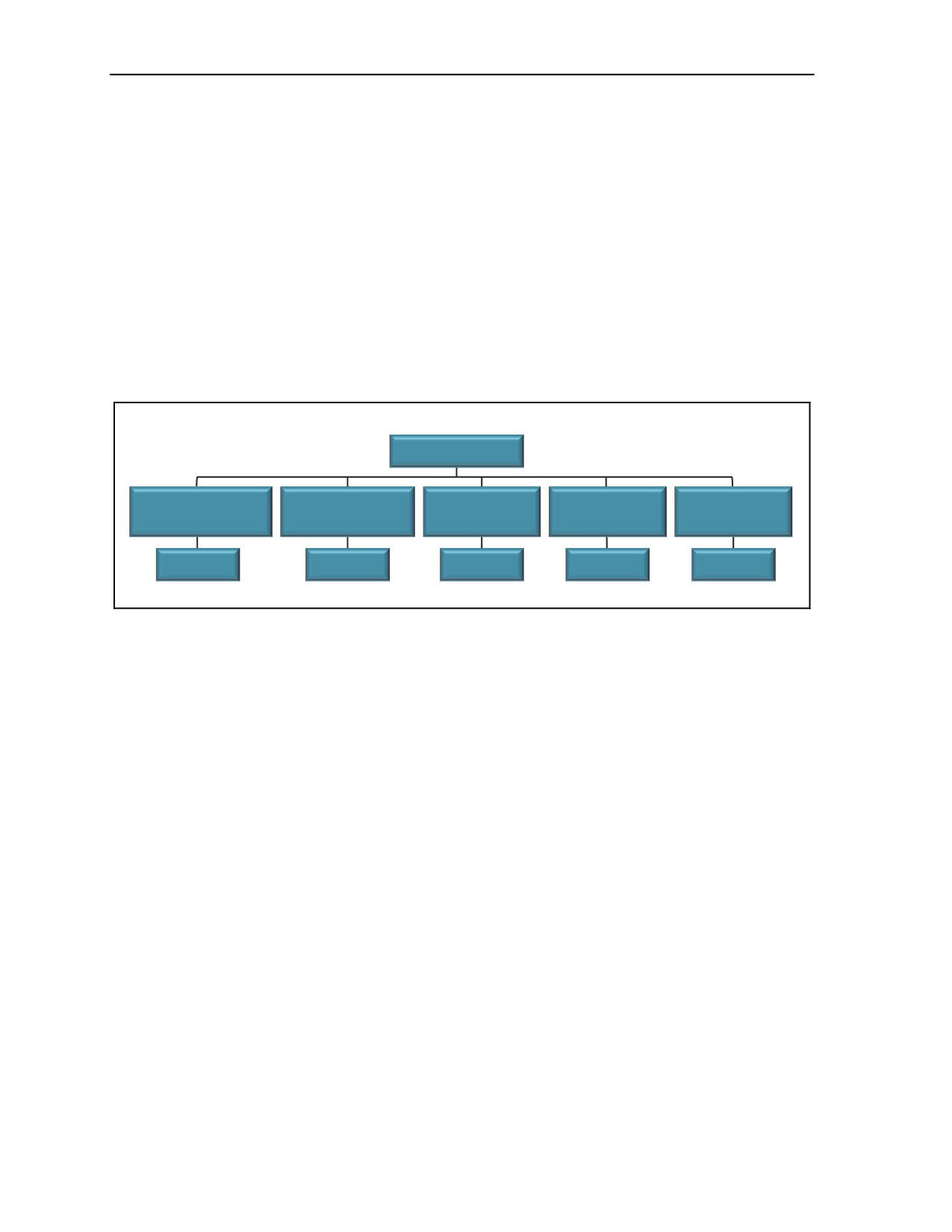
Chapter 5
governing authority for power and authority. Providing “protection” services empowers PSC leaders with
money and legitimacy. In some cases, PSCs can become private armies. Irregular OPFOR operations under
the guise of a PSC can thrive in areas that appear to be devoid of government authority.
Organization
5-25. A PSC can be fairly small in scale or a large corporate organization. Figure 5-3 shows an example of
possible functions in a PSC organization. The board of directors acts much like a headquarters staff of a
military organization. Support services provide administrative, financial, and logistics support. Information
and investigative services collect, analyze, and disseminate all types of information and intelligence,
including economic intelligence. They also perform personnel security investigations and
counterintelligence functions. Security services provide active and passive security measures that may be
either rudimentary or use advanced technology. Guard services provide bodyguards, personal security
details, stationary guard teams, and surveillance teams. Patrol services conduct patrols and tactical may
conduct actions such as an ambush (to counter an intrusion). Security, guard and patrol service members
receive weapons training.
Board of Directors
Information &
Support
Security
Guard
Patrol
Investigative
Services
Services
Services
Services
Services
Teams
Teams
Teams
Teams
Teams
Figure 5-3. PSC organization by functions (example)
5-26. A PSC organization is tailored to serve its customer’s needs. However, its organizational structure
and level of capability are often directly related to a client’s ability to pay. The capabilities of PSC
employees vary from highly trained former military members to uneducated, poorly trained recruits. The
level of competence and the sophistication equipment depends on what the client can afford.
5-27. The weapons and equipment mix is based on team specialization and role. Equipment might
include—
z
Listening and monitoring equipment.
z
Cellular phones.
z
Cameras.
z
Facsimile machines.
z
Computers.
z
Motorcycles.
z
Helicopters.
z
All-terrain vehicles.
z
Light armored vehicles.
z
Assault rifles.
z
Machineguns.
z
Submachineguns.
z
Antitank grenade launchers.
z
Antitank disposable launchers.
z
Silenced weapons.
5-6
TC 7-100.3
17 January 2014