Military reference books and manuals (2009-2023, Volume 7) - page 24
FM 3-19.40
DIAMOND FORMATION
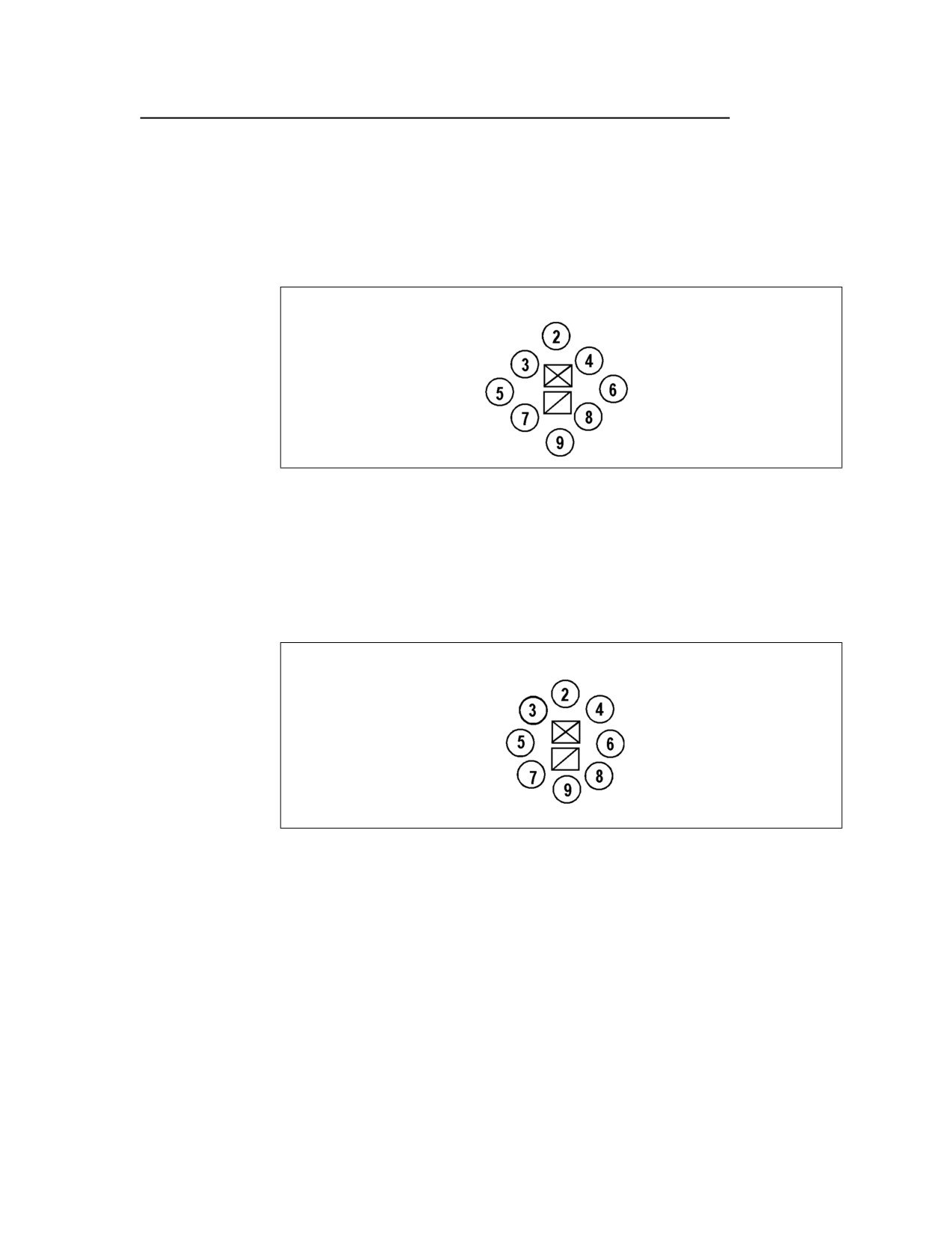
B-87. The diamond formation (Figure B-5) can be used as an offensive
formation or a defensive formation. It is used by riot control forces when they
enter a crowd to apprehend ringleaders. The diamond formation is also useful
when 360-degree security is needed.
Figure B-5. Diamond Formation
CIRCLE FORMATION
B-88. The circle formation (Figure B-6) is used for the same purposes as a
diamond formation. It is used for dispersed and nonviolent crowds, where the
diamond formation is used when the formation must break into or out of a
crowd.
Figure B-6. Circle Formation
VARIATIONS
B-89. Many suitable variations of riot control formations can be employed.
Ensure that appropriate commands and signals are devised to execute the
formations. Due to their complicated nature and the coordination required,
practice the formations extensively before actually using them in a riot.
FORMATION ENHANCEMENTS
B-90. Riot control formations may require enhancement. They can be very
tiring and stressful for troops on line, especially when faced with a hostile
crowd. The crowd may try to break through the control force to reach a
protected facility or to disrupt the efforts of the control force. Likewise, a
Use of Force and Riot Control Measures B-21

FM 3-19.40
determined crowd may refuse to give way to an advancing control force if they
believe the line is not solid. Other elements of the control force can be
positioned in general, lateral, or close support of the main line as needed.
When all the troops in the unit are not required on line at the same time, the
remaining elements can be kept in general support. Elements in general
support are immediately available to provide lateral or close support as the
situation changes.
Platoon Formation With General Support
B-91. The command for forming a platoon formation with a squad in general
support (Figure B-7) is PLATOON AS SKIRMISHERS (ECHELON LEFT,
ECHELON RIGHT, WEDGE), SECOND SQUAD IN SUPPORT, MOVE. The
first and third squads execute the formation, and the second squad remains in
column formation. The number two man of the third squad is the baseman for
the formation.
1st squad
3d squad
2d squad
Figure B-7. Platoon Line, 2d Squad in General Support
B-92. The command for forming a platoon formation with one squad in
general support in a column of twos is PLATOON AS SKIRMISHERS
(ECHELON LEFT, ECHELON RIGHT, WEDGE), SECOND SQUAD IN
SUPPORT IN COLUMN OF TWOS, MOVE. The first and third squads
execute the formation. The second squad, at the command of its squad leader,
executes a column of twos to the right.
B-22 Use of Force and Riot Control Measures

FM 3-19.40
B-93. To assemble a platoon with a squad in general support, the procedure is
the same as for a formation without support, except the second squad does a
countercolumn. The third squad then dresses on the right of the second squad,
and the first squad dresses on the left of the second squad.
Platoon Formation With Lateral Support
B-94. Troops deployed in lateral support (Figure B-8) extend the sides of a
formation and prevent access to the rear of the formation. The command for
forming a platoon formation with lateral support is PLATOON AS
SKIRMISHERS (ECHELON LEFT, ECHELON RIGHT, WEDGE), SECOND
SQUAD IN LATERAL SUPPORT, MOVE. The first and third squads execute
the formation, while the second squad stands fast. When the formation is
formed, the odd-numbered members of the second squad form in column
formation behind the last man of the first squad and the even-numbered
members form in column formation behind the last man of the third squad.
2d squad
(odd numbers)
2d squad
(even numbers)
Figure B-8. Platoon Echelon Right, 2d Squad in Lateral Support
B-95. To move the second squad from general support to lateral support, the
platoon leader commands SECOND SQUAD, LATERAL SUPPORT, MOVE.
To have the second squad join the formation from general or lateral support,
the platoon leader commands SECOND SQUAD, EXTEND THE LINE
(WEDGE), MOVE. The second squad moves out—odd-numbered members to
the left and even-numbered members to the right—to extend the formation of
the first and third squads.
Use of Force and Riot Control Measures B-23

FM 3-19.40
B-96. To assemble the platoon from a platoon formation with lateral support
is nearly the same as for the platoon line. However, the number two men of
the second and third squads do a right face and a left face, respectively, toward
their squad leaders. On the execution command, the first and third squads
move to the point designated by the platoon leader. As the first and third
squads clear the formation, the second squad moves.
Platoon Formation With Close Support
B-97. Troops in close support (Figure B-9) reinforce the line to prevent the
crowd from breaking through the control force. This is done by putting a
second line of soldiers at a close interval behind the lead element, covering the
interval between the soldiers in the lead formation.
2d squad
Figure B-9. Platoon Wedge, 2nd Squad in Close Support
B-98. The command for forming a platoon formation with a squad in close
support is PLATOON AS SKIRMISHERS (ECHELON LEFT, ECHELON
RIGHT, WEDGE), SECOND SQUAD IN CLOSE SUPPORT, MOVE. The first
and third squads execute the primary formation. After the first and third
squads are in position, the second squad executes the same formation to the
rear of the first formation and closes in on it. The soldiers in the supporting
formation shift to cover the intervals between soldiers in the first formation.
B-24 Use of Force and Riot Control Measures
FM 3-19.40
Vehicles
B-99. When a control force encounters large riot groups, they can employ
vehicles and troops on foot in riot control formations. Employ armored
vehicles when practical because they have a strong psychological effect and
offer protection for occupants. Consider the following when using vehicles in
riot control formations:
• A windshield with safety glass offers some protection in the upright
position and minimizes the danger of injury from glass fragments.
However, if paint or other obscurants strike the glass, the operator
may be unable to see well enough to operate the vehicle safely.
• A wooden or metal frame strung with razor wire and mounted across
the front of a vehicle enhances the vehicle’s usefulness as a mobile
barrier and increases its psychological impact.
• A dismounted formation walking alongside the vehicle may be needed
to keep rioters from reaching the sides and rear of the vehicle.
Formation Variations
B-100. During riot control operations, the platoon leader may rotate squads in
the lead elements of the formation to give them a rest. He is not limited to
using only the squads specified in the preceding examples as the lead
elements. By changing the preparatory command, he can choose other squads
to lead the unit. For example, if he wants the first and second squads to lead a
platoon wedge, he issues the command PLATOON WEDGE, THIRD SQUAD
IN SUPPORT, MOVE. By designating the support squad in the preparatory
command, the platoon leader tells the remaining squads that they will lead
the formation.
B-101. The platoon leader may also relieve squads in the lead element by
forming the same formation with support squads. The support element then
passes through the lead element. This procedure is often necessary when
soldiers don protective masks to employ riot control agents.
COMMANDS
B-102. Commands can be given to riot control units in formation orally or
with hand signals. Normally, both verbal and nonverbal commands are given.
All formation commands are given in two counts—a preparatory command
followed by an execution command. All movements into or recovering from riot
control formations are performed at the halt.
B-103. The formation commander faces the troops and gives the preparatory
oral command, accompanied by the appropriate visual command. On the
execution command, the leader drops both arms and points to the position
where he wants the element to form. The formation commander gives the
following visual commands:
• Echelon left. Extends left arm upward at a 45-degree angle and right
arm downward at a 45-degree angle, simulating the intended
formation.
Use of Force and Riot Control Measures B-25
FM 3-19.40
• Echelon right. Extends right arm upward at a 45-degree angle and
left arm downward at a 45-degree angle, simulating the intended
formation.
• Line formation. Extends both arms parallel to the ground.
• Wedge formation. Extends both arms downward at a 45-degree
angle, forming a wedge.
• Diamond formation. Extends both arms above his head, bending
elbows slightly and touching fingertips together.
• Circle formation. Extends both arms above his head, bending
elbows slightly and touching fingertips together, then makes a circular
motion with his right hand.
• Assemble from a riot control formation. Extends right arm
upward and makes a circular motion.
B-104. The oral rifle commands for safe port, safeguard, and on guard and the
baton commands for parade rest, port, and on guard are given in one count. Do
not rely on oral commands completely, especially with the added noise from
vehicles, helicopters, and crowds. Plan to use alternate methods for relaying
commands.
B-105. While in the assembly area, each squad leader has his squad count off.
The squad leader is always number 1, and the baseman for the formation is
number 2. The number each soldier is assigned during the count off
determines his position in his unit’s control formation. The unit marches in
column formation from the assembly area to the disturbance site. It halts a
reasonably safe distance from the crowd, within plain view of it. The on-site
commander decides the riot control formation to use and the size of the
element to commit.
B-106. On the preparatory command, troops assume the safe-port position.
On the execution command, troops form the formation with the baseman
posting himself at the location pointed to by the element leader. As troops
reach their proper positions, they face the direction of the unit’s intended
advance and come to a halt. They remain halted in the safe-port position and
await further orders. Once the troops are in the riot control formation, the
commander commands SAFEGUARD and issues the proclamation. Following
the proclamation, the commander informs disturbance participants that they
have a specific time in which to comply with the order to disperse. If
participants fail to disperse within the given time, the commander employs
measures needed to disperse the crowd.
B-107. When a rifle-equipped formation is commanded to safeguard or on
guard, the commands are for the lead element only and the support elements
come to port arms. Similarly, when a baton-equipped formation is commanded
to port or on guard, the general or lateral support elements assume the port
position. Members of support elements give a resounding stomp with their left
feet when the lead element goes to on guard. On the command FORWARD,
MARCH, the support element maintains the same half step as the lead
element.
B-26 Use of Force and Riot Control Measures
FM 3-19.40
CADENCE
B-108. The usual cadence for moving troops is as follows:
• Into and out of a riot control formation. Double time (180 steps
per minute). Troops are at safe port with a rifle or at port with a baton
when performing these maneuvers.
• Safeguard position. Quick time (120 steps per minute).
• On-guard position. Cadence is
60
steps per minute. For
psychological effect, troops usually accentuate each left step with a
stomp.
B-109. The commander may increase or decrease cadence depending on the
situation. For example, he may order quick time to keep pressure on a crowd
that is withdrawing. He halts a formation moving in the on-guard position by
commanding PLATOON (SQUAD/COMPANY), HALT. The command of
execution is given on the left foot. On the command HALT, each soldier in the
formation brings his right foot forward, even with his left foot, then takes one
more half step with his left foot. He stomps his left foot as he comes to a halt
and remains in the on-guard position.
INTERVAL DISTANCE
B-110. The usual interval distance between soldiers in riot control formations
is one pace or 30 inches but it can be adjusted for particular situations. A
30-inch interval may not be sufficient in some situations and may have to be
lengthened. Some police forces have found that a greater interval makes
formation members less vulnerable to thrown objects.
COMMANDER AND LEADER POSITIONS
B-111. When a unit is in a column formation, each echelon commander
usually takes a position at the head of the column. In riot control formations,
the element leader takes a position where he can best direct and control the
unit. The senior formation commander normally centers himself and his staff
behind the formation. Subordinate leaders position themselves where they
can best control their soldiers within the formation. For diamond and circle
formations, the squad leader and the assistant squad leader place themselves
in the center of the formation. These are only guidelines, and leaders can
adjust positions with respect to their units as they see fit.
B-112. In column formations, messengers, radio operators, marksmen,
disperser operators, and other platoon headquarters members usually take
positions at the front of the column. In riot control formations, headquarters
personnel can be positioned near the commander at his discretion. If the
situation does not allow this, headquarters personnel can be positioned behind
the control element.
Use of Force and Riot Control Measures B-27
Appendix C
Equipment Guide
Table C-1 lists equipment that may be issued to EPWs when their clothing
becomes unserviceable. (See CTA 50-900 when determining what clothing
to issue EPWs.) Sundry packs and recreation equipment are also needed,
and the facility commander arranges for them through supply or local
purchase.
Table C-1. Individual Equipment
Line
Allowances by Zone
Item
Item, Basis of Issue, and Remarks
Unit
1
No.
I
II2
III3
IV4
V5
VI6
VII7
B60252
Belt, trousers, cotton webbing, 1 1/4”,
EA
1
1
1
1
1
1
1
per EPW
C06886
Boot, combat, men’s, leather, black, 8
PR
1
1
1
1
1
1
1
1/2” high, per EPW
C32182
Buckle, belt, trousers, brass,
EA
1
1
1
1
1
1
1
lacquered finish, per EPW
C03750
Cap, hot weather, polyester/rayon, OG
EA
1
1
1
1
1
1
1
106, per EPW
NA
Cap, wool, knit, per EPW
EA
0
0
1
1
1
1
1
G48939
Drawers, men’s, cotton, thigh length,
PR
2
2
2
2
2
2
2
white, with elastic waistband, per EPW
G49213
Drawers, men’s, wool knit, ankle
PR
0
0
2
2
2
2
2
length, silver gray, per EPW
J62858
Glove inserts, wool and nylon knit, OG
PR
0
0
1
1
1
1
1
108, per EPW
J63269
Glove shells, leather, black, per EPW
PR
0
0
1
1
1
1
1
K35007
Helmet, sun, adjustment chin strap,
EA
1
1
1
0
0
0
0
adjustment head size, per EPW
L70789
Liner, wet weather, poncho,
EA
0
1
0
0
0
0
0
camouflage color, per EPW
P17415
Poncho, coated, nylon, OG 207, per
EA
1
1
1
1
1
1
1
EPW
T03520
Shirt, men’s, cotton sateen, OG 107,
EA
0
0
2
2
2
2
2
per EPW
T04205
Shirt, men’s, wool, nylon flannel, OG
EA
0
0
2
2
2
2
2
108, per EPW
T93335
Sock, men’s, wool, cushion sole, OG
PR
4
4
4
4
4
4
4
408, stretch type, per EPW
Equipment Guide C-1

FM 3-19.40
Table C-1. Individual Equipment (continued)
Line
Allowances by Zone
Item
Item, Basis of Issue, and Remarks
Unit
No.
I1
II2
III3
IV4
V5
VI6
VII7
X36358
Trousers, men’s, cotton sateen, OG
PR
2
2
2
2
2
2
2
107, per EPW
X37180
Trousers, men’s, wool serge, OG 108,
PR
0
0
2
2
2
2
2
per EPW/RP
B72225
Blanket, bed, wool, OG, per EPW
EA
1
1
2
2
3
3
3
NA
Brassard, Red Cross, per RP
EA
2
2
2
2
2
2
2
F54817
Cup, water, canteen, steel, per EPW
EA
1
1
1
1
1
1
1
N53095
Pan, mess kit, per EPW
EA
1
1
1
1
1
1
1
1 Zone I—Warm or hot all year.
2 Zone II—Warm or hot summers, mild winters.
3 Zone III—Warm or hot summers, cold winters.
4 Zone IV—Mild summers, cool winters.
5 Zone V—Warm or hot summers, cold or very cold winters.
6 Zone VI—Mild summers, cold winters.
7 Zone VII—Mild summers, very cold winters.
C-2 Equipment Guide
Appendix D
Military Police Internment/Resettlement Units
Table D-1 provides a synopsis of the various MP I/R units that may be
assigned to the TO.
Table D-1. MP I/R Units
Unit
TOE
Assigned To
Duties
HHC, MP
19641L000
FORSCOM in
Provides C2, staff planning, and supervision of I/R
command (I/R)
CONUS and
operations performed by assigned and attached
TSC OCONUS
MP elements.
HHC, MP brigade
19762L000
TSC
Provides command, staff planning, and supervision
(I/R)
of I/R operations performed by assigned and
attached I/R MP elements.
MP detachment,
19543LH
I/R brigade
Provides C2, staff planning, and supervision of two
I/R team (C2)
or three I/R battalions that process and intern
12,000 or fewer people.
MP detachment,
19543LD
MP brigade
Provides the following when the brigade’s span of
I/R team (I/R
(I/R)
control is exceeded:
brigade liaison
•
Extends the capability of the MP brigade
team)
(I/R) to plan and supervise collection,
internment, and evacuation operations of
EPWs, CIs, DCs, and US military prisoners.
•
Acts as a coordination link to allied and
indigenous organizations to ensure that they
are complying with the Geneva Conventions
concerning EPWs and CIs.
•
Ensures that EPW operations in the TO
follow US policies and directives,
international agreements, and US policies
implementing international law.
•
Is an essential link with HN forces securing
EPWs, CIs, and DCs. Ensures that policies
favorably consider the intent of the US to
comply with international treaties pertaining
to the care and handling of EPWs, CIs, and
DCs.
MP detachment,
19643L000
I/R command,
Receives, processes, maintains, disseminates, and
I/R information
I/R brigade, or
transmits required information and data relating to
center
MP brigade
EPWs, American PWs, CIs, and DCs within the TO.
Military Police Internment/Resettlement Units D-1
FM 3-19.40
Table D-1. MP I/R Units (continued)
Unit
TOE
Assigned To
Duties
MP detachment,
19543LE
One per camp
Provides a coordination link to allied and
I/R team (EPW/CI
(northeast
indigenous I/R facilities.
branch camp
Asia only)
Helps maintain proper custody and control of
liaison)
internees.
Ensures that the provisions of US policies,
publications, and directives; international
agreements; US policies implementing international
law; and the Geneva Conventions are fulfilled.
MP detachment,
19543LG
MP
Provides a coordination link to allied and
I/R team (EPW/CI
detachment,
indigenous forces.
processing liaison
I/R team (I/R
Establishes, organizes, and operates an I/R
team)
brigade liaison
processing element within an I/R facility or, with an
team)
I/R battalion support team, at a location other than
an I/R facility.
MP detachment I/R
19543LC
MP
Provides processing capabilities for 8 internees per
team (I/R
detachment,
hour. One squad is assigned for every 200
processing squad)
I/R team (I/R
internees requiring processing per day within a
brigade liaison
separate/independent corps, division, or brigade
team) (for C2)
force as required.
HHC, MP battalion
19646L400 or
I/R brigade in
Provides C2, administrative, and logistics support to
(I/R) (EPW/CI/DC)
19546A and
an AO
operate an I/R facility.
19547AB(4)
Provides OPCON of attached units.
Is capable of interning and supporting 4,000 EPWs
and CIs or 8,000 DCs.
HHC, MP battalion
19546A000
MP brigade
Provides command, staff planning, administration,
(I/R)
and logistical support to operate an I/R facility for
EPWs, CIs, or US military prisoners.
Provides OPCON of assigned and attached units.
Supervises battalion functions (personnel, medical,
supply, and food services).
HHC, MP battalion
19656L000
MP brigade
Provides command, staff planning, administration,
(confinement)
and logistical support for a confinement facility for
US military prisoners.
MP detachment
19547AA00
HHC, MP
Provides supervision, administration, health
(I/R) (confinement)
battalion (I/R)
services, and logistical support for US military
prisoners.
D-2 Military Police Internment/Resettlement Units
FM 3-19.40
Table D-1. MP I/R Units (continued)
Unit
TOE
Assigned To
Duties
MP company
19667L000
I/R battalion
Provides guards for EPWs, CIs, US military
(guard)
prisoners, DCs, and installations and facilities at an
I/R facility.
Is capable of securing 500 US military prisoners,
2,000 EPWs, 2,000 CIs, or 4,000 DCs in an I/R
facility.
Provides static guards at rail terminals and
sensitive-material facilities (maximum 240,000
square yards).
Provides food support for assigned personnel and
collocated units.
MP company
19647L000
I/R MP brigade
Provides supervision and security for evacuating
(escort guard)
and moving EPWs, CIs, DCs, US military prisoners,
and other detained persons via vehicles, trains,
planes, and road marches.
Military Police Internment/Resettlement Units D-3
Glossary
AA
Alcoholics Anonymous
AC
active component
ACCP
Army contingency communications package
ACCP
Army Correspondence Course Program
ACS
Army Corrections System
ACT
active duty
admin
administrative
ADT
active-duty tour
AFJI
Armed Forces Journal International
AFR
Air Force regulation
AG
adjutant general
AICS
Army Inmate Correction System
AMEDD
Army Medical Department
AMS
Army management structure
AO
area of operations
AOR
area of responsibility
AR
Army regulation
ASD
Assistant Secretary of Defense
ATTN
attention
AWOL
absent without leave
BDU
battle dress uniform
BLD
brigade liaison detachment
BSA
brigade support area
BTOC
brigade tactical operations center
command and control
C2
CA
civil affairs
Glossary-1
FM 3-19.40
CARE
Cooperative for American Relief Everywhere, Incorporated
CHA
corps holding area
CHS
combat health support
CI
civilian internee
CID
criminal investigation division
CINC
commander in chief
CMO
civil-military operations
co
company
COL
colonel
COMMZ
communications zone
CONUS
continental United States
COS
civilian occupational specialty
COSCOM
Corps Support Command (US Army)
CP
collecting point
CPT
captain
CRS
Catholic Relief Services
CRS
Correctional-Reporting System
CS
o-chlorobenzylidine malonitrile
CS
combat support
CSB
correctional-supervision branch
CSS
combat service support
CTA
common table of allowance
CTF
correctional-treatment file
CZ
combat zone
D
disperser
D
day
DA
Department of the Army
DART
disaster assistance response team
DASD
Deputy Assistant Secretary of Defense
DC
District of Columbia
Glossary-2
FM 3-19.40
DC
dislocated civilian
DCAA
dislocated-civilian assembly area
DCSOPS
Deputy Chief of Staff for Operations and Plans
DD
Department of Defense
DFAS-IN
Defense Finance and Accounting Service—Indianapolis
DNBI
disease and nonbattle injuries
DOD
Department of Defense
DOJ
Department of Justice
DOMS
Director of Military Support
DOS
Department of State
DOT
Department of Transportation
DP
displaced person
DS
direct support
DSA
division support area
ea
each
EAC
echelons above corps
EBC
echelons below corps
EEI
essential elements of information
EGA
electronically generated form
EGCT
extra good-conduct time
EHP
emergency home patrol
EPW
enemy prisoner of war
ERA
emergency rest area
ES
emergency services
ESF
emergency support function
eval
evaluation
FBI
Federal Bureau of Investigation
FCF
field confinement facility
FDF
field detention facility
FEMA
Federal Emergency Management Agency
Glossary-3
FM 3-19.40
Five Ss and T
search, segregate, silence, speed, safeguard, and tag
FM
field manual
FMFM
Fleet Marine Force manual
FMFRP
Fleet Marine Force reference publication
FN
foreign nation
FORSCOM
United States Army Forces Command
FSB
forward support battalion
ft
foot, feet
G2
Assistant Chief of Staff, G2 (Intelligence)
G3
Assistant Chief of Staff, G3 (Operations and Plans)
G4
Assistant Chief of Staff, G4 (Logistics)
G5
Assistant Chief of Staff, G5 (Civil Affairs)
gal
gallon(s)
GC
Geneva Convention Relative to the Protection of Civilian Persons in
Time of War, 12 August 1949
gd
guard
GO
general officer
GP
general purpose
GPW
Geneva Convention Relative to the Treatment of Prisoners of War,
12 August 1949
GWS
Geneva Convention for the Amelioration of the Condition of the
Wounded and Sick in Armed Forces in the Field, 12 August 1949
GWS (SEA)
Geneva Convention for the Amelioration of the Condition of
Wounded, Sick, and Shipwrecked Members of Armed Forces at Sea,
12 August 1949
H&RA
Humanitarian and Refugee Affairs
H/CA
humanitarian and civic assistance
HA
humanitarian assistance
HHC
headquarters and headquarters company
HIV
human immunodeficiency virus
HM
hazardous material
HN
host nation
Glossary-4
FM 3-19.40
HQ
headquarters
HQDA
Headquarters, Department of the Army
ht
height
I/R
internment/resettlement
ICRC
International Committee of the Red Cross
ID
identification
IDP
internally displaced person
IFRC
International Federation of Red Cross and Red Crescent Societies
IG
inspector general
IHO
international humanitarian organization
IMC
International Medical Corps
INS
Immigration and Naturalization Service
IO
international organization
IOM
International Organization for Migration
IR
information requirements
IRIC
internment/resettlement information center
IRIS
Internment/Resettlement Information System
IRS
Internal Revenue Service
ISN
internment serial number
J4
Logistics Directorate
Jan
January
JCS
joint chief of staff
JFC
joint forces commander
JTF
joint task force
JTR
joint travel regulation
L&O
law and order
LOC
lines of communication
LP
listening post
LRA
local reproduction authorized
LTC
lieutenant colonel
Glossary-5
FM 3-19.40
LZ
landing zone
M
month
MAJ
major
MANSCEN
Maneuver Support Center
MARKS
Modern Army Recordkeeping System
MBA
main battle area
MCCM
modular crowd control munition
MCO
Marine Corps order
MCO
movement control officer
MCRP
Marine Corps reference publication
MDMP
military decision-making process
METT-TC
mission, enemy, terrain, troops, time available, and civilian
considerations
MI
military intelligence
misc
miscellaneous
MOOTW
military operations other than war
MOS
military occupational specialty
MP
military police
MRE
meal, ready-to-eat
MRO
medical regulating officer
MSCA
military support to civil authorities
MSF
Médecin Sans Frontiéres (Doctors Without Borders)
MSR
main supply route
MWD
military working dog
NA
not applicable
NA
Narcotics Anonymous
NATL
national
NATO
North Atlantic Treaty Organization
NBC
nuclear, biological, or chemical
NCCB
National Council of Catholic Bishops
NCO
noncommissioned officer
Glossary-6
FM 3-19.40
NCOIC
noncommissioned officer in charge
NDC TACNOTE
National Disaster Coalition tactical note
NG
national guard
NGO
nongovernmental organization
NLW
nonlethal weapon
No.
number
NOK
next of kin
NWP
Naval warfare publication
obj
objective
OC
oleoresin capsicum
OCONUS
outside continental United States
OD
other detainee
OFDA
Office of Foreign Disaster Assistance
OG
olive green
OIC
officer in charge
OIP
organization inspection policy
OP
observation post
OPCON
operational control
OPLAN
operation plan
OPNAVINST
Office of the Chief of Naval Operations instruction
OPORD
operation order
OSD
Office of the Secretary of Defense
PA
physician’s assistant
PACAFP
Pacific Air Forces pamphlet
pam
pamphlet
PAO
public affairs officer
PHS
Public Health Service
PIR
priority intelligence requirements
PM
provost marshal
POC
point of contact
Glossary-7
FM 3-19.40
pr
pair
PRC
populace and resource control
PSB
prisoner services branch
PSYOP
psychological operations
pub
publication
PVNTMED
preventive medicine
PW
prisoners of war
QRF
quick-reaction force
qty
quantity
RCF
regional corrections facility
RCM
rules for courts-martial
reg
regimental
ROE
rules of engagement
ROI
rules of interaction
RP
retained person
S2
Intelligence Officer (US Army)
S3
Operations and Training Officer (US Army)
S4
Supply Officer (US Army)
S5
Civil Affairs Officer (US Army)
SA
situational awareness
SCF
Save the Children Foundation
SECDEF
Secretary of Defense
SGT
sergeant
SJA
staff judge advocate
SM
selected marksman
SOP
standing operating procedure
SSN
social security number
STANAG
Standardization Agreement
STD
sexually transmitted disease
STP
soldier testing program
Glossary-8
FM 3-19.40
STP
soldier training publication
STRESS
search, tag, report, evacuate, segregate, and safeguard
TB
tuberculosis
TCMS
Theater Construction Management System
THP
temporary home patrol
TO
theater of operations
TOC
tactical operations center
TOE
table(s) of organization and equipment
TRADOC
United States Army Training and Doctrine Command
TSC
Theater Support Command
TTP
tactics, techniques, and procedures
UCMJ
Uniform Code of Military Justice
UIC
unit identification code
UN
United Nations
UNDP
United Nations Development Program
UNDRC
United Nations Disaster Relief Coordinator
UNHCR
United Nations High Commissioner for Refugees
UNICEF
United Nations Children’s Fund
UNOCHA
United Nations Office for the Coordination of Humanitarian Affairs
US
United States
USACIC
United States Army Criminal Investigation Command
USAFEP
United States Air Forces Europe pamphlet
USAID
United States Agency for International Development
USAR
United States Army Reserve
USCG
Unites States Coast Guard
USD
Under Secretary of Defense
USDA
United States Department of Agriculture
USDB
United States Disciplinary Barracks
USIA
United States Information Agency
WFP
World Food Program
Glossary-9
FM 3-19.40
WO warrant officer
wt
weight
Y
year
Glossary-10
Bibliography
AR 15-6. Procedures for Investigating Officers and Boards of Officers. 11 May 1988.
AR 15-130. Army Clemency and Parole Board. 23 October 1998.
AR 20-1. Inspector General Activities and Procedures. 15 March 1994.
AR 25-400-2. The Modern Army Recordkeeping System (MARKS). 26 February 1993.
AR 27-10. Legal Services: Military Justice. 24 June 1996.
AR 40-3. Medical, Dental, and Veterinary Care. 30 July 1999.
AR 40-5. Preventive Medicine. 15 October 1990.
AR 190-8. Enemy Prisoners of War, Retained Personnel, Civilian Internees, and Other Detainees
{OPNAVINST 3461.6; AFJI 31-304; MCO 3461.1}. 1 October 1997.
AR 190-12. Military Police Working Dogs. 30 September 1993.
AR 190-14. Carrying of Firearms and Use of Force for Law Enforcement and Security Duties.
12 March 1993.
AR 190-22. Searches, Seizures, and Disposition of Property. 1 January 1983.
AR 190-40. Serious Incident Report. 30 November 1993.
AR 190-47. The Army Corrections System. 15 August 1996.
AR 210-130. Laundry and Dry Cleaning Operations. 15 April 1993.
AR 210-174. Accounting Procedures for Prisoners’ Personal Property and Funds.
17 September 1986.
AR 385-10. The Army Safety Program. 23 May 1988.
AR 600-13. Army Policy for the Assignment of Female Soldiers. 27 March 1992.
AR 630-10. Absence Without Leave, Desertion, and Administration of Personnel Involved in
Civilian Court Proceedings. 10 June 1992.
AR 633-30. Military Sentences to Confinement {AFR 125-30}. 6 November 1964.
AR 670-1. Wear and Appearance of Army Uniforms and Insignia. 1 September 1992.
AR 700-84. Issue and Sale of Personal Clothing. 15 May 1983.
AR 710-2. Inventory Management Supply Policy Below the Wholesale Level. 31 October 1997.
CTA 50-900. Clothing and Individual Equipment. 1 September 1994.
CTA 50-970. Common Items of Nonexpendable Material. 21 September 1990.
DA Form 1124. Individual Receipt Voucher Personal Deposit Fund. October 1952.
Bibliography-1
FM 3-19.40
DA Form 1125-R. Summary Receipt and Disbursement Voucher Personal Fund. April 1986.
DA Form 1128. Petty Cash Voucher—Personal Deposit Fund. 1 September 1960.
DA Form 1129-R. Record of Prisoners’ Personal Deposit Fund (LRA). April 1986.
DA Form 1130-R. Statement of Prisoner’s Personal Deposit Fund and Request for Withdrawal of
Personal Funds (LRA). April 1986.
DA Form 1131-R. Prisoner’s Cash Account—Personal Deposit Fund (LRA). April 1986
DA Form 1132-R. Prisoner’s Personal Property List—Personal Deposit Fund (LRA). April 1986.
DA Form 1134-R. Request for Withdrawal of Personal Property (LRA). April 1986.
DA Form 1135-R. Personal Property Permit (LRA). April 1986.
DA Form 2028. Recommended Changes to Publications and Blank Forms. 1 February 1974.
DA Form 2662-R. United States Army EPW Identity Card (LRA). May 1982.
DA Form 2663-R. Fingerprint Card (LRA). May 1982.
DA Form 2664-R. Weight Register (Prisoner of War) (LRA). May 1982.
DA Form 2665-R. Capture Card for Prisoner of War (LRA). May 1982.
DA Form 2666-R. Prisoner of War Notification of Address (LRA). May 1982.
DA Form 2667-R. Prisoner of War Mail (Letter) (LRA). May 1982.
DA Form 2668-R. Prisoner of War (Post Card) (LRA). May 1982.
DA Form 2674-R. Enemy Prisoner of War/Civilian Internee Strength Report (LRA). May 1982.
DA Form 2677-R. United States Army Civilian Internee Identity Card (LRA). November 1986.
DA Form 2678-R. Civilian Internee NATL-Internment Card (LRA). November 1986.
DA Form 2679-R. Civilian Internee Letter (LRA). November 1986.
DA Form 2680-R. Civilian Internee NATL-Post Card (LRA). November 1986.
DA Form 3078. Personal Clothing Request. May 1993.
DA Form 3955. Change of Address and Directory Card. 1 February 1979.
DA Form 3997. Military Police Desk Blotter. 1 December 1998.
DA Form 4137. Evidence/Property Custody Document. 1 July 1976.
DA Form 4237-R. Detainee Personnel Record (LRA). August 1995.
DA Pam 27-1. Treaties Governing Land Warfare. 7 December 1956.
DA Pam 37-100-95. The Army Management Structure (AMS), Fiscal Year 1995. 1 July 1994.
DA Pam 350-38. Standards in Weapons Training. 3 July 1997.
Bibliography-2
FM 3-19.40
DD Form 2 (ACT). Armed Forces of the United States Geneva Convention Identification Card
(Active) (EGA). October 1993.
DD Form 499. Prisoner’s Mail and Correspondence Record. 1 October 1967.
DD Form 503. Medical Examiner’s Report. 1 December 1955.
DD Form 504. Request and Receipt for Health and Comfort Supplies. 1 April 1976.
DD Form 506. Daily Strength Record of Prisoners. 1 February 1968.
DD Form 509. Inspection Record of Prisoners in Segregation. 1 July 1970.
DD Form 515. Roster of Prisoners. December 1955.
DD Form 2707. Confinement Order. November 1999.
DD Form 2708. Receipt for Inmate or Detained Person. November 1999.
DD Form 2710. Inmate Background Summary. November 1999.
DD Form 2718. Inmate’s Release Order. November 1999.
DD Form 2745. Enemy Prisoner of War (EPW) Capture Tag. May 1996.
DFAS-IN 37-1. Finance and Accounting Policy Implementation. January 2000.
DOD 4160.21-M. Defense Reutilization and Marketing Manual. August 1997.
DOD Directive 1030.1. Victim and Witness Assistance. 23 November 1994.
DOD Directive 1325.4. Confinement of Military Prisoners and Administration of Military
Correctional Programs and Facilities. 28 September 1999.
DOD Directive 3025.1. Military Support to Civil Authorities (MSCA). 15 January 1993.
DOD Directive 5100.46. Foreign Disaster Relief. 4 December 1975.
DOD Instruction 1030.2. Victim and Witness Assistance Procedures. 23 December 1974.
FBI Form FD-249. Arrest and Institutional Fingerprint Card. 11 May 1999.
FM 3-0. Operations. To be published within 6 months.
FM 3-05.30. Psychological Operations. 19 June 2000.
FM 5-34. Engineer Field Data. 30 August 1999.
FM 8-51. Combat Stress Control in a Theater of Operations Tactics, Techniques, and Procedures.
29 September 1994.
FM 14-100. Financial Management Operations. 7 May 1997.
FM 19-10. The Military Police Law and Order Operations. 30 September 1987.
FM 19-15. Civil Disturbances. 25 November 1985.
FM 19-20. Law Enforcement Investigations. 25 November 1985.
Bibliography-3
FM 3-19.40
FM 21-10. Field Hygiene and Sanitation. 11 June 2000.
FM 22-5. Drill and Ceremonies. 8 December 1986.
FM 22-6. Guard Duty. 17 September 1971.
FM 22-100. Army Leadership. 31 August 1999.
FM 27-10. The Law of Land Warfare. 18 July 1956.
FM 33-1-1. Psychological Operations Techniques and Procedures. 5 May 1994.
FM 90-40. Multiservice Procedures for the Tactical Employment of Nonlethal Weapons (NLW)
{MCRP 3-15.8; NWP 3-07-31; USCG Pub 3-07.31}. 6 October 1998.
FM 100-5. Engineer Operations. 27 February 1996.
FM 100-19. Domestic Support Operations {FMFM 7-10}. 1 July 1993.
FM 100-23-1. Multiservice Procedures for Humanitarian Assistance Operations {FMFRP 7-16;
NDC TACNOTE 3-07.6; ACCP 50-56; PACAFP 50-56; USAFEP 50-56}. 31 October 1994.
FM 101-5. Staff Organization and Operations. 31 May 1997.
Foreign Assistance Act, US Code (1994).
Geneva Convention for the Amelioration of the Condition of the Wounded and Sick in Armed
Forces in the Field (GWS), 12 August 1949.
Geneva Convention for the Amelioration of the Condition of Wounded, Sick, and Shipwrecked
Members of Armed Forces at Sea (GWS [SEA]), 12 August 1949.
Geneva Convention Protocol Relative to the Status of Refugees. 1967.
Geneva Convention Relative to the Protection of Civilian Persons in Time of War (GC),
12 August 1949.
Geneva Convention Relative to the Status of Refugees. 1951.
Geneva Convention Relative to the Treatment of Prisoners of War (GPW), 12 August 1949.
Geneva Conventions for the Protection of War Victims, 12 August 1949.
Misc Pub 27-7. Manual for Courts-Martial, United States, 2000 Edition.
Posse Comitatus Act, US Code (1994).
STANAG 2033. Interrogation of Prisoners of War (PW) (Edition 6). 6 December 1994.
STANAG 2044. Procedures for Dealing With Prisoners of War (PW) (Edition 5). 28 June 1994.
STANAG 2084. Handling and Reporting of Captured Equipment and Documents (Edition 6).
6 April 1999.
STP 19-95B1-SM. Soldier’s Manual, MOS 95B, Military Police, Skill Level 1. 21 February 1997.
STP 19-95C14-SM-TG. Soldier’s Manual and Trainer’s Guide for MOS 95C Internment/
Resettlement Specialist, Skill Levels 1/2/3/4. 26 March 1999.
Bibliography-4
FM 3-19.40
STP 21-24-SMCT. Soldier Testing Program (STP). 1 October 1992.
TC 27-10-1. Selected Problems in the Law of War. 26 June 1979.
UCMJ
UNHCR Handbook for the Military on Humanitarian Operations, First Edition. 1995.
Bibliography-5
Index
A
categories of civilians, 9-2
CIs, 5-12
central CP, 3-12
US military prisoners, 7-1
ACS. See Army Corrections
CHA. See corps holding area
confiscated items, 3-5
System (ACS).
(CHA).
constitutional rights, US military
adjudged prisoner, 7-4
chapels, 6-7
prisoners, 7-3
adjutant general (AG), 2-9
chaplain, 2-10
constructing I/R facilities, 6-1
administration
chaplain captive, 4-14
control
CI facility, 5-2
chemical irritants, B-13
CIs, 5-10, 5-17
DC facility, 9-15
CI. See civilian internee (CI).
civilians, 10-10
FCF, 8-11
circle formation, B-21
DCs, 9-2, 9-14
HA facility, 10-11
civil rights, 1-13
EPWs, 4-12
administrative segregation, 7-5
civilian interference, 9-2
US military prisoners, 7-5,
AG. See adjutant general (AG).
civilian internee (CI), 1-3, 5-1
8-10
agencies involved in I/R
civilian lead agency, 1-9
control force, B-6
operations, 1-6
civilian organizations, 1-8
controlled flow, 4-1
agitators, 4-10
civil-military operations (CMO), 9-1
corps holding area (CHA), 3-1,
agriculture program
clandestine activities, 4-23
3-15
CIs, 5-16
classification
correctional facilities, 7-3
EPWs, 4-20
captives, 3-7
correctional staff, 7-12
air assault operations, 3-19
DCs, 9-11
correctional system, 7-1
airborne operations, 3-18
EPWs, 4-9
correctional treatment programs,
aircraft transport, 8-19
US military prisoners, 8-7
7-8
amphibious operations, 3-18
classification reduction, 8-9
correctional treatment, US military
apprehension of escaped
clear zones, 6-2
prisoners, 7-1
prisoners, 8-16
clemency, 7-11
correspondence
approved-adjudged prisoner, 7-4
close confinement, 7-6
CIs, 5-13
armored operations, 3-18
close support, B-24
EPWs, 4-17
Army Corrections System (ACS),
clothing
US military prisoners, 7-19,
7-1
CIs, 5-5
8-14
assembly area, DC, 9-4
civilians, 10-9
counseling, 7-8
assignment to internment facility
DCs, 9-12
CP. See collecting point (CP).
CIs, 5-4
EPWs, 4-15
crowd
EPWs, 4-9
US military prisoners, 8-7
behavior, B-6
B
CMO officer, 2-9
control, B-6
backhaul system, 3-10
CMO. See civil-military operations
tactics, B-8
barracks rules, 9-15
(CMO).
currency, 3-5
baton positions, B-14
coercion, 3-7
custody grade, US military
battlefield confinement, US military
collecting point (CP), 3-1, 3-10
prisoners, 7-5, 8-9
prisoners, 8-1
collection point, DCs, 9-4
custody, US military prisoners, 7-5,
briefing DCs, 9-6
combat zone (CZ), 1-2
8-10
commander responsibilities, 2-1
CZ. See combat zone (CZ).
C
commands, B-25
D
cadence, B-27
communications, 6-3
canteens, 4-18
DART. See disaster assistance
compensation
captives, 1-11
reponse team (DART).
CIs, 5-16
capture tag, 3-2
database, 4-5
EPWs, 4-20
captured supplies and equipment,
DC facility, 9-7
US military prisoners, 7-11
6-5
DC operations, 9-1, 9-2
complaints, 5-13
capturing power, 1-6
DC. See dislocated civilian (DC).
confinement
casual prisoner, 7-4
deadly force, 9-17, B-1
Index-1
FM 3-19.40
definitions, 1-2
CIs, 5-14
guards, 7-13, 8-11
dependent children of CIs, 5-4
EPWs, 4-24
H
deprivation, 8-9
US military prisoners, 7-7
HA. See humanitarian assistance
detained prisoner, 7-4
escapes, preventing, 8-18
(HA).
detainees, 1-11
escort guard company, 4-11
halt, B-2
detaining power, 5-12
evacuation
hostile
diamond formation, B-21
captives, 3-7
act, 9-17
disaster assistance response team
DCs, 9-5
environment, 10-2
(DART), 10-19
EPWs, 4-1
intent, 9-17
disciplinary
evacuee, 1-5
housed personnel, care and
action, 8-9
evacuees, return of, 9-6
control, 2-13
measures, 7-6
evaluation board, 7-8
housekeeping supplies, 6-7
punishment, 5-3
expellee, 1-5
humanitarian assistance (HA),
disciplinary-and-adjustment board,
extra duty, 8-9
10-1
8-16
extra good-conduct time (EGCT),
discipline
7-11
I
CIs, 5-11
F
ID band
civilians, 10-10
CIs, 5-4
facility guard force, 2-6
DCs, 9-14
EPWs, 4-6
FCF. See field confinement facility
EPWs, 4-15
identifying
(FCF).
US military prisoners, 8-9
CIs, 5-5
FDF. See field detention facility
dislocated civilian (DC), 1-4
DCs, 9-11, 10-8
(FDF).
disorder, 2-8, B-7
US military prisoners, 8-7
Federal Response Plan, 1-7
displaced person (DP), 1-4
IDP. See internally displaced
female
disposition of DCs, 9-18
person (IDP).
CIs, 5-11
dissident actions, 4-21, 5-17
IG. See inspector general (IG).
EPWs, 4-9
disturbance, 2-8, 5-17, 5-18
IHO. See international
field confinement facility (FCF),
documentation, DCs, 9-6
humanitarian organization
7-1, 8-3
DP. See displaced person (DP).
(IHO).
field detention facility (FDF), 7-1,
E
impounded items, 3-5
8-3
information flow, 4-7
echelon formation, B-19
field processing captives, 3-2
initial processing, 4-7
education program
finance officer, 2-9
inspections, 2-8
CIs, 5-15
Five S and T procedure (search,
inspector general (IG), 2-12
EPWs, 4-18
segregate, silence, speed,
intelligence gathering, 4-22, B-11
US military prisoners, 7-10
safeguard, and tag), 3-4
intermediate processing, 4-8
EGCT. See extra good-conduct
forfeiture, US military prisoners,
internally displaced person (IDP),
time (EGCT).
8-9
1-5
emergency action plan, 2-2, 7-7
formation enhancement, B-21
international humanitarian
emergency services (ES), 10-14
formations, B-16
organization (IHO), 1-9
CONUS, 10-14
forms
international organization (IO), 1-8
OCONUS, 10-17
ACS, 7-17
internee committee, 5-12
employment
FCF, 8-13
internment
CIs, 5-16
forward CP, 3-10
dependent children, 5-2
EPWs, 4-19
fraternization
protected civilians, 5-2
US military prisoners, 7-10
CIs, 5-11
internment serial number (ISN),
enemy plants, 4-10
EPWs, 4-15
4-6
enemy prisoner of war (EPW), 1-2,
frisking US military prisoners, 7-7
interpreters, 4-2, 5-6
4-1
full processing, 4-8
interrogation, 3-17
engineer officer, 2-10
G
interservice transfer, 4-11
EPW leaders, 4-10
general orders, 2-6
IO. See international organization
EPW. See enemy prisoner of war
general support, B-22
(IO).
(EPW).
Geneva Conventions, 1-12, 1-13
ISN. See internment serial number
equipment guide, C-1
good-conduct time, 7-18, 8-9
(ISN).
ES. See emergency services (ES).
guard towers, 6-2
isolation, 4-9
escapes
Index-2
FM 3-19.40
L
MP support
PRC. See populace and resource
DC operations, 9-7
control (PRC).
L&O. See law and order (L&O).
ES operations, 10-20
pretrial confinement, 7-3
lateral support, B-23
MWD. See military working dog
principles
law and order (L&O), 9-16, 10-12
(MWD).
CI facilities, 5-3
layout
I/R facilities, 2-2
central CP, 3-13
N
I/R operations, 1-5
CHA, 3-15
NGO. See nongovernmental
priorities of force, 8-17, B-1
DC facility, 9-10
organization (NGO).
prisoner status, 7-4
DC overlay, 9-5
NLW. See nonlethal weapon
privileged mail, 7-20
FCF, 8-5
(NLW).
privileges, US military prisoners,
forward CP, 3-11
nongovernmental organization
8-9
HA facility, 10-7
(NGO), 1-8
proactive programs, 10-1
I/R facility, 6-3
nonlethal measures, 9-18
procedures
processing center, 6-5
nonlethal weapon (NLW), B-3
DC operations, 9-3
legal considerations, 10-3
nonmandated organization, 1-9
I/R facility operations, 2-1
legal obligations, 9-2
nonviolent tactics, B-7
processing
lethal force, B-4
notice of protection, 2-3, 5-11
captives, 3-2
lights, 6-3
O
CIs, 5-6
line formation, B-18
civilians, 10-6, 10-8
location of I/R facilities, 6-1
objectives, I/R operations, 1-5
DCs, 9-9
OD. See other detainee (OD).
M
officer prisoner, 7-4
EPWs, 4-1
mandated organization, 1-9
US military prisoners, 8-5
operational environment, 10-2
marking CI facilities, 5-18
processing centers, 6-5
other detainee (OD), 1-4, 5-1
marking outer garments
processing stations
P
CIs, 5-5
CIs, 5-7
EPWs, 4-16
PAO. See public affairs officer
DCs, 9-11
marksman, B-5
(PAO).
EPWs, 4-2
MCO. See movement control
parole, 7-12
US military prisoners, 8-6
officer (MCO).
patrol roads, 6-3
property accountability, 3-5
medical captive, 4-14
perimeter security, 2-7
protected CI status, 5-4
medical care
permanent transfer, 4-11
protected civilian, 5-2
captives, 2-4
permissive environment, 10-2
protecting power, 1-11, 4-14, 5-12
CIs, 5-13
personal property
protection
civilians, 10-9
CIs, 5-14
captives and detainees, 1-11
DCs, 9-6, 9-12
EPWs, 4-11
EPWs and CIs, 1-12
EPWs, 4-17
US military prisoners, 7-18
refugees, 1-13
internees, 6-7
personnel file
psychological operations
US military prisoners, 7-23,
CIs, 5-4
(PSYOP), 2-12
8-8
EPWs, 4-5
PSYOP. See psychological
medical evacuation, 3-8
US military prisoners, 7-8
operations (PSYOP).
medical officer, 4-17, 5-9
petty-cash fund, 7-19
public affairs officer (PAO), 2-10
medical operations, 2-11
photographs
punishment, 8-9, 8-10
medical support, 3-10, 3-12
CIs, 5-8
punitive measures, prohibited, 7-6
metric conversions, A-1
EPWs, 4-4
R
MI interrogation team, 3-2, 3-17
US military prisoners, 8-7
rail transport, 8-19
migrant, 1-5
planning considerations, central
rations
military working dog (MWD), 2-7,
CP, 3-14
DCs, 9-6
4-23, 5-18
platoon echelon left, B-20
EPWs, 4-17
misconduct, 8-16
platoon echelon right, B-20
reactionary force, 8-16
mitigation, 7-11
policies, DCs, 9-3
reactive programs, 10-1
motor vehicle transport, 8-18
populace and resource control
reassignment, EPWs, 4-10
movement control officer (MCO),
(PRC), 9-1
receipts, 3-6
2-12
positions, B-27
receiving
movement of captives, 3-9
CIs, 5-6
Index-3
FM 3-19.40
EPWs, 4-1
sanitation, 2-4, 4-17, 5-13, 6-7, 8-8,
tower guards, 2-7
receiving centers, 6-5
9-12, 10-9
training
reclassification
schedule of calls, 2-2
ACS, 7-15
DCs, 9-11
screening, 3-17, 9-11, 10-8
I/R personnel, 2-13
EPWs, 4-10
searches, 3-4, 5-11, 9-9, 10-8
NLWs, B-5
record of events, B-9
security, 2-5, 3-9, 4-7, 4-15, 4-21,
riot control, B-10
records
5-11, 5-17, 9-5, 9-13, 10-2,
transfer
CI facility, 5-4
B-11
CIs, 5-14
I/R facility, 2-4
security measures, prohibited,
EPWs, 4-10
recreation program
8-10
US military prisoners, 7-21,
captives, 2-5
security requirements, I/R facilities,
8-19
CIs, 5-16
6-2
transporting
I/R facility, 6-7
segregation
civilians, 10-13
US military prisoners, 7-10
at CPs and CHAs, 3-7
DCs, 9-5, 9-6, 9-18
refugee, 1-5, 1-13
EPWs, 4-9
US military prisoners, 7-7,
regulations
US military prisoners, 7-4, 8-9
8-18
ACS, 7-17
self-government
treatment
FCF, 8-13
civilians, 10-10
CIs, 5-1
releasing CIs, 5-15
DCs, 9-13
detainees, 1-12
relief agencies, 1-10
sentence computation, 7-18, 8-14
EPWs, 4-13
religious materials, I/R facilities,
signal officer, 2-10
tribunal, 4-10
6-7
SJA. See staff judge advocate
U
remission, 7-11
(SJA).
uncertain environment, 10-2
repatriating EPWs, 4-11
social programs, 2-4
units in a TO, D-1
reports
CIs, 5-15
US military prisoner, 1-5
captives, 3-6
EPWs, 4-18
US policy, 1-12
CI facility, 5-4
special orders, 2-6
use of force, 2-8, 8-17, 9-17, 10-2
EPWs, 4-11
staff judge advocate (SJA), 2-10
I/R facility, 2-4
staff responsibilities, 2-9
V
representatives, EPW, 4-13
standby guards, 2-7
violations of the UCMJ, 8-16
reprimand, 8-9
standing orders, 2-2, 5-3
visits, 5-16
requests, 5-13
stateless person, 1-5
W
responsibilities
stay-put policy, 9-4
commander, 2-1
strength report, 4-7
walking patrols, 2-7
staff officers, 2-9
STRESS (search, tag, report,
war victim, 1-5
restraining devices, 7-6
evacuate, segregate, and
warning, 8-9
restrictions, employing EPWs, 4-19
safeguard), 3-2
weapon positions, B-16
retained items, 3-4
subsistence
wedge formation, B-19
retained person (RP), 1-3
at I/R facilities, 6-5
work detail guards, 4-23
riot, 2-8, 5-17, B-8
CIs, 5-5
worship
riot control agents, B-11
civilians, 10-9
captives, 2-5
riot control measures, B-9
DCs, 9-12
CIs, 5-16
river-crossing operations, 3-18
EPWs, 4-17
EPWs, 4-18
ROE. See rules of engagement
US military prisoners, 8-8
US military prisoners, 7-20
(ROE).
supplies, 7-22
ROI. See rules of interaction (ROI).
supply services, 8-15
RP. See retained person (RP).
support personnel
rules of engagement (ROE), 2-8,
ACS, 7-16, 7-20
4-15, 5-18, 9-17, 10-3, B-2
MP unit, 8-15
rules of interaction (ROI), 4-14,
suspension, 7-11
8-16, 9-17, 10-13
T
S
tactics, B-5
safeguard, 3-8
tagging captives, 3-6
safety, 2-5, 5-2
temporary custody, 8-1
sally ports, 6-3
temporary transfer, 4-11
Index-4
FM 3-19.40
By Order of the Secretary of the Army:
ERIC K. SHINSEKI
General, United States Army
Chief of Staff
Official:
JOEL B. HUDSON
Administrative Assistant to the
Secretary of the Army
DISTRIBUTION:
Active Army, Army National Guard, and US Army Reserve: To be distributed in
accordance with the initial distribution number 110143 requirements for FM 3-19.40.
TC 7-100.3
Training Circular
Headquarters
Department of the Army
No. 7-100.3
Washington, DC, 17 January 2014
Irregular Opposing Forces
Contents
Page
PREFACE
iv
INTRODUCTION
v
Irregular Forces
v
Irregular OPFOR and Hybrid Threat for Training
vi
Tailoring the OPFOR
vii
Chapter 1
IRREGULAR OPPOSING FORCE FUNDAMENTALS
1-1
Hybrid Threat
1-1
Capabilities and Intent
1-1
Tactics
1-4
Interactions of Operational Variables
1-4
Principles
1-7
Motivations
1-10
Support
1-12
Blurring of Categories
1-14
Comparison and Contrast
1-15
Chapter 2
INSURGENTS
2-1
General Characteristics
2-1
Insurgent Organizations
2-3
Chapter 3
GUERRILLAS
3-1
General Characteristics
3-1
Guerrilla Organizations
3-7
Guerrilla Brigade
3-8
Guerrilla Battalion
3-16
Guerrilla Company
3-23
Guerrilla Platoon
3-25
Guerrilla Hunter-Killer Company
3-25
Hunter-Killer Group
3-27
Tactics and Techniques
3-28
Chapter 4
CRIMINALS
4-1
Characteristics
4-1
Motivations
4-3
Criminal Organizations
4-4
Distribution Restriction: Approved for public release; distribution is unlimited.
i
Contents
Command and Control
4-6
Criminal Activities
4-8
Chapter 5
NONCOMBATANTS
5-1
General Characteristics
5-1
Armed Noncombatants
5-3
Unarmed Noncombatants
5-7
Unarmed Combatants
5-16
Chapter 6
TERRORISM
6-1
Terrorism in Complex Operational Environments
6-1
Motivations
6-2
Terrorism Planning and Action Cycle
6-3
Terrorism Actions
6-7
Tactics, Techniques, and Procedures
6-9
Terrorism Trends and Emergent Vectors
6-21
The Specter of Terrorism
6-26
Chapter 7
FUNCTIONAL TACTICS
7-1
Functional Organization of Forces and Elements
7-1
Types of Offensive Action
7-3
Types of Defensive Action
7-24
Irregular OPFOR in Hybrid Threat Tactics
7-36
Appendix A
INFORMATION WARFARE
A-1
General Characteristics
A-1
INFOWAR Organizations
A-4
INFOWAR Support to Irregular OPFOR
A-6
Figures
Figure I-1. Irregular force actors
v
Figure 1-1. Relation of irregular OPFOR principles to achieving the objective
1-8
Figure 2-1. Network types
2-5
Figure 2-2. Typical levels of leadership, action, and support
2-6
Figure 2-3. Higher insurgent organization
2-10
Figure 2-4. Local insurgent organization
2-13
Figure 2-5. Local and higher insurgent organizations network (example)
2-14
Figure 2-6. Insurgent direct action cell and team graphic symbols
2-15
Figure 2-7. Insurgent supporting cell graphic symbols
2-20
Figure 3-1. Guerrilla organization symbols: brigade to team level
3-7
Figure 3-2. Guerrilla brigade (example)
3-8
Figure 3-3. Guerrilla battalion (example)
3-17
Figure 3-4. Guerrilla company (example)
3-24
Figure 3-5. Guerrilla platoon (example)
3-25
Figure 3-6. Guerrilla hunter-killer company (example)
3-26
ii
TC 7-100.3
17 January 2014
Contents
Figure
5-1. Armed and unarmed noncombatants (examples)
5-1
Figure
5-2. Noncombatant support to the irregular OPFOR (examples)
5-3
Figure
5-3. PSC organization by functions (example)
5-6
Figure
5-4. Media team organization (example)
5-9
Figure
5-5. NGO field office functions (example)
5-12
Figure
6-1. Terrorism actors in complex operational environments
6-1
Figure
6-2. Terrorism planning and action cycle
6-4
Figure
6-3. Bombing: insurgent affiliate (example)
6-11
Figure
6-4. Kidnapping: insurgent-criminal affiliation (example)
6-13
Figure
6-5. Hostage-taking: guerrilla unit (example)
6-14
Figure
6-6. Raid: multiple insurgent suicide cell assaults (example)
6-15
Figure
6-7. Anthrax-laced letters: death-mayhem in targeted population (example)
6-21
Figure
7-1. Insurgent ambush (example)
7-4
Figure
7-2. Guerrilla ambush (example)
7-5
Figure
7-3. Insurgent assault (example)
7-10
Figure
7-4. Guerrilla assault (example)
7-11
Figure
7-5. Insurgent raid (example)
7-11
Figure
7-6. Guerrilla raid (example)
7-11
Figure
7-7. Guerrilla reconnaissance attack (example)
7-11
Figure
7-8. Simple and complex battle positions
7-25
Figure
7-9. Insurgent defense of a simple battle position (example)
7-28
Figure
7-10. Guerrilla defense of a simple battle position (example)
7-29
Figure
7-11. Insurgent defense of a complex battle position (example)
7-33
Figure
7-12. Guerrilla defense of a complex battle position (example)
7-34
Tables
Table 1-1. Comparison and contrast of insurgents, guerrillas, and criminals
1-16
Table A-1. INFOWAR elements, objectives and targets
A-3
17 January 2014
TC 7-100.3
iii
Preface
This training circular (TC) is one of a series that describes an opposing force (OPFOR) for training U.S. Army
commanders, staffs, and units. See the References section for a list of other TCs in this series. (Other
publications in the former Field Manual [FM] 7-100 series will be converted to TCs as well.) Together, these
TCs outline OPFOR that can cover the entire spectrum capabilities of regular and/or irregular forces against
which the Army must train to ensure success in any future conflict.
Applications for this series of TCs include field training, training simulations, and classroom instruction
throughout the Army. All Army training and red team venues should use an OPFOR based on these TCs, except
when mission rehearsal or contingency training requires maximum fidelity to a specific country-based threat or
enemy. Even in the latter case, trainers should use appropriate parts of the OPFOR TCs to fill information gaps
in a manner consistent with what they do know about a specific threat or enemy.
This publication applies to the Active Army, the Army National Guard (ARNG) /Army National Guard of the
United States (ARNGUS), and the United States Army Reserve (USAR) unless otherwise stated.
Headquarters, United States Army Training and Doctrine Command (TRADOC) is the proponent for this
publication. The preparing agency is the Complex Operational Environment and Threat Integration Directorate
(CTID), TRADOC G-2 Intelligence Support Activity
(TRISA)-Threats. Send comments and suggested
improvements on DA Form 2028 (Recommended Changes to Publications and Blank Forms) directly to CTID
at the following address: Director, CTID, TRISA-Threats, ATTN: ATIN-T (Bldg 467, Rm 15), 803 Harrison Blvd,
Fort Leavenworth, KS 66027-1323.
This publication is available at on the General Dennis J. Reimer Training and Doctrine Digital Library (RDL) at
http://www.adtdl.army.mil. Also, see Army Training Network
Knowledge Online (AKO) access. Two locations on the ATN front-page access TRADOC G-2 products. Click
the “Training for Operations” button and then click the “CTID Operational Environment Page” link. Click the
“DA Training Environment” button and click the “OPFOR & Threat Doctrine” link. Both of these sites provide
threat and opposing forces (OPFOR) resources and references for training, professional education, and leader
development. Updates subject to the Army Publishing Directorate (APD) approval process will occur as
required, and as a result of a normal review production cycle for an Army training circular. The date on the
cover and title page of the electronic version will reflect the latest change update.
iv
TC 7-100.3
17 January 2014

Introduction
This training circular (TC), as part of the TC 7-100 series, addresses the irregular
opposing force (OPFOR), which in Army training exercises represents a composite of
actual threats and enemies that comprise irregular forces. The three primary
categories of irregular forces portrayed by the OPFOR are insurgents, guerrillas, and
criminals. These actors may operate separately or in conjunction with one another
and/or combined with regular military forces as the Hybrid Threat (HT) for training.
This TC also addresses other actors present in an operational environment (OE), who
may be affiliated with the irregular OPFOR through willing support or coercion,
and/or may be passive or unknowing supporters of the irregular OPFOR.
IRREGULAR FORCES
Irregular forces are armed individuals or groups who are not members of the regular armed forces, police,
or other internal security forces (JP 3-24). The distinction of being armed as an individual or group can
include a wide range of people who can be categorized correctly or incorrectly as irregular forces.
Excluding members of regular armed forces, police, or internal security forces from being considered
irregular forces may appear to add some clarity. However, such exclusion is inappropriate when a soldier of
a regular armed force, policeman, or internal security force member is concurrently operating in support of
insurgent, guerrilla, or criminal activities.
Irregular forces can be insurgent, guerrilla, or criminal organizations or any combination thereof. Any of
those forces can be affiliated with mercenaries, corrupt governing authority officials, compromised
commercial and public entities, active or covert supporters, and willing or coerced members of a populace.
Independent actors can also act on agendas separate from those of irregular forces. Figure I-1 depicts
various actors that may be part of or associated with irregular forces.
?
W
C
DRUG
?
IED
I
G
Insurgents
Passive
Terrorists
Criminals
Guerrillas
Supporters
Active Supporters
Independent Actors
Figure I-1. Irregular force actors
Closely related to the subject of irregular forces is irregular warfare. JP 1 defines irregular warfare as “a
violent struggle among state and non-state actors for legitimacy and influence over the relevant
population(s). Irregular warfare favors indirect and asymmetric approaches, though it may employ the full
range of military and other capacities, in order to erode an adversary’s power, influence, and will.” The
definition spotlights a dilemma of conflict in and among a population. It also indicates that the non-state
actors characterized as irregular forces may operate in other than military or even military-like
(paramilitary) capacities.
17 January 2014
TC 7-100.3
v
Introduction
IRREGULAR OPFOR AND HYBRID THREAT FOR TRAINING
The function of the OPFOR is to portray a threat or enemy in training exercises. Army Regulation (AR)
350-2 establishes policies and procedures for the Army’s Opposing Force Program. Since 2004, that AR
has defined opposing force as “a plausible and flexible military and/or paramilitary force representing a
composite of varying capabilities of actual worldwide forces used in lieu of a specific threat force, for
training or developing U.S. forces.” AR 350-2 has defined threat as “any specific foreign nation or
organization with intentions and military capabilities that suggest it could become an adversary or
challenge the national security interests of the United States or its allies.” However, that definition of threat
was much narrower than the way ADRP 3-0 now defines it.
“A threat is any combination of actors, entities, or forces that have the capability and intent to harm
U.S. forces, U.S. national interests, or the homeland. Threats may include individuals, groups of
individuals (organized or not organized), paramilitary or military forces, nation-states, or national alliances.
When threats execute their capability to do harm to the United States, they become enemies.” (ADRP 3-0)
A hybrid threat is the diverse and dynamic combination of regular forces, irregular forces, terrorist
forces, and/or criminal elements unified to achieve mutually benefitting effects (ADRP 3-0). A hybrid
threat can consist of any combination of two or more of those components.
The preface of TC 7-100 says that TC outlines “the Hybrid Threat that represents a composite of actual
threat forces as an opposing force (OPFOR) for training exercises.” After focusing on real-world hybrid
threats in its first part, TC 7-100 states: “Part two of this TC focuses on the Hybrid Threat (HT) for U.S.
Army training. The HT is a realistic and relevant composite of actual hybrid threats. This composite
constitutes the enemy, adversary, or threat...represented as an opposing force
(OPFOR) in training
exercises.” That means that, in the context of the HT for training, the OPFOR can also include nonmilitary
actors (such as criminal elements), which are part of the threat faced by the training unit. Since the
definition of hybrid threat includes other than military and paramilitary actors, it has broadened the
application of the term OPFOR.
The AR 350-2 definition of OPFOR used the term paramilitary forces, defined in JP 3-24 as “forces or
groups distinct from the regular armed forces of any country, but resembling them in organization,
equipment, training, or mission.” However, the ADRP 3-0 (and TC 7-100) definition of hybrid threat uses
the broader term irregular forces, defined in JP 3-24 as “armed individuals or groups who are not
members of the regular armed forces, police, or other internal security forces.” Thus, irregular forces would
include paramilitary forces, but also other armed individuals or groups that do not resemble regular armed
forces. Although the ADRP 3-0 definition of hybrid threat includes “terrorist forces, and/or criminal
elements,” both criminals and actors who use terrorism as a tactic would actually fit under the JP 3-24
definition of irregular forces.
FM 7-100.4 lists criminal organizations under non-state paramilitary actors, but only because “Criminal
organizations at the higher end of the scale can take on the characteristics of a paramilitary organization.”
However, it notes that “individual drug dealers and criminals or small-scale criminal organizations (gangs)”
do not have that type of capability. FM 7-100.4 also refers to “other armed combatants” as “nonmilitary
personnel who are armed but not part of an organized paramilitary or military structure. Nevertheless, they
may be disgruntled and hostile.” ARDP 3-0 defines “a party identified as hostile against which the use of
force is authorized” as an enemy. In a training exercise, such an enemy would be portrayed as part of the
OPFOR.
FM 7-100.4 also recognizes the category of “unarmed combatants.” It says: “The local populace contains
various types of unarmed nonmilitary personnel who, given the right conditions, may decide to purposely
and materially support hostilities against the United States
Individual criminals or small gangs might be
affiliated with a paramilitary organization and perform support functions that do not involve weapons
Even unarmed individuals who are coerced into performing or supporting hostile actions and those who do
so unwittingly can in some cases be categorized as combatants. Thus, various types of unarmed combatants
can be part of the OPFOR.”
Thus, a threat or enemy can be any individual or group—not necessarily military and/or paramilitary, or
even armed. The same is true of the OPFOR that represents the threat or enemy in a training exercise.
vi
TC 7-100.3
17 January 2014
Introduction
TAILORING THE OPFOR
The OPFOR must be a challenging, uncooperative adversary or enemy. It must be capable of stressing any
or all warfighting functions and mission-essential tasks of the U.S. armed force being trained. This TC
addresses the irregular OPFOR with a tactical focus on insurgents, guerrillas, and/or criminals. In exercise
design (see TC 7-101), the type(s) of forces making up the OPFOR will depend upon the conditions
determined to be appropriate for accomplishing training objectives. In some cases, the OPFOR may only
need to reflect the nature and capabilities of a regular military force, an irregular force, or a criminal
organization. However, in order to be representative of the types of threats the Army is likely to encounter
in actual OEs, the OPFOR will often need to represent the capabilities of a hybrid threat. In that context,
the force that constitutes the enemy, adversary, or threat for an exercise is called the Hybrid Threat, with
the acronym HT. Whenever the acronym is used, readers should understand that as referring to the Hybrid
Threat. The HT is a realistic and representative composite of actual hybrid threats.
Regular military forces of the OPFOR may have irregular forces and/or criminal elements acting in loose
affiliation with them, or acting separately from them within the same training environment. These
relationships depend on the scenario, which is crafted based on the training requirements and conditions of
the Army unit being trained. The OPFOR tactics described in TC 7-100.2 are appropriate for use by an
OPFOR that consists either entirely or partly of regular military forces. Some of those tactics, particularly
those carried out by smaller organizations, can also be used by insurgents, guerrillas, or even criminals.
Even those tactics carried out primarily by regular military forces may involve other components of the HT
acting in some capacity. When either acting alone or in concert with other components of the HT, irregular
forces and/or criminal elements can also use other tactics which are outlined in TC 7-100.3.
Note. After this introduction, the chapters and appendixes of this TC address their topics from
the OPFOR point of view. So, friendly refers to the irregular OPFOR and other parts of the
Hybrid Threat. Likewise, enemy refers to the enemy of the irregular OPFOR, which may be an
opponent within its own country or region or an extraregional opponent (normally the United
States or a U.S.-led coalition).
17 January 2014
TC 7-100.3
vii
This page intentionally left blank.
Chapter 1
Irregular Opposing Force Fundamentals
This chapter describes the fundamental characteristics of the irregular opposing force
(OPFOR). This TC portrays three main categories of irregular OPFOR: insurgents
(chapter 2); guerrillas (chapter 3); and criminals (chapter 4). Other actors present in
an operational environment
(OE) can be willing, coerced, and/or unknowing
participants in irregular OPFOR activities (chapter 5). The irregular OPFOR interacts
with the eight operational variables that make up an OE. This interaction among
variables adds to the complexity of an OE and creates multiple opportunities for the
irregular OPFOR to optimize its capabilities against an enemy. The irregular OPFOR
can use terrorism as a tactic
(chapter
6) in addition to military-like functional
techniques (chapter 7). A table in this chapter compares and contrasts the capabilities
and limitations characteristic of a guerrilla force, an insurgent organization, and a
criminal organization. The particular capabilities and limitations of the various types
of irregular OPFOR are described in subsequent chapters of this TC.
HYBRID THREAT
1-1. The irregular OPFOR can be part of the Hybrid Threat (HT). (For more information of the HT, see
TC 7-100.) The HT can be any combination of two or more of the following components: regular military
forces, irregular forces, and/or criminal elements. The irregular OPFOR component of the HT can be
insurgents, guerrillas, or criminals or any combination thereof. The irregular OPFOR can also include other
armed individuals or groups who are not members of a governing authority’s domestic law enforcement
organizations or other internal security forces. On occasion, situations may occur where unarmed
individuals or groups may be part of the irregular OPFOR and the HT. An example of unarmed individuals
aligned with the HT in an active support role is when segments of the population participate in public
demonstrations against an enemy of the HT. Possible HT combinations include parts of the irregular
OPFOR operating openly with regular military forces, being sponsored directly or indirectly by a state’s
government, or being supported by non-state organizations.
1-2. The irregular OPFOR can be part of the HT, but can also operate independently without any
allegiance to or collaboration with other types of forces associated with the HT. Various state and non-state
organizations, regular military forces, paramilitary forces, and/or criminal organizations might be operating
in the same space and time as the irregular OPFOR but not be part of the irregular OPFOR or the HT. To be
a hybrid threat, all these components would have to be “unified to achieve mutually benefitting effects”
(ADRP 3-0 and TC 7-100).
CAPABILITIES AND INTENT
1-3. The irregular OPFOR is adaptive, flexible, and agile. It can quickly change its composition to
optimize organizational capabilities and use those capabilities against known or perceived vulnerabilities of
an enemy. The irregular OPFOR takes prudent risks when an expectation exists for successful attack on an
enemy. However, it may also make significant practical sacrifices in individuals and materiel in order to
achieve a major psychological impact on an enemy. An example of such deliberate sacrifice is a number of
nearly simultaneous, small unit or direct action cell assaults on targets that result in the deaths of all
attackers, but receive sensational media coverage to a global audience.
1-4. The intent of the irregular OPFOR is to acquire a range of capabilities and use them at selected times
and locations in order to achieve desired effects. It can use those capabilities against an enemy. However,
17 January 2014
TC 7-100.3
1-1
Chapter 1
the irregular OPFOR can also use functional tactics and/or terrorism to manipulate a population and
dissuade support to an enemy’s military forces and/or other institutions. When necessary, it will use acts of
violence to gain influence and develop willing or coerced cooperation. Concurrently, it will use indirect
means to progressively degrade an enemy’s physical power and infrastructure, and to psychologically
influence the political, social, economic, military, and information variables of an OE. The irregular
OPFOR will attempt to exploit its familiarity with the physical environment and its ability to blend into the
local populace. The time variable normally favors the irregular OPFOR. The activities of the irregular
OPFOR are constant over a long period of time, but may change in pace, tempo, and speed. The timing of
actions will sometimes appear random when the actual mode of the irregular OPFOR and its activities are
deliberate decisions as part of a long-term campaign or strategy.
1-5. One of the most significant capabilities of the irregular OPFOR is the ability to manipulate and/or
ignore the restrictions and sanctions that apply to regulated military forces, law enforcement agencies, and
internal security forces belonging to a sovereign state. International protocols and conventions, national
statutes and law, and moral codes that guide behavioral norms and social interactions can limit the enemy’s
use of weapon systems and other capabilities that overmatch irregular OPFOR capabilities. The irregular
OPFOR can make exceptions by complying with these codes of conduct when that is advantageous for its
information warfare campaign. However, it can easily abandon those standards when they no longer
provide operational value. When regular military forces of a state incorporate clandestine use of the
irregular OPFOR, the state can often plausibly deny responsibility for actions conducted by
irregular forces.
1-6. Although violent actions by any individual organization or combination intend to receive immediate
notoriety, the irregular OPFOR complements violent actions with methodical, long-term psychological
warfare. The overarching agenda of the irregular OPFOR can include but is not limited to the
following issues:
z
Expand support and/or control within an area or region.
z
Deter opposition to its objectives within a relevant population.
z
Obtain popular recognition and support of its objectives by designated segments of a population.
z
Marginalize the governance and/or extraregional influence of an adversary.
z
Attract an international or global audience and/or external sources of influence to support irregular
OPFOR aims.
1-7. The irregular OPFOR seeks to gain the approval and support of at least certain elements of a relevant
population in order to obtain active or passive assistance. The methods by which it acquires such influence
are complex in any OE. Normally, it must communicate a compelling narrative of legitimacy that is
accepted by the population. This credential of legitimacy may require a gradual process of convincing the
relevant population that the irregular OPFOR is an acceptable means to achieve desired social, religious, or
political effects. However, the irregular OPFOR may confer authority on itself without regard to the
population’s goals.
1-8. An enemy of the irregular OPFOR may maintain that the OPFOR concept of legitimacy is corrupt
and illicit. The irregular OPFOR may declare that its actions are justifiable under existing conditions, and
attempt to degrade the legitimacy of a governing authority. Over time, the irregular OPFOR seeks to obtain
recognition of its legitimacy by a willing populace and official recognition from external states and/or
organizations in order to accomplish its long-term goals. Once its authority is recognized, the irregular
OPFOR seeks to maintain the legitimacy of its cause, its leadership role, and its actions.
1-9. Sometimes external recognition and support is not as important to the irregular OPFOR as is
establishing a geographic enclave from which to plan, prepare, and conduct its activities and influence. The
irregular OPFOR conducts direct and indirect actions that are adaptive and persistent. This form of conflict
incorporates irregular forces typically categorized as insurgents or guerrillas, and includes selective actions
coordinated with criminal organizations. Particular actions can be purposely conducted as acts of terrorism,
or can employ more military-like tactics. All of these actions are described in terms of the common
functional framework described in the 7-100 series of FMs and TCs.
1-2
TC 7-100.3
17 January 2014
Irregular OPFOR Fundamentals
COMPLEXITY AND COLLABORATION
1-10. The irregular OPFOR may be part of a complex array of irregular and regular OPFOR organizations,
units, or individuals with various coordinated and/or disparate single-agenda aims. A particular geographic,
political, cyberspace, or ideological environment may lead to alliances or affiliations that are dynamic and
constantly changing. Discrete incidents may not seem to be part of an overall plan. However, detailed
analysis of the irregular OPFOR actions and associated political, social, economic, information, and other
events normally reveals a vision supporting a long-range aim.
1-11. In particular conditions and circumstances, irregular OPFOR actions can include support from
regular military forces and/or special-purpose forces (SPF) from a state or states. Internal security forces
and/or law enforcement organizations that have been infiltrated by the irregular OPFOR can also support
irregular OPFOR actions within an area or region. The collaboration among organizations, units, and/or
individuals of a relevant population may be based on coercion, contractual agreement, and/or temporary or
long-term common goals and objectives.
1-12. Possible rationales for irregular OPFOR collaboration with other organizations or individuals in an
OE can include—
z
Spotlight grievances for resolution.
z
Establish influence over a relevant segment of a population.
z
Develop acceptance and legitimacy of irregular OPFOR programs and actions.
z
Achieve OPFOR objectives without alienating critical segments of indigenous and/or
extraregional populations.
z
Cultivate active or passive supporters.
1-13. Irregular OPFOR objectives may promote solutions to grievances in the context of a particular
population. The irregular OPFOR may prefer to use indirect approaches such as subterfuge, deception, and
nonlethal action to achieve its objectives. However, it is committed to violent action, when necessary, in
order to compel an enemy and/or an opposing form of governance to submit to its intentions. Some
irregular OPFOR organizations such as affiliated criminal gangs exist for their own commercial profit and
power, and are not interested in the quality of life and/or civil security of a relevant population that they
influence or coerce. Other forms of the irregular OPFOR can be rogue individuals with single-issue
agendas who are willing to use criminal activity and/or terrorism in order to achieve their objective.
ADAPTABILITY
1-14. The irregular OPFOR is constantly adapting its capabilities in an agile and flexible manner to
achieve its objectives. These capabilities include improvements in organization, equipment, and tactics.
The irregular OPFOR can readily task-organize for a particular action. It tailors actions to support a
compelling agenda that resonates with a relevant population for active and/or passive support. It makes
adjustments when it gains or loses affiliated support or experiences degradation due to recent actions.
1-15. Irregular OPFOR actions are conducted as a continuum. Any pause in its operations is part of a
coherent campaign of persistent conflict. A long-term perspective guides near- and mid-term actions to
marshal capabilities for future actions. While one form of action may appear stalled, another form of action
is likely underway against an enemy weakness. Protracted actions can change quickly if the irregular
OPFOR observes unexpected enemy vulnerabilities.
1-16. The irregular OPFOR’s ability to quickly transition also gives it the agility and flexibility to—
z
Command, control, and/or influence various activities.
z
Task-organize its forces.
z
Deceive and surprise.
z
Disperse and concentrate.
z
Retain freedom of movement.
z
Apply physical and psychological techniques in order to create anxiety in an enemy.
17 January 2014
TC 7-100.3
1-3
Chapter 1
This agility and flexibility is critical to how effectively the irregular OPFOR adapts its patterns of
operations to maintain the initiative over an enemy. The irregular OPFOR perseveres in adversity by its
ability to adapt.
1-17. FM 7-100.4 (to be converted to a TC) outlines the baseline organizations and equipment of
insurgents, guerrillas, and criminals and provides general guidance on how these forces may task-organize
for particular missions. This process of task-organizing and/or tailoring of forces is flexible to
accommodate the particular mission and conditions in the OE.
Note. In order to achieve a desired level of capabilities, the irregular OPFOR order of battle or
task-organized structure may require adjustments in types and numbers of weapons systems, other
equipment, and personnel. If a particular piece of equipment in the organizational directories of
the OPFOR administrative force structure in FM 7-100.4 is not appropriate for a specific OE,
possible substitutions are identified in the Worldwide Equipment Guide.
TACTICS
1-18. Insurgents and guerrillas, as part of the irregular OPFOR, may employ variants of the functional
tactics outlined for smaller tactical units of the regular OPFOR in TC 7-100.2 (see chapter 7 of this TC).
Criminal elements do not normally have the ability to execute these functional tactics.
1-19. All three types of forces that make up the irregular OPFOR can employ terrorism as a tactic in order
to achieve their aims. (For actions typical of criminals, see chapter 4. For more detail on terrorism, see
chapter 6.)
INTERACTIONS OF OPERATIONAL VARIABLES
1-20. The irregular OPFOR is part of the military variable, which explores the military and/or paramilitary
capabilities of all relevant actors (enemy, friendly, and neutral) in a given OE. However, irregular OPFOR
actions can affect or be affected by all the operational variables: political, military, economic, social,
information, infrastructure, physical environment, and time
(PMESII-PT) and their subvariables. The
impacts may be robust, moderate, or relatively insignificant. The interaction of the operational variables
and subvariables establishes conditions for various levels of irregular OPFOR capabilities and limitations.
The dynamic interaction and effects by the irregular OPFOR on operational variables are a physical and
psychological combat multiplier for the OPFOR. The following paragraphs discuss the impacts of the
irregular OPFOR on each of the operational variables. They also provide examples of how the actions of
one variable can directly or indirectly impact on other variables and affect the capabilities and influence of
the irregular OPFOR.
POLITICAL
1-21. The centers of responsibility and power at various levels of governance can be an objective for
irregular OPFOR subversion or violent action. The irregular OPFOR may target for willing or coerced
support of its aims—
z
Constituted authorities at local, provincial, and/or state levels.
z
Tribal leaders and/or clan chiefs.
z
Religious leaders and councils.
z
Influential political organizations.
The irregular OPFOR may want to institute its own political goals for the perceived benefit of a relevant
population, or to create chaos within a governing authority in order create a protected geographic enclave
within a sovereign state. In either case, influence over a relevant population is essential. Given enough
electoral support in a relevant population, the irregular OPFOR may be able to win formal political
recognition at varied levels of a governing authority that it opposes.
1-22. Conditions of the political variable would very likely interact with social and economic conditions of
an OE. The political aim of the irregular OPFOR could have a genuine intent to provide a voice in politics
1-4
TC 7-100.3
17 January 2014
Irregular OPFOR Fundamentals
to an under-represented relevant population, or be self-serving in order to obtain control of political
institutions for its own commercial profit. It may start as the former and transition into the latter. An
example of this transition could be if the irregular OPFOR emerged from an indigenous population of rural
farmers and tenants with grievances against absentee landowners and corporate businesses. However, over
time, the irregular OPFOR might shift its focus to commercial profit in racketeering and the production,
and distribution of illegal drugs to a transnational market.
MILITARY
1-23. The irregular OPFOR can infiltrate regular military and/or paramilitary forces of an enemy
governing authority. It can collect intelligence on military unit strengths and weaknesses, unit leader
preferences and biases, and/or readiness of weapons, support, and materiel. Covert actions by irregular
OPFOR members can undermine the effectiveness of enemy units by—
z
Raising doubts about the validity of enemy unit missions.
z
Subverting leader and subordinate allegiances.
z
Questioning the general treatment of military and/or paramilitary members by the governing
authority.
1-24. With military training, weapons and equipment stolen or purchased by the irregular OPFOR can be
used more effectively to improve its armed capabilities. In some cases, the irregular OPFOR may attempt
to transition highly trained irregular forces into a more formalized paramilitary or security force in order to
demonstrate its ability.
1-25. An example of interaction of military and information variables could be a media campaign directed
at a local, regional, and transnational audience, in which the irregular OPFOR uses the symbols and
appearance commonly associated with military power and influence. The irregular OPFOR could use
progressive success in establishing and protecting a geographic safe haven with a declaration of
sovereignty. Announcements to a global information network could display senior irregular OPFOR leaders
in military uniform and attire, speaking publicly with official banners or flags, and maps or images of
territory declared as independent. A focused defense of the safe haven, assisted by an extensive and
supportive diaspora could achieve irregular OPFOR objectives unless challenged by an enemy
governing authority.
ECONOMIC
1-26. The economic effectiveness and prosperity of a governing authority can be marginalized with black
market activities coordinated by the irregular OPFOR. Criminal activities can include smuggling, theft,
and/or piracy of marketable goods. Insurgent or guerrilla actions can include disrupting the flow of
commerce throughout the economic chain of production, distribution, and consumption by the general
populace. The irregular OPFOR, in some instances, can become the illicit commercial broker for what
transactions occur in an economic sector. Front companies and/or organizations can launder resources and
money into legitimate enterprises in support of irregular OPFOR objectives.
1-27. An example of interaction between economic, infrastructure, and information variables could be
when the irregular OPFOR can deliver a satisfactory level of livelihood, health care, and commercial
advancement for a relevant population. The population may have been denied access to such expectations
by transnational corporations and a governing authority that extract natural resources from the region for
their own profit and exclusive use. The grievance of this economic poverty can result in irregular OPFOR
actions such as sabotage of pipelines, disruption of refining facilities, kidnapping of corporate officials,
and/or random acts of murder. The irregular OPFOR can use a media campaign aligned with the economic
grievances of the relevant population to emphasize the validity of OPFOR offensive actions. For example,
it could call attention to the presence of significant private security contractors of transnational corporations
and regular military forces of a governing authority conducting business security actions and military
operations for their own financial gain.
17 January 2014
TC 7-100.3
1-5
Chapter 1
SOCIAL
1-28. Cultural, religious, and ethnic differences can be stress points within a population that the irregular
OPFOR can incite with real or false claims to further fracture a society and its social institutions. Unsettled
grievances based on traditional values and customs can range from dissatisfaction to violent demonstrations
against issues such as human rights, educational opportunities, and/or social mobility. The irregular
OPFOR can nurture the support of particular social and religious leaders of a community that align
themselves with OPFOR initiatives. Civic improvement associations and social welfare projects
administered by the irregular OPFOR focused on a relevant population can be part of a comprehensive
social unity program.
1-29. An example of interaction of the social and information variables could be the compelling influence
that a cleric or advisory council of clerics can have on a relevant population. Religious leaders may have
traditional authority in a culture that recognizes such an overarching authority, Based on that perceived
authority, the directives and prohibitions of that cleric or council can direct popular support of the irregular
OPFOR or civil disobedience to a governing political authority.
INFORMATION
1-30. Public communications by the irregular OPFOR can promote its own message with perception
management and also discredit programs of the enemy governing authority. Open source and human
intelligence collection operations can improve the irregular OPFOR awareness of enemy weaknesses.
Information warfare (INFOWAR) by the irregular OPFOR can deceive, destroy, or sabotage enemy
communication infrastructure. Examples of irregular OPFOR INFOWAR activities include blogs on the
Internet, publicizing incidents of alleged abuse by a governing authority in global news media, and/or
recurring presentations by charismatic individuals in social, political, educational, and religious institutions.
1-31. Another example of how the interaction of variables can cause significant impacts on irregular
OPFOR operations is the way the physical environment can influence the transmission and flow of
irregular OPFOR information and intelligence. In a rural setting, the irregular OPFOR may use normal
commercial transportation means of porters and mule trains. In an urban setting, it may use vendors and
daily routes of commercial goods. Thus, in either setting, sophisticated electronic monitoring capabilities
by an enemy of the irregular OPFOR may become insignificant. The irregular OPFOR can manipulate the
global information environment by using the Internet to encrypt and/or hide messages in innocent
appearing electronic communications. Verbal or electronic communications of a relevant population can be
stifled by irregular OPFOR threats and/or coercion when such information negatively affects its operations
in an area. Public claims of responsibility for acts of terror by the irregular OPFOR can further reduce overt
support of a relevant population to an enemy of the irregular OPFOR.
Note. The information variable is discussed in more detail in appendix A, which describes the
elements of the irregular OPFOR’s INFOWAR.
INFRASTRUCTURE
1-32. The irregular OPFOR can cause immediate, progressive, and long-term effects on of basic facilities,
services, and operational installations that provide the infrastructure for a community or society. Immediate
impacts can be the disruption of a sole-source oil pipeline and/or the destruction of a main electrical power
generation facility. Progressive acts to disrupt and cause long-term impacts can be the mining of regional
motor transportation routes with improvised explosive devices and recurring ambushes of commercial and
military convoys. From a more positive perspective, the irregular OPFOR could provide basic civil services
not being provided by a governing authority such as potable water and/or basic medical care.
1-33. Irregular OPFOR actions can include calculated disruption or destruction activities to limit enemy
capabilities and/or convince a relevant population that the enemy is incapable of protecting them and
providing adequate public or private services. The irregular OPFOR may choose to—
z
Attack public utilities or the civil servants who service such utilities.
z
Prevent delivery of commodities that sustain performance of public services.
1-6
TC 7-100.3
17 January 2014
Irregular OPFOR Fundamentals
z
Interdict services such as motor transportation, urban construction and repair.
z
Disrupt implementation of farming initiatives hosted by an enemy governing authority.
PHYSICAL ENVIRONMENT
1-34. The irregular OPFOR can optimize the geography and/or manmade structures of a physical
environment by using restrictive rural terrain or dense urban communities to mask complex battle positions
and safe havens. Terrain, weather, climate, and vegetation can support the concealment and/or cover of
irregular OPFOR staging and conduct of operations. The growth of poor and underemployed populations in
many large metropolitan areas, and the increase of some cities to a status of megalopolis are prime
conditions to create grievances that can be manipulated by the irregular OPFOR.
1-35. An example of interaction among variables could be the impact of a governing authority’s land
reforms that adversely affect the immediate prosperity of a local or regional population. This could include
a directed destruction of one type of farming crop on limited usable terrain, and a replacement crop that
does not provide the same economic value to the farmer or local distributor. This situation can be part of
INFOWAR, with the irregular OPFOR promoting a story of how the governing authority it to blame for
these negative impacts.
TIME
1-36. Time can be a combat multiplier for the irregular OPFOR when the cultural perception of time
accepts a protracted conflict. During such a protracted conflict, the irregular OPFOR can use violent
actions, INFOWAR, diplomatic discussions, economic pressures, and progressive representations of value-
added for a relevant population. Timing and duration of activities, events, or conditions, as well as how the
timing and duration are perceived by various actors in the OE, can prevent or delay governing authority
activities in favor of irregular OPFOR aims.
1-37. The irregular OPFOR seeks to chose the time and place for engaging the enemy. Timing can be the
most significant aspect of determining when to tactically execute a decision to delay, deceive, fix, and/or
block. Timeliness of information and intelligence is another key aspect that the irregular OPFOR uses to its
own advantage. In order to affect enemy pace, tempo, and/or speed of action and reaction, the irregular
OPFOR may plant false information at a particular time and ensure that an enemy obtains it. The prudent
use of time is often combined with characteristics of a physical environment to create opportunities in
support of near-, mid-, and/or long-term objectives.
PRINCIPLES
1-38. The fundamental principles of the irregular OPFOR guide organizational and individual actions.
Regardless of whether the organization is military-like in appearance and operations, or includes elements
that are loosely affiliated with the irregular OPFOR in a political, social, or economic sector of a society,
these principles provide a common framework of how the irregular OPFOR plans and conducts actions.
Since the irregular OPFOR often resembles military forces in many ways, some of these principles are very
similar to fundamental military principles in the regular OPFOR. In some cases, however, the principles are
tailored in consideration of irregular OPFOR capabilities or limitations. Depending on the type of irregular
OPFOR organization and its goals and motivations, the irregular OPFOR adapts the following principles to
address particular situations. Figure 1-1 on page 1-8 shows how each of the principles interrelate and
contribute toward achieving an irregular OPFOR objective. That objective typically relates to a particular
grievance on the part of the irregular OPFOR or of a relevant population it seeks to influence.
INITIATIVE
1-39. Initiative is the ability of the irregular OPFOR to retain a freedom of action in its plans and
operations. Initiative enables the irregular OPFOR to force an enemy to react to its actions. Success often
goes to the side that conducts itself more actively and resolutely. Irregular OPFOR leaders encourage
initiative to make and implement bold decisions in order to establish or change the terms of the irregular
conflict in favor of the irregular OPFOR. Subordinates are expected to take advantage of new
17 January 2014
TC 7-100.3
1-7
Chapter 1
developments immediately. They seek to overcome a position of relative inferiority while operating within
a senior OPFOR leader’s intentions. Initiative exploits an enemy’s restrictive rules of engagement or
political restrictions.
Objective
Ends
in order
to achieve
Results
Perseverance
with resolute
Adaptability
Concentration
Mobility
Means
Actions
Surprise
Deception
Protection
that applies
Initiative
focuses
leader
Ways
Concept
Grievance
Figure 1-1. Relation of irregular OPFOR principles to achieving the objective
DECEPTION
1-40. Deception is the ability to deliberately convey a false and/or distorted picture of the situation to an
enemy leader that is targeted for deception. Deceptive information causes an enemy leader to believe he has
accurate situational awareness and understanding. Irregular OPFOR leaders plan and direct deception that
helps them accomplish their objective, but does not hamper other concurrent OPFOR actions. Feints and
demonstrations are examples of deception. Other elements of INFOWAR attempt to optimize the effects of
deception in tactics and techniques. Various irregular OPFOR capabilities and actions can lead to a
compelling yet inaccurate analysis by the enemy leader. These means of deception, not limited by domestic
or international law and conventions, can include the following:
z
Physical activity or lack of activity.
z
Technical resources and employment techniques indicative of a particular tactic.
z
Administrative indicators such as visual, oral, or documentary evidence in order to manipulate and
distort reality.
SURPRISE
1-41. Surprise is the ability of the irregular OPFOR to take advantage of an enemy vulnerability in a
manner for which an enemy is unprepared or unable to effectively counter. Irregular OPFOR action is
normally swift and fleeting and may employ unexpected means. The irregular OPFOR attempts to shape a
setting so that an enemy is not expecting the action or create conditions that an enemy is not prepared to
confront. The irregular OPFOR achieves surprise through deception activities in conjunction with
protection and security measures and/or other elements of INFOWAR. Surprise can be achieved by means
such as the following:
z
Changing tactics, techniques, or the intensity of actions against an enemy.
z
Employing commercial or industrial materiel as a weapon in unexpected ways.
z
Presenting public indications of compromise or cessation of armed conflict. For example, the
irregular OPFOR may agree to a truce and series of negotiations with an enemy, but use the time
to prepare and stage for nearly simultaneous surprise attacks on military and civil government
facilities.
1-8
TC 7-100.3
17 January 2014
Irregular OPFOR Fundamentals
PROTECTION
1-42. Protection is the ability to preserve irregular OPFOR effectiveness of its organizational assets and
capabilities. These assets and capabilities include OPFOR personnel, equipment, weapon systems,
operations, information, facilities, and/or infrastructure. Protection involves a continuous, integrated series
and/or group of measures that sustain the ability for the irregular OPFOR to plan, prepare, and conduct
successful actions. Protection and security measures are a key element in INFOWAR (see appendix A).
The irregular OPFOR normally operates with a minimal or unidentifiable signature within a relevant
population in order to avoid being a lucrative target. Protection complements the use of a safe haven, when
required, to refit or reconstitute irregular OPFOR combat power. An example of protection is an irregular
OPFOR guerrilla unit exfiltrating from a raid in hostile territory to a secure location in a neighboring state.
This unofficial support by a state near the area of OPFOR actions provides security and protection to the
guerrilla unit while it recruits and trains replacements due to casualties incurred in the raid.
MOBILITY
1-43. Mobility is the ability to sustain irregular OPFOR freedom of movement within areas controlled or
occupied by the enemy. The irregular OPFOR seeks to create an advantage over the enemy regarding
knowledge and use of geographic terrain and populations in order to position, reposition, and/or prepare for
and conduct effective actions. A high degree of mobility enables the irregular OPFOR to use available
combat power with maximum effect at a decisive time and place. For example, the irregular OPFOR can
blend into a population with similar clothing and daily habits in order to maintain anonymity while
transiting an area or region. This type of mobility can allow the timely supply of weapons and materiel,
fiscal resources, and/or manpower for designated actions in an area or region.
ADAPTABILITY
1-44. Adaptability is the ability of the irregular OPFOR to use initiative and creative thinking in order to
set particular conditions and take advantage of the resulting opportunities. Irregular OPFOR leaders
recognize emergent developments that change existing conditions, and apply initiative that causes the
enemy to react at a disadvantage to the actions of the irregular OPFOR. Simple tactics and techniques can
be adapted for use against an enemy’s sophisticated technology and weapon systems. For example, a
system of couriers can negate the intrusive ability of electronic monitoring devices to detect and locate the
financial transaction networks of a local insurgent organization that were formerly conducted with cellular
telephones. Conversely, the irregular OPFOR can adapt to sophisticated techniques such as encrypting and
hiding information within harmless appearing communiqués such as electronic files, images, and
documents transiting the Internet.
CONCENTRATION
1-45. Concentration is the ability of the irregular OPFOR to mass the capabilities of combat power in time
and space, in order to achieve a desired effect. Concentration of effort allows the irregular OPFOR to create
and dominate a condition for a specific amount of time. When the irregular OPFOR concentrates rapidly or
gradually from dispersed locations to conduct a particular action, a normal subsequent action is to quickly
disperse in order to avoid an effective enemy response against the massed OPFOR. An example of
concentration is the coordination to quickly mass irregular OPFOR insurgent cells, and use a swarming
technique in a raid to overwhelm a designated target at an isolated combat outpost. Once insurgents have
seized the objective and secured or destroyed designated weapons, equipment, and documents, the cells
quickly disperse into the countryside or urban areas in order to avoid capture or death.
PERSEVERANCE
1-46. Perseverance demonstrates the will of the irregular OPFOR to persist in long-term commitment to
fight an enemy until it accomplishes its goals and objective. Protracted and persistent operations are the
norm of the irregular OPFOR. Actions may be subtle and can be part of a gradual series of actions toward
achieving a task. Dramatic individual actions are often used to establish or sustain notoriety for the
irregular OPFOR, but rarely achieve a decisive effect. Periodic setbacks in irregular OPFOR missions are
17 January 2014
TC 7-100.3
1-9
Chapter 1
anticipated and rationalized with effective INFOWAR announcements to sustain a moral dominance of the
irregular OPFOR over an enemy. INFOWAR techniques can also convince a relevant population to sustain
support of the irregular OPFOR even though its actions may require an extended period of time before the
population eventually benefits. The irregular OPFOR may attempt to achieve its objectives within a
specified timetable and announced milestones; however, the objectives may take decades or generations to
achieve.
MOTIVATIONS
1-47. Insurgents and guerrillas are normally motivated by social, religious, or political issues or some
combination of those. In most cases, criminals—whether they are part of the irregular OPFOR or not—
have other motivations. Although individual actors who conduct criminal activity may not be part of the
irregular OPFOR, the individual’s personal motivation and/or ideology may be the deciding perspective of
why he or she acts.
Note. The local populace may provide active or passive support out of a different motivation
than the insurgents or guerrillas they support. For example, the motivation of the populace might
be financial (payment or beneficial effects on business profits) or security provided them. The
populace might provide support, based on ethnic or religious issues, to an insurgent or guerrilla
organization even if they do not share that organization’s political agenda.
INSURGENTS OR GUERRILLAS
1-48. Certain types of motivation are common to insurgents and guerrillas, the two most likely components
of the irregular OPFOR. However, insurgents and guerrillas that agree to collaborate against a common
enemy may or may not share the same motivations or ideology.
Note. If multiple insurgent and/or guerrilla organizations exist in a particular OE, they may share
some motivations but differ in others. In order to form an affiliated relationship, the
organizations just need to have one or more motivations that coincide with or complement each
other. An example of a coinciding motivation could be that both organizations resent the
presence of an extraregional force in their country. An example of a complementary relationship
would be if one organization has financial resources, while the other needs financial support
1-49. The motivation that incites violent as well as nonviolent actions by the irregular OPFOR is often
framed in the context of ideology. The irregular OPFOR acts in a particular way based on underlying
grievances, which are often linked to the ideals of an ideology. These unresolved grievances—perceived or
factual—create conditions where armed and unarmed individuals believe they must act to obtain what they
believe is a just solution. The rationale and the resulting actions may be perceived in a positive and
negative light by a relevant population. The motivation and rationale typically are one or more of
the following:
z
Personal or group social identity.
z
Devotion to a particular religious belief.
z
Commitment to a form of political governance.
Combinations among these factors can further complicate how to describe the motivation and ideology of a
particular person or group. Other motivations exist and may become a primary prompt for action, though
only loosely associated with a social, religious, or political agenda. Aspects of ethnicity, geography, and
history affect personal and group relationships as witnessed in social status and networks, religion, and
politics. Combinations can occur among these factors to further complicate how to describe the motivation
of a particular person or group.
Social Identity
1-50. Social identity, as an individual and/or as a member of a social group, is often a fundamental aspect
of why people may be aligned with or alienated from the irregular OPFOR. They may be attracted by an
1-10
TC 7-100.3
17 January 2014
Irregular OPFOR Fundamentals
ability to satisfy a perceived critical want or need in their lifestyle. Allegiance to a clan, tribe, or familial
grouping is an example of social identity and accountability. These forms of social allegiance can indicate
why change is desired or required in a social order. The same rationales can support why a set of ideals or
practices must be sustained or expanded within a relevant population. Several common categories of social
identity that can overlap with religious or political agendas are as follows:
z
Ethnocentric groups who understand race or ethnicity as the defining characteristic of a society
and basis of cohesion.
z
Nationalistic groups who promote cultural-national consciousness and perhaps establishment of
a separate nation-state.
z
Revolutionary groups who are dedicated to the overthrow of a governing authority and
establishment of a new social order.
z
Separatist groups who demand independence from an existing governance that appears socially,
theologically, or politically unjust to a relevant population.
1-51. A variation on these identity categories is an independent actor who conceives, plans, and conducts
violent or nonviolent actions without any direction from another person or irregular force. This type of
individual may be sympathetic to the aims of a particular group, but have no contact with the group or
affiliated members of the group.
Religion
1-52. Religion can be a compelling motivation. As a personal belief, religion can be interpreted as divine
edict and infallible. Practice of a faith system is a personal interpretation and decision. However,
fundamentalist clerics and/or religious mentors in some instances can interpret passages of religious
doctrine in a particular way that supports the irregular OPFOR agenda. Some interpretations may be a
purposeful misrepresentation never intended by an original religious author. Other clerics or radical splinter
groups may honestly believe in a religious duty to pursue a fundamentalist approach to worship and
lifestyle. In either case, religion can be used as a catalyst to instigate rivalry between and among ethnic
and/or religious denominational groups. Confrontations can be provoked by faith system practices that are
completely unacceptable to another faith group and/or can create an irreconcilable theological wedge
between cultural-faith groups in a relevant population.
1-53. The irregular OPFOR may attempt to link religion with declarations that governing political
authorities who do not accept a particular understanding of a faith doctrine are a wicked secular presence
that must be destroyed and replaced with a fundamentalist theocracy form of governance. Cults, although
not a religion by normal definition, can adopt similar forms of violence, mass murder, and mayhem as part
of a self-proclaimed apocalyptic vision and purpose.
Politics
1-54. The irregular OPFOR, especially the insurgent part, can have a political agenda. Prevalent political
systems that can be promoted by the irregular OPFOR include forms of governance such as—
z
Single-party totalitarian state.
z
Nationalist-fascist authority.
z
Leadership appointed or democratically elected by popular vote.
z
Social self-management and equality aimed at reducing or eliminating political and economic
hierarchies.
z
Social-political process that evolves toward a classless-stateless society with common ownership
on means of production, communal access to commodities for livelihood, and general social
programs for the benefit of community and human wellness.
z
Pseudo-social and political authority that protects a geographic sanctuary and/or safe haven for
conduct of an illicit commercial enterprise.
1-55. The irregular OPFOR can use motivations of a political ideology to attract the attention of a relevant
population in order to develop influence with a particular community. This can lead to support and/or
collaboration or actually joining the irregular OPFOR. Since politics are integral to the overarching
17 January 2014
TC 7-100.3
1-11
Chapter 1
conditions that affect daily life, commerce, vocation, freedoms, and family, the irregular OPFOR can use
political influence—along with social and/or religious appeal—to enhance its legitimacy. Visible actions,
often localized in perspective, focus on demonstrating power and authority.
CRIMINALS
1-56. Although actors who conduct criminal activities may not be insurgents or guerrillas, personal
motivation and/or ideology may be a deciding factor in their decision to join the irregular OPFOR
voluntarily or be coerced to participate. Criminals who become part of the irregular OPFOR may or may
not share some of the same motivations as other parts of the OPFOR. Regardless of their social identity and
religious or political preferences, criminals are motivated primarily by money. (See chapter 4 for more
detail on the motivations of criminals and criminal organizations.)
SUPPORT
1-57. Support for irregular OPFOR activities includes capabilities provided by individuals and
organizations internal and external to the geographic area. Multiple forms of support can be voluntary
and/or coerced from individuals, selected segments of a population, or activities and organizations with
particular capabilities. Affiliation with and/or among organizations indicates a common goal. However,
affiliation is not a formal association and subordination among participants. Support relationships are
often temporary and remain in effect only as long as the benefits of cooperation are mutual to the
involved organizations.
INTERNAL
1-58. Internal support includes the ideological and practical means to improve and/or sustain irregular
OPFOR operations. Insurgents or guerrillas seek to ally and affiliate with activities and people that range
from specific commodities and/or functional skills to networks of political, commercial, religious, and/or
social groups with required capabilities. Internal support indicates the commitment of leaders, active
supporters, and passive supporters to further the progress of the irregular OPFOR. As conditions change in
geographic, political, cultural, cyberspace, and/or ideological environments, the coordination of internal
support adjusts to accommodate emergent opportunities.
EXTERNAL
1-59. External support is not always necessary for the irregular OPFOR to succeed. However, some form
of external support is usually critical to sustain long-term operations. Activities and organizations often
provide external support for ideological reasons, but other motivations can include political power,
commercial enterprise, financial wealth, and/or some common grievance affecting a relevant population.
The motivations that incite the irregular OPFOR affect how and why support is obtained. Whether support
is voluntary or coerced, the rationale of why support is necessary reflects how discrete aspects of assistance
improve a cumulative capability.
1-60. Prominent categories of support are moral, money, and materiel. The morality of supporting the
irregular OPFOR links an ideology to an outcome of desired conditions by a relevant population. Money
enables the irregular OPFOR to acquire capabilities required in order to enhance its influence not only in a
paramilitary sense, but also across a full spectrum of operational variables in an OE. Materiel support
indicates the provision of equipment, supplies, and operating systems used by the irregular OPFOR and/or
its supporters. Materiel requires training, maintenance, and recurring systems improvement. These
capabilities suggest the need for trainers, advisors, and/or liaison personnel to support the irregular OPFOR.
To accomplish these actions, a safe haven or sanctuary allows a freedom of action in planning, preparing,
and staging for overt and covert operations. Three main types of external support are diaspora support, state
support, and non-state support.
1-12
TC 7-100.3
17 January 2014
Irregular OPFOR Fundamentals
Diaspora
1-61. A diaspora is a relevant population that has voluntarily moved or migrated, and/or been forcefully
displaced from an established or ancestral homeland. However, they still have racial, national, tribal,
religious, linguistic, and/or cultural affinities with inhabitants of that homeland. Motives for support from a
diaspora can include ethnocentric, separatist, and/or nationalistic. A fundamental objective is to correct
proven or perceived injustices to a group of people in a larger community and relevant population. This
type of support is often linked to a common social, religious, and/or political identity.
1-62. Voluntary support from a diaspora is a preferred method for assistance to the irregular OPFOR.
However, compelling the support from segments of a diaspora may be required at times to ensure the
amount of general or specialized support required to sustain operations. Compelling support from a
diaspora is a calculated risk that is closely monitored by irregular OPFOR senior leaders in order to not
alienate a significant portion of the relevant population.
1-63. Beyond aspects such as financial and materiel contributions, the expansion of support through
INFOWAR with and for a diaspora can sway public opinion and obtain continuing extraregional and
international support for the struggle of the irregular OPFOR. In the spotlight of globalized media, a
diaspora usually accents the moral correctness of resolving proven or perceived injustices to a group of
people in a relevant population of the particular geographic region or state.
External State
1-64. Support from an external state for the irregular OPFOR can be covert and/or overt. A state acts
primarily based on its political objectives. Political, economic, social, fiscal, moral, and/or logistics support
can be provided while disavowing any direct connection to the irregular OPFOR. For example, a state may
condemn an adversary state for repressing a relevant population while covertly providing arms,
ammunition, sanctuary, training bases, and/or advise and other forms of assistance.
1-65. A state might employ SPF and/or covert agents of the state to conduct direct actions in support of the
irregular OPFOR. The state officially denies responsibility or state sponsorship for such activities, but can
engage in unofficial INFOWAR releases that indicate support for specified actions within the insurgency.
In other situations, a state may openly declare a legal or moral right to intervene in the affairs of another
state and support designated insurgent organizations and their affiliates. States may form a coalition to
condemn the acts of a governing authority and announce support for irregular OPFOR actions.
1-66. A state can act overtly by providing supplies, training, and other forms of support to the irregular
OPFOR. This support can be coordinated and provided without any specified control over an insurgent or
guerrilla organization by the state. Other options can exist where stipulations are mutually agreed upon
between representatives of the state and irregular OPFOR leaders in exchange for materiel and/or a safe
haven or protected staging area for operations. Other means of support can include—
z
Access to training facilities and expertise not otherwise readily available to the irregular
OPFOR.
z
Extension of diplomatic protections and services such as immunity from extradition.
z
Use of embassies and other protected grounds.
z
Use of diplomatic pouches to transport weapons or explosives.
z
False documentation for personal identification and movements throughout geographic regions
and states.
1-67. States in a coalition or as members of an international organization may decide to intervene directly
in an insurgency with diplomatic envoys, observation teams, and/or military forces. A coalition may form
to condemn the acts of a governing authority and announce support for irregular OPFOR actions. The
irregular OPFOR insurgent organization leaders and coalition authorities can mutually agree to—
z
Seek conditions for justice and respect arising from international treaties and other sources of
international law.
z
Promote social progress, economic advancement of indigenous people.
z
Maintain international stability and security.
17 January 2014
TC 7-100.3
1-13
Chapter 1
Non-State
1-68. Forms of non-state support can range from non-state transnational networks with global reach
capability to individuals with a special or unique capability. These forms of support can be overt and/or
covert. Networks can be regional or international in their aims, and/or individuals committed to a single-
issue agenda. Whether support involves a type of network, hierarchical organization, or loosely coordinated
individuals, non-state support to an insurgency or independent guerrilla operations often includes
sophisticated criminal activities in foreign and/or indigenous environments.
1-69. Insurgencies may turn to transnational criminal organizations for funding. Other globalized
capabilities can provide advanced knowledge and technology exchanges, mobile international
transportation, and near-instantaneous cyber communication. Non-state support exchanges in capabilities
can occur directly and indirectly.
1-70. Transnational economic entities such as international business corporations may provide support to
irregular OPFOR operations in order to further their corporate business interests. Other supervisory or
workforce individuals in non-profit or private organizations may assist the irregular OPFOR based on
personal beliefs and/or as the result of coercion or extortion. Individual financiers may provide support in
order to advance personal agendas or cultural, ethnic, political, and/or religious causes.
1-71. External support from other parts of the irregular OPFOR and/or in conjunction with regular military
forces can include an exchange of personnel and equipment, as well as intelligence, training, recruitment,
logistics, and finances. In addition to individual and contracted mercenaries, a significant body of other
independent or loosely collaborative individuals may be available for hire to an irregular OPFOR
organization. These personnel may have served previously in guerrilla units or regular military units.
BLURRING OF CATEGORIES
1-72. Although three basic types of forces can be part of the irregular OPFOR, the distinctions among
insurgents, guerrillas, and criminals are sometimes blurred. That is because they may have more in
common than they have that is different. From the viewpoint of the existing government authority, for
instance, the activities of all three types are illegal, that is, criminal. Not just criminals but also insurgents
and guerrillas can engage in criminal activities. Some insurgent organizations can include guerrilla units
(developed from within or affiliated) and some guerrilla units may be part of an insurgency. In advanced
phases of an insurgency, guerrilla units may begin to look and act more like regular military units.
1-73. There are three general tactics available to the irregular OPFOR—
z
Military-like functional tactics.
z
Criminal activity.
z
Terrorism.
1-74. At any given time, the irregular OPFOR could use any of these means. The differences among these
three can become blurred, especially within an urban environment or where the governing authority exerts
strong control.
INSURGENTS AND GUERRILLAS
1-75. As an insurgent organization grows, its cellular structure or parts thereof may develop into a more
hierarchical military-like structure. Within an insurgent organization, direct action cells may combine to
form guerrilla squads and platoons. In some cases, a platoon or company may retain some direct action
cells (possibly for terror tactics). Other specialized cells of an insurgent organization can evolve into
parts of—
z
Supporting units of a guerrilla company, battalion, or brigade.
z
Staff elements of a guerrilla battalion or brigade.
1-76. Guerrillas may engage in more military-like operations after an insurgency develops extensive
popular and logistics support. When they feel the conditions are set, insurgents may generate a
conventional military force that can directly confront regular forces of the existing governing authority.
1-14
TC 7-100.3
17 January 2014
Irregular OPFOR Fundamentals
INSURGENTS AND CRIMINALS
1-77. There is often a nexus between insurgency and crime. Sustainment requirements, especially funding,
often drive insurgents into relationships with organized crime or into criminal activity themselves.
Insurgents may turn to local, regional, or transnational criminal elements for funding. Cooperating with
criminals may not be ideologically consistent with the movement’s core beliefs, although that does not
necessarily prevent such cooperation.
1-78. An insurgent organization itself may engage in criminal activities as a source of funding. Income is
essential not only for insurgents to purchase weapons but also to pay recruits and bribe corrupt officials.
Reaping windfall profits and avoiding the costs and difficulties involved in securing external support makes
illegal activity attractive to insurgents. Kidnapping, extortion, robbery, and trafficking (drug, human, black
market goods, and so on)—four favorite insurgent activities—are very lucrative, although they can also
alienate the population.
1-79. Insurgents may use coercive force to gain power over the population. Examples of organizations
providing such force are insurgent direct action cells, guerrilla units, gangs, and organized crime elements.
Such groups may use their coercive means for a variety of purposes unrelated to the insurgency. Protecting
their community members, carrying out vendettas, and engaging in criminal activities are examples.
Insurgent organizations may also attract followers through criminal activities that provide income.
1-80. Insurgencies attract criminals and mercenaries. Fighters who joined for money will probably become
bandits once the fighting ends and may engage in criminal activity during the fighting. This category
includes opportunists who exploit the absence of governing authority security and law enforcement to
engage in economically lucrative criminal activity, such as kidnapping, smuggling, or theft.
1-81. Some insurgencies can compartmentalize criminal activity, keeping it ancillary to the main effort and
preventing it from affecting the organization and its unity. However, some insurgencies can become
focused on criminal activity that once only served as a funding mechanism. Some insurgent cell leaders
may become crime bosses. The insurgency as a whole may degenerate into criminality, particularly if the
primary movement disintegrates and the remaining elements are cast adrift. Such disintegration replaces an
ideologically inspired body of individuals with a more diverse body, normally of very uneven character.
1-82. Even when criminal networks are not a part of an insurgency, their activities—for example, banditry,
hijackings, kidnappings, and smuggling—can further undermine the governing authority. Insurgent
organizations often link themselves to criminal networks to obtain funding and logistics support. In some
cases, insurgent networks and criminal networks become indistinguishable. Most insurgent groups are more
similar to organized crime in their organizational structure and relations with the populace than they are to
military units.
REGULAR AND IRREGULAR OPFOR
1-83. There can also be some blurring between the irregular OPFOR and regular OPFOR military units.
Both types of forces can use many of the same functional tactics (such as assault, ambush, and raid).
1-84. The regular OPFOR, especially SPF, may use terror tactics similar to those of the irregular OPFOR.
Since SPF may or may not be in uniform, they may be hard to distinguish from irregular OPFOR insurgents
or guerrillas, for which they often serve as trainers or advisors and alongside which they may fight.
COMPARISON AND CONTRAST
1-85. Within the irregular OPFOR, guerrilla units, insurgent organizations, and criminal organizations have
various capabilities and limitations. Table 1-1 on pages 1-16 through 1-18 compares and contrasts the basic
characteristics of the three types of forces in order to highlight their similarities and their differences.
17 January 2014
TC 7-100.3
1-15
Chapter 1
Table 1-1. Comparison and contrast of insurgents, guerrillas, and criminals
Characteristic
Insurgent Organization
Guerrilla Unit
Criminal Organization
Leadership
Network is typical, but can
Hierarchical with military-like
Hierarchical structure or
include hierarchical sub-
chain of command and control
network dependent on origin
organizations; leaders may be
or support systems; leaders
of organization; even in small
located distant from the
predominantly indigenous;
criminal organizations,
geographic area of conflict;
political advisors may
leaders may be located
political or ideological mentors
accompany guerrilla units in
distant from the geographic
or council advisors and/or
actions. Leader titles are
area of conflict; political or
counsel senior leaders. Title
military in nature such as
ideological mentors or council
for personnel in command is
battalion and/or company
advise and/or counsel senior
usually “leader.” Some
commander, platoon leader,
leaders. Leader titles can be
leaders may use a religious,
section leader, team leader,
traditional or historical terms,
historical, or honorific title.
hunter-killer group leader.
or simple authority terms.
Motivation
Insurgency movement with a
Social identity, religion, or
Intention to profit fiscally
political and/or ideological
politics. Can be military
through control of a process,
agenda. Can also be social
component to an insurgency;
commodity, and/or area;
identity or religion.
or can be independent of an
social identity as a power
insurgency with a specified
broker in a designated
agenda.
geographic, economic, or
social environment.
Organization
Cellular-network model; can
Military unit model with
Hierarchical structure or
be hierarchical for designated
echelons of command and
network dependent on origin
capabilities or functions; can
control; can include land, sea,
of organization; general
include paramilitary capability
and air capabilities; can be
categories of gangs, large-
for a primarily political-
affiliated with other irregular
scale syndicates, and
oriented organization; can be
OPFOR and/or regular
transnational organizations;
affiliated with other irregular
military forces; more likely
organizations can be based
OPFOR and/or regular
that other irregular OPFOR
on family, ethnic, commodity,
military forces.
components to be closely
or specialized purpose. Can
integrated with regular military
infiltrate or become affiliated
forces.
with insurgent, guerrilla, or
regular military forces.
Objectives
Concessions from and/or
Military mission success
Profit from activities and
defeat of a political opponent;
within a campaign in support
coercion; expand
ultimately, overthrow an
of unit goals and desired end
organizational influence within
enemy governing authority
state; can be an independent
an area, regional, or
and replace governance with
and specified guerrilla unit
transnational scope; preserve
insurgent movement
agenda; can be the military
control of specified
leadership; seek legitimacy as
capability in insurgent
commodities, geographic
movement.
organization.
areas, and/or services; avoid
contact with governing
authority.
Internal
Active and passive support in
Active and passive support by
Active and passive support in
Support
local and larger area
segments of a local area
local and larger area
population; can have
population for military-type
population; can use coercion
legitimate social-economic-
capabilities; can expand
to influence legitimate social-
political activities to mobilize
support to regional area
economic-political activities or
civil support.
population.
individual support.
External
Regional safe havens;
Regional safe havens; can
Cooperative affiliations
Support
Diaspora systems to promote
receive cooperation or
among gangs, large-scale
insurgent movement in
assistance from regular
syndicates, and/or
regional and/or international
military, SPF, or state
transnational organizations
communities; can receive
activities opposing the
can provide designated
cooperation or assistance
governing authority in the
support and services; co-
from regular forces, SPF, or
area of guerrilla operations.
opted governing authority
state activities opposing the
offices may also assist.
governing authority.
Activity
Local, regional, provincial,
Military-like functional tactics
Local, regional, and/or
Patterns
and/or district activities with
as norm; can expand tactical
transnational activities;
intention of obtaining support
actions into a military
random or systematic activity
of relevant population; can be
campaign focused in a
to sustain influence;
social, economic, diplomatic,
geographic area.
specialized expertise can be
political, and military activities.
part of functional business
model of larger commercial
enterprises.
1-16
TC 7-100.3
17 January 2014
Irregular OPFOR Fundamentals
Table 1-1. Comparison and contrast of insurgents, guerrillas, and criminals (continued)
Characteristic
Insurgent Organization
Guerrilla Unit
Criminal Organization
Composition
Higher insurgent organization
Brigade to squad-team
Transnational organization,
and local insurgent
guerrilla units; can be tailored
large-scale syndicates, and/or
organization; functional
for specialized missions; can
gangs; can be groups
structure with cellular base;
be supported by SPF advisors
affiliated in temporary or long-
can receive assistance or
and/or regular forces advisors
term specific business
support from SPF and/or
or liaison.
arrangements.
regular military forces.
Personnel
Indigenous and/or
Predominantly indigenous
Predominantly indigenous
transnational core; ideological
core; can include members
core, but can include
mentor support network; rank
outside of indigenous
members outside of
and file members can be in a
population; rank and file
indigenous population as
period of active service in the
members typically remain in
organization expands in
insurgent organization, or be
the same military unit with a
business connections; status
authorized inactive status and
long-term commitment of
may indicate familial or social
return to familial-social
duty.
lineage within organization;
responsibilities with their local
rank and file members may
population.
be specialized operators.
Recruitment
Local, regional, or
Local or regional population
Familial or social affiliations
extraregional population
recruiting base; informal
may be membership
recruiting; often relates to an
induction process with
requirement; rank and file
ideological or faith system
expectation of long-term or
members may be contracted
commitment to serve; can be
open-ended term of service;
for skill sets; initiation rites
contract support; can use
can use conscription from
and tests may precede
conscription for limited
local population; require
acceptance; code of conduct
lengths of time or seasonal
compliance with strict
may demand absolute
terms of service.
standards and discipline.
allegiance to the organization.
Weapons and
Tier 1-4 capabilities (see
Tier 1-4 capabilities (see
Tier 1-4 capabilities (see
Other Equipment
Worldwide Equipment Guide)
Worldwide Equipment Guide)
Worldwide Equipment Guide)
dependent on support from
dependent on access to local
dependent on ability to
insurgent region and
resources, or a higher and/or
purchase or procure weapons
diaspora; can receive
local insurgent organization if
and/or materiel.
clandestine support from
part of an insurgency; if
states, private organizations,
independent, obtains
and/or criminal activities that
weapons from raids,
oppose the governing
ambushes, and black market
authority in conflict with the
purchases; can include
insurgent organization.
sophisticated systems and
heavy weapon capabilities
similar to regular military
forces.
Uniforms
Local attire of populace as
Varied military-like clothing or
Attire of local populace as
norm; can wear military-like
pieces of clothing, load-
norm; can use civilian or law
pieces of clothing and load-
bearing equipment, and
enforcement or paramilitary
bearing equipment for
insignia as norm; can wear
pieces of clothing and
designated direct actions.
local attire of populace to
equipment in order to
facilitate mission.
deceive.
Disposition
Within political boundary of
Within enemy-held, hostile, or
Within geographic area under
governing authority as norm;
denied territory; can be safe
organization control; can be
can be safe haven in or near
haven in or near geographic
safe haven in or near area
contested territory; size and
area of contested territory;
involved in business
location of cells based on
unit size, location, and
transactions; size and location
local conditions.
command integrity based on
of organizational groupings
Rural and/or urban areas on
local conditions.
based on local conditions.
mission basis; often occupy
Rural and/or urban areas on
Rural and/or urban on mission
safe havens in populace, can
mission basis; often occupy
basis; often use protected
locate as dispersed cells,
safe haven and complex
locations in populace, can
and/or in CBP; can use social,
battle position (CBP) away
locate as dispersed groups;
economic, or political
from populace; can locate
co-opted social, economic, or
organizations as public and
units in proximity to other
political organizations can
visible presence in populace.
guerrilla units for mutual
prevent interference by law
support.
enforcement or internal
security organizations.
17 January 2014
TC 7-100.3
1-17
Chapter 1
Table 1-1. Comparison and contrast of insurgents, guerrillas, and criminals (continued)
Characteristic
Insurgent Organization
Guerrilla Unit
Criminal Organization
Training
Functional skills in local or
Basic and advanced military
Basic and advanced skills
regional safe havens, or
skills instructed in safe haven
learned in practice; special
contract support for niche
or CBP in or near geographic
skills and support can be
expertise; skills and services
area of conflict. If part of
contracted; training can
can include administrative,
insurgency, coordinates for
include administrative,
intelligence, direct actions,
special skills and support; can
intelligence, internal security,
supply, transportation,
be augmented by SPF and/or
operational franchise
communications, and/or
regular military advisors.
management, supply and
special skill sets; can be
services, transportation,
augmented by SPF and/or
communications, and/or
regular military advisors.
special skill sets.
Internal Security
Counterintelligence and
Counterintelligence elements
Internal security maintained
internal security cells monitor
monitor guerrilla loyalty.
through codes of conduct and
insurgent loyalty.
monitoring activities and
outside contacts; specialized
groups monitor member
loyalty.
Logistics
Self-sustaining with populace
Self-sustaining with populace
Self-sustaining with supply,
support; support from regional
support; can receive mission-
services, and materiel
safe havens and diaspora;
based support from regular
purchased, stolen, or coerced
can receive regular military
military forces and SPF; can
from a local populace, or
and SPF materiel support;
barter and/or commandeer
provided by a regional or
can commandeer materiel
materiel from local area; can
transnational network; can be
from local area.
capture supplies and materiel
supported from regional safe
from enemy forces.
havens.
Communications
Local, regional, and/or global;
Local and regional; tactical
Local, regional, and/or global;
easy access to media; access
communications norm; secure
easy access to media; access
to Internet and INFOWAR
and encryption capable;
to Internet and INFOWAR
technologies; secure and
access to Internet and
technologies; secure and
encryption capable; common
INFOWAR technologies;
encryption capable; common
use of messenger or courier.
common use of messenger or
use of messenger or courier.
courier.
Finances
Periodic reward in goods and
Semiformal or formal pay
Payment to designated
services; may include
system in local script and/or
members based on
contract-for-hire payment
barter materiel; can be
performance and profit;
systems; can be obligation
conscription with no pay.
payments may be cash,
with no pay.
services, and or in-kind
barter; investments and
payments are often laundered
to mask origin.
Terrorism
Use or restriction of terrorism
Use or restriction of terrorism
Use or restriction of terrorism
can be due to insurgent
based on guerrilla
can be due to senior or
proclamation; psychological
commander directive;
intermediate leader decision;
weapon; actions are
psychological weapon;
field operators may use
integrated as part of
actions are integrated as part
terrorism within the domain
INFOWAR campaign;
of INFOWAR campaign; can
they control; psychological
purpose ultimately supports a
be deliberate or random for
weapon; actions can be
political objective can be
intended effects.
focused or random for effects.
focused or random for effects.
1-18
TC 7-100.3
17 January 2014
Chapter 2
Insurgents
This chapter presents an overview of insurgent organizations and actions as part of
the irregular OPFOR for U.S. Army training. The insurgent irregular OPFOR is
representative of threats in a resistence movement and/or insurgency that can exist in
various operational environments (OEs). Insurgents can be armed or unarmed. In
addition to functional tactics (see chapter 7), insurgents can use acts of terrorism (see
chapter 6) to intimidate or influence a governing authority or a relevant population.
GENERAL CHARACTERISTICS
2-1. Insurgents are armed and/or unarmed individuals or groups who promote an agenda of subversion and
violence that seeks to overthrow or force change of a governing authority. They can transition between
subversion and violence dependent on specific conditions. Both types of action intend to disrupt a
governing authority. They gradually undermine the confidence of a relevant population in a governing
authority’s ability to provide and justly administer civil law, order, and stability. Insurgents can achieve
their aims without violence, but this is not the norm.
RELATIONSHIPS WITH OTHER ORGANIZATIONS AND ACTORS
2-2. During an insurgency, the distinctions among insurgents, guerrillas, criminals, and other actors in an
OE are often unclear. Insurgents may use deception to add to this confusion and sometimes deny
responsibility for direct actions or acts of terrorism. Insurgent organizations can act separately from other
groups, organizations, and/or activities in conflict with an enemy or in conjunction with them to achieve
common goals.
2-3. Insurgents may conduct operations in combination with regular military forces of a state in conflict
with the governing authority that insurgents oppose. Advisors, liaison teams, and military forces—
especially from special-purpose forces (SPF)—can provide overt and covert support for insurgent actions.
2-4. When present in the irregular OPFOR, guerrillas are normally incorporated into and subordinate to a
higher insurgent organization. However, guerrilla forces can also be aligned with local insurgent
organizations. In some cases, lower-level guerrilla units may be subordinate to a local insurgent
organization. Guerrilla forces can also exist as an independent capability, completely independent of higher
and local insurgent organizations. Evolving conditions may cause affiliations or task organizations that are
particular to that context. The relationships between insurgents and guerrillas operating in an area may be
temporary and remain in effect only as long as the both organizations mutually benefit. Guerrillas are
described in detail in chapter 3.
2-5. Insurgents may also act in conjunction with criminal elements. Criminals may exploit the instability
caused by insurgency to further their own profit. Insurgents may consort with criminals or resort to criminal
activities themselves, in order to finance and sustain their operations.
Note. The Hybrid Threat (HT) used in training of U.S. Army forces can include all these types of
actors and capabilities. The HT can be any combination of two or more of the following
components: regular forces, irregular forces, and/or criminal elements. Possible HT
combinations include insurgents and other parts of the irregular OPFOR operating openly with
regular military forces, being sponsored directly or indirectly by another state’s governmental
ministries and/or departments, or supported by non-state organizations. (See TC 7-100 for
detailed discussion of the HT.)
17 January 2014
TC 7-100.3
2-1
Chapter 2
2-6. Insurgent organizations can form temporary affiliations with other commercial, social, or political
entities. They can also solicit or coerce the active and/or passive support of civilians in and outside of the
area of conflict. Such supporters can include—
z
Those merely sympathetic to the goals of the insurgents.
z
Those providing monetary support.
z
Those actively supporting and engaging in direct actions alongside the insurgents and/or
guerrillas.
Insurgents may have the overt and/or covert support of a government-in-exile when both organizations
view a governing authority as a common enemy.
SCOPE
2-7. Insurgent organizations normally conduct irregular conflict within or near the sovereign territory of a
state in order to overthrow or force change in that state’s governing authority. Some insurgent activities—
such as influencing public opinion and acquiring resources—can occur outside of the geographic area that
is the focus of the insurgency.
2-8. An insurgent organization may begin or remain at the local level. A local insurgent organization may
exist at small city, town, village, parish, community, or neighborhood level. It may expand and/or combine
with other local organizations. Cities with a large population or covering a large area may be considered
regions and may include several low-level insurgent organizations. A higher insurgent organization may
exist at regional, provincial, district, national, or transnational level. Higher insurgent organizations usually
contain a mix of local insurgent and guerrilla organizations. The higher insurgent organization can apply
both types of forces with a wider scope of impact. The OE and the specific goals determine the size and
composition of each insurgent organization and the scope of its activities.
(See sections on Higher
Insurgent Organizations and Lower Insurgent Organizations, below, for more detail.)
LINES OF EFFORT
2-9. An insurgency is fundamentally a political movement. The expectation of a long-term conflict requires
plans for and use of physical and psychological force. Civic actions develop, expand, and marshal the
support of a relevant population for the insurgency’s agenda. A comprehensive plan of action typically
incorporates three main lines of effort:
z
Political influence.
z
Direct action violence and terrorism.
z
Civic interaction and support.
Political Influence
2-10. The political element provides the overarching command and control
(C2) of the insurgent
organization. The political leadership plans and directs the strategy and actions to divide or weaken the
governing authority they oppose. Information warfare (INFOWAR) activities foster dissatisfaction of the
relevant population with the governing authority and show the insurgency as an opportunity for change.
The insurgency degrades the confidence of the population in the governing authority. At the same time, the
political element is preparing and/or implementing its own administrative and governance capabilities that
provide solutions to the population’s grievances.
Direct Action Violence and Terrorism
2-11. Insurgent cellular organization provides an adaptable function-based capability. Direct action cells
reside primarily in local insurgent organizations and usually conduct small-scale and focused violent acts at
the tactical level of conflict. (Direct action cells are described in detail later in this chapter.) Actions can
range from one-person tasks to multiple cells tailored temporarily for specific operations. Subversion and
selective or random violence are planned acts to incite frustration and overreaction by a governing
authority. The government reaction can anger the relevant population and further undermine its allegiance
or passive support to the governing authority. If an insurgency advances to the use of guerilla units, the
2-2
TC 7-100.3
17 January 2014
Insurgents
guerrillas conduct operations against elements of the governing authority with functional tactics. (See
chapter 3 for detail on guerrillas and chapter 7 on functional tactics.) Terrorism can be applied throughout
these direct and supporting actions. (See chapter 6 on terrorism.)
2-12. Targets are often the activities and organizations that provide civil law and order such as—
z
Police.
z
Civil administrators.
z
Internal security forces.
z
Regular military forces of the governing authority.
2-13. Insurgent actions can range from simple threats and hoaxes to use of sophisticated technology and
weapon systems. Insurgent organizations generally do not possess much of the heavier and more
sophisticated equipment the guerrilla organizations possess. If the insurgents require these weapons or
capabilities, they may either obtain them from guerrillas, or the guerrilla organization may provide its
services depending on the relationship between the two organizations at the time. Some insurgent
organizations profess the desire to acquire and use weapons of mass destruction (WMD).
Civic Interaction and Support
2-14. Civic interaction by insurgents with a relevant population establishes and maintains influence over
the population. It allows the insurgency to successfully organize clandestine actions. Activities can—
z
Incite open demonstrations against the governing authority.
z
Improve recruitment efforts for the insurgency within the population.
z
Demonize the governing authority as a threat to the population rather than protector.
2-15. If a relevant population believes that a governing authority is incapable of effective governance,
insurgents can usually obtain increasing active and passive support from the population. Insurgents degrade
the operational effectiveness of a governing authority in selected functions. They use a full range of
INFOWAR capabilities to exhaust the resolve of a governing authority and increase the population’s will to
support the overthrow of such governance.
2-16. Insurgents conduct some civic initiatives in a manner that does not overtly link the services to it.
Other actions often assist in providing basic social services that mitigate suffering of the population and
provide support. The insurgents will want to take credit for these. Such support can be humanitarian
programs for—
z
Food.
z
Potable water.
z
Basic medical services and preventive medicine.
z
Basic safe guarding of personal and commercial property.
z
Arbitrating civil and social disputes ignored by a governing authority.
2-17. The insurgent organization can sometimes obtain enough public support its representatives can be
legally elected to political positions within a governing authority. Ultimately, the insurgency must convince
an increasing number of uncommitted citizens and passive supporters within the relevant population to
accept its agenda for change or replacement of the current governing authority.
INSURGENT ORGANIZATIONS
2-18. Insurgent organizations do not have a fixed structure. The mission, environment, geography, goal,
and many other factors determine the configuration and composition of each insurgent organization. Their
composition varies from—
z
Organization to organization.
z
Mission to mission.
z
OE to OE.
17 January 2014
TC 7-100.3
2-3
Chapter 2
The structure, personnel, equipment, and weapons mix all depend on specific mission requirements. The
size, specialty, number, and type of subordinates also depend on the size, number, and specialties required
for specific missions in an OE.
Note. Additional details of insurgent direct action and supporting cells are in FM 7-100.4. To find
these details, use Army Knowledge Online (AKO) access to the Hybrid T h r e a t D o c t r i n e
folder at https://www.us.army.mil/suite/files/30837459. Then, go to the “FM 7-
100.4 Org Guide” folder and click, in sequence, as follows: Administration Force Structure; Vol
III Paramil Nonmil Orgs; 01 Combatants; 01 Armed Combatants; 01 Insurgent Orgs; 01 Local
Insurgent Org. This FM will transition to a TC 7-100.4.
The insurgent organization diagrams of FM 7-100.4 and the personnel and equipment lists that
accompany them represent a composite of actual insurgent forces. They are a baseline that U.S.
Army trainers can modify to provide the appropriate conditions required for a particular training
exercise and/or training task. FM 7-100.4 provides detailed step-by-step instructions on how to
construct a task organization based on the training requirements. FM 7-100.4 also describes how
to select equipment options. See also TC 7-101 for guidance on creating the appropriate OPFOR
order of battle during exercise design.
CAPABILITIES
2-19. Insurgent organizations are flexible, agile, and adaptable. They can quickly change their composition
to optimize capabilities and use these capabilities against known or perceived vulnerabilities of an enemy.
These dynamic organizations are able to—
z
Adjust continually to changing conditions.
z
Shift organizational structures and alliances.
z
Influence and blend within a relevant population.
z
Simultaneously conduct covert and overt actions.
z
Use subversion and violence in innovative ways.
z
Shift between functional tactics and terrorism.
z
Employ a wide spectrum of lethality—from improvised explosive devices (IEDs) to possible
WMD.
2-20. The irregular OPFOR can include insurgent organizations in two levels of capabilities:
z
Higher insurgent organization.
z
Local insurgent organization.
2-21. A higher insurgent organization includes at least one local insurgent organization and can include
guerrilla forces. The higher and local insurgent organizations include direct action cells and supporting
cells. The direct action cells are primarily within local insurgent organizations. The differences in
supporting cells of higher and local insurgent organizations relates to the scope of mission and
responsibilities usually associated with the size of geographic areas within which they operate. Some direct
action and supporting cells break down into teams.
2-22. A higher insurgent organization can have subordinate guerilla units. In some cases lower-level
guerrilla organizations may be subordinate to or affiliated with a local insurgent organization. In either
case, guerilla units operate in conjunction with the activities of direct action cells and/or supporting cells.
NETWORKS
2-23. The interactions between and/or among organizations, units, cells, and teams vary in complexity.
They can be hierarchical but most often take the form of a network. Communication and coordination in a
network can be linear and visualized as links in a chain, with each node connected to the next node in
sequence. Another option is a hub, in which one node (a director or decisionmaker) is central to a number
of other nodes that are not directly in contact with each other. A wheel is a variation on the hub in which
each of the nodes is in contact with neighboring nodes, with the central node providing common source of
2-4
TC 7-100.3
17 January 2014

Insurgents
information and/or guidance. An all-channel array provides contact among all nodes of a particular
network. The network of an insurgent organization can include a combination of all these types (as shown
in figure 2-1). (See figure 2-5 on page 2-14 for another example of such combinations.)
Networked
Organization
Chain
All-Channel
Hub
Wheel
Figure 2-1. Network types
2-24. A network C2 structure adapts configurations to best use the capabilities of available organizations,
units, cells, and teams. Adaptability and innovation are hallmarks of the insurgent organization.
LEADERSHIP, ACTION, AND SUPPORT
2-25. Insurgents are flexible in how to organize C2. However, figure
2-2 shows six categories of
leadership, action, and support that normally exist in an organizational structure in either a hierarchy or
network:
z
Senior leaders.
z
Subordinate leaders.
z
Cadres.
z
Active supporters.
z
Passive supporters.
2-26. The pyramid illustration in figure 2-2 indicates a relative number of people in each category.
Underlying this pyramid is the relevant population that is critical to how these levels function for C2 and/or
influence. Insurgents can use the population in various ways, such as a mass human shield or to assist in
insurgent organization security.
2-27. The insurgents can also solicit and/or coerce support from the population. Another consideration is
the amount of support that is or is not provided by state and non-state sponsors for the insurgency.
17 January 2014
TC 7-100.3
2-5
Chapter 2
Senior Leaders
Subordinate Leaders
Cadres
Active Supporters
Passive Supporters
Population
Figure 2-2. Typical levels of leadership, action, and support
Senior Leaders
2-28. Senior leaders are the recognized authority of the insurgency. They conceive and state a
philosophical or practical justification for actions by subordinate operational leaders and followers. These
senior leaders—
z
Announce strategic direction and policy.
z
Approve goals and objectives.
z
Provide overarching guidance for operations and protracted conflict.
2-29. The leadership of an insurgent organization may be one individual or a group of leaders, who may or
may not consult formally with advisors. Leadership may informally use advisors or a council comprised of
tribal, religious, political, secular, radical sectarian, other associations, and/or any combination thereof. A
formal council of advisors is more common in a higher insurgent organization (see discussion of advisors
under that heading, below). The insurgent leader may also be a tribal, cultural, political, or religious leader.
The leader of a guerrilla unit may join the leader of a political element in an insurgency and form a
collective leadership for the insurgent organization.
2-30. Although leadership may be shared or apportioned among several individuals, one senior leader is
often identified as the recognized authority and primary spokesperson for the objectives of the insurgent
organization. The leader focuses on the strategic perspective and understands how to communicate the
ideology and/or objectives that motivate the insurgents. A leader may have risen from the tactical ranks of
the organization with calculated actions and political savvy, and/or may have achieved notoriety and/or
demonstrated his influence through acts of terror. The leader usually is knowledgeable of world politics and
complex socio-political environments. Individual leadership skills are often supplemented by personal
charisma.
2-31. Insurgent leaders can be located within or outside of the insurgent organization’s geographic area.
These leaders provide strategic guidance that is implemented by subordinate leaders conducting operations
within the geographic area. Leaders use the media to convince or coerce targeted segments of a population
to act in a particular way. These leaders may solicit clandestine financing and other support for operations
to attack high-priority targets.
2-32. A situation may arise where the senior insurgent leadership is coordinating closely with a
government-in-exile in order to reestablish authority over a state that has had its legitimate government
ousted. Insurgent leaders can use multiple means to support a government-in-exile such as gradually
providing civil and social services the existing governing authority is not providing to a relevant
population. Another means is to gradually use political processes to obtain legitimate representation in
local, regional, and national political parties and institutions. Leaders use these informal and formal
processes to gain and sustain support of designated segments of a population and continually expand the
positive influence of the insurgent organization’s agenda.
2-6
TC 7-100.3
17 January 2014
Insurgents
Subordinate Leaders
2-33. Subordinate leaders of the insurgent organization command or control organizational activities
within geographic areas or functions. These leaders provide direction and guidance, approve goals and
objectives, and provide overarching coordination in support of senior leader guidance. They may be leaders
of cells and/or teams of specialized expertise or leaders of local insurgent organizations comprising several
cells. The subordinate leaders may have responsibilities as special advisors to the senior leadership, media
spokespersons, political leaders, or functional experts. If decentralized in structure, these leaders plan and
act within general senior leader mission guidance. Other leaders, if structured in a more hierarchical
military-type organization, plan and act within specified planning directives or guidance from senior
leaders.
2-34. For security and a division of labor, subordinate leaders may sometimes use intermediate leaders to
communicate directives and guidance to subordinate cells and supporting activities. Clandestine
communications can use sophisticated techniques such as electronic steganography to hide information
within a message or email, or simple techniques such as human couriers and intermediaries to relay oral
information and/or directives.
2-35. Leaders can have varied effects on an organization’s effectiveness if they are eliminated. The
insurgent organization develops redundancy among leaders and subordinate leaders in order to minimize
significant disruption when a leader is killed or captured.
Cadres
2-36. In a general sense, a cadre is a nucleus of trained personnel capable of assuming control and of
training others. In an insurgent organization, cadres include both the political or ideological cadre of an
insurgency and the cadre of operators who direct and conduct direct action and supporting functions.
2-37. One type of cadre is the political or ideological core of an insurgent organization. Movements based
on religious extremism include religious and spiritual advisors among the cadre. Political advisors may
have a special role in some organizations. The cadre can be openly active or mask their activities within a
relevant population. Some cadre activities are violent enforcement of political and ideological discipline,
subversion of opponents, and/or manipulation of social power to support an insurgent program. Cadre may
perform key shadow-government or government-in-exile functions that are physically distant from a
relevant population.
2-38. Another type of cadre is the nucleus of experts in direct action or supporting cells of the insurgent
organization that carry out specific functions and/or instruct other insurgents in functional capabilities.
Some mid-level cadres are trainers and technicians such as bomb makers, financiers, and surveillance
experts. Low-level cadres can be direct action operators but usually supervise and coordinate other
insurgents rather than actually conducting direct action tasks. These actors can have functional, specialized,
multifunctional, and/or supporting purposes based on knowledge and skill sets.
2-39. Examples of activities conducted, coordinated, and led by cadre can include but are not limited to—
z
Intelligence and counterintelligence networks.
z
Political affiliations and alliances.
z
Recruiting programs.
z
Training programs.
z
Ideology education programs.
z
Weapon system and communications acquisition and maintenance.
z
Logistics sustainment.
z
Finances and fiscal resourcing programs.
z
Social and medical welfare support.
z
INFOWAR capabilities against the opposition government and adversaries in the relevant
population and international community.
z
Operational missions.
z
Acts of selective and/or random terrorism.
17 January 2014
TC 7-100.3
2-7
Chapter 2
2-40. Some cadres use coercion and leverage to gain limited, periodic, or one-time cooperation from
individuals in the relevant population. This forced cooperation can range from gaining specific information
on a proposed target to supporting or conducting a suicide bombing attack.
Active Supporters
2-41. Active supporters are fully aware of their relationship to the insurgent organization but do not
normally commit violent acts. They can continue normal positions in society while providing functional
expertise or general support to the insurgents. Depending on the type of organization, they may operate in
functional capacities, such as politics, fund-raising, and/or INFOWAR activities of the insurgency. Acting
as visible or tacit partners, active supporters may also—
z
Conduct or augment intelligence, surveillance, and counterintelligence activities.
z
Provide and administer safe houses and safe havens.
z
Promote dissatisfaction with the status quo in recurring media affairs information releases.
z
Support recruiting efforts for new members and affiliates.
z
Solicit and collect financial or other types of donation support.
z
Provide civilian transportation.
z
Conduct courier and communications services.
z
Produce forged documents.
z
Acquire commodities to assist insurgent direct action and supporting cells.
z
Store caches of supplies, weapons, ammunition, explosives, and other materiel.
z
Assist in the manufacture of weapons and IEDs.
z
Assist in subversive activities.
z
Assist in sabotage, assassination, or other direct and violent actions.
z
Provide medical treatment and related support.
2-42. Supporters can improve insurgent initiatives to obtain the representation of legitimately elected
political officials. Other supporters may assist the actions of a direct action cell or a guerrilla hunter-killer
(HK) team. Active supporters may or may not openly indicate their sympathy or involvement in an
insurgent agenda. They can conduct covert and overt operations. They can infiltrate organizations of the
governing authority and conduct subversive activities against civil, social, and/or military programs.
2-43. Insurgent leaders often broker associations for active support with civil, political, or other
paramilitary organizations for selected purposes. Such associations may arise from specific mutual interests
when cooperative efforts might not normally be expected. Public statements and/or secretive agreements
that promote mutual support for a specific agenda of an insurgent organization can include the following
themes:
z
Historical and recent perspectives to remedy grievances.
z
Familial, tribal, or clan allegiance.
z
Business and social productivity.
z
Faith system dogma.
z
Personal beliefs, motivations, and ideology.
z
Civil and political opposition to programs of a governing authority in a state or region.
z
Interference of an extraregional state in the domestic affairs of a state or region.
z
Potential future roles in society.
Passive Supporters
2-44. Passive supporters are typically individuals or groups that are sympathetic to the announced goals
and intentions of an overarching insurgent agenda. However, they are not committed enough to take an
active role in insurgent direct actions or acts of terrorism. Sometimes fear of reprisal by opponents of the
insurgency leads to passive yet sympathetic support.
2-8
TC 7-100.3
17 January 2014
Insurgents
2-45. Passive supporters may not be aware of their tacit relationship to the insurgent organization. They
may intermingle with active supporters and be unaware of their actual relationship to the organization.
Individuals may develop suspicions of activities that might be supporting insurgent actions, but decide to
ignore indications and continue their daily lifestyle actions.
2-46. The insurgent organization recognizes that a sympathetic base of passive support in a population is
an ever-changing factor with multiple social, economic, religious, or political motives. The insurgency
depends on a sympathetic segment of the population remaining passive. Nonetheless, passive supporters
can be useful for political activities, fund raising, and/or unwitting assistance in intelligence gathering and
other nonviolent activities. A primary value of passive support is minimal interference by the citizenry in
ongoing overt actions of the insurgent organization.
2-47. Passive support can undermine civil and social programs, and political and/or theological institutions,
of the governing authority. Many functions of such programs and institutions must rely on voluntary
cooperation by large segments of the population.
HIGHER INSURGENT ORGANIZATIONS
2-48. The term higher insurgent organization includes any insurgent organization at regional, provincial,
district, or national level, or at the transnational level. Cities with a large population or covering a large
geographic area are considered regions. Higher insurgent organizations may control several local insurgent
and/or guerrilla organizations. They can have transnational affiliations or other overt and/or covert support.
2-49. The main capabilities of a higher insurgent organization that are not usually present in a local
insurgent organization are as follows:
z
Subordinate local insurgent organizations in their network.
(Local insurgent organizations
usually do not have echeloned subordinate local insurgent organizations.)
z
Guerrilla units within their network and operating in the same geographic area. (Local insurgent
organizations may have temporary affiliations with guerrilla units or may occasionally command
and control them.)
z
Personal protection and security cell(s) for the organization’s senior leaders and designated
advisors or special members. (A local insurgent organization does not normally have a personal
protection and security cell.)
z
Associations and/or affiliations with criminal organizations directly and without coordination
with subordinate local insurgent organizations. (The long-term vision in a higher insurgent
organization may include cooperation with regional or transnational criminal organizations for
specific capabilities or materiel available through criminal networks.)
2-50. Higher insurgent organizations have no standard organizational structure. They are not necessarily
subordinate to a regional, national, or transnational insurgent organization. However, higher and local
insurgent organizations can be subordinate to and/or loosely affiliated with regional and national insurgent
organizations. Any relationship of independent insurgent organizations to regional or national structures
may be one of affiliation or dependent upon only a single shared or similar goal.
2-51. Local insurgent organizations, guerrilla units, and other organizations (such as criminal gangs and
networks) often operate in the same geographic area as a higher insurgent organization and can be
subordinate, loosely affiliated, or independent of a higher insurgent organization. Any relationship of
organizations and units to one another may be allegiance, affiliation, or temporary association based on
shared aims and/or mutual support.
2-52. A higher insurgent organization is normally cellular and comprises a network of functional
capabilities. Figure 2-3 shows the types of organizations and cells that can comprise a higher insurgent
organization.
17 January 2014
TC 7-100.3
2-9

Chapter 2
HIGHER
INSURGENT
ORGANIZATION
(Regional, National,
or Transnational)
LOCAL
GUERRILLA
PLANNING
INSURGENT
BDE/BN/CO/
ADVISORS
CELL
ORGANIZATION
PLT/HK Teams
CI & INTERNAL
PERSONAL
INFORMATION
INTELLIGENCE
SECURITY
PROTECTION
WARFARE
CELL
CELL
& SEC CELL
CELL
COMMS &
TECHNICAL
LOGISTICS
FINANCE
TRADECRAFT
SUPPORT
CELL
CELL
CELL
CELL
CIVIL
TRAINING
RECRUITING
TRANSPORT
AFFAIRS
CELL
CELL
CELL
CELL
SHELTER
MEDICAL
CELL
CELL
Note. While this organization chart appears in a hierarchical format, that is only for convenience.
In actuality, a network structure is most likely in an insurgent organization. Also, the numbers of
each type of subordinate organization or cell can vary, and some may not be present at all in a
particular organization.
Figure 2-3. Higher insurgent organization
2-53. Some insurgent organizations may not have separate cells for all of the required functions. However,
someone in the organization must be designated to perform all basic and critical functions. For example,
the intelligence cell may also incorporate the counterintelligence and security functions, or the logistics cell
may also perform the functions of the shelter and/or transportation cells.
2-10
TC 7-100.3
17 January 2014
Insurgents
2-54. Subordinates and supporting cells of a higher insurgent organization may or may not be colocated
with each other or with the leadership of the higher insurgent organization. They may be located in separate
villages, towns, cities, regions, or countries, as long as they can adequately and securely provide the
required support in a timely fashion. The numbers and types of each, and their locations, may change
frequently.
2-55. A higher insurgent organization can have all the same types of supporting cells found in a local
insurgent organization. (These types are described under Local Insurgent Organization.) Compared to their
local counterparts, these cells may be larger and have expanded capabilities. However, the higher
organization may also have advisors and one or more personal protection and security cells.
Advisors
2-56. The senior leader (or leaders) may or may not have a council of advisors. He can receive advice from
others inside and outside the organization. However, he may rely heavily on his council of advisors to
provide counsel, guidance, and/or expertise on a wide variety of areas. If present, advisors can include—
z
Political (international relations; shadow government).
z
Military (advice and liaison with affiliated nations or guerrillas; acquisition of military weapons
and equipment, advisors, or fighters).
z
Religious (religious leaders or liaison with them).
z
Cultural (ethnic, tribal, minority populations).
z
Financial (international and money-raising).
z
Mass media (perception management).
2-57. The number and types of advisors is situation dependent. Some insurgent leaders may have an
advisor for every issue requiring specialized expertise, while other leaders may have advisors that can
provide counsel on several functions. An example of a multifunctional advisor would be one that could
provide counsel on political, religious, and tribal issues. Some functions may require specialized expertise.
For example, in order to manipulate the media to achieve a specific goal in perception management, the
leader of the INFOWAR cell may require expertise and/or advice from several advisors such as a cleric, a
politician, and a tribal and/or ethic leader.
2-58. The number of permanent advisors can be many but is often limited to a few individuals. One of
these advisors generally rises to the position of primary advisor to the leader. In some insurgent
organizations, in addition to providing counsel, the primary advisor also serves in a position comparable to
that of a second-in-command, a deputy, or a chief of staff. The position of primary advisor is an extremely
prestigious, influential, and powerful position in the insurgency. The primary advisor is usually the
religious, political, or the military advisor. The choice of primary advisor typically reflects the insurgency’s
goals and agenda.
2-59. Advisors may consult with the leader on policies, tactics, and weapons to be used. They may use
simple or information-age technology to exchange experience, practical observations, and lessons learned.
Such advisors may coordinate activities among various supporting cells while also coordinating selective
activities of direct action cells.
2-60. Even if not part of a formal council of advisors, leaders of supporting cells directly assist a senior
leader in planning and supervising the actions of the insurgent organization. For instance, the leaders of the
INFOWAR, logistics, and finance cells may advise the leader on matters pertaining to their functional
specialties.
2-61. Advisors may or may not be armed. In most cases, advisors will possess firearms but may not choose
to carry them on all occasions. There are typically security specialists (personal bodyguards) and drivers
assigned to the advisors. The advisors’ association with the insurgency may be covert, with very few
people aware of their connection. Most insurgent organizations have a mixture of overt and covert
counselors.
17 January 2014
TC 7-100.3
2-11
Chapter 2
Personal Protection and Security Cells
2-62. A personal protection and security cell is responsible for the personal security and welfare of the
senior leader(s) and other important persons. The cell’s armed security specialists provide around-the-clock
protection for these personnel and vehicles for transporting them. The vehicle may or may not be armored.
Even if armored, it is built to appear just like any other vehicle commonly used in the environment. Some
weapons and/or equipment may be left in the vehicle until required or not carried on the mission at all. All
cell members are cross-trained in the use of all weapons, equipment, and vehicles assigned to the cell.
2-63. This cell works closely with both the counterintelligence and security cell(s) and the intelligence
cell(s). When needed, it receives augmentation of trained personnel from direct action teams.
LOCAL INSURGENT ORGANIZATIONS
2-64. The term local insurgent organization applies to any insurgent organization below regional,
provincial, or district level. This includes small cities, towns, villages, parishes, communities,
neighborhoods, and/or rural environments. (Large cities are equivalent to regions and may contain several
local insurgent organizations.) Activities remain focused on a local relevant population.
2-65. Differences between a local insurgent organization and a higher insurgent organization are as follows:
z
Direct actions cells are present within a local insurgent organization. Their multifunctional
and/or specific functional capabilities may be enhanced or limited based on availability of
resources and technical expertise in or transiting the local OE. These direct actions are planned for
immediate and/or near-term effects related to the local insurgent organization’s area of influence.
z
Guerrilla units might not be subordinate to the local insurgent organization. However,
temporary affiliations between local insurgents and guerrillas are possible for specified missions
coordinated by a higher insurgent organization. Direct action personnel may use, fight alongside
of, or assist affiliated forces, and guerrillas to achieve their common goals or for any other
agenda. Guerrilla units may operate in a local insurgent organization’s area of influence and
have no connection to the local insurgent organization or a higher insurgent organization.
2-66. Criminals can affiliate with a local insurgent organization or a higher insurgent organization as a
matter of convenience and remain cooperative only as long as criminal organization aims are being
achieved. The local insurgent organization retains a long-term vision of its political agenda, whereas
cooperation by a criminal organization is usually related to localized commercial profit and/or
organizational influence in a local environment. This usually equates to criminals controlling or facilitating
materiel and commodity exchanges. The criminal is not motivated by a political agenda.
2-67. The local insurgent organization uses functional tactics (see chapter 7) and terrorism (see chapter 6)
as the primary means to achieve its goals. Terrorism instills fear and anxiety that coerces and degrades the
resolve of an enemy governing authority and selected people in a relevant population.
Relation to Other Insurgent Organizations
2-68. The local insurgent organization is the basic level of insurgent organization. Local insurgent
organizations are not always subordinate to a regional, national, or transnational insurgent organization.
They may be completely autonomous and independent of a larger insurgent movement and not be
associated with it in any way. In other cases, they can be either subordinate to or loosely affiliated with
such a larger organization. They may operate under the guidance of a larger insurgent organization even is
no command relationship exists. In some cases a local insurgent organization may provide only financial
support and general guidance to its direct action and supporting cells (see figure 2-4).
2-69. Cells of a local insurgent organization may be forced to provide for themselves in several areas. A
typical example of this is a smaller direct action cell separated from the parent insurgent organization by
distance, population, or ability to communicate securely. They may not have access to the expertise or
products such as IEDs provided by the technical support cell and must improvise IEDs by themselves.
2-70. Any relationship to a higher organization or among independent local insurgent organizations may be
dependent upon only a single shared or similar goal. These relationships are generally fluctuating and may
2-12
TC 7-100.3
17 January 2014