Military reference books and manuals (2009-2023, Volume 2) - page 12
OPCON of all assigned and attached joint special operations aviation
assets through the JSOAC.
• Naval Special Warfare Task Unit (NSWTU). Navy special operations
forces (NAVSOF) assigned to the JSOTF (or Navy component
commander) are normally under the C2 of a naval special warfare task
group (NSWTG), when activated, or an NSWTU. A task group or task
unit staff plans, coordinates, and oversees execution of special
operations executed by assigned operational elements in support of
fleet commanders, JFCs, or the CDRJSOTF as appropriate.
• Marine Special Operations Battalion (MSOB). There are two
MSOBs, each with four to five Marine special operations companies
(MSOCs).
• Marine Special Operations Company (MSOC).These companies can
be task organized to conduct special reconnaissance (SR), direction
action (DA), and foreign internal defense (FID) missions in support of
USSOCOM or the supported GCC.
7. Command Relationships
a. Properly crafted command relationships can directly support decentralization
and nurture trust in order to gain synergy and harmonization. These command
relationships can change the mindset from a ‘vertical’ focus on receiving and
unilaterally accomplishing tasks from the higher commander to that of working
much more closely and harmoniously with our horizontal war fighting partners.
b. Command relationships can help reinforce the recognition that we fight as one
team of joint, interagency, and multinational partners—and depend on access to
each other’s capabilities for success.
c. Command relationships must be established up front, and they are absolutely
critical to success. One key decision is whether to transfer “ownership” of forces
to another commander or empower him with access to their capabilities.
OPCON and tactical control (TACON) provide authority to “own” and directly
control the necessary forces to take on the fight without support from other
forces, while support command relationships focus on providing access to the
capabilities of other forces that can bring more to the fight and help in mission
accomplishment.
d. The types of command relationships include (1) COCOM, (2) OPCON, (3)
TACON, and (4) support. Table 1 provides a quick look at these relationships
and the responsibilities associated with them.
FM 6-03.05 / MCWP 3-36.1 / NTTP 3-05.19 / AFTTP 3-2.73 /
USSOCOM Pub 3-33 v.3
10
17 March 2010

Table 1. Joint Command Relationships and Inherent Responsibilities
Combatant Command (Command Authority)
(Unique to Combatant Commander)
• Planning, Programming, Budgeting, and Execution Process Input
• Assignment of Subordinate Commanders
• Relations with Department of Defense Agencies
• Directive Authority for Logistics
When
• Authoritative direction for all military operations and
OPERATIONAL
joint training
CONTROL
• Organize and employ commands and forces
is delegated
• Assign command functions to subordinates
• Establish plans and requirements for intelligence,
surveillance, and reconnaissance activities
• Suspend subordinate commanders for duty
When TACTICAL
• Local direction
When
• Aid, assist,
CONTROL is
and control of
SUPPORT
protect, or
delegated
movements or
relationship is
sustain another
maneuvers to
delegated
organization
accomplish
mission
e. Combatant Command (Command Authority): COCOM is a nontransferable
command authority exercised only by combatant commanders unless directed
otherwise. Combatant commanders exercise COCOM over assigned forces.
COCOM provides full authority to organize and employ commands and forces to
accomplish missions. Combatant commanders exercise COCOM through
subordinate commands, to include subunified commands, Service component
commands, functional component commands, and JTFs.
f. Operational Control (OPCON): OPCON is inherent in COCOM. It is the
authority to perform those functions of command that involve organizing and
employing commands and forces, assigning tasks, designating objectives, and
giving authoritative direction necessary to accomplish the mission. It provides for
“ownership” of the forces and authorizes the commander to task both “what to
do” and “how to employ.” However, it requires expertise in planning and
employment. OPCON may be exercised at any echelon at or below the level of
the combatant command. It can be delegated or transferred. Commanders use it
routinely to task organize forces. OPCON remains the preferred command
relationship over forces that the commander will continuously own and employ
and for which he and his staff have the expertise and capability to command and
control.
g. Tactical Control (TACON): TACON is a subset of OPCON and is the authority
normally limited to the detailed and specified local direction of movement and
FM 6-03.05 / MCWP 3-36.1 / NTTP 3-05.19 / AFTTP 3-2.73 /
USSOCOM Pub 3-33 v.3
17 March 2010
11
maneuver of forces to accomplish a task. It allows commanders below combatant
command level to apply force and direct the tactical use of logistics and
sustainment assets, but does not provide authority to change organizational
structure or direct administrative or logistic support. The commander of the
parent unit continues to exercise those responsibilities unless otherwise specified
in the establishing directive. Combatant commanders use TACON to delegate
limited authority to direct the tactical use of combat forces. TACON is often the
command relationship established between forces of different nations in a
multinational force. It may be appropriate when tactical-level units are placed
under another Service headquarters. Commanders can make one force TACON
to another in order to allow administrative support or logistics and sustainment
with the parent unit of the subordinate force. While normally thought of as a
temporary arrangement, it can be an enduring command relationship. Current
examples of CF/SOF TACON enduring relationships are in Operation IRAQI
FREEDOM (OIF) and Operation ENDURING FREEDOM (OEF) where the
combined joint special operations task forces (CJSOTFs) are TACON to the JTF
commanders.
h. Support: Support is a command authority established by a superior
commander between subordinate commanders when one organization should
aid, protect, complement, or sustain another force.
(1) Support Relationships. Support relationships are normally the most
effective and preferred relationship between CF/SOF.
(a) Support relationships afford an effective means to weight the main
effort and ensure unity of effort for various operations. Such
relationships allow the supported commander to set requirements and
allow the supporting commander the flexibility to determine methods
and tactics. Degree, type, and priority of support need to be
established. Support allows a flexible relationship for dynamic
operations. The commander of the supported force will have the
authority to exercise general direction of the supporting effort, to
include target and objective prioritization, timing and duration of the
supporting action, and coordination measures. The common superior
commander is responsible for clearly defining support command
relationships. There are four categories of support as depicted in
table 2. General support and direct support describe the supporting
command’s focus. Mutual support and close support are forms of
activity based on proximity and combat actions. Support relationships
work best when there is a high degree of trust and confidence between
the affected commanders.
FM 6-03.05 / MCWP 3-36.1 / NTTP 3-05.19 / AFTTP 3-2.73 /
USSOCOM Pub 3-33 v.3
12
17 March 2010
Table 2. Categories of Support
GENERAL SUPPORT
That support which is given to the supported force as a whole rather than to a
particular subdivision thereof.
MUTUAL SUPPORT
That support which units render each other against an enemy because of their
assigned tasks, their position relative to each other and to the enemy, and their
inherent capabilities.
DIRECT SUPPORT
A mission requiring a force to support another specific force and authorizing it to
answer directly to the supported force’s request for assistance.
CLOSE SUPPORT
That action of the supporting force against targets or objectives that are
sufficiently near the supported force as to require detailed integration or
coordination of the supporting action with the fire, movement, or other actions of
the supported force.
(b) An establishing directive is typically issued to specify the purpose of
the support relationship, the effect desired, and the scope of the action
to be taken. It should also include the forces and other resources
allocated to the supporting effort; the time, place, level, and duration of
the supporting effort; the relative priority of the supporting effort; the
authority, if any, of the supporting commander to modify the supporting
effort in the event of exceptional opportunity or an emergency; and the
degree of authority granted to the supported commander over the
supporting effort.
(2) Establishing Authority. The establishing authority for the support command
relationship is the common higher commander. The establishing authority
defines the support command relationship among the subordinates in
terms of who is supported and who is supporting, the respective degree of
authority, and overall priorities, especially where there are limited
resources supporting numerous operations. SOF and air assets are good
examples of some limited resources. The establishing authority is the
adjudicator when subordinates cannot work out the necessary balance of
access to capabilities (figure 5). The establishing authority should—
(a) Give clear direction to subordinates in terms of priorities, acceptable
risk, and intent to allow subordinates to work horizontally with each
other in accomplishing tasks. This is critical and requires continuous,
hands-on involvement in today’s environment of multiple ongoing
missions with limited resources.
FM 6-03.05 / MCWP 3-36.1 / NTTP 3-05.19 / AFTTP 3-2.73 /
USSOCOM Pub 3-33 v.3
17 March 2010
13

(b) Set conditions for, and demand crosstalk amongst, supported and
supporting commanders to build and reinforce the necessary horizontal
personal relationships which builds trust and confidence.
(c) Challenge subordinates to self-regulate their apportionment of
capabilities to one another through horizontal crosstalk. The crosstalk
amongst the supported commander and the supporting commander
will allow them to arrive at the optimal apportionment of capabilities to
accomplish both their assigned tasks and support the supported
commanders.
(d) Arbitrate and resolve conflicts related to understanding priorities.
Figure 5. Supported/Supporting Command Authority
(3) Supporting Commander. The supporting commander provides
augmentation forces or other support to a supported commander or the
commander who develops a supporting plan. In the context of a support
command relationship, the supporting commander aids, protects,
FM 6-03.05 / MCWP 3-36.1 / NTTP 3-05.19 / AFTTP 3-2.73 /
USSOCOM Pub 3-33 v.3
14
17 March 2010
complements, or sustains another commander’s force and is responsible
for providing the assistance required by the supported commander. The
supporting commander is also responsible to ascertain and satisfy the
needs of the supported commander within the priorities directed by the
establishing authority. The supporting commander should—
(a) Recognize and understand the role of a supporting commander to
ensure success of the supported commander by understanding the
“one team, one fight” mindset. The supporting commander should also
understand and respect the authority of the supported commander,
recognizing that the support provided to the supported commander
may have a higher priority than even the mission to which the
supporting unit is assigned.
(b) Understand the supported commander’s intent. The supporting
commander must take time to ascertain the supported commander’s
requirements and overall priorities, be prepared to assist the supported
commander by sharing assessments on risks to forces and the mission
as well as positive effects forces can provide. The supported
commander may not always know how to best employ forces. It may
be the supporting commander’s job to educate the supported
commander regarding relevant capabilities and assets that supporting
forces can provide.
(c) Establish a productive and nonconfrontational command climate for
subordinates. Allow and encourage subordinates to support the
command relationship by empowering them to work directly with their
“supported” counterparts.
(4) Supported Commander. The supported commander has primary
responsibility for all aspects of a task assigned by the higher establishing
authority. The supported commander is given access to supporting
capabilities and has the authority to provide general direction, designate
and prioritize targets or objectives, and other actions for coordination and
efficiency. In the context of a support command relationship, the supported
commander is one who receives assistance from another commander’s
force or capabilities and who is responsible for ensuring that the supporting
commander understands the assistance required. The supported
commander should—
(a) Foster a “one team, one fight” relationship with the supporting
commander and his forces from the beginning of the mission.
(b) Brief the supporting commander regarding his responsibilities
immediately and ensure the supporting commander understands the
assistance required. Discuss any issues or differences in guidance in
order to reduce misconceptions or misinterpretations later.
(c) Bring lack of support issues first to supporting commanders and, if
necessary, to the establishing authority for resolution.
FM 6-03.05 / MCWP 3-36.1 / NTTP 3-05.19 / AFTTP 3-2.73 /
USSOCOM Pub 3-33 v.3
17 March 2010
15
(d) Recognize the supported commander’s accountability in developing his
concept of operations and supported requirements, taking into account
potential risk and hardship to the supporting commander’s forces.
(e) Be open to recommendations from the supporting commander.
Request a capabilities brief, especially with SOF, so that the supported
commander can best implement the capabilities into the plan.
8. Command and Control Systems and Tools
Although occasionally the result of malfunctioning weapons, fratricide has often
been the result of confusion on the battlefield. Causes include misidentification
of targets, inaccurate target locations or descriptions, target locations incorrectly
transmitted or received, and loss of situational awareness….
—JP 3-09.3, Close Air Support [CAS], 8 July 2009
a. Standard Joint C2 Systems and Tools. Numerous command, control,
communications, and computer capabilities are resident within each Service
and/or SOF organizational level. While the overall supporting network
architectures are varied, they generally include classified and unclassified, United
States and coalition, and voice and data connectivity supporting a host of
different C2 systems and tools. Every effort should be made to establish and use
standard joint systems and tools which are generally broken into these two
groups: situational awareness (SA) systems and collaboration tools.
Collaboration tools are such capabilities as chat, file sharing, video
teleconferencing, and text messaging. Careful interoperability consideration
should be given to the specific system or tool used at each organization and
level, as many are stove-piped within the Service or SOF. In addition,
commanders should be aware of the following shortfalls:
(1) Commanders, when forming their SA of the OE, should temper their C2
decision-making process with consideration of the time latency between
actual and represented positions. They must recognize that not all
personnel or vehicles of a friendly force carry FFT devices. Additionally,
they must consider the timeliness of the displayed positional or unit data to
determine its accuracy. These factors are especially important with highly
mobile SOF units that, under certain mission conditions, are separated
from the individual or platform carrying the unit’s FFT device.
(2) Moreover, while available systems offer the commander an enhanced
ability to reduce fratricide and an increased efficiency and opportunity to
strike the enemy, consider the fact that the failure and/or improper
operation of these systems will likely compound the fog of war. An LNO is
and will remain a critical part of the C2 architecture required for real-time
SA. An effective LNO can highlight these considerations relative to the
FM 6-03.05 / MCWP 3-36.1 / NTTP 3-05.19 / AFTTP 3-2.73 /
USSOCOM Pub 3-33 v.3
16
17 March 2010
operations of his unit while operating in a convergent OE to reduce
confusion or misinterpretation of actual unit locations.
(3) Commanders must also consider that each organization may have different
FFT devices providing SA to higher echelons using different architectures.
This SA data may not be readily available to all elements in an integrated
manner. This remains a critical joint/coalition warfare shortfall. There are
some data interoperability capabilities contained in the Army Forces
Strategic Command’s (ARSTRAT) FFT material management center
(MMC). These capabilities require planning and coordination for execution
and useful dissemination.
b. Situational Awareness Systems. SA systems employed by ground fires and
maneuver elements only provide a near real-time representation of track data
and not an instantaneous snapshot. Friendly force locations are only updated
based on preset reporting time frequency and/or distance threshold of the FFT
device the unit is carrying. Current SA systems include, but are not limited to—
• Force XXI battle command brigade and below (FBCB2).
• Maneuver control system (MCS).
• Command and control personal computer (C2PC).
• Command post of the future (CPOF).
• Common operational picture (COP).
• Theater battle management core system (TBMCS).
• Joint Automated Deep Operations Coordination System (JADOCS).
Careful consideration must be given to the capabilities, limitations, and
interoperability concerns of each system.
(1) FBCB2 is an Army system providing SA and C2 to the lowest tactical
echelons. This system is normally mounted in tactical vehicles with
graphical displays of the common OE picture representing forces in near
real-time. The system also provides a basic messaging capability,
facilitating text-based collaboration. The following is a list of employment
considerations:
(a) During planning, consider what FBCB2 mode the units will be using.
FBCB2 has two modes of operation: a secure line of sight
communications mode and a nonsecure satellite communications
mode. The line of sight mode has limited range capabilities and is
hindered by natural and manmade obstructions.
(b) SOF commanders should designate which SOF units will be
represented in FBCB2 and how the tracks will be managed. In
addition, planners should consider the classification of SOF data
(generally classified as SECRET) and how that data will be integrated
into the FBCB2 system.
(c) CF/SOF commanders should consider the potential for unplanned
combat identification of SOF elements during an operation and agree
FM 6-03.05 / MCWP 3-36.1 / NTTP 3-05.19 / AFTTP 3-2.73 /
USSOCOM Pub 3-33 v.3
17 March 2010
17
on policies/procedures for the manual or automatic representation of
such units in FBCB2.
(d) Special consideration should be given when attempting to share either
track data or OE geometry overlays (e.g., fire support coordination
measures [FSCMs]) with other joint tactical units since this effort
requires the manual entry of data into the FBCB2 system and may be
prone to human data entry errors. In many cases, commanders may
find that SA data within the FBCB2 architecture is not automatically
integrated or interoperable with other CF or SOF tactical/operational
level SA systems, such as C2PC. Nonetheless, it may be possible to
exchange FFT data with other CF or SOF tactical/operational SA
systems using ARSTRAT MMC.
(e) The MMC receives, processes (including message format translation),
and disseminates FFT data from disparate SA systems as directed by
combatant commanders. The ARSTRAT MMC has the capability to
inject FFT track data from various SA systems into the FBCB2 network
operations center based upon mission requirements. An example is
the injection of Iridium FFT data into FBCB2 architecture in support of
Joint Task Force-National Capital Regions (JTF-NCR) operations.
Additional information on the MMC’s capabilities can be found in the
United States Strategic Command (USSTRATCOM) FFT CONOPS.
(f) The use of the FBCB2 basic text messaging capability should be the
tool considered for collaboration.
(2) MCS is an Army system providing SA and C2 at the brigade and higher
levels. This system provides graphic displays of OE forces in near real-
time in a common OE picture and creates and disseminates operation
plans and orders for combined arms maneuver commanders. The
following is a list of MCS employment considerations:
(a) There is the potential for conflicting track data as MCS receives track
data and overlay information from both FBCB2 and the Global
Command and Control System (GCCS)—Army, common operational
picture (COP). Give special consideration to ensure that MCS
operators are diligent with the maintenance and deconfliction of track
data.
(b) SOF LNOs, which may be able to communicate directly with SOF
elements, should be used to help ensure the integrity of this track and
overlay SA picture.
(3) C2PC is a Marine Corps system, also employed throughout SOF, that
provides SA and C2 at all echelons. The system provides graphic displays
of the common OE picture representing OE forces and a basic text
messaging tool. C2PC receives track data and overlay information from
the GCCS—Maritime COP track database. C2PC is incorporated in the
SOF digital environment C2 suite known as the tactical local area network
FM 6-03.05 / MCWP 3-36.1 / NTTP 3-05.19 / AFTTP 3-2.73 /
USSOCOM Pub 3-33 v.3
18
17 March 2010
(TACLAN). While the SOF TACLAN and Marine Corps versions of C2PC
offer essentially the same functionality, the versions of the fielded software
may differ. The following are a couple C2PC employment considerations:
(a) During mission planning, one must identify and address differences in
C2PC versions and functionality.
(b) One must conduct premission compatibility checks during the planning
process to ensure that all elements involved in the operation are
accurately displayed on the C2PC system.
Note: C2PC and FBCB2 are not interoperable.
(4) CPOF enables forward command elements to reduce the staff operating
C2 systems. In the distant future, advanced CPOF systems will eliminate
parts of the brigade's tactical operations centers (TOCs), primarily the
forward and assault TOCs, which could be transformed into virtual TOCs.
CPOF relies on wideband data-communications links currently available to
the Army, via military and commercial satellite communications services.
The following is a list of CPOF employment considerations:
(a) CPOF is a system currently used at the division-to-company levels
enabling commanders to discuss and collaborate when processing
information and sharing ideas. It allows commanders to attend virtual
meetings without assembling at one place.
(b) The current version of CPOF does not directly exchange FSCM,
airspace coordinating measures (ACMs), and radar sensor data with
Advanced Field Artillery Tactical Data System (AFATDS) or Automated
Deep Operations Coordination System (ADOCS) among other
systems.
(c) CPOF server maintenance and data backup procedures are areas of
concern.
(5) COP is a joint mission application residing in the GCCS that provides SA at
the JTF and component commander echelons. This system provides
graphic displays of the common OE picture representing OE forces and a
basic text messaging capability. The JTF headquarters, or a designated
component command, maintains the “top COP” track database for the
entire joint operational area. The “top COP” is a manned responsibility
consisting of track database managers actively managing the integrity of
the area of operations OE SA picture. The following is a list of COP
employment considerations:
(a) The JTF manager, referred to as the “top COP,” must diligently
manage the integrity of the SA picture throughout all echelons (e.g., by
setting standards, establishing reporting frequency, managing track
time latency, and deconflicting dual tracks).
(b) LNOs must recognize that the “top COP” is the primary point of contact
(POC) for final deconfliction of all tracks.
(c) Track management includes—
FM 6-03.05 / MCWP 3-36.1 / NTTP 3-05.19 / AFTTP 3-2.73 /
USSOCOM Pub 3-33 v.3
17 March 2010
19
• Assign responsibility for development and maintenance of the unit’s
COP architecture (e.g., trackers, feeds, displays, and
communications).
• Assign responsibility for and determine how each unit’s tracks are
inserted (i.e., manually or electronically) and how often.
(d) Liaison elements must have access to the full SA COP with a method
for track and OE geometry deconfliction. (Reporting requirements for
units that are using “reporting windows” to conserve FFT unit battery
life need to be stipulated.)
(e) Commanders may decide to implement discrete feeds, giving explicit
guidance to the ARSTRAT MMC regarding when and which specific
internet protocol addresses may be provided to the feed. Commanders
may also deliberately maintain a discrete feed until just prior to H-hour
and then switch to an open feed for dissemination of SOF locations to
all forces. This requires the SOF commander to weigh the risks of
compromise and fratricide prevention.
• During planning, give consideration to how and under what
conditions a SOF discrete feed should be switched to an open feed
visible by CF.
• Commanders can opt to provide the “top COP” with either open or
discrete feeds.
• Commanders may decide to also implement an open feed with a
“generic” code limiting the COP track database information only to
SOF locations, but not unit identification.
• During planning, give special consideration to how CF/SOF units will
manage the dissemination and response to an emergent situation
“911” distress call through FFT devices. Understand that CF distress
calls are disseminated within CF units throughout the FBCB2, MCS,
and COP SA, and SOF distress calls are received by the MMC and
passed to the designated SOF unit.
• Consider and rehearse manual methods of position reporting, FFT,
and SA for all phases of conflict as a method of guarding against
failures in technology and associated processes.
• During operational conditions requiring a real-time understanding of
actual unit positions, commanders must rely on the known ground truth
of unit locations, which can only be obtained by direct liaison with the
tactical elements themselves. LNOs play a critical part in this effort.
(6) TBMCS provides air commanders a means to plan, direct, and control air
operations. The system consists of multiple mission applications providing
SA, collaboration, messaging, and force employment capabilities. The
following are employment considerations for TBMCS:
(a) SOF commanders must consider that an increasing number of
conventional unmanned aircraft systems (UASs) are occupying
FM 6-03.05 / MCWP 3-36.1 / NTTP 3-05.19 / AFTTP 3-2.73 /
USSOCOM Pub 3-33 v.3
20
17 March 2010
previously unhindered airspace. Many of these UASs are being
operated in real or near real-time at all echelons from the strategic
level to the company level Soldier-deployable UAS. Since not all
UASs are listed on the air tasking order (ATO), LNOs should be aware
of the need to deconflict airspace with unmanned systems.
(b) UASs used to perform “danger close” close air support or lethal strikes
for CF or SOF units must employ a method for UAS sensor operators
to electronically, and/or visually, identify friendly forces prior to
engagement to prevent fratricide.
(c) Deconfliction of frequencies is often as critical as airspace for UAS
operation. Ensure UAS operational frequencies are listed on the joint
restricted frequency list at the electronic warfare coordination cell.
Additionally, UAS usage must be deconflicted with collocated and
adjacent units. UAS frequency and communications deconfliction must
occur at every level to avoid catastrophic failure or interference with
other communications systems operating in the same frequency
spectrum.
(d) During planning, commanders should consider the allocation of
complementary UAS resources in the ATO and other mission planning
processes.
(e) LNOs are critical elements in deconflicting airspace for manned and
unmanned SOF air assets via TBMCS, as well as voice and online
collaboration tools.
(f) Establishing altitude blocks for SOF and UAS aircraft should be
considered in the event of lost system communications. Ensure these
block altitudes are incorporated into the airspace control plan and
airspace control order.
(7) JADOCS is a joint mission management system providing OE visualization,
OE management, air interdiction planning and execution, time-sensitive
targeting, and FSCM analysis. The following are employment
considerations for JADOCS:
(a) Although JADOCS is found throughout almost all SOF echelons, there
is limited deployment to the lower CF echelons. Thus, the real-time
identification of time-sensitive targets (TSTs), and attack coordination
below the component level, is conducted using voice C2 systems and
processes.
(b) LNOs are critical elements for facilitation and coordination of tactical
CF/SOF prosecution of TSTs. LNOs must have access to the
necessary systems and tools (e.g., JADOCS, chat, voice
communications) to dynamically coordinate and deconflict CF/SOF
resources.
(c) FSCMs and ACMs must match in both JADOCS and TBMCS.
FM 6-03.05 / MCWP 3-36.1 / NTTP 3-05.19 / AFTTP 3-2.73 /
USSOCOM Pub 3-33 v.3
17 March 2010
21
The two systems are not 100% compatible and JADOCS may drop some of the
FSCM/ACM changes when TBMCS files are imported. This usually applies to
FSCM/ACM files that have been deleted or are no longer active. This has
potential to cause delays if JADOCS is the primary system to clear TST fires.
c. Collaboration Tools
(1) Microsoft SharePoint. Microsoft SharePoint is a web-based tool used by a
JSOTF or SOTF to create a portal page that allows users to collaborate
(e.g., using postings, operations centers logs, or updating shared files) and
to link to other collaboration tools providing chat, video teleconferencing,
and text messaging functionality. The following are employment
considerations for Microsoft SharePoint:
(a) Microsoft SharePoint architecture allows varying degrees of
permissions for visibility of information posted on the hosted portal
page. These permissions can be used to restrict external visibility of
in-progress and sensitive documents while allowing internal
coordination. The LNO should be given full access to other
organizations, thus improving situational awareness and allowing them
to identify any potential conflicts during initial planning.
(b) Individuals requiring portal access must be identified during planning to
develop and promulgate a portal concept of operations.
(c) Individuals should be provided with appropriate (read and/or write)
access to the required portal pages.
(d) Commanders must understand the criticality of keeping their portal
page content up-to-date.
(e) The operation’s published classification guidance has to be clearly
understood in order to minimize the amount of information handled
within “focal point” (compartmentalized programs) channels. This
prevents complicating or undermining the commander’s C2 decision
making process.
(2) Collaboration Applications. CF/SOF collaboration tools include internet
relay chat client for Windows, Info WorkSpace, and NetMeeting, which
provide the functionality of chat rooms, text messaging, text chat, video
teleconferencing, file sharing, and whiteboard discussions and
presentations. The following are employment considerations for
collaboration applications:
(a) One common tool for collaboration should be selected during planning.
If this is not possible, interoperability challenges associated with using
different tools must be taken into consideration.
(b) When selecting a common tool for collaboration, operational need,
bandwidth, interoperability, and training requirements should be
considered.
FM 6-03.05 / MCWP 3-36.1 / NTTP 3-05.19 / AFTTP 3-2.73 /
USSOCOM Pub 3-33 v.3
22
17 March 2010
(c) How the collaboration tools will be employed for various missions and
during different operational conditions need consideration.
(d) Continuous chat collaboration tools are recommended for monitoring
operations. The sessions must be recorded and the transcripts must
be saved to the command journal.
9. CF/SOF Liaison.
a. Liaison between all components of the joint force and SOF is vital for effective
employment to prevent fratricide, minimize missed opportunities, and prevent
delayed action. LNOs are critical to a command’s ability to coordinate,
synchronize, and deconflict CF/SOF operations. The limited window of
opportunity normally associated with the majority of SOF missions, as well as the
sensitive nature of those missions, requires a C2 structure capable of sharing
information in order to prosecute targets quickly and effectively. This function is
enhanced by LNOs. For more information on LNOs refer to Joint Publication
(JP) 3-05.1, Joint Special Operations Task Force Operations, Appendix C,
"JSOTF Liaison Personnel Procedures"; and JP 3-33, Joint Task Force
Headquarters.
(1) Liaison Officer. Exchanging LNOs is the most commonly employed
technique for establishing and maintaining close, continuous, physical
communications between CF/SOF commanders.
(a) LNOs may be exchanged between higher, lower, or adjacent units.
LNOs may also be provided to and from coalition forces, government
agencies, nongovernmental organizations, or intergovernmental
organizations. LNOs can be assigned—
• At any level of command as the mission requires.
• On a permanent basis.
• On a temporary basis as operations dictate.
• From SOF to CF and CF to SOF.
(b) The LNO should be a competent and experienced person with the
appropriate rank and communications skills to best convey the TTPs
and SOPs of the unit.
(c) LNO requirements are driven by command relationships and
anticipated mission support requirements, which may be modified
throughout the operation.
(d) LNOs serve as the principal representative of their commander and
should be authorized direct face-to-face liaison with the supported
commander.
(e) LNOs are not staff augmenters, watch officers, or full-time planners.
They must retain the freedom of action required to perform the broader
functions tasked by the supporting organization’s commander.
(f) LNOs are not a substitute for transmitting critical information through
normal C2 channels or for proper staff-to-staff coordination.
FM 6-03.05 / MCWP 3-36.1 / NTTP 3-05.19 / AFTTP 3-2.73 /
USSOCOM Pub 3-33 v.3
17 March 2010
23
(2) Functions. LNOs perform four primary functions: monitor, coordinate,
advise, and assist. The functions of either CF/SOF LNOs are essentially
the same; however, due to the classification and complexity of SOF
operations, LNOs must clearly understand SOF operations in order to be
effective.
(a) Monitor.
• Examine current and planned operations, anticipate potential
problems, and recognize supported/supporting unit issues.
• Consider second and third order effects on all operations, including
consequence management, enemy reactions, and IO messages.
• Consider operating styles to gain insight into that of the commander
and staff to help ensure a smooth relationship.
• Examine daily unit battle rhythm to determine where and when to
engage to maintain SA and keep the supported/supporting unit fully
informed.
• Ensure required network connectivity and access (e.g., shared
folders, intelligence/operational spaces) to keep abreast of operations,
activities, and events.
(b) Coordinate.
• Know staff procedures and organization.
• Routinely meet with commanders, their staffs, and other LNOs and
know how to contact them.
• Share appropriate information between headquarters (e.g., unit
SOPs, draft CONOPS, intel, targeting, meeting notes, other
documents).
• Be heavily involved in the orders production and mission approval
process. Move between the different staff sections to ensure that key
functional elements are addressed and dissemination occurs.
(c) Advise.
• Possess expert knowledge of supported/supporting unit’s
capabilities, limitations, and current status.
• Possess rank and experience that ensures credibility with the
supported/supporting unit, and the ability to influence the
decisionmaking process.
• Anticipate questions from the commander and the commander’s
staff; know where to quickly find the right answers.
• Anticipate problems/friction points and develop recommended
solutions.
• Understand the level of authority that LNOs have to make decisions
on behalf of their units. It will vary with each LNO and each unit.
• Synchronize SOP and the CONOPS. The CF/SOF liaison must be
able to present all operational aspects of the mission, including
FM 6-03.05 / MCWP 3-36.1 / NTTP 3-05.19 / AFTTP 3-2.73 /
USSOCOM Pub 3-33 v.3
24
17 March 2010
branches and sequels to the parent command and other supporting
units.
(d) Assist.
• Integrate into the staff and attend meetings and planning sessions.
• Facilitate submission of required reports from supported/supporting
unit to higher headquarters.
• Consider opportunities to better synchronize forces.
(3) Knowledge, Skills, and Abilities.
(a) Possess excellent interpersonal skills.
(b) Possess excellent communication skills (oral/written) with the ability to
articulate the SOF unique methods of operations and
capabilities/limitations.
(c) Be experienced and comfortable with briefing senior officers.
(d) Be detail-oriented and proactive in staff interaction.
(e) Understand the supported/supporting commander’s thought process
and quickly gain an understanding of the supported/supporting unit
commander’s thought processes.
(f) Possess the security clearance level required to effectively perform
duties at the supported organization.
(g) Consider the need for proficiency in the supported unit’s language.
(h) Consider any special training/qualification requirements (typing, C2
systems, computer collaboration tools, voice communications, etc.)
(4) Liaison Procedures.
(a) Before departure for the supported/supporting unit, be knowledgeable
of—
• Operation order/operation plan, and unit SOPs.
• Current situation activities and intentions of supporting unit.
• Supporting commander’s intent, including details of the concept of
operation.
• Current status and missions of the supported unit.
• Operations security applicable to the mission.
• Specific information and/or LNO requirements from each staff
section.
• LNO mission, responsibilities, and commander’s intent.
• Communications and transportation needs.
• Supporting command points of contact, telephone numbers, and
e-mail addresses.
• Supporting command commander's critical information requirement
(CCIR)/commander wake-up criteria.
• Supporting command communications-electronics operating
instructions (CEOI).
• Passport requirements.
• Specifics of when and how your security clearance was forwarded.
• Language and interpreter requirements.
FM 6-03.05 / MCWP 3-36.1 / NTTP 3-05.19 / AFTTP 3-2.73 /
USSOCOM Pub 3-33 v.3
17 March 2010
25
• Potential issues, capabilities, employment doctrine, operational
procedures of the supporting unit, and, to the extent possible, the
supported unit.
• Command relationships and the commanders who impact your
operations.
• The key player in the supported organization (e.g., chief of staff,
assistant division commander for operations [ADC-O], J-3, etc.).
• Internal communication and computer equipment.
(b) Upon arrival at the supported unit—
• Report to the commander or their representative.
• Be prepared to brief supporting unit’s situation, activities, intentions,
capabilities, and limitations.
• Visit and introduce yourself to each staff section.
• Notify supporting unit of arrival.
• If replacing another LNO, ensure smooth transition.
(c) During the LNO mission—
• When assigned to the supported unit, the LNO must maintain SA on
how the unit may be employed in a supported/supporting role (e.g.,
mission, unit location, future locations, future operations, and
commander’s intent). Make recommendations for employment as
necessary.
• Notify the supporting unit if unable to accomplish the LNO mission
(unsuitable workspace/tools/communication/connectivity).
• Report to supporting unit the LNO relationship and rapport with
supported unit.
• Ensure the supported unit knows the LNO whereabouts at all times.
• Determine attendance requirements at briefings and meetings for
accomplishment of the LNO mission. As a rule of thumb, LNOs should
be proactive in pushing information to parent unit.
• Maintain a record of LNO actions and reports issued by supported
unit. In conjunction with parent unit, determine reporting requirements.
• At the completion of the LNO mission, conduct an out-brief with the
unit commander.
(d) Upon returning to the supporting unit—
• Brief supporting unit commander of completion of mission, including
any requests from the supported commander.
• Pass any appropriate information to pertinent staff sections.
(5) Receiving Unit Responsibilities. The receiving unit has certain support
responsibilities and should plan to integrate the LNO/LNO team fully into
the command. At a minimum the receiving unit should consider—
• Billeting and messing.
FM 6-03.05 / MCWP 3-36.1 / NTTP 3-05.19 / AFTTP 3-2.73 /
USSOCOM Pub 3-33 v.3
26
17 March 2010
• Dedicated workspaces, communications equipment, automated data
processing (ADP) equipment, telephones, administrative supplies,
e-mail, etc. Administrative and service support to include postal; legal;
chaplain; security; exchange/commissary; finance; medical and dental;
and morale, welfare, and recreation (MWR).
• Publications and documents to include operational maps, receiving
unit SOPs, communications security (COMSEC), CEOI info, and
relevant contact information (phone books, etc.).
10. SOF C2, Coordination, and Liaison Elements.
One of the SOF liaison elements is the special operations command and control
element (SOCCE) for command and control and to coordinate SOF activities with
CF. The JFSOCC, or the JSOTF commander, as appropriate, normally provides
a special operations liaison element (SOLE) to the joint force air component
commander (JFACC) to coordinate and synchronize SOF air, surface, and
subsurface operations with joint air operations. Although not part of a SOF
organization, there is also the special forces liaison element (SFLE) that advises
Army corps commanders on special operations. These elements improve the
flow of information, facilitate concurrent planning, and enhance overall joint force
mission accomplishment. The SFLE is a SOF or joint SOF element that
conducts liaison between SOF, US CF, and host nation (HN) or multinational
forces. It is formed only as needed. See table 3 for a cross-reference of LNO’s.
For more information on SOF liaison elements refer to, JP 3-05, Doctrine for
Joint Special Operations.
a. SOCCE
(1) The SOCCE is the focal point for the synchronization of SOF activities with
CF operations. It performs C2 or liaison functions according to mission
requirements and as directed by the establishing SOF commander,
JFSOCC, or JSOTF commander, as appropriate. Its level of authority and
responsibility may vary widely.
(2) The SOCCE is typically employed when SOF conduct operations in
support of CF. It colocates with the command post, usually Corps level
and higher, of the supported force to coordinate and synchronize special
operations with the operations of the supported force to ensure
communications interoperability with that force. There can be a SOCCE at
each Corps in theater. The SOCCE also can receive SOF operational,
intelligence, and target acquisition reports directly from deployed SOF
elements and provide them to the supported component headquarters.
The JFSOCC and JSOTF commander may attach liaison teams from other
SOF elements to the SOCCE as required.
(3) The SOCCE remains under the operational control of the establishing SOF
commander and performs the following functions:
FM 6-03.05 / MCWP 3-36.1 / NTTP 3-05.19 / AFTTP 3-2.73 /
USSOCOM Pub 3-33 v.3
17 March 2010
27
(a) Exercises C2 of SOF tactical elements attached to, or placed in direct
support of, the supported CF commander.
(b) Advises the CF commander on the current situation, missions,
capabilities, and limitations of supporting and supported SOF units.
(c) Advises the supporting SOF commander(s) of the supported force
commander’s current situation, missions, intentions, and requirements.
(d) Provides required secure communications links.
(e) Coordinates and synchronizes special operations activities with
supported force operations.
(f) When link-up becomes imminent, assists the supported force
commander and staff with link-up planning and execution.
b. SOLE
(1) A SOLE is a team provided by the JFSOCC to the JFACC or appropriate
Service component air C2 organization to coordinate, synchronize, and
integrate special operations air, surface, and subsurface operations with
conventional operations. The JSOTF and the JFACC share common
operational areas. Therefore, whether operating autonomously or in
conjunction with CF, SOF aviation and surface assets must be integrated
with all joint air operations, from planning through execution. Integration is
critical since air assets and SOF are typically the only forces operating
deep into enemy territory. The SOLE integrates all SOF air and surface
activity into the air tasking order (ATO) and airspace control order (ACO).
The SOLE works directly for the JFSOCC. Members of the SOLE are not
in the SOF chain of command, and thus have no command authority for
mission tasking, planning, and execution of special operations.
(2) The SOLE director places SOF ground, maritime, and air liaison personnel
in divisions of the joint air operations center (JAOC) to integrate with the
JFACC staff. The SOLE accomplishes the coordination, synchronization,
and integration of SOF air operations by providing a SOF presence in the
JAOC that is aware of the activities of SOF units in the field and by
providing visibility of SOF operations in the ATO and the ACO. The SOLE
must also coordinate appropriate ACMs and FSCMs to help prevent
fratricide. A typical SOLE consists of 44 personnel, but in practice is
tailored to meet specific mission requirements.
c. SFLE. The SFLE is a US Army special forces or joint SO element that
conducts liaison between SOF, CF, and HN or multinational forces. It is formed
only as needed. SFLE’s conduct these functions when CF or HN or multinational
forces have not practiced interoperability before the operation, the forces do not
share operational procedures or communications equipment, or when a
significant language or cultural barrier exists.
FM 6-03.05 / MCWP 3-36.1 / NTTP 3-05.19 / AFTTP 3-2.73 /
USSOCOM Pub 3-33 v.3
28
17 March 2010

Table 3. CF/SOF Liaison and Control Elements
Element
Sent From
Sent To
Function
Air Liaison
Air Force
CF or SOF
Air Force forces (AFFOR)
Officer (ALO)/
representative to ground
tactical air control
units for fire support
party (TACP)
coordination.
Air Component
CF or SOF
CF or SOF
JFACC representative to
Coordination
other component
Element (ACCE)
commanders. Primary
conduit to resolve
coordination challenges of
joint air-land operations.
ANGLICO
Marine
CF, SOF, or
As required for fire
Corps
Multinational
support coordination.
BCD
Army
JFACC/
Army forces (ARFOR)/
AFFOR
JFLCC rep to JFACC.
Resolve coordination for
joint air operations.
DLD
Army
CF or SOF
Established as required
or
for land force
Multinational
coordination.
LNO
CF or SOF
CF or SOF
As required.
SOCCE
SOF
CF
Established at a CF unit
by JFSOCC/JSOTF
commander to perform C2
or liaison functions to
synchronize SOF
activities with CF
operations.
SOLE
SOF
CF
JFSOCC representative
to JFACC (if designated)
or appropriate Service
component air C2
organization to
coordinate, deconflict, and
integrate special
operations air, surface,
and subsurface
operations with
conventional air
operations.
SFLE
SOF
CF
Liaison
FM 6-03.05 / MCWP 3-36.1 / NTTP 3-05.19 / AFTTP 3-2.73 /
USSOCOM Pub 3-33 v.3
17 March 2010
29
Table 3. CF/SOF Liaison and Control Elements—Cont.
ACCE - air component coordination element
AFFOR - Air Force forces
ALO - air liaison officer
ANGLICO - air and naval gunfire liaison company
ARFOR - Army forces
BCD - battlefield coordination detachment
C2 - command and control
CF - conventional forces
DLD - digital liaison detachment
JFACC - joint force air component commander
JFLCC - joint force land component commander
JFSOCC - joint force special operations component commander
JSOTF - joint special operations task force
LNO - liaison officer
SFLE - special forces liaison element
SOCCE - special operations command and control element
SOF - special operations forces
SOLE - special operations liaison element
TACP - tactical air control party
FM 6-03.05 / MCWP 3-36.1 / NTTP 3-05.19 / AFTTP 3-2.73 /
USSOCOM Pub 3-33 v.3
30
17 March 2010

Chapter II
CF/SOF Operations
On 13 December 2003 at approximately 8:26 PM local time, elements of the 4th
Infantry Division (4th ID) and Special Operations Forces raided a farm compound
just north of the town of Ad Dawr, on the Tigris River, about 15 kilometers south
of Tikrit, capturing Former Iraqi President Saddam Hussein. At Least 600 troops
were involved in the raid, which resulted in the capture of Hussein and two men,
armed with AK-47s. Hussein was found hiding in a 6’ x 8’ crawl space below an
outbuilding, armed with a pistol and carrying $750,000 USD. Saddam Hussein
was then transported by helicopter en route to a secure, undisclosed location
without incident.
Operation RED DAWN was launched after gaining actionable intelligence
identifying two likely locations near the town of Ad Dawr. The First Brigade
Combat Team (BCT) of the 4th ID was assigned the mission to support SOF in
the capture or kill of Saddam Hussein.
—Global Security Organization, Operation RED DAWN
13 December 2004
1. Introduction
a. History and the OE have shown that the force which best combines the
capabilities of its assets in military operations—wins! Current and future
operations see CF/SOF operations becoming increasingly intertwined, especially
as irregular warfare (IW) operations become the predominant challenge for US
and coalition forces. This is particularly evident when CF is adopting traditional
SOF roles, such as providing advisor teams to foreign security forces (FSF) in
support of Operation ENDURING FREEDOM (OEF) and Operation IRAQI
FREEDOM (OIF). Accordingly, CF/SOF must plan and integrate operations,
beginning with the first efforts at mission development and concluding with the
achievement of the desired end state. Traditional warfare and IW are not
mutually exclusive as both forms of warfare may occur in a given conflict
presenting unique challenges in the OE.
b. CF/SOF each possess unique capabilities which, when integrated, can
produce even greater war fighting potential for JFCs. When properly integrated,
CF/SOF complement each other’s strengths, mitigate vulnerabilities, and achieve
an effect greater than would be accomplished if each force was used separately.
c. The previous chapter discusses and defines the hierarchy of the SOF
command structure and outlines the preferred command relationships for
CF/SOF operations to achieve the synergistic effects of each other’s capabilities
on the battlefield. This chapter discusses the OE in which CF/SOF operate,
including the four most common CF/SOF operational scenarios. It also
FM 6-03.05 / MCWP 3-36.1 / NTTP 3-05.19 / AFTTP 3-2.73 /
USSOCOM Pub 3-33 v.3
17 March 2010
31
discusses some important planning and execution considerations specifically for
CF/SOF operations.
2. Lessons Learned
a. CF/SOF units should meet and integrate early, prior to combat rotations, to
foster the relationship, instill the “one team, one fight” mentality, understand each
other’s staff planning procedures, and defuse any misconceptions or friction
points. If at all possible, units should attend training events together, specifically,
National Training Center (NTC) or joint readiness training center (JRTC). Good
practices include traveling to one’s home station, briefing each other’s
capabilities and limitations, mission goals, and linking up staff function sections.
b. During operations, CF/SOF commanders should understand each other’s
mission planning cycle, intel/operations cycle, and mission approval processes.
Mission type orders (task and purpose) are optimal to convey the commander’s
intent to permit flexibility, initiative, and responsiveness.
3. CF/SOF Operational Structure
a. Figure 6 depicts operational areas within a theater of war where CF/SOF
operate. It illustrates CF areas of operation (AO) as well as SOF JSOA in order
to highlight the potentially different operational areas. CF and SOF can operate
in their own AOs or work inside of one another’s, as discussed in further detail
with the four CF/SOF operational scenarios. These AOs, while usually long
lasting can be set up for an “on-mission” basis. For example, a JSOA could be
established for a direct action mission requiring only a few hours or could require
a larger portion of area for an ongoing mission requiring days, weeks, or even
months.
FM 6-03.05 / MCWP 3-36.1 / NTTP 3-05.19 / AFTTP 3-2.73 /
USSOCOM Pub 3-33 v.3
32
17 March 2010

Figure 6. Operational Areas Within a Theater (Source: JP 3-05.1)
b. JFCs define operational areas to assist in coordination and deconfliction. The
size of these areas depends on the scope and nature of the crisis and anticipated
duration of operations. JFC-designated areas can include joint operations area
(JOA), AOR, and JSOAs.
c. Specifically for a JSOA, the scope and duration of SOF's mission, friendly and
hostile situation, and politico-military considerations all influence the number,
composition, and sequencing of SOF deployed into a JSOA. It may be limited in
size to accommodate a discrete direct action mission or may be extensive
enough to allow a continuing broad range of unconventional warfare operations.
JSOAs are normally exclusive to special operations and are not integrated with
other airspace users. JSOAs are normally used to separate operational forces
and actions. The JFC may establish a JSOA when geographic boundaries
between SOF and CF are the most suitable control measures. The CDRJSOTF
may also request the establishment of a JSOA. When a JSOA is designated, the
CDRJSOTF is the supported commander within the designated JSOA. The
CDRJSOTF may further assign a specific area or sector within the JSOA to a
subordinate commander for mission execution.
FM 6-03.05 / MCWP 3-36.1 / NTTP 3-05.19 / AFTTP 3-2.73 /
USSOCOM Pub 3-33 v.3
17 March 2010
33
d. Area of Operations (AO) Commander Authorities / Responsibilities.
(1) Ownership of an operational area carries many authorities and
responsibilities. AO commander authorities/responsibilities include—
(a) Priorities and desired effect of all fires (lethal and nonlethal) within the
AO.
(b) Targeting.
(c) Deconfliction and clearance of fires.
(d) Designation of FSCMs.
(e) Land management, including designating internal boundaries.
(f) Enemy force tracking.
(g) Friendly force tracking.
(h) Airspace deconfliction when required.
(i) Civil-military operations.
(2) When operating in an AO assigned to another commander, that
commander must comply with the AO commander’s “owner’s authorities.”
Targeting fires, force tracking, and land management must be in
accordance with the direction provided by the AO commander. SOF units
operating within an AO must keep the AO commander apprised of
locations and recognize that the AO commander retains authority for
establishing FSCMs and clearing fires.
4. CF/SOF Spheres of Influence
a. As CF/SOF commanders begin to plan operations, it is important to
understand and plan for areas where CF/SOF spheres of influence (SOIs) will
converge. This convergence can be synergistic (as with Operation RED DAWN)
or detrimental. It is vital that both the CF/SOF commanders work out the
parameters of this convergence to achieve the former rather than the latter.
Commanders can do this by understanding each other’s capabilities and
limitations, how each other’s targeting and operations cycles work (e.g., find, fix,
finish, exploit, assess, disseminate [F3EAD] and decide, detect, deliver, and
assess [D3A]), as well as how and where to deconflict converging spheres of
influences. Figure 7 depicts the CF/SOF convergence of SOI. By leveraging the
CF/SOF combined capabilities, commanders can capitalize on the full spectrum
of operations and influence all political, military, economic, social, information,
and infrastructure (PMESII) lines of operations.
FM 6-03.05 / MCWP 3-36.1 / NTTP 3-05.19 / AFTTP 3-2.73 /
USSOCOM Pub 3-33 v.3
34
17 March 2010

Figure 7. CF/SOF Spheres of Influence
b. The PMESII model, is shown in figure 7 within the CF SOI area. It is a
standard way of understanding the OE. As seen, military is one aspect of the
PMESII model. Under the military aspect, CF/SOF commanders use the six
warfighting functions (WFFs)—movement and maneuver, intelligence, fires,
sustainment, C2, and protection—to plan for combat operations. CF
commanders can leverage SOF experience in the other aspects of PMESII to
fully understand the OE. (Note: The US Army uses the acronym PMESII-PT
where “PT stands for physical environment and time.")
FM 6-03.05 / MCWP 3-36.1 / NTTP 3-05.19 / AFTTP 3-2.73 /
USSOCOM Pub 3-33 v.3
17 March 2010
35
5. CF/SOF Operational and Planning Scenarios
a. There are four primary scenarios where CF/SOF may converge/operate
together for planning or operations. The four scenarios are meant to give an
understanding how CF/SOF can work together. For each scenario, one can
utilize different tools and apply them to the current planning or operations
conducted. Scenarios one and two show where CF/SOF operate in one
another’s OE, with either CF or SOF as the OE owner. Scenarios three and four
outline where CF/SOF may conduct planning for operations either deliberate or
crisis. The four scenarios are—
(1) Scenario 1: CF enters an existing SOF OA, such as a JSOA.
(2) Scenario 2: SOF enters an existing CF OA.
(3) Scenario 3: CF/SOF conduct deliberate planning.
(4) Scenario 4: CF/SOF conduct crisis action planning.
FM 6-03.05 / MCWP 3-36.1 / NTTP 3-05.19 / AFTTP 3-2.73 /
USSOCOM Pub 3-33 v.3
36
17 March 2010

b. Scenario 1: Conventional Forces Enter a JSOA. SOF are conducting
unconventional warfare in a designated JSOA. JSOAs are established by the
JFC with C2 of the OE delegated to the SOF commander. This provides the SOF
commander freedom of movement to conduct time-sensitive operations. An
increasing enemy threat in this less than mature OE requires CF to deploy in
support of SOF to conduct operations against larger enemy units. With CF/SOF
operating in proximity, the challenge is to maintain SOF freedom of action to
conduct operations while reducing the potential for fratricide. Examples of this
type of convergence include Operation ANACONDA or Operation REDWINGS in
Afghanistan (figure 8).
Figure 8. CF Enter a JSOA
FM 6-03.05 / MCWP 3-36.1 / NTTP 3-05.19 / AFTTP 3-2.73 /
USSOCOM Pub 3-33 v.3
17 March 2010
37

c. Scenario 2: Special Operations Forces Enter a Conventional Force
Operational Area. CF are engaged in combat operations when intelligence is
received that high-ranking members of an insurgent cell are located within the
operational area. A specially trained and equipped unit is required to neutralize
enemy personnel. SOF are assigned TACON of a CF unit or SOF are in direct
support to CF to conduct direct action missions against these high-value targets
(HVTs). The most commonly accepted command relationship is the
supported/supporting concept. This relationship often replaces the traditional
more rigid relationships and serves to determine who has the overall
responsibility for the OE. The challenge is to provide a framework in which SOF
has responsive fire support, freedom of action with reduced risk of fratricide, and
no hindrance to the combat operations of CF. This type of convergence occurs
daily in the current theater of operation (figure 9).
Figure 9. SOF Enter a CF OA
FM 6-03.05 / MCWP 3-36.1 / NTTP 3-05.19 / AFTTP 3-2.73 /
USSOCOM Pub 3-33 v.3
38
17 March 2010

d. Scenario 3: CF/SOF Conduct Deliberate Planning Together. During
deliberate planning (operation plan [OPLAN] and operation order [OPORD]
development) CF/SOF might be tasked to provide a specific capability to the
supported organization. This task may include foreign internal defense (FID);
SOF are TACON to CF in Afghanistan for FID missions. Other tasks might
include site exploitation (SE), special reconnaissance (SR), or special
intelligence functions that may drive the larger CF campaign or operation. The
challenge is to conduct as much CF/SOF coordination as possible.
Counterinsurgency (COIN) operations such as in Tal Afar and Al Qaim in Iraq
and Operation SERPENT FURY or in Lalam Nish in Afghanistan represent
large-scale deliberate planning operations supporting a campaign plan requiring
both organizations (figure 10).
Figure 10. CF/SOF Deliberate Planning
FM 6-03.05 / MCWP 3-36.1 / NTTP 3-05.19 / AFTTP 3-2.73 /
USSOCOM Pub 3-33 v.3
17 March 2010
39

e. Scenario 4: Conventional Forces and Special Operations Forces Conduct
Crisis Action Planning Together. In instances such as personnel recovery (PR),
CF may support SOF or request for SOF support during all or part of the
recovery operation. SOF specific capabilities or assets may be necessary for the
operation, and CF must request these assets or conduct joint hasty planning to
accomplish the mission. In many cases, a SOF unit may be given the lead in
these type of operations due to their ability to transition information feeds into
intelligence; direct either organic or national level intelligence, surveillance, and
reconnaissance (ISR) assets; have forces specifically trained to accomplish
complex, high risk missions; and finally have the command structure organized
and trained to manage these types of operations. The challenge is to coordinate
CF support to SOF objectives given the short amount of time available for
planning and the inherent complexity of this type of operation. Examples of
these operations include the recovery of Rory Carrol (Sadr City, Iraq), the Italian
and South Korean hostages in Afghanistan, and the attempted recovery of Tom
Fox (Sadr City) (figure 11).
Figure 11. CF/SOF Crisis Action Planning
FM 6-03.05 / MCWP 3-36.1 / NTTP 3-05.19 / AFTTP 3-2.73 /
USSOCOM Pub 3-33 v.3
40
17 March 2010

6. Planning.
a. SOF Units.
SOF units, like special forces operational detachment-alpha (SFODA) have the
ability to plan and conduct operations unilaterally. They plan for operations and
are configured like a battalion (BN) staff for planning operations. They can plan
unilaterally, jointly, or with their CF counterparts for the applicable operational
scenarios discussed previously.
b. Targeting Cycles.
OIF and OEF provide both CF/SOF tactical units with the experience and ability
to conduct, collect, and process their own intel and then act on the information.
Primarily, land and maritime forces use the D3A targeting cycle shown in
figure 12, and air operations tend to use the find, fix, track, target, engage, and
assess (F2T2EA) as outlined in JP 3-60, Joint Targeting. With the current
counterinsurgency (COIN) fights in OIF and OEF, SOF has adapted a modified
D3A targeting cycle shown in figure 13. Additionally, SOF has modified the
F2T2EA targeting cycle to F3EAD shown in figure 14. Assessment is critical
because it may lead to other targets or networks, and disseminating the
information to all members of the JTF helps to defeat the network. CF/SOF units
should understand the other units’ operations/intel cycle and SOPs to find where
and how to interject a complementing capability in order to fully synchronize
operations.
IT TAKES A NETWORK TO DEFEAT A NETWORK
Figure 12. Joint D3A Targeting Cycle
FM 6-03.05 / MCWP 3-36.1 / NTTP 3-05.19 / AFTTP 3-2.73 /
USSOCOM Pub 3-33 v.3
17 March 2010
41

Figure 13. COIN D3A Targeting Cycle
Figure 14. F3EAD Targeting Cycle
FM 6-03.05 / MCWP 3-36.1 / NTTP 3-05.19 / AFTTP 3-2.73 /
USSOCOM Pub 3-33 v.3
42
17 March 2010
c. CF/SOF Synchronization.
Successful CF/SOF synchronization begins during planning. Rehearsing
interoperability challenges during training and exercises provides the best means
of reducing the number of missed opportunities, unnecessary delays, and the
potential for fratricide during operations. The following are some mission
planning considerations that CF/SOF commanders at all levels should address
as a minimum.
(1) Understand the capabilities and limitations of each other’s forces. This
should include the capability to support differing missions, specific force
limitations and shortfalls, and unique operational capabilities. Input from
exchanged LNOs is essential to provide this understanding to unit planners
and staffs.
(2) Review initial supporting and supported relationship. It is important that
both CF/SOF commanders achieve a common understanding of the
supported and supporting relationships during joint mission operations,
fires, logistics, and coalition force integration.
(3) Ensure rules of engagement (ROE) are clearly understood by all CF, SOF,
and coalition forces. If differences occur, determine which will govern the
mission and be aware of potential impact. Particular attention should be
paid to coalition ROE and the impact it can have on course of action (COA)
development.
(4) All forces must understand the CONOPS and mission approval process.
Key considerations include OE ownership, target priority level,
resource/assets availability, and supporting forces’ mission approval
processes and timelines.
(5) Synchronize battle rhythms—battle staff changeover times, scheduled
video teleconferences, and other battle rhythms. Battle rhythms should be
discussed and coordinated between all staffs. Additional areas of
discussion may include time, location, and purpose of routine meetings, as
well as required reports and formats.
(6) Understand quick response force (QRF) coordination and POC procedures
for requesting a QRF. Short notice requests and accelerated approvals
should be discussed.
(7) Address casualty evacuation (CASVAC) preplanning needs. Ensure that
communication and logistical coordination is thorough and down to the
lowest level.
(8) Chain of custody procedures—procedures, rules, and regulations for
handling detainees—need to be coordinated and understood at all levels of
command. If there are differences in procedures between CF and SOF,
then handoff criteria must be preplanned and coordinated.
(9) Synchronize personal relationships with JOA partners. CF/SOF do not
routinely work together, so it is important for commanders and their staffs
to take the time and effort to synchronize as an effective and efficient team.
FM 6-03.05 / MCWP 3-36.1 / NTTP 3-05.19 / AFTTP 3-2.73 /
USSOCOM Pub 3-33 v.3
17 March 2010
43
(10) Make COP—a dynamic picture, covering all CF/SOF functions—
available to all units. In the case of SOF compartmented operations, the
exact location, target, timing, purpose, and/or task organization may not be
available to CF. If CF assumes the role of a QRF or some other supporting
function for SOF, the CF commander must have enough information to
successfully plan and rehearse the assigned mission in accordance with
the planning priorities.
(11) Select common tools (i.e., radios, identification systems, call for fire
processes) for collaboration. If this is not possible, consider the
interoperability challenges associated with using different tools and ensure
that the controlling node can use or have access to any and all tools used
for collaboration.
d. Concept of Operations (CONOPS).
In planning, it is important to note that SOF units develop CONOPS to facilitate
the mission approval process. While the term CONOPS is becoming common
vernacular between all forces, SOF CONOPS will typically consist of the
following items:
(1) Level of operation and approval authority needed.
(2) OE owner acknowledgement of operation.
(3) Target (TGT) description and source of target information.
(4) TGT/high-value individual (HVI)/high-value target/persons of interest
description.
(5) Enemy most probable course of action (EMPCOA)/enemy most dangerous
course of action (EMDCOA).
(6) Task organization.
(7) External support needed and/or used.
(8) Ground force commander's (GFC) intent.
(9) SOF mission statement.
(10) Concept of operation by phase.
(11) Scheme of maneuver [main effort (ME), supporting effort 1(SE1),
supporting effort 2 (SE2)] with task and purpose.
(12) GFC by name, specifically when CF/SOF are integrated.
(13) Fires needed (artillery, air, etc.) with task and purpose.
(14) Air assets/UAS needed with task and purpose, show times, etc.
(15) QRF location, time of response, composition, contact, and POC info.
(16) Mission timeline.
(17) Abort criteria.
(18) Detainee plan with detailed info about chain of custody, temporary holding
facility (THF), etc.
(19) Type of breaching planned with justification (e.g., mechanical, ballistic, or
explosive).
FM 6-03.05 / MCWP 3-36.1 / NTTP 3-05.19 / AFTTP 3-2.73 /
USSOCOM Pub 3-33 v.3
44
17 March 2010
(20) Sensitive political or cultural factors (entering a mosque, detaining an
official, etc.).
(21) CF/SOF involvement: mission, composition, disposition of
supported/supporting unit.
(22) Medical evacuation (MEDEVAC)/CASEVAC plan, location, time of
response, compositions, contact, and POC info.
(23) Signal—all units call signs and frequencies (CF, SOF, aircraft, etc.).
(24) Risk assessment.
(25) Execution checklist, operational schedules (OPSKEDs), or code words.
(26) IO and psychological operations (PSYOP) plan.
(27) Consequence management plan.
e. SOF CONOPS Approval Process Example.
(1) Figure 15 depicts a common SOF CONOPS approval process. It is
important for the CF/SOF commanders to understand this process and
timelines associated with the different levels of CONOPS to prevent
unnecessary delays in operations.
FM 6-03.05 / MCWP 3-36.1 / NTTP 3-05.19 / AFTTP 3-2.73 /
USSOCOM Pub 3-33 v.3
17 March 2010
45
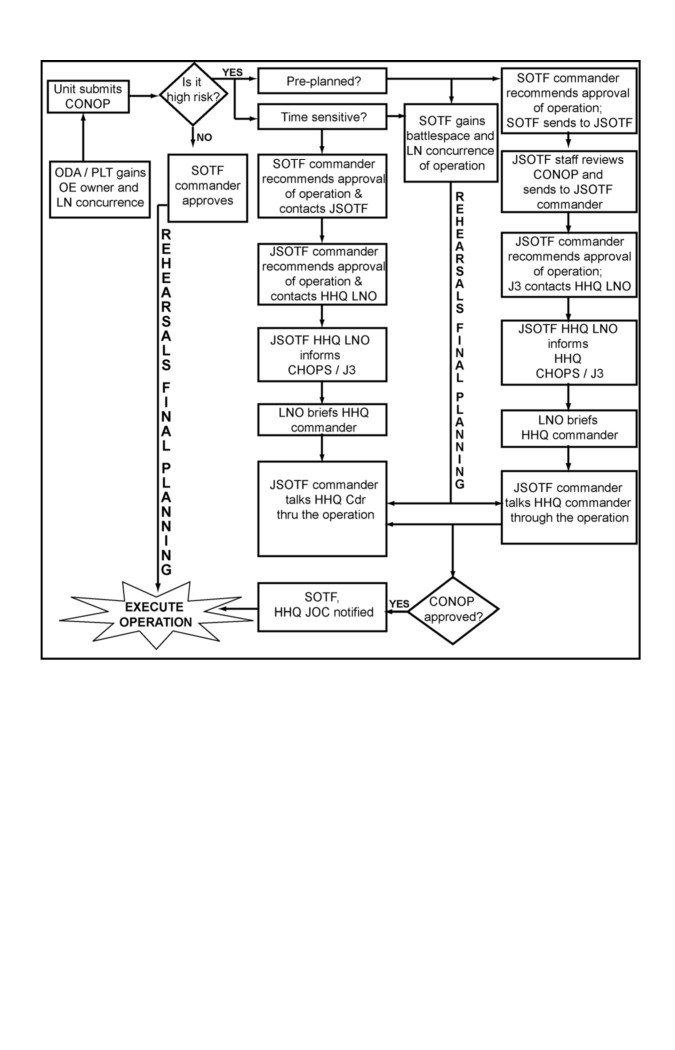
Figure 15. SOF Example CONOPS Approval Process
f. CONOPS Levels and Approving Authorities.
(1) Tables 4 and 5 illustrate current examples of SOF CONOPS levels in OIF
and OEF, respectively, with the criteria for each CONOPS level and the
approval authority for each level. CONOPS have permeated the CF/SOF
community. CONOPS are currently submitted to higher and adjacent
commands for approval and SA by both CF/SOF elements.
(2) In OIF, CONOPS levels are labeled I, II, and III, with a level I CONOPS
requiring the highest command approval. However, in OEF, CONOPS are
labeled II, I, and 0, with a level II CONOPS requiring the highest command
approval. CONOPS levels generally depend on three criteria: sensitivity of
FM 6-03.05 / MCWP 3-36.1 / NTTP 3-05.19 / AFTTP 3-2.73 /
USSOCOM Pub 3-33 v.3
46
17 March 2010

the site, HVI level, and level of risk. Criteria are dependent upon enemy
threat, commander’s ability, and desire to accept or not accept risk. Some
theaters have additional criteria. An example is in Iraq where provinces
that are under provincial Iraqi control (PIC) require all CONOPS to be
level I CONOPS due to OE ownership. Commanders must clearly define
operations by level and authority prior to combat operations. In tables 4
and 5 CONOPS levels are listed from low risk to high risk operations.
Table 4. OIF EXAMPLE CONOPS LEVELS
CONOPS
CRITERIA
EXAMPLES
APPROVAL
LEVELS
AUTHORITY
LEVEL III
Routine
Convoys, force
AOB or NSWTU with
operations.
protection, low risk
concurrence from OE
CONOPS, FID
owner.
activities, intel
activities, combined
patrols.
LEVEL II
Disruption
Combined SOF and
SOTF with
type missions
FSF operations
concurrence from OE
and means of
owner. (Can be
entry/exit.
delegated to AOB.)
LEVEL I
Operations
High risk entry into
AOB to SOTF, with
that may have
sensitive sites.
concurrence from OE
significant
owner, to CJSOTF to
political and/or
multi-national division
IO impact;
(MND) POC to JTF
meets or
POC with possible
exceeds host
approval/notification
nation elected
by host nation elected
officials
officials.
criteria.
FM 6-03.05 / MCWP 3-36.1 / NTTP 3-05.19 / AFTTP 3-2.73 /
USSOCOM Pub 3-33 v.3
17 March 2010
47

Table 5. OEF EXAMPLE CONOPS LEVELS
CONOPS
CRITERIA
EXAMPLES
APPROVAL
LEVEL
AUTHORITY
LEVEL 0
Routine
Convoys, force
AOB or TU with
operations.
protection, low
concurrence from
risk CONOPS,
OE owner.
FID activities,
intel activities,
combined
patrols.
LEVEL I
Disruption type
Combined SOF
SOTF with
missions, means
and FSF
concurrence from
of INFIL/EXFIL.
operations.
OE owner. (Can be
delegated to AOB.)
LEVEL II
Operations that
High risk entry
AOB to SOTF with
may have
into sensitive
concurrence from
significant
sites.
OE owner to JTF
political and/or
POC and may
IO impact; meets
require International
or exceeds host
Security Assistance
nation elected
Force (ISAF) POC
officials criteria.
approval with
possible
approval/notification
by host nation
elected officials.
7. Operational Considerations during Execution.
During execution, key considerations include information flow, C2 systems, battle
tracking, and COP. CF/SOF commanders should consider the following during
operations:
a. Maintain information cross-talk between CF/SOF. LNOs must closely monitor
current and planned operations and ensure their parent unit receives accurate
and timely unit tracking information. When possible, LNOs should push draft
copies of CONOPS for upcoming operations to provide their host and parent
command the maximum amount of time to prepare for future operations.
b. Leverage interoperable C2 systems. Consider joint cross-domain fire support
and review priority of fires through battle tracking (situation reports [SITREPs],
position reports [POSREPs], execution checklists [EXCHECKs], etc.).
FM 6-03.05 / MCWP 3-36.1 / NTTP 3-05.19 / AFTTP 3-2.73 /
USSOCOM Pub 3-33 v.3
48
17 March 2010
c. Deconflict FSCMs. As SOF ground teams move across the battlefield, air
operations center (AOC) and SOLE personnel must continually update C2
systems to cover SOF movement. This becomes extremely critical after the ATO
is released. C2 nodes need to keep COPs current and operations floor
personnel need to vet against engaged targets.
d. Maintain battle tracking. Maintain an overall picture of the OE that is
accurate, timely, and relevant. The simplest form of battle tracking is the mental
and graphic picture built and maintained by using maps, observations, and battle
updates from higher headquarters.
e. Manage COP. COP is defined as a single identical display of relevant
information shared by more than one command. A COP facilitates collaborative
planning and assists all echelons to achieve SA. The CF/SOF LNOs should
ensure that the COP of the hosting and parent unit presents an accurate picture
of the OE and includes the appropriate tracking of the following:
(1) Friendly and enemy tracking.
(2) Friendly and enemy picture updates.
(3) Track filter updates.
(4) Redundant and correlated tracking.
(5) Joint fire support and review priority of fires and FSCMs considerations.
(6) Maneuver control measure (MCM).
(7) Intelligence updates.
f. Achieve end states. To effectively achieve desired end states, CF/SOF must
continuously assess effects and share information through collaboration,
coordination, and communications architecture (e.g., LNOs, voice, data systems,
collaboration tools, and COP architecture). Information shared should include
the following:
(1) Battle damage assessment (BDA).
(2) SITREPs and intelligence summaries (INTSUMs).
(3) Site Exploitation. Tracking intelligence from mission sites for future targets
and utilizing all available national assets, etc.
(4) Detainee tracking and evidence chain-of-custody to ensure a detainee and
his/her items of intelligence value arrive at the same place and can be
located during prosecution.
(5) Post-operation detainee intelligence tracking, collection systems, and battle
drills for immediate input back into the targeting cycle.
(6) Operational summaries (OPSUMs).
(7) Compile target lists. Target lists would include HVIs, HPTs, “be on the
lookout” (BOLO), and politically sensitive individuals or properties.
FM 6-03.05 / MCWP 3-36.1 / NTTP 3-05.19 / AFTTP 3-2.73 /
USSOCOM Pub 3-33 v.3
17 March 2010
49
(8) Monitor follow-on actions and future operations. CF/SOF liaisons must
closely monitor the future operations section. This allows the liaison to
initially monitor any branches or sequels to the executed
OPORDs/CONOPS.
(9) Assess operation execution. Open and frank assessment of the execution
of the operation for use as lessons learned.
FM 6-03.05 / MCWP 3-36.1 / NTTP 3-05.19 / AFTTP 3-2.73 /
USSOCOM Pub 3-33 v.3
50
17 March 2010
Chapter III
CF/SOF Fires and Effects
1. Introduction
a. SOF will often operate within the CF operational area and vice versa.
Therefore, it is imperative that both CF/SOF have a thorough understanding of
joint doctrine, Service doctrine, and the OE in accordance with the commander’s
intent in regards to fires and effects (e.g., operational versus tactical fires,
employment of kill boxes, and supported command forward of a fire support
coordination line).
b. Joint fire support is the synergistic product of three subsystems: (1) target
acquisition, (2) command and control, and (3) attack resources. These
subsystems will inevitably cross intra theater boundaries and must be properly
planned and executed to prevent fratricide and duplication while supporting
operational momentum, maintaining the initiative, and conducting maneuver.
This chapter discusses differences in CF/SOF effects capabilities as well as
ways to streamline the fires process to engage the enemy quickly and accurately
while reducing chances for fratricide.
2. Fires and Effects Lessons Learned
a. CF/SOF commanders must be knowledgeable about each other’s fires
process, including the supported commander’s guidance, targeting priorities,
targeting cycles, ATOs, and attack guidance matrix. A clear common
understanding of the fires process early will assist in preventing delays during the
immediate/emergency and time-sensitive moments. The use of LNOs will help
facilitate this understanding.
b. Ensure the JSOAC, through the SOLE, conducts airspace deconfliction with
the Tomahawk land attack missile (TLAM) liaison officer located within the joint
force air component headquarters.
c. Activate and deactivate small gridded areas of operation during rapid decisive
operations. Use kill boxes overlaid on or outside of these defined areas to
facilitate more responsive fire support. For more information on kill boxes, refer
to FM 3-09.34, MCRP 3-25H, NTTP 3-09.2.1, and AFTTP 3-2.59, Multi-Service
Tactics, Techniques, and Procedures for Kill Box Employment.
3. Joint Fire Support Capabilities and Characteristics
Early, detailed, and integrated CF/SOF fire support planning is required to
capitalize on complementary fires capabilities. Failure to conduct this planning
can cause the joint fire support process to respond less effectively and efficiently
by adding unnecessary layers of coordination during execution and causing
FM 6-03.05 / MCWP 3-36.1 / NTTP 3-05.19 / AFTTP 3-2.73 /
USSOCOM Pub 3-33 v.3
17 March 2010
51

missed opportunities, delays in action, and increased potential for fratricide.
Table 6 identifies CF/SOF fire support capabilities.
Table 6. Joint Fire Support Capabilities
SOF Supports CF Mission
CF Supports SOF Mission
ISR platform including special
Lethal and nonlethal fires (e.g.,
reconnaissance capabilities.
IO and electronic warfare [EW]).
Joint terminal attack controllers
Robust joint fire support C2.
(JTACs).
Positive identification of specific
Multiple attack/strike resource
targets.
options.
Target marketing / terminal guidance.
Conventional strike assets (e.g.,
F/A-18, A-10, F-15E, B-52,
etc.).
Battle damage assessment.
ISR.
Recommendations to no-
Amphibious platforms.
strike/restricted target list.
AC-130 gunship support.
Heavy combat ground
formations.
Deception and denial operations.
JTACs (e.g., controllers in
Remote area operations.
tactical air control party (TACP)
Indigenous force status.
or Air Naval Gunfire Liaison
Austere weather operations.
Company).
Mobility (to include airlift).
ACMs / FSCMs.
Austere weather support.
4. CF/SOF Fire Support Planning
Planning for joint fires that assist land, maritime, amphibious, and SOF to move,
maneuver, and control territory, populations, and key waters is essential. The
following is a list of considerations CF/SOF commanders and planners must
consider when planning joint fires:
a. Review the intelligence preparation of the OE (IPOE) or intelligence
preparation of the battlefield/battlespace (IPB). This includes leveraging and
fusing complementary capabilities and ensuring that there is continuous
coverage and established required intelligence updates to compensate for
changing CF and SOF capabilities during the targeting process.
Note: The US Army use IPOE and the USMC use IPB.
b. Develop common fire support database. Ensure that common software
versions are employed on all communications and intelligence systems.
FM 6-03.05 / MCWP 3-36.1 / NTTP 3-05.19 / AFTTP 3-2.73 /
USSOCOM Pub 3-33 v.3
52
17 March 2010
c. Establish OE geometry. OE geometry refers to three-dimensional digital
representations of the OE. Ensure that graphics are accurately prepared without
overlaps or gaps and are disseminated in a manner that maintains the integrity of
the zones. Note that graphics developed on very large map scales greater than
1:250,000 are often inaccurately depicted.
d. Identify zone of responsibility (ZOR). Missions are generally planned around
maneuver control measures (MCMs) identified by unit boundaries. In land
warfare, a boundary is a line between adjacent units and/or formations, which
defines surface areas of operation. ZORs are three-dimensional areas assigned
to commanders for the conduct of military operations. The AFATDS requires the
commanders’ OE to be depicted in the database by a line around the assigned
area.
e. Develop FSCM in accordance with OPLANs/theater guidance. JP 3-09,
Close Air Support, Appendix A, contains a list of FSCMs.
f. Exchange story boards and gridded reference graphic (GRG). A GRG is a
graphical depiction of target area, usually produced on overhead imagery,
gridded for easy identification of key terrain, buildings, etc.
Develop ACM and plan within the ATO cycle, reference JP 3-52, Joint Doctrine
for Airspace Control in a Combat Zone and the multi-Service publication FM
3-52.1, AFTTP 3-2.78, Multi-Service Tactics, Techniques, and Procedures for
Airspace Control for more information on ACMs.
g. Synchronize airspace control requirements and procedures in accordance
with airspace control order (ACO) and special instructions (SPINS). Synchronize
Service-specific, CF/SOF procedures. Ensure that input to ATOs are
coordinated with CF/SOF units.
h. Know the TTP. The areas of operations in Iraq and Afghanistan are
controlled by the CF with SOF operating within CF AOs. The artillery, mortars,
and most of the air assets are controlled by CF. The following TTP will aid SOF
fires:
(1) Understand which CF unit owns the artillery and mortars in the AO SOF
are operating. If SOF are operating out of a firebase with indirect fire
support attached, be sure to understand the command relationship (e.g.,
OPCON, TACON, etc.).
(2) Understand the CF commander’s intent when executing fires (e.g., indirect
fires can only be executed with the approval of airspace, and a collateral
damage assessment must be conducted).
(3) Meet with the CF commander’s fire support officer (FSO) to establish a
request/call for fire routine or sequence. By doing so, the CF will be more
prone to providing SOF with indirect fires.
(4) Understand that CF typically controls the air assets in theater. Ensure that
the CF is familiar with SOF procedure of requesting air support through the
FM 6-03.05 / MCWP 3-36.1 / NTTP 3-05.19 / AFTTP 3-2.73 /
USSOCOM Pub 3-33 v.3
17 March 2010
53
combined joint special operations task force (CJSOTF), which will be
cleared through the CF AO command.
(5) Ensure the CF AO commander understands the SOF TTP when dealing
with fire support. SOF commanders are given the autonomy to make
decisions on the ground and develop the situation. For example, CAS and
ISR platforms appear above a SOF objective without SOF requesting these
assets. Although the CF commander had good intentions by providing
these assets, the enemy forces fled the SOF engagement area upon
identifying the air assets. The opportunity for SOF to destroy the enemy
was lost.
(6) Identify locations that are often targets of fire support operations. If the CF
have not already created target packages on these locations, SOF should
coordinate with CF to establish these targets. This will facilitate the fire
support missions on these particular targets. Additionally, these targets will
provide the CF commander with new named area of interest (NAI) and
target areas of interest (TAI) for possible future operations.
5. Fire Support Coordination
a. FSCMs enhance the expeditious attack of targets; protect forces,
noncombatants, critical infrastructure, and sites of religious or cultural
significance; and set the stage for future operations. Locations and implementing
instructions (e.g., establishing headquarters and date/time/group for which a
FSCM is in effect) for FSCMs are disseminated electronically by message,
database update, and/or overlay (e.g., digital file or transparency) through both
command and joint fire support channels to higher, lower, and adjacent
maneuver and supporting units.
b. Knowledge of the various FSCMs employed by each Service and functional
component (e.g., joint force land component), in addition to joint measures, is
necessary for effective joint fire support coordination. Examples of nonjoint
doctrinal FSCMs include operating a battlefield coordination line (Marine Corps),
and deep battle synchronization line (Army). Additionally, theater-specific kill box
procedures using the Global Area Reference System (GARS) may be
established. Refer to FM 3-09.34, MCRP 3-25H, NTTP 3-09.2.1, AFTTP 3-2.59,
Multi-Service Tactics, Techniques, and Procedures for Kill Box Employment; and
JP 3-09, Joint Fire Support. Additionally, refer to multi-Service publication FM
3-52.1, AFTTP 3-2.78, Multi-Service Tactics, Techniques, and Procedures for
Airspace Control, for some specific translation errors between transportation
automated information systems (TAIS), TBMCS, and AFATDS, as well as
coordination requirements for ACMs. CF/SOF commanders and planners must
understand the following in the development of FSCMs:
(1) Follow established procedures for dissemination, receipt confirmation,
tracking, and deletion of FSCMs.
FM 6-03.05 / MCWP 3-36.1 / NTTP 3-05.19 / AFTTP 3-2.73 /
USSOCOM Pub 3-33 v.3
54
17 March 2010
(2) Understand the impact of FSCMs on CF/SOF current and future
operations.
(3) Ensure LNOs maintain SA of all FSCMs impacting their supporting unit.
(4) Ensure operational graphics are included in the COP.
(5) Ensure LNOs and planners use the JFC-approved GARS.
(6) Ensure FSCMs are only as restrictive or permissive to the degree
necessary to facilitate the rapid engagement of targets and simultaneously
provide safeguards for friendly forces.
(7) Recognize the timeliness of reporting. FSCMs may not be depicted the
same on all C2 and joint fire support systems. If the FSCM is delayed, the
LNOs may have to assist in clearing the fires.
c. When planning deliberate joint fire support, CF/SOF commanders and
planners must coordinate and rehearse a fire plan that supports operational
elements. Planning should consider the following:
(1) Review and understand the CF/SOF commanders’ intent as applied to joint
fire support planning (e.g., ROE, national caveats, timing, effects, and risk).
(2) Identify and coordinate CF/SOF capabilities and limitations. Discuss the
capabilities and mission planning requirements of each
supporting/supported section.
(a) Fire support assets available (air, surface fires, naval).
(b) Target identification.
(c) Target designation and handoff.
(d) Fire request and target control procedures.
(e) Consider communication requirements (e.g., digital or voice).
(3) Leverage mutually supporting effects. CF and SOF employ an array of
weapons systems that may complement parent unit capabilities in a joint
environment. Nonlethal fires include those effects from EW, nonlethal
weapons (NLWs), civil affairs (CA), PSYOP, space control, and IO such as
disrupting the enemy’s information networks.
(4) Coordinate and synchronize targeting priorities. The commander’s target
guidance and priorities must be incorporated into the fire support planning
process. The importance of a target set and/or category may change
during subsequent phases of operation.
(5) Determine requirements for input to the joint targeting cycle. Synchronize
CF/SOF input to the joint targeting cycle, including combined targeting
meetings, target nomination submission requirements (format and timing),
etc.
(6) Consider the ATO and clarify processes for dynamic retasking of air
support.
(7) Understand airspace management procedures and review established
ACMs as defined in the ACO and FSCMs defined in OPORDs, fragmentary
orders (FRAGORDs), and fire support plans.
(8) Standardize map datum. The OPLAN will define the map datum used in
theater in either annex B or annex M. It will further define which coordinate
FM 6-03.05 / MCWP 3-36.1 / NTTP 3-05.19 / AFTTP 3-2.73 /
USSOCOM Pub 3-33 v.3
17 March 2010
55
system to be used when reporting locations (military grid reference system
[MGRS], universal transverse mercator [UTM], or lat/long.) It is important
to recognize that not all assets use the same map datum. Depending on
platform and available equipment, care must be given when passing
coordinate information to ensure a common standard is used.
6. Clearance of Fires
CF/SOF commanders must coordinate the clearance of fires procedures prior to
starting operations. This coordination helps prevent fratricide between the
different elements as well as provide timely prosecution of targets. The following
are some considerations for CF/SOF commanders:
a. OE commanders have the responsibility for clearance of fires, with
management delegated under the lead of the fire support coordination element.
b. SOF must positively clear all indirect fires (not precleared or allowed by
permissive FSCMs) with the fire support coordination center (FSCC) that is
responsible for the OE.
c. SOF must provide and update unit locations, to include foreign forces
operating with SOF to the OE FSCC.
d. SOF units must ensure that CF units can positively identify them if they are
operating in an unconventional manner (nonstandard vehicles or dress).
e. Use FSCMs to facilitate clearance of fires. Permissive measures, if
positioned correctly and disseminated to all, permit safe and responsive fires on
targets of opportunity.
7. Immediate Fire Support Planning
Unplanned, immediate fire support is a rapid process that mandates CF/SOF
have functional and operational procedures in place. CF/SOF commanders and
planners should consider—
a. Primary, alternate, contingency, emergency (PACE) communications plan.
b. Joint fires network communications. CF and SOF gain enhanced SA by
receiving feeds from ground and fires C2 networks. Plan for the ability to view
unit tracks and trajectories of friendly fire support assets, as well as trajectories
from counter mortar radar acquisitions. This helps prevent the potential for
CF/SOF fratricide.
c. Quick-fires channels. CF/SOF units should establish a standardized link to
rapidly respond to requests, receive approval, and control fires from all friendly
FM 6-03.05 / MCWP 3-36.1 / NTTP 3-05.19 / AFTTP 3-2.73 /
USSOCOM Pub 3-33 v.3
56
17 March 2010
fire support assets available (e.g., aircraft and ground units responding to troops
in contact [TIC] will all be on previously established frequencies).
d. Establish preplanned targets. To eliminate redundancy and minimize
engagement delays, CF/SOF units should codevelop preplanned targets for
inclusion into AFATDS. Target reference point (TRP) in support of SOF
CONOPS should be sent to a fire support element (FSE) fires cell (FC) and/or
FSCC and be entered into AFATDS during CONOPS coordination.
e. Precleared fires (kill boxes, engagement zones, free-fire areas). CF and SOF
should become familiar with established procedures and approving authorities for
preclearance of fires. Co-use or independent operations within specific areas
determine maneuver requirements, fires synchronization processes, movement
coordination, and hand-over requirements. Additionally, ensure that CAS assets
designated for a particular mission have the most current graphics.
8. Time-sensitive Targets
a. A TST is a JFC designated target or target type of such high importance to
the accomplishment of the JFC's mission and objectives, or one that presents
such a significant strategic or operational threat to friendly forces or allies, that
the JFC dedicates intelligence collection and attack assets or is willing to divert
assets away from other targets in order to use the F2T2EA targeting cycle. TSTs
comprise a very small or limited number of targets due to the required investment
of assets and potential disruption of planned execution and are only those targets
designated by the JFC and identified as such in the JFC’s CONOPS. In most
cases, TSTs require immediate response because they pose (or will soon pose)
a direct danger to friendly forces or are highly lucrative, fleeting targets of
opportunity. TSTs are normally executed dynamically; however, to be successful,
they require considerable deliberate planning and preparation within the joint
targeting cycle. If the TST is a weapon of mass destruction (WMD) or could have
chemical, biological, radiological, and nuclear (CBRN) effects, proper planning
needs to be done regarding appropriate personnel protective measures as well
as potential collateral effects. For more information, refer to JP 3-40, Combating
Weapons of Mass Destruction, Appendix A, "WMD, Elimination Operations," and
Appendix B, "WMD Interdiction Operations."
b. Commanders may designate high-payoff targets (HPTs) that present
significant risks to or opportunities for component forces and/or missions. These
are generally targets that the component commander(s) have nominated to the
JFC's TST list, but did not "make the cut." This class of targets may require
time-sensitive processing and cross- component coordination, even though they
did not qualify for inclusion on the JFC's TST list. The JFC and component
commanders should clearly designate these targets prior to execution of military
operations. These targets should receive the highest priority possible, just below
targets on the JFC's TST list.
FM 6-03.05 / MCWP 3-36.1 / NTTP 3-05.19 / AFTTP 3-2.73 /
USSOCOM Pub 3-33 v.3
17 March 2010
57
c. The JFC requires an integrated approach to TST C2. Because multiple
organizations (national, theater, and component-level) require TST-related
planning and execution data, the goal is to create a mutually agreed upon,
comprehensive, and accurate COP. Options for achieving this include—
(1) Collaboration.
(2) Liaison and control elements.
(3) Consolidation and collocation.
d. Preestablished and well-rehearsed C2 procedures permit the engagement of
TST within the window of opportunity.
e. Establish and deconflict FSCMs against specific TSTs.
f. Validate the target still meets the TST criteria.
g. Identify the TST engagement authority and execute as permitted.
h. Understand the level of risk acceptable to the JFC (e.g., risk to friendly forces
and noncombatants; possible collateral damage; and the disruption of diverting
attack assets from their deliberately planned missions versus the danger of not
attacking the TST in time and risking mission failure or harm to friendly forces).
i. Although targeting is a continuous, cyclical process, the cycle for one routine
preplanned target may take hours or even days. Successful prosecution of a
TST requires that this cycle be completed in a matter of minutes. Means to
achieve this time-compressed cycle include—
(1) Using preplanned target reference methods such as kill boxes to expedite
the clearance and deconfliction process.
(2) Using IPOE/IPB to determine the most probable areas where TSTs will
emerge, permitting effective scheduling and positioning of acquisition and
strike assets to ensure rapid response to TSTs.
(3) Making organizational enhancements (e.g., streamlining TST procedures
within each organization, connecting specific TST prosecution nodes within
the command into a virtual cell, collocating specific TST-related functional
assets, or by a combination of these options).
(4) Making communications enhancements such as direct, dedicated, and
redundant real-time links (collaborative planning suites, voice, and data)
between TST cell nodes.
j. Coordinate and deconflict SOF locations with TST attacks. The primary
method to accomplish deconfliction and clearance of fires is through the SOF
chain of command, but it may be facilitated via liaison and control elements—
(1) The SOLE is linked with the JAOC for air operations interface.
FM 6-03.05 / MCWP 3-36.1 / NTTP 3-05.19 / AFTTP 3-2.73 /
USSOCOM Pub 3-33 v.3
58
17 March 2010
(2) The SOCCE is linked with surface agencies (e.g., deep operations
coordination cell, fire support element, FSCC, supporting arms
coordination center [SACC]) for land operations.
k. The SOLE and SOCCE have SA on the locations and activities of SOF in and
outside of the operational area.
l. Should CF operations put SOF at risk, the JSOTF, assisted by the SOLE or
SOCCE, is responsible for deconfliction and/or recommending COAs to avoid the
potential for fratricide.
m. SOF’s primary actions against TSTs are clandestine reconnaissance,
surveillance, terminal guidance, and control of weapons systems. SOF can be
employed to destroy or disable a TST, but if not planned well in advance of the
operation, this may compromise their primary mission and require extraction of
the team.
9. Naval Surface Fire Support (NSFS)
a. Naval gunfire is a near-immediate, all-weather, around-the-clock support
option that is limited to use in the littoral area. Naval gunfire provides fire support
for targets in coastal regions in circumstances where traditional artillery support
is not available or as augmentation to the ground forces’ existing fires assets. As
a general rule, naval gunfire has a range of 23-24 km and is called in via high
frequency (HF). For further NSFS information and planning guidance, refer to
MCWP 3-31.6, Supporting Arms Coordination in Amphibious Operations.
Employment considerations should include the following:
(1) Hydrography and the mine threat affect the location of preplanned fire
support areas (FSAs)/fire support stations.
(2) Naval ships are multimission platforms that may simultaneously provide fire
support to ground forces, as well as antiair and antisubmarine protection to
other ships at sea. This complicates their employment and will need to be
considered in the planning process.
(3) Naval gunfire provides high rates of fire for limited periods of time.
(4) The naval gunfire high velocity and flat trajectory affords—
(a) Direct fire against fortifications.
(b) Limited use against targets in defilade.
(5) Gun-target line—
(a) Changes when the ship is underway within the FSA.
(b) Consider the elliptical dispersion pattern, as shown in figure 16, with
the long axis of the pattern along the direction of fire (e.g., plan the
gun-target line parallel to the forward line of own troops).
FM 6-03.05 / MCWP 3-36.1 / NTTP 3-05.19 / AFTTP 3-2.73 /
USSOCOM Pub 3-33 v.3
17 March 2010
59

Figure 16. Naval Gunfire Dispersion Pattern
b. Tomahawk Land Attack Missile (TLAM)
(1) There are three TLAM variants that can be launched from destroyers,
cruisers, and submarines. The Block III TLAM-C (500-lb. class unitary
warhead) and Block III TLAM-D (sub-munitions warhead) fly single
outcome missions. The Block IV TLAM-E (500-lb. class unitary warhead)
is an improved variant capable of loitering and redirection based on in-flight
two-way communications with the launch platform. Tomahawk missions
are primarily planned by the Cruise Missile Support Activities (CMSA) and
Tomahawk Strike Mission Planning Cells (TSMPC). Some Shooters also
have the capability to plan and shoot their own Tomahawk missiles, which
in combination with the CMSAs and TSMPCs provides a 24/7 capability
that has been operationally proven. The evolution of cruise missile
technology has enabled TLAM to go from a purely strategic weapon to a
tactical weapon uniquely capable of supporting CF/SOF by use of the
following attributes:
(a) Deep strike capability (1,000+ nautical mile range).
(b) Denied airspace utility (unmanned system, difficult to counter with
antiair).
(c) High precision (small circular error of probability based on Global
Positioning System [GPS] and/or back-up nonjammable navigation
aids).
(d) Precise time on target selectability.
(e) All-weather, day, or night strike capability.
(f) High reliability (low dud rate.)
(g) In-flight reprogrammable capable of loitering and retargeting to support
call for fires and TSTs (Block IV).
(h) Low to medium altitude target attack profiles (< 300 ft. to 15,000+ ft.).
FM 6-03.05 / MCWP 3-36.1 / NTTP 3-05.19 / AFTTP 3-2.73 /
USSOCOM Pub 3-33 v.3
60
17 March 2010
(i) High element of surprise (multi axis multisimultaneous time on target,
small radar/visual profile, variable run-in headings and programmable
dive angles).
(j) Quick strike capability (attack targets within 70 nm of the shooter in less
than 10 minutes).
(2) Employment Considerations
(a) TLAM execution timeline is very fluid and dependent on several factors
such as precoordination, deconfliction, TLAM variant, and whether or
not the firing unit (FRU) is in the “basket” and prepared to fire, etc.
From receipt of tasking to launch can take from minutes to hours,
depending on the level of precoordination. Refer to FM 3-60.1, MCRP
3-6D, NTTP 3-60.1, AFTTP(I) 3-2.3, Multi-Service Tactics, Techniques,
and Procedures for Time Sensitive Targeting, Appendix D, "Dynamic
Execution of TLAM in Support of TST."
(b) During mission planning, the joint fires element must coordinate the
employment of TLAMs with the SACC (afloat), the FSCC (ashore), or
the Tomahawk strike coordinator cell to assign the necessary launch
platforms to the TLAM support mission. Once TLAM assets have been
apportioned, calls for fire can be initiated at the special operations
force/firing unit level via voice communications.
(c) Block III TLAMs do not have a return-to-base capability; therefore,
when launched the missile will strike its assigned target. Commanders
should ensure the target aim-point is positioned in a location that will
provide the most benefit to their mission. Additionally, care must be
taken to ensure that the terminal attack explosion does not
compromise the overall effectiveness of the mission.
(d) The Block IV missile can be planned to 15 different outcomes. Once
launched, the missile will strike the assigned target or may be
reassigned to one of 14 other outcomes. One outcome may include a
loiter track that allows the missile to loiter for up to 2 hours while
waiting reassignment. If a new target appears or the target has
returned, the missile can be retargeted in-flight to the new location
using information from a 9-line, chat, etc. If a new target is not
nominated, the missile will proceed to a previously coordinated
remotely located dump point to limit detection and collateral damage.
(e) Special attention must be given to the fact that TLAM and ISR aircraft
flight profiles often occupy the same airspace and either TLAM or ISR
overland flight profiles must be adjusted according to mission priority.
This is best accomplished at the JFACC’s AOC between the ISR LNO,
the TLAM LNO, and the airspace representative responsible for
airspace deconfliction.
FM 6-03.05 / MCWP 3-36.1 / NTTP 3-05.19 / AFTTP 3-2.73 /
USSOCOM Pub 3-33 v.3
17 March 2010
61
10. Artillery, Rockets, and Missile Support
a. SOF does not typically have inherent artillery support, while SOF does have
small mortar type systems. It is essential for SOF to understand the conventional
fire support of the CF units in their OE and integrate them into SOF operations.
b. Cannon artillery is usually the most abundant fire support system available to
the conventional ground force, providing near-immediate, all-weather, 24-hour
response. Artillery offers high volume and both precision and area fires (see
figure 17).
c. The Multiple Launch Rocket System (MLRS) is an Army free-flight, area-fire,
artillery rocket system used primarily to attack counter fire, enemy air defenses,
and personnel targets. The MLRS supplements cannon artillery fires with a rapid
response, longer range, and large volume of firepower.
d. The Guided Multiple Launch Rocket System (GMLRS) is similar to the MLRS,
although GMLRS is able to use fewer rockets to achieve the same effect by
using GPS/inertial measurement unit (IMU) guidance systems.
e. The Army Tactical Missile System (ATACMS) is a longer-range GPS-aided
missile system with the responsiveness of the MLRS. The ATACMS offers an
antipersonnel/antimateriel, antiarmor sub-munitions warhead and a dual purpose
improved conventional munitions with unitary and/or antiarmor warheads.
FM 6-03.05 / MCWP 3-36.1 / NTTP 3-05.19 / AFTTP 3-2.73 /
USSOCOM Pub 3-33 v.3
62
17 March 2010

Figure 17. Artillery/MLRS Range Relationship
f. Employment Considerations
(1) CF/SOF friendly unit synchronization is critical prior to employment due to
the range and dispersion of these weapon systems.
(2) Understand the MLRS—
(a) It has collateral damage concerns, due to munitions producing dud
bomblets (with a dud rate of 1 to 10 percent) that are hazardous to
dismounts, light vehicles, and civilians.
(b) It has limited effectiveness against hardened targets.
(c) Its high altitude trajectory requires airspace deconfliction.
(3) Understand the ATACMS—
(a) Its high angle launch and impact, along with its very high altitude flight
path, does not require large amounts of airspace to be deconflicted
before firing.
(b) It is difficult to employ against moving targets because the missile
cannot be redirected after launch.
FM 6-03.05 / MCWP 3-36.1 / NTTP 3-05.19 / AFTTP 3-2.73 /
USSOCOM Pub 3-33 v.3
17 March 2010
63
11. Close Air Support
a. The speed, range, and maneuverability of aircraft allow them to attack targets
that other fire support means may not be able to effectively engage because of
limiting factors such as target type, range, terrain, or ground scheme of
maneuver. Attack helicopters and fixed-wing aircraft have capabilities that are
complementary, especially when employed in combined attacks, and can quickly
mass fires throughout the OE.
b. Manned aircraft offer both day and night capability and a wide variety of
munitions, but are weather and refueling dependent. Manned aircraft and UAS
can offer “eyes on target” and a closed loop from the “sensor to the shooter”
during an attack, particularly useful when exact target coordinates are not
available or when mobile targets are being targeted.
c. CF CAS Employment Considerations.
(1) Identify the need for preplanned CAS and understand the immediate CAS
request process.
(2) Plan for CAS at key points throughout the depth of the OE.
(3) Anticipate preplanned CAS requirements for inclusion in the joint ATO.
The ATO planning cycle is normally 72 hours and covers a 24-hour period.
The ATO is generally published 12 to 24 hours before the ATO period.
(4) Understand aircraft employment concepts.
(a) CAS attack aircraft typically fly in groups of two to four aircraft.
Bombers normally fly as single ships or in small groups. The Air Force
calls these “flights,” while the Navy and Marine Corps call them either
“sections” (two aircraft) or “divisions” (three to four aircraft).
(b) Army aviation units are organic to divisions and regiments and perform
missions as part of a combined arms team. The Army does NOT
consider its attack helicopters a CAS system, but rather a close
combat attack (CCA) mission. Helicopter units normally receive
mission-type orders and execute as an integral unit/maneuver element.
The preferred employment method is under the control of a maneuver
commander.
(c) Marine Corps attack helicopters are CAS platforms and normally
operate in groups of two to four and are integral to the Marine
air-ground task force.
(d) A joint air attack team (JAAT) is a combination of attack and/or scout
rotary-wing aircraft and fixed-wing CAS aircraft operating together to
locate and attack high-payoff targets and other targets of opportunity.
A JAAT normally operates as a coordinated effort against enemy
forces supported by fire support, air defense artillery, NSFS, ISR
systems, electronic warfare systems, and ground maneuver forces.
FM 6-03.05 / MCWP 3-36.1 / NTTP 3-05.19 / AFTTP 3-2.73 /
USSOCOM Pub 3-33 v.3
64
17 March 2010
(5) Consider the enemy air defenses and the joint force’s ability to counter
them.
(6) Understand the requirement to integrate CAS with fire and maneuver.
(7) Understand that CAS requires an integrated, flexible, and responsive C2
structure, and dependable, interoperable, and secure communications
architecture.
(8) Understand that if a support relationship exists, the supporting element
uses the CAS C2 system of the supported element. If a command
relationship does not exist, CAS requests are forwarded using their
respective CAS process to the JAOC for consideration/fill.
d. SOF CAS Employment Considerations.
(1) Understand SOF CAS can be requested through the ATO process but is
based on asset availability and priority of fires. Airspace deconfliction will
be accomplished through the JFACC airspace control plan and orders and
ATO SPINS.
(a) The primary missions of SOF aircraft are troop movement, CAS,
convoy escort, and limited air-to-ground interdiction. They can perform
force protection and interdiction missions where limitation of collateral
damage and/or fratricide is a primary concern.
(b) When working with AC-130, the 5-line call for fire is used to give
aircraft location of friendly forces and range and bearing to target with
target description.
(2) AC-130 Gunship (H and U Models).
(a) The primary missions of the AC-130 aircraft are CAS and air
interdiction. Special operations AC-130 gunships typically operate
single-ship sorties during hours of darkness and under low-threat
conditions (when survivability of aircraft is usually higher). They can
perform force protection and interdiction missions where limitation of
collateral damage and/or fratricide is a primary concern. The AC-130H
weapons suite consists of a 105-mm and 40-mm cannon; the AC-130U
also has a 25-mm cannon.
(b) With its accurate, low-yield munitions, AC-130s can fire extremely
close to friendly troops while limiting collateral damage.
(c) AC-130s can effectively perform interdiction missions against “soft”
targets (e.g., personnel, trucks, trains, and boats), with limited
capability against “hard” targets (e.g., buildings, armor, and
underground).
(d) In contrast to other attack aircraft, the AC-130 engages the target while
in a counterclockwise orbit as opposed to a run-in style attack (see
figure18.) The AC-130 orbit profile, combined with the sophisticated
sensor suite and long loiter time, allows the crew to continuously
(threat permitting) monitor the battlefield, affording exceptional
battlefield SA.
FM 6-03.05 / MCWP 3-36.1 / NTTP 3-05.19 / AFTTP 3-2.73 /
USSOCOM Pub 3-33 v.3
17 March 2010
65
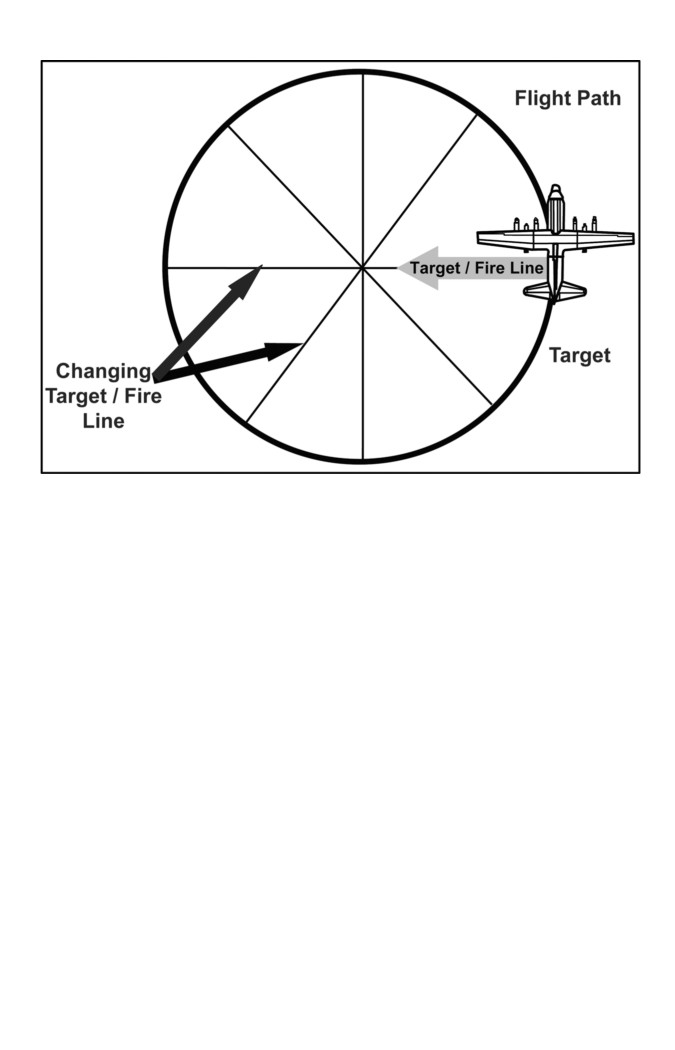
Figure 18. AC-130 Gunship Target/Fire Line
(3) AC-130 Employment Considerations.
(a) Direct interaction with an AC-130 weapons officer/tactician is essential
when considering employment tactics.
(b) Gunships typically operate in the hours of darkness and must operate
in areas of friendly air superiority and outside the range of radar-guided
threat systems.
(c) Both AC-130Us and AC-130Hs have a limited all-weather strike
capability via coordinates and offset firing from a friendly radar beacon.
Additionally the AC-130U has a strike-radar to allow for engagement of
radar significant targets such as buildings and vehicles.
(d) The most important step for the AC-130 in any CAS engagement, and
especially in urban terrain, is the positive identification of friendly
forces; units must clearly mark their positions per standing operating
procedures to avoid fratricide.
(e) The unique procedures for requesting and controlling fires from the
AC-130 gunship should be considered.
(f) Do not ask the gunship to identify colors, as the optical system is
unable to display color.
FM 6-03.05 / MCWP 3-36.1 / NTTP 3-05.19 / AFTTP 3-2.73 /
USSOCOM Pub 3-33 v.3
66
17 March 2010
(g) Because the gunship target/fire line is constantly changing—
• Reference north/south/east/west (cardinal directions) and distance;
do not reference or make corrections by clock positions or left/right or
short/long.
• Identify friendly troop locations and no-fire areas (e.g., via beacon,
infrared strobe, gated laser intensifier tape, or verbally).
• Identify target (e.g., via laser or talk-on).
• Do not pass run-in headings (no-fire headings).
(4) AC-130 5-line call for fire format—
(a) Observer/warning order.
• “(AC-130 call sign), this is (observer call sign), fire mission, over.”
(b) Friendly location/mark.
• “My position is (TRP, grid, etc.) marked by (strobe, beacon, infrared
(IR) strobe, etc.), over.”
(c) Target location.
• “Target location is (magnetic bearing and range in [meters], TRP,
grid, etc.)”
(d) Target description/mark.
• “Target is (target description), marked by (IR pointer, tracer, etc.),
over.”
(e) Remarks.
• Give threats, danger close, restrictions, at my command, etc.
(5) For additional AC-130 employment considerations see JP 3-09.3, Close Air
Support, chapter 5; and FM 3-09.32, MCRP 3-16.6A, NTTP 3-09.2,
AFTTP(I) 3-2.6, Multi-Service Tactics, Techniques, and Procedures for the
Joint Application of Firepower (JFIRE).
12. Information Operations
a. Nonlethal fires provide a force employment virtually unlimited by range,
terrain, or ground scheme of maneuver, but require detailed integration and
planning in support of CF/SOF operations. IO integrate employment of EW,
computer network operations (CNO), PSYOP, military deception (MILDEC), and
operational security (OPSEC), in concert with specified supporting and related
capabilities (to include space control), to influence, disrupt, corrupt, or usurp
adversarial human and automated decision making while protecting all US
forces.
b. Liaisons from each specialized facet of IO (e.g., computer network attack
[CNA], versus computer network defense [CND]) must be integrated early in the
planning process. Targeting development, IPOE/IPB, and additional facets of
military planning require extended timelines for accurate deployment of IO tools.
Early identification of desired effects is critical to an effective IO campaign. Refer
to JP 3-13, Information Operations, chapter V, for a detailed discussion of IO
FM 6-03.05 / MCWP 3-36.1 / NTTP 3-05.19 / AFTTP 3-2.73 /
USSOCOM Pub 3-33 v.3
17 March 2010
67
planning and employment considerations. The following observations are for
commanders and planners in regards to IO in a CF / SOF OE:
(1) At the tactical level, IO in a joint CF/SOF environment should be
coordinated at every phase of an operation.
(2) No single source can control the information sphere. In today’s world, just
about anyone can conduct low-tech, yet sophisticated, “information
operations” with a global reach.
(3) A primary objective is to attract and keep the local populace on the side of
the friendly force. Disjointed or independent operations between CF/SOF
in the same OE can adversely affect that relationship. Planners must
ensure the synchronization message reaches the populace.
(4) The main IO “fire” is informational. The task is to discredit the enemy’s
strategy and means in the eyes of the population.
(5) The insurgent’s advantage is that they understand that the fight is for the
loyalty and support of their people. Their principal “fires” are informational
and political. That is how they are organized to fight.
(6) The US disadvantage is that IO continues to be focused more on
supporting tactical physical wins, than on creating strategic informational
effects. This is particularly challenging when CF/SOF share OE and are
not informed of each other’s missions.
(7) US forces cannot go it alone. All dimensions of national power must be
leveraged and coordinated in OE.
(8) An effective and coordinated information strategy requires a clearly defined
strategic end-state, comprehensively understood.
(9) A main focus of COIN operations is to convince the populace that their
presence, agenda, and local allies offer a more legitimate and credible
future than do the insurgents.
(10) The primacy of informational effects is that everything US forces do and
say affects the populace's perception of their legitimacy.
(11) Message consistency and coherence across all US forces’ plans, actions,
and IO campaigns need to be considered from an overall strategic
informational effects perspective; that is, the effects on the population’s
perceptual environment and subsequent behaviors and allegiances.
c. Not all IO messages must be detailed; however, common themes can be used
to reinforce command messages during full-spectrum operations. One
successful TTP of tactical IO, which can be used by CF/SOF, is integrating a
laptop computer and printer into a high mobility multipurpose wheeled vehicle
(HMMWV.) Upon arriving upon a scene of an accident or improvised explosive
device (IED) detonation or other situation which inflames the local population,
salient facts can be put into a preapproved flyer template and an IO message
can go out immediately, associating the known facts from the ground scene. The
predesigned templates for fliers currently used in Iraq can be approved by
FM 6-03.05 / MCWP 3-36.1 / NTTP 3-05.19 / AFTTP 3-2.73 /
USSOCOM Pub 3-33 v.3
68
17 March 2010