Amtrak. Service Standards Manual for Train Service and On-Board Service Employees (Version 6, 2011) - page 14
b) The “Train Earnings Reports Envelope” (NRPC
158) may not be turned in at another station,
even if the other station accepts “Train Earnings
Reports Envelopes” (NRPC 158).
c)
If the last Conductor finds that the “Train
Earnings Reports Envelope” (NRPC 158) is
torn, the string tie is missing or the safety of the
contents is in any way jeopardized, any available
envelope or envelopes may be used.
• Make sure that these substitute envelope(s)
are hand deposited in the proper location, with
a full explanation of the circumstances that
surrounds the substitute envelope(s).
• If a station representative is available, hand
deliver the substitute envelope(s) to them
and explain the reason for the substitute
envelope(s).
• The station representative will then be
responsible for properly labeling the substitute
envelope and forwarding it to Amtrak
Revenue Operations in El Paso, Texas by
FedEx delivery service.
U.
Conductor/Asst. Conductor Sales
Report (NRPC 193)
1.
Form Layout
a) All train service employees who have worked
passenger trains where revenue (e.g., cash or
credit cards) has been collected, must complete
and submit a “Conductor/Asst. Conductor Sales
Report” (NRPC 193) for each train worked, with
the required remittance. (Refer to Figure 8-72)
b) All COTS stock used on a certain train must
be noted in the “Opening Number,” “Closing
Number,” and “Number Issued” of the
“Conductor/Asst. Conductor Sales Report”
(NRPC 193) for that train. The same goes for
all chargeable stock. If a form is signed for and
is sequentially numbered, it is chargeable.
Service Standards Manual No. 6
8-137
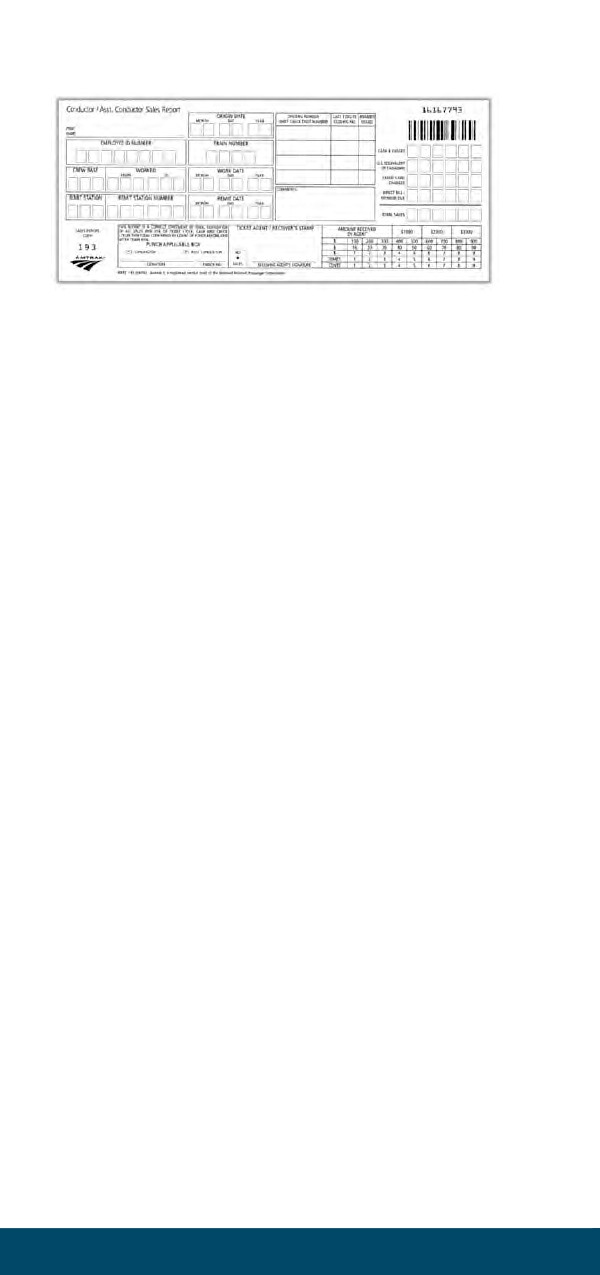
Figure 8-72 - “Conductor/Asst. Conductor Sales Report” (NRPC 193)
2.
Completing Form
The following information is required to properly
complete the “Conductor/Asst. Conductor Sales
Report” (NRPC 193):
a)
Print employee’s full name in this format (last
name, comma, first name, and middle initial).
b) Print the train origination date.
c)
Print the employee’s 8-digit Employee
Identification Number (SAP ID).
d) Print the train number using all are four boxes.
For train numbers less than four digits, enter
zeroes in the lead blocks.
EXAMPLE:
Train number 20 would be written as “0020.”
e)
Print employee’s crew base. This is the same as the
3-letter city code, with the following exceptions:
• Chicago, Zone 4 = CZ4
• Chicago, Zone 8 = CZ8
• Washington, Zone 5 = WZ5
• Los Angeles, Zone 12 = LZC
• CSX Transportation = CSX
f)
Print the 3-letter city code where employee
“WORKED FROM.”
g)
Print the 3-letter city code where employee
“WORKED TO.”
h) Print the work date. If the employee begins in
the p.m. of one day and finishes in the a.m. of the
next, use the p.m. date.
i)
Print the 3-letter city code where you remit with
the exceptions of these Ticket Receiver’s offices,
which are:
• New Haven = NTR
8-138
Train Service Accounting Procedures
• New York = NYR
• Washington = WRO
• Chicago = CTR
j) Print the six-digit station number where remitting
(this must be posted at the site; if not, ask an agent).
k) Print the remittance date.
l) Punch the applicable block for a Conductor or
Assistant Conductor.
m) Sign the “Conductor/Asst. Conductor Sales
Report” (NRPC 193) only after acknowledging that:
•
“This report is a correct statement of final
disposition of all sales and use of COTS. Cash
and credit card collection total confirmed by
count of funds before and after train run.”
• Signing verifies that all statements and blocks
are filled in correctly.
n) Print the number from the ticket punch. If your
ticket punch does not have a number, turn it in
for one that does.
o) For each used sequence of COTS numbers, print
the opening number, this includes voided COTS.
• For stock whose form number is not the first two
digits of the number, print the form number
(without the NRPC or NRPT).
• Do not include the check digit (the number
following, set off by a dash or a space),
without which the document’s numbers run
in consecutive order.
p) For each sequence of used COTS numbers, print
the last three digits of the closing number-the
number of the last ticket actually used.
• This includes voided COTS.
• Do not include the check digit.
• If no COTS were used or voided, write no
number in the space.
q) For each sequence of COTS, print the total number
used/issued. This includes voided COTS.
r)
The “Comments” lines are for any notation relating
to sales, voided tickets, lateness of the report,
overages or shortages, or any revenue-related issue.
s)
The Ticket Agent or Ticket Receiver stamp
validates that the station, as reported, received
the sales.
• The date stamped must match the remit date
box on the “Conductor/Asst. Conductor Sales
Service Standards Manual No. 6
8-139
Report” (NRPC 193); that was filled in by the
Conductor/Assistant Conductor(s).
• This validation makes the COTS a receipt.
• It is a disciplinary offense to falsify the remit
date and information.
t)
The receiving agent signature line is for the
Ticket Agent/Ticket Receiver who receives the
sales collections.
u) The “No Sales” block is for the station agent to
punch only if the PTT is not functioning.
v)
The total of cash and checks collected on every
train must be totaled and printed in the “Cash
and Checks” blocks.
• The total of cash and checks collected must
be the total of all cash fare tickets plus any
overages in cash.
• The total must never be less because shortages
must be made good.
w) The “US Equivalent of Canadian” blocks are for
the US value of the Canadian currency collected.
x)
The “Direct Bill” blocks are for Payment Due by
the passengers carried on COTS.
y)
“TOTAL SALES” blocks are for the total of all
sales: cash, checks, “US Equivalent of Canadian”,
credit card charges, and direct bills. This is the
total sale for a particular train.
z)
The “Amount Received by Agent” blocks are to
be punched by the Ticket Agent/Ticket Receiver
who receives the sales.
• The Conductor or Assistant Conductor must
check their copy for accuracy when the agent
returns it.
• The “Amount Received by Agent” is the actual
amount of the total sales received.
3.
“No Sale” Entered in Paperless Time Ticket (PTT)
System
a) Train service employees who have worked trains
where no revenue has been collected on-board,
must now make a “No Sales” entry in the
Paperless Time Ticket (PTT) system for that day.
(Refer to Figure 8-73)
8-140
Train Service Accounting Procedures
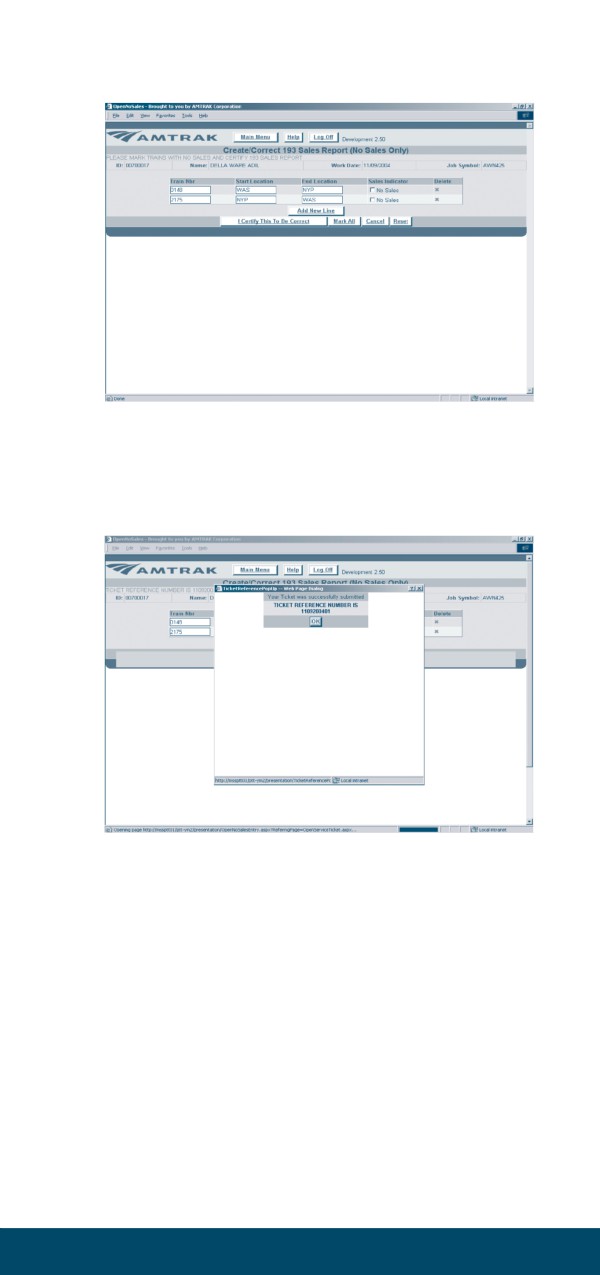
Figure 8-73 - “No Sales” entry in the Paperless Time Ticket (PTT) system
b) The entry process will then validate the “No
Sales” transaction(s). (Refer to Figure 8-74)
Figure 8-74 - Validate of “No Sales” transaction(s)
c) When the PTT systems is unavailable or
malfunctioning, train service employees are
required to remit the “Conductor/Asst. Conductor
Sales Report” (NRPC 193), indicating “No Sales.”
• Once entered, “No Sales” reports cannot be
changed.
• Employees who must make changes to their
“No Sales” reports previously entered into the
PTT system must notify their supervisor.
Service Standards Manual No. 6
8-141
d) In situations where there have been “No Sales”
during the assignment, but a COTS ticket has
been voided, the Conductor or Assistant
Conductor must submit the voided COTS on a
properly completed “Conductor/Asst. Conductor
Sales Report” (NRPC 193) and remit in the
normal manner. Use of the PTT system in this
case is not permitted, even though no sales were
made on-board the train.
e)
Conductors and Assistant Conductors working in
MARC service are prohibited from processing
“No Sales” reports through the PTT system.
f)
All requirements in this section pertaining to
the use of the “No Sales” block on the
“Conductor/Asst. Conductor Sales Report”
(NRPC 193) still apply, during those instances
when that form must be used to record “No Sales.”
g)
“No Sales” reports that have been processed
through the PTT system, or submitted on
“Conductor/Asst. Conductor Sales Report”
(NRPC 193), are subject to audit reviews for a
period of up to two (2) years.
V.
Remit
1.
Funds
a)
At the completion of the trip, the Conductor and
Assistant Conductors must total all cash fare tickets
that they handled individually. Separate the total
of checks and cash collected from the starting
amount. If the remaining total of cash is the same as
the before train total, the Conductor or Assistant
Conductor has “balanced.”
b) The total of cash, credit cards, checks and payment
due forms must be remitted as soon as possible, to
a Ticket Office/Receiver, along with all tickets
issued and all copies of any voided COTS.
c)
If the total of cash, credit cards and checks
collected during the trip is more that the COTS
sales, this is an Overage.
• Overages must be included in the deposit for
the train .
• Overages must be noted in the comments area
of the “Conductor/Asst. Conductor Sales
Report” (NRPC 193).
d) If the total of cash, credit cards and checks
collected during the trip is less that the COTS
8-142
Train Service Accounting Procedures
sales, this is an Shortage. Shortages must be paid
immediately when remitting.
e)
Conductor or Assistant Conductor’s personal check
may not be remitted in lieu of Amtrak funds.
f)
If an audit reveals that the sum of the cash fare
tickets is more than the cash and checks remitted,
the Conductor or Assistant Conductor could be
subjected to disciplinary action.
g)
The 48-Hour Rule
• When there is no agent to remit to at that time
or there is another train that must be worked,
and there is not enough time to remit between
assignments, the remittance must be made as
soon as possible, and must not exceed 48 hours
after the end of the work assignment.
• If two days of relief commences within 24
hours of the work assignment, the limit will be
72 hours.
• If the Conductor or Assistant Conductor
cannot comply with the 48-Hour Rule they
must contact their supervisor and be absolutely
clear when they will remit.
• This must always be at the first opportunity.
h) The Five-Day Rule
•
For remittances that are made later than
72-hours (three full days) after the end of the
work assignment, specific approval must be
granted before the end of this period.
EXAMPLE:
An employee is an extra board Assistant
Conductor who works out of a no agent station,
working north or south. The southern train crew
change point is in a station without a station agent.
The northern train crew change point has a ticket
office. The clear understanding is that they will
remit all outstanding Sales Reports each time they
work north.
•
Employees must call their supervisor for
instruction if they have non-remitted sales.
•
When out-of-service, the same rule applies.
•
Each Conductor and Assistant Conductor is
responsible for contacting their supervisor to
discuss the remittance delay before the end of
the 72-hour period.
Service Standards Manual No. 6
8-143
i)
Vacations
•
If it is possible to remit before leaving railroad
property after the last trip before vacation,
there will be no special exception given.
•
The 48-Hour Rule still applies.
•
If it is not possible to remit before leaving
railroad property after the last trip, remittance
will be considered late if not in before the 48
hour, 72 hour or 5-day rule, unless authorized
by the Conductor’s or Assistant Conductor’s
supervisor.
•
If the time limits under the exceptions have
passed, but specific approval was granted, this
must be noted on the Sales Report in the
comments area with the name of the supervisor.
•
If the remit time has passed, but there has
been discussion about this lateness between
the Conductor or Assistant Conductor and
their supervisor, this must be noted on the
Sales Report with the name of the supervisor.
•
If the remittance is late and the Conductor or
Assistant Conductor feels there is a valid reason
for the delay, but has not discussed it with their
supervisor, this must be noted on the sales report.
j)
It is unacceptable to delay a remittance for the
purposes of utilizing that remittance's cash and
coin to make change on a subsequent trip.
k) When signing the “Conductor/Asst. Conductor
Sales Report” (NRPC 193), the Conductor or
Assistant Conductor is attesting that the remit-
tance is the true amount of all sales.
2.
Out-Dated COTS
a) COTS is not valid for sale after one year (1) has
elapsed from the book’s issuance date.
• The issuance date can be found on the outside
front cover of the book, above the grid area, in
a box titled “Agent’s Stamp Here.”
• All tickets within the expired book must be
voided and submitted on a “Conductor/Asst.
Conductor Sales Report” (NRPC 193) to a
Ticket Agent or Ticket Receiver on the one-year
(1) anniversary from the issuance date, or the
first opportunity thereafter.
• The ticket agent will return the pink copy as the
Conductor or Assistant Conductor’s receipt.
8-144
Train Service Accounting Procedures
• The agent will retain the blue copy as a station
record and will send the voided book to Ticket
Stock Control in Washington DC along with
the Sales Report copy and the Station
Accounting copy of the “Conductor/Asst.
Conductor Sales Report” (NRPC 193).
b) The “Conductor/Asst. Conductor Sales Report”
(NRPC 193), and associated COTS Auditor’s
Coupons, will be taken into possession by the
Station Remittance Clerk accepting the remittance,
under all circumstances. The station will be
responsible for forwarding these documents to the
Amtrak Finance Department processing office in
El Paso, as part of the Station Sales Report.
c)
Conductors or Assistant Conductors leaving
passenger service
• If a Conductor or Assistant Conductor leaves
passenger service and does not expect to
return to ticket collecting within six months,
all chargeable COTS must be voided and
remitted and the ticket punch must be
returned to their supervisor.
• The chargeable COTS must have written on
the cover:
• your name
• social security number or employee
identification number
• date
• reason for turning the COTS
• A separate “Conductor/Asst. Conductor Sales
Report” (NRPC 193) will be used to document
this return.
3.
“Conductor/Asst. Conductor Sales Report”
(NRPC 193) Distribution
a) When remitting, the Ticket Agent or Ticket
Receiver will distribute the four coupons of the
“Conductor/Asst. Conductor Sales Report”
(NRPC 193) as follows:
• The first (Sales Report Copy) and second
(Station Accounting Copy) coupons will be
retained by the Ticket Agent or Ticket Receiver.
• In some locations, the third copy (Station Agent
Copy) will be returned to the Conductor or
Assistant Conductor to immediately put in the
drop box outside the cashier’s window.
Service Standards Manual No. 6
8-145
• The fourth copy (Conductor/Asst. Conductor
Copy) will be returned to the Conductor or
Assistant Conductor and must be retained for a
minimum of two years.
8-146
Train Service Accounting Procedures
Chapter 8
Section 2
On-Board Service
Accounting
Procedures
Introduction
It is critical for On-Board Services employees to be
proficient in the company’s accounting procedures. The
following policies apply to On-Board Services crews who
handle Amtrak corporate funds, stock and inventory.
It is the responsibility of all employees to ensure that
all requirements outlined in this document be completed
in a clear and legible manner. Illegible or incomplete
information limits the corporation’s ability to properly
document transactions, and can lead to financial loss.
Any loss incurred by the corporation due to illegible or
incomplete transactions or documents will be debited to
the responsible employee.
A. Working Fund (Applicable to the LSA)
This section details the procedures used when a
working fund is issued, returned or outstanding.
1.
Issuing a Working Fund
a) To obtain a working fund, the LSA must make
a request to the crew base.
b) Working funds are only issued from the Ticket
Receiver’s office or ticket office.
c) The working fund for a LSA may not exceed
$300.00.
d) LSAs may have only one working fund active at
any one time.
e) The working fund is subject to audit at any time
by the Manager of On-Board Services (or
designee), Crew Base Manager or supervisor,
Internal Audit, or the Amtrak Police Department.
2.
Working Funds Held by Employee
Prior to or during a trip, employees must do the
following.
a) Ensure the working fund is at the authorized
amount.
b) Ensure that the working fund has an appropriate
amount of small bills and change. This must include
a minimum of $5.00 in gold $1 Coins.
c) Ensure change is replenished enroute or at turn
around points.
d) Ensure the working fund is kept secure at all times.
At turn around points and at home crew bases,
where available, the LSA may have the
Service Standards Manual No. 6
8-149
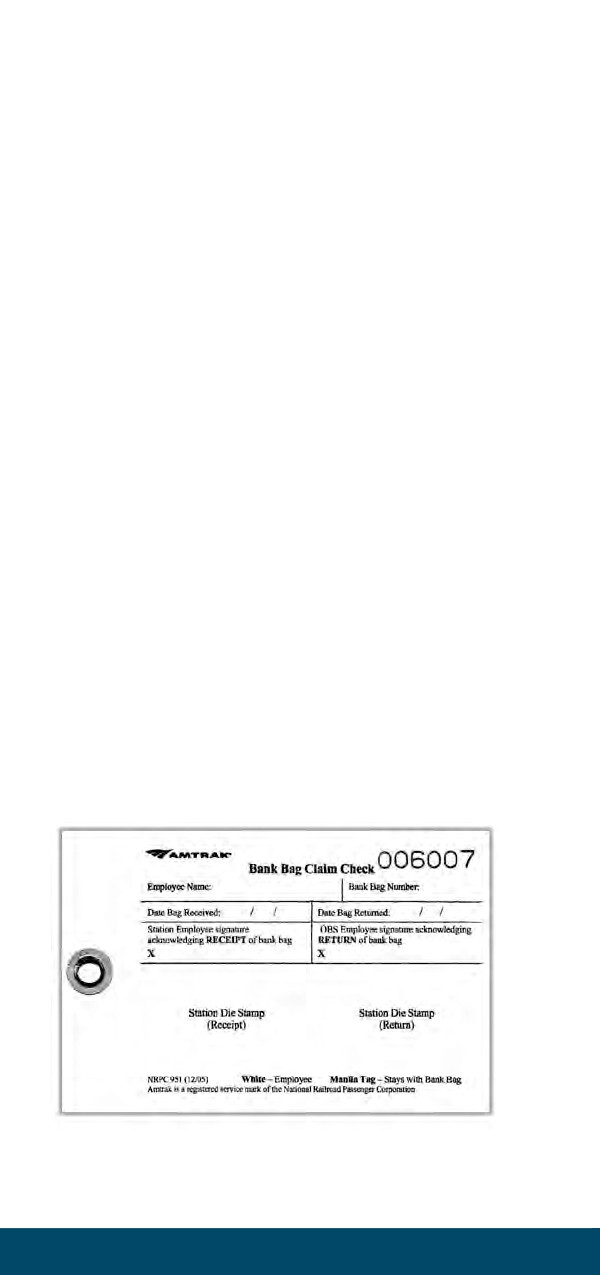
Station/Ticket Receiver hold their working fund
using the “Bank Bag Claim Check” (NRPC 951).
(Refer to Figure 8-75)
e)
Report stolen working fund to the Amtrak Police
and crew base management immediately.
Employees should obtain a copy of the police
report for his/her records.
f)
If it is determined at the conclusion of the
investigation that the LSA is liable, the employee
will be held responsible for any missing funds.
g)
When a LSA is absent from duty for any reason
other than approved vacation or personal holiday,
he/she is responsible for remitting his/her working
fund to the station Ticket Agent or Ticket
Receiver where the fund was issued to the
employee (applicable at crew base locations
where employees retain the working funds).
h) If a LSA is terminated and fails to return his/her
working fund, the Crew Base Manager must have
the Payroll Department deduct the amount of the
working fund from the LSA’s paycheck (not valid
in states where prohibited). A “Personnel Action
Request” (NRPC 2000) is required. If the LSA
has no wages due them, the manager must advise
the employee via certified mail, that the funds are
due and instruct the employee to return the funds
immediately. If the employee fails to return the
fund, the Crew Base Manager will request that
the corporation take the employee to a formal
collection process. This is done through the Senior
Officer Revenue Remittance, and the collection
activity may be reported to the credit bureau.
Figure 8-75 - “Bank Bag Claim Check” (NRPC 951)
8-150
On-Board Service Accounting Procedures
3.
Returning a Working Fund
a) The employee is responsible for remitting his/her
working fund to the Station Ticket Agent/Ticket
Receiver where the working fund was issued to
the employee.
b) Local procedure may require an employee to
remit his/her working fund after each trip.
c) Any shortage or loss of funds is the responsibility
of the LSA.
d) When a LSA transfers to another crew base, the
working funds issued by the crew base they are
leaving, must be returned. The new crew base will
issue a new working fund to the employee. It is
the responsibility of the new crew base to ensure
that the working fund at the former crew base
has been closed.
B.
Receiving Paperwork (Applicable to
the LSA and Chef)
When the LSA and Chef report to the designated
location, they must obtain the correct Food and
Beverage Sales Report envelope and “Transfer Out
Form” (896).
1.
Food and Beverage Sales Report Envelopes
There are six (6) different Food and Beverage Sales
Report envelopes for the collection of paperwork.
a) “Dining Car Report” (NRPC 131) - green color.
(Refer to Figure 8-76.)
b) “Café/Lounge, Food & Beverage Sales Reports”
(NRPC 695) - gold color. (Refer to Figure 8-77.)
c)
“Diner/Lounge Combination, Food & Beverage
Sales Reports” (NRPC 3255) - orange color.
(Refer to Figure 8-78.)
d) “First Class/Club Car, Food & Beverage Sales
Reports” (NRPC 3275) - purple color. (Refer to
Figure 8-79.)
e) “POS Trains, Food & Beverage Sales Reports”
(NRPC 3276) - red color. (Refer to Figure 8-80.)
f)
“Cart Service, Food & Beverage Sales Reports”
(NRPC 3256) - lime green color, (Refer to
Figure 8-81.)
Service Standards Manual No. 6
8-151
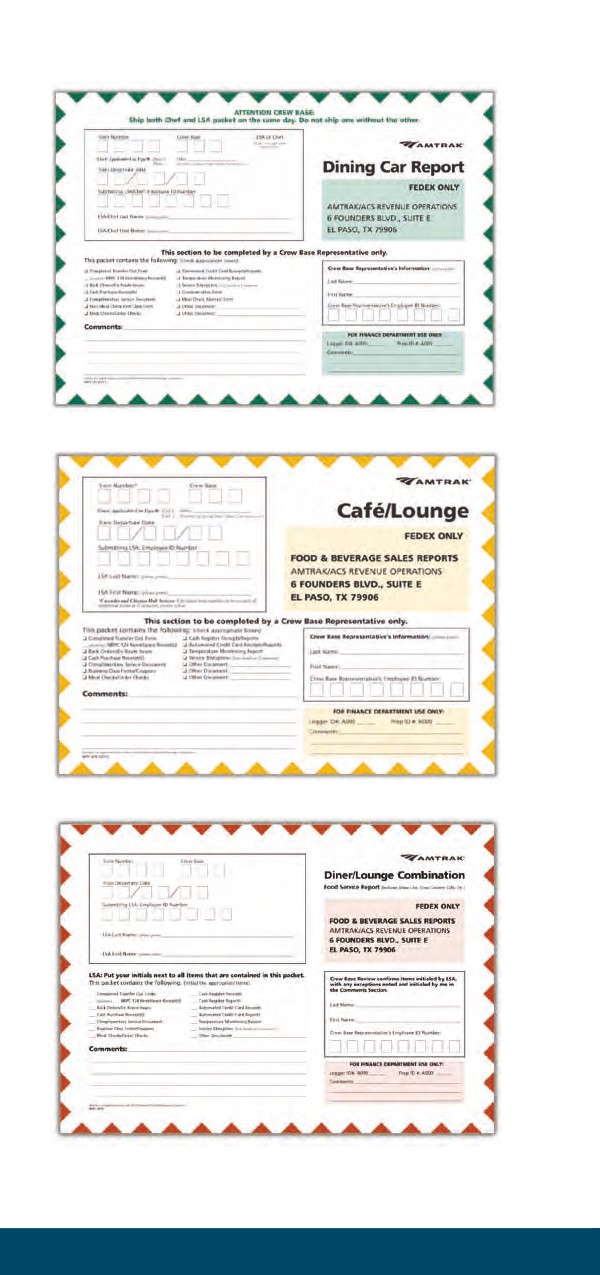
Figure 8-76 - “Dining Car Report” (NRPC 131)
Figure 8-77 - “Cafe/Lounge, Food & Beverage Sales Reports” (NRPC 695)
Figure 8-78 - “Diner/Lounge Combination, Food & Beverage Sales Reports”
(NRPC 3255)
8-152
On-Board Service Accounting Procedures
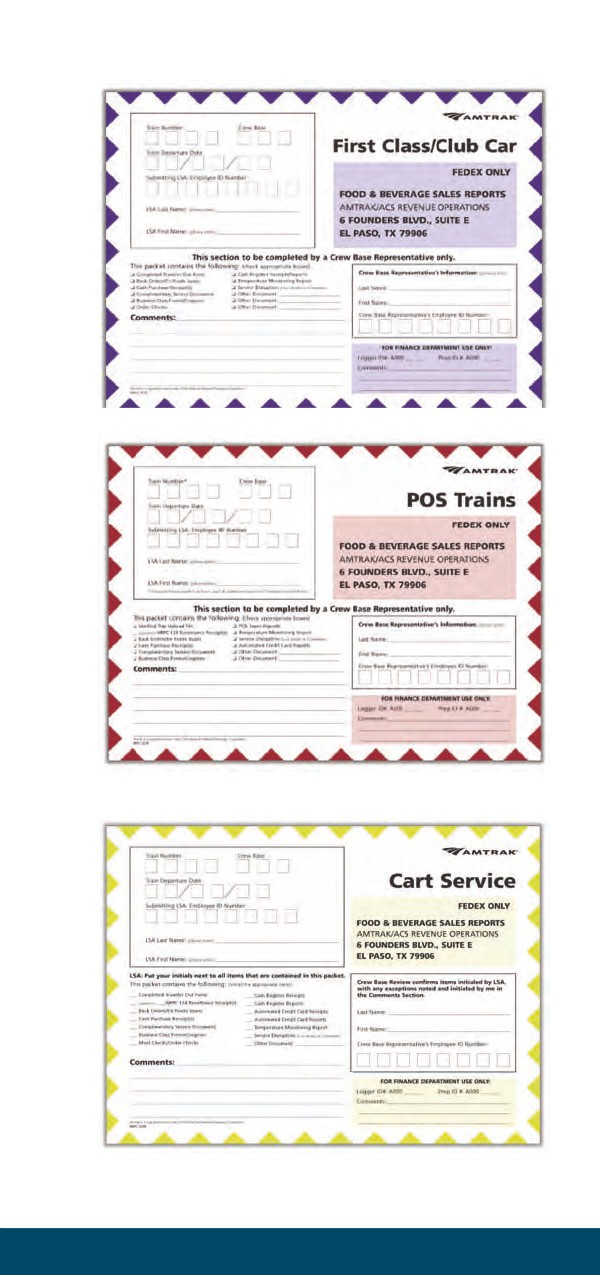
Figure 8-79 - “First Class/Club Car, Food & Beverage Sales Reports” (NRPC 3275)
Figure 8-80 - “POS Trains, Food & Beverage Sales Reports”” (NRPC 3276)
Figure 8-81 - “Cart Service, Food & Beverage Sales Reports” (NRPC 3256)
Service Standards Manual No. 6
8-153
g)
The LSA and Chef are responsible to ensure that
the correct Food and Beverage Sales Report
envelope is being used and is properly filled out
with the correct information printed clearly.
Required entries:
• The outbound train number.
• The outbound origin date.
• His or her name.
• His or her SAP number.
• City Location code of his or her home crew
base. Crew Base Three Letter Code:
- BOS - Boston
- NYP - New York
- WAS - Washington
- RGH - Raleigh
- MIA - Miami
- CHI - Chicago
- NOL - New Orleans
- LAX - Los Angeles
- FTW - Ft. Worth
- OAK - Oakland
- SEA - Seattle
h) The train number listed on the “Transfer Out
Form” (896) must match the train the employee
is working and recorded on the front of the
report envelope. If an employee assists on a train
one-way and works another train back, the only
train on the front of the report envelope will be
the train they worked as the LSA.
i)
For long distance Dining and Lounge Cars:
• When the inventory is not turned in at the turn
around point, the paperwork must support the
entire round trip.
• When the inventory is turned in at the end of a
trip, (essentially one leg of the round trip), the
paperwork must be completely closed out and
a remittance made for that trip. New paperwork
and a new inventory will be issued for the
return trip. Local procedures will determine
where the employee will turn in their Food and
Beverage Sales Reports Envelope.
8-154
On-Board Service Accounting Procedures
2.
Employee Stock & Paperwork Accountabilities
a)
LSA-Diner
•
The LSA has specific responsibilities for both the
inventory and accounting of the Dining Car stock
including alcoholic beverages, miscellaneous
beverages and desserts (Sections A and C of
the “Transfer Out Form” (896)).
•
Before leaving the commissary, the LSA is
responsible for documenting all inventory
transactions (Start Issue, Back Orders, Start
Issue Credits) for all alcoholic beverages,
miscellaneous beverages, desserts and support
inventory.
•
The LSA’s copy of the “Transfer Out Form”
(896) must include a complete list of all items
issued to the Dining Car.
•
The LSA is to sign the “Transfer Out Form”
(896) for the stock only after all shortages/
overages are corrected, Start Issue Credits
handled, and Back Orders received and
checked and the Catering Vendor representative
has signed.
•
Once the “Transfer Out Form” (896) has been
signed by the Catering Vendor representative
and the LSA, the responsibility for the stock has
transferred from Catering Vendor to the LSA.
•
The LSA is responsible for the accounting of
entrée sales as documented on Meal Checks
(Refer to section G. “Universal Meal Checks”).
At the end of the trip, the LSA is to complete
the UNIT SOLD column for "B" items
ENTREES of the “Transfer Out Form” (896).
This total must be abstracted directly from the
meal checks using the required abstract sheet.
(Refer to Figure 8-87)
•
The LSA is responsible for maintaining a
“Chef/LSA Enroute Condemnation Report”
(NRPC 3143). (Refer to section F.
“Condemnation”)
•
The LSA is responsible for ensuring that
he/she has a blank “Transfer Out Form” (896).
Service Standards Manual No. 6
8-155
• The Chef and LSA are jointly responsible for
all support items.
b) Chef
•
The Chef has specific responsibilities for both
the inventory and accounting of all of the
center-of-the-plate items (Section B of the
“Transfer Out Form” (896)).
•
Before leaving the commissary, the Chef is
responsible for documenting all inventory
transactions (Start Issue, Backorders, Start
Issue Credits) for all center-of-the-plate items.
•
The Chef’s copy of the “Transfer Out Form”
(896) is a duplicate of the LSA’s. Each, however,
is responsible for different sections of the
“Transfer Out Form” (896). At the beginning
of the trip, the Chef is responsible for Section
"B" entries on his/her copy of the “Transfer
Out Form” (896) for Start Issue, Backorder
and Start Issue Credit.
•
The Chef’s copy of the “Transfer Out Form”
(896) must include a list of all center-of-the-
plate items in Section “B”.
•
The Chef and LSA are jointly responsible for
all support items.
•
After all of the stock has been inventoried, all
shortages/overages corrected, Start Issue
Credits handled, and Back Orders received
and checked, the “Transfer Out Form” (896)
must be signed by the Catering Vendor
representative and the Chef.
•
Once the “Transfer Out Form” (896) has been
signed by the Catering Vendor representative
and the Chef, the responsibility for the stock has
transferred from Catering Vendor to the Chef.
•
The Chef is responsible for maintaining a
“Chef/LSA Enroute Condemnation Report”
(NRPC 3143) (Refer to section F.
“Condemnation”)
c)
LSA-Café/Lounge/Combination Cars
• The LSA has responsibilities for all the inventory
and accounting of the Café/Lounge/
Combination Car stock.
• Before leaving the commissary, the LSA is
responsible for documenting all inventory
transactions (Start Issue, Back Orders, Start
Issue Credits) for all items.
8-156
On-Board Service Accounting Procedures
• After all of the stock has been inventoried, all
shortages/overages corrected, Start Issue
Credits handled, and Back Orders received
and checked, the “Transfer Out Form” (896)
must be signed by the Catering Vendor
representative and the LSA.
• Once the “Transfer Out Form” (896) has been
signed by the Catering Vendor representative
and the LSA, the responsibility for the stock has
transferred from Catering Vendor to the LSA.
• The LSA’s copy of the “Transfer Out Form”
(896) will include a complete list of all items
issued to the Café/Lounge/Combination car.
• The LSA is responsible for maintaining a
“Chef/LSA Enroute Condemnation Report”
(NRPC 3143). (Refer to section F.
“Condemnation”)
d) LSA-Cart
• Cart Service LSA’s are to comply with all of
the procedures and policies outlined in this
chapter for Café/Lounge/Combination Cars.
• The LSA is responsible to ensure that the correct
Food and Beverage Sales Report envelope
“Cart Service” (NRPC 3256) is being used and
is properly filled out with the correct information
printed clearly. (Refer to Figure 8-81.)
• Cart Service LSA’s are to comply with local
requirements regarding Working Funds,
Remittance and Beginning and End of trip
duties and responsibilities.
C.
Receiving Food and Beverage Inventory
There are six components to the process of receiving
food and beverage inventory at the train’s point of
origin. The six components consist of the “Transfer
Out Form” (896), the physical inventory, Discrepancy
Report, Start Issue Credits, Backorders, and the
transport of stock to train side.
1.
“Transfer Out Form” (896) (Beginning of Trip)
The “Transfer Out Form” (896) is the official inventory
document of record listing all of the items, by type
and quantity, that are being issued to a particular
Food Service Car.
Service Standards Manual No. 6
8-157
a)
The LSA and Chef are to each receive a
“Transfer Out Form” (896) from the Catering
Vendor.
b) The “Transfer Out Form” (896) must be on the
correct multi-part paper and not a copy or laser
print-out.
c)
The Start Issue column of the “Transfer Out
Form” (896) is always completed by the Catering
Vendor. The LSA and Chef are not to make any
changes in the Start Issue column. Any discrepancies
or changes are to be handled through one of the
following procedures:
• Inventory Discrepancies (Overages/Shortages)
(Refer to section C3.)
• Start Issue Credit (Refer to section C4.)
d) The “Transfer Out Form” (896) must stay with
the employee and the accompanying inventory
for the duration of the trip.
e)
The LSA and Chef are responsible for maintaining
their own individual “Transfer Out Form” (896)
throughout the trip.
f)
The LSA and Chef are required to submit the
completed “Transfer Out Form” (896) to the
crew base or location designated by crew base at
the end of the trip.
g)
The “Transfer Out Form” (896) is subject to
audit by Amtrak Management and/or others
designated to perform an audit at any time.
h) A second blank “Transfer Out Form” (896) is to
be issued to the LSA and Chef.
• Both the LSA and Chef must have a blank
“Transfer Out Form” (896) with them at all times.
• If the LSA and Chef do not have a current
blank “Transfer Out Form” (896) they must
request one from the Catering Vendor or
crew base.
• The blank “Transfer Out Form” (896) is to be
used in the event of a disruption in service that
results in a change of equipment or where local
instructions require an employee to transfer
stock to another employee.
8-158
On-Board Service Accounting Procedures
2.
Physical Inventory
The physical inventory consists of all the items being
issued to the train.
a)
All crewmembers assigned to a car are to participate
in the inventory process at the Catering Vendor’s
location as directed by the LSA or Chef. In some
cases, report times and/or locations may restrict
the ability of all employees to participate
throughout the process. However, that does not
exempt an employee from participating.
b) All items must be verified to ensure that the
quantity received matches the numbers shown in
the Start Issue column of the “Transfer Out
Form” (896).
c)
All products must be inspected to ensure that
they meet all applicable Food and Drug
Administration (FDA) and Amtrak Food &
Beverage and Public Health standards. (Refer to
Chapter 3 FDA “Rules and Inspections”)
Attention must be given to:
• Temperature
• Appearance
• Expiration date (appropriate for the length of
the trip)
• Product condition
• Proper labeling
d) Do not accept products that do not comply with
Amtrak specifications.
e) All signature lines must be properly signed by the
Catering Vendor and the LSA or Chef (when
applicable) to validate and agree on the quantity
of the beginning inventory documented on the
“Transfer Out Form” (896).
3.
Inventory Discrepancies (Overages/ Shortages)
(Applicable to LSA and Chef)
a) It is the responsibility of the LSA and Chef
to make certain that every item listed in the
“Transfer Out Form” (896) is the correct quantity
and condition required.
b) If the actual count does not match the Start Issue
column of the “Transfer Out Form” (896),
complete the "Discrepancy Report LSA/Chef”
or short sheet that is available in all Catering
Vendor locations. The "Discrepancy Report
LSA/Chef” or short sheet are Catering Vendor
forms that do not have NRPC numbers.
Service Standards Manual No. 6
8-159
c) The Catering Vendor must provide missing items
or a Start Issue Credit must be initiated.
4.
Start Issue Credit
Start Issue Credits are only generated at the
Catering Vendor’s facility.
a)
A Start Issue Credit occurs when a requested
item is not available or only partially available at
a Catering Vendor’s facility.
Example:
Ten of an item are shown on the “Transfer Out
Form” (896), however, the Catering Vendor is able to
provide only 8. The LSA must receive a Start Issue
Credit for the 2 items not issued. The credit amount
is written by the Catering Vendor employee using a
green ink pen to correct the Start Issue column of the
“Transfer Out Form” (896).
b) Credit for missing items will not be allowed
unless the items are "legibly" written in the
Authorization of Start Issue Credit section of the
“Transfer Out Form” (896). Pertinent information
must be documented by the Catering Vendor
Supervisor with their signature in the appropriate
box.
c)
A Start Issue Credit is never to be issued once
the LSA or Chef has left the Catering Vendor’s
Facility.
5.
Backorders (Applicable to LSAs, Chefs or TAs)
a) Backorders are ONLY used to obtain additional
stock.
b) Backorders are NOT to be used when there are
inventory discrepancies.
c) Backorders are to be generated ONLY when
additional supplies are needed due to an increase
in ridership levels, additional group requirements
or similar situations.
d) Backorders should be approved by a manager
whenever possible.
e) The only items which can be Backordered are
those shown on the “Transfer Out Form” (896).
f) Backordered items must be on the current menu
or menu cycle.
g) A “Change In On Train Inventory” (NRPC 125)
(commonly called a Backorder form) must be
used to request backordered items.
8-160
On-Board Service Accounting Procedures
h) The “Change In On Train Inventory” (NRPC 125)
is supplied by Catering Vendor or Crew Base.
i) All Backorders, which have been approved, must
be placed at the time the stock is being inventoried.
j) Upon receipt of the stock, which has been
backordered, all items must be inventoried and
added to the “Transfer Out Form” (896) in the
Backorder column.
k) The “Change In On Train Inventory” (NRPC 125)
must be signed by both a Catering Vendor
representative and the LSA or Chef.
l) The Catering Vendor must provide a copy of the
“Change In On Train Inventory” (NRPC 125) to
the LSA and Chef.
m) The signed “Change In On Train Inventory”
(NRPC 125) must be submitted in the correct
report envelope with the other paperwork at the
end of the trip.
6.
Transport of Stock
a)
The LSA or Chef is required to remain with the
Catering Vendor representative in the commissary
and observe the loading of all stock onto the
transport. To the extent possible, he/she is also to
accompany the stock to the train. (Exceptions to this
requirement are at the discretion of management.)
b) The LSA or Chef is to observe the Catering
Vendor unloading of the stock at train side (as
operating requirements permit).
c)
Employees, as designated by the LSA or Chef,
must monitor the loading of the train to ensure
that the Catering Vendor loads refrigerated items
first, frozen items second and dry goods last.
(Remember once the truck is open, temperatures
rise rapidly.)
d) The employees who are monitoring the loading
of the train must perform spot temperature
checks using the designated testing procedures.
e)
All Food Service employees must verify that all
stock has been delivered to the train. If items are
missing, check the vehicle, in which the stock was
transported. If possible, have the Catering Vendor
driver and/or an Amtrak manager sign off on
missing items. If an Amtrak manager is not
available, report shortage to Amtrak management
as soon as possible. Record as an “OB Change”
on the “Transfer Out Form” (896).
Service Standards Manual No. 6
8-161
f) Only stock items that have been issued by the
Catering Vendor or items acquired through a
cash purchase are permitted in Dining or Lounge
Cars. (Refer to section D3 "Cash Purchase".)
D. Obtaining Additional Stock En Route
1.
En Route Issue (Applicable to LSAs, Chefs or TAs)
An en route issue is any item obtained after the train
has left the initial terminal.
a)
Only items shown on the “Transfer Out Form”
(896) are eligible for an en route issue (Excludes
emergency food item purchases due to the late
operation of a train.) (Refer to section D3 “Cash
Purchases”.)
b) The items ordered must be items on the current
menu or menu cycle.
c)
The request for additional stock must be placed
by using a “Change In On Train Inventory”
(NRPC 125).
d) Upon receipt of the en route issued stock, all
items must be inventoried and added to the
“Transfer Out Form” (896) in the Backorder
column. Items supplied because of a backorder
are not to be added to the Start Issue column.
e)
Both the Catering Vendor representative and the
LSA or Chef must sign the “Change In On Train
Inventory” (NRPC 125).
f)
The Catering Vendor must provide a copy of the
signed “Change In On Train Inventory” (NRPC
125) to the LSA and Chef.
g)
The signed “Change In On Train Inventory”
(NRPC 125) must be submitted in the report
envelope with the other paperwork at the end of
the trip.
h) Employees who transfer stock to another
employee en route is responsible for picking up
the original “Transfer Out Form” (896) along
with a blank “Transfer Out Form” (896) from
their original terminal. The originating employee
is to complete and sign his or her on hand end-of-
trip (OHEOT) portion of the “Transfer Out
Form” (896) and transfer OHEOT numbers to
the Start Issue column of the blank “Transfer Out
Form” (896) and present it along with a copy of
their original “Transfer Out Form” (896) to the
relieving employee.
8-162
On-Board Service Accounting Procedures
2.
NEC En Route Ordering Process
a)
When an en route order is needed, the LSA will
contact the Catering Vendor in Boston, New York
or Washington using the Conductor’s Amtrak
issued cell phone. Amtrak issued Conductor’s cell
phones are programmed with the NEC - Catering
Vendor telephone numbers.
• Boston: (617) 345-7853, back-up (617) 204-6833
• New York: (212) 630-7256, back-up (212) 630-7255
• Washington: (202) 906-3099, back-up (202) 906-3089
b) For best results, orders should be called to the
Catering Vendor before the arrival at the following
destinations.
• Northbound Destinations:
For New York - call prior to Trenton.
For Boston - call prior to Providence.
• Southbound Destinations:
For New York - call prior to Stamford.
For Washington - call prior to BWI.
c)
If orders are called after the arrival destination
locations, every effort will be made to get the
items to the train, however, it is not guaranteed.
d) When the en route order is placed, the Catering
Vendor representative will give the LSA a control
number (i.e. 2158/232-01-NYP). Record this
number on the Revenue page of the “Transfer
Out Form” (896) on the line “Form 125
Requisition Number” for proper accounting and
in case of delivery problems. Each subsequent
order placed by the same train will have
a new order number increasing by one
(i.e. 2158/232-02-NYP, 2158/232-03-NYP, etc.).
3.
Cash Purchase (Applicable to LSAs)
a) All cash purchases that occur en route must have
a receipt from the vendor where the items were
purchased. If the vendors name is not clearly
legible, the LSA must write the name of the
vendor on the front side of the receipt.
b) All items must be added to the “Transfer Out
Form” (896) in the OB CHG column. Make sure
to use the plus sign “+” to indicate that this is
additional stock. It may be necessary to add a
description of the item on the back page of the
“Transfer Out Form” (896).
Service Standards Manual No. 6
8-163
c) The reason that the cash purchase was necessary
must be explained on last page of the “Transfer
Out Form” (896). Be specific about the date and
time.
d) All receipts must be submitted with the “Transfer
Out Form” (896)
e) Items purchased that do not support the current
menu or were purchased for reasons other than
emergency service will not be considered for credit.
4.
Stock Transfers Between Food Service Cars
a)
A “Change In On Train Inventory” (NRPC 125)
form must be used when transferring stock
between the same type of Food Service Cars. (An
example would be the transfer of stock between
the Café/Lounge Car of Train 3 to the
Café/Lounge Car of Train 4.
b) All items must be listed on the “Change In On
Train Inventory” (NRPC 125) and a copy kept
with each Food Service Car.
c)
Transferred stock items must be entered on the
“Transfer Out Form” (896) On-Board Change
column and not the Start Issue column.
d) The employee transferring stock must record the
transfer in the “OB Change” column of the
“Transfer Out Form” (896).
e)
Both employees must sign the “Change In On
Train Inventory” (NRPC 125) to verify issuance
and receipt of stock.
f)
The “Change In On Train Inventory” (NRPC
125) must be submitted in the report envelope
with the other paperwork at the end of the trip.
E.
Complimentary Service (Applicable
to LSAs)
All complimentary service must be documented.
Documentation of complimentary service generally
requires the passenger’s signature and an explanation
for the complimentary service provided. When
inventory is dispensed as complimentary for service
recovery or as an included amenity that is offered
with a specific level of service, the complimentary
items must be recorded properly for the LSA to
receive appropriate credit.
8-164
On-Board Service Accounting Procedures
There are three different NRPC forms used to
capture the reason and quantity of inventory used
for complimentary services.
•
“Complimentary Service Accounting” (NRPC
3157) always requires the signature of the
passenger to whom the service was provided.
•
“Non-Meal Check First Class Revenue Item
Accounting” (NRPC 3269) is used in two
circumstances. The first use would be to capture
the quantity of “bulk” items used in complimentary
service (for example; wine tasting). “Bulk” items
are non-meal check first class revenue items. The
passenger’s signature is not required. The second
use would be to capture the revenue items and
quantities distributed as complimentary service
(approved by management) to First Class passengers
in situations due to a late train or service disruption.
•
“Business Class Service Accounting” (NRPC
3236) must be completed but does not require
the signature of the Business Class passenger to
whom the service was provided.
1.
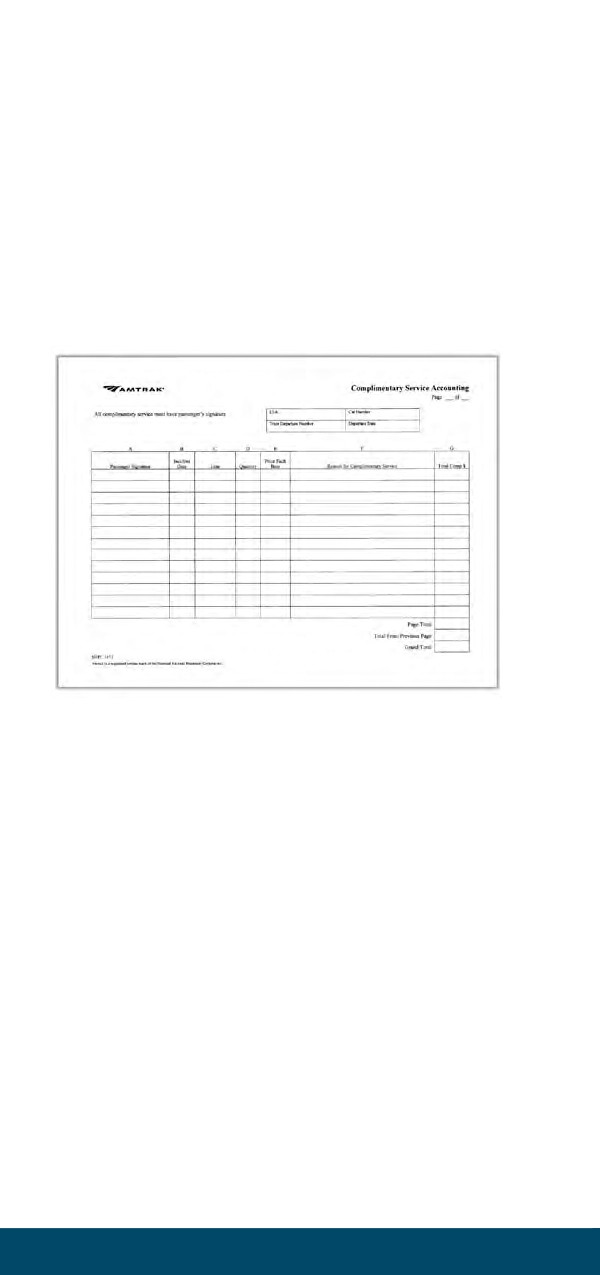
“Complimentary Service Accounting”
(NRPC 3157) (Refer to Figure 8-82)
a)
Use the “Complimentary Service Accounting”
(NRPC 3157) form to capture the following :
• Whenever a passenger pays by cash or credit
card and does not receive a receipt, their
purchase becomes complimentary. The
Lead Service Attendant must complete a
“Complimentary Service Accounting” (NRPC
3157) form when passengers notify the LSA
that they did not receive a receipt when making
a purchase. If the purchase included an entire
meal(s), all of the meal(s) including alcohol,
appetizers, additional beverages, etc. will
become complimentary.
•
Meal Service provided to On-Board Guides
(National Park Service - Trails & Rails
Program, California State Railroad Museum,
Train Host Association, Native American
Guides). A Coach meal check is also required.
The guide/host is to sign both the
“Complimentary Service Accounting” (NRPC
3157) and the meal check.
•
Meal Service provided to a ticketed Sleeping
Car passenger who has been downgraded to
Coach, once on-board the train, due to the
Service Standards Manual No. 6
8-165
accommodation becoming uninhabitable
because of malfunctioning equipment or a
duplicate sale. A Coach meal check is also
required with the passengers signature. (In
this case, the Conductor will notify the LSA.)
• Any complimentary service provided to a pas-
senger. The passenger’s signature is required as
well as an explanation for the service provided.
• If revenue bulk items are issued to Coach
passengers as part of a service disruption. (No
signatures are required.)
Figure 8-82 - Example of “Complimentary Service Accounting” (NRPC 3157)
b) The following must be completed on the
“Complimentary Service Accounting” (NRPC
3157) form:
• Page __ of __
• LSA - Clearly print name
• Car Number
• Train Departure Number
• Departure Date
• Column A - Passenger Signature
• Column B - Incident Date
• Column C - Item
• Column D - Quantity
• Column E - Price Each Item
• Column F - Reason for Complimentary Service
• Column G - Total Comp Dollars
c) At the bottom of column G, include:
• Page Total
• Total From Pervious Page (if any)
8-166
On-Board Service Accounting Procedures
• The “Grand Total” amount must also be
included in the Comp Service portion on the
“Transfer Out Form” (896) Revenue page.
d) If either the signature or explanation is missing, the
LSA will be subject to discipline or administrative
action.
e) The “Complimentary Service Accounting” (NRPC
3157) form must be submitted in the appropriate
envelope depending on the type of service.
•
“Dining Car Report” (NRPC131)
•
“Café/Lounge Food & Beverage Sales Reports”
(NRPC 695)
•
“First Class/Club Car Food & Beverage Sales
Reports” (NRPC 3275)
•
“POS Trains Food & Beverage Sales Reports”
(NRPC 3276)
•
“Cart Service” (NRPC 3256)
•
“Diner/Lounge Combination” (NRPC 3255)
2.
“Non-Meal Check First Class Revenue Item
Accounting” (NRPC 3269) (Refer to Figure 8-83)
a)
Revenue items distributed in “bulk” or individual
revenue items distributed free to First Class
passengers as a result of a service disruption or
late train (must be authorized by management),
must be recorded on the appropriate item line of
the “Transfer Out Form” (896). An example of a
“bulk” item: if three (3) bottles of wine are used
(item #1234) in a wine tasting event, these three
(3) bottles are considered sold and the appropriate
dollar amount must be recorded on the “Transfer
Out Form” (896). An example of an individual
revenue item might be sandwiches provided to
First Class passengers in the event of a service
disruption or late train.
b) The following must be completed on the
“Non-Meal Check First Class Revenue Item
Accounting” (NRPC 3269) form:
• Train Number
• Date
• Car Type
• LSA Signature
• Column A - Revenue Item Number
• Column B - Description
• Column C - Quantity
• Column D - Price Each Item
• Column E - Total Dollars (quantity x price)
If revenue items are distributed free to First Class
Service Standards Manual No. 6
8-167
passengers due to a service disruption or late
train, write Service Disruption or Late Train at the
top of the form and print the name of the manager
who approved/authorized the complimentary
service. If both “bulk” revenue items and service
disruption/late train revenue items apply, use
separate forms.
c)
At the bottom of column E, include:
• The entire total of column E in the “Total” box.
• The “Total” amount must be listed as a First
Class amount on the “Transfer Out Form”
(896) Revenue page, separate from any First
Class meal check amount. If a service disruption
or late train has occurred, include as
Complimentary Service or Late Train Meals on
the Revenue Page.
d) For cash register equipped cars, enter the total
dollar amount from the bottom of column E of
the “Non-Meal Check First Class Revenue Item
Accounting” (NRPC 3269) into the register as 1st
Class sale. If the revenue items were distributed
because of a service disruption or late train, enter
into the register as Comp sale.
e)
If any items in question do not appear on the
register keys, it should be entered using the
“Misc” key with the appropriate dollar value.
f)
The “Non-Meal Check First Class Revenue Item
Accounting” (NRPC 3269) form must be submitted
in the appropriate envelope depending on the
type of service.
•
“Dining Car Report” (NRPC131)
•
“Café/Lounge Food & Beverage Sales Reports”
(NRPC 695)
•
“Diner/Lounge Combination” (NRPC 3255)
8-168
On-Board Service Accounting Procedures
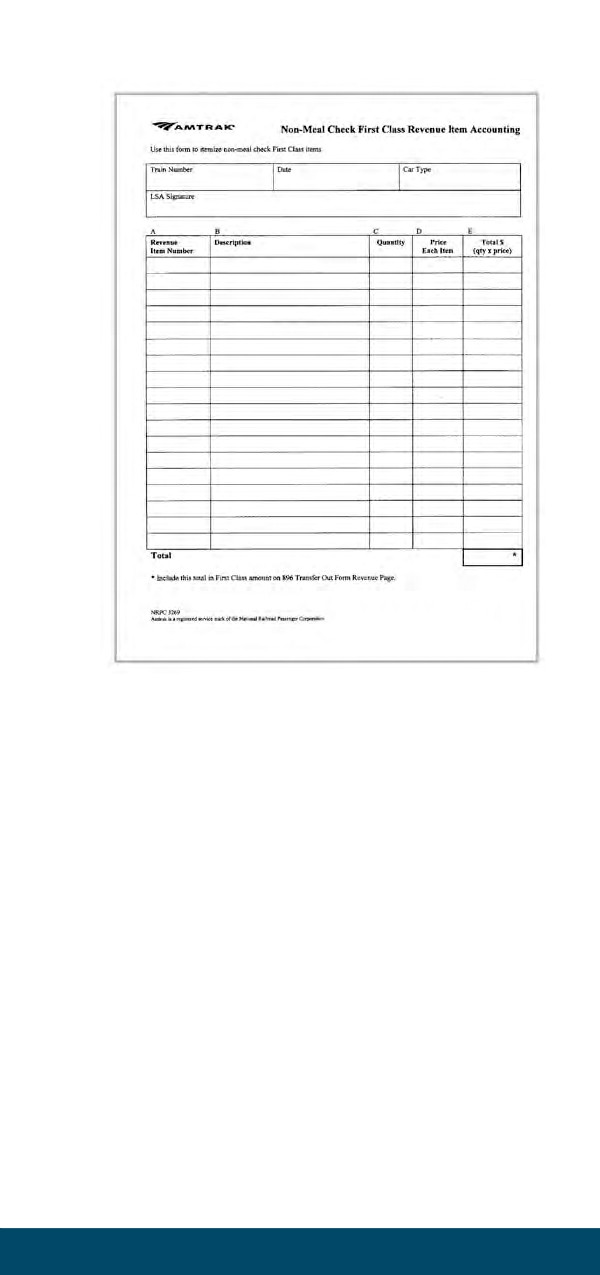
Figure 8-83 - Example of “Non-Meal Check First Class Revenue Item
Accounting” (NRPC 3269)
3.
Business Class Service Accounting (NRPC 3236)
a) Northeast Corridor Business Class Service
(excluding Acela Express)
Includes the Northeast Corridor, Northeast
Regional, Empire service and long-distance trains
with Business Class such as the Pennsylvanian,
Palmetto, Carolinian, Ethan Allen Express,
Vermonter, Adirondack and Maple Leaf.
• Upon Passengers displaying Ticket Receipt, serve
the Business Class Passenger non-revenue
beverages of choice soda, water, iced tea or a hot
beverage in a non-revenue cup.
• More than one beverage is permitted.
b) Midwest Business Class Service
Including Wolverine Service, Chicago - St. Louis
services, Chicago - Quincy service and Chicago -
Carbondale service.
Each complimentary item provided to the passenger
Service Standards Manual No. 6
8-169
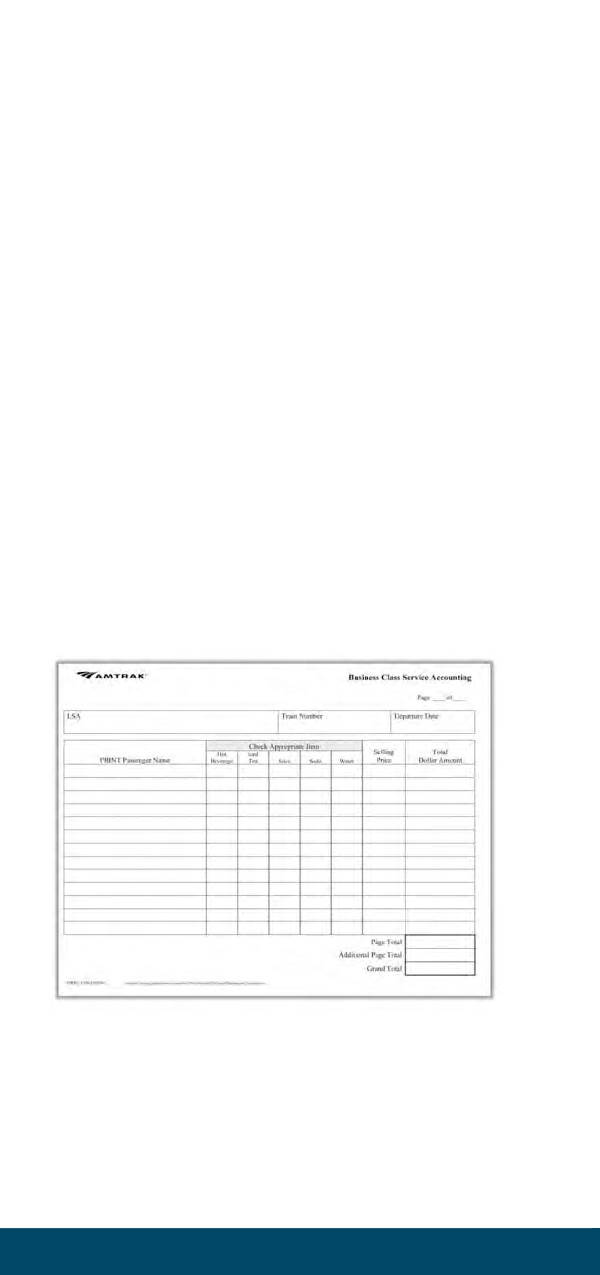
displaying a Business Class Ticket Receipt must
be listed on the “Business Class Service Accounting”
(NRPC 3236) form (Refer to Figure 8-84). The
passenger signature is required.
• All required sections of the “Business Class
Service Accounting” (NRPC 3236) form must
be completed or there will be a debit charge to
the LSA.
• The “Grand Total” amount must also be included
in the Comp Service section of the “Transfer
Out Form” (896) Revenue page.
• Complimentary items are processed through the
cash register using the “comp” key. If the register
receipt is missing, the LSA will not receive credit
for the items, which will result in a debit.
• The register receipt must be attached to the
“Business Class Service Accounting” (NRPC
3236) and placed in the proper envelope
(“Café/Lounge Food & Beverage Sales
Reports” (NRPC 695), “First Class/Club Car
Food & Beverage Sales Reports” (NRPC 3275)
or “POS Trains Food & Beverage Sales
Reports” (NRPC 3276)).
Figure 8-84 - Example of “Business Class Service Accounting” (NRPC 3236)
4. Complimentary Service for Individual Passenger
a) Dining Car
• The LSA must clearly indicate if the entire
meal or a single item on the Coach meal check
is to be complimentary service.
• The passenger must sign the front of the meal
8-170
On-Board Service Accounting Procedures
check. A missing passenger signature will result
in a debit to the LSA.
• All required sections of the “Complimentary
Service Accounting” (NRPC 3157) form must be
completed or there will be a debit to the LSA.
• The “Grand Total” amount must also be
included in the Comp Service section of the
“Transfer Out Form” (896) Revenue page.
b) Café/Lounge Cars
• Each item provided to the passenger as
complimentary must be listed on the
“Complimentary Service Accounting” (NRPC
3157) form. The passenger signature is
required.
• All required sections of the “Complimentary
Service Accounting” (NRPC 3157) form must
be completed or there will be a debit charge to
the LSA.
• The “Grand Total” amount must also be
included in the Comp Service section of the
“Transfer Out Form” (896) Revenue page.
c)
Cash Register
• Complimentary items are processed through
the cash register using the “comp” key. If the
register receipt is missing, the LSA will not
receive credit for the items, which will result in
a debit.
• The register receipt must be attached to the
“Complimentary Service Accounting” (NRPC
3157) form and placed in the proper envelope
(“Café/Lounge Food & Beverage Sales
Reports” (NRPC 695), “First Class/Club Car
Food & Beverage Sales Reports” (NRPC 3275)
or “POS Trains Food & Beverage Sales
Reports” (NRPC 3276).
5.
Service Recovery Kits (Snack Packs)
(Refer to Chapter 9 “Service Recovery” for additional
information.)
a) The Snack Packs are shown in the Start Issue
Column of the “Transfer Out Form” (896).
b) If the Snack Packs are used, enter the number
used in the Total Sold Column of the “Transfer
Out Form” (896).
c) Unused Snack Packs are to be recorded in the
On Hand End of Trip column of the “Transfer
Out Form” (896) and returned to the Catering
Vendor.
Service Standards Manual No. 6
8-171
d) It is not necessary to complete the “Complimentary
Service Accounting” (NRPC 3157) form or to get
any passenger signatures.
6.
Emergency Meal Package (Generally Canned
Product)
a) The Emergency Meal Package is shown in the Start
Issue Column of the “Transfer Out Form” (896).
b) It is necessary to complete the “Complimentary
Service Accounting” (NRPC 3157) form. No
passenger signatures are required.
c) In the Notes section of the “Transfer Out Form”
(896) indicate the number of passengers served
by type (i.e. Sleeping Car, Coach Car and
employee). Meal checks are not necessary.
7.
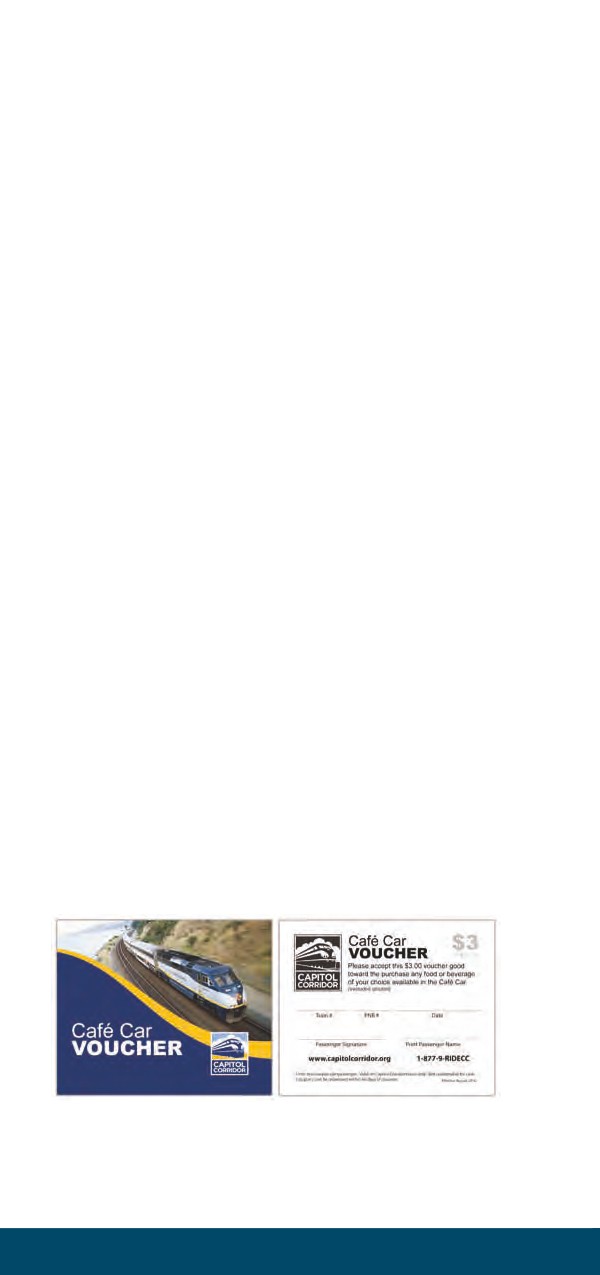
Train Delay Vouchers - Capitol Corridor ONLY
a) Capitol Corridor vouchers are full-color on front
and have a value of $3.00 when used to purchase
food or non-alcoholic beverages in the Food
Service Car. No minimum purchase required. No
change given. (Refer to Figure 8-85)
b) Vouchers are available at the Oakland Crew Base.
c) Vouchers are an accountable item.
d) The name of the authorizing manager must be
entered on the back of the first voucher used.
e) The transaction must be recorded in the POS and
the passenger’s name, signature and PNR number
recorded (ticket or pass number may be substituted)
on the voucher.
f) The voucher is valid immediately upon disbursement
and must be used by the passenger within sixty
days of the date of issuance.
g) Vouchers must be submitted in the “POS Trains
Food & Beverage Sales Reports” (NRPC 3276).
(Refer to Chapter 9 “Service Recovery” for
additional information.)
Figure 8-85 - Front and Back View
8-172
On-Board Service Accounting Procedures
8.
Coupons
a)
When the passenger redeems a coupon, the LSA
is to provide only the revenue item(s) described
on the coupon. No substitutions are permitted.
b) The passenger redeeming the coupon must sign the
front of the coupon, verifying that the revenue item
was received as a complimentary item.
c)
In addition to the passenger signature and listed
redeemed items, the following information must
be printed on the front of the coupon to ensure
the LSA receives proper credit.
• Value of the Redeemed Item
• Date of Transaction
• LSA Printed Name
d) If the coupons have a specific dollar value, the
passenger must pay for items purchased in excess
of that value.
e)
If the item purchased is less than the coupon
value, no change will be given.
f)
The amount of the credit (value of the items
given the passenger) should be entered in the
"Comp Service" section of the Revenue page of
the “Transfer Out Form” (896).
g)
Coupons must be submitted in the appropriate
envelope depending on the type of service.
•
“Dining Car Report” (NRPC131)
•
“Café/Lounge Food & Beverage Sales Reports”
(NRPC 695)
•
“First Class/Club Car Food & Beverage Sales
Reports” (NRPC 3275)
•
“POS Trains Food & Beverage Sales Reports”
(NRPC 3276)
•
“Diner/Lounge Combination” (NRPC 3255)
9.
Red Star Program
The Red Star program is used on the Amtrak
Cascades, Capitol Corridor and San Joaquin trains.
a) If the passenger receives a POS machine receipt
with a red star, the passenger’s purchase becomes
complimentary. The passenger receives a refund
for the purchase.
b) The refund for the purchase is to be returned to
the passenger in the same form of payment used
for the purchase.
Service Standards Manual No. 6
8-173
EXAMPLE:
If the passenger paid by credit card, the refund
would be applied to their credit card. If the
purchase was wholly or partially made using a
coupon, the coupon is to be returned to the
passenger, for use on a later date, with the balance
of cash or credit used with the coupon being
refunded to the passenger.)
c) The passenger receiving the receipt must sign
the front of the receipt, indicating the revenue
item was received as a complimentary item.
d) In addition to the passenger signature, the
LSA must print their name.
e) Red Star Receipts must be submitted in the
“POS Trains Food & Beverage Sales Reports”
(NRPC 3276) envelope.
F.
Condemnation (Applicable to Chef
and LSA)
1.
Introduction
a) Items that are considered condemnation are those
items that are spoiled and/or cannot be reissued to
another train because of being partially consumed
or out of date.
b) The Chef and LSA are both responsible for the
documentation of condemned items by meal period
and completion of his/her own “Chef/LSA Enroute
Condemnation Report” (NRPC 3143). (Refer to
Figure 8-86)All signature lines must be properly
signed by the Catering Vendor employee (in
green) and the LSA or Chef (when applicable) to
validate and agree on the quantity of returned
stock (re-usable/condemned) documented on the
“Transfer Out Form” (896). The same “Chef/LSA
Enroute Condemnation Report” (NRPC 3143)
may be used for both categories of condemnation
(Partially Consumed and Bagged and Tagged).
c) The Catering Vendor will supply clear bags and
tags to be used by the Chef and LSA.
8-174
On-Board Service Accounting Procedures
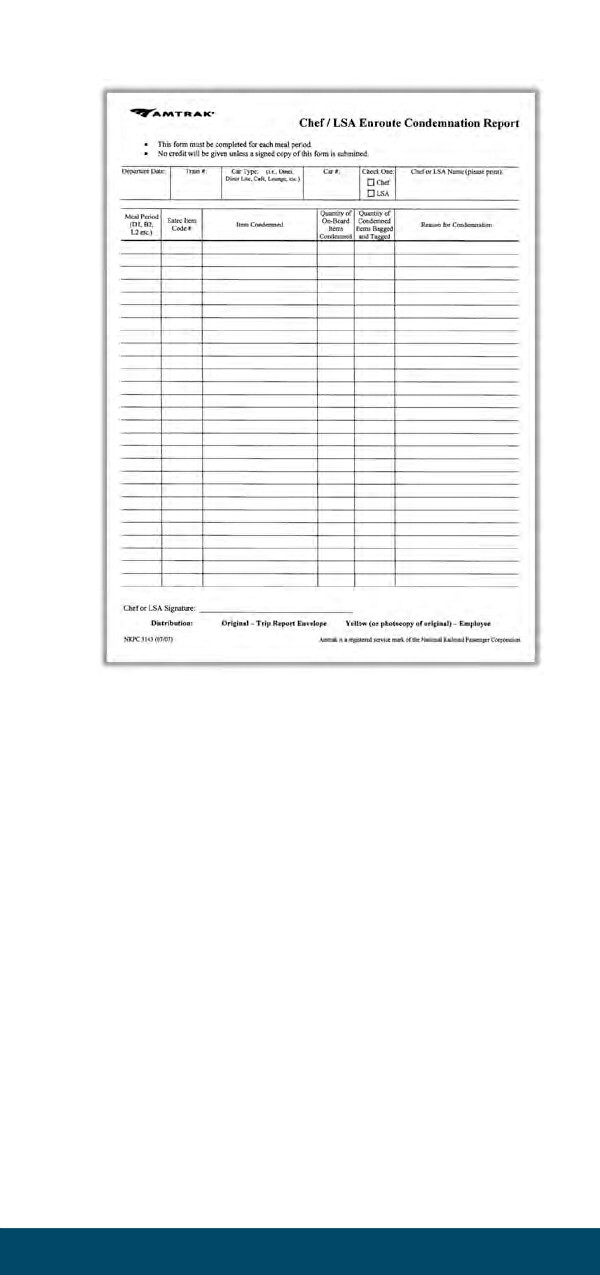
Figure 8-86 - “Chef/LSA Enroute Condemnation Report”
(NRPC 3143)
2.
“Chef/ LSA Enroute Condemnation Report”
(NRPC 3143)
The following must be completed on the “Chef/LSA
Enroute Condemnation Report” (NRPC 3143):
• Departure Date
• Train #
• Car Type (i.e., Diner, Diner Lite, Café, Lounge, etc.)
• Car Number
• Check either “Chef” or “LSA”
• Chef or LSA Name - Clearly print name
• Meal Period (D1, B2, L2, etc.)
• B - Breakfast
• L - Lunch
• D - Dinner
•
1 - First day of trip
•
2 - Second day of trip
Service Standards Manual No. 6
8-175
• EATEC Item Code # - This number can be
found in the first column of the “Transfer Out
Form” (896).
• Item Condemned - Name of the item.
• Quantity of On-Board Items Condemned - The
number of condemned items for that meal period.
Unit of measure is by serving/portion.
• Quantity of Condemned Items Bagged and Tagged
• Reason for Condemnation - Cooked, package
opened, out-of date or if returned by a passenger,
indicate the reason the passenger returned the item.
• Chef or LSA Signature
• Distribution:
• Original - Trip Report Envelope - Place in the
appropriate Food and Beverages Sales Reports
envelope.
• Yellow (or photocopy of original) - Employee
3.
On-Board Items Condemned - Partially
Consumed Items
Passenger has returned an item.
a)
En Route
• Fill in the appropriate columns of the
“Chef/LSA Enroute Condemnation Report”
(NRPC 3143).
• Discard each of the items, as they are condemned.
• Items which are partially consumed are NOT
to be bagged and tagged, or documented in the
“Quantity of Condemned Items Bagged and
Tagged” column on the “Chef/LSA Enroute
Condemnation Report” (NRPC 3143)”.
b) End of Trip
• The total from the LSA’s “Chef/LSA Enroute
Condemnation Report” (NRPC 3143) is to be
entered into the “OBS CNDM” column (the
last column) on the “Transfer Out Form” (896).
• The “On-Hand End of Trip” column on the
“Transfer Out Form” (896) must be completed
for all items and should not include those items
that were partially condemned (returned by
passengers).
• If the Chef has any items which cannot be
bagged and tagged (i.e., eggs), the Chef needs
to indicate these items on their “Chef/LSA
Enroute Condemnation Report” (NRPC 3143)
8-176
On-Board Service Accounting Procedures
in the “Quantity of On-Board Items
Condemned” section. When this occurs, entries
from both the Chef’s and LSA’s “Chef/LSA
Enroute Condemnation Report” (NRPC 3143)
must be combined as one entry on the LSA’s
copy of the “Transfer Out Form” (896).
• The Chef and LSA must include the signed
“Chef/LSA Enroute Condemnation Report”
(NRPC 3143) in their appropriate Food and
Beverages Sales Reports envelope.
4.
Items Condemned - Bagged and Tagged
a)
En Route
•
Each item identified as condemned must be
separately bagged and tagged. (This excludes
those items identified in Section 3. “Partially
Consumed Items”).
•
Store bagged and tagged items in the refrigerator
away from any other food items.
•
Complete the “Quantity of Condemned Items
Bagged and Tagged” column on the “Chef/LSA
Enroute Condemnation Report” (NRPC 3143).
•
Items with the same EATEC Item Code should
be filled in on the same line of the “Chef/LSA
Enroute Condemnation Report” (NRPC 3143).
•
The unit of measure is by serving/portion.
Ensure that the units of measure for a specific
product is returned based on the portion or
serving (i.e. order, pkg, each, glass, slice, etc.)
and not how the product is packaged (case,
bag, pan, box, etc.).
•
The Chef’s and LSA’s items that have been
bagged and tagged do not need to be combined,
but must be included in the “On Hand End of
Trip” column of the “Transfer Out Form” (896).
b) End of Trip
• The LSA will only document in the “OBS
CNDM” column of the “Transfer Out Form” (896)
the quantity of items that were condemned
and not returned to the Catering Vendor.
• The total quantity of all items returned to the
Catering Vendor (reusable stock/condemned)
must be documented in the “On Hand End of
Trip” column on the “Transfer Out Form” (896).
• Bagged and tagged items will be included in the
Return to Stock count completed by the Catering
Service Standards Manual No. 6
8-177