Harley Davidson 1999-2005 Harley Dyna Models. Repair Manual - page 3
-------------------------------------------------------------------------------------------------------------------------------------------------------------
40
CHAPTER TWO
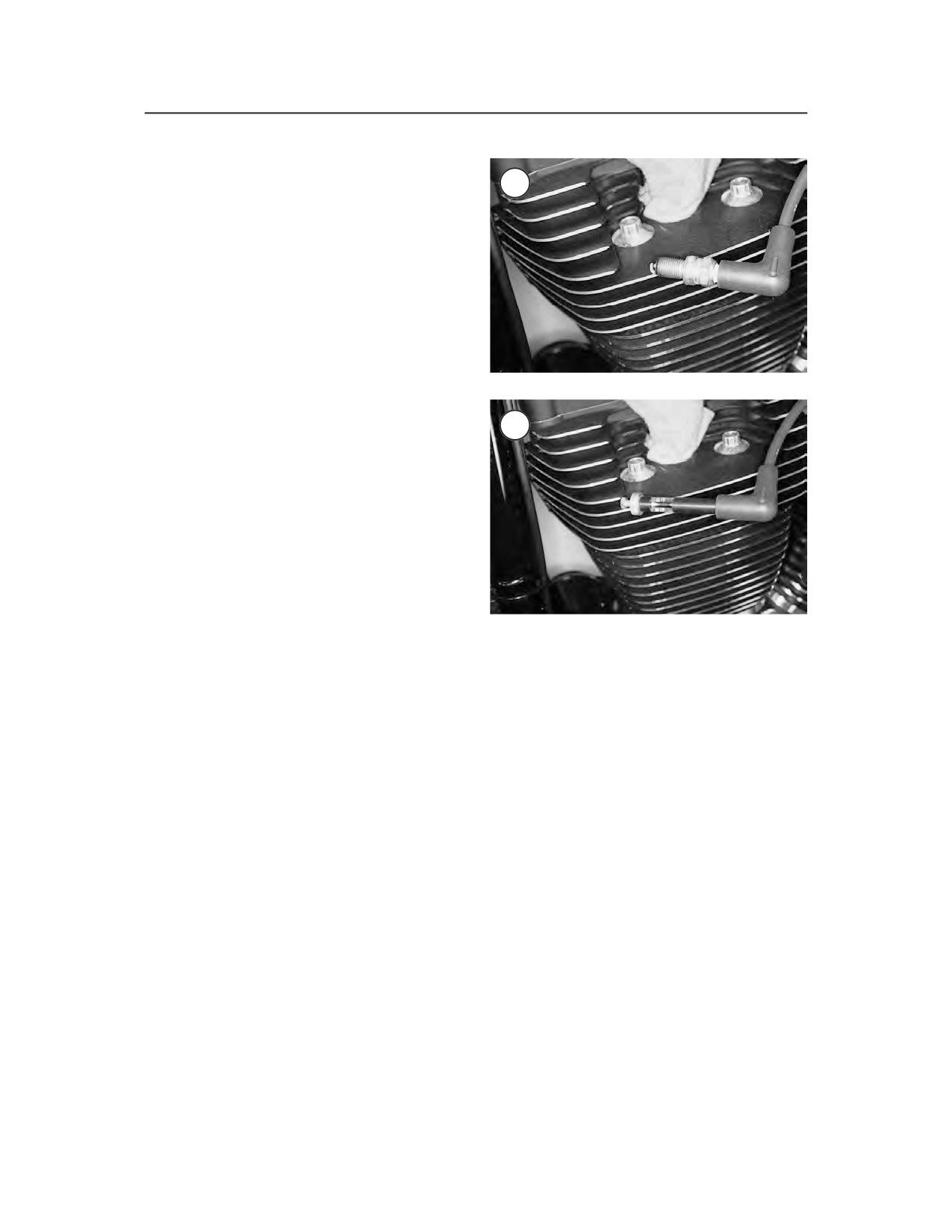
2. Cover the spark plug hole with a clean shop cloth
3
to lessen the chance of gasoline vapors being emit-
ted from the hole.
3. Insert the spark plug (Figure 3), or spark tester
(Figure 4), into its plug cap and ground the spark
plug base against the cylinder head. Position the
spark plug so the electrode is visible.
NOTE
If a spark plug is used, perform the
procedure with a new spark plug.
WARNING
Mount the spark plug, or tester, away
from the spark plug hole in the cylin-
4
der so the spark cannot ignite the gas-
oline vapors in the cylinder. If the
engine is flooded, do not perform this
test. The firing of the spark plug can
ignite fuel that is ejected through the
spark plug hole.
4. Turn the ignition switch to the ON position.
WARNING
Do not hold the spark plug, wire or
connector, or a serious electrical
shock may result.
1.
Fouled spark plug(s).
5. Turn the engine over with the electric starter. A
2.
Improperly adjusted enrichener valve.
crisp blue spark should be evident across the spark
3.
Intake manifold air leak.
plug electrode or spark tester terminals. If there is
4.
A plugged fuel tank filler cap.
strong sunlight on the plug, shade the plug by hand
to better see the spark.
5.
Clogged carburetor fuel line.
6. If the spark is good, check for one or more of the
6.
Contaminated fuel system.
following possible malfunctions:
7.
An improperly adjusted carburetor.
a. Obstructed fuel line or fuel filter.
8.
A defective ignition module.
b. Low compression or engine damage.
9.
A defective ignition coil.
c. Flooded engine.
7. If the spark is weak or if there is no spark, refer to
10. Damaged ignition coil primary and secondary
Engine is Difficult to Start in this chapter.
wires (Figure 5).
11. Incorrect ignition timing.
NOTE
12. Low engine compression.
If the engine backfires during starting
attempts, the ignition timing may be
13. Engine oil too heavy (winter temperatures).
incorrect due to a defective ignition
14. Discharged battery.
component. Refer to Ignition Timing
in Chapter Three for more informa-
15. A defective starter motor.
tion.
16. Loose or corroded starter and/or battery cables.
17. A loose ignition sensor and module electrical
Engine is Difficult to Start
connector.
Check for one or more of the following possible
18. Incorrect pushrod length (intake and exhaust
malfunctions:
valve pushrods interchanged).