Asylum Report 2023 - page 4
EUROPEAN UNION AGENCY FOR ASYLUM
Applicants of most nationalities largely withdrew their applications implicitly. The main
exceptions - with more explicit withdrawals - included nationals of Western Balkan countries,
such as Albania, North Macedonia and Serbia, as well as Vietnamese.xlvii
4.4.9. Quality assessment of first instance decisions
Providing adequate reasoning in first instance decisions is a guarantee of legal
certainty and a safeguard for the rights of asylum applicants throughout the first
instance procedure. In 2022, determining authorities followed up on lessons
learned from past quality assessment initiatives and started new quality review
processes.
A NANSEN report was published in Belgium, which assessed CGRS decisions on the need for
protection of people fleeing Afghanistan and the risks in the event of a return. The first part of
the note focused on the investigation of Afghan cases and argued that the CGRS did not fully
respect the right to be heard. In part II of the note, NANSEN discusses the risk profiles
identified by UNHCR and the EUAA and argues that a broad benefit of the doubt should be
granted to these risk groups.472
In Bulgaria, the State Agency for Refugees adapted the EUAA quality assessment tool of
November 2022 to review first instance decisions and personal interviews. In Malta, the
International Protection Agency - together with the EUAA - sampled cases for quality
assurance.
The ECtHR examined the effectiveness of asylum applications in Malta in the case of S.H. v
Malta, which was decided in December 2022. The ECtHR found a violation of Articles 3 and 13
of the European Convention due to the lack of access to legal counsel, delays in the
procedure and a failure to examine the merits of the case. The court noted that the
International Protection Tribunal confirmed the first instance decision within 24 hours, which
made it impossible for the applicant to prepare a defence and submissions while in detention.
The court thus considered that the judicial review in the applicant’s case was superficial and
devoid of any useful effect, as the tribunal tended to automatically confirm the agency’s
decision within 3 days. Furthermore, the communication of the decision took place several
months after the pronouncement, although a removal order had been issued a few days after
the decision.
For a second application lodged by the applicant, the court noted again the inadequate
assessment of the application due to the ‘incongruent conclusions’ reached by the
International Protection Agency, which were confirmed by the tribunal without any reasoning.
The court observed that a third application was treated in a similar way and confirmed again
by the tribunal. The ECtHR thus confirmed that the applicant was deprived of a rigorous
individual assessment of his asylum claim, without a risk assessment of his personal situation
being conducted as a journalist to be returned to Bangladesh although he had possibly
suffered at least one aggression related to his work. The Maltese government made a referral
to the Grand Chamber and stated that it strongly disagreed with the conclusions of the court.
The referral request was rejected, and the judgement became final in May 2023.473
xlvii
Analysis was restricted to citizenships with at least 300 reported withdrawals in 2022.
150
ASYLUM REPORT 2023
In the Netherlands, a report published in May 2022 by the Inspectorate of Justice and Security
highlighted the time pressure on IND employees working on asylum cases, which may lead to
limited information being collected to support a first instance decision of quality.474
In Poland, the Association for Legal Intervention raised several concerns affecting the quality
of first instance decisions and advocated for a more rigorous scrutiny, for example, on the use
of the evidence presented or expert reports.475
In Slovakia, the Ministry of the Interior established a new control mechanism for the asylum
procedure, with two staff having the task of carrying out quality assurance at 6-month intervals
or on an ad hoc basis.
4.4.10. Length of the asylum procedure before the
determining authorities
In several EU+ countries, asylum procedures exceeded the 6-month time limit,
as prescribed in the recast APD.
In Luxembourg, the Minister for Immigration and Asylum provided information
on the average length of the asylum procedure, which increased from 7
months in 2018 to 10 months in 2022. The minister also stated that factors
which influenced the length of the procedure included the number and profile of arriving
applicants, the COVID-19 pandemic, uncertain situations in specific countries of origin, and the
war in Ukraine. The minister noted that the main reason for exceeding the 6-month time limit
was the need to ensure an appropriate and thorough examination, in particular through more
in-depth research or verification of the authenticity of documents.
In addition, secondary movements and Dublin transfers had a considerable impact on
delaying processing times. In many cases Luxembourg became responsible for the
examination of an application when the country responsible refused to take charge or take
back the applicant, or when a Dublin transfer was not carried out. In order to reduce the length
of the procedure, since 2018 the authorities have used email communication instead of post
for communicating with external stakeholders such as lawyers, published internal guidelines
and provided training to case officers.476
In examining a complaint by an applicant, the Lithuanian Ombudsperson decided that the
requests in the Migration Department were processed in violation of the deadlines stipulated
in legal acts and that the persons who submitted these requests was not properly informed
about the relevant decisions made.477 In order to implement the recommendations of the
Ombudsperson, the Migration Department started to inform all applicants whose applications
have not been processed by the deadlines stipulated in legal acts about the relevant
decisions made, including the reasons for the delay.
Several civil society organisations from Spain signalled deficiencies in the quality of the
asylum procedure which led to a limitation of the applicant’s rights. Comisión Española de
Ayuda al Refugiado, Fundación Cepaim and Progestion highlighted that the length of the
procedure at first instance was excessive and the authorities do not pronounce a decision
within the 6-month deadline, partially due to insufficient staff. The Spanish Ombudsperson
151
EUROPEAN UNION AGENCY FOR ASYLUM
also highlighted the need to take measures to improve the efficiency of the asylum
procedure.478
Fundación Cepaim further noted that the legal time limit was respected most often for
nationals of Colombia, Mali and Venezuela, for whom the decisions were not detailed.479
Similarly, the Red Cross Society in Lithuania and the Association for Legal Intervention in
Poland criticised that the length of the asylum procedure sometimes reached 15 months.480
The Office for Foreigners added that in these cases the delay had not led to a breach of Polish
or EU law, as it could be justified with the applicant’s lack of cooperation with the competent
authority.
4.4.11. Penalty payments for exceeding the time limit in
first instance decision-making
In the Netherlands, on 6 July 2022, the Council of State declared as non-
binding a temporary law which suspended incremental penalty payments for
delays in pronouncing an asylum decision between 11 July 2020 to 11 July
2021. The Council of State found that the legislative amendment made it
extremely difficult for applicants to have access to an effective guarantee of a
timely decision, and as such, the law did not offer an effective legal remedy.
The council thus considered that administrative courts were still competent to hear appeals
against the failure to make a timely decision on an asylum application between 11 July 2020 to
11 July 2021. In February 2023, the IND noted that it had paid EUR 3.4 million in penalty
payments in 2022, which was lower than in 2021.481
Furthermore, on 30 November 2022, the Dutch Council of State ruled that a judicial penalty
was an effective means of ensuring through a court decision that the State Secretary fulfils its
obligation to decide timely on an asylum application. It declared the temporary suspension of
the penalty payments as non-binding and contrary to the principle of effective legal protection
insofar as the legislative amendment excluded the possibility of imposing a judicial penalty in
asylum cases. It was further noted that without a judicial penalty, a foreign national has no
effective means of persuading the State Secretary to take a timely decision. However, the
Council of State also distinguished judicial penalties from administrative penalties and held
that the exclusion of the latter from the asylum procedure is not contrary to EU law and the
principle of effective legal protection. The council explained that administrative penalties were
owed automatically by the government, without a need for the applicant to request them
before the court, so the council considered that this is not a means for a person to persuade
the government to take a timely decision.
4.4.12. Digitalisation
EU+ countries continued to improve the efficiency of the asylum procedure at
first instance through the digitalisation of particular steps. Calls for further
digitalisation and improvement of first instance processes were also made in
some EU+ countries.
In Belgium, a legal amendment was published on 9 September 2022 which
explicitly allowed the CGRS to organise interviews through videoconference for applicants for
152
ASYLUM REPORT 2023
international protection. Based on this, video interviews resumed in closed centres with the
use of Microsoft Teams, which did not allow a third party to be included remotely, so lawyers
needed to go in person to the closed centre. The project for video interviews with applicants
in open centres was put on hold.482
Concerned about the secure use of specific software, the Belgian CALL ruled that more
information was needed on the reliability of Microsoft Teams and its compliance with data
protection. This judgment was based on a case in which the personal interview took place by
videoconference during the first instance procedure
The digitalisation strategy for the Belgian asylum system was translated into a comprehensive
Enterprise Architecture, which includes the Belgian Immigration Office, the CGRS and CALL.
The aim is to deliver a new environment by the end of 2024.
In Croatia, the independent mechanism for the supervision of police officers in the field of
irregular migration and international protection adopted the first annual report covering
June 2021-June 2022. For asylum, the recommendations of the report include the
improvement of the system of tracking cases by consolidating information in one place.483
Estonia launched an updated version of the register of granting international protection
(RAKS2) in February 2022, including new features that allow the inclusion of data on court
procedures and an automated process for receiving country of origin information.
In May 2022, France extended to its entire territory the electronic communication of the
various documents related to the processing of asylum applications between OFPRA and
asylum applicants, which was already applied in Brittany and Nouvelle-Aquitaine. It thus
provided asylum applicants with a digital space to access letters from OFPRA, particularly the
invitation to the personal interview and the notification of the asylum decision. This electronic
communication system does not apply to applicants under the Dublin procedure,
unaccompanied minors and applicants claiming to be vulnerable.
BAMF in Germany developed a new digital tool, “Assistance System for Hearings” (ASA),
which can provide support during interviews and contribute to the quality assurance of the
interview. The tool provides information on the most important countries of origin in a digital
format for case officers, allowing them to have easier access to country-specific
information. The tool also includes a date and currency converter, records open tasks and
deadlines, checks the interview data for completeness, supports a comparison of the facts
presented with the guidelines on the country of origin, and enables the writing of the interview
report through speech recognition.484
The Netherlands launched a portal for asylum lawyers in June 2022, developed in close
cooperation with lawyers. The systems allow them to rapidly check the status of a case, easily
upload documents and safely exchange data.485
In Sweden, Asylum Seeker (LMA)-cards were digitalised to include a QR code for the validity
period, and a case-handling system was further developed for increased usability.486
In January 2022, ECRE published a comparative report which provides an overview of the use
of digital tools and remote working modalities in 23 European countries. It presents the risks
and benefits of the use of digital tools in asylum processes and highlights several fundamental
guarantees and procedural safeguards which must continue to apply to ensure that they do
not infringe on existing EU asylum acquis.487
153
EUROPEAN UNION AGENCY FOR ASYLUM
4.4.13. Staff training and well-being
Several EU+ countries carried out extensive training for case officers and
other employees involved in the first instance procedure, while others
analysed their internal culture or planned measures to retain experienced
case officers and reduce staff turnover.
In Belgium, training for new staff was adapted to achieve efficiency gains.
Generic training was abandoned and new staff were specifically trained from the start to
manage applications from Afghans. A specific training package with online tools was
developed for this purpose.
In Bulgaria, training objectives for 2022 were postponed due to the influx of displaced
persons from Ukraine. A training session on applicants with special needs was provided for
case officers through Norwegian funds.
In Estonia, the Social Insurance Board launched an e-course on psychological first aid for
helpers in crisis, modelled on the WHO Guidelines for Psychological First Aid and available on
the website of the board.488
In Ireland, IPO staff attended training sessions on statelessness, sexual and gender-based
violence (SGBV), human trafficking and the Dublin procedure. The training was provided by
IPO’s training unit in cooperation with UNHCR.
In Luxembourg, staff followed training provided by the EUAA on interviewing vulnerable
applicants, interviewing children, temporary protection and inclusion.
Related to well-being at the workplace, the IND in the Netherlands investigated its internal
culture and concluded that employees needed a more long-term perspective, increased
involvement, clarity and open communication within the organisation. The results suggested
that the work of the IND can be hampered by short-term vision, bureaucracy, rigid hierarchy
and compartmentalisation. Employees appreciated performance orientation, social
responsibility and a balance between private and professional life.489
Measures to reduce the high turnover of employees in determining authorities were
considered in Lithuania by the Migration Department, which had experienced a record
29% turnover in 2022. To tackle the issue, the Migration Department increased its budget in
order to increase wages and retain experienced employees.490
154
ASYLUM REPORT 2023
Section 4.5.
Processing
asylum applications
at second or
higher instances
The EU-level legislative framework to appeal
Under the rule of law, anyone alleging a
a decision in an asylum procedure is
violation of their rights is entitled to fair
outlined in the recast APD, Chapter V.
procedures in line with international
Article 46 obliges Member States to ensure
human rights law and an effective
that applicants have the right to an effective
remedy, which includes the right to
remedy before a court or tribunal to contest
appeal before the national authorities.
a decision issued on a first instance
application. The right to an effective remedy
includes a full and ex nunc (i.e. which is valid
for the future) examination of both facts and
points of law, including an examination of
the need for international protection as
defined by the recast QD, in an appeals
procedure before a court or tribunal of first
instance to guarantee adequate substantive
and procedural safeguards.
EU law does not prescribe a specific
organisation or structure of courts and
tribunals adjudicating asylum cases. Each
EU+ country follows its own national system,
so appeals in asylum cases may be lodged
before general courts which adjudicate
other matters in addition to asylum or
specialised asylum courts which adjudicate
only appeals in asylum cases. In addition,
some EU+ countries have a system of non-
judicial complaints that must be exhausted
before lodging an appeal with the courts
155
EUROPEAN UNION AGENCY FOR ASYLUM
In 2022, developments focused on the right to access the appeal procedure and the
competent bodies which should examine an appeal. The scope of appeals in international
protection cases was the subject of further improvements to align domestic practices and
legislative provisions with the relevant provisions of the recast APD.
The effectiveness of remedies was assessed through judicial review. The length of appeal
procedures continued to be an aspect of particular concern, leading to legislative changes
being proposed, adopted or already implemented to speed up the procedure. Lastly,
procedural aspects were clarified mostly through judicial reviews by national courts.
In May 2022, ECRE and the Hungarian Helsinki Committee published a Legal Note which aims
to provide guidance, based on standards under EU and international laws, on the examination
of national security-related asylum cases with a view to guarantee the right to an effective
remedy, tying in examples from state practices.491
4.5.1. Access to the appeals procedure
The right to access the appeals procedure in asylum cases was changed or
interpreted in various EU+ countries to determine who can lodge an appeal
and the requirements with which an applicant must comply to access the
appeals procedure. Courts also reviewed which competent body should be
responsible for an asylum appeal.
In Finland, the Turku Administrative Court ruled in March 2022 that a spouse
does not have the right to appeal against the rejection of a subsequent application and the
expulsion order of the applicant. The issue was raised in the context of whether a family
member living in Finland had a right to appeal considering the right to family life. Taking
ECtHR case law into consideration, the Administrative Court held that the expulsion and
refusal of entry in connection with the subsequent application did not have a direct effect on
the spouse’s right, obligation or interest to appeal.
In Iceland, in April 2022, the Ministry of Justice submitted a bill to the parliament to amend the
Act on Foreigners and the Act on the Employment Rights of Foreigners, which was voted and
entered into force in March 2023.492 The amendment provides that certain decisions of the
Directorate of Immigration are automatically subject to an appeal to the Immigration Appeals
Board.493
In Ireland, the Supreme Court held that a person who is no longer considered to be an
applicant for international protection may request an extension of the time limit to appeal a
negative decision issued under Section 39 of the International Protection Act of 2015, even if
such a right is not provided in the 2015 Act. In the particular case, the Supreme Court held that
IPAT infringed the right to a fair procedure, as it cannot interpret and apply provisions of the
International Protection Act which would make it impossible to make an application to extend
the time limit to submit an appeal.
In Italy, the Supreme Court of Cassation examined several cases concerning the right to
access the appeals procedure in asylum cases. In October 2022, the Supreme Court of
Cassation confirmed the inadmissibility of an appeal which was lodged through a
representative for whom the power of attorney did not have a certified date of issuance
subsequent to the communication of the contested measure. In another case decided in
156
ASYLUM REPORT 2023
July 2022, the Supreme Court of Cassation provided several principles on access to the
appeals procedure and an appeal in cassation.
In Lithuania, the right to submit an appeal directly to the Vilnius regional administrative courts
and subsequently to the Supreme Administrative Court was restored on 1 January 2022. The
preliminary step of contesting a decision of the Migration Department before the Migration
Department Commission was eliminated.
In Malta, amendments were introduced in December 2022 to the International Protection Act
for the possibility to appeal a case when the International Protection Agency ended refugee
and subsidiary protection. This was previously missing from legislation, as Articles 10(6)
and 22(6) of the International Protection Act provided only for an appeal against a decision of
the agency to revoke or refuse to renew refugee and subsidiary protection.494
The Swiss Refugee Council noted that one important obstacle to accessing the second
instance procedure was the advance payment of a fee, approximately EUR 750, for the cost of
appeal proceedings. Non-payment could lead to the appeal being declared inadmissible.495
This obstacle to the right to an effective remedy was examined in December 2022 by the
UNCAT, which held that for an applicant in a precarious financial situation, the fee deprived
them of the possibility of turning to the judiciary to have the complaint examined before the
Federal Administrative Court.
4.5.1.1. Right to a hearing
The importance of the right to a hearing in an appeal procedure in international
protection cases was highlighted by national courts in several judgments
pronounced in 2022.
In Cyprus, the Administrative Court for International Protection (IPAC) amended
its rules of procedure in September 2022. The amendments call for the mandatory presence
of an applicant before the court, whether in person or represented by a lawyer, under sanction
of having the appeal rejected, except in situations of force majeure. In addition, the applicant
or the lawyer have a maximum of 10 minutes to present supporting arguments before the
court, a duration which can be extended by the court when necessary.496 According to civil
society reporting, the amended regulations still leave a number of remaining issues
unresolved, including the procedure to be followed when an applicant wishes to add evidence
in support of their claim.497
In Germany, the High Administrative Court of Baden-Württemberg allowed an appeal in
July 2022 for an infringement of the right to be heard in a case where the lower court did not
reschedule a hearing when the applicants were infected with COVID-19 and in compulsory
quarantine. The court highlighted that the right to a fair hearing guarantees that an applicant
can have a say before a court decision affects their rights and can influence the proceedings.
In addition, the court noted that the judicial decision may only be based on facts and evidence
on which the parties involved had the opportunity to comment. Although there was no
entitlement to an oral hearing in the particular case, the legal impossibility to attend the
hearing was proven by documentary evidence. With the Act on the Acceleration of Asylum
Court Proceedings and the Asylum Procedure, which entered into force on 1 January 2023, a
personal hearing can be omitted if the applicant is represented by an attorney and it does not
concern a ‘simple’ rejection application or a withdrawal/revocation, for example when a case
157
EUROPEAN UNION AGENCY FOR ASYLUM
is rejected as manifestly unfounded or inadmissible. However, a hearing must take place if the
applicant requests it.498
In Ireland, the High Court ruled in May 2022 that IPAT must address whether its task could be
fairly achieved without an oral hearing, especially when an asylum applicant’s credibility is a
key aspect. The High Court noted that, while IPAT has discretion to refuse a request for an
oral hearing, “this discretion falls to be exercised in accordance with the requirements of
constitutional justice” and IPAT “should demonstrate that it has had regard to the applicant’s
right to a fair decision-making process through its consideration of identified credibility issues
and its conclusion on whether they are capable of being justly resolved without an oral
hearing and, if so, why”.
Furthermore, in February 2022 IPAT issued a new Guideline on Taking Evidence during Oral
Hearings before the Tribunal involving Appellants and Other Witnesses, which was informed
by the International Protection Act 2015 and the recast QD. It also considered the
EUAA Judicial Analyses on Evidence and Credibility Assessment in the Context of the
Common European Asylum System (CEAS) (IARMJ/EASO, 2018) and on Vulnerability in the
Context of Applications for International Protection (IARMJ/EASO, 2021), with due
consideration to relevant case law and academic commentary.499
4.5.2. Data on decisions issued on asylum applications
at second or higher instances
In 2022, EU+ countries issued about 221,000 decisions on appealed asylum
applications, comparable to 2021. The number of decisions issued at second
or higher instances was the second-lowest since 2015 (see Figure 18). To
some extent, the number of decisions issued in appeal or review is
determined by the volume of negative decisions issued by first instance
authorities. After falling in 2018 and remaining stable for 3 consecutive years,
the number of negative decisions at first instance increased by 11% in 2022, reaching the
highest level since 2017.
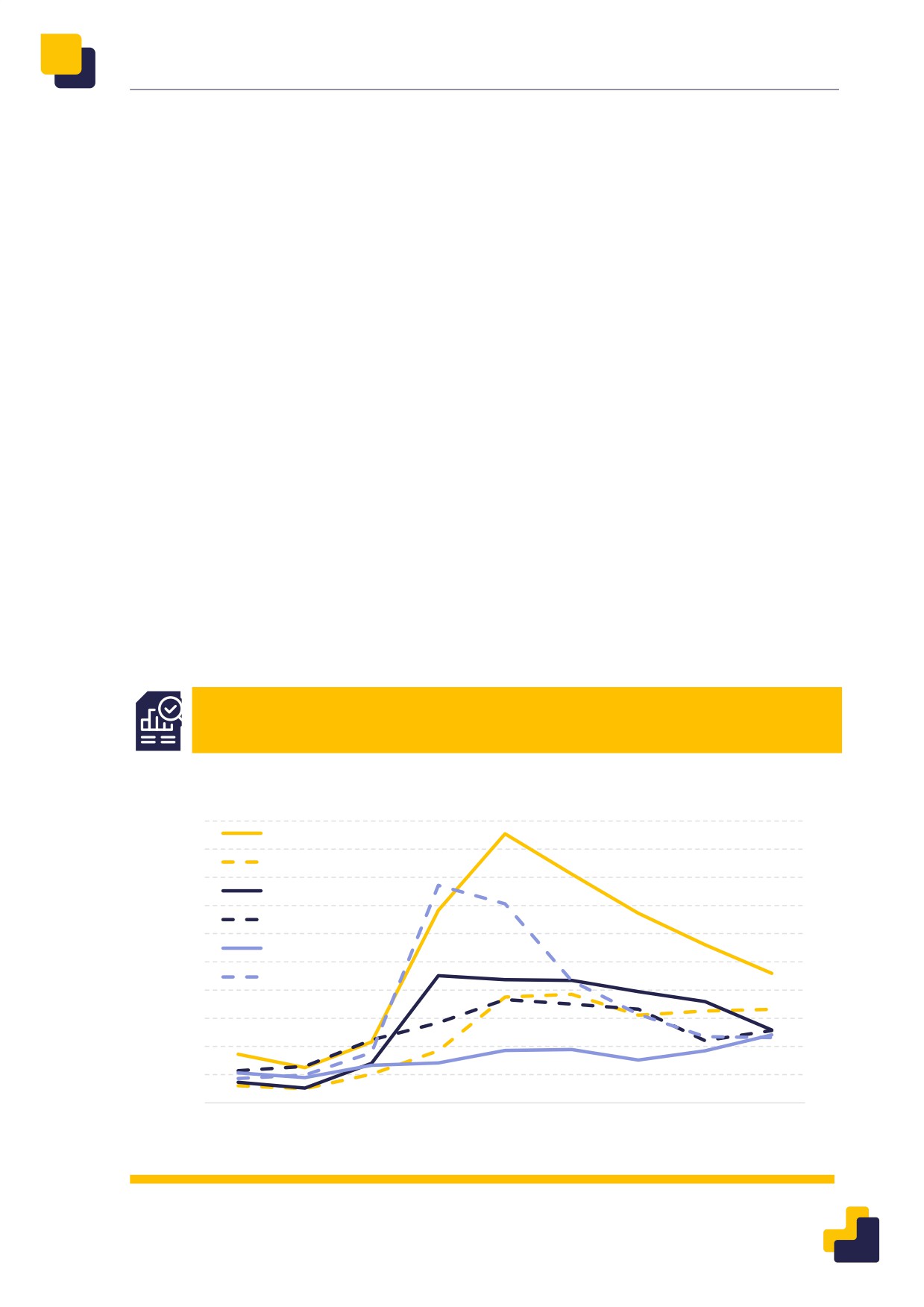
As in previous years, Germany (75,000) and France (66,000) continued to issue the most
decisions at second or higher instances, accounting for 34% and 30% of the total, respectively
(see Figure 19). This is only natural given that these two countries also issued the most
decisions on first instance applications. A large volume of decisions in appeal or review were
also taken in Italy, Greece, Sweden and Austria (in descending order).
While issuing the most decisions overall, Germany continued to issue fewer decisions at
second or higher instances for the fifth consecutive year, down to the lowest level since 2014.
This is a trend across several EU+ countries, with similar patterns appearing in Finland,
Sweden and Switzerland. It is worth noting that Denmark, Norway, Sweden and Switzerland
issued the least decisions at second or higher instances since at least 2008xlviii (see Figure 19).
xlviii
This refers to the start of the harmonised data collection by Eurostat.
158
ASYLUM REPORT 2023
The second-lowest number of decisions in 7 years were issued
at second or higher instances.
Figure 18. Number of decisions at first and second or higher instances, 2014-2022
1,200,000
First instance negative decisions
First instance positive decisions
1,000,000
Second or higher instance decisions
800,000
600,000
400,000
+24%
+9%
-2%
+29%
-21%
-10%
+4%
+29%
200,000
0%
0
2014
2015
2016
2017
2018
2019
2020
2021
2022
Source: Eurostat [migr_asydcfina] as of 13 April 2023.
Germany and France issued the majority of decisions at
second or higher instances
Figure 19. Top countries issuing decisions at second or higher instances in 2022 and
trendlines for 2008-2022
2017
158,098
66,275
75,075
Netherlands
Source: Eurostat [migr_asydcfstq] as of 13 April 2023.
159
EUROPEAN UNION AGENCY FOR ASYLUM
In relative terms, the most notable decrease in decisions issued at second or higher instances
compared to 2021 took place in Lithuania (885), where the number of decisions peaked in the
previous year (3,200). Lithuania was the only country where there were more decisions taken
at second or higher instances than at first instance, which suggests that a substantial number
of first instance decisions in Lithuania were appealed in 2022 or earlier.
In contrast, there were notable increases in Cyprus (4,300, the most since at least 2008),
Ireland (2,300, the most since 2010) and Spain (3,900, the most since at least 2008) (see
Figure 19). These record highs were likely associated with high levels of decision-making at
first instance as well: while Ireland issued the most decisions at first instance since at least
2008, Cyprus and Spain took the second-most decisions in at last 14 years.
France issued more decisions at second or higher instances compared to the previous
2 years, almost back to the peak of 2019. Greece took more decisions on appeals than
in 2021, but the level nonetheless remained lower than in 2020 (see Figure 19).
As in previous years, around 7 in every 10 decisions at the appeal stage were issued to male
applicants, mainly adults. Less than one-fifth (17%) of all decisions at second or higher
instances were issued to minors, with only a slight prevalence of boys over girls. The share of
minors was the lowest since 2009.
In 2022, most decisions on appeals continued to be issued to Afghan applicants (23,000 or
10% of the total), followed by Nigerians, Iraqis, Pakistanis, Bangladeshis, Syrians and Turks.
For several consecutive years in a row, the number of decisions issued to Afghans and Iraqis
continued to drop. Meanwhile, the number of decisions on appeal remained stable for
Nigerians and Syrians compared to the previous year (see Figure 20).
Decisions on appeal rose for Bangladeshis, Georgians,
Pakistanis and Turks
Figure 20. Number of decisions on appeal by top nationalities, 2014-2022
50,000
Afghanistan
45,000
Nigeria
40,000
Iraq
35,000
Pakistan
30,000
Bangladesh
25,000
Syria
20,000
15,000
10,000
5,000
0
2014
2015
2016
2017
2018
2019
2020
2021
2022
Source: Eurostat [migr_asydcfsta] as of 13 April 2023.
160
ASYLUM REPORT 2023
In contrast, authorities in EU+ countries issued more decisions on appeal than in 2021 to
citizens of Pakistan, Bangladesh, Türkiye and Georgia (in descending order). Some
nationalities received the most decisions since at least 2008, namely Bangladeshis, Turks and,
on a smaller scale, Colombians, Chadians and Comorians.xlix
4.5.3. Scope of an appeal in international protection
cases
The scope of an appeal in international protection cases was the subject of
legislative changes and judicial review in EU+ countries, including the
requirement to provide an ex nunc examination of both facts and points of
law (as provided in Article 46 of the recast APD) and the suspensive effect of
appeals.
Following diverging interpretations by lower courts, the Constitutional Court
in Czechia decided in March 2022 that individuals may appeal against a decision which grants
them subsidiary protection and request refugee protection without the risk of losing the
already-gained subsidiary protection status and being placed again in the position of being an
applicant for international protection while a new assessment takes place.500
In Germany, as of 1 January 2023, with the entry into force of the Act on the Acceleration of
Asylum Court Proceedings and the Asylum Procedure, the Federal Administrative Court can
also decide on the general asylum situation as it pertains to the situation in the country of
origin or destination. This only applies if the Higher Administrative Court grants a leave for
revision and if the Higher Administrative Court’s appreciation of the situation in the respective
country differs from that of other High Administrative Courts or the Federal Administrative
Court. The reform was introduced in an effort to unify jurisprudence on the situation in
countries of origin or destination.501
Malta amended the International Protection Act in December 2022, widening the scope of the
appeal in international protection cases. In line with Article 46(3) of the recast APD, the
competence of IPAT now covers an ex nunc examination of appeals, so that IPAT may
consider evidence and elements of fact and law, which are available at the moment of the
pronouncement of its decision, including evidence of which IPAT was not aware during the
first instance procedure. However, such a right of appeal was not available in an IPAT decision
to withdraw international protection on the basis that the beneficiary of international
protection had unequivocally renounced protection or had become a Maltese national. Aditus
presented comments on the proposed legislative amendments in June 2022 and welcomed
several provisions, notably the clarification on the nature of the appeal procedure, in line with
EU law and jurisprudence.502
In addition, the Maltese First Hall Civil Court (constitutional jurisdiction) held in March 2022
that the automatic review procedure in the case of manifestly-unfounded applications was not
compatible with the right to a fair hearing. The case was further appealed at the Constitutional
Court, which delivered its judgment in January 2023. The court concluded that there was no
violation of the constitution as it found that rights in asylum were not part of civil rights and
obligations (see Section 4.3.3).
xlix Only citizenships with over 1,000 decisions at second or higher instances in 2022 were considered.
161
EUROPEAN UNION AGENCY FOR ASYLUM
In Norway, the Supreme Court provided guidelines on assessing religious persecution claims
and future-oriented analyses of the risk of religious persecution upon a return to the country
of origin, dismissing the claim of the Immigration Appeals Board (UNE) that courts should limit
the judicial review. The Supreme Court highlighted that courts can fully review the decision of
the UNE, including the future-oriented risk assessment of persecution due to religion.
In Poland, the Supreme Administrative Court held in June 2022 and July 2022 that the
recast APD must be applied directly by administrative courts reviewing first instance decisions,
as under Article 46 of the recast APD and Article 47 of the EU Charter courts must examine
cases in such a way as to ensure that they are dealt with ex nunc, both with regard to the facts
and legal issues. The Supreme Administrative Court considered that in the Polish system the
administrative courts wrongly reviewed contested decisions on the basis of the facts
established in the course of administrative proceedings. In the two particular cases, the war in
Ukraine had not been taken into account in the assessment of asylum requests, as the war
had started while the cases were pending on appeal.
In addition, in a judgment pronounced in September 2022, the Administrative Court of
Warsaw ordered the Office for Foreigners to consider all evidence in the case of an Iraqi
applicant. This included evidence presented before the first appeal level of the Refugee
Board, which had been ignored even though the Administrative Court of Warsaw had already
indicated to the Refugee Board in another final decision that an ex nunc examination must
take place in the case.503
In Spain, the Supreme Court ruled on the suspensive effect of an appeal, noting that the
rejected applicant had the right to remain in Spain pending a final decision. This also applied
to reception rights while appeal procedures are pending (see Section 4.7).
In France, the CNDA clarified in May 2022 that submissions presented on behalf of a child
born or arrived after the introduction of a parent’s asylum application were inadmissible in the
context of the appeal brought by the parent. In this case, the asylum applicant submitted
before the CNDA that her daughter, a minor born after the pronouncement of the OFPRA
decision, also had her own fear of persecution due to the danger of being submitted to FGM/C
in Guinea. The conclusions presented on behalf of the child were considered inadmissible in
support of the appeal brought by the mother against OFPRA’s decision. The CNDA concluded
that separate submissions related to child-specific fears of persecution could only be validly
examined in the context of a child-specific asylum application.
4.5.4. Effectiveness of specific remedies
In S.H., the ECtHR found that the judicial review of the applicant’s case
undertaken by the International Protection Tribunal in Malta was superficial
and devoid of any useful effect. The tribunal tended to automatically confirm
the International Protection Agency’s decision within a maximum of 3 days.
Furthermore, the communication of the decision took place several months
after the pronouncement, although a removal order was issued a few days
after the decision.
For the second application lodged by the applicant, the court noted that the decision of the
International Protection Agency was confirmed by the tribunal without any reasoning. The
court observed that a third application was treated in a similar way. The ECtHR observed that
162
ASYLUM REPORT 2023
it was not necessary to examine the procedure before the Refugee Appeals Board since the
government had already accepted that the board had no power to alter an assessment made
by the International Protection Agency. The ECtHR also observed that, in Malta, constitutional
redress proceedings do not have an automatic suspensive effect and therefore they are not
an appropriate remedy under Article 13 of the European Convention.
Similar doubts about the effectiveness of remedies in the appeal procedure were raised by
the Helsinki Foundation for Human Rights in Poland for appeals examined by the Refugee
Board. The Helsinki Foundation noted that the review was merely symbolic and largely
uncritically confirms the findings of the Head of the Office for Foreigners.504
To improve the efficiency of international protection procedures and provide legal certainty to
complainants at the appeal stage, a new Migration Code was being drafted in Belgium,
including amendments to provide a more coherent appeals system.
In Germany, the Federal Administrative Court clarified the procedure for a service of a
judgment when an applicant has more than one legal representative. The court ruled that if
there are several authorised persons, service to one of them is sufficient and the first service
is decisive for the start of procedural time limits which are applicable for any further appeal.
In Sweden, the Migration Court of Appeal in Stockholm ruled in May 2022 on the role of the
courts in assessing credibility when a person with hearing impairments has communication
difficulties. The Migration Court of Appeal noted that courts have a greater investigative
responsibility in asylum cases than in other matters. The Migration Court of Appeal highlighted
that the lower court should have considered whether the incoherent and contradictory
information provided by the applicant before the first instance determining authority may have
been due to communication difficulties, considering that the person had difficulties
understanding the questions that were asked or that he was imitating the interpreters.
4.5.5. Suspensive effect of an appeal
The Supreme Administrative Court in Poland confirmed in February 2022
that an appeal against an inadmissibility decision does not entail the right to
have the contested decision suspended while pending the outcome of
judicial proceedings. The court noted that Article 46(5) and (6) of the recast
APD states that Member States must ensure that applicants for international
protection have the right to remain on the territory until the end of the
proceedings before a court of first instance. In this case, Article 46(5) of the recast APD did not
apply since it does not refer to a decision on admissibility (based on Article 46(6). It was also
observed that the applicant had a lawyer appointed ex officio, and therefore his rights to
represent his interests before the court would be taken into account and protected by the
attorney representing him, his personal presence not being necessary.
Therefore, it was considered that the obligation to ensure that the party has the right to a
court, including the right to participate personally in the proceedings, does not support the
stay of execution of the contested decision. The Supreme Administrative Court concluded that
the absence of the applicant from Poland during the proceedings would not result in the risk
of significant harm or effects which would be difficult to reverse.
163
EUROPEAN UNION AGENCY FOR ASYLUM
In Cyprus, if the Asylum Service considers a subsequent application to be inadmissible, an
appeal can be submitted before IPAC. Such an appeal, however, does not have an automatic
suspensive effect and a separate application must be submitted to IPAC, requesting the right
to remain pending the examination of the appeal. The procedure to submit this application
was not provided for in the procedural rules, until their amendment in 2022. The amended
regulations provide that the application for the right to remain must be submitted at the same
time as the appeal, and in any case within the deadline for the submission of the appeal,
which is 15 days.505
In Hungary, since June 2022, Government Decree 570/2020. (XII. 9.) is no longer in force,
where Section 5 removed the possibility to ask for interim measures to prevent an expulsion
in the case of a violation of epidemic rules or when expulsion was ordered based on a risk to
national security or public order. The provision had serious consequences for people who had
been expelled prior to submitting an asylum application or if an asylum application was
rejected in an accelerated procedure or admissibility procedure and the appeal did not have a
suspensive effect. In those cases, even if a suspensive effect was requested, it did not
suspend the expulsion that was ordered prior to the asylum procedure.506
4.5.6. Reorganisation of appeal panels
Changes to appeal panels were introduced in several EU+ countries, often
with the objective of speeding up the appeals procedure. Further clarifications
on these aspects were also provided by courts through judicial reviews.
In Finland, the Supreme Administrative Court clarified that in cases related to
international protection involving an assessment of converting to Christianity, a
panel of three judges is required to rule in appeals before administrative courts. In another
case, the Finnish Supreme Administrative Court annulled a lower court decision that did not
respect the voting rules set up for the members of the panel, namely the fact that if there are
several questions which affect the outcome of the decision, each of those questions must, in
accordance with the Administrative Procedure Act, be put to a vote and the members of the
court must rule on each question to be resolved.
In Italy, the implementation of the EU NEXT Generation Project, D.L. 80 of June 2021 - as
amended by conversion Law No 113 of August 2021 - provided for the reinforcement of the
Courts Office personnel, with the introduction of the Judicial Office (Ufficio del Processo), a
support office for judges and court administrations to which law clerks will be deployed for
3 years starting from February 2022. Clerks were also deployed to support judges assigned to
the specialised sections on migration, with the objective of reducing the backlog at second
instance.507
In October 2022, the Administrative Court of Thessaloniki in Greece (Decision ΑΔ534/2022)
sent a preliminary reference to the Council of State (προδικαστικό ερώτημα). It addressed the
compatibility of provisions enabling members of Appeals Committees to process appeals in
single-judge panels (used in fast-track procedures for instance) with Article 89 (2) and (3) of
the Greek Constitution on the constitutional prohibition of parallel employment of magistrates
(συλλογικά όργανα).508
164
ASYLUM REPORT 2023
4.5.7. Length of the procedure
In Germany, the government approved in July 2022 the first migration package
presented by the Federal Minister of the Interior, including a bill to accelerate
the appeals procedure. The draft law was subsequently adopted by the
German parliament on 2 December 2022.509
In Cyprus, IPAC amended its rules of procedure on 16 September 2022,
including the time limit for IPAC to issue a decision on an appeal which should be 7 days from
the registration of the appeal with the court. In addition, any appeal against the decision of
IPAC must be lodged within 10 days from the notification of the decision. When a detention
order is challenged, the decision must be issued within 2 days.510
In 2022, IPAC also initiated accelerated procedures for negative first instance decisions
issued based on an inadmissible subsequent application or safe country of origin. Upon the
submission of an appeal in such cases, the Asylum Service must, within 10 days, file a
memorandum at the IPAC Registry with the administrative file of the claim. The case is then
scheduled directly for a hearing, during which the presence of the Legal Service is not
required, unless this is otherwise ordered by IPAC. No written submissions by either the
applicant or the Legal Service are foreseen in the accelerated procedure.511
In Greece, the Asylum Code, which entered into force in the second half of 2022, provides
that decisions must be issued as soon as possible and in any case:
a) Within 30 days of the hearing of the case in a regular procedure case;
b) Within 20 days of the hearing in an accelerated procedure case;
c) Within 10 days of the hearing when the appellant is under administrative detention;
and
d) Within 20 days of the hearing when the application is rejected as inadmissible in
accordance with Article 89.
An exception was introduced for cases heard in priority, as the decision must be issued within
15 days of the hearing.512
The length of asylum appeals was an area of concern for national authorities and criticised by
some civil society organisations and national evaluations of appeal procedures. For example,
Progestion and Convive-Fundación Cepaim highlighted that the duration of the appeals
procedure was excessively lengthy in Spain.513
In Sweden, the National Audit Office published a report on the processing times of asylum
cases in migration courts and found that they were long and had increased since 2016.
Notable regional differences were also found, with a lack of resources being the main reason
for delays. The report noted that about one-half of the processing time did not include any
active processing of cases.514 In a letter of 26 July 2022, the Ministry of Justice welcomed the
report and highlighted that a series of measures were taken to shorten the processing time,
including constitutional amendments to transfer cases between courts.515
165
EUROPEAN UNION AGENCY FOR ASYLUM
4.5.8. Appeals by specific profiles of applicants
Ukrainian applicants
Appeals lodged by Ukrainian nationals whose applications were rejected in first instance
procedures were suspended by the Danish Refugee Appeals Board on 24 February 2022 at
the start of the war in Ukraine.516
Afghan applicants
On 31 March 2022, CALL in Belgium noted that the situation in Afghanistan did not seem to
establish the need to grant subsidiary protection within the meaning of the recast QD,
Article 15(c). However, it underlined that the situation remained unstable and changes in the
dynamics of the conflict were recent. It assessed that the situation in Afghanistan did not allow
to make a correct and forward-looking assessment.
On 12 and 13 October 2022, in a chamber of three judges, CALL issued five rulings: two
granting refugee status, two denying it and one annulling the CGRS’s decision. CALL noted
that the level of indiscriminate violence in the country had generally fallen significantly since
the Taliban takeover, concluding that there was no automatic need for subsidiary protection
from indiscriminate violence. It further ruled that the return of Afghans from Europe
(considered ‘westernised’) did not automatically give rise to a well-founded fear of
persecution. CALL also found that the socio-economic situation in the country did not
automatically fall within the scope of subsidiary protection. CALL noted, however, that the
current precarious socio-economic situation may still give rise to a violation of Article 3 of the
ECHR, which needs to be further examined when issuing any order to leave the territory.
In February 2022, the Danish Refugee Appeals Board resumed the assessment of cases
lodged by Afghan nationals. In January 2023, the Danish Coordination Committee of the
Refugee Appeals Board decided to change its practice toward Afghan women and girls, thus
as a main rule granting asylum solely because of their gender, based on Section 7(1) of the
Aliens Act.517 In December 2022, the Coordination Committee declared that a lower threshold
of persecution should be applied in cases involving Afghan women and girls and their risk of
persecution because of the arbitrary exercise of power by the Taliban.518
Applicants from Ethiopia
After suspending the processing of cases by Ethiopian nationals on 16 December 2021,519 the
Coordination Committee of the Danish Refugee Appeals Board lifted the suspension on
24 February 2022. The Appeals Board later stated that the general situation in Addis Ababa
was not of such a nature that any person of Tigrayan ethnicity would be at risk of being
arrested, mistreated or abused. Thus a concrete assessment of an applicant's circumstances
would determine if the conditions for issuing a residence permit according to Section 7 are
met.520
Applicants from Mali
In Belgium, CALL ruled in May 2022 on appeals lodged by applicants from northern and
central Mali on 18 May 2022 and in October 2022 on appeals by applicants from southern
Mali.521
166
ASYLUM REPORT 2023
Applicants from Myanmar
In 2023, the Refugee Appeals Board referred two cases back to the Danish Immigration
Service for a new assessment based on new country of origin information for Myanmar
following the military coup in February 2021. The Danish Refugee Council reported that in one
of these cases the first instance authority provided international protection.522
4.5.9. Digitalisation of procedures
Digitalisation initiatives for the appeal of an international protection case
continued throughout 2022 on the anonymisation of court decisions,
electronic submission of documents and file management.
In Austria, a project by the Federal Ministry of Justice, together with the
Federal Computing Centre, received an eAward in October 2022. The
project, “Use of artificial intelligence in the anonymisation of court decisions”, aims to facilitate
access to a higher number of court decisions, including asylum decisions pronounced on
appeal. It uses artificial intelligence to anonymise the decisions, a process usually done
manually and requiring extensive human resources.523
In Belgium, CALL launched a digital tool on 1 March 2022, entitled J-BOX, to exchange
procedural documents electronically instead of using registered mail. The use of the tool
became mandatory in appeals for accelerated and urgent measures. The possibility to
exchange documents electronically had been provided by law in 2021.524 In addition,
in February 2022, CALL reminded appellants that it was not necessary to add copies of
publicly-available online sources as evidence, mentioning that a link to the source was
sufficient.525
In France, in 2022, the CNDA organised for the first-time teleconferenced hearings with the
Administrative Court of Lyon. This practice continued with the Administrative Court of Nancy
and with overseas territories.526
In Germany, the Federal Administrative Court announced that from 1 January 2026, in
accordance with Section 55b(1a)(1) of the Administrative Procedure Code (VwGO), all court
files must be kept electronically. The Federal Administrative Court in Leipzig aims to meet this
legal requirement earlier, by 1 January 2024. From 1 September 2022, the Federal
Administrative Court managed all files electronically for incoming and continued proceedings
of the 1st and 5th Revision Senate, providing also for the possibility that the senate could
suspend the electronic file management in individual procedures if it caused an unreasonable
additional effort or for other compelling reasons.527
The Swedish Migration Court of Appeal introduced an e-service to facilitate the submission of
documents to the court by state administrative authorities. The e-service is an alternative to
submissions by email, secure e-mail and paper mail, making it possible to submit larger files
and in more formats to the courts.528
Some countries, such as Lithuania, have continued to hold court hearings remotely, despite
the lifting of COVID-19 restrictions.529
167
EUROPEAN UNION AGENCY FOR ASYLUM
Section 4.6.
Pending cases
Once an application for international
The examination of a case can also be
protection has been lodged with a
closed for other reasons, including an
national authority, the processing phase
explicit withdrawal initiated by the applicant,
begins. The final outcome of this process
an implicit withdrawal, for example in the
is a decision at first instance, which can
case of absconding, and an acceptance of
be appealed and followed by another
responsibility by a partner country in the
decision.
context of a Dublin procedure.
While an application is under examination, it
is part of the stock of pending cases.
Pending cases are a key indicator reflecting
the workload experienced by national
authorities and the pressure on national
asylum systems, including reception
systems.
168
ASYLUM REPORT 2023
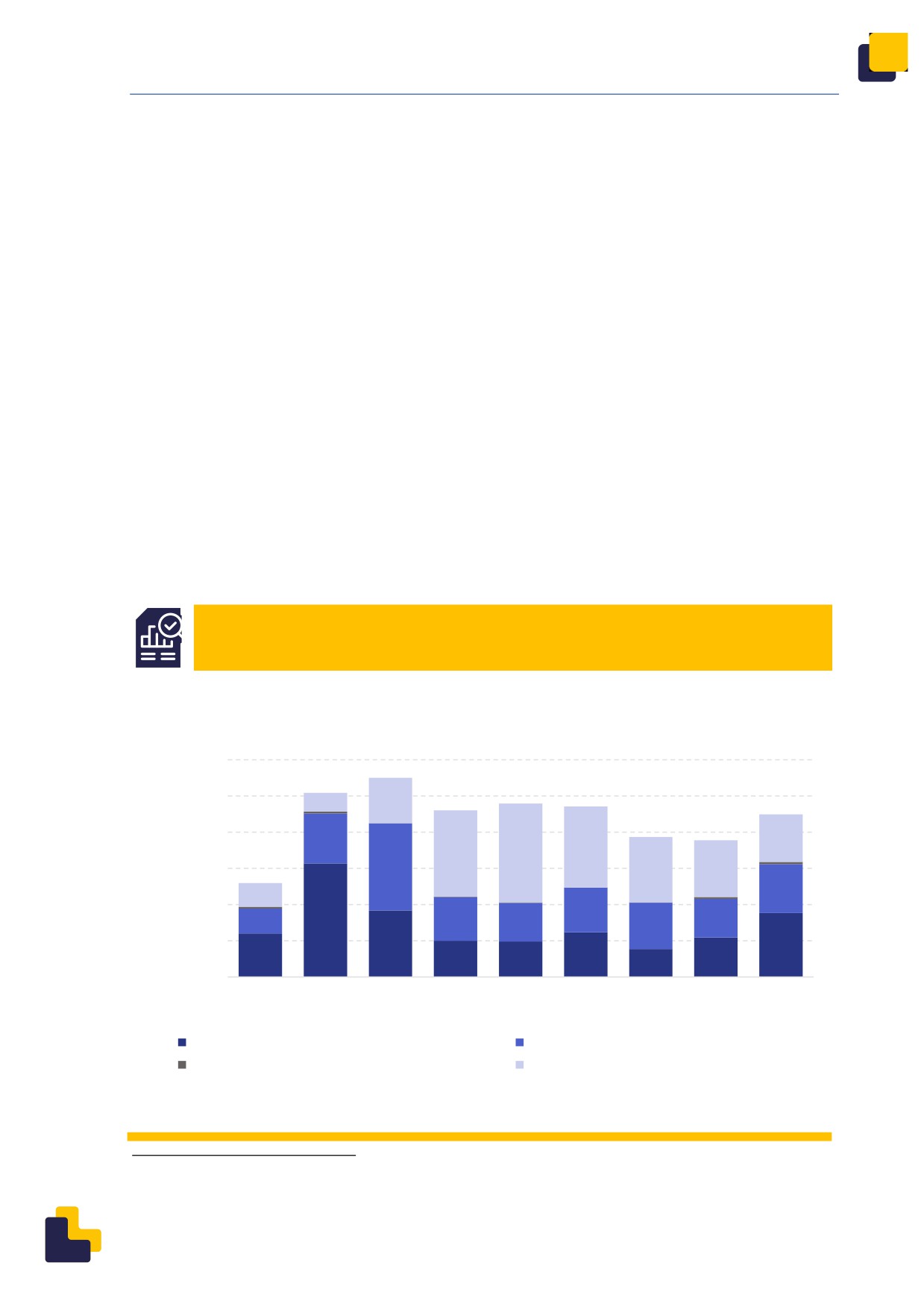
At the end of 2022, nearly 899,000 asylum applications were awaiting a decision in
EU+ countries, increasing by almost one-fifth compared to a year earlier. This represented the
most cases awaiting a decision since April 2020, when the processing of applications was
suspended or strictly limited during the onset of the COVID-19 pandemic.
While the number of pending cases remained relatively stable until July 2022, it started rising
continuously afterwards, in line with the growing number of asylum applications (see
Section 4.4). Meanwhile, decisions at first instance started to considerably lag behind
applications in the last two quarters of 2022 than in the first two. Hence, the stock of pending
cases was far higher than in the pre-crisis level in late 2014 (see Figure 21), adding pressure on
national reception systems.
When combining Eurostat data with the EUAA’s Early Warning and Preparedness System (EPS)
data,l the number of cases pending at first instance and at second or higher instances can be
disaggregated. EUAA EPS data allow to further analyse pending cases by a duration of
6 months or longer at first instance.
The results indicate that the overall stock of pending cases increased at first instance,
whereas it continued to decrease at higher instances. The annual total of pending cases was
influenced by different trends: while cases pending at first instance rose throughout the year
and more strongly in the second half of 2022, cases at higher instances decreased at the
beginning of the year and then remained relatively stable.
Considerably more cases were pending at first instance than
at higher instances
Figure 21. Pending cases in EU+ countries at the end of each year, 2014-2022
1,200,000
1,000,000
800,000
600,000
400,000
200,000
0
Dec
Dec
Dec
Dec
Dec
Dec
Dec
Dec
Dec
2014
2015
2016
2017
2018
2019
2020
2021
2022
First instance: pending up to 6 months
First instance: pending over 6 months
First instance: pending duration unknown
Higher instances
Source: Eurostat [migr_asypenctzm] as of 13 April 2023 and EUAA EPS.
l EUAA data cover first instance cases. They are provisional and not validated, but they provide information on
overall trends at the EU+ level. EUAA EPS data do not include information on Iceland and Liechtenstein.
169
EUROPEAN UNION AGENCY FOR ASYLUM
At the end of 2022, some 636,000 cases were pending at first instance, accounting for 71% of
the total. This was a notably higher share than a year earlier. Among the cases awaiting a
decision at first instance, the majority were pending for up to 6 months, a direct result of the
rising number of applications lodged in the second half of 2022. Based on the evolution of the
caseload distribution in previous years, the recent increase in cases awaiting a decision at first
instance is likely to result in a forthcoming shift of pressure from first instance determining
authorities to second or higher instances.
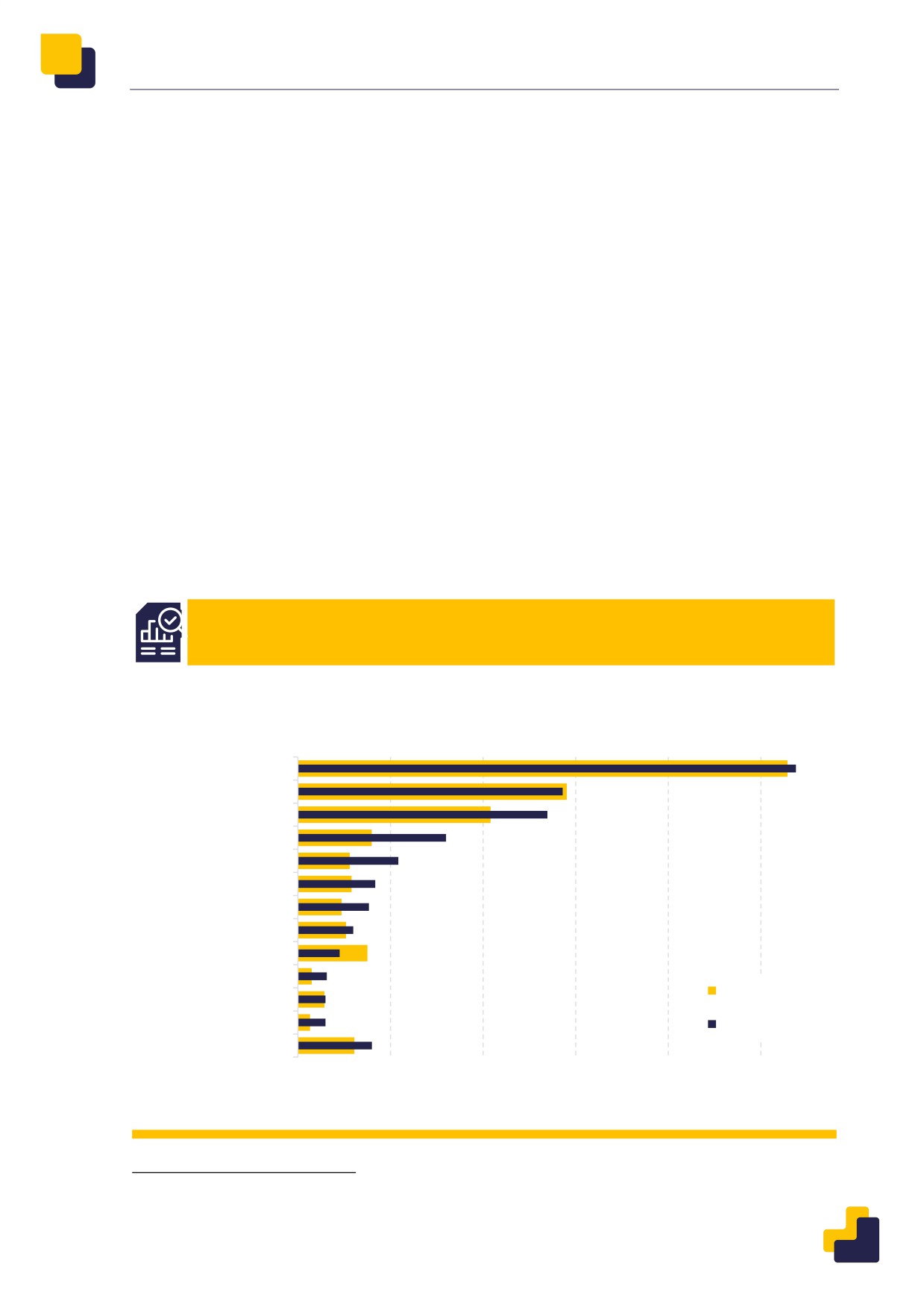
Close to one-third (30%) of all pending cases continued to be awaiting a decision in Germany,
with a total of 269,000 open files (see Figure 22). While the overall stock in Germany
increased only marginally, its share of the EU+ total declined (down from 35% at the end
of 2021). Other EU+ countries with a large number of pending cases included
France (143,000), Spain (135,000), Italy (80,000) and Austria (54,000).
Compared to the end of 2021, the caseload approximately doubled in Austria and Italy and, on
a smaller scale, more than doubled in Croatia, Estonia, Ireland, Norway, Portugal and
Switzerland. In absolute terms, the largest increases were in Italy, Spain, Austria,
the Netherlands and Belgium (in descending order). In all of these countries, the number of
cases under determination accumulated in the second half of 2022. At the end of 2022,
Belgium (42,000), Ireland (15,000), the Netherlands (38,000) and Iceland (1,200) had the most
pending cases on record, since at least 2008 when harmonised data collection began.li
While most cases awaiting a decision were still in Germany and
France, notable increases took place in Italy, Spain and Austria
Figure 22. Pending cases in EU+ countries at the end of 2022 compared to the end of
2021
Germany
+2%
France
-2%
Spain
+30%
Italy
+101%
Austria
+94%
Belgium
+44%
Netherlands
+63%
Cyprus
+15%
Greece
-40%
Switzerland
+110%
End of 2021
Sweden
+5%
Ireland
+126%
End of 2022
Rest of EU+ countries
+31%
0
50,000
100,000
150,000
200,000
250,000
Source: Eurostat [migr_asypenctzm] as of 13 April 2023.
li At the end of 2022, Croatia (1,300) also had the most pending cases on record since 2013.
170
ASYLUM REPORT 2023
Greece was the only country with a considerable decrease in pending cases, both in
absolute (-15,000) and in relative (-40%) terms, and the decrease took place particularly in the
first half of 2022. On a much smaller scale, there were declines also in Malta and Poland,
among others.
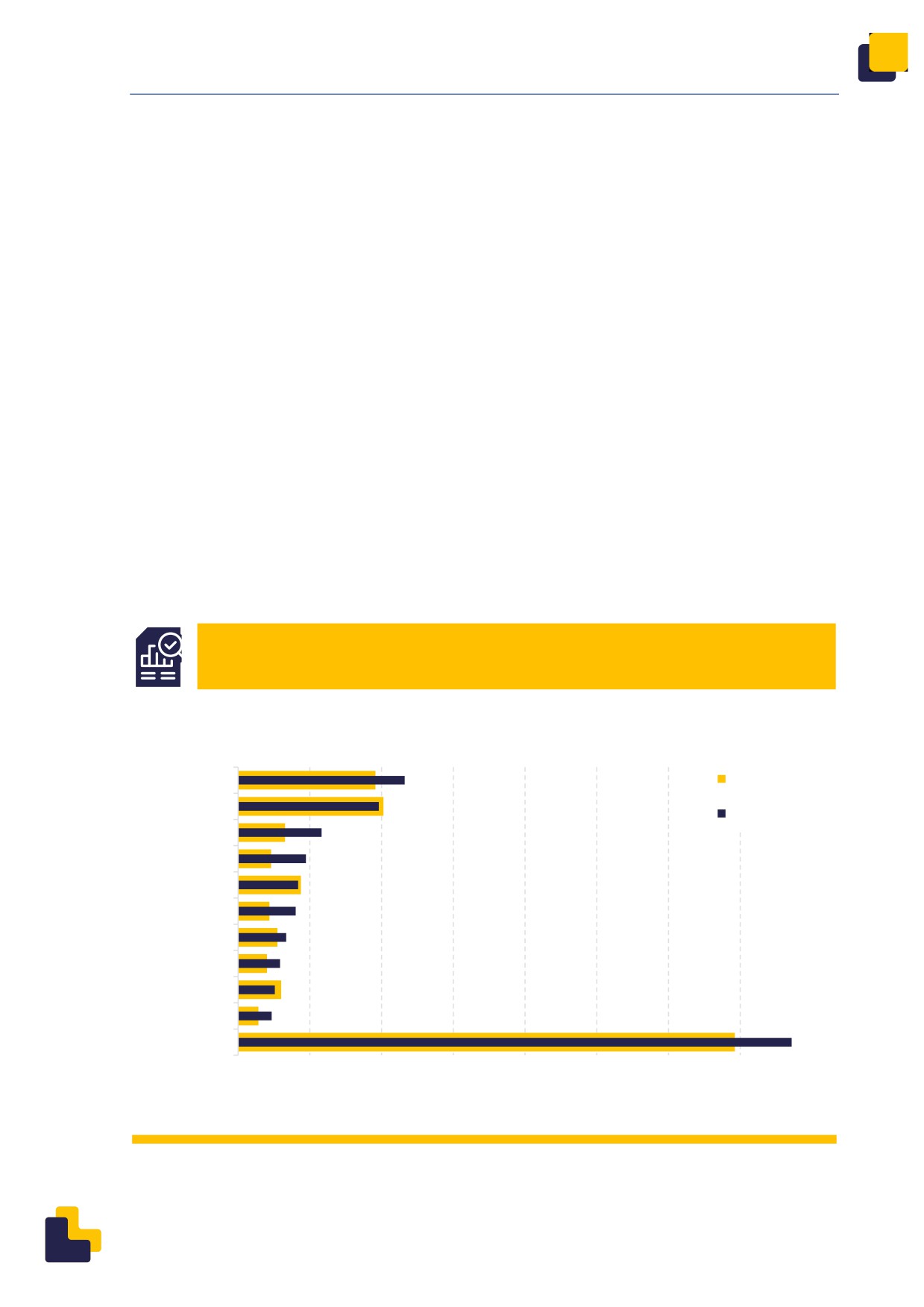
Syrian applicants (116,000) had the most pending cases in EU+ countries at the end of 2022,
overtaking Afghans (98,000) due to an increase by one-fifth compared to the end of 2021 (see
Figure 23). While the caseload for Syrians decreased gradually in the first half of the year, in
August the trend was reversed and by the end of the year it reached the most since
October 2017. Although pending cases for Afghan applicants also started to increase towards
the end of 2022, the stock in late December was marginally lower than a year earlier.
Following a surge in asylum applications to unprecedented levels (see Section 4.4), nationals
of Türkiye had 58,000 open cases at the end of 2022, the most on record since at least 2008.
Pending cases reached record values also for citizens of Colombia (47,000),
Bangladesh (29,000), Georgia (23,000), Morocco (16,000), the Democratic Republic of the
Congo (15,000), Egypt (13,000) and Algeria (8,200). In October 2022, caseloads rose to an all-
time high also for Indians (12,000) and Tunisians (8,500) but then started to decrease.
Most applications for many of the top nationalities were pending in Germany, where a
decrease in the caseload for Afghan and Nigerian applicants was offset by an increase in
cases for Turkish and Georgian applicants. Colombians and Venezuelans held the most
pending cases in Spain, while it was Bangladeshis and Pakistanis in Italy.
Rising number of pending cases for applicants from Syria,
Türkiye and Colombia
Figure 23. Pending cases in EU+ countries at the end of 2022 compared to the end of
2021 by Top 10 countries of origin of applicants for international protection
Syria
+21%
End of 2021
Afghanistan
-3%
End of 2022
Türkiye
+78%
Colombia
+105%
Iraq
-5%
Venezuela
+84%
Pakistan
+23%
Bangladesh
+46%
Nigeria
-15%
Georgia
+66%
Other
+11%
0
50,000
100,000
150,000
200,000
250,000
300,000
350,000
Source: Eurostat [migr_asypenctzm] as of 13 April 2023.
171
EUROPEAN UNION AGENCY FOR ASYLUM
While pending cases for Syrian applicants remained stable in Germany, there were
considerable increases in Austria, Bulgaria, Cyprus and the Netherlands. Although the
caseload for applicants from Afghanistan decreased in Germany, it rose in Austria, Belgium,
Cyprus, France and Switzerland. In addition to Germany, but on a smaller scale in absolute
terms, the stock of pending cases for Turks grew also in Austria, France and Switzerland.
The stocks of cases for applicants from Bangladesh and Pakistan in Italy (13,300 and 14,300,
respectively) reached all-time highs, as did those of Colombians and Peruvians in
Spain (40,300 and 10,200, respectively). A record high was also reported for cases pending
for Georgians in Germany (8,600).
Seven in 10 pending cases at the end of 2022 pertained to male applicants. For almost all
nationalities, more males were awaiting a decision than females. The only exception was for
applicants from Côte d’Ivoire, with 53% of cases pending for women and girls. There was a
gender balance for pending cases for many Latin Americans (Colombians, Peruvians,
Salvadorans and Venezuelans) and for Ukrainians.lii
While 57% of all pending cases belonged to adult males, children accounted for over one-
fifth (22%) of all applicants awaiting a decision. Boys were still the majority (58%) in the group
of children. Syrians, Afghans, Iraqis and Turks jointly accounted for about two-fifths of all
minors. In total, 72% of all minors who had yet to learn the outcome of their application for
international protection were below 14 years of age.
lii Only nationalities with at least 5,000 pending cases at the end of 2022 were considered.
172
ASYLUM REPORT 2023
Section 4.7.
Reception
of applicants
for international
protection
The recast RCD sets the standards for
The recast RCD describes the conditions
the conditions which must be met for the
and processes under which applicants need
reception of an asylum applicant and
to be informed about reception benefits and
aims to ensure that applicants’ rights and
duties (see Section 4.9). The directive also
obligations are harmonised across all
outlines the circumstances when Member
Member States.
States may reduce or exceptionally
withdraw material reception conditions.
The reception of applicants for
international protection encompasses
Member States must have appropriate
rules on material reception conditions
guidance, monitoring and controls to ensure
(such as housing, food and clothing
that the EU standards are upheld. They also
which are provided in kind, through
need to provide suitable staff training and
financial allowances or in vouchers - or
allocate sufficient resources. Member States
a combination of these three - and a
are required as well to take into account the
daily expense allowance), freedom of
specific situation of vulnerable applicants
movement, access to health care,
(see Section 5). Furthermore, the directive
education for children, access to the
lists the criteria, guarantees and conditions
labour market, language instruction for
for the detention of applicants (see
children and socio-cultural orientation.
Section 4.8). The standards in the directive,
The directive applies to all applicants
however, can be imposed differently in
throughout the whole asylum procedure
national laws, and thus, variations exist in
from the moment an application is made
reception conditions across countries.
and for all types of procedures until they
are allowed to remain on the territory.
173
EUROPEAN UNION AGENCY FOR ASYLUM
2022 was an extremely challenging year for reception authorities in EU+ countries, which
experienced a rise in the number of applicants for international protection and received
millions of persons in need of temporary protection - and thus, of shelter and accommodation.
The main issue remained the lack of sufficient places, even though Member States continued
to significantly invest in increasing reception capacity. Some countries surpassed all previous
capacity records, but this still was not enough to offer adequate accommodation for all
applicants. The challenges were multifaceted and included, for example, inadequate funding
and issues with collaborating with municipalities. Only Nordic countries and a few transit
countries (from where applicants often move towards another EU+ country) did not report
issues with capacity.
Member States explored different ways to address the issue. Some reached out to new
stakeholders to strengthen the reception system, for example, through the closer involvement
of civil society organisations, municipal actors, disaster management or private actors. Among
13 operating plans in 2022, the EUAA assisted to enhance the reception system for 10
countries, increase the integrity of the asylum procedure (see Section 4.2) or its efficiency (see
Sections 4.3 and 4.4). Some measures which were implemented by national authorities, for
example limitations on family reunification, are currently being scrutinised by the courts.
Reception conditions deteriorated in overcrowded centres and led to sub-standard conditions
in many EU+ countries, as widely documented by civil society organisations. Courts stepped in
to reiterate the obligations of Member States. The European Commission sent letters of formal
notice to several countries for failing to properly transpose the recast RCD.
As the focus remained on immediate needs, such as finding enough reception places and
ensuring adequate living conditions, less initiatives seemed to have been implemented to
facilitate applicants’ entry into employment, orientation in the new society or accessing
education and health care. National authorities tried, but sometimes struggled, to ensure at
least the basic services.
In these circumstances, the European Parliament’s rapporteur of the revised RCD noted that
the agreement reached in December 2022 between the European Parliament and the Council
on the legislative proposal was a breakthrough that can ensure high and consistent reception
standards.530
4.7.1. Entitlement to material reception conditions
The lack of reception places gave rise to several judgments which obliged
national authorities to immediately ensure access to material reception
conditions for applicants (see Section 4.7.2.1). Other court cases looked into
the scope of persons who are covered by national legislation in reception and
provided guidance on when an applicant’s material reception conditions can
and cannot be withdrawn.
Among legislative changes, new regulations entered into force in Norway, which determined
benefits for residents in asylum reception centres.531 In Poland, the Helsinki Foundation for
Human Rights underlined that cash benefits for applicants staying outside of reception
facilities remained very low and not sufficient to cover daily costs.532
174
ASYLUM REPORT 2023
Amendments to the Slovak Asylum Act codified the already-existing practice that applicants
could stay outside of the reception facility for 3 months, with the possibility to extend this
period without losing their right to material reception conditions.533
In December 2022, the Secretary of State for Migration in Spain adopted an instruction
detailing the requirements to access and stay in the reception system. Among other issues,
the instruction foresees that the phase of the initial assessment and referral, despite being a
part of the reception system, does not count while calculating the 18-month (or 24-month)
period of stay, and only the other two phases are taken into consideration for the calculation
of the duration.534
In 2022, a new Ministerial Decision was issued in Cyprus which determines the criteria and
level of material reception conditions. It also introduced a new application form.liii
In the context of the reception crisis, Fedasil in Belgium issued a new instruction in
November 2022 on the forced and voluntary withdrawal of reception conditions for working
applicants. The aim of the instruction was to free up spaces in the reception network, and thus
it ordered the forced withdrawal of reception conditions for applicants with a stable work
contract (of a minimum of 6 months) and an income higher than the minimum living wage.
Applicants who meet these conditions receive a motivated decision indicating that they must
leave the reception centre within 1 month.535
The Swedish Supreme Administrative Court concluded that persons were not covered by the
Law on Reception of Asylum Seekers and Others if they already had a residence permit (for
example, for studies) and then applied for international protection.
The Slovenian High Court confirmed the lower courts’ decisions that an applicant was not
guaranteed accommodation and access to health care while awaiting his transfer to Croatia
under the Dublin III Regulation (see Section 4.2). In the meantime, legislation in Slovenia
related to the entitlement to material reception conditions changed,536 and the situation of
applicants in the Dublin procedure was clarified.
The French Council of State concluded that an applicant’s refusal to appear for summons to
organise a Dublin transfer could be considered a serious breach of house rules, entailing the
withdrawal of the reception place and the applicant’s expulsion from the facility (see
Section 4.2). The Labour Court in Brussels found that Fedasil’s decision to revoke material
reception conditions for 14 days from an 18-year Afghan applicant was contrary to the
recast RCD and the CJEU’s Haqbin judgment. In this judgment, which the CJEU reaffirmed in
another case, the court underlined that the withdrawal of material reception conditions cannot
deprive the applicant from the possibility of meeting the most basic needs. Sanctions should
always be proportional and respect human dignity.
Related to the amount of cash benefits to which applicants are entitled, the Federal
Constitutional Court in Germany concluded that the reduction of benefits for single people
and single parents living in collective reception facilities was unconstitutional. The court found
that the assumption that the residents would form a financial community (phrased as
liii According to the new Ministerial Decision, the person must be an applicant for international protection, for whom
material reception conditions cannot be covered in Reception and/or Accommodation Centres, who lives in the
areas controlled by the Republic of Cyprus and both the applicant and their family members are not employed. In
the event that the applicant or any member of their family is employed, the family may continue to receive
assistance as long as the monthly income is less than the total amount of assistance to which the family is entitled.
175
EUROPEAN UNION AGENCY FOR ASYLUM
“community of destiny”) cannot be considered as evidence that the impacted residents could
correspondingly reduce their needs.
In Poland since 24 February 2022, it is possible to grant a financial allowance for asylum
seekers living outside of reception centres without their prior registration in one of the first
reception centres. The Human Rights Commissioner appealed (in 2022 and February 2023) to
the Ministry of the Interior and Administration to increase the amount of the financial
allowance for asylum seekers living outside of the reception centres.537 In Romania, the
amounts of financial allowances were doubled as of 27 February 2022.538
The Organization for Aid to Refugees (OPU) in Czechia highlighted that when a decision on an
applicant’s Dublin transfer became final, the person loses the applicant status under the
Asylum Act and, consequently, the right to reception, including the right to access health care
under public health insurance. The organisation described the case of an applicant family with
a child with disabilities, who were merely issued an exit visa to travel to Italy but were not able
to organise their travel on their own due to the child’s needs.539
In Cyprus, organisations indicated difficulties in accessing material reception conditions
outside of collective accommodation centres as the recently-revised application to apply for
them required the submission of eight types of documentation for the applicant and each
family member, the processing times were long and, although the application for material
assistance could be submitted without a rental contract, in such cases applicants would not
receive rent allowances and the amounts for bills and daily expenses would be reduced. For
applicants in the Pournara centre, in August 2022 the Social Welfare Services - with the
assistance of UNHCR and the Cyprus Refugee Council - piloted a new procedure where
asylum seekers submit an application for material reception conditions before exiting the
centre.540
In 2022, PRO ASYL and the Refugee Council Berlin published a comprehensive study on
reception conditions in Germany, noting that the average duration of stay varied not only for
different nationalities but also due to regional differences.
4.7.2. Organisation and functioning of reception
systems
4.7.2.1. Adjusting reception capacity and impact on reception conditions
The sharply-increasing number of applicants for international protection, as
well as the need to accommodate persons with temporary protection, pushed
many reception systems beyond their limits. While caring for persons with
temporary protection has often been the responsibility of organisations other
than reception authorities, and their accommodation has often been organised
outside of traditional reception systems for asylum seekers, the situation had
an impact on the number of available sites or on the ability of municipalities to offer new sites.
In countries where persons with temporary protection were supported through the reception
system, facilities quickly became full. Among the 13 EUAA operational plans implemented in
2022, 10 included measures on enhancing reception capacity.541
176
ASYLUM REPORT 2023
A number of countries needed to significantly increase the number of accommodation places,
such as Austria, Belgium, France (20,000 places for people displaced from Ukraine), Germany,
Ireland, Italy (where the hotspot of Messina was reopened), Luxembourg, the Netherlands,
Romania, Slovenia and Switzerland. New facilities were opened in other countries, such as
Estonia, Finland, Latvia,542 Norway and Slovakia, while an existing centre of Kofinou in Cyprus
was being extended. The occupancy rate of existing structures largely increased, for example,
in Bulgaria and Croatia. The Croatian Ministry of the Interior added that it was actively working
on finding new locations with an adequate structure that would meet the needs for the
reception and accommodation of applicants for international protection according to EU
standards, due to a high number of arrivals. The refurbishment of the facility in Kutina was
completed and the centre’s capacity was increased to 140 places, increasing the total capacity
to 740 places. Further expansion of the reception capacity was planned through opening new
facilities and expending the capacity of existing ones.
Only Greece reduced the number of reception places, and the end of 2022 marked the
completion of the accommodation programme for vulnerable asylum seekers, “Emergency
Support to Integration and Accommodation (ESTIA)”. Municipalities which hosted the
programme recognised the positive impacts of the scheme on local communities.543
In Austria, the Minister of the Interior announced in October 2022 that the reception system
had reached its capacity. Applicants who are admitted to the asylum procedure generally
move to facilities managed by federal provinces, but those facilities also needed to
accommodate persons with temporary protection. In addition, due to the funding structure,
many federal provinces closed reception places in recent years. Asylkoordination österreich
highlighted that at the end of 2022 there were 17,000 fewer places than 5 years ago for
applicants for international protection,544 and since many applicants travelled on, there was a
high fluctuation rate which was a big challenge for the Federal Agency for Reception and
Support Services (BBU) that operates the federal centres.545
UNHCR also noted that, despite a surge in applications, the number of reception places
available for applicants for international protection in federal provinces was just slightly above
the level at the end of 2021.546 Thus, many applicants remained in federal facilities managed
by the BBU.547 The national authorities underlined that, although there were less places in
organised reception facilities in 2022, the reception system overall took care of more people
in total compared to 2017. People (especially beneficiaries of temporary protection) were
mostly in private accommodation but still cared for through the reception system. Tents were
used for a few weeks in autumn 2022 to fill the gap in accommodation places, but this
practice quickly stopped due to the winter.548 UNHCR underlined the inadequacy of these
tents to accommodate applicants during winter conditions.549
Pressure has been building up in the Belgian reception system for several years. On
19 January 2022, the Brussels first instance tribunal condemned Fedasil for not having
foreseen appropriate structures to accommodate an increasing number of applicants and
ordered the treasury to pay a daily fine until the situation was resolved. However, civil society
organisations estimated that at the end of 2022, there were 3,000 persons seeking protection
who had not been offered reception.550 NGOs indicated that since March 2022 the access to
the reception network is systematically denied to single men applying for international
protection, and in general, applicants without access to the reception network are not given
an individually-motivated decision. They are merely informed about the shortage of places
and instructed to register themselves on a waiting list.551
177
EUROPEAN UNION AGENCY FOR ASYLUM
The ECtHR indicated interim measures in five cases throughout 2022, concerning
approximately 600 persons, all of whom received a final domestic decision from the Brussels
Labour Court.552 Overall, Fedasil was condemned more than 6,000 times by the Brussels
Labour Tribunal for failing to provide material reception conditions.553 The federal government
and Fedasil undertook several steps to address the situation. At the end of 2022, the
reception system reached 33,505 places, with 4,000 places created in 2022.554 The focus
was especially on creating new places for unaccompanied children (see Section 5).555 The
agency also recruited 800 employees in 2022,556 and 58 persons were recruited through an
inter-institutional process from other public service organisations.557 The winter plan was
signed, for example reserving a certain amount of places in the accommodation structure for
the homeless, specifically for applicants for international protection. At the same time, this
initiative, coordinated by the civil society organisation Samusocial, also faced a critical lack of
staff to manage the places.558
Fedasil launched a public procurement for the private sector to offer an
additional 3,500 places, while contracts for four centres already managed by private operators
were extended until 15 March 2023.559 Other stakeholders of the asylum procedure also made
adjustments to alleviate pressure. The registration process was re-organised and applicants
needed to report again at the Immigration Office’s Pacheco building instead of the arrival
centre in Brussels (see Section 4.1).560
The CGRS prioritised certain categories of applicants in the reception system and focused on
applications from countries with high recognition rates, where decisions could be made based
on the file (see Section 4.4). However, these efforts could still not match the challenge of
accommodating all applicants, whose numbers were rapidly increasing.561 In March 2023, the
Belgium government announced measures aiming to free up spaces in reception facilities by
focusing on outflow and on returning rejected applicants. In total, additional places were
planned to be created, for example through the use of EUAA containers, but the authorities
had not been able to secure an adequate site.562
The situation in the Dutch reception system became critical in 2022, even though the number
of reception places continued to grow significantly (for example, cruise ships had been hired
to accommodate applicants).563 The deteriorating conditions were the most noticeable in the
central reception facility in Ter Apel. The death of a baby in a sport hall that served as an
emergency facility for Ter Apel in August 2022 received a lot of attention and led to the
announcement of a comprehensive set of measures to address the situation.564 On 26 August
2022, the Secretary of State announced several measures to address the reception crisis,
referred to as the ‘asylum deal’. The most important measures were prolonging the decision-
making period (WBV 2022/22), suspending family reunification, temporarily cancelling the
resettlement of refugees under the EU-Türkiye deal, and launching the ‘Dispersal Law’
(Spreidingswet). In response to the reception crisis, on 8 November 2022 a legislative
proposal was put forward aiming to distribute the number of reception places in the country.
The Dispersal Law - currently pending - will ensure that municipalities will be responsible for
providing sufficient reception places for asylum seekers (Article 6(1)).565
A common investigation was conducted by the Health and Youth Care inspectorate and the
Justice and Security Inspectorate.566 The set of measures were temporary in nature, planned
to be in place until 31 December 2023, specifically to alleviate the pressure on the reception
system. These included: limitations on family reunification, suspending resettlement under the
EU- Türkiye deal, and setting up a general Housing Construction Programme to speed up the
outflow of recognised beneficiaries of international protection.567 The Advisory Council on
178
ASYLUM REPORT 2023
Migration assessed that these measure did not solve the structural issues of the reception
system, had a negative impact on the rights of applicants and beneficiaries of international
protection, and many of them were not aligned with national and EU legislation.568
Several measures were proposed to speed up the outflow of recognised beneficiaries of
international protection, accounting for approximately one-third of the residents in reception.
For example, the Hotel and Accommodation Regulation was extended until the end of 2022
to provide financial support to municipalities and support beneficiaries of international
protection in moving out of reception.569 In addition, the Dutch government observed that
efforts to set up new reception places were often undermined by the negative image
projected through a small group of residents who engaged in criminal behaviour. Thus,
measures against disruptive behaviour continued and were planned to be enhanced (see
Section 4.7.3.1). Municipalities were also hesitant to open new places due to the funding
system, and discussions were ongoing to reform this.570
On 8 November 2022, the Minister for Migration launched the consultation process on the law
proposal obliging provinces and municipalities to provide reception places for applicants for
international protection, with several sets of financial incentives for municipalities to create
more reception places, including for unaccompanied minors (see Section 5.6.5).571 The
Advisory Council on Migration welcomed the proposal and underlined that it essentially
followed the council’s earlier recommendations. Additional suggestions were made to adapt
the planning cycle of the proposal and establish more stable funding for the stakeholders
involved.572
As underlined by the Advisory Council on Migration,573 the Council for Public Administration574
and the Court of Auditors,575 the situation was partially the result of the constant opening and
closing of centres and the lack of a more stable reception system with adequate funding.
According to the forecast of the Ministry of Justice and Security in November 2022,
75,000 reception places were necessary for the end of 2023.576 The Court of the Hague
condemned the Dutch State and the Central Agency for the Reception of Asylum
Seekers (COA) for the crisis situation and ordered them to meet reception standards in terms
of adequate rooms, access to sanitary facilities, drinking water, sufficient and adequate food,
financial allowance, play areas and education for children, health care, medical screening, and
accommodation for unaccompanied minors and other applicants with special needs.
The measures were confirmed by the Court of Appeal of The Hague in December 2022,
setting aside the limitation that they applied to applicants ‘currently’ residing in crisis
emergency shelters. In addition, on appeal, the court ruled that the state should ensure that
applicants for international protection and persons with temporary protection receive the
same quality of reception conditions.
The German Federal Ministry of the Interior announced additional financial resources to
support municipalities in accommodating the increasing number of applicants and
beneficiaries of temporary protection. The federal government provided federal buildings to
municipalities to be used as reception facilities, accounting for 64,000 places and enabling
the creation of 4,000 additional places.577
The Irish Refugee Council published a report on the impact of the accommodation crisis on
reception capacity, noting that in September 2022 newly-arrived applicants were turned away
due to a lack of accommodation and were offered a place only a few weeks later.578
In January 2023, the provision of an emergency shelter for adult applicants for international
179
EUROPEAN UNION AGENCY FOR ASYLUM
protection was paused in the Transit Hub at Citywest in Dublin, as it reached full capacity. The
authorities requested applicants who cannot be provided with accommodation to provide
their contact details, so that they can be reached when accommodation becomes available.579
At the same time, several protests were reported against the opening of new centres.580
A new policy took effect in November 2022 for beneficiaries of temporary protection in order
to manage the crisis. According to this policy, they were offered one suitable accommodation
and no further offers were made.581 Due to the pressure on the reception system, the Head of
the Advisory Group on the Provision of Support including Accommodation to Persons in the
International Protection Process expressed concerns over the possibility to meet the
governments’ timeline to end direct provision and transition to a not-for-profit system
by 2024.582 However, the rolling out of the new policy continued in 2022 and the Irish Minster
for Children, Equality, Disability, Integration and Youth announced that 67 projects received
EUR 1.6 million from the International Protection Integration Fund 2022 to support the
integration of applicants.583
Luxembourg continued to increase its capacity, both for applicants of international protection
and beneficiaries of temporary protection throughout the year 2022. For applicants for
international protection, the National Reception Office (ONA) increased the number of
temporary accommodation facilities from 54 in the beginning of 2022 to 56 at the end of
2022, and its total capacity from 4,249 beds to 5,126 beds. The additions included a new
modular structure in Frisange, a new temporary accommodation structure in the Gasperich
quarter of Luxembourg City584 and the re-opening of the renovated structure in Weilerbach.585
To cope with the mass influx of people fleeing the war in Ukraine, the ONA opened
emergency facilities, often temporary. At the end of 2022, the number of these facilities
reached 11, accommodating 1,205 people. The ONA recruited an additional 75 staff members
to operate the new sites and manage the arrival of persons in need of temporary protection.
Overall, the bed capacity increased from 4,155 beds at the end of 2021 to 7,010 beds in
December 2022.
Italy continued to increase the number of reception facilities throughout the year.
Nonetheless, in December 2022 it requested the temporary suspension of Dublin transfers to
the country due to the unavailability of places. Civil society organisations reported that several
applicants were forced to live on the streets, for example in Ancona586 and in Trento,587 due to
a lack of reception places.
Cases reached the courts as well, and for example, the Regional Administrative Tribunal of
Veneto reiterated that material reception conditions should be provided immediately when
the application for international protection is made. In that case, the applicant expressed his
wish to apply for international protection in February 2022 but was still without material
reception conditions in May 2022. A group of Italian NGOs also observed delays between
expressing the wish to apply for international protection and the enrolment in the reception
system, forcing applicants to sleep outdoors sometimes for weeks.588
The Regional Administrative Tribunal of Brescia confirmed that applicants must be provided
with material reception conditions, despite the high number of arrivals. In that case, the
authorities rejected the applicant’s request for reception based on a lack of places due to an
increase in the number of Afghan applicants arriving through humanitarian corridors and the
rise in the number of COVID-19-positive applicants.
180
ASYLUM REPORT 2023
SEM in Switzerland also reported on challenges to find sufficient accommodation for the
increasing number of asylum applicants and persons in need of temporary protection. It
highlighted the close cooperation among the Confederation, cantons, cities and municipalities
to address this issue.589 Civil protection and additional members of the civilian service were
called on to set up and help to operate emergency accommodation facilities.590 Asylex and
the Swiss Refugee Council noted that temporary accommodation structures included
underground shelters as well, which often triggered negative experiences and trauma for
applicants.591
In October 2022, SEM started to assign some applicants to cantons at an earlier stage to
alleviate overcrowding in federal reception centres. This measure was in place until mid-
December 2022 for applicants whose asylum procedure had not yet been concluded, and
remained in force for former applicants who had received a return decision.592 In addition, the
military offered temporary support in the establishment and operation of federal reception
centres, pending the arrival of newly-recruited, qualified SEM staff.593 In December 2022, SEM
communicated again that more military buildings were to be temporarily used as reception
centres and that the army would provide further support in logistics and transportation, but not
assistance nor security. Given the acute lack of personnel, civil servants also provided support
in assistance tasks. At its meeting of 1 February 2023, the Federal Council adopted the
corresponding report for the parliament's attention. The parliament approved this deployment
of the army in the 2023 spring session.594 SEM noted that, by the end of March 2023, as
planned, the subsidiary support of the military with army staff could be terminated.
New reception facilities were opened in Finland throughout 2022 to accommodate persons
fleeing the war in Ukraine.595 A tender was launched in September 2022 for 16 reception
centres, intended mainly for the accommodation of persons with temporary protection.596
Reception capacity was quickly scaled up in Norway as well to accommodate arrivals from
Ukraine. Ukrainians were swiftly referred to municipalities, thus reception for applicants for
international protection was not impacted.
In Portugal it was announced that AMIF funding was granted to the Jesuit Refugee Service for
the creation of a reception centre in Vendas Novas. According to the information available, it
is expected to start its operations in 2023.597
The number of reception places was significantly decreased in Greece as occupancy rates
declined.598 In its press release, the Ministry of Migration and Asylum announced that the
number of applications significantly increased, but the number of residents in reception
indeed declined, as many of the applicants were either relocated, returned or expulsed.599 For
example, after a substantial decrease in the number of places available under the ESTIA II
programme in 2021600 and at the beginning of 2022,601 the Ministry of Migration and Asylum
ended the ESTIA II scheme by 31 December 2022 and moved all remaining beneficiaries of
the scheme into mainland structures.602 The Minister of Migration and Asylum announced that
the closing of the scheme is a sign that “migration is under control”.603
Refugee Support Aegean observed that residents were often told only a few days in advance
about the transfer and did not know about the location of their new accommodation. The
transfer disrupted many applicants’ education, employment or health treatment. The
organisation also noted that the closing of the scheme meant that small-scale accommodation
was no longer available, for example, for vulnerable applicants. It cited UNHCR Greece’s
spokesperson, who acknowledged the need to adapt reception capacity to the changes of
181
EUROPEAN UNION AGENCY FOR ASYLUM
migration flows but underlined that at least some small-scale structures should be maintained
for extremely vulnerable applicants.604 Other Greek NGOs expressed similar concerns.605
In Poland, the special rules on the duration of material reception conditions connected with
the COVID-19 pandemic were repealed in April 2022. Thus, the prolongation of the provision
of the material reception conditions beyond the regular timeframe lasted only until 15 May
2022. In 2022, the Association for Legal Intervention joined cases before administrative
courts on the protection of these rights. The proceedings are pending.606
4.7.2.2. Adapting reception systems
The exceptional situation in reception prompted several national
administrations to continue with the adaptation of their reception model and
the implementation of the reception pathway. Proposals were made for
adjusting multiannual strategies and objectives, as well as to make funding
available in a more flexible manner. As more people were in need of
reception, than foreseen at the beginning of 2022, funding for reception was
significantly increased through additional budgets in several countries. The arrival of persons
in need of temporary protection also prompted the need to revise and update existing asylum
and reception contingency plans, for example in Slovenia and Slovakia.607
The concept for a new reception and accommodation model (the idea of creating a new
model) was approved in Lithuania, and the Ministry of the Interior started the preparations for
the necessary legislation. Under the model, the SBGS and the Migration Department under
the Ministry of the Interior retain functions related to the identification of applicants, the
international protection procedure, detention and return. Tasks related to the accommodation
of applicants, health checks, interpretation services and psychological support would be
transferred to a new entity under the Ministry of Social Security and Labour.608
In March 2022, the Spanish government adopted Royal Decree 220/2022 of 29 March 2022,
approving the regulation governing the reception system. The new regulation entered into
force on 31 March 2022, establishing an assessment and referral step and a two-phase
reception system which adapts benefits and paths to the profile of an applicant - largely
similar to the previous system. The legislation clarified that the second phase is only
accessible to recognised beneficiaries of international protection. The financing of the
reception system was revised to provide more stability for all participating stakeholders.
Funding for three organisations (CEAR, Accem and Red Cross) was initially approved to
implement international protection programmes, and 24 organisations were authorised to
provide reception for applicants for international protection in the beginning of 2023.609 The
regulation also gathered all standards and guidelines that were previously scattered in
different legislative pieces.610 In further improving the reception of applicants for international
protection, CEAR highlighted the positive experience with the management of reception for
persons in need of temporary protection and advocated for this model to be extended to all
persons seeking protection in Spain.611 UNHCR also underlined that the one-stop shop
approach, through the creation of CREADEs, was a positive development which should be
maintained.612
For adjusting the reception path, Iceland opened an arrival centre in Reykjavík, where all
services are offered in the same facility, including registration by the police, reception
interviews, first health inspection and needs analysis for permanent housing. The centre
182
ASYLUM REPORT 2023
welcomes both applicants for international protection and persons in need of temporary
protection.613
A new emergency first-reception centre was established in Luxembourg for applicants for
temporary protection, with a capacity of 600 beds. Since September 2022, due to the mass
influx of applicants for international protection and persons fleeing the war in Ukraine, the site
welcomes both applicants for international protection and people in need of temporary
protection.
In Greece, a new legal code was adopted compiling in one legislative document all rules
related to reception.614
The Belgian Fedasil presented its new management plan for the period 2021-2026, defining
the organisation’s strategic and operational objectives. The agency aims to develop a
sufficiently flexible reception system, based on buffer places, instead of opening and closing
centres. The plan also foresees investing in improving the quality of reception, as well as
residents’ and employees’ security. Fedasil intends to focus on adapting its internal
organisation, for example by improving collaboration across different services, and between
the headquarters and reception centres. More emphasis should be put on preparing residents
for the life after reception, whether in Belgium or elsewhere.615 Still, the implementation of this
plan met major difficulties due to the crisis that unfolded with the significant lack of reception
places.
In the Netherlands, COA updated its Multiannual Strategy 2020-2025 and noted that, due to
the current developments, it was unrealistic to assume that all goals would be achieved by
2025. Thus, the strategy was extended with an additional year. The goals were also re-
prioritised, and in 2023, the organisation will focus on establishing a stable reception system
with small-scale facilities as one of the elements in achieving this, the outflow of recognised
beneficiaries of international protection, improving COA’s agility and implementation capacity,
and public affairs and stakeholder management.616
The Austrian Court of Audit published the results of the special audit of federal reception
facilities in January 2022, covering the period 2013 to 2020. The audit recommended
changes in the financing and re-negotiation of rental contracts for the opening and closing of
facilities. The report also urged the federal government to plan more strategically for an
eventual significant increase in the number of applicants in need of reception.617
The arrival of persons in need of temporary protection increased reception costs in many
EU+ countries. For example, the SMA in Sweden noted that its administrative costs needed to
be increased to cover new recruitments (see Section 4.4) and it estimated that SEK 7 billion
was needed to cover increased costs for municipalities and regions during 2023 (see
Section 4.14).618 The Slovak government approved an increase in the allowance for the
accommodation of beneficiaries of temporary protection under the Act on Asylum, which was
provided until February 2023.619
4.7.2.3. Working together with other stakeholders
Several Member States reached out to additional and new stakeholders to
ensure accommodation for persons in need of temporary protection.620 For
example, a new reception model was introduced in Finland for beneficiaries of
temporary protection, where people who have fled Ukraine could receive
183
EUROPEAN UNION AGENCY FOR ASYLUM
accommodation from a municipality without a reception centre being established there. The
Finnish Immigration Service compensates municipalities for the costs.621 These new ways of
cooperation may provide an example of collaborative models for the reception of
beneficiaries of international protection.
To address the critical shortages in reception places, Fedasil continued its quest to strengthen
cooperation with private operators and launched a new public procurement in October 2022
(see Section 4.7.2.1).622 Belgian municipalities made their structures available for persons in
need of temporary protection, but this limited the number of available structures to increase
reception capacity for beneficiaries of international protection. In Jabbeke, the mayor
prohibited the use of a site due to health concerns, but this decision was overturned by the
Council of State, noting that the State Secretary for Asylum and Migration and Fedasil had
addressed these concerns in an appropriate manner. The Tribunal of First Instance in Brussels
decided in favour of local authorities that took legal action to close the reception centre in
Molenbeek due to urban planning. Fedasil appealed the decision.623
The Austrian federal parliament approved an amendment to the agreement between the
federal state and the provinces, and as a result, financing for people in reception was
increased as of March 2022.624 The pressure on the reception system led to more tensions
between the federal and provincial levels, debating issues of responsibility to provide
reception for applicants for international protection, ensuring an adequate number of places
and financing the costs of the additional places.
In the Netherlands, security regions stepped in to open and manage crisis reception
facilities.625 This alleviated some of the immediate reception needs but did not lead to a
structural solution for the shortage in reception capacity. Municipalities were often reluctant to
open new facilities due to funding and modalities, requirements on the number of applicants
to be hosted and a lack of clarity over long-term contracts. In addition, cooperation with
municipalities was sometimes challenging due to the disruptive behaviour of a few applicants
in some localities and the negative image this created in national press (see Section 4.7.3.1.).
The Portuguese High Commission for Migration signed a new set of protocols for cooperation
in the reception and integration of beneficiaries of international protection with various
organisations, including the Child Support Association, ADOLESCERE Association, São José
Workshops, Braga Delegation of the Portuguese Red Cross and the São José Youth Centre.
The protocols focused especially on support to Afghans with special needs or
vulnerabilities.626
Italian NGOs developed a publicly-available database which maps reception facilities in the
country, showing their capacity, occupancy, typology and average costs.627
4.7.2.4. Reception conditions
The lack of reception places led to overcrowding and sub-standard reception
conditions in many countries, including in Belgium, Italy and the Netherlands
(see Section 4.7.2.1). Courts expressed concern in the framework of the Dublin
procedure about reception conditions in Croatia and Lithuania. The Croatian
Ministry of the Interior signalled that the Dublin Procedure Department had not
received official information on such cases. The Italian and Romanian
administrations had to temporarily suspend Dublin transfers due to a lack of reception
capacity, in addition to other factors (see Section 4.2).
184
ASYLUM REPORT 2023
The European Commission sent letters of formal notice to Belgium, Greece, Portugal and
Spain for failing to transpose in a conform manner all provisions of the recast RCD.628 Fedasil
underlined that in Belgium this was because the organisation was unable to provide
accommodation to many applicants (mainly single men), and not due to the reception
conditions not meeting the standards. Several court cases concerned the situation of minors
being accommodated in adult reception centres or even detained, without safeguards for their
special needs (see Section 5).
In 2022, several renovations and infrastructural works were undertaken at reception facilities
in Hal Far in Malta, for instance, new sanitary facilities and green landscaping.629 The Council
of Europe’s Commissioner for Human Rights published a report at the beginning of 2022
following her visit to Malta in October 2021, which noted that both the Hal Far Tent Village and
the Hangar Open Centre appeared to be overcrowded and lacked air conditioning and
heating. The Commissioner observed a lack of sanitary facilities but noted the works
underway to install additional showers and toilets.630 The Maltese government confirmed
these in its reply and listed additional projects to ensure a more pleasant environment which
would also be suitable for children.631
Concerning the situation in Greece, the European Commission wrote in September 2022 that
“(r)eception conditions on the islands and on the mainland in Greece (shelter, hygiene, access
to health and education for all children etc.) have been substantially improved and are in line
with the European standards”.632 Civil society organisations continued to express concerns
about the new CCACs, describing them as being prison-like.633 The European Ombudsperson
opened an own-initiative inquiry to assess how the European Commission ensured respect for
fundamental rights in EU-funded facilities, such as the CCACs.634 Refugee Support Aegean
and HIAS submitted their observations to the Ombudsperson, drawing mainly on their
casework and research as legal assistance providers.635 In January 2023, the European
Commission sent a letter of formal notice to the Greek authorities about concerns related to
the transposition of the recast RCD.636
One of the main challenges Cyprus continued to encounter was the over-crowdedness of the
First Reception Centre and particularly the lack of places in the safe zone (see Section 5).
Spain allocated additional funds to improve reception conditions. EUR 50 million were
allocated for the improvement of reception conditions on the Canary Islands, focusing on the
care of unaccompanied minors, education, health and supporting countries of origin.637
In addition, EUR 10 million were allocated to reinforce the asylum and reception systems in
Ceuta, financed 90% from EU funds.638 The arrival of displaced persons also prompted the
activation of an extraordinary budget of EUR 1.2 billion to strengthen the Spanish reception
system overall.639 Nonetheless, the European Commission considered that Spain failed to
transpose the recast RCD in a correct manner and sent a letter of formal notice.640
The National Asylum Network, which groups several civil society organisations working on
reception in Italy, published a report assessing the situation of reception in the country. It
advocated for phasing out Temporary Reception Centres (CAS), while strengthening the
System for Reception and Integration (SAI).641
The Romanian Ombudsperson carried out visits to the reception facilities in Raduti,642
Galati,643 Marumures - Somcuta Mare644 and Giurgiu645 and made detailed recommendations
for each centre to improve reception conditions. These were followed up with detailed replies
185
EUROPEAN UNION AGENCY FOR ASYLUM
from the General Inspectorate for Immigration on the actions implemented to address the
recommendations.646
Concerns around reception facilities in Lithuania continued. The Ombudsperson published a
report on the Kybartai centre, based on visits carried out in December 2021 and January
2022. She highlighted that the restrictions applied to applicants were equivalent to detention,
access to information and legal aid were insufficient, and the facility lacked privacy and
hygiene in general.647 The SBGS noted that it needed more time to improve the living
conditions in the facility.648 The findings of the Ombudsperson triggered visits from members
of the Lithuanian parliament to several reception centres to inspect the conditions and ensure
that the concerns were addressed.649 The findings were also used by the Supreme
Adminsitrative Court to substantiate that placing an applicant in the Kybartai centre cannot be
considered as an alternative to detention, as the restrictions there amounted to de facto
detention. In its monitoring report for 2022, the Lithuanian Red Cross recorded
inconsistencies in reception conditions with EUAA standards in several facilities.650
Asylex noted in its submission to the UN Human Rights Council that it continued to observe
excessive violence towards applicants by security guards in federal reception centres in
Switzerland and a lack of investigation of these cases by the Swiss authorities.651
The maximum compensation rate was increased in 2022 in Austria for the first time since
2016. It was increased from EUR 215 to EUR 260 for food and from EUR 150 to EUR 165 for
rent (for a single person/month) for people in private accommodation. Asylum seekers, for
example in Vienna, can receive EUR 425 (food allowance and rent money) in cash.652 In
addition, the financial compensation for providers of organised reception facilities was raised
to EUR 25 per person/day.
4.7.3. Applicants’ daily life
4.7.3.1. House rules and measures for disruptive applicants
Managing applicants with disruptive behaviour remained a priority in the
Netherlands. Efforts to set up new reception facilities were often undermined
by the negative image given by a small group of applicants,653 in addition to
other challenges related to cooperation with municipalities, such as funding
modalities. The government has made funds available for financing local,
small-scale measures implemented by municipalities since 2020, and in
2022, EUR 1.25 million were made available.654 A National Coordinator for Managing
Disruption was established to coordinate among different stakeholders and ensure
consistency across various measures.655
Mobile Support Teams started visiting facilities where disruptions had a significant impact on
residents’ daily lives and offered tailor-made support in managing the situations.656 Several
AMIF-funded projects focused on establishing methods to counter disruptive behaviour,
especially by unaccompanied minors (see Section 5).657 The special enforcement and
supervision centre (HTL) in Hoogeveen for applicants with disruptive behaviour continued its
operations. However, the Justice and Security Inspectorate investigated the living conditions
and safety of residents in the centre.658 COA noted the difficult circumstances in which
employees needed to manage potentially dangerous situations with these applicants and
committed to work together with the inspectorate to implement the recommendations.659
186
ASYLUM REPORT 2023
The CJEU confirmed that sanctions under the recast RCD can also be applied when an
applicant is seriously violent outside of the reception facility. However, a sanction related to
the withdrawal of material reception conditions can only be imposed if it does not have the
effect of depriving the applicant of the possibility of meeting the most basic needs (see
Section 2.6).
4.7.3.2. Freedom of movement
Courts continued to examine the line between limitations on the freedom of
movement and detention (see Section 4.8) and the grounds for limiting an
applicant’s freedom of movement.
The Maltese Court of Magistrate concluded that an applicant was not
detained but his freedom of movement was restricted when receiving medical
care for a contagious disease. The case was brought before the ECtHR and was still pending.
The Supreme Administrative Court in Lithuania confirmed that the sole fact that the applicant
entered the country in an irregular manner cannot be considered as an indication that he did
not cooperate with the authorities and cannot serve as a basis to extend the restriction on his
freedom of movement beyond 6 months. In another case, it concluded that limiting the
freedom of movement to the territory of the reception facility cannot be considered as an
alternative to detention.
Civil society organisations from Greece observed that applicants are only permitted to leave
the CCACs in Samos and Kos after 25 days, in addition to the at least 5-day quarantine
period.660
4.7.3.3. Use of pre-paid cards for material reception conditions in cash
Cash benefits have increasingly been paid to rechargeable cards in recent
years and this continued in 2022. Some delays and issues persisted due to
the high number of applications and changes in the provider of the card.
The pilot project “Cash for Food” continued in Luxembourg: the amount of
food aid is paid directly to the applicant’s bank account. The project entered
its second phase in 2022 by adding the residents of 12 reception facilities to the users. A
second evaluation was launched with this new group of users, which concluded that
applicants appreciated the increased flexibility and independence, allowing them to buy food
of their choice in the supermarket of their choice. The project is foreseen to be expanded with
the residents of five more reception facilities in 2023 and also applies to applicants living in
private households.
Due to the large number and rapid arrival of persons in need of temporary protection and the
opening of several new reception centres at the same time, the provision of cash benefits was
slightly delayed in a few instances in Finland. Reception centres helped with supermarket
vouchers or food packages when the payment of cash allowance was not immediate.661 Earlier
in 2022, the Finnish Immigration Service explored ways of ensuring that all funds were
transferred to an applicant’s new prepaid card. The contract with the previous card provider
was discontinued in 2019, and after a transition period, remaining funds should have been
transferred to the new cards. However, for approximately EUR 60,000 altogether, mainly
outstanding wages, this had not happened.662
187
EUROPEAN UNION AGENCY FOR ASYLUM
In Romania, a new Government Decision established the legal basis for paying benefits in
cash to a card for asylum applicants.663 As a result of the arrival of persons in need of
temporary protection, the amount paid in cash was also increased.664
The Spanish Ministry of Culture and Sports launched a Youth Cultural Bonus voucher as a
virtual prepaid card for mobile phones for asylum applicants. It is also valid for cultural
activities and products.665
The Tribunal of Rome ordered the Italian Post to immediately activate the pre-paid card of an
applicant who received her COVID-19 financial support on the card, but the bank refused to
activate the card as it did not recognise her residence permit based on her application for
international protection as an identity document. The tribunal underlined that the purpose of
this payment was to guarantee the needs of those most affected by the pandemic.
4.7.3.4. Employment
Relatively few initiatives were reported in 2022 that aimed to facilitate
applicants’ access to the labour market. The majority of initiatives catered to
people fleeing the war in Ukraine, as showcased in the EUAA’s Who is Who:
Temporary Protection for Displaced Persons from Ukraine and the EMN
Inform on Access to services for beneficiaries of temporary protection.
The waiting period for applicants to access the labour market was shortened from 9 to
6 months in Slovakia.666
Fedasil concluded a cooperation agreement with the construction sector to orient asylum
applicants towards employment in construction, which is a sector lacking approximately
20,000 workers in Belgium. Several pilot projects were launched, including job days,
information sessions, company visits and the evaluation of potential candidates’ motivation,
language skills and work experience. The agreement includes an ethics charter, ensuring that
applicants have the same working conditions as other employees. Fedasil planned to
conclude similar framework agreements with other employment sectors.667
The Jesuit Refugee Service Malta and the Migrant Offshore Aid Station (MOAS) observed that
current policies established a framework where it is difficult for applicants to find regular legal
employment. As a result, many applicants ended up working without a work contract in unsafe
conditions.668
Amendments to the Law on the Legal Status of Foreigners entered into force in Lithuania. It
grants applicants who enter Lithuania from Belarus during a state of emergency the right to
work after being registered in the Migration Information System (MIGRIS) for at least
12 months.669 The Lithuanian Red Cross released a thematic monitoring report on access to
the labour market for applicants who were living in foreigners’ centres. The report observed
that the majority of residents were informed about the right to work but lacked information on
further steps to work in practice.670
An amendment to the Asylum Act enacted in 2022 in Portugal determines that asylum
seekers are entitled to the right to work from the moment of the application for international
protection. Furthermore, asylum seekers are entitled to receive support measures and attend
programmes in the area of employment and vocational training under specific conditions
determined by the competent ministries. There are no limitations attached to the right of
asylum seekers to employment, such as labour market tests or prioritisation of nationals and
188
ASYLUM REPORT 2023
legally-residing third-country nationals. The issuance and renewal of provisional residence
permits by SEF, which clearly state the right to employment, are free of charge. The only
restriction on employment enshrined in the law consists of limiting access to certain
categories of the public sector for all third-country nationals.671
4.7.3.5. Education and orientation
EU+ countries established a range of initiatives to facilitate school enrolment
and support the educational attainment of children fleeing the war in
Ukraine.672 This included, for example, additional funding for schools,
language classes for children and facilitating access to education following
the Ukrainian curriculum in parallel through online courses.
For applicant children in the asylum procedure, issues in accessing reception
delayed their access to education, for example, in the Netherlands. The Court of The Hague
ordered the Dutch State and COA to ensure that children have access to education no later
than 3 months from the asylum application. At the beginning of 2022, the government
provided municipalities with more stable funding for applicant children’s education, and a new
Education Budget Scheme for Asylum Seekers was introduced, allowing municipalities with
emergency facilities to claim reimbursement for schooling costs.673
In Luxembourg, as the number of applicant children and children with temporary protection
significantly increased, a new school was opened for induction classes.674
The draft of the Second Law for the Introduction of a Right of Opportunity to Stay in Germany
proposed to make language and integration courses available for all applicants, regardless of
their prospects of staying in the country.675
Among diverse initiatives helping migrants to better orientate in the society, the Hal Far
Outreach NGO launched the Malta Migrants Befriending Programme, which pairs applicants
and beneficiaries of international protection with locals for leisure activities.676 The programme
is funded by the Maltese Voluntary Organisations Projects Scheme.
Following a pilot project, SEM continued to offer Muslim chaplaincy service in federal
reception centres. The report evaluating the pilot found that Muslim chaplains were seen as
valuable partners in intercultural mediation and their presence contributed to preventing
conflictual situations.677
Finally, COA continued collaborating with the National Council on Swimming Security. They
launched a new video for residents about the dangers of water and ways to enjoy it safely.678
4.7.3.6. Health
Following an increased focus on facilitating applicants’ access to health care
and special support for their mental wellbeing which was prompted by the
COVID-19 pandemic, only a few developments were reported in 2022. As the
number of residents increased, Member States aimed, but sometimes
struggled, to ensure that at least the minimum services were offered.
Overcrowding sometimes led to outbreaks of communicable diseases, such as scabies.679
Overall, both national authorities and civil society organisations in many EU+ countries
observed that the state of health of applicants had been deteriorating and they arrived in
189
EUROPEAN UNION AGENCY FOR ASYLUM
reception in worrying physical and mental conditions. The UNHCR Executive Committee
highlighted the need to include mental health and psychosocial support when planning
policies to address applicants’ needs and encouraged states to include applicants and
beneficiaries of international protection in designing and delivering services.680
The majority of initiatives focused on facilitating the inclusion of beneficiaries of temporary
protection into national health care systems, in addition to providing swift mental health
support.681
The Spanish Ministry of Inclusion, Social Security and Migration announced that applicants for
international protection who have not yet been given a final decision on their case would not
be withdrawn from the national social security system. In practice, this will mean that
applicants will be able to continue living, working and accessing health care in Spain, while
their asylum appeals are pending. The Spanish Ombudsperson welcomed this development
after many complaints were submitted.682
The decision follows a ruling from the Spanish Supreme Court. Convive-Fundación Cepaim
underlined that the legislation allows for re-entering the reception system but not for
continued stay, which in practice may mean that applicants must queue again and may
potentially be re-homed to another location. This could cause disruption for example in the
continuity of medical treatment for applicants with special needs or in the continuity of
education for children.683
In Croatia, projects implemented in previous years, such as the cooperation with Médecins du
Monde Belgique on health care services and psychosocial support from the Croatian Red
Cross, have continued in 2022 as well, with AMIF funding.
The Helsinki Foundation for Human Rights underlined that applicants had difficulties in
accessing health care in Poland, as contracted clinics were often in remote parts of the city,
which were difficult to reach from reception facilities. Interpreters were also rarely provided for
medical consultations.684
The Court of the Hague also observed the lack of swift access to health care in its judgment
assessing reception conditions in Ter Apel and ordered the Dutch State and COA to ensure
that applicants have immediate access, at least to emergency treatment and the essential
treatment of diseases and serious mental disorders.
190
ASYLUM REPORT 2023
Section 4.8.
Aspects of detention
involving asylum
applicants and
former applicants
An exhaustive list of legal grounds under
Detention is defined in the recast RCD,
which applicants can be detained during
Article 2(h) as the confinement of an
the asylum procedure, detailed procedural
applicant for international protection by a
safeguards (for example on the length of
Member State within a particular place
detention and judicial review) and
where the applicant is deprived of the
conditions of detention are defined in:
freedom of movement.
Directive 2013/33/EU of the European
Parliament and of the Council of
26 June 2013 laying down standards
for the reception of applicants for
international protection;
Directive 2013/32/EU of the European
Parliament and of the Council of 26
June 2013 on common procedures for
granting and withdrawing international
protection;
Dublin III Regulation; and
Directive 2008/115/EC of the European
Parliament and of the Council of
16 December 2008 on common
standards and procedures in Member
States for returning illegally-staying
third-country nationals following a
negative final decision on international
protection (although applicants are not
within the scope of this directive,
persons wishing to apply while in the
return procedure and former
applicants may fall into its scope).
191
EUROPEAN UNION AGENCY FOR ASYLUM
In practice, detention may occur at different stages of the asylum procedure:
At the start of the asylum procedure when an individual lodges an application for
international protection, for example in order to determine or verify the applicant’s
identity or nationality;
Pending the examination of a claim for international protection based on grounds
set out in the EU asylum acquis, for instance to decide on the applicant’s right to
enter the territory, determine the elements of the asylum application which could
not be obtained without detention, in particular if there is a risk of the applicant
absconding, or organise a transfer to another Member State under the Dublin
procedure; or
Upon completion of the asylum procedure when a request for international
protection was rejected and the person is detained pending a return to the country
of origin.
The ECHR and international human rights conventions supplement the CEAS
framework by setting additional constraints and safeguards during detention, mainly
to protect against inhuman or degrading treatment and the freedom of movement.
In 2022, shortcomings in practices and conditions in detention, particularly for applicants with
vulnerabilities, were scrutinised by international, European and national monitoring and
judicial organisations, such as UNCAT, Council of Europe’s Committee for the Prevention of
Torture (CPT), national Ombudspersons, the ECtHR and national courts, in addition to UNHCR
and civil society organisations.
4.8.1. Institutional and legislative changes
4.8.1.1. Legislative reforms
Various legislative initiatives concerning detention were reported in 2022.
A royal decree was published in Belgium in September 2022, which explicitly
allows the CGRS to organise interviews with applicants through
videoconferencing. Accordingly, video interviews resumed in closed centres
with the use of Microsoft Teams. Once an end-to-end encryption is possible
for third-party participation, lawyers will be able to participate remotely rather than going to
the closed centre in person, as is currently the practice. The CGRS nonetheless emphasised
the preference for the physical presence of the lawyer.685 Legal proceedings were pending
before the Council of State on the implementation of the royal decree. Concerned about the
use of a specific software, the Belgian CALL ruled that more information was needed on the
reliability of Microsoft Teams and its compliance with data protection.
Following the Supreme Court decision No 3-22-56 of 10 May 2022, Estonia introduced in
August 2022 an amendment to the Act on Granting International Protection to Aliens on the
transfer and detention of a third-country national to a responsible EU Member State.
According to the amendment, if the Police and Border Guard Board (PBGB) decides to initiate
proceedings for the transfer of a third-country national under Regulation (EU) No 604/2013 of
the European Parliament and of the Council, then the Act on Granting International Protection
to Aliens is applied for the detention of the person.686
192
ASYLUM REPORT 2023
In addition, amendments to Article 15 of the Obligation to Leave and Prohibition on Entry Act
(OLPEA) came into force, which stipulate the possibility of detaining a third-country national for
identification procedures and establishing whether a person is obliged to leave the country.687
In August 2022, another amendment to the act was made so that upon the detention of a
third-country national in an emergency situation, the following information is recorded in the
detention report: name or names of the person; legal and factual basis and justification for the
detention; the date, time and place; and the name of the administrative body and official who
made the report. The difference with detention under normal circumstances is that less
personal data are collected initially and a group, rather than individual, protocol is made.688
With Presidential Decree No 77/17.11.2022, CCACs in Greece were established on Samos, Kos,
Leros, Lesvos and Chios as regional services of the Reception and Identification Service.689
These replaced the previous Reception and Identification Centres (RICs) which were
abolished.
In Italy, the Department of Civil Liberties and Immigration published a circular directed to the
prefects and other relevant stakeholders to ensure the implementation of the new regulation
of the CPR which was published in May 2022.690 The circular ensures full and effective
respect of the rights of detainees, including access to information and the assessment of
health conditions and medical care. It also regulates the services to be provided within the
centre, communication, access to centres, visits and monitoring and controls.
In May 2022, Internal Regulation No 23.1-8.2/12 of the State Border Guard on the “Procedure
according to which measures are to be performed in the field of asylum under the
competence of the State Border Guard” entered into force in Latvia. It defines the actions to
take if minor children arrive with an adult asylum seeker who is detained, particularly for
accommodation in the State Border Guard premises for asylum seekers.
In Lithuania, amendments to the Law on the Legal Status of Foreigners, which is in force since
1 January 2022, regulates the detention of asylum applicants in the event of martial law, a
state of emergency or declaration of an emergency due to a mass influx of foreigners.691
According to Article 140 of the law, an asylum applicant may be detained not only in the cases
referred to in Article 113(4) but also when he enters the territory by illegally crossing the state
border. The CJEU ruled that EU law precludes legislation under which an asylum applicant is
detained on the ground that they are staying illegally, because in principle, an applicant for
international protection cannot constitute a threat to national security or public order solely for
staying illegally (see Section 2.6). In reaction to the verdict, the Ministry of the Interior
committed to analyse and evaluate what should be changed in the national law to ensure that
there is a balance between the right of individuals to asylum and national and EU-wide
security.692
In January 2022, Luxembourg introduced Bill 7954 to the parliament, which - among other
things - amends the amended Law of 29 August 2008 and proposes extending the possibility
of administrative detention to any illegally-staying foreigner who needs to be forcibly
removed, including EU citizens and their family members who have been issued a removal
order, for reasons set out in Articles 27, 30(1) and 30(2) of the Immigration Law.693 In addition,
Bill 8014 amending the amended Law of 18 December 2015 on international protection and
temporary protection (Asylum Law) provided the modification of Article 22(2d) by introducing
the non-negligible risk of absconding as a reason for detention and by specifying in which
case this risk is presumed.694
193
EUROPEAN UNION AGENCY FOR ASYLUM
In an effort to align practices with jurisprudence, the Netherlands altered some sections of the
Aliens Act Implementation Guidelines to specify that a foreigner can be detained for a short
period to investigate the person’s identity and the lawful status in the country. Accordingly,
detention may be implemented for a maximum of 6 hours (nightly hours not included) and can
be prolonged by a maximum of 48 hours, when additional research is needed on the lawful
status. Before this change, the Implementation Guidelines allowed detention to be prolonged
for the sole reason that a large group of presumably illegal third-country national had been
arrested, and the Council of State declared the policy guidelines to not be in line with the
wording in the Aliens Act.695
In November 2022, the CJEU ruled that a national court must review ex officio the lawfulness
of a detention decision in a return procedure or the international protection procedure (see
Section 2.6). Prior to this decision, a third-country national in the Netherlands had to put
forward on their own initiative the grounds on which the detention decision was not in
compliance with applicable legal regulations and the judge could not examine the conditions
for detention on its own initiative.
The SMA in Sweden published a legal comment in February 2022 on detainees who are or
will be subject to another form of deprivation of liberty (RK/001/2022). As a general rule, a
decision on detention should not be made if the foreigner is simultaneously deprived of liberty
on other grounds. Under certain conditions, for example when it concerns a deprivation of
liberty that can end at short notice, a ‘conditional custody decision’ is made if there are
grounds for detention at the time of the decision. This includes decisions based on both the
Aliens Act and the Dublin Regulation.696
Asylex raised concern over a new national law passed by parliament in Switzerland, where
short-term detention is allowed without a judicial review.697 According to the new Article 73(1
lit. c AIG), people may be detained at the border for up to 3 days without a judicial review and
without a written order.698 The law targets people who have not applied for asylum, but as
Asylex noted, it may mean that people in need of protection would still end up in detention.
The Swiss Refugee Council commented on the draft law in 2020 and emphasised the
importance of ensuring unimpeded access to the asylum procedure, even under the new
legislation.699
Germany is working on changing legislation to exclude children and juveniles from detention
during a deportation procedure. The law is expected to become effective in 2023.
4.8.1.2. Detention capacity
Detention capacity in EU+ countries continued to be adjusted based on
operational needs in 2022.
In February 2022, the federal government in Belgium reached an agreement
%
on constructing three new detention centres and an additional departure
centre for irregularly-staying migrants pending their forced deportation
(focusing on migrants who disrupted public order or committed criminal offences). The new
centres will be located in Jabbeke (112 places), Zandvliet (144 places), and Jumet (200 places).
The new departure centre will be located in Steenokkerzeel (50 places).
France expanded the number of places in administrative detention facilities, from which a
removal can be undertaken within 48 hours.700 A new administrative detention centre (CRA)
194
ASYLUM REPORT 2023
was established in Mérignac (near the Bordeaux Airport), with a capacity of 140 places, to
increase detention capacity in the Nouvelle-Aquitaine region from the current 70 to 210
places. This initiative is part of the national plan for 3,000 additional CRA places by 2027 and
the Ministry of the Interior's draft bill on orientation and programming was approved in
January 2023.701
Immigration detention facilities became operational at Dublin Airport as of 1 March 2022. This
allows up to four persons who were refused ‘leave to land’ to be detained within the boundary
of the airport for up to 24 hours, pending a return on an outbound flight. These facilities are
used solely for immigration detainees in Ireland.702
In Italy, initiatives focused on detention centres for repatriation, and the Ministry of the Interior
was authorised to expand the network of detention centres for repatriation.703 The estimates
of the Ministry of the Interior for the construction, acquisition, completion, adaptation and
restructuring of buildings and infrastructures intended for detention and reception was
increased by EUR 5.5 million for 2023, by EUR 14.4 million for 2024 and by EUR 16.2 million for
2025.
Due to the mass influx of migrants in the Polish-Belarusian border, a central-level strategy was
developed in Poland to make additional places in detention centres available in an emergency
situation. The strategy has been regularly updated.
In Spain, the Council of Ministers approved a declaration of general interest which included
the opening of the Temporary Attention Centre for Foreigners (Centro de Atención Temporal
para Extranjeros - CATE) in Arrecife.704 This will address challenges which were encountered
in Lanzarote as arrivals remained in police custody on ships, which were overcrowded with
minimum health conditions and in which men, women and children coexisted for over the
72 hours which are allowed by law.
Similarly, the SMA in Sweden opened a new detention centre with 114 places in Mölndal.705
Work will continue to further expand detention capacity throughout Sweden. Towards the end
of 2024, the Migration Agency plans to open a new detention centre in northern Sweden with
20 places and to further expand the capacity in Flen with 50 places by remodelling an existing
property, in order to reach a total capacity of 637 places by the end of 2024.706
In contrast, the State Border Guard Service in Lithuania planned to close Medininkai Camp
and reinforce Pabradė and Kybartai centres in an effort to provide better reception
conditions.707
4.8.2. Recourse to detention
Recourse to detention was one of the primary concerns raised by NGOs. In a
number of countries, concerns were expressed over the practice of detaining
applicants at the border708 or in general de facto detention while newly-
arriving third-country nationals were waiting to lodge an application.709
Doctors Without Borders highlighted in May 2022 the prolonged detention of
more than 2,500 asylum seekers and migrants in inhuman conditions in
Lithuania, 9 months after they crossed the border from Belarus.710 The organisation called on
the government to end the prolonged detention as soon as possible and to ensure an equal
asylum system that respects the dignity of people seeking security.711
195
EUROPEAN UNION AGENCY FOR ASYLUM
Amnesty International also pointed to the arbitrary detention of thousands of people in
militarised centres in Lithuania and stated that they were held in inhuman conditions, tortured
and ill-treated.712 In reply, the Minster of the Interior noted that they cooperated openly in
providing information for the report yet it reflects the views and testimonies of only one side.713
In Greece, four NGOs issued a joint statement on the prolongation of de facto detention in
CCACs following a court decision that the exit ban for an applicant, who had been detained
for 1.5 months, be immediately revoked.714 Several concerns were also raised about detaining
applicants from a safe third country, despite the lack of prospects for readmissions to
Türkiye.715
In Malta, aditus continued to share concern over the prolonged and illegal detention of
migrants,716 while court actions were initiated for the immediate release of detainees.717, 718
In view of the national elections, the organisation put forward a number of proposals in 2022
with regard to rescues at sea and disembarkation, administrative detention, reception, family
reunification, the regularisation of undocumented migrants, the statelessness determination
procedure and the decriminalisation of illegal entry for refugees and asylum seekers.719
In Italy, NGOs called to discontinue the illegal use of quarantine vessels for migrants since
emergency measures were suspended on 30 April 2022 for all individuals arriving legally and
a legal basis no longer existed for the de facto detention.720 The use of quarantine vessels
was provisionally extended by the authorities until the end of May 2022, with two boats being
used for migrants arriving by sea or crossing the borders illegally.
The Organisation for Aid to Refugees voiced concern about immigration detention being used
as a routine tool of migration control in Czechia.
Similar issues were noted by independent monitoring bodies. The CPT published a report
following its visit to Switzerland in 2021.721, 722 It found that foreigners were placed in a
detention centre for several days before being relocated to administrative places for
foreigners. The CPT recommended to the Swiss authorities to speed up the procedure to
ensure an earlier transfer to administrative detention centres and enhance relevant conditions.
The placement of detained third-country nationals in isolation was also noticed by CPT in the
case of Sweden. The organisation recommended a review of the legal framework and the
practice of placing detained foreign nationals in isolation, in addition to terminating the
practice of placing persons detained under aliens’ legislation in prisons.723
The Council of Europe's Commissioner for Human Rights published report on its visit to Malta,
calling on the authorities to prevent the detention of vulnerable asylum seekers and migrants
and any arbitrary detention, to invest in alternatives to detention, immediately end the
detention of migrant children, protect migrants from ill treatment and abuse, and provide
independent monitoring bodies and NGOs unhindered access to detention places.724
National independent bodies contribute significantly to the monitoring of detention conditions
in the field of international protection. For example, during a visit to the detention centre in
August 2022, the Bulgarian Ombudsperson noted the detention of unaccompanied minors
who were under investigation arrest in Ruse for a long duration in very poor conditions.725 In
Italy, the National Guarantor for the Rights of Persons Detained or Deprived of Liberty
expressed concern over what was considered de facto detention in transit zones, noting the
persisting practice at air or port borders where the effective rejection of the foreign citizen at a
border crossing does not take place immediately and people are blocked for days in the
196
ASYLUM REPORT 2023
transit area. The National Guarantor was concerned over the lack of a judicial review of
detention and the conditions of detention.726
In Estonia, the Chancellor of Justice (Ombudsperson) issued a position on the detention of a
foreigner who had been refused entry, noting that the current conditions of Tallinn Airport may
not be suitable for detention for more than 24 hours or overnight.727 The Ombudsperson
asked the PBGB to consider whether the current practice could be made more flexible and to
align the agency's activities with the standards and principles of international organisations
dealing with the detention of foreigners.
In Lithuania, the Seimas Controller concluded in a report that the conditions in the
Medininkai FRC residential container camp amounted to de facto detention and inhuman and
degrading treatment due to the nature and degree of restrictions applied to all foreigners for a
long duration without the right to freely leave the territory.728 The National Guarantor for the
Rights of Persons Detained or Deprived of Liberty noted in its annual report to the parliament
that Italy continued to adopt practices of closing borders, criminalisation and detention of
migrants.729, 730
The lawfulness or excessive use of detention is often under a judicial review. In a number of
cases, the ECtHR questioned the unlawfulness of detention, for example in Dshijri v Hungary,
R.M. and Others v Poland in the course of a Dublin procedure, Nikoghosyan and Others v
Poland for the administrative detention of asylum seekers at the Polish border, M.B.K and
Others v Hungary for the confinement of Afghan applicants in the Röszke transit zone, and
Komissarov v Czech Republic due to serious delays in processing an asylum application and
delays in the extradition procedure leading to unlawful detention.
At the national level, courts ordered the review of detention decisions in Germany, Lithuania,
Malta, Poland, Slovenia (here and here), Switzerland, the immediate release of detainees in
Malta and granted compensation to detainees in Poland.
The courts also play an important role in interpreting relevant rules. For instance, the Court of
Cassation in Belgium ruled in one case that appeals and appeals in cassation concerning the
legality of detention could not be considered devoid of purpose in the case of a release or
withdrawal of the detention order, in conformity with previous ECHR case law. In Estonia, the
Supreme Court clarified how the time limits for detention outlined in the Dublin III Regulation
should be interpreted in conjunction with national law. The Migration Court of Appeal in
Sweden ruled that, if an applicant returns to the country after a removal and a new detention
order is issued, it cannot be considered as a review of a previous detention order.
On the prolongation of detention, the Lithuanian Supreme Administrative Court concluded that
an applicant’s right to free movement cannot be restricted after a period of 6 months solely
based on the fact that they entered the territory illegally and do not have a confirmed legal
status. At the same time, applicants for international protection should be held in detention for
the shortest time possible.
These rulings reaffirm the role of the courts as the supreme guarantor of the rights of asylum
seekers at the national and European levels.
197
EUROPEAN UNION AGENCY FOR ASYLUM
4.8.3. Detention conditions
Access to rights and conditions in detention facilities were at the centre of
criticism by NGOs and independent monitoring mechanisms. In many
countries, deficiencies in accessing rights were brought to the forefront.
Overall, civil society organisations highlighted the importance of free legal
representation for all persons who are detained,731 especially in light of
frequent errors in detention orders and the high number of detention cases
found to be unlawful by courts.732 In addition, difficulties were reported for detained asylum
seekers to receive visits from family members or NGOs, which impeded the effective provision
of information on the asylum process.733, 734
Concerns were raised about access to information or legal aid for detained asylum seekers in
Croatia (for materials distributed in reception centres under the “Legal advice in the process of
granting international protection”, see Section 4,10.4),735 Greece,736 Italy (Milan),737 Lithuania738
and Poland.739 The Ministry of the Interior in Croatia described the applicable legislation,
noting that according to the law, when an applicant’s freedom of movement is restricted, the
applicant is informed about the right to legal aid and presented with a list of lawyers to choose
the representative. The law also requires a court to evaluate the legality of the restriction.
Other concerns were voiced about the psychological health of detained applicants in
Lithuania740 and Italy (Milan),741 access to documentation in Malta,742 and overcrowded
conditions and practices in general in Czechia,743 Denmark,744 Greece,745 Lithuani,746
Poland,747 Sweden748 and Switzerland.749
In an effort to improve conditions, the Detention Services in Malta launched a large-scale
refurbishing and restructuring process of all detention facilities in Malta in 2020. This involves
the creation of new detention facilities (for example, a new detention compound in the Safi
Detention Centre was built in 2020, the construction of a new female compound started in
2023), the improvement of detention conditions (refurbishment of several sections,
recruitment of a welfare officer in 2020, the creation of a specialised medical section in 2021
operating from the Detention Service and increased accountability (setting up a new control
room and refurbished areas equipped with CCTV cameras).
In Italy, an inspection report of the Milan Centre for Stay and Repatriation (CPR) was released
by Senators together with the No CPR Network.750 It confirmed that the conditions inside the
centre worsened since the first visit in 2021. The report underlined serious violations of
resorting to detention and the inhuman and degrading sanitary conditions. Similar issues were
noted in other CPR centres, for example in Turin, for which civil society organisations reported
on protecting the rights of prisoners, with an emphasis on health, the right to defence and the
freedom of correspondence.751
For conditions at the borders, ASGI noted shortcomings in the Lampedusa hotspot, including
detention, isolation, restrictions on access to information and the right to defence,
overcrowding, degrading sanitary conditions and insufficient health care.752 These findings
were also reflected in the annual report of the Ombudsperson for the Rights of Detained
Persons to the Parliament for the situation on the quarantine vessels, the Centre for Stay and
Repatriation (CPR) and hotspots, which violate the human rights of detained persons.753
198
ASYLUM REPORT 2023
In Poland, the profiles of applicants residing in certain detention centres have changed over
time, with the Commissioner for Human Rights expressing the opinion that conditions in
detention centres were not always adapted to the changed profiles. Nevertheless, after a visit
conducted in July 2022, the UN Special Rapporteur on the Human Rights of Migrants
observed that efforts had been made by Polish Border Guards in improving the conditions of
stay for asylum seekers in closed facilities.754
Within their reviews, the courts set minimum standards for detention conditions and indicated
measures to the authorities. In this regard, the ECtHR ordered interim measures under Rule 39
of the Rules of the Court to the government of Malta, requesting the authorities "to ensure that
the applicants’ conditions are compatible with Article 3 of the Convention and with their status
as unaccompanied minors". In another case concerning Hungary, the ECtHR held that the use
of handcuffs and a leash on an asylum applicant amounted to inhuman and degrading
treatment.
The obligation of Croatian authorities to protect the life of a Moroccan applicant held at a
police station was brought before the ECtHR. The events evaluated by the court happened in
2015. The court found a violation of Article 2 of the European Convention under both
substantive and procedural aspects, due to the failure to protect the applicant when a fire had
broken out, leading to his severe injury and death of other persons, and due to the lack of an
effective investigation of the incident. The Croatian Ministry of the Interior underlined that the
case was not yet final and there was a possibility of filing a legal remedy against the judgment.
4.8.4. Alternatives to detaining applicants
According to CEAS, detention should be used only if other less coercive
alternative measures cannot be applied effectively. Thus, Member States must
ensure that the rules concerning alternatives to detention are defined in
national law. Nonetheless, practices remain limited.
In March 2022, the UN Committee on the Rights of the Child (UNCRC)
concluded in two cases that Belgium had violated the European Convention due to its failure
to consider possible alternatives to detaining children in deportation cases.755 In 2022,
Individual Case Management (ICAM) regional offices of the Immigration Office’s ‘Alternatives
to Detention’ Department opened in six cities to support irregularly-staying migrants towards a
long-term solution, either a legal stay in Belgium or a return. However, due to the mass influx
of Ukrainians after the Russian invasion, most of the ICAM coaches were deployed in the
registration centre in Heysel to process requests for temporary protection.756
Latvia introduced the right to receive social rehabilitation at the expense of the state budget
for third-country nationals and stateless persons who do not have a legal ground to stay in the
country and who are detained (until the day of the removal or exit), to whom an alternative
measure of detention has been applied, and foreigners for whom the operation of the return
decision has been suspended or for whom the time period has been determined for voluntary
departure.
In Lithuania, the Supreme Administrative Court adopted the CJEU's interpretation on the
detention of asylum applicants on the sole ground that they are staying illegally in the event of
a mass influx of third-country nationals. The court asserted that, in light of Lithuanian law
interpreted according to the relevant directives as well as its own and CJEU case law, there
199