CG958G Wheel Loader. Manual - part 19
 

  Index      loaders     SICHUAN CHENGDU CHENGGONG CG958G Wheel Loader - service manual


Search            


Content   ..  17  18  19  20   ..


CG958G Wheel Loader. Manual - part 19


- 80 - 


IMPORTANT 


Dismounting and servicing of steering cylinder by untrained maintenance staff is strictly prohibited. 


CAUTION 


When replacing rubber tube assembly in steering cylinder, loader engine should be shut off first to 

release pressure and cool down hydraulic oil (to a safe degree) before the replacement is made. 


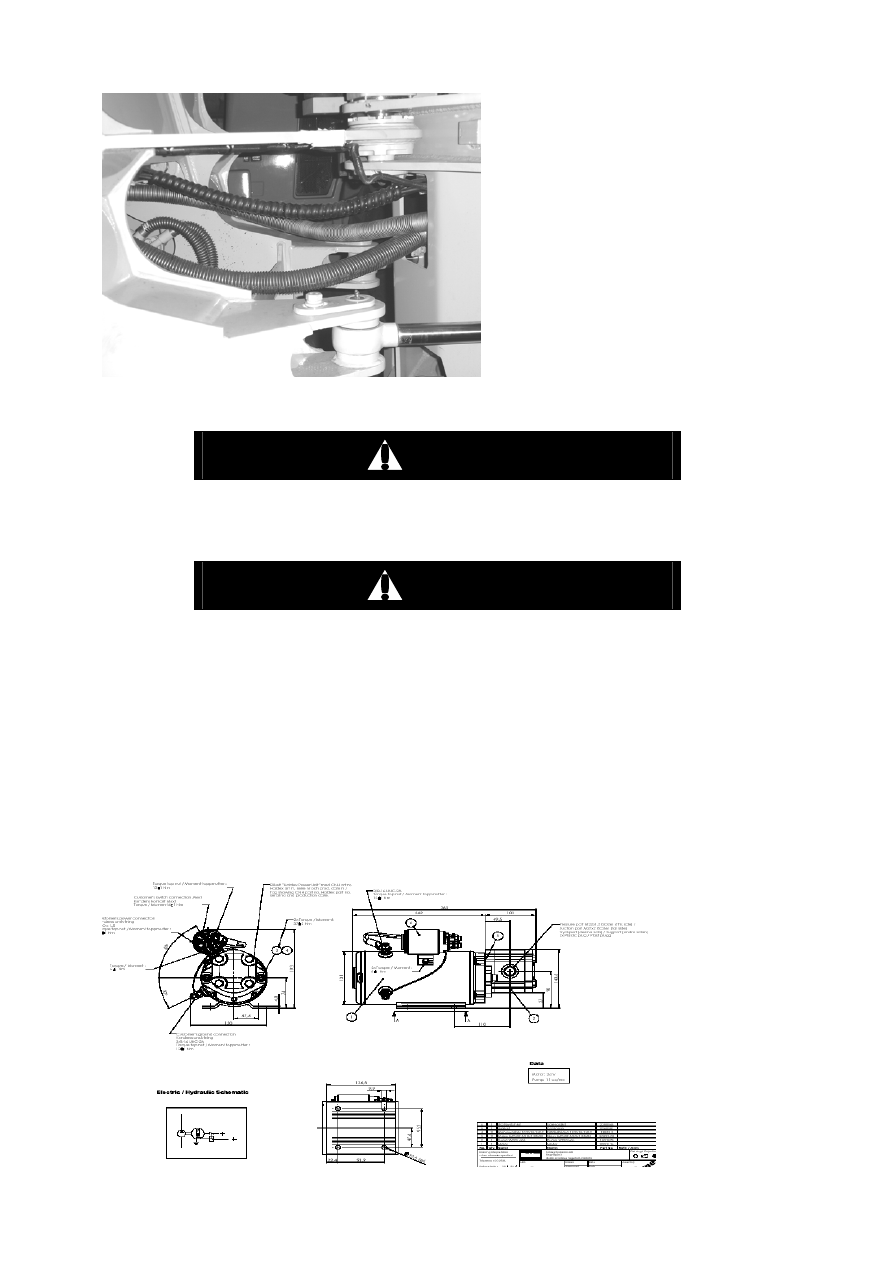
VI. Emergency steering 

S

S

t

t

e

e

e

e

r

r

i

i

n

n

g

g


s

s

y

y

s

s

t

t

e

e

m

m


f

f

e

e

a

a

t

t

u

u

r

r

e

e

s

s


e

e

m

m

e

e

r

r

g

g

e

e

n

n

c

c

y

y


s

s

t

t

e

e

e

e

r

r

i

i

n

n

g

g


f

f

u

u

n

n

c

c

t

t

i

i

o

o

n

n

.

.


W

W

h

h

e

e

n

n


a

a


s

s

u

u

d

d

d

d

e

e

n

n


f

f

a

a

i

i

l

l

u

u

r

r

e

e


o

o

c

c

c

c

u

u

r

r

s

s


t

t

o

o


s

s

t

t

e

e

e

e

r

r

i

i

n

n

g

g


p

p

u

u

m

m

p

p

,

,


e

e

t

t

c

c

.

.

,

,


p

p

r

r

e

e

s

s

s

s

u

u

r

r

e

e


i

i

n

n


s

s

t

t

e

e

e

e

r

r

i

i

n

n

g

g


s

s

y

y

s

s

t

t

e

e

m

m


d

d

r

r

o

o

p

p

s

s


q

q

u

u

i

i

c

c

k

k

l

l

y

y

,

,


a

a

n

n

d

d


t

t

h

h

e

e


e

e

m

m

e

e

r

r

g

g

e

e

n

n

c

c

y

y


s

s

t

t

e

e

e

e

r

r

i

i

n

n

g

g


i

i

s

s


a

a

u

u

t

t

o

o

m

m

a

a

t

t

i

i

c

c

a

a

l

l

l

l

y

y


s

s

t

t

a

a

r

r

t

t

e

e

d

d


w

w

h

h

e

e

n

n


t

t

h

h

e

e


p

p

r

r

e

e

s

s

s

s

u

u

r

r

e

e


d

d

r

r

o

o

p

p

s

s


t

t

o

o


2

2


M

M

p

p

a

a


(

(

2

2

0

0

k

k

g

g

)

)

.

.


E

E

m

m

e

e

r

r

g

g

e

e

n

n

c

c

y

y


s

s

t

t

e

e

e

e

r

r

i

i

n

n

g

g


p

p

o

o

w

w

e

e

r

r


u

u

n

n

i

i

t

t

:

:


m

m

o

o

d

d

e

e

l

l


n

n

u

u

m

m

b

b

e

e

r

r

:

:


1

1

1

1

5

5

5

5

1

1

-

-

0

0

0

0

,

,


a

a

s

s


s

s

h

h

o

o

w

w

n

n


i

i

n

n


t

t

h

h

e

e


f

f

i

i

g

g

u

u

r

r

e

e


b

b

e

e

l

l

o

o

w

w

.

.


- 81 - 


F

F

l

l

o

o

w

w


c

c

u

u

r

r

v

v

e

e


The ascending flow curve allows emergency steering system to have adequate steering power and velocity. 

Steering control components is able to turn from neutral position to the position of steering angle measured 

in B.3.2 (i.e. 38º/2=19º) in 6 seconds after the operation begins. Forward velocity should be kept at 

(10±2)km/h, and steering control force should not exceed 350N. 


VII. Pipelines 

Pipelines in hydraulic system are mainly used to connect various components for transferring energy. 

Adequate strength is the basic requirement on pipelines to stand the highest impact pressure and working 

pressure of the system. Joints between pipelines and components should be reliably sealed free of leakage 

and looseness. 


IMPORTANT 

Pipelines must be cleaned before installation to remove any rusts, impurities, dusts, water and other 

liquids in it. 


- 82 - 

CAUTION 


Eliminating internal pressure of pipeline system 

Turn off engine and then turn steering wheel leftward and rightward for several times to eliminate 

internal pressure of pipeline system. 

Hydraulic oil leakage in pipelines may cause accident and leads to personal injury or death. Leaking 

pipeline is damaged and should be replaced. When replacing pipeline, first eliminate (release) pressure 

and cool down hydraulic oil (to a safe degree) before the replacement is made. 


VII. Lubrication 

Lubrication of front and rear cylinder pins: apply lubricant with a grease gun at the position shown in the 

figure. 

VIII. Troubleshooting of hydraulic steering system 

Failure Symptoms 

Causes 

Solutions 

Dirt on joint faces 

Check and clean joint faces 

Shaft sealer ring damaged 

Replace sealer ring 

Oil leakage 

Leakage on joint faces of parts 

Leakage at front cover 

Leakage at screws 

Insufficient tightening torque of 

screw 

Tighten screw 

Steering is heavy in fast turning 

and light in slow turning 

Insufficient oil supply 

Check pump and priority 

steering control valve 

Oil cylinder crawls with irregular 

noise and bubbles in oil 

Air in steering system 

Eliminate air in steering 

system and check pump inlet 

for leakage 

Heavy steering, and no steering 

cylinders do not work 

Manual steering check valve 

failure 

Check for existence of steel 

ball and jam by dirt 

Heavy 

steering 

Oil cylinders do not work 

Leakage at FK overload valve or 

in cylinder 

Replace FK combination 

valve and check cylinder for 

internal leakage 

- 83 - 

Light steering with zero load and 

heavy steering with heavy load 

FK safety valve leakage or safety 

valve spring failure 

Replace FK combination 

valve 


Heavy steering 

High hydraulic oil viscosity 


No opposite rotation 

Spring leaf failure 

Replace spring leaf 

Marked increase of pressure 

runout, and even steering failure 

Bent or broken key, crack in 

universal driving shaft keyway 

Replace key or universal 

driving shaft 

Steering 

malfunction  Opposite rotation or wagging of 

steering wheel immediately after 

steering 

Misplacement of universal 

driving shaft and rotor 

Reassemble 

No manual 

steering 

Cylinder piston reaches limit and 

no sense of steering dead end in 

power steering, steering cylinders 

do not work in manual steering 

Large radial or axial clearance in 

stator and rotor 

Replace stator and rotor 

Steering is 
normal in 
slow 
turning and 
heavy in 
fast turning 

Steering is normal in slow 
turning and heavy in fast turning 

(1). Insufficient oil supply from 
oil pump 
(2). Large pressure loss between 
priority valve and steering gear 
(3). Priority valve plug blocked 
(4). Air in control oil circuit 
between priority valve and 
steering gear 

(1). Repair or replace oil 
pump 
(2). Use a priority control 
spring with larger control 
pressure, or redesign pipeline 
with an externally controlled 
priority valve 
(3). Turn steering wheel to 
reach dead end and then keep 
turning to open steering 
safety valve for air 
elimination 

Irregular 
noise and 
bubbles in 
oil 

Irregular noise and bubbles in oil, 
intermittent working of cylinder 
in steering 

Air in steering system 

(1). Check oil level and add 
oil to oil tank 
(2). Check air intake pipeline 
for air leakage and repair 
(3). Eliminate air in steering 
system 


Content   ..  17  18  19  20   ..