Duramax Diesel. Manual - part 12
 

  Index      Engines     Chevrolet / GMC Duramax Diesel - service manual 2017 year


Search            


Content   ..  10  11  12  13   ..


Duramax Diesel. Manual - part 12


Driving and Operating

47

Brakes

Exhaust Brake

The exhaust brake can be used to
enhance the vehicle brake system
and reduce brake lining wear.

Downshifts may be automatically
selected to increase engine speed,
which increases the effectiveness of
the exhaust brake. The number of
downshifts selected is determined
by the length of time the brakes are
applied and the rate the vehicle is
slowing. The system delivers the
correct amount of braking to assist
in vehicle control. The heavier the
vehicle load, the more active the
engine exhaust brake will be. Use of
the exhaust brake will help maintain
vehicle speed when used with
cruise control. See “Cruise Control”
in the owner manual.

Automatic downshifts will not occur
if the vehicle is in Range Selection
Mode. See “Manual Mode” in the
owner manual.

The exhaust brake only activates
when the transmission torque
converter is locked. This can vary
based on vehicle speed, gear,
and load.

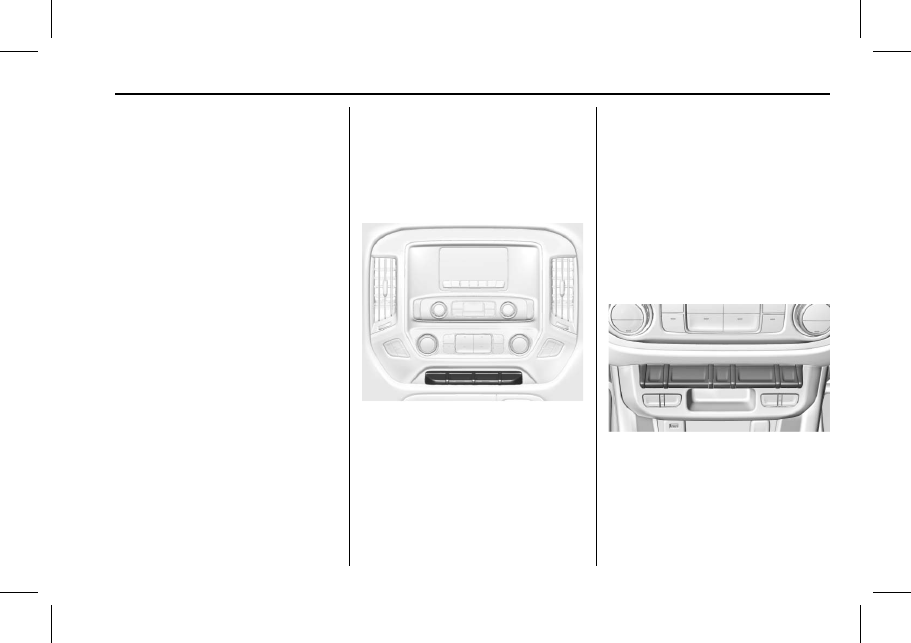
To activate the system, press the
switch on the center stack.

8-Cylinder Pickups

For 8-cylinder pickups, use the
exhaust brake switch. A light in the
switch will come on when the
exhaust brake is activated. The
switch must be pressed at each
vehicle start for the system to be
active.

The Driver Information Center (DIC)
displays the message EXHAUST
BRAKE ON for approximately
three seconds, then clears.

To turn the brake off, press the
exhaust brake switch a second time.
The DIC displays the message
EXHAUST BRAKE OFF for
approximately three seconds, then
clears.

The exhaust brake will be more
active when in Tow/Haul Mode.

4-Cylinder Pickups

48

Driving and Operating

4-Cylinder Vans

For 4-cylinder pickups and vans, the
exhaust brake is activated when
Tow/Haul Mode is activated. See
“Tow/Haul Mode” in the owner
manual.

A light comes on in the instrument
cluster when the exhaust brake and
Tow/Haul are activated. The switch
must be pressed at each vehicle
start for the system to be active.

Fuel

Fuel for Diesel Engines

The selection of a high quality fuel
is important for maintaining optimum
performance. Do not use diesel fuel
with more than 15 ppm sulfur
content. Do not use a diesel blend
containing more than 20% biodiesel
by volume. Both diesel and
biodiesel blends must meet all the
requirements as defined in the most
current versions of the local fuel
standards. See the recommended
fuels under What Fuel to Use in the
U.S. 
49 
and What Fuel to Use in
Canada 
49.

Caution

Engine damage may occur if
recommended fuels are not used,
which may void the vehicle
warranty. Some improper
fuels are:

.

Diesel fuel with the addition
of gasoline.

(Continued)

Caution (Continued)

.

Diesel fuel mixed with
engine oil or automatic
transmission fluid.

.

Triglyceride fuels, such as
raw vegetable oil or animal
fat, in any form, including
with blends of diesel or
biodiesel.

.

Marine diesel fuel and
fuel oils.

.

Diesel-water emulsions,
such as Aquazole™.

.

Aftermarket diesel fuel
additives, which contain
alcohols, organo-metallic
additives, or water
emulsifiers.

.

Diesel fuel with sulfur
greater than 15 ppm.

.

Diesel-biodiesel blends not
within the required
specification.

Driving and Operating

49

Some conditions, such as dirty fuel,
may decrease fuel filter life and a
CHANGE FUEL FILTER message
may come on in the Driver
Information Center (DIC).

What Fuel to Use in
the U.S.

Use of diesel fuel with ultra low
sulfur content (15 ppm, maximum) is
required. Look for service station
fuel dispensers with this label in
green:

Use diesel fuel that meets ASTM
specification D975, Grades No. 2-D
or No. 1-D S15, also known as Ultra
Low Sulfur Diesel. Contact a fuel
suppler for any questions.

Caution

Use of diesel fuel other than Ultra
Low Sulfur Diesel (15 ppm sulfur
maximum) will cause damage to
the exhaust after-treatment
system. This damage would not
be covered by the vehicle
warranty. Do not use marine,
locomotive, or boiler distillate fuel
since it may contain higher sulfur
levels.

Diesel Fuel Grades

For best results use No. 2-D diesel
fuel year-round because it is
blended for seasonal temperature
differences, both above and below
freezing conditions. No. 1-D diesel
also meeting ASTM International
D975 fuel can be used in very cold
temperatures (below −18 °C or
0 °F); however, it will reduce power

and fuel economy. Avoid using No.
1-D diesel fuel in warm or hot
climates. It can result in stalling,
poor starting when the engine is hot,
and damage to the fuel injection
system.

Premium Diesel Fuel

Premium Diesel Fuel (FQP-1A)
corresponding to the Engine
Manufacturers Association (EMA)
Recommended Guideline may
provide less noise, better starting,
and better vehicle performance, but
is not required.

What Fuel to Use in
Canada

Use of diesel fuel with ultra low
sulfur content (15 ppm maximum) is
required. Use diesel fuel that meets
CAN/CGSB-3.517 specification in
Canada. Contact a fuel supplier for
questions about fuel.

50

Driving and Operating

Caution

Use of diesel fuel other than Ultra
Low Sulfur Diesel (15 ppm sulfur
maximum) will cause damage to
the exhaust after-treatment
system. This damage would not
be covered by the vehicle
warranty. Do not use marine,
locomotive, or boiler distillate fuel
since it may contain higher sulfur
levels.

Diesel Fuel Types

Fuels are blended for seasonal
changes. Diesel Type A fuel is
blended to ensure vehicles operate
in extreme cold temperatures. This
fuel, however, may cause some
power and fuel economy losses.
Diesel Type B fuel is blended for
higher temperatures experienced
during most of the year. Avoid using
Diesel Type A fuel in warm or hot
climates. Doing so can result in
stalling, poor starting when the
engine is hot, and damage to the
fuel injection system.

Premium Diesel Fuel

If available, premium diesel fuel
(FQP-1A) corresponding to the
Engine Manufacturers Association
(EMA) Recommended Guideline
could provide better starting and
vehicle performance with less noise.

Biodiesel

Biodiesel is a renewable fuel
produced from vegetable oils or
animal fats that have been
chemically modified to make it
compatible with diesel fuel.

Caution

Do not use home-made biodiesel
or home test kits because the
quality cannot be verified by
approved scientific methods. Do
not use raw vegetable oil or other
unmodified bio-oils, fats,
or blends of vegetable oil with
diesel. They could damage the
fuel system and engine, and
damages would not be covered
by the vehicle warranty.

Caution

Do not use blends containing
more than 20% biodiesel. Any
engine, fuel system, or exhaust
after-treatment system damage
would not be covered by the
vehicle warranty.

As a renewable fuel, biodiesel
provides some environmental
benefits. However, biodiesel has
unique properties and needs to be
handled differently than diesel fuel.
Its use presents additional risks and
may not be appropriate in all
situations. Certain vehicle operating
modes increase these risks and
should be avoided. Read further to
determine if your driving habits are
compatible with the use of biodiesel.

Biodiesel fuel quality degrades with
time and exposure to high
temperature quicker than Ultra Low
Sulfur Diesel fuel. More frequent
refueling provides the best
opportunity to have a supply of fresh


Content   ..  10  11  12  13   ..