Military reference books and manuals (2009-2023, Volume 8) - page 34
4-4 ____________________________________________________________________________________________________ MCWP 4-11.9
Items that are not supportable from the Marine
TRANSPORTATION PLANNING
Corps worldwide inventory are considered un-
sourced requirements. Unsourced requirements
should be identified in the TPFDD as shortfalls in
The JMC’s joint munitions transportation coordi-
order to plan movement at a later date if assets
nating activity (JMTCA) analyzes the combined
become available.
munitions requirements of the Services. The JMC
compares the daily offload requirements that are
The PM Ammo will attempt to negotiate whole-
identified in the plan to the Service, depot-level
sale cross-leveling actions prior to procuring
assets; the daily offloading capacity of the depots;
additional assets. Additional assets are procured
the capacities of the road and rail networks that
only if funding and industrial capacity exists to
are to reach the assigned POEs; and the available
facilitate production of new material. It should be
port throughput capacity. The JMTCA ensures
noted that lead times for procurement of ammuni-
that the amount planned for shipment does not
tion can be in the range of 12 to 36 months,
exceed the ability to load and ship at any point.
depending on the item.
The JMTCA works closely with the Services and
the supported CCDRs/JFCs.
Class V(A) Sourcing
The United States Transportation Command
During crisis, conflict, or wartime, a CRC is
(USTRANSCOM) is the distribution process
activated at NOLSC, reporting directly to the
owner for the DOD. The JMTCA works closely
CNO (N411). The purpose of the CRC is to
with USTRANSCOM, as the lift provider, and
facilitate timely sourcing, distribution, and
its components (Air Mobility Command [AMC],
accurate expenditure reporting of naval ordnance.
While crisis action planning is conducted using
Military Sealift Command [MSC], and Military
the same fundamental methods as deliberate
Surface Deployment and Distribution Com-
planning, requisitions in support of the crisis are
mand [SDDC]) to ensure proper transport priori-
immediately processed and sourced. If a
tization and port utilization occurs.
requisition cannot be filled, the CRC will
After all Class V requirements have been sourced
identify shortfalls and provide alternatives to
and the remaining unsourced requirements are
the CNO (N411) and DC for Aviation, Aviation
identified, the data are converted into unit line
Logistics Support Branch. Sourcing decisions
will be made by the CNO (N3/N5), DC for
numbers and entered into JFRG II. When com-
Aviation, and the logistics directorate of a joint
pleted and reviewed, the JFRG II data file is pro-
staff (J-4) as appropriate in consultation with
vided to the component commander so that it can
supported and/or supporting CCDRs and/or
be loaded into JOPES as input to the TPFDD.
JFCs and Navy components.
In order to meet sourcing needs in a crisis, the
TIME-PHASED FORCE
CRC reviews the MUREP that is submitted by
AND DEPLOYMENT DATA
the Navy component in theater, as required by
CJCSM 3150.14B, Joint Reporting Structure—
Logistics. The MUREP identifies critical shortfalls
The TPFDD is a planning database used to
in theater. The CRC/CNO (N411) staff develops
identify, organize, plan, and schedule the
the MUREP and forwards it to J-4. The CRC
movement of forces, equipment, and materiel
utilizes the MUREP to expedite production for
required to support the CCDR/JFC. With specific
critical items, as well as to resolve ordnance
regard to Class V materiel, the TPFDD depicts
allocation issues to mitigate identified shortfalls.
the gross tonnages of Class V that must be
FOR OFFICIAL USE ONLY

Ammunition Logistics__________________________________________________________________________________________ 4-5
MARFOR:
Identity requirements
shortfalls to PM Ammo
PM Ammo:
Source shortfalls against
wholesale and retail inventory
Wholesale Marine Corps
Wholesale and retail assets at
assets at JMC facilities
Navy and Marine Corps activities
JMC Item Manager:
JMTCA:
Conduct workload
Conduct transportation analysis
analysis for all activities
Result:
Result:
Transportation data
Transportation data
PM Ammo (Plans and Execution Team)
Build Unit line number data in JERG II,
pass to MARFOR for JOPES insert
USTRANSCOM:
Conduct full transportation feasibility study
MARFOR:
Submit refined TPFDD
to CCDRs for validation
CCDR/USTRANSCOM:
Validate and allocate lift for TPFDD
Movement phase begins. . .
ULN unit line number
Figure 4-1. Class V(W) Sourcing and Transportation Planning Process.
moved, when the material must be at the POE,
Class V requirements by individual DODIC/naval
and when it must arrive in theater to meet the
ammunition logistics code; identify when the
material is scheduled to arrive; the quantity being
CCDR’s/JFC’s requirements.
moved; and piece detail such as height, weight,
At progressively greater levels of detail, planners
cube, number of pallets or containers. The
and the operating forces can identify specific
transportation agencies and the depots use this
FOR OFFICIAL USE ONLY
4-6 ____________________________________________________________________________________________________ MCWP 4-11.9
information to contract for laborers, trucks,
the deliberate planning process and the
containers, railcars, ships, and blocking/bracing
refinement planning conferences. Requirements
materials that are used to prepare ammunition
are normally adjusted during the refinement
for movement.
conferences due to changes in the availability of
planned forces, force closure timelines, or
Class V planners should refer to CJCSM 3122.02C,
updated threat or branch plan execution. The
Volume III for additional details on TPFDD
CCDR uses the appropriate annex of the
development and maintenance. Planners must
operation plan to establish the commander’s
continuously refine the TPFDD throughout the
intent for support and sustainment of the
deployment process in order to reflect current
ammunition requirements.
information and monitor the status of force
flow execution.
Reports
See MCWP 5-11.1, MAGTF Aviation Planning,
Knowledge of the kinds of data in the TPFDD
for detailed information regarding the processes,
and how the data can be packaged in standard
functions, and responsibilities associated with
or ad hoc reports is critical in order to verify
developing the TPFDD with respect to aviation
and validate a unit’s movement requirements.
logistics and the use of JFRG II/LOGAIS in
Three reports that are commonly used are the
support of aviation logistic force deployment,
summary of forces and deployment data working
planning, and execution.
paper (F11D); the time-phased transportation
The TPFDD is the GCCS portion of an opera-
requirements working paper (F11E-TON[TN]
tion plan that contains time-phased force data,
and F11E-SQUARE[SQ]), and the cargo detail
nonunit related cargo and personnel data, and
working paper report (F11W). Additional details
movement data, and it includes the following:
about these reports can be found in Marine Corp
Reference Publication 4-11.3G, Unit Embar-
z
Units that are in-place.
kation Handbook.
z
Units
(identified by priority) that will be
deployed in support of the operation plan,
Flow Initiation Class V(W)
which indicates the desired sequence of arrival
at the ports of debarkation (PODs).
Upon plan activation, the MARFOR will submit
z
The routing of deploying forces and movement
TPFDD unit line numbers for ammunition
data.
through the JOPES to the combatant/joint force
z
Estimates of nonunit related cargo and
commander. These lift requirements will be
personnel movements that will be conducted
validated by USTRANSCOM. United States
concurrently.
Trasnportation Command will assign lift for iden-
z
Estimates of transportation requirements that
tified requirements and forward this information
must be fulfilled by common-user lift resources.
back to the MARFOR via the JOPES. On valid-
z
Requirements that can be fulfilled by organic
ation by USTRANSCOM, the MARFOR will
or assigned transportation resources.
submit a request to PM Ammo (for Class V[W])
or ASL-30 (Aviation Ordnance) (for Class V[A])
Validation
to activate movement requests by the JMC for
The Services’ transportation requirements are
assets that are stored in single manager depots. A
validated during the TPFDD forces and
sample of this request can be found in the current
transportation feasibility conferences during both
edition of MCO P4400.39H.
FOR OFFICIAL USE ONLY
Ammunition Logistics__________________________________________________________________________________________ 4-7
Planned Class V
offload reports and port loading and shipment
Sustainment Flow Notification
status reports to the MARFOR.
z
NOLSC provides Class V(A) movement notifi-
As the TPFDD is activated and the movement
cations to the MARFOR and other agencies.
phase begins, notification of the current status of
z
MARFOR provides theater logistic agencies
the Class V movements is critical to situational
with updates for estimated arrival dates of
awareness. The focal points for information
planned Class V sustainment and force-held
receipt and dissemination as follows:
assets such as LFORM and MPF. This allows
coordination of transportation and storage
z
PM Ammo provides all TPFDD movement
requirements at the destination as part of over-
status reports for Class V(W) such as depot
all planning efforts.
FOR OFFICIAL USE ONLY
CHAPTER 5
MOVEMENT, MOBILITY, AND
DEPLOYMENT OF CLASS V MATERIEL
A central concept in the national military stra-
TRANSPORTATION FUNDING
tegy is strategic mobility. Strategic mobility
includes the ability of the United States Armed
Forces to deploy expeditionary forces, and their
Costs of containerization and movement of Class
supplies and equipment, to any region in the
V assets from the depots to their final destination
world and sustain them for the full range of
are Service-funded. Strategic ammunition move-
military operations.
ment demands levied by the Services must
contain a transportation accounting code or be
Marine Corps forces maintain strategic mobility
accompanied by a DOD Form 448, Military
through the forward deployment of combined
Interdepartmental Purchase Request.
arms capabilities (conventional forces in the form
of MAGTFs), the prepositioning of equipment
and supplies aboard ships at sea and at geoprepo-
TRANSPORTATION
sitioning sites (e.g., MCPP-N [Marine Corps
AND ASSET TRACKING
Prepositioned Program-Norway]), and the rapid
deployability of units by sea and air.
Tracking containers involves the use of RFID
Deployment encompasses all activities from ori-
tags placed on all International Organization for
gin or home station through destination, specifi-
Standardization (ISO) containers, 463L air pal-
cally including intra-CONUS, intertheater, and
lets, and palletized ammunition shipments that
intratheater movement legs, staging, and holding
are being shipped outside the continental United
areas. While the definition is simple, executing
States (OCONUS). Each container must have
deployment of a large force and its accompanying
active RFID tags on them written with content
supplies and equipment, to include the required
level data. Tags will be applied at the point of ori-
Class V materiel, is a complex undertaking. This
gin. All activities, including vendors that fill the
chapter discusses the activities of Class V support
containers or build the air pallets, will apply the
for the deployment of forces such as air contin-
tags in accordance with the current DOD RFID
gency MAGTF, MPF Marine expeditionary bri-
tag data specifications contained in DOD Direc-
gade (MEB), additional MAGTF/follow-on
tive (DODD )4140.1-R, DOD Supply Chain
forces and sustainment, with the exception of
Materiel Management Regulation; Defense
Transportation Regulation 4500.9-R, Part II,
Marine expeditionary units (MEUs). Due to their
Cargo Movement; and Military Standard-129P,
unique character, MEUs warrant a separate dis-
Standard Practice, Military Marking for Ship-
cussion, which can be found in chapter 8.
ment and Storage. Containers and pallets that
Agencies involved in the processes discussed in
have been reconfigured during transit must have
chapter 4 for Class V materiel support planning
their RFID tag data updated to accurately reflect
are the same agencies responsible for the move-
the containers current contents by the organiza-
ment, mobility, and deployment of expeditionary
tion making the change. The RFID tags are not
forces and their supplies.
authorized for use with Class V(A) ammunition.
FOR OFFICIAL USE ONLY
5-2 ____________________________________________________________________________________________________ MCWP 4-11.9
prepositioning ships provide for a fast response
ORGANIZATIONS
by US forces anywhere in the world. The Prepo-
SUPPORTING MOVEMENT OF CLASS V
sitioning Program has strategically located ships
laden with military equipment and supplies for
Class V ammunition represents the single largest
the Army, Marine Corps, Navy, and Air Force.
commodity requiring movement to sustain the
The MSC prepositioning ships are specifically
force. Movement planning and execution requires
designed for transporting Marine Corps supplies
the concerted efforts of a number of organizations.
and equipment. The MPS are divided into three
squadrons. Each squadron carries a preponder-
United States Transportation Command
ance of the material and equipment that is
The USTRANSCOM is one of the nine unified
required to support a notional, brigade-sized
commands and is responsible for providing
MAGTF for up to 30 days.
mobility and transportation services for DOD
components and agencies. The USTRANSCOM
Sealift Ships
is also designated as the distribution process
The Sealift Program is responsible for a fleet of
owner, positioning USTRANSCOM as the single
chartered tankers and dry cargo ships that move
executive agency with management oversight of
DOD cargo during peacetime and war. In
the end-to-end distribution process: from factory
addition, the program oversees the MSC’s
to foxhole.
activation and operation of the other ships that are
maintained in reserve including 8 fast sealift
Air Mobility Command
ships; 11 large, medium-speed roll-on/roll-off
The AMC is the Air Force component of
ships in the MSC’s surge force; and 62 Ready
USTRANSCOM and provides the long-haul stra-
Reserve Force (RRF) ships that are maintained by
tegic airlift that is required by the CCDRs/JFCs.
the US Maritime Administration.
The AMC uses a fleet of aircraft to meet this
The RRF is a fleet of 62 reserve ships that are
requirement. In times of extreme national need,
maintained and crewed by the US Maritime
USTRANSCOM may contract for the services of
Administration. When activated, RRF ships
specific aircraft that is owned by a US entity or
come under the operational control of the MSC.
citizen. This program is known as the civil
The RRF includes government-owned tankers,
reserve air fleet. The level of support requested
crane ships, roll-on/roll-off ships, lighter aboard
by DOD dictates the number of heavy lift civil-
ships, modular cargo delivery system ships,
ian aircraft that are pressed into service for trans-
heavy lift ships, and one troop ship for surge
port of troops and supplies.
sealift requirements.
Military Sealift Command
Military Surface
The MSC is the Navy component of
Deployment and Distribution Command
USTRANSCOM and provides a variety of Ready
The SDDC is the Army component of
Reserve, prepositioning, and commercial shipping
USTRANSCOM that provides global surface dis-
for movement of DOD equipment and supplies.
tribution management and services in order to
meet national security objectives in peace and
Prepositioning Ships
war. The SDDC is a joint-Service, major Army
The successful deployment of US military forces
command and the surface transportation compo-
depends on the ability to act quickly. The MSC’s
nent of USTRANSCOM.
FOR OFFICIAL USE ONLY
Ammunition Logistics___________________________________________________________________________________________ 5-3
Joint Munitions Command
Naval Operational Logistics Support Center
Marine Corps interest in the JMC is related to its
The NOLSC, headquartered in Mechanicsburg,
functions as the field operating activity for the
PA, combines the functions of naval petroleum,
DOD. It is charged with producing, storing,
transportation, and ammunition to provide a com-
maintaining, and demilitarizing common conven-
prehensive operational logistic support command.
tional ammunition for all Military Services.
The NOLSC provides the requisite Class V(A)
support to Marine aviation, in concert with sup-
Marine Corps ammunition is primarily stored in
port provided to Navy component commanders
the JMC’s Tier I depots. The JMC maintains
and the CCDRs/JFCs.
three levels of installations. Tier I activities are
fully staffed and support munitions storage and
The Naval Operational Logistics Support Center
issue for training and war reserve materiel, Tier II
Ammunition (NOLSC AMMO) serves as
activities are partially staffed in peacetime and
NAVSUPSYSCOM’s ordnance ICP and logistic
are used for long-term storage, and the single Tier
support provider for all activities in the Navy and
III activity is minimally staffed and is used for
Marine Corps (aviation) that manage conven-
storage of the DOD excess munitions. Factors
tional ordnance. The NOLSC AMMO develops,
considered in ranking the installations were the
implements, and administers the naval ordnance
capabilities to offload, inspect and test, ship,
stockpile management policy.
store, maintain, and demilitarize ammunition; the
costs of operations; and the location relative to
As discussed in chapter 2, the current Navy,
the training sites and ports.
Marine Corps, and Coast Guard ordnance inven-
tory management systems are evolving into the
Tier I facilities store ammunition for training and
comprehensive OIS that provides critical near
the first 30 days of war reserve ammunition. The
real-time worldwide visibility. The OIS will
following are Tier I ammunition facilities.
improve and simplify the functions of day-to-day
z
East—Blue Grass Army Depot, KY.
ordnance inventory management.
z
East—Crane Army Ammunition Activity, IN.
z
Central—McAlester Army Ammunition Plant,
OK.
MODES OF SHIPMENT
z
West—Tooele Army Depot, UT.
Two modes of strategic transportation are used to
Joint Munitions
move ammunition: air movement and surface
Transportation Coordinating Activity
movement (rail, truck, or ships are modes of
surface movement). Air movements are generally
The JMTCA serves as the joint Service focal
more time-sensitive than surface movements and
point for export munitions ship planning, coordi-
far more constrained. In general, while moving
nation, and execution actions for those munitions
ammunition from CONUS depots to OCONUS,
that are moving aboard common user sealift. The
primary and secondary modes of transportation
JMTCA, under command and control of CG,
will be used. Primary modes generally consist of
JMC, consolidates all of the Services munitions
movement by ship or air, considering that they
requirements into effective and efficient move-
normally make up the preponderance of trans-
ment plans that are designed to provide the joint
portation. Secondary modes usually include
ammunition community’s decisionmakers with
movement by commercial truck or rail from
advanced shipment planning visibility.
FOR OFFICIAL USE ONLY
5-4 ____________________________________________________________________________________________________ MCWP 4-11.9
CONUS depots to the aerial port or seaport of
Surface Movement
embarkation. When planning and executing
Unless a break-bulk requirement exists in support
munitions distribution, each mode of shipment
of surface movement or amphibious operations,
must be considered.
20-foot ISO containers will be the sole movement
mechanism for Class V. Break-bulk cargo,
Airlift
consisting of individual palletized loads, is the
Airlift, as a rule, is seldom used for ammunition
least preferred method because handling times
movement except to expedite delivery of critical
and costs are greatly increased at each trans-
shortfalls. In any case, the most common air
portation node.
movements consist of channel air (via AMC or
Service aircraft) or intertheater airlift (via AMC
or AMC-contract aircraft), including contracted
STRATEGIC AMMUNITION PORTS
carriers. Space and weight limitations have more
of a direct affect on air movements than with sea
There are three ports that have been designated by
movements that utilize the containerized ammu-
USTRANSCOM as strategic ammunition ports to
nition distribution system.
be used during contingencies. They are the
Military Ocean Terminal Sunny Point, NC; the
Strategic Airlift
Military Ocean Terminal Concord, CA; and the
Navy Munitions Command, Detachment Indian
Strategic airlift flights are considered dedicated
Island, WA.
lift, they do not require clearance for explosives
holding areas and are not required to be cleared
Military Ocean Terminal, Sunny Point
by the airlift clearance authority. Typically, at
The Military Ocean Terminal, Sunny Point is
least 15 short tons must be moved in order to
operated by the 597th Transportation Group and
qualify the movement for strategic airlift.
is the only designated East Coast port for strate-
gic movement of ammunition.
Channel Lift
Military Ocean Terminal, Concord
Channel lift for munitions differs from strategic
airlift in the sense that items are shipped on a
The Military Ocean Terminal, Concord is one of
space available basis according to priority. All
two West Coast ports operated by the 834th
munitions awaiting transportation via channel lift
Transportation Battalion and is currently in a
must be coordinated between the Service airlift
reduced operating status. The Military Ocean Ter-
clearance authority, the JMTCA, and the aerial
minal, Concord is not used for routine general
port of embarkation.
cargo movement; instead, it is maintained in
reduced operating status and exercised on a lim-
Ship Movement
ited basis to maintain readiness.
Containerized ammunition distribution using
Navy Munitions Command,
20-foot ISO containers is the preferred method of
Detachment Indian Island
movement for Class V materials via ship since it
facilitates the ease of handling and maximizes
The Navy Munitions Command, Detachment
space utilization aboard ship.
Indian Island is expected to be available for joint
FOR OFFICIAL USE ONLY
Ammunition Logistics___________________________________________________________________________________________ 5-5
transportation operations following Navy ship
maintenance location for Marine Corps pre-
offload. It is capable of supporting simultaneous
positioned ammunition.
break-bulk and container loading operations.
Navy Munitions Command, Detachment Earle
The Navy Munitions Command, Detachment
ADDITIONAL AMMUNITIONS
Earle, NJ is capable of both break-bulk and
PORTS (NONSTRATEGIC)
limited container handling using portable cranes.
Some of the MEU LFORM ammunition is
The following port activities have limited capacity
loaded here.
for Class V operations.
Blount Island Terminal, Jacksonville
Navy Munitions Command,
Detachment Charleston
The Blount Island Terminal, Jacksonville, FL is
operated by the Marine Corps Blount Island Com-
The Navy Munitions Command, Detachment
mand. It is used predominantly in support of
Charleston, SC is used as the throughput port for
MPS, but can also be used for ammunition move-
the Army’s prepositioned assets and as the
ment during contingencies.
FOR OFFICIAL USE ONLY
CHAPTER 6
AMMUNITION/AVIATION ORDNANCE OPERATIONS
This chapter provides a broad understanding of
The NAVELSF consists of Navy cargo-handling
ammunition and aviation ordnance operations.
battalions (NCHBs), Navy air cargo handling
battalion, Navy supply support battalions, Navy
When deploying a MEF-sized MAGTF, person-
ordnance reporting and handling battalion, and
nel are generally flown to the destination with
Navy expeditionary logistics response cell.
their personal equipment and a limited amount of
supplies to sustain themselves for a few days
The NAVELSF battalions that are of interest to
until they marry up with prepositioned supplies
the Marine Corps for deployed operations are the
and equipment embarked on MPS.
NCHB and the Navy ordnance reporting and
handling battalion, and specifically their involve-
ment during Class V operations at the POD/POE
RECEPTION AND STAGING
and related RSOI operations.
When ammunition shipments arrive in the area of
Navy Cargo Handling Battalion
responsibility at the various PODs, they have
The NCHBs load and offload all classes of cargo
completed the travel that is specified in the
except for bulk petroleum. The NCHBs are orga-
TPFDD. Once in theater, the assets are effec-
tively under the control of the CCDR/JFC. In the
nized, trained, and equipped to load and offload
early stages of the campaign, it may be the
Navy and Marine Corps cargo that are carried in
responsibility of Service components to conduct
MPS, container ships, or aircraft in all environ-
their own offload and staging operations until a
ments. This includes the capability to operate
structured theater capability has matured to
temporary ocean or air cargo terminals.
assume general responsibility for the arriving and
departing materiel. This is especially true for
Naval Ordnance
MPS and other afloat-prepositioned assets that
Reporting and Handling Battalion
arrive early in the flow, before theater-level capa-
The Navy ordnance reporting and handling
bilities can be activated. Sufficient ammunition
battalion provides commanders with expedi-
personnel and requisite support gear should arrive
tionary ordnance documentation capability for
in-theater prior to the reception and staging of
Navy munitions, including Class V(A) used by
Class V in order to prepare for ammunition oper-
Marine Corps aviation. They provide a full
ations such as establishing a FASP.
spectrum capability of handling, reporting, and
Naval Expeditionary Logistics Support Force
stowage for palletized and containerized ordnance
and ammunition.
The Naval Expeditionary Logistics Support Force
(NAVELSF) provides expeditionary logistic
Port and Terminal Operations
capabilities to CCDR/JFC, combining active duty
and mobilization ready Navy Reserve forces. The
The SDDC will deploy port and terminal opera-
NAVELSF also provides logistic support during
tions capabilities early in the execution phase.
emergent task force missions, stability operations,
These early arrivals, in concert with NAVELSF
and humanitarian aid and disaster relief operations.
component units, and components of the MLG
FOR OFFICIAL USE ONLY
6-2 ____________________________________________________________________________________________________ MCWP 4-11.9
will form the nucleus of initial reception and
The ammunition and components received are
staging operations.
either containerized, break-bulk, or a combination
of both. The TSAs normally operate in a perma-
Operational Safety Concerns
nent or semi-permanent storage facility that
enables retrograde operations. However, in a
In the case of Class V, it is important to keep the
combat environment, the TSA may be relocated
port area as clear as possible in the event of a
to a field environment where the ammunition
mishap. Class V materiel should not be allowed
stocks are kept in open storage. The CSAs are the
to accumulate in the port operations area. Instead,
primary source of high-tonnage Class V ammuni-
it should be segregated in a separate staging area
tion for an Army division, corps, or similar sized
until determinations can be made for its final dis-
unit. Stockage levels normally range from 10 to
position. Strict adherence to explosive safety
15 days during the initial buildup, to 7 to 10 days
quantity distance (ESQD) criteria is extremely
for sustainment operations. The storage environ-
important to protect these critical stocks in the
ment of the CSA depends on the tactical situa-
event of a mishap. In the early stages of the cam-
tion. The ASPs generally maintain a 1- to 3-day
paign, this will likely remain a Service compo-
supply of ammunition in order meet routine,
nent responsibility until theater capabilities can
surge, and emergency requirements for an Army
be established.
corps, division, or similar sized unit. Unlike the
TSA and CSA, ASP stocks are most often stored
on the ground on unimproved surfaces.
ONWARD MOVEMENT AND INTEGRATION
MOVEMENT
Once the materiel has been identified, the Service
owner determined, and a final destination
selected, the materiel can be forwarded out of the
The movement of personnel, equipment, and/or
port area to transient holding for transportation or
supplies during operations requires an enormous
directly on to its destination. Dispersion of all
amount of planning and coordination. Resources
cargoes to their intended destinations, including
must be balanced against operational require-
Class V, will require use of a significant fraction
ments to determine whether transportation
of the commander’s organic transportation assets,
capabilities are adequate to support and sustain
which is augmented by contracted line haul if
the operation. Transportation security must also
locally available. At this stage, the final desti-
be taken into consideration, to include route
nation is normally the facilities operated by the
selection, sufficient transport assets, communi-
supporting logistics combat elements (LCEs).
cations, security personnel, and sufficient arming.
Logistic units must coordinate security with the
Operating in a joint environment may result in
appropriate supporting units to ensure force pro-
the Marine Corps depending on Army ammuni-
tection. Operational risk management procedures
tion support activities. The three types of Army
must be used in evaluating protective measures
ammunition support activities that receive, store,
necessary to ensure Class V is exposed to the
issue, and maintain conventional ammunition
lowest threat level.
stocks are ASPs, corps storage areas (CSAs), and
TSAs. The TSA carries the largest amount of
Wartime HN support must be considered during
ammunition, followed by the CSA, and then the
movement planning. In many cases, ammunition
ASP. The TSAs receive 100 percent of its ammu-
movement requirements exceed the organic capa-
nition from the POD, whether it is a surface port,
bility of the Service component and wartime HN
aerial port, or logistics-over-the-shore operations.
support must be utilized.
FOR OFFICIAL USE ONLY
Ammunition Logistics___________________________________________________________________________________________ 6-3
described in NAVSEA OP 5, Volume 1, Ammu-
COMBAT LOGISTIC SUPPORT
nition and Explosives Safety Ashore.
DURING AMPHIBIOUS OPERATIONS
The LCE component will establish the FASP at
designated sites. For larger forces and their
Combat logistic support during amphibious oper-
ammunition needs, the footprint of the FASP may
ations basically involves the process of providing
be as large as 2 miles by 1 mile, although terrain
initial supplies and sustainment for the assault
or other operational considerations may dictate a
echelon and assault follow-on echelon as the tran-
smaller area. The following series of figures
sition from the sea-based to shore-based opera-
depict the FASP layout, drilling down from the
tions occur. Each ship participating in offload
ASP to a module, and then down to a cell.
operations requires a well-conceived offload/dis-
charge plan to ensure sustainment is available as
Whether the FASP has one or up to eight storage
required. The conduct and sequencing of the off-
modules, the general layout depicted in the fig-
ure 6-1 will hold true for the external activities
load will, in many cases, be constrained by the
that are collocated with FASP operations.
availability of offload systems. At the landing
points, beach cargo movement will be con-
The sling out area illustrated in figure 6-1, on
strained by the number and availability of beach
page 6-4, requires a 90-foot x 90-foot pad and a
offload points. The RSOI planning is critical for
minimum of 1,800 feet from other ammunition
this stage of landing force operations.
storage. Unserviceable ammunition and captured
enemy ammunition must be segregated at least
2,340 feet from other ammunition storage. The
STORAGE
demolition area must be a minimum of 1,800 feet
from ammunition storage and 2,340 feet from
any other areas. It is important to note that these
Storage planning, once the notional requirements
distances are situationally dependent and driven
are known, is a relatively straightforward matter.
by maximum net explosive weight (NEW) val-
In deployed environments, permanent, earth-
ues. A smaller FASP may never attain the
covered reinforced, concrete magazines are not
250,000-pound per cell threshold that is used to
available, and they cannot be readily constructed.
establish the distances depicted in figure 6-1.
Utilization of hardened structures would also
Each of the storage modules will be comprised of
hinder the force’s ability to displace efficiently.
one to eight storage cells of varying dimensions
The force must plan for a significant deliberate
regarding overall length and width. However, the
engineering effort to construct one or more
critical dimensions for both the outer module
FASPs. The FASP design does not provide the
walls and the individual cell walls within are the
safety margins of error that exist in a permanent
24-foot base and 12- to 15-foot berm height,
depending on the native soil or other amending
storage facility from the risks of propagation by
construction materials. These two-dimensional
fire or explosion in the event of an accident or
characteristics are the principal static safety
enemy action. The FASP uses the guidelines in
feature of the FASP for minimizing risks of
Naval Sea Systems Command Ordnance Publica-
propagation by explosion. Each cell will be rated
tion (NAVSEA OP) 5, Volume 3, Ammunition
for 250,000 pounds of NEW. Using the safe
and Explosives Ashore, Advanced Base, provide
separation distance tables from NAVSEA OP 5,
a level of risk that is acceptable, and manageable
Volume 1, the minimum safe distance for all
when using the storage and handling principles
collocated operations may be calculated.
FOR OFFICIAL USE ONLY

6-4 ____________________________________________________________________________________________________ MCWP 4-11.9
Sling Out
Area
1800 ft
2340 ft
Demolition
Area
Demolition
Area
1960 ft
1800 ft
1800 ft
527 ft
Container
1175 ft
Vehicle
Shuttling
Holding
Area
Area
ASP
Operations
527 ft
1175 ft
Segregation
Area
Figure 6-1. Example for General Layout of the FASP.
Figure 6-2 depicts containerized ammunition
useable for other, unintended purposes. However,
storage, but can just as easily be adapted to bulk
to the maximum extent possible, emptied con-
storage of palletized ammunition once it is
tainers should be staged away from the FASP and
removed from the shipping ISO container. There
marshalled for retrograde or recovery and reuse.
are times when emptied containers become
FOR OFFICIAL USE ONLY

Ammunition Logistics___________________________________________________________________________________________ 6-5
Above Ground Barricaded Magazine Layout
240 ft
3 ft
3 ft
65 ft
Each magazine can hold 60, 20-ft ISO
containers 30 on each side, 3 deep. Each
container is 20 ft long and 8 ft wide. Each
3 ft
above ground magazine is sited for 500,000
lbs NEW.
12 ft
Figure 6-2. Sample Layout of a Storage Cell.
across all functions of Marine aviation. See
AVIATION GROUND SUPPORT
MCWP 3-2, Aviation Operations, for more
detailed information.
Aviation ground support (AGS) consists of
The AGS is the critical component that gives
ground support functions required (less aircraft
Marine aviation its expeditionary capability. The
supply, maintenance, and ordnance) for sustained
AGS consists of numerous ground functional
air operations at forward operating bases and air
capabilities that support the MAGTF aviation
bases. The AGS directly supports employment
assets in austere environments. The subject of
FOR OFFICIAL USE ONLY
6-6 ____________________________________________________________________________________________________ MCWP 4-11.9
general AGS is discussed in great detail in
minutes and ordnance uploading takes up the
MCWP 3-21.2, Aviation Logistics. The follow-
remainder of the time. The overriding factor in
ing paragraphs address Class V interests under
estimating FARP processing time revolves
the umbrella of AGS.
around ordnance requirements. Processing times
depend on environmental factors, aircraft arma-
Aviation Logistic Support
ment, and support personnel proficiency. The
FARP operations should be considered aviation
In addition to the AGS, the ACE will require
operations, while FARP planning, coordination,
aviation logistic support in order to operate ashore.
and executions are logistic responsibilities of the
The MALS and the MAGTF LCE provide
requesting unit.
aviation logistic support capabilities to the ACE.
The MALS provides logistic support, which
The FARPs are not exclusively AGS operations.
includes aviation supply and maintenance support
Other elements of the ACE may also be present,
for the aircraft, aviation support equipment, and
such as Marine wing communications squadron,
aviation armament and ordnance equipment.
Marine air traffic control mobile team, low alti-
Refer to MCWP 3-2 for more information on the
tude air defense, MALS, or Marine aircraft group
role of a MALS in support of Marine aviation. The
or squadron assets.
MAGTF LCE provides logistic support to the
The knowledge and experience in logistics, air-
Marine wing support squadron (MWSS) as
craft refueling, and security resident in the MWSS
required. The MWSS determines, requests, and
make it the ideal source for providing personnel
coordinates logistic support from the LCE, as de-
who will become the second in command of the
scribed in MCWP 4-11, Tactical Level Logistics.
FARP. The FARP officer in charge deconflicts
requirements and interacts with various agencies
Forward Arming and Refueling Points
outside of the FARP such as Marine tactical air
The FARP’s mission is to provide fuel and ord-
command center, direct air support center, low
nance that are necessary for highly mobile and
altitude air defense, and pilots, while the MWSS
flexible helicopter and fixed-wing operations.
representative manages and supervises the activi-
The size of the FARP varies with the mission and
ties internal to the FARP. Refer to Naval Air Sys-
the number of aircraft that require service. Nor-
tems Command Manual 00-80T-109, Aircraft
mally, FARPs are temporary, transient facilities
Refueling Naval Air Training and Operating Pro-
established for a specific duration and mission.
cedures Standardization Manual, for details
The scope of flight operations in the FARP area
regarding FARP operations. The notional FARP
should include, but not be limited to, individual
organization is detailed in figure 6-3.
aircraft, sections, or divisions of aircraft requiring
ordnance and refueling.
Security
The objective of a FARP is to minimize response
Physical security and force protection activities
time and decrease turnaround time in support of
are important components of the FASP and the
sustained operations. Achieving these objectives
FARP operations. Terrain, operational condi-
involves minimizing flight time to and from the
tions, and threat assessment will dictate the secu-
FARP and reducing the refueling time and the
rity provisions that are required. It could,
rearming time within the FARP. Fueling and
however, range from a simple guard post and
arming of assault support aircraft can be accom-
perimeter security, to a full-blown defense in
plished in about 20 to 30 minutes, while process-
depth with guard posts, guard towers, security
ing an attack aircraft may take up to 45 to 50
lighting, and even active patrolling. Munitions
minutes. In both instances, fueling takes 10 to 15
and fuels are the commodities most susceptible to
FOR OFFICIAL USE ONLY

Ammunition Logistics___________________________________________________________________________________________ 6-7
DASC/Marine TACC
FARP OIC/Air Boss
(from requesting unit)
MWSS
MACG
MALS
Security
Detachment
Detachment
Detachment
Force
Fuels
MMT
Ordnance
ARFF
Comm
Maintenance
EOD
LAAD
ARFF air rescue fire fighter
Comm communications
DASC direct air support center
EOD
explosive ordnance disposal
LAAD
low altitude air defense
MACG
Marine Air Control Group
MMT
military movement team
OIC
officer in charge
TACC
tactical air command center
Figure 6-3. Notional FARP Organization.
interdiction by enemy action with potentially cat-
tasked and organized to operate two separate
astrophic results; of the two, munitions are the
direct support ammunition platoons providing
most difficult to reconstitute.
supply point distribution to the supported units
with organic transportation and conducting
mobile combat support operations to the sup-
DISTRIBUTION
ported units without organic transportation. The
general support ammunition company may be
augmented with aviation ordnance personnel
Distribution of materiel to the supported units is a
when providing general support to ACE units.
singularly difficult task, whether distributing the
The MALS provides general support/direct sup-
assets from a central distribution point or making
port to its parent Marine aircraft group and
direct deliveries to the supported units. The gen-
assigned squadrons, and, on order, establishes
eral support ammunition company of the MLG is
and operates the FARP.
FOR OFFICIAL USE ONLY
6-8 ____________________________________________________________________________________________________ MCWP 4-11.9
Distribution Methods
THE MUNITIONS REPORT
The two distribution methods are supply point
distribution and unit distribution.
The MUREP, when activated by the CCDR/JFC
or the joint staff, will be utilized to report the sta-
Supply Point Distribution
tus of Class V from every organization in the
chain of command. Each major subordinate com-
The supply point distribution method is employed
mand will consolidate the MUREP data from
when the supported units are issued supplies from
their subordinate units and forward that consoli-
a central point such as a depot, airhead, naviga-
dated report to higher headquarters. The MUREP
tion head, railhead, or a logistic train site, and
reports requirements, receipts, projected deliver-
then the supported unit moves the supplies using
ies, expenditures, and asset posture in quantifi-
organic transportation.
able terms. This allows the CCDR and/or joint
staff to measure available Class V inventories
Unit Distribution
against requirements in order to assess warfight-
The unit distribution method is employed when
ing endurance and assist logistical decisionmak-
supplies are delivered directly to the supported
ing. The MUREPs are required once daily via
units and the supporting unit provides transporta-
message, or any other practical method, unless
tion. The supported unit is then responsible for
otherwise dictated in local battle rhythms.
internal distribution. The supported unit gener-
ally establishes a basic load ammunition holding
area. These are areas in which a unit can hold
SUSTAINMENT AND RESUPPLY
their assets for immediate internal distribution to
support unit operation. The area can be used as a
The MAGTF Class V sustainment includes
holding area for critical munitions, Security Risks
accompanying supplies and resupply. Accom-
Category 1 and 2 items, and assets above the
panying supplies are an integral part of the
basic load that can be supported by the unit’s
MAGTF logistic load in virtually all situations.
organic transportation assets. Supported units
Operational factors and/or supply availability may
usually prefer the unit distribution method. How-
require readjusting accompanying and resupply
ever, the MAGTF seldom has enough transporta-
balances. The minimum baseline of accom-
tion assets to permit unit distribution to all
panying supplies for a MEF-sized MAGTF is
supported organizations.
historically 30 days. The availability of aviation
ordnance and ground ammunition fluctuates and
Distribution Method Considerations
is theater dependent.
The MAGTF commander usually determines the
Class V Resupply
distribution method used. When supply point dis-
tribution is used, care must be taken not to restrict
Resupply must be planned for and scheduled prior
operations for units with limited organic transpor-
to expending accompanying supplies and to con-
tation. When the MAGTF commander selects
tinue through the entire period as established by
unit distribution, the LCE/ACE commander must
the supported theater CCDR’s/JFC’s guidance.
develop a transportation network from the sup-
ported organization to the rear supply area that
Accompanying supplies are a combination of
does not generate equipment shortages in rear
supplies aboard the MPS, supplies accompanying
areas. In practice, the limited transportation assets
the amphibious forces, and additional items
will compel the MAGTF commander to use a
shipped from CONUS or key locations around
combination of supply point and unit distribution.
the world. The Marine Corps logistic system is
FOR OFFICIAL USE ONLY
Ammunition Logistics___________________________________________________________________________________________ 6-9
designed to support most general MAGTF
under the CCDR/JFC that is responsible for each
requirements from on-hand supplies through the
major operation and campaign that is defined in
LCE as depicted in figure 6-4, on page 6-10. The
DODI 3000.4.
Navy supply system provides aviation-peculiar
The Navy fleet commanders, as logistic agents for
support through the MALS. External support may
be provided to meet the MAGTF requirements.
naval forces, should conduct, in coordination with
Wartime HN support and inter-Service support
the MARFOR, periodic assessments of the CCDR
agreements may also be established.
and/or JFC requirements in support of major oper-
ations and campaigns, small-scale contingencies,
Theater-Level Class V General Support
and current operations/forward presence require-
ments. These assessments compare Class V
To provide operational-level support, the Marine
requirements against inventories and serve as the
Corps component commander may establish a
basis for sourcing ammunition and TPFDD plan-
Marine logistics command (MLC). The MLC is
ning and execution.
responsible for establishing the theater support
structure to facilitate arrival, assembly, and RSOI
Supply Rates
operations. In addition, the MLC could provide
operational logistic support to Marine Corps
Commanders must carefully monitor the pro-
forces as the Marine component commander’s
jected requirements and the available inventory
operational level logistic agency in theater.
compared to actual expenditures in order to
ensure that any potential support shortfalls are
Normally, the MLC mission is assigned to a
identified in a timely manner. In the event that in-
specific MLG. Additional resources may also be
theater assets are insufficient to support require-
assigned—based on the operational situation,
ments, the component commander must deter-
theater geography, and infrastructure
mine the best course of action, which may
requirements—to the MLG for the conduct of
include constrained supply rates.
theater-support logistic operations.
CLASS V EXTERNAL SUPPORT
CLASS V(A) SUSTAINMENT
Even though “arming the force” is a Service
Class V(A) sustainment is based on combat
responsibility, circumstances may create the need
expenditures of the ACE’s generated munitions
for giving or receiving external support. By uti-
requirements. Ordnance personnel in the
lizing common-user logistics, the CCDR/JFC
CCDR’s/JFC’s area of responsibility and the
may produce significant economy of force in
NOLSC AMMO monitor the expenditures and
equipment, personnel, and supplies. The costs
submit requisitions for resupply based on the on-
and benefits of this action must be weighed care-
hand balance of the requirements or new mission
fully against the overall plan, logistics, and inven-
tasking for the ACE.
tory constraints.
Sustainment Planning
Common Item Support
During deliberate planning, each Service’s
Common item support is a CCDR-designated
calculation of the operation plans munitions
inter-Service support agreement or directive
requirements are sourced and entered into the
authority for logistics, tasking one Service
JOPES by the respective Service component
component to provide materiel and/or services
FOR OFFICIAL USE ONLY
6-10 ___________________________________________________________________________________________________ MCWP 4-11.9
CLC
CLC
CLC
CLC
Physical replenishment/evacuation/operational flows
Option based on METT-T and location
CLB
CLB
ESB
(DS GCE)
CLB
TSG
(GS MEF)
CLB
CLC
CLB
(DS MHG)
CLC
MLC
CLC
CLC
(DS ACE)
ASG
TSC
CLB
combat logistics battalion
CLC
combat logistics company
DS
direct support
ESB
engineer support battalion
GS
general support
METT-T
mission, enemy, terrain,
troops available-time available
MHG MEF headquarters group
TSG
theater support group
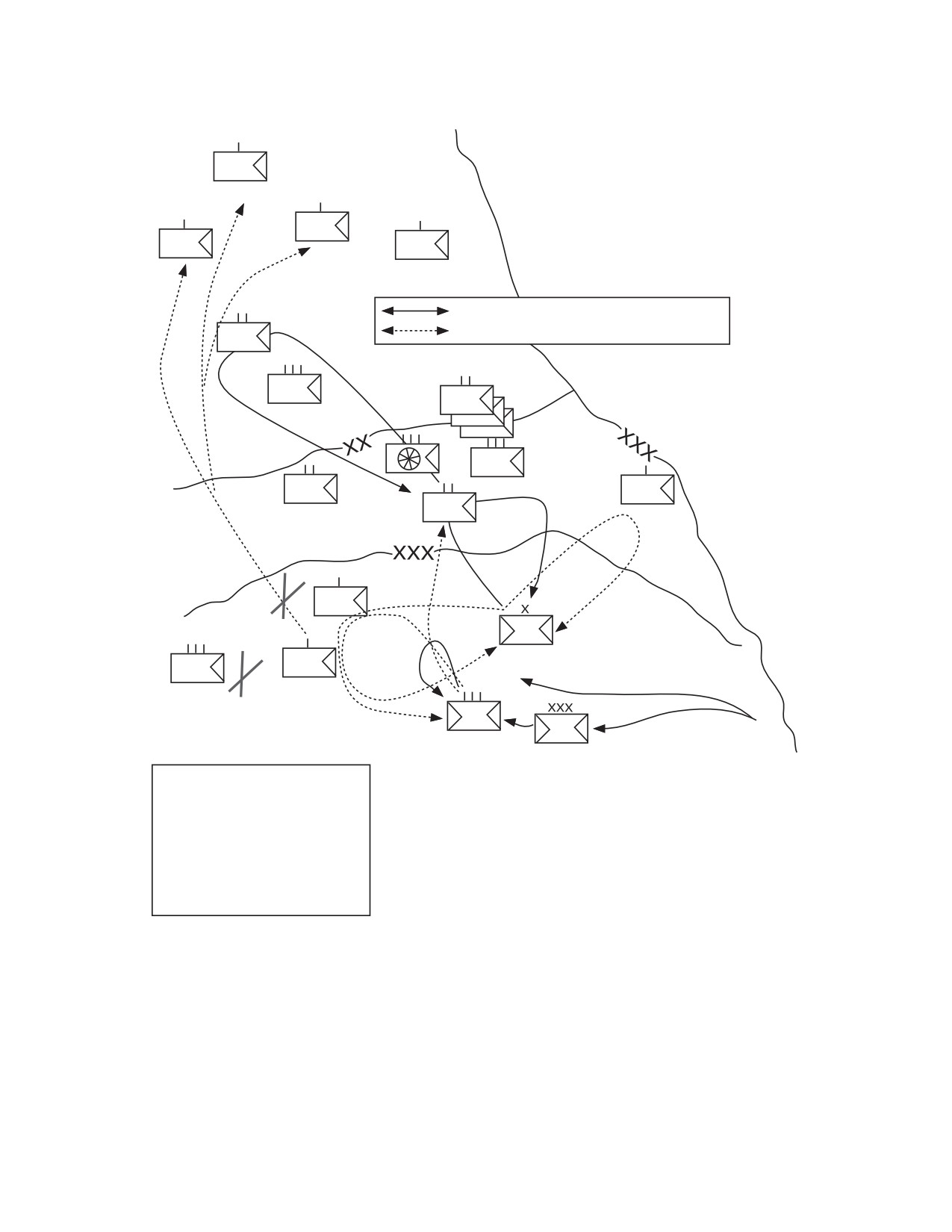
Figure 6-4. Notional Logistical combat Support Concept of Operations.
(such as classes V & VIII [Graves Registration])
ammunition because of the significant com-
and line haul. In the context of Class V, the
monality between Marine Corps and Army
responsibility for providing CIS, when appro-
weapons systems, and it can work reasonably
priate, is generally assigned based on the “pre-
well for rotary-wing attack aviation. Depending
dominant user” concept. In practice, this arrange-
on the scenario, CIS may also be directed for
ment can work well for Class V(W) ground
Class V(A). Regardless of which Service is
FOR OFFICIAL USE ONLY
Ammunition Logistics__________________________________________________________________________________________ 6-11
considered to be the dominant user, CIS must
depleting ammunition stores. Cross-leveling reim-
never be considered as an avenue to circumvent
bursement generally occurs in theater.
Service-level logistic responsibilities.
Common item support is accomplished to reduce
redundancy and identify a single source provider
Cross-Service Support
for specific services and material in a designated
Cross-Service support is appropriate when DOD
area of operations. Common item support reim-
procedures for CIS or inter-Service support
bursement occurs at the Service level.
agreements already exist. The CCDRs/JFCs
have directive authority for logistics by which
Class V(A) and Common Item Support
they may authorize cross-Service support within
their theater.
Since Class V(A) aviation ordnance used by the
Marine Corps is owned, managed, and procured
Coalition, bilateral, and/or HN support agree-
by the Navy, CIS exists by default. Once initial
ments authorize specified support across national
and sustaining supplies of Class V(A) have been
lines. The component commanders coordinate
exhausted, the Navy component commander may
requests for cross-Service or cross-national
proportionally reallocate theater naval assets until
logistic support.
resupply can be achieved.
Common Item Support Versus Cross-Leveling
Additionally, where appropriate, CIS can be insti-
tuted between Army, Navy, Marine Corps, or Air
Common item support and cross-leveling are
Force components or coalition forces depending
both functions of cross-servicing by one Service
on aircraft compatibility with the available
component command in support of another for
ordnance and the mission to be flown. However,
which reimbursement is required from the
the potential availability of CIS for Class V at
Service receiving support. However, CIS and
some future point in time does not relieve com-
cross-leveling are not synonymous.
manders of the obligation to plan for their initial
Cross-leveling is conducted to mitigate the effects
and sustaining requirements during the early
of local inventory imbalances, to support immedi-
stages of a campaign or operation: this remains a
ate operational necessity, and to reduce the risk of
Service responsibility.
FOR OFFICIAL USE ONLY
CHAPTER 7
RETROGRADE OPERATIONS
Class V retrograde operations are the directed,
GENERAL RETROGRADE PLANNING
organized movement to the rear or away from the
enemy. Retrograde is complex, requiring detailed
Retrograde operations must be included in the
planning and considerable in-theater resources.
initial planning of every exercise/operation, not
Retrograde operations are broken down into three
when the exercise/operation is drawing to a close.
separate and distinct operations, with different
Planning and responsibility for retrograde
end objectives: redeployment, reconstitution, and
operations is a Service component responsibility,
regeneration (R3).
in conjunction with theater support agencies if
z
Redeployment is the transfer of Class V in
they are available, and is based on the mission
order to support other operational requirements
requirements and the characteristics of the force
to be supported.
or to return it to the home station/depot.
z
Reconstitution is the action taken to restore
In order to conduct effective retrograde opera-
units to a desired level of combat effectiveness
tions, leaders must enforce supply discipline at
commensurate with mission requirements and
the time of issue to the supported units and during
available resources. In the case of Class V, it is
the initial unpacking. This includes the salvage
generally the restoration of assets to a suitable
and maintenance of the packing materials that are
state for re-embarkation.
going to be used in retrograde. Tremendous
z
Regeneration is the rebuilding of a unit through
resources are required in order to restore and re-
large-scale replacement of personnel, equip-
package ammunition. Besides organic assets,
contractor and HN support may be required.
ment, and supplies. Class V regeneration is a
continuation of the reconstitution effort and
Before R3 operations begin, and while the com-
involves the restoration of prepositioned muni-
bat operations are still ongoing, logistic planners
tions to a suitable state for re-embarkation and
monitor the levels of munitions in the theater.
return to their normal duty station to resume
Maintaining situational awareness of munition
routine operations. These activities apply to the
levels in the theater serves multiple purposes;
MPS supplies and equipment, the LFORM, and
among them, enabling estimation of the packing
the MLA for the embarked MEU assigned to
materials that are needed to retrograde munitions.
the expeditionary strike group.
The majority of R3 operations will frequently
occur at the farthest points forward, generally
In most cases, these three functions of retrograde
where the supported unit has conducted their
will often operate concurrently and at multiple
turn-in. The R3 operation will become pro-
locations. Some locations will process ground
gressively more sophisticated as materiel moves
ammunition or aviation ordnance exclusively.
farther to the rear, through the ASP/FARP and
Others will run combined operations, especially
other storage activities, to a theater depot or port,
those that are closest to the consolidation points
and onward to a CONUS/OCONUS depot or
supporting the POE.
MPF/CLF shipping, as appropriate. To ensure
FOR OFFICIAL USE ONLY
7-2 ____________________________________________________________________________________________________ MCWP 4-11.9
compliance with storage and transportation regu-
diminish. In that state, it is easy to allow
lations, load drawings for the containerization of
complacency to set in. Leaders must enforce
Class V items can be found at the JMC Defense
safety discipline during all ammunition opera-
Ammunition Center Web site.
tions, including unpacking, restoration, repacking,
and retrograde.
The R3 planning incorporates a vast array of crit-
ical issues and concerns. One of the key issues
planners must address during the initial phases is
CONDITION OF MUNITIONS
how to recover and retrograde ammunition that
remains after the operation or exercise ends. Dur-
For planning purposes, the MARFOR com-
ing past operations like Operations Desert Shield,
mander must consider the following assumptions
Desert Storm, Joint Endeavor, and Iraqi Freedom,
about the condition of munitions under the con-
significant amounts of munitions were requisi-
trol of the supported forces:
tioned and issued to the deploying forces. A large
part of these munitions were not expended and
z
Munitions have been removed from the
the retrograde stockpile that resulted placed an
original packing and are no longer in pristine
enormous strain on the ammunition support sys-
condition.
tems of all the Services.
z
The supported units have not retained packing
or packaging materials.
The R3 plans differ significantly from movement
z
All Class V assets will require a serviceability
plans that are made before leaving CONUS. Per-
inspection, including the assets that are in con-
sonnel, time, equipment, and materiel become
tainers, to ensure that the load is secured prop-
more important when the main effort is directed
erly with blocking and bracing.
at retrograding and reconstituting personnel and
z
All of the Class V assets that are removed from
equipment to CONUS and munitions and equip-
the containers for storage or issue to the
ment to MPF shipping and other storage sites as
supported units must undergo formal sen-
quickly as possible. At a minimum, planners
tencing to assign an appropriate condition code
should consider the following:
for the purpose of transportation. The governing
directives for this process are NAVSUP P-805,
z
Begin planning for Class V-related retrograde
Navy and Marine Corps Conventional Ammu-
operations as early in the deployment as
nition Sentencing Receipt, Segregation, Storage
possible.
and Issue Sentencing, and NAVSUP P-807,
z
Plan for a retrograde process that promotes
Navy and Marine Corps Conventional Ammu-
consolidation of Class V materiel at logical
nition Sentencing-Fleet Sentencing, Volume 3.
points to return to one or more central pro-
cessing sites for preparation, loading, and
eventual shipping.
FUNCTIONAL CONSIDERATIONS
To ensure that all facets of retrograde planning
OPERATIONAL SAFETY
are addressed, all of the retrograde plans should
include the following:
Safety is a fundamental concern during all
ammunition logistic operations. The specter of
z
Assign specific responsibilities of the
preventable noncombat casualties resulting from
MARFOR headquarters, MLC or LCE, sup-
improper handling and repackaging of munitions
porting ammunition units, and supported units.
is never acceptable. At the conclusion of opera-
z
Establish reporting requirement and capabili-
tions following a major deployment, there is a
ties for packaging, storing, consolidating, and
natural tendency for operational urgency to
security.
FOR OFFICIAL USE ONLY
Ammunition Logistics___________________________________________________________________________________________ 7-3
z
Obtain and provide empty storage containers,
During the various stages of buildup and actual
as well as other materials that are needed to
conflict, arrangements must be made for the
build and repair pallets and containers.
recovery and storage of packing materials. These
z
Form retrograde planning cells.
materials can occupy an extraordinary amount of
z
Identify special requirements for the classified
space. They can be backhauled to a central loca-
munitions, munitions assigned Controlled
tion or stored in a separate area near the CSA or in
Inventory Item Code (CIIC) Categories I and II
any other area having the capability and capacity.
or critical sensitive items.
z
Contact the appropriate ICP to request special-
Visibility and Accountability
ized teams of personnel that will assist in retro-
If the supported unit has not established Class V
grade planning and operations.
visibility and accountability while in possession of
z
Assign responsibilities for recovery of packing
the ammunition, then it must be established at the
materials.
ASP/FARP level where assets have been turned
z
Prepare for possibly significant disposal
in. This is most particularly true with CIIC I and
efforts.
serial controlled munitions. Accountability prob-
z
Develop plans that define the expected retro-
lems are exacerbated with the commencement of
grade procedures. These plans must identify
hostilities; however, as much as possible, visibil-
tasks required to return ammunition to its
original packing configuration or some other
ity of packing materials must be maintained as
authorized configuration.
diligently as possible. If this is done succesfully,
shortages will be easier to identify and correct.
Retrograde Operations
Segregation and Inspection
Upon completion of military operations or field
At the segregation area, unexpended ammunition
training exercises, the tedious job of collecting,
is identified and segregated by type and lot num-
identifying, preparing, repackaging, loading, and
ber, checked for nonstandard or hazardous condi-
shipping the ammunition begins. These tasks
tions, and repacked or palletized and stored
commence the redeployment, reconstitution, and
consistent with separation distances required by
regeneration processes and signal the start of the
NAVSEA OP 5, Volume 3. In established the-
munitions retrograde program within the Class V
aters of operation, qualified QA personnel con-
community. During retrograde operations, the
duct surveillance activities. These personnel
supporting ASP/FARP may also continue to pro-
inspect and classify ammunition and its compo-
vide munitions to residual security forces while
nents during movement, storage, and mainte-
relocating the excess to the MLC ammunition
nance operations. They also inspect equipment,
storage area, other designated ASP, or theater
facilities, and operating procedures. A desig-
support activities.
nated inspector will visually inspect opened
The following factors should be taken into consi-
ammunition containers and determine the ser-
deration before actual retrograde operations begin:
viceability of both the ammunition and its con-
tainers. Additionally, inspectors must check for
z
Availability of facilities.
compatibility and ammunition in a hazardous
z
Availability of shipping points from the
condition. Added precautions should be taken
theater.
when handling munitions not factory packed;
z
Availability of HN and logistical support.
especially depleted uranium. See Technical Bul-
z
Availability of qualified Navy and Marine
letin 9-1300-278, Guidelines for Safe Response to
Corps quality assurance (QA) and QE personnel.
FOR OFFICIAL USE ONLY
7-4 ____________________________________________________________________________________________________ MCWP 4-11.9
Handling, Storage, and Transportation Acci-
understand the scope of work necessary to com-
dents Involving Army Tank Munitions or Armor
plete the mission. Security personnel should
Which Contain Depleted Uranium.
thoroughly screen HN personnel to ensure that
the appropriate clearances are granted.
Packaging and Packing Materials
Safety
When retrograded munitions reach the desig-
nated ASP, they have to be accounted for, cleaned
During retrograde operations, leaders must
ensure safety policies and procedures are care-
to the extent practicable, reconfigured, repack-
fully observed. Safety policies and procedures
aged, inspected, and assigned a condition code.
must address—
Generally, the packing materials that are used by
opposing forces should not be used; munitions
z
Complacency that accompanies a general sense
can be misidentified and usually are not of the
that the operation is concluding may cause
proper size or quality for US items. However,
Marines to become inattentive and careless.
these materials can be used for retrograde of cap-
z
The collection of battlefield souvenirs may
tured enemy munitions and weapons. Packing and
include unexploded ordnance and should be
packaging of these munitions for transportation
explicitly prohibited and rigorously enforced.
must meet or exceed the DOD transportation stan-
This sort of preventable transgression presents
dards that are required for US munitions. Return
extreme unwarranted hazards to personnel,
of captured munitions or weapons should be a rig-
property, and transportation assets.
idly controlled process, with a single authority,
z
Taking shortcuts to avoid established safety
and only done when it serves an explicit purpose,
procedures may result in serious injury when
such as foreign intelligence collection.
processing and handling ammunition and
explosives (A/E).
Unserviceable Munitions
z
Once the ammunition has been properly
inspected, repaired, repackaged, and sentenced
During retrograde operations, unserviceable
as serviceable or unserviceable by QA/QE per-
munitions are typically destroyed in the HN
sonnel, it must be retrograded from the theater
rather than repatriated. The responsible support-
or applied to reconstitution efforts.
ing ammunition unit will request disposition
instructions before destroying the munitions,
unless the munitions are in a hazardous or unsafe
DESTRUCTION OF AMMUNITION
state, requiring immediate disposal. Also see
appendix B for additional information regarding
Commanders must follow applicable safety and
environmental issues that must be considered
environmental regulations when destroying muni-
across the full range of military operations.
tions. The two categories of ammunition destruc-
tion are routine and emergency.
Other Considerations
Captured enemy ammunition will follow the
Routine Destruction
same criteria used for US munitions, it must be
Routine destruction occurs during normal day-to-
accounted for, stored, guarded, and kept separate
day operations; for example, the destruction of
from US munitions.
unserviceable ammunition. See appendix B for
additional information. In large part, local
If contractor/HN support is to be used for retro-
mission, enemy, terrain and weather, troops and
grade operations, it must be negotiated early in
support available-time available constraints
the operation. Contractors must know and fully
FOR OFFICIAL USE ONLY
Ammunition Logistics___________________________________________________________________________________________ 7-5
control the destruction of ammunition. However,
be performed after it is inspected. Maintenance
a general plan for the destruction of unserviceable
operations include minor packaging and preserva-
ammunition and captured enemy ammunition
tion operations, such as:
must be prepared for every storage activity. The
z
Cleaning Class V(W) only.
destruction site should be carefully selected so
that explosive fragments, debris, and toxic vapors
z
Minor rust and corrosion repair Class V(W)
do not become a hazard to personnel, materiel,
only.
facilities, or other on-going operations.
z
Repair and replace boxes and crates.
z
Replace or augment packaging
The Marine Corps or Navy DDA must authorize
destruction of unserviceable ammunition, as appli-
z
Restenciling of containers.
cable. Whenever practical, ammunition destruc-
z
Desiccant replacement.
tion operations should be supervised by qualified
explosive ordnance disposal personnel.
The ammunition company of the MLG and the
MALS of the Marine aircraft group do not pos-
Emergency Destruction
sess maintenance capability beyond limited first
Emergency destruction of ammunition prevents
echelon maintenance. All supported units that
the ammunition from being captured by enemy
have ammunition on hand should perform lim-
forces. Only the division, wing, and MLG com-
ited organizational maintenance with technical
manders and above have the authority to order
assistance from the supporting ammunition units.
the emergency destruction of ammunition. This
authority may be delegated to subordinate com-
Ammunition units will perform packaging and
manders. Technical Manual 43-0002-33,
preservation operations as required, to prevent
Destruction of Conventional Ammunition and
further ammunition deterioration. If added main-
Improved Conventional Munitions (ICM) to Pre-
tenance is required, it will be accomplished as
vent Enemy Use, is the technical reference for
determined by on site QA/QE personnel or higher
emergency destruction of ammunition.
headquarters. Supporting ammunition units
If it is necessary to conduct emergency destruc-
should be prepared to perform as much packaging
tion operations, the ammunition must be ren-
and preservation as possible in order to maintain
dered unserviceable. When possible, emergency
ammunition in a serviceable condition. In most
destruction should be planned and conducted to
cases, ammunition that requires maintenance or
impede enemy troop movements without creat-
repair that is beyond local capabilities is usually
ing hazards to friendly troops.
considered unserviceable and will require evacua-
The first priority for emergency destruction is
tion or retrograde to a depot or local destruction
classified ammunition and its associated docu-
point if it is determined by higher headquarters to
mentation. The second priority is ammunition
be uneconomical to repair.
that the enemy could immediately use against
friendly forces, such as hand grenades, land-
Ammunition reported as unserviceable should be
mines, surface-to-air missiles, or small arms.
conspicuously marked and segregated pending
final disposition. Ammunition that is sentenced to
condition codes that are uneconomically repair-
AMMUNITION MAINTENANCE
able will be stored in a separate, location-pending
disposition. Unrepairable munitions that pose an
To ensure that ammunition is returned to a high
immediate threat may be destroyed prior to the
state of readiness, maintenance must sometimes
receipt of disposition instructions.
FOR OFFICIAL USE ONLY
7-6 ____________________________________________________________________________________________________ MCWP 4-11.9
CIIC II includes high explosives and white
PHYSICAL SECURITY
phosphorous hand and rifle grenades, anti-
tank and antipersonnel mines. It also in-
At the conclusion of combat operations the
cludes the shoulder-launched multipurpose
enemy threat changes. Even though the orga-
assault weapon family of rockets.
nized enemy has been defeated, there will remain
asymmetric threats from pockets of resistance,
guerrilla units, or terrorists that want to continue
TRANSPORTATION AND STORAGE
the fight. Commanders must be mindful and
develop effective physical security plans to pre-
When transporting or storing A/E for retrograde,
vent the capture or destruction of munitions
the precautions and procedures used should
stocks. Follow the general guidance provided by
mirror those established during buildup. Organic
OPNAVINST 5530.14A, Department of the Navy
transportation assets are used to retrograde
Physical Security and Loss Prevention, for physi-
munitions stocks to designated locations. The
cal security of A/E. Commanders must ensure
logistic movement control center (LMCC)
that their unit has developed an effective security
regulates all Marine Corps highway movement
plan based on applicable regulations, command
during the retrograde operation, and it identifies
directives, and the tactical situation. At a mini-
evacuation routes, publishes movement sche-
mum, the plan must include the following:
dules, and designs a transportation circulation
z
Unit mission.
plan. The MARFOR transportation system will
z
Current tactical situation.
be severely taxed by the movement of units,
z
Level of threat expected.
supplies, and equipment; therefore, the LMCC
z
Available resources.
may need to request additional transportation
z
Unit vulnerability.
support from HN assets or theater sources. The
respective Service component and theater
The security plan must consider all aspects of
movement control agency will coordinate with
physical security. These include the following:
MARCORSYSCOM PM Ammo and HQMC,
ASL Aviation Logistics Support Branch for in-
z
Access control.
structions on relocating ammunition to CONUS
z
Guard force operations.
or other theaters for subsequent operations.
z
Personnel screening.
The force movement control center is the MAGTF
z
Document and materiel accountability.
commander’s agency to control and coordinate all
z
Emergency actions.
deployment support activities. It is also the agency
that coordinates with the transportation com-
Particular care must be given to providing
ponent commands—AMC, MSC, and SDDC—of
security for Category I and II munitions items.
USTRANSCOM. When the MAGTF operates as
See OPNAVINST 5530.13C, Department of the
part of a joint force, the force movement control
Navy Physical Security Instruction for Con-
center coordinates with USTRANSCOM via the
ventional Arms, Ammunition, and Explosives
(AA&E), for guidance to properly secure CIIC I
JFC. The JMC coordinates the requirements for
and II munitions.
all Service components.
Note: CIIC I includes munitions, missiles,
An LCE, or its supporting logistic units, orga-
and rockets in a ready to fire configuration.
nizes LMCCs near deploying units. The force
Examples are complete round munitions,
movement control center tasks the LMCC to pro-
such as the Stinger when assembled with
vide organic or commercial transportation, trans-
gripstock, Javelin, and the AT-4.
portation scheduling, materials handling
FOR OFFICIAL USE ONLY
Ammunition Logistics___________________________________________________________________________________________ 7-7
equipment, and other support during marshalling
z
For smaller scale operations, each MAGTF will
and movement. The MLG/LCE can also estab-
activate a unit movement control center to
lish two additional movement control organiza-
coordinate and control movements and move-
tions subordinate to the LMCC to support
ment support.
deployment: the arrival/departure airfield control
group and the port operations group.
Ammunition Supply Points
The LMCC functions as the agency that is
Ammunition supply points are usually the
responsible for executing the MEF surface move-
primary consolidation hubs for returned or
ment control priorities from unit areas to the
backup ammunition storage containers and
aerial and surface POEs and from the aerial and
surface PODs to the unit tactical assembly areas.
packing materials. Also, materials for building or
The LMCC will continue to control all MEF
repairing pallets, aviation ordnance details, and
requirements for intratheater lift, lift support, and
various ammunition and ordnance storage
movement control based on the MEF com-
containers are consolidated at this location.
mander’s priorities of movement through all
operational phases and the eventual redeployment
Retrograde Turn In
of forces.
Supported units will ideally return munitions
When established, the MLC will facilitate
that are identified for retrograde to the ASP that
movement support for the MEF throughout the
originally provided their ammunition support; in
established communications zone.
reality; however, it is unlikely that this will
z
Each element of the MEF MAGTF will
occur because of the dynamics of modern
activate a unit movement control center to
warfare and the mobility of the force. Ulti-
manage organic lift requirements and will
mately, supported units will turn in A/E at the
funnel external requirements to the LMCC for
nearest ASP along the supported unit’s route of
sourcing. Each unit movement control center
exit. The ASP will collect, consolidate, and ship
will execute zonal movement control under the
ammunition as directed.
direction of the LMCC.
FOR OFFICIAL USE ONLY
CHAPTER 8
CLASS V FOR THE MARINE EXPEDITIONARY UNIT
Class V support for the MEU includes all of the
specific mission, including the supplies carried
logistic tactics, techniques, and procedures that
by individuals. Combat loads will differ based
have been discussed in the previous chapters,
on the assigned mission. However, they should
plus shipboard requirements. The guidance,
not exceed the capabilities of the MEU’s
direction, and information discussed in this chap-
organic transportation.
ter may also be applied to any MAGTF afloat.
Prepositioned Emergency Supplies
The commander uses prepositioned emergency
THE MEU AS PART OF AN
EXPEDITIONARY STRIKE GROUP
supplies for replenishment early in the ship-to-
objective maneuver. These supplies are available
on-call for immediate delivery to the units ashore.
When the MEU (special operations capable) is
embarked in an amphibious ready group and com-
Remaining Supplies
bined with robust strike, antiair, antisurface, and
antisubsurface capabilities of cruisers, destroyers,
The remaining supplies are all the MAGTF sup-
and attack submarines, it constitutes a naval expe-
plies that are not included in the combat load or
ditionary strike group. Centered on the proven
the prepositioned emergency supplies. They con-
flexibility and combat power of a combined
stitute the major portion of the supplies that are
amphibious ready group and MEU, the expe-
transported to the amphibious objective area in
ditionary strike group gives the CCDRs/JFCs a
the assault echelon and the assault follow-on ech-
wider variety of options and enables independent
elon. When the tactical situation permits, the
operations in more dynamic environments.
commander uses some of these supplies to build
stock points ashore. The LCE offloads the bulk of
the remaining supplies during the general offload.
LANDING FORCE SUPPLIES
LANDING FORCE
Collectively, LFORM and MLA assets compose
OPERATIONAL RESERVE MATERIAL
the landing force supplies that are required to sus-
tain the assault echelon and the assault follow-on
echelon of the landing force. They include the
Supporting the MEU, LFORM is war reserve ma-
initial supply support required before the arrival
teriel embarked in naval amphibious shipping and
of resupply in the amphibious objective area for
is considered sufficient to sustain the MEU for a
the MEU. Landing force supplies are generally
short period of limited operations, historically
identified as combat load, prepositioned emer-
planned as 15 days. The combat cargo officer em-
gency supplies, and remaining supplies.
barks the following classes of supply as LFORM:
z
I—Rations.
Combat Load
z
III—Petroleum, oils, and lubricants.
A combat load consists of the types and quan-
z
IV—Field fortifications.
tities of supplies that assault forces carry to a
z
V(W)—Ammunition.
FOR OFFICIAL USE ONLY
8-2 ____________________________________________________________________________________________________ MCWP 4-11.9
For Class V(W), it consists of ammunition for all
At the discretion of the numbered fleet com-
table of organization and equipment weapons
mander, additional MLA stocks may be embarked
embarked with the MEU and level-of-effort
in other amphibious task force or accompanying
munitions based on the size of the notional MEU.
CLF shipping, when available. Class V(A)
consists of aviation ordnance for all T/M/S air-
The notional load of Class V for the MEU is gen-
craft embarked with the MEU, both rotary-wing
erally considered to be 15 days based on the guid-
and fixed-wing. The MLA consists primarily of
ance contained in the MCO P4400.39H. Planned
level of effort munitions based on the aircraft
quantities for Class V(W) are contained in the
population and types, aircrew escape systems,
TMR. For Class V(A), the planned quantities are
and cartridge-actuated devices. The planning fac-
identified in the NNOR for the T/M/S of aircraft
tors on which these requirements are based can
that are assigned to the ACE. Actual quantities
be found in the Navy’s prepositioned WRMR for
embarked for the LFORM and the MLA, espe-
the parent MARFOR.
cially ammunition and ordnance items, are often
limited by shipboard storage space, and related
The respective Commander, United States Fleet
safety factors.
Forces Command/United States Pacific Fleet con-
trols allowances. The ship requisitions the MLA
The LFORM Class V(W) is Marine Corps-owned,
from the NOLSC Detachment, Mechanicsburg,
ground ammunition designated to support the
PA and the usual source of supply.
landing force during an actual contingency,
allowances are controlled by the parent MARFOR
Tailoring of the aviation MLA must be coordi-
and requisitioned by the MEF. Tailoring of the
nated with the appropriate numbered fleet com-
types and quantities of Class V(W) LFORM may
mander via the ship’s chain of command. The
be coordinated between the applicable MARFOR
ship’s ammunition administrator is responsible
and amphibious group, as required. The LFORM
for all aspects of the MLA account management.
tailoring must be done prior to the assets being
embarked aboard ships.
GROUND AMMUNITION
With the exception of requisitioning the specific
PERSONNEL AFLOAT
items, the ship is responsible for all other aspects
of the LFORM and its accountability. It is impor-
A military occupational specialty (MOS) 2311
tant to remember that once embarked, the
staff noncommissioned officer typically holds the
LFORM is not under the Marine Corps control
MEU ammunition chief position. The
until released by the numbered fleet commander.
ammunition chief provides Class V(W) related
logistic expertise to the MEU commander,
particularly as it involves issues of safety and
MISSION LOAD ALLOWANCE
compliance with regulatory requirements. This
unique operating environment, from workup
The MLA is Navy-owned war reserve materiel
through deployment, creates a challenge when
embarked on naval amphibious shipping to sup-
managing ammunition assets. The ammunition
port the ACE of the MEU. Historically, the MLA
chief has to be prepared to deal with a wide
15 days of supply is considered sufficient to sus-
variety of situationally-driven ammunition re-
tain the ACE for a short period of limited opera-
sponsibilities in a dynamic environment.
tions. The combat cargo officer embarks Class III
(aviation petroleum, oils, and lubricants) and the
The ammunition chief manages the MEU training
ships weapons department embarks Class V(A)
ammunition allowance and works closely with the
(aviation ordnance) into the MLA.
MEU S-3 and S-4, and MEF G-4 to ensure that
FOR OFFICIAL USE ONLY
Ammunition Logistics__________________________________________________________________________________________ 8-3
the training ammunition requirements are properly
resupply/sustainment and the release of LFORM,
identified and positioned to support the MEU’s
forecasting combat load requirements for each
training objectives. This includes the proper
element of the MEU, and being able to rapidly
forecasting of ammunition training requirements,
determine the requirements for any size force.
requesting generation, and monitoring and
reporting the expenditures of subordinate units.
AVIATION ORDNANCE
The ammunition chief is also the central point of
PERSONNEL AFLOAT
contact within the MEU for all Class V(W) opera-
tions. He provides planning and coordination
The MEU ACE is normally embarked aboard an
between the elements of the MEU and other com-
mands as required to ensure success of operations
aviation-capable ship such as an LHA [amph-
that require Class V(W) support. The ammunition
ibious assault ship (general purpose)] or an LHD
chief also takes the lead on preparing the MEU
[amphibious assault ship (multipurpose)].
SOPs for ammunition operations. The SOPs
Aviation ordnance personnel of MOS 65xx would
should also include knowledge, sources of supply,
be assigned in support of the embarked MALS
and procedures for Class V(W) replenishment.
element for the ACE.
Overarching responsibilities of the MEU ammu-
Marine Corps aircraft squadrons operating from
nition chief include the preparation and embar-
an aircraft carrier would receive support from
kation of Class V(W) in coordination with the
similar entities aboard the carrier. Ordnance per-
ship’s combat cargo officer, QA of ground ammu-
sonnel from the MALS and the aircraft squadrons
nition assets, and preparations for establishing
generally augment the Navy personnel assigned to
operations ashore. This includes, but is not limited
these sections by working collocated in shipboard
to, establishing procedures for requisitioning
spaces to provide the required support.
FOR OFFICIAL USE ONLY
APPENDIX A
CLASS V SUPPORT UNDER UNIFIED ACTION
The term “unified action” refers to the broad
Functional Area
scope of activities taking place within unified
Sometimes a joint force based solely on military
commands, subordinate unified commands, or
functions without respect to a specific geographic
joint task forces under the overall direction of the
area is more suitable to fix responsibility for cer-
commanders of those commands. Within this gen-
tain types of continuing operations. The com-
eral category of operations, subordinate com-
mander of a joint force established on a functional
manders of forces conduct either single-Service
basis is assigned a functional responsibility by the
or joint operations to support the overall operation
establishing authority.
to achieve unity of effort in the operational area.
DIRECTIVE AUTHORITY
SUPPORT RELATIONSHIPS
FOR LOGISTIC MATTERS
A support relationship is established between
Commanders of the combatant commands exer-
subordinate commanders by a superior com-
cise the directive authority for logistics and may
mander when one organization should aid, pro-
delegate the directive authority for a common
tect, complement, or sustain another force.
support capability. The exercise of directive
Support may be exercised by commanders at any
authority for logistics by a CCDR includes the
echelon at or below the level of combatant com-
authority to issue directives to subordinate com-
mand. Several categories of support have been
manders, including peacetime measures that are
defined for use within a combatant command as
necessary to ensure the following:
appropriate to better characterize the support that
should be given. Support relationships may be
z
Effective execution of approved operation
plans.
categorized as general, mutual, direct, and close.
(Additional information on these relationships
z
Effectiveness and economy of operation.
may be found in Joint Publication 1, Doctrine for
z
Prevention or elimination of unnecessary dupli-
the Armed Forces of the United States.)
cation of facilities and overlapping of functions
among the Service component commands.
Geographic Area
A CCDR’s directive authority does not dis-
Establishing a joint force based on a geographic
continue Service responsibility for logistic
area is the most commonly used method to assign
support, discourage coordination by consultation
responsibility for continuing operations. A JFC
and agreement, or disrupt effective procedures or
assigned a geographic area is considered an area
efficient use of facilities or organizations. Unless
commander. Only commanders of geographic
otherwise directed by the Secretary of Defense,
combatant commands are assigned areas of
the Military Departments and Services continue to
responsibility. Subordinate JFCs are normally
have responsibility for the logistic support of their
assigned other operational areas.
forces assigned or attached to joint commands.
FOR OFFICIAL USE ONLY
___________________________________________________________________________________________________
A-2
MCWP 4-11.9
Unity of effort and unity of command demand
support that may exceed the capability of the
that a single command authority be vested with
MLG or LCE.
the responsibility and the authority for common
There is a significant difference between Army
logistic support to Army and Marine Corps inte-
and Marine Corps combat ammunition logistic
grated joint operations. The purpose is to improve
support doctrine. While the Marine Corps pro-
efficiency and effectiveness and to prevent
vides logistic support through a variety of gener-
unnecessary duplication of logistic efforts among
alized vehicles, the Army has developed a
the Service components.
specialized logistic system specifically designed
for ammunition movement. The palletized load-
ing system consists of a transport vehicle that is
DELEGATION OF
designed to carry the containerized roll-on/off
DIRECTIVE AUTHORITY
platform. The palletized loading system is the
centerpiece of a transportation-intensive, continu-
The geographic CCDR may not delegate direc-
ous throughput system resulting in limited for-
tive authority for logistics. However, through his
ward stocking of Army Class V. Marine Corps
combatant command (command authority), the
logistic doctrine places considerably more empha-
CCDR may delegate directive authority for a
sis on stocks uploaded on organic vehicles in the
common support capability within the joint opera-
combat force and less emphasis on a structured
tions area to the JFC, Service component, or DOD
distribution system.
agency. This delegation of authority is usually
Additionally, the Army prepositioned stocks uti-
directed to the dominant user of a particular logis-
lizes the configured load concept for building sup-
tic commodity or service. In some cases, however,
ported unit loads such as infantry/weapons
the dominant user may not be the most capable
company loads/packages with multiple DODICs
Service or agency; therefore, the CCDR must be
loaded on a single containerized roll-on/off plat-
very deliberate in determining which Service or
form. Typically, the Marine Corps administra-
agency, if any, will be required to provide com-
tively loads prepositioned assets on MPS for
mon user logistic support within a joint force.
economy of space and inventory control. Thus,
the configuration of stocks arriving in the area of
operations determines the requirements for han-
COMMON USER CLASS V
dling and transloading stocks, especially where
LOGISTIC SUPPORT TO THE
cross-Service support is involved.
MARINE EXPEDITIONARY BRIGADE
Shipment from the storage area to forward ASPs
With the exception of Class V(A), and other sup-
may be effected by Army palletized loading sys-
plies and maintenance requirements peculiar to
tem vehicles carrying combat-configured Class
Marine Corps equipment, the Army typically
V loads or by conventional cargo transporters
deploys the capacity to provide common logistic
and trucks.
FOR OFFICIAL USE ONLY
APPENDIX B
SAFETY, TRAINING, AND
ENVIRONMENTAL/REGULATORY REQUIREMENTS
The Marine Corps Ammunition and Explosives
management focuses on minimizing risk to
Safety Program (see MCO P8020.10B, Marine
personnel, facilities, and equipment throughout
Corps Ammunition and Explosives Safety Policy)
all phases of the ordnance item’s life cycle.
based on the policy established in OPNAVINST
8020.14, Department of the Navy Explosives
Safety Policy Manual, was established to ensure
REGULATORY ACTIVITIES
policies and procedures are in place to prevent
the premature, unintentional, or unauthorized
Specific individuals are assigned to explosives
initiation of explosives and devices that contain
safety management positions at all DOD, Navy,
explosives. The program is also concerned with
and Marine Corps echelon levels. However,
minimizing the harmful effects of such ex-
everyone working with or around ordnance is
plosions to people and property.
responsible for explosives safety management and
for identifying and minimizing risk. The organi-
Navy and Marine Corps conventional ordnance/
zational relationship of the commands involved
ammunition is designed with a high degree of
in explosives safety management is shown in
safety and reliability. Many items are designed
figure B-1.
with “fail-safe” or redundant safety features and
backup functioning systems. However, in spite of
Department of Defense
designed safety features and extensive testing
Explosives Safety Board
prior to approval for full production, con-
The 70th Congress established the Department of
ventional ordnance is always inherently dan-
Defense Explosives Safety Board (DDESB), for-
gerous and capable of major malfunctions under
merly called the Armed Forces Explosives Safety
certain conditions.
Board, in 1928 after a major disaster occurred at
The Marine Corps Ammunition and Explosives
the Naval Ammunition Depot, Lake Denmark, NJ
Safety Program applies to all personnel—civilian
in 1926. The accident virtually destroyed the
depot, causing heavy damage to adjacent Pica-
and military—that are assigned to any part of the
tinny Arsenal and the surrounding communities,
DON and Marine Corps where conventional ord-
killing 21 people and seriously injuring 51 others.
nance and explosives are or may be present. The
The monetary loss to the Navy alone was $46 mil-
Marine Corps Ammunition and Explosives
lion. As a result of a full-scale congressional
Safety Program sets forth standard safety regu-
investigation, Congress formed the DDESB to
lations for the research, design, development,
establish DOD-wide explosives safety standards
production, maintenance, care, handling, storage,
that are designed to prevent or correct hazardous
preparation for shipment, use, and disposal of
conditions associated with A/E manufacturing,
conventional ordnance items. The safety regu-
testing, handling, reworking, transporting, stor-
lations are intended to control the potential blast,
ing, and disposition throughout DOD.
fire, lightning, hazards of electromagnetic
radiation, and propagation associated with
The DDESB’s mission is to provide objective
explosives-handling operations. Explosives safety
advice to the Secretary of Defense and Service
FOR OFFICIAL USE ONLY

___________________________________________________________________________________________________
B-2
MCWP 4-11.9
Organization and Management of the DON
Conventional Ordnance Explosives Safety Program
DDESB
DODD 6055.09
SECNAVINST 5100.10
SECNAV
SECNAVINST 5100.10
Implement and administer the Navy
Implement and administer Marine
safety program. Coordinate with
Corps safety program. Coordinate
CMC on matters that affect the
with CNO on matters that affect
Marine Corps.
the Navy.
OPNAVINST 5100.8
Responsible for the Navy Explosives
CNO
CMC
Safety Program, which includes
MCO 5100.29
nuclear and conventional weapons.
Assigned overall responsibility
for safety.
N4
SD
MCO 5100.29
OPNAVINST 8020.14
Assigned those elements
Assigned as technical
NAVSEASYSCOM
MARCORSYSCOM
of the safety program that
authority for explosive safety.
involve arms, ammunition
NAVSEAINST 8020.6
and explosives.
Assigns membership in WSESRB.
NOSSA
MARCORSYSCOM
MCO 8020.10
PM AMMO
Assigned responsibility for
explosives safety
HERO
hazards of electromagnetic radiation to ordnance
NAVSEASYSCOM
Naval sea systems command
NOSSA
Naval ordnance safety and security activity
SD
safety division
WSESRB
Weapon system explosive safety review board
Figure B-1. Explosives Safety Organization.
Secretaries on matters concerning explosives
delineated in DOD Directive 6055.9E, Explo-
safety and to prevent hazardous conditions to life
sives Safety Management and the DOD Explo-
and property on and off DOD installations from
sives Safety Board.
the explosive and environmental effects of DOD-
titled munitions. The DDESB provides storage
Naval Ordnance Safety and Security Activity
site approval for all DOD facilities.
The Naval Ordnance Safety and Security Activity,
The jurisdiction of the DDESB extends to facili-
which is delegated by the CNO and the
ties where explosives are manufactured, tested,
NAVSEASYSCOM, provides explosives safety
handled, reworked, transported, stored, or dis-
support by conducting the Weapon System
posed of by the Military Services within the
Explosive Safety Review Board, the Ammunition
and Hazardous Materials Handling Review Board,
United States, its territories, and its possessions
and explosives safety inspections. In addition,
within areas where the US has long-term rights,
technical assistance is provided on explosives
or as specifically designated by the Secretaries of
safety matters to all DON components.
the Services. Specific DDESB responsibilities are
FOR OFFICIAL USE ONLY
Ammunition Logistics___________________________________________________________________________________________ B-3
Environmental and Explosive
and applicable federal, state, and local regula-
Safety Team (Class V[W] Specific)
tions. The OP 5 Volume 1 establishes the pre-
scribed standardized safety regulations for the
Delegated by HQMC Safety Division and embed-
production, renovation, care, handling, storage,
ded within the PM Ammo, the environmental and
preparation for shipment, and disposal of ammu-
explosives safety team provides environmentally
nition, explosives, and other hazardous materials.
compliant, explosives safety support throughout
These regulations and instructions are considered
the life cycle of the ammunition. This includes
basic guidelines that may require further research
representing the Marine Corps as a voting mem-
for additional detailed information.
ber on the DDESB; DOD-level groups, boards,
and committees; or other organizations that
Explosives Safety
address explosives safety. Specific duties of the
Quantity Distance Standards
environmental and explosives safety team are the
development of ammunition management poli-
Ordnance handling must be conducted at site-ap-
cies in support of the MARFOR ensuring the
proved piers, airfield handling pads, or rail/truck
compliance of Service environmental and explo-
transfer points. Any location where DOD ammu-
nition is loaded/offloaded to a transportation
sives regulations and providing compliant muni-
tions disposition directives.
mode or transferred between conveyances cre-
ates ESQD arcs. The ESQD arcs are defined as
the areas around the ordnance activities (produc-
tion, maintenance, handling, transporting, stor-
SAFETY IN GARRISON OPERATIONS
ing) that provide the inhabitants of nearby com-
munities, the personnel of Navy and Marine
The Secretary of Defense has established basic
Corps stations and shore activities, and adjacent
explosives safety policies in DOD 6055.9-STD,
public and private property reasonable safety from
DOD Ammunition and Explosives Safety Stan-
serious injury or destruction. The ESQD arcs min-
dards, to be observed by DOD components in the
imize the loss of valuable ammunition stores, in-
performance of operations involving A/E. The
cluding inert ordnance items, from fires or ex-
DON follows these regulations and implements
plosions. Specific criteria for the ESQD arcs can
them for the Navy and Marine Corps to the maxi-
be found in NAVSEA OP 5, Volume 1, chapter 7.
mum practicable extent.
Ammunition and Explosives Handling
EXPLOSIVES SAFETY ASHORE IN CONUS
Criteria for ship handling of explosives at a pier,
airfield handling pad, or rail/truck transfer point is
The safe handling, storage, production, mainte-
provided in OPNAVINST 8020.14. See NAVSEA
nance, use, research and development, and dis-
OP 5, Volume 1, for all transportation modes.
posal of the conventional ordnance items at the
In general, A/E handling criteria are different for
DON and the Marine Corps shore activities in
each type of handling operation and should be
CONUS, regardless of ordnance and explosives
reviewed carefully to ensure that the greatest
ownership, is under the cognizance of the Naval
attainable observance of safety requirements is
Ordnance Safety and Security Activity. These
consistent with operational needs. Where it is
processes shall conform to the regulations stated
absolutely necessary to assume greater risk, this
in NAVSEA OP 5, Volume 1, as well as the
risk must be identified to the chain of command
safety standards promulgated by the DON/CMC
FOR OFFICIAL USE ONLY
___________________________________________________________________________________________________
B-4
MCWP 4-11.9
in order to support the informed decisions. There
Transportation Security
is a process that has been established in
Ordnance is most vulnerable while in-transit.
OPNAVINST 8020.14 for requesting a waiver or
Risk factors are determined for each item and the
exemption from the provisions of these docu-
appropriate CIIC is assigned. The CIIC deter-
ments for limited periods of time and under
mines the degree of physical security in storage
extraordinary circumstances.
and the transportation protective service that an
item receives while in transit. Based on the
evaluation, items may be shipped utilizing addi-
EXPLOSIVES SAFETY
tional protective services, but not less than the
TRANSPORTATION POLICY
minimal requirements. Transportation security
standards and procedures that are used in
Safety regulations and requirements for shore
safeguarding categorized and classified ordnance
station operations involving inspection, loading,
are found in DODD 5100.76-M, Physical Secu-
offloading, and on-station transportation of
rity of Sensitive Conventional Arms, Ammunition,
conventional ordnance and explosives are found
and Explosives.
in NAVSEA OP 5, Volume 1. Safety re-
quirements for off-station ordnance transportation
Storage Compatibility
are found in the Naval Sea Systems Manual
(NAVSEA Manual) SW020-AC-SAF-010,
Ordnance that is stored in magazines ashore can
Transportation and Storage Data for Ammunition,
only be stored together in the same magazine if
Explosives and Related Hazardous Materials,
authorized by the storage compatibility chart con-
and the following references:
tained in NAVSEA Manual SW020-AC-SAF-010.
z
Title 49, Code of Federal Regulations.
Waivers and Exemptions
z
DTR 4500.9-R.
z
Naval Sea Systems Command Instruction
There may be situations involving contingency,
8020.18, Transportation Accident Prevention
readiness, and/or operational requirements in
and Emergency Response Involving Conven-
which a command cannot meet the explosives
tional DOD Munitions and Explosives.
safety criteria. OPNAVINST 8020.14 establishes
z
NAVSEA Manual SW020-AG-SAF-010.
the policy for requesting explosives safety waiv-
ers and exemptions. A waiver is written authority
that is given to deviate from the mandatory
Transportation Compatibility
explosives safety requirements for the purpose of
Compatibility requirements for explosive materi-
temporary satisfaction of recurring readiness or
als that are loaded on and transported by motor
operational requirements. The waiver is gener-
vehicle over public highway or by railcar are con-
ally issued for two years pending the completion
tained in Title 49, Code of Federal Regulations,
of corrective measures. An exemption is the
and Naval Sea Systems Manual (NAVSEA Man-
authority in writing to deviate from mandatory
ual) SW020-AC-SAF-010.
explosives safety requirements for the purpose of
long-term satisfaction of recurring readiness or
Compatibility requirements for explosives being
operational requirements. The exemption is usu-
prepared for air shipment are contained in the
ally issued for a maximum of 5 years. Although
MCO P4030.19H, Preparing Hazardous Materi-
the use of these processes is authorized, the risks
als for Military Air Shipments.
involved and operational necessity should be
FOR OFFICIAL USE ONLY
Ammunition Logistics___________________________________________________________________________________________ B-5
carefully balanced prior to requesting any devia-
Explosives Safety Quantity Distance
tion from the standard safety criteria. Procedures
Arcs on Ships’ Stowage Compatibility
and criteria for requesting waivers and exemptions
Ships carrying ammunition for use in their own
are delineated in NAVSEA OP 5, Volume 1.
weapons system or weapons carried on-board for
Exemptions from mandatory safety requirements
embarked aircraft or for special warfare, explo-
must be submitted to the CNO via the appropriate
sives ordnance disposal, or Marine Corps usage
chain of command.
create ESQD arcs only during handling evolu-
Note: Approval authority for event waivers,
tions. The arcs are based on the amount of ammu-
nition that is handled. Cargo ammunition ships
however, has been delegated to the CG,
such as an ammunition ship or a fast combat sup-
MARCORSYSCOM for Class V(W).
port ship carrying bulk ammunition for transship-
ment generate ESQD arcs when berthed or
anchored. These arcs are based on the total NEW
EXPLOSIVES SAFETY AFLOAT
of ammunition on board, as well as the NEW of
ordnance being loaded/offloaded. See
The basic DOD explosives safety requirements
OPNAVINST 8020.14 and NAVSEA OP 4 for
for conventional ordnance applicable to Navy
specific criteria for shipboard operations.
ships are found in NAVSEA OP 4. The detailed
specifications for construction of Navy ships and
the individual ship’s blueprints designate the only
EXPLOSIVES SAFETY OCONUS
authorized ordnance and explosives spaces or
magazines for each ship type and class. Explo-
The explosives safety requirements for desig-
sives safety standards for combatant ships and
nated overseas ordnance activities are found in
tenders at US naval shore activities are contained
OPNAVINST 8020.14 and NAVSEA OP 5, Vol-
in OPNAVINST 8020.14, NAVSEA OP 4, and
umes 1 or 3, as appropriate. In addition, overseas
NAVSEA OP 5, Volume 1. The commanding
activities may be required to comply with HN
regulations that may be more restrictive.
officer of a commissioned Navy ship or other
craft that is at anchor, or at a pier or a wharf that
Safety in Deployed Operations
forms part of a naval shore activity, must comply
with all ship and station explosives safety regula-
The objective of explosives safety is to safeguard
tions. Precommissioning units must conform to
personnel, assets, public welfare, and the environ-
explosives safety criteria in effect in the shipyard
ment while maintaining optimum levels of mis-
or other naval installation.
sion capability. The MARFOR safety office
should be consulted in theater tactical explosives
Stowage Compatibility
safety planning and contingency support. The
DOD 6055.9-STD will be used as the overarch-
For DON vessels, ordnance can only be stowed
ing policy document and NAVSEA OP 5, Vol-
together in the same magazine if the appropriate
ume 3, will provide amplifying guidance for
stowage compatibility chart contained in
tactical operations. Concerns of explosives safety
NAVSEA OP 4 authorizes it. Stowage compati-
in the tactical environment include, but are not
bility of military ordnance aboard commercial
limited to the following:
vessels shall be as described in Title 49, Code of
z
Storage site approvals.
Federal Regulations, sec. 176.83 (c) and (f).
z
Pier operations.
FOR OFFICIAL USE ONLY
___________________________________________________________________________________________________
B-6
MCWP 4-11.9
z
Airfield operations.
exposed to the least threat. The key areas of vul-
z
Convoy routes.
nerability to Class V are:
z
Disposal.
z
Convoy Security. Considerations include route
z
Retrograde.
selection, sufficient motor transport assets,
z
Exemptions and waivers.
communications, security personnel, and suffi-
z
HN coordination.
cient arming of escort personnel and vehicles.
z
Explosives safety inspection/evaluation coordi-
z
FASP Security. FASP security force personnel
nation.
requirements should be identified during the
z
Amnesty program.
planning phases of deployment to ensure ade-
quate personnel are trained and assets are
Safety cannot be overlooked during deployed
sourced for force protection.
operations. Accidents can kill and injure person-
nel, possibly destroy essential supplies, damage
valuable equipment, and reduce the speed and
PERSONNEL TRAINING
efficiency of the overall operation. Most acci-
dents are avoidable provided the proper safety
Class V materiel, by its nature, is hazardous and
precautions are used.
indiscriminate. Safety and training are of para-
mount importance to ammunition and aviation
Handling and Storage Compatibility
ordnance personnel. Complacency, carelessness,
Requirements During Contingencies
or deliberate actions can all set the stage for cata-
strophic accidents that result in loss of life, or sig-
The NAVSEA OP 5, Volume 3, addresses unique
nificant damage to property and equipment.
requirements for handling and storing ordnance
However, training, no matter how intense, is per-
during contingency operations. These require-
ishable. The skills acquired in initial training, and
ments are intended to provide the safest environ-
during advanced training later in a Marine’s
ment possible and are presented in a manner that
career, must be sustained through validation, ver-
provides commanders with evaluations of pre-
ification, and certification.
dicted damages in order to make knowledgeable
decisions. If permanent sites are established, site
Initial Training
approvals must be requested. Deviations from cri-
teria will require waivers; however, the area com-
Initial training of ammunition and aviation ord-
mander may issue them during combat.
nance personnel occurs in multiple locations.
Ground Ammunition Personnel
FORCE PROTECTION
Enlisted ground ammunition personnel, MOS
2311, receive their initial training currently at
Class V is a critical combat capability and as such
Army’s Redstone Arsenal in Huntsville, AL but
is a highly susceptible target of opportunity. The
will transition to Fort Lee, VA in 2011. Marine
MARFOR, MEF, and theater logistics unit must
students spend part of their training time ac-
coordinate security with the appropriate support-
quiring basic skills alongside their Army counter-
ing units. Operational risk management proce-
parts. The latter portion of the course is devoted to
dures will be used in evaluating the protective
Marine-specific training presented by the Marine
measures that are necessary to ensure Class V is
Corps element assigned to the Army school.
FOR OFFICIAL USE ONLY
Ammunition Logistics___________________________________________________________________________________________ B-7
Staff sergeants and above, staff sergeant select
Marine Corps Air Station, Camp Pendleton, CA;
with approval from the school house, and newly-
Naval Air Station, Lemoore, CA; Naval Air
appointed ammunition warrant officers (MOS
Station Whidbey Island, WA; Naval Air Station
2340) will attend the Ammunition Manager’s
Oceana, VA; or Eglin Air Force Base, FL.
Course for follow on MOS training.
Personnel assigned the MOS of 6541 are trained
to perform those duties and functions associated
Aviation Ordnance Personnel
with I-Level [intermediate level] maintenance in
support of all T/M/S platforms. Follow-on
Enlisted aviation ordnance personnel receive their
training for MOS 6541 is conducted at the Center
basic indoctrination (Aviation Ordnanceman [“A”
for Naval Aviation Technical Training, Marine
School]) at Naval Air Station, Pensacola, FL.
Marines are trained side-by-side with their Navy
Corps Air Station Cherry Point, NC. At the rank
counterparts. After initial training, aviation ord-
of gunnery sergeant (E-7), all MOS 6531s and
nance personnel are assigned a primary MOS of
6541s become 6591s (aviation ordnance chiefs).
6531 or 6541.
The MOSs 6591 and 6502 (aviation ordnance
officers) receive additional career progression
Follow-on and Sustainment Training
training by attending the Aviation Ordnance
Officer’s Career Progression Course Levels I, II,
Training after initial qualification is essential for
and III at Pensacola, FL. The Aviation Ordnance
maintaining perishable skills for handling, storing,
Officer’s Career Progression Course training track
transporting, disposing, and accounting for ammu-
begins immediately following warrant officer
nition, explosives, and other dangerous articles.
accession training and culminates in specialized
training in preparation for increased levels of
Ground Ammunition Personnel
responsibility and authority associated with
Junior noncommissioned officers receive early
aviation ordnance management.
and mid-career development training through the
Noncommissioned Officer Course, presented in a
Training and Readiness Manuals
mobile training team environment by the Marine
Corps element based at Redstone Arsenal. Senior
Training and readiness manuals are designed to
noncommissioned officer and staff noncommis-
serve as a single reference for occupational field,
sioned officer (MOS 2311) attend the Manager’s
collective, and individual training requirements.
Course for career development training, also
Replacing individual training standards, these
located at Redstone Arsenal. The Marine Corps
publications not only give commanders a stan-
element at Fort Lee, VA will conduct this training
dardized way to plan for and train Marines, but
starting in FY11.
evaluate them as well. Based on the notion we
fight as we train, these standardized training out-
Aviation Ordnance Personnel
lines cover every facet of the ammunition field.
Personnel assigned the MOS of 6531 are trained
For MOSs 2311 (ground ammunition technician)
to perform those duties and functions associated
and 2340 (ground ammunition officer), these
with O-level [organizational level] maintenance
training and readiness standards facilitate a con-
for specific T/M/S platforms. Depending on the
tinuum of training from entry level to senior lev-
T/M/S assigned, MOS 6531s will receive
els. By focusing in operational terms, training and
additional training at the Center for Naval
readiness manuals provide commanders with a
Aviation Technical Training schools located at
baseline to measure the capabilities and combat
Marine Corps Air Station Cherry Point, NC;
readiness of individuals and units.
FOR OFFICIAL USE ONLY
___________________________________________________________________________________________________
B-8
MCWP 4-11.9
Resource Conservation and Recovery Act
QUALIFICATION/CERTIFICATION
PROGRAM
In 1976, the Resource Conservation and Recovery
Act (RCRA) was passed into law and has been
amended several times since then. However, in
The Marine Corps’ Personnel Qualification and
order to clarify the Federal Government’s
Certification Program for Class V Ammunition
obligations to comply with its own laws, several
and Explosives were established as a safeguard
other actions were taken. One of these actions
against the catastrophic consequences associated
was to pass the Federal Facilities Compliance Act
with explosives mishaps. See table B-1.
in 1992 that requires Federal Government
agencies to comply with federal standards. Part of
The requirements of this program are described in
the outfall from the Federal Facilities Compliance
MCO 8023.3A, Personnel Qualification and Cer-
Act was a requirement to bring the Military
tification Program for Class V Ammunition and
Departments and their activities under the RCRA
Explosives. Such mishaps are infrequent, but not
rules. Accordingly, in 1994, the EPA issued its
unknown. They can result from improper han-
first proposed rulemaking that would apply to
dling, loading, processing, and testing of ord-
military munitions. Following more than 2 years
nance items/explosives devices. The increased
of public comment, and extensive DOD negotia-
complexity of modern weapons systems and
tions with state and EPA regulators, the EPA
weapons can be a factor, but a large number of
issued the final Munitions Rule (MR) in 1997.
accidents and incidents involving A/E are not due
to the complexity of equipment, but rather,
Munitions Rule
directly result from:
The preliminary MR (62nd Federal Register,
z
High tempo operations combined with haste
6621, February 12, 1997) identifies when and
and inattentiveness.
how conventional and chemical military muni-
z
Inexperience, mental attitude, and compla-
tions become hazardous waste under federal law.
The final MR became effective on August 12,
cency of assigned personnel.
1997. The MR impacts the DOD, the US Coast
z
Lack of knowledge or failure to follow perti-
Guard, other Federal agencies such as the Depart-
nent technical manuals, checklists, loading
ment of Energy, and government contractors who
manuals, SOPs, and safety directives.
produce or use military munitions for DOD.
z
Assumption of unnecessary risk.
Some parts of the rule, however, apply to both
z
Disregard of common safety practices.
military and nonmilitary activities such as emer-
gency response operations, storage standards, and
limited exemptions from certain transportation
REGULATORY/ENVIRONMENTAL
requirements. The rule addresses the funda-
REQUIREMENTS
mental question of when unused military muni-
tions become a waste and thereby subject to the
requirements of RCRA. In short, the rule states
The Environmental Protection Agency (EPA) is
that unused munitions become a waste when the
charged with enforcement of the nation’s laws
following occurs:
regarding environmental issues, especially those
that deal with waste products and industrial by-
z
The munitions are abandoned.
products. The EPA also provides assistance to
z
The munitions are removed from storage to be
State environmental management offices in
disposed of, burned, or incinerated before
management of their programs, where requested.
disposal.
FOR OFFICIAL USE ONLY
Ammunition Logistics___________________________________________________________________________________________ B-9
Table B-1. Ammunition and Explosives Qualification/Certification Process.
Activity
A/E Qualification/Certification Requirements
Storage/Stowage
Receipt
Storage
Segregation
Packaging/unpackaging
Preparation for shipment
Inspection/sentencing
Issue functions
Field returns
Inventory accuracy
Handling
Breakout, lifting, and repositioning in order to facilitate storage or stowage, assembly and dis-
assembly, loading and downloading, or transportation.
Assembly/Disassembly of
Buildup/breakdown of ordnance items/explosives; e.g.,
Ordnance/Explosives
z
MK-82 bomb (attaching fins, installing electrical fuses, adapter boosters)
z
ML-76/BDU-45/48 practice bombs (installing signal cartridges)
z
SUU-25 (loading paraflares in dispensers)
Loading/Downloading
Comply with aircraft loading manual/checklists
Tubeloading
Loading of rockets into rocket launchers suspended from aircraft in accordance with approved
directives.
Arming/Dearming
Placing ordnance item/explosive devices (such as rocket launchers, guided missiles, guns,
and paraflares) in a ready or safe condition in accordance with approved directives
Installation/Removal
Installation/removal of cartridges/cartridge-actuated devices associated with—
z
Aircraft bomb racks/pylons
z
Egress systems
z
Electronic attack dispensers
z
Engine fire extinguisher system cartridges
z
Aircrew survival distress signals
z
Canopy removal devices, and explosive bolts
Aircraft Release and Control
Comply with applicable aircraft loading manual/checklists
Gun-Jam Clearing
Comply with applicable gun-jam clearing regulations (not applicable to operators of crew-
served guns)
Transportation
Involves the movement and positioning of ordnance/explosive devices that not appropriately
packaged per Department of Transportation requirements; e.g., unit issues and assembled
aircraft rockets/bombs loaded on weapons skids and trailers.
Note: Personnel positioning or loading/offloading aircraft within the flight line or combat air-
craft loading area using weapons loaders are licensed under the Naval Aviation Maintenance
Program. Separate certifications in this category are not required.
Pneumatic Nailers
Comply with applicable training for pre-fabricated dunnage construction and installation of
dunnage for A/E
Pier/Wharf Operations
Containerization operations (stuffing/unstuffing and loading/offloading) LFORM and MLA load-
ing/offloading.
Break bulk commercial ship loading/offloading
Safing
Perform maintenance on safe aircraft ejection seats (advanced logistic support site personnel
only) or safe aircraft bomb racks, such as rotation of the locking lever on bomb racks from the
armed or unlocked position, only on those aircraft bomb racks suspending external fuel tanks.
Note: Safing does not include the installation and removal of aircraft weapons systems, as
qualified/certified aviation ordnance personnel only shall perform these procedures.
FOR OFFICIAL USE ONLY
B-10 __________________________________________________________________________________________________ MCWP 4-11.9
z
The munitions are deteriorated or damaged
created within DOD to ensure excess, obsolete,
beyond repair, recycling, or reuse.
and unserviceable munitions that could poten-
z
The munitions are declared a waste by an
tially become hazardous waste are provided visi-
authorized military official.
bility and opportunity to be used beneficially
consistent with RCRA and Service standards. The
DOD Response
DDA is the only person within each Service
authorized to designate unused munitions (other
As a result of the DOD’s effective management
than those that automatically become waste per
practices for the storage, transportation, and emer-
the MR) as hazardous waste.
gency response, the EPA incorporated several
existing DOD practices into the MR. The DDESB
Marine Corps Responsibilities
amended the DOD 6055.9-STD in January 1998,
to reflect several of the changes that are found in
In consideration of the severe financial penalties
the MR. Also in response to the EPA’s promul-
or other administrative sanctions that can be im-
gation of the MR amendments to RCRA, the Mil-
posed under MR by the states or the EPA, the
itary Services developed and promulgated
Marine Corps DDA is the exclusive authority for
DOD’s policy to implement the EPA’s MR,
determining when to designate Marine Corps
effective July 1, 1998.
Class V(W) munitions as waste. Designated
disposition authority is assigned under the PM
The DOD Munitions Rule Implementation
Ammo, MARCORSYSCOM. The current edition
Policy and the Designated Disposition Authority
of MCO P8020.10B discusses the MR in extended
This policy commonly referred to as the DOD
detail and should be referenced for answers to
Munitions Rule Implementation Policy, estab-
specific questions.
lished the Military Services’ policy for the imple-
mentation and management of MR. Chapter 8 of
For additional information on Marine Corps envi-
the DOD Munitions Rule Implementation Policy
ronmental policy and responsibilities for compli-
created the DDA as well as the process Services
ance with both statutory/regulatory requirements
are to use to request disposition instructions for
and the management of Marine Corps programs,
excess, obsolete, unusable, unserviceable, and
see MCO P5090.2A, Environmental Compliance
waste Military munitions. The DDA concept was
and Protection Manual.
FOR OFFICIAL USE ONLY
GLOSSARY
SECTION I - ACRONYMS AND ABBREVIATIONS
ACE
aviation combat element
G-4
Marine Corps
A/E
ammunition/explosives
component logistics staff officer
AGS
aviation ground support
GCCS
Global Command
AMC
Air Mobility Command
and Control System
ASP
ammunition supply point
GCSS-J
Global Combat
Support System-Joint
CCDR
combatant commander
CG
commanding general
HN
host nation
CIIC
Controlled Item Inventory Code
HQMC
Headquarters, Marine Corps
CIS
common item support
CJCSM
Chairman of the Joint Chiefs
ICP
inventory control point
of Staff manual
ISO
International
CL
combat load
Organization for Standardization
CLF
combat logistics force
CMC
Commandant of the Marine Corps
J-4
logistics directorate of a joint staff
CNO
Chief of Naval Operations
JFC
joint force commander
CONUS
continental United States
JFRG II
Joint Force
CPF
combat planning factor
Requirements Generator II
CRC
crisis response cell
JMC
Joint Munitions Command
CSA
corps storage area
JMTCA
joint munitions
transportation coordinating activity
DC
deputy commandant
JOPES
Joint Operation
DDA
designated disposition authority
Planning and Execution System
DDESB
Department of
Defense Explosives Safety Board
LCE
logistics combat element
DOA
day(s) of ammunition
LFORM
landing force
DOD
Department of Defense
operational reserve material
DODD
Department of Defense directive
LMCC
logistic movement control center
DODI
Department of Defense instruction
LOGAIS
logistics automated
DODIC
Department of
information system
Defense identification code
DON
Department of the Navy
MAGTF
Marine air-ground task force
MALS
Marine aviation logistics squadron
EPA
Environmental Protection Agency
MARCORSYSCOM
Marine Corps
ESQD
explosive safety quantity distance
Systems Command
MARFOR
Marine Corps forces
FARP
forward arming
MCCDC
Marine Corps Combat
and refueling point
Development Command
FASP
field ammunition supply point
MCO
Marine Corps order
ft
foot/feet
MCPP
Marine Corps Planning Process
FOR OFFICIAL USE ONLY
Glossary-2 ___________________________________________________________________________________________ MCWP 4-11.9
MCWP
Marine Corps
PM Ammo
Program
warfighting publication
Manager for Ammunition
MEB
Marine expeditionary brigade
POD
port of debarkation
MEF
Marine expeditionary force
POE
port of embarkation
MEU
Marine expeditionary unit
MLA
mission load allowance
QA
quality assurance
MLC
Marine logistics command
QE
quality evaluation
MLG
Marine logistics group
mm
millimeter
R3
redeployment,
MOS
military occupational specialty
reconstitution, and regeneration
MPF
maritime prepositioning force
RCRA
Resource
MPS
maritime prepositioning ships
Conservation and Recovery Act
MR
Munitions Rule
RFID
radio frequency identification
MROC
Marine Requirements
RRF
Ready Reserve Force
Oversight Council
RSOI
reception, staging, onward
MRP
munitions requirements process
movement, and integration
MSC
Military Sealift Command
MUREP
munitions report
S-3
operations staff officer
MWSS
Marine wing support squadron
S-4
logistics staff officer
SDDC
Military Surface Deployment
NAVELSF
Naval Expeditionary
and Distribution Command
Logistics Support Force
NAVSEASYSCOM
Naval Sea
SMCA
single manager for
Systems Command
conventional ammunition
NAVSEA OP
Naval Sea Systems
SOP
standing operating procedure
Command ordnance publication
NAVSUP
Naval Supply Systems
TECOM
Training and
Command (publication)
Education Command
NAVSUPSYSCOM
Naval Supply Systems
TMR
total munitions requirement
Command (organization)
T/M/S
type, model, and/or series
NCHB
Navy cargo-handling battalion
TPFDD
time-phased force
NEW
net explosive weight
and deployment data
NNOR
nonnuclear ordnance requirement
TSA
theater storage area
NOLSC
Naval Operational
TTR
training and testing requirement
Logistics Support Center
NOLSC AMMO . . . Naval Operational Logistics
UNP
universal need process
Support Center Ammunition
UNS
universal need statement
US
United States
OCONUS
outside the
USTRANSCOM
United States
continental United States
Transportation Command
OIS
Ordnance Information System
OPNAVINST
Office of the Chief of
WRMR
war reserve materiel requirement
Naval Operations instruction
WRMSF
war reserve
PEO
program executive office
materiel stocks force-held
PEO Ammo
Program Executive Office,
WRMSI
war reserve materiel stocks in-stores
Ammunition (Army)
FOR OFFICIAL USE ONLY
Ammunition Logistics_________________________________________________________________________________ Glossary-3
SECTION II. TERMS AND DEFINITIONS
ammunition—See munition.
Class v—Ammunition of all types, which
includes, but is not limited to, chemical, radiologi-
ammunition supply point—An area designated
cal, special weapons, bombs, explosives, mines,
to receive, store, reconfigure, and issue Class V
detonators, pyrotechnics, missiles, rockets, propel-
material. Also called ASP. (MCRP 5-12C)
lants, and fuzes. (Proposed for inclusion in the
next edition of MCRP 5-12C.)
aviation combat element—The core element of
a Marine air-ground task force (MAGTF) that is
combatant commander—A commander of one
task-organized to conduct aviation operations.
of the unified or specified combatant commands
The aviation combat element (ACE) provides all
established by the President. Also called CCDR.
or a portion of the six functions of Marine avia-
(JP 1-02)
tion necessary to accomplish the MAGTF’s
combat load—The minimum mission-essential
mission. These functions are antiair warfare,
offensive air support, assault support, electronic
equipment, as determined by the commander
responsible for carrying out the mission, required
warfare, air reconnaissance, and control of aircraft
for soldiers to fight and survive immediate
and missiles. The ACE is usually composed of an
combat operations. (Proposed for inclusion in the
aviation unit headquarters and various other avia-
next edition of MCRP 5-12C)
tion units or their detachments. It can vary in size
from a small aviation detachment of specifically
combat logistics force—A force that includes
required aircraft to one or more Marine aircraft
both active Navy ships and those operated by the
wings. In a joint or multinational environment,
Military Sealift Command within the naval fleet
the ACE may contain other Service or multina-
auxiliary force that carry a broad range of stores,
tional forces assigned or attached to the MAGTF.
including fuel, food, repair parts, ammunition,
The ACE itself is not a formal command. Also
and other essential materiel to keep naval forces
called ACE. (MCRP 5-12C)
operating at sea for extended periods. (Proposed
for inclusion in the next edition of MCRP 5-12C.)
civil reserve air fleet—A program in which the
Department of Defense contracts for the services
combat planning factor—Factor to be used
of specific aircraft, owned by a US entity or
during initial planning for combat operations that
citizen, during national emergencies and defense-
reflect the anticipated expenditure of ground
oriented situations when expanded civil aug-
ammunition over designated time periods of
mentation of military airlift activity is required.
combat operations.
These aircraft are allocated, in accordance with
Department of Defense requirements, to seg-
forward arming and refueling point—A tempo-
ments, according to their capabilities, such as
rary facility—organized, equipped, and deployed
international long range and short range cargo and
by an aviation commander, and normally located
passenger sections, national (domestic and
in the main battle area closer to the area where
Alaskan sections) and aeromedical evacuation and
operations are being conducted than the aviation
other segments as may be mutually agreed upon
unit’s combat service area—to provide fuel and
by the Department of Defense and the Department
ammunition necessary for the employment of
of Transportation. (JP 1-02)
aviation maneuver units in combat. The forward
FOR OFFICIAL USE ONLY
Glossary-4 ___________________________________________________________________________________________ MCWP 4-11.9
arming and refueling point permits combat aircraft
multinational environment, other Service or
to rapidly refuel and rearm simultaneously. Also
multinational forces may be assigned or attached.
called FARP. (JP 1-02)
Also called MAGTF. (MCRP 5-12C)
Global Combat Support System-Joint—The
Marine logistics group—The logistics combat
primary information technology application used
element (LCE) of the Marine expeditionary force
to provide automation support to the joint logisti-
(MEF). It is a permanently organized command
cian. Also called GCSS-J. (JP 1-02)
tasked with providing combat service support
beyond the organic capabilities of supported units
Global Command and Control System—A
of the MEF. The Marine logistics group is
deployable command and control system support-
normally structured with direct and general
ing forces for joint and multinational operations
support units, which are organized to support a
across the range of military operations with
MEF possessing one Marine division and one
compatible, interoperable, and integrated commu-
Marine aircraft wing. The Marine logistics group
nications systems. Also called GCCS. (JP 1-02)
may also provide smaller task-organized LCEs to
support Marine air-ground task forces smaller
inventory control point—An organizational unit
than a MEF. Also called MLG. (MCRP 5-12C)
or activity within a Department of Defense
supply system that is assigned the primary
movement planning—The art and science of
responsibility for the materiel management of a
selecting the forces and equipment to be moved,
group of items either for a particular Service or
and marshalled to arrive at their respective
for the Defense Department as a whole. Materiel
planned ports of embarkation.
inventory management includes cataloging direc-
tion, requirements computation, procurement
munition—A complete device charged with
direction, distribution management, disposal
explosives, propellants, pyrotechnics, initiating
direction and, generally, rebuild direction. Also
composition, or nuclear, biological, or chemical
called ICP. (JP 1-02)
material for use in military operations, including
demolitions. Certain suitably modified munitions
Marine air-ground task force—The Marine
can be used for training, ceremonial, or nonopera-
Corps’ principal organization for all missions
tional purposes. Also called ammunition. (Note:
across the range of military operations, composed
In common usage, “munitions” [plural] can be
of forces task-organized under a single com-
military weapons, ammunition, and equipment.)
mander capable of responding rapidly to a contin-
(JP 1-02)
gency anywhere in the world. The types of forces
in the Marine air-ground task force (MAGTF) are
ordnance—Explosives, chemicals, pyrotechnics,
functionally grouped into four core elements: a
and similar stores, e.g., bombs, guns and ammu-
command element, an aviation combat element, a
nition, flares, smoke, or napalm. (JP 1-02)
ground combat element, and a logistics combat
war reserve materiel requirement—That
element. The four core elements are categories of
forces, not formal commands. The basic struc-
portion of the war materiel requirement required
ture of the MAGTF never varies, though the
to be on hand on D-day. This level consists of the
number, size, and type of Marine Corps units
war materiel requirement less the sum of the
peacetime assets assumed to be available on D-
comprising each of its four elements will always
be mission dependent. The flexibility of the orga-
day and the war materiel procurement capability.
nizational structure allows for one or more subor-
(Proposed for inclusion in the next edition of
dinate MAGTFs to be assigned. In a joint or
MCRP 5-12C)
FOR OFFICIAL USE ONLY
REFERENCES AND RELATED PUBLICATIONS
United States Code
Title 49
Code of Federal Regulations
Office of the Secretary of Defense
Military Standard (MIL-STD)
129P
Standard Practice, Military Marking for Shipment and Storage
Department of Defense Instruction (DODI)
3000.4
DOD Munitions Requirements Process (DOD MRP)
Department of Defense Directive (DODD)
4140.1-R
DOD Supply Chain Materiel Management Regulation
6055.9E
Explosives Safety Management and the DOD Explosives Safety Board
5100.76-M
Physical Security of Sensitive Conventional Arms, Ammunition, and
Explosives
Defense Transportation Regulation (DTR)
4500.9-R
Part II, Cargo Movement
Department of Defense Standard
6055.9-STD
DOD Ammunition and Explosives Safety Standards
Chairman of the Joint Chiefs of Staff Manual (CJCSMs)
3122.02C
Joint Operation Planning and Execution System (JOPES)
3150.14B
Joint Reporting Structure—Logistics
Joint Publication (JP)
1
Doctrine for the Armed Forces of the United States
North Atlantic Treaty Organization Standardization Agreements (STANAG)
2459
Procedures for Ammunition Interchangeability
2232
Catalog of Ammunition with National Approval for Specified Inter-
changeability-AOP-6 Volume II
2928
Catalog of Ammunition Held by Nations that Satisfy Interchangeability
Criteria of Form, Fit and Function Only-AOP-6 Volume I
Army Publications
Field Manual (FM)
4-30.13
Ammunition Handbook: Tactics, Techniques, and Procedures for
Munitions Handlers
FOR OFFICIAL USE ONLY
References-2 ________________________________________________________________________________________ MCWP 4-11.9
Technical Bulletin (TB)
9-1300-278
Guidelines for Safe Response to Handling, Storage, and Transportation
Accidents Involving Army Tank Munitions or Armor Which Contain
Depleted Uranium
Technical Manual (TM)
43-0002-33
Destruction of Conventional Ammunition and Improved Conventional
Munitions (ICM) to Prevent Enemy Use
Marine Corps Publications
Marine Corps Orders (MCO)
4340.1A
Reporting of Missing, Lost, Stolen, or Recovered (MLSR) Government
Property (with change 1)
5100.29A
Marine Corps Safety Program
8000.7
Marine Corps Capabilities-Based Munitions Requirements (MCCBMR)
Process for Ground Ammunition (Class V[W])
8023.3A
Personnel Qualification and Certification Program for Class V Ammu-
nition and Explosives
8025.1D
Class V(W) Malfunction and Defect Reporting (with change 1)
P4030.19H
Preparing Hazardous Materials for Military Air Shipments
P4400.39H
War Reserve Materiel Policy Manual (with change 1)
P5090.2A
Environmental Compliance and Protection Manual
P8020.10B
Marine Corps Ammunition and Explosives Safety Policy
Marine Corps Doctrine Publications (MCDP)
4
Logistics
Marine Corps Warfighting Publications (MCWPs)
3-2
Aviation Operations
3-21.2
Aviation Logistics
4-1
Logistics Operations
4-11
Tactical Level Logistics
4-11.7
MAGTF Supply Operations
5-1
Marine Corps Planning Process
5-11.1
MAGTF Aviation Planning
Marine Corps Reference Publication (MCRP)
4-11.3E
Unit Embarkation Handbook
Navy Publications
Chief of Naval Operations Instruction (OPNAVINSTs)
4850.1
Conventional Ordnance Assessment and Maintenance Requirements
Policy
5100.8G
Navy Safety and Occupational Safety and Health Program DTD 21 Jun
2007
FOR OFFICIAL USE ONLY
Ammunition Logistics______________________________________________________________________________ References-3
5102.1D
Navy & Marine Corps Mishap and Safety Investigation, Reporting
and Record Keeping Manual
5530.13C
Department of the Navy Physical Security Instruction for Conventional
Arms, Ammunition, and Explosives (AA&E)
5530.14A
Department of the Navy Physical Security and Loss Prevention
8010.12F
Naval Conventional Ordnance Operational Logistics Policy
8011.9A
Non-Nuclear Ordnance Requirements (NNOR) Process
8020.14
Department of the Navy Explosives Safety Policy Manual
8026.2
Navy Munitions Disposition Policy
Secretary of the Navy Instruction (SECNAVINST)
5100.10J
Department of the Navy Policy for Safety, Mishap Prevention,
Occupational Health and Fire Protection Programs
Naval Supply Systems Command (NAVSUPs)
P-724
Conventional Ordnance Stockpile Management Policies and Procedures
P-805
Navy and Marine Corps Conventional Ammunition Sentencing Receipt,
Segregation, Storage and Issue Sentencing
P-807
Navy and Marine Corps Conventional Ammunition Sentencing-Fleet
Sentencing, Volume 3
Naval Sea Systems Command Publications (NAVSEAINST)
8020.18
Transportation Accident Prevention and Emergency Response Involving
Conventional DOD Munitions and Explosives
Naval Sea Systems Manual (NAVSEA Manual)
SW020-AC-SAF-010
Transportation and Storage Data for Ammunition, Explosives and
Related Hazardous Materials, Volume 1
Naval Sea Systems Command Ordnance Publication (NAVSEA OP)
4
Ammunition Afloat
5
Volume 1, Ammunition and Explosives Safety Ashore
5
Volume 3, Ammunition and Explosives Safety Ashore, Advanced Base
Naval Air Systems Command Manual (NAVAIR)
00-80T-103
NATOPS Conventional Weapons Handling Procedures Manual Ashore
00-80T-109
Aircraft Refueling Naval Air Training and Operating Procedures
Standardization Manual
Miscellaneous
Naval Air Systems Command (NAVAIR) Manual 00-80T-103, NATOPS Conventional Weapons Han-
dling Procedures Manual Ashore
Naval Air Systems Command Manual 00-80T-109, Aircraft Refueling Naval Air Training and Operat-
ing Procedures Standardization Manual
FOR OFFICIAL USE ONLY
TM 11275-15/3D
U.S. MARINE CORPS TECHNICAL MANUAL
FOR
PRINCIPAL TECHNICAL
CHARACTERISTICS OF
U.S. MARINE CORPS
ENGINEER EQUIPMENT
MARINE CORPS SYSTEMS COMMAND
QUANTICO, VA 22134-6050
THIS PUBLICATION IS REQUIRED FOR OFFICIAL USE FOR ADMINISTRATION OR OPERATIONAL
PURPOSES. DISTRIBUTION IS LIMITED TO U.S. GOVERNMENT AGENCIES ONLY. OTHER REQUESTS FOR
THIS DOCUMENT MUST BE REFERRED TO: COMMANDER, MARINE CORPS SYSTEMS COMMAND (GTES-
ES), QUANTICO, VA 22134-6050.
DESTRUCTION NOTICE: DESTROY BY ANY METHOD THAT WILL PREVENT DISCLOSURE OF CONTENTS
OR RECONSTRUCTION OF THE DOCUMENTS.
FOR OFFICIAL USE ONLY
JUNE 2009
PCN 180 003000 00
DEPARTMENT OF THE NAVY
Headquarters, U.S. Marine Corps
Washington, DC 20380-0001
30 JUNE 2009
1. This Technical Manual (TM), authenticated for Marine Corps use and effective upon receipt,
provides operation and maintenance levels as determined by TM 11275-15/3D for Principal Technical
Characteristics of U.S. Marine Corps Engineer Equipment.
2. Safety issues related to the information contained in this manual should be reported to the Marine
Corps Systems Command Safety Office at MCSCSafety@usmc.mil. All significant safety hazards that
have the potential to affect other commands and require widespread dissemination shall be reported via a
Hazard Report per MCO P5102.1B.
3. Submit notice of discrepancies or suggested changes on a NAVMC 10772. Users with CAC/PKI
certificates may submit the NAVMC via the internet using website
https://pubs.ala.usmc.mil/navmc/default.asp. You can then fill in and submit the automated NAVMC
10772 Form. NAVMC forms may also be submitted by electronic mail to
SMB.LOG.Tech.Pubs.fct@usmc.mil or mailing a paper copy of the NAVMC 10772 in an envelope
addressed to Commander, Marine Corps Systems Command, Attn: Assistant Commander Acquisition
and Logistics (AC LCL/TP), 814 Radford Blvd, Room 306E, Albany, Georgia 31704-0343. In addition
to electronic submittal of the NAVMC form via the above web links, forward an informational copy (cc:)
or mail a paper copy to the Project Officer at the following address: COMMANDER,
MARCORSYSCOM, 2200 Lester Street, Quantico VA 22134, ATTN: GTES PMM 152. Problems or
questions regarding the NAVMC 10772 program should be reported by calling commercial phone
number (229) 639- or DSN 567 and any of the following extensions 5017, 6439, or 6035.
4. TM 11275-15/3C of 30 September 1991 is hereby superseded for Marine Corps use.
BY DIRECTION OF THE COMMANDANT OF THE MARINE CORPS
OFFICIAL:
W. P. MACECEVIC
Program Manager, Engineer Systems
Marine Corps Systems Command
DISTRIBUTION: EDO
RECORD OF CHANGES
CHANGE
DATE
TITLE OR BRIEF
ENTERED BY
NO.
DESCRIPTION
TM 11275-15/3D
TECHNICAL MANUAL
MARINE CORPS SYSTEMS COMMAND
TM 11275-15/3D
Quantico, VA, June 2009
U.S. MARINE CORPS TECHNICAL MANUAL
FOR
PRINCIPAL TECHNICAL
CHARACTERISTICS OF
U.S. MARINE CORPS
ENGINEER EQUIPMENT
THIS PUBLICATION IS REQUIRED FOR OFFICIAL USE FOR ADMINISTRATION OR OPERATIONAL PURPOSES.
DISTRIBUTION IS LIMITED TO U.S. GOVERNMENT AGENCIES ONLY. OTHER REQUESTS FOR THIS DOCUMENT
MUST BE REFERRED TO: COMMANDER, MARINE CORPS SYSTEM COMMAND (GTES-ES), QUANTICO, VA
22134-6050.
DESTRUCTION NOTICE: DESTROY BY ANY METHOD THAT WILL PREVENT DISCLOSURE OF CONTENTS OR
RECONSTRUCTION OF THE DOCUMENTS.
Table of Contents
CHAPTER 1
INTRODUCTION
1-1
CHAPTER 2
EQUIPMENT DESCRIPTION SHEETS
2-1
CHAPTER 3
EQUIPMENT LISTINGS BY TAM-NUMBER SEQUENCE
3-1
CHAPTER 4
OBSOLETE EQUIPMENT
4-1
i/(ii blank)
TM 11275-15/3D
CHAPTER 1
INTRODUCTION
TM 11275-15/3D
1-1. SCOPE.
This manual provides easy-to-use reference data for the more common items of Marine Corps engineer
equipment. The equipment description sheets (Chapter 2), which make up the bulk of the manual, provides the
operating and shipping characteristics of the equipment, including, when applicable, fuel and power requirements,
power outputs, and major components. If available, photographs or drawings of the equipment are provided. For
complete data on any item, refer to the appropriate technical manual or Stock List (SL-3 or SL-4). Stock Lists can
be accessed on the internet through the MATCOM website http://mcsd4.ala.usmc.mil/MCSD/SL/. For additional
assistance contact Action Officer at GTES-ES, phone number: 703-432-3728.
1-2. GENERAL ARRANGEMENT.
a. Introduction (Chapter 1). This chapter contains general information about the publication and its use.
b. Equipment Description Sheets (Chapter 2). This chapter contains equipment description sheets
arranged in alphanumeric table of Authorized Materiel Control Number (TAMCN) sequence. Each sheet provides
key operating and shipping characteristics of the equipment and includes illustrations or drawings as appropriate.
Some equipment items have multiple operating configurations. Those are marked as “varies” under Operating and
Shipping Data.
c. Equipment Listing by TAMCN (Chapter 3). This chapter is a listing arranged in alphanumeric TAMCN
sequence. The listing provides Table of Authorized Materiel Control Number (TAMCN), equipment Item Designator
(ID) number, equipment nomenclature, and a page number reference to the equipment description sheet in
Chapter 2. It should be noted that some TAMCN are common to more than one item of equipment.
1-3. EQUIPMENT DESCRIPTION SHEET FORMAT.
Each end item is given a separate data page. Data provided is self-explanatory. Some special instructions on
the use of the data pages are provided below:
a. Square Stowage/Cubic Measure Entries. The term “square stowage/cubic measure” is used in this
manual to indicate the floor or deck area, in square feet/cubic feet, required by an item. Square stowage/cubic
measure figures are most useful for those items, which cannot be stacked; however, this manual provides square
stowage/cubic measure information on most items, including those that can be stacked. Square stowage/cubic
measure figures shown in this manual are rounded off to the nearest tenth. They do not include factors for
additional space that may be required for maneuvering or tiedown.
b. Containers for Sets and Kits. Many sets or kits of tools, accessories, and expendable supplies listed in
this manual are issued without containers. Since containers may be constructed to suit the particular needs of the
unit, dimensions and weights of the carrying case/chest for such sets and kits will be included, if available. No
operating data is provided since the tools, while in use, can be greatly dispersed.
1-4. OBSOLETE EQUIPMENT LIST.
This list contains obsolete equipment arranged in TAMCN sequences.
1-1
TM 11275-15/3D
1-5. LIST OF ABBREVIATIONS/ACRONYMS.
The following abbreviations are used:
Abbreviation/Acronym
Definition
AAV
Assault Amphibian Vehicle
A/C
Air Conditioner
BTU
British Thermal Unit
BTU/hr
British Thermal Unit per Hour
C
Centigrade
CFM
Cubic Feet per Minute
cm
Centimeter
cu yd
Cubic Yard
DLA
Defense Logistics Agency
DoD
Department of Defense
F
Fahrenheit
ft2
Square Foot/Feet
ft3
Cubic Foot/Feet
fps
Feet per Second
gal
Gallon(s)
gph
Gallon(s) per Hour
GPM
Gallon(s) per Minute
H20
Water
hp
Horsepower
hr
Hour(s)
Hz
Hertz
ID
Item Designator Number
in
Inch(es)
ISO/ANSI
International Organization of Standardization/American National Standard Institute
kg
Kilograms
km/h
Kilometer per Hour
kW
Kilowatt(s)
L
Liter
lb
Pound(s)
m
Meter(s)
MCS
Marine Corps Standard
Mep
Mobile Electrical Power
mph
Miles per Hour
MLC
Military Load Classification
mm
Millimeter(s)
NSN
National Stock Number
PF
Power Factor
psi
Pounds per Square Inch
psig
Pounds per Square Inch Gauge
qt
Quart
Qty
Quantity
RPM
Revolutions per Minute
SCFM
Square Cubic Feet per Minute
TAMCN
Table of Authorized Materiel Control Number
USMC
United States Marine Corps
V
Volt(s)
VAC
Volt(s) Alternating Current
Vdc
Volt(s) Direct Current
1-2
TM 11275-15/3D
CHAPTER 2
EQUIPMENT DESCRIPTION SHEETS

TM 11275-15/3D
AIR CONDITIONER, MCS, HORIZONTAL, 0.75-TON
TAMCN: B0001
National Stock Number/ID Number
4120-01-193-4998
07579D
4120-01-093-3385
07579B
4120-01-164-7420
07579C
4120-01-330-6542
10212A
TC-243
DESCRIPTION AND FUNCTION
The Air Conditioner, Marine Corps Standard (MCS), Horizontal, 60 Hz, 0.75-Ton unit is a horizontally-
mounted air conditioner driven by an air-cooled motor and designed for use in shelters, vans, and trailers in
mobile, portable, and transportable applications. The unit provides complete environmental air conditioning
including cooling, heating, ventilation, dehumidification, and filtering and has a nominal cooling capacity of 9,000
BTU and a nominal heating capacity of 7,000 BTU.
TECHNICAL DESCRIPTION
Unit
Dimensions
Manufacturer:
AIRTACS
Length (in.):
26.8
Model:
ECU-9HC326
Width (in.):
23.8
Power Req.
Height (in.):
16.1
Frequency (Hz):
50/60
Weight (lb):
200
Voltage/Phase:
208VAC/3-Phase
5.9
Volume (ft3):
Wires:
4-Wire
Horizontal/Vertical:
Horizontal
Max Power Consumption:
3 kW
Refrigerant
R-22
Capacity
Design Maximum
Cooling (BTU/hr):
9,000
Ambient Temperature:
120°F
Heating (BTU/hr):
7,000
Min Ambient Cooling:
0°F
CFM:
370
Min Ambient Heating:
-50°F
Duct Size:
N/A
Replaced Item(s)
N/A
Transportability
Transported with supported shelter
Associated TAMCN(s)
N/A
2-1

TM 11275-15/3D
AIR CONDITIONER, MCS, HORIZONTAL, 60 HZ, 1.5-TON
TAMCN: B0002
National Stock Number/ID Number
4120-01-268-4451
09265A
4120-01-237-4463
07592F
4120-01-122-0626
07592C
4120-01-076-1753
07592D
4120-01-165-1125
07592E
4120-01-327-1316
10140A
4120-00-411-3730
07592A
TC-244
DESCRIPTION AND FUNCTION
The Air Conditioner, Marine Corps Standard (MCS), Horizontal, 60 Hz, 1.5-Ton unit is a horizontally-
mounted air conditioner driven by an air-cooled motor and designed for use in shelters, vans, and trailers in
mobile, portable, and transportable applications. The unit provides complete environmental air conditioning
including cooling, heating, ventilation, dehumidification, and filtering and has a nominal cooling capacity of
18,000 BTU and a nominal heating capacity of 14,300 BTU.
TECHNICAL DESCRIPTION
Unit
Dimensions
Manufacturer:
KECO
Length (in.):
28
Model:
F18H-3SB
Width (in.):
30
Power Req.
Height (in.):
20
Frequency (Hz):
50/60
Weight (lb):
265
Voltage/Phase:
208VAC/3-Phase
Volume (ft3):
9.8
Wires:
4-Wire
Horizontal/Vertical:
Horizontal
Max Power Consumption:
6.5 kW
Refrigerant
R-22
Capacity
Design Maximum
Cooling (BTU/hr):
18,000
Ambient Temperature:
120°F
Heating (BTU/hr):
14,300
Min Ambient Cooling:
0°F
CFM:
640
Min Ambient Heating:
-50°F
Duct Size:
N/A
Replaced Item(s)
N/A
Transportability
Transported with supported shelter
Associated TAMCN(s)
N/A
2-2
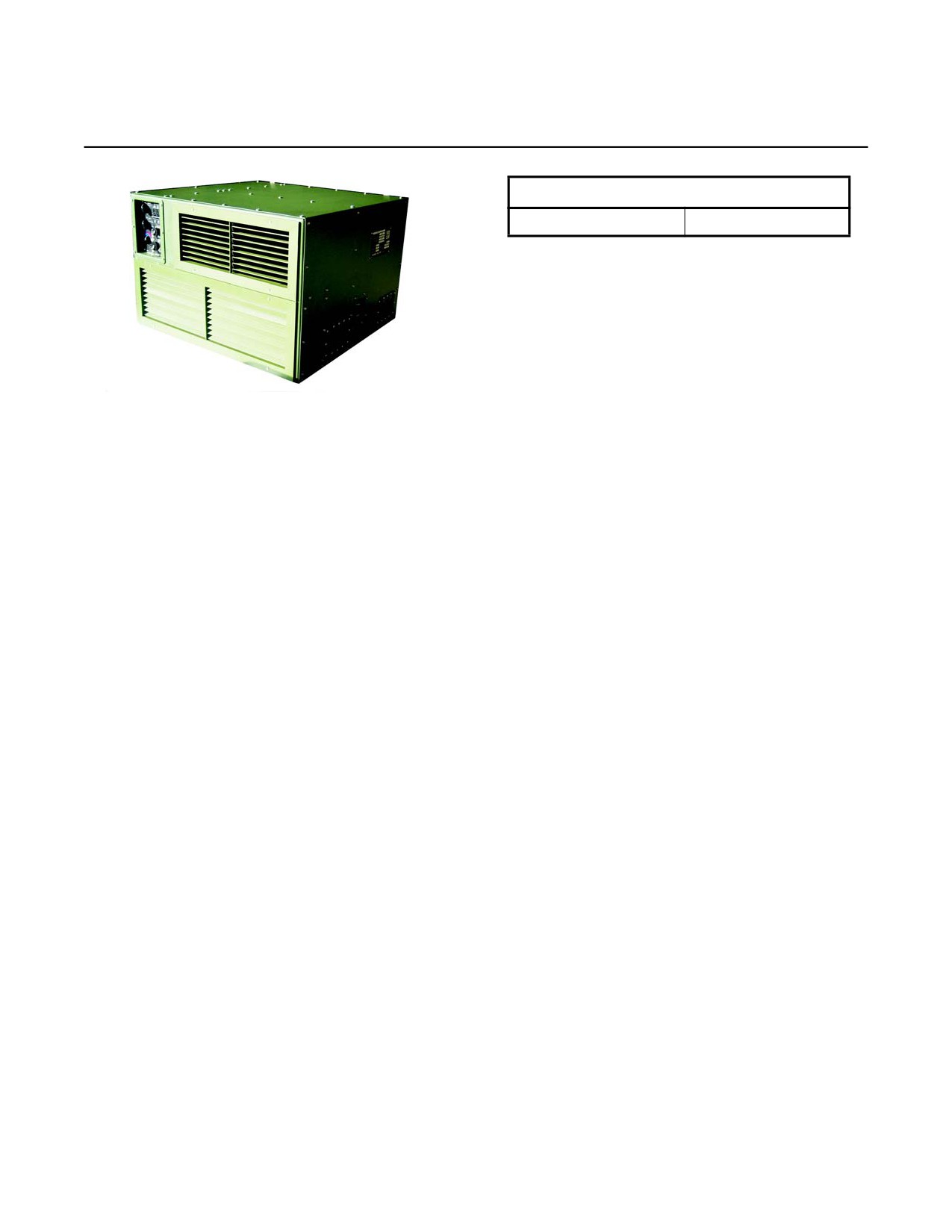
TM 11275-15/3D
AIR CONDITIONER, 1.5-TON, 18,000 BTU/HR
TAMCN: B0003
National Stock Number/ID Number
4120-01-526-1588
11080A
TC-245
DESCRIPTION AND FUNCTION
The Air Conditioner, 1.5-Ton, 18,000 BTU/hr, is an electric motor driven ECU. These units are capable of
providing cooled, dehumidified, heated, and filtered air for supply to a shelter or van. The 1.5-Ton ECU is com-
prised of an electrical subsystem, a refrigeration subsystem and the structure, i.e., the cabinet and frame. The
electrical subsystem is designed to accept 208VAC/3-Phase, 50/60 Hz input power. The 1.5-Ton ECU weighs
approximately 245 pounds and is capable of providing 18,000 BTU of cooling and 13,400 BTU of heating. Low
setting provides a minimum of 9,000 BTU of cooling and 7,000 BTU of heat.
TECHNICAL DESCRIPTION
Unit
Dimensions
Manufacturer:
Nordic Air, Inc.
Depth (in.):
28
Model:
GS1H43ZAANWY001
Width (in.):
30
Power Req.
Height (in.):
20
Frequency (Hz):
60
Weight (lb):
245
Voltage/Phase:
9.7
208VAC/3-Phase
Volume (ft3):
Wires:
4-Wire
Horizontal/Vertical:
Horizontal
Max Power Consumption:
3 kW/5.0 kW
Capacity
Refrigerant
R-22
Cooling (BTU/hr):
18,000
Design Maximum
125°F
Heating (BTU/hr):
7,000/13,400
Ambient Temperature:
CFM:
370/600
Min Ambient Cooling:
50°F
Duct Size:
N/A
Min Ambient Heating:
-25°F
Replaced Item(s)
N/A
Transportability
Transported with supported shelter/man portable
Associated TAMCN(s)
N/A
2-3

TM 11275-15/3D
AIR CONDITIONER, MCS, HORIZONTAL, 400 HZ, 1.5-TON
TAMCN: B0004
National Stock Number/ID Number
4120-01-539-4630
11286A
4120-01-168-1775
07418D
4120-01-073-9095
07418C
4120-01-350-0185
07418A
4120-01-220-7381
08714B
4120-01-286-8854
04984A
TC-002
DESCRIPTION AND FUNCTION
The Air Conditioner, Marine Corps Standard (MCS), Horizontal, 400 Hz, 1.5-Ton unit is a vertical air condi-
tioner driven by an air-cooled motor and is used primarily in van-type enclosures for providing filtered, condi-
tioned, cooled, or heated air, as required, to maintain service conditions necessary for the efficient operation of
electronic equipment housed within the van. The unit provides complete environmental air conditioning including
cooling, heating, ventilation, dehumidification, and filtering. The B0004 has a nominal cooling capacity of 18,000
BTU and a nominal heating capacity of 12,000 BTU.
TECHNICAL DESCRIPTION
Unit
Dimensions
Manufacturer:
AIRTACS
Length (in.):
28
Model:
Unknown
Width (in.):
30
Power Req.
Height (in.):
20
Frequency (Hz):
400
Weight (lb):
280
Voltage/Phase:
208VAC/3-Phase
9.2
Volume (ft3):
Wires:
4-Wire
Horizontal/Vertical:
Vertical
Max Power Consumption:
6.75kW
Capacity
Refrigerant
R-22
Cooling (BTU/hr):
18,000
Design Maximum
Heating (BTU/hr):
12,000
Ambient Temperature:
120°F
CFM:
615
Min Ambient Cooling:
0°F
Duct Size:
N/A
Min Ambient Heating:
50°F
Replaced Item(s)
N/A
Transportability
Transported with supported shelter
Associated TAMCN(s)
B2004, ID: 0767A, NSN 4120-00-327-5035
2-4

TM 11275-15/3D
AIR CONDITIONER, MCS, VERTICAL, 400 HZ, 3-TON
TAMCN: B0006
National Stock Number/ID Number
4120-01-072-6388
06503C
4120-01-244-6385
09063A
4120-01-110-2034
09235A
TC-248
DESCRIPTION AND FUNCTION
The Air Conditioner, Marine Corps Standard (MCS), Vertical, 400 Hz, 3-Ton unit is a complete, self-con-
tained, vertical, air conditioner driven by an air-cooled motor and designed for continuous operation under vary-
ing load conditions. It is used primarily in van-type enclosures for providing filtered, conditioned, cooled, or
heated air, as required, to maintain service conditions necessary for the efficient operation of electronic equip-
ment housed within the van. The unit provides complete environmental air conditioning including cooling, heat-
ing, ventilation, dehumidification, and filtering and has a nominal cooling capacity of 36,000 BTU and a nominal
heating capacity of 28,600 BTU.
TECHNICAL DESCRIPTION
Unit
Dimensions
Manufacturer:
KECO
Length (in.):
21.5
Model:
F36T-4-2
Width (in.):
30.8
Power Req.
Height (in.):
55.4
Frequency (Hz):
400
Weight (lb):
390
Voltage/Phase:
208VAC/3-Phase
Volume (ft3):
21.1
Wires:
4-Wire
Horizontal/Vertical:
Vertical
Max Power Consumption:
9.6 kW
Capacity
Refrigerant
R-22
Cooling (BTU/hr):
37,800
Design Maximum
Heating (BTU/hr):
28,600
Ambient Temperature:
120°F
CFM:
1,250
Min Ambient Cooling:
0°F
Duct Size:
(1) 12 in. for Supply
Min Ambient Heating:
-50°F
(1) 12 in. for Return
Replaced Item(s)
N/A
Transportability
Skid Mounted Assembly - Large (B2006), Forklift Portable
Associated TAMCN(s)
B2006, ID: 07768A, NSN 4120-00-575-7200
2-5

TM 11275-15/3D
AIR CONDITIONER, 5-TON, 60,000 BTU/HR
TAMCN: B0008
National Stock Number/ID Number
4120-01-526-1060
11084A
TC-250
DESCRIPTION AND FUNCTION
The Air Conditioner, 5-Ton, 60,000 BTU/hr, is a packaged system designed to operate in a portable field
capacity, providing conditioned air to a shelter or van. The 5-Ton ECU is controlled with a built-in control box or
remote controller and operates using 208VAC/3-Phase, 50/60 Hz power supplied by a generator or shore power
via a power plug located on the ECU. The refrigerant system uses R-22 refrigerant and has a cooling capacity at
60 Hz of not less than 60,000 BTU/hr at 95°F ambient outside temperature. The heating system is furnished with
a 37,000 BTU/hr resistive type heater in addition to fan heat.
TECHNICAL DESCRIPTION
Unit
Dimensions
Manufacturer:
Nordic Air, Inc.
Depth (in.):
37
Model:
GL0543ZAADWYX01
Width (in.):
47.62
Power Req.
Height (in.):
47.44
Frequency (Hz):
60
Weight (lb):
575
Voltage/Phase:
208VAC/3-Phase
Volume (ft3):
48.35
Wires:
4-Wire
Horizontal/Vertical:
Horizontal
Max Power Consumption:
11 kW
Capacity
Refrigerant
R-22
Cooling (BTU/hr):
60,000
Design Maximum
Heating (BTU/hr):
37,000
Ambient Temperature:
125°F
CFM:
2,000
Min Ambient Cooling:
50°F
Duct Size:
(1) 16 in. for Supply
Min Ambient Heating:
-25°F
(1) 16 in. for Return
Replaced Item(s)
B0007, B0011
Transportability
Forklift Portable
Associated TAMCN(s)
N/A
2-6

TM 11275-15/3D
AIR CONDITIONER, 10-TON, 120,000 BTU/HR
TAMCN: B0010
National Stock Number/ID Number
4120-01-526-1120
11079A (Green)
4120-01-564-7844
11079A (Tan)
TC-252
DESCRIPTION AND FUNCTION
The Air Conditioner, rated for a capacity of 10-Ton, 120,000 BTU/hr, is a packaged system designed to
operate in a portable field capacity, providing conditioned air to a shelter or van. The 10-Ton ECU is controlled
with a built-in control box or remote controller and operates using 208VAC/3-Phase, 50/60 Hz power supplied by
a generator or shore power via a power plug located on the ECU. The refrigerant system uses R-22 refrigerant
and has a cooling capacity at 60 Hz of not less than 126,000 BTU/hr at 95°F ambient outside temperature. The
heating system is furnished with a 47,000 BTU/hr resistive type heater in addition to fan heat. This is the same
unit used for the ITEG, TAMCN B0018.
TECHNICAL DESCRIPTION
Unit
Dimensions
Manufacturer:
Nordic Air, Inc.
Depth (in.):
75
Model:
GL1043ZAADG0
Width (in.):
34
Power Req.
Height (in.):
39
Frequency (Hz):
60
Weight (lb):
715
Voltage/Phase:
208VAC/3-Phase
With skid base:
740
Wires:
4-Wire
57.48
Volume (ft3):
Max Power Consumption:
18 kW
Horizontal/Vertical:
Horizontal
Capacity
Refrigerant
R-22
Cooling (BTU/hr):
120,000
Design Maximum
Heating (BTU/hr):
47,000
Ambient Temperature:
125°F
CFM:
3,200
Min Ambient Cooling:
50°F
Duct Size:
(2) 12 in. for Supply
Min Ambient Heating:
-25°F
(1) 18 in. for Return
Replaced Item(s)
N/A
Transportability
Forklift Portable
Associated TAMCN(s)
B0018
2-7

TM 11275-15/3D
AIR CONDITIONER, MCS, VERTICAL, 50/60 OR 400 HZ, 18,000 BTU
TAMCN: B0012
National Stock Number/ID Number
4120-01-325-7062
09857A
TC-254
DESCRIPTION AND FUNCTION
The Air Conditioner, Marine Corps Standard (MCS), Vertical, Skid-Mounted, multi-powered input (MPI)
(50/60 or 400 Hz), 1.5-Ton unit is compact, vertical, lightweight, electrically powered air conditioner. A new con-
cept is incorporated into the unit whereby components are packaged in a ruggedized frame and cabinet to allow
transport without crating. It is not intended for support of electromagnetic interference sensitive equipment. The
unit provides complete environmental air conditioning including cooling, heating, ventilation, dehumidification,
and filtering and has a nominal cooling capacity of 18,000 BTU and a nominal heating capacity of 12,000 BTU.
TECHNICAL DESCRIPTION
Unit
Dimensions
Manufacturer:
KECO
Length (in.):
Model:
F18T-MPI
Width (in.):
17.25
Power Req.
Height (in.):
45.78
Frequency (Hz):
50/60
Weight (lb):
265
Voltage/Phase:
208VAC/3-Phase
Volume (ft3):
8.8
Wires:
5-Wire
Horizontal/Vertical:
Vertical
Max Power Consumption:
5 kW
Capacity
Refrigerant
R-22
Cooling (BTU/hr):
18,000
Design Maximum
Heating (BTU/hr):
12,000
Ambient Temperature:
125°F
CFM:
590
Min Ambient Cooling:
50°F
Duct Size:
(1) 8 in. for Supply
Min Ambient Heating:
-25°F
(1) 8 in. for Return
Replaced Item(s)
N/A
Transportability
Forklift Portable
Associated TAMCN(s)
B2004
2-8

TM 11275-15/3D
AIR CONDITIONER, 3-TON, 36,000 BTU/HR
TAMCN: B0014
National Stock Number/ID Number
4120-01-526-2397
11082A
TC-255
DESCRIPTION AND FUNCTION
The Air Conditioner, 3-Ton, 36,000 BTU/hr, is a packaged system designed to operate in a portable field
capacity, providing conditioned air to a shelter or van. The 3-Ton ECU is controlled with a built-in control box or
remote controller and operates using 208VAC/3-Phase, 50/60 Hz power supplied by a generator or shore power
via a power plug located on the ECU. The refrigerant system uses R-22 refrigerant and has a cooling capacity at
60 Hz of not less than 36,000 BTU/hr at 95°F ambient outside temperature. The heating system is furnished with a
31,000 BTU/hr resistive type heater in addition to fan heat.
TECHNICAL DESCRIPTION
Unit
Dimensions
Manufacturer:
Nordic Air, Inc.
Depth (in.):
37
Model:
GL0343ZAADWYX01
Width (in.):
47.62
Power Req.
Height (in.):
42.44
Frequency (Hz):
60
Weight (lb):
485
Voltage/Phase:
208VAC/3-Phase
43.25
Volume (ft3):
Wires:
4-Wire
Horizontal/Vertical:
Horizontal
Max Power Consumption:
9.6 kW
Capacity
Refrigerant
R-22
Cooling (BTU/hr):
36,000
Design Maximum
Heating (BTU/hr):
31,000
Ambient Temperature:
125°F
CFM:
1,325
Min Ambient Cooling:
50°F
Duct Size:
(1) 12 in. for Supply
Min Ambient Heating:
-25°F
(1) 12 in. for Return
Replaced Item(s)
B0005, B0012, B0013
Transportability
Forklift Portable
Associated TAMCN(s)
N/A
2-9