Military reference books and manuals (2009-2023, Volume 8) - page 11
Appendix D
PROCESSING VEGETABLE SAMPLES
•
Step 1. Locate the sampling area.
•
Step 2. Look for the following:
Discoloration.
Withered spots.
Oily droplets.
Any unnatural particularities.
•
Step 3. Take samples from three points for each site (using a different jar at each point), 100 meters
upwind (control sample), GZ, and 100 meters downwind.
•
Step 4. Write the suspected chemical agent contamination (if known) and fill in the sample
documentation.
•
Step 5. Remove from the kit a pair of Nitrile overgloves, if required. Use scissors if necessary to open
packaging. Place Nitrile gloves over MOPP gloves.
•
Step 6. Prepare one jar at a time by removing jar from packaging, opening, and placing Teflon tape
around its threads.
•
Step 7. Use tweezers to grasp material to be sampled and use scissors or another cutting tool to cut
suspected contaminated vegetation. For grasses, cut near the base of the blades. For leaves, cut at
the stem of the leaf. Place three to four samples in each jar. Do not crush or smash vegetation.
•
Step 8. Screw the cap on tightly.
•
Step 9. Remove the 7-inch x 11-inch Whirl-Pak bag from the kit as follows:
Tear off top portion of bag along perforated edge.
Using the white tabs, pull the bag apart to open.
Drop the jar into the bag.
Remove excess air from the bag; holding metal tabs, whirl the bag around three times.
Bend the wire ends onto the bag to secure and store the contents.
Write the Sample Identification Number on the custody seal and apply custody seal over rolled
edge of Whirl-Pak bag.
•
Step 10. Collect other required samples from this site and prepare each one as discussed.
•
Step 11. Place up to three Whirl-Pak bags with jars into the blue sample bag with sample
documentation.
•
Step 12. Remove excess air from the blue sample bag and roll down the top of the bag.
•
Step 13. Wrap tape all the way around the blue sample bag making at least three turns. (After tearing
tape off roll, try to fold a quick-pull tab in tape so it is easy to grasp again.)
•
Step 14. Write sample type (soil, surface, liquid, or air) on tape, the number of samples in the bag,
and the date-time-group. Initial the sample.
•
Step 15. Place all sealed blue sample bags into a single drawstring bag.
Figure D-4. Storing samples in the blue sample bag (continued)
MISCELLANEOUS SAMPLES
D-53. Chemical or biological munitions fragments, whether from a shell, bomb, rocket, grenade, or spent
aircraft spray tanks, can be a highly definitive source of samples. Whole munitions (duds) are highly
desirable but should be disarmed by a qualified EOD expert. If a piece of ordnance is suspected of being a
chemical or biological round, and an EOD expert is not available, the sampler should stand off as far as
possible and use vision aids (binoculars) to identify and note any markings. Small pieces of fragments
should be packaged the same way as soil, water, or vegetation.
D-16
FM 3-05.132
30 November 2009
CBRN Sampling Techniques and Procedures
DANGER
Do not approach unexploded ordnance.
D-54. Used detector kits, gloves, or boots can be packaged and brought out as samples. When packaging
large items such as boots, the sampler should use scissors to remove pieces of the item. He should also
ensure it is double-bagged, sealed, and then placed into another bag.
D-55. Small animals, fish, and birds may be retrieved as samples. If they will fit into a Teflon jar, the
sampler should package them as normal. If they are too big to fit in a jar, he should use a cutting tool to
remove a thumb-sized portion of the intercostal muscle from the areas between the ribs, and then package
it as normal.
CONTROL SAMPLES
D-56. The collection of environmental samples requires the collection of control samples. Control samples
allow the analysis center to compare and determine whether a compound is naturally occurring in the
environment. Soil, water, and vegetation samples should be taken 500 meters upwind of the alleged attack
area. Control samples must be generically the same as those in an alleged attack area. For example, if the
sampler collects leaves from an apple tree in an attack area, he should collect leaves from an apple tree
outside the contaminated area. The size of an environmental control sample should be about the same size
as one taken in the attack area.
SAMPLE REPORTING
D-57. One person other than the sampler or packager will keep a detailed reconnaissance log of pertinent
information in a notebook. All entries are identified by the sample number. The reconnaissance log is
opened when the sampling team leaves the objective rally point (ORP) or hide site and closed after the
team passes the sample to the proper agency. Each entry contains the following:
z
Sample identification number.
z
Physical description of environmental sample or object photographed.
z
Date and time of collection.
z
Weather at time of sampling.
z
General description of the area where samples or photos were taken, to include grid coordinates,
azimuths, or distances to known landmarks.
z
Description of any items of interest in the immediate area
(condition of bodies, craters,
vegetation, dead animals, birds, fish, odors, equipment).
SAMPLE IDENTIFICATION
D-58. To prevent confusion, the sampler uses the sample identification number when referring to the
sample or to information concerning its acquisition. The number contains the following:
z
Country of acquisition. This two-digit alphabetic code stands for the country from which the
collector took the sample. A complete listing of country codes can be found in FM 3-11.19.
Example: PR = Puerto Rico.
z
Date acquired. This six-digit numerical code represents the year, month, and day that the
collector took the sample. Example: 2 July 2007 = 070702.
z
Sample sequence number. The collector assigns this three-digit numerical code. It begins anew
each collection day. Example: The first sample collected is 001, the second 002, and so on.
z
Sampling unit unit identification code (UIC). This code represents the sampling unit. Example:
WA8TAA.
30 November 2009
FM 3-05.132
D-17
Appendix D
z
Sampler identification. This two- or three-digit alphabetic abbreviation stands for the sampler’s
first and last name. Example: JD = Joe Dirt who took the sample (Figure D-5). Example of
complete identification number: RQ-070702-001-WFG1AA-JD.
PROJECT CODE: TECH SOIL
SAMPLER: JOE DIRT
SAMPLE NUMBER: SO001-04/MMDDYY/3-5 FEET
TIME COLLECTED:
1435
PRESERVATIVE:
4C
TYPE OF SAMPLE: ENVIRONMENTAL ANALYSIS: ACROLEIN
Figure D-5. Sample label
CHAIN OF CUSTODY
D-59. Samples must be carefully controlled to be of greatest value. A chain of custody must be recorded
using a chain-of-custody form (for example, FM 3-11.19, Figure E-2, Sample or Specimen Custody
Document).
D-60. The Specimen Custody Document (FM 3-11.19) must be completed by the collector. The collector
must ensure he retains a copy of the chain of custody. The country codes are contained in FM 3-11.19,
Table E-2. The collector must also complete the following required reports found in FM 3-11.19:
z
Sample Chain-of-Custody Form (Appendix E).
z
Sample CB Incident Interview Form (Appendix E).
D-61. After the sample is taken, it must be evacuated immediately. The sampling unit coordinates its own
assets and transports the sample to the sample transfer point. A qualified escort must accompany the
sample during the entire evacuation process to ensure safety and a proper chain of custody. A technical
escort is preferred during the entire process of evacuation but having one may not always be practical
because of the limited number of TEUs. The technical escort takes the sample to the radiological, chemical,
and biological sample collection point. If the determination is made to send the sample to CONUS for
analysis, an additional technical escort must be coordinated to accompany the sample to CONUS from the
port of debarkation until final hand-off to the receiving laboratory.
WORK AREA AND WASTE MANAGEMENT
D-62. Incremental to sample preparation and validity is having a clean work space. The 112th CRD uses
aluminum foil placed on a flat surface near the sampling area to provide a clean work space to place
equipment. In the event that aluminum foil is not available, commercial tarp material can be substituted.
D-63. Sampling waste can easily become a problem if not properly managed. Each workstation must
maintain a waste area for expended sampling pipettes and hazardous trash. Aluminum foil folded upward
at the corners (to prevent spills) will be used to contain immediate waste at each station. At the completion
of sampling, each station’s waste will be consolidated into one waste bag, whether trash is to be removed
or left in place.
D-18
FM 3-05.132
30 November 2009
Appendix E
Special Operations Forces Element
Decontamination Options
UNSUPPORTED SOF ELEMENT DECONTAMINATION
E-1. When conducting unsupported SOF element decontamination, the initial action to be taken is to
locate and secure an upwind decontamination site (also serves as an ORP). The same personnel tasked to
set up the ORP will secure the site. The remaining members of the element (operational team) will assume
MOPP4 and move to the contaminated area to conduct the mission. As the operational team conducts the
mission, the decontamination site personnel assume MOPP in preparation for the return of the operational
team. As the operational teams return to the ORP, each member is checked for contamination at a liquid- or
vapor-contamination control line (CCL) using available detection equipment. If contamination is detected,
the decontamination procedures outlined in Figure E-1, pages E-1 and E-2, should be followed.
STEPS
ACTIONS
While the operational element moves to the ORP, the decontamination element members at the
ORP set up a modified hasty decontamination site. The site will include a hot line (HL) and a
1
sump for disposal of contaminated clothing and equipment. As the operational element returns
from the mission, one of the decontamination team members acts as the station operator/monitor,
while the other ORP members provide security for the decontamination site.
2
Once the operational element reaches the HL, it stops and awaits direction from the site operator.
The site operator directs a decontamination element to check any sample or equipment found for
3
contamination. If these are contaminated, the decontamination team will perform the required
decontamination procedures.
Once decontamination has been performed, the decontamination teams place the sample or
4
equipment in a Mylar bag (or other acceptable substitute) and hand it to another “clean” team
member, who then seals the bag and places it on the clean side of the HL.
Once all collected equipment and/or samples have been disposed of, the decontamination team
commences checking the operational teams for contamination. Personal equipment is removed
from the operational team members and checked using the appropriate detectors. If contamination
is found, the equipment will either be decontaminated at that time or placed in the sump (to be
5
decontaminated at a later time). In either case, the equipment must be rechecked prior to reuse in
order to ensure that it has been properly decontaminated. Once this procedure has been
completed for the first operational team member, the site operator will direct that member to enter
the decontamination site.
Using “buddy system” decontamination procedures, the first team member will decontaminate the
second team member’s protective mask using a personnel and equipment decontamination kit.
6
The first team member then rolls the protective mask hood of the second member, using extreme
caution to prevent the transfer of contamination to the exposed neck area or the breaking of the
mask seal during the rolling process.
Continuing the “buddy system,” team members remove the chemical protective overgarment
(CPOG), BDO, and chemical protective boots (if worn). The use of knives, scissors, or other
cutting tools is necessary for this step.
7
Note: The cutting instrument being used must be decontaminated after each cut. Once CPOG,
BDO, and boots have been removed and placed in the sump, that person moves to the next
station (10 to 15 meters away and upwind of the garment removal area).
Figure E-1. Operational element decontamination procedures
30 November 2009
FM 3-05.132
E-1
Appendix E
STEPS
ACTIONS
The second station will be located at the CCL. This clearly marked line (approximately 10-15
meters upwind of the clothing removal station) is where personnel are assisted with the removal of
the chemical protective gloves and boots. As with the first station, the boots will need to be cut to
assist with their removal. Again, the cutting tool will need to be decontaminated after each cut. The
assisted person is stopped on the downwind side of the CCL. The gloves are removed by pulling
8
them inside out as they are being removed. Once removed, they are placed in the sump. After the
gloves are removed, the boots are cut and the Soldier is assisted in removing the boots (one at a
time). As the first boot is removed, the Soldier takes one step over the CCL with that foot. The
second boot is then removed on the downwind side of the CCL. Both boots are then placed in the
sump, and the Soldier proceeds to the final station (on the upwind side of the CCL).
At the final station, each Soldier’s protective mask is checked again for contamination. If
9
contamination is found, the mask is decontaminated again before removal. If found to be clean, the
mask is removed (after the air has been checked for contamination).
All Soldiers are processed through the decontamination using the stated procedures until the
10
operational team and decontamination team have been completed, leaving only the station monitor
left in MOPP4.
The station monitor then polices all contaminated material in the decontamination station area and
11
places it in the sump. The sump is closed, and the station monitor performs personnel
decontamination on himself (removing protective clothing).
The grid coordinates are recorded and forwarded to higher HQ by the decontamination element.
12
The mission is continued.
Figure E-1. Operational element decontamination procedures (continued)
EXPEDIENT PERSONNEL DECONTAMINATION SYSTEM
E-2. The EPDS is designed to address SOF equipment shortfalls in personnel decontamination procedures
and equipment. The system is a one-man, portable, lightweight system that does not displace an undue
amount of an individual’s combat load. The EPDS is a validated system that provides rapid effective
decontamination procedures that are easily integrated into existing SO tactics. This system weighs less than
20 pounds, can be set up within 10 minutes, and can decontaminate up to 20 personnel at a rate of less than
5 minutes per individual.
E-3. EPDS tactical planning guidelines are as follows:
z
Decontamination of the force will occur at the closest permissive site to the target permitted by
the tactical situation. In some missions, such as maritime interdiction operations,
decontamination will likely occur directly on the objective after it is secure.
z
Timely and effective decontamination is critical to prevent CBRN casualties. SOF
contamination challenges may be considerably higher than the standard
10/m2 that
JSLIST-approved material is designed to protect against.
z
CW breakthrough times on SOF PPE dictate the need to conduct decontamination at the soonest
opportunity consistent with the tactical situation. CW breakthrough times are significantly
reduced in case of saltwater-exposed PPE, further heightening the importance of rapid
decontamination.
z
The nature of SOF operations in the CBRN environment dictates that the use of a supporting
force to conduct decontamination is often tactically infeasible. The SOF decontamination
capability must reside completely within the force and be effective postmission for both healthy
personnel and casualties.
z
Contamination control is paramount. The reduction or elimination of the spreading of liquid or
solid contamination off target and back to friendly forces, mission-critical mobility platforms, or
forward staging bases is critical.
z
The procedure and equipment should not produce undue logistical burdens in terms of training,
acquisition, or maintenance.
E-2
FM 3-05.132
30 November 2009
Special Operations Forces Element
Decontamination Options
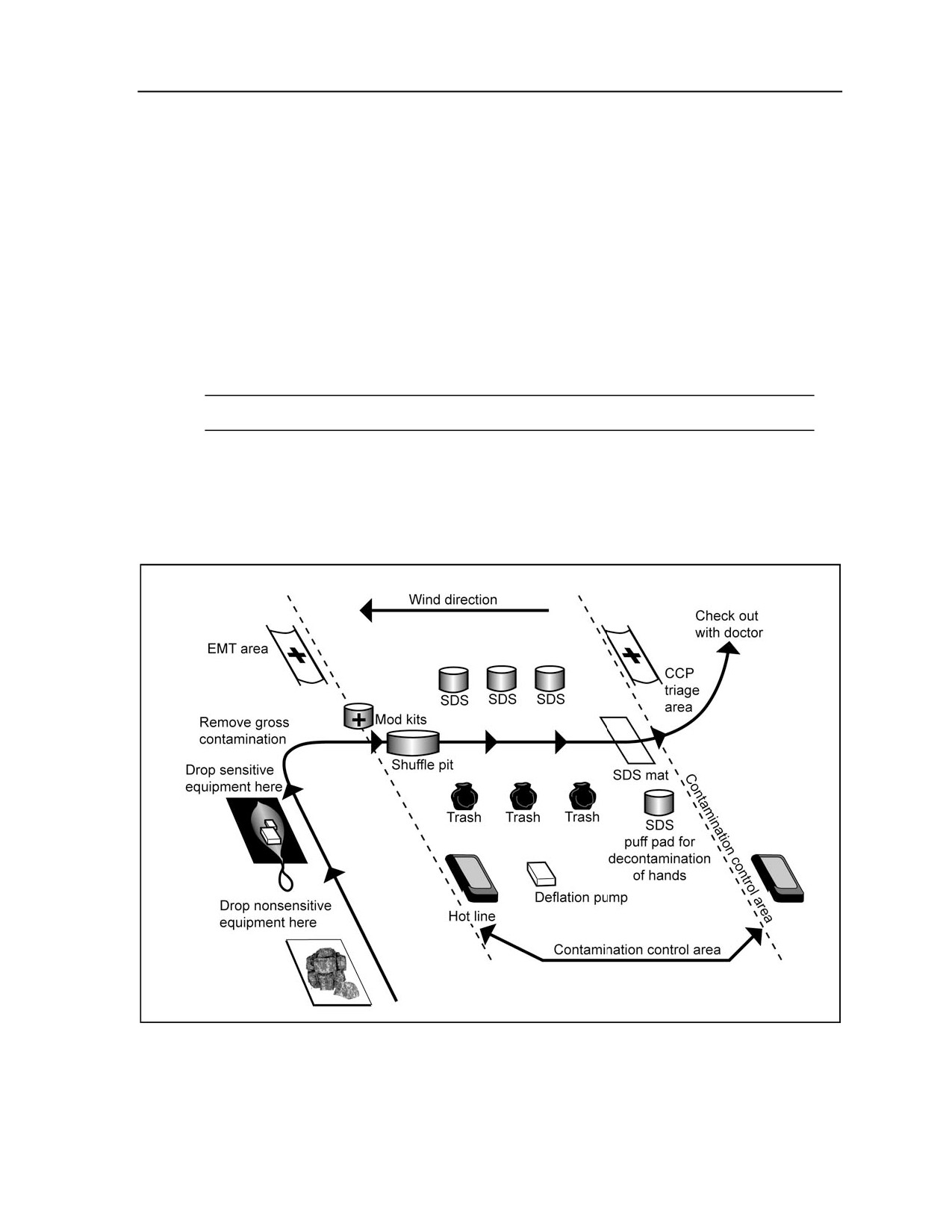
E-4. The following is a generic sequence of events for a mission requiring EPDS in a potentially
contaminated area. Figure E-2 depicts a basic layout for an EPDS decontamination site. Figures E-3
(page E-4) and E-4 (page E-5) provide the steps that are involved in one- and two-piece cutout procedures.
A generic EPDS mission sequence is as follows:
z
Step 1. Determine the presence of contamination or the possibility of contamination. Establish a
contamination control area. Ensure all personnel who are contaminated remain in that area.
z
Step 2. Call for EPDS.
z
Step 3. Designate operating and security personnel for EPDS.
z
Step 4. Establish HL, mark HL, and designate CCL.
z
Step 5. Set up a decontamination line, considering environmental factors, such as wind, rain, and
poor ventilation. Break out equipment and set it up according to space availability.
z
Step 6. Upon completion of setup, direct contaminated personnel to begin an equipment drop.
(All personnel working EPDS should decontaminate boots and gloves first.) Place all sensitive
equipment that requires decontamination into equipment bags.
Note: Personnel should work in pairs whenever possible.
z
Step 7. Establish a litter decontamination line if indicated. Include an emergency medical
treatment (EMT) station in the hot zone.
z
Step 8. Establish the triage area as the casualty collection point (CCP) and locate it on the clean
side of the CCL.
z
Step 9. Begin the decontamination process.
Figure E-2. Expedient personnel decontamination site
30 November 2009
FM 3-05.132
E-3
Appendix E
One-Piece Cutout
z
Step 1: Direct breakout of Mk1 medical kits.
z
Step 2: Take out M291s and M295s. Place kits in a pile at the hot line.
z
Step 3: Decontaminate each other’s hoods with the M295. If time permits, decontaminate as much
area as possible to reduce any gross contamination and off-gassing.
z
Step 4: Direct into first shuffle pit.
z
Step 5: Decontaminate feet by shuffling feet in pit.
z
Step 6: Direct to the next shuffle pit. (Cutters begin cut-out procedures).
z
Step 7: Cut both straps off the hood and loosen the neck cord.
z
Step 8: Direct contaminated person to bend forward at the waist.
z
Step 9: Make sure cutter rolls hood up from the rear bottom as far as possible and gathers bottom
into neck cord. (Cutter then cuts tails of cord if needed and decontaminates hands).
z
Step 10: Cut wrist, waist, and ankle closures as appropriate for the ensemble worn.
(Cutter
decontaminates hands.)
z
Step 11: Release or cut boot closures. (Cutter decontaminates hands.)
z
Step 12: Make sure contaminated person steps out of boots. (Cutter decontaminates hands.)
z
Step 13: Unzip zipper across the back (if fast-rope insertion and extraction system [FRIES]). (Cutter
decontaminates hands.)
z
Step 14: Start at the lower side of the zipper center (if dry suit, cut from center rear neckline) down
one leg as far as possible. (Cutter decontaminates hands.)
z
Step 15: Cut down other leg from area of buttocks down as far as possible. (Cutter decontaminates
hands.)
z
Step 16: Cut up from top edge of zipper through neck dam (if FRIES). (Cutter decontaminates
hands.)
z
Step 17: Remove suit forward, stripping down, and have contaminated person step out one foot at
a time. Remove glove with garment; if not, strip gloves before CPU removal.
(Cutter
decontaminates hands.)
CPU REMOVAL
z
Step 1: Start at top rear center and cut down middle of back. (Cutter decontaminates hands.)
z
Step 2: Make sure contaminated person extends arms forward and down. (Cutter pulls forward and
down, folding it inside out as best as possible to contain external contamination. Cutter
decontaminates hands.)
z
Step 3: Cut down one side of CPU trouser leg and have contaminated person step out of CPU
trouser. (Cutter decontaminates hands.)
z
Step 4: Strip off one Gore-Tex sock, then second, then one CPU sock, and then the second, having
the contaminated person step onto safety pad. (Cutter decontaminates hands.)
z
Step 5: Make sure contaminated person proceeds to mask drop area, decontaminates hands, and
uses breath-hold technique with assisted mask removal from decontamination line.
z
Step 6: Move to redress area and redress; move to exfiltration area.
z
Step 7: Monitor and administer buddy-aid, if necessary. Ensure that personnel who develop
symptoms of exposure are taken to the triage area for treatment.
Figure E-3. One-piece cutout
E-4
FM 3-05.132
30 November 2009
Special Operations Forces Element
Decontamination Options
Two-Piece Cutout
z
Step 1: Direct breakout of Mk 1 medical kits.
z
Step 2: Take out M291s and M295s. Place kits in a pile at the hot line.
z
Step 3: Decontaminate each other’s hoods with the M295. If time permits, decontaminate as much
area as possible to reduce any gross contamination and off- gassing.
z
Step 4: Direct into first shuffle pit.
z
Step 5: Decontaminate feet by shuffling feet in pit.
z
Step 6: Direct to the next shuffle pit. (Cutters begin cut-out procedures).
z
Step 7: Cut both straps off hood and loosen neck cord.
z
Step 8: Make sure contaminated person bends forward at the waist.
z
Step 9: Ensure cutter rolls hood up from the rear bottom as far as possible, gathers bottom into
neck cord, and cuts tails of cord, if needed. (Cutter decontaminates hands.)
z
Step 10: Cut wrist, waist, and ankle closures as appropriate for the ensemble worn. (Cutter
decontaminates hands.)
z
Step 11: Start at top rear center and cut down the back of the top garment.
(Cutter
decontaminates hands.)
z
Step 12: Tell contaminated person to extend his arms forward and down, cutter pulls top forward
and down (folding in on itself as best as possible to contain and isolate). Glove should come off
with top; if not, remove gloves. (Cutter decontaminates hands.)
z
Step 13: Cut down each side of legs. (Cutter decontaminates hands.) Grasp rear center of trouser,
cut straps above where straps cross and allow to fall as contaminated person steps forward and
away.
z
Step 14: Release or cut boot closures. (Cutter decontaminates hands.)
z
Step 15: Tell contaminated person to step out of boots. (Cutter decontaminates hands.)
CPU REMOVAL
z
Step 1: Start at top rear center and cut down middle of back. (Cutter decontaminates hands.)
z
Step 2: Make sure contaminated person extends arms forward and down. (Cutter pulls forward
and down, folding it inside out as best as possible to contain external contamination. Cutter
decontaminates hands.)
z
Step 3: Cut down one side of CPU trouser leg, have contaminated person step out of CPU trouser.
(Cutter decontaminates hands.)
z
Step 4: Strip off one Gore-Tex sock, then second, then one CPU sock, and then the second,
having the contaminated person step onto safety pad. (Cutter decontaminates hands.)
z
Step 5: Make sure contaminated person proceeds to mask drop area, decontaminates hands, and
uses breath-hold technique with assisted mask removal from decontamination line.
z
Step 6: Move to redress area and redress; then move to exfiltration area.
z
Step 7: Monitor and administer buddy-aid if necessary. Make sure personnel who develop
symptoms of exposure are taken to the triage area for treatment.
Figure E-4. Two-piece cutout
E-5.
The basic operating principles of litter decontamination include the following:
z
Always follow management of life-saving ABCs (check airway, check for breathing, and check
for circulation) first.
z
Spot decontaminate cutaway of protective garment or mask to facilitate care of ABCs.
z
Make sure a casualty that is affected in any ABC areas is not in the litter decontamination area.
z
Always use the current decontamination media: 0.5 percent hypochlorite solution, M291, M295,
and SDS.
z
Use the Raven decontamination litter.
30 November 2009
FM 3-05.132
E-5
Appendix E
z
For litter decontamination, use the cutout procedure similar to the onion peel procedure.
z
Use the exact cut template that corresponds to the ensemble worn (currently JSLIST VII and
FRIES).
z
To control the spread of contamination, ensure the hand of the cutter is decontaminated first.
The hands and cutting tool must be decontaminated before each cut.
z
For successful decontamination, first decontaminate the patient’s boots and gloves.
E-6. The following procedures are specific to the EPDS litter casualty:
z
Keep litter parallel to EPDS line.
z
Ensure environmental factors and the casualty flow remain unchanged.
z
Move casualties from the EMT station to the litter decontamination area on a Raven stretcher.
Note: Although not stated after each step, cutter should decontaminate hands and tools between
every step or touch.
E-7. The decontamination site must have specific personnel on hand. At each site, there should be one HL
director, two scrubbers and cutters, and two or more medical personnel determined by the number of
medical or chemical casualties. The EPDS requires specific equipment and parts. Figure E-5, pages E-6
and E-7, provides the component data for the EPDS rucksack.
DIRTY EXFILTRATION DECONTAMINATION
E-8. The purpose of dirty exfiltration is to remove a contaminated SOF element from its tactical
environment so that decontamination can take place in a permissive environment. Dirty exfiltration
decontamination activities include decontamination for personnel using either a detailed troop
decontamination (DTD) or EPDS, and may or may not include spot decontamination of the exfiltration
platform. Dirty exfiltration decontamination should occur as soon as tactically feasible after contamination.
There are numerous issues to consider regarding the decontamination of exfiltration platforms in dirty
exfiltration. The SOF decontamination element—
z
Ensures the aircrews remain in place in the aircraft.
z
Removes any additional protective lining, cover, or equipment from the exfiltration platform
after one contaminated element has exited the platform.
z
Checks the exfiltration platform for any residual contamination.
z
Decontaminates the exfiltration platform to the maximum extent possible with available
equipment.
Note: FM 3-11.5 contains additional decontamination details.
Item
Note
Quantity
Water is carried in a 5-gallon collapsible bladder inside a vector
Boundary Bag
pack. If available, seawater may be used. Two boundary bags are
3
cut down and used for the shuffle pit. One is used for a container.
Baja Bag
5
Large Hook Knife
3
Scissors
4
Blue chemlites are used to mark the bottom of decontamination
Chemlite, Blue
1
bags or shuffle pits.
Chemlite, Red
Red chemlites are used to mark HL.
1
Figure E-5. EPDS rucksack component data
E-6
FM 3-05.132
30 November 2009
Special Operations Forces Element
Decontamination Options
Item
Note
Quantity
Chemlite, Green
Green chemlites are used to mark CCL.
1
Additional waterproof protective mask bags with equipment belts
Electric Scissors
2
for carrying decontaminated media and cutters.
Poly bags used for containment of removed PPE to reduce off-
Poly Bag (7 ml)
6
gassing in the decontamination area.
SDS
5
SDS pads used to step on as a protective barrier after protective
SDS Pad
1
socks are removed.
68% Calcium
Calcium hypochlorite is carried for biological agents.
2
Hypochlorite (6 oz)
Head Lamp
6
Figure E-5. EPDS rucksack component data (continued)
BASIC AIRCREW DECONTAMINATION ACTIONS
E-9. The decontamination actions identify a standard set of instructions to doff aircrew equipment and
clothing after actual or suspected CBRN contamination. Figure E-6, pages E-7 through E-9, depicts how
decontamination stations can be systematically arranged to use equipment and allow aircrew redress.
STATION 1
z
ATTENDANT: Wipe (bleach, water, and paper towel) crew member above shoulders.
z
CREW MEMBER: Stow personnel items.
DUST HANDS
z
ATTENDANT: Dust from knees to boots.
z
ATTENDANT: Carefully dust blower and hang on rack.
DUST HANDS
z
ATTENDANT: Unsnap suspension assemblies on manifold from one side and reattach to
other. Dust manifold and hang on rack.
DUST HANDS
z
ATTENDANT: Remove harness, vest, life preserver unit (LPU), exposure suit, and so on.
DUST HANDS AFTER EACH ITEM
z
ATTENDANT: Undo flight suit leg zipper and cut bootlaces.
DUST HANDS
z
CREW MEMBER: Remove boot using the boot remover.
DO NOT LET FOOT TOUCH THE GROUND
z
ATTENDANT: Tube sock foot. Discard boot. Repeat step.
DUST HANDS AFTER EACH BOOT
z
CREW MEMBER: Loosen suit cuffs and reattach Velcro.
DUST HANDS
z
CREW MEMBER/ATTENDANT: Remove and discard Nomex gloves.
DUST HANDS
z
CREW MEMBER: Ensure next station is clear. Keep equipment away from body and go to
next station.
z
CREW MEMBER: Remove equipment from rack.
Figure E-6. Aircrew decontamination stations
30 November 2009
FM 3-05.132
E-7
Appendix E
STATION 2
DUST HANDS
z
CREW MEMBER: Ensure next station is clear. Keep equipment away from body and go to
next station.
z
ATTENDANT: Hang equipment on rack. Crew member and attendant should dust hands.
Crew member steps into shuffle box and faces rack.
z
Liquid hazard area (LHA) ATTENDANT: Lower zipper on flight suit.
DUST HANDS
z
CREW MEMBER: Face vapor hazard area. Assume race dive position.
MAINTAIN EYE CONTACT WITH ATTENDANT
z
LHA ATTENDANT: Remove flight suit to knees. Remove Butyl gloves. Tube sock hands.
DO NOT TOUCH CREW MEMBER’S SKIN
DUST HANDS
z
LHA ATTENDANT: Remove suit from legs. Ensure tube socks are retained on crew
member’s feet or replace them. Discard suit.
DUST HANDS
z
CREW MEMBER: Lift foot back for tube sock removal by LHA. Extend foot forward for tube
sock replacement by LHA. Step out of the shuffle box. Repeat with other foot. LHA removes
shuffle box.
ATTENDANTS DUST HANDS
z
LHA ATTENDANT: Tighten hood adjustment straps.
DUST HANDS
z
CREW MEMBER: Face LHA.
z
LHA ATTENDANT: Release and stow chinstrap and communications connection.
DUST HANDS
z
LHA ATTENDANT: Remove tube socks from crew member’s hands.
DUST HANDS
z
Vapor hazard area (VHA) ATTENDANT: Place new tube socks on crew member’s hands.
DUST HANDS
z
CREW MEMBER: Grasp aircrew eye and respiratory protection (AERP) mask with hand
closest to rack.
STATION 2A
z
LHA ATTENDANT: Disconnect bayonets and snaps.
DUST HANDS
z
CREW MEMBER: Face decontamination rack and lean head toward LHA.
z
LHA ATTENDANT: Remove helmet and stow.
DUST HANDS
z
LHA ATTENDANT: Check crew member for contamination by using the CAM.
z
VHA ATTENDANT: Brief crew member on mask removal. (Tell crew member to turn 1/8
toward VHA.)
z
LHA ATTENDANT: Loosen hood adjustment straps.
DUST HANDS
z
LHA ATTENDANT: Before removing mask, take tube sock off hand that removes mask and
place hand on stomach.
z
LHA ATTENDANT: Raise hood apron off shoulders.
Note: Crew member takes several deep breaths, holds breath, and closes eyes tightly.
Figure E-6. Aircrew decontamination stations (continued)
E-8
FM 3-05.132
30 November 2009
Special Operations Forces Element
Decontamination Options
STATION 2A (continued)
z
CREW MEMBER: Place R/L hand under the neck dam and lift AERP mask off head passing
over shoulder to LHA attendant. Do not touch outside of hood. Hands back.
z
LHA ATTENDANT: Discard mask and tube socks.
DUST HANDS
z
CREW MEMBER: Hands forward.
z
VHA ATTENDANT: Guide crew member to the VHA.
STATION 3
UNDRESS AREA
z
CREW MEMBER: Remove any remaining clothing.
z
CREW MEMBER: Redress and proceed to collection point and contact ground mission
commander.
EXPEDIENT UNDRESS
z
CREW MEMBER: Remove AERP and flight equipment as required. Redress. Proceed to
collection point and contact ground mission commander.
Figure E-6. Aircrew decontamination stations (continued)
30 November 2009
FM 3-05.132
E-9
This page intentionally left blank.
Glossary
SECTION I - ACRONYMS AND ABBREVIATIONS
AAR
after action report
ABC
airway, breathing, circulation
AC
hydrogen cyanide
AERP
aircrew eye and respiratory protection
AF
Air Force
AO
area of operations
AOR
area of responsibility
APR
air purifying respirator
ARSOF
Army special operations forces
AUIB
Aircrew Uniform Integrated Battlefield
BDO
battle dress overgarment
BIDS
Biological Integrated Detection System
BVO
black vinyl overboot
BW
biological warfare
BWA
biological warfare agent
C2
command and control
CA
Civil Affairs
CAM
Chemical Agent Monitor
CAO
Civil Affairs operations
CB
chemical or biological
CBR
chemical, biological, and radiological
CBRN
chemical, biological, radiological, and nuclear
CCBA
closed-circuit breathing apparatus
CCDR
combatant commander
CCIR
commander’s critical information requirement
CCL
contamination control line
CDA
chemical detachment A
CDD
chemical decontamination detachment
CNR
Center for National Response
COA
course of action
COLPRO
collective protection
CONUS
continental United States
COTS
commercial off-the-shelf
CP
counterproliferation
CPFC
chemical protective footwear cover
CPOG
chemical protective overgarment
30 November 2009
FM 3-05.132
Glossary-1
Glossary
CPT
captain
CPU
chemical protective undergarment
CPWMD
counterproliferation of weapons of mass destruction
CRD
chemical reconnaissance detachment
CRDEC
Chemical Research, Development, and Engineering Center
CT
counterterrorism
CW
chemical warfare
CWA
chemical warfare agent
CWMD
combating weapons of mass destruction
DA
direct action
DNWS
Defense Nuclear Weapons School
DOD
Department of Defense
DPG
Dugway Proving Ground
DRT
decontamination and reconnaissance team
DTRA
Defense Threat Reduction Agency
EAC
Exploitation Analysis Center
ECBC
Edgewood Chemical Biological Center
EMP
electromagnetic pulse
EMT
emergency medical treatment
EO
Executive Order
EOD
explosive ordnance disposal
EPDS
expedient personnel decontamination system
EPW
enemy prisoner of war
ERG
Emergency Response Guide
F
Fahrenheit
FID
foreign internal defense
FM
field manual
FRIES
fast-rope insertion and extraction system
GB
Sarin
GCC
geographic combatant commander
GD
Soman
GRR
ground radiological reconnaissance
GVO
green vinyl overboot
GZ
ground zero
HAZMAT
hazardous materials
HD
mustard agent
HEPA
high-efficiency particulate air
HL
hot line
HMMWV
high-mobility multipurpose wheeled vehicle
HN
host nation
HNS
host-nation support
Glossary-2
FM 3-05.132
30 November 2009
Glossary
HQ
headquarters
HTH
calcium hypochlorite
IAW
in accordance with
ICAD
Individual Chemical Agent Detector
ICAM
Improved Chemical Agent Monitor
IO
information operations
IPE
individual protective equipment
IPOE
intelligence preparation of the operational environment
JBPDS
Joint Biological Point Detection System
JCAD
Joint Chemical Agent Detector
JP
joint publication
JSLCBRNRS
Joint Service Light CBRN Reconnaissance System
JSLIST
Joint Service Lightweight Integrated Suit Technology
JSLSCAD
Joint Service Lightweight Standoff Chemical Agent Detector
JSOTF
joint special operations task force
LD
lethal dose
LHA
liquid hazard area
LSD
lysergic acid diethylamide
MDMP
military decision-making process
MDS
Modular Decontamination System
METOC
meteorological and oceanographic
METT-TC
mission, enemy, terrain and weather, troops and support available, time
available, and civil considerations
mg
milligram(s)
MICAD
Multipurpose Integrated Chemical Agent Detector
MOPP
mission-oriented protective posture
mph
miles per hour
MSG
master sergeant
NATO
North Atlantic Treaty Organization
NAVSOF
Navy special operations forces
NBC
nuclear, biological, and chemical
NCO
noncommissioned officer
NCOIC
noncommissioned officer in charge
NFPA
National Fire Protection Association
NIOSH
National Institute for Occupational Safety and Health
NMS-CWMD
National Military Strategy for combating weapons of mass destruction
NRC
National Response Center
NSN
National Stock Number
NVG
night vision goggle
OIC
officer in charge
OPLAN
operation plan
30 November 2009
FM 3-05.132
Glossary-3
Glossary
ORP
objective rally point
OSHA
Occupational Safety and Health Administration
PA
public affairs
PAPR
powered air-purifying respirator
PCISE
plan, coordinate, integrate, synchronize, and execute
PIR
priority intelligence requirement
POL
petroleum, oils, and lubricants
PPE
personal protective equipment
PSYOP
Psychological Operations
RA
radiological agent
RCA
riot control agent
R-CBATEB
Radiological, Chemical, and Biological Analysis and Technical Evaluation
Board
R-CBSCE
radiological-chemical and biological sampling control element
RGR
Ranger
ROE
rules of engagement
S-1
personnel officer
S-2
intelligence officer
S-3
operations officer
S-4
logistics officer
S-5
plans officer
S-6
command, control, communications, and computer systems directorate officer
SB(SO)(A)
Sustainment Brigade (Special Operations) (Airborne)
SCBA
self-contained breathing apparatus
SCPE
Simplified Collective Protective Equipment
SCUBA
self-contained underwater breathing apparatus
SDS
Sorbent Decontamination System
SF
Special Forces
SFC
sergeant first class
SFG(A)
Special Forces group (airborne)
SFODA
Special Forces operational detachment A
SGT
sergeant
SME
subject-matter expert
SO
special operations
SOA
special operations aviation
SOAR(A)
special operations aviation regiment (airborne)
SOF
special operations forces
SOFSE
special operations forces site exploitation
SOP
standing operating procedure
SOTF
special operations task force
SPC
specialist
Glossary-4
FM 3-05.132
30 November 2009
Glossary
SR
special reconnaissance
SSE
sensitive site exploitation
SSG
staff sergeant
STB
super tropical bleach
TEU
technical escort unit
TIB
toxic industrial biological
TIC
toxic industrial chemical
TIM
toxic industrial material
TM
technical manual
TSOC
theater special operations command
TTP
tactics, techniques, and procedures
USAJFKSWCS
United States Army John F. Kennedy Special Warfare Center and School
USASOC
United States Army Special Operations Command
USG
United States Government
USSOCOM
United States Special Operations Command
UW
unconventional warfare
VHA
vapor hazard area
VX
ethyl-S-dimethylaminoethyl methylphosphonothiolate
WARNORD
warning order
WMD
weapons of mass destruction
SECTION II - TERMS
aerosol
A liquid or solid composed of finely divided particles suspended in a gaseous medium. Examples of
common aerosols are mist, fog, and smoke.
agent
See biological or chemical agent. (This term and its definition are applicable only in the context of this
publication and cannot be referenced outside this publication.)
biological agent
A microorganism that causes disease in personnel, plants, or animals, or causes the deterioration of
materiel. (JP 1-02)
biological weapon
An item of materiel which projects, disperses, or disseminates a biological agent including arthropod
vectors. (JP 1-02)
blister agent
A chemical agent which injures the eyes and lungs, and burns or blisters the skin. Also called vesicant
agent. (JP 1-02)
blood agent
A chemical compound, including the cyanide group, that affects bodily functions by preventing the
normal utilization of oxygen by body tissues. (JP 1-02)
chemical agent
A chemical substance which is intended for use in military operations to kill, seriously injure, or
incapacitate mainly through its physiological effects. The term excludes riot control agents when used
for law enforcement purposes, herbicides, smoke, and flames. (JP 1-02)
30 November 2009
FM 3-05.132
Glossary-5
Glossary
chemical, biological, radiological, and nuclear defense
Measures taken to minimize or negate the vulnerabilities and/or effects of a chemical, biological,
radiological, or nuclear incident. Also called CBRN defense. (JP 1-02)
chemical, biological, radiological, and nuclear environment
Conditions found in an area resulting from immediate or persisting effects of chemical, biological,
radiological, or nuclear attacks or unintentional releases. Also called CBRN environment. (JP 1-02)
chemical contamination
See contamination.
chemical warfare
All aspects of military operations involving the employment of lethal and incapacitating munitions/
agents and the warning and protective measures associated with such offensive operations. Since riot
control agents and herbicides are not considered to be chemical warfare agents, those two items will be
referred to separately or under the broader term “chemical,” which will be used to include all types of
chemical munitions/agents collectively. Also called CW. (JP 1-02)
chemical weapon
Together or separately, (a) a toxic chemical and its precursors, except when intended for a purpose not
prohibited under the Chemical Weapons Convention; (b) a munition or device specifically designed to
cause death or other harm through toxic properties of those chemicals specified in (a) above, which would
be released as a result of the employment of such munition or device; (c) any equipment specifically
designed for use directly in connection with the employment of munitions or devices specified in (b)
above. (JP 1-02)
Chemical Weapons Convention (CWC)
The CWC, which entered into force for states parties on 26 April 1997, bans the acquisition,
development, production, transfer, and use of chemical weapons. It prohibits the use of riot control
agents as a method of warfare. It provides for the destruction of all chemical weapons stocks and
production facilities within 10 years after entry into force. It contains a vigorous challenge regime to
ensure compliance. The United States ratified the CWC on 25 April 1997.
coalition
An ad hoc arrangement between two or more nations for common action. (JP 1-02)
collective protection
The protection provided to a group of individuals which permits relaxation of individual chemical,
biological, radiological, and nuclear protection. Also called COLPRO. (JP 1-02)
combatant command
A unified or specified command with a broad continuing mission under a single commander
established and so designated by the President, through the Secretary of Defense and with the advice
and assistance of the Chairman of the Joint Chiefs of Staff. Combatant commands typically have
geographic or functional responsibilities. (JP 1-02)
contaminated remains
Remains of personnel which have absorbed or upon which have been deposited radioactive material,
or biological or chemical agents. (JP 1-02)
contamination
1. The deposit, absorption, or adsorption of radioactive material, or of biological or chemical agents on
or by structures, areas, personnel, or objects. 2. (DOD only) Food and/or water made unfit for
consumption by humans or animals because of the presence of environmental chemicals, radioactive
elements, bacteria or organisms, the byproduct of the growth of bacteria or organisms, the
decomposing material (to include the food substance itself), or waste in the food or water. (JP 1-02)
Glossary-6
FM 3-05.132
30 November 2009
Glossary
contamination control
A combination of preparatory and responsive measures designed to limit the vulnerability of forces to
chemical, biological, radiological, nuclear, and toxic industrial hazards and to avoid, contain, control
exposure to, and, where possible, neutralize them. (JP 1-02)
decontamination
The process of making any person, object, or area safe by absorbing, destroying, neutralizing, making
harmless, or removing chemical or biological agents, or by removing radioactive material clinging to
or around it. (JP 1-02)
deliberate planning
A planning process for the deployment and employment of apportioned forces and resources that
occurs in response to a hypothetical situation. Deliberate planners rely heavily on assumptions
regarding the circumstances that will exist when the plan is executed. (FM 1-02)
detection
In chemical, biological, radiological, and nuclear environments, the act of locating chemical, biological,
radiological, and nuclear hazards by use of chemical, biological, radiological, and nuclear detectors or
monitoring and/or survey teams. (JP 1-02)
dirty
Chemical, biological, radiological, and nuclear defense contaminated.
dispersion
1. A scattered pattern of hits around the mean point of impact of bombs and projectiles dropped or fired
under identical conditions; 2. In antiaircraft gunnery, the scattering of shots in range and deflection about
the mean point of explosion; 3. The spreading or separating of troops, materiel, establishments, or
activities which are usually concentrated in limited areas to reduce vulnerability; 4. In chemical and
biological operations, the dissemination of agents in liquid or aerosol form. (JP 1-02)
electromagnetic pulse
The electromagnetic radiation from a strong electronic pulse, most commonly caused by a nuclear
explosion that may couple with electrical or electronic systems to produce damaging current and
voltage surges. Also called EMP. (JP 1-02)
Executive Order 11850
The Executive Order dated 8 April 1975, Renunciation of Certain Uses in War of Chemical
Herbicides and Riot Control Agents, that renounced the first use of herbicides in war (except for
specified defensive uses) and the first use of riot control agents (RCAs) in war except for defensive
military modes to save lives.
ground zero
The point on the surface of the Earth at, or vertically below or above, the center of a planned or actual
nuclear detonation. (JP 1-02)
hot spot
Region in a contaminated area in which the level of radioactive contamination is considerably greater
than in neighboring regions in the area. (JP 1-02)
immediate decontamination
Decontamination carried out by individuals immediately upon becoming contaminated to save lives,
minimize casualties, and limit the spread of contamination. This may include decontamination of some
personal clothing and/or equipment. (JP 1-02)
individual protective equipment
In chemical, biological, radiological, or nuclear operations, the personal clothing and equipment
required to protect an individual from chemical, biological, and radiological hazards and some nuclear
hazards. (JP 1-02)
30 November 2009
FM 3-05.132
Glossary-7
Glossary
industrial chemicals
Chemicals developed or manufactured for use in industrial operations or research by industry,
government, or academia. These chemicals are not primarily manufactured for the specific purpose of
producing human casualties or rendering equipment, facilities, or areas dangerous for human use.
Hydrogen cyanide, cyanogen chloride, phosgene, and chloropicrin are industrial chemicals that also
can be military chemical agents.
joint special operations task force
A joint task force composed of special operations units from more than one Service, formed to carry
out a specific special operation or prosecute special operations in support of a theater campaign or
other operations. The joint special operations task force may have conventional non-special operations
units assigned or attached to support the conduct of specific missions. Also called JSOTF. (JP 1-02)
lysergic acid diethylamide
Formerly lysergide, commonly known as acid, is a semi-synthetic psychedelic drug of the ergoline
family. Also called LSD.
mission-oriented protective posture
A flexible system of protection against chemical, biological, radiological, and nuclear contamination.
This posture requires personnel to wear only that protective clothing and equipment (mission-oriented
protective posture gear) appropriate to the threat level, work rate imposed by the mission, temperature,
and humidity. Also called MOPP. (JP 1-02)
mission-oriented protective posture gear
Military term for individual protective equipment, including suit, boots, gloves, mask with hood, first
aid treatments, and decontamination kits issued to military members. Also called MOPP gear.
(JP 1-02)
Mylar
A trademark used for a thin, strong polyester material.
nerve agent
A potentially lethal chemical agent which interferes with the transmission of nerve impulses. (JP 1-02)
nonpersistent agent
A chemical agent that when released dissipates and/or loses its ability to cause casualties after 10 to 15
minutes. (JP 1-02)
nuclear defense
The methods, plans, and procedures involved in establishing and exercising defensive measures
against the effects of an attack by nuclear weapons or radiological warfare agents. It encompasses both
the training for, and the implementation of, these methods, plans, and procedures. See also CBRN
defense.
off-gassing
Vapor release of biological or chemical agents.
pathogen
A disease-producing microorganism that directly attacks human tissue and biological processes.
(JP 1-02)
persistency
In biological or chemical warfare, the characteristic of an agent which pertains to the duration of its
effectiveness under determined conditions after its dispersal. (JP 1-02)
persistent agent
A chemical agent that, when released, remains able to cause casualties for more than 24 hours to
several days or weeks. (JP 1-02)
Glossary-8
FM 3-05.132
30 November 2009
Glossary
protection
Preservation of the effectiveness and survivability of mission-related military and nonmilitary
personnel, equipment, facilities, information, and infrastrucure deployed or located within or outside
the boundaries of a given operational area. (JP 1-02)
protective mask
A protective ensemble designed to protect the wearer’s face and eyes, and prevent the breathing of air
contaminated with chemical and/or biological agents. (JP 1-02)
radionuclide
A nuclide (type of atom specified by its atomic number, atomic mass, and energy state, such as carbon
14) that exhibits radioactivity.
riot control agent
Any chemical, not listed in a schedule of the Convention on the Prohibition of the Development,
Production, Stockpiling and Use of Chemical Weapons and on their Destruction which can produce
rapidly in humans sensory irritation or disabling physical effects which disappear within a short time
following termination of exposure. Also called RCA. (JP 1-02)
sensitive site exploitation
A related series of activities inside a captured sensitive site to exploit personnel documents, electronic
data, and material captured at the site, while neutralizing any threat posed by the site or its contents.
Also called SSE. (JP 1-02)
special operations command
A subordinate unified or other joint command established by a joint force commander to plan,
coordinate, conduct, and support joint special operations within the joint force commander’s assigned
operational area. Also called SOC. (JP 1-02)
sterilize
To remove from material to be used in covert and clandestine operations, marks or devices which can
identify it as emanating from the sponsoring nation or organization. (JP 1-02)
survey
The directed effort to determine the location and the nature of a chemical, biological, and radiological
hazard in an area.
toxic industrial biological
Any biological material manufactured, used, transported, or stored by industrial, medical, or
commercial processes which could pose an infectious or toxic threat. Also called TIB. (JP 1-02)
toxic industrial chemical
A chemical developed or manufactured for use in industrial operations or research by industry,
government, or academia. For example: pesticides, petrochemicals, fertilizers, corrosives, poisons, etc.
These chemicals are not primarily manufactured for the specific purpose of producing human
casualties or rendering equipment, facilities, or areas dangerous for human use. Hydrogen cyanide,
cyanogen chloride, phosgene, and chloropicrin are industrial chemicals that also can be military
chemical agents. Also called TIC. (JP 1-02)
toxic industrial material
A generic term for toxic or radioactive substances in solid, liquid, aerosolized, or gaseous form that
may be used, or stored for use, for industrial, commercial, medical, military, or domestic purposes.
Toxic industrial material may be chemical, biological, or radioactive and described as toic industrial
chemical, toxic industrial biological, or toxic industrial radiological. Also called TIM. (JP 1-02)
toxin
Poisonous substances that may be produced naturally (by bacteria, plants, fungi, snakes, insects, and
other living organisms) or synthetically. (JP 1-02)
30 November 2009
FM 3-05.132
Glossary-9
Glossary
weapons of mass destruction
Weapons that are capable of a high order of destruction and/or of being used in such a manner as to
destroy large numbers of people. Weapons of mass destruction can be high-yield explosives or
nuclear, biological, chemical, or radiological weapons, but exclude the means of transporting or
propelling the weapon where such means is a separable and divisible part from the weapon. Also
called WMD. (JP 1-02)
Glossary-10
FM 3-05.132
30 November 2009
References
SOURCES USED
These are the sources quoted or paraphrased in this publication.
ARMY PUBLICATIONS
FM 3-05, Army Special Operations Forces, 20 September 2006
FM 3-05.30, Psychological Operations, 15 April 2005
FM 3-05.40, Civil Affairs Operations, 29 September 2006
FM 3-6, Field Behavior of NBC Agents (Including Smoke and Incendiaries), 3 November 1986
FM 3-11.3, Multiservice Tactics, Techniques, and Procedures for Chemical, Biological, Radiological,
and Nuclear Contamination Avoidance, 2 February 2006
FM 3-11.4, Multiservice Tactics, Techniques, and Procedures for Nuclear, Biological, and Chemical
(NBC) Protection, 2 June 2003
FM 3-11.5, Multiservice Tactics, Techniques, and Procedures for Chemical, Biological, Radiological,
and Nuclear Decontamination, 4 April 2006
FM 3-11.14, Multiservice Tactics, Techniques, and Procedures for Nuclear, Biological, and Chemical
Vulnerability Assessment, 28 December 2004
FM 3-11.19, Multiservice Tactics, Techniques, and Procedures for Nuclear, Biological, and Chemical
Reconnaissance, 30 July 2004
FM 3-11.86, Multiservice Tactics, Techniques, and Procedures for Biological Surveillance,
4 October 2004
FM 3-61.1, Public Affairs Tactics, Techniques, and Procedures, 1 October 2000
FM 4-02.7, Multiservice Tactics, Techniques, and Procedures for Health Service Support in a
Chemical, Biological, Radiological, and Nuclear Environment, 15 July 2009
TC 3-10, Commander’s Tactical NBC Handbook, 29 September 1994
TM 3-4230-204-12&P, Operator’s and Unit Maintenance Manual (Including Repair Parts and
Special Tools List) for Decontaminating Apparatus, Portable, DS2, 1 1/2 Quart, ABC-M11
(NSN 4230-00-720-1618), 31 October 1986
TM 3-4230-214-12&P, Operator’s and Unit Maintenance Manual Including Repair Parts and Special
Tools List for Decontaminating Apparatus: Portable, 14 Liter, M13 (NSN 4230-01-133-4124)
and Decontaminating Apparatus: Portable, 14 Liter, M13 (Practice) (4230-01-345-5172),
15 August 1992
TM 3-4230-216-10, Operator’s Manual for Decontaminating Kit, Skin: M258A1 (NSN 4230-01-101-
3984) and Training Aid, Skin Decontaminating: M58A1 (6910-01-101-1768), 17 May 1985
TM 3-4230-228-10, Operator’s Manual for Decontaminating Apparatus: Power-Driven, Lightweight,
M17 (NSN 4230-01-251-8702), 15 May 1989
TM 3-4230-229-10, Operator's Manual for Decontaminating Kit, Skin: M291, (NSN 4230-01-251-8702),
2 October 1989
TM 3-4240-280-10. Operator’s Manual for Mask, Chemical-Biological: Aircraft, ABC-M24 and
Accessories and Mask, Chemical-Biological, Tank, M25A1 and Accessories, 15 March 1988
TM 3-4240-341-10. Operator Instructions for Mask, Chemical-Biological: M45 (NSN 4240-01-414-4034)-
Extra Small (EIC 123); (4240-01-414-4035)-Small (EIC 123); (4240-01-414-4051)-Medium
(EIC 123); (4240-01-414-4052)-Large (EIC 123), 20 May 1998
TM 3-4240-342-10, Operator’s Manual for Mask, Chemical-Biological, Aircraft: Apache Aviator,
M48 (NSN 4240-01-386-0198)-Small (4240-01-386-4686)-Medium (4240-01-386-0201)-
Large (4240-01-386-0207)-Extra Large, 13 September 2002
30 November 2009
FM 3-05.132
References-1
References
TM 3-4240-342-20&P, Unit Maintenance Manual Including Repair Parts and Special Tools List for
Mask, Chemical-Biological: Aircraft, Apache Aviator, M48 (NSN 4240-01-386-0198)-Small
(4240-01-386-4686)-Medium (4240-01-386-0201)-Large (4240-01-386-0207)-Extra Large
13 September 2002
TM 3-6665-312-12&P, Operator’s and Organizational Maintenance Manual Including Repair Parts
and Special Tools List for M8A1 Automatic Chemical Agent Alarm (NSN 6665-01-105-5623)
and Auxiliary Equipment M10 Power Supply (6665-00-859-2225); M10A1 Power Supply
(6665-00-093-2739); M228 High Profile Mounting Kit (6665-00-859-2212); and M182 Low
Profile Mounting Kit (6665-00-110-9492), 17 March 1985
TM 3-6665-319-10, Operator’s Manual for Water Testing Kit, Chemical Agents: M272
(NSN 6665-01-134-0885), 30 November 1983
TM 3-6665-349-12&P, Operator’s and Unit Maintenance Manual Including Repair Parts and Special
Tools List for Alarm, Biological Agent, Automatic: Integrated Detection System, M31
(NSN 6665-01-392-6191) (EIC: 5AP), 13 July 2001
TM 3-6665-426-10, Operator’s Manual for Detector Kit, Chemical Agent: M256A2 (NSN 6665-01-
563-7473), 2 November 2009
JOINT PUBLICATIONS
JP 1-02, Department of Defense Dictionary of Military and Associated Terms, 12 April 2001
JP 3-0, Joint Operations, 17 September 2006
JP 3-05, Doctrine for Joint Special Operations, 17 December 2003
JP 3-07.1, Joint Tactics, Techniques, and Procedures for Foreign Internal Defense (FID),
30 April 2004
JP 3-11, Operations in Chemical, Biological, Radiological, and Nuclear (CBRN) Environments,
26 August 2008
OTHER PUBLICATIONS
Executive Order 11850, Renunciation of Certain Uses in War of Chemical Herbicides and Riot
Control Agents, 8 April 1975
References-2
FM 3-05.132
30 November 2009
Index
detection equipment, 1-10, A-1
A
R
through A-3, E-1
agent characteristics, D-8
radiological agents, 1-10
direct action (DA), 1-4, 1-6, 3-1
agent persistency, 6-3, 6-4
reachback, iv, 1-12, 2-4
E
agent toxicity, 6-3
risk assessment, 1-3, 6-4, 6-11
electromagnetic pulse (EMP),
aircraft decontamination, 4-3
S
1-10, 1-11, 4-2, 4-3
B
special CBRN reconnaissance,
employment, 1-1, 1-6 through
1-7, 6-12
biological agents, 1-7 through
1-8, 5-3 through 5-5, 6-1, 6-7
1-10, 2-2, 3-2, 6-11, 7-2, A-2
special reconnaissance (SR),
expedient personnel
through A-4, D-9, E-8
1-3, 1-6
decontamination system
(EPDS), 1-6, 2-3, 2-4, 3-2,
C
T
3-3, E-2, E-3, E-7, E-8
chemical agents, 1-7 through
toxic industrial biological (TIB),
1-10, 2-2, 3-2, 6-11, 7-2, A-2
F
2-2, 3-2
through A-4, D-9, E-8
foreign internal defense (FID),
toxic industrial chemical (TIC),
chemical decontamination
1-2, 1-3, 1-5, 1-7, 6-8
2-2, 3-2, A-3, B-1, B-3
detachment (CDD), iv, 1-1,
toxic industrial material (TIM),
H
1-3, 1-5, 2-1, 2-3 through
1-1, 1-7 through 1-9, 1-11,
2-5, 3-1, 5-4, B-1, C-1
host nation (HN), 1-6, 2-1, 2-3,
2-4, 2-5, 3-3, 4-1, 5-3, 6-2,
3-3, 5-1, 6-2, 6-6, 6-7, 6-9,
chemical defense, 4-1, 4-2
6-4, 6-5, B-1, B-4, B-5
6-10, 6-13
chemical reconnaissance
U
hostile environment, 1-1, 2-1,
detachment (CRD), iv, 1-1,
3-1, 5-1
uncertain environment, 1-1,
1-3, 1-4, 2-1 through 2-3,
2-1, 3-1, 5-1
3-1, 4-1, 5-3, 5-5, 6-12, 7-1,
J
A-3, B-1, C-1, D-6, D-18
W
joint special operations task
Civil Affairs operations (CAO),
force (JSOTF), 5-1, 5-2, 5-4,
warning order (WARNORD),
1-3, 6-6
6-9
5-5, 6-4
commander's critical
weapons of mass destruction
information requirement
M
(WMD), 1-1, 1-2, 1-6, 1-7,
(CCIR), 6-4
mission, enemy, terrain and
2-2, 3-2, 5-1, 5-3, A-3, C-1
commander's intent, 6-1, 6-4,
weather, troops and support
through C-3
6-7, 6-8
available, time available, and
civil considerations
counterproliferation (CP), 1-5,
(METT-TC), 6-3
1-6
mission planning, 5-1, 5-3, 6-1,
counterterrorism (CT), 1-3, 1-6,
6-5, 6-6, 6-8, 6-10
1-7, C-1
multinational force, 6-7
D
P
deployment, 2-2, 2-4, 2-5, 3-3,
3-4, 4-1, 4-2, 5-3, 5-4, 6-5,
passive protection, 1-5
7-1
permissive environment, 1-1,
2-1, 3-1, 5-1, E-7
30 November 2009
FM 3-05.132
Index-1
This page intentionally left blank.
FM 3-05.132
30 November 2009
By Order of the Secretary of the Army:
GEORGE W. CASEY, JR.
General, United States Army
Chief of Staff
Official:
JOYCE E. MORROW
Administrative Assistant to the
Secretary of the Army
0931703
DISTRIBUTION:
Active Army, Army National Guard, and U.S. Army Reserve: To be distributed in accordance with
initial distribution number 115859, requirements for FM 3-05.132.
PIN: 084325-000
FM 3-05.131
Army Special Operations Forces
Noncombatant Evacuation Operations
November 2009
DISTRIBUTION RESTRICTION: Distribution authorized to U.S. Government agencies and their
contractors only to protect technical or operational information from automatic dissemination under
the International Exchange Program or by other means. This determination was made on
30 October 2009. Other requests for this document must be referred to Commander, United States
Army John F. Kennedy Special Warfare Center and School, ATTN: AOJK-DTD-JA, Fort Bragg, NC
28310-9610.
DESTRUCTION NOTICE: Destroy by any method that will prevent disclosure of contents or
reconstruction of the document.
FOREIGN DISCLOSURE RESTRICTION (FD 6): This publication has been reviewed by the product
developers in coordination with the United States Army John F. Kennedy Special Warfare Center and
School foreign disclosure authority. This product is releasable to students from foreign countries on a
case-by-case basis only.
Headquarters, Department of the Army
This publication is available at
General Dennis J. Reimer Training and Doctrine
*FM 3-05.131
Field Manual
Headquarters
Department of the Army
No. 3-05.131
Washington, DC, 16 November 2009
Army Special Operation Forces
Noncombatant Evacuation Operations
Contents
Page
PREFACE
iv
Chapter 1
INTRODUCTION
1-1
National Policy
1-1
Special Considerations
1-2
Rules of Engagement
1-3
Noncombatant Evacuation Operation Environments
1-3
Notification Phases
1-4
United States Army Special Operations Forces
1-5
Chapter 2
UNITED STATES ORGANIZATIONS AND ROLES
2-1
Department of State
2-1
Embassy Organization
2-2
Country Team
2-3
Other Agencies
2-4
Geographic Combatant Commanders
2-5
Army Service Component Command
2-6
Special Responsibilities
2-6
Chapter 3
CONTINGENCY AND PREDEPLOYMENT PLANNING
3-1
Early Action Plans
3-1
Notification Methods
3-1
Military Planning and Planning Assistance
3-2
Distribution Restriction: Distribution authorized to U.S. Government agencies and their contractors only to
protect technical or operational information from automatic dissemination under the International Exchange
Program or by other means. This determination was made on 30 October 2009. Other requests for this document
must be referred to Commander, United States Army John F. Kennedy Special Warfare Center and School,
ATTN: AOJK-DTD-JA, Fort Bragg, NC 28310-9610.
Destruction Notice: Destroy by any method that will prevent disclosure of contents or reconstruction of the
document.
Foreign Disclosure Restriction (FD 6): This publication has been reviewed by the product developers in
coordination with the United States Army John F. Kennedy Special Warfare Center and School foreign disclosure
authority. This product is releasable to students from foreign countries on a case-by-case basis only.
*This publication supersedes FM 3-05.104, 2 February 2004.
i
Contents
Chapter 4
DEPLOYMENT
4-1
Preparation and Planning
4-1
Forward Command Element
4-1
Evacuation Site Party
4-2
Chapter 5
EVACUATION FORCE OPERATIONS
5-1
Main Body Headquarters
5-2
Marshalling Element
5-2
Security Element
5-9
Logistics Element
5-9
Withdrawal of the Evacuation Force
5-10
Evacuation Control Center Organization
5-11
Evacuation Control Center Procedures
5-12
Classification, Priorities, and Consideration for Evacuees
5-16
Request for Asylum or Temporary Refuge
5-17
Chapter 6
TEMPORARY SAFE HAVEN OPERATIONS
6-1
Temporary Safe Haven Site
6-1
Organization and Functions
6-2
Appendix A
HISTORICAL NONCOMBATANT EVACUATION OPERATIONS
A-1
Appendix B
GUIDELINES FOR RULES OF ENGAGEMENT
B-1
Appendix C
NOTIFICATION FORMS
C-1
Appendix D
EMERGENCY ACTION PLAN CHECKLISTS
D-1
Appendix E
NONCOMBATANT EVACUATION OPERATION STAFF-PLANNING
CONSIDERATIONS FOR NONCOMBATANT EVACUATION
OPERATION GUIDANCE
E-1
Appendix F
NOTIONAL COMBATANT COMMAND PUBLIC AFFAIRS PLAN FOR A
NONCOMBATANT EVACUATION OPERATION (HOST NATION)
F-1
Appendix G
EVACUEE PROCESSING TRAINING AND EVALUATION OUTLINE
G-1
Appendix H
LEGAL CONSIDERATIONS
H-1
GLOSSARY
Glossary- 1
REFERENCES
References- 1
INDEX
Index- 1
Figures
Figure 2-1. Noncombatant evacuation operation chain of command
2-1
Figure 3-1. Evacuation notification methods
3-2
Figure 3-2. Typical joint special operations task force
3-4
Figure 4-1. Option one, evacuation force lands at the evacuation control center
4-5
Figure 4-2. Option two, marshalling teams land at multiple assembly areas
4-5
Figure 4-3. Option three, single-point evacuation
4-6
Figure 4-4. Beach operation
4-7
ii
FM 3-05.131
16 November 2009
Contents
Figure 5-1. Organization of evacuation force
5-1
Figure 5-2. Marshalling area
5-7
Figure 5-3. Sample evacuee logbook
5-9
Figure 5-4. Evacuee screening at a medical station
5-14
Figure 5-5. Evacuation by air transport
5-15
Figure 5-6. Classification of evacuees
5-16
Figure A-1. Children aboard the United States Ship Merrill during Operation
FIERY VIGIL
A-2
Figure A-2. Monrovia and Liberia timeline
A-3
Figure A-3. Organization of Operation ASSURED RESPONSE
A-4
Figure A-4. A helicopter landing at the Embassy in Monrovia
A-5
Figure A-5. Special Forces Soldiers escort evacuees from a transportation station
A-5
Figure A-6. Cote d’Ivoire timeline of events
A-6
Figure B-1. Sample rule of engagement card for Soldiers
B-1
Figure C-1. Example stand fast notice
C-1
Figure C-2. Example leave commercial notice
C-1
Figure C-3. Example evacuation notice
C-2
Figure C-4. Example Embassy or post closing notice
C-3
Figure C-5. Example waiver of evacuation opportunity
C-3
Figure D-1. Example checklist for evacuation assisted by the United States military
D-1
Figure D-2. Example checklist for assembly area
D-2
Figure D-3. Example checklist for helicopter landing zone
D-3
Figure D-4. Example checklist for airfield survey
D-3
Figure D-5. Example checklist for seaport survey
D-4
Figure F-1. Example notional combatant command Public Affairs plan for
noncombatant evacuation operation
F-1
Figure G-1. Example evacuee processing training and evaluation outline for
establishing and operating a noncombatant evacuation operation
processing center
G-2
Figure G-2. Example evacuee processing training and evaluation outline for
establishing and operating a noncombatant evacuation operation
reception station
G-6
Figure G-3. Example evacuee processing training and evaluation outline for
establishing and operating a noncombatant evacuation operation
security screening station processing center
G-7
Figure G-4. Example evacuee processing training and evaluation outline for
establishing and operating a noncombatant evacuation operation
registration station
G-8
Tables
Table A-1. Past noncombatant evacuation operations
A-1
Table G-1. Noncombatant evacuee processing training and evaluation outline tasks
and task numbers
G-2
16 November 2009
FM 3-05.131
iii
Preface
Field Manual (FM) 3-05.131 establishes Army special operations forces (ARSOF) doctrine for planning,
coordinating, and executing noncombatant evacuation operations (NEOs) across the entire continuum of
operational environments. NEOs are inherently joint operations. History demonstrates that joint forces
conducted the vast majority of NEOs. This manual describes ARSOF operating within that context, thus the
content of this manual mixes joint and Army terminology where appropriate. This manual does not duplicate or
supplant established doctrine dealing with tactical or strategic operations, but it does provide a specific
framework to apply that doctrine. Commanders tasked to conduct NEOs should ensure that their planning staff
is familiar with referenced publications.
PURPOSE
This manual provides direction to ARSOF commanders and staffs charged with conducting NEOs. It clarifies
procedures and terminology between the Department of Defense (DOD) and other government agencies
(OGAs) that may interact for NEOs. It outlines the necessary considerations for conducting, planning,
preparing, and executing NEOs. The considerations contained within this manual provide a doctrinal basis to
assist commanders as they lead their unit’s military decision-making process.
SCOPE
The manual reflects and supports ARSOF doctrine as stated in FM 3-05, Army Special Operations Forces. In
addition, it reflects and supports the joint doctrine found Joint Publication (JP) 3-68, Noncombatant Evacuation
Operations and provides an ARSOF-specific focus on that doctrine. This publication is not a stand-alone
reference; rather, it is intended for use in conjunction with existing doctrine. Examples and graphics illustrate
principles and doctrine—they do not serve as prescriptive responses to tactical situations.
APPLICABILITY
FM 3-05.131 provides guidance for ARSOF commanders who determine the force structure, budget, training,
materiel, and operations and logistics requirements necessary to prepare ARSOF to conduct their missions. It
provides a reference for the staffs of ARSOF commanders to facilitate planning, preparation, and subsequent
execution of NEOs. This publication applies to the Active Army, Army National Guard (ARNG)/Army
National Guard of the United States (ARNGUS), and United States Army Reserve (USAR) unless otherwise
stated.
ADMINISTRATIVE INFORMATION
This manual is unclassified to ensure Army-wide dissemination and to facilitate ARSOF in the planning,
preparation, and execution of NEOs. Unless this publication states otherwise, masculine nouns and pronouns do
not refer exclusively to men. The proponent of this manual is the United States Army John F. Kennedy Special
Warfare Center and School (USAJFKSWCS). Submit comments and recommended changes on DA Form 2028
(Recommended Changes to Publication and Blank Forms) directly to Commander, USAJFKSWCS, ATTN:
AOJK-DTD-JA, Fort Bragg, NC 28310-9610, or by e-mail to JAComments@soc.mil.
iv
FM 3-05.131
16 November 2009
Chapter 1
Introduction
The DOD conducts NEOs to assist the Department of State (DOS) in evacuating
civilian noncombatants and nonessential military personnel from foreign locations to
designated safe havens in the United States (U.S.) or elsewhere. NEOs primarily
focus on evacuating U.S. citizens endangered by hostile environment or natural
disaster. NEOs may also include the evacuation of U.S. military personnel and
dependents, selected citizens of the host nation (HN), and third-country nationals
(TCNs). NEOs begin with the swift insertion of a force and temporary occupation of
a safe area and end with a planned withdrawal upon completion of the evacuation.
The operational environment, political implications, and interagency activity
combine to make a NEO a unique military operation. Appendix A describes historical
executions of NEOs.
NATIONAL POLICY
1-1. The DOS directs NEOs. During a NEO, the welfare of in-country U.S. personnel is the paramount
consideration. However, the decision to evacuate the Embassy and the order to execute a NEO also affect
political elements that may influence the timing of an evacuation. U.S. foreign policy objectives are the
determining factor in the timing of an evacuation. The following paragraphs discuss the national policy
concerning NEOs.
EXECUTIVE ORDER 12656
1-2. Pursuant to Executive Order 12656, Assignment of Emergency Preparedness Responsibilities, the
DOS is responsible for protecting and evacuating U.S. citizens and nationals abroad and for safeguarding
their overseas property. The DOS is the lead agency for planning and conducting NEOs.
Executive Order 12656 also directs the Secretary of Defense (SecDef) to advise and assist the Secretary of
State in preparing and implementing these plans.
EMERGENCY ACTION PLAN
1-3. Every U.S. Embassy and Consulate must maintain an emergency action plan (EAP). One section of
the EAP covers the military evacuation of U.S. citizens and designated foreign nationals. The appropriate
geographic combatant commander (GCC) reviews the EAP to ensure it is accurate and adequate to allow
military support. Evacuation operations differ from other military operations in that the senior DOS
representative directs the operation at the time of evacuation. The DOS representative’s order to evacuate is
usually a political decision with extensive ramifications. The DOS or Ambassador may not give an
evacuation order at the most opportune time. The representative may delay the order until the last moment
to save political face by avoiding actions seen as a tacit admission of political failure. The DOS or the
Ambassador may initiate the evacuation process or plan. Evacuation transportation options, in order of
preference, are—
z
Commercial transportation (already scheduled).
z
Commercial charter.
z
U.S. military charter.
z
U.S. military transportation.
1-1
FM 3-05.131
16 November 2009
Chapter 1
Note: Transportation options must be coordinated through the Washington Liaison Group
(WLG).
EVACUATION GUIDELINES
1-4. The DOS or the Ambassador can order the following personnel to depart. These personnel are
eligible for evacuation assistance. Once evacuated, the DOS and chief of mission (COM) must approve
their return. Personnel in this category are—
z
U.S. civilian employees of United States Government (USG) agencies, except mission-essential
DOD employees of military commands.
z
U.S. military personnel assigned to the Embassy, such as Marine security guards, defense
attaché (DATT), and security assistance personnel.
z
Peace Corps volunteers.
z
USG contractors, if the contract provides for evacuation assistance.
z
Dependents of those listed above.
z
Dependents of other U.S. military personnel, including those assigned to military commands.
1-5. The DOS or Ambassador cannot order the following personnel to depart, but these personnel are
entitled to evacuation assistance. They may return at their discretion and expense. These personnel are—
z
U.S. employees of non-USG organizations.
z
U.S. employees employed by or assigned to international organizations.
z
U.S. employees that the host government directly contracts, even if the USG funds the contract.
z
U.S. employees of private entities, such as relief organizations, even if the employer receives
USG funding.
z
Fulbright grantees and private U.S. citizens.
z
Family members of private U.S. citizens, to include alien spouses, children, and other bona fide
residents of the household.
z
Other individuals the DOD designates eligible.
1-6. Legal, permanent U.S. residents (green card holders) are not entitled to any special assistance unless
they fall into one of the above categories. As a rule, if the USG is controlling the evacuation, the priorities
for assistance are as follows:
z
Priority I: U.S. citizens.
z
Priority II: Alien immediate family members of U.S. citizens.
z
Priority III: TCNs and designated foreign-service national employees of the USG.
z
Priority IV: Seriously ill or injured eligible non-U.S. citizens in imminent peril as determined by
the DOS (but who do not qualify for a higher priority).
z
Priority V: Other individuals the DOS determines eligible.
SPECIAL CONSIDERATIONS
1-7. GCCs plan and conduct NEOs in support of the DOS. Upon receipt of an execution order from the
SecDef, the GCC orders assigned and or attached forces to conduct evacuation operations in support of the
DOS and the appropriate U.S. Ambassador.
1-8. The GCC can execute the NEO with forces from a single Service. However, the most common
response is for the GCC to form and deploy a joint task force (JTF). By using a JTF, the commander takes
advantage of all available Service’s capabilities. Historically, JTFs for NEOs consisted of assigned or
deployed in-theater forces. Special operations forces (SOF) are often the most available and best-prepared
forces to conduct these operations. Forward-positioned forces may form the core of a larger force when the
situation affords the time for other forces to flow into the theater or operational area.
1-2
FM 3-05.131
16 November 2009
Introduction
1-9. NEO planners must prepare for the contingency of multinational operations. The HN’s ability to
support the operation influences the operational environments, as well as the development of courses of
action (COAs). In addition, the situation prompting evacuation may prompt other countries to evacuate
their citizens. For military or political expedience, the USG may choose to employ multinational forces for
this reason. SOF are uniquely prepared to participate in and lead multinational operations. For this reason,
combatant commanders often consider using them as the core or lead force for a JTF or joint special
operations task force (JSOTF).
RULES OF ENGAGEMENT
1-10. The rules of engagement (ROE) (Appendix B) for all NEOs should reflect the limited military
objective Soldiers are to accomplish. ROE are positive restrictions on the use of military force to prevent
violations of USG national policy. NEO ROE will be limited to the minimum military force needed to
successfully complete the mission, provide for the self-defense of evacuation forces, and defend the
noncombatant evacuees. Dissemination and enforcement of clearly defined ROE are critical. Planners must
consider the use of crowd-control agents
(FM 3-11.11, Flame, Riot Control Agents, and Herbicide
Operations, gives policy on use) and the employment of Civil Affairs (CA) and Psychological Operations
(PSYOP) teams to assist in the extraction of evacuees or to discourage hostilities. During a NEO,
objectives include preventing the destruction of adversaries and avoiding armed conflict whenever
possible. These objectives are often difficult to achieve, but well-planned ROE facilitate the achievement
of the objectives.
1-11. The environment may require that the evacuation force commander defend the evacuation from
adversaries without first informing higher authorities. Thus, if given the opportunity, the commander must
influence the ROE to allow for use of force where necessary. Upon arrival in-country, if practical, the
commander discusses the ROE with the Ambassador. Dynamic situations may warrant modifications to the
ROE. The appropriate authority, via the supported GCC, approves recommended modifications to the
established ROE.
NONCOMBATANT EVACUATION OPERATION ENVIRONMENTS
1-12. The military command conducting a NEO tailors its planning and action for evacuation assistance
according to the anticipated situation. The three operational environments that the military may face in
evacuation operations are permissive, uncertain, and hostile. These environments may exist because of an
unfavorable political environment, a conflict, or a natural disaster in the HN. Typically, the more
unfavorable the environment is in the HN, the larger the force necessary to conduct the NEO.
PERMISSIVE
1-13. In a permissive environment, the NEO force expects no resistance to evacuation operations. This
type of environment requires little or no assembly of combat forces in-country. In a permissive
environment, the host government typically does not oppose an orderly departure or U.S. military
assistance. The U.S. military usually limits its assistance to medical, logistical, transportation, and
administrative processing. Planners analyze both existing and potential threats and tailor the security force
to give it the ability to counter both.
UNCERTAIN
1-14. In an uncertain environment, the host-government forces, whether opposed or receptive to the NEO,
do not have total, effective control of the territory and population in the intended area or country of
operations. Because of this uncertainty, the commander, joint task force (CDRJTF) may elect to reinforce
the evacuation force with more security units or a reaction force. The JTF disseminates the ROE through
subordinate commanders to ensure timely training of the force. In an uncertain environment, it is critical
that unit commanders strictly enforce the ROE to keep Soldiers from taking actions that escalate hostilities.
16 November 2009
FM 3-05.131
1-3
Chapter 1
HOSTILE
1-15. In a hostile environment, the NEO force may operate under conditions ranging from civil
disobedience or terrorist actions to full-scale combat. The CDRJTF may elect to deploy a sizable security
element with the evacuation force. He may position a large reaction force either with the evacuation force
or at an intermediate staging base (ISB). The environment may require forced-entry operations and the
establishment of defensive perimeters, escorted convoy operations, and personnel-recovery operations.
1-16. Regardless of the environment at the onset of the operation, the commander must plan for the
possibility that it may change. The volatile situations that trigger NEOs can also cause spontaneous or
organized violence. Unfortunately, U.S. citizens are often targets of this violence.
NOTIFICATION PHASES
1-17. How and when the United States notifies noncombatants of the need to evacuate are important
aspects for military NEO planners. The Ambassador requests approval for evacuation from the DOS and,
once approved, informs potential evacuees. The manner in which the evacuation is to take place is
described in two notification phases, draw down and evacuation. The NEO force further breaks these down
into subordinate phases.
DRAW DOWN
1-18. A draw down is less than a full evacuation of the post or Embassy, which is why it is the first phase
of notification. During a rapidly developing crisis, the draw down phase may be extremely short. The
decision to draw down requires the Embassy to develop a list of personnel who will remain at the post and
assist with the evacuation
Authorized Departure
1-19. The Ambassador must request authorized departure status from the DOS. The Ambassador must
grant approval for employees and family members wishing to leave. When the DOS terminates the
authorized departure status, the official evacuees must return to the post.
Ordered Departure
1-20. If the situation significantly deteriorates, the Ambassador may order family members and certain
employees to leave the post for their safety. If the Ambassador issues orders to these people, it is not
optional; they must leave. When the Ambassador terminates ordered departure status, official evacuees
must return to the post.
EVACUATION
1-21. USG leaders initiate the evacuation of personnel only after deciding to draw down. When feasible,
notification of potential evacuees involves communicating through the established warden system.
(Wardens are in-country personnel selected to prepare and maintain phone and address rosters of U.S.
citizens.) GCCs should use written messages rather than oral messages whenever possible. As a rule,
written messages are more reliable. The evacuation phase consists of four subordinate phases: stand fast,
leave commercial, evacuation, and Embassy or post closing. Appendix C provides sample notices of each
subordinate phase.
Stand Fast
1-22. Sometimes, the political or security environment deteriorates and the Ambassador perceives a threat
to U.S. citizens but an evacuation either is not necessary or is temporarily impossible. In this situation, the
Ambassador requests all U.S. citizens to stand fast. However, he does give preliminary instructions for
evacuation preparation. The Embassy identifies the wardens and activates its emergency action
1-4
FM 3-05.131
16 November 2009
Introduction
organization. Embassy personnel review the plans, options, and support requirements. At this time, the
Ambassador may consider requesting military assistance.
1-23. The GCC may direct the deployment of a liaison or assessment team, activate crisis-action response
or planning teams, and assign a subordinate joint force commander (JFC), as appropriate. Each GCC has
different options available based upon his subordinate commands or forces. For example, in the United
States European Command (USEUCOM), the theater special operations command (TSOC) forms the core
of the European Command Survey and Assessment Team (ESAT). The ESAT is the favored choice for
establishing a forward presence. The ESAT provides reliable and important information back to the
command to aid planning and to advise the Ambassador as well.
Leave Commercial
1-24. In grave situations where adequate commercial transportation is available, the Ambassador orders
nonessential U.S. citizens to depart using commercial transportation at the first opportunity.
Simultaneously, he may improve the security situation for the remaining essential personnel by—
z
Augmenting the Embassy’s internal security force with additional Marine forces and DOS
security personnel.
z
Requesting the deployment of a small, military staff element to the Embassy to assist in
evacuation planning in anticipation of an evacuation assisted by the U.S. military.
z
Requesting military assistance in the form of additional military forces.
Evacuation
1-25. Once the deterioration of the political or security environment threatens the safety of U.S. citizens,
the Ambassador, with DOS approval, will order the evacuation of those citizens, keeping only
mission-essential members of the country team. The Embassy assembles, documents, and assists the
movement of U.S. citizens, TCNs, and host-country nationals to designated safe haven sites. The situation
may require a mix of commercial charter, private, and military transport, depending on the availability of
scheduled commercial transportation. At some point in this phase, the Ambassador might request military
assistance, either because of inadequate transportation means or because of the severity of the threat to the
evacuees. Once requested, the GCC, upon direction from the SecDef through the Chairman of the Joint
Chiefs of Staff (CJCS), commences military evacuation operations. These operations may range from
simple transportation support to the deployment of the JTF or JSOTF.
Embassy or Post Closing
1-26. The final notification phase occurs when the situation deteriorates to the point that the Embassy must
close and all remaining U.S. citizens and Embassy employees (including mission-essential personnel) must
evacuate. This does not include private U.S. citizens and dependents that desire to remain in the country.
Personnel may not require assistance until this phase of the evacuation. Military operations could range
from removing the remainder of the country team to full-scale evacuation operations.
UNITED STATES ARMY SPECIAL OPERATIONS FORCES
1-27. ARSOF include Special Forces (SF), Rangers, special operations aviation (SOA), PSYOP, and CA—
all supported by the Sustainment Brigade (Special Operations) (Airborne). The attributes of ARSOF make
them a preferred choice for executing NEO. ARSOF are responsive, versatile, agile, lethal, and capable of
rapidly reversing human suffering. ARSOF units provide unique capabilities for GCCs. Language skills,
cross-cultural knowledge, regional orientation, and contextual political understanding of operational
environments make ARSOF unparalleled when operating in complex environments. As individuals,
ARSOF Soldiers are adaptable, mature, innovative, culturally aware, self-assured, and self-reliant. Special
skills enable ARSOF Soldiers to work effectively with civilian populations or agencies, as well as with
other military forces. ARSOF execute their missions based upon the foundations established in their core
16 November 2009
FM 3-05.131
1-5
Chapter 1
competencies and capabilities. They also execute their missions utilizing their unique skill sets. Special
operations Soldiers are—
z
Highly trained. ARSOF Soldiers provide the maturity, experience, and professionalism that
politically sensitive operations, such as NEOs, require. Special operations Soldiers receive
mission-specific training beyond basic military skills to achieve special operations entry-level
skills.
z
Culturally aware. ARSOF units are regionally oriented. They possess linguistic capabilities.
The personnel within ARSOF units have broad experience bases. These attributes enable
ARSOF units to execute sensitive NEO tasks effectively.
z
Experienced in joint, interagency, and multinational operations. Theater special operations
experience, forward presence, and specialized training facilitate ARSOF units serving as the
core or major subordinate component of a joint interagency task force or multinational
organization executing a NEO.
z
Flexible, tailored responsive force packages. The following characteristics of ARSOF units
permit the rapid and precise tailoring that is unique to ARSOF:
ARSOF are modular.
ARSOF are able of conducting low signature, politically acceptable operations.
ARSOF are capable of lethal and nonlethal force.
ARSOF are capable of rapid deployment.
1-28. The combination of tactical proficiency, specialized skills, and strategic awareness makes ARSOF an
ideal choice for politically sensitive NEOs. FM 3-05, Army Special Operations Forces, as the Army’s
keystone publication for ARSOF, describes the ARSOF strategic landscape, fundamentals, core tasks,
capabilities, and sustainment involved in the full range of military operations.
SPECIAL FORCES
1-29. The United States Army Special Forces Command (USASFC) consists of five Active Army Special
Forces groups (SFGs) and two Army National Guard (ARNG) groups. SF are U.S. Army forces organized,
trained, and equipped to conduct special operations with an emphasis on UW capabilities. SF Soldiers
make up a unique and unconventional organization. SF units possess an extraordinary degree of versatility
and level of training. They can plan and conduct special operations across the range of military operations.
1-30. Language capabilities, unique force structure, regional orientation, cultural awareness, and
interpersonal relations are the keys to the success of Special Forces in the field. Blending these skills and
experiences enables SF Soldiers to navigate the political, social, religious, and humanitarian aspects of
today’s uncertain environments and provides a flexible option for NEO support. SF units have the ability to
serve as any of the following:
z
A core staff of a JSOTF.
z
A component of a JTF.
z
A primary extraction force.
z
An assistance or planning team.
z
A reconnaissance element.
z
A security or extraction element of sensitive personnel.
1-31. SF units often have existing relationships with country teams that make them ideally suited to serve
in an advisory or planning role in the Embassy or on the JTF staff. Soldiers should refer to current SF
operations doctrine for more information on Special Forces capabilities and employment.
RANGERS
1-32. The 75th Ranger Regiment is ARSOF’s light infantry force with specially trained, organized, and
equipped Soldiers who stand ready to deploy a credible military force quickly to any region of the world.
1-6
FM 3-05.131
16 November 2009
Introduction
The 75th Ranger Regiment, with three Ranger battalions and the Ranger Special Troops Battalion,
performs specified missions with other SOF and conventional forces.
1-33. The regimental headquarters has the capability to exercise operational control of the logistics assets
of conventional forces and other SOF for limited periods. The regimental support operations detachment
(RSOD) plans and coordinates organic and external logistics support to assigned and attached units. The
RSOD provides liaison elements for support integration within theater, host-nation, joint, and coalition
logistics infrastructures.
1-34. Ranger units execute missions with a profound degree of risk and a requirement for precise,
discriminate use of force, which differentiates them from conventional infantry units. Specialized
equipment; special tactics, techniques, and procedures (TTP); and training in multiple means of infiltration
and employment make the Ranger regiment ideally suited to conduct forcible entry into hostile
environments in support of a NEO. FM 3-05.50, Army Special Operations Forces Ranger Operations,
contains more information on the capabilities and employment of Rangers.
SPECIAL OPERATIONS AVIATION REGIMENT
1-35. The U.S. Army SOA unit, the 160th Special Operations Aviation Regiment (SOAR), supports other
SOF units with a regimental headquarters, a headquarters company, and four SOA battalions. The 160th
SOAR provides SOA planning and support to SOF units at all planning and execution levels.
1-36. The specialized organization, training, and equipment of the 160th SOAR give them a unique
capability for precision infiltration, resupply operations, and exfiltration. This capability makes the
160th SOAR an asset of particular use for a NEO requiring low signature, precision operations conducted
by ARSOF. FM 3-05.60, Army Special Operations Forces Aviation Operations, contains more information
on SOA capabilities and employment.
PSYCHOLOGICAL OPERATIONS
1-37. ARSOF’s PSYOP capability resides in the only Active Army PSYOP group, the 4th Psychological
Operations Group, Airborne (POG[A]). The 4th POG(A) consists of a research and analysis division,
regional battalions, a tactical battalion, a dissemination battalion, and a headquarters and headquarters
company. The research and analysis division and the regional battalions are geographically oriented to
support each GCC. The 4th POG(A) provides PSYOP support that ranges from area and target analysis,
product development, and media production, to information collection and product distribution and
dissemination.
1-38. The ability to analyze and deal with complex politicomilitary problems characterizes PSYOP
Soldiers. Their varied skills include techniques in persuasive, cross-cultural, and mass media
communications; practical knowledge of social and behavioral psychology; cultural and situational
awareness; and foreign language proficiency. The organic media capabilities of the 4th POG(A) enable a
commander to bridge communication gaps caused by a loss or lack of infrastructure in the target country.
PSYOP organization modularity allows the 4th POG(A) to provide rapid, viable support with a small
footprint. These skills and unit attributes make PSYOP units a force of choice to support NEOs.
FM 3-05.30, Psychological Operations, contains more information on PSYOP capabilities and
employment.
CIVIL AFFAIRS
1-39. ARSOF’s CA capability resides in the 95th Civil Affairs Brigade. The brigade’s four regionally
aligned CA battalions are composed of CA generalists. The battalions provide the GCC with immediate
operational access to CA assets and CA operations planning and execution at all levels. CA operations are
military operations planned, supported, executed, or transitioned by CA forces through, with, or by
indigenous populations and institutions, intergovernmental organizations
(IGOs), nongovernmental
organizations (NGOs), or OGAs to modify behaviors, to mitigate or defeat threats to civil society and to
assist in establishing the capacity for deterring or defeating future civil threats in support of civil-military
operations and other U.S. objectives.
16 November 2009
FM 3-05.131
1-7
Chapter 1
1-40. The unique mission and specially trained forces of the 95th CA Brigade make it ideally suited to
support NEOs. The brigade’s core tasks of populace and resource control, foreign humanitarian assistance,
nation assistance, support to civil administration, and civil information management ensure a capable force
that can support many of the critical tasks a NEO requires. The brigade’s subordinate units are capable of
conducting initial and follow-up assessments of the area of operations in order to validate the commander’s
information and to collect NEO-relevant information. The brigade’s core tasks facilitate minimizing
population interference with operations and establishing and maintaining liaison with Embassy officials.
1-41. Liaison with Embassy staff is critical for effective interagency coordination. Effective interagency
communication aids in identifying required and planned activities and delineating responsibility between
and for military units and government agencies for those activities. Examples of these activities include
obtaining civil or indigenous assistance to support the execution of the operation; identifying U.S. citizens
and others to be evacuated; and receiving, screening, processing, and debriefing evacuees. FM 3-05.40,
Civil Affairs Operations, contains more information on CA capabilities and employment.
SUSTAINMENT BRIGADE
1-42. The 528th Sustainment Brigade (Special Operations) (Airborne) has two battalions, the Special
Troops Battalion and 112th Special Operations Signal Battalion. The brigade plans, coordinates, and
provides logistics and sustainment support to ARSOF; plans, coordinates, and provides operational and
tactical communications for JSOTF commanders; and provides signal force packages in support of
ARSOF.
1-43. The brigade has unique capabilities that allow it to support SOF. The brigade’s knowledge of joint
operations and ability to interface for logistics support throughout a theater make all SOF more viable and
sustainable forces. The brigade’s support to SOF multiplies the benefits that make ARSOF units a preferred
choice for supporting and executing NEOs. FM 3-05.140, Army Special Operations Forces Logistics, and
FM 3-05.160, Army Special Operations Forces Communications System, provide more information on the
brigade’s capabilities and employment.
1-8
FM 3-05.131
16 November 2009
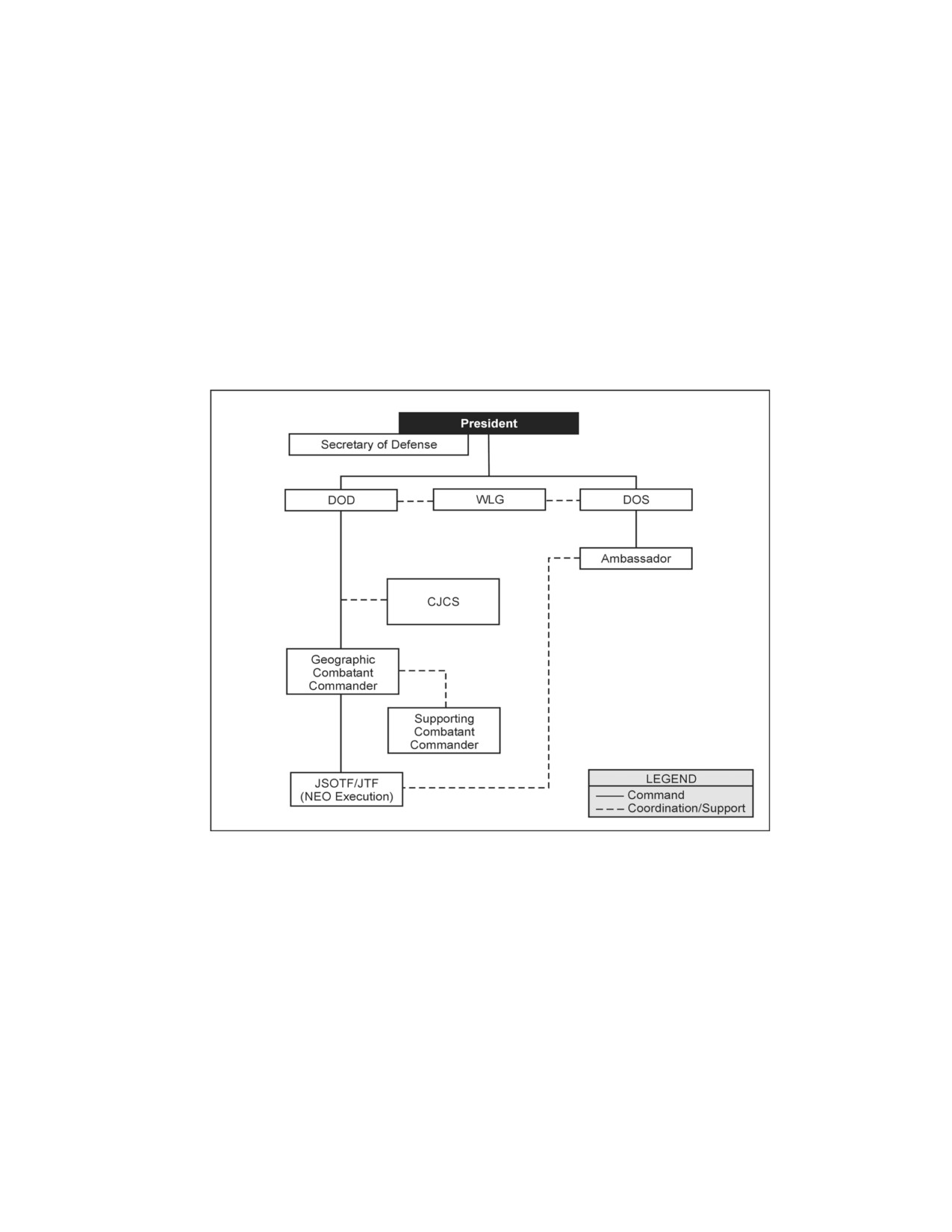
Chapter 2
United States Organizations and Roles
A variety of government agencies, DOD elements, combined working groups, and
military organizations support NEOs. It is through effective planning and
coordination by these entities that ARSOF and other military units successfully
complete these complex, sensitive missions. Figure 2-1 shows the chain of command
for a NEO.
Figure 2-1. Noncombatant evacuation operation chain of command
DEPARTMENT OF STATE
2-1. The DOS, acting on the advice and recommendation of the COM, decides when to initiate a NEO.
Evacuation normally commences according to the Embassy EAP and requires scheduled commercial
transportation, commercial charter transportation, or U.S. military transportation. The DOS Under
Secretary for Management arranges charter transportation—civilian or military.
2-2. If evacuation requirements exceed the capability of the diplomatic mission, the Secretary of State
may request military assistance from the DOD. The need for military assistance may occur when the threat
to U.S. citizens makes it impractical to wait for other means of evacuation or if military forces are
necessary to actively protect U.S. citizens.
2-1
FM 3-05.131
16 November 2009
Chapter 2
2-3. The CJCS, when directed by the SecDef, tasks this mission to the appropriate GCC. The GCC
initiates appropriate military planning and coordinates with the DOS chair or his regional liaison group.
EMBASSY ORGANIZATION
2-4. The primary responsibility for NEOs lies with the DOS. The COM is the Ambassador. He is the
ranking U.S. official in-country and is directly responsible to the President of the United States. In the
absence of the Ambassador, the deputy chief of mission (DCM) becomes the chargé d’affaires. As the
President’s representative in-country, the Ambassador is the senior representative of the USG and is
therefore ultimately in command. The COM, not the senior military commander, is ultimately
responsibility for successfully completing the NEO and safeguarding the evacuees. Embassy organization
varies from country to country. Some embassies may be responsible for more than one country; some are
fully staffed, while others have minimum staffing. DOS agency name and organizational changes affect
Embassy organization as well. JP 3-68, Noncombatant Evacuation Operations, 22 January 2007, contains
further details on Embassy organization.
2-5. The administrative officer (AO) is often the third in command in the Embassy hierarchy. In a small
post with no security officer, the AO assumes the functions of the security officer. In this situation, the AO
would then have operational control (OPCON) of the Marine security guard (MSG) detachment, if one is
assigned to the Embassy. The AO is also responsible for the Embassy communications unit.
2-6. The general services officer (GSO) has many of the same functions as a logistics staff officer. The
GSO is normally responsible for all buildings, grounds, construction, vehicles, and maintenance.
2-7. The chief of the consular section is responsible for many functions relating to U.S. personnel and is
an appropriate point of contact (POC) for the intelligence and operations staff officers. Consular officers
are, in general, responsible for protecting the welfare of all U.S. citizens visiting and residing in their
country, knowing the whereabouts of U.S. citizens, and maintaining an estimated count of U.S. citizens in
the area.
2-8. The chief of the security assistance office (SAO) may act as the senior military person at the
Embassy. He maintains liaison with the HN’s military forces. The law authorizes him to perform specific
military functions with the HN that other Embassy staff members cannot. When an Embassy has no
military personnel assigned to the Defense Attaché Office, the SAO is responsible for the activities
associated with that office. Likewise, an Embassy may not have an SA assigned but has a staffed Defense
Attaché Office.
2-9. The United States defense representative (USDR) is normally the senior military official assigned to
the Embassy. The USDR is the representative of the SecDef, CJCS, and GCC. The USDR provides the
conduit for planning, coordinating, and executing support to USG officials for DOD activities that are not
the responsibility of another DOD agency or component. The USDR is responsible for coordinating
administrative and security activity for DOD elements assigned to the Embassy that are not under the
control of a combatant commander.
2-10. The DATT is a military DOD representative attached to the Embassy in diplomatic status. He has
access to the daily Embassy situation report (SITREP) and other written intelligence. The chief of station
and DATT are ideal points of contact for the intelligence staff officer. They can provide information about
HN civil and military capabilities, such as order of battle.
2-11. The public affairs officer (PAO) is responsible for media relations and approves all media contacts
during a NEO. He is the POC for the JSOTF PAO.
2-12. The regional security officer (RSO) is a diplomatic security officer responsible for the security
functions of U.S. Embassies and Consulates in a given country or group of adjacent countries. The RSO
oversees the special security force (SSF) and contract security force at the post.
2-13. Embassies without an RSO have a post security officer (PSO) who has general security duties at a
specific Embassy (or Consulate). The PSO is a special staff officer under the control of the AO. The PSO
exercises OPCON over the MSG detachment assigned to the station. The SSF are DOS employees who
2-2
FM 3-05.131
16 November 2009
United States Organizations and Roles
respond to crises in foreign countries. They work for the RSO and provide additional bodyguard security
for the COM, the DCM, and others as directed by the RSO.
2-14. The political officer reports on political developments, negotiates with the host government, and
represents views and policies of the USG to his contacts. The political officer maintains regular contact
with HN government officials, political and labor leaders, and other influential citizens and third-country
diplomats. The political officer is a major contributor to the overall intelligence picture.
2-15. The economic officer analyzes, reports, and advises on economic matters in the HN. Economic
officers negotiate with the host government on trade and financial issues. They also work closely with
relief organizations.
2-16. The medical officer is the senior medical person. He responds to emergencies and sets up triage,
trauma, and mass casualty operations. The medical officer can also advise the JTF on medical threats and
preventive medicine measures necessary for in-country and incoming forces. However, this advice should
not take the place of good medical intelligence by the evacuating force before the operation.
2-17. The MSG detachment has, at a minimum, a commander and watch standers. The MSG detachment
missions and duties include—
z
Exercising access control and providing stationary guard coverage of the principal buildings
z
Conducting visual inspections of controlled access areas to detect possible physical or technical
penetrations
z
Performing other necessary duties that need immediate action and that the COM, chargé
d’affaires, RSO, or PSO directs.
z
Protecting the principal buildings as the EAP outlines or as the COM, chargé d’affaires, RSO, or
PSO directs.
2-18. The MSG detachment commander is normally a member of the emergency action committee (EAC).
The EAC is the interface between the Embassy and the DOS. The mission of the EAC is to brief,
coordinate, and plan for the evacuation and protection of U.S. noncombatants and certain designated
aliens. The EAC is a subset of the country team. It advises the Ambassador on security issues, emergency
preparedness, draw downs, and evacuations. The EAC prepares the EAP.
COUNTRY TEAM
2-19. The country team is a council of senior officers, normally section heads, working under the direction
of the COM to pool their skills and resources in the national interest of the United States. The country team
system makes rapid interagency consultation, action, or recommendation possible from the field and
effective execution of U.S. missions, programs, and policies. The organization of each country team varies,
depending on the COM’s desires, the specific country situation, the number and size of U.S. programs, and
the qualifications of the senior officers representing the agencies. The country team normally consists of
the following members:
z
COM.
z
DCM.
z
Consular officer.
z
Chief of station.
z
RSO.
z
Political counselor.
z
Commercial attaché.
z
Agricultural attaché.
z
Legal attaché.
z
Science officer.
z
PAO.
z
AO.
z
Economics officer.
16 November 2009
FM 3-05.131
2-3
Chapter 2
z
Drug Enforcement Administration (DEA) attaché.
z
Director of the United States Agency for International Development (USAID).
z
Director of the Peace Corps.
z
DATT.
z
Chief of the SAO.
OTHER AGENCIES
2-20. During NEOs, the JSOTF may need to coordinate with agencies outside the DOS. The following
paragraphs discuss other agencies that may have important responsibilities during NEOs.
UNITED STATES AGENCY FOR INTERNATIONAL DEVELOPMENT
2-21. The USAID is a quasi-independent agency that funds developmental projects representing the
nationwide efforts of the country team. Administratively, it functions within the DOS and operates under
an administrator who also serves as the Director of the International Development Cooperation Agency.
USAID—
z
Carries out economic assistance programs designed to help people of developing countries
advance their productive capacities, improve their quality of life, promote economic and
political stability, and assist other missions in providing the HN with supplies and equipment to
construct needed projects.
z
Maintains liaison with all charitable organizations capable of conducting humanitarian
assistance.
z
Responds to virtually any disaster abroad, with emphasis on humanitarian relief in the form of
equipment and funds.
DEPARTMENT OF HEALTH AND HUMAN SERVICES
2-22. By law (Title 42, United States Code [USC], Section 1313, Assistance for U.S. Citizens Returned
From Foreign Countries) and Executive Order 12656, the Department of Health and Human Services
(DHHS) is the lead federal agency for the reception of all evacuees in the United States. DHHS personnel
meet and assist evacuees at the U.S. port of entry. The Embassy and DOS coordinate DHHS assistance for
evacuees.
DEPARTMENT OF THE ARMY, DEPUTY CHIEF OF STAFF FOR PERSONNEL
2-23. The Department of the Army (DA), Deputy Chief of Staff for Personnel, is responsible for the
reception and repatriation of all DOD family members, nonessential employees, and DOD contractors. The
Department of Defense Directive (DODD) 3025.14, Protection and Evacuation of U.S. Citizens and
Designated Aliens in Danger Areas Abroad, provides guidelines for reception and repatriation.
IMMIGRATION AND NATURALIZATION SERVICES
2-24. If the safe haven is in the United States, the United States Citizenship and Immigration Services
(USCIS) and Immigration and Customs Enforcement (ICE) may meet evacuees at the port of entry.
Embassy staff may include representatives from the Department of Homeland Security and ICE who can
help identify the foreign nationals the United States will evacuate. Responsibilities of the USCIS include
the following:
z
Facilitate the entry of legally admissible persons as visitors or as immigrants to the United
States.
z
Grant benefits under the Immigration and Nationality Act, including those seeking permanent
resident status or naturalization.
2-4
FM 3-05.131
16 November 2009
United States Organizations and Roles
z
Prevent unlawful entry into the United States.
z
Apprehend and remove persons whose entry is illegal or not in the best interest of the
United States.
2-25. In addition to the USCIS and ICE, the U.S. Customs and Border Protection may also be necessary to
meet and process non-USG evacuees. The WLG is responsible for coordinating USCIS, ICE, and
U.S. Customs and Border Protection support to the NEO.
Washington Liaison Group
2-26. A representative of the DOS chairs the WLG. Representatives from the Office of the Secretary of
Defense (OSD), the Joint Chiefs of Staff (JCS), and the military departments are members of the WLG.
The Assistant Secretary of Defense for Special Operations and Low-Intensity Conflict and Interdependent
Capabilities is the NEO coordinator for the DOD. The DOS invites other USG departments and agencies to
participate as appropriate.
2-27. The WLG is responsible for coordinating, planning, and implementing DOS and DOD plans for the
protection and evacuation of noncombatants abroad. The representatives of the WLG are the points of
contact for their departments on all matters pertaining to evacuation planning and implementation. The
WLG arranges transportation beyond what is routinely available to the Embassy. It designates the ISB, safe
haven, and repatriation site. (Unless otherwise designated by the OSD, the ultimate safe haven for DOD
employees and dependents is the United States.)
2-28. The WLG coordinates with the DHHS, INS, and the U.S. Customs Bureau. The WLG ensures the
appropriate agencies meet all non-USG evacuees at the initial port of entry in the United States, process
them into the country, and assist them in making onward travel arrangements.
2-29. The DHHS meets and assists evacuees at the U.S. port of entry. The DHHS provides assistance only
if evacuees are without adequate resources to resettle on their own, the Embassy and the DOS recommend
assistance, and the individual desires assistance.
Regional Liaison Groups
2-30. RLGs are joint-monitoring and -coordinating bodies established by the DOS. Political advisors chair
the RLGs to their GCC, with representation from the DOD.
2-31. RLGs ensure coordination exists between the various Embassies and military commands. RLGs
ensure that Embassies (or posts) and GCCs coordinate NEO planning. They provide advice and guidance
to diplomatic and Consulate posts and military commands in their areas by—
z
Helping Embassies and commands plan evacuation and protection of U.S. citizens and certain
designated aliens in case of emergency.
z
Providing liaison between the WLG and the Embassy.
z
Reviewing EAPs and forwarding them to DOS with comments and recommendations.
z
Ensuring coordination exists between the various Embassies and military commands.
GEOGRAPHIC COMBATANT COMMANDERS
2-32. The DOS may task GCCs to assist in the event of imminent or actual hostilities, significant civil
disturbances, or natural and manmade disasters. Geographic combatant commanders prepare and maintain
contingency NEO plans to help the DOS protect and evacuate U.S. noncombatants and designated aliens.
2-33. The GCCs develop general contingency plans to support the DOS in case the SecDef orders such
assistance. These plans include support for the evacuation of noncombatants. When a situation develops in
which U.S. military assistance is necessary during a NEO, the CJCS designates the supported and
supporting combatant commanders for planning purposes.
2-34. The CJCS warning order (WARNORD) provides guidance to the GCCs. This guidance normally
covers areas of key concern to the President or SecDef and provides the GCC with an overview of the
16 November 2009
FM 3-05.131
2-5
Chapter 2
political context within which the higher authority is considering the NEO. The scope and objective of U.S.
involvement in a developing situation requiring a military response is often in general terms to allow
maximum flexibility in the preparation of appropriate COAs. The CJCS warning order—
z
Defines command relationships, the anticipated mission, and any planning constraints.
z
Identifies available forces and strategic mobility resources and establishes tentative timing for
execution. The CJCS may state that the GCC specify the forces, mobility resources, and timing
as part of COA development.
2-35. Upon request by the Embassy, the GCC supporting the Embassy’s area of responsibility (AOR) will
dispatch a small advanced echelon (ADVON) team. The ADVON team will maintain contact with the
Embassy and coordinate the initial military effort. The ADVON team has the communications equipment
necessary to maintain effective contact between the GCC, subordinate JFC, and the Embassy.
2-36. Although each Embassy has an EAP, the information may not be accurate or current. Prior
coordination and a site survey may not be possible. The GCC must deal with the situation as it exists at the
time of evacuation. He may have to depend on information that Embassy personnel or other assets provide.
2-37. Evacuations may be politically sensitive. The highest levels of leadership monitor NEOs. The DOS
determines the evacuation sites and timing of the operation. As a situation develops, the evacuation force
secures assembly areas and an evacuation site, establishes defensive perimeters, and locates and escorts
evacuees. Protecting the force and its charges may include establishing physical barriers to protect
assembly areas and evacuation sites.
ARMY SERVICE COMPONENT COMMAND
2-38. Higher authorities may task commanders of Army Service component commands (ASCCs) of
geographic combatant commands to provide conventional army units in support of ARSOF-conducted
NEOs. Coordination between the Army Service component command staff and the JSOTF or ARSOF
should occur during preparation and planning (FM 4-93.4, Theater Support Command). Conventional
Army, military police (MP), infantry, aviation, signal, and logistical units may be necessary augmentations
to an ARSOF conducting a NEO.
SPECIAL RESPONSIBILITIES
2-39. In nonemergency evacuations, the Commander, United States Joint Forces Command
(CDRUSJFCOM), and the Commander, United States Pacific Command (CDRUSPACOM), are the safe
haven commanders for DOD repatriation in their respective areas of responsibility. In addition,
CDRUSPACOM is responsible for repatriation operations in Hawaii, Alaska, and U.S. territories in the
Pacific. CDRUSJFCOM has delegated the responsibility for repatriation to the Army component
commander, who is the Commander, United States Forces Command (CDRUSFORSCOM).
2-40. Because of its reputation as a humanitarian Service, the Coast Guard may play a vital role in certain
emergency evacuation situations. The relatively nonbelligerent nature of Coast Guard cutters and aircraft
makes them an option in cases where a DOD presence may exacerbate a potentially hostile situation.
2-41. As a member of the WLG, the SOF representative coordinates with the DOS, the GCCs, and the
Services to ensure the adequacy and timeliness of special operations planning and coordination in support
of NEOs. The Commander, United States Special Operations Command (CDRUSSOCOM), prepares and
provides SOF in support of NEOs conducted by GCCs.
2-6
FM 3-05.131
16 November 2009
Chapter 3
Contingency and Predeployment Planning
Evacuation operations differ from most other military operations. The direction of the
operations may remain with the U.S. Ambassador at the time of evacuation. Further,
the order to evacuate is a political, rather than a military, decision with extensive
ramifications. It indicates to the local population and other governments that the
situation has deteriorated to such a point that the U.S. has lost faith in the ability of
the HN to maintain control. Therefore, the Ambassador may delay the evacuation
order longer than would normally be considered militarily sound. As a result, the
evacuation, when it is ordered, is more urgent and dangerous.
EARLY ACTION PLANS
3-1. U.S. Embassies and Consulates are required to have early action plans for the area under their
cognizance. The COM is responsible for the preparation of an EAP. The EAP should address, among other
things, the evacuation of U.S. citizens and designated foreign nationals from a foreign country with
military assistance. The supporting military commander is solely responsible for the conduct of military
operations to assist in the implementation of EAPs. EAPs (to include photographs) give details on—
z
Evacuation sites.
z
Number of evacuees (total and by area).
z
Assembly areas.
z
Command posts.
z
Key personnel (names, location, and means of contact).
3-2. Geospatial intelligence base for contingency operations (GIBCO) products, formerly known as
noncombatant evacuation operation packages
(NEOPACKS), are electronic, tailored, geospatial and
written products designed to support a NEO. These products can contain highly accurate terrain
visualization, route analysis, site selection, weather effects, and other products to assist the NEO planner.
Planners should include geospatial-intelligence contingency packages in the EAP.
3-3. The 12 FAH-1, Emergency Planning Handbook, by the DOS is a consolidated source of guidance
for foreign-Service posts. The handbook provides information on planning for and dealing with certain
emergencies. The handbook is the principal reference for posts preparing and revising the EAPs.
Appendix D of this manual contains sample EAP checklists from the 12 FAH-1.
NOTIFICATION METHODS
3-4. Evacuation notification methods (Figure 3-1, page 3-2) involve various ways of communicating
with potential evacuees. These methods include wardens, radios or telephones, and runners.
3-5. Wardens are usually volunteers who have agreed to notify a certain number of U.S. citizens when
evacuation is possible. As a rule, the wardens prepare, update, and maintain a list of phone numbers and
addresses of U.S. citizens residing in their area. During an evacuation, each warden distributes messages,
keeping individuals informed about the evacuation and other relevant information.
3-6. U.S. citizens and foreign nationals living outside of large population centers may require an alternate
means of notification. Alerting personnel can use shortwave radio and commercial telephone to contact
personnel living at great distances from the Embassy. However, because of the insecure nature of these
3-1
FM 3-05.131
16 November 2009
Chapter 3
means, personnel can only transmit unclassified information through them. In some instances,
communications outages may require runners to disseminate information to personnel outside the Embassy
area.
Figure 3-1. Evacuation notification methods
MILITARY PLANNING AND PLANNING ASSISTANCE
3-7. Particular HN and DOS events create a probability of a NEO occurring. NEOs progress through five
stages that require prior planning.
NONCOMBATANT EVACUATION OPERATION TRIPWIRES
3-8. Possible events that may lead to a NEO are as follows:
z
The issuance of DOS travel advisories (Defense Intelligence Agency [DIA] Watch Condition
[WATCHCON] III).
z
The existence of threats against U.S. citizens or U.S. facilities.
z
The DOS implementation of voluntary departure.
z
The demonstration of mass protests directed at U.S. citizens, facilities, or policies.
z
The implementation of DOS-authorized departure (DIA WATCHCON II).
z
The deterioration of security conditions.
z
The existence of rioting or general lawlessness.
z
The presence of violence directed at U.S. citizens or facilities.
z
The emplacement of limitation by the local government on the free movement of U.S. citizens.
z
The closing of international airports or borders.
z
The existence of an insurgency that may threaten U.S. citizens.
z
The invasion by a third nation that may threaten U.S. citizens.
z
The implementation of a DOS-ordered departure (DIA WATCHCON I).
z
The evacuation of other country’s citizens.
z
The request by the COM for assistance.
3-9. As more events on the list occur, the probability of a NEO occurring increases. This list is not
all-inclusive. It is not in sequential or chronological order. In addition, the list does not represent an
escalating scale of probabilities culminating in the immediate necessity to execute a NEO.
PHASES OF A NONCOMBATANT EVACUATION OPERATION
3-10. A NEO assisted by the military usually consists of the following NEO phases:
z
Phase I. Predeployment begins upon receipt of the CJCS WARNORD. It extends through the
commencement of the deployment.
z
Phase II. Deployment commences with the departure from home station. Deployment is
complete upon linkup with the supported JTF, JSOTF, or Army special operations task force
(SOTF).
3-2
FM 3-05.131
16 November 2009
Contingency and Predeployment Planning
z
Phase III. Lodgment includes the establishment of assembly areas, departure airfield or port
facilities, landing zones (LZs), and, if necessary, safe havens.
z
Phase IV. Evacuation involves the collection, processing, preparation, and evacuation of desired
personnel.
z
Phase V. Redeployment includes the return of all forces to the home station after the evacuation
is complete.
PREDEPLOYMENT PLANNING
3-11. Predeployment planning begins when the subordinate JTF or JSOTF receives the WARNORD from
the GCC. Predeployment planning continues until the evacuation force reaches the ISB or the evacuation
site. Prior coordination between the GCC and the Embassy staff can greatly improve planning. The GCC
can provide the JTF or JSOTF with information to begin the planning, such as the general contingency
plans developed by the combatant command. During this period, the advance party may deploy. The GCC
must request diplomatic support from the DOS. The GCC’s request will result in the DOS requesting the
necessary overflight agreements.
3-12. Time is often critical in planning. The JTF or JSOTF commander obtains necessary planning
information from the combatant command. As a minimum, he must determine the following:
z
The need for and the location of an ISB (if the WLG has not designated one).
z
The number and general location of evacuation sites. The ports of embarkation
(POEs),
approximate number of evacuees, and the manner in which evacuees will leave the country.
z
The location of the safe haven and any intermediate safe havens and the person responsible for
establishing and operating these sites.
3-13. One of the first pieces of information that the combatant command provides the JTF or JSOTF
commander is the operation plan (OPLAN) or concept plan (CONPLAN) for the emergency evacuation of
citizens from the country or region in question. This is the GCC’s baseline guidance for the operation. In
most cases, this document contains an analysis of the AOR and valuable background intelligence about the
geography and demography of the HN. In addition, it identifies the headquarters with responsibility for the
operation. The combatant command develops the CONPLAN for each country in its AOR based on
priority and resources. The combatant command reviews and updates the CONPLAN often to allow for
expeditious planning should a NEO be necessary.
3-14. The Embassy provides the combatant command with a copy of its EAP, which the command
provides to the JTF or JSOTF after analyzing it for mission direction. The plan contains much of the
intelligence the task force and evacuation force commanders will need to plan the operation. The EAP
includes a checklist for evacuations assisted by the U.S. military and intelligence on routes, assembly areas,
and helicopter LZs. It also contains airfield and seaport survey data. (Appendix D contains samples of EAP
checklists.) Other critical sources of intelligence available include the following:
z
Geospatial-intelligence contingency packs.
z
Regional survey team reports.
z
Joint expeditionary support products—noncombatant evacuation operations.
z
Contingency support packages (CSPs).
3-15. The combatant command staff and the Embassy must coordinate regularly to ensure the OPLAN and
the EAP are consistent. Failure to coordinate and update either plan can cost precious planning time or,
even worse, cause disaster. One such example is the evacuation of Mogadishu, Somalia, in January 1991.
Although the Embassy in Mogadishu moved in 1989, the evacuation plan contained a map from 1969.
Helicopters carrying the evacuation force spent an additional 20 minutes above hostile forces looking for
the Embassy. In this case, the failure to update plans could have resulted in the loss of aircraft, personnel,
and evacuees.
3-16. Other agencies may provide key intelligence for planning NEOs. When geospatial-intelligence
contingency packages are not included as part of or as a supplement to an EAP, the unit conducting the
NEO should request a package from the National Geospatial-Intelligence Agency (NGA). The NGA is a
16 November 2009
FM 3-05.131
3-3
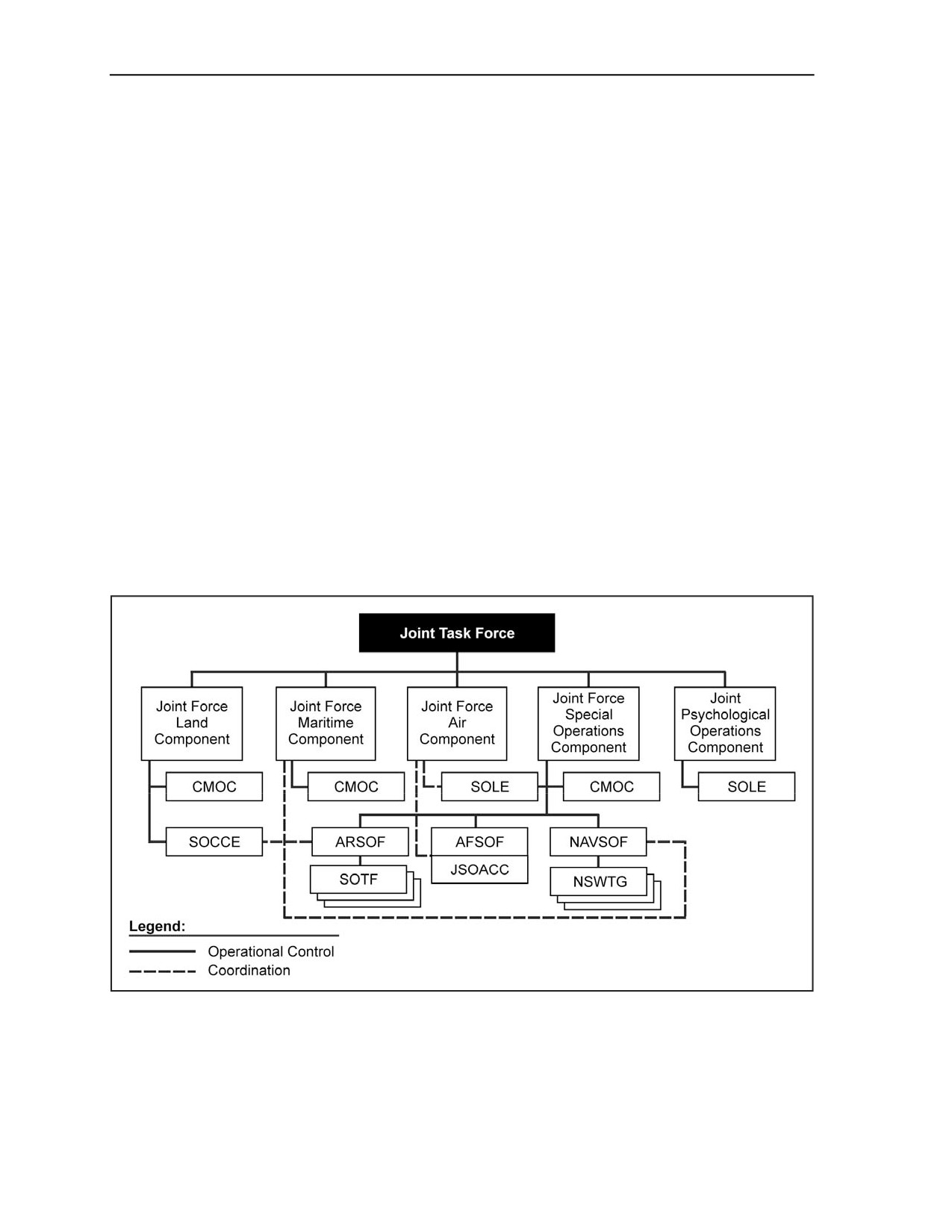
Chapter 3
Department of Defense combat support agency and a member of the national intelligence community. The
DIA provides the DOS, selected Embassy DATT officers, appropriate military commands, and the
Services with contingency support packages or U.S. diplomatic facility graphics for use in evacuation
planning. Other intelligence products that may be available and applicable to the NEO include the gridded
reference graphic and the contingency support study. In addition, the DIA is responsible for national-level
evasion and recovery intelligence production.
JOINT TASK FORCE OR JOINT SPECIAL OPERATIONS TASK FORCE
3-17. If a NEO involves military forces, they are usually comprised of units from more than one Service or
country. Upon receiving orders, the GCC designates a CDRJTF to exercise overall control of the NEO
operations. The CDRJTF is responsible for all activities, from initial planning and deployment to
establishing an ISB, conducting the evacuation, and if necessary, operating the safe haven.
3-18. The GCC may elect to form a JSOTF. The organization of a JSOTF is similar to a conventional JTF.
A higher or senior JFC normally establishes a JSOTF to plan and conduct special operations. The
establishment of the JSOTF may be subordinate to another JTF or directly subordinate to a GCC or
subunified command. Likewise, a TSOC commander may establish a JSOTF to focus on a specific mission
or region within the operational area assigned by the GCC. In addition, the JSOTF could operate as a
JSOTF afloat—at sea in a forward area. This option may be necessary when protection and security risks
are a concern or the government will not allow a land-based JSOTF on its territory.
3-19. The JSOTF is a temporary, joint SOF headquarters. This SOF headquarters controls a JTF made up
of SOF of more than one Service in a specific theater of operations. The GCC forms a JSOTF to carry out a
specific operation or to execute special operations in support of the theater campaign or other operations.
The JSOTF may have conventional units under its OPCON or tactical control to conduct assigned
missions. Figure 3-2 depicts a typical JSOTF.
Figure 3-2. Typical joint special operations task force
SPECIAL OPERATIONS TASK FORCE
3-20. If there is only one group, regiment, or battalion in charge of Army special operations, the Army
calls it a SOTF. The commander, joint special operations task force (CDRJSOTF), may establish multiple
3-4
FM 3-05.131
16 November 2009
Contingency and Predeployment Planning
subordinate SOTFs. The commander organizes each SOTF around the nucleus of an SF or a Ranger unit
and includes a mix of ARSOF units and their support elements. The CDRJSOTF assigns each SOTF an
area within the joint special operations area or functional mission under the SOTF’s OPCON.
3-21. The SOTF is a mission-dependent organization. The command may construct the SOTF of theater
SOF assets and forces based in the continental United States
(CONUS). Because of possible time
constraints, ARSOF elements stationed in-theater may provide the nucleus that CONUS-based forces
arriving in-theater build upon.
INTELLIGENCE PREPARATION
3-22. NEOs involve managing large groups of people with little to no military training across a collapsing
infrastructure with an ever-changing threat. The military forces have ultimate responsibility but little
authority over the personnel that they are protecting. Because conventional intelligence preparation of the
operational environment
(IPOE) focuses on combat between two conventional military forces, the
intelligence staff section must draw techniques from other sources to complement his analysis for NEOs.
The methods of IPOE for urban operations are one supplemental source (FM 3-06, Urban Operations).
3-23. Accurate and timely intelligence is the key to a successful NEO. To provide useful intelligence, the
intelligence staff officer must ensure full engagement of the intelligence effort at all times. Current military
intelligence doctrine emphasizes the following five main considerations:
z
Consideration 1. Initially, the commander drives the intelligence effort. He focuses on the
intelligence system by clearly designating his priority intelligence requirements
(PIR) and
mission requirements. He ensures that personnel fully employ and synchronize the intelligence
effort. He demands that the intelligence effort provide the information he needs in the time
frame and form in which he needs it.
z
Consideration 2. The intelligence officer synchronizes intelligence collection, analysis, and
dissemination with operations. By synchronizing intelligence, the intelligence officer ensures the
executing commander receives the information he needs for his decision-making process.
Intelligence synchronization is a continuous process that keeps intelligence, surveillance, and
reconnaissance (ISR) operations tied to the commander’s critical decisions and concept of
operations.
z
Consideration 3. Broadcast dissemination of intelligence is the simultaneous broadcast of
near-real-time intelligence from collectors and processors at all echelons. It permits commanders
and operational elements at different echelons to receive the same intelligence at the same time.
This provides the commander, evacuation control center
(ECC), Embassy intelligence
personnel, evacuation teams, ISB personnel, and home-base or safe-haven personnel with a
common picture of the mission area.
z
Consideration 4. Split-based intelligence operations enable the commander to have top-driven,
high-resolution intelligence, regardless of which organic intelligence-collection and production
assets are currently in use and in-country. Split-based intelligence operations employ collection
and analysis elements from all echelons, from national to tactical, in HNs, sanctuaries, or the
CONUS. Collection elements typically operate in the HN while analysis occurs in a sanctuary or
HN.
z
Consideration 5. The intelligence staff officer tactically tailors ISR support for each phase of
the operation based on the mission requirements and the availability of resources. He must
decide which key intelligence personnel and equipment to deploy immediately to the mission
area and when and if to phase in his remaining military intelligence (MI) assets. (FMI 2-01.301,
Specific Tactics, Techniques, and Procedures and Applications for Intelligence Preparation of
the Battlefield, provides more information.)
3-24. Uncertain and hostile NEO environments presuppose regime resistance to the operation or regime
incapacity because of partial or full breakdown of law and order and partial or full breakup of the regime’s
defense and security establishments. With regime resistance, the threat profile consists of regime military
and paramilitary (police) forces and auxiliaries. In this situation, order-of-battle analysis can derive unit
strengths, types and amounts of weaponry and mobility assets, garrison locations, and so forth. With
16 November 2009
FM 3-05.131
3-5
Chapter 3
regime incapacity, the threat-force profile may be even more diverse. The threat-force profile may consist
of—
z
Military or police mutineers.
z
Political party or factional militias.
z
Mobilized trade- or student-union groups.
z
Street gangs.
z
Enraged mobs.
3-25. Soldiers cannot consider civilian groups unarmed because they may loot arsenals or receive weapons
from local power brokers, which makes it more difficult for Soldiers to obtain intelligence concerning the
number of hostile forces.
3-26. Threat-force location is a critical factor. The nonconventional threat types noted above will not
necessarily assemble at or near military installations. Therefore, personnel conducting intelligence analysis
must note the presence of these threats at stadiums, parks, or other mass-assembly areas near the NEO site.
As with the location of the nonconventional threat types, their tactics also merit special consideration. One
key concern for task forces is the inclination of foreign threats to take U.S. citizens hostage. Another
consideration is the inclination of foreign threats to resort to arson or infrastructure sabotage. In either case,
such actions could jeopardize the NEO. A final key consideration is the identification of the key motivators
of hostile action. If the government opposes the NEO, this task is easier than if antigovernment or
nongovernment elements oppose it. Government leaders and spokespersons are much more likely than
factional or mob leaders to function as known entities. In any case, it is essential for intelligence sources to
identify those individuals who are most likely to incite opposition to the NEO.
3-27. ARSOF units use three techniques to collect intelligence—the bull’s-eye technique, the threat model,
and the criticality, accessibility, recuperability, vulnerability, effect, and recognizability
(CARVER)
targeting matrix factors. Used in sequence, they allow the intelligence staff officer to focus the collection
effort, characterize the threat, and predict possible COAs by analyzing friendly operations through an
enemy perspective.
Bull’s-Eye
3-28. In the original bull’s-eye concept, the commander tailors his level of intelligence support to the
geographic proximity an area has to a mission. The outermost ring consists of the country and region in
which the operation is taking place. The middle ring represents the mission area analysis the intelligence
staff section conducts, which provides area-specific intelligence for the team. The innermost circle covers
the specific operational or target areas and provides mission-specific analysis.
3-29. Unlike an SF direct-action or special-reconnaissance mission, a NEO may include several locations
at which key events will occur simultaneously, such as multiple concentrations of U.S. nationals and other
potential evacuees. These places will shift as the operation progresses, for example, from the Embassy to
the POE. Therefore, the intelligence staff section can have several bull’s-eyes to focus collection and
analysis effort on, reallocating resources to provide predictive analysis during progressive phases of the
operation.
Threat Model
3-30. In a NEO environment, the intelligence staff section faces a larger variety of threats than in a
conventional scenario. In addition, these threats can change quickly as the physical and governing
infrastructures continue to deteriorate. Personnel can use some aspects of conventional IPOE to analyze
military forces and well-organized resistance groups. To accomplish this, however, the threat must possess
a relatively stable organization and institutionalized tactics, which may not be the case in a NEO
environment. To complement established IPOE techniques, the intelligence staff section can use the threat
model, which allows it to look at a wider array of factors in the operational environment in terms of
functional effects on the operation, rather than just those identified in terms of conventional warfare.
3-6
FM 3-05.131
16 November 2009
Contingency and Predeployment Planning
3-31. The threat model is a color-coding system that allows the analyst to categorize aspects of the threat
environment, which allows him to evaluate features normally not considered in conventional IPOE. White,
red, blue, black, and green correspond to the operational environment, threat, friendly forces, physical
objects, and local civilian population.
Criticality, Accessibility, Recuperability, Vulnerabiliy, Effect, and Recognizability
Targeting Matrix
3-32. Originally, SF used the CARVER targeting matrix to determine the most effective and expedient
means of identifying, selecting, and attacking targets. In a NEO, the military force commander can use this
matrix as a method for evaluating key installations and critical points in the operation to reduce their
desirability as red force targets. Within an installation, he could evaluate a critical subsystem, such as the
electrical system, and within the operation, a key element, such as the egress route from the Embassy to the
POE. The factors in the CARVER targeting matrix are as follows:
z
Criticality. The importance of a system, subsystem, complex, or component. A target is critical
when its destruction or damage has a significant impact on the output of the targeted system,
subsystem, or complex.
z
Accessibility. The ease with which a threat can reach a target, either physically or by fire. A
target is accessible when an enemy action element can physically infiltrate or hit the target by
direct or indirect fires.
z
Recuperability. A measure of the time necessary to replace, repair, or bypass the destruction of
or damage inflicted on the target. Recuperability varies with the sources and ages of targeted
components and the availability of spare parts.
z
Vulnerability. A measure of the ability of the action element to damage the target using
available assets (both men and materials). A target is vulnerable if the enemy has the manpower
and expertise to successfully attack it.
z
Effect. The negative or positive influence on the population because of the action taken. The
impact on the evacuee’s comfort and safety because of electrical system failure is key.
z
Recognizability. The degree to which individuals can recognize a target under varying weather,
light, and seasonal conditions without confusion with other targets or components.
Note: FM 2-0, Intelligence, and current SF intelligence doctrine provide more detail on the
intelligence process.
16 November 2009
FM 3-05.131
3-7
This page intentionally left blank.
Chapter 4
Deployment
The commander should form and request permission to dispatch an advance party to
the HN early in the planning process. The advance party may consist of two
elements: the forward command element (FCE) and the evacuation site party. The
advance party should be small and inconspicuous to avoid drawing attention to it.
Personnel must deploy with the necessary specialized equipment to accomplish the
mission. Once the advance party deploys and sets up the ECC, the commander inserts
the main body. Appendix E provides guidance for NEO planning.
PREPARATION AND PLANNING
4-1. Deployment of the advance party depends on the mission, enemy, terrain, troops, and support
available—time available, and civil considerations (METT-TC). The least conspicuous method is for the
advance party to arrive in the HN in civilian clothes and on civilian aircraft. This is possible only in a
permissive environment and if the proper authorities can arrange the necessary passports and visas.
4-2. An uncertain or hostile environment may require forcible entry. Use of military aircraft allows the
advance party to carry additional equipment that they may need to set up the evacuation site and establish
communications and liaison. The advance party should accomplish the following tasks before deployment:
z
Forward the number of members in the advance party to the Embassy for approval.
z
Develop and brief a communications plan.
z
Acquire and review appropriate maps.
z
Review the Embassy EAP and the EAP checklists.
z
Assemble and inspect necessary equipment.
z
Develop and brief an advance party evasion and recovery plan.
z
Obtain visas for the advance party.
z
Determine whether the advance party should deploy in civilian clothes.
z
Consider weapon and ammunition requirements.
z
Examine the need for specialized equipment.
z
Determine the medical requirements.
z
Identify translator and linguistic requirements.
z
Review all available intelligence on the proposed NEO.
z
Assess media interest in the situation, JTF or JSOTF activities, and JTF or JSTOF involvement
in the evacuation.
FORWARD COMMAND ELEMENT
4-3. Upon arrival in the HN, the FCE initiates liaison with the diplomatic mission as follows:
z
Briefs DOS representatives on the capabilities and missions of the advance party and the JTF or
JSOTF.
z
Establishes a forward command post that can expand to incorporate the JTF or JSOTF
headquarters staff.
z
Provides a continuing presence for planning and ensures a complementary role with DOS
personnel.
4-1
FM 3-05.131
16 November 2009
Chapter 4
z
Determines whether the operational environment is permissive, uncertain, or hostile.
z
Advises the CDRJTF regarding the size and composition of forces necessary. If specified in the
initiating directive, determines whether the JTF or JSOTF is appropriate for the mission.
z
Advises the CDRJTF regarding the time, place, and method for the arrival of the evacuation
force.
z
Determines existing political and sociological considerations.
z
Determines attitude of and support available from the local population and authorities.
z
Establishes communications between the FCE and the CDRJTF as follows:
Makes the communications link to NEO commander available to the senior DOS
representative.
Maintains continuous communication for exchange of planning data and intelligence.
4-4. The FCE establishes communications between the evacuation site and the Embassy and provides a
link with the evacuation force commander. The FCE provides the commander with updated SITREPs. The
FCE may include the following personnel:
z
Officer in charge.
z
Intelligence representative.
z
Operations representative.
z
Logistics representative.
z
Communications team.
z
Medical representative.
z
Air or naval representative.
z
PAO representative.
z
CA representative.
z
PSYOP representative.
z
Legal advisor.
EVACUATION SITE PARTY
4-5. The evacuation site party, the second functional group in the advance party, secures and establishes
the ECC site. In some cases, it may be impossible for the evacuation site party to secure the ECC site
without a supporting security force. In this case, the commander may consider augmenting the party or
having the evacuation site party reconnoiter the ECC site and developing plans for occupying it when
security forces arrive.
4-6. The evacuation site party may consist of the following personnel:
z
Officer in charge.
z
Operations representative.
z
Intelligence representative.
z
Communications representative.
z
Personnel representative.
z
Logistics representative.
z
Security representative.
z
CA representative.
z
PSYOP representative.
z
Legal advisor.
4-7. Upon arrival in the HN, the evacuation site party must accomplish the following:
z
Plan, organize, and establish the ECC in preparation for the main body.
z
Provide direct liaison with the chief, Embassy consular office.
z
Maintain liaison with civilian or local host-government agencies involved in the evacuation.
4-2
FM 3-05.131
16 November 2009
Deployment
z
Conduct ground reconnaissance of proposed assembly areas, evacuation sites, beaches,
helicopter LZs or drop zones, airports, and ports. Consider probable meteorological and
oceanographic impacts on site selection.
z
Conduct initial preparation of assembly areas and evacuation sites, to include the following:
Collect essential planning intelligence.
Assist DOS personnel with news media.
Establish and maintain communications with the FCE and Embassy.
Coordinate additional security requirements that the HN police may provide.
During permissive NEOs, coordinate for overflight rights.
4-8. The desired advance party members listed previously for the FCE and the evacuation site party are
unconstrained. Mission requirements or guidance from DOS may preclude the deployment of such robust
elements. Consequently, commanders must be prepared to prioritize and to accomplish advance party
requirements with smaller elements.
INTERMEDIATE STAGING BASE
4-9. Use of an ISB during deployment provides many advantages over deploying directly from the home
station. The ISB becomes more important as the distance from the home station and the likelihood of
hostilities increase. The ISB may be in another country close to where the evacuation is taking place or
may be any ship under U.S. control. Ideally, the ISB will also function as a temporary safe haven, if one is
necessary. The ISB may also serve as an airfield for support forces when forced entry is necessary. Support
forces may include additional aircraft and personnel for unforeseen movement requirements or combat
forces (such as air units capable of offensive attacks and airborne infantry units).
4-10. The advantages of an ISB are as follows:
z
The commander can finalize evacuation plans.
z
The staff can gather additional intelligence.
z
The joint force can conduct rehearsals and briefings.
z
The units can redistribute and finalize loads.
z
The personnel can recuperate following the deployment from their home station.
z
The reaction force or additional security personnel can stage for contingency operations.
z
The ISB can function as the temporary safe haven for the operation.
COORDINATION
4-11. When an ISB is located in a country other than the United States, the DOS is responsible for
coordinating with the foreign government. If the ISB is an established U.S. base in a foreign country, using
the ISB as a staging point for launching forces into another country can pose significant political issues.
The CDRJTF should advise the DOS of the requirements for the ISB. The ISB should meet the following
criteria:
z
Be able to handle the aircraft or ships the GCC will use in the evacuation.
z
Possess effective communication with JTF or JSOTF and combatant command headquarters,
advance party, ECC, temporary safe haven, and the ISB Embassy.
z
Have adequate facilities for shelter, food, and sanitation if the GCC will use the ISB as the
temporary safe haven. Facilities should accommodate the evacuation force and evacuees.
z
Possess repair and refuel capability for aircraft or ships in use.
z
Have storage facilities for perishables; petroleum, oils, and lubricants; medical supplies; and
ammunition.
z
Be close to major medical facilities, if possible.
z
Be located to provide maximum possible operations security (OPSEC).
z
Have overflight rights.
16 November 2009
FM 3-05.131
4-3
Chapter 4
z
Have a public affairs (PA) contingency plan for any planned or unplanned media presence.
Appendix F shows a PA plan for a NEO (HN).
z
Be close enough to the evacuation site that aircraft or ships used in the evacuation can transit
without refueling.
z
Have adequate local and area security forces to protect U.S. personnel and equipment. HN or
security forces from the deployed ISB support element can provide this protection.
INTERMEDIATE STAGING BASE COMPOSITION
4-12. The composition of the ISB force depends on what support is necessary and what is already onsite at
the ISB. An ISB at an established, modern facility requires substantially less support than at a
lesser-developed location. Some considerations for the ISB force are as follows:
z
Maintenance and service requirements for aircraft.
z
Liaison with the Embassy and civilian agencies (police, military, customs, and others, as
necessary).
z
Interpreters.
z
Facilities for maintenance, refueling, billeting, messing, and sanitation.
z
Contracts for local services and supplies.
z
Local security.
z
Air traffic and movement control and weather impacts on air movements.
z
HN medical infrastructure.
z
Overflight rights.
DEPLOYMENT OF THE EVACUATION FORCE
4-13. After the advance party contacts the Embassy and establishes the ECC, the GCC can insert the
evacuation force. There are three options to accomplish the deployment, and each option must consider
potential weather impacts on the evacuation plan (for example, poor ceiling or visibility at an airfield can
disrupt a carefully planned airflow). They are as follows:
z
The evacuation force may land at the ECC and then deploy marshalling teams to the assembly
areas.
z
The evacuation force may deploy to the Embassy while the marshalling forces deploy directly to
the assembly areas.
z
The evacuation force may simply land at the ECC and wait for the evacuees to come to the
location.
4-14. With the first option (Figure 4-1, page 4-5), the entire force lands at the ECC. The commander issues
final instructions and dispatches the marshalling force to collect the evacuees. This is the best option when
the situation is vague and the advance party is unable to provide the commander with adequate intelligence
to disseminate to subordinate units. The commander and staff plan in detail after they arrive and receive the
advance party or Embassy staff briefing.
4-15. The second option (Figure 4-2, page 4-5) allows the marshalling teams to deploy directly to their
respective assembly areas. The evacuation force deploys to the Embassy. This option is more complicated
than the first. The GCC implements this option when there is not enough time to plan for detailed
execution or when the time available is so short that marshalling forces cannot be delayed at the ECC.
4-4
FM 3-05.131
16 November 2009
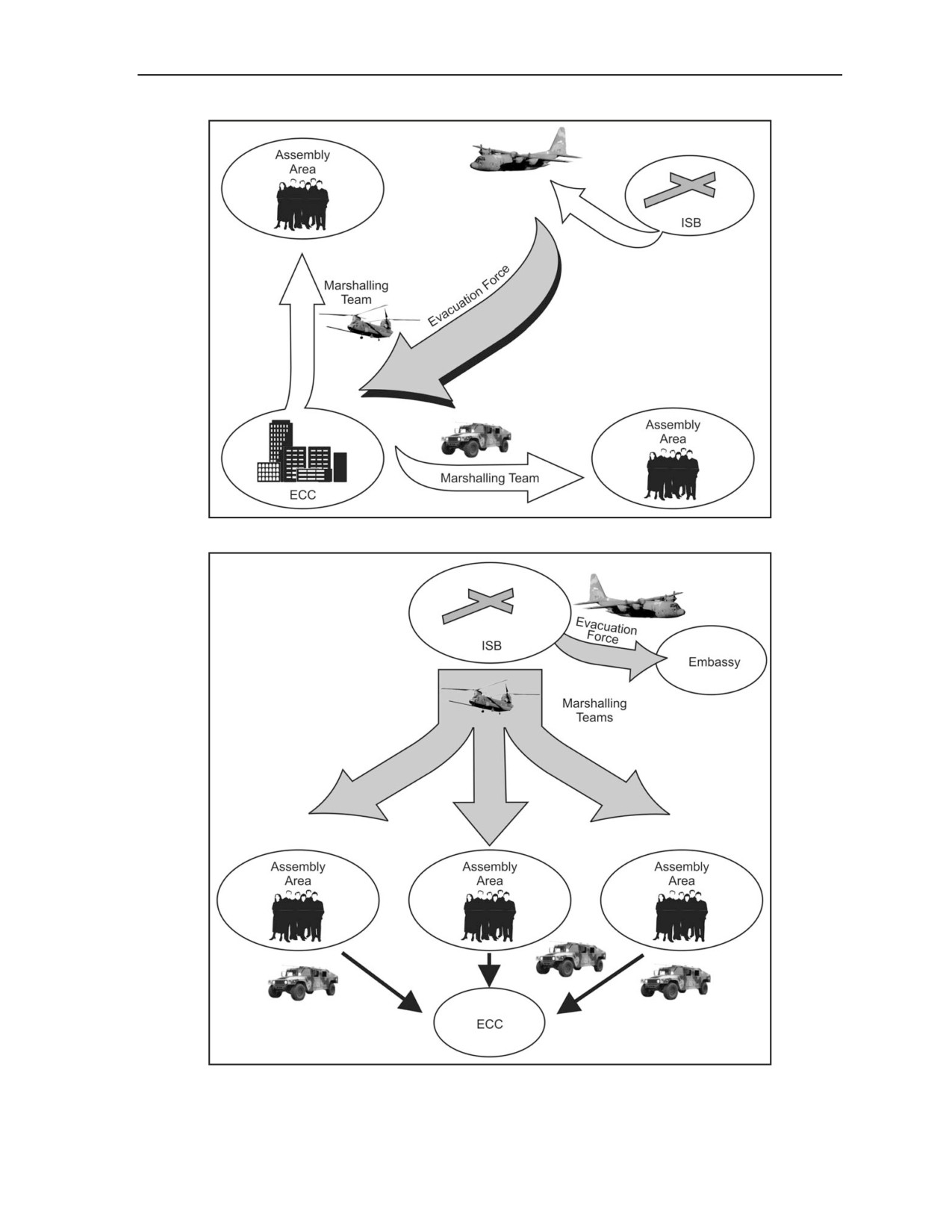
Deployment
Figure 4-1. Option one, evacuation force lands at the evacuation control center
Figure 4-2. Option two, marshalling teams land at multiple assembly areas
16 November 2009
FM 3-05.131
4-5
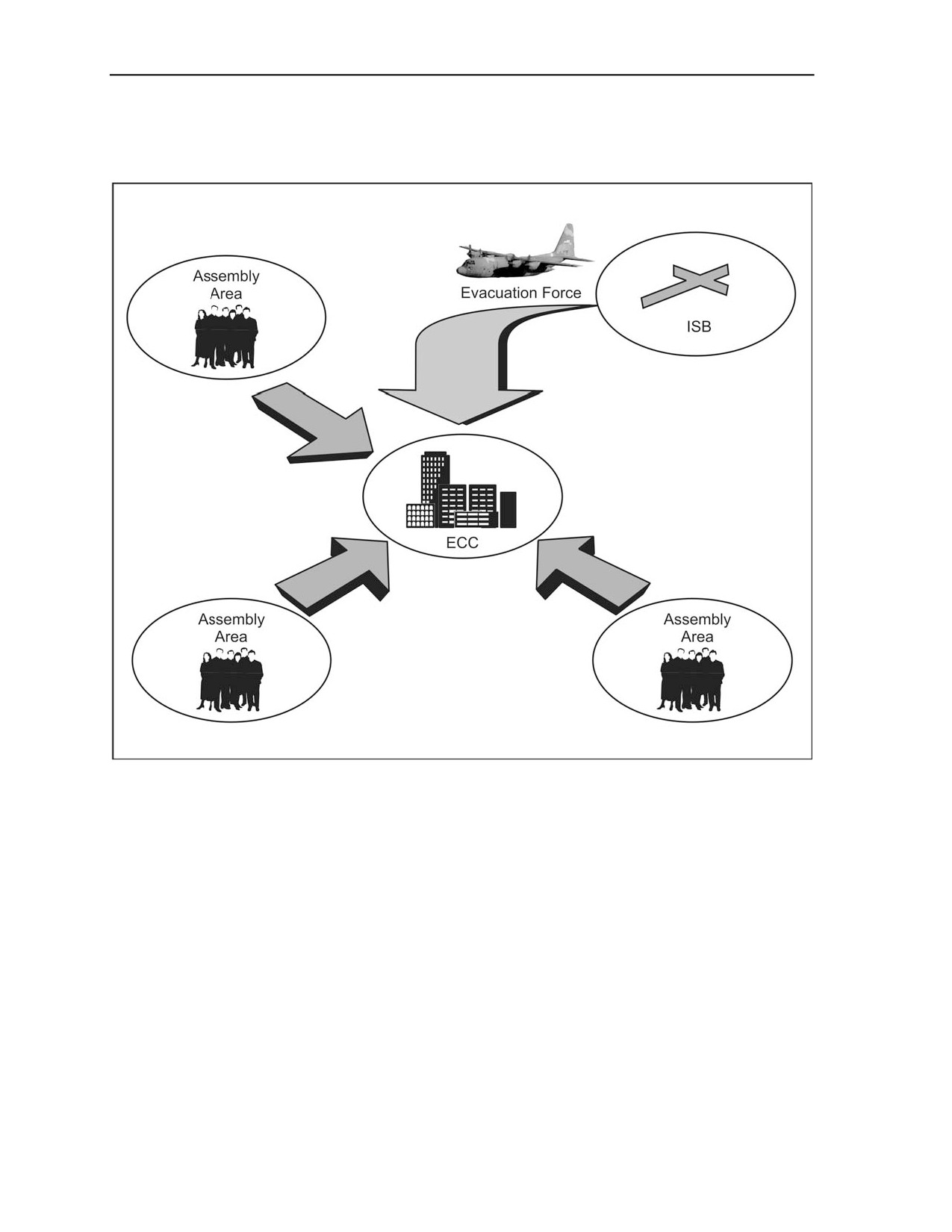
Chapter 4
4-16. The third option (Figure 4-3) is to deploy the force to the ECC where it evacuates only those citizens
that make their way there. With this option, citizens who miss the notification also miss the evacuation and
the deploying force only partially completes its mission.
Figure 4-3. Option three, single-point evacuation
4-17. Aircraft remaining on the ground with the military force are subject to sabotage or outright attack
from hostile units or individuals. A large evacuation force increases the unit’s security problems because
the unit must guard more aircraft. If the aircraft do not remain with the evacuation force, the air component
and evacuation force commanders coordinate to ensure enough aircraft return at the right time. Ideally, as
soon as there are an appropriate number of passengers, one aircraft lands, picks up the passengers, and
departs. Precise timing reduces waiting time for evacuees and ground time for aircraft. The evacuation
force commander must find a suitable location for the aircraft to wait.
4-18. Naval evacuation is a likely alternative to aircraft evacuation. Naval operations could include any of
the following:
z
Loading ships at a seaport pier.
z
Ferrying evacuees from seaports to amphibious ships.
z
Transporting evacuees aboard helicopters to ships.
z
Using landing craft and beach operations.
4-19. Beach operations (Figure 4-4, page 4-7) are ideal for moving large numbers of evacuees at one time.
The use of Navy ships as intermediate safe havens allows a faster turnaround for tactical evacuation assets.
4-6
FM 3-05.131
16 November 2009
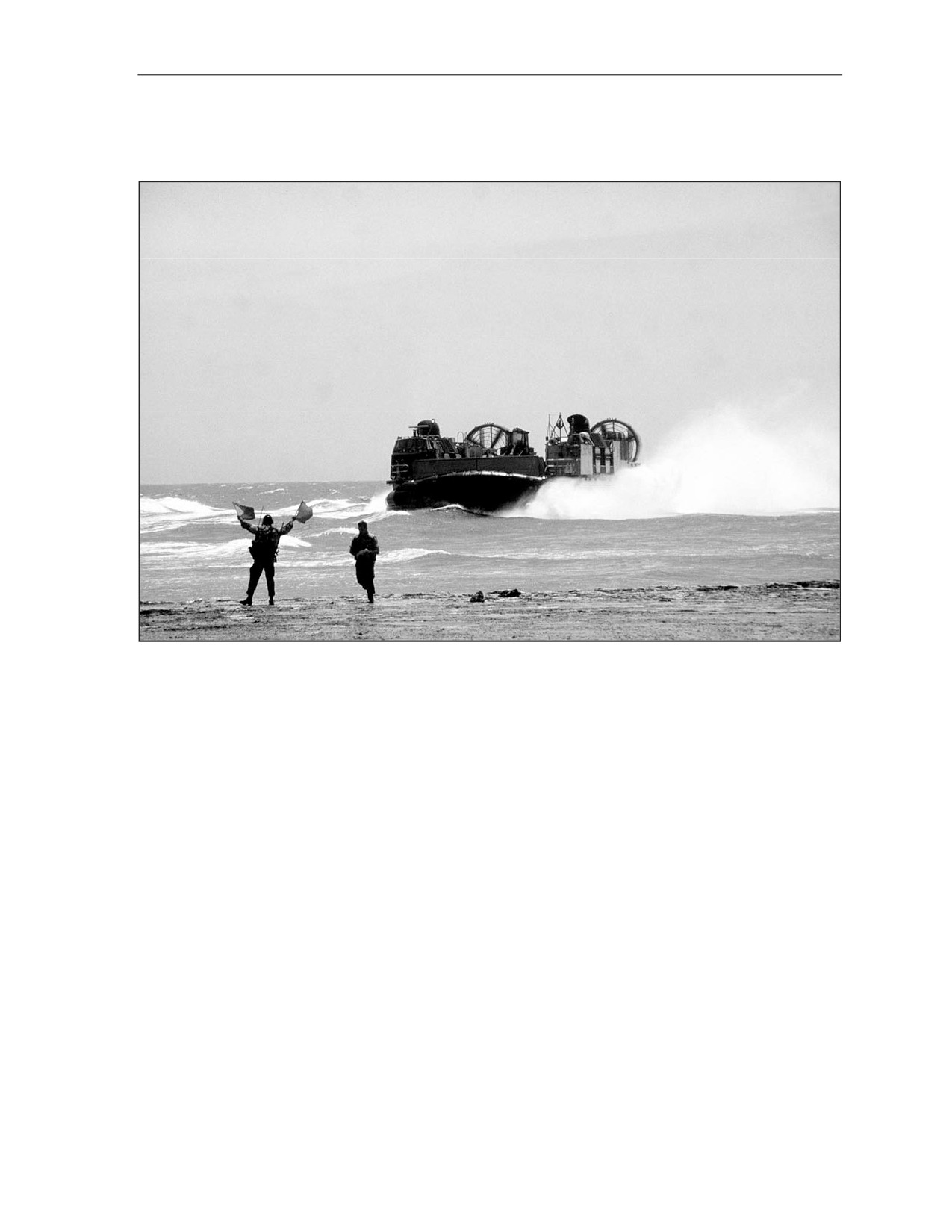
Deployment
If the situation warrants, marshalling teams and search squads may deploy from and return to offshore
ships, allowing the ECC to be shipboard. Crews of aircraft ferrying soldiers and evacuees to and from ships
must maintain deck-landing qualification.
Figure 4-4. Beach operation
16 November 2009
FM 3-05.131
4-7
This page intentionally left blank.
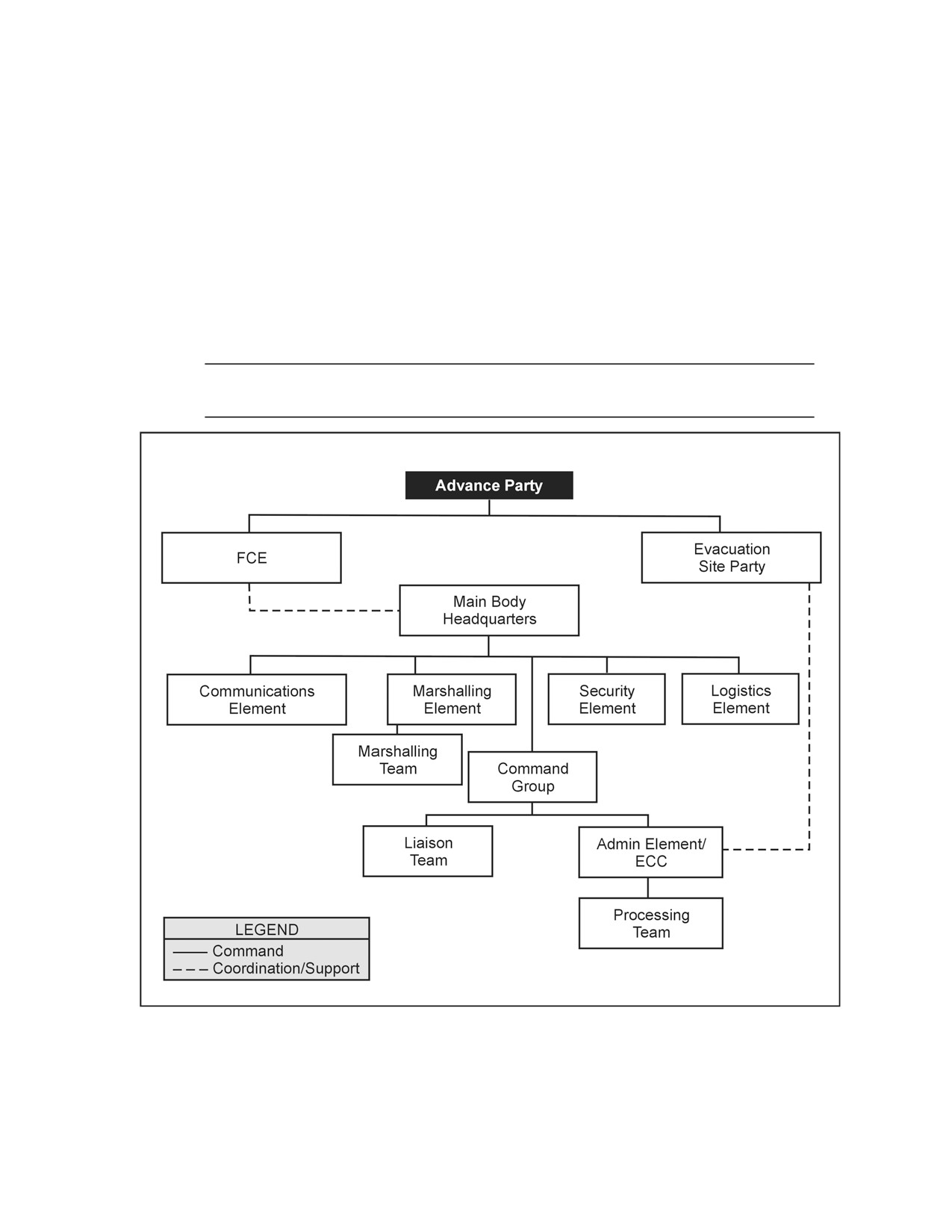
Chapter 5
Evacuation Force Operations
As the main body of the evacuation force (Figure 5-1) deploys into the HN, the
elements of the advance party will join with the related main body organizations. The
number and state of evacuees, evacuation sites, assembly areas, and tactical situation
will determine the size and composition of the main body.
Note: Appendix G provides sample evacuee processing training and evaluation outlines
(T&EOs).
Figure 5-1. Organization of evacuation force
5-1
FM 3-05.131
16 November 2009
Chapter 5
MAIN BODY HEADQUARTERS
5-1. The main body headquarters directs and coordinates the evacuation operation. The headquarters
consists of the FCE and the administrative team. The FCE, which is from the advance party, joins the
headquarters and maintains effective liaison with the Embassy staff. The administrative team combines
with the evacuation-site party from the advance party to ensure the smooth operation of the ECC.
MARSHALLING ELEMENT
5-2. The marshalling element moves to the designated assembly areas and secures them. It brings
evacuees to the assembly areas and then escorts them to the ECC. The GCC bases the size of the
marshalling element on the number of sites and evacuees supported.
5-3. A marshalling element may consist of multiple subordinate marshalling teams. The commander
organizes the marshalling team to secure and support evacuations through a single assembly area as well as
surrounding area. The marshalling team must be large enough to organize several search and security
teams. Search teams may be unnecessary if the Embassy’s notification plan successfully alerts evacuees to
report to predetermined assembly areas. If the Embassy informs all evacuees, then search teams should not
leave the assembly area except in emergency cases.
5-4. The search teams locate evacuees and escort them to the assembly area. Each search team should
have an interpreter or a SOF soldier capable of speaking the HN language and, if possible, a guide. A lost
team in a potentially hostile environment can create significant problems for the evacuation force.
Language-qualified personnel may be necessary to help the search teams move from the assembly areas
and locate evacuees who are not at home or whose addresses are incorrect.
5-5. A security team provides security to the search team during movement and in the assembly area. In
addition, the commander may attach a tactical Psychological Operations team (TPT) to the marshalling
teams. The TPT can use its organic loudspeakers to communicate with the local populace and
noncombatant evacuees.
MARSHALLING ELEMENT OPERATIONS
5-6. The marshalling element locates evacuees at or near their homes and moves them to the ECC. In its
most complete form, the operation has several marshalling teams under the control and direction of a
marshalling element headquarters. Leaving the ECC, the teams—
z
Proceed by designated routes to their respective assembly areas.
z
Secure assembly areas to use as bases of operation.
z
Dispatch elements to contact, identify, inform, and return the evacuees to the assembly areas.
z
Escort the evacuees back to the ECC.
z
Turn evacuees over to ECC personnel for transportation out of the country.
z
Verify that there is enough transportation for the search or security teams and evacuees. Teams
should prepare all evacuees to evacuate by helicopter, small boat or craft, and tracked or
wheeled vehicles. The marshalling elements should also consider the following:
Use local drivers, if available, because of their experience and familiarity with the local
road network.
Ensure there are enough mechanics available for emergency repairs.
Brief military drivers on the HN traffic laws and customs.
5-7. Movement control requires the marshalling element to do the following:
z
Issue local road maps to each driver.
z
Plan for convoy control and security.
z
Identify safe houses or areas in case vehicles breakdown or drivers become separated or lost.
z
Ensure that adequate communications equipment is available for convoys.
5-2
FM 3-05.131
16 November 2009
Evacuation Force Operations
5-8. Assembly area operations require the marshalling element to do the following:
z
Establish perimeter security, even in a permissive environment.
z
Ensure there is enough transportation to move evacuees to the ECC.
z
Use, as needed, vehicles belonging to the evacuees to transport personnel to the ECC.
5-9. Search team operations require the marshalling element to do the following:
z
Have a list of potential evacuees from the consular officer.
z
Obtain copies of the instructions given to each potential evacuee.
z
Have copies of the “Waiver of Evacuation Opportunity” (Appendix C) readily available for
evacuees who refuse to leave.
z
Brief each evacuee on the baggage limitations set by the Embassy, identification requirements at
the ECC, and items that the commander or the law restricts or prohibits from transport.
z
Record the name, sex, age, potential medical problems, and citizenship of each evacuee.
z
Escort evacuees from the vehicle parking area to the ECC. Evacuees may drive their privately
owned vehicles directly to the ECC, although U.S. personnel should discourage this for security
reasons. Search personnel should note the individual’s name and intent.
z
Identify evacuees not on the list provided by the Embassy.
ROUTE SELECTION
5-10. The marshalling element commander first obtains the information collected by the advance party.
Significant information may include the following:
z
Updated lists of names and addresses of evacuees.
z
Specific medical conditions that will affect the evacuation effort.
z
Current maps.
z
Current developments in the political situation.
z
Specific sources of help should a confrontation develop.
Marshalling teams then use the bulleted information to determine their routes and ensure transportation is
available.
5-11. The evacuation force commander and his staff confirm the suitability of routes to and from each
assembly area. They may have had insufficient intelligence available at the home station to plan routes in
detail, and current, on-the-ground intelligence make some of the commander’s planned routes unusable.
5-12. The evacuation force commander considers several factors when selecting routes. Air movement of
marshalling teams and U.S. citizens is best because it involves minimal confrontation and requires less
time. However, the evacuation force commander must also plan an overland route to use should air
operations be unsuitable.
5-13. Conducting the evacuation during darkness helps avoid unnecessary publicity and reduces the
likelihood of confrontation. The HN government may have a curfew in effect during which the local
citizenry are less active. With less vehicular traffic, marshalling force vehicles will likely avoid traffic
congestion. The disadvantages to using darkness as a cover is that marshalling teams may get lost and they
may have difficulty locating evacuees.
5-14. If the unit moves in daylight by vehicle, the unit should avoid routes through densely populated
areas, on main traffic arteries, and through potential roadblocks (such as construction sites, railroad
crossings, and narrow bridges). The operations center coordinates the routes so that vehicles from separate
assembly areas do not intermingle. Again, the use of multiple routes enhances security and reduces
signature.
5-15. Once the evacuation force commander selects the routes, the operations center staff informs the
marshalling element commander. He, in turn, passes the routes to the marshalling teams on strip or
topographical maps that exhibit enough detail to be useful. If possible, marshalling team commanders
reconnoiter the routes by helicopter before movement.
16 November 2009
FM 3-05.131
5-3
Chapter 5
5-16. If the evacuation force commander decides not to send out search teams, the marshalling teams
remain in their respective assembly areas and the evacuees come to them. After waiting a suitable amount
of time, the marshalling team escorts the evacuees to the ECC or sends out search teams to contact
unaccounted for U.S. citizens.
TRANSPORTATION
5-17. Key planning for the marshalling force includes choosing the best method to transport the
marshalling teams and the evacuees. Options for moving marshalling teams include helicopter, airborne
insertion, vehicle, and foot. If volunteered, the force may use vehicles belonging to the evacuees to move
the marshalling teams and evacuees to the ECC.
5-18. Marshalling teams moving on foot must reduce their vulnerability. A close tactical formation reduces
the chance of separation and enhances the commander’s control of his unit if someone tries to disrupt the
march.
5-19. Vehicular movement requires more coordination but is preferable to foot movement. Drivers must
become familiar with primary and alternate routes and accurate area maps. Commanders may use local
drivers. In some situations, the experience of local drivers with the road network may aid timely
evacuation. Movement by convoy requires security and sufficient radios to maintain control. A traffic
circulation plan is necessary to identify main and alternate evacuation routes, critical points, and
checkpoints. The traffic circulation plan will simplify reporting. The Embassy staff and evacuation force
commander’s staff identify safe houses or areas for drivers and passengers in case of vehicle breakdown.
5-20. Each team should have an attached mechanic with enough equipment to make emergency repairs. If
a vehicle breaks down, the marshalling team commander decides whether to repair or abandon the vehicle.
The mechanic can expedite repairs and provide the marshalling team commander with an expert opinion.
The marshalling team commander must not allow anyone to remain with the vehicle without adequate
security.
MOVEMENT CONTROL
5-21. The marshalling element monitors the progress of the teams and reports their locations to the
operations center. Teams report their status to the marshalling element as they arrive at and pass through
each checkpoint. Teams submit additional reports when they secure their assembly areas, when they are
prepared to return with the evacuees to the ECC, and at any other time that the commander considers
appropriate.
5-22. Team commanders use a similar reporting system to control the movement of their search teams.
Such a system, properly prepared and coded, can add to the mission’s OPSEC by reducing radio
transmission time.
5-23. Using specially prepared, coded execution checklists is ideal. Doing so allows the team commander
to pinpoint immediately the exact location of each team.
ASSEMBLY AREA OPERATIONS
5-24. The marshalling team has two basic functions once it arrives at the assembly area. It secures the area,
assembles all evacuees inside the secured location, and begins processing them for evacuation.
Securing the Assembly Area
5-25. The marshalling team occupies the assembly area just as any tactical unit clearing and occupying any
assembly area would. The marshalling team operates within the constraints of the tactical environment and
according to the ROE. Once security is in place, they should allow no one inside the perimeter without an
escort. Security personnel maintain contact with the command group by using short-range radios or
telephones.
5-4
FM 3-05.131
16 November 2009
Evacuation Force Operations
5-26. NEOs are tactical operations, even in a permissive environment. The team commander must
remember that the population, or elements within it, may turn hostile, and he must be able to defend the
assembly area if hostile elements attack. Consequently, the area must be defensible and security team and
search squads must maintain defensible positions.
5-27. A member of the Embassy staff (PSO or RSO) generally chooses the assembly area. If the
evacuation force cannot defend the assembly area, the team commander should direct evacuees to an
appropriate place nearby. The team commander should attempt to get approval of the new location from an
Embassy representative. If doing so proves impossible, the team commander is still responsible for
protecting his force and its charges. As a minimum, the team commander should inform the marshalling
element commander of his decision.
Dispatching Search Teams
5-28. Immediately after arriving in the assembly area, the marshalling team commander dispatches his
search squads, assigning search responsibilities according to the Embassy’s most current evacuee list. If the
Ambassador and his staff implemented the evacuation plan successfully, most U.S. citizens know that the
evacuation is necessary and they act accordingly. Inevitably, some people will not have heard of the
evacuation, and search teams must locate and accommodate them. PSYOP assets may provide the
capability to assist in locating personnel by communicating the search team’s intent to the local populace.
The marshalling team commander must weigh OPSEC and protection requirements against notification
capabilities.
5-29. If the information reached all evacuees, the team commander may not need to dispatch search teams.
If conditions allow for their free movement, evacuees may come to the assembly area on their own.
5-30. The search team proceeds to the addresses of potential evacuees. If the individual or family is not
present, the team leader tries to determine their location by asking the neighbors. He may leave instructions
in a visible place, but he must consider the effect these instructions will have if they fall into unfriendly
hands. If the individual or family is present, the team leader follows the procedures described in the
following paragraphs.
5-31. Each search team leader gives each individual a complete list of instructions. If possible, the
Embassy advance party obtains enough copies of the instructions to supplement the team leader’s oral
briefing and gives a written copy to each potential evacuee.
5-32. Once he makes contact, the search team leader gets one of two responses. The individual decides to
either evacuate or stay. If the individual decides to remain in the HN, the search team leader repeats the
Ambassador’s warning. The situation is extremely dangerous, and a closed Embassy cannot assist
evacuees.
5-33. If the warning has no effect, the search team leader leaves the address of a POC (if available) and
asks the individual to sign a waiver certificate (Appendix C). The waiver certificate shows that the USG
provided the individual with the opportunity to depart under its protection and that the individual chose to
remain. If the individual will not sign, the search team leader makes a note of the time, date, and
circumstances surrounding the offer. He should also remind USG employees and their dependents that they
must obey an evacuation order. (The evacuation force may locally produce certificates of waiver.)
5-34. If the individual chooses to accompany the search team, the search team leader explains the
conditions of the evacuation. Again, if possible, he gives them a written document expressing these
conditions.
5-35. Usually, the Embassy evacuation notice lists baggage limitations (usually one 66-pound bag per
person). The marshalling team must use common sense in making allowances for evacuees with infants and
for other special circumstances. The commander must thoroughly brief the search team leader on what to
do with pets. If time and space allow, the evacuation force commander may authorize the evacuation of
pets. If he does not, evacuees should leave pets with friends. The evacuation force commander may arrange
for euthanasia as an alternative. If the task force is evacuating pets, owners should bring immunization
records to speed processing.
16 November 2009
FM 3-05.131
5-5