Military reference books and manuals (2009-2023, Volume 7) - page 9

Civil Disturbance Operations in Confinement Facilities
z
Is the cell dry?
z
Are cell furnishings intact?
7-78. Based on the answers to the above questions, team member one must
decide whether to enter the cell with or without the shield (see Figure 7-7).
Team member one’s ultimate goal is to pin the inmate on the bunk or floor.
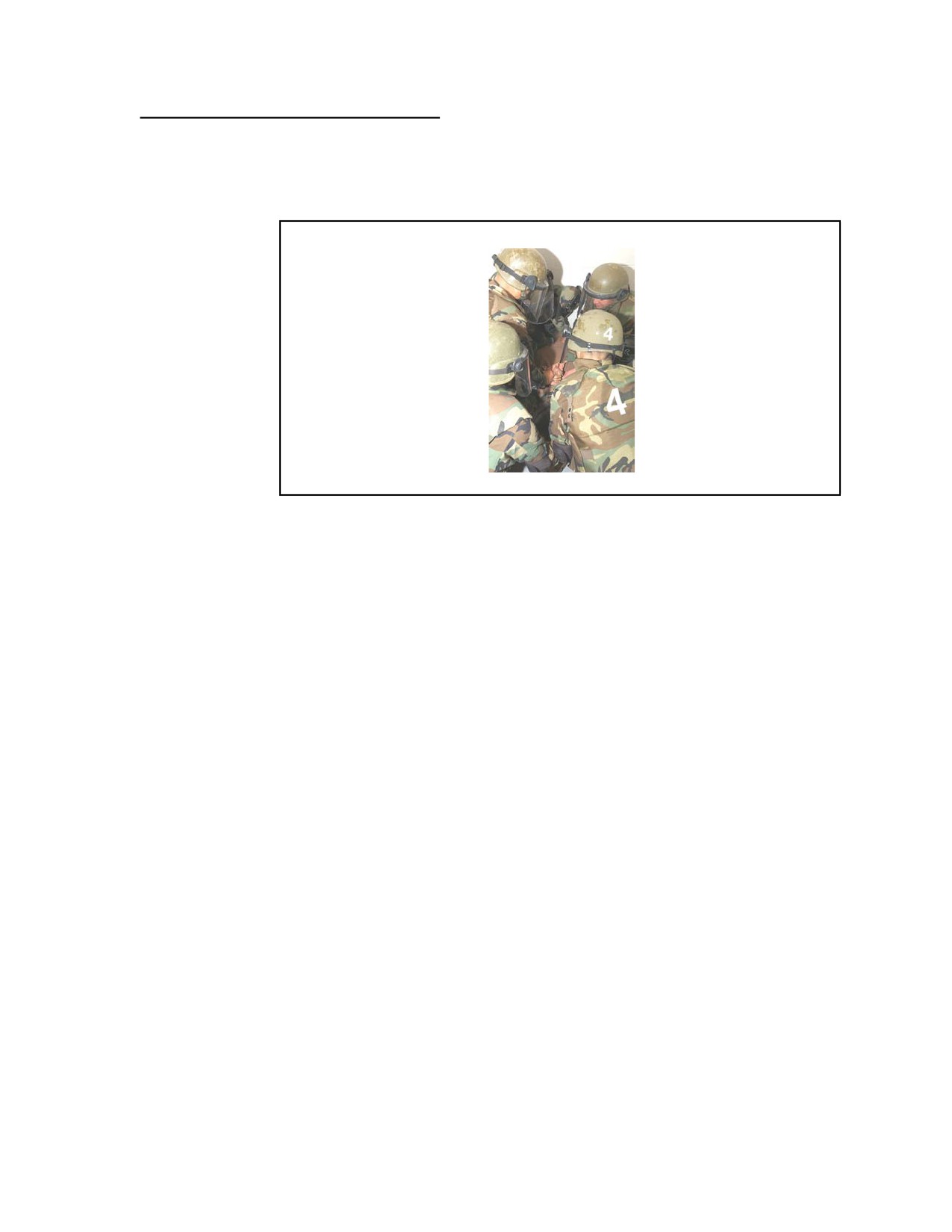
Figure 7-7. FCMT Preparing to Enter a Cell
Team Member Two
7-79. Team member two keeps contact with team member one until he can
secure the inmate’s strong arm. If he cannot immediately secure the inmate’s
arm, he secures a portion of the inmate’s body and progresses to the inmate’s
strong arm. Once the inmate’s hands are secure, he announces, “Hands
secure,” to team member five (see Figure 7-8).
Team Member Three
7-80. Team member three keeps contact with team member two until he can
grasp a portion of the inmate’s body. Team member three concentrates on
securing the inmate’s weak hand and assists team member two in applying
Flex-Cufs. Team member three maintains control of the inmate’s hands and
looks at team member five for further instructions (see Figure 7-8).
Team Member Four
7-81. Team member four keeps contact with team member three until he can
secure a portion of the inmate’s body. Team member four concentrates on
securing the inmate’s right leg. He applies leg irons and when the inmate’s
legs are secure, he announces, “Legs secure,” (see Figure 7-8).
Team Member Five (Team Leader)
7-82. Team member five keeps contact with team member four until he
secures a portion of the inmate’s body. Team member five concentrates on
securing the inmate’s left leg and assists with the application of leg irons.
When he is informed that the hands and legs are secure, the team searches
7-18
FM 3-19.15
18 April 2005
Civil Disturbance Operations in Confinement Facilities
the inmate for weapons and contraband. Once the search is complete, team
member five commands, “Prepare to Lift.”
Figure 7-8. FCMT Securing an Inmate
Movement of the Inmate
7-83. Team member one positions his hands to control the inmate’s head
during the move, turning the inmate’s head toward the wall. Team members
two and three position themselves on the inmate’s right and left sides. They
grasp the wrist or forearm of the team member opposite them to form a
platform for the inmate to lie on. Team member four positions himself on the
inmate’s right side even with the inmate’s knees. This places him in position
to control the inmate’s legs. Team member five’s position is on the inmate’s
left side and enables him to control the inmate’s lower legs and feet. When in
position, team member five ensures that all team members are in place before
commanding, “Ready, Lift.”
7-84. On the command “Lift,” all team members simultaneously stand with
the inmate. They should sandwich the inmate between them to facilitate
control. Team member five then commands, “Prepare to Turn, Ready—Turn.”
The inmate is always turned toward the bunk. If a bunk is not available, team
member five should specify which direction to turn the inmate. The inmate is
then removed from the cell (see Figure 7-9, page 7-20).
7-85. Once the inmate is on the tier, team member five commands, “Prepare
to Lower, Team—Lower.” The team simultaneously lowers the inmate to the
floor with the team keeping positive control of the inmate. The medic asks the
inmate, “Do you have any injuries at this time?” (see Figure 7-10, page 7-20). If
the inmate has no injuries, the medic looks at the camera and states, “Inmate
(inmate name) appears to have sustained no injuries.” If the inmate has
sustained injuries, the medic treats those injuries and completes a sworn
statement. If OC was employed, the medic decontaminates the inmate using
water and paper towels. The medic instructs the inmate to tilt his head to the
side and flush his eyes with water for approximately 5 minutes. The medic
then dries the inmate’s face.
18 April 2005
FM 3-19.15
7-19

Civil Disturbance Operations in Confinement Facilities
Figure 7-9. Moving the Inmate
Figure 7-10. Treating Injuries
Placement of the Inmate in a Cell
7-86. Team member five orders an equipment check before returning the
inmate to a cell. He then commands, “Prepare to Lift, Team—Lift.” Team
members position themselves exactly where they were when they removed the
inmate from the cell. Next, team members simultaneously lift the inmate and
return him to the predetermined cell. They move the inmate into the cell head
first with his face toward the bunk. Once inside the cell, team member five
commands the team to lower the inmate onto the bunk (see Figure 7-11, page
7-20). Team members then remove the inmate’s restraints, keeping positive
control of the inmate at all times. Team members use a nonverbal signal to
notify team member five when the restraints are removed. He signals another
equipment check. Team members then account for all equipment in place and
prepare to exit the cell. The team exits the cell in the same manner as they
entered, but in reverse order.
7-20
FM 3-19.15
18 April 2005

Civil Disturbance Operations in Confinement Facilities
Figure 7-11. Placing Inmate in Cell
7-87. Team member four moves into position where he can control both of the
inmate’s legs while team member five moves toward the cell door. When team
member four is ready to exit the cell, team member three moves to control the
inmate’s legs, team member two moves to where he can control both of the
inmates arms, and team member one maintains control of the inmate’s head.
Team member four maintains contact with team member three at all times.
When team member three is ready to exit the cell, team member two moves
into a position where he can control the inmate’s lower body and team
member one moves into position to control the inmate’s upper body. Using a
prearranged, nonverbal signal, the team pulls team members one and two
from the cell. The FCMT is prepared to reenter the cell if the inmate attempts
to attack team members one and two as they exit the cell. The FCMT remains
ready to reenter until the cell door is secured.
18 April 2005
FM 3-19.15
7-21
This page intentionally left blank.
Chapter 8
Civil Disturbance Training
Training requires planning and preparation. Unit commanders structure
their training program according to the mission essential task list (METL)
(see FM 7-1) and expected contingencies. These training plans include
prior training and the experience and proficiency of their unit. Leaders
agree that the operational tempo and expected contingencies for the next
10 to 15 years will likely involve low-intensity military operations other
than war (MOOTW). Therefore, civil disturbance training must be
included in the commander’s annual training program and must cover all
aspects of that type of operation. To effectively function as a member of a
control force, individual soldiers must be trained in civil disturbance
operations. Training must be intensive, realistic, and sustained. Any lack
of training (from basic soldier skills to leadership skills) can have an
adverse effect to the point of endangering lives, especially the lives of
soldiers. Leader involvement in the training process is essential for
mission success in crowd control operations.
UNIT TRAINING STRATEGY DEVELOPMENT
8-1. Developing a unit training strategy begins with the mission analysis
portion of the MDMP and identifying the GRM. Missions that require soldiers
and units to enforce treaties or accords, protect the lives of civilians in
uncertain or hostile environments (such as NEOs), or provide large-scale
humanitarian assistance demand some sort of graduated-response criteria to
maintain order and prevent uncertain environments from becoming hostile.
8-2. When developing training strategies, planners should focus training and
evaluation on the echelon level above the target element (for example TF) or
the unit identified as needing training.
8-3. Planners must agree on the intent of the GRM. The GRM is for most a
training and rehearsal tool. It provides leaders with likely vignettes that can
be incorporated into COA analysis, predeployment training, and rehearsals.
The GRM becomes a handy reference during situations that require
graduated responses.
TRAINING PLAN DEVELOPMENT
8-4. In developing a training plan for civil disturbances, many considerations
should be addressed in terms of available resources. Considerations include
the number of personnel to train, the equipment needed and its availability,
the time available to train to standard, the location of where training will be
executed, and the incorporation of SOPs (based on the theater of operations
18 April 2005
FM 3-19.15
8-1
Civil Disturbance Training
[CONUS or OCONUS]). A personnel assessment is necessary to determine the
training and experience level of soldiers. It is critical to identify and use
soldiers with previous real-world experience and leaders that have graduated
from the Interservice Nonlethal Individual Weapons Instructor Course
(INIWIC) as primary instructors.
8-5. Commanders should structure the unit training program based on the
METL, expected contingencies, prior training, and the proficiency of the unit.
In developing a training program, use the seven-step approach. For in-depth
instructions on training development, see FMs 7-0 and 7-1.
8-6. The objective is to train and evaluate units in the performance of civil
disturbance procedures. Proficiency in performing civil disturbance
procedures is reflected by a unit’s ability to quickly and deliberately execute
the disturbance control procedures required to prevent loss of life and
property or to regain control of a civil disturbance in its assigned area of
responsibility.
8-7. Training should focus on, but is not limited to—
z
Instructors.
z
Individual and collective drills.
z
Leaders.
z
Equipment.
z
Weapons.
z
Munitions.
z
Live-fire range exercises.
z
Qualification and familiarization.
z
Soldier training exercises (STXs).
z
Culminating exercises.
8-8. There are several successful methods to evaluate trained leader skills
and trained soldier skills using scenarios, vignettes, lanes, or STXs. Flexibility
is an important key in training plan development due to time restraints.
RANGE SETUP
8-9. The key to setting up a successful range for NL munitions is to ensure
that they are in compliance with installation safety regulations. Kinetic
energy is the force that pushes the projectiles down range. In most cases,
kinetic energy will only carry these NL munitions projectiles 75 meters or
less. This gives trainers flexibility as to the locations where a live-fire exercise
can be conducted, especially in a field-expedient situation. Figure 8-1 is an
example for conducting a NL live fire range setup.
8-10. As illustrated in Figure 8-1, mark off 5-, 10-, 20-, 30-, 40-, and 50-meter
distances from the targets with markers. Each of the NL munitions has
minimum and maximum effective ranges within the distances of 5 to 50
meters. Impact power and accuracy are greater at close distances and
depleted at farther distances. Targets can be anything from the standard E-
type to more realistic three-dimensional manikins. Evenly divide your
shooters into three groups as shown in Figure 8-1. Group one will initially be
shield holders, group two will be shooters, and group three will be grenadiers.
8-2
FM 3-19.15
18 April 2005

Civil Disturbance Training
Grenadiers
50 m
Shield
40 m
holders
Shooters
30 m
20 m
15 m
10 m
5 m
Targets
Figure 8-1. NL Munitions Range Setup
8-11. The formation should begin at the farthest effective range firing line (50
meters). After each volley of fire, the formation moves closer to the targets,
but stays outside the closest effective range firing line (5 meters). For safety
reasons, ensure that the formation stays online throughout each iteration.
8-12. When moving forward to each firing point, it is recommended that the
formation always come to a halt before the fire command is given. It is also
important to use the tap down drill method (see Figure 8-1) rather than
having the shooters move forward and fire between the shield holders.
8-13. Range instructors can use verbal commands, such as, “Ready,” or “Fire,”
for each volley. Shooters can be briefed to move forward, tap down the shield
18 April 2005
FM 3-19.15
8-3
Civil Disturbance Training
holder, and engage targets at the first explosion of distraction grenades
thrown by grenadiers. In that instance, the command could simply be
“Grenadiers Prepare to Throw, Throw.”
8-14. The success of any civil disturbance operation is through effective
communication, especially when incorporating the use of NL munitions. For
effective training, use verbal commands in conjunction with effective,
predetermined hand-and-arm signals during live-fire exercises.
8-15. Each iteration requires two phases of fire. During the first phase, half of
the shooters will be firing NL, 40-millimeter rounds using an M203. The
others will be firing NL, 12-gauge rounds using a 12-gauge shotgun. In the
second phase, shooters switch weapons (safely). It is critical that line safeties
are alert during this transition between phases.
8-16. Upon completion of each iteration, clear the weapons and the range.
Establish a safe method and return all groups back to the farthest firing line.
Once that is accomplished, group one rotates to become group three, group
three rotates to become group two, and group two rotates to become group one
for the next iteration. Using this method affords a safe and efficient way to get
all shooters through the proficiency course. Figure 8-2 is an example of how to
fire each volley based on its characteristics, effectiveness, and capabilities.
Distance
Command
Subject
Actions
12-Gauge Shotgun, Two Point
Shotgun
Load two M1013 rounds.
shooters
M203, Two Point
M203 shooters
Load one M1006 round and have
one readily available.
Shotgun
Tap down shields and engage
shooters
designated targets.
Ready, Fire
M203 shooters
Tap down shields, engage
designated targets, reload, and
10 Meters
reengage.
Clear Range
Range safeties
Ensure that weapons are clear and
safe.
Safeties, Clear All Weapons
All shooters
Face to right, keep weapons pointed
up and downrange.
Shooters, Right Face, Move
All personnel
Step off shield holder, then shooters,
and grenadiers on the command,
“Move.” Grenadiers reform at 50
meters.
Figure 8-2. Sample Live-Fire Exercise
8-4
FM 3-19.15
18 April 2005
Civil Disturbance Training
Distance
Command
Subject
Actions
Shotgun, Two Point
Shotgun
Load two M1013 rounds.
shooters
M203, Two Point
M203 shooters
Load one M1006 round and have
another available.
Grenadiers, Prepare to Throw
Grenadiers
Make distraction grenade ready.
Grenadiers
Throw grenade.
Throw
Grenadiers
Throw distraction grenade.
Shot gun
Tap down shields and engage
shooters
designated targets.
Ready, Fire
M203 shooters
Tap down shields, fire at designated
targets, reload with M1006 rounds,
and engage designated target.
15 Meters
Clear Range
Range safeties
Ensure that weapons are clear and
safe.
Three Steps Forward
All shooters and
Echo preparatory command.
grenadiers
Move
All shooters and
Stay on line and step off three steps,
grenadiers
counting each step aloud.
Clear Range
Range safeties
Ensure that weapons are clear and
safe.
Seven Steps Forward
All shooters and
Echo preparatory command.
grenadiers
Move
All shooters and
Stay on line and step off seven
grenadiers
steps, counting each step aloud.
Figure 8-2. Sample Live-Fire Exercise (Continued)
18 April 2005
FM 3-19.15
8-5
Civil Disturbance Training
Distance
Command
Subject
Actions
Shotgun, Three Point
Shotgun
Load three M1013 rounds.
shooters
M203, One Area, Two Point
M203 shooters
Load one M1026 round and have
two M1006 rounds available.
Grenadiers, Prepare to Throw
Grenadiers
Make distraction grenade ready.
Grenadiers
Throw grenade.
Throw
Grenadiers
Throw distraction grenade.
Shotgun
Tap down shields and engage
shooters
designated targets.
Ready, Fire
M203 shooters
Tap down shields, fire area at
targets, reload with M1006 rounds,
and engage designated target.
20 Meters
Clear Range
Range safeties
Ensure that weapons are clear and
safe.
Shotgun, Two Point
Shotgun
Load two M1013 rounds.
shooters
M203, Two Point
M203 shooters
Load one M1006 round and have
another available.
Grenadiers, Prepare to Throw
Grenadiers
Make distraction grenade ready.
Clear Range
Range safeties
Ensure that weapons are clear and
safe.
Three Steps Forward
All shooters and
Echo preparatory command.
grenadiers
Move
All shooters and
Stay on line and step off three steps,
grenadiers
counting each step aloud.
Figure 8-2. Sample Live-Fire Exercise (Continued)
8-6
FM 3-19.15
18 April 2005
Civil Disturbance Training
Distance
Command
Subject
Actions
Shotgun, Two Area, Two Point
Shotgun
Load two M1012 rounds and two
shooters
M1013 rounds.
M203, Two Area, Two Point
M203 shooters
Load one round M1026 and have
one M1026 and two rounds M1006
available.
Grenadiers, Prepare to Throw
Grenadiers
Make distraction grenade ready.
Grenadiers
Throw grenade.
Throw
Grenadiers
Throw distraction grenade.
Shotgun
Tap down shields, engage targets,
30 Meters
shooters
and engage designated target with
M1013 rounds.
Ready, Fire
M203 shooters
Tap down shields, fire area at target,
reload with M1006 rounds, and
engage designated target.
Clear Range
Range safeties
Ensure that weapons are clear and
safe.
Seven Steps Forward
All shooters and
Echo preparatory command.
grenadiers
Move
All shooters and
Stay on line and step off seven
grenadiers
steps, counting each step aloud.
Figure 8-2. Sample Live-Fire Exercise (Continued)
18 April 2005
FM 3-19.15
8-7
Civil Disturbance Training
Distance
Command
Subject
Actions
Shotgun, Two Area, One Point
Shotgun
Load two M1012 rounds and one
shooters
round M1013.
M203, One Area, One Point
M203 shooters
Load one M1026 round and have
one M1006 round available.
Grenadiers, Prepare to Throw
Grenadiers
Make distraction grenade ready.
Grenadiers
Throw grenade.
Throw
Grenadiers
Throw distraction grenade.
Shotgun
Tap down shields and engage
40 Meters
shooters
targets with M1013 rounds.
Ready, Fire
M203 shooters
Tap down shields, fire area at target,
reload with M1006 rounds, and
engage designated target.
Clear Range
Range safeties
Ensure that weapons are clear and
safe.
Seven Steps Forward
All shooters and
Echo preparatory command.
grenadiers
Move
All shooters and
Stay on line and step off seven
grenadiers
steps, counting each step aloud.
Shotgun, One Area
Shotgun
Load one M1012 round.
shooters
M203, One Area, One Point
M203 shooters
Load one M1026 round and have
one M1006 round available.
Grenadiers, Prepare to Throw
Grenadiers
Make distraction grenade ready.
Grenadiers
Throw grenade
Throw
Grenadiers
Throw distraction grenade.
Shotgun
Tap down shields, engage targets,
shooters
and engage designated target with
50 Meters
M1013 rounds.
Ready, Fire
M203 shooters
Tap down shields, fire area at the
target, reload with M1006 rounds,
and engage the designated target.
Clear Range
Range safeties
Ensure that weapons are clear and
safe.
Seven Steps Forward
All shooters and
Echo preparatory command.
grenadiers
Move
All shooters and
Stay on line and step off seven
grenadiers
steps, counting each step aloud.
Figure 8-2. Sample Live-Fire Exercise (Continued)
8-8
FM 3-19.15
18 April 2005
Civil Disturbance Training
NOTE: Shield holders are referred to as group one, shooters are
referred to as group two, grenadiers are referred to as group three.
8-17. Currently, there are no qualification standards established in the Army
for NL munitions. Area rounds, which contain multiple projectiles designed to
affect multiple targets when engaged, only require approximately five rounds.
This affords shooters an opportunity to realize the characteristics and
capabilities of these rounds.
8-18. Single projectile rounds like the M1013 and the M1006 require a greater
degree of proficiency. If situations call for the engagement of targets with
these rounds, it is essential that trained shooters be able to hit what they are
aiming at. For example, firing 10 rounds from various ranges can provide
soldiers with the confidence to be effective shooters. A standard can be
established that requires shooters to hit targets with at least 6 out of the 10
rounds used in the example to be considered proficient.
8-19. Figures 8-3; 8-4, page 8-11; 8-5, page 8-21; and 8-6, page 8-22, give
examples of plans to follow if in a situation similar to the following scenario
(see Army Training and Evaluation Program (ARTEP) 19-313-10-MTP):
A company commander is providing security patrols in support of a joint task
force (JTF). Besides providing security patrols for a sector of responsibility, one
platoon must always be designated as a quick reaction force (QRF) for civil
disturbance operations. For the last 2 weeks the sector has been quiet and the
commander has ordered all platoons to conduct civil disturbance training on a
rotational basis.
A new order has been sent down to provide a squad-sized element to provide
security for the future polling site for an upcoming election. This polling site
has yet to open, but intelligence indicates potential problems as the election
approaches.
On the day prior to the scheduled election, a crowd of approximately 25 to 30
demonstrators aggressively move toward the polling site, chanting slogans and
yelling toward the security forces posted there. While some demonstrators begin
throwing whatever they can pick up, the majority are simply yelling, locking
arms, and blocking roadways. Hundreds of additional people, not part of the
crowd, begin to gather to watch the activities as they unfold.
In an assessment of the demonstrators, it is determined that they intend to stay
through the night into the morning of the election with the intention to block
access to the polls. It is essential that the crowd is dispersed and that access to
the polls is unrestricted in time for the election to begin the next morning.
18 April 2005
FM 3-19.15
8-9
Civil Disturbance Training
Evaluation Scheme
The evaluation will consist of five lanes conducted over a 3-day period. Platoons will execute 24-hour
operations during the evaluation. Any retraining will be done immediately following the execution of the lane if
time permits.
The following tasks will be evaluated:
Lane 1
Cordon and search operations
Lane 2
Civil disturbance QRF
Lane 3
Security and defense of a critical site (polling site)
Lane 4
Night civil disturbance QRF
Lane 5
Night LP/OP (PIO)
Evaluation Schedule
Date and Time
1st Platoon
2d Platoon
3d Platoon
4th Platoon
Lane 1
Lane 2
Lane 3
Lane 4
Lane 2
Lane 3
Lane 4
Lane 5
Lane 3
Lane 4
Lane 5
Lane 1
Lane 4
Lane 5
Lane 1
Lane 2
Lane 5
Lane 1
Lane 2
Lane 3
Figure 8-3. Evaluation Scheme
8-10
FM 3-19.15
18 April 2005
Civil Disturbance Training
Unit Training Schedule and Firing Tables
Unit Training Schedule 1
Training Day 1
Time
Subject
Location
Uniform Instructor Notes
0800
Administrative time
Classroom
U1
0830
GRM
Classroom
U1
1000
ROE and use of force
Classroom
U1
1200
Chow
1300
MOOTW
Classroom
U1
1500
Effective communication
Classroom
U1
Administration:
Uniforms:
U1: BDU
U2: BDU and LBE with harness and canteens
U3: BDU and LBE with harness, canteens, flak jacket, and Kevlar helmet
U4: BDU and LBE with harness, canteens, flak jacket, Kevlar helmet, and assigned weapon
Transportation:
Weapons:
Ammunition:
Required Equipment for Training:
1. Projection screen
2. Video projector with CPU
3. Television
4. VCR
Miscellaneous:
1. All personnel are required to have a notebook and a pencil or pen.
2. Handouts must be prepared and passed out.
Figure 8-4. Sample Two-Week Plan
18 April 2005
FM 3-19.15
8-11
Civil Disturbance Training
Training Day 2
Time
Subject
Location
Uniform Instructor Notes
0800
NLCS
Classroom
U1
0900
PPCT and empty hand
Classroom
U1
1000
PPCT and empty hand
PT field
U2
(Practical application)
1200
Chow
1300
PPCT and empty hand
PT field
U2
(Practical application)
1700
COB
Administration:
Uniforms:
U1: BDU
U2: BDU and LBE with harness and canteens
U3: BDU and LBE with harness, canteens, flak jacket, and Kevlar helmet
U4: BDU and LBE with harness, canteens, flak jacket, Kevlar helmet, and assigned weapon
Transportation:
Weapons:
Ammunition:
Required Equipment for Training:
1. Projection screen
2. Video projector with CPU
3. Training strike bags
4. Flex-Cufs
Miscellaneous:
1. All personnel are required to have a notebook and a pencil or pen.
2. Handouts must be prepared and passed out.
3. Medical personnel must be on location.
Figure 8-4. Sample Two-Week Plan (Continued)
8-12
FM 3-19.15
18 April 2005
Civil Disturbance Training
Training Day 3
Time
Subject
Location
Uniform Instructor Notes
0800
PPCT and empty hand
PT field
U2
(Practical application)
1200
Chow
1300
PPCT and empty hand
PT field
U2
(Practical application)
1700
COB
Administration:
Uniforms:
U1: BDU
U2: BDU and LBE with harness and canteens
U3: BDU and LBE with harness, canteens, flak jacket, and Kevlar helmet
U4: BDU and LBE with harness, canteens, flak jacket, Kevlar helmet, and assigned weapon
Transportation:
Weapons:
Ammunition:
Required Equipment for Training:
1. Projection screen
2. Video projector with CPU
3. Training strike bags
4. Flex-Cufs
Miscellaneous:
1. All personnel are required to have a notebook and a pencil or pen.
2. Handouts must be prepared and passed out.
3. Medical personnel must be on location.
Training Day 4
Time
Subject
Location
Uniform Instructor Notes
0800
Riot baton training
Classroom
U1
0900
Riot baton training
PT field
U2
(Practical application)
1200
Chow
Figure 8-4. Sample Two-Week Plan (Continued)
18 April 2005
FM 3-19.15
8-13
Civil Disturbance Training
1300
Riot baton training
PT field
U2
(Practical application)
1700
COB
Administration:
Uniforms:
U1: BDU
U2: BDU and LBE with harness and canteens
U3: BDU and LBE with harness, canteens, flak jacket, and Kevlar helmet
U4: BDU and LBE with harness, canteens, flak jacket, Kevlar helmet, and assigned weapon
Transportation:
Weapons:
1. Expandable riot baton with carrier
2. Training riot batons
Ammunition:
Required Equipment for Training:
1. Projection screen
2. Video projector with CPU
3. Training strike bags
4. Flex-Cufs
Miscellaneous:
1. All personnel are required to have a notebook and a pencil or pen.
2. Handouts must be prepared and passed out.
3. Medical personnel must be on location.
Training Day 5
Time
Subject
Location
Uniform Instructor Notes
0800
Riot baton training
PT field
U2
(Practical application)
1000
Crowd dynamics
Classroom
U1
1130
Chow
1230
Crowd dynamics
Classroom
U1
1330
CD formations
Classroom
U1
Figure 8-4. Sample Two-Week Plan (Continued)
8-14
FM 3-19.15
18 April 2005
Civil Disturbance Training
1430
RCAs and OC
Classroom
U1
1700
COB
Administration:
Uniforms:
U1: BDU
U2: BDU and LBE with harness and canteens
U3: BDU and LBE with harness, canteens, flak jacket, and Kevlar helmet
U4: BDU and LBE with harness, canteens, flak jacket, Kevlar helmet, and assigned weapon
Transportation:
Weapons:
1. Expandable riot baton with carrier
2. Training riot baton
Ammunition:
Required Equipment for Training:
1. Projection screen
2. Video projector with CPU
3. Training strike bags
4. Flex-Cufs
Miscellaneous:
1. All personnel are required to have a notebook and a pencil or pen.
2. Handouts must be prepared and passed out.
3. Medical personnel must be on location.
Training Day 6
Time
Subject
Location
Uniform Instructor Notes
0800
RCAs and OC
PT field
U2
(Practical application)
1200
Chow
1300
RCAs and OC
PT field
U2
(Practical application)
1700
COB
Figure 8-4. Sample Two-Week Plan (Continued)
18 April 2005
FM 3-19.15
8-15
Civil Disturbance Training
Administration:
Uniforms:
U1: BDU
U2: BDU and LBE with harness and canteens
U3: BDU and LBE with harness, canteens, flak jacket, and Kevlar helmet
U4: BDU and LBE with harness, canteens, flak jacket, Kevlar helmet, and assigned weapon
Transportation:
Weapons:
Ammunition:
1. MK inert OC
2. MK 4 live OC disperser
3. M36 live CR disperser
Required Equipment for Training:
1. Five large clean trash cans with liners
2. Two water hoses with running water
Miscellaneous:
Medical personnel must be on location.
Training Day 7
Time
Subject
Location
Uniform Instructor Notes
0800
NL munitions employment
Classroom
U1
1030
Chow
1115
Safety brief
Range
U4
1130
NL munitions (live fire)
Range
U4
TBD
Evening chow
TBD
Safety brief
Range
U4
TBD
NL munitions night fire
Range
U4
exercise
TBD
Clean up and COB
Figure 8-4. Sample Two-Week Plan (Continued)
8-16
FM 3-19.15
18 April 2005
Civil Disturbance Training
Administration:
Uniforms:
U1: BDU
U2: BDU and LBE with harness and canteens
U3: BDU and LBE with harness, canteens, flak jacket, and Kevlar helmet
U4: BDU and LBE with harness, canteens, flak jacket, Kevlar helmet, and assigned weapon
Transportation:
Yes
Weapons:
1. M16A2 with M203
2. 12-gauge shotgun
Ammunition:
1. Fin-stabilized M1012
2. M1013 multipellet (rubber)
3. M1006 40-millimeter sponge grenade
4. M1026 40-millimeter multiball (rubber)
5. M84 diversionary grenade
Required Equipment for Training:
1. Fifteen to twenty human form targets
2. Eye and hearing protection
3. Fifteen to twenty riot shields
4. Two MREs per student
5. Video recorder
6. Three to five high-intensity lights
7. All students should be issued face shields, shin guards, and ammunition pouches
Miscellaneous:
1. Medical personnel must be on location.
2. Range safety officers must be available.
3. Primary and secondary means of communication with range control must be available.
4. Operational risk assessments must be conducted.
Figure 8-4. Sample Two-Week Plan (Continued)
18 April 2005
FM 3-19.15
8-17
Civil Disturbance Training
Training Day 8
Time
Subject
Location
Uniform Instructor Notes
0800
CD formations
TA 1
U4
(Practical application)
1200
Chow
1300
CD formations
TA 1
U4
(Practical application)
1700
COB
Administration:
Uniforms:
U1: BDU
U2: BDU and LBE with harness and canteens
U3: BDU and LBE with harness, canteens, flak jacket, and Kevlar helmet
U4: BDU and LBE with harness, canteens, flak jacket, Kevlar helmet, and assigned weapon
Transportation:
Yes
Weapons:
1. Training weapons
2. Training riot batons
Ammunition:
Required Equipment for Training:
1. Eye protection
2. Fifteen to twenty riot shields
3. Video recorder
4. Three to five high-intensity lights
5. Face shields, shin guards, and ammunition pouches
Miscellaneous:
1. Medical personnel must be on location.
2. Primary and secondary means of communication must be available.
3. Operational risk assessment must be conducted.
4. Twenty to thirty OPFOR personnel must be available.
Figure 8-4. Sample Two-Week Plan (Continued)
8-18
FM 3-19.15
18 April 2005
Civil Disturbance Training
Training Day 9
Time
Subject
Location
Uniform Instructor Notes
0800
Introduction to M5, PVAB,
Classroom 1
U1
and M315
1200
Chow
1300
M5, PVAB, and M315
Range
U4
(Practical application/LFE)
1700
COB
Administration:
Uniforms:
U1: BDU
U2: BDU and LBE with harness and canteens
U3: BDU and LBE with harness, canteens, flak jacket, and Kevlar helmet
U4: BDU and LBE with harness, canteens, flak jacket, Kevlar helmet, and assigned weapon
Transportation:
Yes
Weapons:
Two complete M315s and installation kits
Ammunition:
1. Ten live MCCMs
2. Ten live M315 rounds of each
Required Equipment for Training:
1. Eye protection
2. Ten inert MCCMs
3. Two complete PVAB systems
Miscellaneous:
1. Medical personnel must be on location.
2. Primary and secondary means of communication must be available.
3. Operational risk assessment must be conducted.
Figure 8-4. Sample Two-Week Plan (Continued)
18 April 2005
FM 3-19.15
8-19
Civil Disturbance Training
Training Day 10
Time
Subject
Location
Uniform Instructor Notes
0800
Tactical consideration
MOUT
U1
classroom
0930
Safety brief
MOUT
U4
classroom
1000
Tactical exercise
MOUT Facility
U4
Administration:
Uniforms:
U1: BDU
U2: BDU and LBE with harness and canteens
U3: BDU and LBE with harness, canteens, flak jacket, and Kevlar helmet
U4: BDU and LBE with harness, canteens, flak jacket, Kevlar helmet, and assigned weapon
Transportation:
Yes
Weapons:
1. Assigned weapons
2. Inert RCA/OC individual dispersers
3. Training riot batons
4. Fifty practice grenades
Ammunition:
Required Equipment for Training:
1. Eye protection
2. Ten inert MCCMs
3. Face shields, shin guards, and ammunition pouches
4. Fifteen to twenty full-length riot shields
Miscellaneous:
1. Medical personnel must be on location.
2. Primary and secondary means of communication must be available.
3. Operational risk assessment must be conducted.
4. A video recorder must be available.
Figure 8-4. Sample Two-Week Plan (Continued)
8-20
FM 3-19.15
18 April 2005
Civil Disturbance Training
Sample Unit Training Schedule
Training Day 1
Time
Event
Location
Instructor
Notes
0730-0830
Force continuum
Classroom
L
0830-0930
Management of aggressive
Classroom
L
behavior
0930-1030
ROE
Classroom
L
1030-1130
Crowd control
Classroom
L
1130-1230
Chow
1230-1700
PPCT and empty hand
PT field
L, PA
Training Day 2
Time
Event
Location
Instructor
Notes
0730-1130
Riot baton training
PT field
L, PA
1130-1230
Chow
1230-1530
Riot baton training
PT field
PA
1530-1700
CD formations
Classroom
L
Training Day 3
Time
Event
Location
Instructor
Notes
0730-1130
CD formations
PT field
PA
1130-1230
Chow
1230-1700
NL munitions, NLW
Range
L, PA
Training Day 4
Time
Event
Location
Instructor
Notes
0730-1130
RCAs and OC
Classroom
L, PA
and PT field
1130-1230
Chow
1230-1700
RCAs and OC
PT field
PA
Figure 8-5. Sample One-Week Plan
18 April 2005
FM 3-19.15
8-21
Civil Disturbance Training
Training Day 5
Time
Event
Location
Instructor
Notes
0730-1700
Tactical exercise
MOUT facility
OPS
NOTE: Appointed student leaders ensure that troops are fed and rotated for rest.
Figure 8-5. Sample One-Week Plan (Continued)
Sample Unit Training Schedule
Training Day 1
Time
Event
Location
Instructor
Notes
Shield and riot baton
MOUT site
Individual and collective tasks
techniques
NLCS and munitions
Range
Leader training
Classroom
Formation training
MOUT site
Individual and collective tasks
Chow
Formation training
MOUT site
Individual and collective tasks
Training Day 2
Time
Event
Location
Instructor
Notes
0730-1930,
Live-fire exercise
Range
M203/12-gauge
12-hour
operations
QRF exercise
MOUT site
Individual and collective tasks
NOTE: Once weapons and munitions familiarization is complete, shooters join the QRF exercise to be
used. For live-fire range setup, see Figure 8-1.
Figure 8-6. Sample Two-Day Plan
8-22
FM 3-19.15
18 April 2005
Appendix A
Metric Conversion Chart
This appendix complies with current Army directives which state that the
metric system will be incorporated into all new publications. Table A-1 is a
metric conversion chart.
Table A-1. Metric Conversion Chart
US Units
Multiplied By
Metric Units
Cubic feet
0.0283
Cubic meters
Feet
0.3048
Meters
Feet per second
0.3048
Meters per second
Inches
0.0254
Meters
Inches
25.4001
Millimeters
Miles per hour
1.6093
Kilometers per hour
Pounds
0.4536
Kilograms
Yards
0.9144
Meters
Metric Units
Multiplied By
US Units
Cubic meters
35.3146
Cubic feet
Kilograms
2.2046
Pounds
Kilometers per hour
0.6214
Miles per hour
Meters
3.2808
Feet
Meters
39.3701
Inches
Meters
1.0936
Yards
Meters per second
3.2808
Feet per second
Millimeters
0.0394
Inches
18 April 2005
FM 3-19.15
A-1
This page intentionally left blank.
Appendix B
Operations and Legal Considerations in the Continental
United States
Providing military assistance to state and local governments to assist
them in quelling a civil disturbance or riot requires close coordination
through a host of state and federal agencies. It requires a thorough
briefing of soldiers at all levels on what they can and cannot do with
respect to law enforcement. Civil authorities must be briefed on the
restrictions placed on federal forces by the Constitution of the United
States and federal statutes and laws. The national guard (NG), when not
in a federal status, operates under the control of the state governor and
the adjutant general (AG). The NG has historically been the first military
responder during emergencies.
FEDERAL INTERVENTION AND AID
B-1. Under the Constitution of the United States and United States Code, the
President is empowered to direct federal intervention in civil disturbances
to—
z
Respond to state requests for aid in restoring order.
z
Enforce the laws of the United States.
z
Protect the civil rights of citizens.
z
Protect federal property and functions.
B-2. Under the Constitution of the United States, each state is responsible for
protecting life and property within its boundaries. State and local
governments use their LEA forces to maintain law and order and to quell civil
disturbances. However, if civil disturbance support requirements exceed the
resources of a state, federal troops may be requested to help restore and
maintain law and order.
B-3. The Constitution of the United States and federal statutes authorize the
President to direct the use of federal armed troops within the 50 states and
territories and their political subdivisions. The President is also empowered to
federalize the NG of any state to suppress rebellion and enforce federal laws.
B-4. Federal assistance is provided to a state when the state has used all of its
resources, including its NG, to quell a disorder and finds the resources
insufficient. Usually, active duty federal forces are used to augment the NG of
the requesting state. However, the President may choose to federalize the NG
of another state and use them alone or with other forces to restore order.
B-5. The President may employ federal troops to ensure the execution of US
law when a state opposes or obstructs US law or impedes the course of justice
18 April 2005
FM 3-19.15
B-1
Operations and Legal Considerations in the Continental United States
under those laws. The President may employ armed federal troops to suppress
insurrection, domestic violence, unlawful assemblies, and conspiracy if such
acts deprive the people of their constitutional rights and privileges and the
civil authorities of a state cannot or will not provide adequate protection.
B-6. The president is also authorized to use armed federal troops to protect
federal property and functions when the need for protection exists and local
civil authorities cannot or will not give adequate protection. The right of the
United States to protect all federal property and functions regardless of their
locations is an accepted principle of our government.
B-7. As a temporary measure, federal military equipment and facilities may
be loaned to law enforcement agencies of state and local governmental bodies
for use during civil disturbances. These resources may also be loaned to state
NG and non-DOD federal agencies. The requesting agencies are expected to
provide enough resources of their own to minimize the need for US military
resources. In addition, the loan of the resources must not conflict with US
military needs.
ROLES AND RESPONSIBILITIES OF VARIOUS AGENCIES
B-8. Several agencies within the federal and state governments play a key
role in supporting the request of local authorities for support during a civil
disturbance.
SECRETARY OF DEFENSE
B-9. The Secretary of Defense retains approval for federal support to civil
authorities involving the use of DOD forces, personnel, and equipment.
Approval may also involve DOD support that will result in a planned event
with the potential for confrontation with specifically identified individuals
and groups or will result in the use of lethal force.
SECRETARY OF THE ARMY
B-10. The Secretary of the Army, as an executive agent for the Secretary of
Defense, is the approval authority for federal emergency support in response
to natural and man-made disasters (except weapons of mass destruction
[WMD]). Military forces respond to directions and guidance from the director
of military support (DOMS) (the action agent for the Secretary of the Army).
DIRECTOR OF MILITARY SUPPORT
B-11. The DOMS plans and executes the DOD domestic support mission to
civil authorities. He is a general officer appointed by the Secretary of the
Army. The DOMS is the DOD primary contact for all federal departments and
agencies during DOD involvement in most domestic support operations.
STATE COORDINATING OFFICER
B-12. The governor appoints the state coordinating officer (SCO) to coordinate
disaster operations for the state. The SCO is the primary point of contact for
the federal coordinating officer (FCO) in facilitating disaster assistance.
B-2
FM 3-19.15
18 April 2005
Operations and Legal Considerations in the Continental United States
DIRECTOR OF THE FEDERAL EMERGENCY MANAGEMENT AGENCY
B-13. The director of the Federal Emergency Management Agency (FEMA),
on behalf of the President, appoints the FCO. The FCO coordinates the timely
delivery of federal disaster assistance to the affected state and local
governments and disaster victims. He works closely with the SCO to
determine state requirements and to coordinate national level issues with the
catastrophic disaster response group. There must be close and continuous
coordination with FEMA to ensure the proper use of military assets in support
of civil authorities.
DEFENSE COORDINATING OFFICER
B-14. The defense coordinating officer (DCO) operates under the authority of
the President and is the DOD representative designated to coordinate on-the-
scene activities with the FCO. FEMA and other federal agencies that request
support from DOD go through the DCO for validation and resourcing.
NATIONAL GUARD
B-15. The NG, in state status (see Title 32, United States Code {USC}), is the
governor’s primary military response organization for emergencies and
disasters. The NG responds and operates under state laws unless they are
federalized, when they operate under the same constraints and laws as
federal units.
UNITED STATES ARMY RESERVE
B-16. The US Army Reserve is capable of providing military support. This
assistance and support may include the use of equipment and other resources,
including units and individuals.
STATE AND LOCAL GOVERNMENT RESPONSIBILITIES
B-17. State and local government officials, operating under the authority
granted by state constitutions and the Constitution of the United States, are
responsible for daily safety and security issues that impact the quality of life
of their citizens. State and local officials have primary responsibility for
emergency preparedness.
STATE RESPONSIBILITIES
B-18. Many state government agencies are responsible for coming to the aid
of state citizens.
Governor
B-19. A state governor is empowered by each state constitution and the
Constitution of the United States to execute the laws of the state and to
command the state NG while it is serving in state status. Governors are also
responsible for issuing executive orders or emergency proclamations, such as
declaring states of emergency and ensuring that state agencies plan for
potential disasters and civil disorder.
18 April 2005
FM 3-19.15
B-3
Operations and Legal Considerations in the Continental United States
B-20. Once a man-made or natural disaster occurs, the governor assesses its
extent and determines if local government requests for assistance should be
honored. If appropriate, the governor declares a state of emergency, activates
the state emergency response plan, and may order the NG into state active
duty. The governor assigns the NG its mission through the office of emergency
service (OES)/emergency medical dispatching (EMD).
Plans, Operations, and Military Support Officer
B-21. Each state NG has a plans, operations, and military support officer
(POMSO) who prepares and coordinates contingency plans for military
support to civil authorities (MSCA) during disaster response and recovery
operations. The POMSO coordinates training plans and exercises between the
state NG and federal, state, and local emergency management agencies. The
POMSO serves as the NG point of contact with DOD officials during a
declared federal emergency or disaster.
Office of Emergency Services
B-22. Each state has a specific agency and/or office that coordinates
emergency preparedness and serves as the governor's coordinating agency
during an emergency. The titles of these offices vary from state to state. Some
examples are the Division of Emergency Government, Emergency
Management Agency, Department of Public Safety, or Office of Emergency
Preparedness. This manual refers to this office using the generic term
OES/EMD.
B-23. Generally, the OES/EMD is organized as a stand-alone office under the
governor or aligned under the AG or the state police, and in some instances,
the AG is the OES/EMD director. It operates the state emergency operations
center and coordinates with state agencies and federal officials for assistance.
Adjutant General
B-24. The state NG is the governor's primary military response force in an
emergency. The AG, through the state area command (STARC) (specifically
the POMSO), develops and coordinates emergency response plans for
disasters and emergencies. The AG is in command of state NG forces ordered
into state active duty.
State Government Agencies
B-25. State government departments and agencies prepare emergency
preparedness plans for their areas of specialization in support of the
governor’s plan. They also participate in emergency preparedness exercises.
LOCAL RESPONSIBILITIES
B-26. Mayors, city managers, local police, fire protection officials, county
executives, sheriffs, prosecuting attorneys, and public health officials are
some of the people responsible for law enforcement, safety, health, and fire
protection on a daily basis. They are responsible for developing appropriate
emergency response plans and responding to emergencies within their
jurisdictions. Most local jurisdictions have an OES/EMD to plan and
B-4
FM 3-19.15
18 April 2005
Operations and Legal Considerations in the Continental United States
coordinate actions in an emergency. In many cases, local jurisdictions have
mutual aid agreements with other jurisdictions that allow for firefighting,
medical, and police assistance across jurisdictional boundaries. Once local
officials determine that an emergency is beyond the scope of their resources or
ability to respond, the senior local official is responsible for requesting
additional assistance from the next agency in the assistance request process.
LEGAL CONSIDERATIONS AND CONSTRAINTS
B-27. The Constitution of the United States, laws, regulations, policies, and
other legal issues limit the use of federal military personnel in domestic
support operations. Any Army involvement in civil disturbance operations
involves many legal issues requiring comprehensive legal reviews.
B-28. Under the Constitution of the United States, Congress has the authority
to raise and support an army, provide and maintain a navy, and make rules
for governing and regulating the land and naval forces. The Constitution of the
United States places the military under civilian control and designates the
President as commander-in-chief. Statutes provide for civilian leadership in
the office of the secretary of defense, service secretaries, and various other
civil authorities. Under the Constitution of the United States, the civilian
government must preserve public order and carry out governmental
operations within its territorial limits. The Constitution of the United States
allows the use of the federal military to execute or enforce the law when
necessary to protect federal or civilian property and functions. However,
significant restrictions exist on employing federal military forces within the
United States.
B-29. The unique capabilities of the military enable it to support federal,
state, or local civilian agencies. In most circumstances, the DOD is one of
many federal agencies reacting to a domestic emergency or crisis, playing a
subordinate, supporting role to a lead civilian agency.
LAW
B-30. In the United States, civilian agencies provide for the needs of citizens.
Civilian, federal, state, and local government and law enforcement agencies
execute US laws. Laws governing the use of the military in domestic
operations are complex, subtle, and constantly changing. Commanders
involved in civil disturbance operations should staff plans, policies, programs,
exercises, funding, operations, constraints, and limitations with their local
SJA to ensure conformity with legal requirements. They should scrutinize
each request for aid (whether it is for equipment, individuals, or training) to
ensure that it conforms to statutory requirements. The following references
are a snapshot of the law on military support to civilian authorities:
z
Section 331, Chapter 15, Part 1, Subtitle A, Title 10 USC.
z
Section 332, Chapter 15, Part 1, Subtitle A, Title 10 USC.
z
Section 333, Chapter 15, Part 1, Subtitle A, Title 10 USC.
z
Section 334, Chapter 15, Part 1, Subtitle A, Title 10 USC.
z
Section 1385, Chapter 67, Part 1, Title 18 USC.
z
DOD Directive 3025.12.
18 April 2005
FM 3-19.15
B-5
Operations and Legal Considerations in the Continental United States
z
DOD Directive 3025.15
z
DOD Directive 5525.5
z
DOD Civil Disturbance Plan 55-2
z
NGR 500-1/ANGI 10-8101
z
FM 3-19.15
INFORMATION OPERATIONS
B-31. Information superiority helps forces anticipate problems and
requirements. It allows commanders to control situations earlier and with less
force, creating the conditions necessary to achieve the end state. Public
affairs, PSYOP, and civil military operations are activities that will allow the
commander to control situations earlier and with less force.
B-32. Information is available from a multitude of sources, the primary being
open sources, law enforcement, and the military. A diversity of sources is the
best approach because it prevents biased behavior.
Open sources include—
z
Libraries.
z
Newspapers and news periodicals.
z
Radio and television.
Law enforcement sources include—
z
Local law enforcement agencies.
z
National law enforcement agencies.
Military sources include—
z
DOD intelligence community (most restrictive source).
z
Local MI field offices.
B-33. The DOD intelligence community operates under limitations imposed
by regulations and executive orders. Attempts to skirt these restrictions may
violate regulations or federal statutes.
RESTRICTIONS
B-34. Strict limits are placed on collecting information related to a civil
disturbance in order to protect the civil rights of people and organizations not
affiliated with the DOD. Civil disturbance plans and materials must not
include lists of groups or people not affiliated with the DOD. Information on
civilians and civilian organizations can be collected only with specific
authorization from the Secretary or the Under Secretary of the Army.
Conditions for collecting information include the existence of threats against
Army personnel, functions, or property (see ARs 380-10 and 380-13). Civil
disturbance information (available in public documents) or open-source
information may be collected. However, specific rules regarding its storage
must be followed. Commanders must coordinate with SJA, MI, and USACIDC
before collecting any such information.
B-35. Civilian law enforcement agencies may limit access to law enforcement
intelligence. In such circumstances, the military may request that agencies
release the unclassified version.
B-6
FM 3-19.15
18 April 2005
Operations and Legal Considerations in the Continental United States
B-36. If the Department of Justice (DOJ) determines that federal
intervention into a civil disturbance is likely, then information relating to the
disturbance is provided to the Army Assistant Chief of Staff for Intelligence.
The information is analyzed and then passed through channels to the TF
commander for planning purposes.
B-37. Military intelligence collection efforts, except liaison, may begin only
when DA orders. The orders will come through the CSA’s personal liaison
officer and the TF commander. Covert operations to gather information on
non-DOD individuals and groups must be approved on an operation-by-
operation basis by the Undersecretary of the Army.
B-38. Once DA approves the collection effort, MI elements establish and
maintain liaison with the appropriate local, state, and federal authorities.
Then they collect information pertaining to the incident and general situation.
Their estimate of the situation is passed to the TF commander and DA.
POSSE COMITATUS
B-39. Generally, federal military forces may not give law enforcement
assistance to civil authorities without conflicting with the Posse Comitatus
Act. However, constitutional and statutory exceptions to this prohibition do
exist. The recent emphasis on drug interdiction has led to an increase in those
exceptions.
B-40. The Judiciary Act of 1789 allowed US marshals to call upon the
military as a posse comitatus. This continued until after the Civil War, when
the federal government used the Army to execute reconstruction era policies.
The southern states regarded the use of the military for this purpose as
abusive and repressive, and in 1878, President Rutherford B. Hayes signed
the original bill ending the practice.
B-41. The Posse Comitatus Act prescribes criminal penalties for the use of the
US Army or Air Force to execute the laws of or to perform civilian law
enforcement functions within the United States. DOD policy extends this
prohibition to the US Navy and Marine Corps. Prohibiting the military from
executing the laws means that military personnel may not participate directly
in—
z
An arrest; a search and seizure; a stop and frisk; or an interdiction of
vessels, aircraft, or vehicles.
z
A surveillance or pursuit.
z
A civilian legal case or any other civilian law enforcement activity as
informants, undercover agents, or investigators.
B-42. The Posse Comitatus Act does not apply to the following:
z
Members of the NG when in state service.
z
Members of a Reserve Component when not on active duty or active
duty for training.
z
DOD civilians, unless under the direct command and control of an
active duty officer.
18 April 2005
FM 3-19.15
B-7
Operations and Legal Considerations in the Continental United States
z
A soldier when off duty and acting only in a private capacity.
z
Soldiers taking action for the primary purpose of furthering a military
or foreign affairs function of the United States; for example, enforcing
military justice, maintaining law and order on military installations,
and protecting classified materials.
CONSTITUTIONAL EXCEPTIONS TO THE POSSE COMITATUS ACT
B-43. Under its inherent authority, the US government is responsible for
preserving public order and carrying out governmental operations within its
territorial limits, by force if necessary. Under the Constitution of the United
States, exceptions allow the use of military force to execute or enforce the law.
Some of the exceptions are to—
z
Protect civilian property and functions.
z
Ensure preservation of public order and carry out government
operations, by force if necessary.
z
Protect civil rights where local authorities do not or cannot protect
them.
z
Protect federal property and functions.
z
Quell civil disturbances and labor strife that rises to the level of civil
disorder.
B-44. The President may order the armed forces to support state civil
authorities suffering from an insurrection or civil disturbance. He must act
personally by first issuing a proclamation calling on insurgents to disperse
and retire peacefully within a limited time. This occurred when federal forces
were called in to counter the Los Angeles riots in 1992.
Protect Civilian Property and Functions
B-45. A sudden and unexpected civil disturbance, disaster, or calamity may
seriously endanger life and property and disrupt normal governmental
functions to such an extent that local authorities cannot control the situation.
At such times, the federal government may use military force to prevent loss
of life or wanton destruction of property and to restore government functions
and public order. This exception has rarely been used.
Protect Federal Property and Functions
B-46. The federal government may use military force to protect federal
property and federal government functions when local authorities cannot or
decline to provide adequate protection.
ARMED FORCES
B-47. Basic guidance for the interaction of the military, the Reserve
Component, and civilian LEAs is given in 10 USC Chapter 18. Guidelines on
reimbursement and restrictions, direct participation in law enforcement
activities, the use of information collected during military operations, and the
use of military equipment and facilities are some of the topics covered. Title 10
prohibits the military from directly participating in arrests, searches,
seizures, or other similar activity unless authorized by law (such as arrests on
B-8
FM 3-19.15
18 April 2005
Operations and Legal Considerations in the Continental United States
military property). The Fiscal Year 1989 Act and subsequent National Defense
Authorization Acts have authorized the DOD to provide more support to LEAs
in the counterdrug effort.
NATIONAL GUARD
B-48. For a description of how the secretary of defense may provide funds to
state governments (including the District of Columbia, Commonwealth of
Puerto Rico, and US territories) for civil disturbance operations performed by
the National Guard when not in federal service, see 32 USC. The Posse
Comitatus Act does not apply to the NG when not in federal service. Each
state specifies how NG may be employed.
SUPPORT TO CIVIL LAW ENFORCEMENT
B-49. It is DOD policy to cooperate with civilian law enforcement officials to
the greatest practical extent. However, cooperation must consistently meet
the needs of national security and military preparedness, the historic
tradition of limiting direct military involvement in civilian LEAs, and the
requirements of applicable law. US military forces are never placed under the
command of civilian law enforcement officers or nonfederalized NG. DOD
policy concerning the provision of military support to LEAs, including
personnel and equipment, are contained in DOD Directive 5525.5.
B-50. The Army assists civilian law enforcement by providing personnel,
equipment, training, and expert advice within the limits of applicable law.
Army NG units in state status (see 32 USC) provide the primary source of
military assistance. They may be able to provide assistance to civil authorities
in instances when federal units are precluded due to the restrictions of the
Posse Comitatus Act.
ROLES OF THE NATIONAL GUARD AND FEDERAL FORCES
B-51. The preservation of law and order in the civilian community is the
responsibility of state and local governments and law enforcement authorities.
When a civil disturbance in a civilian community turns to widespread rioting
that includes arson, looting, and acts of violence, the civil authorities may
decide that they do not have the resources to quell the riot. They may then
turn to the NG and federal forces to support the civil authorities in restoring
law and order. Civil disturbances in any form are prejudicial to public law and
order.
NATIONAL GUARD FORCES
B-52. The NG (as a state organization) responds to the governor according to
state law for civil disturbance operations. NG regulations direct planning and
training for the civil disturbance mission. During most civil disturbance
situations, the NG will be the first military responder and will usually remain
in state active duty status (according to 32 USC) throughout the operation. In
extreme circumstances, the NG can be brought on federal service for civil
disturbance operations when ordered to under the appropriate federal statute
by the President. During the 1992 Los Angeles civil disturbance, the President
federalized the California NG. Once the NG has been deployed to assist the
18 April 2005
FM 3-19.15
B-9
Operations and Legal Considerations in the Continental United States
civil authorities with a civil disturbance, it is too far into the deployment cycle
to start determining what tasks the NG can do as a state or as a federally
controlled force. It is the commander’s responsibility not to accept missions
that the unit is not adequately trained to do. The following are examples of
appropriate missions for the NG:
z
Manning traffic control points.
z
Providing building security.
z
Providing area security and patrols.
z
Providing security at custody facilities.
z
Providing security and escort for emergency personnel and equipment.
z
Protecting sensitive sites.
z
Transporting law enforcement personnel.
z
Providing show of force.
z
Dispersing crowds.
z
Employing riot control munitions.
z
Providing very important person (VIP) protection and escort.
z
Providing quick reaction and reserve force.
B-53. Examples of inappropriate taskings:
z
Negotiating hostage situations.
z
Barricading suspects.
z
Participating in criminal investigations.
z
Acting as federal Army forces.
B-54. The commitment of federal troops to deal with domestic civil
disturbances must be viewed as a drastic measure of last resort. Their role
should never be greater than what is absolutely necessary under the
circumstances. Commanders should take every measure to avoid the
perception of an invading force. A JTF designated to respond to a civil
disturbance should project the image of a restrained and well-disciplined force
whose sole purpose is to help restore law and order with minimal harm to the
people and property and with due respect for all law-abiding citizens.
B-55. The role of federal Army forces is to assist civil authorities in restoring
law and order when the magnitude of the disturbance exceeds the capabilities
of local and state LEA, including the NG. Under the provisions of the
Constitution of the United States and selected federal statutes, the President
may order the employment of the federal armed forces to aid local and state
civil authorities to protect the Constitutional rights of citizens. Federal
military forces may also protect federal facilities and installations in any
state, territory, or possession.
B-56. The DA Civil Disturbance Plan 55-2 gives guidance for Army forces
directed to quell civil disturbances. In addition, AR 500-50 outlines
responsibilities, prescribes policies, and provides guidance for the use of Army
resources in response to civil disturbances. It outlines statutory restrictions
and designates staff and command responsibilities for planning and executing
civil disturbance operations.
B-57. The JTF commander exercises control of all federal military forces
(including NG in federal status) committed to assist civil authorities. Federal
B-10
FM 3-19.15
18 April 2005
Operations and Legal Considerations in the Continental United States
military forces remain under the military chain of command during civil
disturbance operations. Federal forces will not be placed under the command
of either civil officials or NG commanders in a nonfederal status. Civil
authorities retain control of their state and local law enforcement agencies.
The JTF commander establishes liaison with the senior representative of the
attorney general (SCRAG) and other appropriate federal, state, and local civil
authorities.
B-58. When a JTF is being assembled it must deploy with a provost marshal
(PM) who will be the POC for situation assessment, operational information,
and security matters. He also serves as a liaison with civilian and law
enforcement agencies.
B-59. Federal military forces must be tailored to the specific civil disturbance
situation. Sufficient combat support and combat service support units will be
required to sustain the force throughout the deployment. Coordination with
civil officials may allow the force to draw on resources available from state
and local agencies. Close and continuous coordination between federal
military forces and LEAs will provide the commander with the detailed and
timely information required to employ and protect the force effectively.
B-60. In supporting DA Civil Disturbance Plan 55-2, intelligence personnel
may conduct close and continuous liaison with LEAs and military police to
ensure that their units receive the information needed to allow the
commander to adequately protect the force. The JTF commander should staff
intelligence support missions with his senior intelligence officer and legal
counsel before approving the mission.
B-61. Federal military forces must be employed in tasks or missions
appropriate to their organization and training; they must not be employed in
ways that violate the legal restrictions in effect. Military forces may be used to
disperse unlawful assemblies and to patrol disturbed areas to prevent
unlawful acts. They may be used to assist in the distribution of essential goods
and the maintenance of essential services. Forces may also establish traffic
control points, cordon off areas, release smoke and obscurants, and serve as
security or quick reaction forces. Certain types of missions (such as gathering
intelligence on civilians) are always inappropriate for military forces during
civil disturbance operations.
B-62. Requests for specific military missions are typically passed through a
single state or federal law enforcement coordinating officer, as approved by
the SCRAG. Validated requests are transmitted to the JTF commander and
his HQ for staffing and coordination. Approved missions are assigned through
the military chain of command to the appropriate element or unit for
execution. Units and soldiers will not accept taskings or missions directly
from law enforcement or civilian officials, except in a direct support
relationship as approved and ordered through the military chain of command.
B-63. It is important that a military liaison be provided to each LEA HQ
generating requests for support. This liaison can assist LEA officials in
determining the types and quantities of military support to be requested. JTF
HQ can facilitate this mission assignment process by providing LEAs with a
detailed listing of the types of missions military forces may conduct.
18 April 2005
FM 3-19.15
B-11
Operations and Legal Considerations in the Continental United States
B-64. The AO for a deployed unit should coincide with the jurisdiction or
subdivision boundaries of the LEA it supports. This arrangement facilitates
liaison and coordination between law enforcement and military chains of
command.
LEAD AGENCY CONCEPT AND ROLE OF MILITARY
B-65. The DOJ is the lead federal agency for civil disturbance operations. The
Attorney General’s on-scene representative is the SCRAG. The DOD has
designated DA as their executive agent for military assistance for civil
disturbance (MACDIS) (see FM 27-100.)
JOINT TASK FORCE
B-66. Military support to civil authorities in disasters and domestic
emergencies is a DOD (not a service component) responsibility. The supported
commander may decide that the severity and scope of a disaster require a
joint response. In civil assistance, as in operational level warfighting, the
commander-in-chief (CINC) uses the different and complementary capabilities
of each service to accomplish the mission. Such use requires knowledge of both
the capability and the availability of all service component assets, to include
their agencies and installation.
B-67. The CINC may establish a JTF to provide comprehensive military
support. Establishing a JTF may provide the best DOD response to civil
emergencies. A JTF is established to execute a specific mission limited in
scope and duration. The JTF objective in civil emergencies is to deploy forces
to the area rapidly to assist immediately in saving lives and safeguarding
property and to continue providing assistance required by the federal
response plan (FRP) and the particular situation.
B-68. The JTF is configured for each specific mission. In some civil
emergencies, the JTF may require a greater proportion of combat service
support type units and capabilities than in typical warfighting deployments.
The JTF must be able to provide emergency assistance across all lines of
support.
JOINT TASK FORCE CONTROL ELEMENT
B-69. Responsibility for controlling the civil disturbance resides with the civil
authorities. The JTF is organized to support and lend assistance to them in
their effort to return civil order to the community.
B-70. The control element consists of the command group and the crisis
management team (CMT). The command group is made up of city, county,
state, and military command personnel. They set policy and issue directives,
coordinate the activities of civil and military support agencies, supervise the
CMT, and coordinate with outside agencies. The CMT is made up of
representatives of civilian and military staff sections. The CMT advises the
command group and coordinates operations and support for the action
element of the TF. The control elements are located with the emergency
operations center (EOC) to facilitate information processing, resource
management, and operational control. The JTF command element should
B-12
FM 3-19.15
18 April 2005
Operations and Legal Considerations in the Continental United States
colocate with the civilian command element at the EOC. This will expedite the
exchange of information. If an EOC has not been set up, the commander may
establish one while making provisions for including civil authorities to ensure
a unity of effort.
B-71. Not all CMT members are located at the EOC. Some key people may
use liaisons to represent them at the EOC. Key personnel can then research
and discuss ideas freely, away from the confusion associated with crisis
management. The liaison can transmit guidance and answers to the EOC.
Some agencies may not be needed in the EOC at first, but they must be
prepared for inclusion. The decision to include an agency in the EOC is based
on the likelihood that they may have to take an action or a support role on the
importance of the agency to the mission.
18 April 2005
FM 3-19.15
B-13
This page intentionally left blank.
Appendix C
Urban Terrain Analysis
Of all the environments in which the Army may need to conduct
operations, the urban environment confronts commanders with a
combination of difficulties rarely found in other environments. The distinct
characteristics of the environment result from the combination of man-
made features and supporting infrastructure superimposed on the existing
natural terrain and the density of civilians in close proximity to combat
forces. The human dimension it represents is potentially the most
important and perplexing for commanders and their staffs to understand
and evaluate. Commanders at all levels must make extraordinary efforts
to assess and understand their particular urban environment to plan,
prepare for, and execute effective civil disturbance operations.
SIGNIFICANT FACTORS
C-1. Although urban areas throughout the world possess similar
characteristics, no two are alike. The sprawl of Los Angeles, for example,
bears little physical resemblance to New Delhi. The most significant factors
affecting the uniqueness and complexity of each area are its societal
characteristics. While the terrain can be extremely complex, information
about this aspect, its potential effects on operations, and how it changes over
time may be determined with some degree of certainty. However, the human
dimension is more difficult to understand and assess, particularly its effect on
military operations. The urban environment is not neutral—it helps or
hinders. The commander who can best understand and exploit the effects of
the urban environment has the best chance of success.
C-2. Whether a metropolitan area or a village, each urban environment has
an identifiable system of urban components that constantly change and
interact. This system of components consists of the terrain, the society, and
the infrastructure that provides the critical link between the two (see
Figure C-1, page C-2).
C-3. These systems are not separate and distinct categories but instead are
overlapping and interdependent. A thorough analysis of these systems
contributes to the commander’s situational understanding and allows him to
develop COAs that apply appropriate resources to control a crowd and prevent
a major civil disturbance. This understanding allows commanders to engage
decisive points critical to maintaining peace or restoring normalcy to the
urban environment.
18 April 2005
FM 3-19.15
C-1
Urban Terrain Analysis
Infra-
Terrain
Society
structure
Figure C-1. Keys to Understanding the Urban Environment
C-4. The social aspects and the integrating infrastructure are the most
difficult for commanders to understand and assess. These issues require
greater dependence on LEAs and local governmental agencies for their
information, knowledge, and expertise.
URBAN TERRAIN TYPES
C-5. The physical terrain is the most basic and easily recognizable aspect of
the urban area; however, truly understanding it requires comprehending its
multidimensional nature, urban and street patterns, urban form and function,
and size. The infinite ways in which these factors (see paragraph C-15) can
intertwine make it impossible to describe a typical urban area. However,
these factors provide a framework for understanding the complex terrain
within an urban environment. Although the terrain consists of both natural
and man-made features, the latter dominates the physical characteristics of
the urban environment and has significant effects on military systems and
soldiers, tactics, and operations.
URBAN PATTERNS
C-6. The combinations of urban areas, lines of communications (LOCs), and
natural terrain result in the identification of four urban patterns (see
Figure C-2) that will influence civil disturbance operations. An integral part of
each urban pattern is the hub or the central urban area around which
outlying urban areas radiate. In SOSO, the hub is important, as it is often the
economic, political, or cultural center of the surrounding area.
Satellite Pattern
C-7. This pattern consists of a central hub surrounded by smaller, dependent
urban areas. LOCs tend to converge on the hub. The natural terrain
throughout this pattern is relatively homogenous. Outlying or satellite urban
areas often support the principal urban area at the hub.
C-2
FM 3-19.15
18 April 2005

Urban Terrain Analysis
Satellite
Network
Linear
Segment
Figure C-2. Urban Patterns
Network Pattern
C-8. This pattern represents the interlocking of the primary hubs of
subordinate satellite patterns. Its elements are more self-sufficient and less
supportive of each other, although a dominant hub may exist. Major LOCs
within a network are more extensive than in a satellite pattern and take a
rectangular rather than a convergent form. The natural terrain within a
network may vary more than in a single satellite array.
Linear Pattern
C-9. This pattern is a potential subelement of the previous two patterns. It
may form one ray of the satellite pattern or be found along connecting links
between the hubs of a network. Most frequently, however, this pattern results
from the string of minor urban areas aligning a confined natural terrain
corridor such as an elongated valley, a body of water, or a man-made
communications route.
Segment Pattern
C-10. When dominant natural terrain (such as a river or man-made features
[canals, major highways, or railways] divides an urban area, it creates a
segmented pattern). This pattern makes it easier to assign areas of
responsibility to units. However, if operations are in support of the city LEA,
18 April 2005
FM 3-19.15
C-3
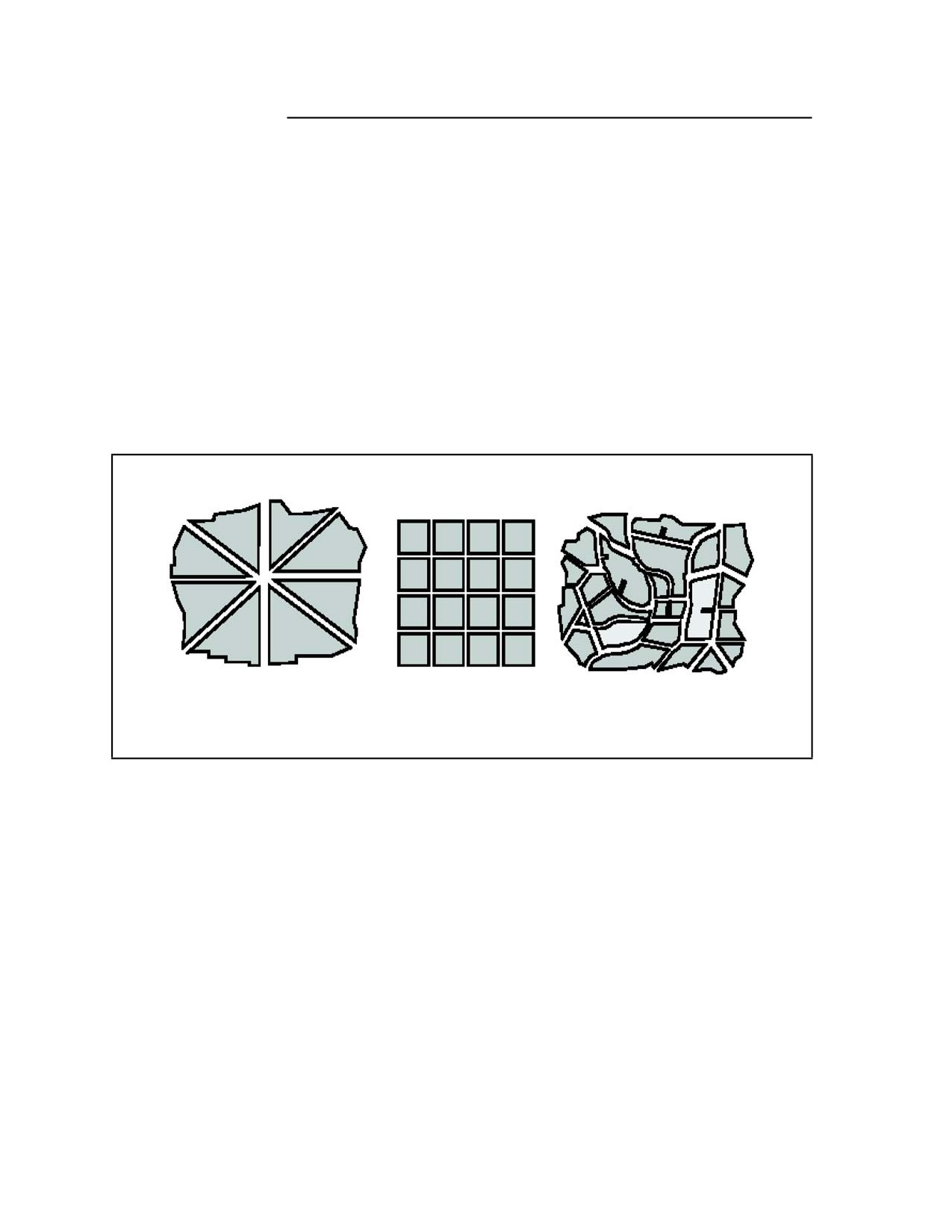
Urban Terrain Analysis
then units should be assigned to a police precinct to avoid crossing several
precinct lines, as would happen when assigning units by dominant terrain
features.
STREET PATTERNS
C-11. Patterns within the urban area result from the arrangement of the
streets, roads, highways, and other thoroughfares. They are a result of the
influences of natural terrain, the original designer’s personal prejudices, and
the changing needs of the inhabitants. The commander must understand the
street patterns in the area in which his control force will operate. This will
offer force protection, preventing the control formation from being
outmaneuvered, flanked, or surrounded by a hostile crowd. Urban areas can
display any of the three basic patterns or any combination of the three (see
Figure C-3).
Radial
Grid
Irregular
Figure C-3. Basic Internal Street Patterns
Radial
C-12. Societies of highly concentrated religious or secular power often
construct urban areas with a radial design with all primary thoroughfares
radiating out from the center of power. Terrain permitting, these streets may
extend outward in a complete circle or may form a semicircle or arc when a
focal point abuts a natural barrier such as a coastline or mountain. To
increase mobility and traffic flow, societies often add concentric loops or rings
to larger radial patterns.
Grid
C-13. The most adaptable and universal form for urban areas is the grid
pattern (lines of streets at right angles to one another forming blocks similar
to the pattern of a chessboard). A grid pattern can fill in and eventually take
over an original radial pattern. Most urban areas, regardless of the original
intent, plan, or vision, emerge from successive plans overlaid on one another.
C-4
FM 3-19.15
18 April 2005
Urban Terrain Analysis
Areas are well planned to fit with previous plans and others a haphazard
response to explosive urban growth. The results may mix different patterns,
blend patterns in symmetric combinations, or have no discernable geometric
pattern (the irregular pattern).
Irregular
C-14. Irregular patterns can be specifically designed for aesthetic reasons (as
in many suburban housing developments). They are sometimes used to
conform to marked terrain relief (see FMs 3-06 and 3-06.11).
URBAN FORM AND FUNCTION
C-15. Throughout the world, urban areas have similar form and function. In
form, urban areas contain like characteristics, readily divisible into distinct
sections or areas. Functionally, they tend to be the center of population,
finance, politics, transportation, industry, and culture.
z
Core. The core is the heart of the urban area, the downtown, or
central business district. Relatively small and compact, it contains a
large percentage of the urban area’s shops, offices, and public
institutions.
z
Core Periphery. As the name implies, the core periphery forms the
outer edges of the core of the urban area. Generally, it has undergone
less change than the core, resulting in buildings of uniform height
(generally two to three stories in towns and five to ten stories in larger
urban areas).
z
Industrial Area. Industrial areas generally develop on the outskirts
of the urban areas, where commercial transportation is easiest (along
airfields and major sea, river, rail, and highway routes). The open/
dispersed pattern of the buildings provides sufficient space for large
cargoes, trucks, and materials-handling equipment.
z
High-Rise Area. High-rise areas consist of multistoried apartments,
commercial offices, and businesses separated by large open areas such
as parking lots, parks, and individual one-story buildings. The
automobile, mass transit systems, and improved road networks
encourage these areas to grow and function further from the urban
core.
z
Residential Area. Residential areas can be found dispersed
throughout the urban area; however, large suburban areas (or sprawl)
normally form on the outskirts. The combined population of
surrounding suburban areas often outnumbers that of the urban area.
Proper and specific suburbs tend toward homogeneity based on
ethnicity, religion, economics, or some other social aspect.
z
Commercial Ribbon Area. Commercial ribbon areas are rows of
stores, shops, and restaurants built along both sides of major streets
that run through urban areas. These same types of areas often
develop along the roads that connect one urban area to another (strip
areas).
18 April 2005
FM 3-19.15
C-5
Urban Terrain Analysis
URBAN SOCIETY
C-16. Although complex, understanding the urban terrain is relatively
straightforward in comparison to comprehending the multifaceted nature of
urban society. As urban areas increase in size, they generally lose
homogeneity; therefore, commanders must understand and account for the
characteristics of a diverse population whose beliefs may vary. The behavior of
civilian populations within an urban area is dynamic and poses a special
challenge to commanders.
C-17. The center of gravity during an urban operation may be the civilian
inhabitants themselves. The side that enjoys the support of the population has
many advantages. To gain and retain this support, commanders must first
understand the complex nature and character of the urban society. Second,
they must understand and accept that every military action (or inaction) may
influence the relationship between the urban population and Army forces, and
by extension, mission success.
C-18. The identification of groups helps commanders focus on specific
segments of the urban society to determine their beliefs and needs and how
those beliefs and needs motivate them to future action (or inaction). Groups
may be categorized based on race, religion, national origin, tribe, clan, class,
party affiliation, education level, union memberships, occupation, age, or any
other significant social grouping.
C-19. Commanders should consider political, economic, and historical factors
in this analysis. These factors usually affect all groups to some extent and
often provide the basis for many of their beliefs, needs (actual or perceived),
and subsequent behavior. In most cases, training and discipline, grounded in
cultural understanding and sensitivity, will help mitigate many of the
potential adverse effects resulting from military and civilian interaction.
URBAN INFRASTRUCTURE
C-20. Urban infrastructures are those systems that support the inhabitants,
their economy, and their government. They provide the link between the
physical terrain and the urban society. Hundreds of systems may exist. Each
system has a critical role in the smooth functioning of the urban area. All
systems fit into the following five broad categories: communications and
information, transportation and distribution, energy, commerce, and human
services.
C-6
FM 3-19.15
18 April 2005
Appendix D
Practical Application
It is always best to derive lessons learned from practical operations, in the
field. These are operations where a measure of success was acquired, along
with important lessons learned. The following reflects an actual TF
application of the doctrine highlighted in the contents of this manual.
OVERVIEW
D-1. The purpose of this manual is to provide TF units and elements with the
latest guidance on providing crowd control and preventing civil disturbances.
D-2. Local civilians often gather in towns or along strategic locations
throughout an AO to demonstrate grievances or other causes (for example,
protesting the apprehension of a fellow citizen, policies of US forces, and
policies of government services). Although civilians have the right to
assemble, crowd gatherings are predominantly ethnically based, motivated,
and influenced. Local civilians can apply for a permit to legally conduct a rally
72 hours in advance as long as their assembly is peaceful and unobtrusive to
government services, freedom of movement, or the rights of others. On
occasion, intelligence collection can indicate a possibility for violence. In these
instances or during spontaneous crowd formations, the TF must provide forces
in support of a safe and secure environment or to assist civilian police in
preventing unlawful acts. If unlawful acts are committed, detain violators for
adjudication under the legal system.
PROCEDURES
D-3. Take precautions to avoid becoming a catalyst to the civil disturbance.
During lawful assemblies, the TF must make every effort to treat HN
individuals with respect. This means that the TF must engage in peaceful
gatherings using interpersonal communication skills. This ensures that
demonstrators understand that TF personnel respect their right to lawfully
assemble during peaceful demonstrations. When possible, TF engagement of a
peaceful assembly should be unobtrusive.
D-4. Do not display civil disturbance equipment or weapons, overtly prepare
defenses against a crowd, or aggressively violate crowd space, unless
presented with information, intelligence, or negative indicators of pending
violence.
NEGATIVE INDICATORS
D-5. Any response to negative indicators should be sequential, measured, and
focused on deescalating rather than escalating the crowd.
18 April 2005
FM 3-19.15
D-1
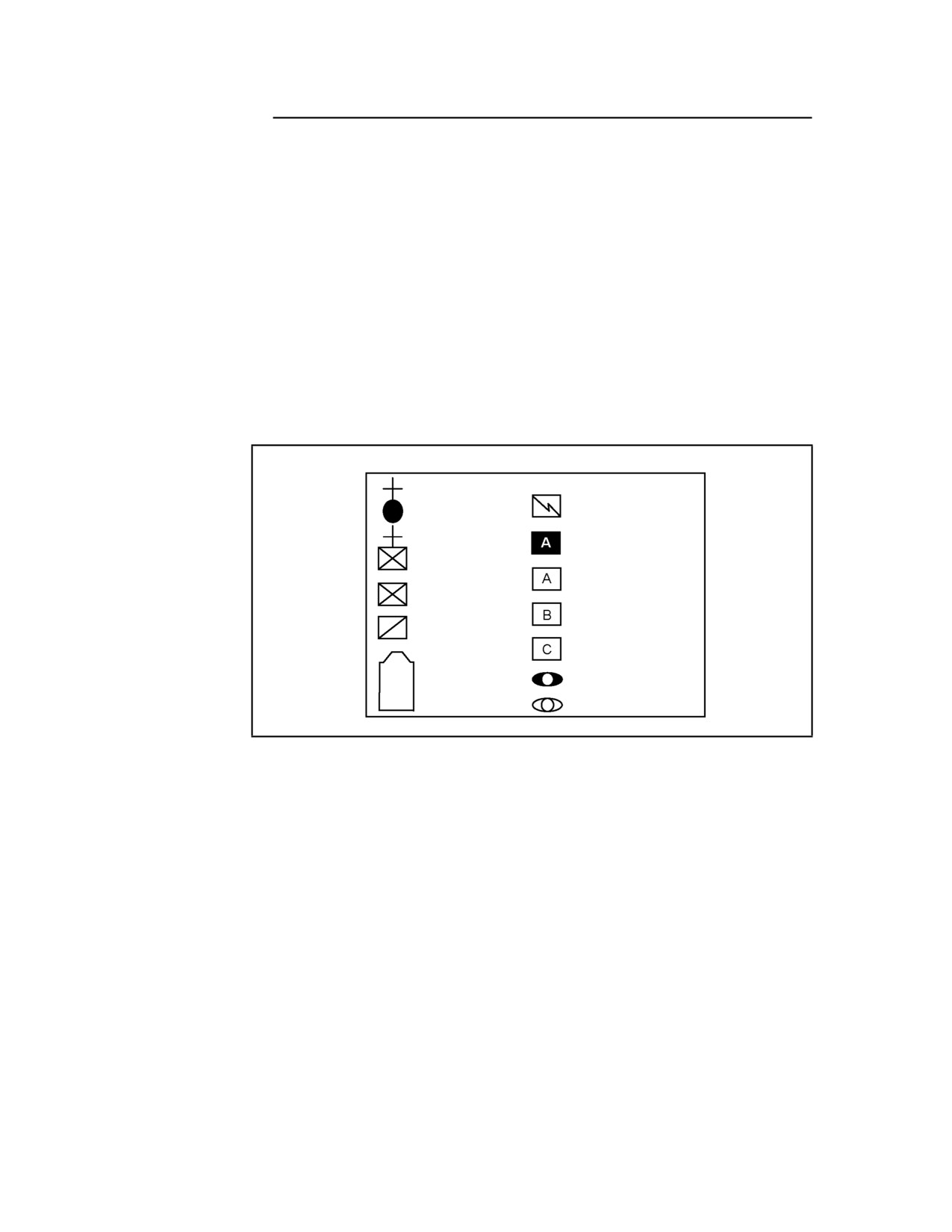
Practical Application
NEGATIVE INDICATORS OF A POTENTIAL CIVIL DISTURBANCE
D-6. Predictive intelligence is the best indicator of a potential civil
disturbance and may provide insight on internal planning, external
influences, environmental conditions, or catalyst events that should influence
TF planning and response.
D-7. Other indicators of a potential civil disturbance are people beginning to
assemble during a scheduled or spontaneous rally. When people begin to
assemble, leaders should pay particular attention to crowd dynamics. As the
crowd demeanor or dynamics change from peaceful assembly to unruly
behavior or unlawful acts, negative indicators should provide an advance
warning and prompt a measured response. Negative indicators of a potential
change in crowd dynamics and unlawful activities should prompt immediate
countermeasures (see Figure D-1).
Radio Operator
Platoon Leader
Baseman
PSG
A team member
Squad Leader
B team member
Team Leader
C team member
Vehicle
Security
Demonstrator
Figure D-1. Symbols for a Formation Element
Orientation
D-8. Crowd dynamics change from people milling around and talking among
themselves in isolated groups to a more collective focus concentrated on a
single objective (for example, TF personnel, specific agitators or magnets, a
government figure, or other activity).
Massing
D-9. The crowd begins to mass or tighten into a large contiguous body from a
loose formation to a static congregation located in a more concentrated area.
Unchecked, massing can provide anonymity and a collective feeling of
invulnerability. This change in group dynamics could provide ideal conditions
for a civil disturbance (see Figure D-2).
D-2
FM 3-19.15
18 April 2005

Practical Application
Building
Building
Figure D-2. Crowd Massing
Chanting
D-10. People may begin chanting slogans or yelling ethnically charged
rhetoric or obscenities. Because chanting can indicate an increase in crowd
intensity, interpreters should be positioned in strategic locations to interpret
crowd rhetoric.
Signaling
D-11. Signaling occurs when members of the crowd position themselves to
communicate and synchronize crowd actions tied to a plan with specific
objectives. Signaling may indicate the intent to escalate the message through
the use of violent or unlawful acts.
Blocking
D-12. The crowd may attempt to block public thoroughfares (for example,
entrances and exits to public buildings, MSRs, community streets, or other
traffic areas that may degrade freedom of movement or similar actions). This
escalates the level of attention given to the crowd’s message or prevents
freedom of movement to opposing persons or groups.
Arming
D-13. Any signs that the crowd is arming itself with objects (for example,
bottles, rocks, and sticks) is a clear indication of impending danger to the TF
and other civilians. In fact, during a recent civil disturbance, some members of
the crowd were seen handing out bottles to others in the crowd. Arming
demonstrates intent toward violence is unlawful.
18 April 2005
FM 3-19.15
D-3
Practical Application
Outside Influence
D-14. The presence of people from outside the community may indicate more
sophisticated planning and resources than would otherwise be expected from
local community members. Outside people may feel insulated from
responsibility for local actions and, therefore, provide a dangerous catalyst for
a violent civil disturbance.
Agitators and Instigators
D-15. Agitators and instigators are common elements associated with civil
disturbances. They often provide a catalyst to incite the crowd toward
violence. Whether spewing rhetoric or committing unlawful acts, their
continued presence will fuel potential strife.
Absence of Children
D-16. Recent civil disturbances have shown that even when children were
initially present at a rally, they were absent before the civil disturbance
erupted with violence. While the presence of children is not a guarantee of a
peaceful assembly, the removal of children from a rally may provide early
warning for a pending escalation of hostilities or a full-blown riot.
PREVENTION OF CROWD ESCALATION
D-17. If TF personnel believe, based on intelligence or negative indicators,
that a crowd is planning to, or may spontaneously, riot they should
immediately engage crowd participants using the preventive TTP measures.
D-18. The force executing these preventive TTP can include a number of civil
disturbance teams and elements capable of executing the tasks shown in
Figures D-2, page D-3; D-3; D-4, page D-6; and D-5, page D-8. These figures
demonstrate a full range of crowd control teams and elements, to include
camera teams with interpreters, checkpoints, QRF response, riot control
formation, NLW teams, snatch and detain teams, blocking teams, and
detainee evacuation, as required. Figures D-2, D-3, D-4, and D-5, illustrate
the evolution of a crowd formation and the recommended positioning of teams
and elements to engage people as they congregate. Included with each
security team is a designated camera or video recorder.
D-19. Depending on the situation and crowd dynamics, it may not be
necessary to establish all crowd control teams and elements, but they should
be included in planning. Regardless of task organization, teams and elements
must be prepared to execute the crowd control and civil disturbance TTP. The
order to execute the following TTP should be tailored based on local
conditions.
Early Contact
D-20. Engaging people as a crowd forms is essential to prevention. Whether
based on intelligence or negative indicators, people should be engaged early,
before the crowd masses as shown in Figure D-2, rather than waiting until
after the crowd masses as shown in Figure D-3. Early contact will assist TFs
D-4
FM 3-19.15
18 April 2005

Practical Application
in personalizing their interaction and ensuring that people understand their
presence is known, documented, and can be linked to their actions.
QRF rally point
Building
Building
Figure D-3. Early Contact and Unobtrusive Crowd Control Measures
D-21. Cameras are one of the best tools for preventing civil disturbances. The
use of cameras to document crowd formations, particularly lens-size groups
(small enough to fit in a single photo), will personalize contact and eliminate
feelings of anonymity among the crowd. People whose identity has been
documented will think twice before committing unlawful acts. Even without
documenting names, photo analysis can identify people associated with the
civil disturbance, especially those who unlawfully participated as crowd
instigators, agitators, or magnets or may commit unlawful acts.
D-22. As people begin to gather in and along streets, camera teams should be
deployed as unobtrusively as possible to engage people before they congregate
in mass. As depicted in Figure D-3, camera teams should consist of two
soldiers with an interpreter and be employed in a widely dispersed pattern.
Such small, dispersed camera teams are less likely to intrude on lawful rallies
or create invasive friction that might become a catalyst to a civil disturbance.
D-23. As the crowd begins to demonstrate negative indicators for a possible
civil disturbance (Figure D-4, page D-6), camera teams should become more
invasive by actively engaging groups to take their pictures. Camera teams
should focus cameras on instigators, agitators, or magnets (personnel that
garner respect or compliance from the crowd). If a person is purposely
avoiding the camera, even if his activities are lawful, the team should take
special measures to obtain his picture. Each time a camera team takes a
picture of a person or group of people, they must immediately engage them
using the warning outlined in paragraph D-26.
D-24. Once the crowd has massed and displays negative indicators or begins
to riot, camera teams should immediately move behind the riot formation line
18 April 2005
FM 3-19.15
D-5

Practical Application
(see Figure D-4). It is essential, however, that camera teams continue to
document the event, focusing on people who are committing illegal acts such
as arming themselves, throwing objects, and assaulting TF personnel.
D-25. Immediately following a crowd control or civil disturbance operation,
photos must be consolidated, processed, and submitted to the TF analysis and
control element (ACE) for analysis. A near real-time analysis will provide
immediate intelligence for ongoing operations to prevent subsequent civil
disturbances or to detain violators from the previous operation.
QRF rally point
Detainee
collection
point
Building
Building
Figure D-4. More Obtrusive Engagement as the Crowd Demonstrates
Negative Indicators
Crowd Warning
D-26. Once the team has taken a picture of a person or group of people, they
should warn the crowd that as individuals they would be held accountable for
their actions. Using an interpreter, the camera team leader will make solid
eye contact with the person or group and state the following warning: “We
have your picture. You will be held accountable for your actions. If you commit
an unlawful act, you will be detained, if not today, tomorrow. Blocking roads
or access to public buildings is unlawful.”
Limit Crowd Size
D-27. Persons seeking to conduct a rally must apply for a permit through
civilian authorities at least 72 hours prior to the meeting. If a rally has not
been lawfully scheduled through civilian authorities, or if it has, but is
demonstrating negative indicators and is turning into a civil disturbance, TF
units and elements should attempt to limit the crowd or separate gatherings
under 10 people (see Figure D-3, page D-5). Walking patrols can assist camera
D-6
FM 3-19.15
18 April 2005
Practical Application
teams in breaking up large groups. Walking patrols should operate in
conjunction with camera teams. This will ensure that camera teams can
accurately document and provide the aforementioned warning to prevent
further escalation of crowd size or behavior.
Clear Routes
D-28. Routes should be considered key terrain and must be controlled by the
TF to retain the initiative. Note how a QRF divides in order to clear side
streets between protected buildings in Figure D-4. Blocking routes or public
thoroughfares is not only illegal, but severely restrictive to civil disturbance
operations. Routes must remain open to allow movement of TFs and elements,
whether it is for camera teams during early contact or for the QRF to respond
during an actual civil disturbance. Because blocking routes is illegal, camera
teams must document responsible persons for immediate or subsequent
detention and legal processing.
Isolate the Area
D-29. As depicted in Figure D-3, page D-5, checkpoints should be established
to isolate the area. While checkpoints can prevent people from entering the
isolated area, they should never prevent people from exiting the area. When
trapped, people may escalate the level of violence out of fear, anger, or
desperation. When placing checkpoints, leaders should find a location that is
both close enough to limit the number of persons being isolated, but far
enough away that they will not draw a crowd from people within the isolated
area. Checkpoints are essential to preventing others from joining the already
gathered crowds. These checkpoints must provide storage room for processing
vehicles in both directions; but when limited by space or other considerations,
it should simply block traffic trying to enter the isolated area. Improve force
protection measures in and around checkpoints as necessary. Strategically
placed checkpoints can provide numerous countermeasures to prevent and
control a civil disturbance or to identify and detain persons who may have
committed unlawful acts during the riot. Use checkpoints to prevent potential
participants from joining the crowd or civil disturbance. Checkpoints should
also prevent any activity that may commingle ethnic groups. The checkpoint
must process all people departing the area by documenting personal and
vehicle information with the pictures of all occupants in front of or adjacent to
the vehicle.
Establish Lethal Overwatch
D-30. The mentality of “taking the high ground” is just as important in civil
disturbance operations as in any other type of operation. Although QRF assets
on the ground have both NL and lethal capabilities, it is critical to ensure
their safety by deploying marksman/observer teams as shown with the C-
team designates on top of the buildings in Figures D-4 and D-5, page D-8.
Detain persons committing unlawful acts. The detention and legal processing
of persons who commit unlawful acts, against TFs or local laws sends a clear
message that all people will be held accountable for their actions. Immediately
detain persons who are committing unlawful acts and are isolated or easily
accessible, unless the detain operation would create a catalyst event or
18 April 2005
FM 3-19.15
D-7
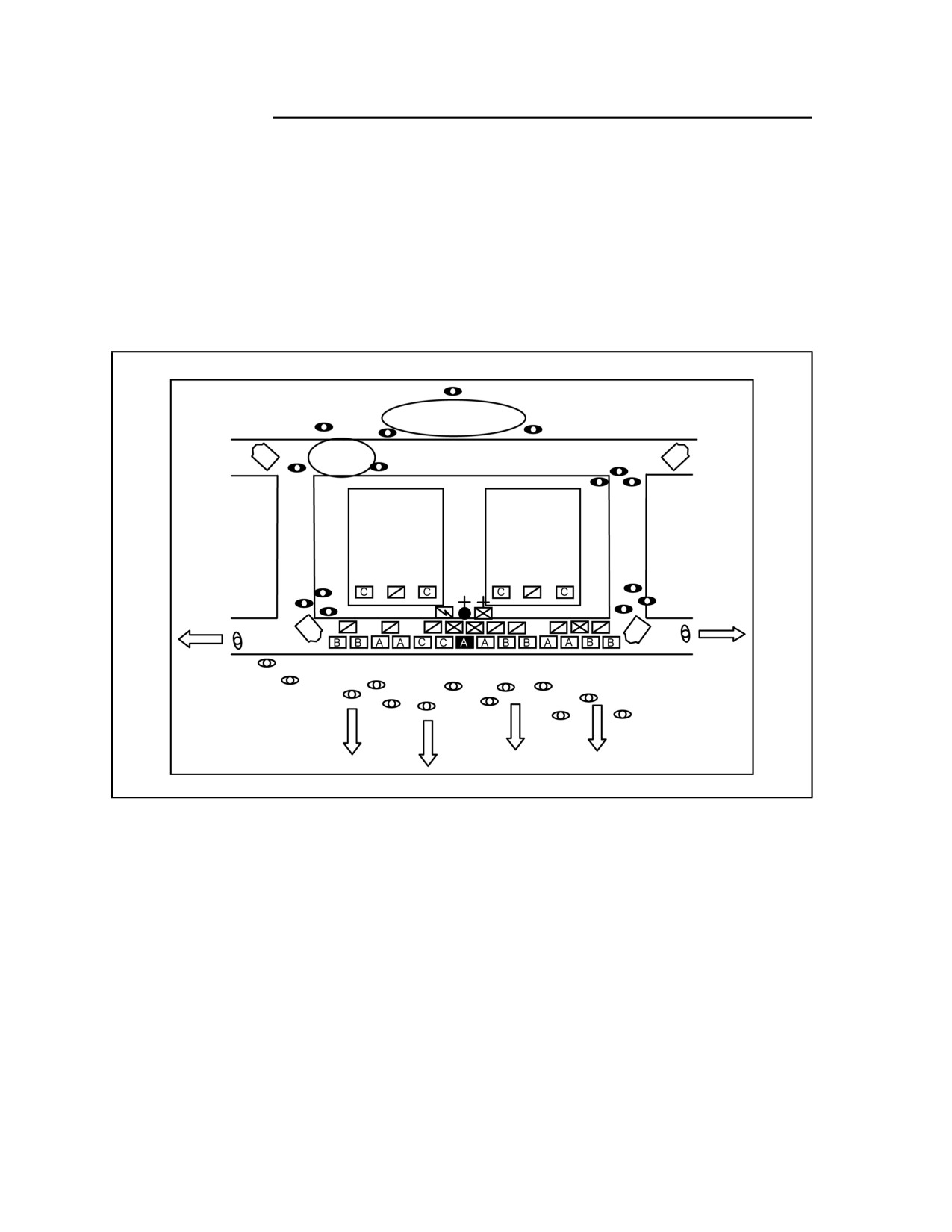
Practical Application
endanger the apprehension team. If it is not feasible to immediately detain
them, a picture with relevant information should be forwarded for analysis
and inclusion on the detain list for their detention at a later date and time.
Remember, as stated in the warning, they will be detained, if not today,
tomorrow. Detainees should be quickly relocated to the forward processing
site for detainee evacuation (see Figure D-5). Detainee evacuation sites should
be behind the control formations to prevent any interference from the local
population. Sites should be positioned at two separate locations, such as at the
end of a town or located along an MSR. All people who are detained based on
QRF rally point
Detainee
collection
point
Building
Building
Figure D-5. Full Engagement as Crowd Unlawfully Demonstrates
solid evidence of a crime (for example, pictures of them armed with dangerous
objects, blocking a road, assaulting TF members) will be turned over to local
authorities for legal processing.
Detain List
D-31. When executing operations based on the detain list, do not show people
the list or separate pictures from the list.
Quick Reaction Force Position
D-32. The QRF should be positioned with easy access to decisive points to
interdict formations or gathering of crowds, support checkpoints, or provide
sustained operations in support of early contact teams. Notice in Figure D-1,
page D-2, how the QRF is positioned out of direct sight of the crowd until
D-8
FM 3-19.15
18 April 2005
Practical Application
employment becomes necessary. QRF personnel are readily organized,
equipped, and easily moved into position to move between buildings and
through obstacles (see Figure D-4, page D-6).
D-33. At this point, if the crowd ignores verbal orders, NL munitions from
appropriate standoff distances could be used to influence and motivate the
crowd to comply. Use of NL munitions could prevent the necessity for QRF
personnel to come into direct physical contact with the crowd. Early
positioning of the QRF could become a catalyst event that may instigate a civil
disturbance.
D-34. Assembling in mass (see Figure D-5), directly in front of the protected
buildings, illustrates to the crowd that there is strength in numbers and the
QRF is determined to disperse the crowd from the area. As a reminder,
remove the flanking checkpoints that may block the dispersal of the crowd.
18 April 2005
FM 3-19.15
D-9
This page intentionally left blank.
Glossary
A2C2
Army airspace command and control
AA
assembly area
AFL-CIO
American Federation of Labor-Congress of Industrial Organizations
AG
Adjutant General
AO
area of operations
ARTEP
Army training and evaluation program
AS
area security
ASV
armored security vehicle
ATTN
attention
BDU
battle dress uniform
CA
civil affairs
CD
combat development
CDC
crowd dispersal cartridge
CFR
Code of Federal Regulations
CINC
commander-in-chief
CMT
crisis management team
COA
course of action
COB
close of business
CONUS
continental United States
COTS
commercial off-the-shelf
CP
candle power
CPU
central processing unit
DA
Department of the Army
DCO
defense coordinating officer
DD
Department of Defense
DM
designated marksmen
DOD
Department of Defense
DOJ
Department of Justice
DOMS
director of military support
EMD
emergency medical dispatching
EMS
emergency medical services
EOC
emergency operations center
FCMT
forced cell move team
FCO
federal coordinating officer
FEMA
Federal Emergency Management Agency
FM
field manual
18 April 2005
FM 3-19.15
Glossary-1
Glossary
FRP
federal response plan
FSE
fire support element
FSO
fire support officer
G2
Assistant Chief of Staff, G3 (Intelligence)
G3
Assistant Chief of Staff, G3 (Operations and Plans)
G5
Assistant Chief of Staff, G5 (Civil Affairs)
G6
Assistant Chief of Staff, G6 (Information Management)
GOTS
government off-the-shelf
GRM
graduated response matrix
HIV
human immunodeficiency virus
HMMWV
high-mobility multipurpose wheeled vehicle
HN
host nation
HQ
headquarters
I/R
internment and resettlement
INIWIC
Interservice Nonlethal Individual Weapons Instructor Course
IO
information operations
IPB
intelligence preparation of the battlefield
JMC
joint military commission
JTF
joint task force
L&O
law and order
LBE
load-bearing equipment
LBV
load-bearing vest
LEA
law enforcement agency
LOC
lines of communication
LOS
line of sight
LP
listening post
MACDIS
military assistance for civil disturbance
MANSCEN
Maneuver Support Center
MCCM-GE
modified crowd control munition-ground emplacement
MCM
Manual for Courts-Martial
MDMP
military decision-making process
METL
mission essential task list
METT-TC
mission, enemy, terrain, troops, time available, and civilian
considerations
MI
military intelligence
mm
millimeter
MO
Missouri
MOOTW
military operations other than war
MOUT
military operations on urbanized terrain
MPI
military police investigator
MRE
meal, ready to eat
Glossary-2
FM 3-19.15
18 April 2005
Glossary
MS
mobility support
MSCA
military support to civil authorities
MTP
mission training plan
MWD
military working dog
NCO
noncommissioned officer
NEO
noncombatant evacuation operations
NG
National Guard
NL
nonlethal
NLCS
nonlethal capabilities set
NLW
nonlethal weapons
OC
Oleoresin Capsicum
OCONUS
outside continental United States
OES
office of emergency services
OIC
officer in charge
OP
observation post
OPFOR
opposing forces
OPORD
operations order
PA
public address
PAO
Public Affairs Office
PIO
police intelligence operations
PM
provost marshal
PLT
platoon
PMO
Provost Marshal Office
POMSO
plans, operations, and military support officer
PPCT
pressure point control tactic
PPE
personal protective equipment
PSG
platoon sergeant
PSYOP
psychological operations
PT
physical training
PVAB
portable vehicle arrest barrier
QRF
quick reaction force
RCA
riot control agent
ROE
rules of engagement
RUF
rule for the use of force
S2
Intelligence Officer (US Army)
SCO
state coordinating officer
SCRAG
senior representative of the attorney general
SITREP
situation report
SJA
Staff Judge Advocate
SOFA
status of forces agreement
18 April 2005
FM 3-19.15
Glossary-3
Glossary
SOMA
status of mission agreement
SOP
standing operating procedure
SOSO
stability operations and support operations
SQD
squad
STARC
state area command
STP
soldier training publication
STX
soldier training exercise
TA
Training Area
TF
task force
TLP
troop leading procedure
TM
team
TPT
tactical psychological operations team
TRADOC
United States Army Training and Doctrine Command
TSOP
tactical standing operating procedure
TTP
tactics, techniques, and procedures
UCMJ
Uniform Code of Military Justice
UN
United Nations
UNGA
United Nations General Assembly
UNHCR
United Nations High Commissioner for Refugees
UNSC
United Nations Security Council
US
United States
USAMPS
United States Army Military Police School
VCR
video cassette recorder
VIP
very important person
WMD
weapons of mass destruction
WTO
World Trade Organization
Glossary-4
FM 3-19.15
18 April 2005
Bibliography
AR 380-10. Foreign Disclosure and Contacts With Foreign Representatives. 6 June 2003.
AR 380-13. Acquisition and Storage of Information Concerning Nonaffiliated Persons and
Organizations. 30 September 1974.
Code of Federal Regulations.
Constitution of the United States.
DA Form 2028. Recommended Changes to Publications and Blank Forms.
DA Form 4137. Evidence/Property Document.
DD Form 2708. Receipt For Inmate or Detained Person.
DOD Civil Disturbance Plan 55-2. Operation Garden Plot. 15 February 1991.
DOD Directive 3025.12. Military Assistance for Civil Disturbances. 4 February 1994.
DOD Directive 3025.15. Military Assistance to Civil Authorities. 18 February 1997.
DOD Directive 5525.5. DOD Cooperation With Civilian Law Enforcement Officials.
15 January 1986.
Executive Order 12333. United States Intelligence Activities. 4 December 1981.
Fiscal Year 1989 Act.
FM 3-06. Urban Operations. 1 June 2003.
FM 3-06.11. Combined Arms Operations in Urban Terrain. 28 February 2002.
FM 19.10. Military Police Law and Order Operations. 30 September 1987.
FM 3-19.4. Military Police Leaders’ Handbook. 4 March 2002.
FM 3-19.40. Military Policy Internment/Resettlement Operations. 1 August 2001.
FM 3-21.5. Drills and Ceremonies. 7 July 2003.
FM 3-22.40. Multiservice Tactics, Techniques, and Procedures (MTTP) For Tactical
Employment of Nonlethal Weapons (NLW). 15 January 2003.
FM 7-0. Training the Force. 22 October 2002.
FM 7-1. Battle Focused Training. 15 September 2003.
FM 27-100. Legal Support to Operations. 1 March 2000.
Judiciary Act of 1789.
MCM.
18 April 2005
FM 3-19.15
Bibliography-1
Bibliography
National Defense Authorization Acts.
NGR 500-1/ANGI 10-8101. Military Support to Civil Authorities. 1 February 1996.
Posse Comitatus Act. 1878.
STP 19-95B1-SM. Soldier’s Manual for MOS 95B Military Police Skill Level 1.
14 January 2003.
STP 19-95B24-SM-TG. Soldier’s Manual and Trainer’s Guide for MOS 95B, Military Police,
Skill Levels 2/3/4. 2 December 2002.
STP 19-95C1-SM. MOS 95C, Corrections Specialist, Skill Level 1 Soldier’s Manual.
30 October 2003.
STP 19-95C24-SM-TG. MOS 95C, Corrections Specialist, Skill Levels 2/3/4, Soldier’s Manual
and Trainer’s Guide. 30 October 2003.
Uniform Code of Military Justice.
USC, Title 32. National Guard.
USC, Title 10, Chapter 18. Military Support for Civilian Law Enforcement Agencies.
USC, Title 10, Subtitle A, Part I, Chapter 15, Section 331. Federal Aid for State Governments.
USC, Title 10, Subtitle A, Part I, Chapter 15, Section 332. Use of Militia and Armed Forces to
Enforce Federal Authority.
USC, Title 10, Subtitle A, Part I, Chapter 15, Section 333. Interference With State and Federal
Law.
USC, Title 10, Subtitle A, Part I, Chapter 15, Section 334. Proclamation to Disperse.
USC, Title 18, Part I, Chapter 67, Section 1385. Use of Army and Air Force as a Posse
Comitatus.
Bibliography-2
FM 3-19.15
18 April 2005
Index
Numerics
checkpoints, D-7
detention facilities, 3-18, 3-19
chemical irritants, 7-3, 7-4
Dibenz, 5-11
12-gauge shotgun, 5-6
chemical-containing projectiles,
director of military support
12-gauge utility pouch, 5-16
7-6
(DOMS), B-2
12-guage buttstock cuff, 5-17
12-gauge projectile, 7-6
dispersal process, 1-4
12-guage high-intensity light
40-millimeter projectile, 7-6
emergency dispersal, 1-5
system, 5-15
children, D-4
routine dispersal, 1-4
A
civil disturbance training, 6-3
dispersing, 2-19
accountability, D-6
civil law enforcement, 3-2, B-9
dissemination of chemical irritants,
agendas, 1-4
civil unrest, 1-1
7-4
air patrols, 2-23
clear routes, D-7
aerosol method, 7-5
analysis, 7-3, D-6
closed-cell shock-absorbent foam,
bursting method, 7-5
anarchists, 1-3
5-19
fogging method, 7-6
annual unit training plan, 6-3
COA. See course of action.
pyrotechnic method, 7-4
anonymous, 1-4
coercion dispersal, 1-5
DM. See designated marksmen.
anti-free-enterprise, 1-3
commands, 6-7, 6-9
DOD. See Department of Defense.
antiglobalization, 1-3
commercial ribbon, C-5
E
apprehension teams, 3-3, 6-12, 7-9
containment, 2-21
emergency preparedness, B-4
apprehension element, 6-12
control force team, 7-3
equipment
squad leader, 7-10
cooperative subjects, 3-2
M33A1, 2-3
team member four, 7-11
core, C-5
expandable riot baton, 5-5
team member one, 7-11
core capabilities, 5-20
explosives, 1-10, 1-11
team member three, 7-11
core periphery, C-5
extraction teams, 6-10
team member two, 7-11
correctional facility cadre, 7-9
deployment, 6-10
area isolation, D-7
counterdemonstration workgroups,
arming, D-3
2-6
F
assembly from a platoon line, 6-17
course of action (COA), 8-1
FCMTs. See forced cell move
course of action analysis, 8-1
B
teams.
CR solution, 5-12
Federal Emergency Management
ballistic full-length riot body shield,
crowd assessment, 2-8, 2-9
Agency (FEMA), B-3
5-3
crowd control, 2-5
FEMA. See Federal Emergency
ballistic riot face shield, 5-2
crowd control options, 2-17
Management Agency.
barricades, 1-7, 1-9, 2-19, 7-1
crowd dispersal cartridge (CDC),
female subjects, 3-4
behavior, 1-7
5-9
fight-or-flight, 1-6, 2-19
blocking, 2-19, D-3
crowd types
final phase, 1-4
by-the-number commands, 2-22
agitated crowds, 1-7
final-target areas, 4-5
C
sighting crowds, 1-6
fire, 1-10
crowds
cadre behavior, 7-2
firearms, 1-10
building of, 1-4
caltrop, 5-17
Flex-Cufs, 3-4, 5-11, 7-18
CS1, 5-12
cameras, D-5
applying from the prone
carrying pouch (40 millimeter),
D
position, 3-5
5-15
applying from the standing-
deescalating the crowd, D-1
casual crowds, 1-6
supported position, 3-4
deliberate operation, 2-16
catalyst, D-1
forced cell move teams (FCMTs),
demonstrations, 1-1
CDC. See crowd dispersal
7-12
Department of Defense (DOD), 2-4
cartridge.
inspection, 7-13
designated marksmen (DM), 2-2
centralized planning, 1-3
medic, 7-16
designated marksmen (DM)
changing sides, 3-15
officer in charge (OIC), 7-16
teams, 6-11
chanting, D-3
team member five, 7-15, 7-18
detain list, D-8
18 April 2005
FM 3-19.15
Index-1
Index
team member four, 7-15, 7-18
platoon line with one support
INIWIC. See Interservice Nonlethal
team member one, 7-13, 7-17
squad, 6-32
Individual Weapons Instructor
team member three, 7-14,
platoon wedge, 6-32
Course.
7-18
platoon wedge with direct
international law, 2-10
team member two, 7-18
support, 6-24, 6-34
Interservice Nonlethal Individual
forced cell moves, 7-12
platoon wedge with general
Weapons Instructor Course
military police investigator,
support, 6-22, 6-32
(INIWIC), 8-2
7-16
platoon wedge with lateral
interval and distance, 6-7
moving the inmate, 7-19
support, 6-22, 6-33
J
returning the inmate to the
platoon wedge with one
joint task force (JTF), B-12
cell, 7-20
support squad, 6-35
JTF. See joint task force.
team member three, 7-18
three-squad platoon, 6-16
team member two, 7-14
frisk search, 3-10
K
forced dispersal, 2-22
performance phase, 3-10
Kevlar helmet, 5-1
formations, 7-9
preparation phase, 3-10
L
company, 6-37
G
company echelons and
launch cup, 5-9
G8 summit protest, 2-22
wedge, 6-40
law enforcement agencies, B-1
gathering
company line in depth, 6-39
law enforcement sources, B-6
assembly process of, 1-2
company line in mass, 6-39
lethal overwatch, D-7
impromptu, 1-3
company line with support,
lethal protection, 6-11
organized, 1-3
6-40
load bearing equipment, 5-15
GG04, 5-9
company with vehicles, 6-42
load bearing vest, 5-15
goal definition, 2-5
control force, 6-1, 6-3
Los Angeles Sheriffs Department,
graduated response matrix, 8-1
control force base element,
2-7
development, 2-13, 2-14
6-5
M
graduated response matrix (GRM)
control force circular, 6-4
development, 2-13
M1006, 5-8
control force command
grievance protest, 7-2
M1012, 5-7
element, 6-6
GRM. See graduated response
M1013, 5-8
control force diamond
matrix.
M33A1, 5-12
formations, 6-4
ground-mounted bullhorns, 5-13
M36, 5-11
control force echelon
M37, 5-11
formation, 6-4
H
M40, 5-13
control force lethal overwatch
hand-and-arm signals, 6-7, 6-8,
M7, 5-13
element, 6-6
6-16
M7 66-millimeter launcher, 5-6
control force line, 6-4
handcuffed escort position, 3-14
M84, 5-9
control force support element,
hard rubber balls (.48 caliber), 5-9
mandates, 2-10
6-5
hard rubber pellets (.25 caiber), 5-9
marksmen and observer teams,
control force wedge, 6-4
hasty operations, 2-17
6-1
control force with vehicles, 6-5
high-intensity light, 5-14
massing, D-2
crowd control, 6-17
high-rise areas, C-5
MCCM-GE. See modified crowd
platoon, 6-27
HN. See host nation.
control munition-ground
platoon diamond and circle,
host nation (HN), 2-10
emplacment.
6-24, 6-35
host nation (HN) law, 2-11
metric conversion chart, A-1
platoon echelon right and left,
hostages, 7-3
military police functions, 2-4
6-20, 6-32
humanitarian assistance, 1-1,
military police investigator, 7-16
platoon line, 6-16, 6-28, 6-30
2-13, 8-1
military police investigator (MPI),
platoon line assembly, 6-28
I
7-16
platoon line with direct
military sources, B-6
support, 6-19, 6-31
impact training suits, 5-19
military transport vehicles, 2-22
platoon line with general
individual disposable riot control
military working dogs (MWDs), 2-3
support, 6-17, 6-28
agent dispersers, 5-11
mobs, 1-7
platoon line with lateral
individual high-intensity
modified crowd control munition-
support, 6-18
searchlight, 5-14
ground emplacment
industrial areas, C-5
(MCCM-GE), 5-7
Index-2
FM 3-19.15
18 April 2005
Index
Molotov cocktails, 1-9
platoon formations
types of batons, 4-6
monitoring, 2-17
vehicles, 6-42
riot control agent disperser, 2-3
motorized patrols, 2-23
political grievances, 1-1
riot control agents, 5-13, 7-3
MPI. See military police
POMSO. See plans, operations,
riot control agents (RCAs), 1-6,
investigator.
and military support officer.
2-14, 2-16, 2-19
multinational force, 2-12
portable vehicle arrest barrier, 5-18
riot gear, 7-8
multiple riots, 7-2
posse comitatus, B-7, B-8
riot shield, 4-1, 7-8
MWDs. See military working dogs.
practice grenade fuse, 5-20
riot shield carries
predictive intelligence, D-2
at the ready, 4-2
N
preparation and training, 7-2
on guard, 4-2
national guard (NG), B-9
primary-target areas, 4-4
riots, 1-5, 1-8, 2-2, 2-9, 7-2
negative indicators, D-2
proclamation, 2-20
rocks, 1-9
negotiated management, 1-5
prone search, 3-15
ROE. See rules of engagement.
negotiations, 2-7
performance phase, 3-17
rubber ball grenade pouch, 5-17
NG. See national guard.
preparation phase, 3-16
rules of engagement (ROE), 2-11
NL. See nonlethal.
psychological operations
S
NLW. See nonlethal weapons.
(PSYOP), 2-4
nonballistic full-length riot shield,
same-gender searches, 3-9
PSYOP. See psychological
5-1
sample proclamation, 2-20
operations.
nonballistic riot face shield, 5-1
scalable effects process, 2-12
public disorders, 1-5
nonballistic shin guard, 5-2
search man, 3-7
public disturbances, 1-5
nonlethal (NL), 5-20
search principles, 3-8
R
nonlethal (NL) counterpersonnel
search teams, 3-9
capabilities, 5-21
rate of march, 6-7
secondary-target areas, 4-4
nonlethal (NL) munitions, 4-21
RCAs. See riot control agents.
Secretary of Defense, B-2
nonlethal countermateriel
records, 7-7
Secretary of the Army, B-2
capabilities, 5-21
religious-based fighting factions,
security man, 3-8
nonlethal engagements, 6-11
1-1
seven-step approach, 8-2
nonlethal munitions, 2-2, 7-3
reserve forces, 6-12, B-3
show of force, 2-21
nonlethal weapons, 2-2, 4-1, 5-22,
residential areas, C-5
single projectile rounds, 8-9
7-3
responsibilities, B-3
smoke grenades, 1-9
nonlethal weapons (NLW), 2-2
riot baton, 4-1, 4-3, 7-8
sniper, 1-10
nonviolent tactics, 7-1
riot baton blocking techniques,
SOFA. See status of forces
4-10
agreement.
O
high block, 4-10
SOMA. See status of mission
OC. See Oleoresin Capsicum.
low block, 4-11
agreement.
officer in charge, 7-16
middle block, 4-13
SOP. See standing operating
Oleoresin Capsicum (OC), 7-4
strong-side block, 4-12
procedure.
open sources, B-6
weak-side block, 4-12
Spectra Shield, 5-3
opposite-gender searches, 3-13,
riot baton carries
squad formations, 6-13
3-16
outside-arm carry, 4-8
assembly, 6-15
orientation, D-2
two-hand carry, 4-7
diamond and circle
P
vertical high-profile carry, 4-8
formations, 6-15
vertical low-profile carry, 4-9
diamond or circle formation,
patrol routes, 2-23
pawns in civil disturbance
riot baton retention, 4-19
6-16
riot baton striking techniques, 4-13
echelon formation, 6-14
operations, 1-10
one-hand forward strike, 4-14
line formation, 6-14
personnel effectors, 5-4
one-hand reverse strike, 4-14
wedge formation, 6-14
personnel protectors, 5-1
two-hand front jab, 4-17
squad rotation, 6-26, 6-38
photographic record, 2-3
two-hand middle strike, 4-18
staff coordination, 2-16
physical barriers, 1-7
two-hand rear jab, 4-18
standing operating procedure
planned violent disturbances, 7-1
two-hand strong-side
(SOP), 7-2
planning process, 7-3
horizontal strike, 4-16
standing operating procedures
plans, 8-9
two-hand weak side horizontal
(SOP), 8-1
plans, operations, and military
strike, 4-16
standing search, 3-13
support officer (POMSO), B-4
riot batons, 4-7
performance phase, 3-14
18 April 2005
FM 3-19.15
Index-3
Index
preparation phase, 3-13
verbal abuse, 1-9
standoff distance, 6-1
violent tactics, 7-1
status of forces agreement
W
(SOFA), 2-10
walking patrols, D-6
status of mission agreement
war, 1-1
(SOMA), 2-10
wargame, 2-16
street patterns
weapon positions, 6-6
grid, C-4
high-port arms, 6-7
irregular, C-5
safe-port arms, 6-7
radial, C-4
weapons
symbols for a formation element,
12-gauge shotgun, 2-1
6-2
M16, 2-1
T
M203, 2-1
tactical standing operating
M4, 2-1
procedure (TSOP), 2-3
M9 pistol, 2-1
tap-down technique, 4-22
wooden riot baton, 5-5
target development, 2-14
World Trade Organization (WTO),
targets, 8-2
2-24
E-type, 8-2
WTO. See World Trade
three-dimensional manikins,
Organization.
8-2
terrain, C-1
terror organizations, 1-2
The Balkans, 1-10
threat cover man, 3-8
thrown objects, 1-10
tracing-C technique, 4-20
training, 7-7
training strike bags, 5-19
TSOP. See tactical standing
operating procedure.
U
unanimous, 1-4
uncooperative subjects, 3-2
unit training program, 8-2
unit training strategy, 8-1
unorganized riots, 7-2
urban environment, C-1
urban infrastructure, C-6
urban operations, C-6
urban pattern
linear, C-3
segment, C-3
urban patterns
network, C-3
satellite, C-2
urban society, C-6
analysis, C-6
segments, C-6
urban terrain, C-2
US law, 2-10
V
vehicles, 1-10
Index-4
FM 3-19.15
18 April 2005
FM 3-19.15
18 April 2005
By Order of the Secretary of the Army:
PETER J. SCHOOMAKER
General, United States Army
Chief of Staff
Official:
SANDRA R. RILEY
Administrative Assistant to the
Secretary of the Army
0510202
DISTRIBUTION:
Active Army, Army National Guard, and US Army Reserve: To be distributed in accordance with
the initial distribution number 110138, requirements for FM 3-19.15.
This page intentionally left blank.
This page intentionally left blank.
PIN: 082432-000
FM 3-05.2 (FM 3-05.137/FM 3-05.202)
Foreign Internal Defense
September 2011
DISTRIBUTION RESTRICTION: Distribution authorized to U.S. Government agencies and their contractors
only to protect technical or operational information from automatic dissemination under the International
Exchange Program or by other means. This determination was made on 1 August 2011. Other requests for
this document must be referred to Commander, United States Army John F. Kennedy Special Warfare Center
and School, ATTN: AOJK-CDI-JA, 3004 Ardennes Street, Stop A, Fort Bragg, NC 28310-9610.
DESTRUCTION NOTICE: Destroy by any method that will prevent disclosure of contents or reconstruction of the
document.
FOREIGN DISCLOSURE RESTRICTION (FD 6): This publication has been reviewed by the product developers in
coordination with the United States Army John F. Kennedy Special Warfare Center and School foreign disclosure
authority. This product is releasable to students from foreign countries on a case-by-case basis only.
Headquarters, Department of the Army
This publication is available at
General Dennis J. Reimer Training and Doctrine
*FM 3-05.2 (FM 3-05.137/3-05.202)
Field Manual
Headquarters
Department of the Army
No. 3-05.2 (FM 3-05.137/FM 3-05.202)
Washington, DC, 1 September 2011
Foreign Internal Defense
Contents
Page
PREFACE
v
Chapter 1
INTRODUCTION
1-1
Overview
1-2
Internal Defense and Development
1-3
Comprehensive Approach of Foreign Internal Defense
1-4
Holistic Interaction
1-6
Rule of Law
1-7
Relationship With Other Operations
1-7
Department of Defense Tools
1-10
United States National Objectives and Policy
1-18
Chapter 2
ORGANIZATION AND RESPONSIBILITIES
2-1
Overview
2-1
Support From the United States
2-1
The Instruments of National Power
2-2
National-Level Organizations
2-5
National-Level Intelligence Organizations
2-5
Combatant Command Organization
2-10
Subordinate Commands
2-11
Joint Task Forces
2-11
United States Diplomatic Mission and Country Team
2-12
Distribution Restriction: Distribution authorized to U.S. Government agencies and their contractors only to
protect technical or operational information from automatic dissemination under the International Exchange
Program or by other means. This determination was made on 1 August 2011. Other requests for this document
must be referred to Commander, United States Army John F. Kennedy Special Warfare Center and School,
ATTN: AOJK-DTD-JA, 2175 Reilly Road, Stop A, Fort Bragg, NC 28310-5000.
Destruction Notice: Destroy by any method that will prevent disclosure of contents or reconstruction of the
document.
Foreign Disclosure Restriction (FD 6): This publication has been reviewed by the product developers in
coordination with the United States Army John F. Kennedy Special Warfare Center and School foreign disclosure
authority. This product is releasable to students from foreign countries on a case-by-case basis only.
*This publication supersedes FM 3-05.137, Army Special Operations Forces Foreign Internal Defense,
30 June 2008, and FM 3-05.202, Special Forces Foreign Internal Defense Operations, 2 February 2007.
i
Contents
Supported Host Nation
2-15
Multinational Force
2-16
Role of Conventional Forces in Foreign Internal Defense
2-16
Role of Army Special Operations Forces in Foreign Internal Defense
2-18
Army Support to Coalitions
2-22
Chapter 3
PLANNING
3-1
Overview
3-1
Planning Imperatives
3-2
Department of State Guidance
3-3
Department of Defense Guidance
3-4
Theater of Operations Planning Requirements
3-6
Security Cooperation Planning
3-7
Phases
3-8
Planning Procedures and Considerations
3-8
Regional, Transnational, and International Concerns
3-13
Foreign Internal Defense Assessment
3-13
Environment and Training Assessment
3-14
Handoff Considerations
3-14
Training Plan
3-17
Planning for Protection
3-18
Chapter 4
TRAINING
4-1
Overview
4-1
Responsibilities for Training
4-1
Training and Skills Needed for Success
4-2
Training Strategy
4-7
Training and Advisory Assistance to the Host Nation
4-9
Chapter 5
EMPLOYMENT CONSIDERATIONS
5-1
Overview
5-1
Employment Factors
5-1
Military Information Support Operations Estimate of the Situation
5-7
Health Service Support
5-12
Site Survey Procedures
5-15
Advising the Host Nation Military
5-20
Chapter 6
OPERATIONS
6-1
Overview
6-1
Indirect Support
6-1
Direct Support
6-6
Combat Operations
6-14
Considerations for Combat Operations
6-15
Sustainment
6-19
Insurgency and Counterinsurgency
6-19
Terrorism
6-20
ii
FM 3-05.2
1 September 2011
Contents
Chapter 7
REDEPLOYMENT
7-1
Overview
7-1
Termination of Operations
7-1
Mission Handoff Procedures
7-3
Postmission Debriefing Procedures
7-4
Appendix A LEGAL, REGULATORY, AND POLICY CONSIDERATIONS
A-1
Appendix B INTERNAL DEFENSE AND DEVELOPMENT STRATEGY
B-1
Appendix C INTELLIGENCE SUPPORT OPERATIONS
C-1
Appendix D ILLUSTRATIVE INTERAGENCY PLAN FOR FOREIGN INTERNAL
DEFENSE
D-1
GLOSSARY
Glossary-1
REFERENCES
References-1
INDEX
Index-1
Figures
Figure 1-1. Foreign internal defense development process
1-4
Figure 1-2. Foreign internal defense comprehensive approach
1-5
Figure 1-3. Relationship of security assistance and foreign internal defense
1-12
Figure 2-1. Foreign internal defense coordination
2-3
Figure 2-2. Country Team concept
2-13
Figure 2-3. Security assistance organization departmental alignment
2-14
Figure 2-4. Security assistance organization functional alignment
2-14
Figure 3-1. Policy agents, routes, and products
3-4
Figure 3-2. Theater security cooperation planning
3-8
Figure 5-1. Civil-military operations estimate format
5-8
Figure 5-2. Example of Military Information Support operations estimate
5-10
Figure 5-3. Suggested site survey checklist
5-15
Figure 7-1. Postmission debriefing guide
7-6
Figure A-1. Propaganda of the now defunct Liberation Tigers of Tamil Elam of Sri Lanka
attempting to discredit the government for alleged government-sponsored
human rights abuses
A-6
Figure B-1. Functions of internal defense and development
B-2
Figure B-2. National-level internal threat planning and coordination organization
B-9
Figure C-1. Intelligence process
C-3
Figure C-2. Information environment characteristics overlay example
C-9
1 September 2011
FM 3-05.2
iii
Contents
Tables
Table D-1. Phase model based on significant U.S. operational focus shifts
D-3
Table D-2. Sample implementation matrix for interagency plan
D-4
iv
FM 3-05.2
1 September 2011
Preface
Field Manual (FM) 3-05.2, Foreign Internal Defense, provides the doctrinal guidance for the United States
(U.S.) Army on conducting foreign internal defense (FID). It is the keystone manual for all subordinate FID
doctrine. FID has been and remains an Army special operations forces (ARSOF) core task and a directed task
for the entire spectrum of the conventional forces. The relevance of FID in the current operational environment
continues to grow.
PURPOSE
FID is participation by civilian and military agencies of a government in any of the action programs taken by
another government or other designated organization to free and protect its society from subversion,
lawlessness, insurgency, terrorism, and other threats to its security
(Joint Publication
[JP]
3-22, Foreign
Internal Defense). This publication depicts the integrated theater efforts that include ARSOF and conventional
forces roles in joint, multinational, intergovernmental, and nongovernmental organizations working in a
collaborative environment. It provides an overview of selected sources of power applied through the
instruments of national power brought to bear for supporting FID and the impact and interaction of Army units
with the other instruments of national power. In addition, it illustrates how FID is a key component of a host
nation’s (HN’s) program of internal defense and development (IDAD), and that the focus of all U.S. FID
efforts is to support that IDAD program to build capability and capacity to free and protect the HN from
subversion, lawlessness, and insurgency.
SCOPE
This publication complements and is consistent with joint and Army doctrine. This publication provides the
principles, fundamentals, guidelines, and conceptual framework of FID, addressing the inherently complex
regional to transnational environments for Army commanders, staffs, and Soldiers conducting FID. It provides
the linkage from joint to Army doctrine; therefore, great effort has been made to integrate joint and Army
concepts and terminology into this manual. In addition, the interagency nature of FID mandates scrutiny and
exposition on Army interaction with, and in some cases at the guidance of, non-Department of Defense (DOD)
agencies of the United States Government (USG) or other government agencies (OGAs). It also provides Army
conventional forces and ARSOF units, joint headquarters and staffs, and other agencies and departments of the
USG with a reference useful to accomplish integrated efforts during the conduct of FID.
APPLICABILITY
FM 3-05.2 provides the joint and land component force commander and staff a broad understanding of how
units conduct FID operations. This manual provides guidance for commanders who determine the force
structure, budget, training, materiel, and operational requirements necessary to prepare ARSOF and
conventional forces to conduct FID. It also provides similar guidance for conventional force units deriving
mission-essential task lists. Unless otherwise stated, this publication applies to the Active Army, Army National
Guard (ARNG)/Army National Guard of the United States (ARNGUS), and United States Army Reserve
(USAR). The acronym ARSOF represents all Special Forces (SF), Rangers, Special Operations Aviation
Regiment (SOAR), Military Information Support (MIS), and Civil Affairs (CA) forces assigned to the United
States Army Special Operations Command (USASOC) and supported by the Sustainment Brigade (Special
Operations) (Airborne) (SB[SO][A]).
ADMINISTRATIVE INFORMATION
This publication is restricted in its distribution and potential foreign release. Distribution is authorized to USG
agencies and their contractors only to protect technical or operational information from automatic dissemination
under the International Exchange Program or by other means. Unless this publication states otherwise,
masculine nouns and pronouns do not refer exclusively to men. The proponent of this FM is the United States
Army John F. Kennedy Special Warfare Center and School
(USAJFKSWCS). Submit comments and
recommended changes to Commander, USAJFKSWCS, ATTN: AOJK-CDI-JA, 3004 Ardennes Street, Stop A,
Fort Bragg, NC 28310-9610.
1 September 2011
FM 3-05.2
v