Military reference books and manuals (2009-2023, Volume 7) - page 8
Nonlethal Capabilities Set and Employment Considerations
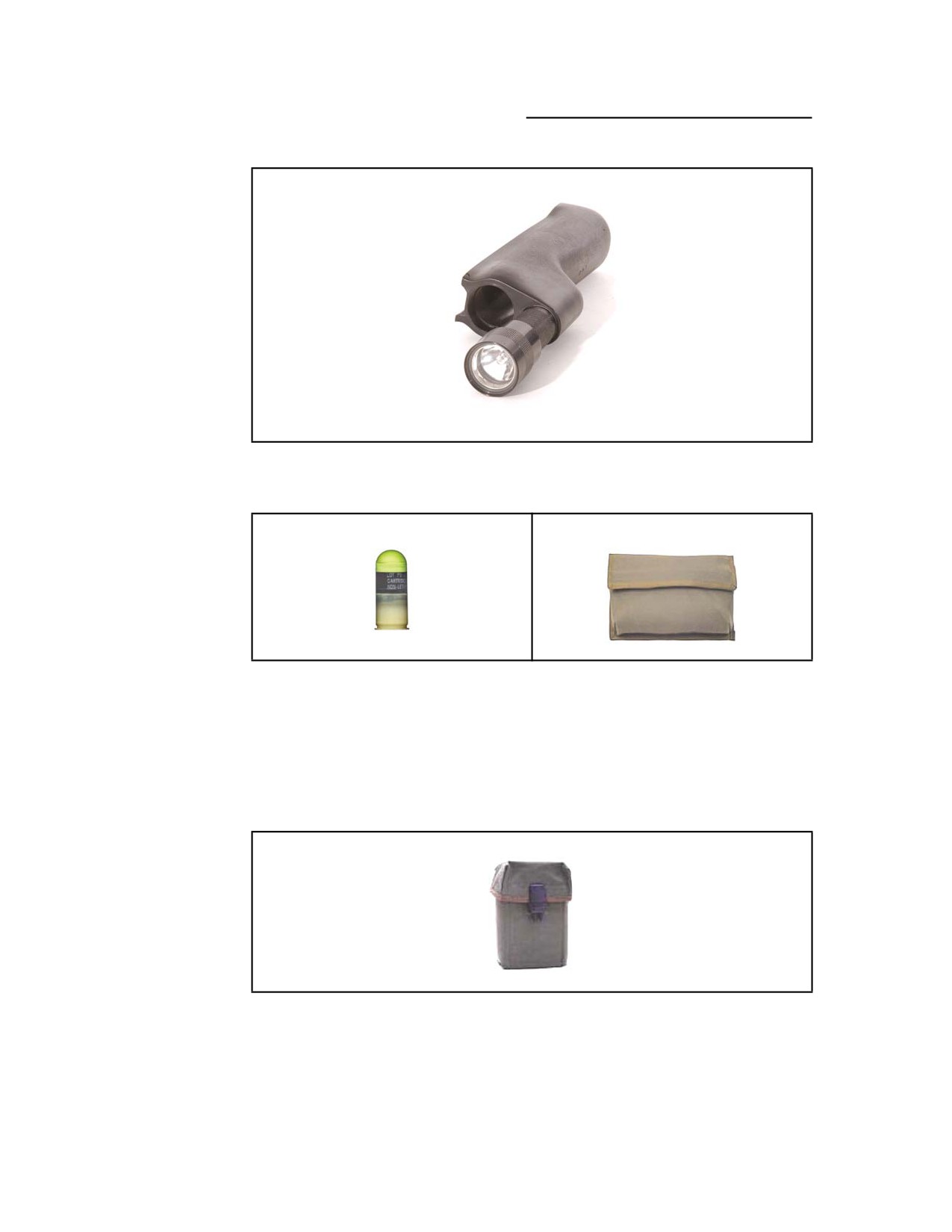
Figure 5-28. 12-Gauge High-Intensity Light System With 12-Gauge Shotgun
Attachment Kit
Figure 5-29. 40-Millimeter Carrying Pouch
12-GAUGE UTILITY POUCH
5-33. The 12-gauge utility pouch is made from durable canvas material (see
Figure 5-30). It can be easily affixed to an LBE and/or LBV using metal clasps.
The 12-gauge utility pouch is capable of carrying up to twenty-five 12-gauge
shotgun rounds.
Figure 5-30. 12-Gauge Utility Pouch
5-16
FM 3-19.15
18 April 2005
Nonlethal Capabilities Set and Employment Considerations
12-GAUGE BUTTSTOCK CUFF
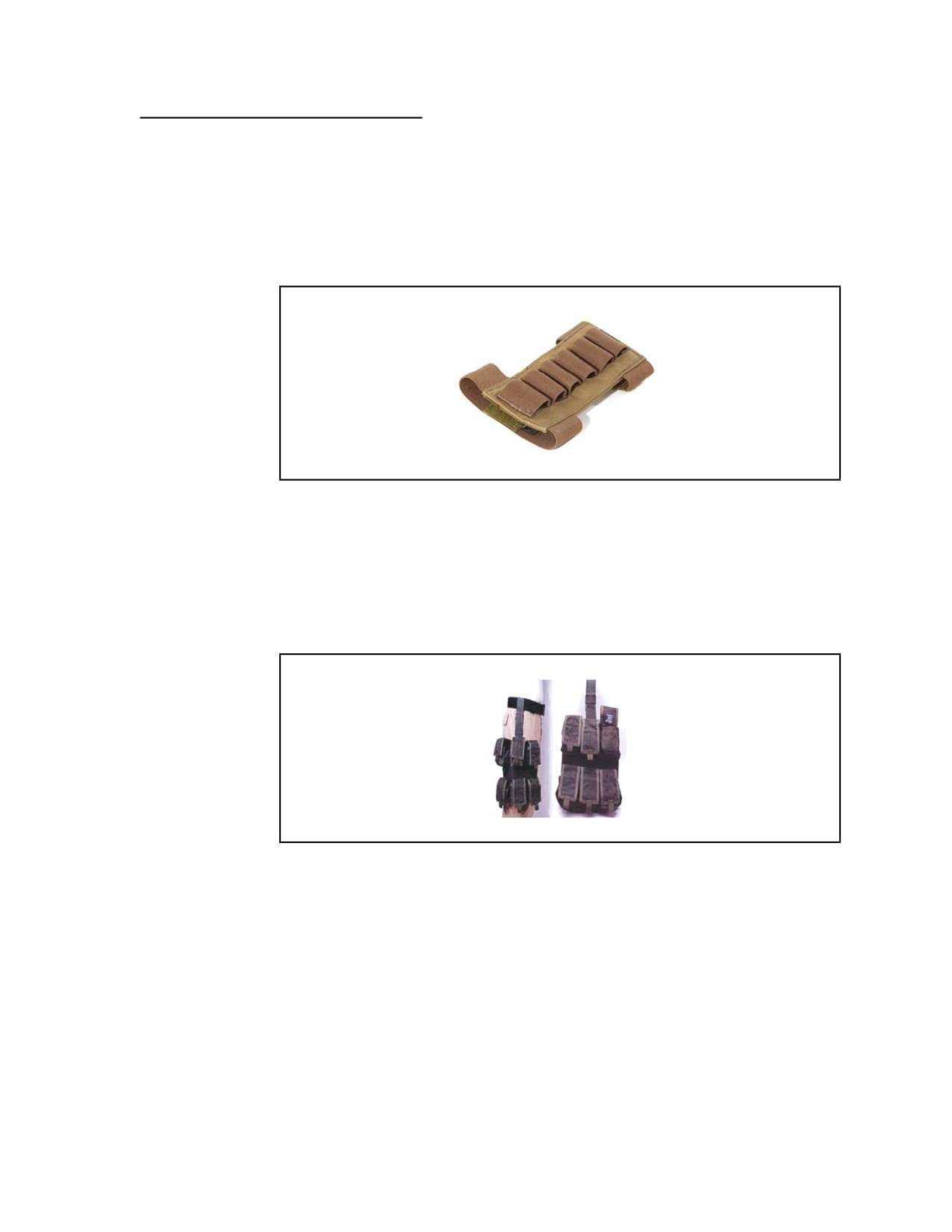
5-34. The 12-gauge buttstock cuff (see Figure 5-31) firmly attaches to the
shotgun by sliding over the stock. Elastic straps aid in preventing the
buttstock cuff from sliding or rolling. It holds up to seven 12-gauge cartridges,
which give the soldier quick access to additional rounds.
Figure 5-31. 12-Gauge Buttstock Cuff
DIVERSIONARY AND/OR RUBBER BALL GRENADE POUCHES
5-35. The diversionary and/or rubber ball grenade pouch (see Figure 5-32) is
an ammunition-carrying pouch made of durable canvas material. It is
partitioned in a manner to provide the soldier with a means of holding up to
six rubber ball grenades or six flash-bang grenades in separate compartments.
Figure 5-32. Diversionary and/or Rubber Ball Grenade Pouch
CALTROPS
5-36. The caltrop (see Figure 5-33, page 5-18) is a field-expedient area denial
system. Securing approximately 50 caltrops to 550-type military cord allows a
soldier to quickly toss and recover the system. Caltrops are used to deny
vehicle and pedestrian movement in designated areas. The four prongs are
approximately 2 inches tall and will puncture tires or boots. A soldier can
easily employ the caltrop by scattering it in a designated area hidden by
camouflage.
18 April 2005
FM 3-19.15
5-17

Nonlethal Capabilities Set and Employment Considerations
Figure 5-33. Caltrop
PORTABLE VEHICLE ARREST BARRIER
5-37. A portable vehicle arrest barrier (PVAB) (see Figure 5-34) is a
lightweight, portable, manually-emplaced and recoverable-barrier
entrapment device that is used (on command) to create a barrier that will stop
vehicles being driven by known or suspected hostile forces with minimal
damage to the vehicle and its occupants. Two individuals can easily emplace it
in approximately 4 to 8 hours. It has the capability of stopping a light truck
(up to 7,500 pounds) at speeds of up to 45 miles per hour with a stopping
distance of less than 200 feet. It is not to be used as a stand-alone system. The
PVAB may be used at dismount points, checkpoints, and roadblocks to
prevent unauthorized access by wheeled vehicles into or out of areas.
Figure 5-34. PVAB
TRAINING DEVICES
5-38. Training devices that commanders can use to effectively prepare their
soldiers are included in the NLCS. Training devices allow soldiers to learn
and build confidence in the development of personal defensive skills. These
are critical pieces of equipment because they allow soldiers to train at almost
full speed, which provides reinforcement of realistic motor skills. Training in
this manner has proven to be more effective than just striking out at the air.
5-18
FM 3-19.15
18 April 2005

Nonlethal Capabilities Set and Employment Considerations
IMPACT TRAINING SUIT
5-39. Impact training suits (see Figure 5-35) are made of closed-cell shock-
absorbent foam that allows soldiers to hone their riot baton skills through
realistic hand-to-hand training. Impact training suits absorb strikes inflicted
by the current expandable and wooden riot batons. They provide protection for
the head, face, hands, and legs without significant degradation of the wearer’s
mobility.
Figure 5-35. Impact Training Suits
TRAINING STRIKE BAGS
5-40. Training strike bags (see Figure 5-36) give the soldier a durable, yet
absorbing surface to strike or kick for training. It also helps develops
proficiency in open-hand control and riot baton techniques.
Figure 5-36. Training Strike Bag
18 April 2005
FM 3-19.15
5-19

Nonlethal Capabilities Set and Employment Considerations
PRACTICE GRENADE BODY (GG05)
5-41. The GG05 is blue in color and is easily identified as a practice grenade
(see Figure 5-37). It is designed to replicate the live GG04 rubber ball grenade.
It is made of durable rubber and can be hand-thrown or muzzle-launched from
the 12-gauge shotgun. It can be reloaded.
Figure 5-37. GG05
PRACTICE GRENADE FUSE
5-42. The practice grenade fuse (see Figure 5-38) is identified by its blue
spoon and brown stripe. It easily screws into the body of the GG05. Once used,
unscrew the practice grenade fuse from the body and reload it with a new
fuse.
Safety pin
Pull ring
Fuse thread
Safety lever
Figure 5-38. Practice Grenade Fuse
CORE CAPABILITIES
5-43. Core capabilities are those fundamental competencies that enable the
commander to achieve the desired operational outcome. In the case of NLW,
this includes providing a flexible means of response in order to protect friendly
forces and/or influence the actions of potential adversaries and
noncombatants. With the availability of the NLCS (see Figure 5-39) these
goals can be achieved without resorting to lethal force and in a manner that
will minimize collateral damage. The core capabilities associated with NL
effects fall into the following two major categories:
5-20
FM 3-19.15
18 April 2005

Nonlethal Capabilities Set and Employment Considerations
NOTE: There are nine platoon equivalents within a light infantry battalion.
PLT Organization
Personnel and Weapons
Nonlethal Weapons & Equipment
3 riot face shields
3 sets of shin guards
3 sets of full-body restraints
3 individual voice amplification systems
3 individual RCA dispensers with carriers
1 portable bullhorn
7 personnel
1 ground-mounted bullhorn
(5 M16/M4 and 2 M60/
1 high-intensity searchlight
M240)
1 set of caltrops
3 ballistic riot face shields
PLT
3 sets of ballistic shin guards
3 ballistic riot body shields
1 riot baton training suit
1 riot baton strike pad
3 riot face shields
3 sets of shin guards
3 riot body shields
3 expandable riot batons with carriers
3 personnel
9 sets of cinch-strap restraints
(3 M16/M4)
3 individual voice amplification systems
SQD
SQD
SQD
3 individual RCA dispensers with carriers
3 individual high-intensity search lights
with carriers (see Figure 5-26)
24 riot face shields
24 sets of shin guards
TM TM
TM TM
TM TM
100 sets of disposable flex-cuffs
24 individual voice amplification systems
24 personnel
24 individual RCA dispensers with carriers
(12 M16/M4 and 6 M16/
6 expandable riot batons with carriers
M4 with M203 6 SAW)
11 grenade pouches
12 forty-millimeter grenade pouches
6 twelve-gauge ammunition pouches
6 twelve-gauge bitstock ammunition
carriers
Figure 5-39. NLCS Distribution
z
Counterpersonnel. NL counterpersonnel capabilities enable the
application of military force with a reduced risk of fatalities or serious
casualties among noncombatants or, in some instances, among enemy
forces. There are several specific NL counterpersonnel capabilities to
be explored. These include the means to influence the behavior and
activities of a potentially hostile crowd, and the capability to bring a
mob engaged in a riot under control. While there are many similarities
in these two scenarios, each involves unique challenges, which may
require radically different solutions. For more information, see
FM 3-22.40.
z
Countermaterial. NL countermateriel capabilities enhance
operations by rendering equipment and facilities unusable without
complete destruction. An NL countermateriel capabilities enable the
18 April 2005
FM 3-19.15
5-21
Nonlethal Capabilities Set and Employment Considerations
application of military force to defuse potentially volatile situations
under circumstances in which more destructive conventional military
means might prove counterproductive. For example, pre-emptive
strikes against troublesome and aggressive nations may be politically
unacceptable when only conventional weapons with the high risk of
casualties are involved. With NL countermateriel capabilities, the
enemy’s ability to threaten its neighbors could be curtailed with less
political risk by attacking only their weapons of war and their
supporting infrastructure. For more information, see FM 3-22.40.
ADDITIONAL CAPABILITIES
5-44. NLW are only NL when fired within their parameters.
DANGER
If NLW are fired outside their parameters, they may cause
serious injury or death.
5-45. If a situation turns from NL to lethal, an NL gunner only needs to
change his point of aim and distance to inflict serious bodily harm and/or
death to the threat. The closer the soldier is to the target, the greater the
kinetic energy and the more severe the effects are to the threat.
EMPLOYMENT CONSIDERATIONS
5-46. NL munitions and equipment are not completely NL; they are NL by
intent. The term NL does not guarantee zero mortality or nonpermanent
damage. NLW can add flexibility to combat operations and enhance force
protection by providing an environment in which friendly troops can engage
threatening targets with a reduced risk of noncombatant casualties and
collateral damage.
5-47. If the tactical situation dictates a NL response, a soldier who levels a
weapon loaded with NL munitions must be trained in distance to the target
and appropriate points of aim. Based on the soldier’s understanding and
training on the characteristics and capabilities of the round, they can easily
discern and engage targets to the desired effect. If the tactical situation
dictates a lethal response, soldiers can easily adjust the point of aim to a more
vulnerable target location on the body and move in closer to the target. NL
munitions can be used as a lethal response if the situation dictates and the
intent of the soldier is to inflict death.
NONLETHAL WEAPONS CAPABILITIES IN FORMATIONS
5-48. The mix of NLW within the formation is based on METT-TC. For
example, the first rank of the formation will have riot shields, riot batons, and
their personal weapon (slung across their back [left to right] with the butt up
and muzzle down or holstered). The second row will have a mix of shotguns
and M203s. Shotguns and M203s may be used as area denial or point target
5-22
FM 3-19.15
18 April 2005
Nonlethal Capabilities Set and Employment Considerations
weapons depending on the specific munitions used. The shotgun provides
cover for the slower loading M203. The commander may move these weapons
within the formation to meet the needs of the mission and to create distance
between the formation and the crowd (see Appendix D).
18 April 2005
FM 3-19.15
5-23
This page intentionally left blank.
Chapter 6
Civil Disturbance Formations
Control force formations, when properly employed and executed against a
crowd, are some of the most practical methods of crowd control. The riot
baton has been the weapon of choice for the control force. With the
development of NLW, the commander now has more options at his
disposal. Before NLW, the only other choices were chemical irritants,
MWDs, and lethal force. Now commanders can create a standoff distance
with NLW that reduces the risk of close fighting with the mob. During any
crowd control operation, the commander must protect the control force
with lethal overwatch. This overwatch may be in the form of marksmen
and observer teams (sniper with observer) and a response force with lethal
capabilities.
OVERVIEW
6-1. With advances in NLW, it is possible to create an effective standoff
distance of 15 to 100 meters between the crowd and the control force
formation. It is now possible to advance and disperse the crowd without
coming into direct contact with it. Some NLW may also be used to assist in the
identification and apprehension of instigators.
6-2. Control force formations are used to disperse, contain, and/or block a
crowd. These formations are more effective in urban areas than in open areas,
such as parks or fields. When control force operations are employed in urban
areas, it is easier to split a crowd into smaller segments, isolate instigators, or
funnel the crowd into the desired location by using buildings and other man-
made structures. Commanders must be mindful of the fact that well-
organized crowds may attempt to move to the flanks of a formation and/or get
behind the formation to gain a tactical advantage.
6-3. Commanders must be aware of the limitations of control force
formations. They are not the answer to all civil disturbance situations. Do not
expose the formation to sniper fire and/or unnecessary violence simply for a
show of force. Control force formations should be used when it is decided that
a crowd poses a threat and must be dispersed or moved to a specified area.
Before dividing a large crowd, the commander must consider that this might
not solve the problem. It may worsen the problem by creating smaller
elements that may engage the control force in small-mob tactics, such as
sniping, looting, burning, and attempting to envelop the control force.
Commanders must anticipate that breakaway crowds may engage in small-
mob tactics. These tactics can be defeated by area control measures, such as
building searches, saturation patrolling, and other tactics. After dispersing
the crowd, the control force must not assume that there will be an immediate
18 April 2005
FM 3-19.15
6-1
Civil Disturbance Formations
return to peaceful activities. The use of formations is only part of the total
dispersal effort.
6-4. Commanders must assess and secure the areas of operations (AOs). This
may be accomplished with the use of helicopter overflights and by visually
securing rooftops, high elevations, and advantage points. Designated
marksmen teams may be used to secure the rooftops and provide lethal
overwatch for the control formation. The control force commander must be
aware that designated marksmen teams are positioned on rooftops.
6-5. Crowd control formations and their support teams have more capabilities
than just crowd dispersal. They also have the capability to apprehend and
detain certain members of the crowd that the commander feels may instigate
the crowd to further violence. Commanders must analyze the threat,
determine the mission of the control force, and decide which control force
formations will accomplish the mission according to METT-TC.
6-6. During CONUS operations, there are usually no enemy forces. However,
commanders must analyze and prepare for any potential opposition. The
formations discussed in this chapter are guidelines and may be adapted to fit
any mission or situation. Whatever the modification, soldiers must stay in
position and on line. Only through training and rehearsals will soldiers
become proficient in basic formation movements and be able to adjust to
changing situations. Soldiers must also be prepared to employ NLW.
Figure 6-1 is used as a key to identify soldiers within crowd control
formations.
Team leader
Platoon leader
Radio operator
PSG
Baseman
Squad leader
A team member
B team member
Vehicle
C team member
Figure 6-1. Symbols for a Formation Element
ACTIONS BEFORE MOVEMENT
6-7. Before moving the control force to the civil disturbance area and into a
potentially hostile urban environment, the commander and his staff must
review the preincident plans and expand them (as needed) based on current
information. Because of the employment of forces against ambiguous threats,
6-2
FM 3-19.15
18 April 2005
Civil Disturbance Formations
IPB becomes critical. Information is the key to developing an appropriate
response to civil disturbances.
6-8. Civil disturbance training must be part of the annual unit training plan.
If a soldier is deployed to an area where civil disturbances are a recurring
event, sustainment training must occur more frequently. Before moving the
control force to the rally point, an intense rehearsal must be conducted by the
leadership and the control force. A top-down review of the rules of engagement
(ROE/rules for the use of force (RUF) must be accomplished. The ROE/RUF
must be part of the unit training plan and each soldier must be trained to
standard (see Chapter 8). The use of NLW (type specific) must be granted to
the on-site commander from the approval authority.
6-9. Information is the key to developing plans for appropriate responses to a
civil disturbance, and IPB is crucial to the success of the mission. During the
planning phase (see Chapter 2), the information provided by the IPB will aid
the staff in selecting various routes and rally points. The selection of ingress
and egress routes must include a variety of ways in and out of the area. Direct
and indirect routes and those with cover and concealment are necessary. The
rally point must be cleared and secured by an advanced party capable of
controlling the area.
RALLY POINT ACTIONS
6-10. Once at the rally point, the commander makes contact with the local
police, civil authorities, or military officer. He then assesses the situation,
decides the next COA, and issues orders, as appropriate. The platoon sergeant
(PSG) forms the platoon into a column formation and places team leaders
directly in front of their teams (see Figure 6-2, page 6-4). Team and squad
leaders make last minute checks of their soldiers and await orders.
6-11. The commander places his lethal overwatch (designated marksmen
[DM] teams) in areas that overlook the control force and the mob. They may
be to the flanks and slightly to the front of the formation. It is their
responsibility to protect the formation from lethal fire by constantly scanning
the crowd.
6-12. When the commander receives word that DM teams are in place, he
forms the control force into a crowd control formation and moves them quickly
from the rally point to where the crowd is assembled. Depending on the
situation, movement should be in a column formation or one of the three basic
control force formations. Reserve forces are left at the rally point until ordered
forward as additional lethal overwatch or to reinforce the formation.
CONTROL FORCE FORMATIONS
6-13. Control force formations, when properly employed and executed against
a crowd of limited size, are one of the most practical methods of crowd control.
Experience has indicated that the most frequently used control force
18 April 2005
FM 3-19.15
6-3

Civil Disturbance Formations
Figure 6-2. Column Formation
formations are the line, echelon, and wedge. The two lesser-used formations
are the diamond and circle. Descriptions of all the formations are as follows:
z
Line formation. The line is the basic formation and it is used more
often because of its offensive and defensive applications. As an
offensive formation, the line is used to push or drive crowds straight
back, across an open area, or up a city street. As a defensive
formation, the line is used to hold the crowd or to deny access to areas.
z
Echelon formation. The echelon is an offensive formation used to
turn or divert groups in open or built-up areas and to move crowds
away from buildings, fences, and walls.
z
Wedge formation. The wedge is an offensive formation that is used
to penetrate and split crowds into smaller groups.
z
Diamond formation. The diamond, when used as an offensive
formation, is used to enter a crowd and is the formation of choice for
extraction teams. As a defensive formation, the diamond is used when
all-around security is required in open areas. The decision to use this
formation is based on the conformation of the crowd.
z
Circular formation. The circular formation is used for the same
purpose as the diamond formation. The decision to use this formation
is based on the conformation of the crowd.
6-14. There are many suitable variations of control force formations that may
be employed, but appropriate commands and signals must be created to
execute the formations. Because of their somewhat complicated nature and
6-4
FM 3-19.15
18 April 2005
Civil Disturbance Formations
the coordination required for these formations, new variations must be
trained, practiced, and rehearsed before they are used in a civil disturbance.
VEHICLES AND FORMATIONS
6-15. Vehicles may be employed with troops in control force formations,
especially when a large riotous crowd is on hand. Although vehicles add
strength to formations, certain precautions must be taken. Covering the
windshield with sturdy, close mesh fencing and the standard safety glass will
offer some level of protection to the occupants. Shields and/or mobile barriers
may be built by mounting a wooden or metal frame strung with barbed wire
across the front of a vehicle. Members of the formation should walk as near to
the front corners of each vehicle as possible to keep rioters from attacking the
sides and rear of the vehicles.
6-16. Up-armored HMMWVs, ASVs, or armored vehicles may be employed
with the control force formation when determined by METT-TC. They present
a strong psychological effect and offer protection for the occupants. Wheeled
armored vehicles are best because they do not deface the pavement. Whenever
vehicles are used in a crowd control formation, the commander must ensure
that he is still able to see and control the formation. This may require him to
occupy a position in a similar vehicle behind the formation or command
subordinate leaders to move away from the front line and into line-of-sight
(LOS) control. This will require additional hand-and-arm signals to allow the
commander and subordinate leaders to communicate. Commanders can
effectively use vehicles as primary communication tools by using horns and
lights as signals to organize movement or actions. However vehicles are used,
it takes a good measure of training and practice to be effective.
ELEMENTS OF A CONTROL FORCE FORMATION
6-17. Four elements make up the basic crowd control formation. They are as
follows:
z
Base element. The base element is made up of two ranks. The first
rank is shield holders, while the second rank contains the NLW. This
is the front line of the formation.
z
Support element. The support element forms up in a column
formation behind the base element and has a variety of uses. It may
be used to replace base element members as needed, provide lateral or
direct support, or perform extraction team operations. The support
element helps the base element by performing the following three
essential tasks:
General support. The general-support element is formed from
an uncommitted squad in the platoon (generally the 2d squad).
When a company is tasked as the control force element, one of the
platoons becomes the general-support element. The element is in a
column formation centered on and behind the main formation.
From this formation, the general-support element can move to
lateral or direct support, as needed.
Lateral support. The lateral-support element is used to protect
the flanks of the formation. This is done by moving a set number
of teams forward from the general-support element or by using the
18 April 2005
FM 3-19.15
6-5
Civil Disturbance Formations
end teams in the formation; however, this will make your
formation smaller. Once in position, these teams become part of
the formation, with their riot shields facing the flanks of the
formation.
Direct support. When direct support is ordered, the
general-support element moves forward as they form their own
formation. While moving forward, the squad and team leaders
from the control force formation step back and allow the riot shield
holders from the support element to step behind riot shield
holders of the original formation. This allows the support riot
shield holders to form up between and behind the riot shield
holders of the original formation. Now there are two lines of riot
shield holders between the crowd and NLW firers. This formation
is the strongest of the formations and requires more planning and
practice to master.
z
Command element. The command element contains several
different members. A general configuration for the command element
is the platoon leader, the PSG, a radio operator, a video recorder
operator (if required), and an interpreter (if required). This element
does not have a fixed location within the formation and moves about
as needed.
z
Lethal overwatch element. The lethal overwatch element is a team
formed from reserve security forces.
6-18. The reserve support element is not part of the control force formation
until it is brought forward from the rally point to join the formation. It
remains until released by the formation commander. Lethal overwatch teams
are formed from the reserve force. Once lethal overwatch teams are deployed
and in position, they are under the control of the formation commander.
Communication between the lethal overwatch team and the formation
commander is a priority because he approves target selection and
engagement.
WEAPON POSITIONS
6-19. At the commander’s discretion, members of the control force formation
may carry their weapons in any of the positions prescribed in FM 3-21.5.
However, the primary method of carrying weapons in the control force
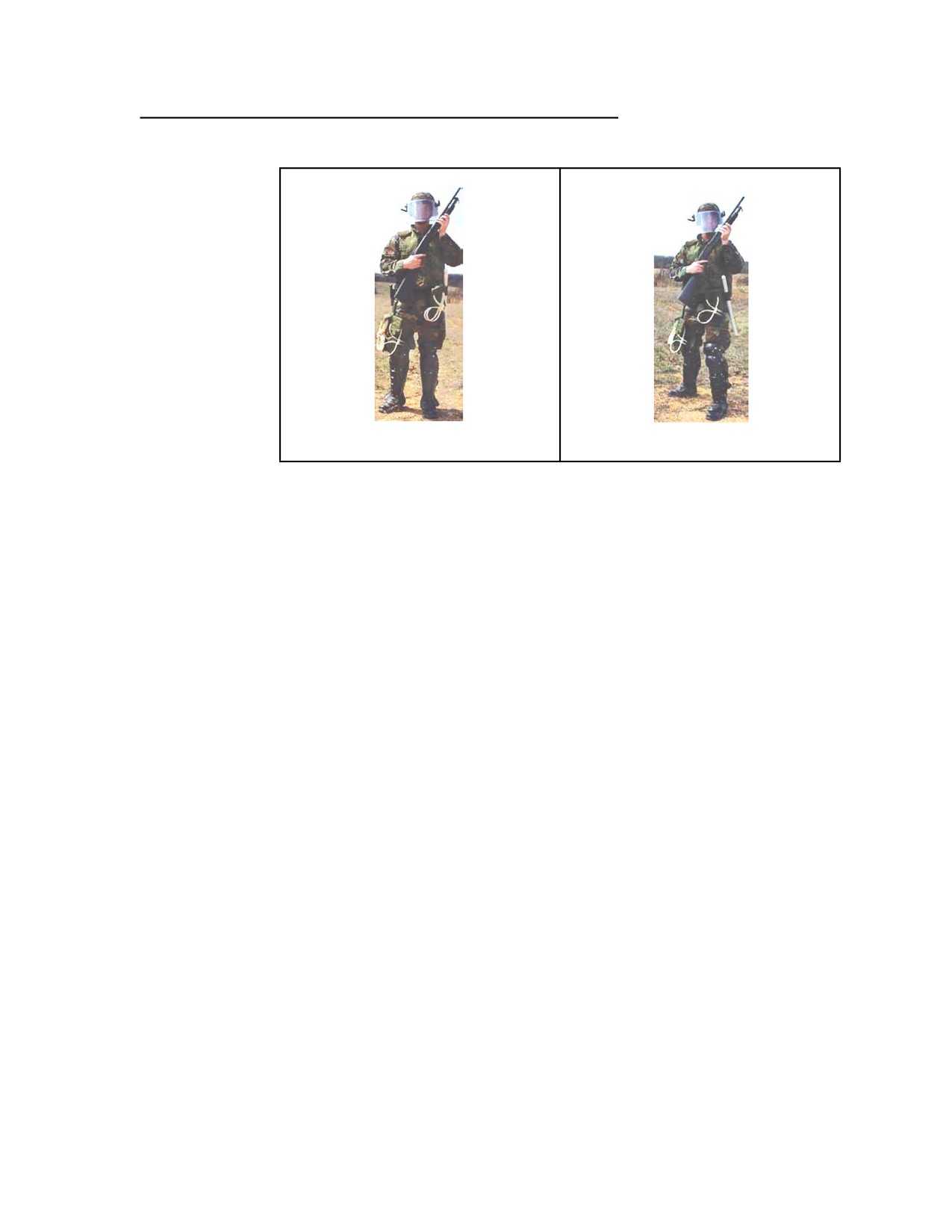
formation is at the safe-port position (see Figure 6-3). It allows the soldier to
control both ends of the weapon while moving in and out of the formation and
advancing on the crowd.
6-20. High-port position (see Figure 6-3) is a position of complete readiness. It
is used whenever troops are in contact with a crowd that is showing resistance
or not withdrawing. This is a tiring position and is hard to maintain for
extended periods. Commanders must rest their troops at every opportunity by
using less tiring positions.
6-6
FM 3-19.15
18 April 2005
Civil Disturbance Formations
Safe-port arms
High-port arms
Figure 6-3. Weapons Positions
COMMANDS
6-21. Commands are given to the control force formation orally or with
hand-and-arm signals. Oral commands for the on-guard position are given in
one count. All other commands are given in two counts, a preparatory
command followed by a command of execution. However, oral commands
cannot be relied on completely, so commanders must plan to use hand-and-
arm signals too. When vehicles are part of the formation, radios become an
alternate method for relaying commands. To improve communication,
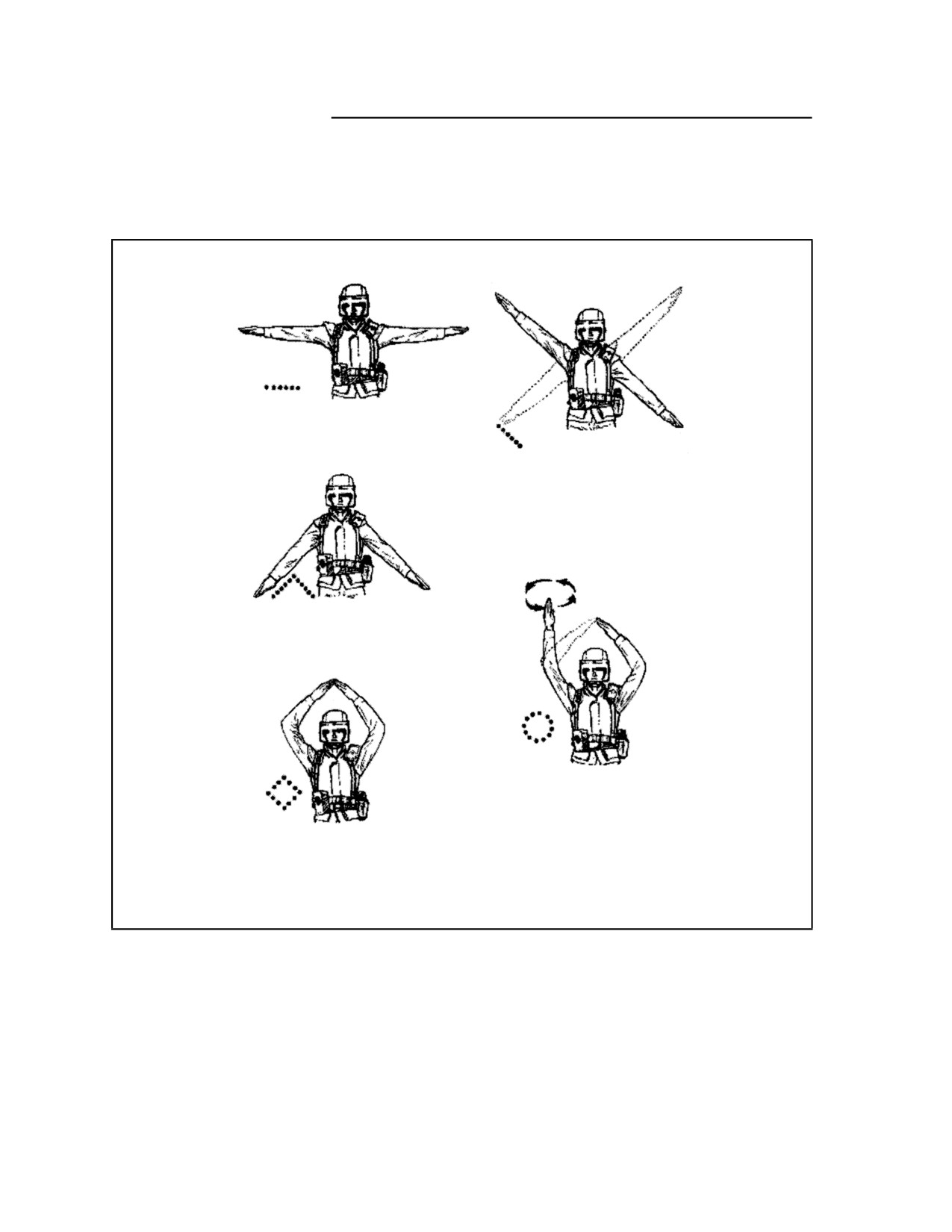
commanders may use hand-and-arm signals (see Figure 6-4, page 6-8) with
oral commands. The basic commands used in control force formations are
outlined in Table 6-1, page 6-9. These commands can be added to or combined
to form more complex commands, therefore forming more complex formations.
MOVEMENTS
6-22. Control force formations move in the same manner as regular
formations. This allows the commander to more precisely maneuver the
formation by commanding the number of steps it should move and in what
direction, such as “Five Steps, Forward March.” The normal rate of march for
entering and leaving a control force formation is double-timing. The half-step
march is used when the formation is in direct contact with the crowd. This
slows the formation down and allows for better command and control. The
squad and team leaders echo preparatory commands and provide cadence
while in control force formations.
INTERVAL AND DISTANCE
6-23. Interval is the lateral space between elements. Distance is the space
between elements in a column. The usual interval and distance between
soldiers in control force formations is 30 inches. The interval and distance can
be adjusted based on METT-TC. If the crowd has to be physically pushed back,
a close interval is preferred. This allows the riot shields to be overlapped,
creating a stronger wall. During peaceful demonstrations, the interval could
18 April 2005
FM 3-19.15
6-7
Civil Disturbance Formations
increase to double arm width, allowing the formation to cover more area and
still control the crowd. The interval and distance could change several times
during the course of operations before the crowd is dispersed.
Line
Raise both arms from the sides until
they are horizontal. The arms and
Echelon (Right or Left)
hands should be extended with the
palms down.
Extend one arm 45° above the
horizontal and the other 45° below
the horizontal. The arms and
hands should be extended. The
upper arm shows the direction of
the echelon when the commander
faces the troops.
Wedge
Extend both arms downward and to the
sides at a 45 ° angle. The arms and hands
should be extended with the palms down
and in.
Circular
Give the diamond signal. Then
give a circular motion with the right
hand.
Diamond
Extend both arms above the head.
Bend the elbows slightly, and
touch the fingertips together.
Figure 6-4. Hand-and-Arm Signals
6-8
FM 3-19.15
18 April 2005

Civil Disturbance Formations
Table 6-1. Basic Commands
Commands
Command
Given by
Purpose
for
Platoon On Line
Platoon leader and/or commander
To form a line formation.
Platoon Wedge
Platoon leader and/or commander
To form a wedge formation.
Platoon Echelon
Platoon leader and/or commander
To form an echelon formation.
Platoon Diamond
Platoon leader and/or commander
To form a diamond formation.
Platoon Circle
Platoon leader and/or commander
To form a circular formation.
Formations
Move
Platoon leader and/or commander
As a command of execution.
NOTE: The platoon leader and/
or commander also identifies
the location for the formation
by pointing his arm to the
desired location for the
formation.
General Support
Platoon leader and/or commander
To place a specified unit in the
rear of the base element.
Lateral Support
Platoon leader and/or commander
To place support elements on the
left or right flank of the base
element.
Direct Support
Platoon leader and/or commander
To move support elements
Support
forward to strengthen the base
element.
Open
Extraction team leader
To open a space in the formation.
Up
Extraction team leader
To inform the extraction team to
start moving back to the main
formation.
Weapon System
Platoon leader and/or commander
To ready NL gunners to fire
Gunners, Number
weapons; for example, M203
of Rounds, Type
gunners, three rounds, area
of Round, and
target, prepare to fire.
Prepare to Fire
Fire
Shield Down
NL gunners
To tell riot shield holders to get
down on one knee and lower the
riot shield to the ground.
Shield Up
NL gunners
To tell riot shield holders to stand
and raise the riot shield.
Port Arms
Platoon leader and/or commander
To use when not in contact with
the crowd.
High Port
Platoon leader and/or commander
To tell NL gunners what position
to hold their weapons in while the
Weapons
formation is in physical contact
with the crowd. This allows for
rapid targeting and firing of NL
munitions.
18 April 2005
FM 3-19.15
6-9
Civil Disturbance Formations
EXTRACTION TEAM OPERATIONS
6-24. The extraction team is a squad (see Figure 6-5) that is generally formed
from the support element, but could also be formed from reserve security
forces. Once the team is formed, it is OPCON to the formation commander
until the team’s mission is complete and it returns to the rear of the
formation. This team provides the riot control formation with the means to
employ NL and lethal cover forward of the formation. It also provides the
formation with the ability to remove and detain rioters downed by munitions.
Figure 6-5. Extraction Team Formation
The extraction team—
z
Extracts vehicles or personnel that are in immediate danger from the
crowd.
z
Detains and escorts downed rioters to the rear of the formation.
z
Restrains and searches subjects.
z
Covers confined or congested areas where a full riot control formation
cannot be inserted.
6-25. The extraction team is usually a squad. While the recommended
distance for deploying the extraction team from the control force formation is
no farther than 10 meters, this may change based on METT-TC. The control
formation protects the extraction team and provides immediate support, if
necessary.
6-26. The extraction team may deploy from anywhere within the formation.
When given orders to deploy, the squad leader of the extraction team gives the
formation commands, identifies at least two personnel in the squad to conduct
the search and apprehension of the subject, and leads the squad to the base
line of the formation. He then extends his arm between the two riot shield
holders and commands, “Open,” while tapping the riot shield holders on the
side of the shoulder. The two riot shield holders take one step backward and
one step to the right or left. This clears a path for the extraction team. The
extraction team leader then states the number of personnel leaving the
formation, such as “Ten security personnel leaving.” As the last extraction
team member exits the formation he states, “Last Man.” The two riot shield
holders then return to their original position in the formation. The adjacent
base element squad and/or team leaders pass the number of personnel in the
team through the formation.
6-27. As the extraction team approaches an instigator or incapacitated
demonstrator, the riot shield holders envelop the target and face in the
6-10
FM 3-19.15
18 April 2005
Civil Disturbance Formations
direction of the nearest threat. NL gunners on the left and right cover their
respective areas. The search and apprehension team immediately controls
and restrains the target. To avoid confusion, one team member concentrates
on controlling the subject while another team member applies a restraining
system. When the search and apprehension team has the subject under
control, the extraction squad leader sounds off with, “Up.” Upon hearing the
“Up” command, it is repeated by all extraction team members. Team members
then grab a shoulder of the team member in front of them to backtrack into
the formation. As the extraction team approaches the formation, the nearest
base element leader will extend his arm and command, “Open,” while tapping
the riot shield holders on the side of the shoulder. The riot shield holders move
one step backward and to the right or left to open the formation. As he enters
the formation, the extraction team leader sounds off with the number of
personnel entering the formation, such as “Ten security personnel and one
demonstrator.” The adjacent base element leader counts the number of
personnel as they enter the formation. When the last man enters the
formation, he states, “Last Man.” The riot shield holders then return to their
original places in the formation. The adjacent squad and team leaders in the
base element pass information through formation that the extraction team
has returned.
LETHAL OVERWATCH TEAMS
6-28. During a NL engagement, the use of a DM team provides confidence
and safety to those facing the mob. If a lethal threat is presented, the DM
team in an overwatch position (armed with a standard infantry rifle that is
mounted with a high-powered scope) can scan the crowd, identify agitators
and riot leaders for apprehension, or fire lethal fire if so ordered or warranted.
It is also ideally suited for flank and countersniper operations.
6-29. The DM team sets the security overwatch and provides real-time
intelligence and reporting that is vital to mission success. It provides coverage
during the entire approach to the crowd, and its ability to select positions and
provide cover fire (if and when warranted) is critical to the safety of the
control force. Successful execution requires training, practice, and rehearsal
with the control force formation.
6-30. The DM team is organized from a standard three- or four-man team.
Each individual on the team is equipped with a standard-issue weapon. One
individual has an infantry rifle with a scope, another has a set of binoculars,
and two other individuals provide security for the team. Each team is
equipped with a radio for communication with the HQ element of the control
force formation.
6-31. The teams must have a visual advantage over the crowd to provide
lethal protection to the formation. This is best accomplished by placing them
on nearby rooftops, in the upper floors of buildings, and on hilltops. They must
have the optical equipment to identify mob leaders, instigators, and/or
individuals with weapons. Team integrity must be maintained. In
organizations with three-man teams, one individual becomes the marksman,
another the observer, and another the security. When teams have a 4th
18 April 2005
FM 3-19.15
6-11
Civil Disturbance Formations
member, that individual becomes the video camera operator. This will help
identify individuals for later apprehension and provides a record of events.
6-32. Two teams should be deployed to cover the flanks of the formation. Each
team should be deployed to a position that is in front of the formation and in
an overwatch position. As the formation moves forward, the teams leapfrog
forward from the formation.
6-33. The reserve forces, located at the rally point, can provide another lethal
force of some size that can be brought forward, as needed. Each soldier in the
control force formation should have a sidearm (9-millimeter pistol) or an M16
or M4 rifle. The rifle is slung diagonally across his back with the rifle butt
over his left shoulder and the muzzle below his right hip. Lethal munitions
are in a separate ammunition pouch that is isolated from NL munitions. This
is to prevent the mixing of NL and lethal ammunition.
6-34. Once the lethal overwatch teams are deployed, they are under the
OPCON of the formation commander. The lethal overwatch element must
have direct and secure communications with the formation commander. The
number of teams deployed is based on METT-TC. Teams will leapfrog to keep
ahead of the advancing control force formation with one team in the
overwatch position at all times.
RESERVE FORCES
6-35. A large reserve of soldiers should be maintained during civil
disturbance operations. Knowing that a large reserve force is available
provides confidence and safety within the control force and helps prevent
them from overreacting to provocative acts with disorderly and criminal
elements in the crowd. When determining the number of reserve forces
required, it should be resolved in favor of a large number. Lethal overwatch
teams, forces to augment the control force, and apprehension teams come from
the reserve forces.
6-36. Apprehension teams are a must when it is likely that a large number of
people will be apprehended. These teams provide an organized response to
what could be a chaotic situation. The teams can be organized at the team or
squad level, depending on the number of apprehensions expected. These
teams usually operate behind the base element. During peaceful
demonstrations, these teams can be sent forward to remove demonstrators
who refuse to disperse.
6-37. Each team consists of an apprehension, movement, and security
element (added if the control force cannot provide security); a recorder; and a
video or still photographer. The apprehension element is an officer or NCO
and a civilian police officer (CONUS or OCONUS) or US marshal. It decides
who will be apprehended, informs the subject of the reasons, supervises the
handling of the subject, and ensures that the apprehension is properly
conducted and documented. The apprehension team is responsible for the
overall apprehension process, limiting the number of individuals appearing in
court to document the apprehension. The movement element helps the
apprehension element handle the subject. They move, restrain, and search the
individuals being apprehended under the supervision of the apprehension
6-12
FM 3-19.15
18 April 2005
Civil Disturbance Formations
element. The security element prevents the crowd from interfering with the
mission. The recorder documents the apprehension on DD Form 2708. When
possible, the video and/or still photographer recorder photographs each
subject with the apprehension element. This provides the apprehension
element with the necessary documentation for use in court. One individual
may need to conduct many of the duties of an apprehension team based on
METT-TC.
6-38. The video and/or still photographer record the situation before, during,
and after the apprehensions. These images may also be used as pictorial
documentation for use in court. It is possible that the presence of video and
still cameras actively recording the situation can cause crowd members to be
less prone to unruly or criminal acts.
6-39. The behavior of the selected individual to be apprehended is observed to
decide if the subject is violent, cooperative, or passive. Unless there is good
reason to believe otherwise, the subject must be considered dangerous. The
mood of the crowd is observed to estimate what it might do. Is it only curious
onlookers or does it support the individual targeted for apprehension? Will it
interfere?
6-40. When apprehending an individual, the actions must be kept as simple
as the situation allows. The element of surprise can give the apprehension
team an advantage over the apprehended individual. It is best not to use
surprise if the individual might panic and injure someone. Select an area for
the apprehension that is to the advantage of the team and not the individual.
Avoid apprehensions in crowded areas as these areas provide many avenues
of escape and contain supporters of the apprehended individual.
6-41. All verbal commands given to the apprehended individual must
convincing authority with short, clear, and distinct commands. Voice,
attitude, and deportment must convey an expectation that the apprehended
individual will comply.
6-42. The individual should be searched immediately; however,
circumstances (violence or sympathizers for the individual being
apprehended) may dictate temporarily postponing the search until the
individual can be moved to a safer area. Flex-Cufs or hand irons may be
applied.
SQUAD FORMATIONS
6-43. Civil disturbance training is a collective task. Using team and squad
concepts, team leaders instruct their teams and squad leaders instruct their
squads. Safety is key when using force on force training for the control force
formation. Soldiers must understand that serious injuries may occur if they do
not follow guidelines set by the commander.
6-44. The smallest formation is a squad formation, which is used in back of
the main formation to cover side streets. Squad members must know their
positions regardless of which control force formation they are in, squad to
company.
18 April 2005
FM 3-19.15
6-13
Civil Disturbance Formations
6-45. Training must enforce soldiers’ understanding of the need to stay
informed for individual protection. Individual soldiers are much more
vulnerable to attack when they break ranks and chase after crowd members.
When an individual soldier breaks ranks he not only puts himself in danger,
but the entire formation.
6-46. When moving a squad into a crowd control formation from a column
formation, the squad leader takes one or more steps to the right of the squad
and faces it. He gives the command and hand-and-arm signal for the
formation he wants. Then he indicates where he wants the formation located
by pointing in that general direction. The A team leader commands, “Follow
Me.” He places the baseman at the position indicated by the squad leader. The
squad forms on the baseman position.
LINE FORMATION
6-47. The command for forming a squad in a line formation is “Squad Line
Formation, Move.” On the command of execution, the A team leader leads the
baseman to the place indicated by the squad leader. The squad members align
themselves in sequence with the baseman at normal intervals (see
Figure 6-6). Based on the situation, the squad leader may designate a specific
interval. He does this when he gives the preparatory command. If no interval
is specified, the squad automatically forms using the normal interval.
Figure 6-6. Squad Line Formation
ECHELON FORMATION
6-48. The command for having a squad form in an echelon formation is
“Squad Echelon Right (or Left), Move” (see Figure 6-7). On the command of
execution, the A team leader places the baseman at the location indicated by
the squad leader. The squad members align themselves in sequence with the
baseman, one pace to the side and one pace to the rear.
WEDGE FORMATION
6-49. The command for moving a squad formation into a wedge formation is
“Squad Wedge, Move.” On the command of execution, the A team leader
moves the baseman to the place indicated by the squad leader. The A team
lines up to the left of the baseman, one pace to the left and one pace to the rear
of each preceding man. B team members align themselves with the baseman,
one pace to the right and one pace to the rear of each preceding man. C team
members align themselves in the same way to the left of the baseman (see
Figure 6-8).
6-14
FM 3-19.15
18 April 2005

Civil Disturbance Formations
Figure 6-7. Squad Echelons Left and Right Formations
Figure 6-8. Squad Wedge Formation
ASSEMBLY
6-50. When assembling a squad from the line formation, the squad leader
takes a position a sufficient distance to the rear of the squad and commands,
“Squad Assemble.” At the same time, he raises his right hand in the air and
makes a circular motion. Squad members, who hear the command,
automatically come to the port arms position. The A team leader and the
baseman do an about-face movement.
6-51. The other squad members face toward the baseman. On the command of
execution “Move,” the squad leader points to the place where he wants the
squad to assemble. The A team leader double-times to the designated spot,
and the other members of the squad follow him. Team leaders fall into the file
in their designated positions as they move to the AA. To assemble from a
squad echelon formation, the steps are the same as a line formation.
6-52. To assemble from a squad wedge formation, the squad leader takes the
same steps as for the line and echelon formations. B team members do a half
left face, and the A team and C team members do a half right face. The C team
pauses at the baseman position and allows the B team to clear the formation
before moving to the AA.
DIAMOND AND CIRCLE FORMATIONS
6-53. The diamond and circle formations are used during extraction team
operations. They are small formations used to penetrate the crowd or cover
small areas. The decision on which formation to use is based on METT-TC and
the ability of the squad to perform.
18 April 2005
FM 3-19.15
6-15
Civil Disturbance Formations
6-54. Commands for forming a squad in a diamond or circle formation is
“Squad Diamond (or Circle), Move.” On the command of execution, the A team
leader moves the baseman to the place indicated by the squad leader. The A
team lines up to the left of the baseman, covering the 8 to 12 o’clock positions.
B team members align themselves to the right of the baseman, covering the 12
to 4 o’clock positions. C team members align themselves covering the 4 to 8
o’clock positions (see Figure 6-9).
Figure 6-9. Squad Diamond or Circle Formation
6-55. To assemble from a squad diamond or circle formation, the squad leader
takes the same steps as he would for a line formation. The A team leads the
squad to the AA followed by the B team and then the C team. Teams fall into a
column formation as they file back to the AA.
THREE-SQUAD PLATOON FORMATIONS
6-56. The platoon HQ consists of the following individuals: the platoon leader,
the PSG, and a messenger or radio operator. When directed by the platoon
leader, other individuals such as the selected marksman, interpreter, RCA
disperser operators, and firefighters may augment the platoon HQ. In forming
all control force formations from the column, the platoon leader moves to the
right of the platoon and faces them when giving his commands. He gives the
hand-and-arm signal and the preparatory command. On the command of
execution “Move,” he points to the approximate location where he wants the
platoon to form. The platoon leader pauses between the preparatory command
and the command of execution to allow each squad leader to issue a
preparatory command to his squad.
Platoon Line Formation
6-57. The command for forming a platoon line is “Platoon on Line, Move.”
Immediately following the platoon leader's preparatory command, the squad
leaders of the 1st and 3d squads give the command, “Follow Me.” The leader of
the 2d squad gives the command, “Stand Fast.” On the platoon leader's
command of execution, the 1st and 3d squads move forward to the point
designated by the platoon leader. The 1st team member of the 1st squad is the
baseman for the platoon formation. The 1st squad forms a squad line to the
left of the baseman while the 3d squad forms a squad line to the right of the
baseman and dresses with the 1st squad. After the 1st and 3d squads have
cleared the platoon, the 2d squad leader gives the command, “Follow Me.” The
2d squad splits and the A and B teams form a line to the right of the 3d squad.
6-16
FM 3-19.15
18 April 2005

Civil Disturbance Formations
The C team (with the squad leader) forms a line to the left of the 1st squad
(see Figure 6-10).
Figure 6-10. Platoon Line Formation
Assembling From a Platoon Line Formation
6-58. When assembling the platoon from the platoon line formation, the
platoon leader and his HQ personnel take a position to the rear of the platoon.
He then gives the command, “Platoon Assemble,” while raising his right arm
and making a circular motion above his head. Platoon members automatically
assume the port arms position. The 1st squad leader and the baseman do an
about face. The 3d squad leader moves to the head of his squad. All other
members do an about-face movement toward the baseman. On the platoon
leader's command of execution, the platoon leader points to where he wants
the platoon to assemble. The 1st squad leader gives the command, “Follow
Me,” and moves his squad toward the AA. The squad moves to make a single
file line to the baseman position followed by the C team of the 2d squad. As
the 1st squad clears the baseman position, the 2d squad leader comes to a halt
at the baseman position. The 3d squad leader gives the command, “Follow
Me,” and leads his squad to the AA followed by the A and B teams of the 2d
squad. The A team leader of the 2d squad comes to a halt at the baseman
position. Once the 3d squad has cleared the baseman position, the 2d squad
leader gives the command, “Follow Me,” and leads his squad to the AA. The 2d
squad reassembles into their original column formation as they move to the
AA. As the 1st squad comes to a halt (facing the crowd) in the AA, the 3d
squad dresses with the 1st squad and leaves space for the 2d squad to return
to its place in the formation. Once the platoon is formed into a column
formation, HQ personnel take their position in the formation. The PSG then
gives the command, “Countercolumn March,” and moves the platoon to the
rally point.
Platoon Line Formation With General Support
6-59. Whenever the command for establishing a crowd control formation
contains the phrase “In Support” (without modification), it means that the
support element is to remain in general support.
6-60. The command for forming a platoon line with the 2d squad in general
support is “Platoon Line, 2d Squads in Support, Move.” The 1st and 3d squads
of the platoon line with general support execute the line, while the 2d squad
18 April 2005
FM 3-19.15
6-17

Civil Disturbance Formations
remains in the column (see Figure 6-11). To assemble a platoon with a squad
in general support, the procedure is the same as the platoon line, except that
the 1st and 3d squads dress with the 2d squad.
Figure 6-11. Platoon Line Formation With General Support
Platoon Line Formation With Lateral Support
6-61. The command for forming a platoon line with one squad in lateral
support is “Platoon Line, 2d Squad in Lateral Support, Move.” The 1st and 3d
squads execute the line as before, and the 2d squad stands fast. After the line
has been formed, the 2d squad leader gives the command, “Follow Me.” The A
and B teams move to the right flank while the squad leader and the C team
move to the left flank of the formation. The 2d squad forms columns behind
the last men on the line formation. If no direction is given, the 2d squad splits
to cover both flanks. A squad may be used to cover one flank by giving the
command, “2d Squad Right (or Left) Lateral Support” (see Figure 6-12).
6-62. The 2d squad may be moved from general to lateral support at any time
by the platoon leader. The platoon leader commands, “2d Squad, Lateral
Support, Move.” To have the 2d squad join the line from either support
position, the platoon leader commands, “2d Squad, Extend the Line, Move.”
The 2d squad leader commands, “Follow Me.” On the command of execution,
the squads set up individual lines, closing and dressing on the existing line. To
assemble the platoon from a platoon line with lateral support, follow the same
steps as for the platoon line.
6-18
FM 3-19.15
18 April 2005

Civil Disturbance Formations
Figure 6-12. Platoon Line Formation With Lateral Support (Right)
Platoon Line Formation With Direct Support
6-63. The command for forming a platoon line with one squad in direct
support is “Platoon Line, 2d Squad in Direct Support, Move.” The 1st and 3d
squads execute a line as before. The 2d squad executes a squad line directly to
the rear and centered on the 1st line. The men in the supporting line cover the
intervals between the men in the 1st line. To do this, the squad and team
leaders of the 1st and 3d squads must take two steps to the rear to allow space
for the 2d squad to move into place. After seeing the squad and team leaders
move back from the line, the 2d squad leader commands, “Follow Me,” and
leads his squad into position (see Figure 6-13).
Figure 6-13. Platoon Line Formation With Direct Support
6-64. To assemble a platoon with direct support, the procedure is the same as
the platoon line, except that the 2d squad moves to the AA first. To assemble
the support squads from any position to general support, the platoon leader
commands, “2d Squad in Support, Move.” The 2d squad then returns to a
column behind the line formed by the other two squads.
18 April 2005
FM 3-19.15
6-19

Civil Disturbance Formations
Platoon Echelon Right and Left Formations
6-65. The command for forming a platoon echelon right is “Platoon Echelon
Right, Move.” After the platoon leader's preparatory command, the squad
leader of the 1st squad commands, “Follow Me.” The squad leaders of the 2d
and 3d squads command, “Stand Fast.” On the command of execution, the 1st
squad moves out and executes an echelon right at the location designated by
the platoon leader. As the 1st squad clears the column, the 3d and 2d squads
extend the echelon. The 2d squad performs support to this formation in the
same ways it supports a line formation.
6-66. The command for forming a platoon echelon left is “Platoon Echelon
Left, Move.” The platoon echelon right is formed in the same manner as the
echelon left (see Figure 6-14). Figures 6-15; 6-16, page 6-22; and 6-17,
page 6-23 show support formations in a left echelon.
Figure 6-14. Platoon Echelon Left Formation
6-67. To assemble the platoon, the commander takes his position to the rear
of the formation with the platoon HQ. On the preparatory command, “Platoon
Assemble,” the 1st squad leader does an about-face movement while all other
6-20
FM 3-19.15
18 April 2005

Civil Disturbance Formations
Figure 6-15. Platoon Echelon Left Formation With 2d Squad in
General Support
members assume the port arms position and face the baseman. On the
command, “Move,” the 1st squad moves first, followed by the 3d and 2d
squads. Each squad dresses with the 1st squad as it reaches the AA. The
assembly of the echelon right formation is the same as the echelon left.
Platoon Wedge Formation
6-68. The command for forming the platoon wedge formation is “Platoon
Wedge, Move.” After the platoon leader's preparatory command, the squad
leaders of the 1st and 3d squads command, “Follow Me.” At the same time, the
2d squad leader commands, “Stand Fast.” On the platoon leader's command of
execution, the 1st and 4th squads move directly to the front. The 1st squad
executes an echelon left on the baseman while the 3d squad executes an
echelon right. When the last man of the 1st and 4th squads clear the 2d squad,
the 2d squad leader commands, “Follow Me,” and moves out to the left and
right. The 2d squad splits and the A and B teams go to the right and the C
18 April 2005
FM 3-19.15
6-21

Civil Disturbance Formations
Figure 6-16. Platoon Echelon Left Formation With 2d Squad in
Lateral Support
team goes to the left to extend the formation (see Figure 6-18). Assembly of
the wedge formation is the same as the platoon line.
Platoon Wedge Formation With General Support
6-69. The command for forming a platoon wedge formation with support is
“Platoon Wedge, 2d Squad in Support, Move.” The 1st and 3d squads execute
the wedge while the 2d squad remains in a column formation (see Figure 6-19,
page 6-24).
Platoon Wedge Formation With Lateral Support
6-70. The command for forming a platoon wedge formation with lateral
support is “Platoon Wedge, 2d Squad in Lateral Support, Move.” The 1st and
3d squads execute the wedge while the 2d squad stands fast. After the 1st and
3d squads have cleared the column, the 2d squad leader commands, “Follow
Me.” If no direction is given, the 2d squad splits to cover both flanks. A squad
6-22
FM 3-19.15
18 April 2005
Civil Disturbance Formations
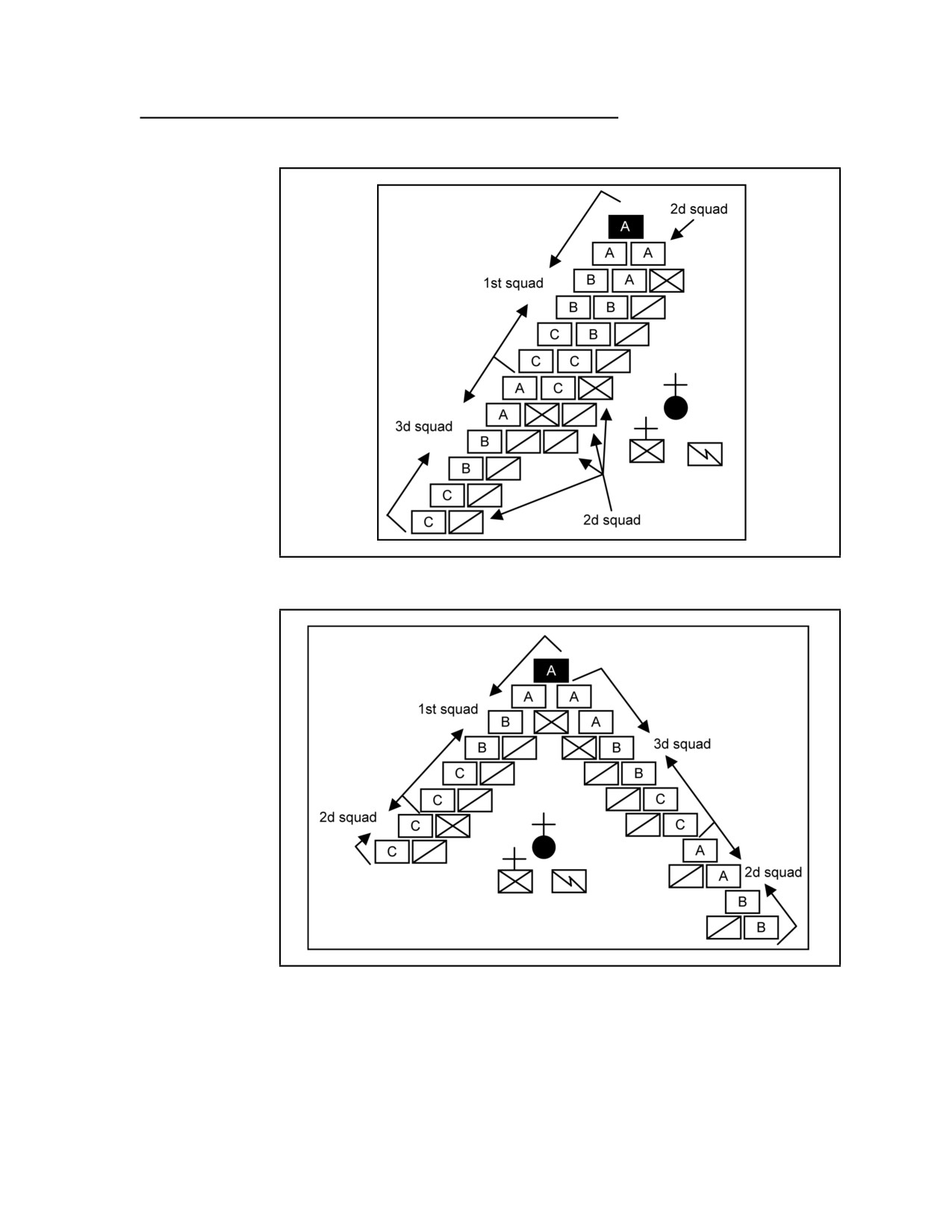
Figure 6-17. Platoon Echelon Left With 2d Squad in Direct Support
Figure 6-18. Platoon Wedge Formation
may be used to cover one flank by commanding, “2d Squad Right (or Left)
Lateral Support” (see Figures 6-20 and 6-21, page 6-25).
6-71. To move the 2d squad from general support to lateral support, the
platoon leader commands, “2d Squad, Lateral Support, Move.” To have the 2d
squad join the wedge from general or lateral support, the platoon leader
18 April 2005
FM 3-19.15
6-23
Civil Disturbance Formations
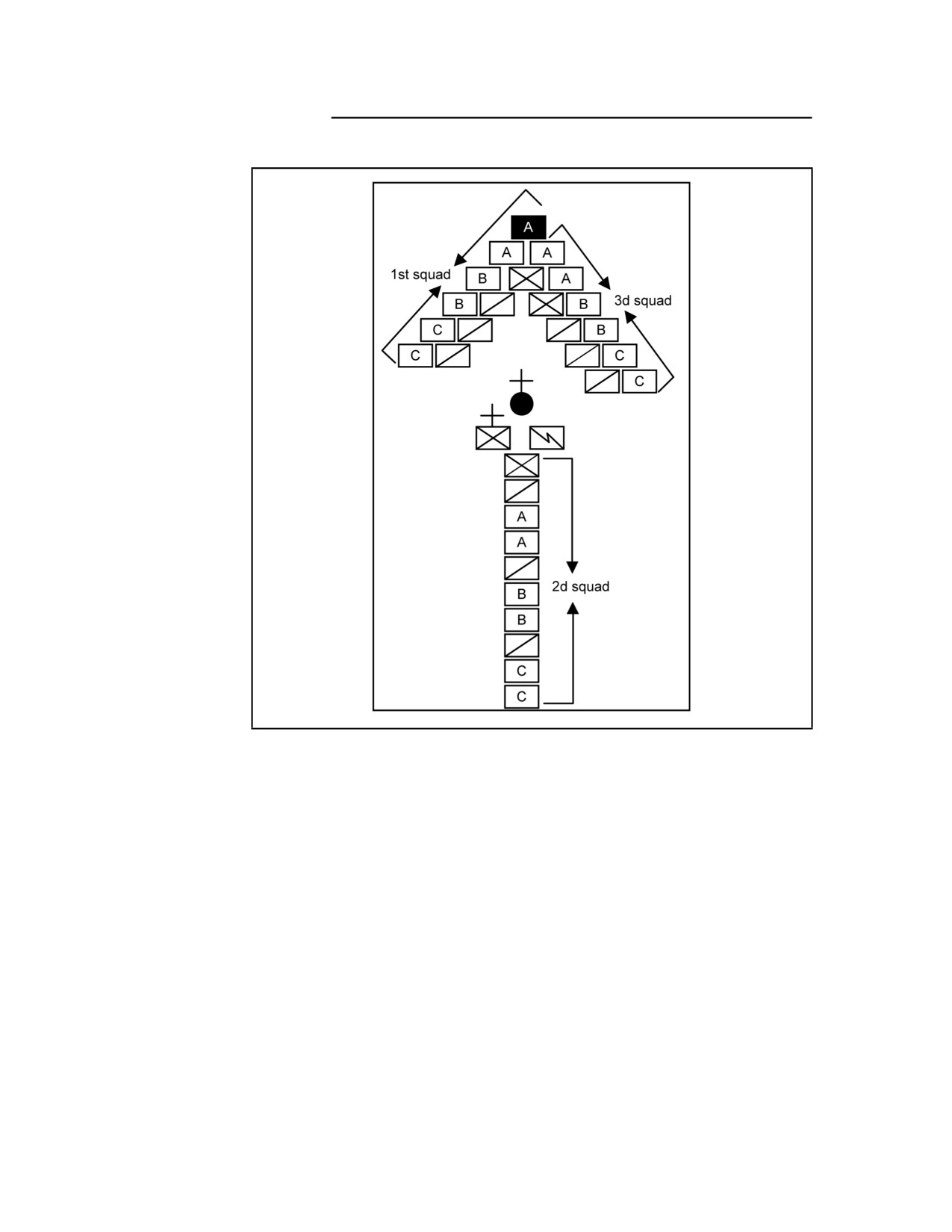
Figure 6-19. Platoon Wedge Formation With 2d Squad in General Support
commands, “2d Squad, Extend the Wedge, Move.” To extend the wedge, the 2d
squad splits and the teams move to the left and right, respectively.
Platoon Wedge Formation With Direct Support
6-72. The command for forming a platoon wedge formation with the 2d squad
in direct support is “Platoon Wedge, 2d Squad in Direct Support, Move.” The
1st and 3d squads execute a wedge. The 2d squad waits for the squad and/or
team leaders to move to the rear, as in the line formation, before executing a
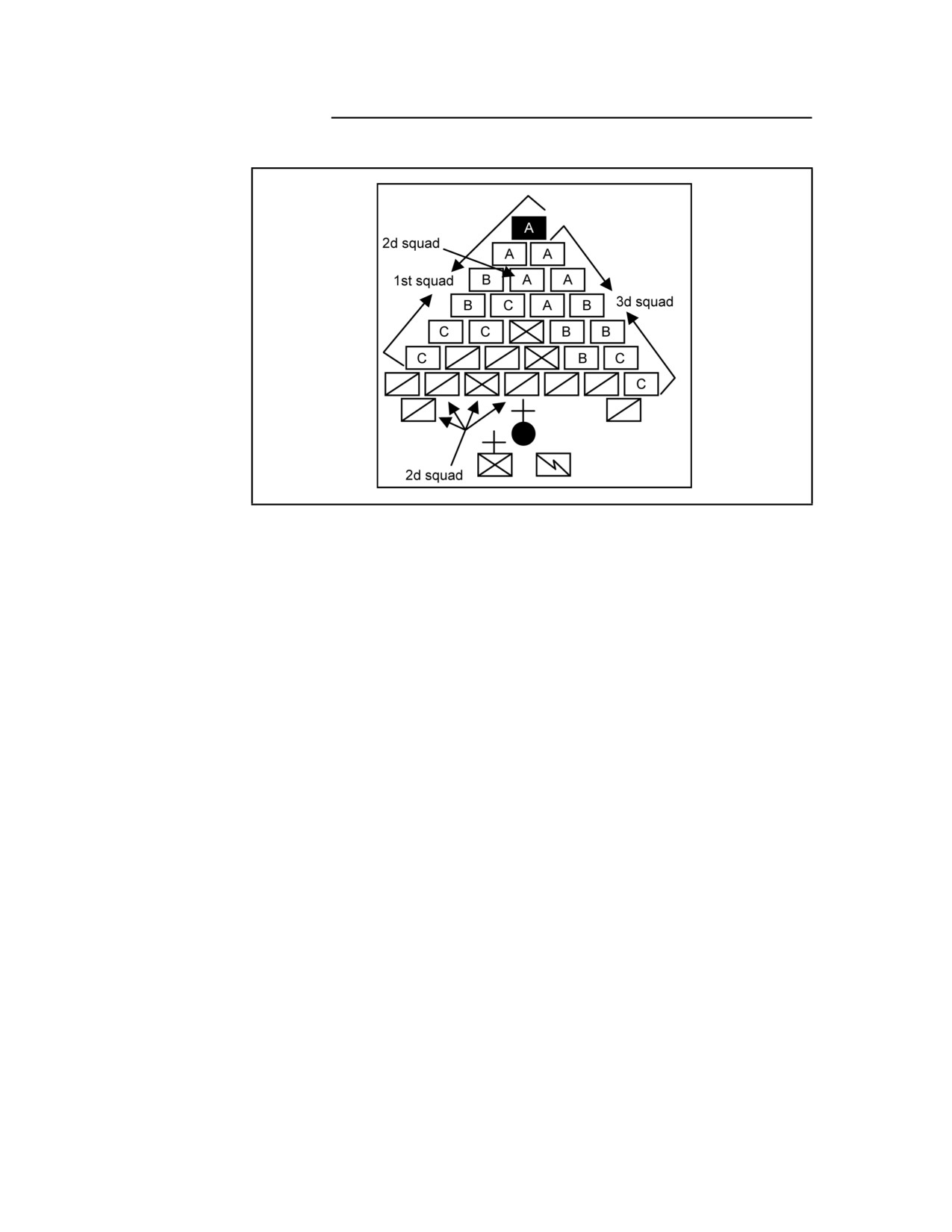
wedge directly behind and centered on the main formation. The individuals in
the supporting wedge cover the intervals between individuals in the leading
wedge (see Figure 6-22, page 6-26).
Platoon Diamond and Circle Formations
6-73. These formations are used in open areas or where the crowd may be
able to envelop the formation. The diamond and circle formations are
primarily defensive in nature and difficult to maneuver. The decision about
which formation to use is based on the ability of the platoon to perform them.
6-24
FM 3-19.15
18 April 2005

Civil Disturbance Formations
Figure 6-20. Platoon Wedge Formation With 2d Squad in Lateral Support
Figure 6-21. Platoon Wedge Formation With 2d Squad in Right Lateral
Support
18 April 2005
FM 3-19.15
6-25
Civil Disturbance Formations
Figure 6-22. Platoon Wedge Formation With 2d Squad in Direct Support
The command for having a platoon form in a diamond or circle formation is
“Platoon Diamond (or Circle), Move.” On the command of execution, the 1st
squad leader moves the baseman to the place indicated by the squad leader.
The baseman becomes the 12 o’clock position while the 1st squad lines up to
the left of the baseman covering the 8 to 12 o’clock positions. The 3d squad
aligns itself to the right of the baseman, covering the 12 to 4 o’clock positions
and the 2d squad aligns itself, covering the 4 to 8 o’clock positions (see Figures
6-23 and 6-24).
6-74. To assemble from a platoon diamond or circle formation, the HQ
element takes the same steps as that of a line formation. The 1st squad leads
the platoon back to the AA followed by the 2d and 3d squads. Squads fall into
a column formation as they file back to the AA.
RELIEF ELEMENTS IN PLACE
6-75. During crowd control operations, the platoon leader may rotate his
squads to give them a rest. He is not limited to using only those squads
specified in the preceding examples as the lead elements of the formations. He
can replace the base elements by commanding direct support to the 1st squad
and then directing the 1st squad into general support. The support element
(the 2d squad) then passes through the 1st squad. Once the 2d squad is
formed directly behind the 1st squad, the 1st squad leader commands, “Right
Face.” The members of the 1st squad do a right-face movement and the 2d
squad steps quickly though the 1st squad and forms the base formation. The
1st squad leader then commands, “Follow Me,” and leads his squad to the
general support position. This procedure is often necessary when protective
masks are used and chemical irritants employed. The 1st squad then replaces
the 3d squad in the same manner. Platoons participating in company
operations are relieved in the same manner.
6-26
FM 3-19.15
18 April 2005

Civil Disturbance Formations
Figure 6-23. Platoon Diamond Formation
Figure 6-24. Platoon Circle Formation
FOUR-SQUAD PLATOON FORMATIONS
6-76. When forming control force formations from the column, the platoon
leader moves to the right of the platoon and faces it when giving his
commands. He gives the hand-and-arm signal and the preparatory command.
On the command of execution, “Move,” he points to the approximate location
where he wants the platoon to form. The platoon leader pauses between the
18 April 2005
FM 3-19.15
6-27
Civil Disturbance Formations
preparatory command and the command of execution to allow each squad
leader to issue a preparatory command to his squad.
Platoon Line Formation
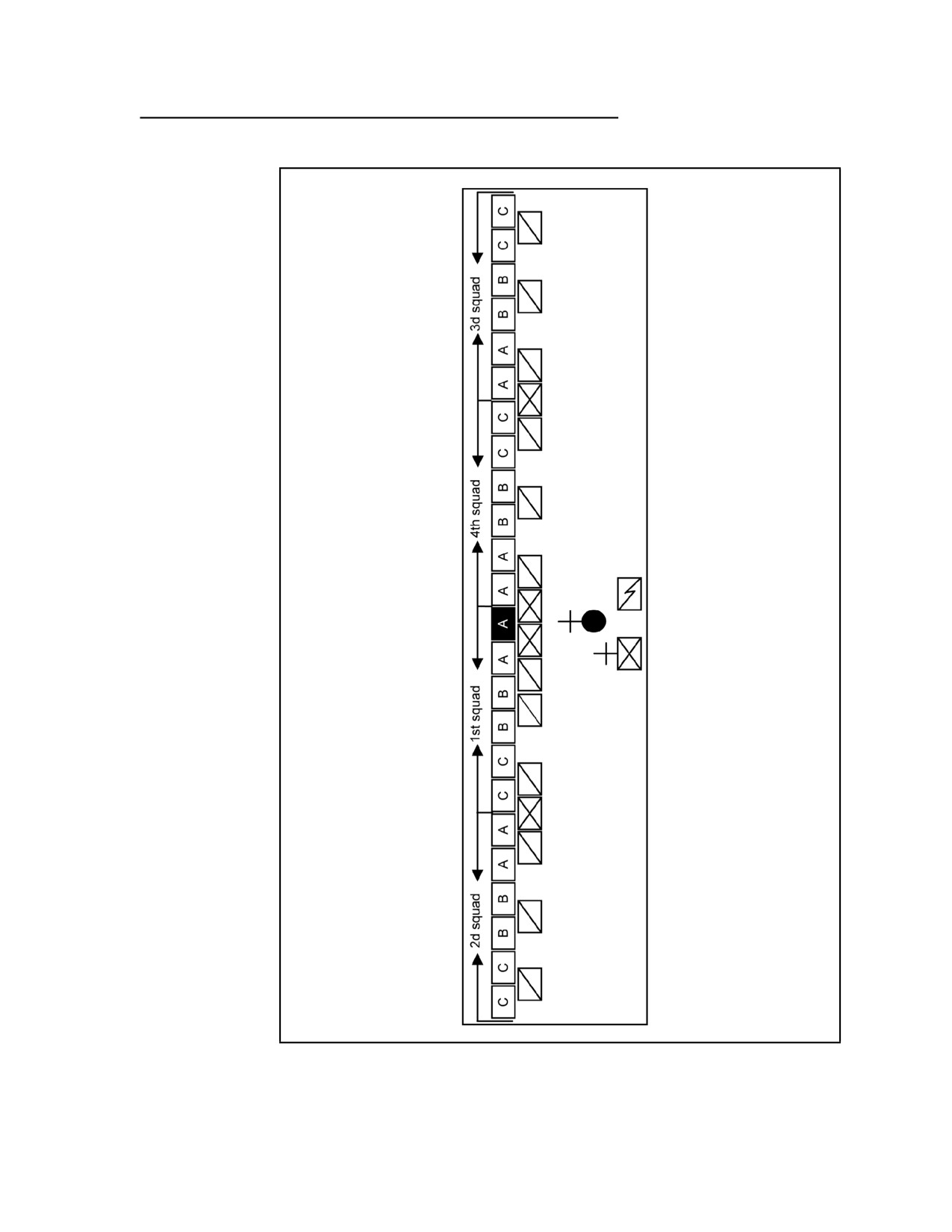
6-77. The command for forming a platoon line formation is “Platoon Line,
Move.” Immediately following the platoon leader's preparatory command, the
squad leaders of the 1st and 4th squads command, “Follow Me.” The squad
leaders of the 2d and 3d squads command, “Stand Fast.” On the platoon
leader's command of execution, the 1st and 4th squads move forward to the
point designated by the platoon leader. The 1st A team member of the 1st
squad is the baseman for the platoon formation. The 1st squad forms a squad
line to the left of the baseman and the 4th squad forms a squad line to the
right of the baseman with all lines dressed to the right. After the 1st and 4th
squads have cleared the platoon, the 2d and 3d squad leaders command,
“Follow Me.” The 2d squad forms a squad line to the left of the 1st squad. The
3d squad forms a squad line to the right of the 4th squad. All squads dress
with the 4th squad (see Figure 6-25).
Platoon Line Formation Assembly
6-78. When assembling from the platoon line formation, the platoon leader
and his HQ personnel take a position to the rear of the platoon. He then gives
the command, “Platoon Assemble,” while raising his right arm and making a
circular motion above his head. Platoon members automatically assume the
port arms position. The 1st squad leader and the baseman do an about-face
movement. All other platoon members do an about-face movement toward the
baseman. On the platoon leader's command of execution, he points to where
he wants the platoon to assemble. He commands, “Follow Me,” and moves his
squad toward the AA. The 1st squad files to the baseman position, followed by
the 2d squad. As the 2d squad clears the baseman position, the 4th squad
leader then commands, “Follow Me,” and leads his squad to the AA, followed
by the 3d squad. As the 1st squad comes to a halt facing the crowd in the AA,
the 2d squad assumes its position to the right of the 1st squad. As the 4th
squad assembles, it dresses on the 1st squad, leaving space for the 3d squad to
return to its place in the formation. Once the platoon is formed into a column
formation, HQ personnel take their position in the formation. The PSG then
commands, “Countercolumn, March,” and moves the platoon to the rally point.
Platoon Line Formation With General Support
6-79. Whenever the command for establishing a crowd control formation
contains the phrase “In Support Without Modification,” it means that the
support element is to remain in general support. The command for forming a
platoon line with two squads in general support is “Platoon Line, 2d and 3d
Squads in Support, Move.” The 1st and 4th squads execute the line, while the
2d and 3d squads remain in the column (see Figure 6-26, page 6-30). To
assemble a platoon with two squads in general support, the procedure is the
same as that of the platoon line, except that the 1st and 4th squads dress on
with the 2d and 3d squads.
6-28
FM 3-19.15
18 April 2005
Civil Disturbance Formations
Figure 6-25. Platoon Line Formation With Four Squads
18 April 2005
FM 3-19.15
6-29

Civil Disturbance Formations
Figure 6-26. Platoon Line Formation With d and 3d Squads in General
Support
Platoon Line Formation With Lateral Support
6-80. The command for forming a platoon line formation with two squads in
lateral support is “Platoon Line, 2d and 3d Squads in Lateral Support, Move.”
The 4th and 1st squads execute the line as before, and the 2d and 3d squads
stand fast. After the line has been formed, the squad leaders of the 2d and 3d
squads command, “Follow Me.” The 2d squad forms a column behind the last
man of the 1st squad. The 3d squad forms a column behind the last man of the
4th squad (see Figure 6-27).
6-81. Squads may be moved from general support to lateral support at any
time by the platoon leader. He commands, “2d and 3d Squads, Lateral
Support, Move.” To have the 2d and 3d squads join the line from either
support position, the platoon leader commands, “2d and 3d Squads, Extend
the Line, Move.” The 2d and 3d squad leaders command, “Follow Me.” On the
command of execution, the squads set up individual lines, closing and
dressing with the existing line. To assemble the platoon from a platoon line
with lateral support, the procedure is the same as that of the platoon line,
except lateral support squads face forward until they move to the AA.
6-30
FM 3-19.15
18 April 2005

Civil Disturbance Formations
Figure 6-27. Platoon Line Formation With 2d and 3d Squads in Lateral Support
Platoon Line Formation With Direct Support
6-82. The command for forming a platoon line with two squads in direct
support is “Platoon Line, 2d and 3d Squads in Direct Support, Move.” The 1st
and 4th squads execute a line as before. The 2d and 3d squads execute a 2d
line directly to the rear and centered on the 1st line. The members in the
direct support line cover the intervals between members in the baseline. To do
this, the squad and team leaders of the 1st and 4th squads must take two
steps to the rear to allow space for the 2d and 3d squads to move into place.
After seeing the squad and team leaders move back from the line, 2d and 3d
squad leaders command, “Follow Me,” and lead their squads into position (see
Figure 6-28).
Figure 6-28. Platoon Line Formation With 2d and 3d Squads in Direct Support
6-83. To assemble the support squads from any position to general support,
the platoon leader commands, “2d and 3d Squads in Support, Move.” The 2d
and 3d squads then return to a column behind the line formed by the 1st and
4th squads. To assemble the entire platoon, the procedure is the same as that
of a platoon line, except that the 2d squad moves to the AA first, followed by
the 3d, 1st, and 4th squads.
18 April 2005
FM 3-19.15
6-31
Civil Disturbance Formations
Platoon Line Formation With One Support Squad
6-84. The command for forming a platoon line formation with one squad in
support is “Platoon Line, 3d Squad in Support, Move.” The 1st squad moves
out and executes a squad line. The 2d and 4th squads form a line on the side of
the left and rights sides of the 1st squad. The 3d squad remains in column
formation. The support squad may be used in lateral support on one or both
sides of the formation or in direct support of any segment of the formation. To
assemble the platoon, the procedure is the same as that of a platoon line,
except that all squads dress with the 3d squad.
Platoon Echelon Right and Left Formations
6-85. The command for forming a platoon echelon right formation is “Platoon
Echelon Right, Move.” After the platoon leader's preparatory command, the
squad leader of the 1st squad commands, “Follow Me.” The squad leaders of
the 2d, 3d, and 4th squads command, “Stand Fast.” On the command of
execution, the 1st squad moves out and executes an echelon right at the
location designated by the platoon leader. As each squad clears the column,
the next successive squad moves out and extends the echelon that has been
formed. To assemble the platoon, the procedure is the same as that of a
platoon line, except that all squads file back in order.
6-86. The command for forming a platoon echelon left formation is “Platoon
Echelon Left, Move.” The platoon echelon left is formed in the same manner as
the echelon right, but in reverse order (see Figure 6-29). To assemble the
platoon, the procedure is the same as that of an echelon right. See
Figures 6-30, page 6-34; 6-31, page 6-35; and 6-32, page 6-36, for examples of
echelon formations with support.
Platoon Wedge Formation
6-87. The command for forming the platoon wedge formation is “Platoon
Wedge, Move.” After the platoon leader’s preparatory command, the 1st and
4th squad leaders command, “Follow Me.” At the same time, the 2d and 3d
squad leaders command, “Stand Fast.” On the platoon leader’s command of
execution, the 1st and 4th squads move directly to the front. When the last
members of the 1st and 4th squads clear the 2d and 3d squads, the 2d and 3d
squad leaders command, “Follow Me,” and move out to the left and right. The
1st squad executes an echelon left on the baseman and the 4th squad executes
an echelon right. The 2d squad forms an echelon left on the last man of the 1st
squad. The 3d squad forms an echelon right on the last man of the 4th squad.
This completes the wedge formation (see Figure 6-33, page 6-36). To assemble
the platoon, the procedure is the same as that of a platoon line.
Platoon Wedge Formation With General Support
6-88. The command for forming a platoon wedge formation with two squads in
support is “Platoon Wedge, 2d and 3d Squads in Support, Move.” The 1st and
4th squads execute the wedge while the 2d and 3d squads remain in column
formation (see Figure 6-34, page 6-37).
6-32
FM 3-19.15
18 April 2005

Civil Disturbance Formations
Figure 6-29. Platoon Echelon Left Formation With Four Squads
Platoon Wedge Formation With Lateral Support
6-89. The command for forming a platoon wedge formation with lateral
support is “Platoon Wedge, 2d and 3d Squads in Lateral Support, Move.” The
1st and 4th squads execute the wedge while the 2d and 3d squads stand fast.
After the 1st and 4th squads have cleared the column, the 2d and 3d squad
leaders command, “Follow Me,” and move out to the left and right. The 2d
squad forms a column formation behind the last man of the 1st squad. The 3d
squad forms a column formation behind the last man of the 4th squad (see
Figure 6-35, page 6-38).
6-90. To move the 2d and 3d squads from general to lateral support, the
platoon leader commands, “2d and 3d Squads, Lateral Support, Move.” To
have the 2d and 3d squads join the wedge from general or lateral support, the
18 April 2005
FM 3-19.15
6-33

Civil Disturbance Formations
Figure 6-30. Platoon Echelon Left Formation With 2d and
3d Squads in General Support
platoon leader commands, “2d and 3d Squads, Extend the Wedge, Move.” The
2d and 3d squad leaders command, “Follow Me,” and move out to the left and
right to extend the wedge on the 1st and 4th squads.
Platoon Wedge Formation With Direct Support
6-91. The command for forming a platoon wedge with two squads in direct
support is “Platoon Wedge, 2d and 3d Squads in Direct Support, Move.” The
1st and 4th squads execute a wedge. The 2d and 3d squads execute a wedge
and close in on the leading wedge. The members in the supporting wedge
cover the intervals between members in the leading wedge. To do this, the
squad and team leaders of the 1st and 4th squads must take two steps to the
rear to allow space for the 2d and 3d squads to move into place. After seeing
the squad and team leaders move back from the line, the 2d and 3d squad
leaders command, “Follow Me,” and lead their squads into position (See
Figure 6-36, page 6-38). To move the 2d and 3d squads back to general
support, the platoon leader commands, “2d and 3d Squads Support, Move.”
Then the 2d and 3d squads move to their general support positions. To
6-34
FM 3-19.15
18 April 2005

Civil Disturbance Formations
Figure 6-31. Platoon Echelon Left Formation With
2d Squad in Lateral Support
assemble a platoon from a platoon wedge with direct support, the procedure is
the same as that of a platoon wedge, except that the 2d squad assembles first,
followed by the 3d, 1st, and 4th squads.
Platoon Wedge Formation With One Support Squad
6-92. The command for forming a platoon wedge formation with one squad in
support is “Platoon Wedge, 3d Squad in Support, Move.” The 1st squad moves
out and executes a squad wedge. The 2d and 4th squads form echelons left and
right on the 1st squad. The 3d squad remains in the column formation.
Platoon Diamond and Circle Formations
6-93. The platoon diamond and circle formations are used in open areas or
where the crowd may be able to envelop the formation. They are primarily
defensive in nature and hard to maneuver. The decision concerning which
formation to use is based on the ability of the platoon to perform them. The
command for having a platoon form in a diamond or circle formation is
“Platoon Diamond (or Circle), Move.” On the command of execution, the 1st
squad leader moves the baseman to the location indicated by the squad leader.
The baseman becomes the 12 o’clock position. The 1st squad lines up to the
18 April 2005
FM 3-19.15
6-35

Civil Disturbance Formations
Figure 6-32. Platoon Echelon Left Formation With 2d and 3d Squads in Direct Support
Figure 6-33. Platoon Wedge Formation With Four Squads
6-36
FM 3-19.15
18 April 2005
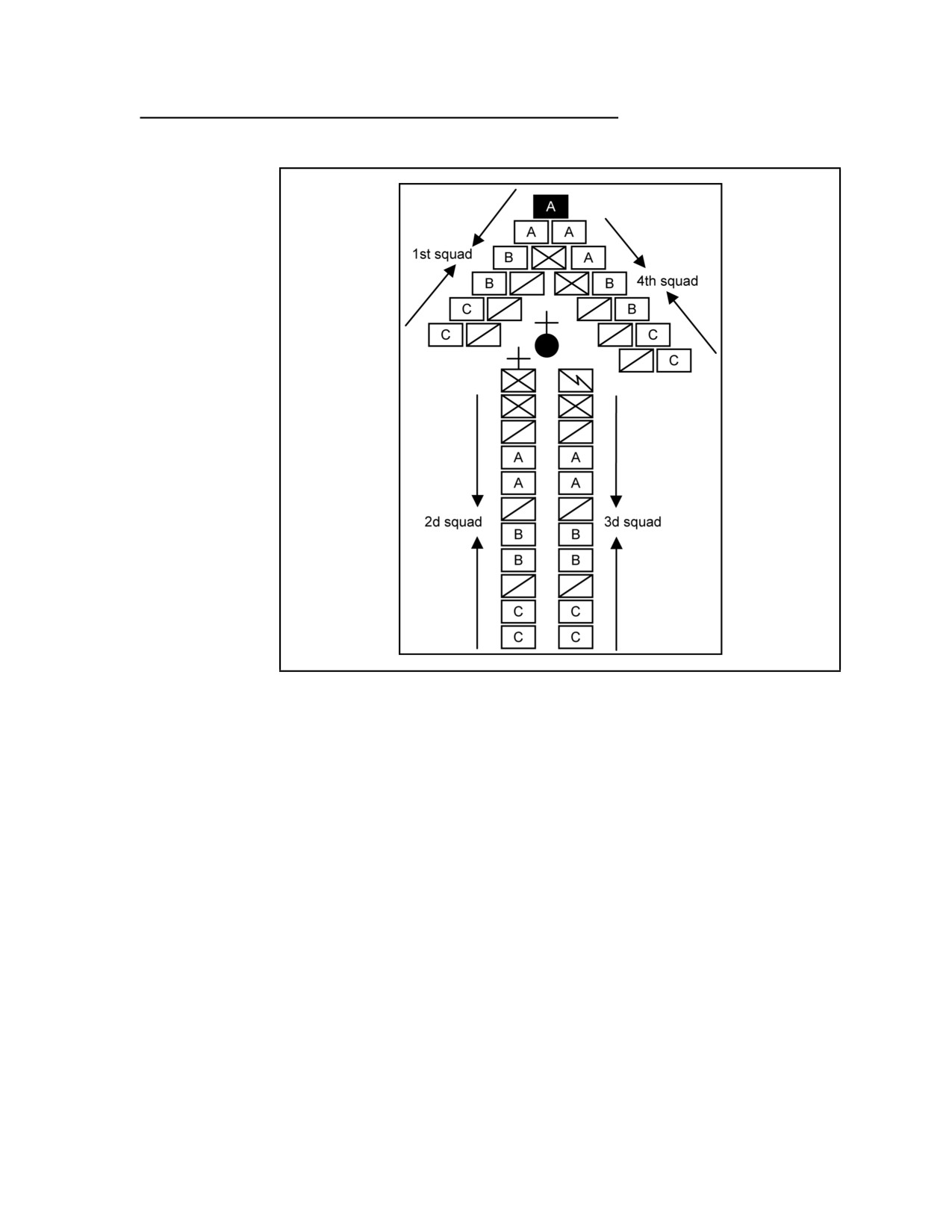
Civil Disturbance Formations
Figure 6-34. Platoon Wedge Formation With 2d and 3d Squads in General
Support
left of the baseman covering the 9 to 12 o’clock positions. The 4th squad aligns
themselves to the right of the baseman covering the 12 to 3 o’clock positions.
The 3d squad aligns itself covering the 3 to 6 o’clock positions. The 2d squad
aligns itself covering the 6 to 9 o’clock positions.
6-94. To assemble a platoon from a platoon diamond or circle formation, the
HQ element uses the same procedures as that of a line formation. The 1st
squad leads the platoon back to the AA followed by the 2d, 3d, and 4th squads.
The squads fall into a column formation as they file back to the AA.
COMPANY FORMATIONS
6-95. When a company commander orders his company into control force
formations from a column, he moves to the left near the head of the column so
he can be seen by the platoon leaders. He then faces the company. As he gives
his preparatory command, he points to where he wants the formation. If he
does not indicate a location, the company forms immediately in front of the
lead platoon.
18 April 2005
FM 3-19.15
6-37

Civil Disturbance Formations
Figure 6-35. Platoon Wedge Formation With 2d and 3d Squads in Lateral
Support
Figure 6-36. Platoon Wedge Formation With 2d and 3d
Squads in Direct Support
Relieving Elements in Place
6-96. During crowd control operations, the platoon leader may rotate his
squads to give them a rest. See paragraph 6-76, page 6-27.
6-38
FM 3-19.15
18 April 2005

Civil Disturbance Formations
Company Line in Depth Formation
6-97. The command for forming a company line in depth formation (see
Figure 6-37) is “Company Line in Depth, Move.” After the company
commander’s preparatory command, each platoon leader gives the command,
“Platoon Line.” The squad leaders follow with their commands to their squads
to form the platoon line. On the command of execution, each platoon
establishes a platoon line immediately to its front.
Figure 6-37. Company Line in Depth Formation
6-98. If the commander wants a more formidable formation, he commands,
“2d Platoon, Direct Support, Move.” The squad and team leaders from the 1st
platoon take two steps backward. The 2d platoon moves forward and covers
the intervals between the members of the lead platoon. The platoon leader of
the 3d platoon then moves his platoon forward to occupy the position formerly
held by the 2d platoon.
6-99. If the 3d platoon is called on to support the company line, it moves
forward and takes up a position directly behind the 2d platoon in the same
manner. Platoon leaders and PSGs help each other in controlling the
company.
Company Line in Mass Formation
6-100. The command for forming a company line in mass formation is
“Company Line in Mass, Move” (see Figure 6-38, page 6-40). The company line
in mass is the same as a company line with both platoons in direct support.
Instead of forming it in stages, the company commander indicates his desire
for this formation in his initial command. The platoons each form a line, and
the 2d and 3d platoons close on the 1st platoon without further command.
18 April 2005
FM 3-19.15
6-39

Civil Disturbance Formations
Figure 6-38. Company Line in Mass Formation
Company Line Formation With Support
6-101. In company formations, the 1st platoon usually forms the lead element
and the 2d and 3d platoons provide support (see Figures 6-39; 6-40; and 6-41).
The support platoons can be employed in the same manner as the support
squads in platoon formations. One platoon can be relieved from the lead
element by another platoon while in formation by having a support platoon
pass through the lead platoon.
Figure 6-39. Company Line in Mass Formation With One Platoon in Depth
Company Echelons and Wedge Formations
6-102. Company echelons (see Figures 6-42, page 6-42; 6-43, page 6-43; 6-44,
page 6-43; and 6-45, page 6-44) and company wedge formations (see Figures
6-46, page 6-45; 6-47, page 6-46; 6-48, page 6-46; and 6-49, page 6-47) are
formed in the same manner and with the same variations as the company line
formation. A company assembles from a crowd control formation in the same
manner as a platoon or a squad does. However, due to the size of company
6-40
FM 3-19.15
18 April 2005

Civil Disturbance Formations
Figure 6-40. Company Line in Mass Formation With One Platoon in Lateral Support
Figure 6-41. Company Line, One Platoon in Lateral Support and
One Platoon in General Support
formations, the commander must consider the area that the company is
operating in when he assembles the company. If he follows the guidelines of
platoon assembly, he will have no difficulty. When assembling the company,
the commander takes a position to the rear of the formation and commands,
“Company Assemble.” The platoon leaders take charge of their respective
platoons. Usually, the 3d platoon assembles first, just behind the formation.
After the 3d platoon is assembled, the 2d platoon assembles in front of the 3d
platoon and the 1st platoon assembles in front of the 2d. All platoons assemble
facing the commander. The 2d and 3d platoons then dress with the 1st
18 April 2005
FM 3-19.15
6-41
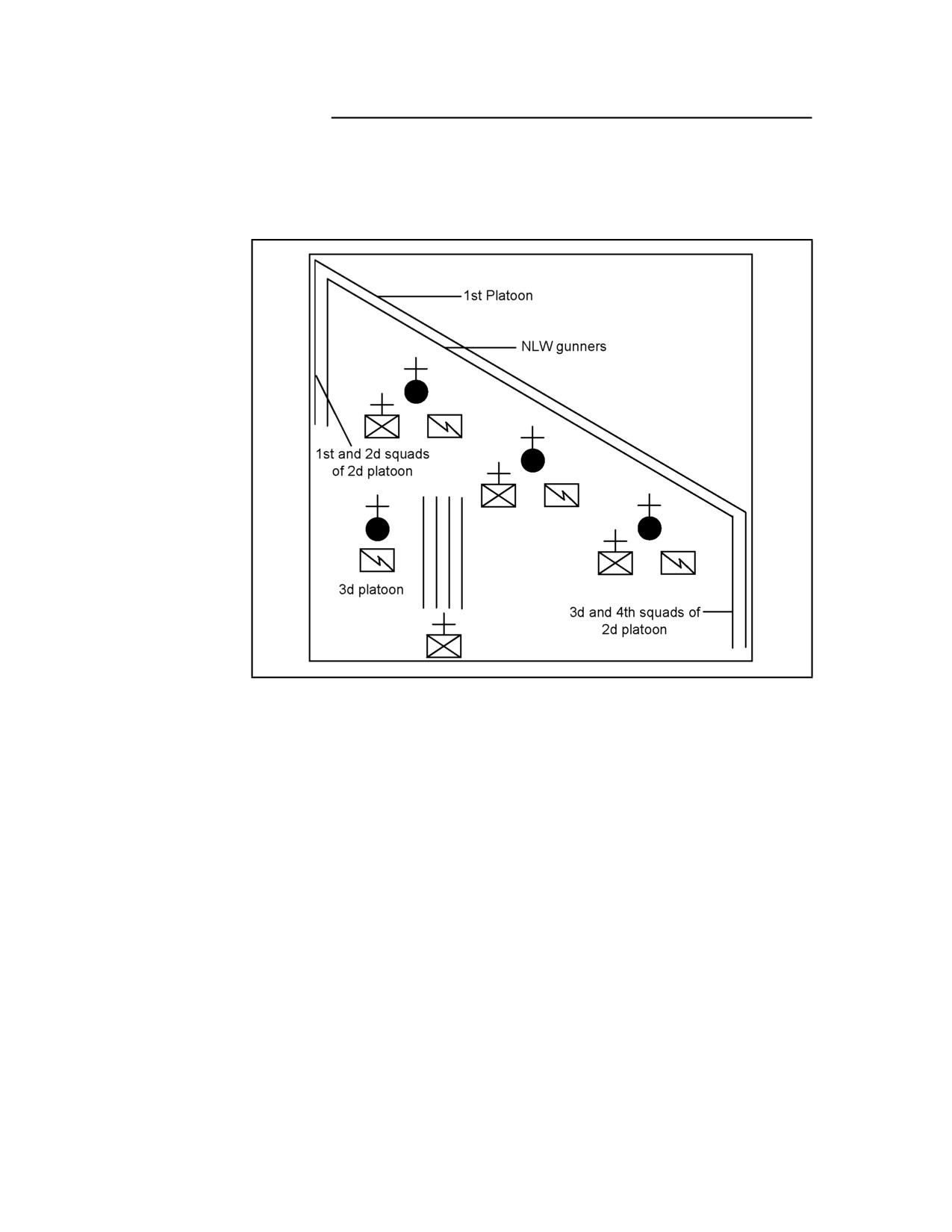
Civil Disturbance Formations
platoon. As each platoon is assembled, they are ordered to port arms by the
platoon leader to await further orders from the commander. If four platoons
are used, the 4th platoon assembles first.
Figure 6-42. Company Echelon Right Formation With One Platoon in Lateral
Support and One Platoon in General Support
Company and Platoon Formations With Vehicles
6-103. The commands for vehicles and foot troops are the same as those for
foot troops alone. Because of the additional noise and distances involved, the
company commander gives the hand-and-arm signal for the line. The
command and the signal apply to the lead platoon only. The other platoons
remain in general support until further directed (see Figures 6-50, page 6-48;
6-51, page 6-49; 6-52, page 50; 6-53, page 6-50; 6-54, page 6-51; 6-55,
page 6-52; and 6-56, page 6-53).
6-104. The motor section moves out with vehicle number two moving to the
right. Vehicle number two passes the lead vehicle and establishes the position
for the center of the line. At the same time, the 3d and 4th vehicles swing out
to the left and right. They form to the left and right and slightly to the rear of
vehicle number two. The 1st and 4th squads of the lead platoon then move
forward and form lines to the left and right, on the front end of vehicle number
two. As soon as the troops are in position, the 3d and 4th vehicles close in on
the squads and tighten the formation. The 2d and 3d squads of the lead
platoon then form a line to the left and right of the 3d and 4th vehicles to
complete the company line. The command vehicle (vehicle number one) takes
6-42
FM 3-19.15
18 April 2005
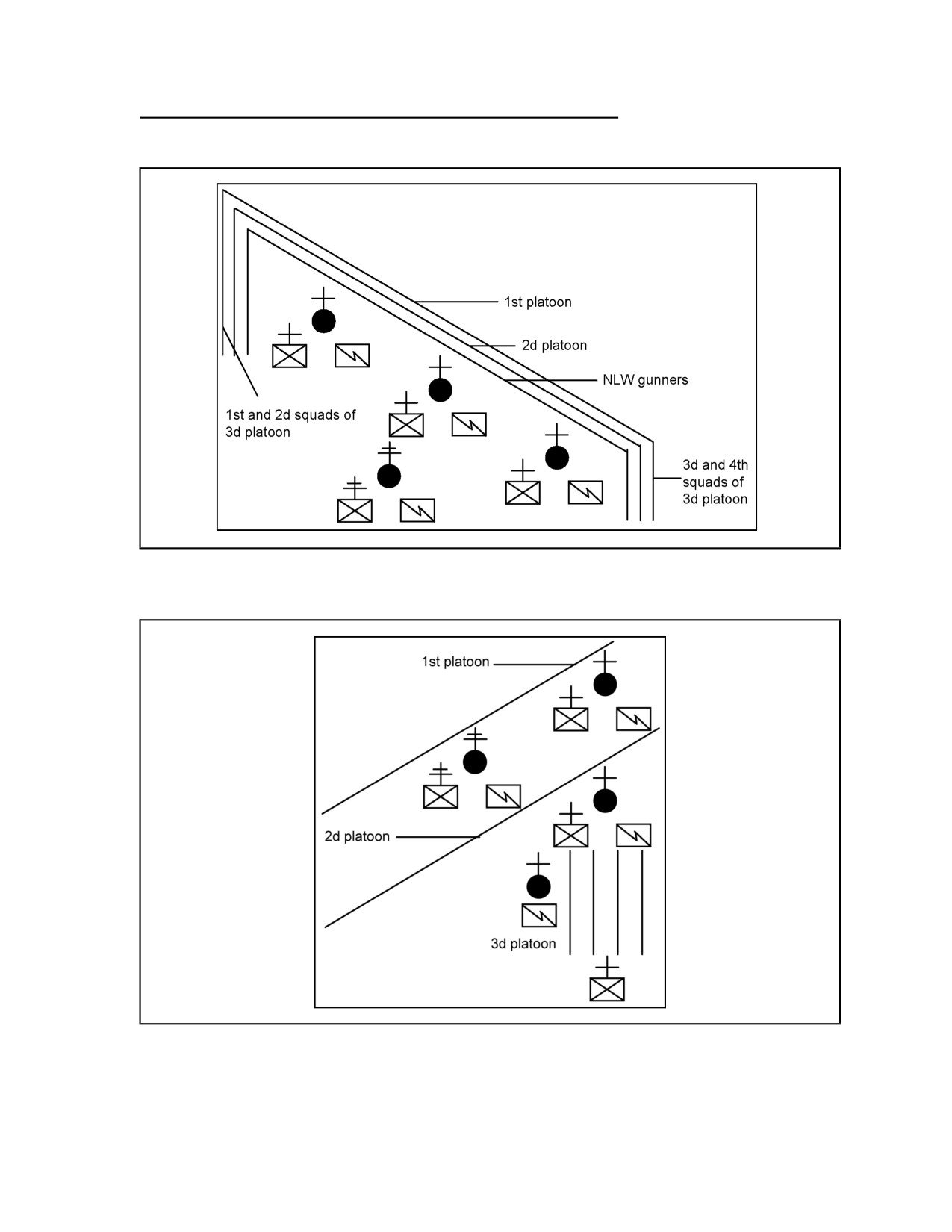
Civil Disturbance Formations
Figure 6-43. Company Echelon Right in Mass Formation With One Platoon in Lateral
Support and One Platoon in General Support
Figure 6-44. Company Echelon Right in Mass Formation With One
Platoon in Lateral Support
18 April 2005
FM 3-19.15
6-43

Civil Disturbance Formations
Figure 6-45. Company Echelon Right in Mass Formation With
One Platoon in General Support
up a position behind the line where the commander can direct and control the
unit. The 2d and 3d platoons move forward and are used in general, lateral, or
direct support. In some instances, foot troops move into position first and
vehicles join the formation, as needed.
6-105. To form a company echelon or a company wedge with vehicles, the
company follows the same procedures used for company formations without
vehicles. Vehicles are moved into the appropriate positions using procedures
similar to those used for a company line.
6-106. To assemble troops and vehicles, the command vehicle moves to a
position behind the formation. The commander faces the formation and gives
the vehicle section the signal for assembly. Immediately, the vehicles return
to their proper positions in column formation behind the command vehicle
while the troops stand fast. The second in command then assembles the troops
in the usual manner.
6-44
FM 3-19.15
18 April 2005

Civil Disturbance Formations
Figure 6-46. Company Wedge Formation With Two Platoons in General
Support
18 April 2005
FM 3-19.15
6-45

Civil Disturbance Formations
Figure 6-47. Company Wedge Formation With One Platoon in Lateral
Support
Figure 6-48. Company Wedge Formation With One Platoon in Lateral
Support and One Platoon in General Support
6-46
FM 3-19.15
18 April 2005
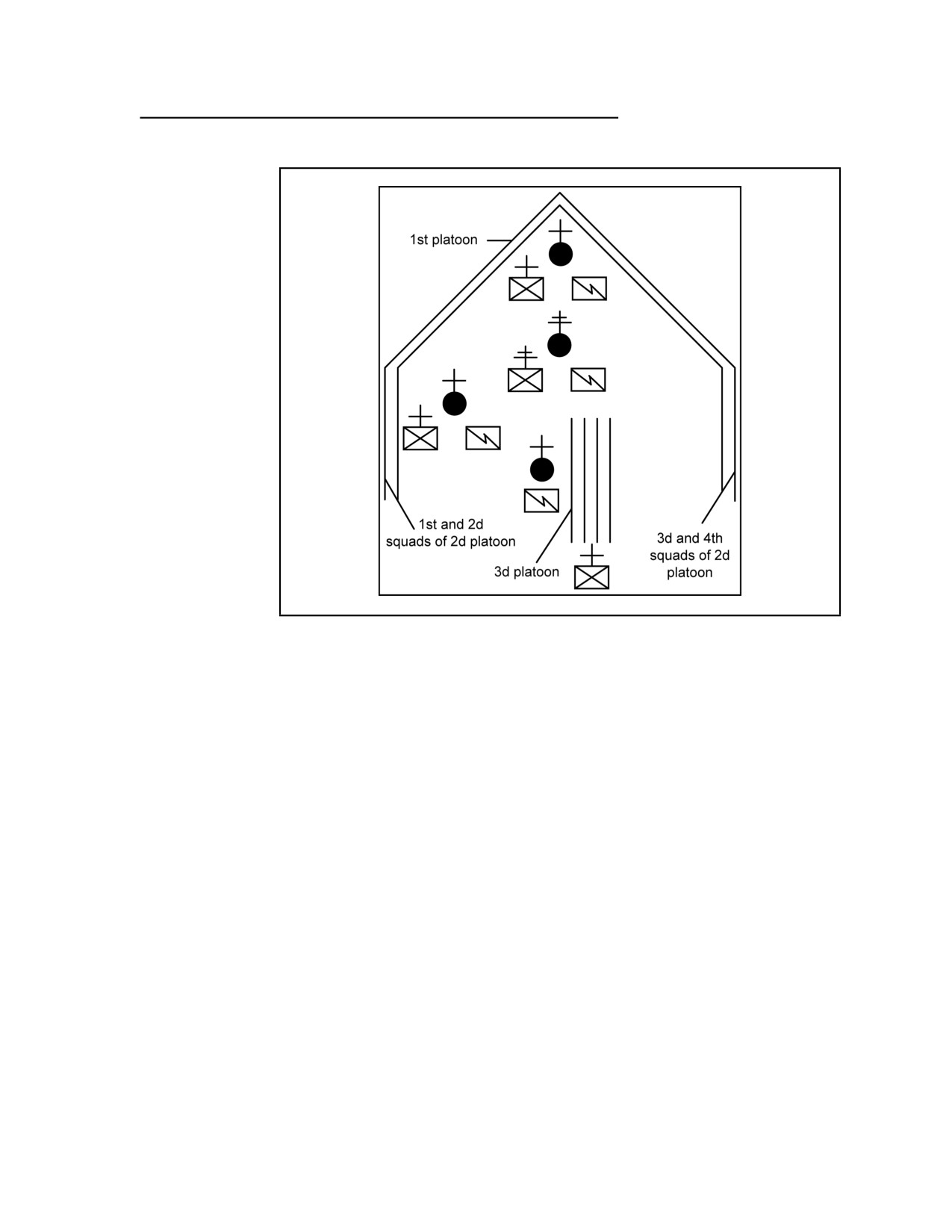
Civil Disturbance Formations
Figure 6-49. Company Wedge Formation With One Platoon in Lateral
Support and One Platoon in General Support
18 April 2005
FM 3-19.15
6-47

Civil Disturbance Formations
Figure 6-50. Company Column Formation With Vehicles
6-48
FM 3-19.15
18 April 2005

Civil Disturbance Formations
Figure 6-51. Company Line Formation With Vehicles and Two Platoons in General Support
18 April 2005
FM 3-19.15
6-49

Civil Disturbance Formations
Figure 6-52. Company Line Formation With Vehicles, One Platoon in Lateral Support,
and One Platoon in General Support
Figure 6-53. Company Echelon Right Formation With Vehicles, One Platoon in
Lateral Support, and One Platoon in General Support
6-50
FM 3-19.15
18 April 2005
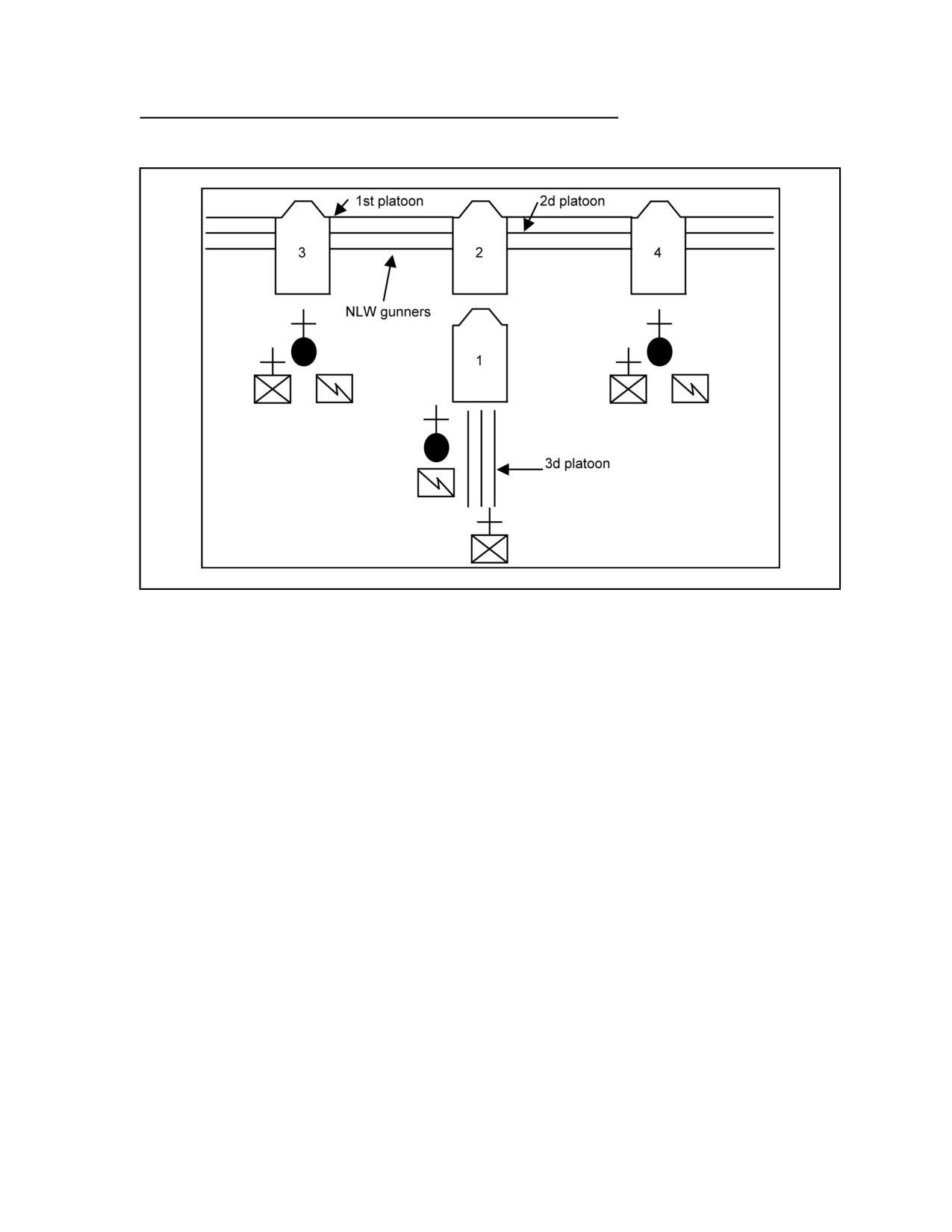
Civil Disturbance Formations
Figure 6-54. Company Line in Mass Formation With Vehicles and One Platoon
in General Support
18 April 2005
FM 3-19.15
6-51

Civil Disturbance Formations
Figure 6-55. Platoon Line Formation With Vehicles
6-52
FM 3-19.15
18 April 2005

Civil Disturbance Formations
Figure 6-56. Platoon Line Formation With Direct Support and Vehicles
18 April 2005
FM 3-19.15
6-53
This page intentionally left blank.
Chapter 7
Civil Disturbance Operations in Confinement Facilities
Civil disturbance doctrine is usually written for quelling disturbances that
occur in large open areas where the size of the responding force or the type
of formation employed is not hampered by a lack of space. However, in the
military confinement environment, inmate disturbances often occur in
small, closed areas, such as an inmate’s housing unit, a gymnasium, a
dining facility, or a chapel where maneuver space and equipment limit the
size of the element that may be employed. The layout of each facility is
different and presents its own unique problems when employing forces.
This chapter covers the use of small military police teams, forced cell move
teams (FCMTs), and the formations used to move an unruly inmate from
one cell to another. Small generic riot control formations are discussed to
provide the commander with a basic employment option that he can tailor
to his facility to enable him to regain control of the affected area. The use
of NL munitions and RCAs are incorporated into this discussion.
CROWD DYNAMICS WITHIN THE CONFINEMENT FACILITY
7-1. In confinement facility disturbances, inmates employ a number of tactics
to resist control or to achieve their goals. Tactics may be unplanned or
planned and nonviolent or violent. When a disturbance carries many
purposes, it is likely that their tactics are well planned.
NONVIOLENT TACTICS
7-2. Nonviolent tactics range from name-calling to building barricades.
Inmates may attempt to distract control force members by shouting at or
ridiculing them or by using abusive language, obscene remarks, taunts, and
jeers. The inmates’ goals are to anger and demoralize the control force. They
also want authorities to take actions that may later be exploited as acts of
brutality.
VIOLENT TACTICS
7-3. Violent crowd tactics used by inmates are often extremely destructive
and can include physical attacks on cadre, other inmates, and property. Use of
violent tactics is limited only by the attitudes and ingenuity of the inmates,
the training of their leaders, and the materials available to them. Inmates
often commit violence with crude homemade weapons. If unplanned violence
occurs, inmates will use mops, brooms, chairs, beds, or whatever else is on
hand as weapons of violence. During planned violent disturbances, inmates
can easily conceal makeshift weapons or tools to use against the control force.
Inmates often erect barricades to impede troop movement and/or to prevent
18 April 2005
FM 3-19.15
7-1
Civil Disturbance Operations in Confinement Facilities
the control force from entering certain areas or buildings. Inmates can be
expected to vent their emotions on individuals (cadre or inmates), the control
force, their equipment, and/or the institution’s property. Inmates direct
dangerous objects like carts, barrels, liquids, and burning shoe polish at the
control force.
GRIEVANCE PROTEST
7-4. A grievance protest may be organized as a riot. However, under normal
circumstances, a riot of this type is not of an extremely violent nature. It may
turn violent when leaders attempt to exploit any successes or weaknesses
found in the control force.
UNORGANIZED RIOTS
7-5. Unorganized riots are characterized as being spontaneous in nature.
However, they could be exploited and diverted by leaders at any subsequent
stage of the riot, turning it into a different type. They may begin as an isolated
assault against authority figures, or acts of civil disobedience. Under
determined leadership, an unorganized riot could change to an organized riot.
MULTIPLE RIOTS
7-6. Multiple riots may happen when a disturbance occurs in one area of the
confinement facility, causing others to riot in their areas. To control this
situation with only one riot control force available, the force commander
should first subdue the most violent riot. At the same time, he should employ
some of his control forces to contain the other riots until the main control force
is able to move to those locations to subdue them.
CADRE BEHAVIOR
7-7. The cadre is susceptible to crowd behavior. They become emotionally
stimulated during tense confrontation with unruly and violent inmates.
Commanders must be aware of the mood and attitude of the crowd and its
effect on the control force cadre. To counteract the effects of crowd behavior on
the cadre, the commanders must institute rigorous training and firm and
effective leadership. This training must include a complete awareness and
understanding of the use of force and the commander’s intent. These are all
necessary to offset the effect of crowd contagion upon the control force. Even
with the best training and leadership, control force members must exercise
individual and collective restraint.
PLANNING
7-8. Preplanning is the preparation and training conducted before a crisis
occurs. The purpose of preplanning is to have plans and standing operating
procedures (SOPs) in place so the cadre may react to an emergency and
successfully contain and neutralize the situation. The preplanning process
includes plan development, intelligence gathering, and training.
NOTE: Intelligence gathering is essential for the successful
containment, neutralization, and/or prevention of a riot.
7-2
FM 3-19.15
18 April 2005
Civil Disturbance Operations in Confinement Facilities
7-9. Once the control force team has been alerted to a disturbance within the
confinement facility, leaders further develop preplans to fit the situation
much the same way that DOD develops war plans.
7-10. During the planning process, leaders must be aware of the potential
risks involved in quelling disturbances within a confinement facility. Careful
planning minimizes collateral damage and risks to control force members and
hostages.
7-11. The use of NLW and NL munitions must also be considered when
developing plans. There must be strict accountability and control of RCAs,
their employment, and other appropriate NL means (such as high-pressure
water hoses). When using RCAs, plans must be flexible enough to
accommodate changes in the situation and weather because it impacts the
effectiveness of some agents. Planners must also consider the—
z
Location of the disturbance.
z
Estimated number of rioters.
z
Accessibility of weapons, tools, or cleaning supplies.
z
Inmate’s military training.
z
Hostage situation.
7-12. Based on an analysis of these factors, the commander makes an
estimate of the situation. The estimate must be as thorough as time permits.
Using the estimate, the commander considers COAs, selects RCAs, and
determines the need for engineer support. In choosing a COA, consider the—
z
Number of hostages.
z
Number of inmates holding the hostages.
z
Leader.
z
Attitude and demeanor of the rioters.
z
Location of the riot.
Inside areas of the confinement facility, such as the dining facility,
work site, or housing wing.
Outside areas of the confinement facility, such as in exercise or
work areas.
z
Accessibility of weapons or material to make weapons.
z
Accessibility of chemicals, such as cleaning supplies, cooking oils, and
shoe polish.
USE OF CHEMICAL IRRITANTS
7-13. The use of chemical irritants can be a valuable NL tool for control force
leadership to consider during the planning phase. These chemical irritants
can drive a threat from an established, enclosed position or deny the rioters
access to a certain area without long-lasting effects to those involved. The
proper use of chemical irritants may prevent the control force from having to
enter a dangerous area; however, improper use can cause injury, death, or
property damage.
18 April 2005
FM 3-19.15
7-3
Civil Disturbance Operations in Confinement Facilities
USE-OF-FORCE GUIDELINES
7-14. The installation commander authorizes the use of chemical irritants
after the control force leader determines the type and dosage. The SOP
outlines the procedures for securing authorization and provides guidance to
help the control force leader make his decisions. The confinement facility
commandant should inform the installation commander of the situation, since
the installation commander is ultimately responsible. Team members must be
aware of how chemical irritants affect personnel and plan accordingly.
Inmates not involved must be removed from the area and the chemical cloud’s
path. The fire department and emergency medical services (EMS) should be
on standby during operations involving chemicals.
PEPPER IRRITANT
7-15. The pepper irritant receives its name from varieties of the capsicum
plant that is it made from. The active ingredient, Oleoresin Capsicum (OC), is
extracted from the plant and micropulverized to make the irritant. It is
neither a chemical nor a gas, but an all-natural organic substance. It is
effective against individuals who are emotionally disturbed or under the
influence of drugs or alcohol. It is effective against domestic and wild animals.
OC is often used to divert the threat from making or continuing an assault.
OC does not cause permanent damage. Its effects last 30 to 40 minutes after
individuals are placed in fresh air.
7-16. OC can have various effects on people. Some effects are—
z
Swelling of mucous membranes and the upper respiratory system;
however, it does not shut down the system.
z
Burning (intense) and discoloration (bright red) of exposed skin.
z
Dilating the capillaries.
z
Swelling of the eyelids.
z
Burning and involuntary closing of the eyes.
z
Coughing uncontrollably.
z
Gagging.
z
Gasping for air.
z
Losing strength and coordination (temporarily).
OC has some disadvantages. They are that—
z
The canister depressurizes over time if not checked regularly.
z
Inmates may gain access to OC and use it against SRT members.
z
The canister must be shaken on a regular basis.
DISSEMINATION OF CHEMICAL IRRITANTS
7-17. There are six methods for disseminating chemical irritants.
Pyrotechnic Method
7-18. In the pyrotechnic method of dissemination, the chemical irritant is
placed in a canister with an inert material that is ignited when the device is
activated. The agent is then carried into the air on the smoke particles of the
inert material.
7-4
FM 3-19.15
18 April 2005
Civil Disturbance Operations in Confinement Facilities
7-19. There are some disadvantages when using a pyrotechnic device indoors.
These disadvantages are that the device—
z
May cause a fire.
z
Has a very slow saturation time (40 to 45 seconds to burn completely).
z
Can be thrown back by the threat, even while burning.
Bursting Method
7-20. In the bursting method of dissemination, the irritant and an inert
powder are placed in a saw-toothed canister. After a small detonation, the
canister splits and expels the irritant in a cloud.
7-21. The bursting method has its advantages and disadvantages. Some
advantages are that—
z
There is no risk of fire.
z
There is no risk of the canister being thrown back.
z
The contents disseminate quickly.
z
The canister is effective, easy to carry, and easy to control.
Some disadvantages are that—
z
There is a slight possibility of fragmentation when detonated.
z
The fuse head may separate from the canister.
z
Only 50 to 90 percent of the irritant may be disseminated.
z
The direction of the cloud formation depends on where the device is
detonated.
Aerosol Method
7-22. In the aerosol method of dissemination, the irritant is suspended in an
inert liquid that is located in the rear portion of the device. When the
projectile penetrates the structure, the rear portion splits open and the
irritant is disseminated in a mist. The aerosol method is most appropriate for
tactical operations when chemical irritants are used before entry.
7-23. The aerosol method has its advantages and disadvantages. Some
advantages are that it—
z
Is easily carried.
z
Is an excellent deployment system (uses 40-millimeter, 37-millimeter,
or 12-gauge ammunition).
z
Disperses the contents quickly.
z
Is easily controlled and accurate (fin-stabilized).
NOTE: Practice firing is always necessary.
Some disadvantages are the possibility of—
z
Injury to individuals if it is fired from close range.
z
Damage to the structure if it strikes a weak portion.
18 April 2005
FM 3-19.15
7-5
Civil Disturbance Operations in Confinement Facilities
Projectiles Method
7-24. Chemical-containing projectiles can be very effective when used
correctly. A soldier must know which projectile to use in each unique
situation.
7-25. Thirty-Seven-Millimeter Projectile. A 37-millimeter projectile can
incapacitate anyone in an enclosed area of 4,500 cubic feet. It can penetrate
the following:
z
A sheet of ¾-inch-thick plywood at 25 yards.
z
An automobile windshield at 33 yards.
z
A hollow-core door at 58 yards.
7-26. Forty-Millimeter Projectile. A 40-millimeter projectile is more
effective at greater ranges than a 37-millimeter projectile because of its rifled
bore. It can incapacitate anyone in an enclosed area of 4,500 cubic feet. It can
penetrate the following:
z
A 1-inch-thick plywood at 10 yards.
z
An automobile windshield at 55 yards.
z
A hollow-core door at 109 yards.
7-27. Twelve-Gauge Projectile. A 12-gauge projectile can be loaded into a
shotgun with no modifications to the weapon. It can be fired as a single round,
or it can be magazine-fed. The 12-gauge projectile can incapacitate anyone in
an enclosed area of 1,000 cubic feet. The angle at which the projectile strikes
the barrier can affect its penetration capability. It can penetrate the following:
z
A sheet of ¾-inch plywood at 33 yards.
z
An automobile windshield at 33 yards.
z
A hollow-core door at 100 yards.
Fogging Method
7-28. The irritant is suspended in a fogging solution and dispersed with a
fogging machine. It is not recommended for tactical operations.
7-29. The fogging method has its advantages and disadvantages. Some
advantages are that it—
z
Produces enough chemical irritant to cover an enclosed area of
100,000 cubic feet in 26 seconds.
z
Disseminates quickly.
z
Provides high-volume capabilities.
z
Is effective for riot control or other crowd dispersal situations.
Some disadvantages are that it is—
z
Noisy.
z
Cumbersome.
7-6
FM 3-19.15
18 April 2005
Civil Disturbance Operations in Confinement Facilities
Multipurpose Grenade Method
7-30. A multipurpose grenade can be hand-thrown or launched from a
shotgun with an adapter. It has an extended shelf life of 6 years and an
adjustable fuse delay of 2 to 5 seconds. The irritant is located in the cylinder
portion of the device and is forced out the bottom of the grenade upon
detonation.
WARNING
A multipurpose grenade deployed incorrectly could result
in injury. Safety rules should be observed at all times.
RECORD OF EVENTS
7-31. Reporting procedures for serious incidents should be included in the
plans. A record of events must be initiated to provide a basis for the
preparation and submission of a formal report to higher HQ. As a minimum,
include the—
z
Time the incident was reported and by whom.
z
Time the incident was reported to the facility commander.
z
Time the control force was assembled.
z
Time the control force entered the facility.
z
Weather conditions as they relate to the use of RCAs.
z
Number of cadre and inmates injured or killed, including how they
were injured or killed and the medical attention given to them.
z
Time the operation was completed.
z
Time the riot control force restored order.
TRAINING
7-32. Guard units and associated teams must train on a regular basis in the
five basic riot control formations. There must be a continuous training
program established, to include—
z
Interpersonal communication.
z
Self-defense.
z
Use of force.
z
Use of a riot baton.
z
Fatal areas of the body to avoid when using the riot baton.
z
First aid.
z
Emergency plans.
z
Intelligence and counterintelligence techniques.
z
The use of RCAs and the various methods of dispersing them.
z
The use of NLW.
z
The use and effects of high-pressure water.
z
Riot control formations.
18 April 2005
FM 3-19.15
7-7
Civil Disturbance Operations in Confinement Facilities
EQUIPMENT
7-33. The recommended basic riot gear used by the confinement riot control
force is as follows:
z
Riot baton.
z
Riot shield.
z
Helmet with face shield.
z
Groin protector.
z
Flak vest.
z
Leather gloves.
z
Shin protection.
RIOT BATON
7-34. The riot baton is an invaluable weapon in crowd control situations. A
riot baton in the hands of a well-trained control force member is the most
appropriate weapon, except with extremely violent crowds. The riot baton is
not meant to replace NL munitions, but is instead used in situations in which
NL munitions are not needed. Losing a riot baton to the crowd does not
present a serious threat.
7-35. Use of the riot baton is based on the commander’s appraisal of the
situation and his choice of force option. Control forces committed with the riot
baton must have teams equipped with RCAs, NLW, and lethal coverage. If the
confrontation increases in intensity, the commander has these force options
available and may rapidly engage the control force.
7-36. A riot baton is a versatile offensive weapon that varies in length from 26
to 42 inches with the optimum length being 36 inches. It is made of hickory
and does not shatter or break easily. Both ends of the riot baton are rounded
to prevent unnecessary injury. It is approximately 1¼ inches in diameter.
Each riot baton has a hole drilled at the grip end with a leather thong
threaded through the hole. The thong helps secure the riot baton to the user’s
hand.
RIOT SHIELD
7-37. The riot shield (see Figure 7-1) is an excellent piece of defensive
equipment. It is used by control force personnel in the front and on the flanks
of the formation.
7-38. The riot shield has its advantages and disadvantages. Some advantages
are that—
z
OC pepper spray or high-pressure water can be used to back the
control force.
z
It provides protection from thrown objects.
z
It absorbs some of the impact of rioters hurling themselves at the
control force.
The disadvantages of the riot shield are that it—
z
Severely limits the use of the riot baton.
z
May crack if hit with a heavy object.
7-8
FM 3-19.15
18 April 2005

Civil Disturbance Operations in Confinement Facilities
Figure 7-1. Riot Shields
RIOT CONTROL FORMATIONS
7-39. The five basic formations for civil disturbance operations are the line,
wedge, echelon, diamond, and circle. In the correctional environment the basic
formations for disturbances are the line, wedge, or echelon with apprehension
teams in support. Generally, the diamond and circle formations are not used
in the correctional environment. The minimum size force that the commander
should consider is an augmented platoon, with a two-to-one advantage over
the rioters.
7-40. Correctional facility cadre must be proficient in all riot control
formations. These are usually trained at the squad level and above, but
performed by a platoon or company-sized unit. Squad line, echelon left,
echelon right, and wedge formations form the basis for platoon and company
formations. Each squad must be adept in the basic formations before
practicing in platoon-sized or larger formations. For more detailed
information on formations, see STPs 19-95B1-SM and 19-95B24-SM-TG. In
the correctional environment, the support platoon plays a key role by
supporting the control formation with apprehension and equipment teams.
See Chapter 6 for an in-depth discussion on civil disturbance formations.
APPREHENSION TEAMS
7-41. Apprehension teams give the control force the ability to extract inmates.
Inmates identified as leaders or agitators and inmates that are injured or no
longer want to resist can be extracted from the crowd. Apprehension teams
can also be used to enter confined areas where the formation cannot operate.
7-42. The apprehension team will consist of eight members and one leader.
Each team will have four shield holders, two nonlethal gunners and two
apprehension/search members. The squad leader controls the movement of
the team and assists the team in exiting the control formation. He maintains
communications with the formation and coordinates the team’s operations
18 April 2005
FM 3-19.15
7-9
Civil Disturbance Operations in Confinement Facilities
with the formation. The squad leader also ensures that the team uses the
minimum amount of force necessary to extract inmates.
7-43. The apprehension team may deploy through the middle of the formation
or from around either of the flanks.
7-44. The apprehension team should be deployed within a distance of
approximately 10 meters so that the formation can still provide immediate
support. If the apprehension team is deployed farther than 10 meters, the
formation must advance to close the gap.
7-45. The team will exit the formation in two columns; shield holders in the
first and second ranks, nonlethal gunners in the third rank, apprehension/
search members in the fourth rank and the leader last. Team members grip
the shoulder or equipment of the member in front of them. The shield holders
will envelop the inmate that is to be extracted and form a protective barrier.
Once the shield holders have enveloped the inmate, the nonlethal gunners
will cover their sides with their weapons while the apprehension/search
members control and restrain the inmate. When the team has the inmate
under control, the squad leader will give the order for the team to withdraw.
The team withdraws in reverse order (apprehension/search members with the
inmate, followed by nonlethal gunners and shield holders). Team members
then move backwards, face the crowd and grip the shoulder or equipment of
the member in front of them.
TEAM EQUIPMENT
7-46. The apprehension team uses the following equipment:
z
Flex-Cufs.
z
Restraint cutters.
z
Pepper spray.
z
Helmets with face shields.
z
Groin protectors.
z
Flak vests.
z
Elbow pads.
z
Leather gloves.
z
Shin protectors.
z
Knee pads.
z
A video camera.
TEAM COMPOSITION
7-47. The apprehension team is composed of five team members. This team
consists of four members and a squad leader. Team member one is the team
leader.
Squad Leader
7-48. The squad leader assists the team in exiting the control formation and
ensures that the team uses the minimum force necessary to subdue inmates.
He is also responsible for signaling the PSG if more help is needed.
7-10
FM 3-19.15
18 April 2005
Civil Disturbance Operations in Confinement Facilities
Team Member One (Team Leader)
7-49. Team member one’s responsibility is to make initial contact with the
inmate and use pepper spray and apply Flex-Cufs, as needed. He also carries
a set of restraint cutters. Once the apprehension team has returned to the
relative safety of the control formation, team member one searches the
inmate.
7-50. Team member one receives the command to move forward and secure
the inmate from the squad leader. This command is usually given by a signal
and verbal command. Team member one then notifies the main force
commander where his team exits the control force. Once the team is in
position to exit the main formation, team member one signals the member of
the formation in front of him. This is usually a prearranged signal, such as a
tap on the right shoulder. The control force opens and the team exits the
formation and makes contact with the assigned inmate. Team members then
subdue and control the inmate. If pepper spray is needed, team member five
shouts, “Pepper.” This gives the other team members time to react to the
command and spray the inmate. Team member one then applies Flex-Cufs to
the inmate’s wrists and ankles. Depending on the mission, the inmate may be
left for follow-on security forces or carried behind the control force to be
secured by security forces.
7-51. Should the mission require that the inmate be moved, team member one
shouts, “Prepare to Move,” this allows each member to grab an arm and
position the inmate toward the control force formation. When the team is
ready to move, team member two shouts, “Ready,” alerting team member one
that the team is ready for the last command. Team member one then
commands, “Move.” The team enters the control formation with the inmate.
The inmate is searched by team member one and turned over to the security
team.
Team Member Two
7-52. Team member two stands directly behind team member five with his
hands on team member five’s waist. He protects the left side of team member
five by moving to team member five’s left and helps to secure the inmate after
team member one makes initial contact. He repeats team member five’s
commands and controls the inmate’s head after the inmate is on the ground.
Team Member Three
7-53. Team member three stands behind team member two with his hands on
team member two’s waist. He protects the right side of team member five by
moving to team member five’s right and helps to secure the inmate after
initial contact.
Team Member Four
7-54. Team member four stands behind team member three with his hands on
team member three’s waist. His task is to help subdue the inmate in any way
possible. He usually concentrates on the inmate’s body below the knees. He
acts as the eyes and ears for the team during control of the inmate.
18 April 2005
FM 3-19.15
7-11
Civil Disturbance Operations in Confinement Facilities
Team Member Five
7-55. Team member five gives commands to control the inmate.
FORCED CELL MOVE TEAMS
7-56. The intent of a forced cell move is to move an unruly and/or
uncooperative inmate from one cell to another. This is a difficult task and
must not be taken lightly. A forced cell move must be thoroughly planned,
rehearsed, and resourced to ensure the safety of the team members and the
inmate.
7-57. A number of reasons may compel the commander to consider a forced
cell move. The inmate may refuse to eat, take medication, accept medical
attention, get a haircut, keep himself clean, work, or move or rotate cells when
ordered to. These are some of the reasons that the commander may order a
forced cell move.
TEAM COMPOSITION AND EQUIPMENT
7-58. The FCMT is composed of six corrections cadre and two support cadre
from military police and medical sections specially trained in forced cell
movement. Primarily, the team consists of the following personnel:
z
One officer in charge (OIC) (E7 or above).
z
Five corrections cadre.
z
One military police investigator.
z
One medic.
7-59. The FCMT uses the following standard equipment:
z
Helmets with face shields.
z
Groin protectors.
z
Flak vests.
z
Elbow pads.
z
Leather gloves.
z
Shin protectors.
z
Knee pads.
z
A pinning shield.
z
Restraints (hand or leg irons or Flex-Cufs).
z
A video camera.
ACTIONS PRIOR TO TEAM EMPLOYMENT
7-60. The OIC gives an operations order (OPORD) to team member five (the
team leader) of the FCMT. As a minimum, the OPORD should answer the
following questions about the incident leading up to the move:
z
Did the inmate fail to comply with orders?
z
Did the inmate assault cadre or other inmates?
z
Is the objective of the move to force a shower or haircut?
z
Is OC pepper spray authorized for use?
z
Has the inmate been moved before?
7-12
FM 3-19.15
18 April 2005

Civil Disturbance Operations in Confinement Facilities
z
What is the condition of the area where the inmate is currently
located?
z
Has the inmate tested positive for human immunodeficiency virus
(HIV)?
z
Does the inmate have a weapon or the materials needed to make one?
z
Is the area barricaded?
z
Has he smeared himself with body fluids or other slippery substances?
z
Can you approach the inmate without risk to him and/or others?
7-61. The team is assembled for inspection by the OIC, and the team
members are required to brief the OIC on their individual duties and
responsibilities. A line formation is the customary formation for this
inspection. It should take place out of site of the inmates.
7-62. Each soldier takes one step forward and briefs the OIC as shown in the
following example: “I am (rank and name), team member one. My mission is to
pin the inmate using the minimum amount of force necessary. I carry the
pinning shield.” He then faces so the camera can record the number printed
on the back of his flak jacket and holds up the pinning shield [see Figure 7-2]).
Figure 7-2. Recording Team Members’ Duty Position
INDIVIDUAL TEAM MEMBER RESPONSIBILITIES
7-63. Each individual team member has his own responsibilities during a
forced cell move. Each team member must do his designated job while working
as a team.
Team Member One
7-64. Team member one is the eyes and ears of the team. His responsibility is
to carry the pinning shield up to the cell door and describe the scene with as
much detail as possible (especially including anything that may cause harm to
the team). The pinning shield is used to protect the team from body fluids
thrown at the them by the inmate.
7-65. Team member one describes the scene in the cell to his teammates by
turning his head to the right and speaking in a loud voice so that all team
members can hear him. A slap on the right shoulder by team member two
18 April 2005
FM 3-19.15
7-13

Civil Disturbance Operations in Confinement Facilities
alerts him that all team members have heard him. If he receives a slap on the
left shoulder from team member two, he repeats the situation report
(SITREP) in a loud, clear voice. The decision to enter the inmate’s area with or
without the pinning shield is team member one’s decision, unless the inmate
is known to have a weapon. Should he decide to enter without the pinning
shield, team member one then enters with both hands held approximately
chest high. When team member one is unable to determine if the inmate has a
weapon, the pinning shield is used. Charging through the open cell door, team
member one drives the inmate to the bunk or ground with the shield. Once
pinned, team member one secures the inmate’s head and ensures that it is not
twisted or turned in relation to its natural form. He may have to use the
various pressure points on the inmate’s head to help subdue him.
Team Member Two
7-66. Team member two steps forward and briefs the OIC as follows: “I am
(rank and name), team member two. My mission is to secure the inmate’s right
arm using the minimum amount of force necessary. I carry one set of hand
irons.” He then holds the hand irons up for video camera taping (see
Figure 7-3) and says, “I also carry one canister of OC pepper spray to be used at
the direction of the team OIC.” He then holds up the canister for video camera
taping and faces so the camera can record the number on the back of his flak
jacket (see Figure 7-2, page 7-13.)
Figure 7-3. Recording Team Members’ Equipment
7-67. Team member two lines up directly behind team member one. He keeps
contact with team member one until he can secure the inmate’s strong arm.
Team member two taps team member one on his right or left shoulder after
being tapped by team member three. Once inside the cell, team member two
secures the prisoners strong hand with wrist restraints and announces,
“Hands secure,” to team member five.
Team Member Three
7-68. Team member three steps forward and briefs the OIC as follows: “I am
(rank and name), team member three. My mission is to secure the inmate’s left
arm using the minimum amount of force necessary.” He then faces so the
camera can record the number on the back of his flak jacket (see Figure 7-4).
7-14
FM 3-19.15
18 April 2005

Civil Disturbance Operations in Confinement Facilities
Team member three lines up directly behind team member two. Team
member three keeps contact with team member two until he can grasp a
portion of the inmate’s body. He then concentrates on securing the inmate’s
weak hand and assisting team member two in applying hand restraints. Team
member three taps team member two on his right or left shoulder after being
tapped by team member four.
Figure 7-4. Recording Number on Flak Jacket
Team Member Four
7-69. Team member four steps forward and briefs the OIC as follows: “I am
(rank and name), team member four. My mission is to secure the inmate’s right
leg using the minimum amount of force necessary. I carry one set of leg irons.”
He holds the leg irons up for the camera to record (see Figure 7-2, page 7-13).
He then faces so the camera can record the number on the back of his flak
jacket (see Figure 7-2). Team member four lines up directly behind team
member three. He taps team member three on his right or left shoulder after
being tapped by team member five. Team member four keeps contact with
team member three until he can secure a portion of the inmate’s body. Team
member four concentrates on securing the right leg of the inmate. It is his
responsibility to apply the leg irons. Once the legs are secure, he announces,
“Legs secure,” to team member five.
Team Member Five (Team Leader)
7-70. Team member five steps forward and briefs the OIC as follows: “I am
(rank and name), team member five. My mission is to secure the inmate’s left
leg using the minimum amount of force necessary. I carry a restraint key (hold
up for the camera to view). I am also the team leader for this mission and it is
my responsibility to ensure that the team uses the minimum amount of force
necessary to subdue the inmate.” He then faces so the camera can record the
number on the back of his flak jacket (see Figure 7-4).
7-71. Team member five taps team member four on the right shoulder when
he has heard the SITREP from team member one. If he does not hear the
report or needs to hear it again, he taps team member four on the left
shoulder. Team member five keeps in contact with team member four until he
can secure a portion of the inmate’s body. He secures the left leg and assists
18 April 2005
FM 3-19.15
7-15
Civil Disturbance Operations in Confinement Facilities
team member four in applying the leg irons. Once he has heard that the hands
and legs are secure, team member five signals for the team to conduct an
equipment check. The team members check the equipment in place.
NOTE: At no time is the inmate to be released by anyone.
Medic
7-72. The medic briefs the OIC in the following manner: “I am (rank and
name), the medic. My mission is to treat all injuries that may occur during the
move.” He follows the instructions given to him by the OIC/NCOIC. His
mission is to observe the inmate for signs of injury before the forced cell move
and assess the inmate’s condition during and after the move.
Military Police Investigator
7-73. The military police investigator (MPI) is responsible for videotaping the
entire forced cell move. This includes the OIC/NCOIC briefing the OPORD,
each team member briefing his responsibilities to the OIC, and any medical
treatment rendered to the inmate.
ACTIONS DURING THE FORCED CELL MOVE
7-74. There are many actions performed during a forced cell move. Each
member of the FCMT must complete his task successfully to accomplish the
forced cell move.
Officer in Charge or Noncommissioned Officer in Charge
7-75. The OIC, an E7 or above, is responsible for ensuring that the team uses
the minimum amount of force necessary to subdue the inmate. He is also
responsible for ensuring that all necessary precautions have been taken to
ensure the safety of the team and the inmate. The OIC gives the inmate the
initial orders to comply and informs him of the consequences of
noncompliance. He does this by placing himself at the front of the inmate’s cell
(see Figure 7-5). The orders are not given until it can be enforced by the
FCMT. The following prepared statement is read to the inmate by the OIC: “I
am (rank and name), OIC of this FCMT. At this time I am ordering you to lie
face down on your bunk (or other designated location) with your head to the
rear of the cell. Cross your hands behind your back and cross your feet as the
team enters the cell and uses the minimum amount of force necessary to place
you in restraints and move you to (give location). Failure on your part to
comply with these instructions or to resist the FCMT will result in the use of
force (OC pepper spray if applicable). Do you understand these instructions? If
so, lie down on the bunk.”
7-76. After reading the instructions to the inmate, the OIC faces the camera
and states whether the inmate complied. He then waits 60 seconds and
motions for the team to position itself in front of the inmate’s cell (see
Figure 7-6). The OIC directs the opening of the cell when the team is
positioned at the entrance to the cell and prepared to enter. He positions
himself so he can observe team entry to and departure from the cell. If OC
7-16
FM 3-19.15
18 April 2005
Civil Disturbance Operations in Confinement Facilities
spray is authorized, the OIC tells the team when to spray the inmate with OC
spray. This task is done in silence. Communication between team members
should be done through hand-and-arm signals, unless noted otherwise.
Figure 7-5. OIC Reading Compliance Statement to Inmate
Figure 7-6. OIC and FCMT
Team Member One
7-77. Once the team is positioned in front of the inmate’s cell, team member
one starts his report. At a minimum, he must answer the following questions
and report them to the team:
z
Does the inmate have a weapon, if so, what kind?
z
Does the inmate appear dry?
z
Is the inmate clothed or wearing extra clothing?
z
Has the inmate smeared anything on his body?
z
Can you see the inmate’s hands?
z
Is the cell barricaded or visibly booby-trapped?
18 April 2005
FM 3-19.15
7-17