Military reference books and manuals (2009-2023, Volume 5) - page 17
CJCSM 3122.02B
25 May 2001
APPENDIX A TO ENCLOSURE E
SAMPLE SUPPORTED COMMANDER VALIDATION NOTIFICATION
NEWSGROUP MESSAGE
FROM: (SUPPORTED COMMANDER)
TO:
(LIFT PROVIDERS CAT)
(SUPPORTING COMMANDERS)
(SUPPORTED COMMANDER COMPONENTS)
CLASSIFICATION
SUBJECT: VALIDATION OF PID (PID NUMBER)
1.
( )
(PID NUMBER) VALID FOR AIRLIFT THROUGH EAD CXXX, VALID FOR
SEALIFT THROUGH CXXX. NO FATAL ERRORS.
2.
( ) APPROVED CHANGES IN VALIDATED WINDOW:
3.
( ) ULNS/MISSIONS REQUIRING SPECIAL ATTENTION:
4.
( ) ULNS ADDED TO VALIDATED WINDOW:
5.
( ) ULNS DELETED:
6.
( ) NO CHANGES ARE AUTHORIZED FOR AIRLIFT THROUGH EAD CXXX,
SEALIFT THROUGH CXXX WITHOUT PRIOR COORDINATION VIA THIS
newsgroup.
7.
( ) NEXT VALIDATION DUE DDHHHHZ NOV 94 THROUGH CXXX
(AIRLIFT), CXXX (SEALIFT).
DECL/CLBY:
;RES:
;DECLON:
//
OR
DECL/DERFR:
;DECLON:
//
DRAFTER
RELEASER
Note: Validation by ULN or Force Module may be required if directed by the
supported commander.
Appendix A
E-A-1
Enclosure E
CJCSM 3122.02B
25 May 2001
(INTENTIONALLY BLANK)
Appendix A
E-A-2
Enclosure E
CJCSM 3122.02B
25 May 2001
APPENDIX B TO ENCLOSURE E
MOVEMENT REPORTING DATA
The supporting commander enters movement data in JOPES for strategic
organic moves using the Scheduling and Movement Subsystem. Data required
are as follows:
INFORMATION
REQUIRED
REQUIREMENT
INFORMATION
1. Actual Departures
Carrier OPLAN
Carrier Name
On-Load Location
Off-Load Location
Reason for Stop
Reported Departure Date
Reported Departure Time
Reported Arrival Date
Reported Arrival Time
2. Diversions or Changes
Changes to Schedule
to Schedule 1/
Diversion Date
Reason for Diversion
Change Date
Reason for Change
1/ A diversion is a deviation from planned onload or offload location with no
change to manifested cargo. The controlling CINC for the diverted carrier will
update JOPES planned itinerary to reflect a revised or projected schedule. The
controlling CINC will also maintain historical documentation of schedule
changes with rationale in carrier remarks.
Appendix B
E-B-1
Enclosure E
CJCSM 3122.02B
25 May 2001
(INTENTIONALLY BLANK)
Appendix B
E-B-2
Enclosure E
CJCSM 3122.02B
25 May 2001
APPENDIX C TO ENCLOSURE E
MANIFEST DATA
The agency that owns the SPOE cargo documentation system is responsible for
entering strategic sealift manifest data. The following data elements are
entered:
INFORMATION
REQUIRED
REQUIREMENT
INFORMATION
Carrier Manifest
OPLAN
Carrier Name
On-load Location
Off-load Location
Requirement to be Manifested
Passengers on Carrier
Total-MTONs
Square Feet
Appendix C
E-C-1
Enclosure E
CJCSM 3122.02B
25 May 2001
(INTENTIONALLY BLANK)
Appendix C
E-C-2
Enclosure E
CJCSM 3122.02B
25 May 2001
APPENDIX D TO ENCLOSURE E
SAMPLE COMPONENT OR SUPPORTING COMMANDER VALIDATION
NOTIFICATION NEWSGROUP MESSAGE
FROM: (SUPPORTING COMMANDER OR SUPPORTED COMMANDER
COMPONENT)
TO:
(SUPPORTED COMMANDER)
INFO: (LIFT PROVIDERS CAT) (FOR NONROUTINE REQUIREMENTS ONLY)
CLASSIFICATION
SUBJECT: VALIDATION NOTIFICATION
REF: ( ) SUPPORTED COMMANDER MESSAGE (DTG), REQUIREMENTS
SOURCING
1.
( )
(SUPPORTING COMMANDER) IN ACCORDANCE WITH REF A HAS
COMPLETED SOURCING ON (PID) FOR PERIOD _____________ THROUGH
__________ FOR AIR MOVEMENTS AND THE PERIOD ___________ THROUGH
___________ FOR SEA MOVEMENT.
2.
( )
(SUPPORTING COMMANDER) HAS COMPLETED SCHEDULING AND
MANIFESTING OF STRATEGIC ORGANIC MOVEMENT FROM POE TO POD
FOR THE PERIOD ________________ THROUGH ___________________.
3.
( ) IN-WINDOW CHANGES.
Appendix D
E-D-1
Enclosure E
CJCSM 3122.02B
25 May 2001
4.
( )
(OPTIONAL) THE FOLLOWING SHORTFALLS ARE NOTED:
DECL/CLBY:
;RES:
;DECLON:
//
OR
DECL/DERFR:
;DECLON:
//
DRAFTER
RELEASER
Appendix D
E-D-2
Enclosure E
CJCSM 3122.02B
25 May 2001
APPENDIX E TO ENCLOSURE E
CARRIER ARRIVALS AND DEPARTURES
Lift provider is responsible to ensure that the following data elements are
entered for strategic common user lift. For organic strategic lift, the lift
provider is responsible to ensure that the following are entered for organic
strategic lift carriers.
INFORMATION
REQUIRED
REQUIREMENT
INFORMATION
Carrier Arrivals
OPLAN
and Departures
Carrier Name
Reason for Stop
Applicable Onload or Offload GEOLOC
Reported Arrival Time
Reported Arrival Date
Reported Departure Time
Reported Departure Date
Appendix E
E-E-1
Enclosure E
CJCSM 3122.02B
25 May 2001
(INTENTIONALLY BLANK)
Appendix E
E-E-2
Enclosure E
CJCSM 3122.02B
25 May 2001
APPENDIX F TO ENCLOSURE E
CHANGE OF SCHEDULE AND DIVERSION DATA
USTRANSCOM is responsible to ensure that the following data elements are
entered for strategic common-user lift. For organic strategic lift, the lift
provider is responsible to ensure that the following are entered for organic
strategic-lift carriers.
INFORMATION
REQUIRED
REQUIREMENT
INFORMATION
Change of Schedule or
Change Flag
Diversion
Diversion Flag
Date of Diversion
Diversion Remarks
Date of Change
Change Remarks
NOTES:
1. A diversion is a deviation from planned onload or offload location with no
change to manifested cargo. The controlling commander will update JOPES
schedule with most current carrier itinerary, departure and arrival times
information, and provide remarks regarding rationale for change.
2. The above data is unique to a change or diversion. Additional data entry is
required to accurately reflect the carrier’s new schedule and/or routing.
Appendix F
E-F-1
Enclosure E
CJCSM 3122.02B
25 May 2001
(INTENTIONALLY BLANK)
Appendix F
E-F-2
Enclosure E
CJCSM 3122.02B
25 May 2001
ENCLOSURE F
IN-TRANSIT VISIBILITY
1. General. In-transit visibility (ITV) is the process of gathering and
maintaining information on location, status, predicted movement, and
availability of unit personnel, unit cargo, and medical patients. It also includes
information about refueling, medical crews, noncrew attendants, nonunit
resupply cargo (including all classes of sustainment materials and
combustibles), nonunit replacement personnel, and retrograde shipments of
material and personnel while all of the above are in transit. GTN is the
principal system for ITV. GTN collects ITV information from USTRANSCOM
component commander source systems, then distributes ITV information to the
rest of the Armed Forces. The provision of initial carrier manifest information
is the responsibility of supported and supporting commanders through their
commanders of deploying forces. Data quality is directly linked to data
collection and entry at the POE and requires appropriate commander emphasis
to ensure its accuracy.
2. Airlift Manifesting -- Common User Lift. The supported and supporting
commanders, through commanders of deploying forces, are responsible for
accurate manifest information. USTRANSCOM will accurately transfer
manifest information from USTRANSCOM/TCC systems to JOPES. However,
the supported and supporting commanders must ensure units reporting to the
APOE accomplish the following:
a. Comply with MILSTAMP documentation and reporting.
b. Know their ULN.
c. Report the ULN to the local commander and control agency, for example,
the Tanker Airlift Control Element at the aerial port.
The supported or supporting commander providing the forces will review
manifest information and update or correct as necessary. USTRANSCOM will
not overwrite actual manifest data entered by the supported or supporting
commanders with carrier allocation data. USTRANSCOM will update allocation
data only with the initial carrier schedule. Actual manifest will be reported by
USTRANSCOM with the actual carrier departure report only. Port operators
will load actual manifest data into JOPES within 2 hours of aircraft departure.
F-1
Enclosure F
CJCSM 3122.02B
25 May 2001
3. Airlift Manifesting -- Non-Common-User Lift
a. Supported and supporting commanders are responsible for movement
schedules in JOPES for non-common-user deployments under their
commander. ULNs for these carriers are validated for the same C-day periods
as common-user lift requirements unless specified differently by the supported
commander. The supported or supporting commander who controls the non-
common-user airlift is responsible for the scheduling and manifesting of those
assets. Schedules and manifests should be reported as described in this
instruction for USTRANSCOM TCCs in Enclosure E. As an example, non-
common-user aircraft deployments should be maintained at least 4 days in
advance, and where applicable, manifested within 2 hours of departure.
b. Self-deploying combat aircraft or organizations with organic lift capability
may report movement using GTN to assist in providing the warfighting CINC
with better in-transit visibility of those assets.
4. Sealift Manifesting. The port operator is responsible for common-user lift
manifesting. The supported and supporting commanders, through Service
components, are responsible for manifesting non-common-user carriers.
Commanders of deploying forces are responsible for proper documentation as
specified in reference d for cargo.
5. Manifest Time Limits. Carrier manifesting must occur as soon as possible
after the aircraft or ship is loaded, but not later than the criteria specified
below.
a. For aircraft, the manifest information must be available in JOPES not
later than 2 hours after aircraft departure from APOE.
b. Manifest information will be provided by MTMC in JOPES not later than
24 hours after ship departure from SPOE or 48 hours before ship arrival at
SPOD, whichever is first.
6. Movement Reporting. USTRANSCOM will report common-user aircraft and
ship departure and arrival times in JOPES. The supported and supporting
commanders will report non-common-user movement departure and arrival
times in JOPES.
a. Air Movements. AMC will report common-user aircraft departure and
arrival times in AMC command and control systems, and USTRANSCOM will
ensure these times are entered into JOPES. AMC will notify USTRANSCOM of
any failures in the AMC command and control system that would prevent
automated updates to JOPES for a period of 1 hour or longer. USTRANSCOM
F-2
Enclosure F
CJCSM 3122.02B
25 May 2001
will implement backup reporting procedures in the event of system(s) failure.
The supported and supporting commanders will report actual non-common-
user aircraft departure and arrival times directly into the JOPES database.
b. Sea Movements. MSC will report common-user ship departure and
arrival times directly into JOPES not later than 12 hours after the event. The
supported and supporting commanders will report ship departure and arrival
times in JOPES for non-common-user movements under their command.
F-3
Enclosure F
CJCSM 3122.02B
25 May 2001
(INTENTIONALLY BLANK)
F-4
Enclosure F
CJCSM 3122.02B
25 May 2001
ENCLOSURE G
INSTRUCTIONS FOR INCORPORATING CONTRACTOR DEPLOYMENT
REQUIREMENTS INTO THE TPFDD
1. Purpose. This enclosure establishes responsibilities and standard
procedures for incorporating contractor deployment requirements into the
Time-Phased Force and Deployment Data (TPFDD).
(NOTE: This enclosure does not address situations where contractors must
have access to the Global Command and Control System (GCCS) or to Joint
Operation Planning and Execution System (JOPES) TPFDD files. Example of
such situations includes contractors performing database administration,
maintenance, computer systems administration, technical assistance,
application development, or analytical assistance. For policy and procedures
applicable to these situations, see reference e.)
2. Responsibilities
a. Commanders and Staffs at all Levels. Commanders and staffs at all
levels must be aware that only the cognizant contracting officer has the
authority to:
(1) Make any agreement with the contractor that requires obligation of
public funds.
(2) Make any commitment or change that affects price, quality, quantity,
delivery, or other terms and conditions of the contract.
b. Supported Commander
(1) The supported commander will:
(a) In coordination with supporting commanders, identify those force
requirements that will be satisfied by contractor support and enter the
corresponding Force Requirements Identification Data into the TPFDD.
(b) Designate a staff point of contact for coordinating contractor
deployment requirements.
(c) As required, coordinate and promulgate to the appropriate
individuals a letter of authorization with accounting data for a contractor to be a
passenger on DOD aircraft.
G-1
Enclosure G
CJCSM 3122.02B
25 May 2001
(2) The supported commander’s staff point of contact, through established
contract management channels, will:
(a) Coordinate with contractors who will provide or arrange their own
transportation to ensure that their transportation itineraries follow approved
lines of communication and do not conflict with other support and operational
traffic. When required, assign mission identifiers and controlled arrival times.
(b) To the extent permitted by individual contracts, coordinate with
contractors who will provide or arrange their own transportation to establish and
implement in-transit visibility procedures. As an example, contractor-provided or
arranged transport aircraft could include Air Mobility Command’s Tanker Airlift
Control Center as an information addressee on position reports submitted
through ARINC or SITA.
(c) Coordinate with contractors who will provide or arrange their own
transportation to establish a means for the supported commander’s command
and control center to immediately contact the operations center of the
transportation provider. This is so that the supported commander’s command
and control center, under circumstances that pose an immediate threat to life or
limb, can issue emergency recall or diversion instructions to contractors who are
en route on air, sea, or land transportation.
c. Supporting Commanders. Supporting commanders who are force
providers will:
(1) In coordination with the supported commander, identify those force
requirements that will be satisfied by contractor support.
(2) Make a preliminary analysis of each contractor’s deployment
requirements. As required, fragment requirements by itinerary and split
requirements into passenger and cargo increments. Create additional TPFDD
Force Records as required.
(3) Through established contract management channels, obtain actual
contractor deployment requirements data, including hazardous materials data, in
the appropriate level of detail.
(See Appendix A.)
(4) Using actual deployment requirements data obtained from each
contractor, complete the applicable TPFDD Force Records.
G-2
Enclosure G
CJCSM 3122.02B
25 May 2001
(5) As required, coordinate and promulgate to the appropriate individuals
a letter of authorization with accounting data for a contractor to be a
passenger on DOD aircraft.
d. Transportation Providers. When the Department of Defense will provide or
arrange transportation for a contractor, commanders who are transportation
providers will, through established contract management channels:
(1) Obtain from the contractor any additional details necessary to support
the contractor’s deployment requirements.
(2) Provide to the contractor details of the movement schedule.
(3) As required, coordinate and promulgate to the appropriate individuals
a letter of authorization with accounting data for a contractor to be a passenger
on DOD aircraft.
e. Contract Management Personnel at all Levels. As required, cognizant
contract management personnel at all levels will provide deployment-related
information to, and obtain deployment-related information from, contractors so
that commanders can meet the responsibilities assigned above.
3. TPFDD Data Element Procedures
a. For the JOPES data elements below, the following additional amplification
applies for contractor personnel and cargo:
(1) Unit Type Code. Services may develop and use standard UTCs for
contractor movement requirements. Otherwise, follow JOPESREP guidance for
nonstandard UTCs.
(2) Unit Identification Code. Enter the UIC for the unit that the
contractor will support.
(3) Origin Geographic Location Code. Enter the specific geographic
location code for the originating point for the contractor.
(If required, overwrite
the automatically generated geographic location code.)
(4) Port of Embarkation Preferred Source, Intermediate Location
Preferred Source, Port of Debarkation Preferred Source, Destination Preferred
Source. If contractor personnel or cargo will move on transportation provided
or arranged by the contractor, enter a Source Code of “H” -- the Source Code
for a unit providing transportation on its own organic capability.
G-3
Enclosure G
CJCSM 3122.02B
25 May 2001
b. Until GCCS release 4.0 becomes effective, for the data elements below,
comply with instructions in CJCSM 3150.16 (reference f) with the following
additional amplification for contractor personnel and cargo:
(1) Unit Line Number. Numbering methodology will retain the basic Force
Requirement Number structure. For the first four characters, maintain the
original ULN naming convention. For the fifth character, use the letter “H”
(which will be the Service Code for “Contractor” when GCCS release 4.0 becomes
effective). Use the sixth and seventh characters to track follow-on contractor
deployments.
(2) Enter point of contact (POC) name, POC rank, and POC 24/7 phone
number in the JOPES nonbaseline extension. Enter data for the person to be
contacted to coordinate movement details. For most contractor moves, this will
be the contractor's POC. However, for some contractor moves, it could be the
cognizant contracting officer or someone from the unit being supported.
c. After GCCS release 4.0 becomes effective, for the data elements below,
comply with instructions in CJCSM 3150.16A (reference f) with the following
additional amplification for contractor personnel and cargo:
(1) Name of POC, POC Rank, POC Duty Hours Phone Number, POC
Nonduty Hours Phone Number, POC E-Mail Address, and POC Universal
Resource Locator. Enter data for the person to be contacted to coordinate
movement details. For most contractor moves, this will be the contractor's
POC. However, for some contractor moves, it could be the cognizant
contracting officer or someone from the unit being supported.
(2) POC Text. Enter supplemental contact data as necessary. For
example, when the items above refer to the contractor's POC, it may be useful
to use this space for entering contact data for the cognizant contracting officer.
4. Classification Guidance. Movement information in Defense Transportation
System automated information systems will be protected in accordance with
guidance in:
a. Enclosure I, “Protection of Movement Information,” of this document.
b. CJCSM 3122.03A, 31 December 1999, “Joint Operation Planning and
Execution System (JOPES), Volume II Planning Formats and Guidance,” with
Change 1, 6 September 2000.
G-4
Enclosure G
CJCSM 3122.02B
25 May 2001
APPENDIX A TO ENCLOSURE G
SAMPLE CONTRACTOR DEPLOYMENT REQUIREMENTS DATA FORM
AND
SAMPLE INSTRUCTIONS
1. Deploying contractors must provide some, but not all, of the data elements
necessary to complete TPFDD force records. Most of the information that can
be provided only by the contractor is information that the contractor would
have to gather, even if the Department of Defense was not requesting it. To
avoid unnecessary costs, information that can be obtained from Government
sources should be obtained from those sources.
2. The following pages illustrate a sample form and instructions that DOD
contract management personnel can use during OPLAN execution to obtain
from deploying contractors the unclassified data necessary for supported and
supporting commanders to complete TPFDD force records.
a. By following the sample instructions, DOD contract management
personnel will be able to gather actual contractor deployment requirement data,
including hazardous materials data, in the appropriate level of detail.
(1) DOD requires “level 2 detail” (aggregated data) on the cargo for which
the contractor will provide transportation and cargo handling (if applicable) for
the entire itinerary.
(2) DOD requires “level 4 detail" (item-level data) on any cargo for which
the Department of Defense will provide transportation and/or cargo handling
at any point in the itinerary.
b. The method for contract management personnel to obtain information
from the contractor is optional. Contract management personnel can simply
telephone the contractor, verbally request the information, and record the
information on the form. Contract management personnel can E-mail or fax
the form to the contractor and then receive the requested information via
telephone, E-mail, or fax. Once actual data are entered into the form, the form
becomes UNCLASSIFIED/FOR OFFICIAL USE ONLY.
Appendix A
G-A-1
Enclosure G
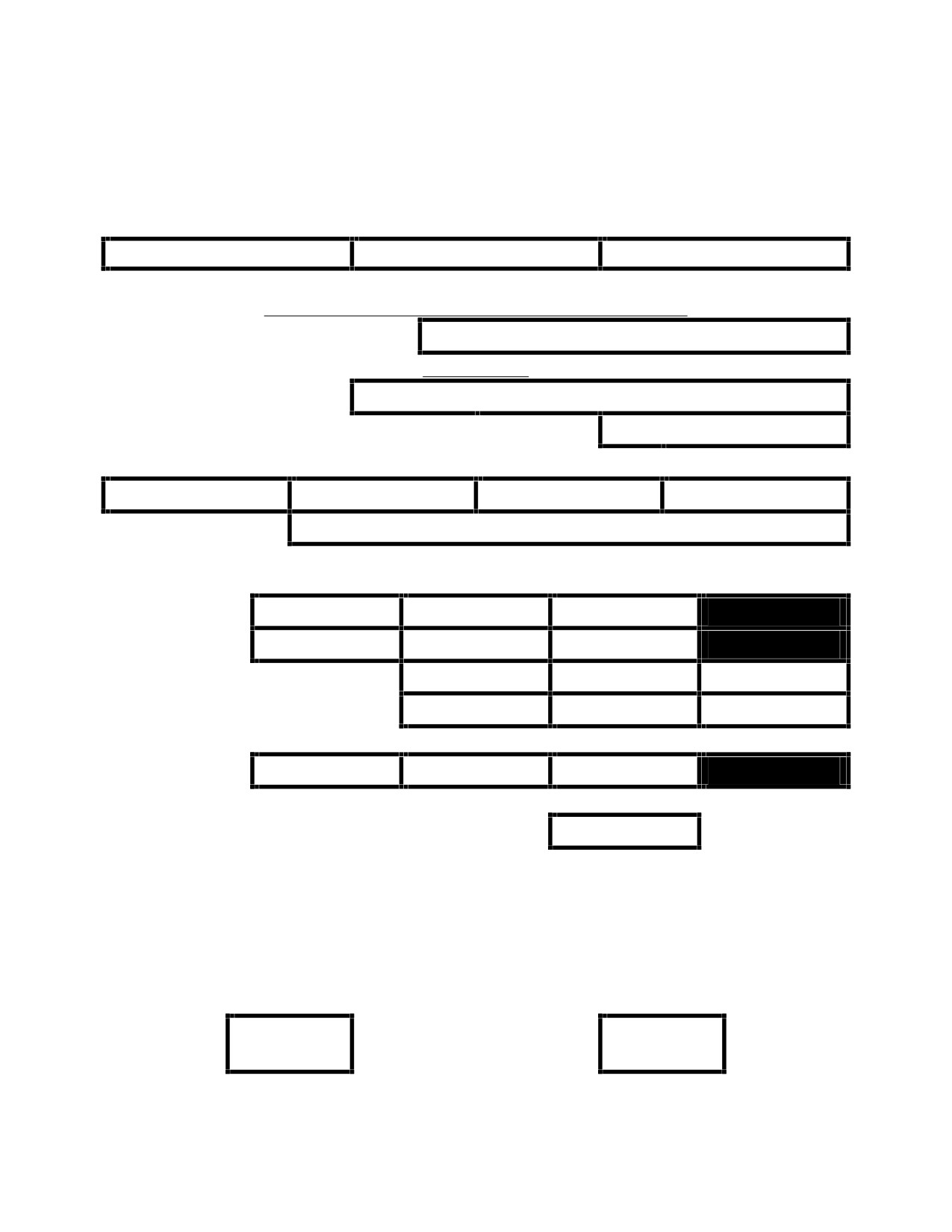
CJCSM 3122.02B
25 May 2001
Sample Contractor Requirements Data Form
UNCLASSIFIED / FOR OFFICIAL USE ONLY
DOD POC
Name
Phone
E-Mail
Contractor Deployment Requirements Data
Movement Requirement Number
Contractor
Company Name
POC for Coordinating Details
Name
Day Phone
Alternate Phone
E-Mail
URL
Comments
Itinerary
Origin
POE
POD
Destination
City ( & State)
Country
Mode
Source
Key Date(s)
RLD
ALD
EAD
RDD
LAD
RLD: Date ready to start loading at the origin
ALD: Date equipment and personnel will be ready to outload at the POE
EAD: Earliest date when equipment and personnel can be accepted at the POD during deployment
LAD: Latest date when equipment and personnel can be accepted at the Port of Debarkation during deployment
RDD: Date when equipment and personnel must arrive at its destination and complete offloading to properly support
the concept of operations
Passenger Requirements
Number Requiring
Total
Government
Transportation
UNCLASSIFIED / FOR OFFICIAL USE ONLY
Appendix A
G-A-2
Enclosure G
CJCSM 3122.02B
25 May 2001
Cargo Requirements
Totals for all items NOT REQUIRING government transportation and/or cargo handling
Short Tons
Measurement Tons
Square Feet
Total
Details for items requiring government transportation and/or cargo handling
Weight
Length
Width
Height
(each)
Hazardous
Item
(in
(in
(in
How
(STONs
Material?
#
Description
inches)
inches)
inches)
Many?
&
(Yes /No)
tenths)
1
2
3
4
5
6
7
8
9
10
11
12
13
14
15
16
17
18
19
20
UNCLASSIFIED / FOR OFFICIAL USE ONLY
Appendix A
G-A-3
Enclosure G
CJCSM 3122.02B
25 May 2001
SAMPLE INSTRUCTIONS
NOTE: Each form should represent a unique deployment requirement. That
is, each form should represent a requirement that has been split into passenger
and cargo increments, has been fragmented by itinerary, and has its own unit
line number.
Once actual data are entered in the form, the form becomes
UNCLASSIFIED/FOR OFFICIAL USE ONLY. When completing the form, be
sure to review current classification guidance and comply with operational and
communication security (OPSEC and COMSEC) requirements.
1. DOD contract management personnel will initiate the form by filling in the
following mandatory fields:
DOD POC
Name
Phone
E-mail
Contractor Deployment Requirements Data
Movement Requirement Number
(NOTE: Movement Requirement Number must be assigned in a manner
consistent with classification guidance provided by the supported commander.
When circumstances permit, the Movement Requirement Number should be the
ULN. When circumstances do not permit use of the ULN, DOD contract
management personnel will devise an alternative approach for assigning the
Movement Requirement Number. Whatever the approach, each Movement
Requirement Number must allow contractor movement requirements data to be
linked to the correct ULN.)
2. The contractor will fill in information about his POC for coordinating
transportation details.
3. Responsibility for specifying information in the Itinerary fields is shared
between the contractor and the supporting commander (force provider).1 In
general, the greater responsibility falls to the party that will provide or arrange
the majority of the transportation.
1 Some information specified by the supporting commander (force provider) will reflect
requirements previously specified by the supported commander.
Appendix A
G-A-4
Enclosure G
CJCSM 3122.02B
25 May 2001
a. Location fields should be filled in using plain English for city, state, and
country names, since the contractor cannot be expected to know or understand
GEOLOC codes. Date fields should be filled in using plain English for calendar
dates, since the contractor cannot be expected to know or understand C dates.
Transportation source fields should be filled in with either "contractor" or
"Government," since the contractor cannot be expected to know or understand
transportation source codes.
b. When the contractor will provide or arrange transportation and cargo
handling (if applicable), the supporting commander (force provider) may specify
few or no aspects of the itinerary.
(1) In the extreme case, the supporting commander (force provider) may
fill in none in the Itinerary fields.
(2) In a manner consistent with classification guidance provided by the
supported commander, the supporting commander (force provider) must provide
the contractor with the following Itinerary information: Destination City (and
State), Destination Country, and RDD.
NOTE: To prevent inadvertent entry, Destination City (and State), Destination
Country, and RDD fields are blacked out on the sample form.
c. On the other hand, when the Department of Defense will provide or
arrange transportation and/or cargo handling for the contractor, the supporting
commander (force provider) may specify most aspects of the itinerary.
(1) For example, the supporting commander (force provider) may fill in
the following Itinerary fields:
Origin City (and State)
Origin Country
POE City (and State)
POE Country
POE Mode
POE Source
POD City (and State)
POD Country
POD Mode
POD Source
EAD
LAD
Destination Mode
Destination Source
Appendix A
G-A-5
Enclosure G
CJCSM 3122.02B
25 May 2001
(2) In a manner consistent with classification guidance provided by the
supported commander, the supporting commander (force provider) must also
provide the contractor with the following Itinerary information: Destination City
(and State), Destination Country, and RDD.
NOTE: To prevent inadvertent entry, Destination City (and State), Destination
Country, and RDD fields are blacked out on the sample form.
4. The contractor will fill in the Passenger Requirements and Cargo
Requirements fields. For cargo, contractors are requested to provide
aggregated data for items that do not require Government transportation
and/or cargo handling at any point.
Appendix A
G-A-6
Enclosure G
CJCSM 3122.02B
25 May 2001
ENCLOSURE H
TPFDD LETTER OF INSTRUCTION (LOI)
1. Purpose. This LOI directs the single process and standard procedures to be
used in developing and executing TPFDD during crisis operations, force
rotations, and exercises. Data identified in Appendix A is required in the TPFDD.
This TPFDD LOI applies to supported and supporting commanders and agencies
throughout the JPEC during both deployment and redeployment operations.
2. Definitions. See the Glossary.
3. Responsibilities
a. Joint Staff
(1) The Joint Staff, J-3, is responsible to the Chairman of the Joint Chiefs
of Staff for the overall management, administration, and execution of Crisis
Action Procedures (CAP). The Joint Staff, J-33/CSOD, is responsible for the
maintenance, update, and implementation of this LOI supporting crisis planning,
execution, force rotation, and joint exercises. J-33/CSOD incorporates
procedures directed in this LOI in Joint Staff publications during routine
publication updates.
(2) J33/CSOD posts and maintains this LOI on the JOPES FM homepage.
Commanders forward proposed changes to this document to J-33/CSOD in the
Joint Staff GCCS newsgroup (gccs.jopes.fm).
b. Supported Commander
(1) The supported commander, designated by the Chairman of the Joint
Chiefs of Staff, is responsible for establishing internal procedures to implement
this LOI. The supported commander establishes supplemental instructions to
this LOI when required to support specific theater requirements (e.g., differing
diplomatic clearance processing requirements between theaters). CINC/AOR-
specific instructions are published separately and posted on the supported
commander’s homepage along with this joint TPFDD LOI, as well as in the
appropriate operation/exercise newsgroup. Furthermore, the supported
commander will utilize this LOI as overall guidance in support of operational
needs. This guidance will be modified when it is not conducive to operational
requirements; the supported commander will coordinate with supporting
commanders when the guidance has to be changed to meet operational needs.
H-1
Enclosure H
CJCSM 3122.02B
25 May 2001
(2) The supported commander may direct a JTF/CJTF commander to
assume the missions and functions of the supported commander (as defined in
this LOI) to develop and execute TPFDDs for JTF-specific areas of operations. In
those cases, the JTF commander and JTF components provide personnel and
equipment to perform supported commander and supported command
component TPFDD functions outlined in this LOI. At the discretion of the
supported commander, the JTF/CJTF commander may direct that TPFDD
requirements be validated through the supported CINC who incorporates those
JTF/CJTF TPFDD validation requirements with other theater validation
requirements, deconflicts movements, sets movement priorities, and forwards to
lift providers.
c. Supporting Commander. The supporting commander, designated by the
Chairman of the Joint Chiefs of Staff, is responsible for establishing internal
procedures to implement this LOI as well as procedures documented in
supplemental instructions established by the supported commander. Supporting
commanders providing forces to supported commanders are further responsible
for performing providing organization (PROVORG) duties identified in this LOI.
4. Coordinating Instructions
a. The supported commander is responsible for formal coordination between
the JPEC and lift providers regarding TPFDD validation and scheduling
decisions.
b. Direct coordination and collaboration between supported and supporting
commanders is authorized to facilitate rapid development of TPFDDs and
deployment execution.
c. Direct coordination and collaboration among the supported commander,
supporting commanders, force providers, deploying forces, and lift providers is
authorized for load plan and hazardous material definition or to coordinate
details of validated unit transportation requirements during execution. All other
coordination with lift providers will be accomplished through the supported
commander.
d. Supporting commanders and providing organizations coordinate with the
supported commander prior to making changes to validated ULNs. Supporting
commanders will forward requests for changes, with justification, to the
supported commander for approval. See paragraph 5 below for general/flag
officer endorsement required for TPFDD changes and short-notice validations
during planning and execution.
H-2
Enclosure H
CJCSM 3122.02B
25 May 2001
e. Use newsgroups to coordinate deployment planning and execution issues.
The supported commander identifies to the JPEC the primary coordination
newsgroup to be used. Although telephonic and GENSER message
communication is used, newsgroups serve as the formal medium for conveying
TPFDD-related requests, approvals, authorizations, validations, changes, or
general coordination. Because newsgroups contain record distinctive message
traffic, commanders must ensure that newsgroup messages are posted with the
appropriate release authority. Commanders releasing deployment-related
GENSER messages considered of interest to the JPEC, post electronic copies of
the messages in the appropriate newsgroups. At a minimum, commanders post
alert orders, warning orders, planning orders, deployment/execute orders,
requests for forces messages, and USTRANSCOM Commercial Ticket Program
and Commercial Cargo Program authorization messages in the appropriate
newsgroups. Documents posted to newsgroups should not require ADP technical
skills or special software applications to download and process before the
document is readable. Documents should be ready to read when the newsgroup
message is accessed.
f. Unless otherwise noted in Joint Staff orders, the Services and DOD
agencies providing forces are responsible for costs associated with deployments.
When specific fund cites are established for any given contingency or exercise,
the supported commander includes fund cite details in deployment/execute
orders. Supported commanders manage CJCS exercise transportation funding
and dedicated funding provided by the Joint Staff (J-7/JETD).
5. General/Flag Officer-Required Endorsements. When an endorsement is
required, supported commanders provide the name, rank, position, and phone
number of the general/flag officer endorsing the specified action in the
newsgroup validation message. These messages must include a clear statement
justifying why the action is required and stating the impact on the operation or
exercise if the requested action is not approved. (Sample is at Appendix H to
Enclosure H.) General/flag officer endorsements are required in the following
situations:
a. Short-Notice Validations. When operational requirements allow for posted
endorsements, supported commanders provide justification, based on operational
need when not covered by CJCS DEPORD, and obtain an endorsement from a
general/flag officer for short-notice validations occurring less than 96 hours from
the EAD (validation timelines are defined in Enclosure H, Appendix B). ULNs
validated for movement inside 96 hours from EAD significantly impact the lift
provider’s ability to schedule and allocate lift assets and disrupt previously
scheduled and prioritized missions.
H-3
Enclosure H
CJCSM 3122.02B
25 May 2001
b. Changes After Exercise TPFDD Validation. To provide stability in exercise
TPFDDs, changes to ULNs after TPFDD validation that affect movement
schedules require general/flag officer endorsement (scheduling changes are
defined in Enclosure H, Appendix B).
c. Changes After ULNs are Scheduled for Movement. Changes to ULNs
already scheduled by lift providers that affect movement schedules require
general/flag officer endorsement. Changes in this category are only considered
for approval when a clear, critical, operational need is identified.
6. Classification Guidance. TPFDD information is classified to the highest level
of the plan it supports. CJCS and supported commander orders normally
provide amplifying guidance related to the classification of specific deployment
operations. In most cases, elements of deployment plans remain classified
during planning, but some elements can become UNCLASSIFIED, FOR OFFICIAL
USE ONLY, at execution. Definitive guidance is posted in Enclosure I.
H-4
Enclosure H
CJCSM 3122.02B
25 May 2001
APPENDIX A TO ENCLOSURE H
TPFDD DEVELOPMENT PROCESS/PROCEDURES
1. General. JOPES procedures for TPFDD development support the six phases
of CAP as described in this manual. The dynamic and rapidly changing nature
of a crisis often requires elimination or compression of one or more phases of
CAP. The following overview provides a summary of the process leading up to
Phase V (Execution Planning) or any stage of the process when force
deployment appears likely. TPFDD development for force rotations and
exercises is consistent with the crisis action TPFDD development process and
supports proficiency and continuity for personnel involved with JOPES
operations. Key exercise planning guidelines are provided in Enclosure H,
Appendix G
a. Force Definition
(1) The supported commander, in coordination with supporting
commanders, determines the type and quantity of forces consistent with the
task organization required to support each COA developed in Phase III of the
CAP process. Supported commanders use previously developed deliberate
plans as source documents/TPFDDs if deemed suitable for the specific crisis
action. To foster rapid TPFDD development, designated rapid deployment
forces should have prepackaged force modules available for timely
incorporation in a TPFDD. On selection of a single COA in Phase IV, final
sourcing of approved force lists is accomplished by providing organizations. If
unable to source the force, the providing organization codes the PROVORG field
in the ULN with an “X” and notifies the supported commander that a shortfall
exists.
(2) The supported commander transmits the refined task-organized force
list to components for sourcing of internal forces that do not require a SecDef
deployment order and forwards a request for forces message to the Joint Staff,
J-3, for sourcing of external forces that do require a SecDef deployment order.
Normally, PROVORGs are determined for forces that are assigned under the
combatant command (COCOM) to other combatant commanders by the Forces
For Unified Commands document, while Service Chiefs and agencies determine
providing organizations for forces that are not assigned COCOM to other
combatant commanders. Assigned supported commander Service component
commanders enter appropriate providing organization codes for force
requirements after coordination with the supporting commander components
and/or Service Chiefs.
Appendix A
H-A-1
Enclosure H
CJCSM 3122.02B
25 May 2001
(3) CJCS orders on behalf of SecDef serve as the direction to supporting
commanders to source force requirements and/or conduct deployment support
operations. In exercises, the Joint Training Plan (JTP) serves as the base
document used to initially identify task-organized force lists required to be
sourced and entered in exercise TPFDDs. Supporting commanders identify the
force to deploy, source force requirements, and enter additional forces needed to
support those identified in CJCS or supported commander task-organized force
lists.
b. Initial Requirement Development
(1) Components of the supported commander, in coordination with
supporting commanders, translate forces defined in the supported
commander’s task-organized force list into force records in the TPFDD. Force
Requirement Numbers (FRN) and FMs used to define the force are assigned by
supported command components as initial requirements and entered in the
TPFDD. Supported commander's component commanders enter the ULN, the
UTC, Service, recommended PROVORG, CRD, routing, and time-phased data
associated with POD and destination for forces assigned to the supported
commander. The remaining FRNs are then transmitted to supporting
commanders through a Supported Commander's Request for Forces message
for sourcing.
(2) Component commanders notify the supported commander and
Service counterparts when initial FRNs are entered into the TPFDD and are
available for sourcing.
c. Initial Requirement Sourcing
(1) Sourcing of supported commander force requirements begins as soon
as supporting commanders and Service Chiefs identify specific units to satisfy
the supported commander’s requirements. Ideally, this initial sourcing occurs
as early as the National Command Authorities (NCA) approve a specific course
of action. More often, a CJCS order directs supporting commanders to source-
specific TPFDD requirements. The supported commander identifies in the
directive a time for completion of sourcing and requirement verification. In
sourcing, supporting commanders enter the UIC, unit name, routing and time-
phasing data associated with the origin and POE, tailored personnel and cargo
details, and the unit POC.
(2) Prior to receipt of a SecDef deployment order, when deployments
appear imminent, the supported commander may request through the
Chairman of the Joint Chiefs of Staff, that supporting commanders initiate,
Appendix A
H-A-2
Enclosure H
CJCSM 3122.02B
25 May 2001
conduct, and if possible, complete preliminary sourcing of TPFDD requirements
to accelerate the TPFDD development process and compensate for constricted
execution timelines. In such cases, this sourcing is for planning purposes only
and does not constitute final sourcing. An exception to this sourcing guideline
is when forces are listed in a SecDef deployment preparation order that places
units on an increased deployment posture in preparation for a specific
operation. In that case, the supported commander may require final sourcing
for those specified units prior to a SecDef deployment order. Changes to
previously sourced units may occur as a result of extended delays in release of
the SecDef deployment order.
d. Initial Requirement Time-Phasing
(1) The supported commander, in coordination with lift providers, may
apportion lift to component commanders for their use in time-phasing
requirements. The supported commander’s apportionment message specifies
the airlift priority; quantity of cargo and passengers, per day, per mode; and
ports to be used by each component commander and supporting commander
in time-phasing the component TPFDD. If the supported commander elects to
use contingency special assignment airlift missions (SAAM) to support
movement of specific forces, the apportionment message includes instructions
on the use of SAAM.
(2) If a C-Day has not yet been declared by the Chairman of the Joint
Chiefs of Staff, the supported commander determines the method to be used to
execute pre-positioning moves and to time phase other early deploying
requirements. If available, the supported commander may direct that
requirements be developed in a TPFDD already in use for a similar operation
(using the same C-date to gain a common timing reference point). As another
option, the supported commander may direct a new TPFDD be created to
support the pre-C-Day movement for an operation using an initial C-date
equating to the current Julian date. A separate PID using relative dates would
be developed concurrently, with the active C-Day applied for execution once
declared.
2. ULN Structure and CIN/PIN Range
a. Supported commanders will allocate blocks of ULNs to their components
from the below assignments organized by Service component. Supported
command components will structure ULNs to identify forces from their Services
that are reflected on the supported commander’s force list and require
sourcing. Supported command components will provide ULNs from their
allocation to other Service-related supporting command counterparts, as
Appendix A
H-A-3
Enclosure H
CJCSM 3122.02B
25 May 2001
needed, to develop additional required forces (e.g., combat, combat service, and
combat service support forces) not listed in the supported commander’s force
list. Supporting commands may use fragmentation during the sourcing
process provided the original ULN structure assigned by the supported
command component is retained.
b. With the exception of USTRANSCOM, USSTRATCOM, USSPACECOM,
and USSOCOM, the supported commanders assign the first character for ULNs
and FMs to the supported component commanders and can be used as
desired.
c. To achieve maximum simplicity and flexibility for contingency and
exercise TPFDD construction, forces will be entered by Service components and
providing organizations using ULN and force module (FM) assignments. To
avoid duplication, the following reserved assignments are provided:
ULN AND FM ID
ORGANIZATION
FIRST POSITION
CIN/PIN RANGE
USEUCOM
A, B, C, D, E
40000-49999
USPACOM
H, J, K, L, M, N
50000-59999
USJFCOM
P, Q, R, S
20000-29999
USCENTCOM
F, T, U, V, W
10000-19999
USSOUTHCOM
X, Y, Z
60000-69999
USTRANSCOM*
G
07000-09999
CINCNORAD
1
USSPACECOM
2
34000-39999
USSTRATCOM
3
30000-33999
USSOCOM
4
76000-79999
ARMY Component
5
80000-84999
NAVY Component
6
85000-89999
MARINE CORPS Component
7
90000-94999
AIR FORCE Component
8
95000-99999
COAST GUARD
9
00000-02999
JOINT STAFF
0
03000-06999
* USTRANSCOM-provided forces that chop to the supported command(s) in the
AOR will be assigned ULNs by the appropriate supported command component
as noted above.
Appendix A
H-A-4
Enclosure H
CJCSM 3122.02B
25 May 2001
d. Revised ULN structure will be implemented for all new crisis and exercise
TPFDDs. Existing TPFDDs may retain old ULN structures until deleted.
Supported commanders may direct updates of specific PIDs with new ULN
structure when desired.
e. Supported commanders will assign the first character of the ULNs to be
used by their Service components. Service components will construct and
disseminate standardized ULN structures to their major subordinate
commands and the Service components of the supporting commands.
3. ULN Development. The supported command components coordinate
development of Service-related ULNs with counterparts from supporting
commands. Assignment of ULNs to another Service is allowed; for example,
USAF tactical air control parties (TACPs) and weather teams may be assigned
Army component ULNs. This same logic applies to augmentee support where a
supported component requests additional augmentation not affiliated with a unit
requirement. Augmentation, like additional staff support, will be coordinated
prior to TPFDD development between the supported and supporting component
in order to reflect an accurate ULN description. Supported component
commanders enter ULN, UTC, Service, recommended PROVORG, CINC’s required
delivery date (CRD), and routing and time phasing data associated with POD and
destination. Supporting commands enter all-sourcing data in compliance with
the ULN field protocols directed in the JOPESREP, with the following additions:
a. Reserved Non-Baseline Field/POC. Providing organizations enter the rank,
name, and 24-hour DSN number of a POC who is responsible for contacting
the unit POC that is knowledgeable of the deploying unit personnel and
equipment information reflected in the ULN. This individual is the designated
unit representative that serves as the unit POC between the unit and lift
providers. Prior to movement, lift providers contact the POC directly to
coordinate scheduling and load planning information consistent with previously
validated requirements.
b. ALD/EAD Fields. Providing organization commanders enter initial ALD
C-dates. ALD reflects the date a unit must be available at POE for loading.
ALD is a planning date. During execution, it may be superseded by a port call
message or airlift schedule based on the availability of equipment and forces to
begin loading at the ports of embarkation (POEs). Supported commanders and
supported command component commanders enter the EAD. The EAD reflects
the earliest date that the supported command can accept a unit in the theater. If
the supported command has placed no restriction on early arrival, the EAD
reflects the supported commander’s preferred arrival date for the unit at the
POD. Lift providers schedule transportation assets for onload at the POE on or
Appendix A
H-A-5
Enclosure H
CJCSM 3122.02B
25 May 2001
after the ALD and provide schedule information to support unit call-forward
operations. For intertheater airlift moves, the EAD should be at least the ALD
plus 1 day (air movements that can be accomplished in 1 day from APOE to
APOD may use the same date for ALD and EAD in coordination with lift
providers). Lift providers are not to schedule arrival earlier than the EAD without
the approval of the supported commander.
c. LAD Field. The LAD reflects the latest date on which the force can arrive
at the POD in order to close on the destination by the supported commander’s
required delivery date. The supported commander’s plans for reception of
forces should be flexible enough, however, to receive the force at any time from
the EAD to the LAD.
d. Airlift EAD/LAD Window. The C-date gap between the EAD and LAD is
commonly referred to as the EAD/LAD window. For airlift ULNs the preferred
EAD/LAD window is 3 days (LAD = EAD + 2 days). Example: EAD/C025-
LAD/C027 when the preferred arrival date at POD is C025. However, lift
providers may request that the supported commander expand this window to
account for scheduling constraints that may develop during specific deployment
operations or to account for large ULNs that require more than 3 days movement
time. Alternately, during the initial days of a crisis, the supported commander
may require an EAD/LAD window of less than 3 days to meet immediate
deployment requirements. In those cases, the supported commander pre-
coordinates with USTRANSCOM or other lift provider(s) and extends the window
back to 3 days as soon as the situation permits. The supported commander may
authorize components to enter an EAD/LAD window of 2 days (EAD + 1 day) for
Reserve Component requirements moving in support of CJCS exercises. In those
cases, the supported commander must coordinate with USTRANSCOM well in
advance of the movement and increase validation timelines (normally T-90
days) to facilitate scheduling lift in the reduced EAD/LAD window. If longer
validation timelines cannot be provided for the movement of Reserve personnel,
then the standard 3-day EAD/LAD window should be used.
e. Sealift EAD/LAD Window. Generally, the C-Date spread between
EAD/LAD is 7 days (LAD = EAD + 6 days) for sealift ULNs; however,
consideration must be given to the supported component when scheduling
sealift under EAD/LAD timelines. Mission parameters such as synchronization
of airlift and sealift may dictate a more compressed EAD/LAD window. In
these cases, the supported commander should coordinate with USTRANSCOM
or the sealift provider well in advance of the movement and increase validation
timelines to facilitate scheduling lift in the reduced EAD/LAD window.
Determination of sealift timelines accounts for 2 days equipment upload at
SPOEs and the appropriate number of days transit time between SPOE and
Appendix A
H-A-6
Enclosure H
CJCSM 3122.02B
25 May 2001
SPOD. Reception of forces must include 2 days discharge operations at the
SPOD. For example, if upload of equipment occurs on the ALD of C039, the
second day of equipment upload at the SPOE would be on day C040. If the
transit time is 10 days, the sail time begins on C041 and ends on C050, where
C050 is the EAD (arrival at the SPOE) and the LAD is C056. In this example,
reception of forces is complete not later than C058. The supported commander,
in coordination with lift providers, will identify sealift transit times to be used
based on types of ships and the specific AOR.
f. Common-User Provided Land/Surface C-date Fields. EAD/LAD windows
for ULNs moving by common-user provided land/surface lift (rail, truck, bus,
barge, etc.) normally span a 5-day period (LAD = EAD + 4 days).
g.
“On-Call” ULN C-Date Fields. When force requirements are under
development and actual movement dates have not been established, ULNs are
entered and sourced in the TPFDD as on-call requirements. TPFDD records for
on-call units are coded “LAD on call/LAD=9999."
h. Mode/Source Fields. ULN transportation mode and source (M/S) fields
are identified in CJCSM 3150.16 (JOPESREP). The following M/S codes and
explanations are used in crisis action, force rotation, deliberate planning, and
exercise TPFDDs:
Mode
Source
Explanation
A
C
Air via supporting commander channel (AMC or
Service) aircraft
A
D
Air via theater (supported commander) aircraft
A
H
Air via organic (unit) aircraft
A
K
Air via strategic (AMC, AMC-contract) aircraft
A
L
Air via AMC commercial ticket program (CTP)*
Air via AMC commercial cargo program (CCP).
A
M
Air via unit (Service)-funded commercial tickets
A
N
Air via host-nation/allied provided airlift
A
S
Air via SAAM
A
Q
Air via strategic (AMC) aircraft, Special Operations
Forces (SOF) “SOF Compartmentalized Mission
Handling (SCMH)”*
L
D
Land via theater (supported commander) trucking
L
G
Land via MTMC-arranged trucking or rail (CONUS)
L
H
Land via organic (unit) vehicles
L
R
Land via theater (supported commander) rail*
Appendix A
H-A-7
Enclosure H
CJCSM 3122.02B
25 May 2001
Mode
Source
Explanation
L
N
Land via host-nation/allied-controlled transport
L
M
Service-provided, nonorganic land transport
P
C
Mode optional; source is supporting CINC (to other
than a CONUS SPOE)
P
D
Optional via supported commander (to other than a
CONUS SPOE)
P
G
Mode optional; source is MTMC (CONUS use only)
P
N
Host Nation
P
A
Mode and source of transportation are optional, USTC
will analyze and recommend appropriate
mode/source.*
S
C
Sea via USN/USCG ship
S
D
Sea via USN/USCG ship (MPS/AWR)
S
E
Sea via MSC ship or MTMC-contracted liner service
S
G
Sea via MTMC-arranged commercial charter
S
H
Sea via organic (unit) vessels
S
N
Sea via host-nation/allied provided sealift
S
P
Sea/canal via barge/ferry
S
W
Sea via MSC (assault follow-on echelon [AFOE])
X
G
No transportation required (origin
and POE same, CONUS APOEs/SPOEs; or POD
and destination same, CONUS APODs/SPODs)
X
X
No transportation required (origin and POE same,
not CONUS APOEs/SPOEs; or POD and destination
same, not CONUS APODs/SPODs)
Z
(Blank)
Requirement is in place at final destination
* Indicates codes available with the fielding of JOPES 2000.
i. APOE/APOD Selection and Aircraft Planning Thresholds
(1) Large Units (Strategic Airlift). Normally, supporting commanders select
APOEs within the supporting commander’s AOR and the supported commander
identifies APODs within the supported commander’s AOR. As early as possible in
the planning process prior to validation, the supported commander, in
coordination with USCINCTRANS and other lift providers, specifies
APOEs/APODs where optimum force closure would result. Single ULNs
reflecting at least 100 passengers (PAX) or 15 STONS are supported with
dedicated strategic airlift (A/K). Based on availability of airframes, requirements
leaving from two APOEs or arriving at two APODs can be combined to meet the
strategic airlift minimum requirements of 100 PAX or 15 STONs. This also
Appendix A
H-A-8
Enclosure H
CJCSM 3122.02B
25 May 2001
holds true for mixed PAX and STON requirements, which, combined with
another ULN meet the minimum requirements for strategic airlift for either PAX
or STONs. These situations will be evaluated on a case-by-case basis for
transportation feasibility. ULNs meeting this minimum-planning threshold are
coded to depart from an APOE(s) closest to the unit’s origin. At times,
combinations of PAX and STONS that do not meet minimum planning thresholds
but in aggregate equal the ACL of a strategic aircraft may be allocated dedicated
lift if supportable by lift providers (example: 80 PAX and 7.0 STONS). Movement
requirements, which must utilize strategic airlift but do not meet these minimum
thresholds, will be handled on a case-by-case basis, and strategic airlift provided
if the mission cannot be supported any other way.
(2) Large Units (Supported Commander-Provided Airlift). Normally, the
supported commander selects APOEs/APODs and the lift provider recommends
alternate APOEs/APODs where optimum force closure would result. Single ULNs
reflecting PAX or STONS equal to or greater than the minimums specified by the
supported commander are supported with dedicated intratheater airlift (A/D).
(3) Small Units (Aggregated)(Combined). Aggregating small unit
deployments to preselected APOE/PODs is critical when operating under a crisis
action TPFDD or with limited aircraft availability. ULNs reflecting less than the
minimum dedicated strategic airlift thresholds at separate locations are not
normally supported with dedicated strategic airlift unless combined or
aggregated with other compatible loads to create a strategic airlift and
supportable load. The appropriate command component (force provider,
sourcing command) combines small unit ULNs at separate locations by first
considering surface transportation to aggregate ULNs at one POE. Aggregating
or combining small deployments to preselected APOEs/APODs is critical when
operating with limited aircraft availability. ULNs reflecting less than the
minimum dedicated strategic airlift thresholds at separate locations are not
normally supported with dedicated strategic airlift unless aggregated or
combined. Aggregated loads are created by moving via surface or other
nonstrategic lift assets cargo/passengers to a common APOE to meet the
minimum strategic lift thresholds for movement in the same EAD/LAD window
to the APOD. Combined loads are created by identifying cargo/passengers at
two APOEs or APODs in the same region with common movement windows for
separate onload/discharge, but meeting the minimum threshold for the
strategic leg (example:
8.0 STONS located at Hunter AAF and 7.0 STONS
located at Pope AFB both having the same EAD/LAD window for delivery to
Ramstein AB). Lift providers provide combined loads if supportable. Do not
use intermediate location codes (ILOC) for USTRANSCOM-provided lift.
Appendix A
H-A-9
Enclosure H
CJCSM 3122.02B
25 May 2001
(4) Small Units (Channel or Commercial Tickets Funded by Deploying
Units). ULNs that have not been aggregated or combined with others to form
minimum dedicated strategic airlift load will be coded mode/source A/C for
movement on channel missions, A/K for the CJCS-sponsored exercise
commercial ticket program (PAX only), or A/M for movement using commercial
airline tickets funded by the deploying unit. Supporting commands will
coordinate with installation transportation offices to move personnel and
equipment between unit installations and channel or commercial ports. ULNs,
which are designated for channel movement, must be coded to reflect the
GEOCODES of established channel ports. Cargo moved in support of CJCS
exercises may use port handling and inland transportation (PHIT) funds
obtained through the exercise transportation accounting code (TAC) for
channel movements.
(5) Mode/Source Optional, USTRANSCOM Selected Lift. With
implementation of mode/source code of P/A in the current version of the
JOPESREP, supported commanders can indicate they have no preferred
mode/source of transportation. When this mode/source code is used,
USCINCTRANS, in coordination with transportation lift providers, will analyze
and recommend the most efficient and effective lift to the supported commander.
USCINCTRANS will post their recommendation to the appropriate operation
newsgroup, and the supported commander will respond with concurrence or
request for more information/coordination. When the supported commander
validates a requirement with mode/source P/A, no further changes will be made
to the mode/source code in JOPES; lift providers will simply provide the
approved lift against the requirement.
(6) Small Units Commercial Ticket Program (CTP). CTP can only be used
to move people between APOE and APOD who are participating in a CJCS-
approved joint training exercise. CTP is normally used only when movement of
passengers is not feasible via dedicated strategic airlift. CTP is used as a
necessity to conduct exercises and is not used as a convenience to exercise
participants. The supported commander is the approving authority for
deviations from USTRANSCOM’s movement recommendations. Supported
commanders may deviate when other considerations make recommended
movement via dedicated strategic airlift unsuitable for exercise support.
Supported commanders use a mode/source of A/K for passenger-only ULNs,
even though the total number of passengers does not meet dedicated strategic
airlift minimums.
(a) Validation of mode/source A/K coded ULNs by the supported
commander indicates approval to use exercise strategic lift funds for CTP, if
strategic airlift is not feasible or available.
Appendix A
H-A-10
Enclosure H
CJCSM 3122.02B
25 May 2001
(b) Air Mobility Command’s Tanker Airlift Control Center reviews all
A/L coded ULNs to determine if movement via dedicated strategic airlift is
possible or recommends ULNs for movement by CTP to USCINCTRANS.
USCINCTRANS makes appropriate recommendations to the supported
commander if movement by dedicated strategic airlift is feasible.
(c) USCINCTRANS sends a CTP authorization message to the Joint
Staff, J-7/JETD, appropriate Service headquarters/agencies, and the
supported commander. Additionally, USTC posts a copy of the authorization
message in the appropriate newsgroup. Supported commanders are
responsible for ensuring Service components and major commands are notified
of CTP authorizations. Message authorization may be one way or round trip.
For each authorized requirement, the CTP authorization message will include
ULN, unit name, unit home station (origin for deployment, destination for
redeployment), deployment location (APOD for deployment, APOE for
redeployment), number of passengers, round-trip or one-way, and cost of
ticket(s). Authorizations will include a unique CTP authorization number.
Normally, each exercise has only one authorization number with updates
indicated by change number. Each message will indicate the total estimated
dollar amount for the authorization number and update, and the total
estimated dollar amount authorization by Service (use Executive Agent for joint
ULNs). Once the CTP authorization message is sent, USTRANSCOM places a
"C" in the SSF field to indicate the ULN is authorized movement by CTP (use a
"T" until JOPES is updated to use a "C").
(d) Service Chiefs develop Service-unique mechanisms to use/track
joint Service funds for CTP.
(e) Passengers approved for CTP follow Service procedures for
purchase of commercial tickets. Unit representatives or passengers contact the
supporting installation transportation office (ITO) with the authorization
reference to obtain the appropriate fund cite for purchase of commercial
tickets.
(7) Small Units (Commercial Cargo Program (CCP). CCP is a new
initiative that is in the planning stage for implementation in the future.
j. SPOE/SPOD Selection. Normally, supporting commanders select SPOEs
outside the theater of operations and the supported commander identifies
SPODs in the AOR. Lift providers recommend alternate SPOEs/SPODs where
optimum force closure would result. Cargo movement using USCINCTRANS-
Appendix A
H-A-11
Enclosure H
CJCSM 3122.02B
25 May 2001
provided sealift should be coded for MSC ships or MTMC contracted liner
service.
4. FM Structure
a. FMs will be developed to group ULNs for TPFDD analysis and force
tracking. Typical FM categories include but are not limited to force composition,
functional (e.g., all medical), geographical (e.g., a common POD), or time phasing
(e.g., same LAD). Supported command components identify and allocate FM
assignments to counterparts in supporting commands for their use. Supporting
commanders are authorized to establish additional FMs as needed, provided
force module identifiers (FMIDs) developed are within their FM allocation.
b. At a minimum, supported command components will develop individual
FMs to identify the following force compositions:
ARMY
Divisions/ACRs
Brigades (maneuver, artillery, air defense)
PATRIOT BNs/BTRYs with CS/CSS
Echelon above Division CS/CSS Units
Echelon above Corps CS/CSS Units
AIR FORCE
Aerospace Expeditionary Task Force (AETF)
Individual Wings/Composite Wings
Major Aviation Forces (e.g., fighter/bomber/transport squadron)
Major Support Squadrons
MARINE CORPS
Marine Air Ground Task Force/Component Force
Command Element (CE)
Ground Combat Element (GCE)
Air Combat Element (ACE)
Combat Service Support Element (CSSE)
Accompanying Supplies
NAVY
Carrier Battle Group (CVBG)
Amphibious Readiness Group/Amphibious Task Force (ARG/ATF)
Non-Carrier-Based Squadrons
Major Support Forces
US Coast Guard Forces
Appendix A
H-A-12
Enclosure H
CJCSM 3122.02B
25 May 2001
Maritime Patrol Squadrons
Combat Logistics Force (CFL)
Hospital/Medical Units
SOF
Component Force for each supporting Service
OTHER
Functional HQ Element
Functional Component Commands
Major Subordinate Elements
Units that are required to be called up under a Presidential Reserve
Call-Up (PRC)
c. The Chairman of the Joint Chiefs of Staff may, as an exception, direct that
the supported command create FMs for the purpose of force tracking during
the deployment and redeployment phases of execution. This will facilitate
monitoring the deployment and closure of forces identified in the specific task-
organized force list. In those cases, the title of the force module will include the
date/time group of the applicable request for forces, deployment order, or
execute order.
5. CIN/PIN Structure
a. Cargo/personnel increment numbers (CINs/PINs) are not used in
contingency or exercise TPFDDs. CINs/PINs are used exclusively to represent
sustainment and replacement personnel flow in TPFDDs developed to support
deliberate plans. CIN/PIN structure is identified in JOPESREP, reference f.
When TPFDDs developed during the deliberate planning process are modified for
execution, the supported commander removes CINs and PINs from the TPFDD.
b. Normally, the movement of nonunit cargo, including high-priority cargo
transported via air mobility express, is planned and executed within the
Defense Transportation System (DTS). In those specific instances when
component commanders determine it necessary to move selected nonunit cargo
via JOPES, components convert nonunit cargo requirements into ULN records
before validation. ULNs representing nonunit cargo requirements move within
the announced airlift and sealift allocation. The component commander
establishing a nonunit cargo ULN is responsible for providing all data normally
provided by supporting and supported commanders and must precoordinate
with the activity providing the material. Direct liaison between the component
establishing the requirement and the providing activity is authorized to obtain
cargo documentation (level 4-cargo detail) and shipping or distribution
Appendix A
H-A-13
Enclosure H
CJCSM 3122.02B
25 May 2001
information. This procedure is intended to ensure selected high-profile;
nonunit cargo is afforded dedicated lift and increased In Transit Visibility (ITV).
Appendix A
H-A-14
Enclosure H
CJCSM 3122.02B
25 May 2001
APPENDIX B TO ENCLOSURE H
TPFDD VALIDATION PROCESS/PROCEDURES
1. General. Validation is the execution procedure used by the supported
commander to confirm to the lift providers that all validated TPFDD records
contain no fatal transportation pre-edit report errors and accurately reflect the
current status, attributes, and availability of unit requirements.
2. TPFDD Validation Process
a. Requirement Selection
(1) The supported commander announces in the validation message the
date of the next validation and the ranges of EADs (for airlift, sealift, and other
surface movements) to be considered during that validation process.
(2) Supported command component commanders review ULNs within
the specified EAD range, select those the component intends to submit for
validation, and coordinate with supporting command counterparts to complete
their sourcing.
b. Sourcing Verification
(1) Providing organizations source ULNs and enter an “S” in the project
code field of candidate ULNs to indicate completion of the sourcing process.
(2) By entering an “S” in the project code field, the supporting
commander confirms the following actions are complete: ULNs are sourced
and cargo is tailored to level-4 detail, ULNs are free of fatal errors, ULNs
accurately reflect the current attributes and availability of each force, forces
have been alerted for deployment, and the sourcing process has been
coordinated with supported command components.
(3) Supporting commanders determine what level within the supporting
command enters the “S” in the project code field.
(4) Supporting commanders ensure deploying units forward hazardous
material (HAZMAT) information, in the format shown in Appendix F to this LOI,
to lift providers identifying HAZMAT contained in unit cargo as soon as possible.
Appendix B
H-B-1
Enclosure H
CJCSM 3122.02B
25 May 2001
c. Supported Command Component Verification
(1) Once sourced, supported command component commanders indicate
the completion of the supported command component validation phase by
entering an “SC” in the project code field of candidate ULNs.
(2) Supported command component commanders transmit a verification
message to the supported commander (sample format in Enclosure H,
Appendix E). The verification message confirms that the sourced ULNs,
identified with “SC” in the project code, reflect those forces on the supported
commander’s task-organized force list that are required to fulfill the anticipated
mission. The verification message also confirms that ULNs have been time-
phased in keeping with the component’s lift apportionment and that the
component is prepared to receive the forces represented by the ULNs at POD.
d. Supported Commander Validation
(1) The supported commander reviews ULNs that contain “SC” in the
project code and a blank in the SSF field. From this collection, the supported
commander marks all ULNs that comply with the supported commander’s
concept for deployment, that reflect forces whose deployment is approved by
the NCA, that are properly time-phased against the apportioned lift limits, and
in the case of exercise TPFDDs, if funding for the movement is available.
(2) The supported commander adds the marked records to a validation
force module, performs the supported commander’s automated validation, and
reviews validated ULNs to ensure a “V” was added to the SSF field of validated
ULNs.
(3) The supported commander transmits a validation message to lift
providers validating ULNs in the TPFDD, identified with a “V” in the SSF field
and contained in FM “XXX," are ready for scheduling and movement by lift
providers (sample format in Enclosure H, Appendix D). Validation messages to
lift providers include special handling or special timing requirements.
e. USCINCTRANS Validation of Transportation Enabling Units. During
crisis action operations, the supported commander has the option of delegating
validation of transportation enabling units (units or personnel deployed solely
as a product of validated force movement requirements; i.e., TALCE, mission
support team, port opening team) to USCINCTRANS. This action may preclude
delays moving these advance elements required to deploy the supported
commander’s forces.
Appendix B
H-B-2
Enclosure H
CJCSM 3122.02B
25 May 2001
3. TPFDD Validation Windows. The supported commander defines airlift, sealift,
and other surface validation windows in his validation message and in
CINC/AOR-specific instructions appending this LOI and posted on supported
command homepages. The “validation window” is defined as a range of C-dates
based on EAD in which all TPFDD ULNs are to be validated and need to be
processed for scheduling, allocating, manifesting, or executing. ULNs requiring
validation are requested through the supported commander “outside” or beyond
the range of EADs noted in the validation window. ULNs requiring validation
that are requested “inside” the validation window disrupt the above processes
and require accompanying justification identifying the operational need driving
the in-window validation request (Figure H-B-1 depicts the window concept).
Validations generally occur under three types of deployment requirements:
steady-state rotations, crisis, and exercises.
a. Under steady state, validations normally occur three times weekly.
General validation windows are identified below. The supported commander’s
validation message is used to announce the date(s) of the next validation as well
as the “specific” validation windows for air, sea, and land movements validation
to be reviewed during the next validation. Short-notice validations, regardless of
the type of deployment, require a general/flag officer endorsement (see paragraph
5 of Enclosure H).
b. For crisis action validation, the supported commander normally validates
to lift providers immediately after the deployment order is issued and
encompasses the first 7 days of a deployment. In coordination with lift
providers, the supported commander will determine subsequent validation
windows based on mission flow and operational requirements.
c. Exercises are validated in accordance with the CINC exercise schedule
previously coordinated with lift providers. Exercise validation deadlines are
generally based on the first calendar day of the month for the deployment or
redeployment (T-day).
Appendix B
H-B-3
Enclosure H
CJCSM 3122.02B
25 May 2001
Today
EAD LAD
|
|
|
Day
F
S
S
M
T
W
T
F
S
S
M
T
W
T
F
S
C-Date
13
14
15
16
17
18
19
20
21
22
23
24
25
26
27
28
< ----------------------------
|----|
|---------------------------|
Outside
Validation
Inside
Validation
Window
Validation
Window
Window
Figure H-B-1. Airlift Validation Window Concept
d. The airlift validation window is determined by the supported commander,
in coordination with the lift providers based on scheduling, contracting, lift
positioning, diplomatic clearance, and execution time-lines. These time-lines
collectively determine the number of days prior to EAD that a ULN is validated to
the lift provider. Normally, the airlift validation window is 7 days from the
current C-date (current C-Date + 6 days). For example, if the current date is
C019, the airlift validation window consisting of previously validated ULNs is
defined as EAD = C019 + 6 days = C025. In the same example, if the current
date is C019, new requests for airlift validation would include all ULNs reflecting
an EAD of C026 or greater.
e. The supported commander determines the sealift validation window in the
same manner as airlift windows. The sealift validation window is 45 days from
the current C-date (current C-date + 44 days). For example, if the current date is
C010, the sealift validation window consisting of previously validated ULNs is
defined as EAD = C010 + 44 days. Using the same example, if EAD is C055,
validations occurring on or after C011 are inside the validation window (EAD
C055 - 44 days); therefore, the latest date for an on-time validation is C010.
f. The supported commander determines the land/other surface validation
window in the same manner as the airlift window. Normally, the validation
window for land/other surface movements is 7 days from the current C-date (C-
date + 6 days). For example, if the current date is C019, the land/other surface
validation window consisting of previously validated ULNs is defined as EAD =
C019+ 6 days = C025, new requests for land/other surface validations would
include all ULNs reflecting an EAD of C026 or greater.
Appendix B
H-B-4
Enclosure H
CJCSM 3122.02B
25 May 2001
g. The supported commander, in coordination with the supporting
commanders and components, determines which contingency operations be
considered force rotations. Force rotations are usually conducted on a
frequent basis, with longer planning horizons than crisis action operations. In
addition, the magnitude of the force rotations requires additional leadtime to
acquire scarce transportation assets while maintaining balanced support for
other operations. Under these conditions, lengthened validation windows
provide better opportunities to schedule scarce lift assets to meet the
supported commander’s movement requirements. If possible, as much of the
deployment or redeployment as possible should be validated at the first
validation window to allow planning for the force rotation as a package to
efficiently schedule lift.
(1) For force rotations, the airlift validation window is normally 21 days
from the current C-Date (C-Date + 20 days). For example, if the current date is
C019, the airlift validation window consisting of previously validated ULNs is
defined as EAD = C019 + 20 days = C039. New requests for airlift validations
would include all ULNs reflecting an EAD of C040 or greater. Using the same
example, if EAD is C039, validations occurring on or after C019 are inside the
validation window (EAD C039 - 20 days); therefore, the latest date for an on-
time validation is C018.
(2) For force rotations, the sealift validation window is normally 45 days
from the current C-Date (C-Date + 44 days). For example, if the current date is
C010, the sealift validation window consisting of previously validated ULNs is
defined as EAD = C010 + 44 days = C054. New requests for sealift validations
would include all ULNs reflecting an EAD of C055 or greater. Using the same
example, if EAD is C055, validations occurring on or after C011 are inside the
validation window (EAD C055 - 44 days); therefore, the latest date for an on-time
validation is C010.
h. Exercises compete for transportation assets at a lower priority than
current operations. Exercises are also driven by more constrained transportation
budgets and more extended contracting lead times than are current operations.
Therefore, the validation of exercise TPFDDs occurs on pre-identified dates prior
to each individual exercise. Exercise validation deadlines are based on a T-Day,
which is the first day of the calendar month in which deployment or
redeployment for a training event starts. For example, if a deployment starts
on 16 May, then T-Day is 1 May. Normally, the entire deployment or
redeployment TPFDD is validated based on the T-Day versus incremental
validation windows for crisis action operations or force rotations.
Appendix B
H-B-5
Enclosure H
CJCSM 3122.02B
25 May 2001
Note: Supported commanders may opt to use incremental validation
windows for longer, more complex exercises when the movement window spans
over several months. These timelines are reduced from previous exercise
validation timelines to allow exercise planners adequate time to define exercise
movement requirements. However, accurate and stable movement
requirements must be provided at the specified validation deadlines to preclude
impacting exercise execution.
(1) For exercises, the airlift validation deadline is normally 50 days prior to
the T-Day (T - 50 days). For example, if the deployment T-Day is 1 May, the
airlift validation date for the entire deployment TPFDD is 12 March (nonleap
year).
(2) For exercises, the sealift validation deadline is normally 60 days prior
to the T-Day (T - 60 days). For example, if the deployment T-Day is 1 May, the
sealift validation date for the entire deployment TPFDD is 2 March (nonleap
year).
i. Table H-B-1 below summarizes the validation guidelines for crisis action
movements, force rotations and exercises.
Movement Category
Validation
Validation
Validation
Basis
Rule
Due NLT
Crisis Action Airlift
EAD
7 day window
EAD - 6 days
Crisis Action Sealift
EAD
45 day window
EAD- 44 days
Force Rotation Airlift
EAD
21 day window
EAD - 20 days
Force Rotation Sealift
EAD
45 day window
EAD- 44 days
Exercise Airlift
T-Day
50 day deadline
T - 50 days
Exercise Sealift
T-Day
60 day deadline
T - 60 days
Table H-B-1. Validation Guideline Summary
4. Changes to Validated Requirements
a. General. Transportation scheduling, allocating, contracting, manifesting,
and diplomatic clearance processing usually begins once supported commanders
validate ULNs to lift providers. Changes to validated requirements are disruptive
and must be limited to only those required to support operations or respond to
unforeseen events. Supporting commanders and providing organizations
coordinate with the supported commander prior to making changes to validate
ULNs. Supported component commanders forward requests for changes, with
Appendix B
H-B-6
Enclosure H
CJCSM 3122.02B
25 May 2001
justification, to the supported commander for approval. To facilitate these
operational-related changes the following two procedures are established.
b. Changes That Do Not Affect Schedules
(1) Changes that do not affect movement schedules are defined as those
that correct the accuracy of ULN information without affecting movement
schedules. These changes most often serve to improve the accuracy of validated
TPFDD information by making minor adjustments to cargo and passenger
information and by correcting logical errors.
(2) Because of the efforts involved in coordinating the unlocking,
correction, and revalidation of validated ULNs, changes in this category require
coordination with the supported commander before making changes. Supported
component commanders request and coordinate change-validation messages and
include a statement justifying the change.
c. Changes That Affect Movement Schedules
(1) Changes that affect movement schedules are defined as those that
invalidate lift schedules, commercial contracts, or diplomatic clearances. These
effects most often occur when changes are made to routing data or to
cargo/passenger details that require the scheduling of additional lift.
(2) Changes in this category are only considered for approval when the
component commander identifies a clear operational need. In addition,
changes that affect movement schedules require general/flag officer
endorsement if the change is past the schedule posting dates in Appendix C of
this instruction. Addition or deletion of any validated requirement requires
supported commander approval. A summary of changes requiring revalidation
is listed in Table H-B-2.
(3) Lift providers coordinate with the supported commander and affected
units prior to making changes to previously scheduled airlift or sealift missions.
Appendix B
H-B-7
Enclosure H
CJCSM 3122.02B
25 May 2001
Transportation
Revalidate when
Remarks
Mode
Sea, Dedicated
10% increase or decrease
Any requirement changes that
Ship
in validated square feet or
exceed capacity of single ship
measurement tons
requires scheduling command
(MTONs) for any
approval.
requirement. Any change
in number of passengers.
Sea, Less-Than-
Change within contracted
Terms of contract will dictate
Ship-Load
capacity.
need for additional transportation
funds and requirement for
scheduling command approval.
Coordinate with USTRANSCOM
Air Passengers
Increase or decrease of 5
Multiple changes requiring
or more passengers for
additional aircraft require
any validated ULN.
scheduling command approval.
Air Cargo
Increase or decrease of 2
Multiple changes requiring
STONs or more for any
additional aircraft require
validated ULN.
scheduling command approval.
Addition of oversize cargo to
bulk-only ULN or addition of
outsize cargo to any ULN requires
scheduling command approval.
Air or Sea
Addition or deletion of any
ULN; change of ALD, EAD,
LAD, POE, or POD.
Table H-B-2. Transportation Requirement Change Parameters
(4) ULNs that require strategic airlift and are flagged with an "A," "M," or
"B" in the SSF will have scheduled airlift deallocated if that ULN is unlocked by
changing the SSF to blank using a Force Validation Tool. The supported
commander must use caution and prudence when requesting such a ULN be
unlocked by USTRANSCOM in order to make changes to the record. In cases
where the changes to the ULN will not change the airlift schedule or the
airframe requirement, the supported commander should coordinate directly
with USTRANSCOM via the operation newsgroup to document the change
without unlocking the record to change the JOPES database. When the
required changes will affect the schedule or airframe requirement, the ULN will
be unlocked, airlift deallocated, changed appropriately, and revalidated to
Appendix B
H-B-8
Enclosure H
CJCSM 3122.02B
25 May 2001
USTRANSCOM for reallocation of airlift. Such action requires general/flag
officer authorization as described in paragraph 5 of Enclosure H.
(5) Changes that affect exercise movement schedules that occur prior to E-
50 require an O-6 level endorsement. Changes that affect exercise movement
schedules after E-14 require a general/flag officer endorsement. Addition or
deletion of a validated requirement requires scheduling command approval.
Change of any of the following data elements after validation requires scheduling
command approval: ALD, EAD, LAD, POE, or POD. A scheduling command is
defined in reference g as the command that entered the training event into the
Joint Training Master Plan. Even small changes should be coordinated with
both the scheduling command and USTRANSCOM to ensure effective use of
transportation.
d. When Lift Providers Cannot Support Validated Movement Dates. When lift
providers cannot meet one or more of the dates validated for movement of a
requirement, the lift providers will coordinate with the supported commander via
newsgroup concerning alternate dates/means of transportation. As dates
validated for movement reflect the mission requirement, the supported
commander will not be required to unlock, request unlock requirements, change
any dates, reflect the dates for which the lift provider is finally able to provide
transportation, or be required to revalidate with dates suitable to the lift provider.
e. Approved Changes. The following procedures are used when the supported
commander approves changes to validated ULNs:
(1) The supported commander announces ULNs that have been approved
for change in the validation message. The supported commander “unflags”
TPFDD records requiring changes by removing the “V,” or notifies lift providers of
the requirement to remove “T," “A," “M," or “B," from the SSF field. At the time
codes are removed from the SSF field, the organization removing the code also
removes the “SC” codes in project code fields to prepare the record for validation
once changes are made.
(2) Informal coordination with lift providers takes place as soon as changes
to ULNs are approved, with immediate follow up in a validation message. Lift
providers take appropriate action to adjust schedules or halt scheduling actions
for ULNs identified by the supported commander as approved for change.
(3) Once ULNs are unflagged, the commander requesting the change
makes the approved corrections and requests validation of the changed ULNs in
the next validation message. When the ULN is ready for validation, procedures in
subparagraph 4 above are followed.
Appendix B
H-B-9
Enclosure H
CJCSM 3122.02B
25 May 2001
(4) In some cases, time may not allow for unlocking and revalidation of
ULNs already allocated lift to document approved changes between the supported
commander and lift provider. In addition, removing mission allocation data for
records scheduled for movement in the immediate future may hamper the
deployment/redeployment process. In those cases, document the approved
change in a validation message.
5. Validation Reporting Process
a. Validation Suspense. Unless otherwise directed by the supported
commander, validations normally occur on Mondays, Wednesdays, and Fridays.
Supporting component commanders submit verification messages to the
supported commander, in the formats directed in Appendix D, not later than the
time specified in the supported commander’s validation message. Negative
replies are not required. Exercise validation messages are submitted by dates
reflected in CINC/AOR-specific instructions appending this LOI and posted on
supported command homepages. Requests for validation received after the above
suspense are not normally processed until the next scheduled validation period.
b. Validation Newsgroups. Validation messages supporting current
operations and exercises are transmitted in the appropriate newsgroup specified
in CINC/AOR-specific instructions appending this LOI.
Appendix B
H-B-10
Enclosure H
CJCSM 3122.02B
25 May 2001
APPENDIX C TO ENCLOSURE H
TPFDD SCHEDULING, ALLOCATION, AND MANIFESTING PROCEDURES
1. General. Only those ULNs properly validated by the supported commander
are scheduled by lift providers. The supported commander is the only authorized
POC for coordination and approval of scheduling changes with lift providers.
2. Acceptance of Requirements for Scheduling and Movement. USCINCTRANS
accepts validated ULNs for scheduling and movement by placing a “T” in the
SSF field. USCINCTRANS coordinates alternative transportation with the
supported commander and supporting commander for movements that do not
meet appropriate criteria.
3. Aircraft Load Plans. Load plans are required upon request by Air Mobility
Command’s Tanker Airlift Control Center (TACC). To facilitate mission
planning, deploying/redeploying units should be prepared to create load plans.
Shortly after being tasked, TACC will match validated movement requirements
with the appropriate aircraft. If additional information is required to
adequately plan the mission, TACC may request units generate and submit
load plans within 48 hours of notification to ensure adequacy of proposed
aircraft and mission plan. Submission of load plans is in accordance with AMC
load planners and unit mission parameters. Current technology limitations
require the unit to fax or E-mail the load plan to AMC for review. Requirement
changes may require submission of new load plans.
4. Scheduling Procedures. Lift schedules provided by lift providers attempt to
satisfy the units available to load date at POEs and the supported commander’s
preferred offload date at PODs. For movements that are validated on time, lift
providers enter planned schedules in JOPES for all carriers not later than ALD
minus 3 days for airlift movement or ALD minus 7 days for sealift movements.
Schedules for force rotations and exercises are provided with greater notice
commensurate with earlier validation timelines. Exercise schedules are normally
entered in JOPES no later than the exercise deployment/redeployment start date
minus 14 days for airlift or exercise deployment/redeployment start date minus
21 days for sealift. A summary of schedule posting dates is listed in Table H-C-1
below. The supported commander will enforce these standards. Lift providers
enter actual movement data in JOPES not later than 2 hours after an event
occurs for airlift, or 96 hours after an event occurs for sealift (upload, departure,
arrival, offload, etc.).
Appendix C
H-C-1
Enclosure H
CJCSM 3122.02B
25 May 2001
Movement Category
Schedule
Schedule
Posting
Due NLT
Basis
Crisis Action Airlift
ALD
ALD - 3 days
Crisis Action Sealift
ALD
ALD - 7 days
Force Rotation Airlift
ALD
ALD - 7 days
Force Rotation Sealift
ALD
ALD - 14 days
Exercise Airlift
E-Day
E - 14 days
Exercise Sealift
E-Day
E - 21 days
E-Day = Exercise start date (movement of first aircraft or ship)
Table H-C-1. Schedule Posting Summary
5. Allocation Procedures. For purposes of this section, “allocation” refers to the
assignment of carriers to validated ULNs. Lift providers confirm that carriers are
allocated against each ULN validated by the supported commander, and the
allocation is accurately reflected in JOPES. Components, supporting
commanders, and moving units do not attempt to coordinate, change, or reassign
ULNs/aircraft mission numbers/sealift carriers with lift providers. Instead,
component commanders request scheduling changes directly with the supported
command by documenting the request in the appropriate newsgroups. For non-
common-user lift (i.e., amphibious, maritime pre-positioning force (MPF), service-
provided), moving units coordinate load planning information with the lift
provider and ensure load plans are passed to lift providers via the chain of
command. In addition to the requirements being validated by the supported
commander, the SSF must also be flagged with a "T" by USTRANSCOM for
forces requiring TCC-provided lift.
6. Manifesting Procedures. Manifesting refers to the entry of actual passengers
and cargo STONS/MTONS that are transported on allocated carriers.
a. Premanifest Procedures. The force provider is responsible for
premanifesting ULNs once lift providers have entered lift allocations in JOPES.
Premanifesting refers to the entry of estimated PAX/STON/MTONS allocation
data associated with carrier schedules. This data is an estimate taken from unit
load plans and automated unit equipment list (AUEL) data and is updated by the
actual manifest performed at the POE during execution.
b. Manifest Procedures at Execution. Normally, the commander responsible
for operating the POE (in the case of exercises, the commander assigned
Executive Agent responsibilities for a specific exercise as tasked in JTPs) is
responsible for entering actual manifested ULN passenger and cargo information
Appendix C
H-C-2
Enclosure H
CJCSM 3122.02B
25 May 2001
in JOPES during execution. USCINCTRANS TCCs are responsible for entering
actual manifest information when TCCs control port operations. The Service
component or supporting command providing the unit is responsible for entering
actual manifest information when USCINCTRANS TCCs are not operating ports.
(1) In accordance with (IAW) this manual, the command operating the
APOE enters final manifest information in JOPES not later than 1 hour after
aircraft departure from APOE.
(2) IAW this manual, the command operating the SPOE enters final
manifest information in JOPES not later than 2 hours after ship departure from
SPOE or 48 hours before ship arrival at SPOD, whichever is first.
(3) The command operating POE railheads or intratheater waterway ports
enters manifest information in JOPES not later than 2 hours after trains/barges
depart. The deploying unit (or Service component/supporting command if
JOPES is not available at the POE) is responsible for entering manifest
information for other surface movements.
(4) Verification of both passenger and cargo manifests is dependent upon
the system used to generate the manifests. The Army’s Tactical Personnel
System (TPS), either by itself or in conjunction with Air Force’s In Transit
Visibility (ITV) systems, are two methods for providing such verification while
providing seamless input into JOPES via the Global Transportation Network
(GTN). The TPS is a strength accounting system that automates the
establishment of a deployed personnel database via automated personnel
deployment and redeployment manifesting.
(5) Deploying unit commanders provide lift providers at APOEs and SPOEs
with the following information: Military standard transportation and movement
procedures (MILSTAMP) documentation, ULN identification, load plans accurately
describing passengers and cargo details, and hazardous cargo documentation.
Appendix C
H-C-3
Enclosure H
CJCSM 3122.02B
25 May 2001
(INTENTIONALLY BLANK)
Appendix C
H-C-4
Enclosure H
CJCSM 3122.02B
25 May 2001
APPENDIX D TO ENCLOSURE H
RECOMMENDED
SUPPORTED COMMANDER’S VALIDATION MESSAGE FORMAT
FROM: USCENTCOM
TO: (LIFT PROVIDERS & supported command component commanders)
INFO: (Optional)
CLASSIFICATION: (Normally SECRET. This sample is UNCLASSIFIED)
SUBJECT: USCENTCOM Validation Message, 02 Oct/C376, PIDs 196SK/RP (C).
REFERENCE:
POC: (Rank/Name/DSN/E-mail address)
1. ULNs in subject TPFDDs that reflect a “V” in the SSF field and are contained
in FM “XXX” are validated for scheduling.
2. Additions to previous validation windows are approved and validated as
follows:
PID
ULN
EAD
M/S
196SK
AAM0020
C380
A/K
3. Changes to previously validated ULNs listed below are approved. Approving
authority: (Rank/Name). Request SSF and project code fields be unflagged and
cleared.
PID
ULN
CHANGE
196SK
GRM0011
PAX from 37 to 43, STONS from 10.5 to 8.6
196RP
GMR00B0
STONS from 17.9 to 0.0
4. Next validation due to USCENTCOM: Friday, 041400Z OCT 96. ULNs to be
reviewed for validation at that time include:
a. Airlift requirements with EAD between C385-C392.
b. Sealift requirements with ALD between C408-C415.
Appendix D
H-D-1
Enclosure H
CJCSM 3122.02B
25 May 2001
c. Land/other surface requirements with EAD between C385-C392.
5. Contact CCJ3-PJ off duty through the USCENTCOM Command Center, DSN
968-5696.
Drafter/Releaser: Rank Name/Rank Name
Appendix D
H-D-2
Enclosure H
CJCSM 3122.02B
25 May 2001
APPENDIX E TO ENCLOSURE H
RECOMMENDED
SUPPORTED COMMAND COMPONENT/CJTF VALIDATION MESSAGE FORMAT
FROM: USCENTAF/A5-DOXPD
TO: USCENTCOM/CCJ3-PJ
INFO:
CLASSIFICATION: (Normally SECRET. This sample is UNCLASSIFIED)
SUBJECT: USCENTAF Validation Message, 04 Oct/C378, PIDs 196SK/RP (C)
REFERENCE(S): (Optional)
A. DEPLOY ORD, USCENTCOM, 292330Z Sep 96
B. CENTCOM.JOPES.196sk, CCJ3-PJ, 021800Z Oct 96
POC: (Rank/Name/DSN/E-mail address)
1. Per USCENTCOM direction in ref B, airlift ULNs with EADs between C385-
C392 have been reviewed. Those recommended for validation have been coded
with an “SC” in the Project Code. No sealift ULNs are recommended.
2. Request approval of following changes/additions to requirements in previous
validation windows. Approving Authority: (Rank/Name).
PID
ULN
Action Requested
EAD
Justification
196SK
GAP0010
Add ULN
C382
Note 1
196SK
GAP0011
Add ULN
C382
Note 1
196SK
GAP0012
Add ULN
C382
Note 1
NOTE 1: Changes were directed in ref A, USCENTCOM deployment order.
3. Remarks: (Optional)
4. Contact A5-DOXPD off duty through the USCENTAF Command Center, DSN
___-____.
Drafter/Releaser: Rank Name/Rank Name
Appendix E
H-E-1
Enclosure H
CJCSM 3122.02B
25 May 2001
(INTENTIONALLY BLANK)
Appendix E
H-E-2
Enclosure H
CJCSM 3122.02B
25 May 2001
APPENDIX F TO ENCLOSURE H
RECOMMENDED
HAZARDOUS MATERIAL NOTIFICATION MESSAGE FORMAT
FROM: ARCENT G3
TO: AMC TACC
INFO: (As Needed)
CLASSIFICATION: (
)
SUBJECT: ARCENT Hazardous Material Notification Message, 02 Oct 00.
REFERENCE: centcom.JOPES.196sk, ARCENT G3 Plans, 021400Z Oct 00.
POC: (Rank/Name/DSN/E-mail address)
1. The following hazardous cargo is provided for ULNs noted in reference:
ULN AAC0C01
Proper Shipping Name:_______________________
Numeric Hazard Class/Division:__________________
UN or NA Number:__________________
Net Explosive Weight (NEW):_______________
Total Weight:__________________
Packing Group:__________________
Total Quantity:_______________
ULN AAC0C02
Proper Shipping Name:_______________________
Numeric Hazard Class/Division:__________________
UN or NA Number:__________________
Net Explosive Weight (NEW):_______________
Total Weight:__________________
Packing Group:__________________
Total Quantity:_______________
2. POC for above information is: (Rank, Name, Unit, DSN)
Drafter/Releaser: Rank Name/Rank Name
Appendix F
H-F-1
Enclosure H
CJCSM 3122.02B
25 May 2001
(INTENTIONALLY BLANK)
Appendix F
H-F-2
Enclosure H
CJCSM 3122.02B
25 May 2001
APPENDIX G TO ENCLOSURE H
EXERCISE PLANNING GUIDELINES
The following Joint Exercise and Training Event Planning milestones reflect
proposed changes to reference f.
Days before
E-Day / T-Day 1
Event
OPR
E-270-220
INITIAL PLANNING
•Review lessons learned
All
•Develop concept and objectives
Sponsoring CINC
•Develop force list
Sponsoring CINC
•Preview JMETLs
All
•Provide inputs to sponsoring CINC
on concepts, objectives, JMETLs,
and forces
Supporting CINC
•Initiate TPFDD
Sponsoring CINC
T-220
EXERCISE DEVELOPMENT
•Conduct Initial Planning
Conference (IPC)
Sponsoring CINC
•Establish Newsgroup
Sponsoring CINC
•Determine JOPES training
requirements
All
•Finalize concept and objectives
Sponsoring CINC
•Enter sponsoring CINC’s
requirements into exercise TPFDD
Sponsoring CINC
•Network exercise TPFDD
Sponsoring CINC
E-180
TPFDD FILE DEVELOPMENT
•Source force requirements in
TPFDD file
Supporting Cmd
•Initial transportation feasibility
and cost estimates
USTRANSCOM
•Initial unit equipment lists
for sealift
Supporting Cmd
•Publish C-Day/L-Hour for exercise
Sponsoring CINC
____________________
1 E-Day is the day the exercise starts, also known as STARTEX. T-Day is the
first day of the month in which deployment or redeployment starts.
Appendix G
H-G-1
Enclosure H
CJCSM 3122.02B
25 May 2001
Days before
E-Day / T-Day
Event
OPR
T-130
•Final unit equipment lists to MTMC
Sponsoring CINC
T-150-120
TPFDD FILE REFINEMENT
•Conduct Mid-Planning
Conference (MPC)
Sponsoring CINC
•TPFDD file adjustments to match
budget, forces, and transportation
availability
All
•Identify potential commercial airlift
requirements
Sponsoring CINC
•Transportation mission support force
requirements entered in TPFDD
USTRANSCOM
•Build redeployment TPFDD
Sponsoring CINC
E-100-90
TRANSPORTATION REFINEMENT
•Complete redeployment TPFDD
Sponsoring CINC
•Ensure deployment and redeployment
TPFDD files are free of fatal errors
Sponsoring CINC
T-85
•Conduct Final Planning Conference
Sponsoring CINC
T-60
• Supported commander validates
sealift requirements for deployment/
redeployment to USTRANSCOM
Sponsoring CINC
T-50
•Supported commander validates airlift
requirements to USTRANSCOM
Sponsoring CINC
T-50-T-31
•Provide aircraft load plans to AMC
Units shipping
cargo
Begin initial airlift planning
T-50
•Refine and source transportation
mission support requirements
USTRANSCOM
Appendix G
H-G-2
Enclosure H
CJCSM 3122.02B
25 May 2001
E-Day / T-Day
Event
OPR
T-14
USTRANSCOM publishes CTP messages USTRANSCOM
E-21-E-14
TRANSPORTATION SCHEDULING.
Sealift and airlift schedules entered
into JOPES
USTRANSCOM
E-00
•Exercise starts with deployment of
first ship or plane load
USTRANSCOM
Appendix G
H-G-3
Enclosure H
CJCSM 3122.02B
25 May 2001
(INTENTIONALLY BLANK)
Appendix G
H-G-4
Enclosure H
CJCSM 3122.02B
25 May 2001
APPENDIX H TO ENCLOSURE H
GENERAL /FLAG OFFICER REQUIRED ENDORSEMENT FORMAT
FROM: Supported Command (CENTCOM) General Officer/Flag Officer
TO: TRANSCOM (TCC) or appropriate lift provider
INFO: Required
CLASSIFICATION: (Normally SECRET. This sample is UNCLASSIFIED)
SUBJECT: GENERAL/FLAG OFFICER ENDORSEMENT for PID 196SK
REFERENCE (S): (Optional)
A. USCENTCOM Validation Message, 02 Oct/C376, PIDs 196SK/RP (C).
B. DEPLOY ORD, USCENTCOM, 292330Z Sep 00
C. CENTCOM.JOPES.196sk, CCJ3-PJ, 021800Z Oct 00
POC: (Rank/Name/DSN/E-mail address)
1. This is a Supported Command General Officer/Flag Officer endorsement for
the following change(s):
a. Requested Addition(s). (State none if applicable). State rational for each
change and impact if not annotated.
b. Requested Change(s). (State none if applicable). State rational for each
change and impact if not annotated.
c. Requested Modification(s). (State none if applicable). State rational for
each change and impact if not annotated.
2. Endorser is full name, rank, phone number, and office designator of general
officer/flag officer endorsing the change.
Drafter/Releaser: Rank Name/Rank Name (Releaser must be General
Officer/Flag Officer)
Appendix H
H-H-1
Enclosure H
CJCSM 3122.02B
25 May 2001
(INTENTIONALLY BLANK)
Appendix H
H-H-2
Enclosure H