Military reference books and manuals (2009-2023, Volume 3) - page 5
Domestic Operational Law Handbook 2010
Operations and Support Operations,1 includes responses to natural and man-made disasters,
military assistance to civil disturbances, counterdrug activities, combating terrorism, and support to
law enforcement, this chapter focuses on support missions not previously discussed in this
Handbook.
B. Disaster and Domestic Emergency Assistance
Disaster assistance may include any emergency which endangers life and property, disrupts normal
governmental functions, or results in suffering and damage, of such a magnitude that state and local
resources are overwhelmed.2 An emergency is any occurrence, including natural disaster, military
attack, technological emergency, or other emergency that seriously threatens U.S. national
security.3 Emergencies include man-made emergencies, such as chemical spills, nuclear incidents,
large explosions, postal strikes, mass immigration, and prison riots or other form of civil
disturbance. Some of these emergencies are discussed below.
1.
Military Assistance to Safety and Traffic
The Military Assistance to Safety and Traffic (MAST) program is designed to “assist civilian
communities in providing medical emergency helicopter services beyond the capability of the
community.”4 Further, the Secretary of the Army serves as the DoD Executive Agent for the
MAST program.5 DoD support to MAST is governed by DoD Directive (DoDD) 4500.9E,
Transportation and Traffic Management.6 In response to a request from civilian authorities,
military medical helicopter units may provide emergency air evacuation and recovery assistance if
1 U.S. DEP’T OF ARMY, FIELD MANUAL3-07, STABILITY OPERATIONS (Oct 2008) [hereinafter FM 3-07]. Upon release
which is expected during 2010, Judge Advocates should consult, U.S. DEP’T OF ARMY, FIELD MANUAL3-28, CIVIL
SUPPORT OPERATIONS.
2 Id.
3 Exec. Order No. 12656, Assignment of Emergency Preparedness Responsibilities, § 101 (Nov. 18, 1988) [hereinafter
EO 12656]:
National Security Emergency Preparedness Policy: (a) The policy of the United States is to have sufficient
capabilities at all levels of government to meet essential defense and civilian needs during any national security
emergency. A national security emergency is any occurrence, including natural disaster, military attack,
technological emergency, or other emergency, that seriously degrades or seriously threatens the national security of
the United States. Policy for national security emergency preparedness shall be established by the President.
Pursuant to the President’s direction, the National Security Council shall be responsible for developing and
administering such policy. All national security emergency preparedness activities shall be consistent with the
Constitution and laws of the United States and with preservation of the constitutional government of the United
States.
See also 42 U.S.C. § 5121(2).
4 U.S. Dep’t of Defense, Dir. 4500.9E, Transportation and Traffic Management at E4.2.1 (11 SEP 2007) [hereinafter
DoDD 4500.9E]. Note that U.S. Dep’t of Army, Reg. 500-4/U.S. Dep’t of Air Force, Reg. 64-1, Military Assistance to
Safety and Traffic (MAST) (15 Jan. 1982) has been rescinded.
5 Id. at para. 1.4.
6 Id.
Chapter 8
109
Miscellaneous Domestic Support Operations
Domestic Operational Law Handbook
local civilian resources are not available or are not sufficient to respond to emergencies.7
Circumstances for which military support is envisioned are:8
• Those of a life saving nature;
• Those specifically authorized by statute;
• Those in direct support of a DoD Mission;
• Those requested by an Agency head pursuant to 31 U.S.C. §§ 1535-36;
• Medical evacuations pursuant to the provisions of DoD Instruction 6000.11, “Patient
Movement,” September 9, 1998;9 and,
• As authorized and funded pursuant to DoD 7000.14-R, “Department of Defense Financial
Management Regulations (FMRs), Volumes 11A, 11B, and 15.10
Military support is subject to the following limitations:
• Assistance may be provided only in areas where military units able to provide such assistance
regularly are assigned.
• Military units shall not be transferred from one area to another for providing such assistance.
• Assistance may be provided only to the extent that it does not interfere with the performance of
the military mission.
• The provision of assistance shall not cause any increase in funds required for DoD operation.
• The Secretary of Defense, or designee, shall be the final decision authority for commitment of
DoD resources to the MAST program.
• DoD costs incurred in the program shall be funded by the Military Departments within their
annual training program.11
Military units shall not perform emergency medical evacuation missions if support can be provided
by civilian contractors.12
DoD assets provide interim support until civilian assets become available.13 Medical helicopter
units must operate within their allocated training hour program.14 The Secretary of Defense or his
designee is the final decision authority for commitment of resources to the MAST program.15
DoDD 4500.09E provides that assistance “may be provided only to the extent that it does not
interfere with the performance of the military mission.”16
7 Id. at para. E4.2.1.
8 Id. at para. E4.3.1.
9 Id. at para. E4.3.3.1.
10 Id. at para. E4.3.2.
11 Id. at para. E4.2.3.1 through E4.2.3.6.
12 Id. at para. E4.2.1.
13 Id. at E4.2.2.
14 Id. at E4.2.3.6.
15 Id. at E4.2.3.5.
16 Id. at E4.2.3.3.
Chapter 8
Miscellaneous Domestic Support Operations
110
Domestic Operational Law Handbook 2010
2.
Search and Rescue Operations
To the extent possible, the armed forces have traditionally provided aviation assistance to civilians
only during times of disaster or distress. During a Stafford Act incident, DOD may provide search
and rescue (SAR) support following a request by FEMA, directed by JDOMS, and approved by
SECDEF.17 However, local commanders may also provide SAR support when an “imminent[ly]
serious” threat to “public health and safety” exists and time does not permit prior approval.18
The Civil Air Patrol (CAP), a volunteer civilian SAR organization, provides SAR services as an
official auxiliary of the USAF and represents the primary SAR resource available to the civil sector.
Under the National Response Framework (NRF), the Federal Emergency Management Agency
(FEMA) is the primary agency for Emergency Support Function (ESF) 9, Urban Search &
Rescue.19
3.
Employment of DoD Resources in Support of U.S. Postal Service
When a postal work stoppage disrupts mail service on a national, regional, or local basis, DoD may
be directed to support the U.S. Postal Service (USPS) through an interdepartmental transfer of
services.20 When ordered by the President, DoD may be called upon to provide sufficient materials,
supplies, equipment, services, and personnel to enable the USPS to safeguard, process, and deliver
21
the mail in areas affected by postal work stoppages.
Authority to support the USPS rests in the President’s authority to use the armed forces to prevent
interference with transporting the mail22 and the authority for interdepartmental transfer of services
and equipment prescribed by the Economy Act23 and implemented by DoD Instruction (DoDI)
4000.19, Interservice and Intragovernmental Support.24 Upon Presidential declaration of a national
emergency, selective mobilization of the RC to support the USPS is authorized by 10 U.S.C. §
12301.25 Army and Air National Guard units may be called under authority granted in 10 U.S.C. §
12406. Consistent with this use of authority, EO 13527 Establishing Federal Capability for the
Timely Provision of Medical Countermeasures Following a Biological Attack (Dec. 30, 2009)
17 DOD 4515.13-R Air Transportation Eligibility, (Nov. 1994), through change 3, April 9, 1998, para. C5.7; See also
ESF #9.
18 Id. at C10.11.
19 U.S. Dep’t of Homeland Security, National Response Framework (Jan. 2008).
20 U.S. Dep’t of Defense, Dir. 5030.50, Employment of Department of Defense Resources in Support of the United
States Postal Services, para. 1 (13 Apr. 1972) [hereinafter DoDD 5030.50].
21 Id. at para. 4. (“POLICY AND RESPONSIBILITIES; 4.1. Authority. Legal authority for the employment of military
resources at the direction of the President to reestablish and maintain essential postal service may be found in section
686 of Title 31, U.S. Code, and section 411 of Title 39, U.S. Code.”).
22 In re Debs, 158 U.S. 564 (1895).
23 The Economy Act of 1932, 31 U.S.C.A. § 1535 (1983), implemented by 39 U.S.C. § 411 (Cooperation with other
Government Agencies).
24 U.S. Dep’t of Defense, Instr. 4000.19, Interservice and Intragovernmental Support, para. 4.4 (9 Aug. 1995).
25 10 U.S.C. §§ 12301-12304; see also DoDD 5030.50, supra note 20, para. 4.4.1.
Chapter 8
111
Miscellaneous Domestic Support Operations
Domestic Operational Law Handbook
directs the integration of DoD into plans to provide support to the USPS in delivering medical
countermeasures in the event of biological attack.26
4.
National Disaster Medical System
A major natural disaster can produce casualties far beyond the treatment capability of local medical
support. Additionally, medical and health facilities and assets may not escape the effects of a
catastrophic natural disaster. The National Disaster Medical System (NDMS), a national medical
response system to supplement and assist state and local medical resources during disasters, is
outlined in DoDD 6000.12, Health Services Operations and Readiness.27 The NDMS is a joint
partnership sponsored by DoD, the Department of Veterans Affairs (DVA), HHS, and FEMA and it
is activated by the ASD(HA).28 Upon activation, DoD components “shall participate in relief
operations to the extent compatible with U.S. national security” in response to a U.S. domestic
disaster.29
Under the National Response Framework, Emergency Support Function (ESF) Number 8, Public
Health and Medical Services Annex,30 HHS is the primary agency. 31 The Public Health Service
(PHS), an agency of the DHHS, leads this effort by directing the activation of the NDMS.32 Upon
activation, ESF #8 is coordinated by the Secretary of Health and Human Services through the
Office of the Assistant Secretary for Preparedness and Response (ASPR).33 HHS is responsible for
assisting with the assessment of health hazards at a response site and the health protection of both
response workers and the general public. Support is categorized as follows:
• Assessment of health and medical needs;
• Health surveillance;
• Medical personnel;
• Health/medical/veterinary equipment and supplies;
• Patient evacuation;
• Patient care;
• Safety and security of drugs, biologics, and medical devices;
• Blood and blood products;
• Food safety and security;
• Agriculture safety and security;
• All-hazard public health and medical consultation, technical assistance, and support;
• Behavioral health care;
26 EO 13527, Establishing Federal Capability for the Timely Provision of Medical Countermeasures following a
Biological Attack (December 30, 2009).
27 U.S. Dep’t of Defense, Dir. 6000.12, Health Services operations and Readiness, para. 4.9 (April 29, 1996)[hereinafter
DoDD 600.12].
28 Id.
29 Id.
30 NRF, Emergency Support Function #8, Public Health and Medical Services Annex (January 2008) [hereinafter ESF
#8].
31 Id. at 8-1.
32 Id. at 8-3.
33 Id.
Chapter 8
Miscellaneous Domestic Support Operations
112
Domestic Operational Law Handbook 2010
• Public health and medical information;
• Vector control;
• Potable water/wastewater and solid waste disposal;
• Mass fatality management, victim identification, and decontaminating remains;
• Veterinary medical support.34
The NDMS may be activated by the Director, FEMA, or the Assistant Secretary of Health, HHS, in
response to a U.S. domestic disaster.35 The federal government will respond to the crisis by using
the NDMS to supplement state and local medical resources. DoD components participate to the
extent compatible with U.S. national security. The NDMS Operations Support Center (OSC), once
activated, responds to medical tasks from the Federal Coordinating Officer (FCO) at the Disaster
Field Office (DFO). The DFO includes the Continental United States Army Defense Coordinating
Officer, along with the regional point of contact from the PHS and the NDMS Liaison Officer. The
NDMS OSC assigns Disaster Medical Assistance Teams (DMATs) to the disaster site to help local
authorities with medical management of casualties. The Emergency Management Group (EMG) at
the HHS Secretary’s Operation Center (SOC) coordinates the overall response and maintains
constant communications with the National Operations Center (NOC).36 ESF #8 may request
support from DoD in the form of immediate medical response capabilities. This request may
include DoD support for casualty clearing and staging, patient treatment, and support services such
as surveillance and laboratory diagnostics.37 Further assets from the strategic national stockpile,
medical equipment and supplies, radiation detection equipment, ambulance support under the
national ambulance contract, transportation support, patient care, and mortuary services and
support.38
5. Animal and Plant Disease Eradication
Under ESF #8, USDA is responsible for providing the resources to control and eradicate and
outbreak of highly contagious or economically devastating animal disease and food security.39 The
DoD is also tasked to support this function by providing available military medical personnel for the
protection of public health to include food and water supplies, and for the support of the medical
treatment of animals.40 The National Guard maintains National Guard Expeditionary Medical
Support (EMEDS) packages that can support these missions with proper authority.41 The National
Guard also maintains the Fatality & Services Recovery Response Team (FSRT).42
34 Id. at 8-1 to 8-2.
35 DoDD 6000.12, supra note 26, para. 4.9.
36 ESF #8, supra note 29, 8-2.
37 Id. at 8-5.
38 Id. at 8-5 to 8-8. See also Chart at ESF #8-11 to 8-12.
39 Id. at 8-10 to 8-11.
40 Id. at 8-11.
41 National Guard Bureau Regulation 500-1, National Guard Domestic Operations, para. 5-11a (13 June
2008)[hereinafter NGR 500-1].
42 Id. at para. 5-11b.
Chapter 8
113
Miscellaneous Domestic Support Operations
Domestic Operational Law Handbook
6. Mass Immigration Emergency
The Department of Homeland Security (DHS) is charged, in addition to other responsibilities, to
enforce the laws of the United States dealing with immigration.43 The majority of this
responsibility is fulfilled by the routine daily operations of the U.S. Immigration and Customs
Enforcement (ICE)44 of the DHS. When individuals enter the United States illegally, they are
subject to apprehension by law enforcement authorities. ICE then takes action to deport or resettle
these immigrants. If the number of illegal immigrants exceeds the capacity of the ICE, the
President may declare a Mass Immigration Emergency and DoD may be called on to provide
support to ICE. Although not addressed in the NRP, the policies and procedures for a mass
immigration emergency are very similar to NRP emergencies
DoD may be tasked to assist in initial reception, transportation, housing, and the full range of
support services required. At no time is DoD expected to engage in law enforcement activities or in
the processing of immigrants. FORSCOM, operating with DoD Lead Operational Authority, is
charged by JFCOM to develop and coordinate detailed planning and execution of DoD support
operations in the continental U.S. (CONUS). Further, the National Guard supports domestic
emergencies such as mass immigration emergencies in a Civil Support role while in a Title 10
status.45
“National Guard Civil Support,” however, is conducted in a Title 32 status.46
7.
Improvised Nuclear Device Incidents
The Nuclear/Radiological Incident Annex of the National Response Framework provides national
policy and assigns responsibility to designated federal departments for the release of nuclear or
radiologic materials, whether purposeful or inadvertent.47 DoD is the coordinating agency for
incidents occurring on all DoD owned or operated facilities, and for incidents involving a nuclear
weapon, special nuclear material, or nuclear components under DoD custody.48 In the event of a
deliberate attack, DHS is the coordinating agency and DOJ is the lead law enforcement authority.49
8. DoD Response to Radiological Accidents
Radiological accidents are defined as a “loss of control over radiation or radioactive material that
presents a hazard to life, health, or property or that may result in any member of the general
43 Homeland Security Act of 2002 § 101(B).
44 ICE is the investigative arm of the Department of Homeland Security (DHS). The agency is comprised of several
components from the former Immigration and Naturalization Service (INS), the U.S. Customs Service, and the Federal
Protective Service (FPS). The agency combines the investigative, detention & removal, and intelligence functions of
the former INS with the investigative, intelligence, and air & marine functions of the former Customs Service. All the
functions of the former FPS are also part of ICE.
45 NGR 500-1, supra note 40, para. 4-2d.
46 Id. at para. 4-2d(1-2).
47 U.S. Dep’t of homeland Security, Nuclear/Radiological Incident Annex, p.1 (current as of June 2008)[hereinafter
NRIA].
48 Id. at p. 8.
49 Id. at p. 9.
Chapter 8
Miscellaneous Domestic Support Operations
114
Domestic Operational Law Handbook 2010
population exceeding exposure limits for ionizing radiation.”50 These accidents are not included in
DoDD 3025.1, Military Support to Civil Authorities. DoDD 3150.8, DoD Response to Radiological
Accidents, outlines DoD support for the FEMA Federal Radiological Emergency Response Plan
(FRERP).51 The FRERP establishes an organized and integrated capability for timely, coordinated
response by Federal agencies to peacetime radiological emergencies.52 The Defense Nuclear
Agency is assigned the lead role in coordinating plans with other federal agencies.53
COCOMJFCOM provides assistance to an affected area in support of the LFA and under the overall
coordination of a Senior Federal Official, such as a FCO.
The President, through Executive Order (EO) 12241, instructed the Director of FEMA to publish a
plan to protect public health and safety in the event of an accident at a nuclear power plant as part of
the National Contingency Plan.54 EO 12241 is located at DOPLAW Handbook, Supp., App. 2-1.
Pursuant to EO 12657, FEMA is required to provide assistance in emergency preparedness planning
at commercial nuclear power plants.55 EO 12657 is DOPLAW Handbook, Supp., App. 2-5. FEMA
is to ensure that plans and procedures are in place to respond to radiological emergencies at
commercial nuclear power plants in operation. FEMA is also charged with coordinating the use of
Veterans Affairs and military medical facilities. In the event of an accident, DoD may be required
to provide medical and other support.
9.
DoD Support to Wildfires
State and local governments have the primary responsibility to prevent and control wildfires.56
DoD policy is to provide emergency assistance to federal agencies in the form of personnel,
equipment, supplies, or fire protection service in cases where a forest or grassland fire emergency is
beyond the capabilities of available resources.57 DoD provides support pursuant to a memorandum
of understanding (MOU) between DoD, the USDA, and the Department of the Interior (DOI).58 A
copy of the MOU is located at DOPLAW Handbook, Supp., App. 8-13.
50 U.S. Dep’t of Defense, Dir. 3150.8, DoD Response to Radiological Accidents, E2.1.5 (24 Mar. 1987, certified current
as of 8 Mar. 2003) [hereinafter DoDD 3150.8].
51 Id. at para. 1.2.
52 U.S. Commander in Chief, Joint Forces Command, Functional Plan 2504-00, Response to CBRNE
Incidents/Accidents, Annex A (TASK ORGANIZATION),para. 1a(3) (1 May 2000).
53 DoDD 3150.8, supra note 49, para. 5.1.1.
54 Exec. Order No. 12241, National Contingency Plan (Sept. 29, 1980).
55 Exec. Order No. 12657, Nuclear Facility Accidents, Contingency Planning (Nov. 18, 1988).
56 U.S. Dep’t of Defense, 3025.1-M, Manual for Civil Emergencies, ch. 1 (General) para. E.8, and ch. 3 (Disasters) para.
B.3.a. (June 1994) [hereinafter DoD 3025.1-M]; Memorandum of Understanding Between the Department of Defense
and the Departments of Agriculture and the Interior, III (Policy) (1975) [hereinafter MOU-USDA/DOI]; see also FRP,
supra note 24, at Emergency Support Function #4 (Firefighting Annex), I. Introduction, para. B. (Scope), IV. Concept
of Operations, A (General), para. 1, and C (Other Organizations); U.S. Commander in Chief, Forces Command,
Functional Plan 2501-00, Military Support to Civil Authorities (MSCA), Annex C (operations), Appendix 27 (wildfire
fighting plan), para. 1d(1)(U)(1 May 2000) [hereinafter COMFORSCOM Func Plan 2501-00]; Federal Wildland Fire
Management Policy and Program Review, 21 (18 Dec. 1995) available at http://www.fs.fed.us/land/wdfirex.html.
57 DoD 3025.1-M, supra note 55, ch. 3 (Disasters), para. B3a.
58 MOU-USDA/DOI, supra note 55; COMFORSCOM Func Plan 2501-00, supra note 55, App. 27, para. 1e(1).
Chapter 8
115
Miscellaneous Domestic Support Operations
Domestic Operational Law Handbook
The primary federal agency responsible for coordinating the federal response to wildfires is the
National Interagency Fire Center (NIFC), which is located in Boise, Idaho.59 The NIFC is the
nation’s support center for wild land firefighting60 and is a joint operation of the DOI and USDA.61
Seven federal agencies operate from the NIFC and work together to coordinate and support wild
land fire and disaster operations. These agencies are:
• Bureau of Indian Affairs (BIA);
• Bureau of Land Management(BLM);
• Forest Service (USFS);
• Fish and Wildlife Service (USFWS);
• National Park Service (NPS);
• National Weather Service (NWS); and,
• Office of Aircraft Services (OAS) 62
The NIFC evolved from the “Boise Interagency Fire Center” which was established in 1965. The
Boise Interagency Fire Center began from separate efforts by BLM and USFS to improve fire and
aviation support throughout much of the Great Basin and Intermountain West.63 In early 1993 the
name was changed to the National Interagency Fire Center to reflect a national mission.
If the national fire situation becomes severe, the National Multi-agency Coordinating (MAC) Group
is activated.64 This group consists of representatives of each of the federal wild land firefighting
agencies. Representatives from the General Services Administration, the U.S. military, and state
forestry services may also participate. The federal and state representatives of this group are
responsible for responding to wild land fires and other emergency events. Depending on the
national fire situation, the MAC group helps set priorities for critical, and occasionally scarce,
equipment, supplies and personnel.
The National Interagency Coordination Center (NICC) is located within the NIFC. The NICC was
established in 1975 to provide logistical support and intelligence for wild land fires across the
nation. However, because NICC is an “all-risk” coordination center, it also provides support in
response to other emergencies such as floods, hurricanes and earthquakes. The NICC coordinates
supplies and resources across the U.S., and provides support to incidents in foreign countries. The
59 NRF, supra note 19, Emergency Support Function #4 (Firefighting Annex), II. Policies, para. B, VII. Terms and
Definitions, para. D; see also COMFORSCOM Func Plan 2501-00, supra note 55, App. 27, para. 1c(1).
60 DoD 3025.1-M, supra note 55, para. B.3.a, b; MOU-USDA/DOI, supra note 55, at II. RESPONSIBILITIES, para. D,
and IV. OPERATIONAL PROCEDURES AND FUNDING, para. A1; see also National Interagency Fire Center
61 DoD 3025.1-M, supra note 55, para. B.3.b.
62 See NIFC - The Agencies At NIFC at http://www.nifc.gov/nifcagcy.html; see also COMFORSCOM Functional Plan
2501-00, supra note 55, App. 27, para., 1c(1).
63 See NIFC History at http://www.nifc.gov/nifcmiss.html (“‘Boise’ Interagency Fire Center” is the phrase referred to
MOU-USDA/DOI, supra note 55, rather than NIFC).
Chapter 8
Miscellaneous Domestic Support Operations
116
Domestic Operational Law Handbook 2010
NICC is staffed jointly by BLM and USFS.65 When activity warrants, NICC operates 24 hours a
day, seven days a week.66
The NICC uses a three-tiered coordination system to respond to wild land fires.67 First, a wild land
fire is initially managed by the local agency that has fire protection responsibility for that area.68
Engines, ground crews, smokejumpers, helicopters with water buckets, and air tankers may all be
used for initial suppression. Various local agencies may work together, sharing personnel and
equipment, to fight new fires and those that escape initial action. If a wild land fire grows to the
point where local personnel and equipment cannot contain the fire, the responsible agency contacts
one of the eleven Geographic Area Coordination Centers (GACC), which is the second tier
response. The GACC will locate and dispatch additional firefighters and support personnel
throughout the geographic area. The third tier is triggered when GACCs can no longer meet the
requests because they are supporting multiple incidents, or GACCs are competing for resources.
When this occurs, requests for equipment and supplies are referred to NIFC. See DOPLAW
Handbook, Supp., App.8-14, NIFC Area Coordination Centers.
The NIFC can request DoD assistance in one of two ways.69 First, for wild land fires outside federal
land (on state or private lands), state officials submit their requests for suppression assistance to the
FEMA Regional Director or FCO. The FEMA Regional Director or FCO then requests military
assistance. When NIFC requires military assistance under its own authorities, it contacts the
Director of Military Support (DOMS). Second, if the response is to an emergency under the
Stafford Act70, NIFC requests military assistance from FEMA, which coordinates with DOMS.
DOMS notifies the supported COCOM, who in turn tasks the appropriate component command or
supporting Combatant Command. All requests for military support will then be handled by the
command designated by the supported COCOM.71 The NIFC normally requests a specific number
of firefighters and/or items of equipment. NIFC taskings will provide the necessary information,
such as incident name, location, agency representation, and duration of assignment.
Normally, as part of the efforts of state and local governments to prevent and control wildfires, the
National Guard (NG) will respond in state active duty (SAD) status.72 For example, during the
summer of 2000, ten states provided more than 1,500 NG Soldiers and airmen who served in SAD
status.73 The NG personnel provided law enforcement support for traffic control, transportation and
aviation support, and firefighters. The Air National Guard (ANG) and Air Force Reserve (AFR)
65 See COMFORSCOM Func Plan 2501-00, supra note 55, App. 27, para. 1c (1).
69 DoD 3025.1-M, supra note 55, para. B.3.a; MOU-USDA/DOI, supra note 55, III. POLICY, paras. A-B.
70 Under the Stafford Act, an “emergency” is defined as “any occasion or instance for which, in the determination of the
President, Federal assistance is needed to supplement State and local efforts and capabilities to save lives and protect
property and public health and safety, or to lesson or avert the threat of catastrophe in any part of the United States. The
Robert T. Stafford Disaster Relief and Emergency Assistance Act, 42 U.S.C. § 5121, et seq., as amended by Public L.
No. 106-390 (2000), § 5170 [hereinafter The Stafford Act].
71 DoD 3025.1-M, supra note 55, para. B.3.d.
72 This is distinguished from Title 32 and Title 10 status for NG personnel. See infra Chapter 10, Reserve Components.
73 See DoD News Release, More Troops Tabbed to Battle Montana Wildfires, Aug. 23, 2000 at
Chapter 8
117
Miscellaneous Domestic Support Operations
Domestic Operational Law Handbook
provided eight C-130 aircraft equipped with the modular airborne firefighting system (MAFFS).
Additionally, federal firefighting officials at NIFC formally requested assistance from DoD. More
than 4,600 active duty Soldiers, Marines and airmen were committed to augment federal and local
firefighters and law enforcement officials. NIFC instituted a “Preparedness Level 5” indicating that
all federal firefighting resources were fully committed.
The ANG and AFR use the USFS owned Modular Airborne Fire Fighting System (MAFFS), when
requested, to assist with wild land firefighting during extreme conditions.74 Congress established
the MAFFS Program in the early 1970s as a wild land fire program, not a military program. The
objective of the MAFFS program is to provide emergency capability to supplement the existing
commercial air tanker support on wildfires. The NICC can activate the MAFFS when all other
contract air tankers are committed, or are otherwise unable to meet requests for air operations. The
request for MAFFS activation is approved by the national MAFFS liaison officer, who is the USFS
director at NIFC. This request is then formally submitted to DOMS. Governors of states where NG
MAFFS units are stationed may activate MAFFS missions within their state boundaries when
covered by a memorandum of understanding with the USFS. In accordance with military
requirements for initial qualification and recurrent training, MAFFS crews are trained every year
with Forest Service national aviation operations personnel.
There are currently eight MAFFS units in the system. Two are positioned at each of the following
Air National Guard and Air Force Reserve locations:
•
153rd Airlift Wing (AW), Cheyenne, WY (ANG);
•
146th AW, Port Hueneme, CA (ANG);
•
145th AW, Charlotte, NC (ANG); and,
•
302nd AW, Peterson AFB, Colorado Springs, CO (AFR)
The mobilization of MAAFS resources requires a pre-deployment analysis. Prior to deployment of
these assets, local foresters are responsible for ensuring that regional commercially available assets
are unavailable or already committed to a mission. Similarly, if assets are sought by the NICC,
commercial assets must be unavailable at the national level. Payments are governed by the
appropriate Memorandum of Understanding - Collection Agreements. These agreements are among
75
the military authority and the Forestry Service.
74 DoD 3025.1-M, supra note 55, ch. 3 (Disasters), para. B.3.f.; see also Modular Airborne Fire Fighting System
(MAFFS) Fact Sheet at http://www.fire.blm.gov/FactSheets/maffs.htm#MAFFS. A MAFFS unit is a self-contained and
pressurized, reusable 3,000-gallon aerial fluid dispersal system that allows Lockheed C-130 cargo/utility aircraft to be
converted to wild land firefighting air tankers without structural modification to the aircraft. The 3,000 gallons of
retardant are discharged in about five seconds through two tubes exiting the rear ramp of the plane. Most MAFFS are
“single-shot” systems, meaning the full load is discharged at one-time. One load may lay down a “line” about one-
quarter-mile-long and 60 feet wide. The units are loaded with either water or retardant—a chemical that inhibits the
combustion potential of vegetation on the ground. This allows firefighters on the ground to rapidly take advantage of
the retardant effect, which helps in line-building efforts. Its bright red or fuchsia color helps air tanker pilots observe
the accuracy of their retardant drops on the edge of the fire.
Chapter 8
Miscellaneous Domestic Support Operations
118
Domestic Operational Law Handbook 2010
C. Environmental Missions
The military services and DoD carry out an environmental program focused on DoD facilities.
However, DoD may also be called upon to provide environmental assistance during an emergency.
The military is a member of the national and regional response teams responsible for preparing for
and responding to hazardous substance spills under the Comprehensive Environmental Response,
Compensation, and Liability Act (CERCLA) and the National Oil and Hazardous Substances
Contingency Plan (the NCP).76
The NCP is the federal government’s plan for emergency response to discharge of oil into the
navigable waters of the U.S., and to releases of chemicals into the environment. The NCP was
developed to ensure that the resources and expertise of the federal government would be
immediately available for those oil and hazardous substance incidents requiring national or regional
response.
If a discharge is so severe that the President declares a disaster, the FRP is activated. Under the
FRP, the Environmental Protection Agency (EPA) has primary responsibility for ESF 10,
Hazardous Materials.77 DOMS coordinates the DoD response in support of FEMA and the NCP.78
The scope of operations includes detection, identification, containment, and cleanup or disposal of
released hazardous materials. Other operations under ESF 10 include actions such as household
hazardous waste collection, permitting and monitoring of debris disposal, water and air quality
monitoring and protection, and protection of natural resources.
Executive Order 12580 directs the NCP to provide for a National Response Team (NRT) for
national planning and coordination of preparedness and response actions. The NRT is composed of
representatives of appropriate federal departments and agencies, including DoD.79 See DOPLAW
Handbook, Supp., App. 2-3, EO 12580. Regional response teams (RRTs), the regional counterpart
to the NRT, plan and coordinate regional preparedness and response actions. EPA chairs the
standing NRT.
The NRF ESF #10 Hazardous Materials Annex, Relation to Existing Response under the NCP, the
National Response System, and the National and Regional Response Teams, sets forth the tiered
levels and responsibilities for response.80 DoD provides expertise through the U.S. Army Corps of
Engineers (USACE) and the U.S. Navy. DoD provides the Federal On-Scene Coordinator (FOSC)
for all hazardous substance releases, except oil spills, that originate from DoD facilities or vessels.81
76 Comprehensive Environmental Response, Compensation and Liability Act, 42 U.S.C.A. §§ 9601-9675 (1995); The
National Oil and Hazardous Substances Contingency Plan, 40 C.F.R. § 112 (1997) [hereinafter NCP].
77 NRF, supra note 19, EMERGENCY SUPPORT FUNCTION #10, HAZARDOUS MATERIALS ANNEX.
78 U.S. DEP’T OF DEFENSE, DIR. 5030.41 OIL AND HAZARDOUS SUBSTANCES POLLUTION PREVENTION AND
CONTINGENCY PROGRAM (1 June 1977, C1, 26 Sept. 1978) [hereinafter DoDD 5030.41].
79 Exec. Order No. 12,580, Superfund Implementation (Jan. 23, 1987); see also DoDD 5030.41, supra note 81, para.
5.4.
80 NRF, supra note 19, ESF# 10, Relation to Existing Response under the NCP, the National Response System, and the
National and Regional Response Teams.
81 NCP, supra note 75, § 30.5, Definition.
Chapter 8
119
Miscellaneous Domestic Support Operations
Domestic Operational Law Handbook
The RRTs provide regional planning and preparation before a pollution incident as well as
coordination and advice after an incident occurs.82 The two principal components of the RRT are
the Standing RRT and the Incident Specific RRT. The Standing RRT is comprised of all the
departments and agencies of the NRT plus the involved states, and is co-chaired by EPA and the
USCG. The USACE is the principal agency for the Army’s environmental response and appoints
Army representatives to the RRT. The Incident Specific RRT is comprised of RRT members who
have specific expertise or equipment that could assist the FOSC in responding to an incident. Either
EPA or USCG chairs the incident specific RRT, depending on the location of the spill.83
The operational level of environmental response management is performed by the FOSC. The
FOSC ensures a timely, effective response is conducted which minimizes damage to the
environment. The FOSC and either EPA, for inland areas, or the USCG, for coastal areas, are the
principal participants for federal response actions. DoD and the Department of Energy provide the
FOSC when there is a hazardous release from their facilities or vessels, and respond to their own
authorities. The FOSC coordinates all federal containment, removal, and disposal efforts, and
federal resources. The FOSC is also the point of contact for the coordination of federal efforts with
those of the local response community.84
D. Missions in Support of Law Enforcement
1.
Support of United States Secret Service
DoDD 3025.13, Employment of Department of Defense Resources in Support of the United States
Secret Service, provides for reimbursable support of the Secret Service and identifies
reimbursement accounting procedures.85 Requests for assistance go through the White House
Military Office or DoD Executive Secretary.86
2.
Imagery Intelligence and Geospatial Support
The National Geospatial Intelligence Agency (NGA) has a mission to support domestic operations
through the use of its organic assets. DCID 1/8 provides that NGA will use its products “from
national satellite and airborne reconnaissance systems . . . in support of Federal departments and
agencies.”87 Although the use of intelligence assets are subject to extensive regulation (see chapter
9), this capability provides appropriate Federal consumers access to real time and near real time
imagery and geospatial support.
Intelligence activities in the United States are governed broadly by Executive Order 12333. This
Order prohibits directed collection on U.S. Persons through the use of overhead reconnaissance by
82 NRF, supra note 19, ESF# 10.
83 Id.
85 U.S. DEP’T OF DEFENSE, DIR. 3025.13, EMPLOYMENT OF DEPARTMENT OF DEFENSE RESOURCES IN SUPPORT OF THE
UNITED STATES SECRET SERVICE, PARAS. 3.1, 3.2 (13 Sept. 1985).
86 Id. at para. 3.4.2.
87 DIRECTOR OF CENTRAL INTELLIGENCE DIRECTIVE (DCID)1/8 - MANAGEMENT OF NATIONAL IMAGERY, IMAGERY
INTELLIGENCE, GEOSPATIAL (21 March 2001), D.2b.ii.
Chapter 8
Miscellaneous Domestic Support Operations
120
Domestic Operational Law Handbook 2010
intelligence agencies.88 This Order, however, grants broad authority to U.S. Intelligence agencies to
provide direct support to other federal agencies. This support can be extended to local law
enforcement in circumstances where lives are at risk.89 Such support, however, requires approval of
the General Counsel of the Supporting Agency.
The NGA under its various authorities provides imagery and geospatial support in a variety of
domestic support operations. These operations include homeland security, civil support and support
to law enforcement missions. NGA’s support to Homeland Security includes support to special
events (see chapter 7) and to exercises in support of Homeland Security training. NGA provides
civil support in natural disasters and in other agency and DOD missions to include vulnerability
studies. Support to law enforcement can include the use of imagery to provide situational
awareness or other forms of assistance.
3. Critical Asset Assurance Program
Executive Order 12656 provides that every Federal department and agency identify and develop
plans to protect facilities and resources essential to the nation’s defense and welfare in order to
minimize disruptions of essential services during national security emergencies. Security
emergencies may result from natural disasters, military attack, or any other event that seriously
degrades the security of the United States.90
4. Continuity of Operations Policies and Planning
EO 12656 requires heads of federal agencies to ensure the continuity of essential functions during a
national security emergency.
91 DoDD 3020.26, Continuity of Operations Policy and Planning,
implements EO 12656 by tasking all DoD components to prepare plans for the continuity of
operations and of government during an emergency.92 See DOPLAW Handbook, Supp., App.2-4,
EO 12656, Emergency Preparedness. See also Appendix 8-16, PDD-67. DoDD 3020.36,
Assignment of National Security Emergency Preparedness (NSEP) Responsibilities to DoD
Components, overlaps DoDD 3020.26. Under DoDD 3020.36, each DoD component shares the
general responsibilities for emergency preparedness, mobilization planning, and crisis management
in ensuring the continuity of government in any national security or domestic emergency
situation.93 DoDD 3020.36 also requires the identification of alternate headquarters, emergency
relocation sites, and other permanent facilities to be used during emergencies.94
5.
Explosive Ordnance Disposal
DoDD 5160.62, Single Manager Responsibility for Military Explosive Ordnance Disposal
Technology and Training, establishes the Navy as the single agency for Service support of the non-
88 Exec. Order No. 12333, United States Intelligence Activities, para. 2.3(h).
89 Id. at para. 2.6(c).
90 EO 12656, supra note 3, § 204.
91 EO 12656, supra note 3, § 202.
92 U.S. DEP’T OF DEFENSE, DIR. 3020.26, CONTINUITY OF OPERATIONS POLICY AND PLANNING, para. 4.1 (Oct. 1988).
93 U.S. DEP’T OF DEFENSE, DIR. 3020.36, ASSIGNMENT OF NATIONAL SECURITY EMERGENCY PREPAREDNESS (NSEP)
RESPONSIBILITIES TO DOD COMPONENTS, PARA. 4.2 (2 Nov. 1988).
94 Id.
Chapter 8
121
Miscellaneous Domestic Support Operations
Domestic Operational Law Handbook
nuclear explosive ordnance disposal (EOD) program.95 Army Regulation 75-14/OPNAVINST
8027.1E/ARF 136-8/MCO 8027.1B, Interservice Responsibilities for Explosive Ordnance Disposal,
delineates EOD areas of responsibilities for the Army, Navy, Marine Corps, and Air Force.96
The EOD mission within the Department of the Army is defined in AR 75-15, Responsibilities and
Procedures for Explosive Ordnance. The mission includes providing “assistance to public safety
and law enforcement agencies” and conducting “explosive ordnance disposal ‘bomb and sabotage’
training for civil preparedness, law enforcement, fire protection and other public officials.”97 It also
includes providing “explosive ordnance disposal support to the Departments of Energy and Justice
in the neutralization of improvised nuclear devices in accordance with current agreements and
directives.”98 The Army should primarily provide training or advice, rather than physical
assistance. AR 75-15 provides:
The Department of the Army is not responsible for responding to, or disposing of,
nonmilitary commercial-type explosives, chemicals or dangerous articles in the
possession of, or controlled by commercial concerns or civilian agencies. Assistance
may be provided, when requested by federal agencies or civil authorities, in the
interest of preserving public safety. Where a delay in responding to a request for
assistance from other activities would endanger life or cause injury, commanders
may authorize assistance to that extent necessary, to prevent injury or death. EOD
personnel may act as technical consultants or advisors, or they may perform render
safe and disposal procedures if requested.
Thus, EOD forces should only provide physical assistance when the explosive is a DoD munition or
when necessary under immediate response authority to save lives.
E. Community Assistance
The most frequently conducted domestic support operations involve community assistance. These
missions include public works, education, training, minor construction projects, and providing color
guards for local events. Intended to address unmet needs, they should avoid duplication or
competition with the civilian sector. Activities vary widely, ranging from individual Soldier
involvement to full Army participation, and are characterized by detailed coordination between the
military command and community authorities.
95 U.S. DEP’T OF ARMY, REG. 75-15, RESPONSIBILITIES AND PROCEDURES FOR EXPLOSIVE ORDNANCE, para. 1-7 (22 Feb.
2005). AR 75-15 does not apply to the Army Reserves or Army National Guard.
96 Id. at paras. 1-1, 2-1. The Army has EOD responsibility on Army installations and on landmass areas not specifically
assigned as the responsibility of the Navy, Marine Corps, or the Air Force. The Department of the Navy is responsible
for: EOD activities on Navy installations; explosive ordnance in the physical possession of the Navy; in assigned
operational areas; within the oceans and contiguous waters, up to the high water-mark of sea coasts, inlets, bays,
harbors, and rivers; in any rivers, canals or enclosed bodies of water; and for the rendering safe and disposal of
underwater explosive ordnance. The Department of the Air Force and the Marine Corps have EOD responsibility on
their own installations, for explosive ordnance in their physical possession, and in assigned operational areas.
97 Id. at para. 1-4.
98 Id.
Chapter 8
Miscellaneous Domestic Support Operations
122
Domestic Operational Law Handbook 2010
1. National Guard Assistance for Certain Youth and Charitable Organizations
National Guard (NG) members and units, in conjunction with required military training,99 may
provide services to certain eligible youth and charitable organizations.100 The eligible organizations
are:
• Boy and Girl Scouts of America;
• Boys and Girls Clubs of America;
• Young Men’s and Young Women’s Christian Associations (YMCA/YWCA);
• Civil Air Patrol;
• U.S. Olympic Committee;
• Special Olympics;
• Campfire Boys and Girls;
•
4-H Clubs; and
•
Police Athletic Leagues.101
The Secretary of Defense is authorized to designate other youth or charitable organizations for
support. Authorized services include ground transportation, administrative support, technical
training, emergency medical assistance, and communications services. The Special Olympics are
specifically authorized air transportation.102
In providing authorized services, NG facilities and equipment, including U.S. military property
issued to the NG and General Services Administration (GSA), vehicles leased to the NG, and
General Services Administration vehicles leased to DoD may be used.103 As with other types of
domestic support operations, the provision of services must not adversely affect the quality of NG
training or otherwise interfere with the member’s or unit’s ability to perform military functions.
Among other factors circumscribing the provision of such services, training costs should not
significantly increase, and NG personnel should enhance their military skills as a result of providing
such services. The requested services must not be commercially available, unless a commercial
entity that would otherwise provide such services has approved, in writing.104
2. Support and Services for Eligible Organizations and Activities Outside DoD
The military departments are also authorized to provide services and support to certain non-DoD
eligible organizations.105 See Chapter 7, Military Support to Special Events for a discussion of the
relevant authorities.
99 32 U.S.C. § 502.
100 Id. at § 508.
101 Id. at § 508(d).
102 Id. at § 508(b).
103 Id. at § 508(c).
104 Id. at § 508(a).
105 10 U.S.C. § 2012(a).
Chapter 8
123
Miscellaneous Domestic Support Operations
Domestic Operational Law Handbook
3.
National Guard Civilian Youth Opportunities Program
The SECDEF, acting through the Chief, National Guard Bureau, conducts a National Guard civilian
youth opportunities program, known as the ‘‘National Guard Challenge Program’’.106 Intended to
improve the life skills and employment potential of civilian youth, the Challenge Program is a youth
program directed at helping children attain a high school diploma, providing job training and
placement, improving personal and social skills, and providing health and hygiene education and
physical training.107 Soldiers work with civilian leaders to provide a comprehensive support
package ranging from choosing appropriate clothing to attending residential training facilities.
The Challenge Program uses National Guard personnel to provide military-based training, including
supervised work experience in community service and conservation projects, to civilian youth who
have not graduated from a secondary school.108 To carry out the Program, the SECDEF enters into
an agreement with a state governor or, in the case of the District of Columbia, with the commanding
general of the District of Columbia National Guard.
109 Usually, the governor will delegate the
establishment, organization and administration of the Program to the state Adjutant General (TAG).
The Challenge Program is not cost-free.110 For fiscal year 2001 and thereafter, a state must provide
at least 40 percent of the annual Challenge Program operating costs. National Guard equipment and
facilities, including U.S. military property issued to the Guard, may be used in carrying out the
Challenge Program.111 A state may supplement its cost-share out of other resources, including
gifts. It is also permissible for the Program to accept, use, and dispose of gifts or donations of
money, other property, or services.112
Individuals selected for training in the NG Challenge Program may receive the following benefits:
allowances for travel, personal and other expenses; quarters; subsistence; transportation; equipment;
clothing; recreational services and supplies; and, a temporary stipend upon the successful
completion of the training (GS-2 minimum rate of pay under 5 U.S.C. § 5332).113 A person
receiving training under the Challenge Program is considered a U.S. employee for the purposes of
Title 5 (relating to compensation of Federal employees for work injuries) and Title 28, and any
other provision of law, relating to federal liability for tortious conduct of employees.114
4.
Additional Assistance Programs
Field Manual 100-19 authorizes Army involvement in a wide variety of national assistance
programs focusing on economic and social issues.115 These include the Civilian Community Corps,
106 32 U.S.C. § 509.
107 Id. at § 509(a).
108 Id. at § 509(g).
109 Id. at § 509(c).
110 Id. at § 509(d).
111 Id. at § 509(h).
112 Id. at § 509(j).
113 Id. at § 509(g).
114 Id. at § 509(h).
115 See FM 3-07, supra note 1, ch. 8.
Chapter 8
Miscellaneous Domestic Support Operations
124
Domestic Operational Law Handbook 2010
the Drug Demand Reduction Program, the Science and Technology Academies Reinforcing Basic
Aviation and Space Exploration (STARBASE) program, the Youth Physical Fitness Clinic
Program, and the Medical Readiness Program.116
F. Pandemic Influenza
In response to growing concerns about the potential for an H5N1 pandemic, the Homeland Security
Council issued the National Strategy for Pandemic Influenza during November 2005.117 Although
H5N1 has not emerged as a pandemic, the World Health Organization declared on 11 June 2009
that the H1N1 influenza had become a pandemic. This was followed by statements by the
Secretaries of HLS and HHS indicating that the United States had already activated their pandemic
response plans in anticipation of such a declaration.118 Although easily transmissible, the H1N1
influenza has not shown a high mortality rate. Nonetheless, leaders and planners are concerned that
a more virulent and deadly strain could present itself in the future. Accordingly, Judge Advocates
advising commanders need to be prepared to confront the myriad of legal challenges that a
pandemic could bring. This section provides an overview of the support DoD anticipates providing
in the event of a severe pandemic.
The DoD issued the Department of Defense Implementation Plan for Pandemic Influenza during
August 2006.119 This Implementation plan includes several planning assumptions that trigger
scenarios of interest to the domestic operational lawyer. These assumptions include:
• That there will be interagency requests for assistance with mortuary affairs (MA);
• That the spread of the influenza will start from multiple points of entry in the United States and
spread rapidly throughout the Nation;
• State, tribal and local governments will not be able to ensure the provision of essential
commodities and services;
• Interstate transportation will be restricted to contain the spread of the virus;
• The security of critical infrastructure will require “Federal augmentation;”
• Both military and civilian MTFs will be overwhelmed;
• Under existing agreements, DoD will provide support to local communities medical efforts to
include the provisioning of personnel, supplies and materiel;
• DoD will support civil authorities consistent with applicable authorities;
• DoD will support and perhaps staff key aspects of the National Critical Infrastructure; and,
• USAR forces will be mobilized.120
Based upon these and other assumptions, the Implementation Plan outlines nineteen planning
categories informed by the Homeland Security Council’s (HSC) five planning priorities and thirteen
priority areas. This support from the DoD in the following categories will require legal analysis
prior to execution:
116 Id.
117 Homeland Security Council, National Strategy for Pandemic Influenza (November 2005).
119 ASD, HD, MEMORANDUM FOR SECRETARIES OF MILITARY DEPARTMENTS, Subject: Department of Defense
Implementation Plan for Pandemic Influenza (12 September 2006) (hereinafter “Implementation Plan.”).
120 Id. at pp 8-9.
Chapter 8
125
Miscellaneous Domestic Support Operations
Domestic Operational Law Handbook
• Category #1: Intelligence;
• Category #2: Force Protection;
• Category #4: Interagency Planning Support;
• Category #5: Surge Medical Capability to Assist Civil Authorities;
• Category 7: Patient Transport and Strategic Airlift;
• Category 8: Installation Support to Civilian Agencies;
• Category 10: Security in Support of Pharmaceutical/Vaccine Production (Critical Infrastructure
Protection (CIP));
• Category 11: Security in Support of Pharmaceutical/Vaccine Distribution;
• Category 12: Communications support to Civil Authorities;
• Category 13: Quarantine Assistance to U.S. Authorities;
• Category 14: Military Assistance for Civil Disturbances;
• Category 15: Military Assurance: Defense Industrial Base;
• Category 16: Mortuary Affairs;
• Category 17: Continuity of Operations & Continuity of Government; and,
• Category 19: Public Affairs support to Civil Authorities.121
This Handbook provides an overview of many of the authorities necessary to support the above
referenced categories. However, if the current pandemic evolves into one characterized by both
high mortality and strike rates, the magnitude of the support requested from DoD may challenge
existing authorities and resources.
The Congressional Research Service has also developed a CRS Report for Congress that outlines
key legal issues raised by Pandemic Influenza outbreak.122 The authors note that the federal
authorities authorizing federal support for a pandemic influenza contingency include the Public
Health Service Act and the Stafford Act. These authorities involve the establishment of quarantines
and isolation facilities at the border or of an interstate nature.123 As discussed above, the DoD
Planning guidance directs consideration be given to the potential for DoD to provide quarantine
support to U.S. Authorities.124 This would be in support of the HHS’s authority “to prevent the
introduction, transmission, or spread of communicable diseases from foreign countries into the
States or possessions, or from one State or possession into any other State or possession.”125 These
foreign and interstate quarantine authorities are administered by the Director of the CDC and
executed as necessary by the Division of Global Migration and Quarantine.126 Further, DHS
provides support to the CDC through three of its agencies: U.S. Customs & Border Protection
(CBP); U.S. Immigration and Customs Enforcement (ICE); and, the United States Coast Guard
(USCG).127
121 Id. at pp 10-11.
122 KATHLEEN S. SWENDIMAN & NANCY LEE JONES, The 2009 Influenza A(H1N1) Outbreak: Selected Legal Issues,
CRS REP’T TO CONG. (May 4, 2009)(hereinafter “CRS REP’T”).
123 Id. at summary.
124 See Implementation Plan at page 11, Category 13.
125 42 U.S.C. 264(a).
126 See CRS REP’T at pp. 6-7.
127 Id. at 7.
Chapter 8
Miscellaneous Domestic Support Operations
126
Domestic Operational Law Handbook 2010
This authority provided to DoD will be secondary to the States which have primary quarantine and
isolation authorities under state law.128 However, upon request, or upon the determination that local
efforts are inadequate, the federal government may assume primary responsibility for such
activity.129 To the extent that state and local efforts prove ineffective, the likelihood of federal
intervention and a corresponding request for support to the DoD increases. Request for support
could be necessary in some cases because of outdated state laws130 that do not reflect a modern
understanding of disease and could hamper stated efforts to contain outbreaks.131Such requested
support may prove unpopular. Further, the situation in affected areas may trigger broad requests or
directions of DoD support to other federal or non-federal entities.132 Such support could also
involve the detailing of military law enforcement personnel to augment civilian federal law
enforcement pursuant to the Emergency Federal Law Enforcement Assistance Act (EFLEAA).133
Such detailing is viewed by the Department of Justice as removing the military law enforcement
personnel from the control of the armed forces and therefore outside of the restrictions found in the
PCA.134
Although the WHO declared an H1N1 Pandemic, this did not translate in and of itself into support
from the DoD. The DoD has established a Pandemic Influenza Watchboard that tracks the DoD
Phases from 0 to 5. These phases are part of the DoD Global CONPLAN to synchronize DoD’s
response to a pandemic influenza.135 The Secretary of Defense considers several factors in decisions
to change the DoD Pandemic Phase. These are: operational; efficiency of virus transmission; and,
geographic distribution. This multifaceted approach differs from the methodology used by the
WHO which focuses primarily upon the efficiency of transmission. For example, on 1 October
2009 the WHO Phase was level 6 while the DoD Phase was 0.136 Consistent with the operational
focus of the DoD phasing, a DoD Phase 4 Pandemic occurs when there is “receipt of information
that a highly lethal pandemic influenza virus is spreading globally from human to human, signaling
a breach in containment and failing interdiction efforts.137“ In contrast, the WHO Pandemic Phase
6 does not focus upon lethality and related impacts, but the efficiency of the influenza’s
transmission among humans.
128 Id.
129 See Id. at 8, fn 41. See also 42 U.S.C. § 264(c) and 42 C.F.R. 70.2.
130 For a survey of state quarantine and isolation authorities, see National Conference of State Legislatures, State
131 KATHLEEN S. SWENDIMAN & JENNIFER K. ELSEA, Federal and State Quarantine and Isolation Authority, CRS REP’T
TO CONG. at CRS-9 (August 16, 2006)(hereinafter “CRS QUARANTINE REP’T”).
132 See Implementation Plan at pp 10-11, Categories 1, 2, 4, 5, 7, 8, 10-17 & 19.
133 42 U.S.C. § 10501 et seq.
134 OAG Memorandum for the President, Summary of Legal Authorities for use in Response to an Outbreak of
Pandemic Influenza (April 25, 2009), at Attachment Page 4.
136 Id.
137 Id.
Chapter 8
127
Miscellaneous Domestic Support Operations
Domestic Operational Law Handbook
CHAPTER 9
INTELLIGENCE OVERSIGHT AND INFORMATION HANDLING
DURING DOMESTIC AND DOMESTIC SUPPORT OPERATIONS
KEY REFERENCES:
•
National Security Act of 1947 (as amended), 50 U.S.C. § 401 et seq.
•
Foreign Intelligence Surveillance Act (as amended), 50 U.S.C. § 1801 et seq.
•
Intelligence Reform and Terrorism Prevention Act of 2004, Pub. L. No. 108-458 [S. 2845] Dec.
17, 2004
•
The Immigration and Nationality Act (as amended), 8 U.S.C. §§ 1101 et seq.
•
EO 12333 - U.S. Intelligence Activities, as amended, (December 4, 1981).
•
EO 13526, Classified National Security Information (December 23, 2009)
•
DoDI 5210.52 - Security Classification of Airborne Sensor Imagery and Imaging Systems, 18
May 89
•
DoDD 5143.01, Undersecretary of Defense for Intelligence (USD(I)), 23 Nov 05
•
DoDD 5240.1 - DoD Intelligence Activities, 27 Aug 07
•
DoD 5240.1-R - Procedures Governing the Activities of DoD Intelligence Components That
Affect U.S. Persons, 1 Dec 82
•
Defense Intelligence Agency Regulation (DIAR) 50-30 - Security Classification of Airborne
Sensor Imagery, 25 Jun 97
•
Agreement Governing the Conduct of Defense Department Counterintelligence Activities in
Conjunction with the Federal Bureau of Investigation, 5 April 1979 (FOUO)
•
Supplement to 1979 FBI/DoD Memorandum of Understanding: Coordination of
Counterintelligence Matters Between the FBI and DoD, 20 June 1996 (S)
•
Joint Publications Intelligence series 2-0
•
AFPD 14-1 - ISR Planning, Resources, and Operations (2 Apr. 04)
•
AFI 14-104 - Oversight of Intelligence Activities (14 Apr. 05)
•
AFI 14 series on Intelligence
•
AR 381-10 - Army Intelligence Activities (3 May 07)
•
AR 381-20 - The Army Counterintelligence Program (15 Nov. 93)
•
AR 381-xx series on Intelligence
•
SECNAVINST 3820.3E - Oversight of Intelligence Activities Within the Dep’t of the Navy, 21
Sep 05
•
SECNAVINST 3850.2C - Dep’t of the Navy Counterintelligence, 21 Jul 05
•
Marine Corps Warfighting Pub 2-1 - Intelligence Operations, 10 Sep 03
•
Marine Corps Warfighting Pub 2-14 - Counterintelligence, 13 Jul 04
•
Marine Corps Warfighting Pub 2-x series on Intelligence
•
National Guard Joint Force Headquarters State J2 Incident Awareness and Assessment
Handbook, 27 Feb 09
KEY REFERENCES FOR INFORMATION HANDLING:
•
5 U.S.C. § 552a - The Privacy Act (as amended)
•
DoDD 5400.11-R - DoD Privacy Program, 17 May 07
•
DoDD 5200.27 - Acquisition of Information Concerning Persons and Organizations not
Affiliated with the Department of Defense, 7 Jan 80
Chapter 9
Intelligence Oversight and Information Handling
128
Domestic Operational Law Handbook 2010
A. Introduction
With the ever-increasing number of domestic military missions conducted in the homeland, there
has been a concurrent search for appropriate assets and capabilities to best perform those missions.
Domestic missions are no different than overseas missions in that a key requirement for mission
success is situational awareness—the commander must be aware of the situation on the ground and
have a complete picture of the “battle space” within which the unit is operating. Overseas,
intelligence assets normally provide such a picture. How, then, can these same assets be used in the
homeland to support DoD missions while at the same time complying with applicable U.S. laws and
policies? The judge advocate’s role is especially important during domestic operations utilizing
intelligence assets and components. JAs must recognize that collecting domestic intelligence by
necessity entails collecting information on United States persons. Therefore the rules regarding
intelligence collection in the U.S. must comply with Constitutional protections against unlawful
search and seizure. As a result, policies and procedures for collection of intelligence in the United
States require careful application to ensure protection of the rights of U.S. persons.
At the same time, military commanders’ need for information and intelligence within the homeland
is on the rise—they expect force protection information and intelligence to be integrated into
domestic operations due to a heightened awareness of potential terrorist threats. These needs and
expectations pose unique issues in the information and intelligence gathering arena. This chapter
will provide a broad overview of collecting information on U.S. persons. If you are addressing an
issue of collecting information in the homeland, you should seek out expertise to assist you in this
complicated area.
Before discussing the details of collecting information or intelligence on U.S. persons (USPER), it
is important to understand first that there are two distinct groups of people that collect information
in the homeland. The first are DoD intelligence components, as defined in EO 12333. In simple
terms these are the intelligence specialists—J2s, G2s, A2s, etc. This group of people and the assets
they use are subject to one set of rules referred to as intelligence oversight.1 The second group of
people is everyone else in DoD, including various security and police forces. This group is subject
to a different set of rules governed by DoDD 5200.27. Therefore, the commander must direct his
need for information or intelligence to the right component—the component with the capability and
authority to achieve the commander’s intent. Intelligence is the domain of the DoD intelligence
component; information comes from non-intelligence DoD components. Figuring out the nature of
the data and the right unit to gather it are areas that often require judge advocate input. Therefore
you must ensure that the very first question you ask when discussing collection in the homeland is
“who is doing the collecting? Intelligence assets or non-intelligence assets?” Once you answer this
question, you will know what rules to apply.
Section B of the chapter examines the proper use of DoD intelligence components during domestic
support operations. Section C examines collection of information on U.S. persons by DoD non-
intelligence components. Section D briefly addresses the policies and restrictions applicable to the
National Guard when collecting information on U.S. persons during domestic operations.
1 See AR 380-10.
Chapter 9
129
Intelligence Oversight and Information Handling
Domestic Operational Law Handbook
B. The Role Of DoD Intelligence Components in Domestic Support Operations
DoD intelligence components2 are governed by four primary references. The National Security Act
of 1947 establishes a comprehensive program for national security and defines the roles and
missions of the intelligence community and accountability for intelligence activities. Executive
Order (EO) 12333, United States Intelligence Activities, lays out the goals and direction of the
national intelligence effort, and describes the roles and responsibilities of the different elements of
the U.S. intelligence community.3 DoD Directive (DoDD) 5240.1, DoD Intelligence Activities,4
and DoD 5240.1-R, Procedures Governing the Activities of DoD Intelligence Components that
affect United States Persons5 implement the guidance contained in EO 12333 as it pertains to DoD.
In addition, each Service has its own regulation and policy guidance.
These authorities establish the operational parameters and restrictions under which DoD intelligence
components may conduct “intelligence activities,” defined in 5240.01 as “the collection, analysis,
production, and dissemination of foreign intelligence and counterintelligence pursuant to [DoDD
5143.01 and EO 12333].” Therefore intelligence activities are limited to those including foreign
intelligence (FI) and counterintelligence (CI).
6 In general, this requirement translates to a
2 DoD intelligence components are defined in DoD 5240.1 as are all DoD Components conducting intelligence activities
(defined as foreign intelligence or counterintelligence), including the following:
a. The National Security Agency/Central Security Service (NSA/CSS).
b. The Defense Intelligence Agency (DIA).
c. The offices within the Department of Defense for the collection of specialized national foreign intelligence
through reconnaissance programs.
d. The Office of the Deputy Chief of Staff for Intelligence (ODCSINT), U.S. Army.
e. The Office of Naval Intelligence (ONI).
f. The Office of the Assistant Chief of Staff, Intelligence (OACSI), U.S. Air Force.
g. Intelligence Division, U.S. Marine Corps.
h. The Army Intelligence and Security Command (USAINSCOM).
i. The Naval Intelligence Command (NIC). [No longer in existence]
j. The Naval Security Group Command (NSGC).
k. The Air Force Intelligence Agency (AFIA).
l. The Electronic Security Command (ESC), U.S. Air Force.
m. The counterintelligence elements of the Naval Security and Investigative Command (NSIC). [Now called the
Naval Criminal Investigative Service (NCIS)]
n. The counterintelligence elements of the Air Force Office of Special Investigations (AFOSI).
o. The 650th Military Intelligence Group, Supreme Headquarters Allied Powers Europe (SHAPE).
p. Other intelligence and counterintelligence organizations, staffs, and offices, or elements thereof, when used for
foreign intelligence or counterintelligence purposes. The heads of such organizations, staffs, and offices, or
elements thereof, shall, however, not be considered as heads of the DoD intelligence components for purposes of
this Directive.
3 Id.
4 U.S. DEP’T OF DEFENSE, DIR. 5240.1, DOD INTELLIGENCE ACTIVITIES (25 Apr. 1988) [hereinafter DoDD 5240.1].
5 U.S. DEP’T OF DEFENSE, REG. 5240.1-R, PROCEDURES GOVERNING THE ACTIVITIES OF DOD INTELLIGENCE
COMPONENTS THAT AFFECT U.S. PERSONS (Dec. 1982) [hereinafter DoD 5240.1-R].
6 “Foreign intelligence” means information relating to the capabilities, intentions, and activities of foreign powers,
organizations, or persons, but not including counterintelligence except for information on international terrorist
activities. Exec. Order No. 12,333, U.S. Intelligence Activities, para. 3.4(d) (Dec. 4, 1981) [hereinafter EO 12333].
Chapter 9
Intelligence Oversight and Information Handling
130
Domestic Operational Law Handbook 2010
requirement that such intelligence relate to the activities of international terrorists or, foreign
powers, organizations, persons, and their agents. Moreover, to the extent that DoD intelligence
components are authorized to collect FI or CI within the United States, they may do so only in
coordination with the Federal Bureau of Investigation (FBI), which has primary responsibility for
intelligence collection within the United States.7
When DoD Intelligence Components are conducting FI or CI, intelligence oversight (IO) rules
apply. These rules govern the collection, retention, and dissemination of information concerning
U.S. persons.8 A U.S. person includes many unincorporated associations and U.S. corporations
(e.g., “Joe’s Diner”).
9Special emphasis is given to the protection of the constitutional rights and
privacy of U.S. persons so the IO rules generally prohibit the acquisition of information concerning
the domestic activities10 of any U.S. person. Questionable intelligence activities that run afoul of
these and other restrictions must be reported under the procedures outlined in AR 380-10.11
DoD 5240.1-R is divided into fifteen separate procedures that govern the collection, retention, and
dissemination of intelligence. Collection of information on U.S. persons must be necessary to the
functions (FI or CI) of the DoD intelligence component concerned.12 Procedures 2 through 4
provide the sole authority by which DoD components may collect, retain, and disseminate
information concerning U.S. persons. Procedures 5 through10 set forth the applicable guidance
with respect to the use of certain collection techniques to obtain information for foreign intelligence
and counterintelligence purposes. Procedures 11 through 15 govern other aspects of DoD
intelligence activities, including the oversight of such activities. In addition to the procedures
themselves, the Defense Intelligence Agency, has published an instructive manual entitled The
Intelligence Law Handbook (September 1995), to provide additional interpretive guidance to assist
legal advisers, intelligence oversight officials, and operators in applying DoD 5240.1-R. In the
absence of any foreign nexus, DoD intelligence components generally perform non-intelligence
activities. A non-intelligence activity would be any activity that is conducted by or with a DoD
Intelligence Component asset or capability, but which does not involve FI or CI; for example, the
“Counterintelligence” means information gathered and activities conducted to protect against espionage, other
intelligence activities, sabotage, or assassinations conducted for or on behalf of foreign powers, organizations, or
persons, or international terrorist activities, but not including personnel, physical, document, or communications
security programs. Id. at para. 3.4(a).
7 Id. at para 1.14(a); Agreement Governing the Conduct of Defense Department Counterintelligence Activities in
Conjunction with the Federal Bureau of Investigation (5 April 1979); and Supplement to 1979 FBI/DoD Memorandum
of Understanding: Coordination of Counterintelligence Matters Between the FBI and DoD (20 June 1996).
8 Judge advocates must read these authorities before advising a commander on the collection of information in a
domestic support operation. Further, AR 380-10 should be consulted when advising members of the intelligence
community or if a questionable intelligence activity is identified.
9 “United States person” means a United States citizen, an alien known by the intelligence agency concerned to be a
permanent resident alien, an unincorporated association substantially composed of United States citizens or permanent
resident aliens, or a corporation incorporated in the United States, except for a corporation directed and controlled by a
foreign government or governments. EO 12333, supra note 7, at para. 3.4(i).
10 “Domestic activities” refers to activities that take place within the United States that do not involve a significant
connection with a foreign power, organization, or person. DoD 5240.1-R, supra note 5, Procedure 2, at para. B3.
11 Evidence of questionable intelligence activities related to United States Persons must be reported to the TIG (SAIG-
IO) though there are several approved channels for reporting the information to include the DoD General Counsel. See
paragraphs 15-2 through 15-4 of AR 380-10.
12 Id. at 4.2.1.
Chapter 9
131
Intelligence Oversight and Information Handling
Domestic Operational Law Handbook
collection, retention, production, and dissemination of maps, terrain analysis, and damage
assessments for a DSCA mission. When intelligence assets fly planned or disaster support
missions, such as post-hurricane operations, they are termed “incident awareness and assessment”
(IAA) missions. When a DoD intelligence component asset or capability is needed for a non-
intelligence activity, specific authorization from the Secretary of Defense is required for both the
mission and use of the DoD intelligence Component capability or asset. The intelligence oversight
(IO) rules do not apply to non-intelligence activities so the SECDEF authorization must be sure to
include any restrictions placed upon the assets or capabilities used in the domestic or domestic
support operation.
Whether DoD Intelligence Components are conducting an intelligence activity or a non-intelligence
activity, certain rules universally apply to data and imagery collected from overhead and airborne
sensors. Geospatial data, commercial imagery, and data or domestic imagery collected and
processed by the National Geospatial Intelligence Agency (NGA) is subject to specific procedures
covering the request for geospatial data or imagery and its use. Judge advocates should ensure that
they are familiar with NGA policy on requests for geospatial data or imagery and its authorized use.
Additionally, DoDD 5210.52, Security Classification of Airborne Sensor Imagery and Imaging
Systems, and DIA Regulation (DIAR) 50-30, Security Classification of Airborne Sensor Imagery,
provide specific guidance on mandatory security classification review of all data collected by
airborne sensor platforms to determine whether it can be disseminated.
In providing guidance to Commanders on authorized use of DoD Intelligence Component
capabilities and asset, and the products derived from the data collected, it is also important for judge
advocates to understand the various platforms, their sensors, and how they operate. Issues to
consider include: whether the sensor is fixed or moveable, whether the platform with the sensor can
have its course altered during a mission, how is the data collected, transmitted and processed, and
the specific purpose of its mission. For example, a UAV may transmit data by live feed only to a
line-of-sight receiver, or by satellite to a remote location.
Evidence of a criminal act “incidentally” collected during an authorized mission using DoD
Intelligence Component capabilities can be forwarded to the appropriate law enforcement agency
(LEA); however, altering the course of an airborne sensor (such as a UAV) from an approved
collection track to loiter over suspected criminal activities would no longer be incidental collection,
and could result in a Posse Comitatus Act (PCA) violation unless specifically approved in advance.
Certain data contains classified metadata which may need to be stripped at a remote site before it
can be disseminated in an unclassified manner. Different platforms require different operational
support, which requires planning on where it is positioned, considering the intended use. A
domestic support operation using DoD Intelligence Component capabilities which includes support
to law enforcement agencies (LEAs) will probably require a separate mission authority approval by
SECDEF and will need to consider whether the data is to be exclusively transmitted to the LEA,
and where the LEA agents are located to control or direct use of the assets. Whether the collection
platform and data transmission is wholly owned, operated and received by a DoD Intelligence
Component, a DoD non-Intelligence Component, or a combination of both will require careful
consideration by judge advocates of the applicable rules and operational parameters and restrictions
applicable for the mission.
Chapter 9
Intelligence Oversight and Information Handling
132
Domestic Operational Law Handbook 2010
C. Information Handling and the Role of DoD Non-Intel Components
DoD non-intelligence components also have restrictions. These restrictions relate to the acquisition
of information concerning the activities of persons and organizations not affiliated with DoD. This
type of information is needed every day for force protection missions, to include force protection in
domestic support operations. Within the DoD, the Military Criminal Investigative Organizations
(MCIOs) have primary responsibility for gathering and disseminating information about the
domestic activities of U.S. persons that threaten DoD personnel or property.
DoD components, other than the intelligence components, may acquire information concerning the
activities of persons and organizations not affiliated with the DoD only in the limited circumstances
authorized by DoD 5200.27, Acquisition of Information Concerning Persons and Organizations Not
Affiliated with the Department of Defense. DoDD 5200.27 provides limitations on the types of
information that may be collected, processed, stored, and disseminated about the activities of
persons and organizations not affiliated with DoD. Those circumstances include the acquisition of
information essential to accomplish the following DoD missions: protection of DoD functions and
property, personnel security, and operations related to civil disturbances.
The most commonly used exception in the Directive deals with the circumstance of protection of
DoD functions and property. Initially this seems like a broad exception that would allow collection
of U.S. person information in many situations. However, the Directive further defines an activity
that threatens defense personnel, activities, and installations as “direct” threats to DoD personnel in
connection with their official duties. Understanding the difference is crucial, and an example may
assist in that understanding. It is not uncommon for protests to occur outside the main gate of an
installation. Under the broad brush of “protecting” DoD property, it might seem appropriate to
report the name of the protesting group to installation personnel. However, further analysis is first
required in order to determine if this group poses a direct threat to the installation. If the group is
quietly and calmly protesting, it’s unlikely they are a direct threat, and therefore information should
not be collected on them by name.13
Finally, note that it is a very rare situation when relevant information cannot be collected in some
form by some entity. If an intelligence component cannot collect information because it is not FI or
CI, then it may be possible for a non-intelligence component, such as the military police to collect
the information. Therefore when analyzing the collection of information concerning USPERs,
ensure that you consider both avenues of authorized collection.
D. The National Guard
The National Guard presents a different set of challenges for the judge advocate as the NG’s
mission regularly focuses on domestic threats. Notwithstanding, the National Guard does not
generally conduct domestic intelligence operations. Primarily, domestic intelligence involving
USPER is a law enforcement matter and is the responsibly of state / local law enforcement and the
13 Note that while it would be counter to DoD 5200.27 to collect information on the activities of the group by stating
“Group Against the Military (GAM) is protesting outside the front gate,” one could report all the necessary information
without naming the group and therefore collecting on its activities. One could report that “a group who is not in support
of the military is protesting outside the front gate” without losing relevant information.
Chapter 9
133
Intelligence Oversight and Information Handling
Domestic Operational Law Handbook
FBI. This activity, however, is not considered to be conducted by an intelligence entity so it falls
outside of Army Regulation 381-10. However, the activity is governed by DoDD 5200.27.14
The Joint Force Headquarters at the State (JFHQ-State) will have an Intelligence officer (J2) that is
responsible for coordinating intelligence requirements for intelligence preparation of the
environment (IPE) in support of state and federal missions. The J2 serves as the state’s executive
agent for foreign threat information sharing between the local, state, and the national levels to
ensure situational awareness and a common operating picture (COP). The J2 also interprets,
develops, and implements intelligence and security guidance and policy for the JFHQ-State. The
state Provost Marshal (PM) also plays a vital role in developing the situational picture by being the
lead liaison to the civilian law enforcement community. For this reason the NG judge advocate
needs to determine four facts: 1) the status of the person doing the collecting; 2) whether that person
is operating as part of an intelligence activity; 3) how the information is being collected; and, 4) the
purpose behind the collection.
1. Status: Title 32 or Title 10
National Guard Soldiers can serve in three statuses, State Active Duty, Title 32, or Title 10, as
explain in detail in Chapter 10. A Soldier’s status has a direct impact on the authorities at issue
regarding the collection of information on USPER. This determination is therefore the first that
must be answered.
The National Guard may be called up for active duty by state governors or territorial Adjutants
General to help respond to domestic emergencies and disasters, such as those caused by hurricanes,
floods, and earthquakes. This status is commonly referred to as “state active duty” or SAD. The
National Guard may also be called up for active duty by the Federal government under Title 32 of
the U.S. Code to perform training or other duties with or without the consent of the Soldiers. This
status is traditionally referred to as Title 32. Finally, the National Guard may be federalized and fall
under federal command and control, a status referred to as Title 10.
To alleviate some of the confusion, the Chief of the National Guard Bureau established policy that
applies to all members of the National Guard serving in a Title 10 or Title 32 status. It requires that
NG intelligence personnel operating in either a Title 10 or Title 32 status must comply with all
federal IO rules without exception. Furthermore, the policy recognizes that while NG intelligence
personnel operating in a State Active Duty status are not members of the DoD intelligence
community, they are limited by their State law—to include state privacy laws—and are prohibited
from engaging in what would be a DoD intelligence or counterintelligence mission while in a SAD
status. In most states the collection, use, maintenance, and dissemination of information related to
individuals by state agencies is strictly regulated; therefore, the practical affect is that even in a
SAD status NG members cannot collect information on U.S. Persons.
Additionally, SAD personnel are prohibited from using DoD intelligence resources and equipment
while in a SAD status. National Guard personnel in a SAD status are not authorized to engage in
DoD intelligence operations nor are they authorized to access DoD classified systems (SIPRnet /
JWICS -Joint Worldwide Intelligence Communication System) or equipment (MQ-1, border
sensors) for a SAD mission without authorization from the NGB J2.
14 AR 380-10 at para. 17-1(f).
Chapter 9
Intelligence Oversight and Information Handling
134
Domestic Operational Law Handbook 2010
2.
Collection via an Intelligence Activity
The responsibilities of the Soldier, not the MOS or duty title per se, determine whether the Soldier
is part of an “intelligence activity.” Many states will either reassign intelligence personnel to a non-
intelligence mission to assist the J34 force protection section, or will assign them to a unit that is
specifically tasked to assist local law enforcement and authorized to provide intelligence support—
such as the NG Counter Drug Units (32 U.S.C. § 112). While serving in a non-intelligence role,
these individuals should not have access to intelligence related equipment.
If the person collecting the information is a part of the intelligence activity and is conducting
missions as a member of an intelligence activity without separate special authority, then the person
must follow the rule for Intelligence Oversight as provided in section B. If the person is not
collecting the information as part of, or for an intelligence activity then the person must follow rules
for the handling of USPERS information as provided in section C.
An example of this latter group would be military law enforcement personnel. They are governed
by the provisions of DoDD 5200.27. They are responsible for tracking and analyzing criminal
threats to DoD and domestic threats to DoD. LE personnel liaise with other law enforcement
agencies to develop the criminal threat situational picture.
3.
Method of Collecting
Military Intelligence Equipment may only be used to conduct foreign intelligence related missions
unless separate authorizations have been granted. This equipment therefore may only be operated
by NG intelligence personnel serving in a Title 10 or Title 32 status. States wishing to utilize this
equipment for other than foreign intelligence purpose must request authorization from the NGB J2.
Legal review by NGB JA is required prior to such authorizations. Some Military Intelligence
Equipment includes, but is not limited to, SIPRnet, JWICS (Joint Worldwide Intelligence
Communication System), and ASAS-L (All Source Analysis System-Light).
The National Guard has a variety of Incident Awareness and Assessment15 tools within its arsenal.
Some of the tools are considered to be both an Intel asset and a non-intelligence asset and therefore
a thorough analysis will look at not only the capability of the asset but also the sourcing and the
authorized use to determine whether or not it is a true intelligence asset subject to IO rules. A
perfect example of this is the RC-26. The RC 26 in most states is a counter drug asset—not an
intelligence asset even though it is capable of collecting imagery of USPERS. Its mission is to
assist law enforcement in the capture of personnel involved in drug activities However when
disaster strikes it is often called upon to assist in life saving measures. The RC 26 Provides an
aerial surveillance capability that enables the commander to understand their area of operations,
provide damage assessments, obstacle and hazard assessments and other such non-intelligence
purposes USPER collection incidental to the mission is not a per se violation, but commanders must
be reminded that this information should not be retained and must be purged from military records
as soon as possible. Likewise, a platform that uses a fixed or movable camera, such as the C26,
may limit incidental collection through careful planning of aerial surveillance routes and when
15 Incident assessment and awareness (IAA) - The use of intelligence, surveillance and reconnaissance (ISR) DoD
intelligence capabilities for domestic non-intelligence activities approved by the Secretary of Defense, such as search
and rescue (SAR), damage assessment and situational awareness.
Chapter 9
135
Intelligence Oversight and Information Handling
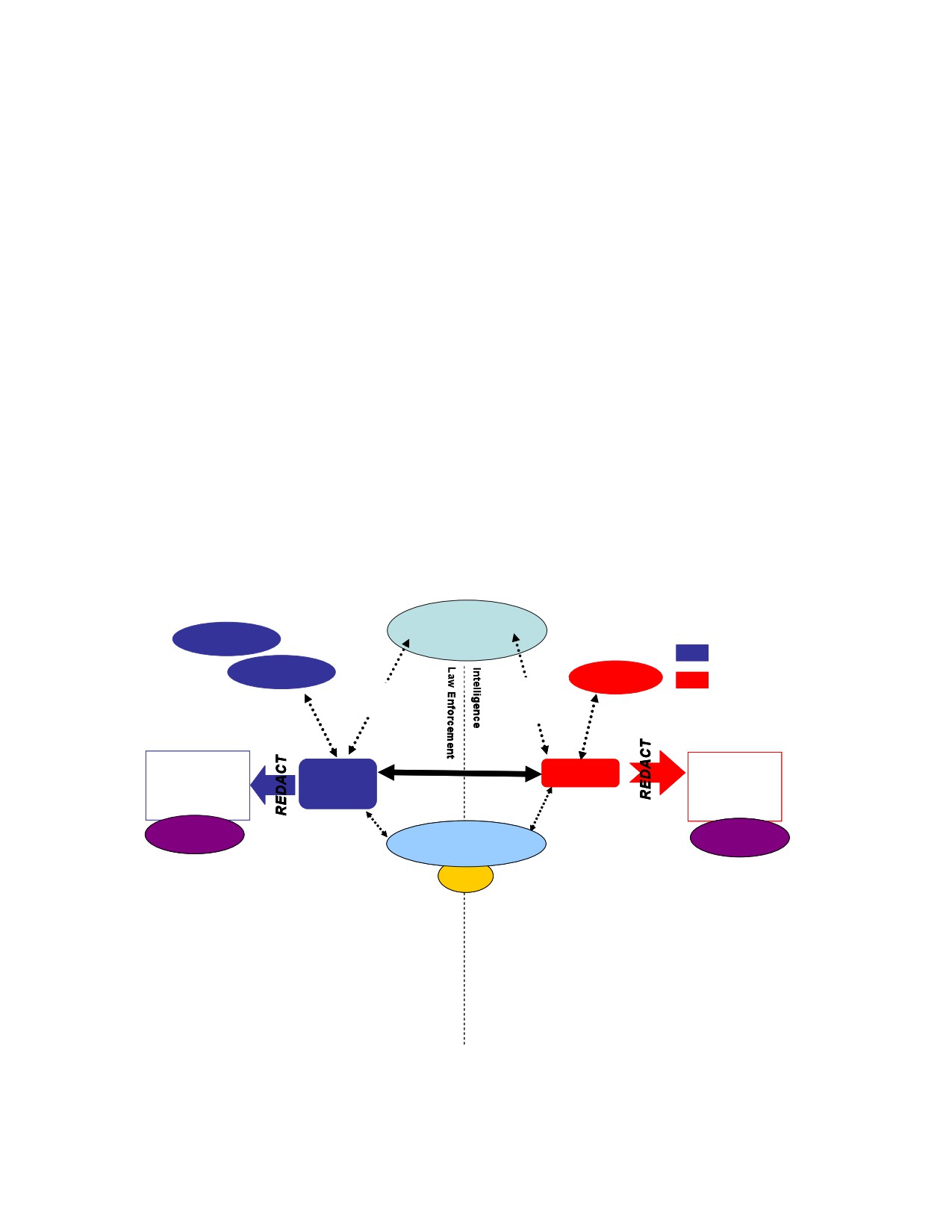
Domestic Operational Law Handbook
possible, by avoiding populated areas. Any incidental collection of USPER information along the
planned route that is criminal in nature, can be passed along to the appropriate law enforcement
officials, but information should be purged from the retention platform as soon as possible.
4. Purpose of the Collection
A judge advocate must also determine whether information is being collected for an intelligence
purpose or whether it is being collected to help the commander gain situational awareness. As
mentioned earlier, information is often acquired in response to the Guard commander’s need to
establish a common operating picture. If the answer is for situational awareness, then the JA should
assist the command by helping shape the collection such that it is limited to the information actually
needed to accomplish the mission. For example, if the mission requires imagery of ingress and
egress routes, it is unnecessary for cameras to collect information regarding the license plate
numbers of those individuals traveling on the roads; but it is necessary to carefully document the
roads. Therefore, the recommendation can be to remind the collector not to focus on specific
personal identifying information.
The chart below illustrates the proper flow of information to remain compliant with intelligence
oversight regulations. It depicts how the J2 and MP share and handle sensitive information (e.g.,
USPER) in accordance with both Intelligence Oversight regulations and DoDD 5200.27.
Sensitive Information Handling JFHQ States
J34
J2
Legend
NGB
LE Community
LES info
DoD PM
Community
Intel Community
Intel Data
REDACT
REDACT
(unless Foreign
(unless Threat)
Nexus)
REDACT
FPSUMS
Warnings
(Criminal
J34 / PM
J2
INTSUMS
Stats, issues,
AT/FP
etc)
Intel Brief
Driven by
Foreign threat data
Domestic
Driven by
FBI
TAG CCIRs
Counterintelligence
Threats to DoD
TAG CCIRs
JTTF FIG
SLFC
J34 Can & Should:
Intel Can & Should:
- Pass relevant data to J2/LE without
- Pass relevant data to LE/J34 without
redaction
redaction
- Redact data when putting in FPSUM or
- Pass incidental data to LE/J34 without
briefing
redaction
- Redact or delete records within 90 days
- Review incoming data for intel value within
90 days; purge unneeded USPER data ASAP
- Redact data when putting in INTSUM or
briefing
Chapter 9
Intelligence Oversight and Information Handling
136
Domestic Operational Law Handbook 2010
E. Judge Advocate Responsibilities
Judge advocates are responsible for the following: advising the commander and staff on all
intelligence law and oversight matters within their purview; advising on the permissible acquisition
and dissemination of information on non-DoD affiliated persons and organizations; recommending
legally acceptable courses of action; establishing, in coordination with the Head Intelligence Officer
(J-2/G-2/S-2/N-2) and the Inspector General (IG), an intelligence oversight program that helps
ensure compliance with applicable law and policy; reviewing all intelligence plans, proposals, and
concepts for legality and propriety; and training members of the command who are engaged in
intelligence activities on all laws, policies, treaties, and agreements that apply to their activities.
In order to properly perform these duties, JAs advising commanders on collecting intelligence and
information should know and understand a variety of key types of information. Judge advocates
must be familiar with the missions, plans, and capabilities of subordinate intelligence units, and all
laws and policies (many of which are classified) that apply to their activities. At a minimum, JAs
should be familiar with the restrictions on the collection, retention, and dissemination of
information about U.S. persons and non-DoD persons and organizations, the approval authorities
for the various intelligence activities performed by subordinate units, and the requirement to report
and investigate questionable activities and certain federal crimes.16 JAs must also be familiar with
the jurisdictional relationship between intelligence and counterintelligence activities as well as the
parallel jurisdictions of force protection and law enforcement activities. Finally, JAs should
establish close working relationships with the legal advisors of supporting intelligence agencies and
organizations, all of whom can provide expert assistance.
16 DoD 5240.1-R, supra note 4, Procedure 15.
Chapter 9
137
Intelligence Oversight and Information Handling
Domestic Operational Law Handbook 2010
CHAPTER 10
RESERVE COMPONENTS, CIVIL AIR PATROL, U.S. COAST
GUARD - STATUS AND RELATIONSHIPS
KEY REFERENCES:
• DoDD 1235.10 - Activation, Mobilization, and Demobilization of the Ready Reserve, 26 Nov
08
• DoDD 5125.01 - Assistant Secretary of Defense for Reserve Affairs, 27 Dec 06 (with Chg. 1, 4
Jun 08)
• DoDD 6025.13 - Medical Quality Assurance (MQA) in the Military Health System (MHS), 4
May 04
• DoDI 1215.13 - Reserve Component Member Participation Policy, 11 May 09
• DoDI 1215.06 - Uniform Reserve, Training and Retirement Category Administration, 7 Feb 07
(with Chg. 2, 25 Dec 08)
A. Introduction
This chapter discusses the various reserve components and the importance of their designated status
to the missions they may perform. First, the Reserve Component (RC) plays a significant role in
domestic support operations. In numerous instances, particular military missions are located solely
within them.1 The RC provides trained and available units to its parent services in the event of war
or national emergency.2 The RC differs from the Active Component (AC) because it has unique
personnel/duty categories that are important to understand because they not only determine what
benefits and protections RC members have, but also the different types of duties that are authorized
in particular personnel categories. The Assistant Secretary of Defense for Reserve Affairs
(ASD(RA)), responsible for overall supervision of all RC affairs in DoD, establishes the umbrella
directives that provide all RC guidance concerning activation, mobilization, and training.3
Judge advocates practicing domestic operational law must also be familiar with the United States
Coast Guard (USCG), the National Guard in a non-federal status, and the Civil Air Patrol because
these entities have unique roles in domestic operations. The USCG, although a military service,
also has domestic law enforcement authority. Moreover, in a non-federal status, the Air and Army
National Guard have different authority and capabilities in domestic missions.4 The Civil Air
Patrol, a nonprofit corporation, also serves as an auxiliary to the United States Air Force.
1 See, for example, the weather reconnaissance mission in the Air Force Reserves and the mine countermeasure mission
in the Naval Reserves.
2 10 U.S.C. § 10102. Various efforts are underway by the services to improve mobilization processes. See Rebalancing
Forces, Easing the Stress on the Guard and Reserve, 15 January 2004, Office of the Deputy Assistant Secretary of
Defense for Reserve Affairs (Readiness, Training, and Mobilization). This report was a result of a memorandum issued
by the Secretary of Defense on 9 July 2003, entitled Rebalancing Forces, in which he directed the services to review the
use of the Reserve components and implement force rebalancing initiatives as necessary.
3 U.S. DEP’T OF DEFENSE, DIR 5125.01, ASSISTANT SECRETARY OF DEFENSE FOR RESERVE AFFAIRS (27 Dec. 2006)
[hereinafter DoDD 5125.01].
4 See DOPLAW Handbook, Supp., App 10-6, Role of the NG in Domestic Support Operations.
Chapter 10
Reserve Components, CAP, and USCG
138
Domestic Operational Law Handbook 2010
B. Reserve Component
The RC consists of the Army Reserve, Air Force Reserve, Naval Reserve, Marine Corps Reserve,
Coast Guard Reserve, Army National Guard of the United States, and the Air National Guard of the
United States.5 Members of the RC are a true reflection and extension of civilian society. The
defense of the United States has been based in large part on the concept of these citizen Soldiers
who prepared for active service during peacetime and become Soldiers in times of national
emergency. These individuals have served the Nation since the Revolutionary War and continue to
serve both in contingency operations overseas and in support of domestic operations. They form a
vital link between the government, the Armed Forces, and the people.6
1. U.S. Army Reserve (USAR)7
The USAR’s mission is to meet Department of the Army contingency operations and mobilization
requirements.8 There are over 200,000 Soldiers in the USAR, most with Combat Support and
Combat Service Support missions. Troop Program Units, discussed in paragraph C.1.a.(1), below,
train together to mobilize as units.
2. U. S. Air Force Reserve (USAFR)9
The USAFR is composed of 36 wings that report to one of three Numbered Air Forces (NAFs).
With just over 10 percent of the Air Force’s manpower, the USAFR performs more than 30 percent
of all Air Force missions. Like all of the other RCs, the role of the USAFR is to provide trained and
ready forces to the USAF. Yet the USAFR also has several unique missions like the 731st Airlift
Squadron, assigned to the 302nd Airlift Wing, Peterson Air Force Base, Colorado, which is trained
in the use of modular airborne firefighting systems that support local, state, and federal agencies by
dropping retardant chemicals to prevent the spread of fires. The 53rd Weather Reconnaissance
Squadron at Keesler Air Force Base, Mississippi, performs hurricane reconnaissance exercises over
the Atlantic, Pacific, Caribbean, and Gulf of Mexico and is the only DoD unit tasked to perform
weather reconnaissance in support of the Department of Commerce.10
5 10 U.S.C. § 101(c).
6 See, generally, U.S. DEP’T OF DEFENSE, HANDBOOK 1215.15, para. C2.1. (Jun. 1996).
7 U.S. DEPT’ OF ARMY, REG. 140-1, MISSION, ORGANIZATION, AND TRAINING (1 Jan. 2004) [hereinafter AR 140-1];
U.S. DEP’T OF ARMY, REG. 140-10, ASSIGNMENTS, ATTACHMENTS, DETAILS, AND TRANSFERS (15 Aug. 2005); U.S.
DEP’T OF ARMY, REG. 140-30, ACTIVE DUTY IN SUPPORT OF THE UNITED STATES ARMY RESERVE (USAR) AND ACTIVE
GUARD RESERVE (AGR) MANAGEMENT PROGRAM (1 Sept. 1994).
8 AR 140-1, supra note 7, para. 1-8.
9 U.S. DEP’T OF AIR FORCE, INSTR. 36-2132, FULL-TIME SUPPORT TO ACTIVE AND RESERVE PROGRAM (27 Mar. 2002);
U.S. DEP’T OF AIR FORCE, INSTR. 36-2619, MILITARY PERSONNEL APPROPRIATION MAN-DAY PROGRAM (22 Jul. 1994);
U.S. DEP’T OF AIR FORCE, MANUAL, 36-8001 RESERVE PERSONNEL PARTICIPATION AND TRAINING PROCEDURES (22
Jan. 2004).
10 The unit program of the USAFR is called the “Category A” program. Personnel perform a minimum of one weekend
of inactive duty training every month, referred to as a unit training assembly (UTA), and two weeks of active duty
(annual training) for pay and points each fiscal year.
The “Category B” program is the individual mobilization augmentee program consisting of individual reservists
assigned to major commands, field operating agencies, joint organizations, direct reporting units and outside agencies.
Although some commands allow training with other units in the member’s local area, this decision is made on a case-
Chapter 10
139
Reserve Components, CAP, and USCG
Domestic Operational Law Handbook 2010
3.
U. S. Naval Reserve (USNR)11
The Naval Reserve is composed of both commissioned units (self-contained, deployable assets with
both personnel and mission equipment and hardware) and augmentation units (non-hardware units
that provide trained manpower to active Navy units). The USNR is a significant force multiplier for
the Navy and Marine Corps and represents 20 percent of the Navy’s total assets. Unique missions
to this reserve branch include a Mine Countermeasure Ship, Mobile Inshore Undersea Warfare
Units, and Helicopter Warfare Support Squadrons.
4.
U. S. Marine Corps Reserve (USMCR)12
The Marine Corps Reserve is composed of one Marine division, one Marine air wing, one service
support group and a Marine Corps Reserve support command. Select Marine Corps Reserve
(SMCR) units consist of more than 19,000 Reserves from 4th Marine Division (4th MARDIV);
7,000 from 4th Marine Aircraft Wing (4th MAW); 8,000 from 4th Force Service Support Group
(4th FSSG); I Marine Expeditionary Force Augmentation Command Element (I MACE), Pacific;
and II Marine Expeditionary Force Augmentation Command Element (II MACE), Atlantic. Unique
missions to this reserve branch include Civil Affairs Groups and Air-Naval Gunfire Liaison
Companies.
5.
U.S. Coast Guard Reserve (USCGR)13
The USCGR is the military RC of the USCG, an agency within the Department of Homeland
Security. Under Title 14 and Title 10 of the United States Code, the Coast Guard is at all times an
armed force, as well as a law enforcement agency. As an armed force, the Coast Guard is required
to maintain a state of readiness to function as a specialized service in the Navy in time of war. The
U.S. Coast Guard, discussed at paragraph f, below, is a unique member of the Joint Force because
of a mix of military, civil law enforcement and regulatory authorities that allow it to respond to a
wide variety of national security missions at home and abroad. Coast Guard reservists may be
called in response to serious natural or man-made disasters, accidents, or catastrophes such as
hurricanes, earthquakes, tornadoes, or floods. The Secretary of Homeland Security is authorized to
order members of the Coast Guard Ready Reserve to active duty without their consent in a domestic
emergency.14 They may be used for not more than 60 days in any four-month period and not more
than 120 days in any two-year period to augment the Regular Coast Guard forces in time of serious
natural or manmade disaster, accident, or catastrophe. A mission unique to the USCGR is port
by-case basis by the individual command. Inactive duty training, or IDT, periods for pay and points, are usually
performed during the week in increments of 4 IDTs per quarter. A day is worth two IDT points. Members also perform
a 12-14 day paid active duty training tour annually with one point awarded for each day.
In the “Category E” program, personnel do not earn pay for their service but they do earn retirement points. Examples
are service with the Civil Air Patrol Assistance Program and the Chaplain reinforcement designees.
11 U.S. DEP’T OF NAVY, CHIEF OF NAVAL OPS, INSTR. 1001.20C, STANDARDIZED POLICY AND PROCEDURE FOR ACTIVE
DUTY FOR SPECIAL WORKS (ADSW) (4 Mar. 2008).
12 U.S. Marine Corps, Order 1001.52H, Active Reserve Support to the Reserve Component (RC) (17 Dec. 1996); U.S.
Marine Corps, Order 1001.59, Active Duty for Special Work in Support of the Total Force (22 Oct. 2001).
13 U.S. Dep’t of Homeland Security, Coast Guard Comdt, Instr. Manual 1001.28A, Reserve Policy Manual (18 May
2003).
14 14 U.S.C. § 712.
Chapter 10
Reserve Components, CAP, and USCG
140
Domestic Operational Law Handbook 2010
security capability; the USCGR provides 95% of this capability. The USCGR also provides key
support to Operation Iraqi Freedom and Operation Enduring Freedom under 10 U.S.C. § 12302.
6. National Guard of the United States (NGUS)
a. Overview
The terms “Air National Guard of the United States” (ANGUS) and “Army National Guard of the
United States”(ARNGUS) refer to the guard as a reserve component of their respective service.15
The term “federal service,” is applied to National Guard members and units when called to active
duty to serve the federal government under Article I, Section 8 and Article II, Section 2 of the
Constitution and the U.S. Code, Title 10, §§ 12401 to 12408. The terms “Air National Guard”
(ANG) and “Army National Guard”(ARNG) refer to the federally recognized (and usually federally
trained under Title 32, U.S. Code) organized militia of the various states, in other words, guardsmen
in a “state status” pursuant to Article I, Section 8, Clause 16 of the Constitution.16
Determining whether National Guard members are in the ARNGUS/ANGUS or the ARNG/ANG is
critical to defining their roles and responsibilities. Status is also the primary factor for determining
the applicability of law for such issues as benefits, protections, and liabilities. For instance, guard
members only become subject to the Uniform Code of Military Justice (UCMJ) when federalized;
while in a state status they are subject to their respective state codes of military justice.
Additionally, some laws, such as the Posse Comitatus Act (PCA) only apply to the National Guard
when they are in a Title 10 status. National Guard members are temporarily relieved of their state
commissions (and membership in the state National Guard) when on federal active duty as a
member of the NGUS under 32 U.S.C. § 325. The National Defense Appropriations Act for Fiscal
Year 2004 amended 32 U.S.C. § 325 to allow federally activated commanders of National Guard
units to retain their state commissions with the authority of POTUS and the consent of the
Governor.17
Guard personnel in Title 10 and Title 32 (discussed under National Guard of the Several States
section below) status receive federal pay and are covered under the Federal Torts Claims Act. Title
10 personnel always receive federal military retirement credit for the performance of duty.
Similarly, Title 32 personnel also receive such credit, unless in an inactive duty training (IDT)
status. It is important to remember that the determination of whether the National Guard is in
federal or state service does not rest on the entity that funds the activity, but rather which entity has
command and control.
b. History
In 1903, the organized militia (i.e., the National Guard) was created.18 In 1916, because the then
Attorney General had opined that the militia could not be used outside of the US, Congress enacted
a statute requiring guardsmen to take a dual oath; moreover, the statute mandated that guardsmen
15 10 U.S.C. §§ 101(c), 10101.
16 See 10 U.S.C. § 101; 32 U.S.C. §§ 301, 307.
17 See DOPLAW Handbook, Supp., App. 10-7 for a comparison the National Guard in their different statuses.
18 Dick Military Act of 1903, 57 Pub. L. No. 33, 32 Stat. 775. See also Perpich v. Department of Defense, 496 U.S.
334, 342 (1990).
Chapter 10
141
Reserve Components, CAP, and USCG
Domestic Operational Law Handbook 2010
drafted into federal service by the President be “discharged” from the militia.19 Because the statute
provided no method for guardsmen to “rejoin” the militia, it virtually destroyed the militias,
requiring Congress, in 1933, to create the “two overlapping but distinct organizations,” i.e., the
National Guard of the various states and the National Guard of the United States.20 Although
guardsmen were relieved from their militia status while on federal status, at the conclusion of that
service, they reverted to their state status. In other words, this statute created the dual enlistment
requirement that we know today.21
c. Federal Missions
Like the other RCs, ARNGUS/ANGUS22 members and units augment the Armed Forces during
wars or other conflicts. To become a NGUS member, the guardsman or unit must also be “federally
19 National Defense Act of 1916, 64 Pub. L. 85, §§ 69-73, 111. See also Perpich, 496 U.S. 334, 343-44.
20 National Guard Act of 1933, 73 Pub. L. 64, § 18. See also Perpich, 496 U.S. 334, 345-46.
21 A system that the Perpich Court recognized as a statutory creation causing a member of the militia to be relieved
from state status for the “entire period of federal service.” Perpich, 496 U.S. 334, 345-346.
22 When ANG members enter Title 10 active duty, they are transferred from their ANG units and assigned to the Air
National Guard Readiness Center (ANGRC), either directly or to a detachment of the ANGRC created for the purpose
of deploying forces in support of an active duty mission. The ANGRC is a Field Operating Agency (FOA) of HQ
USAF that executes NGB policy for the ANG and ANGUS and exercises elements of command and control over
ANGUS units and members. It is a Title 10 organization with a 32 U.S.C. § 104 commander appointed on G-series
orders. The ANGRC commander, currently a brigadier general, also serves as the Deputy Director of the ANG
Directorate and is on Title 10 orders. See also U.S. DEP’T OF AIR FORCE, INSTR. 10-402, MOBILIZATION PLANNING,
para 4.1.7 (1 Jan. 1997) [hereinafter AFI 10-402]; NATIONAL GUARD BUREAU, MEMORANDUM 10-5/38-101,
ORGANIZATIONS AND FUNCTIONS OF THE NATIONAL GUARD BUREAU, ch. 4 (1 Jul. 2003).
ANGRC exercises administrative control (ADCON) over all units and members in Title 10 status (except those brought
on active duty through full mobilization) because they are assigned to ANGRC. ADCON includes: organization of
forces; personnel management; control of resources and logistics; training, readiness, and mobilization; and discipline.
ADCON flows from the National Command Authorities through the Secretary of the Air Force, Chief of Staff of the Air
Force, Major Commands, and Numbered Air Forces to a unit. A commander exercises ADCON over all assigned
forces, but not over attached forces. For attached forces, ADCON remains with the commander to whom they are
assigned. For example, when forces are assigned to ANGRC but temporarily attached to another unit, ADCON remains
with ANGRC. See U.S. DEP’T OF AIR FORCE, HANDBOOK 10-416, PERSONNEL, READINESS, AND MOBILIZATION, para
6.8.4 (22 Dec. 1994) [hereinafter AFH 10-416]. These ADCON/OPCON rules differ for full mobilization when guard
personnel become part of the active component. See AFI 10-402, note 22, para 4.1.6; AFH 10-416, supra paras 5.4,
6.8.3.
ANGRC/CC makes forces available to a supported active duty commander by attaching them to the gaining
organization that will exercise operational control (OPCON) over them. The Uniform Code of Military Justice (UCMJ)
gives the COMAFFOR or any active duty commander within the chain of command the right to discipline any person
serving in Title 10 status. UCMJ authority is a function of command under federal law and the Manual for Courts-
Martial. Command authority for discipline includes UCMJ authority as an element of ADCON, which, for members of
an ANGRC detachment, is within the command authority of ANGRC. Discipline is also an element of specified
ADCON, which is within the command authority of the COMAFFOR. ADCON and specified ADCON do not confer
UCMJ authority but identify those commanders who may exercise UCMJ authority as a matter of Air Force doctrine
and policy in recognition that more than one commander may have UCMJ authority over a member in a given situation.
Since disciplinary authority is shared between the commanders holding ADCON and specified ADCON, it is frequently
a matter of coordination between the two concerning which one will take disciplinary action. U.S. DEP’T OF AIR FORCE,
INSTR. 51-202, NONJUDICIAL PUNISHMENT, para 3.7 (7 Nov. 2003) requires the USAF to coordinate with the parent
reserve organization before imposing nonjudicial punishment.
ANGRC usually creates detachments and assigns ANGUS members to them for deployments that involve 10 or more
persons for 15 days or longer. If a deployed group is less than 10 persons, or a deployment will not be for more than 15
days or does not include an officer, then ANGUS members are attached directly to the 201st Mission Support Squadron
Chapter 10
Reserve Components, CAP, and USCG
142
Domestic Operational Law Handbook 2010
recognized.”23 To be federally recognized, the guardsman or unit must meet prescribed federal
standards.24 NG units or members may be ordered to federal active duty in one of two ways. One
way is to order NG members or units to active federal duty, with the consent of the governor, as
members of the NGUS, the reserve component.25 The other way is pursuant to the power of
Congress to call out the militia to enforce federal law, suppress insurrections, or repel invasions;
under this authority the NG is “called” to duty as part of the militia of the United States.26 Congress
has given the President the authority to call the NG to active duty for these purposes.27
Moreover, the National Guard has both a federal mission (when called up by Congress or activated
by the President under applicable laws) and a state mission (inherent police power authority of the
states) to ensure that the laws of the United States and the respective states are obeyed and to
protect the people and property of the United States. This domestic portion of the NGUS federal
mission is just as important as the National Guard’s federal mission to augment the Armed Forces
during wars or other conflicts outside of the United States.
d. Other Title 10 Duty
In addition to duties performed when federalized under the aforementioned authorities, members of
the National Guard serve in a full-time Title 10 status in other ways. Members in this category
include: Members of the National Guard Bureau (NGB); U.S. Property and Fiscal Officers
(USPFO) in each state serving the National Guard;28 any other National Guard members serving a
tour of duty under Title 10 in support of NGB, Major Commands, or other “seats of government”
tours.
(1) National Guard Bureau (NGB)
The 2008 National Defense Authorization Act made major changes to the roles and responsibilities
of the NGB. Significantly, NGB became a “joint activity” of DOD, a statutory, joint activity within
DoD, serves as the NG channel of communications between the Army and Air Force and the 54
states and territories.29 While the NGB serves as the coordination, administrative, policy, and
logistical center for the ARNG and the ANG, NGB does not command and control either the Army
or Air National Guard. Pursuant to its charter dated 1 September 1995, NGB in responsible for,
among other things, implementing Army and Air Force guidance, prescribing and monitoring
(201MSS), a Title 10 subordinate unit to ANGRC. ADCON and OPCON apply in the same manner to those directly
attached to 201MSS as they apply to ANGRC detachments.
23 10 U.S.C. §§ 10105, 10111, 10503(7), 12201, 12211, 12212; 32 U.S.C. § 105(b).
24 See NATIONAL GUARD BUREAU, REG. 10-1, ORGANIZATION AND FEDERAL RECOGNITION OF ARMY NATIONAL GUARD
UNITS (22 NOV. 2002); U.S. DEP’T OF AIR FORCE, INSTR. 38-101, AIR FORCE ORGANIZATION (21 APR. 2004).
25 U.S. CONST. art. 1, § 8, cl. 12; Perpich, 496 U.S. at 334; 10 U.S.C. §§ 12301-12304.
26 U.S. CONST. art. I, § 8, cl. 15; 10 U.S.C. §§ 331-333 (these statutes also include the use of the Armed Forces of which
the NGUS is part); 10 U.S.C. § 12406. Although these statutes are in Title 10 of the U.S. Code, members “called up”
under these provisions retain their militia status.
27 10 U.S.C. §§ 331-333.
28 32 U.S.C. § 708.
29 10 U.S.C. § 10501.
Chapter 10
143
Reserve Components, CAP, and USCG
Domestic Operational Law Handbook 2010
training discipline and requirements, and supervising and administering the budgets of the ARNG
and ANG.30
The Chief, NGB, a four-star general, is the principal advisor on NG matters to the Secretaries of the
Army and Air Force and to the Army and Air Force Chiefs of Staff. The Chief, NGB, has executive
agent responsibility for planning and coordinating the execution of NG military support operations.
The Director, Army National Guard, and the Director, ANG, are responsible to the Chief, NGB.
The Chief Counsel’s office at NGB provides legal advice and assistance to the Chief, NGB, the
Directors of the Army and Air National Guards, and to the full-time JAs at the state level. The
Chief Counsel’s office normally employs a joint staff of military and civilian attorneys in a wide
variety of disciplines, including administrative law, contract and fiscal law, international and
operational law, environmental law, legislation, labor law, and litigation.
(2) U.S. Property and Fiscal Officers (USPFO)
Each state and territory has a USPFO. As Title 10 officers assigned to the NGB, a USPFO is
detailed for duty to a state or territory and is accountable for all federal resources (equipment,
dollars, and real estate) provided to the NG of each state.31 Their duties are limited to administering
property in the possession of the NG of a state or territory; all transactions with the state NG
involving federal property must involve the USPFO.32 The USPFO’s staff provides supply,
transportation, internal review, data processing, contracting, and financial support for the state NG.
When required, the USPFO staff can support AC or USAR forces on a reimbursable basis.
e. Other NG authorities for duty
Guardsmen perform Inactive Duty Training (IDT) and Active Duty for Training (ADT) in a Title 10
status. They can also perform Active Duty for Operational Support (ADOS), in a Title 10 status to
support the ANG and ARNG at federal headquarters levels.33 As noted above, some “AGR” tours
are also in a Title 10 status. They also perform Extended Active Duty (EAD) in a Title 10 status,
which requires them to be accessed into the end strength of the active Army and Air Force; this duty
is paid by Army and Air Force appropriations.34 A Temporary Tour of Active Duty (TTAD), a Title
10 status to support the active Army, and Military Personnel Appropriation (MPA) man-days are
used to support the active Air Force.
30 U.S. DEP’T OF ARMY, REG. 130-5/AFMD 10, ORGANIZATIONS FUNCTIONS OF THE NATIONAL GUARD BUREAU (31
Dec. 2001).
31 NATIONAL GUARD BUREAU, REG. 130-6/AIR FORCE NATIONAL GUARD INSTRUCTION 36-2, UNITED STATES PROPERTY
AND FISCAL OFFICER APPOINTMENT, DUTIES AND RESPONSIBILITIES (1 Jul. 2007).
32 32 U.S.C. § 708(c).
33 See U.S. DEP’T OF ARMY, REG. 135-200, ACTIVE DUTY FOR MISSIONS, PROJECTS, AND TRAINING FOR RESERVE
COMPONENT SOLDIERS, ch. 6 (30 Jun. 1999).
34 See Id. ch. 2, sect. 521 of the FY 2001 National Defense Authorization Act exempts reserve officers on the reserve
active-status list (RASL) serving on active duty for 3 years or less from placement on the active-duty list (ADL).
Previously, these Soldiers were added to the ADL for promotion.
Chapter 10
Reserve Components, CAP, and USCG
144
Domestic Operational Law Handbook 2010
C. Reserve Component Categories
There are three Reserve categories: Ready Reserve, Standby Reserve, and Retired Reserve. Each
member of the National Guard and Reserve is assigned within one of these categories. All members
of the Army National Guard and Air National Guard, including those in the Inactive National Guard
(ING), are in the Ready Reserve or Retired Reserve.35
1.
Ready Reserve
The Ready Reserve consists of three subgroups: the Selected Reserve, the Individual Ready
Reserve, and the Inactive National Guard. These are units and individuals subject to order to active
duty to augment the Active Forces during a time of war or national emergency.36 This chapter will
primarily address the Selected Reserve.
a. Selected Reserve
The Selected Reserve consists of Soldiers assigned to troop program units (TPU), Individual
Mobilization Augmentation (IMA) Program, Drilling Individual Mobilization Augmentation
(DIMA) Program, and the Active Guard Reserve (AGR) Program. These individuals and units are
considered essential to wartime missions and have priority for training and equipment over other
RC categories.
(1) Drilling Unit Reservists
Sometimes called Troop Program Units (TPU), these units consists of Soldiers assigned to Tables of
Organization and Equipment or Tables of Distribution and Allowances who normally perform at
least 48 inactive duty training (IDT) assemblies and not less than 15 days, exclusive of travel time,
of annual training (AT) each year. In the alternative, they may perform Active Duty for Training
(ADT) for no more than 30 days each year, unless otherwise specifically prescribed by the
Secretary of Defense.37
(2) Individual Mobilization Augmentees and Drilling Individual Mobilization
Augmentees
IMAs and DIMAs are RC officers assigned to USAR Control Group—IMAs in a Selected Reserve
status and not attached to an organized Reserve unit. The IMA Program function is to provide
qualified soldiers to fill pre-designated mobilization required positions. IMAs are assigned to
Active Component organizations or Selective Service System positions that must be filled to
support mobilization requirements, contingency operations, operations other than war, or other
specialized or technical requirements. Drilling IMA positions are identified as critical elements for
mobilization during a Presidential Reserve Call-up (PRC) requiring an incumbent to maintain an
35 U.S. DEP’T OF DEFENSE, INST. 1215.06, UNIFORM RESERVE TRAINING AND RETIREMENT CATEGORIES, para. E5.1 (4
May 2004) [hereinafter DoDI 1215.06].
36 Id. at para. E5.1.1. These individuals and units may be involuntarily ordered to active duty during war or national
emergency under the authority of 10 U.S.C. §§ 12301, 12302 and 14 U.S.C. § 712.
37 U.S. DEP’T OF DEFENSE, INST. 1215.13, RESERVE COMPONENT MEMBER PARTICIPATION POLICY, Encl. 2, para. 1.a.(2)
(11 May 2009).
Chapter 10
145
Reserve Components, CAP, and USCG
Domestic Operational Law Handbook 2010
even higher level of proficiency than a regular IMA Soldier. Soldiers assigned to these positions
are authorized to perform 48 paid IDT period per year. The Selective Service System can perform
36 IDT periods per year. All IMAs must perform a minimum of 12 days of AT each year.38
(3) Active Guard and Reserve (AGR) Program
The AGR Program consists of Soldiers performing active duty or full-time National Guard duty
(FTNGD) for 180 days or more for the purpose of organizing, administering, recruiting, instructing,
or training the Reserves.
b. Individual Ready Reserve (IRR)
The IRR is a manpower pool of pre-trained individuals who have already served in Active
Component units or in the Selected Reserve and have some part of their Military Service Obligation
(MSO) remaining. Some members volunteer to remain in the IRR beyond their MSO or contractual
obligation and participate in programs providing a variety of professional assignments and
opportunities for earning retirement points and military benefits.39 IRR members are liable for
involuntary active duty and fulfillment of mobilization requirements.
c. The Inactive National Guard (ING)
The ING consists of National Guard personnel in an inactive status in the Ready Reserve, not in the
Selected Reserve, attached to a specific National Guard unit. These individuals must muster once a
year with their unit, but they do not participate in training activities. They may not, however, train
for points or pay and are not eligible for promotion.40
2. Standby Reserve
The Standby Reserve consists of personnel who are maintaining their military affiliation without
being in the Ready Reserve, but have been designated key civilian employees, or have a temporary
hardship or disability. They are not required to perform training and are not part of units. The
Standby Reserve is a pool of trained individuals who may be mobilized as needed to fill manpower
41
needs in specific skills.
38 DoDI 1215.06, supra note 35, para. E25.1.1.1.3. The Army National Guard and the Air National Guard do not have
IMA programs.
39 Id. at para. E5.1.1.2. The IRR also may include personnel participating in officer training programs, including the
Merchant Marine Academy, enlisted members awaiting IADT (except for those in the National Guard), who are not
authorized to perform IDT, and members of the Delayed Entry Program. Id.
40 Id. at para. E5.1.1.3. The Air National Guard does not have an inactive status.
41 Id. at para. E5.1.2. The Standby Reserve consists of the active status list and the inactive status list categories.
Members designated as key employees and personnel not having fulfilled their statutory MSO, or temporarily assigned
for hardship reasons intending to return to the Ready Reserve, are on the active status list. Those members who are not
required to remain in an active program, but who retain Reserve affiliation in a non-participating status and whose skill
may be of future use to the Armed Force are on the inactive status list. These members cannot participate in prescribed
training and are not eligible for pay or promotion and do not accrue credit for years of service. The Army National
Guard and Air National Guard do not have a Standby Reserve.
Chapter 10
Reserve Components, CAP, and USCG
146
Domestic Operational Law Handbook 2010
3. Retired Reserve
This category consists of all Reserve personnel transferred to the Retired Reserve. These
individuals may voluntarily train, with or without pay.
42 All members retired for having completed
the requisite years of active duty service (Regular or Reserve), regardless of the retired list where
assigned, may be ordered to active duty when required by the Secretary of the Military Department
concerned.43
D. Reserve Component Training and Support
The Service Secretaries and the Commandant of the Coast Guard are required to ensure trained and
qualified RC units and individuals are available for AD throughout the entire spectrum of
requirements, including war or national emergency, contingency operations, military operations
other than war, operational support, humanitarian operations, and at such other times as the national
security may require.44 Each military department has its own regulations and instructions that
implement these training and support duties. 45
1.
Training
All RC members receive training according to their assignment and required readiness levels. This
training may be conducted in Active Duty, Inactive Duty for Training, or Full-Time National Guard
status.
a. Active Duty
Active Duty for Training (ADT) consists of structured individual and unit training, including on-
the-job training, or educational courses to RC members. It includes Initial Active Duty training
(IADT), Annual Training (AT), and Other Training Duty (OTD). Initial ADT includes basic
military training and technical skill training required for all enlisted accessions. AT is the minimum
period of active duty training that RC members must perform each year to satisfy the training
requirements associated with their RC assignment. By DoD policy, members of the Selected
Reserve must perform AT. For all members of Selected Reserve units, except for those in the
National Guard, that training is not less than 14 days, and not less than 12 days for the Coast Guard
42 Id. at para. E5.1.3. The Retired Reserve consists of the following retired categories: (1) Reserve members who have
completed the requisite qualifying years creditable for non-regular retired pay and are receiving retired pay (at, or after,
age 60); (2) those who have completed the requisite qualifying years creditable for non-regular retired pay and are not
yet 60 years of age, or are age 60 and have not applied for non-regular retirement pay; (3) those members retired for
physical disability; (4) members who have completed 20 years of service creditable for regular retired pay, or are 30-
percent or more disabled and otherwise qualified; (5) Reserve members who have completed the requisite years of
active service and are receiving regular retired or retainer pay (regular enlisted personnel of the Navy and Marine Corps
with 20 to 30 years of active Military Service who are transferred to the Fleet Naval Reserve or the Fleet Marine Corps
Reserve on retirement, until they have completed 30 years of total active and retired or retainer service, are not included
in this category); and (6) Reserve members drawing retired pay for other than age, service requirements, or physical
disability.
43 10 U.S.C. § 688.
44 DoDI 1215.06, supra note 35, para. 5.2.2. Combatant commanders have oversight responsibility for the training and
readiness of assigned guard and reserve forces.
45 Id.
Chapter 10
147
Reserve Components, CAP, and USCG
Domestic Operational Law Handbook 2010
Reserve. As previously noted, IMAs and DIMAs must perform 12 days of AT each year and
National Guard units must perform full-time military training for at least 15 days each year. OTD is
used to provide all other structured training, including on-the-job training and attendance at schools.
ADT is funded by the RC, but may support active component operational requirements and
missions.46
b. Inactive Duty for Training (IDT)
This training is used to provide structured individual and unit training, or educational courses to RC
members. It includes regularly scheduled training periods, additional training periods,47 and
equivalent training. It is funded by the Reserve Component.48 ADT includes Initial Active Duty for
Training (IADT), which provides basic military and technical skills training required for all enlisted
accessions.49
c. Full-time National Guard Duty (FTNGD)
The National Guard performs their federal training in a Title 32 status. Thus, while the various
terms used above also apply to the National Guard, there are variations. Full time National Guard
duty (FTNGD) is training or other duty (including support), other than inactive duty, performed by
a member of the National Guard in a member’s status as a member of the National Guard of a state,
territory under 32 U.S.C. A. §§ 316, 502, 503, 504, 505. It is considered active service pursuant to
10 U.S.C. A. § 101(d)(3), but it is not considered “active duty.” (For other reserve components,
some of the categories above are active duty.)
2. Support
RC members may be placed on Active Duty Other than for Training (ADOT), which includes the
categories of active duty for operational support (ADOS), Active Guard and Reserve (AGR) duty,
and involuntary AD. Support may also be provided during FTNGD, discussed above.50
a. Active Duty for Operational Support (ADOS)
The purpose of ADOS is to provide the necessary skilled manpower assets to support existing or
emerging requirements. Because ADOS is intended to provide only temporary support, total
46 DoDI 1215.06, supra note 35, at para. 6.1.4.1.
47 Additional IDT periods are for the use of drilling Reservists who are not military technicians. They include
additional training periods (ATPs) for units, components of units, and individuals for accomplishing additional required
training; additional flying and flight training periods (AFTPs) for primary aircrew members for conducting aircrew
training and combat crew qualification training; and Readiness management periods (RMPs) to support the following
functions in preparing units for training: the ongoing day-to-day operation of the unit, accomplishing unit
administration, training preparation, support activities, and maintenance functions. DoDI 1215.06, supra note 35, para.
6.1.2.
48 DoDI 1215.06, supra note 35, para. 6.1.2.1. Paid IDT periods cannot be under 4 hours. No more than two IDT
periods may be performed in any calendar day. In addition, IDT for points only (without pay) cannot be less than 2
hours with a maximum of two points authorized in any one calendar day. Further, one retirement point in any one
calendar day can be granted for attendance at a professional or trade convention, with a minimum of four hours.
49 DoDI 1215.06, supra note 35, para. 6.6.4.1.4.
50 DoDD 1215.06, supra note 35, para. 6.1.5.3.
Chapter 10
Reserve Components, CAP, and USCG
148
Domestic Operational Law Handbook 2010
cumulative FTNGD, including ADOS, is limited to 1,095 days in the previous 1,460 days.51 Periods
of service exceeding this limitation are accounted against active duty end strength.52 ADOS may be
funded by the Active Component to support AC functions. In the Army, these tours are called
Temporary Tours of Active Duty (TTAD); in the Air Force, they are called MPA man-days. ADOS
also may be funded by the RC to support RC functions.
In 2006, as a result of the increasing use of the National Guard for domestic missions of national
importance, such as the response to Hurricane Katrina, Congress amended 32 U.S.C. § 502(f) to
expressly authorize the use of the National Guard for “Support of operations or missions undertaken
by the member’s unit at the request of the President or Secretary of Defense.”53
b. Active Guard/Reserve (AGR)
This duty is funded by the RC and performed by an RC member of the Army, Navy, Air Force, or
Marine Corps, the Coast Guard, or FTNGD performed by a member of the NG under an order to
active duty or FTNGD for a period of 180 days or more. Unless a statutory exception exists, the
scope of duty for AGRs is limited to organizing, administering, recruiting, instructing, or training
the reserve components.54
c. Involuntary Active Duty (IAD)
IAD is used in support of military operations when the President or the Congress determines that
RC forces are required to augment the AC. IAD is funded by the AC.55
3. Military Technicians (Dual Status) (MT)56
Military Technicians are civilian employees who are required to maintain military membership in a
RC and who perform administration and training of that RC or maintenance and repair of supplies
or equipment issued to that RC. Military and civilian positions must be compatible. Though the
NG also has technicians, they are administered differently as discussed below.
E. Mobilization/Activation of Reserve Component and Calling Up the Militia
For major regional conflicts and national emergencies, access to the RC units and individuals
through an order to AD without their consent is assumed. For lesser regional conflicts, domestic
emergencies, and other missions, where capabilities of the RC could be required, maximum
consideration is given to accessing volunteer RC units and individuals before seeking authority to
order member of the RC to active duty without their consent.57
51 DoDI 1215.06, supra note 35, at para. 6.1.4.2.1.7.
52 Id.
53 32 U.S.C. § 502(f)(2).
54 10 U.S.C. § 101(d)(6)(A). Other statutes include 10 U.S.C. §§ 10211, 10302, 12310, and 12402.
55 DoDI 1215.06, supra note 35, para. E3.1.1.2.3. See also 10 U.S.C. §§ 12301, 12302, 12304, and 14 U.S.C. § 712.
56 10 U.S.C. § 10216.
57 U.S. DEP’T OF DEFENSE, DIR. 1235.10, ACTIVATION, MOBILIZATION, AND DEMOBILIZATION OF THE READY RESERVE,
para. 4.1. (26 Nov. 2008) [hereinafter DoDD 1235.10].
Chapter 10
149
Reserve Components, CAP, and USCG
Domestic Operational Law Handbook 2010
It is important to distinguish the ARNGUS and ANGUS from the Air National Guard (ANG) and
the Army National Guard (ARNG). Unlike the ARNGUS and ANGUS, which are RC
organizations under the command and control of the President of the United States, the ANG and
ARNG train for their Federal military missions according to the Congressionally established
disciplines in Title 32, United Stated Code, under state control as members of their respective
states’ militia. ARNG/ANG members also take oaths to obey their respective governors and abide
by state law.
Although the terms “activation” and “mobilization” are sometimes used interchangeably to describe
the process that “federalizes” reservists, the terms have different meanings. Activation is an order
to active duty, for units and individuals, (other than for training) in the federal service pursuant to
statutory authority granted to the President, Congress, or the service secretaries.58 Reservists can be
“activated” involuntarily or voluntarily with their consent (guardsmen also need the consent of their
respective governors). Mobilization is the process of bringing all national resources to a state of
readiness for war or national emergency; it includes activating the RC.59 Levels of mobilization
include selective mobilization, partial mobilization, full mobilization, and total mobilization.
Therefore it is probably helpful to use the term “activate” when referring to placing a reservist on
active duty rather than using the more encompassing term “mobilize.” The following statutes
provide authority for activating reservists/calling up the militia.”60
1.
Full Mobilization (10 U.S.C. A. § 12301(a))
Involuntary full mobilization of units or members not assigned to units organized to serve as units
for the duration of a war or emergency (plus six months) by an authority designated by the
Secretary concerned. This section requires a congressional declaration of national emergency or
war, or other authorization in law.
2.
Partial Mobilization (10 U.S.C. A. § 12302(a))
A presidential declaration of national emergency or “when otherwise authorized by law” allows the
involuntary partial mobilization of up to 1,000,000 members of the Ready Reserve for up to 2 years.
Applies to units, and any member not assigned to a unit organized to serve as a unit.
3.
Presidential Reserve Call-up (PRC) (10 U.S.C. A. § 12304)
Involuntary activation of 200,000 members for up to 270 days (these troops are excluded from
active duty end strength calculations) by the President. Such service must be for other than training
and may not exceed 270 days. It authorizes ordering members of the RC to active duty without
their consent, without declaration of war or national emergency, for operations other than domestic
disasters except those involving a use or threatened use of a weapon of mass destruction.
58 See generally id.; JOINT CHIEFS OF STAFF, JOINT PUB. 4-05, JOINT MOBILIZATION PLANNING (11 Jan. 2006).
59 DoDD 1235.10, supra note 57.
60 Occasionally older cases, regulations, and instructions will reference former versions of these statutes and it is helpful
to know the previous citations: In 10 U.S.C., § 672(a) is now codified as § 12301(a); § 672(b) is now codified as §
12301(b); § 672(d) is now codified as § 12301(d); § 673 is now codified as § 12302; § 673(b) is now codified as §
12304; and § 3500 and § 8500 are now codified as § 12406.
Chapter 10
Reserve Components, CAP, and USCG
150
Domestic Operational Law Handbook 2010
4. Invasions and Rebellions (10 U.S.C. A. § 12406)
If the U.S. or any state or territory is invaded or invasion is threatened by a foreign nation or there is
rebellion or danger of rebellion against the U.S. Government, or the President is unable to execute
U.S. laws without active forces, the President can call the National Guard into federal service. Any
orders for these purposes are to be issued through the governors of the states or the DC
commanding general.
5.
Restoration Act (Formerly known as the Insurrection Act) (10 U.S.C. A. § 331-335)
a.
10 U.S.C. A. § 331
If there is an insurrection in a state, the President, at request of state or legislature may call militia of
other states into federal service as well as use the armed forces to suppress the insurrection.
b.
10 U.S.C. A. § 332
Whenever the President considers that unlawful obstructions, combinations, or assemblages or
rebellion against authority of United States makes it impracticable to enforce the law of the U.S. in
any state or territory by judicial proceedings, he may call into Federal service such of the militia of
any state and use such of the armed forces to enforce the laws or suppress the rebellion (used in
1957 in Arkansas; in 1962 in Mississippi; in 1963 in Alabama).
c.
10 U.S.C. A. § 333
The President can use the militia and/or armed forces to suppress insurrection, domestic violence,
unlawful combination or conspiracy if: (a) it so hinders the execution of law of that State and of
U.S. it deprives citizens of Constitutional rights (e.g. due process); or (b) it opposes or obstructs the
execution of laws or impedes course of justice. In the event of the deprivation of rights, the state is
deemed to have denied equal protection of laws.
6.
15-Day Involuntary Federal Active Duty (10 U.S.C. A. § 12301(b))
The Service Secretaries may order “units and any member not assigned to a unit organized to serve
as a unit” to a period of duty not to exceed 15 days (with the consent of the governor or DC
commanding general for guardsmen). Reservists are ordered to active duty as units but may be
reassigned thereafter.
7. Voluntary Federal Active Duty (10 U.S.C. A. § 12301(d))
An individual can be ordered (by an authority designated by the Secretary concerned) to active duty
with the consent of the individual (and with the consent of the governor or DC commanding general
for guardsmen) for an unlimited period of time.
8. Medical Care (10 U.S.C. A. § 12301(h))
Reservists may be ordered to AD for medical care, evaluation, or to complete a health care study.
Chapter 10
151
Reserve Components, CAP, and USCG
Domestic Operational Law Handbook 2010
F. United States Coast Guard (USCG)
The United States Coast Guard is one of the nation’s five armed forces, as well as a Federal law
enforcement agency. 14 U.S.C. § 1, 14 U.S.C. § 2 and10 U.S.C. § 101 (a)(4). The Coast Guard is
the principal Federal agency responsible for maritime safety, security, and stewardship. As such,
the Coast Guard protects vital economic and security interests of the United States including the
safety and security of the maritime public, our natural and economic resources, the global
transportation system, and the integrity of our maritime borders. The Coast Guard has eleven
missions divided into two categories, homeland security and non-homeland security, pursuant to
section 888 of the Homeland Security Act of 2002, Pub. L. 107-296 (6 U.S.C. § 468).
The homeland security missions are: port, waterways and coastal security; drug interdiction;
migrant interdiction; defense readiness; and other law enforcement. The non-homeland security
missions include: marine safety; search and rescue; aids to navigation; living marine resources;
marine environmental protection; and ice operations. Due to the multi-mission nature of the Coast
Guard, a Coast Guardsman performing a non-homeland security mission, such as a Marine Safety
inspection one moment, could end up performing a homeland security missions by interdicting
illegal drugs the next moment.
The Coast Guard operates as part of the Department of Homeland Security. See 6 U.S.C. § 468.
However, upon a declaration of war if Congress so directs in the declaration or when directed by the
President, the USCG will operate as a service in the Navy, transferring them from the Department
of Homeland Security to the Department of Defense. See 14 U.S.C. § 3. The last time the Coast
Guard became part of the Navy was during World War II. Both the Coast Guard and Navy are
authorized to exchange resources and information at all times. The Coast Guard receives
equipment, armament, and training support from the Navy while providing the navy vessels,
personnel, and equipment during contingencies and special naval operations.
Occasionally, some are confused about the Coast Guard’s authority to operate as an armed force.
Some observers have assumed that the Coast Guard must switch from a Title 14 status to a Title 10
status when acting as an armed force of the United States, perhaps believing it is like the National
Guard which changes from a state to a federal status depending on the mission. There is no such
switch. The Coast Guard is at all times an “armed force” and “law enforcement agency” under Title
14 and Title 10.
As discussed earlier in this chapter, the Coast Guard has a reserve component. It also has an
Auxiliary with many responsibilities such as assisting both the active duty and the reserve Coast
Guard in search and rescue/assistance missions, environmental protection, marine safety, and
patrolling regatta and marine events.
The Coast Guard is authorized by 14 U.S.C. § 141 to use its personnel and equipment to assist any
federal agency, including DoD. Thus the Coast Guard units can be attached to DoD without the
entire Coast Guard being fully absorbed into the Navy under 14 U.S.C. § 3. In addition, 14 U.S.C.
§ 141 allows the Coast Guard to accept the assistance of any Federal agency in the performance of
any Coast Guard function.
Because the Coast Guard is at all times a Federal law enforcement agency and an armed forces of
the United States, the Coast Guard has legal authority to conduct both Maritime Homeland Security
Law Enforcement (MHS) and Maritime Homeland Defense (MHD) depending on the
Chapter 10
Reserve Components, CAP, and USCG
152
Domestic Operational Law Handbook 2010
circumstances. Coast Guard units conducting maritime homeland security operations could find
themselves in a maritime homeland defense situation in a matter of minutes. The ability to handle
evolving scenarios as a federal law enforcement agency or an armed force is a unique characteristic
of the Coast Guard.
MHLS is a federal law enforcement mission carried out by domestic law enforcement authorities,
including the Coast Guard.61 The mission is to protect the U.S. Maritime Domain and the U.S.
Marine Transportation System (MTS) and deny their use and exploitation by terrorists as a means
for attacks on U.S. territory, population, and critical infrastructure. As the lead federal agency for
MHLS, the Coast Guard engages in maritime surveillance, reconnaissance, tracking, and
interdiction of threats to the security of the United States, as well as responding to the consequences
of such threats. Armed and uniformed Coast Guard law enforcement operations ashore are limited
to activities at waterfront facilities, public and commercial structures adjacent to the marine
environment, and, to the extent necessary to protect life and property, in transit ashore between such
facilities or structures.
In the event of a threat or incident requiring the exercise of national self-defense, DoD, acting
through U.S. Northern Command (USNORTHCOM) and supported by other agencies, would take
the lead in carrying out MHD operations, which involves the protection of U.S. territory, domestic
population, and critical infrastructure.
G. National Guard of the Several States
1. Overview
Each state code and or constitution authorizes its state or territory to have a militia. The definition
of “militia” in the United States Code includes both the organized and the unorganized militia; the
National Guard, along with the Naval Militia, is considered the organized militia.62 In the
Constitution, POTUS is the Command in Chief of the militia only when it is “called into actual
service of the United States.”63 This section will discuss the National Guard when it is under the
control of the governor, i.e., Title 32 status and State Active Duty (SAD). In a state status, guard
members are subject to the military code of the respective state to which they belong.64
Each of the states and territories has an Adjutant General (TAG) or equivalent (e.g., Commanding
General for District of Columbia), a state officer whose rank may or may not be federally
recognized.65 The TAG/governor (depending on state law) is the Commander in Chief of the state
61 The Coast Guard is required to perform MHLS law enforcement duties in support of the Ports and Waterways Safety
Act, the Espionage Act of 1917, the Magnuson Act of 1950, 33 C.F.R. Part 6, Homeland Security Presidential Directive
5 (HSPD-5), the National Security Strategy of the United States of America, the National Strategy for Homeland
Security, and The Coast Guard Maritime Strategy for Homeland Security.
62 10 U.S.C. § 311.
63 U.S. CONST. art. II, § 2, cl. 1.
64 Pursuant to 32 U.S.C. § 327, the President or active duty commanders may convene state courts-martial. Moreover,
in 2002, Congress ordered the preparation of a model state code of military justice.
65 The U.S. President is the Commander in Chief of the National Guard of the District of Columbia. See Exec. Order
No. 11485 (3 Oct. 2001) and Title 39, District of Columbia Code.
Chapter 10
153
Reserve Components, CAP, and USCG
Domestic Operational Law Handbook 2010
military unless it is federalized; at which time that governor loses command and control.66 (POTUS
is Commander in Chief of the District of Columbia). In the fifty states, District of Columbia, Virgin
Islands and Puerto Rico, there are 88 Air Force wings in the ANG and 8 divisions, 15 enhanced
brigades, and 6 other major units in the ARNG throughout the states.
Currently, each state has a joint headquarters, State JFHQs, to provide command and control to its
ANG and ARNG; this concept was approved by Chief, NGB in October 2003. The State JFHQs
currently operate as provisional organizations pursuant to NGB Memorandum 10-5/38-101 until the
Joint Staff approval cycle has been completed approving the Joint Table of Distribution. The joint
HQs will replace the STARCs and ANG Headquarters in each state and any other joint headquarters
currently existing in the states.
2. Title 32 Status
When performing duty pursuant to Title 32, U.S. Code, a National Guard member is under the
command and control of the state but paid with Federal funds. The majority of ARNG Soldiers are
traditional Guard personnel, sometimes referred to as “M-Day (Mobilization Day) Guardsmen”
because of the weekend drills of inactive duty training (IDT) and annual training (AT). Each year,
such NG Soldiers are required to perform 48 IDT drills and 15 days of AT. The operations of NG
units in Title 32 status are controlled by the individual states, supplemented by funding from federal
sources pursuant to federal regulations.67 Federal recognition of NG units and associated funding is
conditioned upon the unit continuing to meet applicable federal standards.68 ARNG and ANG
Soldiers performing duty in Title 32 status have Federal Tort Claims Act (FTCA) coverage as long
as they are acting within the scope of their federal employment.
Although there are many instances of the National Guard performing operations in a Title 32 status
(i.e., airport security duty, counter-drug program, WMD-CST teams), it is the current position of
OSD that such operations are unauthorized unless there is specific Congressional or Presidential
authority for such operations. Nevertheless, the performance of many HLS missions in a Title 32
status, instead of a Title 10 status, may be preferable because the Posse Comitatus Act (PCA) does
not apply; National Guard troops can respond more rapidly because they are in the local area;
National Guard troops have more situational awareness in domestic areas than their active duty
counterparts; and Title 10 activations result in National Guard loss of control over a state manpower
pool depriving them of flexibility. Furthermore, HLS missions can enhance National Guard
training by “training by doing.” The concept of allowing Title 32 operations has continually been
suggested by studies such as the Hart-Rudman Commission and the recent Defense Science Board
just to name a few. Moreover, various legislative proposals have been advanced to modify Title
32.69
66 32 U.S.C. § 325.
67 Illinois National Guard v. Federal Labor Relations Authority, 854 F.2d 1396, 1398 (D.C. Cir. 1988).
68 32 U.S.C. §§ 107-109.
69 For example, H.R. 2073/S. 215, called “Guaranteeing a United and Resolute Defense Act of 2003,” sets forth a
mechanism that allows centralized federal funding and decentralized execution of National Guard homeland security
missions, with state command and control by funding HLS missions by the guard that are performed pursuant to state
plans similar to those submitted pursuant to 32 U.S.C. § 112 for the counter-drug program.
Chapter 10
Reserve Components, CAP, and USCG
154
Domestic Operational Law Handbook 2010
Thus, NG personnel in a Title 32 status should not provide military support to civil authorities
(MSCA), such as disaster assistance, unless such missions receive funding and authority.70 National
Guard members should be in a State Active Duty (SAD) status (funded by the state) to perform
those functions. If TAGs approve such services to governors when NG troops are in a Title 32
status, the state may be required to reimburse the federal government for the inappropriate use of
NG pay and allowances for these personnel.
3. State Active Duty
Only the National Guard has a status entitled State Active Duty (SAD); such duty is performed
pursuant to state constitutions and statutes.71 It has no relationship to USAR/USAFR or Active
Duty (AD). In a SAD status, NG personnel are controlled by their individual state, subject to the
command and control of the respective governor and Adjutant General. National Guard units
perform duties authorized by state law, such as responding to emergencies or natural disasters
(floods, hurricanes, fires), and are paid with state funds. Because National Guard units are subject
to state control unless “federalized,” they generally respond to local emergencies, such as civil
disturbances, before active forces. For these types of operations, the governor will ordinarily
proclaim an emergency and order a unit or units to SAD. Specific legislation governs the use of RC
forces (NG and USAR) in domestic emergencies.72 The DoD funds are not obligated for any
personnel or units performing SAD. However, if the President declares an emergency after a
request by a governor under the Stafford Act, the state military department may be reimbursed
through FEMA for the SAD pay and allowances it has expended. 73
4.
ANG/ARNG Personnel Categories
On any given day in a particular state, members of the National Guard are in different personnel
categories: state employees, federal technicians, AGRs, ADSW, and part-time traditional guard
members.
a. AGRs
Every guard unit has AGRs, full-time National Guard members under 32 U.S.C. 502. 10 U.S.C. A.
§ 101(d)(6)(a) defines “active Guard and Reserve duty” as “active duty” or “full-time National
Guard duty” for a period of 180 consecutive days or more for the purpose of “organizing,
administering, recruiting, instructing, or training the reserve components.”74 They receive
essentially the same benefits and pay as their active duty counterparts of the same rank. Although
70 Any “duty,” other than that authorized by specific statutes, that is performed in a Title 32 status should constitute
some sort of training because of fiscal considerations. 31 U.S.C. § 1301.
71 For example, Arizona Constitution, art. 5, sec. 3; A.R.S. § 26-101 (governor as commander-in-chief of state military
forces when not in federal service), A.R.S. § 26-121 (composition of militia); A.R.S. § 26-172 (mobilization of militia
for emergencies and when necessary to protect life and property).
72 10 U.S.C. § 12301.
73 42 U.S.C. § 5121.
74 See also U.S. DEP’T OF ARMY, REG. 135-18, THE ACTIVE GUARD RESERVE (AGR) PROGRAM (10 Dec. 2003);
NATIONAL GUARD BUREAU, REG. 600-5, THE ACTIVE GUARD/RESERVE PROGRAM, TITLE 32 FULL-TIME NATIONAL
GUARD DUTY (FTNGD) (30 Feb. 1990); and AIR FORCE NATIONAL GUARD, INSTR. 36-101, THE ACTIVE
GUARD/RESERVE PROGRAM (3 May 2002).
Chapter 10
155
Reserve Components, CAP, and USCG
Domestic Operational Law Handbook 2010
they are required to perform drills with their units, they do not receive additional pay to do so. They
can also be “activated” and placed into a Title 10 status.75
b. Title 5 NG Federal Technicians
Every guard unit has Title 5 federal technicians; excepted NG military technician are unique to the
NG.76 Technicians are federal civilian employees under the exclusive control of a state official, the
Adjutant General who hires, fires, and supervises them. NG technicians must maintain three
affiliations. In terms of their employment pursuant to 32 U.S.C. § 709, they are military technicians
(“excepted service” civilian employees) as defined in 10 U.S.C. § 10216 during the normal
workweek.77 Second, these military technicians must also maintain membership in a state NG.
Third, they must also maintain federal recognition in the grade for their position as members of
ARNGUS/ANGUS.78 Loss of NG membership terminates the full-time technician position.79
In some states, NG technicians are members of collective bargaining agreements. Their civilian job
positions are tied to their military rank and they wear military uniforms to work. When they
perform drills and other training, they are in a Title 32 status just like traditional guard members.
These members are also subject to “activation” into a Title 10 status and can also be called to
perform “state active duty.”
In their civilian “excepted service” capacity, NG technicians are responsible for the maintenance of
equipment and training and maintain employment in state headquarters, air defense, civil defense,
and aircraft operations and are covered under the Federal Tort Claims Act. In their civilian
capacity, their participation in domestic support operations is limited because any participation must
fall within the position description for the particular job the NG technician performs. Otherwise,
the NG technician will be placed in a leave status and placed on SAD orders.
However, NG technicians also have the responsibility to train and perform general military duties
with their unit and to be available to enter active federal service when their units are activated. In
many cases, state headquarters principal staff officers also serve as technicians. Because their
technician and NG roles are very similar, these staff officers play extremely important leadership
roles in domestic support operations in their non-technician status.80
c. ADOS81
If funding is available, guard units can place National Guardsmen (whether traditional or federal
technicians) on extended duty orders (as little as a day to as much as a year) to perform particular
functions. These orders should not be confused with the requirements of guard members to perform
75 For a good discussion of FTNGD status, see United States ex rel. Karr v. Castle, 746 F. Supp. 1231, 1237 (Del.
1990).
76 32 U.S.C § 709.
77 See Lopez v. Louisiana National Guard, 733 F. Supp. 1059, 1065 (E.D. La. 1990).
78 10 U.S.C. § 101(c)(3), (5).
79 NATIONAL GUARD BUREAU, REG. 635-100, TERMINATION OF APPOINTMENT AND WITHDRAWAL OF FEDERAL
RECOGNITION, ch. 6 (8 Sep. 1978).
80 32 U.S.C. § 709.
81 Active duty for operational support - previously described in Section D.2.a., above.
Chapter 10
Reserve Components, CAP, and USCG
156
Domestic Operational Law Handbook 2010
“training” (usually 15 days per year). Most National Guardsmen that participate in the counter-drug
program are on ADOS orders. These members are also subject to “activation” into a Title 10 status
and can also be called to perform “state active duty.”
d. State civilian employees
In addition to military technicians, the state NGs employ civilians pursuant to Master Cooperative
agreements. These personnel are authorized to use vehicles, property and equipment provided to
the ARNG by the federal government to accomplish their duties under the master cooperative
agreement. Many guard units employ state employees in security and in civil engineering. These
employees may or may not be members of the National Guard of that state; in other words,
membership in the National Guard is not a condition of their employment as it is with Title 5
federal technicians discussed below. Do not confuse state employees with SAD.
e.
“Traditional” guard members
The majority of guardsmen at a unit are “traditional” members. In other words, they hold civilian
jobs in the community and are only in a military status when performing drills or other training
(usually 15 days per year) or military duty. These members are subject to “activation” into a Title
10 status and can also be called to perform “state active duty.”
As noted above, each member of the National Guard can be placed into several different personnel
categories (without being in more than one at a time). These categories are important when
determining, among other things, benefits, discipline, and immunities.
5.
Unique HLS/HLD missions
a. Weapons of Mass Destruction (WMD)/Civil Support Teams (CST)82
Pursuant to 10 U.S.C. § 12310(c), these National Guard teams support emergency preparedness
programs to prepare for or to respond to any emergency involving the use of a weapon of mass
destruction. These DoD certified teams are state controlled because they perform duty pursuant to
32 U.S.C. § 502(f) although their missions are congressionally mandated. The teams are trained to
support (they are not first responders) civil authorities at a CBRNE site by identifying the
agents/substances, advising on responses, and otherwise assisting with requests for state support.
Currently there are 32 teams, with 23 more pending identification and certification (in March 2004,
pursuant to the National Defense Authorization Act for FY04, DoD identified 12 more states to
receive these teams). By statute, the WMD/CST teams may not operate OCONUS although a study
may be initiated to determine the benefits and drawbacks of OCONUS missions.
b. National Guard Enhanced Response Force Package (NG-CERFP)
Currently twelve states are establishing regional task forces called NG-CERFP that will use existing
guard units and traditional (M-day) Soldiers to provide governors or a combatant commander with
82 Originally these teams were known as Rapid Assessment and Detection teams (RAID). NDAA FY99. The May
1997 Quadrennial Defense Review had recommended assigning chemical and biological counter-terrorism missions to
the National Guard.
Chapter 10
157
Reserve Components, CAP, and USCG
Domestic Operational Law Handbook 2010
the capabilities to locate and extract victims from a contaminated area, patient and casualty
decontamination, and medical triage and treatment.83 These response forces will provide support to
civilian first responders or military authorities within the first 6 to 72 hours after a CBRNE event.
These task forces are currently located in each FEMA region and will operate in SAD, Title 32 and
Title 10. It is important for the JA to know the deployed status of these forces in order to provide
legal advice. For more detailed discussion areas, see below.
6.
Miscellaneous Areas of Caution
a. Command and control
Pursuant to the Constitution, the militia is under the exclusive command and control of the governor
unless and until “called into federal service” or otherwise federalized as a Reserve Component.
Thus, federal status military officers cannot exercise command and control over state status
National Guard members nor can state status National Guard members exercise command and
control over federal troops.84 Two different statutes however, allow, under strictly prescribed
circumstances, one officer to exercise command and control over both federal and state status troops
although the authority is exercised in a mutually exclusive manner.85
The first statue, 10 U.S.C. § 315, allows regular members of the Army and Air Force to be detailed
to duty with the National Guard and with the permission of the President and the consent of the
governor, to accept a state commission.86 Although it has also been argued that 32 U.S.C. § 104(d)
allows the President to detail Title 10 guardsmen or Regular Air Force officers to command Title 32
troops if the President details them, this detailing would not give said officer the ability to enforce
his own orders unless he was also commissioned in that state’s national guard.87
The second statutory basis is 32 U.S.C. § 325 as amended by the FY04 National Defense
Authorization Act which allows a National Guard officer to serve in both a federal and state status
83 The states establishing NG-CERFP’s are Hawaii, Washington, California, Colorado, Texas, Missouri, Illinois,
Florida, West Virginia, Pennsylvania, New York and Massachusetts.
84 See also Perpich v. Department of Defense, 496 U.S. 334, 348 (1990).
85 Though not true military “command and control,” coordinating authority has been used by the USAF to allow a
federal status officer to control federal and state forces. The concept works because one commander tells his forces to
obey the orders of the other commander or risk discipline. The concept has been used while fighting wildfires and it has
recently been accepted as Air Force doctrine as a method of promoting “unity of effort between Active, federalized Air
National Guard, Reserve, civilian, contract and Auxiliary Air Force personnel operating under Title 10 U.S. Code, and
non-federalized Air National Guard forces operating under Title 32 U.S. Code or state active duty.” It must be noted
that others contend that coordinating authority cannot be used during operations but only for planning, referencing the
definition of coordinating authority in JP 1- 02, supra note 15. Many contend that a state status officer cannot use
coordinating authority to supervise federal troops because of federal supremacy.
86 A legal opinion of the Office of the Judge Advocate General of the Air Force, OpJAGAF 1998/20, 19 Feb. 1998,
notes that state law will determine if a Title 10 officer who accepts such a commission may be placed in command of a
non-federalized unit and notes that this would not be necessary for Title 10 guardsmen in their own state. OpJAGAF
1998/20, 19 Feb 1998, also states that active duty officers, or guard officers in a Title 10 status, placed in command of
non-federalized Guard units will be subject to “two simultaneous chains of command,” a “situation that is neither
legally precluded nor unusual.”
87 32 U.S.C. § 104(d) does not allow such an action if it would “displace” a “commanding officer of a unit organized
wholly with a state or territory.” OpJAGAF 1998/20, 19 Feb. 1998, opines that there would not be a displacement if the
governor, or other state authority, of the affected state concurred with the detailing of the Regular Air Force officer.
Chapter 10
Reserve Components, CAP, and USCG
158
Domestic Operational Law Handbook 2010
while serving on active duty in command of a National Guard unit if the President authorizes such
service in both duty statuses and the governor of his State or Territory or Puerto Rico, or the
commanding general of the District of Columbia National Guard, as the case may be, consents to
such service in both duty statuses. This command option provides unity of command and effort and
facilitates the maintenance of a common operating picture for both the federal and state military
chains of command.
A request to implement 32 U.S.C. § 325 could come from either DoD or the TAG of a particular
state. Required implementing documents would be the Presidential authorization and the
Gubernatorial consent to use 32 U.S.C. § 325, and a Memorandum of Agreement (MOA) between
the two mutually exclusive federal and state military commands outlining the responsibilities and
authority of the dual status commander.88 While the dual status commander may receive orders
from two chains of command, those chains of command must recognize and respect that the dual
status commander exercises all authority in a completely mutually exclusive manner, i.e., either in a
federal or state status but never in both statuses at the same time. In a state status, this dual status
commander takes orders from the governor through the Adjutant General of the State and may issue
orders to National Guard forces serving in a state status. As a Federal officer activated under Title
10, the dual status commander takes orders from the President or those federal officers the President
and Secretary of Defense have ordered to act on their behalf. The dual status commander, acting
pursuant to his/her federal authority may issue orders only to federal forces.
b. State law
State law provides the legal basis for the National Guard of each state and territory entity.
Moreover, state law provides the authority to perform missions, the basis for pay and benefits, rules
for the use of force, liability and immunity rules, and military justice, just to name a few areas.
Duty performed in a Title 32 status must also comply with federal laws and policies. Personnel in a
Title 32 status also receive protections such as the Federal Tort Claims Act and other federal
benefits.89 However, once a state has passed the Emergency Management Assistance Compact
(EMAC), discussed below, its state law is modified in conformity with EMAC, so missions
conducted pursuant to its guidance are “exempted” from any contradictory state law provisions.
Moreover, because Congress consented to EMAC, this compact is now federal law.90
However, matters become more complicated when National Guard personnel cross state borders in
a state status. It is then important to remember to examine the law of both the “originating state”
and “receiving state.” For example, some state codes of military justice apply even when guardsmen
are performing duty in another state.91 Moreover, state law may dictate if and when non-federalized
guard units may enter or leave a state for duty. For example, some states do not allow armed guard
88 E.g., the Utah Governor and CDRUSJFCOM executed the MOA for the Utah Olympics in 2002 (although the
command relationship was not pursuant to 32 U.S.C. § 325).
89 28 U.S.C. § 2671. Title 32 guardsmen are also provided limited administrative remedies under the National Guard
Claims Act, 32 U.S.C. § 715.
90 A congressionally sanctioned interstate compact is a federal law subject to federal construction. New York v. Hill,
528 U.S. 110, 111 (2000).
91 E.g., 44 OKL. ST. at § 229.
Chapter 10
159
Reserve Components, CAP, and USCG
Domestic Operational Law Handbook 2010
units to enter their state without permission from the governor or legislature.92 Some states have
specific authority that allows their militias to leave the state to perform duty.93
A very important issue to consider is that of professional licensing. Military health professionals in
a Title 10 status (physicians, dentists, clinical psychologists, nurses or others providing direct
patient care), properly licensed pursuant to 10 U.SC. § 1094, can practice in any DoD facility, any
civilian facility affiliated with DoD, or “any other location authorized by the Secretary of Defense”
to include practice in a state, DC, or commonwealth, territory or possession of the United States
regardless of where actually licensed.94 Arguably this directive also applies to guardsmen who are
in a Title 32 status. However, guardsmen in a Title 32 status must also be acting within the scope of
their employment to receive FTCA protections. Thus, an analysis of their authority to accomplish
assigned tasks or duty is necessary. For example, federal law and directives allow Title 10
personnel to provide medical treatment to civilians (not otherwise entitled to military medical care)
during emergency situations.95 However, the Stafford Act does not provide that same authority to
National Guardsmen in a state status.96 Thus it is unclear if Title 32 guardsmen would receive
FTCA coverage when treating civilians not otherwise entitled to military medical care. Moreover,
if, as discussed earlier, National Guard personnel cannot perform operations in a Title 32 status, it is
possible that such “operational” activities will not be within the scope of employment.
Furthermore, a medical professional’s ability to practice medicine is based upon state authority.
Because SAD military members are not “federal employees” under the FTCA, FTCA is not
applicable to torts committed in this status.
c. Emergency Management Assistance Compact (EMAC)
This compact, which has become law in every state and territory except Hawaii and California,
establishes immunities, authorities, and liabilities for missions executed under its authority. It
allows the states to rely upon each other in responding to, among other things, emergencies such as
man-made or natural disasters, insurgencies or enemy attack. States can obtain reimbursement for
support under this compact. Although Article V of EMAC states that parties agree to recognize the
licenses, certificates, or other permits issued by any other party to the compact for “professional,
mechanical, or other skills,” some opine that this section does not extend to the authority to practice
medicine because the medical credentialing process is not a license or permit.
Article VIII of this compact states “Nothing in this compact shall authorize or permit the use of
military force by the National Guard of a state at any place outside that state in any emergency for
which the President is authorized by law to call into federal service the militia, or for any purpose
for which the use of the Army or the Air Force would, in the absence of express statutory
authorization, be prohibited under 18 U.S.C. sec. 1385.” Some read this provision as prohibiting the
use of armed guardsmen across state lines for EMAC missions. Others have opined that EMAC
92 E.g., KY CONST. § 225; MON. CONST., art. II, § 33; IDAHO CODE § 46-110; KAN. STAT.ANN. § 48-203.
93 E.g., CONN. GEN. STAT. § 27-16; MISS. CODE ANN. § 33-7-7; NY CLS MIL § 22.
94 DoDD 6025.13 MEDICAL QUALITY ASSURANCE (MQA) IN THE MILITARY HEALTH SYSTEM (MHS) (4 May 2004).
95 E.g., 42 U.S.C. § 5121 et seq.
96 Although it would be within the scope of employment to provide military medical care to those entitled to such care.
Chapter 10
Reserve Components, CAP, and USCG
160
Domestic Operational Law Handbook 2010
does not prohibit such activity, it merely does not “authorize” it within the scope of the compact and
such authority would have to come through another agreement.
d.
“Hip-pocket” activation
Pursuant to 10 U.S.C. § 12301, 1st Air Force (a numbered Air Force in Air Combat Command)
developed a process to instantaneously “federalize” Air National Guard (ANG) members who, upon
the occurrence of a specified event, are called upon to perform North American Aerospace Defense
Command (NORAD) missions. This process automatically converts consenting guard members
into a Title 10 status upon the occurrence of a “triggering” event known in 1st AF as an “air
sovereignty event.” On 11 June 2003, Secretary Roche delegated the authority “to order into federal
service . . . those members of the Air National Guard who have volunteered to perform federal
active service in furtherance of the federal mission” to the Chief of Staff of the Air Force, who has
the authority to re-delegate this authority to a MAJCOM Commander who can also re-delegate his
authority.97 This “hip pocket” process is now used for other Air Force missions. This process has
been examined as a model for some Army missions, but at present is not applicable to any Army
missions.
e. Rules for the Use of Force (RUF)
State law will govern the rules for the use of force for National Guardsmen in a state status. Thus
state law must be followed when the rules for the use of force are drafted. In some states, National
Guard forces have the same authority as peace officers, meaning that certain National Guard forces
in their home state may follow RUF established for peace officers within the state. A more detailed
discussion of the RUF may be found in Chapters 11 and 12.
H. Civil Air Patrol (CAP)
The Civil Air Patrol, a volunteer organization, is a federally chartered nonprofit corporation under
36 U.S.C.§ 40301. It also functions as an auxiliary of the USAF in accordance with 10 U.S.C. §
9442.98 Although the CAP is not a military organization, as the USAF auxiliary it performs non-
combat missions on behalf of DoD pursuant to statute and a Cooperative Agreement. The USAF
provides policy and oversight of the CAP in its auxiliary status and can also provide personnel,
logistical, and financial support and assistance. CAP missions are limited by internal and FAA
regulations as well as by those statutes that restrict activities of military organizations (e.g. PCA).
Missions accomplished by CAP in its auxiliary role normally include disaster relief, search and
rescue and counter-drug, although changes to statutes, doctrine and policy are contemplated to
better incorporate the CAP into the USNORTHCOM MACA force structure and thereby allow the
CAP to become more active in a broader range of homeland security missions.
The CAP is organized into eight geographical regions and performs three primary programs:
Emergency Services (assisting federal, state, and local agencies), aerospace education, and cadet
97 10 U.S.C. § 12301(d); Memorandum: Secretary of Air Force Delegation of Air National Guard Re-Call Authority,
dated 11 June 2003; DoDD 1235.10, supra note 57.
98 See also U.S. DEP’T OF AIR FORCE, INSTR. 10-2701, ORGANIZATION AND FUNCTION OF THE CIVIL AIR PATROL(29 Jul.
2005, with Chg. 1, 29 Sep. 2006)); U.S. DEP’T OF AIR FORCE, INSTR. 10-2702, BOARD OF GOVERNORS OF THE CIVIL AIR
PATROL (27 Feb. 2001), U.S. DEP’T OF AIR FORCE, PD 10-27, Civil Air Patrol (27 Feb. 2001).
Chapter 10
161
Reserve Components, CAP, and USCG
Domestic Operational Law Handbook 2010
education. Although the USAF has overall responsibility for the CAP when it performs search and
rescue missions, the USA provides oversight for disaster relief missions.
Civil Air Patrol-United States Air Force (CAP-USAF) is located at Maxwell AFB in Montgomery,
Alabama; an Air Force JA provides legal support to the Commander of CAP-USAF.
I.
Judge Advocates
1.
National Guard Judge Advocates
The majority of the fifty-four National Guards have a single, full-time JA, normally an AGR (Title
32) JA, who may be either an ANG or ARNG JA. The primary mission of the AGR JA is to advise
the TAG and, usually the USPFO. Both the Army and Air Headquarters in each state usually have
a part-time headquarters JA, although the creation of the new JFHQ-S in each state may change
these assignments.
ARNG and ANG legal personnel support both state and federal missions. Approximately fifty per
cent of the ARNG JAs are assigned to SJA sections in combat support and combat service support
units (CS/CSS). The remaining ARNG JAs are usually assigned to the state or territory
headquarters. Other than the ANG HQ JA, ANG JAs are located at the wing level in the state
(usually two JAs and two paralegals per wing). ARNG and ANG JAs typically possess a broad
range of experience and expertise, both military and civilian, and they can serve as effective liaisons
with local and state governments because of their extensive local community contacts. The senior
JA for the ARNG is usually the POC for purposes of coordinating training and preparation for
natural disasters, civil disturbance, civilian assistance, and counterdrug missions within the
respective state/territorial jurisdiction. The SJA of the ARNG combat or CS/CSS unit is the POC
for legal training for the federal training/mobilization mission.
As noted previously, each of the fifty states, Guam, Puerto Rico, the Virgin Islands, and the District
of Columbia, have their own distinct, independently commanded NG. Thus, the state JA roles and
missions will vary. Most states require their JAs to be a member of that state’s bar.
2.
U.S. Army Reserve Judge Advocates
Army Reserve JAs are either embedded in USAR Table of Organization and Equipment (TOE)
units or assigned to Judge Advocate General Service Organizations (JAGSOs). Unit JAs train to
mobilize with their units and provide legal advice to the commander. USAR JAs are also found in
several USAR Table of Distribution and Allowance (TDA) organizations such as the ten Regional
Readiness Commands (RRCs). The mission of these JAs is to perform the traditional function of
providing legal support to their respective command.
JAGSOs are legal units that provide legal support to reserve personnel not otherwise provided the
service or backfill for CONUS Army installations. One type of JAGSO, the Legal Support
Organization, provides command and control over subordinate Legal Service Teams (LST) that
provide legal support services. Legal Services Teams, organized on the basis of one Legal Service
Team (LST) per 7,000 Soldiers, are functionally divided into three sections: the command opinions
section, the client services section, and the litigation section. Several LSOs have primary missions
to deploy outside the continental United States to provide legal support services in a particular
geographical area. These LSOs are usually affiliated with a particular AC unit, and develop a
Chapter 10
Reserve Components, CAP, and USCG
162
Domestic Operational Law Handbook 2010
repetitive training relationship. Other LSOs are designated as Mobilization Support Organizations
(MSOs). MSOs become part of the CONUS support base and provide mobilization legal support at
the Mobilization Stations.
The Army Reserve also has IMAs/DIMAs that are assigned to specific Army organizations that
augment legal services of that organization’s legal office. Army Reserve AGR JAs are on indefinite
active duty status and assigned to various Joint, Active Army and USAR organizations.99 In USAR
organizations, these JAs are usually responsible for day-to-day legal affairs. However, in other
organizations they augment the active duty JA office and coordinate USAR support. Although the
JA primary mission is to provide full-time legal support and USAR expertise, they also train,
recruit, administer and organize USAR forces assigned to their units.
3. U.S. Air Force Reserve Judge Advocates
USAFR JAs serve in either unit positions (Category A) or IMA positions (Category B). The Air
Force JAG program is now a “Corps” rather than a department. As in the Army Reserves, there are
USAFR AGR JAs assigned to Air Force and Air Force Reserve organizations to augment various
missions.
The JA reinforcement designee program is available for Guard and Reserve officers. These JAs are
normally attached to the closest Air Force legal office to their homes and earn retirement points by
performing non-pay IDT or completing ECI courses.
4. U.S. Naval Reserve Judge Advocates
Currently, there are over 440 Officer and 180 Enlisted billets in the United States Naval Reserve
law program. Approximately two thirds of these billets are in 41 “Program 36” units directly
supporting the Office of the Judge Advocate General Headquarters, Naval Legal Service Offices,
Trial Service Offices, Trial Judiciary, Navy-Marine Corps Court of Criminal Appeals, and Naval
Justice School. The remaining billets, primarily staff JA or legal advisor billets, are in units outside
of Program 36 or are independent duty assignments. These billets support various active
component commands, including the major combatant commanders, other major shore and fleet
commands, and Naval Construction (Seabee) units. In addition, there are over 100 Officers and
Enlisted personnel drilling in Voluntary Training Units for retirement points only.
5.
U.S. Marine Reserve Legal Specialists
The Marine Corps does not have a JAG Corps although the Marines are in the process of creating
an over-arching JA administrative organization. All legal specialists are line officers and fill billets
that require a legal specialty as well as non-specialty billets. Commands own the legally oriented
billets.
99 NATIONAL GUARD BUREAU, REG. 600-10, ARNG TOUR PROGRAM (24 Feb. 1983).
Chapter 10
163
Reserve Components, CAP, and USCG
Domestic Operational Law Handbook 2010
6. U.S. Coast Guard Reserve Legal Specialists
The Coast Guard has Reserve Law Specialists (attorneys), and Reserve Yeomen with qualifications
as legal technicians and paralegals. They are assigned to support Coast Guard legal offices
throughout the Coast Guard.
Chapter 10
Reserve Components, CAP, and USCG
164
Domestic Operational Law Handbook 2010
CHAPTER 11
RULES FOR THE USE OF FORCE FOR FEDERAL FORCES
KEY REFERENCES:
•
U.S. CONST. art. II, § 1-3 (Executive, Commander in Chief, and Execution of the Laws
Clauses, respectively).
•
U.S. CONST. amend. IV.
•
U.S. CONST. amend. V.
•
U.S. CONST. amend. VIII.
•
10 U.S.C. § 331-335 - The Restoration Act (Formerly known as “The Insurrection Act”)
•
10 U.S.C. § 12301
•
18 U.S.C. § 242
•
18 U.S.C. § 1385 - Posse Comitatus Act
•
50 U.S.C. § 2301 et seq. - Defense Against Weapons of Mass Destruction Act
•
Pub. L. No. 105-277, Section 101(h), as amended by Pub. L. No. 106-58, Title VI, Section 623,
Sept. 29, 1999
•
CJCSI 3121.01B - Standing Rules of Engagement/Standing Rules for the Use of Force for U.S.
Forces,13 JUN05
•
AR 190-14, Carrying of Firearms and the Use of Force for Law Enforcement and Security
Duties (12 Apr. 1993)
•
U.S. Department of Justice, Office of Investigative Agency Policies, Resolution 14, Concerning
the Use of Deadly Force, 16 October 1995.
•
FORSCOM Augmentation Forces to Designated AMC and ATEC Sites
•
FORSCOM and USARC Force Protection OPORDs
•
QRF/RRF RUF
•
EXORD ISO Consequence Management Operations in New York City and Military District of
Washington
•
CJCS CONPLAN 0500-98
A.
Introduction
The Standing Rules for the Use of Force (SRUF) provide the operational guidance and establish
fundamental policies and procedures governing actions taken by DOD forces performing civil
support missions (e.g., military assistance to civil authorities and military support for civilian law
enforcement agencies) and routine Service functions (including AT/FP) within the U.S. and its
territories. It also applies to land-based homeland defense missions occurring within the U.S. and
its territories. The SRUF also apply to DOD forces, civilians and contractors performing law
enforcement and security duties at all DOD installations worldwide, unless otherwise directed by
the Secretary of Defense. The SRUF supersede CJCSI 3121.02, RUF for DOD Personnel Providing
Support to Law Enforcement Agencies Conducting CD Operations in the United States, the rules
for the use of force in the DOD Civil Disturbance Plan (Garden Plot) and the use of force guidance
contained in DOD Directive 5210.56, Enclosure 2.
The SRUF apply to Title 10 forces performing missions both for homeland defense and defense
support to civil authorities. These rules do not apply to National Guard forces in either state active
duty or Title 32 status. For information concerning these rules, see Chapter 12, infra. JAs should
Chapter 11
165
RUF for Federal Forces
Domestic Operational Law Handbook 2010
coordinate with their National Guard counterparts when operating in a joint environment to confirm
the RUF the National Guard is using.
Before beginning any discussion on the use of force in an operational setting, service members need
to understand the legal, policy and practical limitations for the use of force. The use of force for
domestic mission accomplishment is constrained or limited by federal law and the Standing Rules
for the Use of Force.
While there are some very significant differences, the development, training, and application of the
RUF and the ROE for overseas contingency operations can be similar.1 The Standing Rules for the
Use of Force provide the template for training RUF for domestic operations. Development of
hypothetical scenarios will assist in posing the ultimate question of whether or not the service
member may use force, up to and/or including deadly force. Often in training scenarios, the
solution is not found in the applicable RUF but rather in the rules for when a service member can
use force in self-defense and identifying either a hostile act or demonstration of hostile intent. It is
imperative to ensure commanders, as well as the service members who execute the commander’s
plans, understand the potential limits on self-defense when operating as part of a unit. Unit
commanders always retain the inherent right and obligation to exercise unit self-defense in response
to a hostile act or demonstrated hostile intent. Unless otherwise directed by the unit commander,
service members may exercise individual self-defense in response to a hostile act or demonstrated
hostile intent. When individuals are assigned and acting as part of a unit, individual self-defense
becomes a subset of unit self-defense and the unit commander may limit individual self-defense by
members of the unit.2
Use of force practice is one of the few areas in which the legal competence of the JAs can
potentially have life or death consequences for service members and civilians. Therefore, it is
imperative that JAs understand and apply legal and practical considerations when practicing in this
area. This chapter will discuss the role of JAs in use of force, the practical realities involved in use
of force incidents that are often not included in legal references, the legal standard for Federal use
of force, the existing Army policies on use of force, the potential legal liability involved in use of
force, as well as other issues. This chapter should provide the reader with an introduction to use of
force and its key legal references.
B. The Judge Advocate’s Role in the Use of Force
Judge advocates are called upon to practice domestic use of force law in routine legal duties as well
as in domestic operations. The most common of these situations arises when JAs advise on force
protection and installation law enforcement activities. Many JAs train service members on
domestic operational RUF or use of force policies for law enforcement and security operations. JAs
advise units executing domestic operations, and will also advise or review investigations into
incidents involving the use of force by a service members. Finally, JAs may be involved in civil or
1 For a comprehensive discussion on the development, training, and application of the ROE that can be applied to the
RUF, see CENTER FOR LAW AND MILITARY OPERATIONS, RULES OF ENGAGEMENT (ROE) HANDBOOK FOR JUDGE
ADVOCATES (2000).
2 See CJCSI 3121.01B at Enclosure L (U) - Standing Rules for the Use of Force for U.S. Forces (13 June
2005)(hereinafter SRUF), at Paragraph 4.a.
Chapter 11
RUF for Federal Forces
166
Domestic Operational Law Handbook 2010
criminal proceedings for a use of force incident as a trial counsel, trial defense counsel, Special
Assistant U.S. Attorney, or as an Army attorney assisting in defensive federal litigation.
In drafting or reviewing RUF, judge advocates have to understand both the substantive law that
governs Rules for the Use of Force, as well as the procedures necessary to modify the SRUF.
Efforts to either augment or restrict the current SRUF must follow precise staffing requirements,
and, in the case of augmentation, require advanced planning and should be initiated as soon as the
need is identified.3 In most cases, however, these RUF would already be staffed and implemented
by JAs at higher echelons.
Judge advocates performing all of these duties must know the controlling law for domestic use of
force. For operations in areas subject to United States jurisdiction, the appropriate Constitutional
law standards as interpreted by the courts and the executive branch control. In addition, the policies
or RUF issued by higher headquarters further define the legal requirements for use of force. In
order to properly apply those policies or RUF, JAs must understand the underlying legal standards.
RUF drafters involved in planning or executing a domestic operation should consider critical factors
that are similar to those involved in Rules of Engagement. These factors include the following.
• What are your command’s mission and your commander’s concept of the operation?
• What type of unit is involved, what weapons and equipment, if any, will they deploy with, and
what is the level of training for the domestic use of force with the assigned weapons?
• What threat could your command face?4
• What kind of interaction and exposure to the general public will your service members face?
• What training resources are available for pre-deployment RUF training?
• Does the training program properly address the issues involved with RUF or do training deficits
set the conditions for misapplication of the rules with the potential for significant legal
consequences for soldiers and the command?
• Does the mission being planned nest well with the SRUF or should the local commander initiate
a process to seek augmentation of the SRUF by submitting a request for a mission specific
RUF?5
C. Practical Realities of Use of Force Situations
Judge advocates need to understand practical aspects of deadly force confrontations in order to be
competent in use of force law. Understanding the law and policy of use of force is not enough.
3 See SRUF, supra note 2, para. 3.a to 3.b. and CJCSI 3121.01B at Enclosure P (U). The SRUF requires Combatant
Commanders desiring to augment the SRUF to staff such actions through the CJCS to the Secretary of Defense for
approval. Restrictions to the SRUF require notification although limited flexibility is provided for time critical
situations. Enclosure P provides the template for requests for mission specific SRUF.
4 Judge advocates should base their draft RUF and legal guidance on the worst feasible scenario. For example, a
number of JAs have been assigned duties of advising on detention or migrant and refugee camp operations. In most
cases, no one expected the detainees to violently riot. Unfortunately, rioting often occurs in extended detention
operations. Structuring your RUF assuming the detainees will passively comply will leave your security force without
adequate guidance on how to respond to the emergency situation they will face in a riot.
5 If such a need is identified, staffing of the request should be initiated using Enclosure P to CJCSI 3121.01B as a
template. As this must be staffed to the Combatant Commander for staffing through the CJCS to the Secretary of
Defense for Approval, it is imperative that this action be initiated upon the identification of the need.
Chapter 11
167
RUF for Federal Forces
Domestic Operational Law Handbook 2010
Judge advocates must recognize that the real world does not allow for dispassionate, reflective, and
judicious decision making on whether to use force. Thus, JAs should consider a number of critical
factors: What capabilities and limitations do service members bring to a potential deadly force
confrontation; what should JAs know about potential attackers; and, what physical reactions will
affect service members during and after use of force incidents?
1.
Capabilities and Limitations
What capabilities and limitations do most service members bring to a life or death confrontation
during a domestic operation? Let’s consider the service member’s equipment, training, and use of
force knowledge.
a. Soldier equipment
Compared to civilian law enforcement personnel, most service members are not as well equipped
for potential confrontations with belligerent and innocent civilians. When drafting RUF for a
particular mission, commanders must decide if the mission requires service members to be issued
firearms or other non-lethal weapons.6 Further, if non-lethal weapons or non-standard weapons or
ammunition are authorized for the mission, it is critical that soldiers be well trained in the proper
employment of these systems.
b. Skill and training for confrontations
Most service members do not receive extensive training on the types of skills and situations that are
involved in confrontations in domestic operations. Because service members receive little training
on tactical marksmanship and close quarters confrontations, they may not understand how to shoot
accurately under stress or how to employ lesser means of force competently. Moreover, units
generally do not conduct training emphasizing firearms engagements at closer than 10 yards, or on
how to defend oneself using bare hands. Finally, service members trained on unarmed combatives,7
must know which are deadly and which are non-deadly techniques.
c. Training on RUF law and policy
Many service members have not been trained on domestic law applicable to the use of force and, as
a consequence, do not understand many of the policy requirements imposed by DoD and DA
decisions.8 Additional key concepts such as hostile act and hostile intent are often misapplied or
used interchangeably. As such, it is critical that judge advocates understand the terminology and
are capable of training these concepts in a straightforward manner. In addition, very few service
members receive training on the RUF or the legal and policy aspects of the investigations and
litigation that may follow a use of force incident. This increases the challenge for JAs preparing
units for domestic operations.
6 Army use of force policy advocates arming Soldiers with non-lethal equipment such as military police batons, OC
pepper spray, and military working dogs.
7 U.S. DEP’T OF ARMY, FIELD MANUAL FM 3-24.150, COMBATIVES (18 Dec. 2002).
8 Military police and special operations Soldiers are probably the only general population in the Army that routinely
learn and understand these rules.
Chapter 11
RUF for Federal Forces
168
Domestic Operational Law Handbook 2010
The JA must also consider the nature of the threat that our service members might face. Service
members have to try to differentiate between aggressors employing various levels of force threats,
those who do not present a direct threat but against whom force is authorized, and innocent
civilians.
An attacker will generally have the service member at a disadvantage. They will almost always
have the initiative and sometimes they will have the element of surprise. One of the accepted
principles of violent confrontations is that the attacker’s “action” will defeat a “reaction” of
comparable speed by the service member.9
2. Physical and Psychological Effects
It is also imperative to keep in mind that the physical and psychological effects on the service
member during a life or death situation can be critical. The stress of a life or death encounter will
often trigger the “fight, flight, or freeze” response. Accompanying this, the body and mind undergo
a number of changes that can affect performance. Judge advocates should research these reactions
and consider their effects when drafting the RUF. They, and investigating officers, should also
consider them when judging a service member’s reactions and statements in the aftermath of a
shooting incident.
D. Legal Authority and Standard for U.S. Military Use of Force in Domestic Operations
The underlying legal authorities for use of force are grounded in the Constitutional role of the
Executive Branch of government, and tempered by the constitutionally protected civil rights as
listed in the Bill of Rights. Against this backdrop, Congress has imposed a number of statutory
provisions that help define and limit this authority.
The competent use of force practitioner must understand these underlying authorities.10 This is
similar to the duty of the competent SROE practitioner to understand the underlying public
international law and law of war authorities affecting use of force by armed forces of the nation-
state. Finally, the use of force practitioner and SROE practitioner must understand the differences
between these two bodies of law and resist the temptation to confuse and meld terms and concepts
from one to the other.
All U.S. Army domestic use of force authority flows from the powers of the President as granted
under the Constitution. The underlying authority of the President to order routine installation force
protection and law enforcement could be justified under the President’s executive powers.11 The
authority to order the military to defend the homeland against overt international aggression can be
clearly justified under his authority as the Commander in Chief.12 Finally, the President’s authority
9 This concept is central to law enforcement use of force training theory. If an officer is faced with a deadly threat, the
officer should not waste time considering whether other options will work. The immediate choice is whether the officer
needs to use deadly force to save life or limb. This is why the Federal Bureau of Investigation and the Department of
Justice emphasize that the use of force policy that applies during a confrontation is essentially the question of whether it
is objectively reasonable to use deadly force. If it is not, then the agent is free to consider other lesser alternatives.
10 Since domestic operations have generated very few reported cases involving service members, we must look to law
enforcement cases to help define the limits of military use of force.
11 U.S. CONST., art. II, § 1.
12 Id. § 2.
Chapter 11
169
RUF for Federal Forces
Domestic Operational Law Handbook 2010
to order the military to execute DSCA operations (Defense Support of Civil Authorities)13 to
enforce Federal law and authority has been based on his duties to execute the laws.14 As officers of
the Executive, we conduct our operations and derive our authority from the President’s
Constitutional authorities.15 Similarly, whenever the military uses force to execute the orders of the
President and those he appoints, that use of force must be based on Constitutional authority.
All Executive branch use of force is balanced against the civil rights of the public. While three
primary provisions of the Bill of Rights limit Federal use of force in domestic operations, the
primary focus is on the Fourth Amendment.16 The Constitutional standard is whether the use of
force violated the Fourth Amendment prohibition against unreasonable seizures.17 The U.S.
Supreme Court has described this standard as an objective measurement based on the facts and
circumstances known to the service member at the time of the use of force.18 This rule is the very
heart of the standard for governmental use of force.
The “reasonableness” of a particular use of force must be judged from the
perspective of a reasonable officer on the scene, rather than with the 20/20 vision of
hindsight….The calculus of reasonableness must embody allowance for the fact that
police officers are often forced to make split-second judgments—in circumstances
that are tense, uncertain, and rapidly evolving—about the amount of force that is
necessary in a particular situation. As in other Fourth Amendment contexts, however,
the “reasonableness” inquiry in an excessive force case is an objective one: the
question is whether the officers’ actions are “objectively reasonable” in light of the
facts and circumstances confronting them, without regard to their underlying intent
or motivation.19
The courts have long recognized the authority to use force, including deadly force, in the
performance of Federal governmental duties.20 Judge advocates must know the limits of the mission
and how the commander intends to execute this mission to advise on the RUF that support the
operation. This makes the mission analysis portion of the planning critical. The phrasing of
Operations Orders or other directives that define the mission and operation are critical to defining
the limits of this authority.
There are a number of restrictions and decision points that the SRUF imposes on our service
members or that are, in practical effect, introduced into RUF training. Judge advocates involved in
drafting mission specific RUF should carefully consider where to balance the interests of force
protection and the lives of service members against the important interest of not risking an
13 U.S. DEP’T OF DEFENSE, DIR. 3025.12, MILITARY ASSISTANCE FOR CIVILIAN DISTURBANCES (4 Feb. 1994).
14 U.S. CONST., art. II, § 3.
15 E.g., In Re Neagle, 135 U.S. 1 (1890).
16 The Fifth Amendment Due Process Clause limits the ability of federal officers to use force after an arrest has
occurred. The Eighth Amendment defines the rights of a prisoner when corrections personnel use force.
17 U.S. CONST., Amend. IV, provides that “[t]he right of the people to be secure in their persons…against unreasonable
searches and seizures, shall not be violated
”
18 Graham v. Connor, 490 U.S. 386, 296 (1989).
19 Id. (emphasis added).
20 E.g., In Re Neagle, 135 U.S. 1 (1890).
Chapter 11
RUF for Federal Forces
170
Domestic Operational Law Handbook 2010
excessive use of force incident involving the military. Further, JAs involved in the development of
RUF training must be careful that the training does not introduce procedures that effectively restrict
the SRUF or introduce tactically dangerous or unsound practices.
Such errors can occur because JAs are mistaken in their understanding of the law or uncomfortable
with the application of the RUF. Judge advocates sometimes fail to recognize that Law of War
restrictions are inapplicable to the domestic law on the use of force.21 Judge advocates also confuse
the law of individual self-defense of a private individual, from the authority of self-defense for
government officials.22
1. Minimum Force Necessary or Deadly Force as a Last Resort
The SRUF provides that “Normally, force is to be used only as a last resort, and the force used
should be the minimum necessary.”23 The SRUF further states that “Deadly force is to be used only
when all lesser means have failed or cannot be reasonably employed.”24 Lastly, the SRUF imposes
a reasonableness requirement stating that the force used must be “reasonable in intensity, duration
and magnitude” based on the totality of the circumstances to counter the threat.25
Federal courts, however, do not require that service members employ “minimum force necessary”
or that they employ deadly force as only a “last resort.” The courts have generally held that the issue
is solely whether deadly force was reasonably necessary. They have declined to impose a
requirement to use minimum force.26 Nor do they require the use of feasible lesser force
alternatives to avoid the use of justified deadly force.27 Judge advocates involved in planning
domestic operations that carry a significant risk of potentially lethal encounters with armed or
dangerous elements should evaluate whether the SRUF meets the task or whether mission specific
RUF that more closely resembles the standards of case law should be developed and staffed for
approval to the Secretary of Defense.28
21 As discussed above, the underlying substantive law applicable to domestic governmental use of force is the
Constitution, not the Law of War. A common example is use of language of “proportionality of response” by a Soldier
defending against an attack.
22 While related, these legal standards are significantly different. A common example of this confusion is a requirement
to retreat. Government officials using force in the performance of their duty have no duty to retreat and in some
instances could be in breach of their duty if they do retreat. It is also possible to inadvertently lose the authority to use
force under governmental authority by wording the RUF to invoke the law of individual right of self-defense of the state
law or federal common law. For example, a provision that says, “Service members retain their right to use force in self-
defense as defined by local and state law” reduces the service member’s right to use force in self-defense to the level of
a private citizen under state law. This is a significant concession of otherwise lawful defensive authority.
23 SRUF, supra note 2, para. 5.b.1.
24 Id. at para. 5.c.
25 SRUF, supra note 2, para. 5.b.1.
26 E.g., O’Neal v. DeKalb County, Ga., 850 F.2d 653, 666 (11th Cir. 1988).
27 E.g., Deering v. Reich, 183 F.3d 645, 652-53 (7th Cir. 1999).
28 Staffing of the request should be initiated using Enclosure P to CJCSI 3121.01B as a template. As this must be
staffed to the Combatant Commander for staffing through the CJCS to the Secretary of Defense for Approval, it is
imperative that this action be initiated upon the identification of the need.
Chapter 11
171
RUF for Federal Forces
Domestic Operational Law Handbook 2010
2. Mandatory Verbal Warnings
The Federal courts require service members to issue a verbal warning, where feasible, in the case of
using deadly force against a fleeing criminal. This is clearly required in the seminal case of
Tennessee v. Garner.29 However, in defensive use of force there appears to be no such requirement
in law. The SRUF does not require a verbal warning but does state that “[w]hen time and
circumstances permit, the threatening force should be warned and given the opportunity to
withdraw or cease threatening actions.30 Although the type of warning that should be given is not
specifically established, it cannot take the form of a warning shot.31
3. Denial of Deadly Force in Self-Defense
The Federal courts do not require that service members who are not armed in the course of their
duties be denied the authority to use deadly force in their own defense. Some commanders and JAs
believe that if there is no authority to arm service members, then there is no authority to use deadly
force. This presumption is not imposed by Federal law. In reference to self-defense, however, JAs
must ensure that service members, acting as part of a unit, understand that the SRUF specifically
provides that the individual right of self-defense may be restricted. This is rationalized by stating
that when “individuals are assigned and acting as part of a unit, individual self-defense should be
considered a subset of unit self-defense. As such, commanders may limit individual self-defense by
members of their unit.”32 This is a controversial authority provided to commanders in the SRUF
and would likely be challenged by a soldier being prosecuted either for violation of a lawful order
or manslaughter.33 The SRUF also limits the use of deadly force to situations where lesser means
have failed or cannot reasonably be employed.
4.
Operational Orders/Execution Orders
For those operations that have not been thoroughly anticipated, JAs may find that the RUF are
disseminated through message traffic with an OPORD or EXORD. Often JAs will have to wait for
RUF guidance from higher headquarters because the decision of whether to draft new RUF or adopt
an existing template is yet to be announced.
5. SRUF Authority to Use Deadly Force
In RUF, the authority to use deadly force exists for limited purposes. The SRUF provides uniform
guidance on domestic use of force. It also provides a consistent training template to avoid the ad
hoc approach previously used in domestic operations RUF practice.
29 Tennessee v. Garner, 471 U.S. 1, 11-12 (1985). Garner provides a three prong analysis under the Fourth Amendment
for the evaluation of whether the use of deadly force is reasonable. These are: Whether there is probable cause to
believe that the individual suspect is dangerous; whether the use of deadly force is necessary to prevent the suspect’s
escape; and, whether, if feasible under the circumstances, a verbal warning was given.
30 SRUF, supra note 2, para. 5.a.
31 SRUF, supra note 2, para. 5.b(3). There are some limited exceptions to this restriction, but these exceptions are
unlikely to be encountered by most U.S. Army personnel.
32 SRUF, supra note 2, para. 4.a.
33 For an excellent discussion of the historical development of the inherent right of self-defense and its modern
interpretation by American courts, see DAVID G. BOLGIANO, COMBAT SELF-DEFENSE 32-39 (2007).
Chapter 11
RUF for Federal Forces
172
Domestic Operational Law Handbook 2010
a. Inherent Right of Self-defense
As discussed above, unit commanders always retain the inherent right and obligation to exercise
unit self-defense in response to hostile acts or demonstrated hostile intent. Unless otherwise
directed by the unit commander, service members may use deadly force when it appears reasonably
necessary against a hostile act or demonstrated hostile intent. Individual self-defense is a subset of
unit self-defense and as such may be limited by the unit commander when an individual service
member is acting as part of a unit. Unit self-defense includes the defense of other DOD forces in
the vicinity.
b. Defense of Others
The use of deadly force extends to the use of force to defend other non-DOD persons in limited
circumstances. Service members may use deadly force in defense of non-DOD persons who 1) are
in the vicinity, and 2) when the use of force is directly related to the assigned mission.34
c. Protection of assets vital to national security
Service members may use deadly force when it appears reasonably necessary to prevent the actual
theft or sabotage to assets vital to national security. The SRUF defined assets vital to national
security as President-designated non-DOD and/or DOD property, the actual theft or sabotage of
which the President determines would seriously jeopardize the fulfillment of a national defense
mission and would create an imminent threat of death or serious bodily harm.35 The SRUF
provides a list of potential examples to include nuclear assets and nuclear command and control
facilities of other designated areas that contain sensitive codes are involve special access programs.
Planners and commanders need to determine the existence of assets in their anticipated area of
operations to apply the SRUF properly so as to safeguard these designated assets.
d. Protection of inherently dangerous property
Service members may use deadly force when reasonably necessary to prevent the actual theft or
sabotage of inherently dangerous property. The SRUF defines “inherently dangerous property” as
property that, in the hands of an unauthorized individual, would create an imminent threat of death
or serious bodily harm.36 Examples include portable missiles, rockets, arms, ammunition,
explosives, chemical agents, and special nuclear material. On-scene DOD commanders are
authorized to classify property as inherently dangerous.37 Command guidance in this area is
critical. Without clear and proper guidance, the commander’s intent could easily be frustrated. For
example, a commander may not want to have lethal force deployed against looters who steal small
arms ammunition. Failure to provide guidance on this could lead to an engagement that was proper
under a strict reading of the SRUF but is inconsistent with the on-ground commander’s intent.
Likewise, a commander may consider all crew served weapons as “inherently dangerous,” but a
failure to make such designations may lead to confusion over what is “inherently dangerous
property” by soldiers on the ground.
34 SRUF, supra note 2, para. 5.c.2.
35 SRUF, supra note 2, para. 4.f.
36 SRUF, supra note 2, para. 4.f.
37 SRUF, supra note 2, para. 4.f.
Chapter 11
173
RUF for Federal Forces
Domestic Operational Law Handbook 2010
e. National critical infrastructure
Service members may use deadly force when reasonably necessary to prevent the sabotage of
national critical infrastructure. National critical infrastructure for DOD purposes is President-
designated public utilities, or similar critical infrastructure, vital to public health or safety, the
damage to which the President determines would create an imminent threat of death or serious
bodily injury. Commanders and planners need to identify the existence of such infrastructure when
preparing for a domestic operation.
6.
Other mission related circumstances for use of deadly force
As with the circumstances described above, deadly force may be used, under limited circumstances,
when directly related to the assigned mission. Further, such force may only be used “when all
lesser means have failed or cannot reasonably be employed.”38 These additional circumstances
where such force may be used when directly related to the assigned mission are discussed below.
a. Prevention of serious crime against persons
Service members may use deadly force when it appears reasonably necessary to prevent a serious
crime involving the threat of imminent death or serious bodily harm (hereinafter referred to in this
chapter as “serious crime”). Examples of such crimes include murder, armed robbery, and
aggravated assault. Further, attempting to set fire to an inhabited building or sniping would
constitute offenses that involve the threat of imminent death. Serious crime is a critical term to the
definition of a number of the following authorities to use deadly force.39
b. Escape40
Service members may use deadly force when it appears reasonably necessary to prevent the escape
of a prisoner, provided there is probable cause to believe that the prisoner committed or attempted
to commit a serious offense. Serious offense is defined as one that involves imminent threat of
death or serious bodily harm or an offense that would pose an imminent threat of death or serious
bodily harm to DOD forces or others in the vicinity.
c. Arrest or apprehension of a person believed to have committed a serious
offense41
Service members may use deadly force when it appears reasonably necessary to arrest or apprehend
a person who they have probable cause to believe has committed a serious offense as defined in
paragraph b above.
38 SRUF, supra note 2, para. 5.c and 5.d.
39 SRUF, supra note 2, para. 5.d.1.
40 SRUF, supra note 2, para. 5.d.2.
41 SRUF, supra note 2, para. 5.d.3.
Chapter 11
RUF for Federal Forces
174
Domestic Operational Law Handbook 2010
7. Augmentation of the RUF
A unit commander that desires to augment the SRUF must staff the action to the appropriate
Combatant Commander. The Combatant Commander must then staff the request through the CJCS
to the Secretary of Defense for approval.42 Requests for augmentation must be prepared using the
template provided at Enclosure P, RUF Messaging Process, to CJCSI 3121.01B. Unit commanders,
however, may further restrict the SRUF without prior approval. However, if a restriction is
implemented by a unit commander on Secretary of Defense approved RUF, the Secretary must be
notified through the Joint Staff. When confronted with time critical situations, commanders can
notify the CJCS and the Secretary of Defense concurrently, or if not possible, may notify the CJCS
as soon as possible after the Secretary of Defense notification.43
E. Liability for Service Members, Leaders, and RUF Drafters in Use of Force Situations
Service members, their leaders, and the planners who draft the RUF for domestic operations face
potential personal liability for any unlawful use of force by a service member during a domestic
operation. This includes Federal and State civil and criminal proceedings after an incident. In
addition, such incidents are often accompanied by a variety of investigations that can result in
adverse administrative consequences. Therefore, it is important that JAs consider this liability as
they draft RUF, disseminate the RUF, and participate in training for and the execution of domestic
operations under RUF. Failing to do so could unnecessarily expose service members to the
financial and emotional burdens of litigation, even if the case is ultimately dismissed.
1.
Federal Civil Liability
A person injured by a service member’s use of force could seek damages in a Federal civil suit
against the service member and others involved in the RUF. If the person is dead, the family
members of the decedent could file the suit. The private cause of action for damages caused by a
service member’s use of force is based on deprivation of a Constitutional right. In most cases, this
will involve the Fourth Amendment standard of objective reasonableness. The seminal case that
created this cause of action is Bivens v. Six Unknown Agents of the Federal Bureau of Narcotics.44
In fact, one reported Supreme Court Bivens case involves an Army Soldier and use of force against
a civilian.45
Litigation is also conceivable in situations where force was not used and an innocent civilian is
killed or injured as a result. A soldier’s decision not to use force, or a commander’s decision to
limit the use of deadly force would most likely be found to be within the discretionary function
defense to claims made under the Federal Tort Claims Act (FTCA).46 However, if the decision not
to engage an otherwise lawful target was a result of a failure to train or the use of ill conceived
42 SRUF, supra note 2, para 3.a.
43 SRUF, supra note 2, para. 3.b.
44 403 U.S. 388 (1971).
45 Saucier v. Katz, 533 U.S. 1984 (2001). In Saucier, Katz attempted to unfurl a protest banner in close proximity to
Vice President Gore’s speaking stand on the Presidio of San Francisco. He brought a Bivens action against the military
police that apprehended him. Katz alleged that the military police violated his Fourth Amendment rights by use of
excessive force in forcibly removing him from the immediate vicinity of the podium and in placing him into a van.
46 United States v. Gaubert, 499 U.S. 315 (1990).
Chapter 11
175
RUF for Federal Forces
Domestic Operational Law Handbook 2010
training materials, the U.S. Government could be found liable for negligence under the FTCA.
While discretionary function is a closely guarded “silver bullet” defense, plaintiff’s counsel could
use faulty or inadequate training as a basis to seek to establish negligence on the part of the U.S.
Government.
a. A critical element in defensive Federal litigation in use of force cases is the
application of qualified immunity
Judge advocates serving as advisors, investigators or litigators should understand that qualified
immunity is a critical dispositive measure to forestall unnecessary burdens on the government and
its representatives and can serve as a bar to trial. Recent case law provides guidance on how courts
are to apply a qualified immunity analysis.
Saucier v. Katz, a case involving a Military Police officer assigned to protect the Vice President, is a
noteworthy case in the context of military support to domestic operations as Saucier was a Military
Police officer. Although a recent decision by the Supreme Court in Callahan, discussed below,
overturned the requirement for the use of the Saucier two-part analysis, Saucier remains an
important case for RUF practitioners.
Pearson v. Callahan is the key case from which to analyze issues of qualified immunity.47
Notwithstanding, it is necessary to understand the analysis initially handed down in Saucier as it
may still be used by lower courts, but its strict two prong analysis is no longer required. In Saucier,
the Court mandated a two step analysis in determining whether an official was entitled to qualified
immunity. First, the court was required to decide 1) “whether the facts alleged or shown by the
plaintiff make out a violation of a constitutional right, and (2) if so, whether that right was ‘clearly
established’ at the time of the defendant’s alleged misconduct.”48 This analysis under Saucier was
to be strictly applied and provided an analytical paradigm that often served to direct early
disposition of cases in favor of the official without the need for extensive and costly pretrial
discovery and litigation.
The Court in Callahan effectively reversed its position in Saucier by holding that lower courts were
no longer bound to the rigid two step process. The Court noted, however, that the Saucier case
could still be used as an appropriate analytical paradigm by lower courts in their discretion, but that
lower courts were no longer required to use the Saucier procedure.49 Accordingly, Saucier remains
an important qualified immunity case. However, in light of Callahan and the difficulties lower
courts have had with the Saucier analysis, it is uncertain how effective the analysis will be for those
attempting to assert its procedure in establishing qualified immunity in the future.
b. State and local government use of force cases are usually based on a civil cause of
action created by 42 U.S.C. Section 1983
Section 1983 has evolved into an effective basis for citizens to seek damages for alleged violations
of their rights by governmental organizations or their employees under the Fourteenth Amendment.
Section 1983 liability has also been extended to apply to those who are involved in use of force
47 128 S. Ct. 1702(2009).
48 Saucier, 553 U.S. at 194.
49 128 S. Ct. 1702(2009).
Chapter 11
RUF for Federal Forces
176
Domestic Operational Law Handbook 2010
policy and training decisions. These individuals have been found liable for civil damages if their
decisions and work contributed to an improper use of force by an individual law enforcement or
security person.50 As the SRUF specifically directs that commanders at all levels must train their
subordinates on the use of both deadly and non-deadly force51, failure to do so may expose
commanders, their soldiers, their advisors and the United States Government to a host of legal
consequences as discussed below.
2. Federal Criminal Liability
Service members could be held criminally liable for unconstitutional or illegal use of force before a
court-martial, a Federal District Court, and in some cases a state court. A Federal statute prohibits
use of force under the color of law that deprives any person of their Constitutional or legal rights.
The Department of Justice has, in the past, investigated use of force during a domestic military
operation with a view toward seeking a Grand Jury indictment for violation of this statute.52
3. State Civil and Criminal Liability
Federal Supremacy Clause Immunity will not always prevent a service member from having to face
trial in State civil or criminal proceedings. In fact, in the “Ruby Ridge” use of force incident, a
Federal officer was not granted immunity from a State criminal proceeding for the shooting of a
civilian involved in an armed confrontation with the FBI.53
F. Other Trial or Litigation Issues
The JA involved in post-shooting procedures and litigation should consider a number of issues.
First, be prepared to advise commanders on the many investigations that could occur. Second, be
50 A supervisor who causes a constitutional violation by a “deliberate indifference” to constitutional standards in proper
training for officers may be liable under a Section 1983 cause of action. City of Canton v. Harris, 489 U.S. 378, 388-89
(1989). While agencies can be found liable for a lack of proper training on deadly force, agency officials have also been
found liable for a lack of training on non-deadly force (Davis v. Mason County, 927 F.2d 1473, 1483 (9th Cir. 1991))
and for training conducted that was insufficient (e.g., Berry v. city of Detroit, 25 F.3d 1342, 1345 (6th Cir. 1994)). The
JA advising a commander on RUF for a domestic operation should compare the different in effort and attention to law
between military RUF practice and the comparable efforts of federal law enforcement agencies. While Section 1983
may provide plaintiffs with a compensable claim after a use of force encounter as a result of a failure to train, the FTCA
could also provide a potential remedy when a training requirement existed and it was either not accomplished or it can
be demonstrated that the training was inadequate or failed to apply the proper standards. Ironically, it is conceivable
that a third party that could have been covered under “defense of others” could attempt to bring a claim under the FTCA
if the individual could establish that the Government was negligent in its training of RUF and it contributed to the injury
suffered.
51 SRUF, supra note 2, para. 1.b.
52 For an excellent overview of the liability nightmare resulting from a Marine shooting that was authorized and proper
under the Rules of Engagement for JTF-Six, see Lieutenant Colonel W.A. Stafford, How to Keep Military Personnel
from Going to Jail for Doing the Right Thing: Jurisdiction, ROE & the Rules of Deadly Force, ARMY LAW., Nov.
2000, at 1.
53 State of Idaho v. Horiuchi, 215 F.3d 986 (9th Cir. 2000). Interestingly, one of the critical factors in the court’s
analysis was the fact that a supervisor had published unlawful use of force guidance. This became an issue, even
though Special Agent Horiuchi based his decision to shoot on the lawful pre-existing RUF, rather than the flawed rules
published by his team commander.
Chapter 11
177
RUF for Federal Forces
Domestic Operational Law Handbook 2010
aware of the Army’s procedures on civilian litigation. Finally, know that service members have far
less legal protection against use of force liability than a Federal law enforcement agent.
Judge advocates should know that if a service member kills or injures a civilian during a domestic
operation, a number of agencies could initiate investigations of the incident that would affect both
the service member and the Army. Commanders will probably recognize the fact that the various
commanders involved, their parent services, any joint command, and the National Guard Bureau or
State National Guard authorities, could initiate an administrative investigation and Rules for Courts-
Martial (RCM) 303 inquiries.54 Commanders are often surprised to find that the following civilian
investigations could occur.
• An investigation by the Department of Justice or the U.S. Attorney for potential Federal civil or
criminal disposition.
• An investigation by state, county, or municipal law enforcement authorities for state criminal
disposition.
• An administrative investigation by the Inspector General or internal investigative element of a
Federal law enforcement agency if the command was providing support to that Federal agency.
Judge advocates also need to know the procedures and considerations involved in potential civil
litigation. Army Regulation 27-40, Litigation,55 Air Force Instruction 51-301, Civil Litigation,56
Navy Instruction 5800.7D, and Manual of the Judge Advocate General (JAGMAN)57 outlines
Service guidelines on issues such as whether a service member will be entitled to government-
provided representation, investigation of potential litigation cases, whether the government will
indemnify the service member for damages in civil cases, and the key points of contact when the
Service may be involved in litigation. Further, Army Pamphlet 27-162, Claims Procedures,58
provides guidance on the management of potential claims against the U.S. Government under a
variety of theories and statutory authorities.59
Finally, JAs need to recognize that service members and commanders involved in use of force
incidents will probably have less legal and practical protection than their counterparts in Federal
law enforcement. The case law defining the role of service members using force during Homeland
Security operations is extremely limited. Many of the cases interpreting governmental use of force
54 MANUAL FOR COURTS-MARTIAL, UNITED STATES, R.C.M. 303 (2008).
55 U.S. DEP’T OF ARMY, REG. 27-40, LITIGATION (19 Sep. 1994).
56 U.S. DEP’T OF AIR FORCE, INSTR. 51-301, CIVIL LITIGATION (1 Jul. 2002).
57 U.S. DEP’T OF NAVY, OFFICE OF THE JUDGE ADVOCATE GENERAL INSTR. 5800.7D, MANUAL OF THE JUDGE
ADVOCATE GENERAL (JAGMAN), para. 6020 (14 Mar. 2004).
58 U.S. DEP’T OF ARMY, PAM. 27-162, CLAIMS PROCEDURES (21 Mar. 2008).
59 Claims have been paid in recent history for shootings by U.S. Military personnel engaged in the performance of their
duties. For example, U.S. Marines were seconded in 1997 to support the U.S. Border Patrol in Texas along the Mexican
border during a period of escalating border violence and drug related activity. Although the facts are disputed, a U.S.
person of Hispanic ancestry was under observation by U.S. Marines. The Marines claimed that the individual under
surveillance fired at them with a .22 caliber rifle that he had in his possession. The Marine claimed that he returned fire
when fired upon and he killed the individual with one shot from his M-16 rifle. There was immediate controversy that
surrounded the incident and the Navy agreed to settle the claim for an amount reported to be $1.3 million. See U.S.
Settles with Family in Fatal Border Shooting, NY TIMES (August 12, 1998), available at
visited on 25 Aug 2010).
Chapter 11
RUF for Federal Forces
178
Domestic Operational Law Handbook 2010
have expressly or impliedly based their interpretations of the “reasonableness” of the force on the
law enforcement status of the Federal officers. These officers were qualified and credentialed law
enforcement officers with clear statutory investigative jurisdiction and duties to uphold Federal law
and confront criminals. Service members performing non-traditional Homeland Security operations
do not have the benefit of this well-defined case law. Judges could potentially decide cases of first
impression involving service members less deferentially than they have for law enforcement
officials. Finally, Congress does not extend immunity that is routinely applied to Federal law
enforcement to Army domestic operations.60
G. Common Issues in Drafting and Training RUF
During domestic operations planning and execution , JAs may draft, interpret, or conduct training
on the RUF on short notice. In this atmosphere of crisis planning, JAs must carefully balance the
interests of protecting the rights of the public against the force protection concerns of service
members in potentially dangerous situations. Accordingly, striking the appropriate balance requires
that JAs: understand the law and policies that shape this area of practice, including key Supreme
Court decisions; have a basic understanding of both tactical engagements applying RUF; and
consider the psychological and physiological responses of citizens confronted with a use of force
scenario.
1.
Training of Judge Advocates
Although RUF is rarely at the forefront of training for judge advocates, leaders should seek
opportunities for their judge advocates to obtain basic training in the deployment of weapons in
tactical engagements.61 If available, training with police or special forces elements can provide a
JA with great insight into the challenges confronted by a soldier in a lethal force encounter.
Ideally the training should include the study of executive, congressional and judicial authorities and
constraints on the use of force by government and military personnel, and tactical skills training
using both lethal and non-lethal measures. Although training such as this is resource intensive and
time consuming, it is difficult for judge advocates that have not been exposed to tactical scenarios
involving the use of weapons to provide comprehensive advice and support to training the force.
If resources or time do not permit “hands on” training, the development of scenario training packets
can assist in developing a more nuanced appreciation for application of the RUF. Although
scenario training that does not involve actual hands on experience cannot replicate the physiological
and psychological responses associated with a tactical engagement, an analysis of likely scenarios
done in conjunction with a robust discussion of controlling legal authority can help illuminate the
challenges that will be faced by those who may be called to apply RUF. Further, these scenarios
60 Congress, recognizing that the scope of duties for federal law enforcement officers does not extend to enforcing laws
against simple assaults, homicides, and other types of violent crime, extended the scope of employment for federal
officers having to use force to prevent such violent crimes. The language of this statute does not make it applicable to
the majority of service members engaged in domestic operations. See, Pub. L. 105-277, Section 101(h), as amended by
Pub. L. No. 106-58, Title VI, sect. 623, Sept. 29, 1999, often referred to as the Federal Good Samaritan Statute.
61 Although the law that governs RUF is different than that which governs ROE, this training will assist judge advocates
that are called to assist in the development or training of either RUF or ROE as an appreciation on the tactical use of
small arms and other lethal and non-lethal weapons will improve a judge advocate’s ability to support the warfighter
and the command significantly.
Chapter 11
179
RUF for Federal Forces
Domestic Operational Law Handbook 2010
can be developed to highlight the challenges that often face RUF planners and drafters and thus
improve upon their ability to draft, provide advice concerning, and train RUF.
2. SRUF and Areas of Confusion and Concern
Most RUF practitioners will be called to advise and train on either the SRUF or mission specific
RUF crafted and approved by higher headquarters and the Secretary of Defense, respectively. RUF
practitioners whether being asked to propose mission specific RUF, advise on existing RUF or to
train RUF need to be sensitive to several areas that often become the source of confusion or error.
The following are discussed in greater detail, supra, but care must be undertaken to understand the
interface of the following concepts with the SRUF. These include the concept of use of “minimum
force,” the general prohibition on the use of warning shots by land forces, the use of warnings to
include verbal warnings, and the introduction of restrictions that go beyond that required by the
SRUF that may have the inadvertent effect of depriving a Soldier of otherwise valid defenses
available to federal officers acting in their official capacities. Such restrictions could come from the
imposition of additional preconditions to the use of force beyond that of “reasonable belief,”
imposing a duty to retreat by inappropriately relying on state law as it relates to the use of force by
private citizens, or by attempting to further restrict the right of self-defense .
Another potential source of confusion can flow from an effort to reconcile portions of AR 190-14,
Carrying of Firearms and Use of Force for Law Enforcement and Security Duties62 with the SRUF.
The SRUF applies broadly both on and off installations and specifically provides that its provisions
apply to “DOD forces, civilians and contractors performing law enforcement and security duties at
all DOD Installations.”63
However, AR 190-14, Chapter 3, was revised in 1993 to synchronize with the use of force guidance
contained in DOD Directive 5210.56. Subsequently, however, the use of force guidance contained
in DoDD 5210.56 has been specifically rescinded by the SRUF.64 As such, judge advocates
advising in a variety of areas related to law enforcement and security missions to include the
development of contractual provisions for contract security forces need to be aware of this
disconnect between AR 190-14 and the SRUF. When the provisions of the two cannot be
reconciled, the SRUF would control as its provisions cannot be augmented without the approval of
the Secretary of Defense and cannot be further restricted without providing notice to the same.
62 U.S. DEP’T OF ARMY, REG. 190-14, CARRYING OF FIREARMS AND USE OF FORCE FOR LAW ENFORCEMENT AND
SECURITY DUTIES (12 Mar. 1993).
63 SRUF, supra note 2, para. 1.a.
64 SRUF, supra note 2, para. 1.b.
Chapter 11
RUF for Federal Forces
180
Domestic Operational Law Handbook 2010
CHAPTER 12
RULES FOR THE USE OF FORCE FOR THE NATIONAL GUARD
KEY REFERENCES:
•
10 U.S.C. § 331-335 - The Restoration Act (Formerly known as “The Insurrection Act”)
•
18 U.S.C. § 1385 - The Posse Comitatus Act (PCA)
•
28 U.S.C. §§ 1346, 2671-2680 - The Federal Tort Claims Act (FTCA)
•
32 U.S.C. § 502 - Required drills and field exercises
•
National Guard Regulation 500-1/ANGI 10-8101 - National Guard Domestic Operations (13
Jun. 2008)
• Emergency Management Assistance Compact (EMAC), Pub. L. No. 104-321, 110 Stat. 3877
(1996)
A. Introduction
The National Guard is a state1 government entity, except when called or ordered2 to federal active
duty.3 The effect of this Constitutionally-derived4 status is perhaps greatest in the rules for the use
of force (RUF) for the National Guard.5 The policies of the Department of Defense and service
regulations governing RUF apply to elements of that Department, but not to the states.6 As a result,
the law that is the basis for National Guard RUF is the criminal law of the state in which a National
1 “State” as used here includes the 50 states, the District of Columbia, Guam, Puerto Rico, and the U.S. Virgin Islands,
all of which have National Guard organizations headed by an Adjutant General and governed by state law. The
Washington D.C. National Guard is governed by D.C. Code Title 49.
2 Members of the National Guard are called to duty under 10 U.S.C. §§ 331-333 and are ordered to duty under 10
U.S.C. §§ 12,301-12,304.
3 Perpich v. Department of Defense, 496 U.S. 334 (1990).
4 The National Guard derives its state status from the Militia Clauses of the U.S. Constitution, art. I, § 8, cl. 15 and art.
II, § 2, cl. 1.
5 The law forming the bases for the Rules for the Use of Force (RUF) by the National Guard is the general criminal law
of the states. There is, therefore, no single term used to describe those rules as states have referred to them variously as
rules of engagement (ROE), rules for the use of force (RUF), rules on the use of force (ROUF), and rules of interaction
(ROI). “RUF,” as used in this chapter, is used as a generic term intended to distinguish those rules of the 54 National
Guard jurisdictions which are based upon the criminal laws of those individual jurisdictions. Compare this to either the
Chairman of the Joint Chiefs Standing Rules of Engagement (SROE), CHAIRMAN, JOINT CHIEFS OF STAFF, INSTR.
3121.01B, STANDING RULES OF ENGAGEMENT/STANDING RULES FOR THE USE OF FORCE FOR U.S. FORCES (13 Jun.
2005) [hereinafter SRUF].
6 See, e.g., U.S. DEP’T OF DEFENSE, DIR. 3025.1, MILITARY SUPPORT TO CIVIL AUTHORITIES (15 Jan. 1993), U.S. DEP’T
OF DEFENSE, DIR. 3025.12, MILITARY ASSISTANCE FOR CIVIL DISTURBANCES (4 Feb. 1994); U.S. DEP’T OF DEFENSE,
DIR. 3025.15, MILITARY ASSISTANCE TO CIVIL AUTHORITIES (18 Feb. 1997); U.S. DEP’T OF DEFENSE, DIR. 5210.56,
USE OF DEADLY FORCE AND THE CARRYING OF FIREARMS BY DOD PERSONNEL ENGAGED IN LAW ENFORCEMENT AND
SECURITY DUTIES (1 Nov. 2001, C1 24 Jan. 2002); and U.S. DEPARTMENT OF DEFENSE, DIR. 5525.5, DOD
COOPERATION WITH CIVILIAN LAW ENFORCEMENT OFFICIALS (15 Jan. 1986, C1 20 Dec. 1989), which apply to “the
Military Departments.” U.S. DEP’T OF ARMY, REG. 190-14, CARRYING OF FIREARMS AND USE OF FORCE FOR LAW
ENFORCEMENT AND SECURITIES DUTIES (3 Dec. 1993) applies to the “Army National Guard only when called or
ordered to active duty in a federal status under the provisions of Title 10, U.S.C.”
Chapter 12
181
RUF for the National Guard
Domestic Operational Law Handbook 2010
Guard unit performing the mission.7 It is the drafting and application of state National Guard RUF,
derived from state law and National Guard policy8 that is the subject of this chapter.9
B. RUF and State Criminal Laws
1.
State Law Applicable to Both Title 32 and SAD Statuses
Most National Guard operations in support of civil authorities are in support of state civil
authorities and are undertaken on a state-funded basis, usually referred to as “state active duty”
(SAD).10 These types of operations include relief from natural disasters, quelling of or providing
security during civil disturbances, and assistance to civil authorities during other state emergencies,
such as strikes at state institutions. The notable operational exceptions include National Special
Security Events (NSSE) as discussed in Chapter 7, such as support for the Olympic Games,11 the
2001-2002 National Guard airport security mission (hereinafter airport security mission), the G8
summit, and the Democratic and Republican National Conventions of 2008.12 These operations
were performed in Title 32 status.13 As explained in detail in Chapter 10, both SAD and Title 32
7 A more precise explanation, discussed in the text infra subparagraph C.2, is that the criminal law of the states applies
to both members of the National Guard operating in a state status and to off-post operations (and in some instances,
some on-post activities) of the active components of the U.S. armed forces (including the National Guard called or
ordered to active federal service). See Lieutenant Colonel Wendy A. Stafford, How to Keep Military Personnel from
Going to Jail for Doing the Right Thing: Jurisdiction, ROE & the Rules of Deadly Force, ARMY LAW, Nov. 2000, at 1.
The active component, because of its federal mission, is however largely protected from the impact of state criminal law
by the doctrine of federal Supremacy Clause immunity. Judicial opinions dealing with the application of that doctrine
to the military are discussed in the text infra subparagraph C.2.
8 National Guard policy states that use of force is governed by state law. See NATIONAL GUARD REGULATION 500-
1/ANGI 10-8101 - NATIONAL GUARD DOMESTIC OPERATIONS (13 JUN 08) [hereinafter NGR 500-1].
9 This chapter does not include consideration of state rules for the use of force applied as part of the National Guard
counter-drug program, for that see supra Chapter 6.
10 State active duty [SAD] is a status pursuant to state law only and is funded by the state, unlike the status in which the
National Guard trains for its federal mission pursuant to Title 32 of the United States Code [Title 32 status]. The
National Guard in an SAD status may, however, use certain federal equipment, subject to a requirement for
reimbursement for that use. In SAD status, National Guard Bureau and Active Army regulations do not usually apply
unless the state has adopted those regulations as a matter of state law; see supra Chapter 10.
11 The National Guard provided security support for the 1996 Summer Olympics in Atlanta, Georgia, and the 2002
Winter Olympics in Salt Lake City, Utah.
12 The airport security mission was served as “other duty,” pursuant to 32 U.S.C. § 502(f). On September 27, 2001, the
President made a request to all of the state Governors that they call their National Guard personnel to duty, to be paid
for by the United States, according to a White House press release. Between four and five thousand National Guard
personnel served at approximately 450 commercial airports around the United States in response to the President’s
request.
A mission conducted by New York National Guard personnel in a Title 32 status after the 11 September terrorist attacks
was armory security. See Transcript of After Action Review Conference, Office of the Staff Judge Advocate, State
Area Command (STARC), New York Army National Guard, and the Center for Law and Military Operations, at pp. 17-
18 (17-18 May 2002) [hereinafter NYARNG Transcript] (on file with CLAMO).
Not discussed in this chapter are National Guard operations performed in support of civil authorities while in a federal
active duty status.
13 U.S. DEP’T OF ARMY, NATIONAL GUARD REG. 350-1, ARMY NATIONAL GUARD TRAINING, para. 2-1a(9) (3 June 1991)
(providing that Title 32 status may be used by an Adjutant General for what would otherwise be a state (SAD) mission
if the Adjutant General determines that the mission will provide a training benefit for National Guard personnel in their
federal role). At least one state, New York, chose to exercise all or part of the airport security mission in SAD status.
Chapter 12
RUF for the National Guard
182
Domestic Operational Law Handbook 2010
statuses are non-federal statuses, to which state law applies.14 As such, it is the criminal law of the
states hosting the events, i.e. the Olympics and the conventions; that governed the RUF; however,
each state in which an airport was secured by National Guard personnel applied its own criminal
law15, and airport security mission were executed in nearly all of the 54 National Guard
jurisdictions.16 Consequently, over 50 different RUF were used in the airport security mission.
Although most RUF addressed similar subjects, the specific implementation of these subjects from
state to state.17 Examples of state RUF referred to throughout this chapter are, unless otherwise
indicated, the RUF of the airport security mission.
2. Subjects For Inclusion in State RUF for the National Guard
When the National Guard executes Title 32 or SAD mission that utilizes RUF, the subjects
appropriate for the RUF are derived from the mission operation plan or operation order [hereinafter
OPLAN/OPORD].18 The RUF covers core state criminal law subjects such as the right of self
defense, including the retreat doctrine, necessary warning, proportionality, and location issues, for
instance the defender’s home or work place. The RUF should also address the right to carry and
discharge firearms, the authority of National Guard personnel as peace officers, and the authority
for apprehension, search, and seizure. Whether, and the extent to which, these basic RUF subjects
are included in a given OPLAN/OPORD mission-dependent decisions.19
Appendix 12-7 includes a list of both basic RUF subjects, and subjects appropriate for National
Guard law enforcement, law enforcement support, and security missions. Some of the basic and
mission-dependent RUF for law enforcement, law enforcement support, or security missions are
discussed below.
a. Subjects Appropriate for Inclusion in All RUF
(1) RUF Change Authority
An important element appropriate for virtually all state National Guard RUF is an explanation of the
authority to modify the RUF. If Adjutants General have delegated that authority to subordinate
14 See supra Chapter 10, subparagraph B.1.a(1). However, this may not always be the case in federal use of force law
liability. For example, if National Guard personnel in a Title 32 or SAD status are inadvertently made subject to the
orders and authority of a federal commander, they could be held to a use of force standard as defined by applicable
federal law.
15 The 1996 Summer Games in Georgia and the 2002 Winter Games in Utah.
16 Several of the 54 National Guard jurisdictions, such as the District of Columbia, did not have an airport within the
jurisdiction of the Federal Aviation Administration, and therefore had no state mission (and no RUF) for that operation.
In each of these Title 32 missions, the National Guard served under the command of National Guard officers in state
status and was kept distinct from the command authority of any active Army federal support element.
17 In 2003, the Counterdrug and Operational Law Team of the Chief Counsel’s Office, National Guard Bureau,
collected and reviewed virtually all of the state RUF used in the airport security mission. All these RUF are retained by
that office in both paper and electronic format.
18 For a list of those subjects to be included in an operation plan or operation order (OPLAN/OPORDER) for civil
disturbance operations, see NGB Civil Disturbance Handbook, supra note 8, at para. 5-3e.
19 For example, if the mission includes the security of certain real property, then the right to search and seize and
amount of force necessary to undertake the inspection of persons and personal property entering and leaving that
location should be included in the OPLAN/OPORD or RUF.
Chapter 12
183
RUF for the National Guard
Domestic Operational Law Handbook 2010
commanders, then the RUF must clearly state which part(s) of the RUF may be changed, in what
manner and by whom. If the RUF contain no delegation of authority, then either the Adjutant
General or state level task force commander retain the authority. If authority to change the RUF is
wholly denied, including the authority to further restrict the RUF, then that should also be made
clear.
(2) Right of Self-Defense
Another element appropriate for inclusion in all RUF, even for unarmed security missions, is the
right to exercise reasonable and necessary force in self defense.20 21 Mission analysis22 and state
law23 will determine whether, as part of the general right of self defense, National Guard personnel
will be armed. One of the early concerns for NYARNG JAs after the 11 September 2001 terrorist
attacks was the authority of New York National Guard personnel to carry weapons. Under New
York law “[p]ersons in the military service of the state of New York when duly authorized by
regulation issued by the adjutant general” are authorized to carry firearms.
24 Unfortunately, such
regulations were not previously promulgated. Consequently, the judge advocates drafted
Department of Military and Naval Affairs (DMNA) Regulation 27-13, Carrying of Firearms and
Use of Force, which the Governor’s Counsel Office approved on 29 September 2001.25
The RUF must also address such state law topics as the right to defend others,26 the duty to
retreat,27 the use of deadly force to prevent escapes,28 the requirement or limit on the use of
20 See SRUF, supra note 5. These documents provide that service members may exercise individual self-defense in
response to a hostile act or demonstrated hostile intent, except as limited by a commander as part of unit self-defense.
21 Id. supra note 5, provide that a commander may place limits upon unit self-defense and, because individuals make up
units, in that way limit the right of individual self-defense. Whether state National Guard RUF may, like paragraph 2 of
the SRUF, deny the right of individual self-defense in some instances, is open to question, especially because many
states have statutes applicable to all persons within the state, including National Guard personnel, providing for the right
of self-defense. See, e.g., MONT. CODE ANN. § 45-3-102. It is likely, however, that National Guard commanders could
lawfully place restrictions on the use, for self-defense purposes, of weapons issued by the National Guard. However, if
a weapon is issued for the purposes of mission accomplishment, it may make little tactical sense to deny the use of the
same weapon for purposes of individual self-defense.
22 As used herein, “mission analysis” refers to the commander’s vision of the execution of the mission, a determination
of the amount of force necessary for mission accomplishment, and a determination, in light of known factors such as
intelligence on the nature of the threat presented to state forces, of whether National Guard personnel could be the
subject of any type of physical attack in executing the mission.
23 It is important to distinguish between the citizen’s individual right of self-defense from the right of a government
official to use force in self-defense. The rights and duties for these two different legal theories are similar, but contain
critical differences. RUF drafters must decide which legal authority they wish to invoke, and then ensure that the
description of this authority remains consistent. Ambiguities created by confusing the two authorities could lead to
confusion on the part of Soldiers, leaders, and in post-incident litigation. Almost all of the topics listed in this section
will allow for different conduct by a Soldier acting in self-defense under the two theories.
24 N.Y. PENAL LAW § 265-20.
25 NYARNG Transcript, supra note 12, at 51.
26 The right to defend others is frequently the subject of the same state statutes that provides for an individual’s right to
defend him or herself. See, e.g., CONN. GEN. STAT. § 53a-19(a) and COLO. REV. STAT. § 18-1-704(2).
27 The law of several states require the duty to retreat, so, for the airport security mission, those states included the duty
in the RUF. See, e.g., Connecticut airport security mission RUF para. IIIC(b) and CONN. GEN. STAT. § 53a-19(b).
28 For a detailed discussion of the Fourth Amendment aspects of this topic in the context of FBI RUF, see Harris v.
Roderick, 126 F.3d 1189 (9th Cir. 1997).
Chapter 12
RUF for the National Guard
184
Domestic Operational Law Handbook 2010
warnings before the employment of deadly force in self defense,29 the requirement for the use of
proportionality,30 and whether the place where the right of self defense is exercised has legal
implications.31
(3) Special Orders
Many RUF include discussion of issues not directly related to the use of force. These issues are
called “special orders” and cover such matters as: training (including training scenarios), military
bearing and appearance, immunity, standards of conduct and treatment of civilians, safety, handling
news media, discussion of the mission with others, and handling of suspicious persons, vehicles,
and activities. Usually, the state Adjutant General or the task force commander will decide whether
to include them in the RUF or in the OPLAN/OPORD.
b. Role of State Law in Determining RUF for Law Enforcement, Law Enforcement
Support, and Security Missions
There are certainly variations between the states in the National Guard’s authority to take actions
requiring use of force in a law enforcement,32 law enforcement support,33or security operation. For
example, some states by statute give the National Guard the full authority of peace officers.34 In
other states, the National Guard has only those peace officer-type powers enjoyed by the population
at large.35 Still others provide that the National Guard has certain specific authorities in limited
29 Many, if not most, states included the necessity for a warning (if possible) before resorting to the use of deadly force
in the airport security mission RUF.
30 Some state RUF used for the airport security mission specifically required that action taken in self-defense must be
proportional to the force used in the attack necessitating the defense. See airport security mission RUF of the states of
Colorado, Idaho, Michigan, Texas, Virginia, and Wyoming (on file with CLAMO). It is unclear whether this duty was
imposed in the RUF as a result of a state law requirement, or whether it was an inadvertent carryover from the law of
war rule of proportionality that is reflected in the SROE.
31 In some states, the right of self-defense is greater when exercised in the defender’s home or place of work. In those
places there is often no duty to retreat. See, e.g., CONN. GEN. STAT. § 53a-19(b) and N. D. CENT. CODE § 12.1-05-07.
32 Because the Posse Comitatus Act, 18 U.S.C. § 1385 (2000) [hereinafter PCA] does not apply to the National Guard
when not in federal status or under federal control, there is no federal law prohibiting the National Guard from
participating in direct law enforcement actions. Whether the National Guard forces of any state may otherwise
participate in such actions therefore depends upon the law of the individual states. Concerning application of the PCA
to the National Guard, see also text infra subparagraph C.2.
33 For the purposes of the National Guard, “law enforcement support” usually means assistance provided to civilian law
enforcement agencies at their direction or request - a meaning which may differ for purposes of the PCA regarding
federal military forces.
34 For example, Arkansas law provides the following:
(a) Whenever such forces or any part thereof shall be ordered out for service of any kind, they shall have all
powers, duties, and immunities of peace officers of the State of Arkansas in addition to all powers, duties, and
immunities now otherwise provided by law.
ARK. CODE ANN. § 12-61-112(a).
35 See, e.g., Iowa RUF for the airport security mission “Task Force Freedom Flight - Airport Security Instructions,”
para. 4 (on file with CLAMO), and its reliance, for the purposes of arrest of civilians committing crimes in the presence
of National Guard personnel, on Iowa Code § 804.9, granting ordinary citizens the power of arrest; Nebraska Rules of
Interaction (ROI) #02, 2 Oct. 2001, para. 7 (“You must apply the use of force rules that apply to a private citizen under
state law”) (on file with CLAMO); and Use of Force and Arrest Powers of New York National Guard Soldiers, para. 5
(“a National Guardsman’s power and authority under New York state law are the same as any other citizen”) (on file
Chapter 12
185
RUF for the National Guard
Domestic Operational Law Handbook 2010
situations.36 Depending upon the state statutes, the National Guard’s authority to act as peace
officers may apply to operations in a Title 32 status, SAD status, or both.37 Regardless, the National
Guard JA must participate in the effort to tailor the RUF to the particular mission, state law, and the
policies of the state Adjutant General.38 See DOPLAW Handbook, Supp., App. 12-3, for an
information paper discussing the impact of state criminal law on RUF.
c. Subjects Appropriate for Inclusion in Law Enforcement, Law Enforcement
Support, and Security Mission RUF
(1) Use of Force and Level of Force Generally
If the National Guard mission is law enforcement, law enforcement support, or security, the mission
OPLAN/OPORD or its RUF must specify what type of government weapons, if any, may be used
for mission accomplishment and self defense. How those weapons may be used, what law
enforcement-type actions (such as search and seizure) must or may be taken and the level of force
that may be used should also be covered. If authority is not granted for any law enforcement-type
action (such as search and seizure) under any circumstances for mission accomplishment, the RUF
or mission OPLAN/OPORD should expressly deny the use of force for the specified purpose.
Conversely, if National Guard personnel are allowed to take some law enforcement-type actions as
a last resort, such as the power to detain and question and/or search persons only when civilian law
enforcement personnel are unavailable or where National Guard personnel have been directed to do
so by civilian law enforcement personnel, this should be stated. The RUF must also address the
degree of force authorized for National Guard personnel in the execution of law enforcement-type
actions for mission accomplishment, self defense, or both.
For example, if a law enforcement support or security mission includes guarding buildings or real
property, the RUF must address whether persons entering or leaving the property may be detained
and questioned or searched by National Guard personnel. If detention, questioning and/or search
are authorized, then the RUF must state whether and to what degree force may be used to enforce
the action.
with CLAMO). When conducting SAD missions in the wake of the 11 Sept. 2001 terrorists attacks, the NYARNG had
no greater power than the normal citizen regarding arrest authority. Although a New York State Emergency Act
provided a mechanism for the NYARNG to be designated as peace officers, the provision was not used because the Act
also required a lengthy training period. See NYARNG Transcript, supra note 12, at 52.
36 See, e.g., GA. CODE ANN. § 38-2-6 to 38-2-6.1.
37 For example, Ark. Code Ann. § 12-61-112 applies “Whenever” National Guard forces are ordered to “service of any
kind,” but Ga. Code Ann. § 38-2-6 to 38-2-6.1, when read in toto, provide that the Governor has the power “in case of
invasion, disaster, insurrection, riot, breach of the peace, combination to oppose the enforcement of the law, or
imminent danger thereof” to declare an emergency ordering the National Guard into “the active service of the state” and
granting the National Guard the authority to “quell riots, insurrections, or a gross breach of the peace or to maintain
order.”
38 For the purposes of the airport security mission, some states adopted more restrictive RUF than state law allowed.
See, e.g., Annex E Rules of Engagement (ROE), para. 2, as approved by Wisconsin Attorney General Doyle (4 Oct.
2001) (in which Wisconsin National Guard authorities explained that the effect of Wis. Stat. Ann. § 939.22(22) was to
grant National Guard personnel the authority of peace officers, but that the policy of the National Guard was to grant
only those “specified tasks of the requesting civil authorities denoted by special operations orders”) (on file with
CLAMO).
Chapter 12
RUF for the National Guard
186
Domestic Operational Law Handbook 2010
Moreover, for missions that include guarding buildings or real property, the RUF must address
whether force, up to and including deadly force, may be used to defend the property. Some airport
security mission RUF, for instance, provided that deadly force could only be used to defend
specially designated property.39 When this device is used, National Guard JAs must ensure that a
statutory or other system exists for the designation of this property.
(2) Definitions
Definitions may be appropriate for inclusion in all RUF but they are particularly necessary in armed
law enforcement, law enforcement support, or security operations. Using law enforcement-type
terms that National Guard personnel may not be familiar with may create confusion and may have
unintended consequences. Terms commonly defined include: deadly weapon; firearm; reasonable,
necessary, or minimum force; peace officer; probable cause; reasonable suspicion; reasonable
belief; deadly and non-deadly force; arrest (civilian or military term); apprehension; detention;
property vital to public health or safety (or other similar phrase); forcible felony (when defense is
predicated on commission of a forcible felony); hostile act; hostile intent; proportionality or
proportional force; felony; and misdemeanor. Additional defined terms are included in Appendix
12-7.
(3) Arming Orders
If firearms or other weapons with the capability to kill or severely injure another will be issued, then
the RUF should provide for positive control by experienced NCOs or officers. This control
includes the employment of the firearms and ammunition or other weapons. One method is to
specify how Soldiers will carry their weapons, ammunition, and other ancillary equipment. This
control can be expressed through arming orders. Arming orders are a state of preparedness to use
force. They should not be confused with the authority to use force once a Soldier is faced with a
threat. Arming orders are typically written in a chart or matrix format, specifying where or how the
weapons will be carried and where ammunition will be kept, including when and where loaded
magazines should be carried and when rounds should be chambered. Use of weapons other than
firearms should also be addressed if those weapons will be issued.
40 Below is an example of
arming orders used by the Indiana National Guard for the airport security mission.
Arming
Rifle or
Pistol
Baton
Chamber
Ammo
Bayonet
Weapon/
Order
Shotgun
Safety
Not
AO-1
Sling
Holster
Belt
Empty
In Pouch
ON
issued
39 On the other hand, the NYARNG RUF did not allow the use of deadly force to protect property. Deadly force was
only authorized in self-defense “if there was a threat of death or grievous bodily harm.” See NYARNG Transcript,
supra note 12, at 70.
40 Other weapons may include use of water, batons, pepper spray, or tasers (electric stun guns). In airport security
mission RUF, some states began their use of force matrix at a much lower level than would usually be the case, such as
with an unarmed Soldier or airman first attempting verbal persuasion, then using “unarmed defensive techniques,” then
using non-deadly physical force to restrain the aggressor, then stating that a weapon would be drawn if the aggressor
continued his or her aggression, then drawing and displaying the weapon, then stating that a round would be chambered,
etc. Commanders using this technique must of course explain that in a true tactical situation, the command does not
expect that each service members must always use each and every incremental increase in the use of force; in some
instances it would be futile and could risk injury to do anything except for, drawing and firing a weapon.
Chapter 12
187
RUF for the National Guard
Domestic Operational Law Handbook 2010
Not
AO-2
Port
Holster
Belt
Empty
In Pouch
ON
issued
Not
AO-3
Sling
Holster
Hand
Empty
In Pouch
ON
issued
Not
AO-4
Port
Holster
Hand
Empty
In Pouch
ON
issued
In
Not
AO-5
Port
Holster
Hand
Empty
ON
Weapon
issued
Locked &
In
Not
AO-6
Port
In Hand
Belt
ON*
Loaded
Weapon
issued
* Leave safety on until ready to fire
(4) THREATCON Levels Matched to RUF
Another method of control includes adjusting the readiness posture in relation to the threat
condition,41 or THREATCON.42 One way to make RUF dependent upon THREATCON level is
through use of arming orders in which the order number (condition of readiness of the firearm or
other weapon) relates to the THREATCON in effect.43
(5) Special Orders
There are other subjects appropriate for inclusion in National Guard RUF for law enforcement, law
enforcement support, or security missions that concern use of force. Subjects to consider include:
the relationship of National Guard personnel to civilian law enforcement personnel,44 acting at the
direction of civilian law enforcement,45 defense of others, pursuit of suspects, retention of
41 The THREATCON levels are ALPHA, BRAVO, CHARLEY, and DELTA. U.S. DEP’TS OF ARMY AND AIR FORCE,
NATIONAL GUARD BUREAU PAM 190-1/AIR FORCE NATIONAL GUARD PAM 208-2, App. A (15 July 1986) [hereinafter
NGBP 190-1/ANGP 208-2]. Note that this is different from the Force Protection Condition (FPCON) approach used by
DoD and the Army. Army FPCONs are progressive levels of security measures implemented in response to threats
facing DoD and Army personnel, information and critical resources. See U.S. DEP’T OF DEFENSE, DIR. 2000.12, DOD
ANTITERRORRISM PROGRAM (18 Aug. 2003).
42 Texas Rules for the Use of Force for the airport security mission specifically relied on THREATCON levels. Other
states providing for “levels” of threat or RUF for the purposes of the airport security mission were Arkansas and North
Carolina.
43 The THREATCON levels provided in NGBP 190-1/ANGP 208-2, supra note 41, provide for increased security
measures depending on the particular THREATCON level then in effect. See Id. App. A, paras. A-7 to A-10.
44 In a mission supporting civil authorities, National Guard personnel are typically instructed to rely upon civilian law
enforcement personnel to detain and question persons, conduct searches and seizures, and to apprehend offenders, and
to take any of these steps themselves only when requested or directed by those civilian law enforcement personnel or
only in the most exigent of other circumstances. See NGR 500-1, supra note 8; and, for the purposes of the airport
security mission, 29 Sept. 2001 ARNG Airport Security Instructions, para. 2-1 [hereinafter ARNG Airport Security
Instructions] (on file with CLAMO). See Id. para. 3-6b, limiting the National Guard to a law enforcement support role
during the airport security mission.
45 Actions taken at the direction of federal personnel will help support the argument that National Guard members are
shielded by federal Supremacy Clause immunity from state criminal charges. See text infra, subparagraph C.2.; also
see, West Virginia v. Laing, 133 F. 887 (4th Cir. 1904) and James River Apartments, Inc. v. Federal Hous. Admin., 136
F. Supp. 24 (D. Md. 1955), in which persons who otherwise had no federal or other governmental status were given
federal Supremacy Clause immunity by judicial opinion because they acted at the behest of federal officials. Another
benefit of taking law enforcement-type action only at the express request or direction of law enforcement personnel may
Chapter 12
RUF for the National Guard
188