Military reference books and manuals (2009-2023, Volume 1) - page 7
FOR OFFICIAL USE ONLY/LAW ENFORCEMENT SENSITIVE
The extracted toxin can vary in color depending on what purification has taken place. The toxin may be
part of a liquid slurry or be refined to a powder. Because production uses rotting meat, the product will
exude a foul odor.
Simulated Bacterial Growth
Mock-Up of Inoculated (Right)
and Botulinum Toxin
and Uninoculated (Left) Jars
Accumulation in Rotting Meat
After Incubation
21
FOR OFFICIAL USE ONLY/LAW ENFORCEMENT SENSITIVE
BOTULINUM TOXIN
Production and Product
BOTULINUM TOXIN
FOR OFFICIAL USE ONLY/LAW ENFORCEMENT SENSITIVE
22
This page is intentionally left blank.
FOR OFFICIAL USE ONLY/LAW ENFORCEMENT SENSITIVE
FOR OFFICIAL USE ONLY/LAW ENFORCEMENT SENSITIVE
Phosgene - Indicators and Warnings
23
FOR OFFICIAL USE ONLY/LAW ENFORCEMENT SENSITIVE
PHOSGENE
PHOSGENE
Indicators and Warnings
FOR OFFICIAL USE ONLY/LAW ENFORCEMENT SENSITIVE
24
Phosgene (CG) is a toxic gas that was used extensively during World War I as a choking agent.
Phosgene is a major industrial chemical used to make plastics and pesticides.
Key Indicators
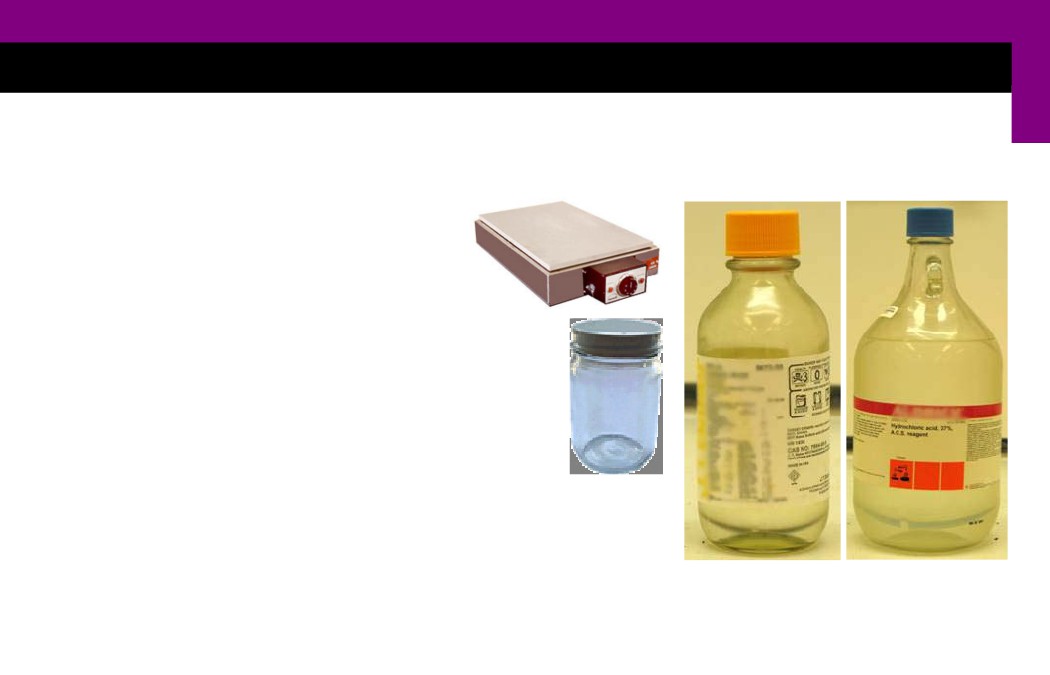
• Binary components (e.g., device containing
two liquid-filled glass jars)
• Container of liquid on heating device
• Chemicals such as carbon tetrachloride, sulfuric
acid (battery acid, DEA List II Regulated
Chemical), and hydrochloric acid (muriatic acid,
DEA List II Regulated Chemical)
Production - It is unlikely that phosgene would be
produced by following the typical improvised production
recipe.
Product - At room temperature, phosgene is a poisonous
gas that may appear colorless or as a white to pale yellow
cloud. At low concentrations, it has a pleasant odor of
Sulfuric and Hydrochloric Acid
newly mown hay or green corn; but, its odor may not be
Reagent Bottles
noticeable. At high concentrations, the odor may be strong
FOR OFFICIAL USE ONLY/LAW ENFORCEMENT SENSITIVE
and unpleasant.
FOR OFFICIAL USE ONLY/LAW ENFORCEMENT SENSITIVE
Mustard - Indicators and Warnings
25
FOR OFFICIAL USE ONLY/LAW ENFORCEMENT SENSITIVE
MUSTARD
MUSTARD
Indicators and Warnings
FOR OFFICIAL USE ONLY/LAW ENFORCEMENT SENSITIVE
26
Mustard (HD, sulfur mustard) is a blister agent that was one of the most widely used military chemical
agents in World War I. It is a viscous liquid at room temperature and poses a contact and vapor hazard.
Mustard has no commercial uses. One of its precursors and degradation products, a commonly used
industrial chemical, is used in the manufacture of inks and dyes.
Key Indicators
•
Basic laboratory equipment (flasks, heaters,
condensers, vacuum aspirators, drying tubes,
etc.)
•
Improvised distillation equipment
•
Improvised safety equipment such as rubber
gloves and masks
•
Chemicals, such as acetone, calcium
hypochlorite, 2-chloroethanol (ethylene
chlorohydrin), ethanol, ethylene, hydrochloric
acid (muriatic acid, DEA List II Regulated
Chemical), petroleum ether, sodium hydroxide
Simulated Laboratory Setup for
(lye), sodium sulfide nonahydrate, powdered
Preparation of Mustard from
sulfur, sulfur dichloride, sulfuric acid, and
thiodiglycol (battery acid, DEA List II Regulated
Thiodiglycol
Chemical)
FOR OFFICIAL USE ONLY/LAW ENFORCEMENT SENSITIVE

FOR OFFICIAL USE ONLY/LAW ENFORCEMENT SENSITIVE
Mustard synthesis requires some ground glass jointed glassware. All of the laboratory equipment is
readily available from commercial sources.
Simulated Laboratory Setup
27
FOR OFFICIAL USE ONLY/LAW ENFORCEMENT SENSITIVE
MUSTARD
Production
MUSTARD
Product
FOR OFFICIAL USE ONLY/LAW ENFORCEMENT SENSITIVE
28
Variability of Color
Pure mustard is a liquid at room temperature and varies in color from colorless to pale yellow. Impure
mustard can vary in color from pale yellow to dark brown or black with pieces of yellow elemental
sulfur. Mustard has a garlic-like odor. In impure forms, it has a garlic-horseradish odor. It is viscous at
room temperature.
Pure
Impure
Colorless/Clear Pale Yellow
Dark Brown/Black
Typical Appearance of
Crude Mustard
FOR OFFICIAL USE ONLY/LAW ENFORCEMENT SENSITIVE
FOR OFFICIAL USE ONLY/LAW ENFORCEMENT SENSITIVE
Anthrax - Indicators and Warnings
29
FOR OFFICIAL USE ONLY/LAW ENFORCEMENT SENSITIVE
ANTHRAX
ANTHRAX
Indicators and Warnings
FOR OFFICIAL USE ONLY/LAW ENFORCEMENT SENSITIVE
30
Bacillus anthracis is the disease-causing agent of anthrax. It is a naturally occurring, spore-forming soil
bacterium that be can cultured and grown in quantity in a laboratory setting.
Key Indicators
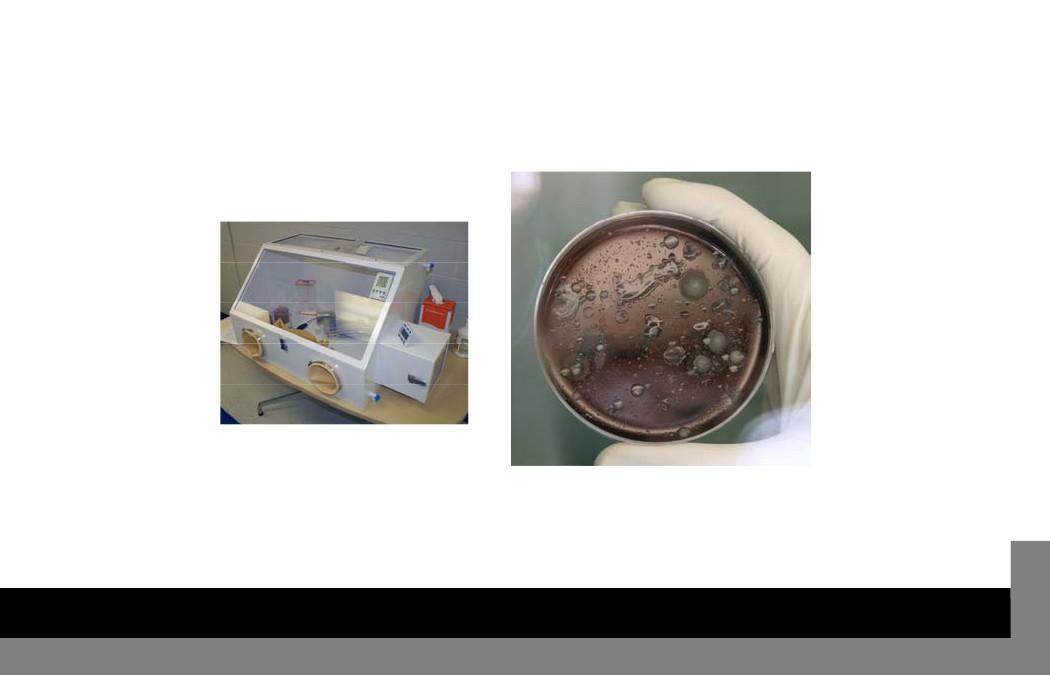
• Basic laboratory equipment and
• Mortar and pestle
glassware
• Bleach
• Microbiological equipment such as
• Chemicals such as
agar, growth medium, cell
acetone, bleach and
spreader, microspatula, incubator,
hydrochloric acid (muriatic
petri plates, and pipettes
acid, DEA List II Regulated
• Biohazard bags
Chemical)
• Filters or equivalent (e.g.,
cheesecloth)
• Glove box
• Improvised safety equipment such
as latex gloves and masks
• Antibiotics
Incubator
FOR OFFICIAL USE ONLY/LAW ENFORCEMENT SENSITIVE
FOR OFFICIAL USE ONLY/LAW ENFORCEMENT SENSITIVE
Generation of anthrax begins with obtaining the bacterium from an existing culture or isolation from the
environment, then growing the bacterium in a growth medium. After inducing sporulation, the spores
are harvested and processed for dissemination.
Glove Box
Growth Media with
Simulated Anthrax
31
FOR OFFICIAL USE ONLY/LAW ENFORCEMENT SENSITIVE
ANTHRAX
Production
ANTHRAX
Product
FOR OFFICIAL USE ONLY/LAW ENFORCEMENT SENSITIVE
32
Laboratory-generated anthrax spores appear as a white to gray powder. A crude powder may have
differing color or texture depending on the methods of growth and processing.
Simulated Crude Anthrax Powder
FOR OFFICIAL USE ONLY/LAW ENFORCEMENT SENSITIVE
FOR OFFICIAL USE ONLY/LAW ENFORCEMENT SENSITIVE
Arsine - Indicators and Warnings
33
FOR OFFICIAL USE ONLY/LAW ENFORCEMENT SENSITIVE
ARSINE

ARSINE
Indicators and Warnings
FOR OFFICIAL USE ONLY/LAW ENFORCEMENT SENSITIVE
34
Arsine is a highly toxic colorless gas.
Key Indicators
• Laboratory glassware
• Bunsen burner
• Dry ice
• Chemicals such as arsenic
trioxide, hydrochloric acid
(muriatic acid, DEA List II
Regulated Chemical), sulfuric
acid (battery acid, DEA List II
Regulated Chemical), zinc
arsenide, and zinc powder
(glittery bluish-white solid)
Diagram from Improvised
Laboratory Setup
Production Literature Showing
Laboratory Setup
FOR OFFICIAL USE ONLY/LAW ENFORCEMENT SENSITIVE
Production
FOR OFFICIAL USE ONLY/LAW ENFORCEMENT SENSITIVE
Arsine gas is generated through a reaction of combining various chemicals with acid. Some production
setups are complex, requiring ground glass jointed laboratory glassware, whereas others are relatively
simple binary reactions that can be carried out on-site and at a larger scale.
Simulated Laboratory Setup
Product
Arsine is a colorless gas, but the production method may generate a cloudy vapor. Arsine has a strong
garlic or onion odor at high concentrations but this may not serve as a useful warning property.
35
FOR OFFICIAL USE ONLY/LAW ENFORCEMENT SENSITIVE
ARSINE
Production and Product
ARSINE
FOR OFFICIAL USE ONLY/LAW ENFORCEMENT SENSITIVE
36
This page is intentionally left blank.
FOR OFFICIAL USE ONLY/LAW ENFORCEMENT SENSITIVE
FOR OFFICIAL USE ONLY/LAW ENFORCEMENT SENSITIVE
Phosphine - Indicators and Warnings
37
FOR OFFICIAL USE ONLY/LAW ENFORCEMENT SENSITIVE
PHOSPHINE
PHOSPHINE
Indicators and Warnings
FOR OFFICIAL USE ONLY/LAW ENFORCEMENT SENSITIVE
38
Phosphine is a toxic gas.
Key Indicators
• Laboratory glassware
• Nitrogen or carbon dioxide gas cylinder
• Chemicals such as aluminum phosphide,
calcium phosphide, hydrochloric acid (muriatic
acid, DEA List II Regulated Chemical), sodium
hydroxide (NaOH, lye), sulfuric acid (battery
acid, DEA List II Regulated Chemical), white
phosphorus (DEA List I Regulated Chemical),
and zinc phosphide
Diagram from Improvised
Production Literature Showing
Laboratory Setup
FOR OFFICIAL USE ONLY/LAW ENFORCEMENT SENSITIVE
FOR OFFICIAL USE ONLY/LAW ENFORCEMENT SENSITIVE
Production
Phosphine gas is generated through a reaction of combining various chemicals with an acid or water.
Some production setups are complex, requiring ground glass jointed laboratory glassware, whereas
others are relatively simple binary reactions that can be carried out on-site and at a larger scale.
Product
Phosphine is unstable and therefore difficult to store and deliver. It is a fire and explosion hazard. It is
generated in place when used as a commercially available fumigant against grain insects. At room
temperature, phosphine is a colorless gas that may smell like garlic. At high concentrations, it has the
foul odor of rotten fish.
39
FOR OFFICIAL USE ONLY/LAW ENFORCEMENT SENSITIVE
PHOSPHINE
Production and Product
PHOSPHINE
FOR OFFICIAL USE ONLY/LAW ENFORCEMENT SENSITIVE
40
This page is intentionally left blank.
FOR OFFICIAL USE ONLY/LAW ENFORCEMENT SENSITIVE
FOR OFFICIAL USE ONLY/LAW ENFORCEMENT SENSITIVE
Hydrogen Sulfide - Indicators and Warnings
41
FOR OFFICIAL USE ONLY/LAW ENFORCEMENT SENSITIVE
HYDROGEN SULFIDE

HYDROGEN SULFIDE
Indicators and Warnings
FOR OFFICIAL USE ONLY/LAW ENFORCEMENT SENSITIVE
42
Hydrogen sulfide is also known as sewer gas and naturally occurs in swamps, marshes, or sewer lines.
x
Key Indicators
x
• Laboratory glassware
x
• Portable gas monitor
• Sulfur-Containing Compound
x
x
x
Portable Gas Monitor
Sulfur-Containing
Production
Compound
Hydrogen sulfide is readily generated and involves minimal setup.
Product
At room temperature, hydrogen sulfide is a colorless gas that smells like rotten eggs.
FOR OFFICIAL USE ONLY/LAW ENFORCEMENT SENSITIVE
FOR OFFICIAL USE ONLY/LAW ENFORCEMENT SENSITIVE
V Series Nerve Agents - Indicators and Warnings
43
FOR OFFICIAL USE ONLY/LAW ENFORCEMENT SENSITIVE
V SERIES NERVE AGENTS

V SERIES NERVE AGENTS
Indicators and Warnings
FOR OFFICIAL USE ONLY/LAW ENFORCEMENT SENSITIVE
44
V series nerve agents affect the functioning of the nervous system. They are primarily a contact
hazard, but in very warm temperatures they can present an inhalation hazard as well.
Key Indicators
•
Sophisticated laboratory equipment and
setup
•
Easily procured chemicals such as ethyl
alcohol, ethyl ether and hydrochloric acid
(muriatic acid, DEA Class II Regulated
Chemical) and additional difficult to
procure precursors
Diagram from Improvised
Production Literature Showing
Laboratory Setup
FOR OFFICIAL USE ONLY/LAW ENFORCEMENT SENSITIVE

FOR OFFICIAL USE ONLY/LAW ENFORCEMENT SENSITIVE
VX production, as detailed in improvised production literature, is a relatively difficult three-step process
requiring ground glass jointed glassware and posing a danger to the operator due to its high toxicity and
requires a skilled chemist. Some of the laboratory equipment can be improvised and/or purchased from
laboratory supply houses.
Simulated Laboratory Setups for VX Production
45
FOR OFFICIAL USE ONLY/LAW ENFORCEMENT SENSITIVE
V SERIES NERVE AGENTS
Production
V SERIES NERVE AGENTS
Product
FOR OFFICIAL USE ONLY/LAW ENFORCEMENT SENSITIVE
46
Variability of Color
Pure VX appears as a colorless, oily liquid. Impure VX appears as an oily liquid with a consistency
similar to dishwashing liquid and can range in color from straw to amber.
Pure
Colorless/Clear
Straw
Amber
V nerve agents have no distinct odor in the pure form. In an impure form, there may be odors from
residual solvents not removed during the production process.
FOR OFFICIAL USE ONLY/LAW ENFORCEMENT SENSITIVE
FOR OFFICIAL USE ONLY/LAW ENFORCEMENT SENSITIVE
Nicotine - Indicators and Warnings
47
FOR OFFICIAL USE ONLY/LAW ENFORCEMENT SENSITIVE
NICOTINE
NICOTINE
Indicators and Warnings
FOR OFFICIAL USE ONLY/LAW ENFORCEMENT SENSITIVE
48
Nicotine is an inhalation and contact poison that readily absorbs through skin and mucous membranes.
Nicotine sulfate is sold as a 40 percent nicotine sulfate concentrate under trade names that include
Black Leaf 40 or Tender Leaf Plant Insect spray.
Key Indicators
• Improvised distillation equipment
• Laboratory glassware
• Mortar and pestle
• Filters
• Cigarettes, chewing tobacco, snuff
• Black Leaf 40 (pesticide)
Cigarettes
Chewing Tobacco
• Chemicals such as calcium hydroxide solution
(lime water), ethyl ether (DEA List II Regulated
Chemical) and isopropyl alcohol
FOR OFFICIAL USE ONLY/LAW ENFORCEMENT SENSITIVE
FOR OFFICIAL USE ONLY/LAW ENFORCEMENT SENSITIVE
Nicotine can be isolated from tobacco products by extracting and then filtering the mixture.
Chewing Tobacco
Heating
Filtration
Filtered Extract
49
FOR OFFICIAL USE ONLY/LAW ENFORCEMENT SENSITIVE
NICOTINE
Production
NICOTINE
Product
FOR OFFICIAL USE ONLY/LAW ENFORCEMENT SENSITIVE
50
Variability of Color
In its pure state, nicotine can be colorless to yellow in color, but the product of an improvised laboratory
may be darker in color.
Pure
Colorless/Clear
Brown
Residue from Isolating
Nicotine from Cigarettes
FOR OFFICIAL USE ONLY/LAW ENFORCEMENT SENSITIVE
FOR OFFICIAL USE ONLY/LAW ENFORCEMENT SENSITIVE
Adamsite - Indicators and Warnings
51
FOR OFFICIAL USE ONLY/LAW ENFORCEMENT SENSITIVE
ADAMSITE
ADAMSITE
Indicators and Warnings
FOR OFFICIAL USE ONLY/LAW ENFORCEMENT SENSITIVE
52
Adamsite (DM) is a riot control agent that induces vomiting.
Key Indicators
• Laboratory glassware
• Mass Balance
• Condenser, funnel
• Hot plate, oil bath or heating mantel
• Ice bath
• Thermometer or temperature probe
• Filters
Pyridine and Diphenylamine
• Chemicals, such as arsenic trichloride, benzene,
diphenylamine, hydrochloric acid (muriatic acid,
DEA List II Regulated Chemical) and pyridine
FOR OFFICIAL USE ONLY/LAW ENFORCEMENT SENSITIVE
FOR OFFICIAL USE ONLY/LAW ENFORCEMENT SENSITIVE
In this improvised production method, adamsite is created through a chemical reaction involving
combining several chemicals, heating, cooling, and filtering.
Simulated Reaction
Filtering
Setup
53
FOR OFFICIAL USE ONLY/LAW ENFORCEMENT SENSITIVE
ADAMSITE
Production

ADAMSITE
Product
FOR OFFICIAL USE ONLY/LAW ENFORCEMENT SENSITIVE
54
At room temperature, pure adamsite is a yellow crystalline solid. Crude adamsite can appear green or
beige.
Variable Appearances of Crude
Adamsite
FOR OFFICIAL USE ONLY/LAW ENFORCEMENT SENSITIVE
FOR OFFICIAL USE ONLY/LAW ENFORCEMENT SENSITIVE
Improvised Binary Dissemination Techniques -
Indicators and Warnings
55
FOR OFFICIAL USE ONLY/LAW ENFORCEMENT SENSITIVE
IMPROVISED BINARY DISSEMINATION TECHNIQUES
IMPROVISED BINARY DISSEMINATION TECHNIQUES
Indicators and Warnings
FOR OFFICIAL USE ONLY/LAW ENFORCEMENT SENSITIVE
56
Key Indicators:
• Presence of an acid
• Proximity of two chemicals (two
liquid containers or a liquid and a
solid)
• Larger concealed packages
• Beakers or glass bottles
• Tin cans or other containers
A number of improvised production manuals describe the combination of two chemicals to create
arsine, cyanide, phosgene, or phosphine gases.
FOR OFFICIAL USE ONLY/LAW ENFORCEMENT SENSITIVE
FOR OFFICIAL USE ONLY/LAW ENFORCEMENT SENSITIVE
TSWG MISSION:
Conduct the U.S. National Interagency Research and Development
program for Combating Terrorism through rapid research,
development, and prototyping.
For more information or to report information concerning
suspicious or criminal activity potentially related to terrorism,
contact:
Your local FBI Joint Terrorism Task Force
FBI regional phone numbers can be found at
FOR OFFICIAL USE ONLY/LAW ENFORCEMENT SENSITIVE
NATO UNCLASSIFIED
Foreword
The term
“counterinsurgency”
(COIN) is an
The document is divided into three parts:
emotive subject in Germany. It is generally
•
Part A provides the basic conceptual
accepted within military circles that COIN is an
framework as needed to give a better
interagency, long-term strategy to stabilise a crises
understanding of the broader context. It
region. In this context fighting against insurgents
specifically describes the overall interagency
is just a small part of the holistic approach of
approach to COIN.
COIN. Being aware that COIN can not be
achieved successfully by military means alone, it
•
Part B shifts the focus to the military
is a fundamental requirement to find a common
component of the overall task described
sense and a common use of terms with all civil
previously.
actors involved.
•
Part C contains some guiding principles to
However, having acknowledged an Insurgency to
stimulate discussions as well as a list of
be a group or movement or as an irregular activity,
abbreviations and important reference
conducted by insurgents, most civil actors tend to
documents.
associate the term counterinsurgency with the
The key messages of the “Preliminary Basics for
combat operations against those groups. As a
the Role of the Land Forces in COIN“ are:
result they do not see themselves as being
involved in this fight. For that, espescially in
•
An insurgency can not be countered by
Germany, the term COIN has been the subject of
military means alone.
much controversy.
•
Establishing security and state order is a long-
Germany has resolved this challenge with two
term, interagency and usually multinational
steps. First, in national discussions, the term
strategy (no military operation) in which the
COIN was replaced by the paraphrase
government of the country affected by
“establishing security and state order in crises
insurgency has the lead while the other
areas” (Herstellung von Sicherheit und staatlicher
nations and international organisations
Ordnung in Krisengebieten). Secondly, Germany
perform a supporting role.
has redefined the term insurgency as the “process
•
The military’s contribution to implementing
of destabilisation caused by political, economic
this strategy is, in principle, a cross-service
and/or social grievances, which affects both the
support task for the Bundeswehr.
effectiveness and legitimacy of the governmental
system; this process is exacerbated by insurgent
•
The general approach to describing the role of
activity”. This definition
- in contrast to the
the land forces is through the Triumvirate of
understanding of insurgency as a group or
CLEAR - HOLD - BUILD.
movement or as an activity - focusses on the real
This document specifies the tasks to be performed
challenge in
COIN-missions and leads
by the land forces in support of COIN. All these
automatically to a much clearer understanding of
tasks are mentioned in the Army Regulation
COIN. It must be a main aim to enable our
(HDv)
100/100
- however, this document
civilian co-actors in theatre to accept the COIN-
deliberately assumes a different systematic
apporach as a foundation for fruitful cooperation.
approach to emphasise the individual tasks
The present document does not constitute a
particularly relevant to COIN. As a result, it is
directive. It is meant to convey information,
more in line with the “Allied Joint Doctrine for
stimulate reflection on the topic and provide
Counterinsurgency (COIN) - AJP-3.4.4” currently
points for discussions. It describes the role of land
under development, which will be useful for the
forces at the tactical level, addresses the divisions
dialogue with Allies.
of capability development and instruction/training
The “Preliminary Basics for the Role of Land
at Army schools and training centres, and follows
Forces in COIN” will be adapted once the
international and national basic concepts currently
previously mentioned international and national
under development1.
basic concepts are available. By the same token,
Army Office Section I
1
(1), bearing overall
1
“Allied Joint Doctrine for Counterinsurgency
responsibility for this document, welcomes any
(COIN)
- AJP-3.4.4”,
“Konzeptionelle
suggestions for improvement. In the fullness of
Grundvorstellungen zum militärischen Beitrag
time this document will be superseded by the
zur Herstellung von Sicherheit und staatlicher
production of command and control regulations
Ordnung in Krisengebieten” (Basic Conceptual
for the Arms and Services.
Guidelines for the Military Contribution to
Establishing Security and State Order in Crisis
Areas) and “Joint Operational Guidelines 01/04
Counterinsurgency (COIN)”.
NATO UNCLASSIFIED
NATO UNCLASSIFIED
Contents
Part A - Understanding the Overall Context
1. Insurgency and Insurgents
1
1.1 Definition
1
1.2 The root causes of insurgency
1
1.3 Characterisitics of INS
1
1.4 Means of destabilisation
1
1.5 Possible INS weak points
2
1.6 Conclusions
2
2. Establishing security and state order in crisis areas
3
2.1 Definition
3
2.2. Characteristics
3
2.3 Support by international actors
3
2.4 The role of armed forces
4
2.5 The significance of the information environment
4
2.6. Summary
5
Part B - The Military Role in Establishing Security and State Order in crises areas
3. Principles of the military role in establishing security and state order
7
3.1 Principles and overview
7
3.2 CLEAR
8
3.3 HOLD
8
3.4 BUILD
9
3.5 What is SHAPE?
9
3.6. Summary
10
4. Military operations and measures
11
4.1 Enabling/supporting measures
11
4.2 Eliminating a threat
13
4.3 Creating a safe and secure environment
15
4.4 Consolidating a safe and secure environment
16
5. Tactical tasks
19
5.1 General tasks during land operations
19
5.2 Combat tasks
21
5.3 Control tasks
21
5.4 Consolidating
22
5.5 Other tasks
22
6. Contributions and training provided by the forces
23
6.1 Land forces in general
23
6.2 Contributions by land forces
24
6.3 Contributions made by Special Forces
44
6.4 Contributions made by Air Forces
44
6.5 Contributions by Naval Forces
47
Part C - Annex
C1 Guiding principles on the conduct of military measures to establishing security and state order
48
C2 List of abbreviations
49
C3 Reference documents and recommended reading
51
NATO UNCLASSIFIED
NATO UNCLASSIFIED
1.3 Characterisitics of INS
INS are intent on destabilising state structures or
preventing their establishment. Their motives may
Part
A
be of materialistic, ethnic, religious, political,
national-separatist or spiritual nature. These main
Understanding the Overall
motives may be used as an excuse to justify
Context
violence, legitimise the insurgent organisation’s
claim to leadership and the leadership itself, and
to mobilise supporters. INS may also infiltrate
1. Insurgency and Insurgents
from abroad, pursuing completely different goals
that are not related to the situation in the country
1.1 Definition
concerned.
For the purpose of this document, insurgency2 is
the process of destabilisation caused by political,
INS are often difficult to identify as they mingle
economic and/or social grievances, which affects
with the population and/or receive support from
both the effectiveness and legitimacy of the
parts thereof. They usually do not feel bound by
governmental system; this process is exacerbated
international humanitarian law or national law.
by insurgent activity.
Besides, complying with universal international
law and human rights may be a closed book to
For the purpose of this document, an insurgent
them. Nevertheless, INS are bound by their own
(INS) is a person carrying out or supporting
values and standards, which are often linked to
irregular activities as part of insurgency. INS are
customs that are observed unconditionally,
usually members of a group or supporters of a
sometimes ignoring the consequences to life and
movement; although their motives usually differ,
limb, which strikes us as outlandish.
they are united in the aim of extending or
preserving the state of instability.
To realise their interests and achieve their
intentions and goals, either directly or at least
1.2 The root causes of insurgency
indirectly, INS are open to all potential courses of
action, including operations in the information
The wide range and scope of insurgent activity
make it very hard to give a single general
environment.
description. There is often a combination of
Although their organisational structure must be
causes that lead to insurgency, such as poverty,
analysed on a case-by-case basis, the majority of
unemployment, a poor level of education, ethnic,
INS organisations are characterised by a small
social, political or religious prejudice, conflicts or
number of authoritarian, charismatic leaders
extremist tendencies but also inner-governmental
among whom tensions and rivalries may occur.
tensions and irregularities or wars between states.
INS organisations are rarely homogeneous. Every
It is thus primarily social, economic and political
INS organisation needs material resources. In
grievances that make parts of the population think
many cases, financial support comes from external
that the government lacks the ability or legitimacy
organisations or individuals, often even from
to establish or preserve state order and/or to
foreign states. The resulting dependencies may
provide the population with basic supplies and
lead to internal conflicts and reveal moral
services. As a result, the government will be at
controversies within the INS organisation.
risk of losing its legitimacy and effectiveness as
law enforcement authority or - if it has lost them
1.4 Means of destabilisation
already - it will eventually lapse into chaos and
Usually INS neither have the resources nor the
anarchy.
will to take rapid and direct action against a state
It is against this backg0round that INS are given the
and its allies by military means. But they do have
opportunity and motivation for armed struggle,
a wide range of means of destabilising state
which further accelerates the destabilisation
structures.
process outlined above.
INS often employ covert and / or irregular tactics,
even at the political level, with the objective of
undermining the population’s loyalty to the state
and gaining support for their own cause.
For this purpose, they may use propaganda to
directly address the population, discredit the
2 These definitions result from the national
government and draw a positive image of
comments on the Allied Joint Doctrine for
themselves. Whilst at the same time, however,
Counterinsurgency
(COIN)
- AJP-3.4.4
-
they may also terrorise the population to
Ratification Draft
1 dated 29 January 2010.
intimidate and subjugate it.
They are of preliminary character until adopted
by the Bundeswehr Terminology Committee.
- 1 -
NATO UNCLASSIFIED
By acts of sabotage and attacks and by taking
The involvement of INS in organised crime often
hostages, INS expose the inability and weakness
contradicts the values and moral standards
of the government and demonstrate their own
claimed by INS. If this fact is conveyed to the
ability to act. Their motive for this is not so much
population, the position of INS will be weakened.
to inflict objective material losses on the state but
to spread fear and chaos among the population and
1.6 Conclusions
office holders. This effect is subsequently
•
INS are a symptom of insurgency and not the
magnified by media coverage and propaganda.
cause.
International actors, too, become a target for INS
•
INS activities in their entirety are primarily
attacks for their support of government authorities
aimed at producing effects in the information
(cf. Chapter 2.3). From the INS point of view, the
environment; causing objective material
fact that the populace has no emotional ties with
losses is usually of secondary importance.
the international actors and the resulting
•
The relation between the state and the INS
possibility to discriminate against them as
organisation is one marked by rivalry. INS
enemies, spies, occupying forces etc. often favour
feel less bound by legal and ethnic constraints
the subsequent exploitation of media and
while the state and its allies mostly have
propaganda purposes.
better resources.
If the maintenance of state structures actually
•
Establishing security and state order requires
dependes on the presence of international security
to successfully fight the root causes of an
forces, INS will probably seek to undermine the
insurgency, primarily by civilian means.
latter’s sustainability. Since the sustainability of
democratically
authorised
forces
hinges
•
It is the population and its attitude that decide
particularly on the approval of the people in their
whether
insurgency
will
prevail.
home countries, their population may iself become
Consequently, analysing the situation in the
a target group for INS, i.e.
information environment is key to the
planning of counterinsurgency activities.
•
indirectly by deliberately causing losses on
the part of the forces employed, or
•
International actors operating against INS
themselves or merely against INS objectives,
•
directly by threatening to commit or actually
i.e. actors seeking to establish security and
committing terrorist attacks on the sending
state order, must prepare to face considerable
nation itself.
threat posed by irregular forces conducting
INS will therefore always seek to influence public
covert operations.
opinion in the sending nations by leveraging the
media.
1.5 Possible INS weak points
The increasing use of force is often (not always)
in conflict with the values represented by INS. It
jeopardises the bond of trust between INS and the
local population.
Information activities3 may help increase or create
this awareness among the population and thus
isolate INS in the long term.
By revealing their material dependencies, INS
may be discredited amongst the population.
The consistent channelling of funds or freezing of
assets and the curbing of arms smuggling may
impair INS capability of action.
Deliberately exacerbating factional and power
struggles between rival INS groups may create
insecurity and incapacity among INS.
3 Information activities are measures intended to
produce a particular effect on information
and/or information systems
(e.g. individuals,
organisational structures, processes).
- 2 -

NATO UNCLASSIFIED
2. Establishing security and state order
This may also be aimed at minimising and/or
in crisis areas
eliminating the existing or potential factors of
discontent6 to remove the breeding ground for
2.1 Definition
insurgency. Causes of discontent are insufficient
For the purpose of this document, establishing
•
food supplies,
security and state order in crisis areas is the
•
water supply, waste water disposal, hygiene,
entirety of political, economic, social, legal,
executive and psychological measures taken by
•
health care,
civilian actors4 and
/ or military forces to
•
housing (protection from the weather),
eliminate the causes of an insurgency. 5
•
energy supplies
2.2. Characteristics
•
security (protection from violence).
Historically, operations against insurgencies were
often understood as the fight against INS
This shows that the military component in
(counterinsurgency or counterguerilla operations,
establishing security and state order is but one tool
translated into German as Aufstands- und
to be used together with other "civilian"
Bandenbekämpfung), which is a one-dimensional
instruments. It is only in a comprehensive,
approach. Ignoring the actual causes of conflict
interagency approach that the root cause(s) of
usually led to cycles of violence and counter-
insurgencies can be tackled
(see Figure
1).
violence and not to a viable and sustainable
Establishing security and state order is primarily
solution to the problem.
the responsibility of nonmilitary actors and
Instead, the establishment of security and state
organisations.
order is seen today as a comprehensive,
interagency, medium or long-term strategy aimed
at sustaining or rebuilding the population’s
confidence in the state system and at improving its
living conditions. This means above all to satisfy
its basic needs (food, clothing, security).
Countering an insurgency requires establishing
and maintaining public security. This includes
reliably protecting the population from attacks and
assaults by INS and, in addition, establishing
and/or strengthening functioning state institutions
that are recognised and respected by local
population.
In parallel with working on the issue of public
security it is necessary to eliminate the socio-
economic causes of insurgency, for example, by
2.3 Support by international actors
launching
education
and
employment
In crisis areas the states themselves are often
programmes, activities for infrastructure and
incapable of countering the socio-economic
economic development, job-creation measures or
causes and the threats posed by INS since they
anti-corruption initiatives.
neither have sufficient resources nor effective,
well-organised state institutions. In this case, the
state concerned may request support from the
United Nations or other organisations and/or
individual states.
4 Civilian actors as defined in the Subconcept for
Civil-Military Cooperation in the Bundeswehr
(TK ZMZBw) are governmental and
nongovernmental organisations on the one
6 Factors of discontent are categories derived
hand, and the population, state structures and
from “International Humanitarian Law on the
relevant groups on the other.
Protection of Civilians in Times of War and on
5 This definition results from the national
the Protection of the Victims of Armed
comments on the Allied Joint Doctrine for
Conflicts”
(Geneva Conventions), which
Counterinsurgency
(COIN)
- AJP-3.4.4
-
describe basic supplies and services provided
Ratification Draft 1, dated 29 January 2010. It
to the population. Guaranteeing/reaching the
shall be preliminary until adopted by the
local minimum standards in these categories is
Bundeswehr Terminology Committee.
a matter of priority.
- 3 -

NATO UNCLASSIFIED
The sending nations will provide support by
One major challenge connected with this is
offering advice and guidance to shape the strategy
consistent
and coordinated
multinational
for establishing security and state order and will
cooperation between the international actors and
then implement this strategy in cooperation with
the local authorities.
the authorities of the state in question. But they
Much needed coordination may be complicated by
will only act on a temporary basis and on behalf of
the fact that international actors are considerably
the state concerned and hand over responsibility
restricted in their actions by the national
as soon as possible. Wherever possible,
requirements of the sending nations.
international actors should confine themselves to a
supporting role, helping the people to help
2.4 The role of armed forces
themselves. Excessive direct assistance and
Some of the tasks connected with the
reconstruction aid will create a dependency that is
establishment of security and state order can only
counter-productive and contrary to building
be performed by armed forces with special
confidence between the population and the
capabilities and equipment needed for this
government. Encouraging the local people to take
purpose. Among these tasks are, to varying
the initiative and helping them to successfully
degrees, the collection of information, the
implement their own projects will not only
establishment and maintenance of public order,
improve their self-confidence and trust in the
and the protection of the population, governmental
government and its organisations but also raise the
institutions and critical infrastructure.
Acceptance of foreign actors in the country.
Effective protection cannot be given by adopting a
passive wait-and-see strategy. On the contrary, the
armed forces must be proactive based on sound
analysis, elimination of the threat and, where
necessary, deter it by a show of force.
Basically, this is a task for local police forces. If
they are not available or lack the required
capabilities, armed forces will be employed. A
high level of INS threat or acute shortcoming of
the local police may result in armed forces being
mainly or even exclusively employed for a limited
time.
The military role in establishing security and state
order (Figure 2) generally includes the following
measures:
•
Eliminate a threat
•
Create a safe and secure environment
•
Consolidate the safe and secure environment
•
Carry out enabling/supporting measures
If the host countries armed forces are not strong
enough, the state may request international
assistance or support as specified under Chapter
2.3. The potential commitment of German armed
forces in support of establishing security and state
order in the country of deployment is described in
On no account must international actors - be they
Part B of this document.
civilian or military - assume the attitude of an
occupying force. They often have a cultural
2.5 The significance of the information
backg0round that is completely different from the
environment
customs, values and standards in the country
concerned. Establishing security and state order
The attitude and demeanour of the population are
will, however, be particularly effective if
key to establishing security and state order. What
international actors adopt a policy that is in line
is of crucial importance in this regard is the
with the local customs and standards and therefore
population’s perception of INS and at the same
likely to create consensus. For this reason, they
time its perception of government actors and their
must have a high level of cultural awareness.
supporters.
Decision makers, in particular, need advice on
cultural matters tailored to the special features of
the country of deployment.
- 4 -
NATO UNCLASSIFIED
The strategic significance of the information
2.6. Summary
environment, especially with regard to producing
•
Establishing security and state order is
regional and global strategic effects, encourages
primarily a civilian responsibility which is
INS to concentrate their efforts in this field to
aimed at maintaining, restoring and
compensate for their inferiority in other areas.
establishing a stable state system in the long
run.
Transparency, media coverage and political
processes help INS reach their goals. They feel
•
This requires above all to provide a safe and
less bound by restrictions in their choice of means
secure environment focused on giving the
than the actors in the country of deployment and
people a subjective sense of security. Military
their allies who follow constitutional law. Actual
forces can make a contribution to this goal.
or even alleged misconduct of government and
•
The key to success in establishing security
international actors and undesired side effects of
and state order is to implement a
military and police measures (civilian casualties,
multinational,
interagency
information
violation of cultural norms and values) but also
strategy and consistently gear all activities
activities of INS themselves are exploited for their
towards the desired effect to be achieved in
effects in the information environment to
the information environment.
influence, if possible, all persons in the country of
•
The long-term goal is to improve the
deployment, in the sending nations and elsewhere.
INS have recognised the potential of the
economic and social conditions, e.g. by
raising the level of education, creating new
information environment and use it to their
benefit.
They capitalise on the fact that
jobs, providing incentives for economic
growth, improving the infrastructure or
international forces on operations are exposed to
permanent media coverage. In contrast to the large
developing an appropriate political culture
based on consensus.
number of positive events, misconduct of the
chain of command and negative side effects of the
•
The short-term goal is to carry out measures
conduct of operations will rapidly trigger global
that produce an immediate visible effect for
feedback. This may have a negative impact on the
the population, i.e. measures that create a
acceptance of the use of military means - both in
palpable difference in their living conditions
the country of employment and in the sending
such as the provision of emergency
nations of international actors.
accommodation, clothing and sufficient food.
All efforts to establish security and state order
•
With the threat inherent to INS, establishing
must therefore be planned and implemented
security and state order may require active
against the backg0round of how they might be
and offensive measures to counter INS in
perceived by the public. The attitude and
order to prevent or impede them from taking
demeanour of the population can be influenced by
violent action.
military information activities and civilian public
•
If a state has not enough forces and assets
relations work. Emphasising positive events and
available to counter an insurgency it may
developments is a first step to stabilise a
request assistance from the international
population traumatised by violence and terror.
community or from individual states and
Although this cannot make up for the absence of
organisations. In any such case action taken
public security and economic rebound nor for the
to establish security and state order must be
non-satisfaction of primary and secondary needs,
aimed at stabilising state structures and laying
it may reinforce positive developments and
the foundation for the rule of law, enabling
alleviate negative effects. Viewed as such,
the state to take control of its own affairs.
information activities and public relations work
are key to establishing security and state order.
This includes gearing civilian and above all
military activities towards the effect they have in
the information environment. At the same time, it
is crucial to completely deny the effective use of
information by INS. In this context, however, the
rights to freedom of opinion and freedom of the
press must be observed.
- 5 -

NATO UNCLASSIFIED
Figure 1 - Interagency approach to establishing security and state order in crisis areas.
Figure 2 - Military component as an integral part of the interagency approach
- 6 -

NATO UNCLASSIFIED
maintain the support of the local population. For
this purpose, it is crucial to effectively implement
the protection of the population who must feel that
the security forces exercise and live up to their
Part
B
responsibility for the people. This requires strong
and sustained presence throughout the area,
The Military Role in Establishing
geared to personal contacts with the population
even if this increases the risk for friendly forces at
Security and State Order
least temporarily. This presence is usually ensured
by smaller, independent units widely dispersed in
3. Principles of the military role in
the area and tailored to the demands of the given
establishing security and state order
situation/mission.
3.1 Principles and overview
The military role in establishing security and state
order in crisis areas involves an interagency
strategy which must be planned and implemented
by the Armed Forces as a whole, at multinational
level and, as a matter of principle, in cooperation
or with the approval of the responsible local
security forces.
For the purpose of restoring governmental power
in the country of deployment it is crucial to
closely cooperate with local security forces
(police, armed forces, intelligence community).
Depending on their level of readiness, the security
forces must be increasingly integrated into
operations and ultimately take over responsibility
The leaders of these mixed subunits (platoon or
in its entirety
(e.g. partnering7). This is an
patrol leaders) must have the equipment and the
indispensable prerequisiste for successfully
skills to exploit the entire range of means and
concluding the military deployment which is not
capabilities available and integrate them into
to be confused with the successful completion of
current operations. Besides they must know how
all measures taken in support of establishing
to conduct talks for the purpose of collecting
security and state order in crisis areas since these
information.
measures must continue even after our own forces
have terminated their military commitment. In this
With the subunits operating independently, every
respect, the withdrawal of own forces from the
soldier must be prepared to take quick decisions
country of deployment is but one part of the
with far-reaching consequences that go beyond his
objective in the process of establishing security
scope of responsibility.
and state order in crisis areas.
As a result, there is a need for cultural awareness
The key to success in establishing security and
and responsible action at all levels and for the
state order with regard to the military role in this
consistent application of the principle of mission
process is the population and/or its subjective
command. Depending on their responsibilities, the
perception of the situation. Analysing the needs of
soldiers must be familiar with and understand the
the population against its cultural backg0round is
operational environment, this means the cultural,
thus of great importance.
economic, social and political backg0round.
The focus of all military measures is to uphold or
Ultimately, however, the people’s security can
build and enhance the population’s confidence in
only be guaranteed if the forces are determined to
the security forces and/or governmental structures.
provide lasting protection from attacks by INS.
This may require to weigh the demands of
This means that the military commitment is not
protection of the population against those of force
primarily aimed at achieving a tactical success
protection.
against INS. The intended effect of any action
must follow the subjective perception among the
One particular feature of the military role in
population, which must be the prime measure of
establishing security and state order is that overall
its worth. Whatever channels of communication
success cannot be achieved at one crucial point
are available must utilised for this purpose. In this
but depends on the overall impact of individual
context, information operations have an important
successes and failures at local level.
function. The aim of any action is to gain and
This underlines the importance of small,
sometimes dismounted units and subunits.
7 See AJP-3.4.4 (RD2), No. 0580.
- 7 -

NATO UNCLASSIFIED
For the purpose of establishing security and state
In this situation, any action by friendly forces
order in crisis areas military leaders will task their
against INS, their structures and safe havens is
subordinates to take the following measures:
mainly offensive by nature.
•
Eliminate a threat
•
Create a safe and secure environment
•
Consolidate the safe and secure environment,
and
•
Carry out enabling/supporting measures.
On operations, these measures will not be taken
separately but concurrently even at local level.
The local character of the military role in
establishing security and state order in crisis areas
results from the proportionate relation of the
previously mentioned measures on the ground. It
is summarised by the threesome of CLEAR,
HOLD and BUILD (see Figure 3).
To avoid jeopardising the overall success of
establishing security and state order it must be
ensured that uninvolved people do not come to
harm and that collateral damage is avoided
wherever possible. On the one hand, offensive
military action may be tactically successful in that
it causes considerable harm to INS but on the
other hand it may alienate the population from the
security forces and provoke resistance against the
state system. This must be avoided at all costs.
Any action must therefore be judged not only by
its physical effect but also by the repercussion on
the information environment and thus by its
psychological impact on both the population and
on INS. It is indispensable to interlink offensive
Figure 3 - CLEAR-HOLD-BUILD
measures and information activities.
3.3 HOLD
3.2 CLEAR
HOLD begins when allied forces and/or civilian
CLEAR is when INS control an area and/or are so
actors can manoeuvre freely in an area and have
aggressive that friendly forces, population and/or
assumed control of the largest part thereof.
members of governmental organisations are under
The objective in HOLD is to create a safe and
permanent threat and constantly subject to hostile
secure environment which is the prerequisite for
acts and as a result it is not possible to maintain
improving the people’s situation in political,
enduring civil order.
social and economic terms.
The objective in CLEAR is to force INS into the
Accordingly, actions in HOLD are focused on
defensive and to prevent them from taking action
operations and measures intended to create and
against friendly forces, civilian organisations,
preserve a safe and secure environment9. These
governmental structures or the population.
operations or measures are aimed at increasing or
This allows friendly forces to gain the scope of
stabilising the subjective sense of security among
action needed to enforce public order. One
the people, at dispelling its fears of terror and
criterion for success in CLEAR is that friendly
violence, and at building confidence in the
forces can manoeuvre freely while keeping the
government and its security agencies. Although
risk at an acceptable level.
actions in HOLD may at least initially still be
accompanied by direct operations or measures
Actions/operations in CLEAR are primarily aimed
against INS, the focus is on the effects produced
at eliminating threats by resticting INS courses of
among the population.
action or denying them the capability to take
action. This is to gain control of the area and
ensure friendly forces freedom of action.8
9 See Chapter 4.3 on measures to “create a safe
8 See Chapter 4.2 “Eliminate a threat”.
and secure environment”.
- 8 -

NATO UNCLASSIFIED
It is important to demonstrate commitment and
The objective in BUILD is to enable the
resolve in the area and to enforce or establish
responsible non-military authorities to provide for
public order to give the population a sense of
permanent local security and public order without
security while deterring INS. This may also
external support, and thus to terminate the military
include performing police or police-like tasks if
commitment to establishing security and state
the responsible forces are not available in
order.
sufficient numbers. If necessary, the population
In this phase the military activitities focus on
must be informed in advance about the reasons for
setting up and consolidating national security
any restrictions or inconvenience this may cause.
forces in the country of deployment. They may
have to be trained, advised and sustainably
qualified to perform control and supervisory
functions independently and reliably. This
includes to win and retain / secure the confidence
of the people. If multinational police forces are
not available, this task may also be fulfilled by
friendly military forces.
The troops on the ground will gradually cease to
be the mainstay of operations, confining
themselves to an observer role.
They will remain a passive guarantor of security
who is almost invisible in public life.
The crucial criterion for a successful BUILD
phase is the independence of the local security
agencies.
Blatant deficiencies in supplies to the population
must be remedied by military resources, if need
be, because wherever friendly forces exercise
control they will be held responsible for any
existing grievances. In this context, the principle
of helping the people to help themselves must be
applied as early as possible to counter a possible
sense of categoric entitlement among the
population, enhance the self-esteem of the locals
and prevent local economic developments from
being impeded.
In the end, HOLD also involves the need to
defend the control gained over the area against
attacks from INS, if necessary.
All in all, it is of increasing importance in HOLD
to consistently enhance civilian freedom of action
3.5 What is SHAPE?
and to support their activities. Military means
In the concept of the current NATO mission in
alone are insufficient to ensure security for more
Afghanistan, the previously mentioned triumvirate
than a limited period of time. Increasingly
of CLEAR - HOLD - BUILD is preceded by the
drawing on civilian commitment will stabilise the
SHAPE phase which basically serves to pave the
situation and allow the transition to BUILD.
way for the CLEAR - HOLD - BUILD approach.
The SHAPE phase is primarily aimed at setting up
3.4 BUILD
and subsequently augmenting not only friendly
BUILD begins when perceivable regional security
forces and assets but also and above all
has been established and public order achieved
local/national security forces. In concrete terms it
and when a positive development of the living
is about establishing, training and integrating
conditions becomes apparent that is when security
these forces into the conduct of friendly
must to permanently consolidated.10
operations. This enhances the sustainability of
friendly forces and, in addition, improves the
professionalism of the local/national security
forces and gives operations a “national face”. The
cooperation between friendly and local/national
forces opens up additional sources of information.
10 See Chapter 4.4 on measures to “consolidate a
safe and secure environment”.
- 9 -
NATO UNCLASSIFIED
With regard to INS, operations in the SHAPE
The focus of SHAPE will thus be on
phase are primarily conducted to
enabling/supporting and consolidating measures11.
•
identify/localise INS,
Demonstrating commitment throughout the area
and maintaining contact with the population
•
identify the main reasons and causes for the
exposes deployed forces to threats by INS that are
backing and support that INS receive from
in fact directed at governmental organisations.
(parts of) the population,
Besides the troops themselves may become the
•
drive a wedge between INS and the rest of the
target of INS attacks.
population,
•
reveal that INS goals and courses of action
3.6. Summary
prejudice the interest of and are detrimental to
•
The military commitment to establishing
the population,
security and state order is intended to support
•
restrict INS freedom of movement and
or strengthen the state structures of the
freedom of action (including impairment of
country of deployment; the multinational
their communication capabilities), and
military forces are not occupying forces.
•
isolate INS.
•
In this context military measures must not be
considered in isolation but have to be in line
with the interagency strategy.
•
Successful military measures to establish
security and state order always require a
strong visible commitment throughout the
area based on personal contact with the
population even if this increases, at least
temporarily, the risk for friendly forces.
•
The mainstay of the military commitment to
establishing security and state order are
usually smaller, independent subunits widely
dispersed in the area and tailored to the
demands of the given situation.
•
Any military action or inaction has an impact
On the whole, the spectrum of tasks performed by
on the information environment, especially
the armed forces in the SHAPE phase comprises:
because of the omnipresence of the media.
•
Support in establishing and training
•
Although it may be necessary to directly fight
local/national security forces and cooperation
the INS, the focus is always on gaining the
in the conduct of operations;
support and approval of the population.
•
Comprehensive information activities;
•
Military means can weaken INS but they
cannot destroy them. The root cause of
•
If required, the establishment of safe areas
insurgency, i.e. the political, social and/or
and the protective surveillance of flows of
economic grievances and the resulting
people;
resentment among parts of the population
•
Show of commitment throughout and control
against governmental institutions, must be
of the area (if possible, in cooperation with
alleviated or removed above all by non-
local/national security forces). In this respect,
military measures.
it is important to establish, develop and
maintain contact with the local population.
This is the only way to win confidence,
counter prejudice against foreign soldiers and
ultimately gather information;
•
Protection
of
individuals
and
objects/installations;
•
Support of national authorities in performing
sovereign duties;
•
Assistance in performing administrative tasks,
implementing reforms and conducting
elections;
•
Support of civilian organisations by providing
11 See Chapter
4.1 on enabling/supporting
protection
and
security
and/or
measures and Chapter
4.4 on measures to
supplies/services.
consolidate a safe and secure environment.
- 10 -
NATO UNCLASSIFIED
The focus here is on:
4. Military operations and measures
• The intent, capabilities, TTP12, motivation,
The military role in establishing security and state
structures of the different local pressure groups
order in crisis areas comprises the following
• The intent, capabilities, TTP, motivation,
measures:
structures, networking, strength, weapons and
•
Eliminate a threat
equipment of INS groups
•
Create a safe and secure environment
• The opinion, attitude, demeanour and needs of
the population
•
Consolidate the safe and secure environment,
and
• Local decision-making processes, power
structures and channels of communication
•
Take enabling/supporting measures
• Political, commercial, religious, ethnical and/or
4.1 Enabling/supporting measures
social structures of power and order, to include
the relevant actors in theatre
All military actions and operations must be
continually backed by enabling/supporting
• The conduct, reputation and courses of action
measures. In addition to combat service support
of local security forces and of security forces
and command support which are important for any
deployed
military operation but not specifically necessary
• Possibly imminent or existing security threats
for the establishment of security and state order,
special importance must be attached to military
• Perception of the different actors among the
intelligence, operations in the information
local population
environment, and civil-military cooperation.
Evaluating/analysing the usually diverse and
ample supply of intelligence and any other
Military intelligence
information is a particular challenge. This must be
The early detection of changes in public opinion,
achieved by a sufficient number of situation
of the realignment of forces and preparation of
analysis personnel. Any important evaluation and
INS activities is crucial for the planning and
analysis work that cannot be done for lack of
implementation of both civilian and military
personnel must be carried out at the home base
measures. For this purpose, comprehensive and
following the REACHBACK concept.
current information must be available. It enhances
The evaluation of the influencing factors must
the effectiveness of any friendly action and
also involve open sources (OSINT13) and civilian
operation and considerably contributes to the
experts.
effective protection of civilian and military actors.
As part of the situation assessment all available
For this reason, friendly information and
intelligence is systematically incorporated into a
intelligence, to include that of other military,
current, comprehensive and accurate situation
governmental and civilian elements, must be
picture which provides the basis for the estimate
incorporated into a permanently updated situation
of the situation and information to the
picture based on comprehensive situation
commander. The situation assessment ends with
assessment.
the military security estimate and comprises
The information needed by the commander must
recommendations for the further course of action.
be provided in a targeted manner to the
The analysis of the military intelligence situation
appropriate levels by using all assets available.
includes exercising a controlling influence on
The results achieved by deployed intelligence and
intelligence and reconnaissance for the purpose of
reconnaissance assets as part of continuous and
optimising the results produced (situation picture,
area-covering reconnaissance activities are
estimate of the situation). The intelligence made
complemented by the observations and
available to the subordinate units must be tailored
information of friendly forces performing other
to their needs, taking into account that the unit
tasks in theatre as well as by the
level does not have the personnel required to
findings/information of the military intelligence
analyse and process extensive documentation.
organisation. Gauging the public opinion at an
early stage is especially effective through face-to-
Information processing is the original task of
face communication.
S2/G2/J2/CJ2 elements, military intelligence
centre and geoinformation service at HQ level.
12 Tactics, Techniques and Procedures.
13 Open source intelligence
- 11 -

NATO UNCLASSIFIED
If information or assumptions need to be
Information operations help the commander see
consolidated or verified, friendly forces will be
the information environment as his scope of action
employed to perform concrete intelligence and
and understand it in its overall context and
reconnaissance missions to enhance the situation
dynamics. The personnel in charge of information
picture. Information that cannot be collected by
operations coordinate military information
friendly intelligence and reconnaissance forces is
activities and advise the commander on any
gathered by submitting an RFI14 to the higher
effects and consequences in the information
command to improve or consolidate the
environment. This is based on the interagency
operational
picture.
Intelligence
and
information strategy coordinated at political level,
reconnaissance operations
can be conducted
which defines the type and purpose of the
concurrent with other missions. It is therefore
operation and the goals to be achieved in the
always recommended that friendly forces be
information environment.
ordered
to
meet concrete
information
As a matter of principle, information operations
requirements in addition to other missions.
and their specific, coordinated activities in the
information environment serve the purpose of
Operations in the information environment
• influencing the decision-making process and
With the population and its subjective sense of
the behaviour of relevant actors in favour of
security at the centre of all activities, special
one's own objectives (key leader engagement),
importance must be attached to the information
environment to establish security and state order.
• weakening the will and capabilities of INS to
Any action taken reverberates in the information
wage conflict, and
environment, which may be perceived and
• preventing enemy information activities from
assessed differently both by the population and by
having an impact or at least reducing their
INS. This varying perception is often more
impact not only on one’s own situational
important to achieving the strategic goals than the
understanding and capabilities but also on the
actual, objective tactical effect of an action. For
understanding and perception among the
this reason, it is essential to influence the
population.
information environment and not to yield it to
INS. Operations in the information emvironment
Civil-military cooperation (CIMIC)
may enhance positive efforts and alleviate
negative side effects. At the same time, enemy
CIMIC is aimed at the cooperation with civilian
information activities and/or active exertion of
actors, i.e. civilian authorities, governmental/non-
INS influence on the information environment
governmental,
national
and international
must be prevented, put into perspective, impeded
authorities and
organizations, and with the
or restricted.
population in the country of deployment.
The key functions of CIMIC, i.e.
• shaping civil-military relations,
• providing civilian authorities and actors with
information, advice and support, and
• contributing to the command and control
process and supporting the operation,
are performed by CIMIC staff elements and
CIMIC forces. CIMIC functions related to the
(civilian) medical and health services are fulfilled
by the service personnel and assets of the
Bundeswehr Medical Service.
Integration, support, advice and information of
civilian actors are provided in compliance with the
relevant security provisions. Wherever possible,
Operations in the information environment are
this is coordinated with one’s own military intents
aimed at influencing the situational understanding,
and plans.
the will and capabilities of INS and other mission-
relevant actors for the purpose of one’s own
Other German ministries
mission accomplishment through the coordinated
Establishing security and state order is an
employment of adequate military assets. In this
interagency task which requires appropriate and
connection, information operations are of
targeted cooperation at equal terms. All persons
particular importance.
involved need to be aware that they pursue the
same goal and must coordinate their assets to
avoid undesired overlaps/duplication of effort, and
14 Request for Information
- 12 -

NATO UNCLASSIFIED
achieve synergetic effects. It is important to share
(OPSEC18) measures are a matter of course and it
expertise and to provide assistance and support at
also goes without saying that directives on and
all times. Besides it is of importance to draw on
orders for the transfer of military intelligence and
the experience of other ministries.
the handling of personal data must be complied
with.
If military operations and actions may have a
negative impact on other, civilian measures (or
vice versa), these (military or civilian) operations
need to be adapted accordingly.
CIMIC makes a major contribution to the
overarching, appropriate and targeted cooperation
with other German ministries and their
subordinate agencies. The basis for this
cooperation must be built at home at the earliest
stage possible. Wherever possible, regular contact
at and between the appropriate levels must be
established, common situational awareness
created and, in addition, common goals defined,
courses of action coordinated and potential fields
of cooperation identified.
International civilian actors
These actors include governmental
(GO15),
Involving local civilian actors may provide
nongovernmental
(NGO16) and international
additional security and support among the
(IO17) organisations which support the country of
population since they act as multipliers. What
deployment in establishing security and state order
needs to be given due consideration, however, is
and/or provide humanitarian assistance.
that their goals and intentions may conflict with
the overall objective of establishing security and
These organisations have a positive effect on
state order because local rulers may not be
establishing security and state order and must
interested in strong, efficient state structures that
therefore, as far as possible, be supported and
would necessarily restrict their sphere of
protected against any type of attack.
influence.
All information gathered by civilian actors must
For this very reason it is important to enter into
be evaluated for its reliability as part of the
dialogue with the local chiefs, build confidence
situation assessment.
and seek common solutions. If this cooperation
Civilian cooperation with military forces is
does not exist, local chiefs may feel threatened
coordinated by CIMIC personnel. The scope for
and turn to INS.
cooperation should, in principle, be driven by the
goals defined, the willingness to cooperate and the
4.2 Eliminating a threat
loyalty of the civilian actors.
Operations to eliminate a threat are primarily
In this context, consideration must always be
directed against INS. They are conducted to
given to the requirements of military security for
actively counter existing or potential threats, that
force protection.
is, in particular, to fight covertly operating
adversaries and their lines of supply and
Local civilian actors
communication. In the context of establishing
As a matter of principle, local politicians/officials
security and state order such action will become
and dignitaries (mayors, religious representatives,
necessary if or when INS activities have become
judges etc.) and, as the case may be, unofficial
numerous enough to either restrict or totally
leaders and rulers are integrated into and/or
nullify the freedom of action of friendly forces
informed about the conduct of operations and are
and civilian
relief
and law-and-order
invited to join negotiations and exchange views
organisations.
and ideas. Without the general willingness to
Operations to eliminate a threat can also be
disclose relevant information, the necessary
conducted prior to a potential rise of INS that is
confidence cannot be achieved. Even in the
before INS take offensive and massive action.
context of this type of cooperation special care
must be exercised when selecting the information
Within the overall strategy, they must be
to be transmitted in order to avoid any jeopardy to
orchestrated sensitively. Using military force
friendly forces. In this process, operations security
carries the risk of producing a counterproductive
effect in the long run although, on the other hand,
a tactical success will neutralise a current threat.
15 Governmental Organisations
16 Non-Governmental Organisations
17 International Organisations
18 Operations Security
- 13 -
NATO UNCLASSIFIED
If, at the end of an operation, the local population
Once the overall situation has been assessed, the
is alienated from friendly forces or responds with
attack is continued by pursuing fleeing,
increasing opposition (e.g. as a result of casualties
withdrawing or evading INS until they are fixed,
among uninvolved people), the operation will not
detained or destroyed.
only be useless but even detrimental. As early as
The purpose of doing this is to exploit a friendly
in the planning phase, operations to eliminate a
success in combat or to prevent the enemy from
threat must therefore be combined with
accomplishing his hit-and-run strategy after
information activities or operations to positively
launching an attack.
shape the information environment or at least
mitigate potential negative effects. Besides they
Relief operation
may have a negative impact on the provision of
If friendly forces are isolated or encircled it may
supplies and services to the local people or the
be necessary to conduct a relief operation.
work of civilian organisations.
Friendly forces operating in wide areas may easily
To avoid or minimise such risks it is necessary to
lead to local superiority of enemy forces.
assess the interaction of military and civilian
Isolated situations may also occur as a result of
measures as early as possible during operational
other incidents/events such as technical failures,
planning.
encirclement caused by a demonstration etc. On
It is especially in operations to eliminate a threat
the whole, there is a wide range of threats
that we must not lose sight of the purpose of our
conceivable that lead to isolated situations. For the
action. The fight against INS is not an end in
relief of friendly forces it is therefore of special
itself. The objective is not to destroy INS but, first
importance to hold reserve troops available.
and foremost, to deny them the will and capability
to fight, which is a precondition for establishing a
Moving members of GO/IO/NGO to safety
safe and secure environment.
Situations may degenerate to the extent that the
Operations to eliminate a threat may be:
prevailing threat will deny civilian members of
GO/IO/NGO to stay in a particular area for a
Attack
specific time. Friendly forces must be prepared to
Attacks are always conducted according to the
move such personnel to a safe place, if necessary.
principles of offensive action.19 The military force
This may require reserve forces to be employed.
used in an attack is actively and directly aimed at
INS to either seize terrain or destroy enemy forces
Evacuation/rescue of hostages
and their infrastructure. Enemy forces will,
Non-combatant evacuees or friendly forces
wherever possible, be apprehended to be detained.
detained and/or held hostage by enemy forces can
Larger groups of enemy forces can be encircled
be liberated by personnel earmarked for national
and subsequently be engaged or forced to
risk prevention. Such operations must be
surrender. Surprise and quick, resolute action are
supported.20
the key to success. Ambushes, for example, are an
appropriate means to destroy or detain an
Searching and seizing INS
identified enemy by exploiting the element of
Seizing areas without coherent resistance is often
surprise.
possible because INS evade approaching friendly
Reconnoitred and identified targets can be
forces and/or resort to covert operations.
engaged by long-range fire support assets
Therefore occupying an area will not be enough to
(artillery, air support). With hardly any effective
ensure control by friendly forces. Further
means to defend themselves, enemy forces will be
offensive operations will be necessary to break
surprised by friendly fire. At the same time,
irregular resistance and allow friendly forces and
friendly forces will be saved and not exposed to
civilian actors in the area to gain freedom of
any threat.
action.
The special operational procedure of combat
INS operating covertly and waging armed struggle
patrol operations is applied to reconnoitre, wear
from the underground must be actively engaged to
down, harass, fix or deceive enemy forces.
ensure that friendly control of the area can become
Given a favourable situation and appropriate
effective. This means that covertly operating INS
conditions, even smaller units with inferior
must be targeted for active search operations.
combat power can momentarily seize enemy
buildings, areas, infrastructure or facilities in a
raid by exploiting the element of surprise.
19 See German Army Regulation 100/100 Chapter
20 See German Army Regulation 100/100 Chapter
14.
25.
- 14 -

NATO UNCLASSIFIED
For this purpose, compound forces and assets
If the local security forces are not yet capable of
must be employed to identify the INS structure
assuming this responsibility, the military forces
and network and subsequently encircle, fix and
must prepare to perform police and police-like
defeat INS, or apprehend them to be detained by
tasks as well. But any such action should always
appropriate measures such as interdiction and
be carried out in close consultation with the local
searches. In doing this, the inward and outward
security forces. What is important is to establish
movements of the people to and from a defined
positive, personal contact between friendly forces
area are denied for a limited period of time and the
and the population. It is only on the basis of a
area is intensively combed for INS and/or INS
relationship
characterised
by
mutual
materiel as well as wanted criminals.
understanding that confidence and credibility can
develop.
If the terrain does not allow the forces to take
interdicting measures, if not enough personnel are
Operations and measures to create a safe and
available for this purpose or if the situation makes
secure environment may include:
any such action seem unnecessary, the operation
may also be limited to systematically searching
Protection of the population and infrastructure
buildings/combing terrain and seizing INS (search
Areas under the control of friendly forces, to
& destroy).
include the local population living in these areas,
Operations of searching and seizing INS may also
must be protected from attacks by INS or other
be conducted by using a tight-woven network of
armed forces. This must be appropriately and
checkpoints or patrols. Any such measures will
visibly prepared to give the population the feeling
only rarely bring about tactical success since they
that its protection is sustainable and credible.
can be reconnoitred in advance or sidestepped by
If necessary, protection must also be provided to
INS and yet they are effective in that they deny or
civilian organisations operating in the country of
restrict INS freedom of action.
deployment.
Operations of searching and seizing INS may
The robustness and resolve of friendly forces must
target both individual, currently wanted persons
leave no reason to doubt so as to avoid a decline
and less clearly defined groups or materiel (e.g.
in confidence among the people. To create a
weapons). Depending on the situation, terrain and
normal, safe and secure living environment it is
forces available, several operations may be
important for the population to overcome its fear
conducted sequentially
(in
sections)
or
of INS, their violence or even their takeover of
simultaneously (in one single effort).
power. Ultimately, this may also imply that
particular areas or the population must be
Snatch operations
defended against attacks. This may require the
Snatch operations are conducted against clearly
weighing up the demands of the people's
identified targets
(individuals and storage
protection against those of force protection. The
facilities/hiding place for materiel) by exploiting
conduct of defensive operations is governed by
the element of surprise.
the principles described in Chapter 15 of German
Army Regulation 100/100.
They are usually preceded by a long
reconnaissance phase. Unlike an attack, this
Show of Commitment
operation is, in principle, aimed at detaining
enemy forces and/or seizing enemy materiel.
By showing commitment
24 hours a day, if
Wherever possible, local security forces should be
possible, friendly forces will not only substantially
involved in the operation and cultural practices of
raise the level of security but also enhance the
the population be taken into account.
subjective sense of security among the population.
4.3 Creating a safe and secure environment
Operations and measures to create a safe and
secure environment are primarily aimed at
producing effects among the population. The key
objective is to considerably enhance the local
population's sense of security.
This requires to restore and/or enforce public
order in close cooperation with local security
forces.
- 15 -
NATO UNCLASSIFIED
They are the point of contact for the local
Supporting the provision of basic supplies and
population and discourage people from resorting
services
to violence or committing a crime by their mere
If the country of deployment or other actors are
passive presence. It is only by their show of
not able to supply the local population with food,
commitment throughout the area that contact can
clothing, emergency accommodation and medical
be established with the population, and the
emergency assistance that are sufficient and
commander can be provided with a permanently
adequate from the humanitarian point of view,
updated situation picture. Measures and operations
measures will have to be taken by the military
intended to show presence underpin the claim for
forces in the areas controlled by them to provide
a safe and secure environment and help build
the people with basic supplies and services. This
confidence.
is not only a matter of course and a humanitarian
necessity but also an effective measure to gain
Showing commitment throughout the area is
support among the population.
largely achieved by a network of
Capacities permitting, the Bundeswehr Medical
•
mounted and dismounted and, to a limited
Service - in addition to the medical support of the
extent, also aerial patrols,
armed forces
- may as
“force effectors” be
•
combat outposts,
actively involved in the medical assistance to the
•
checkpoints.
population and contribute to the above measures
to win the hearts and minds.
Establishing public order
If the local security forces are unable to maintain
Relief measures beyond emergency care must, as
or establish public order independently, military
a matter of principle, be taken carefully
-
forces will have to train or actively support them
technical assistance is generally not a task of the
in performing their tasks if no other forces are
armed forces. Active development or construction
available for this purpose. This may also include
efforts by friendly forces incur a risk of making
the performance of police tasks - but always in
the country of deployment dependent, impeding
cooperation with the local security forces.
its drive for independence and of delaying the
successful completion of international measures to
Operations to establish public order require a
establish security and state order. For this very
network of patrols, checkpoints and combat
reason, any support or assistance should primarily
outposts, which is also necessary to demonstrate
be based on the principle of “help for self-help”.
commitment. In this case, however, friendly
forces take an active role by monitoring and
4.4 Consolidating a safe and secure
enforcing the observance of public regulations.
environment
Besides, military forces may also be employed to
reinforce the observation posts of the local
Military measures to consolidate a safe and secure
security forces. In addition, operations to establish
environment are primarily aimed at enabling the
public order may include monitoring borders and
local security agencies to assume their own
operating border stations.
responsibility for security and state order. Besides,
During public order operations it is of importance
the multinational forces must strengthen and train
to deploy and, if necessary, rapidly reinforce
the local armed forces to a point where they can
small, independent subunits operating throughout
take military measures and perform tasks without
the area. The strategy of deploying but large units
support by multinational entities. The buildup and
for reasons of protection will only have an isolated
training of local troops and security forces are
effect and give INS and other criminals the space
therefore key elements of the multinational exit
and opportunity to (re)organise.
strategy.
Operations to establish public order also comprise
crowd and riot control duties21 (CRC22).
21 See CRC Concept, Chief of Staff, Bundeswehr,
18 January 2007, and “Streitkräftegemeinsame
Ausbildungshilfe Einsatz zur Kontrolle von
Menschenmengen
und
gewalttätigen
Ausschreitungen in Einsätzen der Bundeswehr
im Ausland“ (Joint Training Manual for Crowd
and Riot Control during Bundeswehr
Operations Abroad), Director of Joint Training,
12 November 2007.
22 Crowd and Riot Control
- 16 -
NATO UNCLASSIFIED
The principle of conducting joint operations
Such tasks call for particular skills and
qualifications by forces that have been prepared
Multinational forces contribute to consolidating a
and trained accordingly.
safe and secure environment especially by
conducting operations always together with local
In addition to their training and mentoring
armed forces.
functions these teams are the liaison element
between
international
and
local
armed
forces.
This gives local forces the opportunity to learn
from the concepts and approaches of multinational
troops and apply what they have learned
according to their understanding.
The conduct of joint operations, however, must be
adapted to the given equipment and training
standards.
Local armed forces must be involved in operations
at least at the lowest levelthat is as passive
observers. As a next step, they can actively
participate in operations under the guidance and
control of the multinational forces and
increasingly perform key functions. Ultimately,
the security forces will be able to conduct
operations independently and on their own
responsibility with friendly forces playing an
advisory role only in planning and execution,
which will finally be restricted to a mere
supervisory function.
Apart from that, multinational efforts to
consolidate a safe and secure environment may be
independent of the actual conduct of friendly
operations. They cover initial and follow-on
training and/or advice to local, regional and/or
national security personnel and, in particular,
armed forces to consolidate and strengthen them.
Training and development programmes
At the earliest stage possible friendly forces will
begin to train and develop the local armed forces,
for instance by inviting them to training courses in
Germany, offering in-theatre training and
advanced training to security forces, or providing
on-the-job training. In doing so, they must take
into account that the local forces are usually more
familiar with the culture of the country and can
better assess the situation on the ground.
Local people must not be forced to adopt the
views of the friendly forces.
Operational training and mentoring teams
Operational training and mentoring teams may be
employed to support national military and local
security forces; they will provide advice at the
relevant levels on measures and operations
conducted independently and - as the case may be
- train them to help themselves. This implies that
the training and mentoring teams will deploy
together with local military forces on operations
they may conduct, which may include combat
action.
- 17 -

NATO UNCLASSIFIED
Figure 4: Overview of the military role in establishing security and state order in crisis areas
Figure 5: Overview of the tactical tasks performed by the land forces in support of establishing security
and state order in crisis areas
- 18 -
NATO UNCLASSIFIED
The military leader on the ground will regularly
5. Tactical tasks
brief his soldiers on what to pay special attention
Operations and measures intended to eliminate a
to. Particularly after concluding tasks with
threat, to create and consolidate a safe and secure
personal contact with the population the relevant
environment as well as enabling/additional
military leader will, as a matter of principle, hold
measures
(for an overview see figure
4) are
an after-action review to ask his soldiers about
conducted according to the command principle of
their impressions and information.
composite force operations - that is, in interaction
with various national or multinational assets at
Protection24
tactical level, under unified command, and with a
Protecting forces and installations on operations is
common objective. The tactical tasks to be carried
a general operational task at all levels of command
out in this context (overview see figure 5) can be
where responsibility rests with each military
summarised as follows:
leader. The aim is to sustain operational readiness
•
general tasks during land operations,
of the forces and consequently ensure own
freedom of action.
•
tasks in the category of combat,
Active and passive self-protection in general are
•
tasks in the category of control,
permanent operational tasks of all forces and will
•
tasks in the category of consolidation, as well
remain unchanged even against the backg0round of
as
the military role in establishing security and state
•
other tasks.
order in crisis areas. Every soldier must be
vigilant in all situations, observe his environment
This kind of categorisation allows a better
and identify and report changes in the situation at
accentuation of individual tasks/bundles of tasks
an early enough stage (situational awareness).
while aspects relevant to establishing security and
state order are duly observed.23
The requirements of protecting own soldiers, on
the one hand, must permanently be weighed
5.1 General tasks during land operations
against the need for contact with the population
and the inherent hazard. Excessive routine and
The general tasks during land operations defined
getting stuck in the daily rut within a seemingly
in part E of German Army Regulation
(HDv)
peaceful environment can lead to boredom or
100/100 also apply to the military contribution to
cause failures in procedures. Commanders at all
establishing security and state order. In the
levels must prevent that.
following, however, some special aspects and/or
focal areas will be pointed out.
Operating in the information environment
Intelligence and reconnaissance
The desired effects of information activities
contribute
considerably
to
successfully
Intelligence and reconnaissance remains a crucial
establishing security and state order. Information
task even in the context of the military role to
activities are not rigidly associated with particular
establish security and state order, ensuring that
assets but may be performed by all forces. Within
information requirements are met and the
their scopes of capability all forces have dialogues
protection of own forces is improved.
at their respective levels to promote more
Every soldier contributes to intelligence and
understanding of military operations in general
reconnaissance. Besides the fact that the
and to convey the value and possibilities of
environment is permanently monitored
- in
consensual conflict resolution. Dismounted forces
particular regarding new developments
- talks
address the local population to achieve
with the population, local security forces and with
understanding, mutual respect and peaceful
civilian state and non-state organisations each held
solutions to end conflicts. By doing so, they
at their respective level considerably contribute to
contribute to the development of mutual trust and
the development of the military intelligence
to the protection of friendly forces. This requires
situation. Therefore, interpreters are often required
sufficiently developed communicative skills and
to be employed even at lower levels.
intercultural competence.
Furthermore, soldiers must be given guidelines as
to what to say in conversation while on a mission
23 Following the command principle of composite
to improve their security and confidence.
force operations, tasks of the combat, control
Pocket cards containing key information are
and consolidation categories as well as the
available for distribution among the troops. All
other tasks may well be conducted in parallel
soldiers must assimilate this information enough
and during one single operation. An operation
to eliminate a threat may therefore run
concurrent with a combat mission, efforts to
24 Protection as defined in German Army
exercise control, and consolidation measures.
Regulation (HDv) 100/100, chapter 34.
- 19 -

NATO UNCLASSIFIED
to hold conversations as set out in their pocket
cards. In this context they must also be aware of
the significance of appropriate facial expressions,
gestures, and wording and use them during
conversations.
Using the electromagnetic spectrum (EMS)
In electronic warfare (EW), the electromagnetic
spectrum
(EMS) is available to military and
civilian users as well as adversaries
(INS) to
almost the same extent. Hazards from the EMS
usually appear in the form of
•
active optronic components
(LASER) for
Electronic warfare personnel will advise the
measuring, reconnaissance, target marking,
military leader on planning and conducting such
weapon guidance and dazzling purposes ;
measures.
•
active and passive electronic components
Electronic protective measures encompass
(radio, radar) for reconnaissance, detection,
activities and procedures of employment,
and command and control;
operation by friendly forces, and technology in the
•
radio or optronic components for triggering or
fields of communication and detection/command
jamming of weapons or ammunition (mines,
and control installations. They ensure that the
IED25, fuses);
EMS can still be utilised by friendly forces even
when exposed to enemy electronic warfare
•
the employment of active electronic and
measures, which is why they constitute an
optical components for jamming and
essential contribution to the own command and
deception;
control capability, effective engagement as well as
•
the use of passive electronic components for
survivability and protection. Electronic protective
protection by means of sensor-controlled
measures also extend to laser protection of optics
automatic protective installations.
and eyes as well as steps to reduce platform
signatures in all detectable ranges of the EMS. In
Moreover, the EMS is used for communication
this context electronic protective measures are key
purposes. In this context, further threats may arise
ingredients of signature management.
if
•
opposing forces use the EMS to coordinate
Terrain reconnaissance
attacks and/or to make arrangements, and
On their return from tasks outside military camps
•
friendly means of communication are jammed
and installations, friendly forces will immediately
by electronic components.
report their findings on the condition of routes,
bridges and defiles, particularly to update current
If the threat posed by the utilisation of the EMS is
maps at the relevant operations centre
not identified and countered at an early enough
accordingly.
stage, the INS will benefit from it. This is why the
EMS is such an integral part of the military role in
establishing security and state order. The aim is to
sustainably support their own conduct of
operations by taking measures to use the EMS as
effectively as possible, to protect friendly forces
and to impair the opponent’s capabilities of
utilising the EMS. Electronic warfare measures
comprise:
•
electronic protective measures
•
electronic support measures
(see chapter 6.2.17), and
•
electronic countermeasures
(see chapter 6.2.17).
25 Improvised Explosive Device
- 20 -

NATO UNCLASSIFIED
5.2 Combat tasks
The core mission of the patrol is mobile area
surveillance while demonstrating one’s presence
The tasks to be performed in the category of
on the ground. By doing so, information on and
combat comprise conventional forms of military
contact with the population may be gained, which
force, applied directly to destroy opposing forces,
may add to the situation picture. Unlike scout
namely INS, and to seize or hold ground. In
teams, patrols usually proceed openly and visibly
principle, the traditional terms of conventional
so as to deter INS and to have a reassuring effect
combat shall apply. Combat tasks are e.g.:
on the population.
•
seizing
Depending on their operational directives, patrols
•
destroying
may take on other tasks independently and
•
securing
without prior planning.
•
defending
Operating checkpoints
•
holding
Operating a static checkpoint27
is a task given to a
•
containing
subunit which may be reinforced as necessary.
•
fixing
Checkpoints serve to check persons and vehicles
along a route. They may also be set up to channel
•
pursuing
civilian traffic.
•
directing fire support
There are permanent and temporary checkpoints.
•
providing fire support
The soldier in charge of operating the checkpoint
may have combat support and combat service
•
conducting combat patrol operations
support forces attached to his subunit.
•
encircling
The underlying principle of a checkpoint is to
check
- either continuously or at random
-
5.3 Control tasks
persons or vehicles passing its location; that is, to
Control tasks cover forms of military tasks
check the relevant personal particulars and to
performed to supervise an area and particularly
search a person and/or vehicle for illegal objects
the population therein and to control their
(e.g. weapons, explosives, contraband goods,
behaviour. The main tasks required in this context
drugs) or wanted persons (e.g. wanted criminals,
are:
war criminals, ringleaders).
Conducting patrols
Operating/reinforcing facilities of local security
Patrolling26 is a task given to a subunit usually
forces/police stations
performed with at least three vehicles.
Depending on the given mandate, facilities of
Conducting patrols is an essential key element of
local security forces
(police stations) may be
the military contribution to establishing security
operated and/or reinforced by friendly forces,
and state order. A distinction must be made
unless and as long as original police forces are
between heavy (armoured), medium (protected)
available only in insufficient numbers or
and light
(unprotected) patrols. Furthermore,
completely unavailable. In situations like this,
patrols can be conducted mounted and dismounted
such forces are usually employed at a static
(with combat vehicles in the immediate vicinity,
facility and on a permanent basis to be available at
e.g. in small towns) or on foot (e.g. in terrain
all times as points of contact to the people to
unsuitable for vehicles). The patrol commander
assure public order.
may have combat and service support assets
attached to his subunit.
Operating combat outposts
To enhance their sustainability on the ground even
at long distances from the base, units or subunits
at platoon level may operate their own combat
outposts as a starting point for other tasks.28
27
See German Army Regulation (HDv) 100/100,
No.13108, 13041, 13148, 32036.
26 See German Army Regulation (HDv) 100/100,
28 Cf. FM 3-24.2 Tactics in Counterinsurgency,
Nos. 13060, 13105, 13108.
Chap. 6, page 9.
- 21 -
NATO UNCLASSIFIED
The outpost is then operated as a camp with all
5.4 Consolidating
inherent requirements of military security. Where
Consolidating covers all military tasks intended to
the situation permits, the camp is to be developed,
enable state organs - especially security forces,
structurally reinforced as necessary; containers or
but above all armed forces - to perform sovereign
tents
must be provided to serve as
and particularly military tasks. This is essentially
accommodation, command posts or medical
achieved by own forces who provide
facilities, for instance.
•
training,
If existing infrastructure is used, lease agreements
•
guidance,
must be concluded.
•
consultation, and / or
Among other purposes, the combat outpost may
serve to
•
supervision
•
permanently protect vital infrastructure;
to the corresponding state organs. As cooperation
with local security and armed forces is part of the
•
maintain permanent contact to the local
basic principles of any military contribution to
population;
establishing security and state order (see chapter
•
sustainably deny INS access to an area;
3.1), the tasks to be performed in the category of
•
demonstrate commitment at a crucial
consolidation also play a major role in this
location;
context. During all operations conducted jointly
with armed and/or security forces of the country
•
gain information, and/or
of deployment it is crucial to fulfill these tasks in
•
support local security forces.
line with the given situation.
Depending on the intended duration of the
Furthermore, where a safe and secure environment
operation, the combat outpost may be developed
is to be consolidated (chapter 4.4) training support
into a camp.
teams and/or advisory teams are tailored which, in
a structured manner and at their respective levels,
Detaining
will assist the armed forces of the country of
Detaining persons is a task assigned to a subunit -
deployment
- now required to operate
in exceptional cases even to individual soldiers -
independently
- with their tasks and also in
to detain a person or a group of persons; i.e. to
combat situations and explain to them ways of
disarm them and to restrict and control their
improvement.32
freedom of movement. The right of friendly forces
Wherever feasible, soldiers with operational
to arrest and detain a person as well as details on
experience who serve as instructors in their home
where detainees will be remain in custody are
units should carry out training and consulting
governed by the Rules of Engagement applicable
functions. In this context it is essential to employ
to the specific country of deployment.
them at their relevant levels.
Searches
5.5 Other tasks
Searching29 is a task to try and find certain objects
Other tasks are tasks that neither refer to the
(e. g. weapons, explosives, drugs) on a person or
combat, nor control or consolidation categories.
inside a structure (vehicles, buildings etc.).
As a rule, they are to be performed separate from
establishing security and state order; that is, they
Combing
are carried out in any conceivable operational
Combing30 is a task assigned with the aim to
scenario of the land forces. They do, however,
locate persons in hiding or illegal material.
considerably enhance the effectiveness of the
armed forces as they prepare, facilitate, flank or
Interdicting
supplement tactical tasks.
Interdicting31 is a task to prevent unauthorised
That is why mainly special-to-arm tasks of a
persons
(including occupants of vehicles) from
supporting, accompanying or preparing nature fall
passing a road, a passageway or a terrain section.
into this category. Chapter
6 specifies them in
closer detail.
29 See German Army Regulation (HDv 100/100),
No. 13148, 24019.
30 See German Army Regulation (HDv 100/100),
No. 24019.
31 See German Army Regulation (HDv 100/100),
32 See German Army Regulation (HDv) 100/100,
No. 23018, 24019.
No.13225.
- 22 -

NATO UNCLASSIFIED
6. Contributions and training provided
by the forces
6.1 Land forces in general
6.1.1 Tasks for all forces
To face the challenges within a dynamic changing
environment, to avoid unnecessary losses and to
perform tasks as efficiently as possible, some of
the latter must carried out as cross-cutting tasks;
this means that all land forces
(Bundeswehr
• Consolidation
Medical Service personnel may be subject to
o Cooperating with local security forces
restrictions resulting from international law or
• Other tasks
deployment orders) directly involved with
o securing camps
executing and enforcing the mission must be
o contributing to the consolidation of the
capable of performing such tasks. This is required,
military
intelligence
situation
by
on the one hand, to cope with an emergency
conversations and scouting
situation at a certain location and to save and/or
o conductinroad moves in varying threat
protect life, and, on the other, to give the force
situations
commander the opportunity to detail forces
o administering self and buddy aid (first
independent of the capabilities of their specific
aiders A or B on operations)
arm or service, and to establish points of main
o ensuring appropriate action in mass
effort at short notice.
casualty situations
o participating in convoy operations
The tasks of all land forces directly employed in
o participating in rescue and evacuation
executing and enforcing the mission (forces of the
operations focusing on combat recovery
Bundeswehr Medical Service may be subject to
on the ground.33
restrictions resulting from international law or
deployment orders) encompass:
6.1.2 Individual basic capabilities
•
Combat
The requirements profile to be met by every single
o action to be taken in the event of an
land force soldier results from the tactical
ambush
demands illustrated above. Service personnel must
o defence of installations/facilities
be capable of accomplishing their tactical mission
•
Control
within their respective small combat team.
o conducting mounted and dismounted
Every soldier taking an active part in establishing
patrols in low-level threat situations
security and state order is required to have special
o monitoring and securing overstretched
knowledge, capabilities and skills, all of which
areas in low-level threat situations
will hereafter be referred to as basic capabilities.
o setting up and operating checkpoints in
Such basic capabilities are a prerequisite for
low-level threat situations
successful operations and must therefore be
trained throughout the arms and services.
Moreover, it provides the foundation to master
new situations under changed conditions and to
successfully carry out any given task. This calls
for expedient methodology in the conduct of
training coupled.
The overarching training objective is to qualify
the soldier to act self-reliantly and in line with the
higher commander’s intent, and to quickly adapt
to changes in the situation while keeping his focus
on accomplishing the mission even in complex
situations. The warfighting capability ensures
survivability and sustainability of friendly forces
on operations and must therefore remain the focus
o searching persons and vehicles
of soldiers’ basic capabilities. Another key factor
o controlling access to small towns
o basic crowd and riot control
(CRC)
capability
33 See German Army Regulation (HDv 100/100),
No. 25003.
- 23 -
NATO UNCLASSIFIED
in training is to teach soldiers to cope with stress
•
immediate decontamination with organic
situations continually. Avoiding unintended
resources;
damage by precisely planning the employment of
•
recovery of wounded and trapped persons;
weapons, for instance, is as much an integral part
•
measures in case of imbalances between the
of training as dealing with uninvolved civilians
number of casualties and the medical support
and facilities/goods to be protected.
capacities;
Individual basic skills such as
•
combat lifesaver measures (including self and
•
safe and secure handling of personal small
buddy aid) to be conducted until hand-over to
arms;
the organic medical service or airborne
•
excellent physical fitness;
medical evacuation assets;
•
distinct
physical
and
mental
•
casualty
evacuation
by non-medical
stamina/robustness;
personnel;
•
mastering of self and buddy aid of all soldiers
•
interaction with (possibly assigned) forces of
(combat lifesavers A or B on operations),
the organic medical service/medical service at
basic NBC defence and basic fire fighting
tactical level;
capabilities, as well as
•
communication with the population;
•
observing and reporting
•
basic knowledge of the national language;
are indispensable prerequisites to acquire the basic
•
mastery of the communication and
capability required for any military deployment on
information systems on operations required
operations to establish security and state order in
for mission accomplishment;
crisis areas.
•
knowledge and application of protective and
DEU soldiers usually acquire these basic
active measures within the electromagnetic
capabilities during basic military training, which
spectrum, and
also comprises
“Conflict Prevention and Crisis
•
general
demeanour and intercultural
Management Training (EAKK)”, on “advanced
competence.
and assignment-related training” as well as in the
scope of operational training including EAKK
These competences must be supplemented by
advanced training. All these training segments
practical skills in the use of non-lethal force. Not
must also address the requirements of operations
only must soldiers master available, non-lethal
intended to establish security and state order in
weapons and close combat techniques; they must
crisis areas. These training segments have to be
also be conversant with the implications of using
fully pursued and/or successfully completed.
coercive force and be able to safely apply current
legal provisions on operations.
Follow-up training is already mandatory for
military personnel of the Army and the Joint
6.2 Contributions by land forces
Support Service. It involves elements of the
following training subjects up to crew/team level:
A key factor for success of the military role in
establishing security and state order is that the
•
mission-oriented combat duty;
principle of mission command is consistently
•
all-arms NBC and explosive ordnance
applied.
defence;
Military leaders at all tactical levels must be
•
all-arms engineer and signal service;
capable of taking action rapidly, flexibly and on
•
(extended) self and buddy aid;
their own initiative, and, if required, without any
contact to the higher commander and in line with
•
weapons/marksmanship training.
his intent.
These training subjects are to be tailored as
Given the spread-out deployment of forces,
follows to match the needs on operations
concerning the military role in establishing
operations are generally conducted as composite
force operations even at low levels of command;
security and state order in crisis areas:
•
firing with the TOE weapon at short and very
military leaders must be capable of employing
attached forces in line with their capabilities,
short range;
strong and weak points and doctrines. Forces of
•
detecting and tackling ambushes and booby
one single arm or service only will not be able to
traps;
cope with upcoming challenges. Instead, all
•
utilising special GeoInfo data/products;
available assets even at low levels of command -
and across all armed and joint services - must be
•
foot marches especially in urban areas during
brought to bear in a synchronised manner. This
daytime and in limited visibility, using
must be taken into account during pre-deployment
navigation means;
training.
•
action to be taken during and after attacks;
- 24 -

NATO UNCLASSIFIED
As a matter of principle, tactical tasks to be
Apart from those soldiers armed with G36 the
performed are specified in the existing doctrines
infantry company has sniper teams, automatic
of the arms and services and various (command)
grenade launcher teams as well as antiarmour
echelons. Consequently, there is no need for
teams with guided missiles and/or long-range,
fundamental changes in the capability profiles of
large-calibre weapons. These teams with stand-off
the arms and services of the Army.
support weapons are organisationally integrated in
the heavy platoon.
Therefore, no further requirements to training will
be necessary beyond the basic capabilities of all
Furthermore, each infantry company is equipped
land forces, adjustment of leadership training as
with an ALADIN Reconnaissance Drone,
well as pre-deployment training as illustrated in
permitting aerial combat reconnaissance at a range
the above section.
of up to
5,000 metres. In the future, infantry
platoons will also be equipped with the MIKADO
6.2.1 Infantry
Reconnaissance Drone which is capable of
hovering in flight over an operational range of up
The infantry comprises the three arms of light,
to
1,000 metres in unrestricted terrain for
20
mountain and airborne infantry. The infantry is
minutes. It can also be employed within buildings.
one of the key military actors in establishing
security and state order. With its three arms, the
As a matter of principle, infantry assets operate
infantry is capable and trained to conduct
dismounted, however, they use their protected
operations in difficult and very complex terrain as
transport vehicles wherever possible. Depending
well as in severe climatic and weather conditions.
on the situation, mission and availability these
Iis forces lend themselves to seizing and holding
may include:
ground denying normal movement. Thanks to the
•
the Fuchs armoured transport vehicle - to be
large number of dismounted forces their presence
succeeded by the Boxer MRAV equipped
comes to bear particularly in urban areas or
with mixed weaponry such as a heavy
villages. This is why infantry forces are especially
machine gun and automatic grenade launcher;
qualified for employment in the immediate
•
the MUNGO protected vehicle of the
vicinity to and above all directly among the
specialised forces;
population. Having direct contact to the
•
the BV 206 S;
population, the infantry has immediate access to
•
the DINGO and/or DINGO 2, mine-protected,
information.
but with a reduced transport capacity.
Infantry forces remain sustainable and fully
Usually,
further
infantry
forces
are
operational even when employed in areas
organisationally pooled in the heavy company to
controlled by the enemy, at remote locations and
support (sub)units on operations. These include:
in independent missions. Provided with protected
transport capacity or aerial vehicles, infantry
•
Joint Fire Support Teams
(JFST)
forces are highly mobile and rapidly deployable.
corresponding to those of the artillery;
•
mortar support along with the fielding of the
The “Enhanced Future Infantryman System”
mortar system (from 2012), also available as
gives the infantry substantially improved C3,
terminally guided ammunition with a range of
comprehensive night vision, and combat
up to 8 km;
capabilities; considerably improved individual
•
airmobile weapon carriers with machine
protection with high-performance protective vests
guns and antiarmour guided missiles;
lends it noticeably enhanced robustness across all
•
reconnaissance platoons with additional
ranges. The infantry has its maximum operational
airborne and ground-based reconnaissance
effectiveness when employed in areas with short
means mainly to support combat
lines of sight and at small-arms combat range. It is
reconnaissance, for scouting operations, area
operational in any climatic conditions.
surveillance and monitoring of gaps and
flanks as well as for establishing and
maintaining contact.
Apart from the all-arms tasks outlined under 6.1,
infantry forces are capable of performing the
following tasks as a military contribution to
establishing security and state order:
• Combat:
o combat patrol operations
o seizing/gaining ground, but also of
objects and lines of communication,
chiefly in urban, difficult and most
complex terrain
- 25 -

NATO UNCLASSIFIED
o defending/holding ground, but also of
Army specialised forces their inherent intelligence
objects and lines of communication,
and reconnaissance capabilities.
chiefly in urban, difficult and most
complex terrain
o defending friendly forces, civilian
personnel, forces of the host nation as
well as cultural assets
o reinforcing inferior forces by land or air
o directing fire support in conjunction with
joint fire support (JFS)
o providing fire support with own mortars
•
Control:
o conducting patrols as a show of force
o conducting patrols to enforce public
order, ideally supported by military
All elements of Army specialised forces are
police assets
capable of conducting air-assault operations as
o monitoring/securing areas, objects, lines
well as airborne operations and, on account of
of communication, civilians, forces of the
their training and their technical means, can
country of deployment as well as cultural
directly interact with air crews.
assets
o establishing and operating permanent
Army specialised forces are only employed in a
and/or temporary checkpoints
modular system made up of forces of the Special
o supporting civilian and military police
Operations Division and its own medical assets (at
forcesinterdicting,
searching,
and
NATO level Role 1), elements of the Bundeswehr
sweeping areas
Joint Medical Service and - organisationally
-
o operating tactical combat outposts
with forces provided by various armed and joint
o conducting crowd and riot control (CRC)
services.
operations.
As a contribution to establishing security and state
order they may be tasked to conduct the following
•
Consolidation:
operations/ take the following measures:
o training local infantry forces
o supporting relief operations in the event
•
Eliminating a threat
of humanitarian emergencies
o direct tactical support of specialised
•
Other tasks:
forces operations
(only by Army
o collecting information and scouting
specialised forces with advanced basic
during combat reconnaissance
capabiltities34)
o escorting convoys
o operations to capture INS
o conducting overt force collection
o rapid, airmobile reinforcement of inferior
activities.
friendly forces
o attacks on INS
6.2.2 Army Specialised Forces
o reception and recovery of stragglers and
encircled forces in critical situations.
Army specialised forces primarily consist of
•
Establishing a safe and secure environment
airborne infantry forces. Being part of the infantry
o Monitoring/securing and defending
arms and services they possess all the capabilities
remote areas/infrastructure
of the infantry described under
6.2.1. Their
o conducting patrols especially in high-
special, in-depth training and their equipment
threat situations posed by INS
qualifies them for flexible, remote and to some
extent isolated operations of forces of various
•
Consolidating a safe and secure
strengths and with changing areas of main effort.
environment:
Thanks to organic JFST, airborne medical service
o Training local armed forces
and airborne engineer forces, Army specialised
o forming local specialised forces
forces have direct capabilities at hand that
•
Enabling/accompanying measures:
enhance their operational effectiveness and allow
o Concealed observation and observation
rapid operations. Their fire control capability
posts
enables them to keep off and precisely engage
o Human Intelligence
their opponents by pin-point attacks while
o airborne
unmanned
imaging
avoiding collateral damage to uninvolved parties.
reconnaissance
In this respect they can also support operations of
local armed forces. Organic reconnaissance
elements (two airborne reconnaissance companies,
34 See also EK SpezlOp, (Specialised Forces
one long-range reconnaissance company) give
Concept), Chapters 3.2.1.5 and 3.3.1.
- 26 -

NATO UNCLASSIFIED
6.2.3 Armoured forces
Armoured infantry fighting vehicles give the crew
a fast and protected means of transport. They also
Armoured forces are made up of armour and
allow them to quickly change the method of
armoured infantry. Their main features are the
fighting and enable the fire team to join mounted
interaction and high firepower of their primary
combat.
weapon systems as well as their high mobility on
the ground and heavily armoured vehicles.
The infantry fighting vehicle with its rapid-fire
Generally, armour and mechanised infantry
weapon system, the coaxial machine gun and the
cooperate in battle; however, in military activities
antitank guided-missile system, and the PUMA
to establish security and state order, the sole
with its extra turret-independent secondary
employment of mechanised infantry assets is
armament are capable of supporting the
possible, particularly so in the HOLD phase.
employment of dismounted mechanised infantry
by delivering highly-effective and precise fire.
The rapid-fire weapon system, among others,
supports the fire fight of the dismounted fire team.
With its flexible operational arc and traverse,
targets in upper storeys of buildings can also be
engaged.
In the future, the PUMA Armoured Infantry
Fighting Vehicle will be capable of directing its
air-burst ammunition against targets behind cover
without significantly increasing the risk of
collateral damage to uninvolved parties. The
optical means of the PUMA will allow for
Armoured forces are capable of rapidly changing
omnidirectional close-range field observation
their method of fighting
(from mounted to
under armoured protection.
dismounted and vice versa) and may be employed
Generally, dismounted mechanised infantry fight
in open as well as in urban terrain and in any
in the immediate vicinity of the armoured infantry
weather conditions.
fighting vehicle; employment at a distance from
With their superior armour and firepower and the
the vehicle is the exception.
resulting continuous command and control
In special situations, mechanised infantry fire
capability in combat they may prevent violence
teams may also be deployed aboard helicopters.
from breaking out. Their observation equipment
and weapon systems enable them to keep main
The “Enhanced Future Infantryman System”
lines of communication and supply routes open.
lends the infantry substantially improved C3 as
Armoured forces are capable of settling escalating
well as extensive night vision and combat
situations at a mimimum risk to themselves, thus
capabilities, considerably improves individual
helping to establish security and state order. In
protection thanks to high-performance protective
situations where commanders or tactical leaders
vests and, owing to the provision of new small -
on the ground are required to respond to lethal
particularly short-range
- arms has noticeably
threats quickly, main battle tanks and armoured
enhanced robustness across all ranges.
infantry fighting vehicles are the proper means to
At company level mechanised infantry forces have
rapidly produce the intended effect in almost all
a sniper team which is qualified, amongst others,
kinds of terrain. They enable the troops to
for monitoring and reconnaissance tasks at
maintain or regain their initiative.
immediate and very short range as well as for the
The armoured forces’ reconnaissance and liaison
accurate engagement of individual targets while
platoons have additional airborne and ground-
minimising the risk of collateral damage to
based reconnaissance means to support combat
uninvolved parties.
reconnaissance, conduct scouting operations, area
The armoured forces are equipped with the
surveillance, monitor gaps and flanks as well as to
LEOPARD 2 Main Battle Tank. This vehicle is
establish and maintain contact.
a highly-mobile, well-protected weapon system
The ALADIN reconnaissance drone provides
with long range and high firepower. Long range
the reconnaissance and liaison platoons of the
and magnifying optical devices allow for
armoured forces with an imaging reconnaissance
reconnaissance by day and night at long distances
system allowing airborne reconnaissance at a
and in poor visibility.
distance of up to 5,000 metres.
The armoured infantry is equipped with the
MARDER Infantry Fighting Vehicle and will be
fielding the PUMA AIFV in due course.
- 27 -
NATO UNCLASSIFIED
The armament consisting of a 120-mm main gun
•
Combat:
as well as one coaxial and one antiaircraft
o seize/gain/reach ground;
machine gun enables the crew to support the
o destroy/encircle opposing forces;
employment of dismounted forces by delivering
o pursue withdrawing forces;
highly effective and precise fire.
o relieve encircled forces;
o extract/evacuate
threatened/isolated
Equipped with comprehensive ballistic as well as
personnel (civilian/military) by road;
mine and CBRN protection, MBT crews are
o destroy individual targets (combat ranges
highly survivable even in asymmetrical threat
of up to 5,000 m);
situations where the enemy often cannot be
o provide direct fire support to dismounted
prevented from being the first to fire. The main
troops;
battle tank is even capable of immediately
o defend/hold ground;
engaging the enemy even if exposed to direct
o reinforce forces in combat;
hostile fire. Enemy forces can also be effectively
o carry out combat reconnaissance.
engaged inside buildings, hardened positions and
•
Control:
at long distances. This will also enhance the
o interdicting areas;
survivability of forces interacting with main battle
o securing areas/area surveillance;
tanks but less well protected than the latter.
o sweeping areas;
The considerable side effects of the vehicle
o searching persons and vehicles;
weapon systems on own forces but also on the
o conducting mobile and foot patrols;
civilian population (sound, blast, fragments and
o operating (temporary) observation posts;
ammunition parts) must be considered - especially
o operating combat outposts;
in urban environments. Due to the confined
o operating (temporary) checkpoints.
elevation of the tank gun, main battle tanks in
•
Consolidation:
such an environment may be restricted in bringing
o Training mechanised forces;
the effect of their weapon system to bear.
o giving advice to mechanised battalion-
Furthermore, the gunner’s field of view at short
size units
range is restricted owing to the powerful
•
Other tasks:
magnification of the sight so that engaging targets
o conducting reconnaissance in all weather
and orienting at a distance of less than 400 m is
conditions;
complicated.
o collecting information and scouting as
part of combat reconnaissance;
Wherever possible, main battle tanks must not be
o conducting
elicitation
through
employed in urban environments without
dismounted forces;
accompanying infantry and mechanised forces.
o escorting convoys.
Since INS frequently rely on ambushes and urban
infrastructure and can therefore hardly be engaged
6.2.4 Army ISR Forces
at long ranges, main battle tanks operated on
Army ISR
(Intelligence, Surveillance and
missions to establish security and state order are
Reconnaissance) forces gain and provide whatever
usually employed to reinforce fire in interaction
information is required on forces, resources,
with light infantry and/or mechanised infantry
intents, activities and possible courses of action of
forces. In situations like this, the psychological
INS and other groups of the population as well as
effect of their presence primarily comes to bear. In
on the area of operation to establish security and
combat situations their level of protection, their
state order.
mobility and fire power are of particular
To achieve this, Army ISR forces are employed
importance. In this context it must be considered
throughout
the
commander’s area
of
that employing the tank gun and using the MBT’s
responsibility.
high mobility especially in urban areas may cause
considerable destruction. This is why the
In the process they are frequently required to
employment of main battle tanks must be
observe particular OPSEC standards. Units with
reviewed for proportionality at an early enough
responsibility for specific areas are informed
stage and, if applicable, be limited by
accordingly - and often subject to constraints - by
corresponding rules of engagement.
their superior command. The actual form of
cooperation and support in reconnaissance
Apart from the all-arms tasks outlined under 6.1,
activities by Army ISR forces is specified in
armoured and/or mechanized infantry forces are
orders. Wherever possible, Army ISR forces will
capable of performing the following tasks as a
keep their tactical commanders in the area of
military contribution to establishing security and
operations informed about the conduct of their
state order:
missions. In this context they will coordinate
restricted areas (black boxes) and operations by
- 28 -

NATO UNCLASSIFIED
their forces employed within that area as cover
airmobile and mountain combat patrols are
and concealment for reconnaissance activities.
provided with:
Army ISR forces gain information by
•
ground-sensor equipment;
synergistically drawing on their sub-capabilities:
•
one ALADIN minidrone system;
•
ground-based scout reconnaissance (including
•
one nerve agent alarm device;
battlefield radar reconnaissance);
•
one set of radiation detection equipment, and
•
airborne unmanned imaging reconnaissance;
•
their
on-board
observation
and
•
long-range reconnaissance, as well as
reconnaissance equipment.
•
intelligence collection by field intelligence
forces.
Army ISR forces provide intelligence and
reconnaissance results for situation, target, and
battle damage assessment. In terms of JFS
essentially contribute results on target data, target
verification and for monitoring battle damage.
Ground-based scout reconnaissance forces with
their lightly armoured reconnaissance patrols,
light
reconnaissance
squads,
airmobile
reconnaissance
patrols
and
mountain
reconnaissance patrols have specific capabilities
tailored to match the special requirements of the
given mission and terrain. They are capable of
operating under severe climatic conditions as well
as in difficult and hardly accessible terrain
In the future, they will be additionally equipped
including
urban
areas.
with mobile sensor systems (MoSeS). Until the
Ground-based scouting reconnaissance operations
command, control, information, and weapons
in the scope of wide-range situation, target and
control system of the relevant arm or service is
poststrike reconnaissance as well as during
fielded, data will be provided by the FENNEK
surveillance and scouting missions throughout the
command and control component. Combat patrols
area
of
operations
produce
detailed
are equipped with long range command and
reconnaissance results for the tactical and, if
control means. Moreover, their radiation detection
required, operational level of command. At the
equipment enables them to pick up N/C combat
same time, information and findings gained by
agents and N/C hazardous substances.
other reconnaissance forces and means are
consolidated,
verified
and updated by
To complement combat patrols, light
reconnaissance activities on the ground. Ground-
reconnaissance squads are especially qualified
based scout reconnaissance forces mainly gain
for dismounted and sensor-aided reconnaissance
their intelligence and reconnaissance results by
and surveillance in hardly accessible and rough
relying on human perception and tactical
terrain as well as under unfavourable weather
conversations held directly on the ground,
conditions. Performing their function in
supplemented by optical and optronical
establishing security and state order, they may
reconnaissance assets, military tracking as well as
also be employed both self-sufficiently and in
ground-based and air-based sensors.
teams to support other ground-based forces in
their intelligence and reconnaissance efforts. In
This allows the forces on the ground to assess the
the process they provide support by observations
results of intelligence and reconnaissance directly
from remote positions, the additional employment
and at the relevant levels. They are capable of
of sensors and tactical human source contact
operating in areas controlled by INS and, by the
operations. The light reconnaissance squad has a
sustained employment of sensors and through
higher dismounted strength and always consists of
observation from concealed positions, of gaining
two light combat patrols, their transport vehicles,
information without being detected by the enemy.
accessory kit for dismounted operation
(e.g.
Scout reconnaissance forces have the capability of
portable observation equipment, laser range
finder) and subsystems issued for the mission.
identifying targets even in remote areas beyond
friendly control and of fighting them by directing
They usually comprise:
•
one set of ground-sensor equipment with six
fire support.
sensor packages;
Combat patrols perform ground-based
•
one MIKADO microdrone;
reconnaissance by means of sensor systems.
•
one mobile sensor system with up to two
FENNEK reconnaissance patrols as well as
sensor platforms.
- 29 -
NATO UNCLASSIFIED
Battlefield radar reconnaissance forces gain
while remaining undetected (sustainable without
information on mobile and static objects and
follow-on supplies up to 7 days depending on the
facilities of interest, and are essentially capable of
climatic prerequisites) during day and night and in
classifying targets. The identification of targets
almost any weather conditions. Since they operate
and reconnaissance of the target environment
away from any platforms they can deploy by
usually call for further reconnaissance equipment
airlanding or parachute to the area to be
to be employed. Radar reconnaissance is capable
reconnoitered for the requesting entity. As a rule,
of detecting movement patterns and deviations
long-range reconnaissance forces are intended to
therefrom within a certain area. Information is
work from a fixed position. For the surveillance,
chiefly gained during periods of bad weather, poor
reconnaissance or scouting of areas, however, they
visibility as well as from a distance and/or over
may proceed on foot or use very light vehicles.
wide ranges. Battlefield radar reconnaissance
Information gained by field intelligence forces
forces are capable of surveiling extensive areas,
may provide information that would otherwise be
terrain sections as well as low-level airspace at
impossible or almost impossible to obtain.
day and night for long periods of time and, above
Performing their specific function in establishing
all, in unfavourable weather conditions. In
security and state order, field intelligence forces
addition to this they extend the area covered by
collect information on the mindset and intentions
reconnaissance and/or facilitate the surveillance of
of the population especially by objective-oriented
areas and flanks if no other reconnaissance assets
conversations with local key sources. Specialist
are available. The range of radar sensors depends
support may be required to obtain technical
on the prevailing weather and terrain conditions.
information. This approach seems promising
To this end, a quasi-optical line of sight is
particularly in sustained operations as it depends
required to the target to be reconnoitered.
on mutual trust to be established first.
Long-range reconnaissance forces are mainly
In addition to that, field intelligence forces gain
involved with deep operations and conduct
information by interrogating INS/persons detained
reconnaissance self-sufficiently and independent
by the Bundeswehr as well as by document
of the intensity of the operation; they strive to
analysis and initial visual examinations of
remain undetected when scouting from static or
property.
mobile positions, i.e. on foot and in vehicles, in
impassible terrain, buildings and/or structures and
They also analyse open sources and may conduct
in areas not immediately visible to the eye, such as
briefings/debriefings of friendly units, as
natural and man-made caves and canal systems, as
requested/directed. Field intelligence forces are
well as in all climatic zones. Using their optic and
especially qualified to describe facilities.
optronic special equipment they contribute to
Reconnaissance flights can be conducted at any
situation reconnaissance, target acquisition and, if
time and in almost any weather conditions by
required, to poststrike reconnaissance. They
airborne unmanned imaging reconnaissance
observe and monitor objects as well as areas
systems into the depth of the area; moreover, they
and/or persons and/or groups of persons of special
can consolidate reconnaissance results within the
importance, use their optronic devices for
very short range of a scout reconnaissance
documentation even from distant positions during
subunit. That is how large areas can quickly be
day and night, analyse the results and forward the
covered with optronic sensors. Thanks to the
information gained without delay in target data
results
of
airborne
unmanned imaging
quality to the superior command/requesting
reconnaissance, ground, air and sea vehicles and
agency via hard-to-decipher transmission systems.
also groups of persons are detected, categorised
Chiefly on account of their observation activities
and often even identified. Moreover, information
they contribute to situation and target
on the state of the existing infrastructure can be
reconnaissance as well as to post-strike
gained.
reconnaissance, if required.
Airborne unmanned imaging reconnaissance is
With their forward air controllers, long-range
suitable for temporary surveillance of areas and
reconnaissance forces are capable of directing
targets. Data thus gained and transmitted in near-
long-range, ground-based weapon systems as well
real time need to be further analysed by qualified
as close air support by fixed- and rotary-wing
air photograph interpreters. This information not
aircraft. They belong to Army specialised forces
only serves to develop a military intelligence
and thus support operations as described in
situation as required but is also important for the
chapter 6.2.2. They are capable of providing direct
subsequent
consolidating
and
verifying
support to special forces. Moreover, they can
employment of other intelligence
and
conduct force collection activities in isolated areas
reconnaissance assets.
and
high-threat
situations.
Long-range
reconnaissance forces are especially capable of
conducting reconnaissance for extended periods
- 30 -

NATO UNCLASSIFIED
Data gained by airborne unmanned imaging
The ABRA Artillery Surveillance Radar is
reconnaissance can be stored, analysed and
capable of reconnoitering moving targets as long
transmitted onward. Comparing such with data
as there is a quasi-optical line of sight between the
collected during earlier overflights allows for
radar and the target to be reconnoitered. ABRA
changes to be detected, for instance of the surface
allows reconnoitering persons at a distance of up
of the earth or of structures on the ground. Since
to 14 km, small vehicles up to 24 km and large
the course may be altered at any time during the
vehicles up to 30 km.
given flight time, corresponding measures can be
That is how most of all remote tracts of terrain
taken almost instantly in case the main effort is
used by the INS as smuggling or supply routes can
shifted or reconnaissance requirements occur
be surveilled.
elsewhere.
The COBRA Counter Battery Radar is capable
As a rule, unmanned aerial vehicle operations are
of reconnoitering firing mortar, tube and rocket
subject to regulations under civil law and military
artillery systems up to a distance of 40 kilometres.
requirements of airspace control. Since UAV in
It takes two minutes to reconnoiter up to
40
flight can be seen and heard, OPSEC implications
hostile firing positions. It is even possible to
must be considered.
determine the firing and target points of the shells.
Apart from the all-arms tasks outlined under 6.1,
The KZO Target Acquisition UAV is suited for
Army ISR forces are capable of performing the
target, situation and post-strike reconnaissance at
following tasks as a military contribution to
a penetration depth of up to
100 km. One
establishing security and state order:
particular advantage of the KZO is its capability
• Combat:
of collecting information by day and night and
o directing fire support
transmitting it in near-real time without any risk to
• Control:
friendly forces. It is, however, unable to
o conducting patrols in exceptional cases
reconnoitre inside any infrastructure. For the time
o carrying out area surveillance
being, no target discrimination capability is
• Consolidation:
available either.
o training and advising reconnaissance
On account of its performance specifications and
forces
the endurance of 3.5 hours the KZO lends itself
• Other tasks:
especially to escorting convoys and patrols as well
o situation,
target
and
post-strike
to conducting pre-deployment reconnaissance of
reconnaissance in any weather and
an operational area. Thus INS can be
climatic conditions
reconnoitered and monitored until finally engaged
o provision of reconnaissance results
with indirect fire.
concerning impacts on the environment,
infrastructure and population
The Armored Howitzer
2000 is the strike
resource of the tube artillery. It offers superior
o aerial reconnaissance
o surveillance of areas, objects and
firepower to support combat troops, long-range
fire to avoid duel situations as well as
opposing forces
o reconnaissance in urban terrain
opportunities to concentrate and rapidly shift fires
with an element of surprise and quick response.
o tactical human source contact operations
o overt conversations.
With its precision-guided ammunition it permits
highly accurate engagement of targets while at the
same time minimising any collateral damage to
6.2.5 Artillery
uninvolved parties.
Forces of the artillery have a broad spectrum of
skills for the employment of standoff-capable,
precise weapon systems and for conducting
reconnaissance.
To ensure efficient fire support, the Artillery tasks
Joint Fire Support Teams (JFST) to cooperate
with combat subunits. As a matter of principle,
these teams will have the same level of mobility
and protection as the units they support.
Compared to classical observers the JFST have far
enhanced capabilities inasmuch as they not only
employ artillery and mortar strike resources but
also other weapon systems (land-, air- and sea-
based) to satisfy the need for fire support to
requesting units.
- 31 -
NATO UNCLASSIFIED
From a firing position within the camp perimeter,
6.2.6 Army Air Defence
the Armored Howitzer
2000 is capable of
The Army Air Defence Artillery has sensors and
supporting own forces within a radius of
30
weapon systems that enable it to perform tasks to
kilometres. The weapon system is responsive,
establish security and state order. It is capable of
precise and combat serviceable in any weather
countering airborne threats at short and very short
conditions. Combined with the COBRA system,
range, with the exception of tactical ballistic
hostile artillery and mortar positions can be
missiles.
engaged quickly and effectively.
Active reconnaissance assets of the Army Air
Rocket launchers with guided missiles as weapon
Defence comprise the air surveillance radar, the
system of the rocket artillery are suitable for
short range radar as well as the
precision engagement of individual targets at long
reconnaissance, command and fire control
range. The firing range is some
16 to 85 km
vehicle. They ensure airspace surveillance by day
depending on the munition used. Accuracy is at
and night and locate, identify and report aircraft at
approximately 5-10 m. The UNITARY rocket is
low and medium altitudes. They contribute to the
suited to engage static targets
(e.g. command
preparation of a recognised air picture.
posts, bunkers, bridges as
well as INS
emplacements).
The radar groups/teams must always be given
priority in selecting their positions to achieve their
Like the Armoured Howitzer
2000 the rocket
maximum reconnaissance depth.
launcher is capable of delivering fire support for
own forces so that INS attacks can be effectively
The weapon systems of the Army Air Defence
countered without exposing own forces to any
comprise the MANTIS35 Air Defence System and
increased threat. This can be achieved at any time
the STINGER Fliegerfaust
2 which can be
and in almost any weather. Because of the
employed both as MANPADS36 (shoulder-fired
enhanced range the area covered is also extended
weapon) or be fired from the OZELOT SAM
to 85 km. The rocket is equipped with a SMArt
Missile Platform (light air defence system).
warhead and used against armoured targets.
The target spectrum of the Light Surface-to-Air-
Aborting a mission and discriminating targets,
Missile Forces encompasses manned and
however, is not possible.
unmanned aerial vehicles. MANPADS even
The ADLER command, control, information,
allows the use of positions in impassable terrain
and weapons control system assists the artillery
and inside buildings. Owing to its technical design
commander in exercising command and control
the STINGER Fliegerfaust 2 MANPADS may be
and employing his artillery assets. It is the heart of
subject to limitations in terms of effectiveness, for
the Artillery System and ensures immediate
instance in weather-related poor visibility or by
interaction of all command and control,
insulating window edges of buildings in built-up
reconnaissance and weapon systems within the
areas.
Artillery System.
The MANTIS Air Defence System is a system
Apart from the all-arms tasks outlined under 6.1,
designed to protect facilities/objects and capable
artillery forces are capable of performing the
of countering rockets, artillery and mortar
following tasks as a military contribution to
grenades especially at very short range. It is also
establishing security and state order:
capable of calculating the point of launch37 as well
as the point and time of impact.
• Combat:
o fire support
The Army Air Defence Surveillance and
-
to counter attacks
Command and Control System (AADSACCS)
-
to eliminate threats during operations
is the centrepiece of the Air Defence System. The
o direction of fire support
AADSACCS allows the preparation of a fire-
• Control:
control-capable real-time air situation by
o area surveillance
interconnecting the sensors, providing the air
• Consolidation:
situation picture and ensuring fire control.
o training artillery forces
o giving advice to battalion-size artillery
units
• Other tasks:
o aerial reconnaissance
o reconnaissance of hostile firing positions
35 Modular, automatic and network capable
o reconnaissance of movements
targeting and interception system
36 Manportable Air Defence System
37 With artillery and mortar grenades; given the
ballistic trajectory of rockets, however, this
applies to them to some extent only.
- 32 -
NATO UNCLASSIFIED
Apart from the all-arms tasks outlined under 6.1,
Operating from armoured transport vehicles,
Army Air Defence forces are capable of
armoured engineer squads provide direct
performing the following tasks as a military
engineer support to combat units. They can also
contribution to establishing security and state
provide engineer support inside buildings (e.g. by
order:
using breaching charges and mechanical aids to
force doors open) and in underground systems.
• Combat:
The inventory of weapons and equipment held by
o protecting
armoured engineer squads is to some extent
-
objects
(static
and deployable
similar to that of the infantry. Thus, they are
infrastructure);
especially qualified to afford direct support during
-
areas
(strategically and tactically
operations in an urban environment. If required in
vital ground), as well as
a given situation, they can operate checkpoints or
-
forces
(units as well as civilian
carry out point defence tasks. Independent
actors)
infantry-type operations, however, must remain an
against airborne threats.
exception.
• Control:
o airspace surveillance
Armoured engineer vehicles can be employed to
clear debris and barriers or to open breaches and
• Consolidation:
o training air defence forces
develop positions. If capacities permit, they may
also directly and quickly support civilian tasks
o giving advice to air defence units
(digging,
clearing,
recovery,
grading,
• Other tasks:
pushing/spreading etc.).
o coordinate the use of airspace
o contributing to the overall air situation
Armoured vehicle-launched bridges (AVBLs)
and other bridging materiel (e.g. folding girder
6.2.7 Engineers
bridge) may be used to restore destroyed bridges
The forces of the corps of engineers have assets
over bodies of water and terrain gaps for military
and capabilities that enable them to provide direct
use or to create additional crossings at short
support to establishing security and state order.
notice.
Manoeuvres such as ensuring friendly movements
They can also be used to cross craters in destroyed
(e.g. clearing of obstacles, construction or
road sections.
reinforcement of bridges, improving the capacity
When armoured engineer vehicles, AVLBs and
of roads and routes) also add to gaining trust
other engineer equipment are used, their
among the population. Engineers make their
protection and movements must be carefully
effective contribution to enhancing survivability
coordinated. The hazards to the equipment must
by structurally reinforcing camps and facilities.
be weighed against the necessity of its rapid
Echelon-tailored expert advice given by the
availability. Individual pieces of engineer
relevant senior engineers provides military
equipment cannot provide for their own protection
leaders and task force commanders with an
while performing engineer tasks; instead,
immediate, situation-oriented and technically
additional forces must be kept available for that
qualified suggestion on how to commit scarce
purpose.
engineer resources. The chief engineer of the
Camp construction/camp support forces are
brigade-.size unit makes sure that all aspects of
skilled to set up and operate camps (by doing so
military engineering are taken into account during
they
cater
for:
infrastructural
security,
the estimate of the situation. This also includes
accommodation, water supply, power supply, fire
engineer capabilities of other armed and joint
protection, dining and recreation facilities).
services. Depending on the mission, these
Besides their original tasks these forces make their
capabilities can be made available within an
military contribution to establishing security and
engagement network as required.
state order by setting up and operating tactical
As early as during the preparation and the start of
combat outposts (Chapter 5.3).
an operation engineer reconnaissance forces
Apart from the all-arms tasks outlined under 6.1,
ensure that information is obtained on the physical
engineers are capable of performing the following
characteristics of roads and bridges, dimensions of
tasks as a military contribution to establishing
tunnels, soil trafficability as well as on explosive
security and state order:
ordnance
defence.
All
engineer-specific
information provided
will
supplement the
• Combat:
common operational picture of the higher
o ensuring access by means of explosives
command. Based on this information the chief
and mechanical tools
engineer will prepare and permanently update
o clearing barriers under enemy fire
digital engineer top level information and deal
with specific engineer reconnaissance tasks.
- 33 -

NATO UNCLASSIFIED
o employing own weapon systems to
6.2.8 Explosive ordnance disposal forces
impede enemy movement and to block
(EOD38)
areas of retreat
In crisis areas friendly forces as well as the local
o using weapon systems to canalise enemy
population are threatened by unexploded ordnance
forces
as part of asymmetrical warfare - especially by
o providing reinforcements to inferior
IED.
forces in infantry battle situations
(tactical reserve at company level)
•
Control:
o supporting infantry control tasks,
especially crowd and riot control,
interdicting
areas,
conducting
dismounted
patrols,
operating
checkpoints
•
Consolidation:
o training/instructing civilian workforce on
how to improve civilian infrastructure
and obtain construction material
o training
and instructing
civilian
workforce in matters of environmental
To counter this threat EOD forces and explosive
protection
ordnance clearance experts of the engineer corps
o training engineers
pursue a holistic approach in line with the
o giving advice to battalion-size engineer
Bundeswehr Subconcept for Explosive Ordnance
units
Defence
•
Other tasks:
Compared to explosive ordnance clearing experts
o
contribution to the operational picture by
EOD forces have different capabilities of
engineer reconnaissance and scouting of
detecting, localising and countering a threat by
-
environmental, infrastructural and
explosive ordnance. EOD forces can, for example,
population influences
render unexploded ordnance safe, recover
-
local resources;
munitions and destroy it without causing collateral
-
communication and traffic networks;
damage to uninvolved parties. They also have
-
natural obstacles;
special qualifications to recover, dispose of and
-
engineer action taken by the enemy
neutralise IED and, when dealing with threats
(e.g. barriers, IED)
posed by hazardous CBRN substances, interact
o
collection, analysis and provision of
with CBRN defence forces. Explosive ordnance
engineer
command and control
disposal teams must always be supported by
information;
securing and medical forces to fulfil their mission.
o
provision of advice on explosive
ordnance defence;
Apart from the all-arms tasks outlined under 6.1,
o
explosive ordnance clearing (if necessary
Army EOD forces are capable of performing the
even at the risk of incurring collateral
following tasks as a military contribution to
damage to uninvolved parties);
establishing security and state order:
o
contribution to the explosive ordnance
• Consolidation:
situation;
o training and instructing civilian personnel
o
facilitation of friendly movements by
in matters of EOD defence
improving the infrastructure;
o providing support during large-scale
EOD activities in order to improve the
o
increase of own operational effectiveness
quality of life and security of the local
by
preparing
positions,
field
population
(direct support of the
fortifications, reinforcing command posts
population and civilian organisations,
etc.;
however, can be afforded only if
o
surveillance of lines of communication
capacities permit and if the possible risk
with explosive ordnance disposal forces
to employed personnel and, in particular,
(route clearance);
operational requirements have been duly
o
ensurance of access by means of
taken into account).
breaching charges;
o
employment of Army engineer divers
(e.g. in sewage systems).
38 Explosive Ordnance Disposal
- 34 -

NATO UNCLASSIFIED
• Other tasks:
o operating EOD control centres to
exercise command and control of
explosive ordnance disposal forces;
o giving advice on explosive ordnance
defence;
o updating the explosive ordnance defence
situation;
o performing explosive ordnance disposal
tasks.
6.2.9 CBRN Defence
CBRN defence forces including CBRN medical
•
Other tasks:
defence forces of the Bundeswehr Joint Medical
o contributing to the operational picture by
Service are equipped and skilled well enough to
CBRN reconnaissance and CBRN
support employed forces both under CBRN threat
analysis/effects information on
and in CBRN conditions, i.e. they can detect and
-
CBRN munitions
identify hazardous substances and subsequently
-
industrial
and natural CBRN
decontaminate personnel and materiel and/or
hazardous substances
provide medical care to contaminated casualties.
-
possible CBRN threats posed by the
Apart from the threat of INS using CBRN
enemy/terrorists
munitions and/or actually doing so, another hazard
o decontaminating;
may be posed by industrial CBRN substances.
o decontaminating and affording medical
care to casualties;
CBRN defence advice also extends to
o supporting EOD forces in disposing of
systematically collecting, analysing, assessing and
CBRN munitions;
processing any information associated with a
o taking prophylactic measures against
CBRN incident. In this context it is essential to
epizootic diseases to prevent epidemics
identify, at any early enough stage, and to assess
from entering Germany.
particular hazards posed by industrial installations,
laboratory and research facilities as well as natural
6.2.10 Army Aviation
hazards.
As the bearers of air mobility of land forces, Army
Apart from the all-arms tasks outlined under 6.1,
Aviation assets are employed in their military role
the forces of the CBRN Defence Corps are
to establish security and state order under the
capable of performing the following tasks as a
same principles as for any other land operation.
military contribution to establishing security and
Helicopters are the most agile and flexible ground
state order:
support assets. Since they operate away from the
ground they can avoid obstacles such as barriers,
• Control:
debris, craters, mountains, valleys or even crowds
o monitoring the security of local facilities
of people and use the airspace for command and
with a potential CBRN risk
control, reconnaissance, combat and combat
• Consolidation:
service support purposes.
o giving advice on CBRN defence to local
personnel
By making use of their sensors combat
o giving advice on CBRN defence to local
helicopters are to some extent capable of
personnel
compensating natural limitations of ground-based
o conducting water treatment to provide
reconnaissance means due to vegetation, buildings
the population with drinking water at
and terrain.
short notice if necessary as an emergency
The same goes for the employment of kinetic
relief measure
munitions. From their elevated position
helicopters leave the enemy little chance to find
cover and to evade the effects of fire.
- 35 -
NATO UNCLASSIFIED
security and state order, they perform the
following tactical tasks:
• Combat:
o destroying targets
o providing direct fire support
o rapidly inserting infantry forces into
contested areas
• Control:
o conducting airborne patrols as a show of
force
o ensuring area surveillance
• Consolidation:
Transport helicopters have special air drop and
o training and giving advice to pilots and
recovery equipment for inserting/extracting
(as directed by and under training
friendly forces at places where rotary wing aircraft
responsibility of the Air Force) to aircraft
cannot land (e.g. on rooftops, in forests, on steep
technicians
slopes). They support ground forces even over
o supplying the population with relief
long distances by ensuring the rapid transport of
goods in states of emergency
material. Transport helicopters specially equipped
• Other tasks:
as MEDEVAC helicopters, once fitted with the
o providing
transport
capacity
for
necessary material and /or the relevant conversion
personnel and material
kits and carrying qualified medical personnel, can
o conducting aerial reconnaissance
be employed for aeromedical evacuation as
o transporting casualties
forward
(FWD) or
tactical
(TAC)
o acting as airmobile command post
AIRMEDEVAC missions. In this context, the
o interacting with the forces of the CBRN
Army Aviation Corps closely cooperates with the
defence staff of the Bundeswehr Joint
Bundeswehr Medical Service.
Medical Service to ensure qualified
Support helicopters use the airspace as airborne
aeromedical evacuation in a CBRN
command and control assets, aerial liaison
environment.
vehicles, for reconnaissance, observation and
scouting purposes, as a relay station, for personnel
6.2.11 Logistics
and material transport as well as for air
The basic procedures remain unchanged even in
surveillance.
the logisticians’ role in establishing security and
Their agility and altitude in flight allow
state order. Logistic support is ensured in an
helicopters to quickly evade the effects of enemy
integrated network of Joint Support Service (JSS)
weapons. That way, they considerably extend the
logistics, service logistics and services provided
tactical scope of action. At the same time,
by third parties.39
however, they are particularly exposed and attract
Army service logistic assets are the logistic
hostile fire. Helicopters are vulnerable and high-
services of the units and elements as well as the
value targets, even for small-arms, light rocket
logistics battalions and/or the supply battalions or
launchers and MANPADS. It is imperative that
the airborne command support battalions of
helicopter crews cooperate directly with the forces
brigade-size units. Mobile JSS logistics forces
on the ground, even down to the level of single
ensure initial and follow-on supply for the
weapon systems, as may be necessary.
operational contingent and are therefore largely
Near real time situation data, especially accurate
independent of the actual mission of the forces on
deployment. .
information on the position of friendly forces as
well as whatever target acquisition data may be
Wherever possible, JSS and service logistics
available are a prerequisite for reliable
assets can be pooled under organisational,
identification. This is the only way to minimise
procedural and geographic aspects. The necessary
the risk of fratricide.
military expenditure in terms of manpower and
material can be reduced by:
Outside the perimeter of operational facilities,
helicopters are particularly at risk during takeoff
and landing. Therefore envisaged landing zones
must be secured by ground forces to provide best
possible protection from direct fire. As a rule this
affects the availability of operational forces.
Because of their special capabilities helicopter
39 See Joint Service Regulation
(ZDv)
31/1
forces cannot perform all-arms tasks as those
LogUstg von Einsätzen der Bw Nos. 2006 and
covered under
6.1. In their role to establish
3004.
- 36 -
NATO UNCLASSIFIED
• the organisational concentration of logistic
The maintenance and repair forces of the logistic
assets as an opportunity to
battalions are capable of carrying out system
o benefit from identified synergy effects,
repairs in line with tactical requirements and at a
and to
given location. This is done by tactically mobile
o reduce and/or avoid duplications;
maintenance and repair forces who usually
combine the test and repair process as one cycle
• the reduction of theatre operational stocks;
with the use of easily replaceable spare part
packages of the respective level of maintenance
• the performance and sharing of logistic tasks
and/or system-specific spare parts. Moreover, they
on a multinational scale;
are capable of conducting improvised and battle
• the usage of logistic services provided by
damage repair and may, as required and ordered
third parties.
accordingly, even modify defence materiel.
Proactive planning and requests for logistic
In addition, they provide recovery services as
services made at an early enough stage are
required by the units to be supported. The
indispensable ingredients in this context to avoid
responsibility for the recovery of damaged materiel,
supply bottlenecks.
however, generally devolves upon the units.
If no point defence personnel is available, JSS
The evacuation of materiel to the receiving repair
logistic forces themselves must provide security of
facility and/or to the service provider is initiated by
their own logistic facilities; consequently, fewer
the responsible logistic control element (disabled-
logisticians are thus available to perform their
materiel control), to be performed by mobile
original logistic mission.
logistic forces.
As a rule, logistic forces in their military role in
Materiel management assets of units/elements
establishing security and state order work from
and of the logistic battalions generally have
fixed facilities, and, due to poor or destroyed
tactical mobility and are capable of supplying
infrastructure, supply routes are far and few
their own forces in the area.
between, which makes activities along the
In the scope of their military role in establishing
reaming routes predictable to the enemy.
security and state order, deployed forces are
Therefore, they are easily reconnoitered and
usually supplied inside camps. Depending on the
rewarding targets to INS.
nature of the mission and on how long and where
Depending on the given situation and logistic
operational forces are deployed, however, it may
mission, additional assets may be required to
be necessary to reinforce them with logistic assets
perform security-related tasks.
and/or to supply them with goods.
Maintenance forces belong to the logistic
With their low level of protection, supply and
services of units/elements and are the repair assets
recovery vehicles (driver’s cabin protection, lack
of the logistic battalions of brigade-size units as
of protection of the loading platform) and given
well as the mobile repair and maintenance forces
the fact that such vehicles are “less” well armed,
of JSS logistics.
they are vulnerable and rewarding targets to INS.
They are particularly jeopardised. This is why
Maintenance and repair forces are capable of
logistic forces in particular require protected
performing service and maintenance work,
transport capacity as well as protected recovery
preventive maintenance as well as standard, short-
and transport means. Depending on the situation
term repairs of vehicles and/or materiel on charge
and the threat posture, logistic transports by road
units and/or elements and that do not require
must be conducted as self-protective transports, as
special tools and spare parts. They have their own
transports with extended self-protection or as
equipment to recover disabled or damaged
convoy operations.
vehicles and/or materiel and to carry out battle
damage and improvised repair to restore the basic
Apart from the all-arms tasks outlined under 6.1,
functions of moving, communicating and firing, as
Army logistic forces are capable of performing the
well as conducting repair work not requiring
following tasks as a military contribution to
special tools or spares.
establishing security and state order:
Mobile/deployable military maintenance and
• Consolidation:
repair forces of the service and JSS logistic
o supporting the provision of relief
services generally carry out maintenance work in
supplies to the population, as needed
the shape of damage-specific materiel tests, time-
o training logistic leaders, technical and
consuming service and scheduled maintenance,
employed personnel
modifications, damage repair as well as final
o giving advice to battalion-size logistic
inspections of materiel.
units.
• Other tasks:
o providing logistic support
- 37 -

NATO UNCLASSIFIED
6.2.12 Armed Forces Joint Medical Service
•
Consolidation:
o emergency and general medical care of
Forces of the Armed Forces Joint Medical Service
the local population
cooperate with the armed services’ organic
o training of medical personnel
medical assets to ensure medical support of the
o training of local armed forces and
troops. In this context, all elements of the different
security forces in of self and buddy aid
levels of treatment (roles) of the Armed Forces
o assistance with setting up and operating
Joint Medical Service may be involved.
medical facilities (hospitals etc.)
Depending on the situation and the availability of
o support and training of local forces in
capacities, security forces of the host nation and
epidemics control and hygiene
civilian personnel may also be afforded medical
support. Usually, however, no extra assets are
provided for and kept available for this particular
purpose.
Nevertheless, the Armed Forces Joint Medical
Service is essentially suited to meet the medical
requirements of the local population and may thus
temporarily support parts of the civilian health
system on a subsidiary basis, for instance by
providing medical supplies and conducting
vaccination programmes as well as by taking over
medical treatment temporarily. Subsidiary medical
support of the local population may become
necessary and be granted for a specific period of
time if the capacities of the state concerned and of
the civilian organisations on the ground turn out to
•
Other tasks:
be insufficient. What is crucial in this context is to
involve the local health system, if existent. The
o
the SMO in theatre advises the force
commander on all medical matters
concept of “help for self-help” has first priority.
This kind of assistance may be beneficial in
o
medical support provided to own forces
in all types of operation with
winning the support of the local population.
Support provided to the civilian population,
mobile/highly mobile medical forces and
medical facilities (Roles 1-3)
however, must not prejudice the main mission, i.e.
the support for own forces.
o
medical support and care of own forces
(Roles
1-4) inclusive of
“Strategic
Furthermore, Medical Intelligence Forces
Aeromedical Evacuation”
(MEDINT) help to consolidate the situation
o
organisation and conduct of casualty
picture and advise the force commander while
control in all Roles
closely interacting with the Senior Medical
o
medical support provided to EOD forces
Officer (SMO) in theatre.
during the
disposal
of
CBRN
munitionsground-based
medical
Moreover, the Armed Forces Joint Medical
evacuation and ensuring all relevant
Service may assist in establishing a military
organizational measures
medical service and training of medical personnel;
o
interaction with Army Aviation and Air
this applies particularly to training non-medical
Force assets in tactical and strategic
service personnel in the subject of self and buddy
aeromedical evacuation, as may be the
aid.
case
The service logistics of the Armed Forces Joint
o
supply of medical materiel
Medical Service ensures the operational readiness
o
CBRN medical defence and casualty
of materiel of own deployed units/facilities in
decontamination
interaction with JSS logistics and, if required,
o
MEDINT.
service logistics.
It supplies medical material for all deployed
forces and provides direct logistic support to units
and facilities of the Armed Forces Joint Medical
Service.
Apart from the all-arms tasks outlined under 6.1,
forces of the Armed Forces Joint Medical Service
are capable of performing the following tasks as a
military contribution to establishing security and
state order:
- 38 -
NATO UNCLASSIFIED
6.2.13 Command and Control Support
military
decision-making
processes
and
corresponding procedures as well as the
Drawing on the Bundeswehr IT system, efficient
Bundeswehr IT system.
command and control support provides the
necessary information technology to ensure the
On account of the large number of different forces
rapid and uninterrupted supply of information
IT security gains special importance. Following
tailored to meet the needs on and across the
the principle of proportionality, all measures must
command and control levels of all participating
be taken and enforced to deny INS any possibility
units and allies.
to affect friendly communication and command
and control systems and related data so as to rule
Command and control support encompasses the
out any risk to an operation to establish security
management, supply and security of information
and state order.
and related technology. These functional tasks are
performed by a network of command and control
Apart from the all-arms tasks outlined under 6.1,
support forces, signal forces including all-arms
signal and C2 support forces are capable of
signal communications as well as non-military
performing the following tasks as a military
service providers.
contribution to establishing security and state
order:
One prerequisite to be successful in establishing
security and state order in crisis areas is that the
• Consolidation:
relevant forces have access at all times to a
o training
and giving advice to
common role-based and up-to-date operational
telecommunications personnel
picture.
o providing advice and assistance in setting
up a communications infrastructure
The Army Command, Control and Information
within the host nation
System (FüInfoSysH) and the future command,
• Other tasks:
control, information, and weapons control
o ensuring and improving the command
system (FüWES) provide the necessary technical
and control capability
basis. The automated exchange of information
with the command, control and information
6.2.14 Military Police
systems of other armed and joint services, allies,
partners or even civilian actors with systems of
Performing their policing and technical tasks with
their own must be improved step by step.
their vehicles, materiel and equipment issued,
Military Police forces lend themselves well to
The transfer of information as part of information
help establishing and maintaining security and
supply is realised via the core network/system
state order, especially so for standard police tasks.
establishing a network both between areas of
Their command and control equipment permits
operation abroad and to the home base. There are
quick-response,
coordinated
and
mobile
access networks connected to this core
employment.
network/system which are set up and operated by
command support and signal forces.
Military Police forces are an indispensable part of
the force package not only in maintaining public
On Bundeswehr operations abroad satellite
order but also in restoring it. Military Police
communication, radio relay, HF, VHF and trunked
support is particularly important in securing
radio are used; their available maximum data and
actionable evidence, clarifying and documenting
voice transmission rates, however, may vary
the facts of a conflict to be subsequently dealt
depending on the system employed.
with in court, and for crowd and riot control. The
Physical challenges such as insufficient range or
equipment available to the Military Police
terrain obstacles may require the dismounted
includes a number of non-lethal weapons whose
operation of signal forces and command and
controlled employment enables intervening forces
control support forces, for instance radio or relay
to provide fast and qualified support in operations
teams positioned at terrain points crucial for
of that nature. Depending on the situation,
network operations.
Military Policemen and women may be directed to
cooperate with the combat units.
Since incoming information usually exceeds the
the volume of information that can be processed
To avoid friction, any employment of the Military
(information overload), the necessary exchange
Police must be coordinated with the military
relations must be permanently analysed and
leader responsible for a specific area.
adjusted by a powerful and quick-response
Military Police forces help compile the military
information management.
and civil situation picture by contributing, via
Only by mission- and situation-related assessment
their standardised reporting system, any findings
and specification of the actual information
gained through their operational reconnaissance.
requirement will crucial information be made
available in good time without encumbering
- 39 -