содержание .. 1 2 3 ..
Английский язык (с ответами). Всероссийская олимпиада школьников в Москве (2013-2009 год) - часть 2
ВСЕРОССИЙСКАЯ ОЛИМПИАДА ШКОЛЬНИКОВ ПО АНГЛИЙСКОМУ ЯЗЫКУ 2013/2014
Второй (окружной) этап 9-11 класс
LISTENING (Time: 32 minutes)
Task 1.
You will hear people talking in eight different situations. For questions 1-8, choose the best answer (A, B or C).
1.
You hear a boy making a phone call.
Why is he phoning?
A to ask for money
B to explain why he is late
C to tell someone where he is
2.
You hear two friends talking at school.
How does the girl feel now?
A tired
B happy
C nervous
3.
You hear part of a music programme on the radio.
Where is the speaker?
A in a club
B on a boat
C at the beach
4.
You hear two friends talking about some shoes they see in a shop window.
What do they agree about?
A The shoes are too expensive.
B The heels are too high.
C The colour is too dark.
5.
You hear a girl talking to her brother.
Why is she annoyed with him?
A He didn’t buy any milk.
B He lost his keys.
C He didn’t send her a message.
6.
You hear two friends talking about day out.
Where are they going?
A to take part in a sports event
B to watch a sports event
C to visit a sports museum
7.
You hear a teacher talking to her class.
What does she want them to do?
A take some notes
B write an essay
C prepare a presentation
8.
You hear a brother and sister talking in their kitchen at home.
What are they doing?
1
ВСЕРОССИЙСКАЯ ОЛИМПИАДА ШКОЛЬНИКОВ ПО АНГЛИЙСКОМУ ЯЗЫКУ 2013/2014
Второй (окружной) этап 9-11 класс
A heating up a pizza
B making some popcorn
C baking a cake
Task 2.
Listen to the recording and mark the statements 9-15 with letters T (true), F (false) or N/G (not given)
9. A message in a bottle saved 88 shipwrecked people near Costa Rica.
.….….
10. The people were trying to get to Costa Rica.
..…….
11. Fishermen caught some of the people in a net.
……….
12. Unfortunately, balloons often blew up before reaching anywhere.
...……
13. English navy used bottle messages to send information ashore about enemy positions. ………
14. The term ‘message in a bottle’ now has a different meaning.
.………
15. Messages into space had words and pictures only.
...….…
Task 3.
You will hear five people talking about photographs. For questions 16-20, choose from the list (A-F)
what each speaker says. Use each letter only once. There is one extra letter which you do not need to
use.
A I hope I’ll make a career out of taking them.
B They may replace other memories.
C I don’t like having my picture taken.
D People take too many of them.
E
It’s difficult to catch exactly the right moment.
F
I prefer looking at those other people have taken.
Speaker 1
16
Speaker 2
17
Speaker 3
18
Speaker 4
19
Speaker 5
20
TRANSFER YOUR ANSWERS TO YOUR ANSWER SHEET.
2
ВСЕРОССИЙСКАЯ ОЛИМПИАДА ШКОЛЬНИКОВ ПО АНГЛИЙСКОМУ ЯЗЫКУ 2013/2014
Второй (окружной) этап 9-11 класс
READING (Time: 30 minutes)
Task 1.
Read the text and then look at the sentences numbered 1-8 below. Tick (√) the points that the writer
mentions and put a cross (x) opposite the points that are not mentioned in the text.
21st-century Heroes: Steve Irwin
On September 4 2006, Australian TV presenter Steve Irwin died while filming around the Great Barrier
Reef. Ironically, for a man who had spent his life chasing some of the world’s most deadly animals, Steve
wasn’t killed by a great white shark or some poisonous snake. He simply swam too close to a stingray,
which provoked the creature to pierce him with its tail. News of his death was met with shock around the
world.
Steve had made a name for himself wrestling with large crocodiles and snakes on TV, which brought him
immediate fame as well as a certain amount of notoriety and controversy. But there was so much more to
him than the loud, over-excited adventurer who shouted ‘Crikey’ each time he got too close to the jaws of an
angry croc.
Steve Irwin was brought up surrounded by animals. His parents ran a small nature park in Australia and by
the age of eight he had already wrestled with his first crocodile and learned how to handle deadly snakes.
When he was 29, he took over the family farm and renamed it ‘Australia Zoo’.
In 1991 Steve met his wife, Terri Raines, an American naturalist who was visiting the zoo. According to the
couple, it was love at first sight and they were married a year later.
Steve and Terri spent their honeymoon capturing and filming crocodiles. The video footage of this holiday
became the material for the first episode of his TV series ‘The Crocodile Hunter’, which was first shown on
Australian TV in 1996. A year later, the show was broadcast on US TV and then made its way onto TV
screens in more than 130 other countries. With a global audience of 500 million people, Steve was quickly
becoming a household name all over the world.
But most importantly, Steve was also a true conservationist. He often said that this was the side of his job he
most cared about. He worked tirelessly to protect endangered species from dying out and campaigned to
bring about an end to illegal poaching. He bought large areas of land in Australia, Fiji and the US to create
national parks where animals could be protected.
Steve Irwin was a passionate naturalist and a TV sensation. He brought the natural world into the living
rooms of millions of children from all corners of the world. He always presented his programmes in a fun
and interesting way and his enthusiasm was infectious. He has inspired a generation of young people to care
about the world in which they live. For these reasons and many others, I believe Steve Irwin should be
considered ‘a 21st-century hero’.
1. Steve’s death was a surprise.
…….
2. His funeral was attended by thousands of Australians.
…….
3. Not everyone was fan of Steve Irwin.
……..
4. Both Steve’s parents worked with nature.
……..
5. Steve was also an academic.
……..
6. Steve cared hugely about saving the planet.
………
7. Steve helped awaken the interest of many young people in the natural world.
………
8. Steve’s daughter now has her own TV programme.
……….
3
ВСЕРОССИЙСКАЯ ОЛИМПИАДА ШКОЛЬНИКОВ ПО АНГЛИЙСКОМУ ЯЗЫКУ 2013/2014
Второй (окружной) этап 9-11 класс
Task 2.
Read the text and complete gaps 9-14 with phrases a-i below. There are three phrases you do not need to use.
The rise of billboard advertising
If you are launching a new product onto the market and want to reach as wide an audience as possible, the
chances are you’ll use TV advertising or radio. But those options haven’t always been available to
companies wanting to promote their goods and services. When commercials first started on a large scale in
the United States, the main vehicle for promotion was the printed word, (9) ………………………. .
However, at the start of the twentieth century, (10) ……………………………. and people were out and
about more frequently. This social change presented a whole new opportunity for advertisers; if they could
somehow get their advertisements ‘on the streets’, they would reach a potentially new audience of
thousands.
People began to realize the possibilities of extending their advertisements to the outdoors. One such example
was the Odell family from Minnesota. They produced a brushless shaving cream called Burma-Shave,
(11)……………………, largely because not enough people knew about it. So, they decided to try billboard
advertising. And they cleverly built on the idea of outdoor advertising by having one-line slogans posted on
billboards spread out along a highway, which, (12) ……………………. . For example, the first billboard
might have said, ‘SHAVE THE MODERN WAY’, then further along the next one read, ‘FINE FOR THE
SKIN’, while further down the highway was another billboard, simply saying, ‘DRUGGISTS HAVE IT’,
and finally, further on, ‘BURMA-SHAVE’.
Not only was it an innovative idea for 1925, it was also successful. The Odell family soon extended their
idea into other states. And, to make it even more original, they decided to use rhymes in their adverts.
Something like,
‘PAST SCHOOLHOUSES TAKE IT SLOW,
LET THE LITTLE SHAVERS
GROW’.
This was a stunning move for the Odell family - they had made advertising fun. Families made a game out
of spotting the Burma-Shave adverts. In another clever twist, (13) …………………………. , so people
going in both directions would be exposed to the virtues of brushless shaving cream.
Sales figures rose and by the early 1960s, the 40-year campaign had spawned 600 slogans emblazoned on
more than 7,000 signs. But, (14) ………………………., people no longer bothered to read the billboards
they were passing. So, by the time the Odell family sold out to the Philip Morris Company, the billboard
campaign had had its day and TV had taken over as the most effective method of advertising. But, for the
Odell family, billboards had certainly served their purpose.
a
they posted different adverts on either side of the billboard
b
in groups of four, made up the advert
c
while motorists became more aware of the product
d
as cars got faster and highways got ever bigger
e
was when advertising moved to another phase
f
mainly in the form of newspaper and magazine advertising
g
and television advertising has proved far more costly
h
things changed when cars started becoming popular
i
which initially wasn’t proving too popular
4
ВСЕРОССИЙСКАЯ ОЛИМПИАДА ШКОЛЬНИКОВ ПО АНГЛИЙСКОМУ ЯЗЫКУ 2013/2014
Второй (окружной) этап 9-11 класс
Task 3.
Read the text about an unusual branch of archeology and answer the questions 15 - 20 with
shipwreck A, shipwreck B or shipwreck C. According to the text, which shipwreck(s):
15. date(s) back to the 19th century?
…………….
16. is/are still under water?
…………….
17. was/were found on land?
…………….
18. has/have the most valuable cargo?
…………….
19. was/were found accidentally?
…………….
20. was/were found by people working on a fuel transportation system?
…………….
Museums at the bottom of the sea
A shipwreck is a special kind of archeological site as it is a time capsule representing the particular moment
in history when the ship was lost.
Many wrecks hold important archeological information about the circumstances surrounding the wreck, the
lives of the people on board, the cargo and the construction and technology of the vessel.
Often, the key to solving a shipwreck mystery starts in the library, because that is where clues can be found.
Old newspaper stories of the wreck provide the essential details of the five Ws - who, what, when, where,
and why. With this information, we can then find other records such as ship registration and government
wreck reports. But sometimes it is pure luck, and important finds are made by coincidence.
[A] Very recently, for example, a dozen centuries-old shipwrecks - some of them unusually well preserved
- were found in the Baltic Sea by a gas company building an underwater pipeline between Russia and
Germany. The oldest wreck probably dates back to medieval times and could be up to 800 years old, while
the others are likely to be from the 17th to 19th centuries. Swedish marine archeology experts analysed
pictures of the wrecks and determined that they could be of a high historical value.
[B] Another find wasn’t even made underwater, but covered in the sand of a rather crowded beach in New
Zealand. There, people uncovered a waka (a Maori canoe) that was more than a thousand years old, and
some Maori fish traps. Not far from that, the submerged remains of wharves, and other structures that had
been covered by water for a long time, were found. Archeologists are excited about such findings - they
help us understand the lives and the cultures of the past, and preserve them for the people of tomorrow.
[C] The story of the SS Central America, found by a professional team of explorers, is both an interesting bit
of history and a fascinating piece of the present. With the vessel’s discovery and excavation, we in the 21st
century have a unique opportunity to make a physical connection with the 19th century. Not only were
everyday artefacts from the side-wheeler steamship recovered, but Gold Rush bounty - gold dust, coins and
bars - was found in great quantities. The treasure tells fascinating tales of the 1850s that marked an
extraordinary growth period for America.
TRANSFER YOUR ANSWERS TO YOUR ANSWER SHEET.
5
ВСЕРОССИЙСКАЯ ОЛИМПИАДА ШКОЛЬНИКОВ ПО АНГЛИЙСКОМУ ЯЗЫКУ 2013/2014
Второй (окружной) этап 9-11 класс
USE OF ENGLISH (Time: 30 minutes)
Task 1.
Choose the correct linking expression from the list below to complete sentences 1-6 about the two
students who started a magazine. You do not need to use all the expressions.
so that, above all, while, owing to, because, unless, as long as, despite, together with, whereas
1. Sean Spooner, ………….. his schoolmate Louis Spencer, was recently named the youngest publisher in
the world.
2. The two students decided to start a magazine …………… they have always been interested in business.
3. You probably won’t have seen Louis and Sean’s magazine …………… you live in their town.
4. They went ahead with the project ……………. not having any money.
5. They asked companies to advertise in the magazine …………………. they could earn some money.
6. ……………..their hard work, they’ve been very successful.
Task 2.
For questions 7-14, read the text below. Use the word given in capitals at the end of some of the
sentences to form a word that fits in the gap in the same sentence.
The Cave of the Crystals
The (7) ……… state of Chihuahua is home to one of the natural wonders of the world - the Cave of Crystals
(MEXICO). Discovered (8) …………… in 2000 by miners drilling a tunnel, the cave lies about 350 m
below the surface of the Naica Mountains (ACCIDENT). It contains over 170 of the largest natural crystals
ever found - one of them measures about 11 m and weighs more than 5500 kg.
The (9) …………… of these large crystals probably began 26 million years ago (CREATE). It was the
result of volcanic (10) ……………. (ACTIVE). Tiny crystals were formed and, over the centuries, the
extreme heat in the caves has encouraged the (11) …….. of these giant structures (GROW).
The crystals look cool and ice-like, but don’t be fooled! Due to the (12) ………. of hot springs nearby, the
temperature is 44°C (PRESENT). It is so that the visitors have to wear (13) ……….. suits and carry
backpacks of ice-cooled air with them (PROTECT).And this is only to (14) …. they can survive for just a
few minutes in the cave (SURE).
6
ВСЕРОССИЙСКАЯ ОЛИМПИАДА ШКОЛЬНИКОВ ПО АНГЛИЙСКОМУ ЯЗЫКУ 2013/2014
Второй (окружной) этап 9-11 класс
Task 3.
For questions 15-20, complete the second sentence so that it has a similar meaning to the first
sentence, using the word given. DO NOT CHANGE THE WORD GIVEN. You must use BETWEEN
TWO AND FIVE WORDS, including the word given. Here is an example (0).
Example:
0
Our school sports day is held at the end of the summer term.
PLACE
Our school sports day …………………………………… at the end of the summer term.
The gap can be filled by the words ‘takes place’, so you write:
Example answer:
0
TAKES PLACE
15.
It’s a pity I don’t know how to play the guitar!
KNEW
I …………………………………….. how to play the guitar!
16.
Our coach thinks it should be easy for us to win this match.
FAR
As ……………………………… concerned, it should be easy for us to win this match.
17.
Jim will be late for school unless he hurries up!
HURRY
Jim will be late for school …………………………….. up!
18.
Hi, Lee, can I borrow your pen for a moment, please?
MIND
Hi, Lee, …………………………… I borrow your pen for a moment, please?
19.
Anna said she thought Greta had eaten all the ice-cream.
ACCUSED
Anna ……………………………………………... all the ice-cream.
20.
My brother thinks of some very interesting ideas for his poems.
COMES
My brother………………………. some very interesting ideas for his poems.
TRANSFER YOUR ANSWERS TO YOUR ANSWER SHEET.
7
ВСЕРОССИЙСКАЯ ОЛИМПИАДА ШКОЛЬНИКОВ ПО АНГЛИЙСКОМУ ЯЗЫКУ 2013/2014
Второй (окружной) этап 9-11 класс
WRITING (Time: 20 minutes)
Imagine that you want to get a summer job in a sports camp for children. Write a letter to the head of
the camp.
1. Write what you would like to do in the camp.
2. Prove that you need this job.
3. Prove that you are the best person for this kind of job.
4. Observe the rules of letter writing.
Do NOT write down the address.
Do not write down your REAL name.
Write 100 -120 words.
8

Карточка участника
Student 1
Task 1
Look at the pictures (Set 1) and say which of these objects you think would be more popular with
customers.
Comment on the peculiarities of the design.
What would be the best places for these objects?
Express your personal attitude to these or similar objects.
(Monologue; Time: 2-3 minutes)
Then answer 2 QUESTIONS of your partner.
(Dialogue; Time: 2 minutes)
Task 2
Listen to the presentation of your partner, ask your partner 2 QUESTIONS to get ADDITIONAL
INFORMATION not mentioned in the presentation.
(Dialogue; Time: 2 minutes)
Student 1 Pictures:
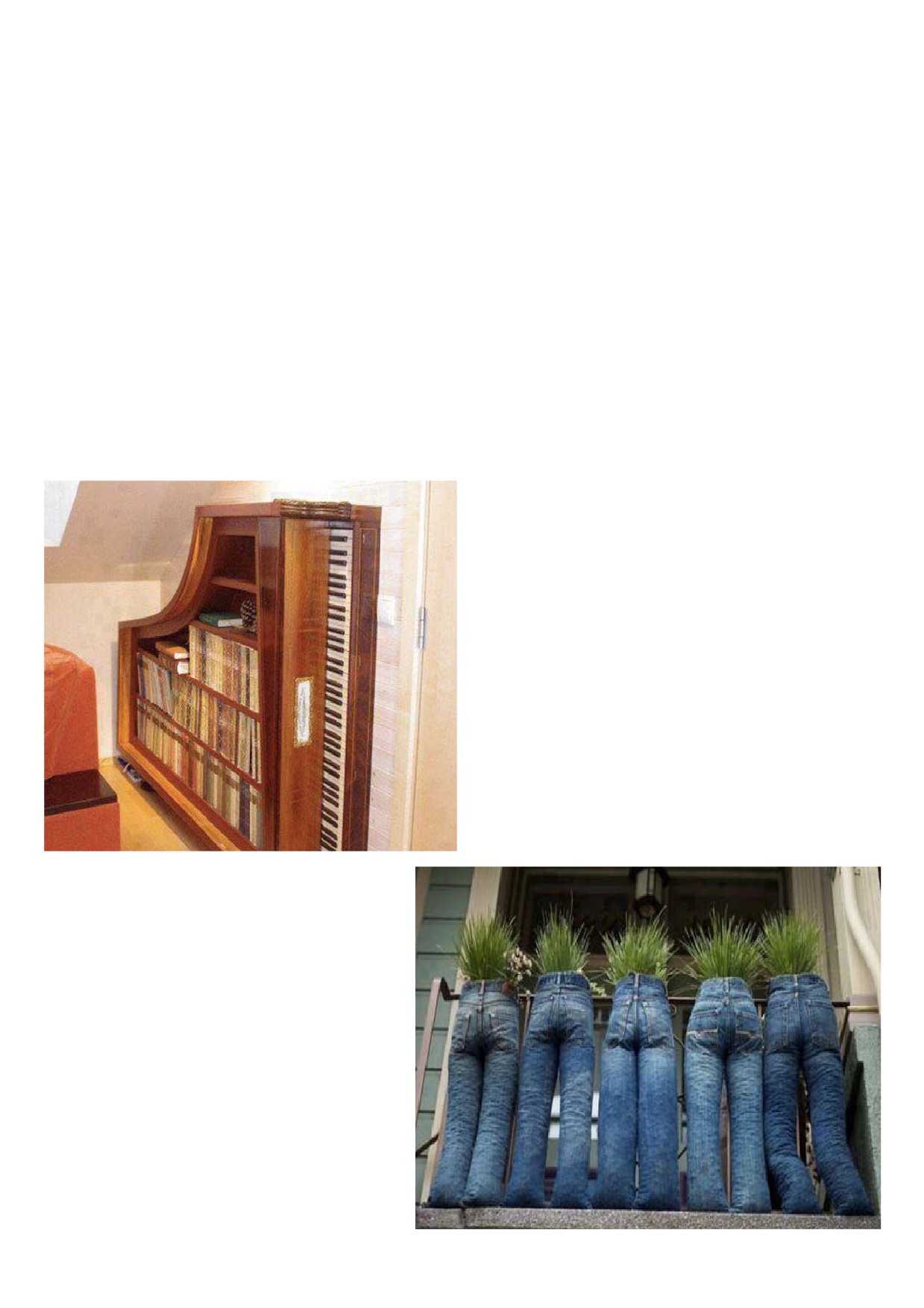
Карточка участника
Student 2
Task 1
Listen to the presentation of your partner, ask your partner 2 QUESTIONS to get ADDITIONAL
INFORMATION not mentioned in the presentation.
(Dialogue; Time: 2 minutes)
Task 2
Look at the pictures (Set 2) and say which of these objects you think
would be more popular with customers.
Comment on the peculiarities of the design.
What would be the best places for these objects?
Express your personal attitude to these or similar objects.
(Monologue; Time: 2-3 minutes)
Then answer 2 QUESTIONS of your partner.
(Dialogue; Time: 2 minutes)
Student 2 Pictures:
ВСЕРОСИЙСКАЯ ОЛИМПИАДА ШКОЛЬНИКОВ
По английскому языку 2013/2014
Второй (окружной) этап 9-11 класс
Ключи к заданиям Listening, Reading, Use of English.
LISTENING
Task 1. 1C, 2B, 3B, 4A, 5C, 6B, 7C, 8A.
Task 2. 9T, 10F, 11F, 12N/G, 13N/G, 14T, 15F.
Task 3. 16D, 17F, 18B, 19E, 20A.
READING
Task 1. 1√, 2x, 3√, 4√, 5x, 6√, 7√, 8x.
Task 2. 9 f, 10 h, 11 i, 12 b, 13 a, 14 d.
Task 3. 15 C, 16 A, 17 B, 18 C, 19 A, B, 20 A.
USE OF ENGLISH
Task 1. 1 together with, 2 because, 3 unless, 4 despite, 5 so that, 6 Owing to.
Task 2. 7 Mexican, 8 accidentally, 9 creation, 10 activity, 11 growth, 12 presence,
13 protective, 14 ensure.
Task 3. 15 wish I knew, 16 far as our coach is, 17 if he does not hurry/if he doesn’t
hurry, 18 do you mind if/ would you mind if, 19 accused Greta of eating, 20 comes
up with
ВСЕРОСИЙСКАЯ ОЛИМПИАДА ШКОЛЬНИКОВ
По английскому языку 2013/2014
Второй (окружной) этап 9-11 класс
Listening Comprehension
Текст аудиозаписи
(в тексте аудиозаписи приведены только тексты и задания)
Task 1.
One
You hear a boy making a phone call. Why is he phoning?
Hi, it’s me! I couldn’t call you earlier, sorry, because I was in the cinema. Anyway, I’m fine and the film
was great - I just wanted to say I’m in the park next to the cinema with Jerry and the others. Is that OK?
I can’t get the bus home because I haven’t got any money. So you could pick me up in about an hour if
you like - you pass right by here on your way home from work, don’t you? Thanks, Dad, see you then.
Two
You hear two friends talking at school. How does the girl feel now?
Boy: Hi, Jo, how was your dance class?
Girl: Good, thanks! The new teacher is very strict, so I felt a bit scared of her for the first few lessons.
Now everyone’s used to her and you can tell she’s going to teach us loads!
Boy: I bet you’re feeling exhausted now, aren’t you?
Girl: I used to be worn out after my class. I’m not, though, with this new teacher. I always come out
feeling great, and I can’t stop smiling, even if I go in feeling tired and a bit miserable.
Three
You hear part of a music programme on the radio.
Where is the speaker?
Hi, folks, I don’t know about you, but I’m having a fantastic time! I love my job on days like this - and I
haven’t just been lazing around in the sun all day! Here on the deck of the Southern Belle are two really
cool bands. You may already know them - they’ve been playing in clubs all over the country this year.
And now, sailing along with clear blue water all around us and not a cloud in the sky, they’re going to
play some summer tunes - you’ll soon be dancing on the beaches! We’ll start with the Anchor Watts…
Four
You hear two friends talking about some shoes they see in a shop window. What do they agree about?
Girl 1: I like these ones, do you?
Girl 2: Hmm… Let’s have a look… Yeah, they’re OK. But is that the sort of colour you like? I thought you’d
prefer something lighter.
Girl1: I don’t mind, really, that’s not so important. It’s the shape I care about. They look comfortable,
too. I don’t like very high heels, they hurt my feet.
Girl 2: Well, the heels are quite high, don’t you think?
Girl 1: No, they’re not too bad. I’m just not sure I’d ever want to pay this much for shoes!
Girl 2: Well, I don’t think they’re worth it.
Five
You hear a girl talking to her brother.
Why is she annoyed with him?
Well, I do think you could have remembered a simple thing like that, I don’t think it’s that complicated,
really. All you had to do was let me know you’d picked up the milk and orange juice on the way home.
And you did get the milk and juice, thanks. Just a quick text would have been enough. I know you had to
go back to the shop and get your keys - I’m glad they’d found them and kept them for you; that was
nice. But I still think you should have remembered!
Six
You hear two friends talking about a day out.
Where are they going?
Boy: I’ve been looking forward to this for ages!
Girl: So have I! I hope the weather’s good.
Boy: It’ll be great anyway. When my brother went last year, someone took his picture next to one of the
players and he looked tiny - my brother, I mean!
Girl: Does your brother play basketball?
Boy: Yeah, but not very well. He got a DVD in that sports museum we went to - it shows you all the
different moves and things… He’s always trying to copy them.
Girl: Well, I can’t play at all, but I love the matches on TV. I can’t believe we’re actually going to one!
Boy: Yeah, me too!
Seven
You hear a teacher talking to her class.
What does she want them to do?
Now, listen carefully, everyone, because I’m going to explain what we’re doing for the next couple of
weeks. I’ve invited three different speakers to come and give presentations on topics connected with
the environment. There’s no need to write anything down during the talks, because the speakers will
give you handouts at the end. Then I’d like you to plan one of your own on another topic - also to do
with an environmental issue. You’ll be able to use information from essays you’ve already written - and
the internet, of course. I hope you’ll find this interesting, and enjoy the challenge.
Eight
You hear a brother and sister talking in their kitchen at home.
What are they doing?
Boy: Just smell that, will you? Cool, isn’t it?
Girl: Mmm… I think it’ll be great!
Boy: Better than that popcorn we made when we burnt the pan! Do you remember, Mom made us
promise never to make it at home again!
Girl: She didn’t need to, it was seriously bad! We’ll just have to remember to get this pizza out.
Boy: Yeah, fifteen minutes in the oven, then it’s ready.
Girl: Yes, it was a good idea. What do you think we should have for dessert? I fancy some cake!
Boy: Yeah, let’s make one!
* Подчеркнутые слова помогают увидеть правильный ответ.
Task 2.
Listen and mark the statements True, False or Not given.
Queen Elizabeth I even created an official position of ‘Uncorker of Ocean Bottles’, and anyone else who
opened the bottles could face execution. Now, you might think that the idea of messages in bottles is a
thing of the past. Well, yes and no.
Only recently, a message in a bottle helped to save the lives of 88 people who were shipwrecked in a
boat near the coast of Costa Rica on their way to the United States. They saw a fishing boat but couldn’t
attract the attention of the fishermen, so they wrote an SOS message and put it in a bottle, which they
then tied to one of the long lines holding the fishermen’s net. When the fishermen hauled the net in,
they found the note and rescued the people.
And, while messages in bottles may not be so common nowadays, there are variations on the theme.
For instance, balloon mail is a similar method of sending undirected messages. The advantage of balloon
mail is that a balloon can be launched anywhere and can, in principle, reach any point on earth. A
further advantage is that a balloon will always end up somewhere, whereas a bottle dropped from land
could be washed back ashore by the tide and so it might never go anywhere.
And so, nowadays, with things like balloon mail, the phrase ‘message in a bottle’ has now really come to
mean a message with no particular intended destination, as opposed to the original versions which were
always cries for help. Other ‘messages in bottles’ have been launched by NASA, the American space
agency. A graphic message in the form of a six by nine-inch aluminium plaque, known as the Pioneer
plaque, was bolted to the frames of the ‘Pioneer 10’ spacecraft that was launched in 1972, and also to
‘Pioneer 11’ launched in 1973. These are messages that say ‘we exist, and this is where we are’.
In the summer of 1977, NASA launched two spacecraft together called the Voyager Project. The
spacecraft each carry a 12-inch gold-plated copper disk, known as the Voyager Golden Record,
containing recorded sounds and images representing human cultures and life on Earth. No replies as yet
- but don’t forget that it took 300 years for Columbus’ message to be found, so who knows?
Task 3.
‘You will hear five people talking about photographs. For questions 16-20, choose from the list (A-F)
what each speaker says. Use each letter only once. There is one extra letter which you do not need to
use’.
Speaker 1
I love looking at photographs, they bring back all sorts of memories and remind me of good times I’ve
had with my friends and family. If I’m on my own, I like to spend time looking through them on the
computer. There are loads of pictures of me - I look pretty silly in some of them! Other people always
seem to have a camera with them, don’t they, which is a good thing, I suppose. Sometimes, though, I
think it would be better if all those photographers out there - including me - concentrated on quality,
not quantity, I mean, there really isn’t time to look at them all!
Speaker 2
I have loads and loads of photos - too many to count - and my friends and I spend a lot of time sending
them to each other and laughing at the funny ones. I take lots of them myself, but actually I don’t really
like them as much as ones by really good photographers. I love going to galleries and seeing what the
professionals can do. I really admire the way they capture a perfect moment. Some of the nature
photography exhibitions are brilliant! I’d love to be able to do that myself, I think it would be a great job
to do, but I know I’m just not good enough.
Speaker 3
Sometimes I look at photos of myself and think: ‘Oh no! I look awful! Why did I let them take a picture of
me then?’ At the time, though, I was as eager as anyone to be in the photo. And that way I know I was
really there. It may sound ridiculous, but when I look at family photos of when I was little, I’m not sure I
actually remember the actual event as it happened, but the picture makes me think I do. Without the
photo, I’m pretty sure that what I remember would be different.
Speaker 4
When I look at my friends’ pictures - and there are a lot of them - I’m struck by how often they just miss
the best part of what happened - like it’s hard to capture the look on someone’s face just as they win a
race. Some people seem to be able to do it - but I’m usually so busy watching what’s going on that I
forget to actually take a picture until it’s too late. Then what I remember is better than what you see in
the picture. I suppose that’s the difference between someone like me and a gifted photographer who
could make a career out of it.
Speaker 5
So many people hate having their own picture taken! They’re quite happy to take loads of other people,
but when it comes to themselves, they hide behind everybody else. I can understand how they feel, but
I don’t actually mind it myself. I think I’m quite good at making my friends look good in a picture, and I
love looking at great photographers’ works in galleries or books. I want to do what they do when I’m
older, too - I can’t think of a better way to make a living. Ever since I can remember, I’ve been looking
for ‘that perfect moment’!
* Подчеркнутые слова помогают увидеть правильный ответ.
XV Всероссийская олимпиада школьников по английскому языку
2014 г.
региональный этап
стр. 1 из 6
Listening & Reading
Time: 60 minutes
Listening
Task 1
You will hear a story about a boy from Manchester. For items 1-10 decide whether the
statements marked 1-10 are True (A) or False (B) according to the text you hear. You will hear the
text only ONCE.
1.
David didn’t switch off the light downstairs on purpose.
A True
B False
2.
The television in the house was out of order.
A True
B False
3.
It wasn’t a weekend.
A True
B False
4.
David was an only child in the family.
A True
B False
5.
David was obedient to his mother.
A True
B False
6.
David was satisfied with the result of the match.
A True
B False
7.
David could not sleep without his mother at home.
A True
B False
8.
David lived close to the United’s stadium.
A True
B False
9.
David knew most of his neighbours.
A True
B False
10. David’s mother told him the old man’s story.
A True
B False
XV Всероссийская олимпиада школьников по английскому языку
2014 г.
региональный этап
стр. 2 из 6
Integrated listening and reading
Task 2
Read the text ‘Productivity and Rewards’, then listen to a part of the lecture on the same topic.
You will notice that some ideas coincide and some differ in them. Answer questions 11-25 by
choosing A if the idea is expressed in both materials, B if it can be found only in the reading text, C
if it can be found only in the audio-recording, and D if neither of the materials expresses the idea.
Now you have 7 minutes to read the text.
Productivity and Rewards
An important management principle is that when behavior is rewarded, it tends to be repeated. It
follows that in many business enterprises, the approach to getting employees to work hard or
improve productivity is to reward them with money or company stock. In addition, some enterprises
use other forms of compensation such as special privileges or perhaps promotion or job
reassignments or even company-paid luxury vacations and other bonuses in kind. All such rewards
are usually tied in to some index of performance, which precisely calculates the relative amount of
increased productivity.
Whatever the type of reward given, managerial consultants point out that the promise of such
incentives improves employee attitudes, motivation and productivity. Typical business handbooks
describing compensation methods advocate giving the greatest rewards to those who perform the
best. For example, a well-known academic text on incentives points out that “the closer the link
between job performance and rewards, the greater the motivational effect.”
Advocates of improving productivity through rewards tacitly accept that people are rather like
physical bodies that require the application of some external motivating force to be set in motion.
Furthermore, they argue that any such incentives must have a high perceived value to the employee
and must also be perceived as within the reach of that person. If the productivity goal appears
beyond the reach of the person striving for the reward, then the motivational effect will be lower
and productivity may decline. But if the reward system is correctly structured, productivity experts
argue, it is possible to persuade people to achieve remarkable results.
Now listen to a part of the lecture on the same topic and then do the task (questions 11-
25), comparing the text above and the lecture. You will hear the lecture twice.
11. There is a belief that rewards increase productivity.
12. Not only money and job promotion but also company-paid holidays can be used as rewards.
13. Some books on the influence of rewards on productivity are written by lawyers.
14. Companies usually determine the size and form of rewards on the basis of measurements of
increased productivity.
15. Productivity decreases if employees consider rewards unreachable.
XV Всероссийская олимпиада школьников по английскому языку
2014 г.
региональный этап
стр. 3 из 6
16. People value respect more than financial bonuses.
17. There has been no reliable research to prove the long-term effectiveness of any reward
scheme.
18. What’s missing from the theory of rewards is genuine enthusiasm of employees.
19. Disappointment may result from not getting the bonus one has expected.
20. Reward and punishment principle in management is similar to that used in education.
21. Some employees feel as if they are controlled or manipulated through incentives.
22. Incentives can sometimes be counterproductive.
23. People can be persuaded to work better if the system of incentives is properly organised.
24. The most gifted employees should be rewarded regardless of their performance.
25. Concealing problems and not asking questions can be caused by a fear of negative ratings.
Reading
Task 3
Read the text ‘Terraforming - science fiction or near future?’ and answer questions 26-40
below.
TERRAFORMING - SCIENCE FICTION OR NEAR FUTURE?
As plans are slowly being drawn up for the first manned missions to Mars, many space travel
skeptics are asking one vital question: why go there? Mars is a barren, desolate planet, and with its
thin atmosphere and bitterly cold climate, it would appear to be completely unsuitable for human
life. Above all, it is a very distant place, and getting there would be an enormous challenge.
However, the planet might just hold the key to long-term human survival. With the Earth’s
population currently at more than seven billion and climbing, we may eventually be forced to look
elsewhere in the solar system for somewhere to live. It is just possible that, contrary to photographic
evidence, Mars may be more promising than it appears.
Today, Mars is a viciously cold, dry place. However, it does have some things in common with our
own planet. For example, it has a daily rotation rate of 24 hours 37 minutes, compared with 23
hours 56 minutes on Earth. It also has an axial tilt of 24 degrees, which is just half a degree more
than Earth’s, and a gravitational pull one third of Earth’s. Furthermore, it holds many of the
elements that are required to support life, including carbon and oxygen (in the form of carbon
dioxide), nitrogen, and frozen water at its polar ice caps. In fact, if you were to travel back in time
several billions years, you would notice some remarkable parallels between the atmosphere on
Earth then and Mars today. Back then, Earth was also a lifeless planet; until photosynthetic bacteria
developed and began to produce enough oxygen to allow for the development of animal and plant
life, our atmosphere also consisted entirely of carbon dioxide and nitrogen.
XV Всероссийская олимпиада школьников по английскому языку
2014 г.
региональный этап
стр. 4 из 6
It comes as no surprise to learn, therefore, that some scientists believe the same process which
turned Earth’s atmosphere from mostly carbon dioxide into breathable air could be repeated on
Mars, but by using technology rather than by letting nature and evolution take its natural course.
Terraforming, as this process is known, would initially create a greenhouse effect that would heat
the planet, which in turn would create other conditions necessary to provide a suitable living
environment for plants and animals. However, it would be a highly challenging undertaking, and
the process of terraforming the entire planet into an Earth-like habitat could still take many
thousands of years.
Three terraforming methods have been suggested, with the first already under development, albeit
for a different purpose. At present, the American space agency NASA is working on a system that
will use large mirrors to capture the sun’s radiation. This radiation will be used to propel spacecraft
through space, removing the need for heavy and expensive rocket fuel. With a few changes, it might
be possible to use similar mirrors to reflect the sun’s radiation and heat the surface of Mars. Aimed
at the planet from a distance of two hundred thousand miles, these enormous mirrors would raise
the surface temperature by a few degrees. If they were concentrated on the polar ice caps, they
would provide enough heat to melt the polar ice caps and release the carbon dioxide that is believed
to be trapped there. Gradually, as the temperature rose, greenhouse gases would be released, and
this would create a form of Martian global warming, the first stage in making the planet sustainable
for life.
The second method would be to set up greenhouse gas ‘factories’ in order to raise the temperature
of the planet. It is generally accepted that greenhouse gases produced by heavy industry are raising
the Earth’s temperature. Therefore, by building hundreds of greenhouse-gas emitting factories on
Mars, a similar effect could be achieved. Carbon dioxide, methane and other greenhouse gases
would be pumped into the Martian atmosphere. The same factories would then produce oxygen by
mimicking the natural process of plant photosynthesis: they would inhale the carbon dioxide they
produce, and then emit oxygen. The process could be accelerated by ‘sowing’ the planet’s surface
with photosynthetic bacteria, which would increase the rate at which oxygen is produced.
Eventually, there would be enough oxygen on the planet for humans to breathe using only special
apparatus similar to that used by mountain climbers.
The third, and by far the most extreme, method has been proposed by space scientists Robert Zubrin
and Christopher McKay. They believe that it would be possible to produce greenhouse gases and
water by firing large, ammonia-bearing asteroids at the planet. Each asteroid would weigh about ten
billion tons, and would be powered by huge rocket engines which would move it towards Mars at
over 10,000 miles per hour. At this speed, it would take each asteroid about ten years to reach its
destination. The energy produced by one asteroid slamming into Mars’ surface, say Zubrin and
McKay, would raise the temperature of the planet by three degrees Celsius and melt about one
thousand billion tons of ice at the polar caps. They believe it would take many of these asteroids,
and at least fifty years, in order to create a temperate climate and enough water to cover a quarter of
the planet’s surface.
Terraforming Mars, if it is ever attempted, will be neither cheap nor easy. And it certainly won’t be
quick: although optimists like Zubrin and McKay say it could be achieved in five or six decades,
the reality is that terraforming is more likely to take hundreds or even thousands of years.
Furthermore, it will stretch human ingenuity to its limits, and will require levels of will and
commitment that have rarely been seen before. The challenge of developing a habitable
XV Всероссийская олимпиада школьников по английскому языку
2014 г.
региональный этап
стр. 5 из 6
environment and bringing life to the cold, dry world of Mars is fraught with challenges, but it might
just be one that saves the human race.
Questions 26-31
Do the following statements agree with the views of the writer in the reading passage?
Write
YES
if the statement agrees with the writer’s view
NO
if the statement contradicts the writer’s view
NOT GIVEN
if it is impossible to say what the writer thinks about this
26. Pictures of Mars suggest it might make a good place for people to settle.
27. Modern Mars and ancient Earth looked remarkably similar.
28. Population growth may soon make people look for another planet to live on.
29. One method of terraforming could involve adapting technology that is already under
development.
30. Greenhouse gas factories would provide enough oxygen for people to breathe without
special equipment.
31. Terraforming Mars would be an extreme test of human skill and intelligence.
Questions 32-35
Choose the correct variant A, B, C or D. Transfer your answers to the answer sheet.
32. Which one of these factors suggests that Mars might be a good place for people to settle?
A It is not too far from Earth.
B It has no other life forms living there.
C It has a cool, dry climate.
D It has some similarities with Earth.
33. The first step in terraforming Mars would be to
A make the planet warmer.
B create a breathable atmosphere.
C find a suitable source of water.
D create a habitat for living organisms.
XV Всероссийская олимпиада школьников по английскому языку
2014 г.
региональный этап
стр. 6 из 6
34. Special factories on Mars could be used to
A control the level of greenhouse gases.
B absorb excess levels of carbon dioxide.
C produce oxygen in a manner similar to plants.
D help grow essential bacteria.
35. What is the writer’s main purpose in the passage?
A To explain why we need to terraform Mars.
B To illustrate the three processes required to terraform a planet like Mars.
C To consider how and why Mars might be terraformed.
D To demonstrate how straightforward it would be to terraform a planet.
Questions 36 - 40
Complete the summary of the text using words A-I from the box to fill in the gaps numbered
36 - 40. There are 4 extra words in the box.
One method of terraforming Mars would be to 36 ____ asteroids at the planet. Rockets attached to
enormous asteroid would propel it towards Mars, taking ten years to 37 ____ the enormous
distances required. The asteroid would 38 ____ the planet with incredible force and 39 ____ enough
energy to 40 ____ the planet’s temperature. The result would be a temperate climate and lots of
water from melting ice caps.
A cover
B create
C hit
D increase
E land
F drive
G power
H rise
I shoot
TRANSFER ALL YOUR ANSWERS TO YOUR ANSWER SHEET

XV Всероссийская олимпиада школьников по английскому языку
2014 г.
региональный этап
Listening & Reading
ANSWER SHEET
1
A
B
2
A
B
3
A
B
4
A
B
5
A
B
6
A
B
7
A
B
8
A
B
9
A
B
10
A
B
11
A
B
C
D
12
A
B
C
D
13
A
B
C
D
14
A
B
C
D
15
A
B
C
D
16
A
B
C
D
17
A
B
C
D
18
A
B
C
D
19
A
B
C
D
20
A
B
C
D
21
A
B
C
D
22
A
B
C
D
23
A
B
C
D
24
A
B
C
D
25
A
B
C
D
26
Yes
No
NG
27
Yes
No
NG
28
Yes
No
NG
29
Yes
No
NG
30
Yes
No
NG
31
Yes
No
NG
32
A
B
C
D
33
A
B
C
D
34
A
B
C
D
35
A
B
C
D
36
37
38
39
40
XV Всероссийская олимпиада школьников по английскому языку
2014 г.
региональный этап
стр. 1 из 4
Use of English
Time: 45 minutes
Task 1
For questions 1-10 fill in the gaps with the correct words. Use only one word
for each gap. The first sentence is done for you as the example.
REVISING FOR EXAMS
Apply good study 0 from the beginning of your course, rather than seek magical
solutions 00 before the exam. Ideally every evening you should read through the notes you
made that day, improving them and (1) ______ sure they are useful. In this way, essential
information will be committed (2) ______ your long-term memory and will be readily
recalled, even under stressful exam conditions. (3) ______ the long run this will help you to
avoid last-minute cramming, (4) ______ is seldom useful.
When your teacher gives you practice exams to do in class time, enter into these
wholeheartedly. They won’t (5) ______ you any harm, on the contrary, they will help you to
assess your progress. Afterwards take note (6) ______ the feedback you receive, pinpoint the
mistakes you made. Did you include too little information, misread the questions, (7) ______
out of time?
Sometimes exams are failed not because (8) ______ too little work. Often the
brightest students work too hard at revision and worry unnecessary. If you are nervous, then
(9) _____ all means carry on gentle revision until the last moment: you can start worrying, if
you have too much time on your hands. But be sure not to go into the exam room tired (10)
_______ overwork.
Task 2
For questions 11-15, think of one word only which can be used appropriately
in all three sentences. Here is an example:
A) Could you do me a _____ and hold the door open while I bring in the shopping?
B) All those in ______ of the proposal please raise your hand.
C) After being out of fashion for years the painter is now in ______ with the critics.
Example: FAVOUR
11.
A) I was sitting at the next table to them so I couldn’t ____ overhearing their
conversation.
B) My financial situation is pretty bad anyway, so this unexpected bill doesn’t
exactly ____.
C) I wish you wouldn’t _____ yourself to my CDs without asking me first.
XV Всероссийская олимпиада школьников по английскому языку
2014 г.
региональный этап
стр. 2 из 4
12.
A) They ___ to lose a lot of money if they are forced to close down their business.
B) He has treated me very badly for a long time and I think the time has come for
me to ___ up to him.
C) Rose is very selfish and she can’t ___ it when she doesn’t get her own way.
13.
A) I know you are very upset now but I’m sure the feeling will ____ soon.
B) His comment was so rude that I couldn’t let it ___ without telling him that I
thought he shouldn’t have said it.
C) Luckily she managed to ___ the test.
14.
A) Helen is always gossiping about other people - I wish she’d ___ her own
business.
B) ___ your head when you go through the doorway, it’s rather low for someone
tall.
C) I've had enough from John. I'm going to give him a piece of my ______.
15.
A) I bought my nephew a toy clock because he’s just learning to ___ the time.
B) I expect the boss is going to ___ me off for not getting my work done on time.
C) Mary and her sister look so alike that I simply can’t ___ them apart.
Task 3
For questions 16-23, read the following informal note you have received from a
friend and use the information to complete the numbered gaps in the formal
notice. Then write the new words in the correct spaces on your answer sheet.
Use one word for each gap. The number of letters in the words is given.
Also some letters are given. There is an example (0) at the beginning. The
words you need do not occur in the informal note.
XV Всероссийская олимпиада школьников по английскому языку
2014 г.
региональный этап
стр. 3 из 4
Example: 0. l i m i t
INFORMAL NOTE
Jack,
I've got that information you asked me to get about the Young Person's Railcards.
First of all, they are for people under 26. It seems that you can only buy one up to
March 17th. It looks like a pretty good deal to me because it only costs £35 and you
get a lot for that. The cards allow you to travel anywhere you want for six months and
they also let you pay less at some hotels and restaurants.
You can only get them at the Student Travel Office in Piccadilly and you have to go
and get one yourself and you have to prove your age and that you're doing a full-
time course. You fill in the form at the office and you have to give them a passport-
sized photograph.
It's really a good offer and I think you should encourage any of the students who can
do so to get one before it's too late.
Glenn
FORMAL NOTICE
NOTICE TO STUDENTS
THE YOUNG PERSON'S RAILCARD
The Young Person’s Railcards have the age (0) _ i
_ _ t of 26. The
Railcards are only (16) a _ _ i
_ _ _ _ _ until 17th March and we advise you to get
one because it is very good (17) _ _ _ _ e for money. The cards (18) p _ _ _ _ t you
unlimited travel for six months and they also (19) e _ t _ _ _ e you to price reductions
at certain hotels and restaurants.
The cards are (20) _ b _ _ _ n _ _ _ e only from the Student Travel Office
in Piccadilly and you must (21) _ _ _ _ _ c t the card personally and you will need to
take proof of your age. You will also need to prove that you are in full-time study. At
the office, you fill in an application form and (22) _ r _ _ i d _ a passport-sized
photograph.
The card is highly recommended, so if you are (23) e l _ _ _ b _ _ for one,
remember that you should not hesitate to buy it.
XV Всероссийская олимпиада школьников по английскому языку
2014 г.
региональный этап
стр. 4 из 4
Task 4
In the table below there are quotations from famous people. For questions 24-
30, match the beginning of the quotation from column A with its corresponding
ending from column B. These are 4 extra endings which do not correspond to
any quotation.
The (0) has been done for you as the example.
Example: 0. L
A
B
0. Good taste is better than bad taste,
A. who may get to be a boss and work twelve
hours a day. Robert Frost
24. They know enough
B. you’ve understood all your life, but in a new
25. Education is what survives when
way. Doris Lessing
26. That is what learning is. You
C. who know how to learn. Henry Brooks
suddenly understand something
Adam
27. It is true nature of mankind
D. and is essential for human happiness. Galen
28. Pennies do not come from heaven.
E. what we are. Claude-Adrien Helvitius
They
F. what has been learnt has been forgotten. B.F.
29. The battle of Waterloo
Skinner
30. Be not afraid of growing slowly, be
G. to learn from mistakes not from example.
afraid
Fred Hoyle.
H. can pay others to do for one. W. Somerset
Maugham.
I. have to be earned here on earth. Margaret
Thatcher
J. was won on the playing fields of Eton. Duke
of Wellington
K. only of standing still. Confusius.
L. but bad taste is better than no taste. Arnold
Bennett.
TRANSFER ALL YOUR ANSWERS TO YOUR ANSWER SHEET

XV Всероссийская олимпиада школьников по английскому языку
2014 г.
региональный этап
Use of English
ANSWER SHEET
1
2
3
4
5
6
7
8
9
10
11
12
13
14
15
16
17
18
19
20
21
22
23
24
25
26
27
28
29
30
XV Всероссийская олимпиада школьников по английскому языку
2014 г.
региональный этап
Write a short story.
1. Choose any subject but use in your story the following words at least once
(underline the word from the list when using it for the first time):
Fluffy
Ignorant
Board
Cord
Traffic
2. title your story using a word from the list;
3. include description of feelings and emotions;
4. include direct and indirect speech;
5. make an unexpected ending.
Write 220 - 250 words.
Time: 60 minutes
____________________________________________________________
____________________________________________________________
____________________________________________________________
____________________________________________________________
____________________________________________________________
____________________________________________________________
____________________________________________________________
____________________________________________________________
____________________________________________________________
____________________________________________________________
____________________________________________________________
____________________________________________________________
____________________________________________________________
____________________________________________________________
____________________________________________________________
____________________________________________________________
____________________________________________________________
____________________________________________________________
____________________________________________________________
____________________________________________________________
____________________________________________________________
____________________________________________________________
____________________________________________________________
____________________________________________________________
____________________________________________________________
____________________________________________________________
____________________________________________________________
____________________________________________________________
____________________________________________________________
____________________________________________________________
____________________________________________________________
____________________________________________________________
____________________________________________________________
____________________________________________________________
____________________________________________________________
____________________________________________________________
____________________________________________________________
____________________________________________________________
____________________________________________________________
____________________________________________________________
____________________________________________________________
____________________________________________________________
____________________________________________________________
____________________________________________________________
____________________________________________________________
____________________________________________________________
____________________________________________________________
____________________________________________________________
____________________________________________________________
____________________________________________________________
____________________________________________________________
____________________________________________________________
____________________________________________________________
____________________________________________________________
____________________________________________________________
____________________________________________________________
____________________________________________________________
____________________________________________________________
____________________________________________________________
____________________________________________________________
____________________________________________________________
____________________________________________________________
____________________________________________________________
XV Всероссийская олимпиада школьников по английскому языку
2014 г.
региональный этап
Карточка участника
Speaking
Set 1 Student 1
PREPARATION: Prepare a presentation
You are given 15 minutes to get prepared. During the preparation time use photos
from Set 1
PRESENTATION: Make your presentation and discuss your partner’s
presentation
Task 1
You are “a photographer” and you have taken 3 photos (Set 1). Your task is to tell 3
stories about them in an entertaining way to convince “the editor of Nature magazine”
(your partner) to publish them in the magazine.
Tell about
1. some peculiarities and details of the events in the pictures,
2. the place of the events (area),
3. how you managed to take the pictures
(Monologue; Time: 2-3 minutes)
Then answer 2 QUESTIONS of your partner.
(Dialogue; Time: 2 minutes)
Task 2
Now you are “the editor of Nature magazine”. Listen to the presentation of your partner “a
photographer”, ask your partner 2 QUESTIONS to get ADDITIONAL INFORMATION
not mentioned in the presentation.
(Dialogue; Time: 2 minutes)
YOUR ANSWERS WILL BE RECORDED

SET 1


XV Всероссийская олимпиада школьников по английскому языку
2014 г.
региональный этап
Карточка участника
Speaking
Set 2 Student 2
PREPARATION: Prepare a presentation
You are given 15 minutes to get prepared. During the preparation time use photos
from Set 2
PRESENTATION: Make your presentation and discuss your partner’s
presentation
Task 1
You are “the editor of Nature magazine”. Listen to the presentation of your partner “a
photographer”, ask your partner 2 QUESTIONS to get ADDITIONAL INFORMATION
not mentioned in the presentation.
(Dialogue; Time: 2 minutes)
Task 2
Now you are “a photographer” and you have taken 3 photos (Set 2). Your task is to tell 3
stories about them in an entertaining way to convince “the editor of Nature magazine”
(your partner) to publish them in the magazine.
Tell about
1. some peculiarities and details of the events in the pictures,
2. the place of the events (area),
3. how you managed to take the pictures
(Monologue; Time: 2-3 minutes)
Then answer 2 QUESTIONS of your partner.
(Dialogue; Time: 2 minutes)
YOUR ANSWERS WILL BE RECORDED

SET 2


XV Всероссийская олимпиада школьников по английскому языку
2014 г.
региональный этап
Карточка участника
Speaking
Set 1 Student 1
PREPARATION: Prepare a presentation
You are given 15 minutes to get prepared. During the preparation time use photos
from Set 1
PRESENTATION: Make your presentation and discuss your partner’s
presentation
Task 1
You are “a photographer” and you have taken 3 photos (Set 1). Your task is to tell 3
stories about them in an entertaining way to convince “the editor of Nature magazine”
(your partner) to publish them in the magazine.
Tell about
1. some peculiarities and details of the events in the pictures,
2. the place of the events (area),
3. how you managed to take the pictures
(Monologue; Time: 2-3 minutes)
Then answer 2 QUESTIONS of your partner.
(Dialogue; Time: 2 minutes)
Task 2
Now you are “the editor of Nature magazine”. Listen to the presentation of your partner “a
photographer”, ask your partner 2 QUESTIONS to get ADDITIONAL INFORMATION
not mentioned in the presentation.
(Dialogue; Time: 2 minutes)
YOUR ANSWERS WILL BE RECORDED

SET 1
Variant 2


XV Всероссийская олимпиада школьников по английскому языку
2014 г.
региональный этап
Карточка участника
Speaking
Set 2 Student 2
PREPARATION: Prepare a presentation
You are given 15 minutes to get prepared. During the preparation time use photos
from Set 2
PRESENTATION: Make your presentation and discuss your partner’s
presentation
Task 1
You are “the editor of Nature magazine”. Listen to the presentation of your partner “a
photographer”, ask your partner 2 QUESTIONS to get ADDITIONAL INFORMATION
not mentioned in the presentation.
(Dialogue; Time: 2 minutes)
Task 2
Now you are “a photographer” and you have taken 3 photos (Set 2). Your task is to tell 3
stories about them in an entertaining way to convince “the editor of Nature magazine”
(your partner) to publish them in the magazine.
Tell about
1. some peculiarities and details of the events in the pictures,
2. the place of the events (area),
3. how you managed to take the pictures
(Monologue; Time: 2-3 minutes)
Then answer 2 QUESTIONS of your partner.
(Dialogue; Time: 2 minutes)
YOUR ANSWERS WILL BE RECORDED

SET 2
Variant 2


XV Всероссийская олимпиада школьников по английскому языку
2014 г.
региональный этап
стр. 1 из 1
Listening and Reading
Listening
Task 1
Keys: 1 A; 2 B; 3 A; 4 A; 5 A; 6 B; 7 B; 8 A; 9 B; 10 B
Integrated listening and reading
Task 2
Keys: 11A, 12B, 13D, 14B, 15B, 16C, 17C, 18D, 19C, 20D, 21C, 22A, 23B, 24D, 25C
Reading
Task 3
Keys: 26.No, 27.Not given, 28.Yes, 29.Yes, 30.No, 31.Yes, 32.D, 33.A, 34.C, 35.C,
36.I, 37.A, 38.C, 39.B, 40.D
Audioscript
Listening Comprehension.
You will hear a story about a boy from Manchester. For items 1-10 decide whether the
statements marked 1-10 are True (A) or False (B) according to the text you hear. You will
hear the text only once.
You now have 30 seconds to look through the items.
(pause 30 seconds)
Now we begin
Introducing David Rooney, a football fan
David Rooney looked at the clock above the fireplace.
Eight-thirty. Time for bed.
He picked up his portable radio, switched off the front room light and went up the
staircase to his bedroom, leaving the hall light on because his mum would need it to see by when
she came home at midnight.
David kept his radio on as he went up the stairs. He’d been listening to a football match
and it was half time now.
Liverpool 1 United 1.
David always listened to football in the evenings. There was a television in the house, but
most football was on satellite television and it cost ₤40 a month. There was no way his mum
could afford that. She had to work hard enough just to put food on the table. That’s what she
always said.
David’s mum worked in a pub in the evenings and at weekends during the day.
He didn’t have a dad. Or a brother and sister.
When he’d brushed his teeth and was in his pyjamas, David looked out across the
housing estate where he lived. There was a group of kids from the high school standing outside
the shops. They were kicking an empty Coke can around on the floor.
David closed the curtains quickly and got into bed.
He had until half past ten to read. Then it was lights out. That was his mum’s rule. And
he always stuck to his mum’s rules.
David picked up a book he’d borrowed from the library. An Illustrated History of United
Football Club. And then he was lost in the facts and pictures about his favourite team, as he
listened to the match.
David was allowed to stay up until 9.30pm. That’s when matches finished usually.
An hour later David’s light was off and his eyes were shut. United had drawn at
Liverpool. 2-2. So he was neither happy nor sad.
This was one of his favourite bits of the day. He closed his eyes and pretended he had
been at the United game, chanting with the crowd, celebrating the goals. He did this every night.
This was how he got to sleep without his mum being in the house. It was something he’d taught
himself.
Although he lived less than a mile from United’s stadium, David had never been to see
them play. That cost ₤50 a ticket. Too much.
Sometimes noises interrupted David’s football fantasies.
The kids on the street outside.
Police cars going past with their sirens blasting.
And, sometimes, noises from next door.
David had never met his next door neighbour. In fact, he barely knew anyone in the
street where he lived. But he knew some things about the old man next door.
He knew he went to bed at 10pm. Because that was the time he could hear him brushing
his teeth and switching his light off.
He also knew that every Saturday - and sometimes Sunday - a posh car would arrive and
the old man would get into it and be away for a few hours. That was the only time the man went
out in a week.
David had asked his mum what she knew about the old man. But mum had said he was
just an old man and she didn’t want David talking to strangers.
You now have 45 seconds to mark your answers.
(pause 45 seconds)
Integrated listening and reading
Read the text ‘Productivity and Rewards’, then listen to a part of the lecture on the same
topic. You will notice that some ideas coincide and some differ in them. Answer questions
11-25 by choosing A if the idea is expressed in both materials, B if it can be found only in
the reading text, C if it can be found only in the audio-recording, and D if neither of the
materials expresses the idea.
Now you have 7 minutes to read the text.
(pause 7 minutes)
Now listen to a part of the lecture on the same topic. You will hear the lecture twice.
Today I want to question the idea that rewards increase productivity in the workplace. Now, does
this approach really work? Well, when people who have experienced a reward system were
asked, we found they didn’t like it. Most people, it seems, want to be paid, not encouraged
through incentives. People want to be given respect for working extra hard.
In fact, I know of no controlled study that has genuinely shown a long-term improvement in
work as a result of any productivity reward scheme. On the contrary, there are many studies that
show productivity rewards are even counterproductive. Rewards make for less productivity
rather than more.
So, why might this be true? Well, in fact, rewards actually punish. Yeah. If we compensate
people for high productivity, they may perceive this as being controlled. People understand
they’re being manipulated and don’t like it. But more importantly, people don’t necessarily get
the expected rewards. So the disappointment for not being rewarded is sort of the same as being
punished. Think about it. The more desirable the reward you expect, the more disappointing it is
if you fail to get it. Right?
Productivity schemes might even reduce the amount and quality of work. The workers’
relationship with the supervisor could be damaged. Instead of trying to work collaboratively with
the supervisor, an employee might conceal problems. For example, let’s say you had a problem.
You might be less likely to ask for help from a supervisor who can withhold rewards. To avoid a
negative rating, you keep quiet. Can you see why this would tend to reduce performance rather
than improve it?
You’ll hear the lecture again in 45 seconds.
(pause 45 seconds)
Now listen to the lecture again
Text repeated
Now you have five minutes to finish the task and transfer your answers to the answer sheet.
(pause 5 minutes)
This is the end of the integrated task. Now you can start working on your reading task.
XV Всероссийская олимпиада школьников по английскому языку
2014 г.
региональный этап
стр. 1 из 1
Use of English
Task 1
1. Making, 2. To, 3. In, 4. Which, 5. Do, 6. Of, 7. Run, 8. Of, 9. By, 10. Of
Task 2
11. help, 12. stand, 13. pass, 14. mind, 15. tell
Task 3
16. Available, 17. Value, 18. Permit, 19 Entitle, 20. Obtainable, 21. Collect, 22.
Provide, 23. Eligible
Task 4
24. C, 25. F, 26. B, 27 G, 28. I, 29. J, 30. K
Критерии оценивания раздела «Письмоª
Writing (A short story)
Максимальное количество баллов: 20
Внимание! При оценке 0 по критерию "Решение коммуникативной задачи" выставляется общая оценка 0.
БАЛЛЫ
РЕШЕНИЕ
ЯЗЫКОВОЕ ОФОРМЛЕНИЕ (максимум 10 баллов)
за
КОММУНИКАТИВНОЙ
содержание
ЗАДАЧИ
Композиция
Лексика1
Грамматика2
Орфография и
письменного
Итого: максимум 10 баллов
(максимум 2
(максимум 3 балла)
(максимум 3 балла)
пунктуация
высказыван
балла)
(максимум 2
ия
балла)
1 Употребление пяти необходимых слов оценивается в разделе «Содержаниеª.
2 Употребление пяти необходимых слов оценивается в разделе «Содержаниеª.
10 баллов
Коммуникативная задача полностью
3 балла
3 балла
выполнена -
Участник демонстрирует
Участник демонстрирует
1) рассказ написан, в рассказе
богатый лексический
грамотное и уместное
правильно использованы все 5 слов,
запас, необходимый для
употребление
указанных в задании. Слова
раскрытия темы, точный
грамматических структур.
подчеркнуты.
выбор слов и адекватное
Работа не имеет
2) Сюжет рассказа оригинален,
владение лексической
грамматических ошибок.
понятен, динамичен и интересен.
сочетаемостью.
3) Есть заголовок, соответствующий
Работа не имеет ошибок с
содержанию рассказа, в заголовке
точки зрения лексической
использовано одно из заданных слов.
сочетаемости.
4) Рассказ включает элементы прямой и
косвенной речи, которая органично
вписывается в сюжет рассказа.
5) В рассказе переданы чувства и
эмоции автора и/или героев.
6) Конец рассказа неожиданный, но при
этом, полностью вписывается в сюжет и
соответствует заданному жанру и
стилю.
Объем работы либо соответствует
заданному, либо отклоняется от
заданного не более чем на 10% в
сторону увеличения (до 275 слов).3
3 Если объем работы отклоняется от заданного более чем на 10% в сторону увеличения (более 275 слов), проверке подлежат только первые 275 слов.
9 - 1 балла
Коммуникативная задача в основном
2 балла
2 балла
2 балла
2 балла
выполнена. Баллы за содержание
Работа не имеет
Участник демонстрирует
Участник демонстрирует
Участник
снижаются, если:
ошибок с точки
богатый лексический
грамотное и уместное
демонстрирует
зрения композиции.
запас, необходимый для
употребление
уверенное владение
1)Не использованы или неправильно
Текст правильно
раскрытия темы, точный
грамматических структур.
навыками орфографии
использованы указанные в задании
разделен на абзацы.
выбор слов и адекватное
В работе имеются 1-2
и пунктуации.
слова (см. выше пункт 1). За каждое
Присутствуют
владение лексической
незначительные
Работа не имеет
неиспользованное слово или
средства логической
сочетаемостью.
(негрубые)
ошибок с точки
неправильно использованное слово
связи.
грамматические ошибки,
зрения орфографии. В
В работе имеются 1-2
снимается 2 балла, за неподчеркнутое
незначительные
не затрудняющие понимание
работе имеются 1-2
слово снимается 1 балл.
текста.
пунктуационные
(негрубые) лексические
ошибки, не
ошибки, не затрудняющие
1 балл
2) Не выполнены пункты, указанные в
затрудняющие
понимание текста.
условии задания (см. выше пункты 2-6).
В целом текст имеет
понимание
четкую структуру.
За каждый невыполненный пункт 2 -
высказывания.
Текст разделен на
6 снимается 1 балл.
1 балл
абзацы. В тексте
1 балл
В тексте присутствуют
3) Объем работы меньше заданного
присутствуют
В тексте присутствуют
несколько (3 - 7)
1 балл
связующие
ошибки в выборе слов и
более, чем на 10 %.
грамматических ошибок,
В тексте присутствуют
элементы.
лексической
не затрудняющих общего
орфографические (1-
Допущены
сочетаемости (3 -7),
200 - 181 слова - снимается 1 балл
понимания текста.
4) и/или
незначительные
которые не затрудняют
пунктуационные
нарушения в
понимания текста.
180 - 161 слова - снимается 2 балла
ошибки (3 - 7),
структуре и/или
Или: используется
которые не затрудняют
связности текста.
стандартная, однообразная
160 - 141 слова - снимается 3 балла
общего понимания
лексика базового уровня.
текста.
140 - 121 слова - снимается 4 балла
120 - 110 слов - снимается 5 баллов
0
Не выполнена коммуникативная
0 баллов
0 баллов
0 баллов
0 баллов
задача (написан не рассказ, а другая
Отсутствует или
Участник демонстрирует
В тексте присутствуют
В тексте присутствуют
литературная форма; написан
неправильно
крайне ограниченный
многочисленные ошибки
многочисленные
рассказ, но не использовано ни
выполнено абзацное
словарный запас. Или:
(более 7) в разных разделах
орфографические
одного слова из пяти заданных,
членение текста.
имеются
грамматики, в том числе
(более 4) и/или
или все пять слов использованы
Имеются серьезные
многочисленные ошибки
затрудняющие понимание
пунктуационные
неверно).
нарушения
(более 7) в употреблении
текста.
ошибки (более 7), в
связности текста
лексики, в том числе
том числе
И/или
и/или
затрудняющие понимание
затрудняющие
многочисленные
текста.
понимание текста.
Объем письменного текста менее
ошибки в
50% (менее 110 слов),
употреблении
логических средств
связи.

Шкала критериев оценивания заданий в разделе «Устная речьǽ
Максимальное количество баллов: 20. При оценке 0 по критерию "Содержание" выставляется общая оценка 0͘
СОДЕРЖАНИЕ
Взаимодействие с собеседником и оформление речи (максимум 10 баллов)
(максимум 10 баллов)
Взаимодействие с
Лексическое
Грамматическое
Фонетическое
собеседником
оформление речи
оформление речи
оформление речи
(максимум 4 балла)
(максимум 2 балла)
(максимум 2 балла)
(максимум 2 балла)
10
Коммуникативная
задача
4 балла
2 балла
2 балла
2 балла
полностью выполнена: цель
Заданы
2 правильных
В речи участника нет
В речи участника нет
В речи участника нет
общения успешно достигнута,
вопроса и даны
2
лексических
ошибок;
грамматических ошибок;
фонетических ошибок͘
тема раскрыта в заданном
правильных ответа͘
словарный
запас
речь участника богата
1 балл
объеме (участник раскрывает все
3 балла
участника
богат,
разнообразными
Речь участника в целом
три пункта задания по каждой
Не задан 1 вопрос или не
разнообразен
и
грамматическими
понятна,
участник
фотографии из трех):
дан 1 ответ͘
адекватен поставленной
конструкциями͘
допускает отдельные
1. Участник
рассказывает
о
2 балла
задаче͘
1 балл
фонетические ошибки
деталях на фото
Отсутствуют 2 элемента
1 балл
В речи участника
(1-2), не затрудняющие
2. Участник рассказывает о том,
из 4 (2 вопроса+2 ответа)
Словарный запас
присутствуют
понимания͘
где было сделано фото
1 балл
участника в основном
грамматические ошибки
0 баллов
3. Участник рассказывает, как
Отсутствуют 3 элемента
соответствует
(1-2), не затрудняющие
Понимание
речи
ему удалось сделать такое
из 4 (2 вопроса+2 ответа)
поставленной задаче,
понимания или
участника затруднено
фото͘
0 баллов
однако наблюдается
используются
из-за
большого
9 - 1
Коммуникативная
задача
Отсутствуют все 4
затруднение при
однообразные
количества
элемента из 4 (2
подборе слов и/или
грамматические
фонетических
и
выполнена
частично:
тема
вопроса+2 ответа)
имеются неточности в
конструкции͘
фонематических
раскрыта не в заданном объеме
их употреблении(1-2
0 баллов
ошибок
(3 и более
(снимается до 9 баллов из 10 за
ошибки).
В
речи
участника
ошибок)͘
содержание
за
каждый
0 баллов
присутствуют
невыполненный пункт задания по
Словарного запаса не
грамматические ошибки,
каждому из трех фото)
хватает для общения в
затрудняющие
соответствии с
понимание(3 и более
0
Отказ от ответа
заданием (3 и более
ошибок)͘
ошибок)͘
XV Всероссийская олимпиада школьников по английскому языку
2014 г.
заключительный этап
стр. 1 из 16
Listening & Reading
Time: 1 hour 15 minutes
Listening
Task 1
For items 1 - 7, listen to a woman talking about the human mind. Complete the statements (1
- 7) choosing the correct ending from A, B, or C. You will hear the text only ONCE.
1. The woman defines modern life as _____ .
A. painful
B. tense
C. surprising
2. The woman claims that some people ______ .
A. are suffering from stomachaches
B. have weak muscles
C. have stress-related illnesses
3. The woman explains that the expression “mind over matter” means that ______ .
A. people can regulate their state
B. physical power is not important
C. the mind is the only thing that matters in a human being
4. The woman suggests an exercise to ______ .
A. train one’s mind
B. teach how to listen to one’s mind
C. relieve one’s body from strain
5. The exercise starts with _______ .
A. slow breathing
B. assuming a pleasant and relaxed position
C. closing one’s eyes
6. The “feels warm and heavy” part of the exercise starts with the ______ .
A. left arm
B. left leg
C. right arm
XV Всероссийская олимпиада школьников по английскому языку
2014 г.
заключительный этап
стр. 2 из 16
7. The woman says that after the exercise your mind is supposed to feel ______ .
A. light
B. bright
C. pure
Task 2
For items 8-15, listen to an interview with a police officer and decide whether the
statements (8-15) are TRUE (A), or FALSE (B) according to its content. You will hear the
text only ONCE.
8. Sam says that he became a police officer at the age of 25.
A. True
B. False
9. Currently Sam is doing undercover work.
A. True
B. False
10. Sam says that his work is stressful.
A. True
B. False
11. Sam thinks that stress is related to fear.
A. True
B. False
12. Sam doesn’t think that police officers get ill more often than the general public.
A. True
B. False
13. There are programs to help police officers fight stress.
A. True
B. False
14. Sam attends a discussion group.
A. True
B. False
15. Sam thinks that he is happily married.
A. True
B. False
Integrated listening and reading
Task 3
Read the text about the origins of the human species, and then listen to a part of a
lecture on the same topic. You will notice that some ideas in the lecture coincide with the ideas
in the text and some differ from the ideas in the text. Answer questions 16-25 by choosing A if
the idea is expressed in both materials, B if it can be found only in the reading text, C if it can
be found only in the audio-recording, and D if neither of the materials expresses the idea.
Now you have 7 minutes to read the text.
XV Всероссийская олимпиада школьников по английскому языку
2014 г.
заключительный этап
стр. 3 из 16
The Out of Africa hypothesis, also called the replacement hypothesis, contends that modern
humans originated in Africa, probably from a common ancestor. From there, they migrated to other
regions, eventually replacing the populations of Neanderthals and other groups of earlier humans
that may have survived.
Geneticists who support the replacement hypothesis argue that the observable similarities
shared by all of the modern human populations confirm the existence of a common gene pool, and
perhaps even one common female ancestor. They point to the fact that many modern human traits
have evolved within the past
200,000 years as evidence of the replacement hypothesis.
Furthermore, they cite studies of DNA in cell structures called mitochondria, which codes most of
the inherited traits from ancestors. Most of these studies demonstrate that the diversity among
human populations is very small as compared with other species. They conclude that there was only
one small population from which all other populations descended. From their point of view, the
evidence supports the theory that modern humans migrated from a relatively small area in Africa
almost 150,000 years ago, moving along a route through the Middle East 100,000 years ago and
slowly populating regions throughout the world by replacing the communities of less developed
humanlike species that they encountered.
Paleoanthropologists admit that, to date, the oldest fossil remains of modern Homo sapiens
have been found in Africa, with the next oldest discovered in the Middle East. European fossils are
dated at about 50,000 years after the African fossils. Thus, it would appear that the replacement
hypothesis is substantiated by archaeological evidence.
Now listen to a part of a lecture on the same topic and then do the task (16-25), comparing the
text above and the lecture. You will hear the lecture TWICE.
16. Homo sapiens are likely to have gradually replaced other human species when populating new
territories.
17. There are noticeable similarities between all modern people throughout the world.
18. There might have been one female ancestor we all share.
19. The multiregional hypothesis is another name for the continuity hypothesis.
20. The fossil remains of early human species are found in Africa, Asia and Europe.
21. It is possible that contemporary people have evolved from many different groups of ancestors.
22. Replacement and evolution are, in fact, the names for one and the same process.
23. Archeological findings support the idea that the earliest human species appeared in Africa.
XV Всероссийская олимпиада школьников по английскому языку
2014 г.
заключительный этап
стр. 4 из 16
24. The gene flow can only be proved by such regional traits as cheekbone structure.
25. Biologists who believe in one ancestor are creationists rather than evolutionists.
Reading
Task 4
You are going to read a newspaper article. For questions 26-32, choose the answer (А,
В, С or D) which you think fits best according to the text.
The Sound of Music
Geoff Brown wonders whether film music can ever be regarded as art.
No one can claim such mastery of the fantasy blockbuster sound as the British film-music
composer John Williams. It's a style of music he did much to define in Star Wars and then for
many other films for the director Steven Spielberg. There are distinctive melodies which give the
feeling of flying, snatches of music to represent different characters, and intricate illustrative
details. In addition, everything follows the symphonic style of a hundred years ago. It's what the
film industry in Hollywood wants, it's what John Williams supplies, and what audiences
everywhere expect.
Can we call it art, or is it simply an interesting artefact, a sort of factory product? For the cinema-
goer sitting with a popcorn bag the question doesn't arise. But since film music now spreads to a
different audience far outside cinemas, on lavishly promoted soundtrack CDs and serious concert
platforms, it may be interesting to answer the question.
Composers themselves have expressed very diverse opinions. Interviewed some years ago,
Williams himself proudly referred to film music as 'the opera of the 20th century'. On the other
hand, Richard Rodney Bennett, the composer of the music for the film Murder on the Orient
Express, declared that 'in writing film music one is really using only a sixth of one's musical mind'.
Everyone agrees on one point though: the rewards are pleasingly high. There are royalties and if
you hit the right buttons you can spin off into the lucrative sideline of a concert career, regularly
mounting live performances of film compositions.
But if you consider the working conditions that composers put up with, superficially the odds do
seem stacked against film music being classed as art. First of all, film music is composed in
snippets, timed to the second, and written after the film is shot. Then there are insane deadlines -
like having five days to compose 50 minutes of music. Next, the composer has to live with the fact
содержание ..
1
2
3 ..