Standard Specifications for Road, Bridge, and Municipal Construction 2020 (M 41-10) - page 56
 

  Главная      Manuals     Standard Specifications for Road, Bridge, and Municipal Construction 2020 (M 41-10)


Search            copyright infringement  


Content      ..     54      55      56      57     ..


Standard Specifications for Road, Bridge, and Municipal Construction 2020 (M 41-10) - page 56


Page 9-274 

Pavement Marking Material

9-34.2(3)  Prohibited Materials

Traffic paint shall not contain mercury, lead, chromium, diarylide pigments, toluene, 
chlorinated solvents, hydrolysable chlorine derivatives, ethylene-based glycol ethers and 
their acetates, nor any other EPA hazardous waste material over the regulatory levels per 
CFR 40 Part 261.24.

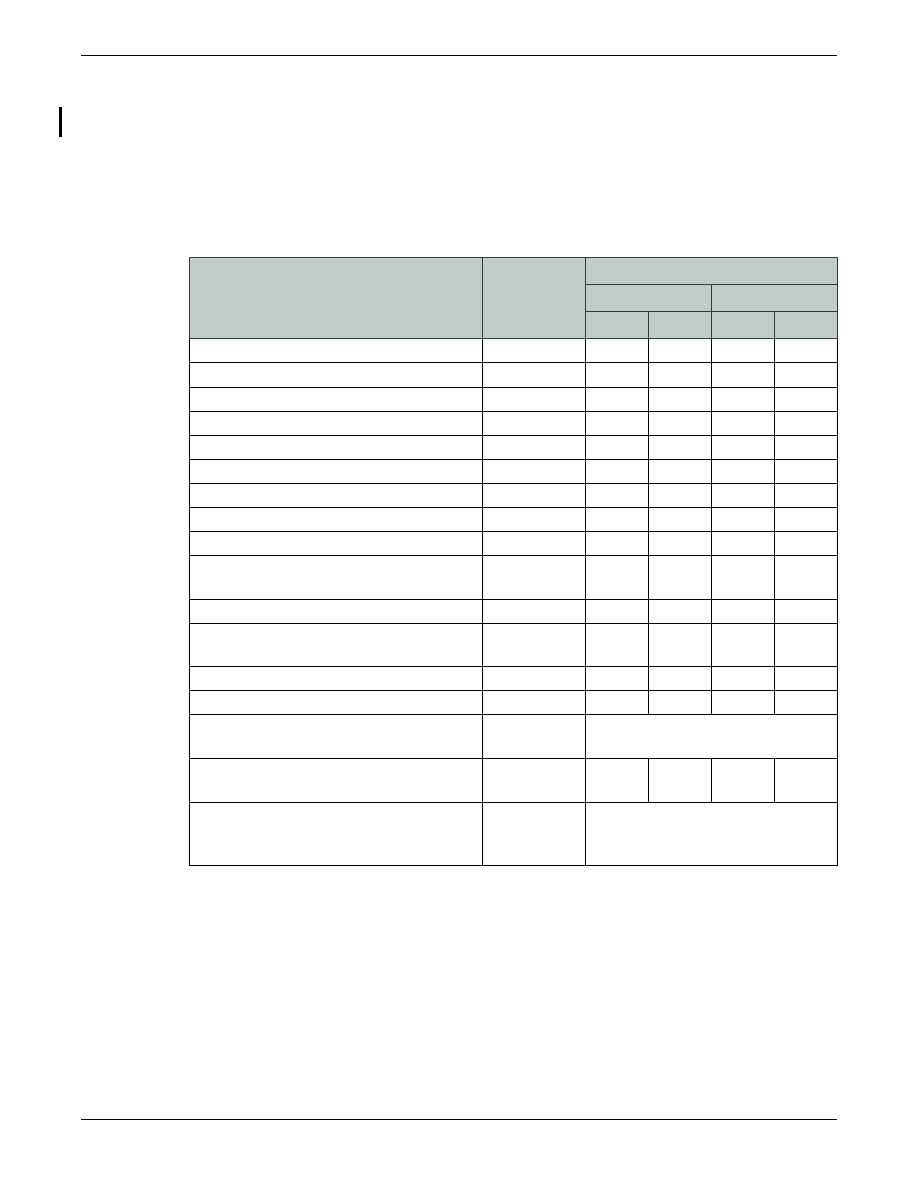
9-34.2(4)  Low VOC Solvent Based Paint

Paint Properties

Test Method

Low VOC Solvent-Based Paint

White

Yellow

Min.

Max.

Min.

Max.

Density of Paint (lb/gal)

ASTM D1475

11.8


11.8


Viscosity, KU

ASTM D562


 @35°F
 @50°F

105

105

 @77°F

75

85

75

85

 @90°F
 @120°F

65

65

Nonvolatile Content, % by weight

ASTM D2369

65

65

Pigment Content, % by weight

ASTM D2698

53

53

Titanium Dioxide Content (lb/gal), Rutile 

Type II

ASTM D5381

1.0

0.2

Volatile Organic Content (VOC) lbs/gal

ASTM D3960

1.25

1.25

Directional Reflectance %, @ 15 mils wet

WSDOT 

T 314

80

50

Package Stability

ASTM D1849

6

6

Bleeding, %

ASTM D868

1

90

90

Flexibility

ASTM D522

2

No cracking, flaking, or loss of 

adhesion

Settling Properties during Storage, inch

ASTM 

D1309

3

8

8

Skinning

ASTM D154

The paint shall not skin within 

48 hours in a ¾ filled, tightly 

closed container

1

The reflectance of the paint over asphalt paper shall be a minimum of 90 percent of the reflectance 

measurement of the paint over a taped (nonbleeding) surface.

2

The paint shall be applied at a wet film thickness of 6 mils to a 3 by 5 inch panel that has been solvent 

cleaned and lightly buffed with steel wool. With the panel kept in a horizontal position, the paint shall be 
allowed to dry for 18 hours at 77° ± 2°F, and then baked for 3 hours at 140° ± 2°F. The panel shall be cooled 
to 77° ± 2°F for at least 30 minutes, bent over a 0.25 inch mandrel, and then examined without magnification. 
The paint shall show no cracking, flaking, or loss of adhesion.

3

The sample shall show no more than 0.5 inch of clear material over the opaque portion of the paint and there 

shall be no settling below a rating of eight.

Pavement Marking Material 

9-34

9-34.2(5)


Lo

w

 V

OC 

W

at

erborne 

Pain

t

Pain

t P

roperties

Test M

ethod

Standar

d W

at

erborne 

Pain

t T

ype 1

 and 2

Semi-D

ur

able 

W

at

erborne

 P

ain

t T

ype 

3

H

igh-B

uild W

at

erborne 

Pain

t T

ype 4

Cold 

W

ea

ther

 W

at

erborne 

Pain

t T

ype 5

W

hit

e

Yello

w

W

hit

e

Yello

w

W

hit

e

Yello

w

W

hit

e

Yello

w

M

in.

M

ax.

M

in.

M

ax. 

M

in.

M

ax.

M

in.

M

ax. 

M

in.

M

ax. 

M

in.

M

ax.

M

in.

M

ax.

M

in.

M

ax. 

D

ensity

 o

f P

ain

t (lb

/gal)

ASTM D1475

W

ithin ± 0.3 o

qualifica

tion sample

W

ithin ± 0.3 o

qualifica

tion sample

W

ithin ± 0.3 o

qualifica

tion sample

12.5

12.5

Visc

osity

, KU

ASTM D562


 @35°F

95

95

 @77°F

80

95

80

95

80

95

80

95

80

95

80

95

87

87

 @90°F

60

60

60

60

60

60

60

60

N

on

vola

tile C

on

ten

t, % b

w

eigh

t

ASTM D2369

75

75

77

77

77

77

70

70

Pigmen

t C

on

ten

t, % b

w

eigh

t

ASTM D3723

68

68

65

65

N

on

vola

tile 

Vehicle (NVV

), % 

by

 w

eigh

t

ASTM D2369  ASTM  D3723

1

40

40

43

43

43

43

40

40

Vola

tile O

rganic C

on

ten

(V

OC) lbs/

gal

ASTM D3960

1.25

1.25

1.25

1.25

1.25

1.25

1.25

1.25

Fineness o

f G

rind, (H

egman 

Scale

)

ASTM D1210

3

3

3

3

3

3

3

3

Con

tr

ast R

atio, @ 15 mils 

w

et

ASTM D2805

0.98

0.96

0.98

0.96

0.98

0.96

0.99

0.98

D

irectional R

eflectanc

e %, @ 

15 

mils w

et

W

SDO

T 

314

88

50

88

50

90

50

87

50

Flash P

oin

t, °F

ASTM D93

100°

100°

100°

100°

pH

ASTM E70

9.5

9.5

9.5

9.5

9.5

9.5

9.5

9.5

Labor

at

ory

 D

ry

 T

ime 

(M

inut

es

)

ASTM D711

10

10

10

10

10

10

Vehicle C

omposition

ASTM D2621

100% acrylic emulsion

100% acrylic emulsion

100% cr

oss-linking 

acrylic

4

100% acrylic emulsion

Page 9-276 

Pavement Marking Material

Pain

t P

roperties

Test M

ethod

Standar

d W

at

erborne 

Pain

t T

ype 1

 and 2

Semi-D

ur

able 

W

at

erborne

 P

ain

t T

ype 

3

H

igh-B

uild W

at

erborne 

Pain

t T

ype 4

Cold 

W

ea

ther

 W

at

erborne 

Pain

t T

ype 5

W

hit

e

Yello

w

W

hit

e

Yello

w

W

hit

e

Yello

w

W

hit

e

Yello

w

M

in.

M

ax.

M

in.

M

ax. 

M

in.

M

ax.

M

in.

M

ax. 

M

in.

M

ax. 

M

in.

M

ax.

M

in.

M

ax.

M

in.

M

ax. 

Fr

eez

e-

Tha

w

 S

tability

, KU

ASTM D2243  and D562

@ 5 cy

cles sho

w

 no 

coagula

tion or

 chang

e in 

visc

osity

 gr

ea

ter

 than ± 

10 KU 

@ 5 cy

cles sho

w

 no 

coagula

tion or

 chang

e in 

visc

osity

 gr

ea

ter

 than ± 

10

 KU

@ 5 cy

cles sho

w

 no 

coagula

tion or

 chang

in 

visc

osity

 gr

ea

ter

 than 

± 

10

 KU 

@ 3 cy

cles sho

w

 no 

coagula

tion or

 chang

e in 

visc

osity

 gr

ea

ter

 than ± 

10

 KU

H

ea

t S

tability

ASTM D562

2

± 10

 KU fr

om the initial 

visc

osity

± 10

 KU fr

om the initial 

visc

osity

± 10

 KU fr

om the initial 

visc

osity

± 10

 KU fr

om the initial 

Visc

osity

Lo

w

 T

emper

atur

Film 

Forma

tion

ASTM  D2805

3

N

o C

racks

N

o C

racks

N

o C

racks

Cold F

le

xibility

5

ASTM D522

Pass a

t 0.5 in mandr

el*

Pass a

t 0.25 in mandr

el

Test D

eck D

ur

ability

6

ASTM D913

≥70% pain

t r

et

en

tion in 

wheel tr

ack*

≥70% pain

t r

et

en

tion in 

wheel tr

ack

M

ud C

racking

See no

te 7

N

o C

racks

N

o C

racks

N

o C

racks

1

U

se the f

ollo

wing f

ormula f

or

 calcula

ting non

vola

tile in 

vehicle (NV

V

): NVV

 = (N-

P/100-P)×100. 

W

her

e: N= % o

f non

vola

tile c

on

ten

t as de

termined b

ASTM D2369 and P= % 

of

 pigmen

t c

on

ten

t as de

termined b

ASTM D3723.

2

Put appr

oxima

tely

 15-fluid ounc

es o

f pain

t in a 1-pin

t lined c

on

tainer

, close the c

on

tainer

, seal it 

with

 tape, and put 

it an o

ven main

tained a

t 140° ± 2°F

 for

 7 da

ys. E

quilibr

at

the pain

t a

t 77° ± 2°F

 and mix thor

oughly

 with g

en

tle stirring. P

erf

orm c

onsist

ency

 test as specified in 

ASTM D562. C

onsist

ency

 shall no

t v

ary

 b

y ±10

 KU fr

om the initial 

visc

osity

.

3

A

pply

 pain

t a

t 15 mils 

w

et per

 ASTM D2805 o

ver

 a 2A

 L

ene

ta Chart. I

mmedia

tely

 and car

efully

 la

y the applie

d film

 horiz

on

tally

 in a r

efrig

er

at

or

 tha

t main

tains a t

emper

atur

e o

35°F

. A

ft

er

 24 hour

s, r

emo

ve the applied film and inspect. P

ain

t fi

lm should sho

w

 no cr

acks 

when held a

t arm

’s length and observ

ed b

y the nak

ed e

ye.

4

C

ross-linking acrylic shall mee

t the r

equir

emen

ts o

f f

eder

al spec

ifica

tion 

TT

-P

-1952F

 S

ection 3.1.1.

5

Cold F

le

xibility: 

The pain

t shall be applied t

o an aluminum panel

 a

t a 

w

et film

 thickness o

f 15 mils and allo

w

ed t

o dry

 under

 ambien

t c

onditions (50±10% RH and 72±5 ˚F) 

for

 24 hour

s. 

A cylindrical mandr

el appar

atus (in ac

cor

danc

with 

ASTM D522 me

thod B) shall be put 

in a 40°F

 re

frig

er

at

or

 when the pain

t is dr

awn do

wn. 

Aft

er

 24 hour

s, the 

aluminum panel 

with dry

 pain

t shall be put in the 40°F

 re

frig

er

at

or

 with

 the mandr

el appa

ra

tus f

or

 2 hour

s. 

Aft

er

 2 hour

s, the panel and t

est appar

atus shall be r

emo

ved and 

immedia

tely

 test

ed t

o ac

cor

ding t

ASTM D522 to e

valua

te c

old fle

xibility

. P

ain

t must sho

w

 no e

videnc

e o

f cr

acking, chippin

g or

 flaking 

when ben

t 180

 degr

ees o

ver

 a mandr

el 

bar

 o

f specified diame

ter

.

6

NTPEP

 test deck, or

 a t

est deck c

on

forming t

ASTM D713, sha

ll be c

onduc

ted f

or

 a minimum

 o

f six mon

ths 

with

 the f

ollo

wing additional r

equir

emen

ts: it shall be applied a

15 

w

et mils t

o a t

est deck tha

t is loca

ted a

t 40N la

titude or

 higher

 with a

t least 10,000

 AD

T and 

which 

w

as appl

ied during the mon

ths o

f S

ep

tember

 thr

ough N

ov

ember

.

7

Pain

t is applied t

o an appr

oxima

tely

 4”

×12”

 aluminum panel using 

a dr

aw

do

wn bar

 with a 50

 mil gap. 

The c

oa

ted panel is allo

w

ed t

o dry

 under

 ambien

t c

onditions (50±10% RH 

and 72±5 ˚F) f

or

 24 hour

s. 

Visual e

valua

tion o

f the dry

 film shall r

ev

eal no cr

acks.

Pavement Marking Material 

9-34

9-34.2(6)  Temporary Pavement Marking Paint

Paint used for temporary pavement marking shall conform to the requirements of 

Section 9-34.2

.

9-34.3 Plastic

White and yellow plastic pavement marking materials shall comply with the 
Specifications for:

Type A – Liquid hot applied thermoplastic

Type B – Pre-formed fused thermoplastic

Type C – Cold applied pre-formed tape

Type D – Liquid cold applied methyl methacrylate

For black, the color shall closely match SAE AMS Standard 595, color number 37038, and 
shall be chosen from a WSDOT QPL-listed manufacturer for white or yellow plastic. Black 
plastic shall comply with Sections 

9-34.3(2)

9-34.3(3)

, and 

9-34.3(4)

 for yellow, except for 

retroreflectance.

9-34.3(1)  Type A – Liquid Hot Applied Thermoplastic

Type A material consists of a mixture of pigment, fillers, resins and glass beads that is 
applied to the pavement in the molten state by extrusion or by spraying. The material 
can be applied at a continuously uniform thickness or it can be applied with a profiled 
pattern. Glass beads, intermixed and top dress, shall conform to the manufacturer’s 
recommendations necessary to meet the retroreflectance requirements. Type A material 
shall conform to the requirements of AASHTO M 249 and the following:

Resin – The resin shall be alkyd or hydrocarbon.

Retroreflectance – ASTM E1710

Newly applied pavement markings shall have a minimum initial coefficient of 
retroreflective luminance of 250 mcd∙m

-2

∙lx

-1

 for white and 175 mcd∙m

-2

∙lx

-1

 for yellow 

in accordance with ASTM E1710 when measured with a 30-meter retroreflectometer. 
WSDOT will measure retroreflectivity for compliance with a Delta LTL-X 
retroreflectometer.

Skid Resistance – ASTM E303

45 BPN units minimum

Page 9-278 

Pavement Marking Material

9-34.3(2)  Type B – Pre-Formed Fused Thermoplastic

Type B material consists of a mixture of pigment, fillers, resins and glass beads that is 
factory produced in sheet form. The material is applied by heating the pavement and 
top heating the material. The material shall contain intermixed glass beads. The material 
shall conform to AASHTO M 249, with the exception of the relevant differences for the 
materials being applied in the pre-formed state and the following:

Resin – The resin shall be alkyd or hydrocarbon.

The sample material submitted for approval shall be fused to a suitable substrate 
prior to performing the following tests.

Retroreflectance – ASTM E1710

The fused samples shall have a minimum initial coefficient of retroreflective 
luminance of 250 mcd∙m

-2

∙lx

-1

 for white and 175 mcd∙m

-2

∙lx

-1

 for yellow in 

accordance with ASTM E1710 when measured with a 30-meter retroreflectometer. 
WSDOT will measure retroreflectivity for compliance with a Delta LTL-X 
retroreflectometer.

Skid Resistance – ASTM E303

45 BPN units minimum

The blue color shall match SAE AMS Standard 595, color number 35180, and the 
tolerance of variation shall match that shown in the FHWA “Highway Blue Color 
Tolerance Chart”.

The red color shall match SAE AMS Standard 595, color number 11136, and the 
tolerance of variation shall match that shown in the FHWA “Highway Red Color 
Tolerance Chart”.

9-34.3(3)  Type C – Cold Applied Pre-Formed Tape

Type C material consists of plastic pre-formed tape that is applied cold to the pavement. 
The tape shall be capable of adhering to new and existing hot mix asphalt or cement 
concrete pavement. If the tape manufacturer recommends the use of a surface primer or 
adhesive, use a type approved by the pavement marking manufacturer. The tape shall also 
be capable of being inlaid into fresh hot mix asphalt during the final rolling process. The 
material is identified by the following designations: Type C-1 tape has a surface pattern 
with retroreflective elements exposed on the raised areas and faces and intermixed 
within its body and shall conform to ASTM D4505, Reflectivity Level I, Class 2 or 3, Skid 
Resistance Level A. Type C-2 tape has retroreflective elements exposed on its surface 
and intermixed within its body and shall conform to the requirements of ASTM D4505, 
Reflectivity Level II, Class 2 or 3, Skid Resistance Level A.

Pavement Marking Material 

9-34

9-34.3(4)  Type D – Liquid Cold Applied Methyl Methacrylate

Type D material consists of a two-part mixture of methyl methacrylate and a catalyst that 
is applied cold to the pavement. The material can be applied at a continuously uniform 
thickness or it can be applied with profiles (bumps). The material is classified by Type 
designation, depending upon the method of application. 

Glass beads shall conform to the manufacturer’s recommendations necessary to meet 
the retroreflectance requirements. Type D-1, D-2, D-3, D-4, and D-6 material shall have 
intermixed glass beads in the material prior to application.

Type D-5 material shall have glass beads injected into the material at application and a 
second coating of top dressing beads applied immediately after material application. Type 
D materials shall conform to the following: 

Type D – Liquid Cold Applied Methyl Methacrylate Properties

Property

Test Method

White

Yellow

Min.

Max.

Min.

Max.

Adhesion to PCC or HMA, psi

ASTM 

D4541

1

200 or 

substrate 

failure


200 or 

substrate 

failure


Chemical Resistance

2

No Effect

No Effect

Hardness

ASTM 

D2240

3

50


50


No Track Time

ASTM D711

4


30


30

Skid Resistance, BPN

ASTM E303

45


45


Tensile Strength, psi

ASTM D638

125


125


1

Part A and B mixed, applied at 60 mils thickness.

2

Cured markings shall be resistant to calcium chloride, sodium chloride, fuels, oils, and UV effects. Cure three 

days for motor oil, gas, diesel, ATF, salt, and anti-freeze.

3

Shore Durometer Type D and measurement made after 24 hours.

4

Sample applied at 40 mils.

Type D liquid cold-applied methyl methacrylate shall meet the following formulations:

4:1 Formulation Type D – Liquid Cold Applied Methyl Methacrylate


Type D-1 – One-gallon of methyl methacrylate and 3-fluid ounces of benzoyl 
peroxide powder (by weight).


Type D-2, D-3, D-4, and D-5 – Four parts methyl methacrylate and one part 
liquid benzoyl peroxide (by volume).

98:2 Formulation Type D – Liquid Cold Applied Methyl Methacrylate


Type D-1– One-gallon of methyl methacrylate and 3-fluid ounces of benzoyl 
peroxide powder (by weight).


Type D-2, D-3, D-4, D-5, and D-6 – Ninety-eight parts methyl methacrylate and 
two parts liquid benzoyl peroxide (by volume).

Page 9-280 

Pavement Marking Material

D liquid cold applied methyl methacrylate shall meet the following requirements for 
viscosity:

4:1 Formulations Type D – Liquid Cold Applied Methyl Methacrylate

Property

Test Method

D-1

D-2

D-3

D-4

D-5 

White

D-5 

Yellow

Min. Max. Min. Max. Min. Max. Min. Max. Min. Max. Min. Max.

Viscosity cP @ 

77°F, 50-rpm, 

spindle #7

ASTM D2196 

Method B, LV 

Model

11,000

15,000

26,000

28,000

17,000

21,000

Viscosity cP @ 

77°F, 50-rpm, 

spindle #4

ASTM D2196 

Method B, LV 

Model

8,000

10,000

5,000

8,000

7,000

11,000

98:2 Formulations Type D – Liquid Cold Applied Methyl Methacrylate

Property

Test Method

D-1

D-2

D-3

D-4

D-5

D-6

Min. Max. Min. Max. Min. Max. Min.


Max. Min. Max. Min. Max.

Viscosity 

Daniel Scale

Daniel 

Method

1

12 14

6

12 12 14 13 15

Viscosity cP @ 

77°F, 50-rpm, 

spindle #4

ASTM D2196 

Method B, LV 

Model

100 118

1

Follow Daniel Gauge method; measure flow at 60-seconds.

9-34.4 

Glass Beads for Pavement Marking Materials

Glass beads for traffic marking paint shall be coated with silicone for moisture resistance 
and a silane to promote adhesion. The beads shall be transparent, clean, colorless glass; 
smooth and spherically shaped; and free from milkiness, pits, or excessive air bubbles.

Glass beads used with plastic traffic markings shall be per the manufacturer’s 
recommendations. 

The glass beads for paint and plastic traffic markings shall not contain any metals in 
excess of the following established total concentration limits when tested in accordance 
with the listed test methodology:

Metal Concentration Limits

Element

Test Method

Max. Parts Per Million (ppm)

Arsenic

EPA 3052 SW-846 6010D

10.0

Barium

EPA 3052 SW-846 6010D

100.0

Cadmium

EPA 3052 SW-846 6010D

1.0

Chromium

EPA 3052 SW-846 6010D

5.0

Lead

EPA 3052 SW-846 6010D

50.0

Silver

EPA 3052 SW-846 6010D

5.0

Mercury

EPA 3052 SW-846 7471B

4.0

Pavement Marking Material 

9-34

Glass beads for traffic marking paint shall meet the following requirements for quality:

Glass Bead Property Test Method

Type A

Type B

1

Min. 

Max.

Min.

Max.

Refractive Index @ 

77 ± 9°F

AASHTO M 247 

Section 5.2.3

1.50

1.55

1.50

1.55

Moisture 

Resistances

AASHTO M 247 

Section 5.3.2

Flow Without Stopping

Flow Without Stopping

Adherence

AASHTO M 247 

Section 5.3.4

Pass

Pass

Roundness, %

ASTM D1155

70


80

2


FLHT 520

80

3


Appearance

TT-B-1325D 

Section 4.3.1

Beads shall be transparent, 

clean, dry, and free from 

bubbles and foreign matter.

Resistance to Acid

TT-B-1325D 

Section 4.3.6

Beads shall not develop any 

surface haze or dulling.

Resistance to 

Calcium Chloride

TT-B-1325D 

Section 4.3.7

Beads shall not develop any 

surface haze or dulling.

Resistance to 

Sodium Sulfide

TT-B-1325D 

Section 4.3.8

Sodium sulfide should not 

darken the beads.

Water Resistance

TT-B-1325D 

Section 4.3.9

Water shall not produce 

haze or dulling of the 

beads.

1

WSDOT Type B Glass Beads are high-performance glass beads for improved retroreflectivity and durability 

for high-performance pavement markings. A minimum of 50 percent of the glass beads shall be made from 
the direct-melt molten kiln process.

2

Roundness will be determined on material < No. 30 sieve.

3

Roundness will be determined on material ≥ No. 30 sieve. 

Glass beads for traffic marking paint shall meet the following requirements for grading 
when tested in accordance with ASTM D1214:

Percent Passing

Sieve Size

Type A

1

Type B

Min.

Max.

Min.

Max.

No. 14

100

No. 16

100

No. 18

65

80

No. 20

95

100

No. 30

75

95

30

50

No. 50

15

35

0

5

No. 100

0

5

1

Same gradation as AASHTO M 247 Type 1.

Page 9-282 

Pavement Marking Material

9-34.5 

Temporary Pavement Marking Tape

Biodegradable tape with paper backing is not allowed.

9-34.5(1)  Temporary Pavement Marking Tape – Short Duration 

(Removable)

Temporary pavement marking tape for short duration (usage is for up to two months) shall 
conform to ASTM D4592 Type I except that black tape, black mask tape and the black 
portion of the contrast removable tape, shall be non-reflective.

9-34.5(2)  Temporary Pavement Marking Tape – Long Duration 

(Non-Removable)

Temporary pavement marking tape for long duration (usage is for greater than two 
months and less than one year) shall conform to ASTM D4592 Type II. Temporary 
pavement marking tape for long duration, except for black tape, shall have a minimum 
initial coefficient of retroreflective luminance of 200 mcd*m-2*lx-1 when measured in 
accordance with ASTM E2832. Black tape, black mask tape and the black portion of the 
contrast removable tape, shall be non-reflective.

9-34.6 

Temporary Flexible Raised Pavement Markers

Temporary flexible raised pavement markers shall consist of an L-shaped body with 
retroreflective tape on the top of one face for one-way traffic and reflective tape on 
the top of both faces for two-way traffic. The marker body shall be made from 0.060-
inch minimum thick polyurethane. The top of the vertical leg shall be between 1.75 
and 2.0 inches high and shall be approximately 4 inches wide. The base width shall be 
approximately 1.125 inches wide. The base shall have a pressure sensitive adhesive 
material, a minimum of 0.125 inch thick with release paper. The reflective tape shall be 
a minimum of 0.25 inch high by 4 inches wide. The reflective tape shall have a minimum 
reflectance of 3.5 candlepower per foot-candle for white and 2.5 candlepower per foot-
candle for yellow measured at 0.2-degree observation angle and 0-degree entrance angle.

9-34.7 

Field Testing

9-34.7(1) Requirements

Field performance evaluation is required for low VOC solvent-based paint per 

Section 

9-34.2(4)

Type A – liquid hot applied thermoplastic per 

Section 9-34.3(1)

, Type B – 

preformed fused thermoplastic per 

Section 9-34.3(2)

, Type C – cold applied preformed 

tape per 

Section 9-34.3(3)

, and Type D – liquid applied methyl methacrylate per 

Section 

9-34.3(4)

.

Testing on a northern AASHTO National Transportation Product Evaluation Program 
(NTPEP) pavement marking test deck is recommended. Test decks conducted by other 
public entities may be considered provided they produce data similar to a northern 
NTPEP test deck. Retroreflectivity, Durability, and Auto No-Track shall conform to 
the following requirements after being installed on a northern NTPEP test deck for a 
minimum of 12 months.

Pavement Marking Material 

9-34

Successful use of a product in five other States may be considered in lieu of the field test 
requirement.

9-34.7(1)A Retroreflectivity

Retroreflectivity is measured as a coefficient of retroreflective luminance (RL) in 
accordance with the requirements of ASTM E1710 for 30-meter geometry. The minimum 
initial retroreflectivity is 250 mcd∙m

-2

∙lx

-1

 for white and 175 mcd∙m

-2

∙lx

-1

 for yellow, 

except Type C preformed tape shall meet the minimum initial values in ASTM D4505. The 
minimum retroreflectivity after 12 months is 150 mcd∙m

-2

∙lx

-1

 for white and 100 mcd∙m

-

2

∙lx

-1

 for yellow, when measured in the skip line area. However, the Department will 

review the results of each test deck to determine the minimum value in effect for that 
deck, in order to approve only the better-performing materials.

9-34.7(1)B Durability

Durability rating shall be a minimum of seven in the skip line area and six in the wheel 
paths after 12 months. The rating system used will be as indicated by NTPEP procedures. 
However, the department will review the results for each test deck to determine the 
minimum value in effect for that deck, in order to approve only the better-performing 
materials.

9-34.7(1)C 

Auto No-Track Time

Auto No-Track Time will only be required for low VOC solvent-based paint in accordance 
with 

Section 9-34.2(4).

No-track time shall be determined in accordance with NTPEP procedures by passing over 
an applied test line with a standard size passenger car without tracking of the line when 
viewed from a distance of 50 feet. The maximum no-track time shall not be exceeded 
when the pavement temperature is between 50°F and 120°F, with relative humidity less 
than 85 percent, and the pavement is dry.

9-34.7(1)D Approval

The Department will evaluate the results of laboratory and test deck data. This 
information will be reviewed for each material by color and roadway surface to determine 
compliance with this Specification. Approved product formulas will remain active for a 
period of approximately 5 years after completion of the NTPEP evaluation; afterwards, 
the product will need to be reevaluated.

Page 9-284 

Temporary Traffic Control Materials

9-35 

Temporary Traffic Control Materials

9-35.0 

General Requirements

Temporary traffic control materials in this section consist of various traffic 
communication, channelization and protection items described in 

Section 1-10 

and 

listed below:
 

Stop/Slow Paddles 
Construction Signs 
Wood Sign Posts 
Sequential Arrow Signs 
Portable Changeable Message Signs 
Barricades 
Traffic Safety Drums 
Traffic Cones 
Tubular Markers 
Warning Lights and Flashers 
Transportable Attenuator 
Portable Temporary Traffic Control Signal 
Tall Channelizing Devices

The basis for acceptance of temporary traffic control devices and materials shall be visual 
inspection by the Engineer’s representative. No sampling or testing will be done except 
that deemed necessary to support the visual inspection. Unless otherwise noted, requests 
for Approval of Material (RAM) and Qualified Products List (QPL) submittals are not 
required. Certification for crashworthiness according to NCHRP 350 or the Manual for 
Assessing Safety Hardware (MASH) will be required as described in 

Section 1-10.2(3)

.

“MUTCD”, as used in this section, shall refer to the latest WSDOT adopted edition of the 

Manual on Uniform Traffic Control Devices for Streets and Highways

. In the event of conflicts 

between the 

MUTCD

 and the Contract provisions, then the provisions shall govern.

9-35.1 

Stop/Slow Paddles

Paddles shall conform to the requirements of the 

MUTCD

, except that the minimum 

width shall be 24 inches.

Temporary Traffic Control Materials 

9-35

9-35.2 

Construction Signs

Construction signs shall conform to the requirements of the 

MUTCD

 and shall meet 

the requirements of NCHRP Report 350 for Category 2 devices or MASH. Except as 
noted below, any sign/sign stand combination that satisfies these requirements will be 
acceptable. Post mounted Class A construction signs shall conform to the requirements of 
this section and additionally shall conform to the requirements stated in 

Section 9-28

.

Aluminum sheeting shall be used to fabricate all construction signs. The signs shall have a 
minimum thickness of 0.080 inches and a maximum thickness of 0.125 inches.

All orange background signs shall be fabricated with Type X reflective sheeting. All 
post-mounted signs with Type X sheeting shall use a nylon washer between the twist 
fasteners (screw heads, bolts or nuts) and the reflective sheeting.

The use of plywood, fiberglass reinforced plastic, fabric rollup signs, and any other 
previously approved sign materials except aluminum or aluminum composite is prohibited.

All Class A and Class B signs shall utilize materials and be fabricated in accordance with 

Section 9-28

 and the 

Sign Fabrication Manual 

M 55-05. A fabrication decal as stated in 

Section 9-28.1

 is not required for construction signs. All regulatory signs having a red 

background (i.e., Stop, Yield) shall be fabricated with Type III or IV sign sheeting. All other 
regulatory information signs (i.e., Speed Limit, Traffic Fines Double in Work Zones) shall 
have Type II sheeting in rural areas and Type III or IV sheeting in urban areas. All signs 
having a green background (i.e., Exit arrow) shall have Type II sheeting for the background 
and Type III or IV sheeting for the letters, border, and symbols.

9-35.3 

Wood Sign Posts

Post sizes for construction signs shall be as follows:

One Post Installation

Post Size

Min. Sign Sq. Ft.

Max. Sign Sq. Ft.

4x4

16.0

4x6

17.0

20.0

6x6

21.0

25.0

6x8

26.0

31.0

Two Post Installation 

(For signs 5 feet or greater in width)

Post Size

Min. Sign Sq. Ft.

Max. Sign Sq. Ft.

4x4

16.0

4x6

17.0

36.0

6x6

37.0

46.0

6x8

47.0

75.0*

*The Engineer shall determine post size for signs greater than 75 square feet.

Page 9-286 

Temporary Traffic Control Materials

Sign posts shall conform to the grades and usage listed below. Grades shall be determined 
by the current standards of the West Coast Lumber Inspection Bureau (WCLIB) or the 
Western Wood Products Association (WWPA).

4 × 4   


Construction grade (Light Framing, Section 122-b WCLIB) or 

   (Section 

40.11 

WWPA)

4 × 6   


No. 1 and better, grade (Structural Joists and Planks,  


Section 123-b WCLIB) or (Section 62.11 WWPA)

6 × 6, 6 × 8, 8 × 10  No. 1 and better, grade (Posts and Timbers,  


Section 131-b WCLIB) or (Section 80.11 WWPA)

6 × 10, 6 × 12   

No. 1 and better, grade (Beams and Stringers,  


Section 130-b WCLIB) or (Section 70.11 WWPA)

9-35.4 

Sequential Arrow Signs

Sequential Arrow Signs shall meet the requirements of the 

MUTCD

 supplemented with 

the following:

Sequential arrow signs furnished for stationary lane closures on this project shall be 
Type C.

The color of the light emitted shall be yellow.

The dimming feature shall be automatic, reacting to changes in light without a 
requirement for manual adjustment.

9-35.5 

Portable Changeable Message Signs

Portable Changeable Message Signs (PCMS) shall meet the requirements of the 

MUTCD


and the following:

The PCMS shall employ one of the following technologies:
1.  Fiber optic/shutter
2.  Light emitting diode
3.  Light emitting diode/shutter
4.  Flip disk

Regardless of the technology, the PCMS shall meet the following general requirements:
1.  Be light emitting and must not rely solely on reflected light. The emitted light shall be 

generated using fiber optic or LED technology.

2.  Have a display consisting of individually controlled pixels no larger than 2½ by 

2½ inch. If the display is composed of individual character modules, the space 
between modules must be minimized so alphanumeric characters of any size 
specified below can be displayed at any location within the matrix.

Temporary Traffic Control Materials 

9-35

3.  When activated, the pixels shall display a yellow or orange image. When not 

activated, the pixels shall display a flat black image that matches the background of 
the sign face.

4.  Be capable of displaying alphanumeric characters that are a minimum of 18 inches in 

height. The width of alphanumeric characters shall be appropriate for the font. The 
PCMS shall be capable of displaying three lines of eight characters per line with a 
minimum of one pixel separation between each line.

5.  The PCMS message, using 18-inch characters, shall be legible by a person with 

20/20 corrected vision from a distance of not less than 800 feet centered on an axis 
perpendicular to the sign face.

6.  The sign display shall be covered by a stable, impact resistant polycarbonate 

face. The sign face shall be non-glare from all angles and shall not degrade due to 
exposure to ultraviolet light.

7.  Be capable of simultaneously activating all pixels for the purpose of pixel diagnostics. 

Any sign that employs flip disk or shutter technology shall be programmable to 
activate the disks/shutters once a day to clean the electrical components. This 
feature shall not occur when the sign is displaying an active message.

8.  The light source shall be energized only when the sign is displaying an active 

message.

9.  Primary source of power shall be solar power with a battery backup to provide 

continuous operation when failure of the primary power source occurs.

10.  The sign controller software shall be NTCIP compliant.

The PCMS panels and related equipment shall be permanently mounted on a trailer with 
all controls and power generating equipment.

The PCMS shall be operated by a controller that provides the following functions:
1.  Select any preprogrammed message by entering a code.
2.  Sequence the display of at least five messages.
3.  Blank the sign.
4.  Program a new message, which may include animated arrows and chevrons.
5.  Mirror the message currently being displayed or programmed.

9-35.6 Barricades

Barricades shall conform to the requirements of the 

MUTCD

 supplemented by the further 

requirements of the 

Standard Plans

.

Page 9-288 

Temporary Traffic Control Materials

9-35.7 

Traffic Safety Drums

Traffic safety drums shall conform to the requirements of the 

MUTCD

 and shall have the 

following additional physical characteristics:

Material   

Fabricated from low-density polyethylene that meets the  


requirements of ASTM D4976 and is UV stabilized.

Overall Width  18-inch minimum regardless of orientation.
Shape 


Rectangular, hexagonal, circular, or flat-sided semi-circular.

Color 


The base color of the drum shall be fade resistant safety orange.

The traffic safety drums shall be designed to accommodate at least one portable light 
unit. The method of attachment shall ensure that the light does not separate from the 
drum upon impact.

Drums and light units shall meet the crashworthiness requirements of NCHRP 350 or 
MASH as described in 

Section 1-10.2(3)

.

When recommended by the manufacturer, drums shall be treated to ensure proper 
adhesion of the reflective sheeting. Retroreflective bands shall be fabricated from Type III 
or Type IV reflective sheeting as described in 

Section 9-28.12

.

9-35.8 Vacant
9-35.9 

Traffic Cones

Cones shall conform to the requirements of the 

MUTCD

, except that the minimum height 

shall be 28 inches.

Retroreflective bands shall be fabricated from Type III or Type IV reflective sheeting as 
described in 

Section 9-28.12

.

9-35.10 

Tubular Markers

Tubular markers shall conform to the requirements of the 

MUTCD

, except that the 

minimum height shall be 28 inches.

The devices shall be stabilized by affixing them to the pavement by using either weighted 
bases or adhesive. Adhesive used to glue the device to the pavement shall meet the 
requirements of Sections

 9-02.1(8)

 or 

9-26.2

. Retroreflective bands shall be fabricated 

from Type III or Type IV reflective sheeting as described in 

Section 9-28.12

.

9-35.11 

Warning Lights and Flashers

Warning lights and flashers shall conform to the requirements of the 

MUTCD

.

Page 3-12 

Site Reclamation

3-03 

Site Reclamation

3-03.1 Description

This Work shall consist of reclaiming land used for borrowing material, mining for 
aggregates, sorting, or wasting materials as specified.

3-03.2 

General Requirements

3-03.2(1)  Contracting Agency-Provided Sites

All borrow, quarry, or pit sites of over 3 acres in size of disturbed land or resulting in pit 
walls more than 30 feet high and steeper than a one to one slope which are owned or 
furnished by the Contracting Agency shall be reclaimed as shown in the Plans and as 
designated by the Engineer.

Ultimate reclamation plans are not normally required for borrow, quarry, or pit sites 
not meeting the above criteria or for stockpile or waste sites. However, all such sites 
shall be reclaimed to the extent necessary to control erosion and provide a satisfactory 
appearance consistent with anticipated future use.

3-03.2(2)  Contractor-Provided Sites

All borrow, quarry, and pit sites of over 3 acres in size of disturbed land or resulting in pit 
walls more than 30 feet high and steeper than a 1:1 slope which are owned or furnished 
by the Contractor shall be reclaimed in accordance with the conditions and requirements 
of an approved reclamation permit acquired from the Department of Natural Resources.

When the Contractor obtains a reclamation permit from the Department of Natural 
Resources, evidence of such approval shall be furnished to the Engineer prior to any Work 
within the site.

Ultimate reclamation plans are not required for borrow, quarry, or pit sites not meeting 
the above criteria or for stockpile or waste sites. However, all such sites shall be reclaimed 
to the extent necessary to control erosion and provide a satisfactory appearance 
consistent with anticipated future use.

Compliance with the State Environmental Policy Act (SEPA) is required for sites involving 
more than 100 cubic yards of excavation or landfill throughout the lifetime of the site 
unless the local agency in which the project is located establishes a greater amount. Sites 
involving more than 500 cubic yards of excavation or landfill throughout the lifetime of 
the site always require compliance with SEPA. 

Under no circumstance will the Contractor be allowed to waste material within a wetland 
as defined in 

Section 2-03.3(7)

.


Content      ..     54      55      56      57     ..