Suzuki XL7 (2007 year). Instruction - part 13
-------------------------------------------------------------------------------------------------------------------------------------------------------------
SERVICE AND APPEARANCE CARE
Tires
ters and numbers used to define a
particular tire’s width, height, aspect
Your new vehicle comes with high-quality
WARNING
ratio, construction type, and service
tires made by a leading tire manufacturer.
(Continued)
description. See the “Tire Size” illus-
If you ever have questions about your tire
• Worn, old tires can cause acci-
tration later in this section for more
warranty and where to obtain service, see
dents. If your tread is badly worn,
detail.
your Suzuki Warranty booklet for details.
or if your tires have been damaged,
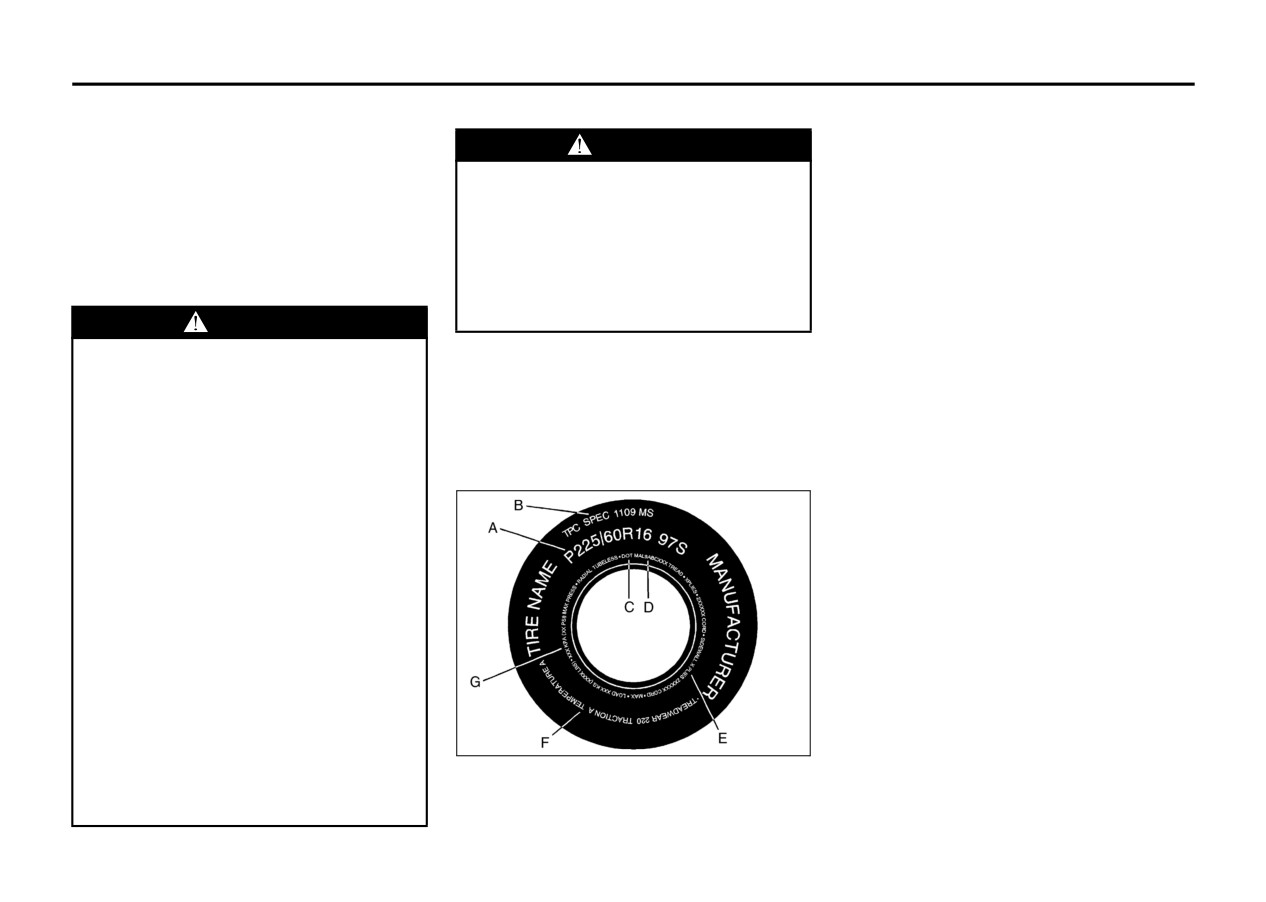
B. TPC Spec (Tire Performance Criteria
For additional information refer to the tire
replace them.
Specification):
manufacturer’s booklet included with your
Refer to “Inflation - Tire Pressure” in
Original equipment tires designed to
vehicle.
this section for inflation pressure
SUZUKI’s specific tire performance
adjustment for high speed driving.
criteria have a TPC specification code
WARNING
molded onto the sidewall. SUZUKI’s
•
Poorly maintained and improperly
TPC specifications meet or exceed all
Tire Sidewall Labeling
used tires are dangerous.
federal safety guidelines.
Useful information about a tire is molded
•
Overloading your tires can cause
C. DOT (Department of Transportation):
into its sidewall. The examples below show
overheating as a result of too much
The Department of Transportation
a typical passenger vehicle tire and a com-
friction. You could have an air-out
(DOT) code indicates that the tire is in
pact spare tire sidewall.
and a serious accident. Refer to
compliance with the U.S. Department
“Loading Your Vehicle” in “Your
of Transportation Motor Vehicle
Passenger (P-Metric) Tire Example
Driving, the Road, and Your Vehi-
Safety Standards.
cle” in the “Driving Your Vehicle”
D. Tire Identification Number (TIN):
section.
The letters and numbers following
•
Underinflated tires pose the same
DOT (Department of Transportation)
danger as overloaded tires. The
code is the Tire Identification Number
resulting accident could cause
(TIN). The TIN shows the manufac-
serious injury. Check all tires fre-
turer and plant code, tire size, and
quently to maintain the recom-
date the tire was manufactured. The
mended pressure. Tire pressure
TIN is molded onto both sides of the
should be checked when your tires
tire, although only one side may have
are cold.
the date of manufacture.
•
Overinflated tires are more likely to
E. Tire Ply Material:
be cut, punctured, or broken by a
The type of cord and number of plies
sudden impact - such as when you
in the sidewall and under the tread.
hit a pothole. Keep tires at the rec-
1376078
F. Uniform Tire Quality Grading
ommended pressure.
A. Tire Size:
(UTQG):
(Continued)
The tire size is a combination of let-
Tire manufacturers are required to
5-26