Lexus SC300 / Lexus SC400. Service manual - part 557
 

  Index      Lexus     Lexus SC300 / Lexus SC400 - service and repair manual


Search            


Content   ..  555  556  557  558   ..


Lexus SC300 / Lexus SC400. Service manual - part 557


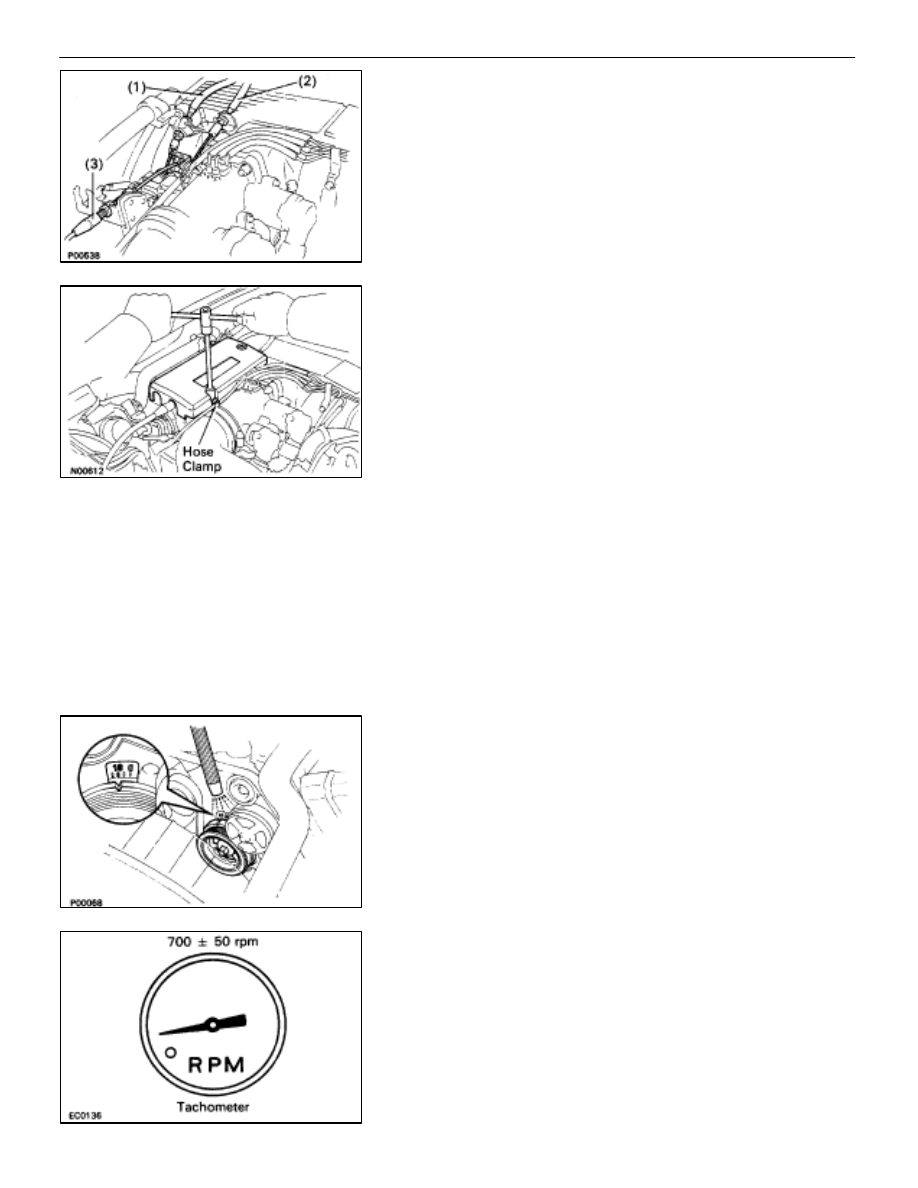
38.  RECONNECT CONTROL CABLES TO THROTTLE BODY

Connect the following hoses:

(1)

Accelerator cable

(2)

A/T throttle control cable

(3)

(w/ Cruise Control System)
Cruise control actuator cable

39.  REINSTALL THROTTLE BODY COVER

Install the throttle body cover and hose clamp with the two
bolts and cap nut.

40. RECONNECT CABLE TO NEGATIVE TERMINAL OF

BATTERY

41.  FILL WITH ENGINE COOLANT (See page 

CO–7

)

INSPECTION OF IGNITION TIMING

(See page 

IG–28

)

Ignition timing:

8–12

°

 BTDC @ idle

(w/ Terminals TE1 and E1 connected)

INSPECTION OF IDLE SPEED

HINT:

Initial conditions (See step 1 on page 

EM–28

)

Set the tachometer to the 4–cylinder range.

Idle speed: 700 

±

 50 rpm

ENGINE MECHANICAL

Engine Tune–Up

EM–27

IDLE AND/OR 2,500 RPM HC/CO
CONCENTRATION CHECK METHOD

HINT: This check is used only to determine whether or not the
idle HC/CO complies with regulations.

1. INTIAL 

CONDITIONS

(a)  Engine at normal operating temperature.
(b)  Air cleaner installed.
(c)  All pipes and hoses of air induction system connected.
(d)  All accessories switched OFF.
(e)  All vacuum lines properly connected.
HINT: All vacuum hoses for EGR systems, etc. should be
properly connected.
(f)  EFI system wiring connectors fully plugged.
(g)  Transmission in neutral range.
(h)  Tachometer and HC/CO meter calibrated at hand.

2. START 

ENGINE

3.  RACE ENGINE AT 2,500 PRM FOR APPROX. 120

SECONDS

4. 

INSERT HC/CO METER TESTING PROBE INTO TAILPIPE
AT LEAST 40 cm (1.3 ft)

5. 

CHECK HC/CO CONCENTRATION AT IDLE AND/OR
2,500 PRM
Complete the measuring within three times.

HINT: When performing the 2 mode (2,500 rpm and idle) test,
follow the measurement order prescribed by the regulations.

If the HC/CO concentration at 2,500 rpm does not comply
with regulations, try the following procedure.

Race the engine again at 2,500 rpm for approx. 1 minute and
quickly repeat steps 4 and 5 above.

This may correct the problem.

EM–28

ENGINE MECHANICAL

Idle and/or 2,500 rpm HC/CO
Concentration Check Method

Troubleshooting

If the HC/CO concentration does not comply with regulations,
perform troubleshooting in the order given below.
(a)  Check oxygen sensor operation.

(See page 

FI–113

)

(b) See 

the table below for possible cause, and then inspect

and correct the applicable causes if necessary.

ÑÑÑÑÑ

ÑÑÑÑÑ

ÑÑÑÑÑ

HC

ÑÑÑÑÑ

ÑÑÑÑÑ

ÑÑÑÑÑ

CO

ÑÑÑÑÑÑÑÑÑÑ

ÑÑÑÑÑÑÑÑÑÑ

ÑÑÑÑÑÑÑÑÑÑ

Symptoms

ÑÑÑÑÑÑÑÑÑÑÑÑÑÑÑÑÑÑÑ

ÑÑÑÑÑÑÑÑÑÑÑÑÑÑÑÑÑÑÑ

ÑÑÑÑÑÑÑÑÑÑÑÑÑÑÑÑÑÑÑ

Cause

ÑÑÑÑÑ

ÑÑÑÑÑ

High

ÑÑÑÑÑ

ÑÑÑÑÑ

Normal

ÑÑÑÑÑÑÑÑÑÑ

ÑÑÑÑÑÑÑÑÑÑ

Rough idle

ÑÑÑÑÑÑÑÑÑÑÑÑÑÑÑÑÑÑÑ

ÑÑÑÑÑÑÑÑÑÑÑÑÑÑÑÑÑÑÑ

1. Faulty ignitions:

ÑÑÑÑÑ

ÑÑÑÑÑ

ÑÑÑÑÑ

ÑÑÑÑÑ

ÑÑÑÑÑÑÑÑÑÑ

ÑÑÑÑÑÑÑÑÑÑ

ÑÑÑÑÑÑÑÑÑÑÑÑÑÑÑÑÑÑÑ

ÑÑÑÑÑÑÑÑÑÑÑÑÑÑÑÑÑÑÑ


Incorrect timing

ÑÑÑÑÑ

ÑÑÑÑÑ

ÑÑÑÑÑ

ÑÑÑÑÑ

ÑÑÑÑÑÑÑÑÑÑ

ÑÑÑÑÑÑÑÑÑÑ

ÑÑÑÑÑÑÑÑÑÑÑÑÑÑÑÑÑÑÑ

ÑÑÑÑÑÑÑÑÑÑÑÑÑÑÑÑÑÑÑ


Fouled, shorted or improperly gapped plugs

ÑÑÑÑÑ

ÑÑÑÑÑ

ÑÑÑÑÑ

ÑÑÑÑÑ

ÑÑÑÑÑÑÑÑÑÑ

ÑÑÑÑÑÑÑÑÑÑ

ÑÑÑÑÑÑÑÑÑÑÑÑÑÑÑÑÑÑÑ

ÑÑÑÑÑÑÑÑÑÑÑÑÑÑÑÑÑÑÑ


Open or crossed high–tension cords
C

k d di

ib

ÑÑÑÑÑ

ÑÑÑÑÑ

ÑÑÑÑÑÑÑÑÑÑ

ÑÑÑÑÑÑÑÑÑÑÑÑÑÑÑÑÑÑÑ


Cracked distributor cap

I

l

l

ÑÑÑÑÑ

ÑÑÑÑÑ

ÑÑÑÑÑ

ÑÑÑÑÑ

ÑÑÑÑÑÑÑÑÑÑ

ÑÑÑÑÑÑÑÑÑÑ

ÑÑÑÑÑÑÑÑÑÑÑÑÑÑÑÑÑÑÑ

ÑÑÑÑÑÑÑÑÑÑÑÑÑÑÑÑÑÑÑ

2. Incorrect valve clearance
3 L

k EGR

l

ÑÑÑÑÑ

ÑÑÑÑÑ

ÑÑÑÑÑ

ÑÑÑÑÑ

ÑÑÑÑÑÑÑÑÑÑ

ÑÑÑÑÑÑÑÑÑÑ

ÑÑÑÑÑÑÑÑÑÑÑÑÑÑÑÑÑÑÑ

ÑÑÑÑÑÑÑÑÑÑÑÑÑÑÑÑÑÑÑ

3. Leaky EGR valve
4 L

k i

k

d

h

l

ÑÑÑÑÑ

ÑÑÑÑÑ

ÑÑÑÑÑ

ÑÑÑÑÑ

ÑÑÑÑÑÑÑÑÑÑ

ÑÑÑÑÑÑÑÑÑÑ

ÑÑÑÑÑÑÑÑÑÑÑÑÑÑÑÑÑÑÑ

ÑÑÑÑÑÑÑÑÑÑÑÑÑÑÑÑÑÑÑ

4. Leaky intake and exhaust valves

L

k

li d

ÑÑÑÑÑ

ÑÑÑÑÑ

ÑÑÑÑÑ

ÑÑÑÑÑ

ÑÑÑÑÑÑÑÑÑÑ

ÑÑÑÑÑÑÑÑÑÑ

ÑÑÑÑÑÑÑÑÑÑÑÑÑÑÑÑÑÑÑ

ÑÑÑÑÑÑÑÑÑÑÑÑÑÑÑÑÑÑÑ

5. Leaky cylinders

ÑÑÑÑÑ

ÑÑÑÑÑ

High

ÑÑÑÑÑ

ÑÑÑÑÑ

Low

ÑÑÑÑÑÑÑÑÑÑ

ÑÑÑÑÑÑÑÑÑÑ

Rough idle

ÑÑÑÑÑÑÑÑÑÑÑÑÑÑÑÑÑÑÑ

ÑÑÑÑÑÑÑÑÑÑÑÑÑÑÑÑÑÑÑ

1. Vacuum leaks:

ÑÑÑÑÑ

ÑÑÑÑÑ

ÑÑÑÑÑ

ÑÑÑÑÑ

ÑÑÑÑÑÑÑÑÑÑ

ÑÑÑÑÑÑÑÑÑÑ

(Fluctuating HC reading)

ÑÑÑÑÑÑÑÑÑÑÑÑÑÑÑÑÑÑÑ

ÑÑÑÑÑÑÑÑÑÑÑÑÑÑÑÑÑÑÑ


PCV hoses

ÑÑÑÑÑ

ÑÑÑÑÑ

ÑÑÑÑÑ

ÑÑÑÑÑ

ÑÑÑÑÑÑÑÑÑÑ

ÑÑÑÑÑÑÑÑÑÑ

ÑÑÑÑÑÑÑÑÑÑÑÑÑÑÑÑÑÑÑ

ÑÑÑÑÑÑÑÑÑÑÑÑÑÑÑÑÑÑÑ


EGR valve

ÑÑÑÑÑ

ÑÑÑÑÑ

ÑÑÑÑÑ

ÑÑÑÑÑ

ÑÑÑÑÑÑÑÑÑÑ

ÑÑÑÑÑÑÑÑÑÑ

ÑÑÑÑÑÑÑÑÑÑÑÑÑÑÑÑÑÑÑ

ÑÑÑÑÑÑÑÑÑÑÑÑÑÑÑÑÑÑÑ


Intake manifold
Ai i

k

h

b

ÑÑÑÑÑ

ÑÑÑÑÑ

ÑÑÑÑÑ

ÑÑÑÑÑ

ÑÑÑÑÑÑÑÑÑÑ

ÑÑÑÑÑÑÑÑÑÑ

ÑÑÑÑÑÑÑÑÑÑÑÑÑÑÑÑÑÑÑ

ÑÑÑÑÑÑÑÑÑÑÑÑÑÑÑÑÑÑÑ


Air intake chamber
Th

l b d

ÑÑÑÑÑ

ÑÑÑÑÑ

ÑÑÑÑÑ

ÑÑÑÑÑ

ÑÑÑÑÑÑÑÑÑÑ

ÑÑÑÑÑÑÑÑÑÑ

ÑÑÑÑÑÑÑÑÑÑÑÑÑÑÑÑÑÑÑ

ÑÑÑÑÑÑÑÑÑÑÑÑÑÑÑÑÑÑÑ


Throttle body
ISC

l

ÑÑÑÑÑ

ÑÑÑÑÑ

ÑÑÑÑÑÑÑÑÑÑ

ÑÑÑÑÑÑÑÑÑÑÑÑÑÑÑÑÑÑÑ


ISC valve
B k b

li

ÑÑÑÑÑ

ÑÑÑÑÑ

ÑÑÑÑÑ

ÑÑÑÑÑ

ÑÑÑÑÑÑÑÑÑÑ

ÑÑÑÑÑÑÑÑÑÑ

ÑÑÑÑÑÑÑÑÑÑÑÑÑÑÑÑÑÑÑ

ÑÑÑÑÑÑÑÑÑÑÑÑÑÑÑÑÑÑÑ


Brake booster line

2 L

i

i

i fi

ÑÑÑÑÑ

ÑÑÑÑÑ

ÑÑÑÑÑ

ÑÑÑÑÑ

ÑÑÑÑÑÑÑÑÑÑ

ÑÑÑÑÑÑÑÑÑÑ

ÑÑÑÑÑÑÑÑÑÑÑÑÑÑÑÑÑÑÑ

ÑÑÑÑÑÑÑÑÑÑÑÑÑÑÑÑÑÑÑ

2. Lean mixture causing misfire

ÑÑÑÑÑ

ÑÑÑÑÑ

High

ÑÑÑÑÑ

ÑÑÑÑÑ

High

ÑÑÑÑÑÑÑÑÑÑ

ÑÑÑÑÑÑÑÑÑÑ

Rough idle

ÑÑÑÑÑÑÑÑÑÑÑÑÑÑÑÑÑÑÑ

ÑÑÑÑÑÑÑÑÑÑÑÑÑÑÑÑÑÑÑ

1. Clogged air filter

ÑÑÑÑÑ

ÑÑÑÑÑ

g

ÑÑÑÑÑ

ÑÑÑÑÑ

g

ÑÑÑÑÑÑÑÑÑÑ

ÑÑÑÑÑÑÑÑÑÑ

g

(Black smoke from exhaust)

ÑÑÑÑÑÑÑÑÑÑÑÑÑÑÑÑÑÑÑ

ÑÑÑÑÑÑÑÑÑÑÑÑÑÑÑÑÑÑÑ

gg

2. Faulty EFI systems:

ÑÑÑÑÑ

ÑÑÑÑÑ

ÑÑÑÑÑ

ÑÑÑÑÑ

ÑÑÑÑÑÑÑÑÑÑ

ÑÑÑÑÑÑÑÑÑÑ

(

)

ÑÑÑÑÑÑÑÑÑÑÑÑÑÑÑÑÑÑÑ

ÑÑÑÑÑÑÑÑÑÑÑÑÑÑÑÑÑÑÑ

y

y


Faulty pressure regulator

ÑÑÑÑÑ

ÑÑÑÑÑ

ÑÑÑÑÑ

ÑÑÑÑÑ

ÑÑÑÑÑÑÑÑÑÑ

ÑÑÑÑÑÑÑÑÑÑ

ÑÑÑÑÑÑÑÑÑÑÑÑÑÑÑÑÑÑÑ

ÑÑÑÑÑÑÑÑÑÑÑÑÑÑÑÑÑÑÑ

y

g


Clogged fuel return line

ÑÑÑÑÑ

ÑÑÑÑÑ

ÑÑÑÑÑ

ÑÑÑÑÑ

ÑÑÑÑÑÑÑÑÑÑ

ÑÑÑÑÑÑÑÑÑÑ

ÑÑÑÑÑÑÑÑÑÑÑÑÑÑÑÑÑÑÑ

ÑÑÑÑÑÑÑÑÑÑÑÑÑÑÑÑÑÑÑ

gg


Defective water temp. sensor

ÑÑÑÑÑ

ÑÑÑÑÑ

ÑÑÑÑÑ

ÑÑÑÑÑ

ÑÑÑÑÑÑÑÑÑÑ

ÑÑÑÑÑÑÑÑÑÑ

ÑÑÑÑÑÑÑÑÑÑÑÑÑÑÑÑÑÑÑ

ÑÑÑÑÑÑÑÑÑÑÑÑÑÑÑÑÑÑÑ


Defective air temp. sensor

ÑÑÑÑÑ

ÑÑÑÑÑ

ÑÑÑÑÑ

ÑÑÑÑÑ

ÑÑÑÑÑÑÑÑÑÑ

ÑÑÑÑÑÑÑÑÑÑ

ÑÑÑÑÑÑÑÑÑÑÑÑÑÑÑÑÑÑÑ

ÑÑÑÑÑÑÑÑÑÑÑÑÑÑÑÑÑÑÑ


Faulty ECU

ÑÑÑÑÑ

ÑÑÑÑÑ

ÑÑÑÑÑ

ÑÑÑÑÑ

ÑÑÑÑÑÑÑÑÑÑ

ÑÑÑÑÑÑÑÑÑÑ

ÑÑÑÑÑÑÑÑÑÑÑÑÑÑÑÑÑÑÑ

ÑÑÑÑÑÑÑÑÑÑÑÑÑÑÑÑÑÑÑ

y


Faulty injectors

ÑÑÑÑÑ

ÑÑÑÑÑ

ÑÑÑÑÑÑÑÑÑÑ

ÑÑÑÑÑÑÑÑÑÑÑÑÑÑÑÑÑÑÑ

y

j


Faulty cold start injector

ÑÑÑÑÑ

ÑÑÑÑÑ

ÑÑÑÑÑ

ÑÑÑÑÑ

ÑÑÑÑÑÑÑÑÑÑ

ÑÑÑÑÑÑÑÑÑÑ

ÑÑÑÑÑÑÑÑÑÑÑÑÑÑÑÑÑÑÑ

ÑÑÑÑÑÑÑÑÑÑÑÑÑÑÑÑÑÑÑ

y

j


Faulty throttle position sensor

ÑÑÑÑÑ

ÑÑÑÑÑ

ÑÑÑÑÑ

ÑÑÑÑÑ

ÑÑÑÑÑÑÑÑÑÑ

ÑÑÑÑÑÑÑÑÑÑ

ÑÑÑÑÑÑÑÑÑÑÑÑÑÑÑÑÑÑÑ

ÑÑÑÑÑÑÑÑÑÑÑÑÑÑÑÑÑÑÑ


Faulty air flow meter

ENGINE MECHANICAL

Idle and/or 2,500 rpm HC/CO
Concentration Check Method

EM–29

COMPRESSION CHECK

HINT: If there is lack of power, excessive oil consumption or
poor fuel economy, measure the compression pressure.

1. 

WARM UP AND STOP ENGINE
Allow the engine to warm up to normal operating tempera-
ture.

2. 

REMOVE NO.3 TIMING BELT COVERS
(See steps 1, 5 to 10 and 14 on pages 

EM–11

 to 13)

3. 

DISCONNECT COLD START INJECTOR CONNECTOR

4. DISCONNECT RH CAM POSITION SENSOR

CONNECTOR
(a)  Disconnect the connector from the ignition coil bracket.
(b)  Disconnect the sensor connector.

5. DISCONNECT LH CAM POSITION SENSOR

CONNECTOR

6. REMOVE 

SPARK 

PLUGS

(a)  Disconnect the eight high–tension cords from the spark

plugs.

Disconnect the high–tension cords at rubber boot. Do
not pull on the cords.

NOTICE: Pulling on or bending the cords may damage
the conductor inside.

EM–30

ENGINE MECHANICAL

Compression Check


Content   ..  555  556  557  558   ..