Jaguar XJ (X350). Service manual - part 890
 

  Index      Jaguar     Jaguar XJ (X350) - service and repair manual 2003-2009 year


Search            


Content   ..  888  889  890  891   ..


Jaguar XJ (X350). Service manual - part 890


5


 —


Camshaft position (CMP) sensor


6


 —


Engine coolant temperature (ECT) sensor


7


 —


Crankshaft position (CPK) sensor


8


 —


Variable camshaft timing oil control solenoid


9


 —


Oil temperature sensor


10


 —


Oil pressure sensor


11


 —


Fuel rail pressure (FRP) sensor


Item


Part Number


Description


1


 —


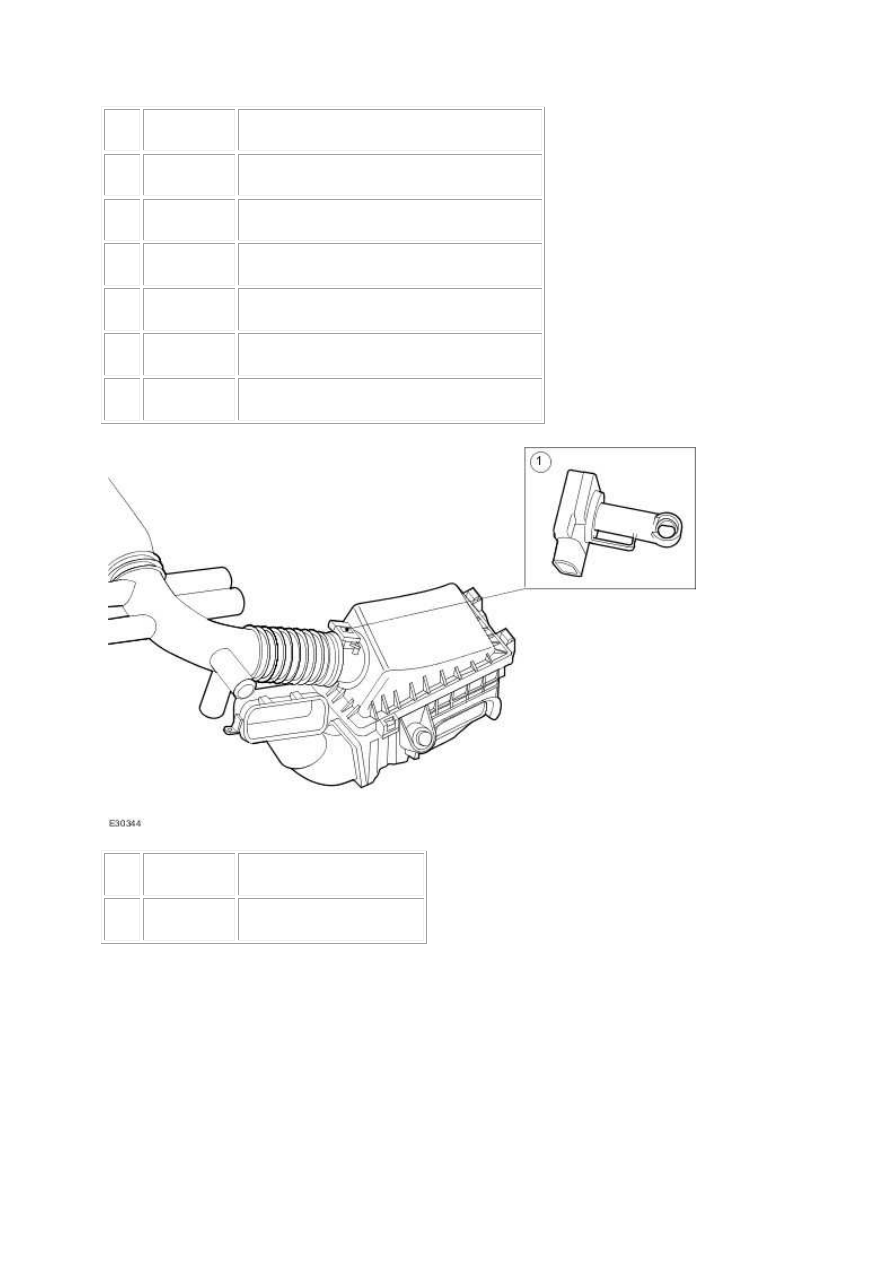
Mass air flow (MAF) sensor


Item


Part Number


Description


1


 —


Heated oxygen sensor - RH


2


 —


Catalyst monitor sensor - RH


3


 —


Catalyst monitor sensor - LH


4


 —


Heated oxygen sensor (HO2S) - LH


Engine Control Module (ECM) 

The electronic engine control system consists of a engine control module (ECM), located behind the 

glove compartment, and a number of sensing and actuating devices. The sensors supply the ECM 

with input signals which relate to the engine operating conditions and driver requirements. The 

sensor information is evaluated by the ECM using the results to activate the appropriate response 

from the actuating devices. The system provides the necessary engine control accuracy and 

adaptability to: 

minimize exhaust emissions and fuel consumption.  

www.

provide optimum driver control under all conditions.  

minimize evaporative emissions.  

provide system diagnostics.  

In addition to these functions the ECM also interfaces with other vehicle systems through the 

controller area network (CAN). 

Camshaft Position (CMP) Sensor 

The camshaft position (CMP) sensors monitor the position of both camshafts to allow the ECM to 

control the phase of the inlet camshafts relative to the position of the crankshaft. 

Variable Camshaft Timing Oil Control Solenoid 

The variable camshaft timing oil control solenoid is a hydraulic actuator, which advances and retards 

the inlet camshaft timing, thereby altering the camshaft to crankshaft phasing for optimum engine 

performance. 

Knock Sensors (KS) 

The knock sensors (KS) detect combustion knock within the engine cylinders and sends a signal to the 

ECM. The ECM uses this information to gradually adjust the ignition timing until the combustion 

knock is eliminated. 

Mass Air flow (MAF) Sensor 

The mass air flow (MAF) sensor informs the ECM of the rate of air flow entering the engine by 

producing a voltage which is proportional to the rate of air flow into the engine. The voltage 

produced by the MAF sensor increases as the rate of air flow increases. The ECM takes into account 

the density of the air entering the air intake system so that it is possible to maintain the required air 

to fuel ratio, and to compensate for variations in atmospheric pressure. 


Integral to the MAF sensor is the intake air temperature sensor (IAT) which measures the 

temperature of the air entering the air intake system. The ECM uses this information to compensate 

for higher than normal air intake temperatures. 

Throttle Position (TP) Sensor 

The ECM monitors the angle of the throttle blade within the throttle housing through the throttle 

position (TP) sensor. The TP sends a voltage to the ECM which is proportional to the angle of the 

throttle plate. The voltage from the TP increases with the angle of the throttle plate. There are two 

sensor tracks within the TP sensor. 

Crankshaft Position (CKP) Sensor 

The crankshaft position (CKP) sensor is an inductive pulse generator, which scans protrusions on a 

pulse ring fitted to the flywheel to inform the ECM of the crankshaft's position and speed. The CKP 

sensor produces an alternating voltage. The frequency of this voltage increases proportional to 

engine speed. 

Fuel Rail Pressure (FRP) Sensor 

The fuel rail pressure (FRP) sensor is a pressure transducer device. A vacuum pipe connects to the 

intake manifold for manifold pressure. The ECM receives a voltage from the FRP sensor which is 

proportional to the fuel pressure in the fuel injection supply manifold. 

Engine Coolant Temperature (ECT) Sensor 

The engine coolant temperature (ECT) sensor is a thermistor type sensor that provides an input 

signal to the ECM which is proportional to the engine coolant temperature. The ECT sensor is a 

negative temperature coefficient (NTC) sensor and its resistance decreases with a proportional 

increase in engine coolant temperature. 

Oil Temperature Sensor 

The oil temperature sensor is a thermistor type sensor that provides an input signal to the ECM 

which is proportional to the engine oil temperature. 

Oil Pressure Switch 

The oil pressure switch is connected to the instrument cluster and is not directly part of the 

electronic engine control system. 

Heated Oxygen Sensor (HO2S) 

The heated oxygen sensor (HO2S) is a linear characteristic type sensor, fitted forward of the exhaust 

system's catalytic converter. The ECM uses this as it's primary sensor to measure the oxygen content 

of the exhaust gasses within the exhaust system to provide closed-loop fuelling control. 

Catalyst Monitor Sensor 

The catalyst monitor sensor is a non-linear characteristic type sensor fitted to the exhaust system's 

catalytic converter. The ECM uses this as it's secondary sensor to measure the oxygen content of the 

exhaust gasses within the exhaust after they have passed through the catalytic converter. As well as 

providing additional closed-loop fuelling control the ECM uses this information to determine the 

efficiency of the catalytic converter. 

Intake Air Temperature (IAT) Sensor. Vehicles with supercharger. 

Vehicles with supercharger have an additional intake air temperature sensor located on the right-

hand charge air cooler. The IAT measures the temperature of the air entering the charge air cooler. 

The ECM uses this information to compensate for higher than normal air intake temperatures. 


www.


Content   ..  888  889  890  891   ..