Jaguar XJ (X350). Service manual - part 825
 

  Index      Jaguar     Jaguar XJ (X350) - service and repair manual 2003-2009 year


Search            


Content   ..  823  824  825  826   ..


Jaguar XJ (X350). Service manual - part 825


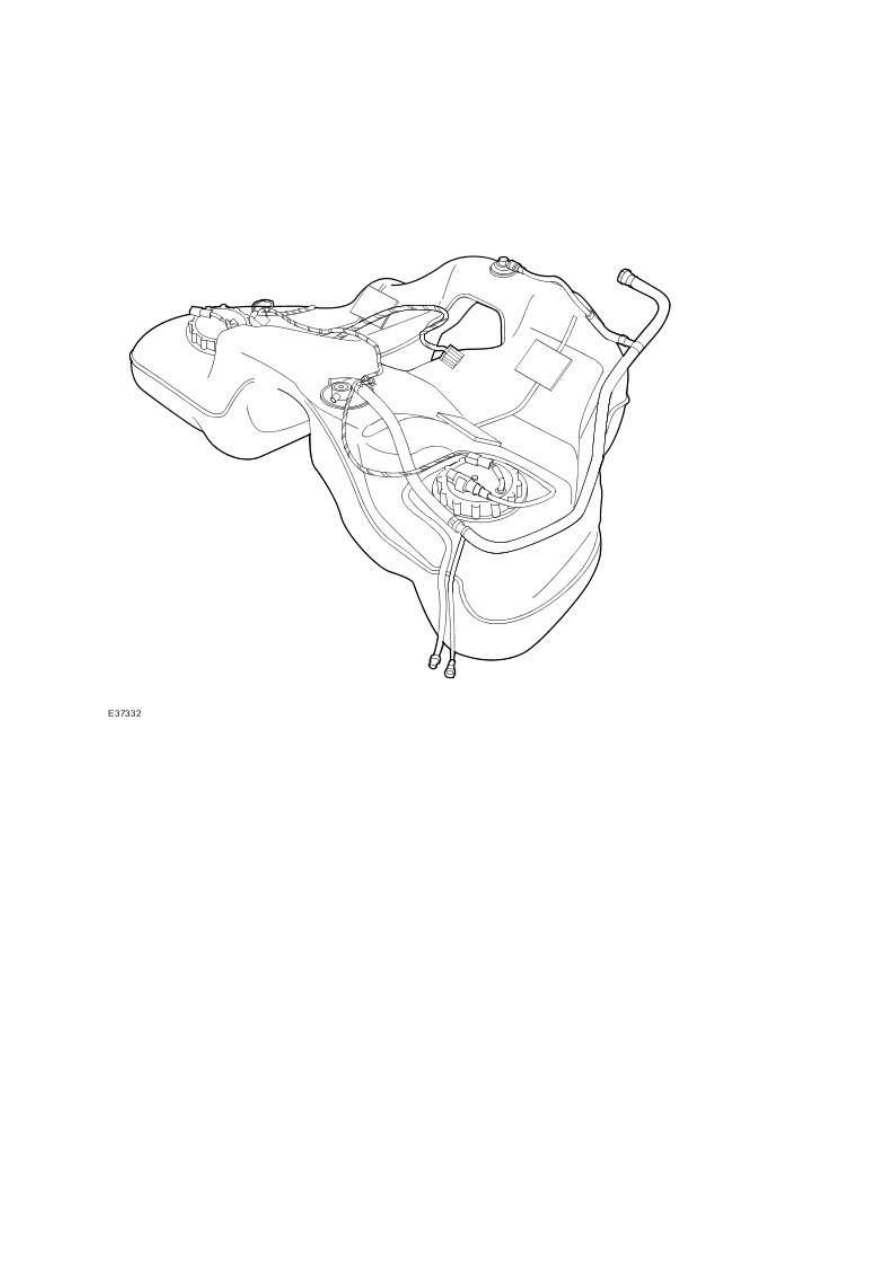
Onboard refuel vapor recovery (ORVR). 

The vehicle is fitted with an onboard refuel vapor recovery (ORVR) type fuel tank. During refuelling all 

vapor is collected in the evaporative emission canister as well as in normal vehicle operations. 


When the evaporative emission canister purge valve is closed, the fuel tank is vented into the 

evaporative emission canister through the fuel tank roll-over valve. The evaporative emission 

canister absorbs the fuel vapor and prevents the release of hydrocarbons into the atmosphere. 

When the vapor evaporative emission canister purge valve is opened, the canister is exposed to the 

intake manifold vacuum and the fuel vapor deposits are drawn into the manifold where they mix 

with the incoming air/fuel charge. 


The evaporative emission fuel vapor management system is controlled by the engine control module 

(ECM) according to calibrated data tables. 


Diagnosis and testing


Evaporative Emissions - VIN Range: 
G00442->G45703   

Preliminary Inspection 

1 . Visually inspect for obvious signs of mechanical or electrical damage, blown fuses, etc.  


2 . If an obvious cause for an observed or reported concern is found, correct the cause (if possible) 

before proceeding to the next step.  


3 . If the concern is not visually evident, verify the symptom and proceed with diagnosis, using the 

Jaguar approved diagnostic system, where available.  


4 . Where K-Line or Vacutec equipment is available, it should be used as an aid to diagnosis. The 

equipment must be capable of testing to the 0.020 thou standard.  

Diagnostic Drive Cycles 

Following the setting of a DTC, the appropriate repairs must be carried out, and the normal operation 

of the system checked. This will be done by performing a series of drive cycles which will enable the 

vehicle to operate the evaporative emissions system as a function check. The following drive cycles 

cover the use of the Jaguar approved diagnostic system, a scan tool, and a test with no additional 

equipment, where possible. 

Flow check monitor drive cycle conditions (non-Federal) 

NOTE:  


These conditions must be satisfied before the test is commenced. 


This drive cycle should be performed following rectification work on the system. 

Make sure the fuel tank is between one third and three quarters full. (Adding fuel will increase 

vapor generation; the diagnostic will not run if the vapor concentration is too great).  

Make sure the ambient air temperature is above -5°C (23°F).  

Flow check monitor drive cycle (non-Federal) 

Drive the vehicle for a minimum of 15 minutes, avoiding severe or excessive fuel movement.  

Avoiding excessive fuel movement, gently bring the vehicle to rest (coast to a stop).  

Allow the vehicle to idle for two minutes.  

www.

Full Evaporative system monitor drive cycle conditions 

NOTE:  


These conditions must be satisfied before the test is commenced. 


Make sure the fuel filler cap is correctly fitted.  

Clear the DTCs. (Perform a code clear, even if no codes are present. This will reset TIDs).  

Make sure the fuel tank is between one third and three quarters full (adding fuel will increase 

vapor generation; the diagnostic will not run if the vapor concentration is too great).  

Drive the vehicle for a minimum of two minutes, and until fully warm (temperature gauge just 

below mid-point).  

Make sure that the purge valve is operating, either by touch, sound, or using datalogger (purge 

vapor management valve-duty cycle). If the purge is not active, perform the "drive cycle for 
green ECM" in this section.  

Full Evaporative system monitor drive cycle 

Drive the vehicle to a suitable road where the test can be carried out, switch off the ignition.  

Leave the ignition switched off for 30 seconds.  

Restart the engine, accelerate briskly to 80 kilometers per hour (50 miles per hour), making sure 

that the engine speed reaches at least 3500 rpm for a minimum of five seconds.  

40 thou test, using the Jaguar approved diagnostic system 

Avoiding high engine loads, drive the vehicle steadily between 64 and 97 kilometers per hour (40 

and 60 miles per hour). Using the Jaguar approved diagnostic system, monitor the 
evaporative valve duty cycle (purge vapor management valve-duty cycle), CCV status 
(canister close valve-vapor recovery system), and the FTPS (fuel tank pressure-vapor 
recovery system). The Jaguar approved diagnostic system will give an indication when the 
test is active. Dependant on the level of vapor concentration, it may take up to 30 minutes 
for the test to initialize. (Vapor concentration cannot be measured using the Jaguar approved 
diagnostic equipment). When the test has initialized (CCV closed), it will take up to 90 
seconds to complete. Avoid excessive fuel movement while the test is active.  

20 thou test, using the Jaguar approved diagnostic system 

Continue driving the vehicle steadily between 64 and 97 kilometers per hour (40 and 60 miles per 

hour) avoiding high engine loads for a further 10 minutes.  

Avoiding excessive fuel movement, gently bring the vehicle to rest (coast to a stop).  

Allow the vehicle to idle for 2 minutes.  

Use the Jaguar approved diagnostic system to monitor the evaporative valve duty cycle (purge 

vapor management valve-duty cycle), CCV status (canister close valve-vapor recovery 
system), and the FTPS (fuel tank pressure-vapor recovery system). The Jaguar approved 
diagnostic system will give an indication when the test is active. When the test has initialized 
(CCV closed), it will take up to 90 seconds to complete.  

If the 20 thou test has not run, it is likely that the vapor concentration in the purge system is too 

great. In this case, carry out the following: 

Drive the vehicle steadily for a further 30 minutes, avoiding excessive fuel movement.  

Avoiding excessive fuel movement, gently bring the vehicle to rest (coast to a stop).  

Allow the vehicle to idle for 2 minutes.  

Use the Jaguar approved diagnostic system to monitor the evaporative valve duty cycle (purge 

vapor management valve-duty cycle), CCV status (canister close valve-vapor recovery 
system), and the FTPS (fuel tank pressure-vapor recovery system). The Jaguar approved 
diagnostic system will give an indication when the test is active. When the test has initialized 
(CCV closed), it will take up to 90 seconds to complete.  

If the 20 thou test fails to run a second time, repeat the entire test. 

Check for DTCs. Rectify as indicated.  

40 thou test, using scan tool 

Avoiding high engine loads, drive the vehicle steadily between 64 and 97 kilometers per hour (40 

and 60 miles per hour).  

When the test has initialized, using the scan tool, monitor the evaporative valve duty cycle, CCV 

status, and the FTPS (the scan tool should give an indication when the test is active).  

When the test has initialized (CCV closed), it will take up to 90 seconds to complete.  

To make sure that the test has completed, TID 08 in mode 6 must be checked (if the test has not 

completed, this TID will display 0. Any other value indicates test completion).  

If the test did not complete, repeat the test.  

20 thou test, using scan tool 

Continue driving the vehicle steadily between 64 and 97 kilometers per hour (40 and 60 miles per 

hour) avoiding high engine loads for a further 10 minutes.  

Avoiding excessive fuel movement, gently bring the vehicle to rest (coast to a stop).  

Allow the vehicle to idle for 2 minutes.  

www.


Content   ..  823  824  825  826   ..