Content .. 1115 1116 1117 1118 ..
Isuzu Amigo / Axiom / Trooper / Rodeo / VehiCross. Service manual - part 1117
3E–12
WHEEL AND TIRE SYSTEM
Tire
Tire Replacement
When replacement is necessary, the original metric tire
size should be used. Most metric tire sizes do not have
exact corresponding alphanumeric tire sizes. It is
recommended that new tires be installed in pairs on the
same axle. If necessary to replace only one tire, it
should be paired with tire having the most tread, to
balance braking traction.
CAUTION: Do not mix different types of tires such
as radial, bias and bias-belted tires except in
emergencies, because vehicle handling may be
seriously affected and may result in loss of control.
Tire Dismounting
Remove valve cap on valve stem and deflate the tire.
Then use a tire changing machine to mount or dismount
tires.
Follow the equipment manufacturer's instruction. Do
not use hand tools or tire lever alone to change tires as
they may damage the tire beads or wheel rim.
Tire Mounting
Rim bead seats should be cleaned with a wire brush or
coarse steel wool to remove lubricants, and light rust.
Before mounting a tire, the bead area should be well
lubricated with an approved tire lubricant.
After mounting, inflate the tire to 196kPa (28 psi) so that
beads are completely seated. Inflate the air to specified
pressure and install valve cap to the stem.
WARNING: NEVER STAND OVER TIRE WHEN
INFLATING. BEAD MAY BREAK WHEN BEAD
SNAPS OVER RIM'S SAFETY HUMP WHICHCAN
CAUSE SERIOUS PERSONA L INJURY.
NEVER EXCEED 240 KPA (35 PSI) PRESSURE
WHEN INFLATING. IF 240 KPA (35 PSI) PRESSURE
WILL NOT SEAT BEA DS, DEFLATE, RE-LUBRICATE
AND RE-INFLATE. OVER INFLATION MAY CAUSE
THE BEAD TO BREAK A ND CAUSE SERIOUS
PERSONAL INJURY.
Tire Repair
There are many different materials on the market used
to repair tires.
Manufacturers have published detailed instructions on
how and when to repair tires. These instructions can be
obtained from the tire manufacturer if they are not
included with the repair kit.
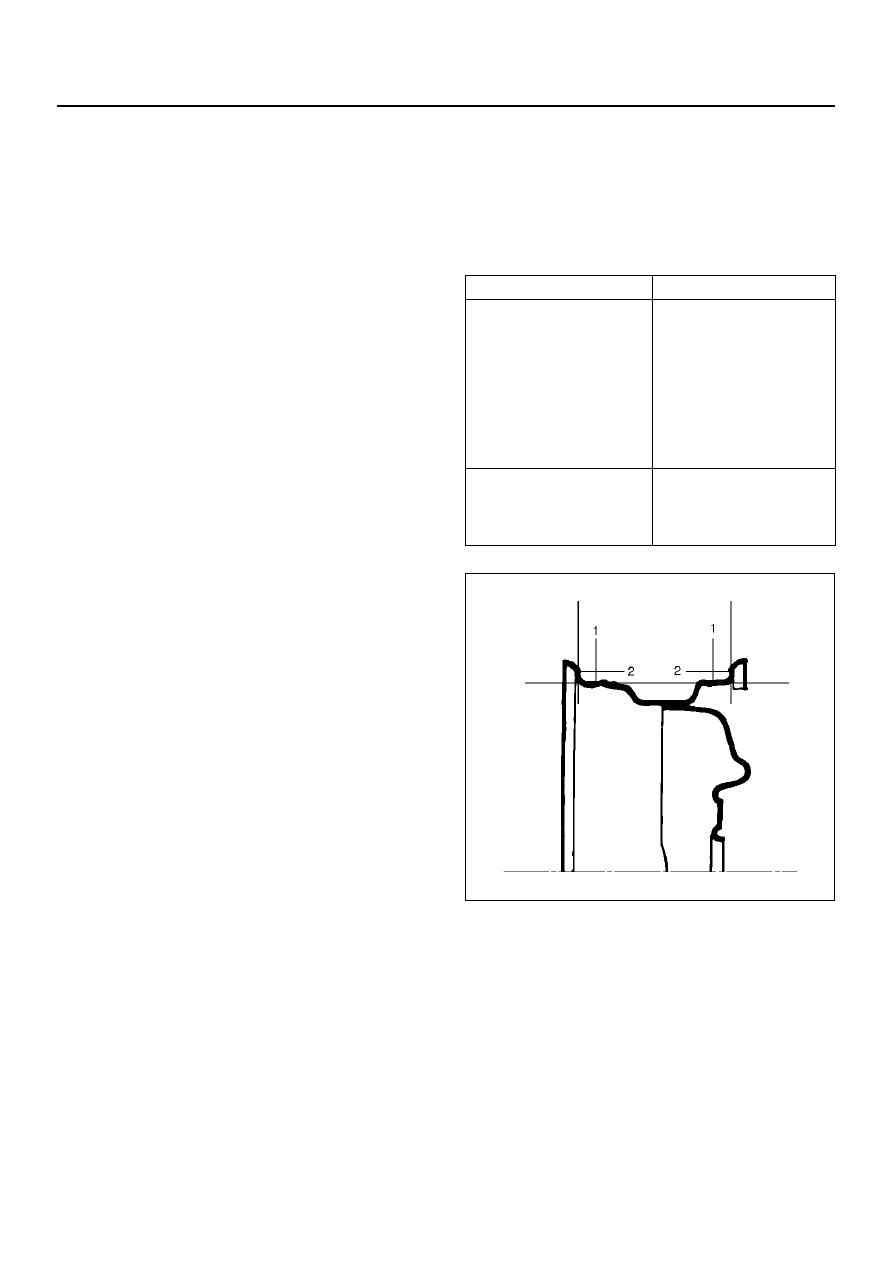
Wheel Inspection
Damaged wheels and wheels with excessive run-out
must be replaced.
Wheel run out at rim (Base on hub Bore):
480RS012
General Balance Procedure
Deposits of mud, etc. must be cleaned from the inside of
the rim.
The tire should be inspected for the following: match
mount paint marks, bent rims, bulges, irregular tire
wear, proper wheel size and inflation pressure. Then
balance according to the equipment manufacturer's
recommendations.
There are two types of wheel and tire balance.
Static balance is the equal distribution of weight around
the wheel.
Assemblies that are statically unbalanced cause a
bouncing action called tramp. This condition will
eventually cause uneven tire wear.
Steel
Aluminum
1– Vertical play
(AVERAGE OF EACH
SIDE):
Less than
1.5mm (0.059 in)
1– Vertical play
(AVERAGE OF EACH
SIDE):
Less than
0.40 mm (0.016in)
1– Vertical play
(INDIVIDUAL):
Less than
0.55 mm (0.022in)
2– Horizontal play
(INDIVIDUAL):
Less than
1.5mm (0.059 in)
2– Horizontal play
(INDIVIDUAL):
Less than
0.55 mm (0.022in)