Ford Contour (1999 year). Manual - part 44
 

  Index      Ford     Ford Contour - service manual 1999 year in english


Search            


Content   ..  42  43  44  45   ..


Ford Contour (1999 year). Manual - part 44


Maintenance and care

174

Automatic transaxle fluid

Follow the scheduled service
intervals outlined in the
maintenance guide and or service
guide.

Before adding any fluid, make sure
the correct type is used. The type
of fluid used is normally indicated
on the dipstick and/or dipstick
handle and also in the Lubricant
specifications 
section in the
Capacities and specifications
chapter.

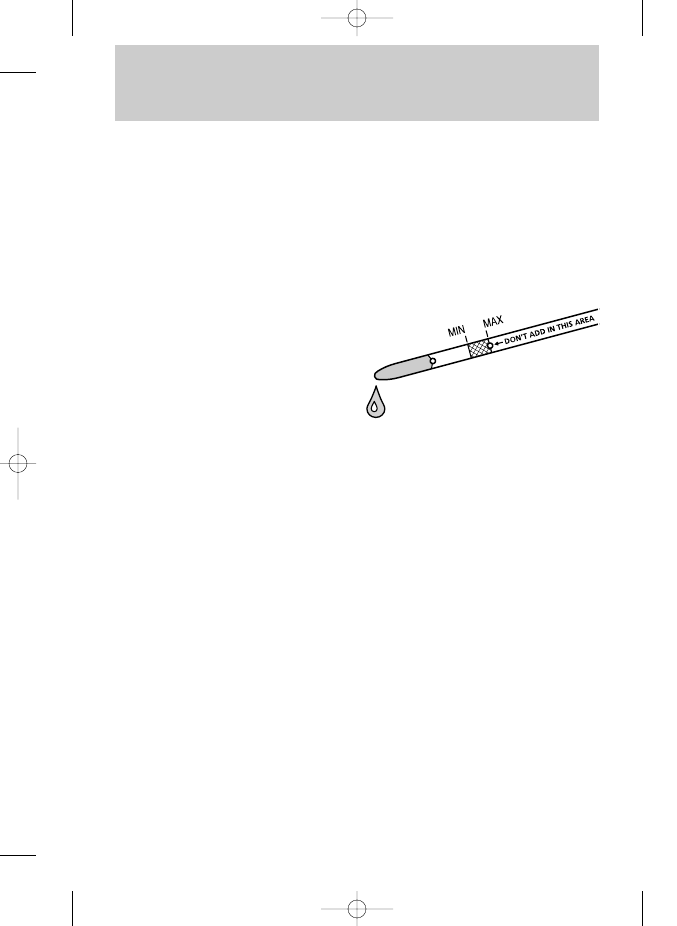
Do not drive the vehicle if the fluid
level is below the hole at the
bottom of the dipstick and outside
temperatures are above 10°C
(50°F).

Your transaxle does not use up
fluid. However, it is recommended
that you check the transaxle fluid
at least twice a year. The fluid level
should be checked if the transaxle
is not working properly, i.e., if the
transaxle slips or shifts slowly or if
you notice some sign of fluid
leakage.

Transaxle fluid should be checked
at normal operating temperatures
of 66°C - 77°C (150°F - 170°F) on a
level surface while the engine is
running in the P (Park) gearshift
lever position. The normal
operating temperature can be
reached after approximately 32 km
(20 miles) of driving.

31CMCen  3/25/99  3:45 PM  Page 174

Maintenance and care

175

The transaxle fluid should be in
this range if at normal operating
temperature 66°C - 77°C 
(150°F - 170°F).

The transaxle fluid should be in
this range if at room temperature
10°C - 35°C (50°F - 95°F).

If the vehicle has been operated for
an extended period at high speeds,
in the city during hot weather or
pulling a trailer, the vehicle should
be turned off for about thirty
minutes to allow the fluid to cool
before checking.

1. Park the vehicle on a level
surface and engage the parking
brake.

2. With the parking brake engaged
and your foot on the brake pedal,
start the engine and move the
gearshift lever through all of the
gear ranges. Allow sufficient time
for each gear to engage.

3. Latch the gearshift lever in
P (Park) and leave the engine
running.

4. Remove the dipstick, wiping it
clean with a clean, dry lint free rag.

5. Install the dipstick making sure
it is fully seated in the filler tube.

31CMCen  3/25/99  3:45 PM  Page 175

Maintenance and care

176

Battery

Your vehicle may be equipped with
a Motorcraft maintenance-free
battery. The Motorcraft
maintenance-free battery normally
does not require additional water
during its life of service. However,
for severe service usage or in high
temperature climates, refer to the
maintenance guide and or service
guide for additional information.
Keep the electrolyte in each cell up
to the “level” indicator. Do not
overfill the battery cell.

For longer, trouble-free operation,
keep the top of the battery clean
and dry. Also, make certain the
battery cables are always tightly
fastened to the battery terminals.

6. Remove the dipstick and inspect
the fluid level. The fluid level
should be in the crosshatched area
on the dipstick.

7. If necessary, add fluid in .25 litre
(1/2 pint) increments through the
filler tube until the level is correct.

8. If an overfill occurs, excess fluid
should be removed by a qualified
technician.

An overfill condition of transaxle
fluid may cause shift and/or
engagement concerns and/or
possible damage.

31CMCen  3/25/99  3:45 PM  Page 176

Maintenance and care

177

Battery replacement

If your original equipment battery
requires replacement while under
warranty, it will be replaced with a
Motorcraft service battery,
identical in design technology. Like
the original equipment battery, it
should not require water addition
during its normal life of service;
however, for severe service usage
or in high temperature climates,
refer to the maintenance guide and
or service guide for more
information. Do not overfill the
battery cell.

If the electrolyte level in your
battery gets low, you can add plain
tap water to the battery, as long as
you do not use hard water (water
with a high mineral or alkali
content). If possible, however, try
to only fill the battery cell with
distilled water. If the battery needs
water often, have the charging
system checked.

If you see any corrosion on the
battery cables or terminals, remove
the cables from the terminal(s) and
clean with a wire brush. You can
neutralize the acid with a solution
of baking soda and water. Reinstall
the cables when you are done
cleaning them, and apply a small
quantity of grease to the top of
each battery terminal to help
prevent corrosion.

31CMCen  3/25/99  3:45 PM  Page 177


Content   ..  42  43  44  45   ..