Rover 45. Instruction - part 5
Starting & Driving
PETROL MODELS
What to do if the engine fails to start, or starts but will not
continue running:
Never start or leave the engine running in an unventilated
• Press the accelerator pedal half way down while operating the
building - exhaust gases are poisonous and contain carbon
starter. DO NOT operate the starter for more than 15 seconds
monoxide, which can cause unconsciousness and may even be fatal.
and release the accelerator as soon as the engine starts.
Catalytic converters can be damaged if the wrong fuel is used,
• If the engine still fails to start, operate the starter again, this time
or if an engine misfire occurs. Before starting the engine, you
fully depressing the accelerator pedal to clear the engine of
should be aware of the precautions detailed under ‘Catalytic
excess fuel. Ensure the starter motor is not operated for more
converter’.
than 15 seconds and release the accelerator as soon as the engine
starts.
Starting the engine
• DO NOT pump the accelerator pedal during starting.
1. Check that the handbrake is on and that the gear lever is in
neutral (‘N’ or ‘P’ for automatic transmission).
Starting in cold climates
2. Switch off all unnecessary electrical equipment (including the
In temperatures of -10° C and below, fully depress the clutch pedal
air conditioning*).
while starting and hold it down until the engine is running. As the
3. Turn the starter key to position ‘III’ and release the key as
starter motor may need to operate for longer, it is essential that all
soon as the engine has started.
unnecessary electrical equipment is switched off while cranking.
NOTE: Continued use of the starter will not only discharge the
NOTE: In cold conditions, engine cranking times will increase (but must
battery, but may damage the starter motor and the catalytic converter.
not be allowed to exceed 15 seconds), and the battery charging and oil
pressure warning lights may take several seconds to extinguish.
DO NOT press the accelerator pedal while starting and DO NOT
operate the starter for more than 15 seconds at a time. If the engine
fails to start, switch off and wait for at least 10 seconds before trying
again.
NOTE: When starting instruction transmission cars in freezing conditions or
when the battery is in a low state of charge, depress the clutch before starting
and hold it down until the engine is running.
66

Starting & Driving
DIESEL MODELS
In temperate climates, DO NOT operate the starter for longer
than 10 seconds; if the engine fails to start, switch off and wait for
Never start, or leave the engine running, in an unventilated
10 seconds before re-using the starter.
building - exhaust gases are poisonous and contain carbon
monoxide, which can cause unconsciousness and may even be fatal.
Precautions
Catalytic converters can be damaged if the wrong fuel is used,
• The diesel engine must not be run above fast idle speed until the
or if an engine misfire occurs. Before starting the engine, you
oil pressure warning light extinguishes. This will ensure that the
2
should be aware of the precautions detailed under ‘Catalytic
engine and turbo-charger bearings are properly lubricated before
converter’.
being run at speed.
• ALWAYS allow the engine to idle for 10 seconds before switching
Starting the engine
off.
1. Check that the handbrake is applied and that the gear lever is
in neutral.
Starting in cold climates
2. Switch off all unnecessary electrical equipment (including the
In temperatures of -10° C and below, partially depress the
air conditioning).
accelerator pedal and fully depress the clutch pedal while starting.
3. Insert the key and turn the starter switch to position ‘II’. Wait
Keep the pedals in this position until the engine is running. As the
until the glow plug warning light extinguishes.
starter motor may need to operate for longer, it is essential that all
4. Turn the key to position ‘III’ to operate the starter motor;
unnecessary electrical equipment is switched off while cranking.
DO NOT press the accelerator pedal during starting and
release the key as soon as the engine is running.
NOTE: In cold conditions, engine cranking times will increase (but must
not be allowed to exceed 10 seconds), and the battery charging and oil
NOTE: Continued use of the starter will not only discharge the
pressure warning lights may take several seconds to extinguish.
battery, but may damage the starter motor and the catalytic converter.
If the engine stalls, you MUST return the starter switch to position
‘0’, then turn the starter switch to position ‘II’ and wait until the
glow plug warning light goes out before attempting to restart; the
engine will not start by turning the starter switch from position ‘II’.
NOTE: When starting cars in freezing conditions or when the battery is
in a low state of charge, depress the clutch before starting and hold it down
until the engine is running.
67
Starting & Driving
ALL MODELS
RUNNING-IN
Warming up
The engine, gearbox, brakes and tyres need time to ‘bed-in’ and
In the interest of fuel economy, it is advisable to drive the car soon
adjust to the demands of everyday motoring. During the first
after starting. Remember that harsh acceleration, or labouring the
1,000 km, it is essential that you drive with consideration for the
engine before the normal operational temperature has been
running-in process and heed the following advice:
reached, can damage the engine.
• Do not allow the engine to exceed 3,000 rev/min in any gear.
• Do not operate at full throttle in any gear.
Parking
• Do not allow the engine to labour in any gear.
After bringing the car to a stop, ALWAYS apply the handbrake
• Avoid heavy braking where possible.
and select neutral (‘P’ for cars with automatic transmission), before
releasing the foot brake and switching off the engine.
After the running-in distance has been completed, engine speeds
can be gradually increased.
After switching off, cooling fans may continue rotating for
several minutes to prevent the engine from overheating. In
some circumstances, the cooling fan may not start rotating until
after the engine is switched off. If the bonnet is opened, keep clear of
fans whenever the engine is warm.
Towing - switching off
After periods of strenuous towing (particularly at high altitude or
in hot weather), it is good practice to allow the engine to idle for
a few minutes before switching off. This will enable the engine
cooling system to continue operating for a while in order to reduce
underbonnet heat.
68

Catalytic Converter
Catalytic Converter
CATALYTIC CONVERTER
Fuel
• Use ONLY fuel recommended for your car.
Exhaust temperatures can be extremely high, do not park on
• Never allow the car to run out of fuel - this could cause a
ground where combustible materials such as dry grass or leaves
misfire which could damage the catalyst.
could come into contact with the exhaust system - in dry weather a
fire could result.
Starting
• Do not continue to operate the starter after a few failed
2
attempts, seek qualified assistance.
• Do not operate the starter if an engine misfire is suspected, nor
attempt to clear a misfire by pressing the accelerator pedal.
• Do not attempt to push or tow start the car.
Driving
Any engine misfire, loss of engine performance or engine run-on,
could seriously damage the catalytic converter. For this reason, it
is vital that unqualified persons do not tamper with the engine, and
that regular maintenance is carried out in accordance with the
service interval plan in the ‘Service History’ section.
• Do not overload or excessively ‘rev’ the engine, or turn off the
engine when the car is moving with a drive gear selected.
HB0160
• Consult your dealer if you think your car is burning too much
oil, as this will progressively reduce catalyst efficiency.
The exhaust system on your car incorporates a catalytic converter
• If a misfire is suspected, or the car lacks power, you may drive
which converts poisonous exhaust emissions from the engine into
SLOWLY (at risk of catalyst damage) to a dealer, provided the
environmentally less harmful gases, thereby reducing atmospheric
engine has reached its normal operating temperature.
pollution.
• Do not run the engine with a spark plug or lead removed or use
any device that requires an insert into a spark plug hole.
Catalytic converters are easily damaged through improper use,
particularly if the wrong fuel is used, so be sure to take notice of
• Do not drive on terrain likely to subject the underside of the
the following precautions to minimise the chance of accidental
car to heavy impacts.
damage.
69
Environmental Driving
Environmental Driving
PROTECTING THE ENVIRONMENT
Driving style
Environmental issues are increasingly influencing our lives, and the
The way in which you drive your car has a significant bearing on
motor car is sometimes seen as a major source of air pollution.
environmental pollution, as well as affecting the amount of fuel
you use:
In a great many respects, however, criticism of the car and its
•
Avoid full throttle acceleration
manufacturer is misplaced, for few industries have done more to
reduce pollution than the motor industry. MG Rover is no
Steady, rather than rapid, acceleration uses considerably less
exception. Your car has been designed with the latest technology
fuel, reduces exhaust pollutants and also minimises the wear to
in order to minimise the environmental impact of exhaust
mechanical components.
emissions. Even so, any further reduction in emissions is in
•
Avoid driving at maximum speed
everyone's interest and, to this end, there are a number of ways in
Fuel consumption, exhaust emissions and noise levels all
which you, the owner, can also make a contribution.
increase significantly at high speeds. For example, travelling at
100 km/h uses up to 20 per cent less fuel than driving at
Starting the engine
112 km/h.
Although it is a common perception that cars should be ‘warmed
•
Do not drive in a low gear for longer than necessary
up’ before being driven, this is not the case.
Driving in lower gears uses more fuel and creates more noise.
The majority of poisonous emissions are produced immediately
Change up to a higher gear as soon as possible, provided it does
following a cold start and in the period while the engine is
NOT cause the engine to labour.
warming up. Because the car warms up much faster while it is
•
Drive smoothly
being driven, it is less harmful to the environment to drive away
Anticipating obstructions and slowing down well in advance,
immediately after starting rather than to allow the engine to idle.
avoids the need for unnecessary acceleration and harsh braking.
A smooth driving style not only reduces fuel consumption, but
can reduce the emission of poisonous gases by two thirds or
more.
•
Switch off the engine when waiting in traffic
When it is obvious that the car will be stationary for several
minutes or more, and provided it is safe to do so, switch off the
engine. The impact on the environment of starting the engine
again will be less than the effect of allowing the engine to idle
for 45 seconds or more.
70
Environmental Driving
Maintenance
• Have the car regularly serviced
Regular servicing from a qualified technician will ensure
optimum fuel economy and minimise exhaust pollutants, as
well as effectively extending the service life of the car.
• Check the tyre pressures regularly
Under-inflated tyres increase the rolling resistance of the car
2
which, in turn, increases fuel consumption. Over or under-
inflated tyres wear out more rapidly and also have a detrimental
effect on the car's handling characteristics.
• Do not carry unnecessary loads
The additional weight of unnecessary loads wastes fuel,
especially in stop/start conditions where the car is frequently
required to set off from stationary.
• Remove roof racks
The additional air resistance created by roof racks and carriers
increase drag and waste fuel (an unladen roof rack can increase
fuel consumption by as much as 0.3 l/100km.
71
Instruction Gearbox
Instruction Gearbox
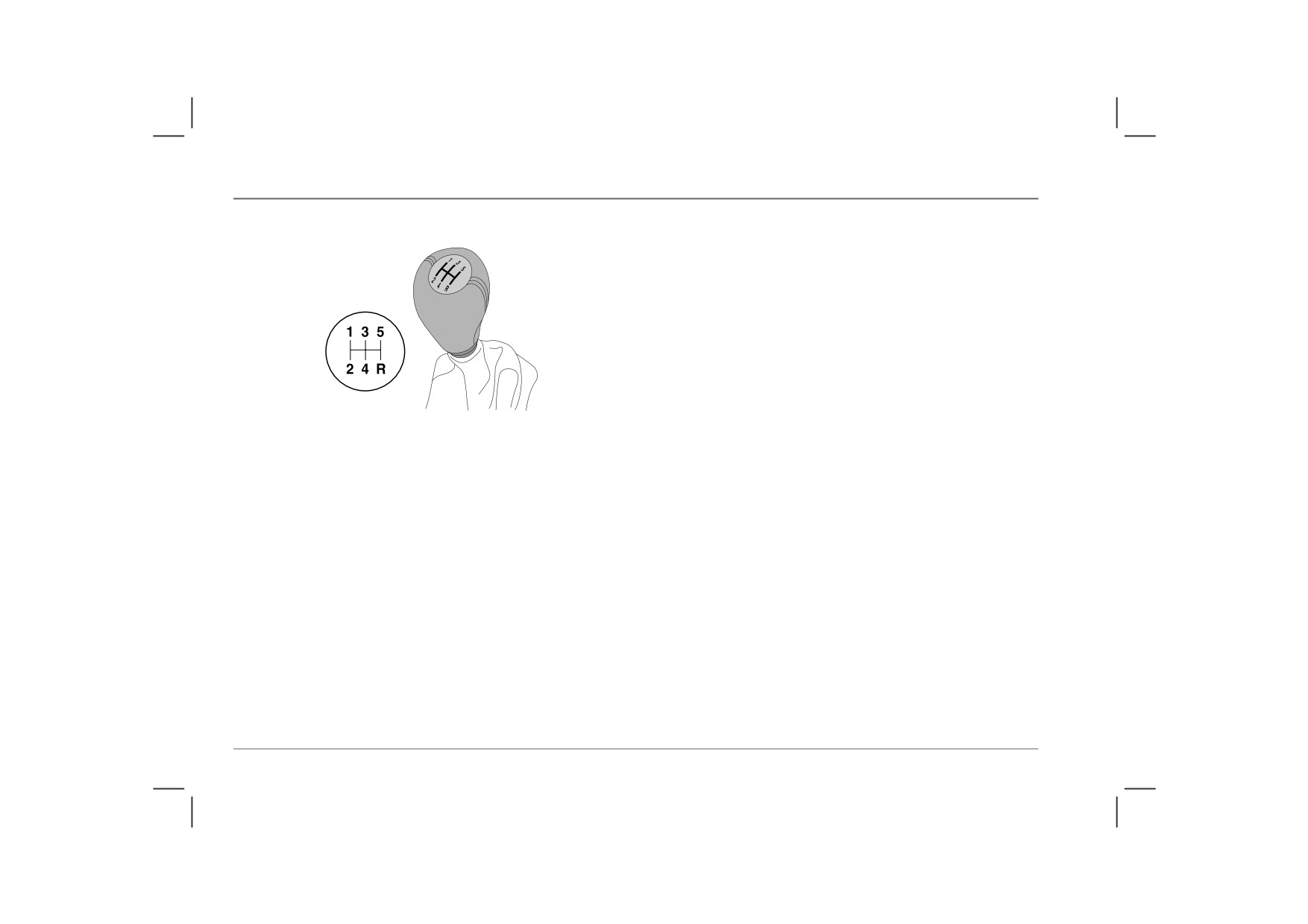
GEAR LEVER
Precautions while driving
• Do not rest your hand on the gear lever while driving - pressure
from your hand may cause premature wear to the gear selector
mechanism.
• Do not rest your foot on the clutch pedal when driving -
excessive wear to the clutch will result.
• Do not hold the car stationary on a hill by slipping the clutch.
This will wear out the clutch. Always use the handbrake.
HB0601
The gear positions are indicated on the gear lever knob.
Synchromesh engagement is provided on all forward gears and, in
the neutral position, the gear lever is spring loaded to rest naturally
between 3rd and 4th gears.
Selecting reverse gear
Before selecting reverse gear, ENSURE THE CAR IS
STATIONARY; then, fully depress the clutch pedal and pause
briefly before moving the gear lever into position.
72

Automatic Transmission - 1.8 models
Automatic Transmission - 1.8 models
STEPSPEED CONTINUOUSLY VARIABLE
GEAR SELECTOR
TRANSMISSION
The ‘Stepspeed’ transmission system provides both automatic and
instruction operation of the gears.
By default the transmission is naturally in automatic mode. With
the engine started, selection of ‘R’ (Reverse), ‘N’ (Neutral) or ‘D’
(Drive) can be made by moving the selector lever backward or
2
forward in a similar manner to any other automatic gearbox.
However, this gearbox is of the continuously variable transmission
(CVT) type. This means that the gearbox has an infinite number
of ratios available to provide a continuous and smooth progression
from the lowest to the highest ratio (and vice versa) without the
apparent gear changes associated with a conventional automatic
gearbox.
H3223
Selector release button
The gearbox is fitted with a locking mechanism, designed to
minimise the risk of accidental selection of the ‘P’ (Park) and ‘R’
(Reverse) positions.
The selector release button (arrowed in illustration) must be
pressed while selecting ‘P’ and ‘R’ and also to enable the lever to
be moved out of the ‘P’ and ‘R’ positions.
DO NOT press the selector release button, while selecting ‘N’
(Neutral) from ‘D’ (Drive). This could result in the
mis-selection of ‘R’ (Reverse) and cause an accident.
To prevent transmission wear, keep engine speed as low as
possible while moving the selector between ‘D’ (Drive) and ‘R’
(Reverse).
73
Automatic Transmission - 1.8 models
Selector lever positions
•
‘D’ - Drive
An indicator light on the selector panel and a number or letter on
Select this position for driving; the transmission will adjust to
the trip recorder display in the instrument panel identify the
the appropriate ratio, according to vehicle speed and accelerator
selected gear position.
position.
DO NOT select 'P' (Park) or 'R' (Reverse) if the car is
DO NOT select ‘D’ (Drive) when the car is moving
moving.
backwards.
•
‘P’ - Park
Sport mode
This position mechanically locks the transmission and should be
In Sport mode the CVT characteristics of the gearbox are retained,
selected before starting the engine and before switching the
with full automatic progression through the gear ratios. By
engine off. To avoid transmission damage, ensure the car is
selecting Sport mode, however, the power transmitted to the road
completely stationary, with the handbrake applied, before
wheels is increased, resulting in improved acceleration. In
selecting ‘P’.
addition, the engine revs are higher in all driving conditions,
The selector release button MUST be pressed, in order to
making the car more responsive to driver demands.
move the selector lever into, or out of, the Park position.
To select Sport mode, move the gear selector lever sideways across
•
‘R’ - Reverse
the gate (from the Drive position towards the RH side of the car)
Before selecting reverse, ensure the car is stationary, with the
- the word ‘SPORT’ will illuminate in the display.
brakes applied.
Press the selector release button in order to move the selector
Sport mode can be deselected at any time by returning the selector
lever into reverse.
lever to the ‘D’ (Drive) position.
•
‘N’ - Neutral
Select neutral when the car is stationary and the engine is
required to idle for a brief period (at traffic lights for example).
In neutral the transmission is not locked, so the handbrake must
be applied whenever ‘N’ is selected. Press the selector release
button to move from neutral to reverse.
74

Automatic Transmission - 1.8 models
MANUAL GEAR SELECTION
• A single forward movement of the selector lever will change
the transmission to a higher gear, while a rearward movement
of the lever will change down to a lower gear. Repeated
forward or rearward movements of the selector lever can be
made until the desired gear ratio has been selected (the selected
gear will be indicated in the digital display).
• To deselect instruction mode, simply move the selector lever
2
sideways back to the ‘D’ position. Automatic gear changing
will then resume.
NOTE: The Stepspeed system is able to protect the transmission from
damage by disallowing gear changes that are potentially injurious to the
power unit and, similarly, by preventing gear changes that may be
dangerous (e.g. changing into 1st gear at very high speed). To further
protect the transmission, up-changes occur automatically whenever a
predetermined engine speed is reached. Similar down-changes will also occur
H3222
at low engine speeds to prevent the engine from stalling.
There are six predetermined gear ratios, all of which can be
selected sequentially by a single forward or rearward movement of
the gear selector lever, as follows:
• With ‘D’ (Drive) selected, move the gear selector lever
sideways from the ‘D’ (Drive) position towards the right side of
the car (this is precisely the same as selecting Sport mode).
• The transmission then automatically selects the ratio most
appropriate to the car's road speed and accelerator depression.
75
Automatic Transmission - 1.8 models
USING THE AUTOMATIC GEARBOX
During this delay, the engine should be allowed to idle
The following information is particularly important for driver's
WITHOUT any operation of the throttle; pressing the accelerator
who are unfamiliar with the techniques required to drive cars with
pedal before the gears have engaged will cause an uncomfortable
automatic transmission.
jolt and may even damage the transmission.
Starting
Driving
The engine can only be started with the selector lever in the ‘P’
When driving, the transmission will automatically adjust to the
(Park) or ‘N’ (Neutral) positions.
most appropriate ratio, according to accelerator position, vehicle
• ALWAYS apply the handbrake and foot brake before starting
speed and terrain (whether the car is travelling uphill, downhill or
the engine.
on the flat).
• KEEP BOTH BRAKES APPLIED while moving the selector
When accelerating, the engine speed will increase above the
to a drive gear position.
equivalent road speed, as the transmission adjusts to the most
• DO NOT ‘rev’ the engine or allow it to run above normal idle
appropriate ratio. When the accelerator pedal is released, engine
speed while selecting ‘D’ (Drive) or ‘R’ (Reverse), or while the
speed will drop independently of road speed.
car is stationary with a drive gear already selected.
Parking
• ALWAYS keep the brakes applied until you are ready to move
After bringing the car to a stop, ALWAYS apply the handbrake
off - remember, once a drive gear has been selected, an
and select ‘P’, before releasing the foot brake and switching off the
‘automatic’ will tend to creep forward (or backward).
engine.
• DO NOT allow the car to remain stationary for any length of
time with a drive gear selected and the engine running (always
Freeing the car from snow or mud
select ‘N’ (Neutral), if the engine is to idle for a prolonged
With engine idling, select ‘D’ or ‘R’ and increase engine speed
period).
very slightly making sure the front wheels do not spin. If the
wheels do spin, use minimum engine speed to regain grip. If
Cold weather operation
unsuccessful, engage ‘D’ or ‘R’ alternately and use minimum
If the car has been standing for a long period (e.g. overnight) in
engine speed until grip is regained.
cold or freezing temperatures, a delay may occur between gear
selection and engagement of the gearbox. This characteristic will
Emergency starting
only be evident when making the initial gear selection after a cold
start, and will disappear once the car is being driven.
Cars fitted with automatic transmission CAN NOT be ‘push’
or ‘tow’ started.
76

Automatic Transmission - 2.0 models
Automatic Transmission - 2.0 models
STEPSPEED AUTOMATIC TRANSMISSION
GEAR SELECTOR
The ‘Stepspeed’ transmission system provides both automatic and
instruction operation of the gears.
By default the transmission is naturally in automatic mode. With
the engine started, selection of ‘R’ (Reverse), ‘N’ (Neutral) or ‘D’
(Drive) can be made by moving the selector lever backward or
forward in a similar manner to any other automatic gearbox.
2
HB0328
Selector release button
The gearbox is fitted with a locking mechanism, designed to
minimise the risk of accidental selection of the ‘P’ (Park) and ‘R’
(Reverse) positions.
The selector release button (arrowed in illustration) must be
pressed while selecting ‘P’ and ‘R’ and also to enable the lever to
be moved out of the ‘P’ and ‘R’ positions.
DO NOT press the selector release button, while selecting ‘N’
(Neutral) from ‘D’ (Drive). This could result in the
mis-selection of ‘R’ (Reverse) and cause an accident.
To prevent transmission wear, keep engine speed as low as
possible while moving the selector between ‘D’ (Drive) and ‘R’
(Reverse).
77
Automatic Transmission - 2.0 models
Selector lever positions
•
‘D’ - Drive
An indicator light on the selector panel and a number or letter on
Select this position for driving; the transmission will adjust to
the trip recorder display in the instrument panel identify the
the appropriate ratio, according to vehicle speed and accelerator
selected gear position.
position.
DO NOT select 'P' (Park) or 'R' (Reverse) if the car is
DO NOT select ‘D’ (Drive) when the car is moving
moving.
backwards.
•
‘P’ - Park
Sport mode
This position mechanically locks the transmission and should be
In Sport mode, full automatic progression through the gear ratios.
selected before starting the engine and before switching the
By selecting Sport mode, however, the power transmitted to the
engine off. To avoid transmission damage, ensure the car is
road wheels is increased, resulting in improved acceleration. In
completely stationary, with the handbrake applied, before
addition, the engine revs are higher in all driving conditions,
selecting ‘P’.
making the car more responsive to driver demands.
The selector release button MUST be pressed, in order to
To select Sport mode, move the gear selector lever sideways across
move the selector lever into, or out of the Park position.
the gate (from the Drive position towards the RH side of the car)
•
‘R’ - Reverse
- the word ‘SPORT’ will illuminate in the display.
Before selecting reverse, ensure the car is stationary, with the
brakes applied.
Sport mode can be deselected at any time by returning the selector
Press the selector release button in order to move the selector
lever to the ‘D’ (Drive) position.
lever into reverse.
•
‘N’ - Neutral
Select neutral when the car is stationary and the engine is
required to idle for a brief period (at traffic lights for example).
In neutral the transmission is not locked, so the handbrake must
be applied whenever ‘N’ is selected. Press the selector release
button to move from neutral to reverse.
78

Automatic Transmission - 2.0 models
Snow mode
2
HB0287
With the selector lever in ‘D’, press the switch on the fascia to
select snow mode (the Snow mode warning light in the instrument
panel will illuminate). Snow mode should be selected when
moving from rest on loose or slippery surfaces. In Snow mode, the
car will move off in a higher ratio, providing less torque to the road
wheels, thereby reducing the possibility of wheel spin.
Press the switch again to cancel Snow mode (the warning light will
extinguish).
79

Automatic Transmission - 2.0 models
MANUAL GEAR SELECTION
• To deselect instruction mode, simply move the selector lever
sideways back to the ‘D’ position. Automatic gear changing
will then resume.
NOTE: The Stepspeed system is able to protect the transmission from
damage by disallowing gear changes that are potentially injurious to the
power unit and, similarly, by preventing gear changes that may be
dangerous (e.g. changing into 1st gear at very high speed). To further
protect the transmission, up-changes occur automatically whenever a
predetermined engine speed is reached. Similar down-changes will also occur
at low engine speeds to prevent the engine from stalling.
HB0329
There are five predetermined gear ratios, all of which can be
selected sequentially by a single forward or rearward movement of
the gear selector lever, as follows:
• With ‘D’ (Drive) selected, move the gear selector lever
sideways from the ‘D’ (Drive) position towards the right side of
the car (this is precisely the same as selecting Sport mode).
• The transmission then automatically selects the ratio most
appropriate to the car's road speed and accelerator depression.
• A single forward movement of the selector lever will change
the transmission to a higher gear, while a rearward movement
of the lever will change down to a lower gear. Repeated
forward or rearward movements of the selector lever can be
made until the desired gear ratio has been selected (the selected
gear will be indicated in the digital display).
80
Automatic Transmission - 2.0 models
AUTOMATICALLY SELECTED MODES
Stop/Go mode
The transmission control system automatically selects different gear
When driving in slow traffic, the 1st gear is inhibited, preventing
change modes, listed below, designed to suit a variety of driving
constant gear changes between 1st and 2nd gear. The car will
conditions.
move off using the 2nd gear, helping to create a smoother ride.
NOTE: Automatically selected modes cannot be selected by the driver and
Cruise control mode
will not operate if Sport or Snow mode have already been selected.
When cruise control is activated, a suitable gear change pattern is
2
selected which is less sensitive to throttle changes. This reduces the
Hill ascent, trailer and high altitude mode
amount and frequency of gear changes, providing a smoother ride.
A suitable gear change pattern is selected to counter momentum
loss, caused by the more frequent gear changing which can occur
Cold start mode
when climbing hills, or when towing a trailer or caravan. This gear
In very cold conditions, the automatic transmission will stay in the
change pattern is also selected at high altitudes to combat low
lower gears for longer, to help the engine reach its normal
engine torque.
operating temperature more quickly. This will help to improve
overall fuel economy and driveability, and reduce emissions.
Hill descent control
Unless some form of braking is applied, vehicles will naturally
High coolant temperature mode
increase speed while travelling downhill. On most automatic
In high ambient temperatures during extreme load conditions, it is
vehicles, this results in the highest gear being selected, thereby
possible for the engine and the gearbox to overheat. At a certain
reducing engine braking to a minimum.
temperature, the transmission will select a gear change pattern
However on your vehicle, the hill descent mode provides engine
designed to aid the cooling process, whilst enabling the gearbox to
braking by causing the transmission to automatically change to a
continue performing normally in high temperatures.
lower gear on steep downhill gradients, provided the following
Smooth change mode
criteria occur:
Engine torque is reduced during gear changes, creating a much
• Road speed exceeds 30 km/h.
smoother ride.
• The foot brake is applied for at least one second.
• The accelerator pedal is fully released.
NOTE: Hill descent mode is cancelled when the throttle is reapplied.
81