NATO ANTI–PIRACY MULTINATIONAL DOCTRINE (2008) - page 6
NATO/PfP UNCLASSIFIED
CHAPTER 8
Non-Article 5 Crisis Response Operations
0801 General
1.
This Chapter is intended to provide guidance to NATO forces in the handling and processing of
CPERS, CMAT and CDOCs during the conduct of Non-Article 5 Crisis Response Operations
(NA5CROs).
2.
NA5CROs are described in Allied Joint Publication 3.4, Non-Article 5 Crisis Response
R
Operations, as "multifunctional operations which encompass those political, military and civil
activities, initiated and executed in accordance with international law, including international
humanitarian law, contributing to conflict prevention and resolution, and crisis management in the
pursuit of declared Alliance objectives".
3.
The purpose of NA5CROs is to conduct missions that contribute to international peace and
security. They are intended to respond in a timely and co-ordinated manner to crises that could either
affect the security of NATO nations, or threaten stability and lead to conflict on the periphery of the
Alliance. NA5CROs range from support operations that are primarily associated with civil agencies;
e.g. support to humanitarian operations, support to disaster relief operations, support to non-combatant
evacuation operations, extraction operations, military aid, enforcement of sanctions; through
operations in support of peace to combat operations.
4.
Since the mid-1990s NATO has focused on two types of operations:
• Peace Support Operations (PSOs) and
• Defence Against Terrorism Operations (DATOs).
0802 Peace Support Operations
1.
Operations in the support of peace are recognised as an aspect of NA5CROs. PSOs are
normally conducted in support of an internationally recognised organisation such as the United
Nations or the Organisation for Security and Cooperation in Europe. They involve military forces and
diplomatic and humanitarian agencies. The purpose of a PSO is to achieve a long-term political
settlement or other specified conditions. PSOs include peacekeeping and peace enforcement as well as
conflict prevention, peacemaking, peace building, and humanitarian operations.
2.
PSOs contain their own unique characteristics and problems for NATO forces conducting them.
In many cases the conflict is undeclared, and there are armed personnel engaged with militia or
irregular forces who are not easily identified. In some cases, NATO forces conducting a PSO will be
required to stabilise conflict areas with or without the assistance of the local government. These
forces may also be called upon to assist local officials in minimising criminal activities; and if
authorised, to apprehend persons suspected of crimes against humanity and war crimes.
8 - 1
ORIGINAL
NATO/PfP UNCLASSIFIED
NATO/PfP UNCLASSIFIED
0803 Defence Against Terrorism Operations
1.
Even though MC 327/2, NATO Military Policy for Non-Article 5 Crisis Response Operations,
does not at present recognise DATOs as an aspect of NA5CROs, the purpose and nature of DATOs
are, for the purpose of this publication, assumed to be governed by the same principles as NA5CROs.
2.
Defence against terrorism comprises counterterrorism and anti-terrorism as well as measures to
combat criminal activities in support of terrorism. Counterterrorism is defined in AAP-6 as “all
offensive measures taken to neutralise terrorism before and after hostile acts are carried out. (Note:
such measures include those counterforce activities justified for the defence of individuals as well as
containment measures implemented by civilian organisations or military forces.)” Military operations
executed by NATO forces in response to terrorism may be conducted by conventional forces or by
specially organised, equipped and trained counterterrorism assets. Anti-terrorism is commonly defined
as those measures, usually passive, that are meant to reduce vulnerabilities to terrorist acts.
3.
DATOs contain their own unique characteristics and problems for NATO forces conducting
them. DATOs may be conducted in the context of an undeclared conflict against state-sponsored or
transnational, autonomous armed groups who are not easily identified, and who often do not fall under
the categories of combatants defined in the GC3 or applicable international law. NATO forces
engaged in a DATO may be required to operate in conflict areas with or without the assistance of the
local government. These forces will usually be authorised to apprehend persons suspected of terrorist
acts as well as crimes against humanity, war crimes and other crimes.
0804 Responsibilities
1.
If there is no functioning local system of law enforcement, the NATO Force may be
responsible for maintaining basic law and order in the AO. In that case guidance must be provided on
the procedures to be followed in incidents resulting in NATO personnel detaining civilians and/or
hostile forces or belligerents. This guidance may be expressed in a memorandum of agreement, the
ROE, the operational order and other directives.
2.
In a NA5CRO conducted within an AO under the sovereignty of a recognised national
government that has functioning police and court structures, the government of the host nation must
determine its own status and responsibilities under international law and its national laws with regard
to persons captured by its forces on its territory and is not affected by NATO decisions regarding the
handling of CPERS, CMAT and CDOCs. In any case, the transfer of CPERS to the host country is
contingent on its compliance with the GCs or other applicable international law. Procedures for
handling nationals of the host country and foreign nationals detained by the NATO Force must be
negotiated with the government of the host country by NATO, the nations participating in the
NA5CRO or the international body providing the mandate for the operation.
3.
The NATO Force and the nations participating in the NA5CRO will under all circumstances
adhere to the provisions of the GCs and applicable international law. Furthermore, it is the
responsibility of the NATO Command charged with the operation and the nations whose forces are
engaged in a particular NA5CRO to include, in the operational plan, specific ROE to be followed in
that NA5CRO and also to include specific directions for the handling of CPERS including CPERS
suspected of terrorism, crimes against humanity, war crimes and other crimes.
8 - 2
ORIGINAL
NATO/PfP UNCLASSIFIED
NATO/PfP UNCLASSIFIED
0805 Treatment of CPERS
1.
All CPERS, regardless of capture or detention circumstances, shall be treated in a humane
manner in accordance with the GCs or other applicable international law. Their personal possessions
and documents, except for effects that may constitute evidence in legal proceedings, will also be
handled in accordance with applicable international law. This is reflected in the following rules of
behaviour towards CPERS:
a. CPERS shall be treated humanely.
R
b. CPERS shall not be physically or mentally abused.
c. Contact with CPERS shall not be of a sexual nature.
d. Members of the NATO force shall not accept bribes nor engage in commercial dealings
with CPERS.
0806 General Procedures
1.
Where practicable, CPERS, CMAT and CDOCs will be dealt with in accordance with the
procedures outlined in Chapters 1-6 and relevant Annexes of this Publication. However, special
measures may have to be taken regarding the handling of certain CPERS as they may pose a greater
threat to guards and other personnel dealing with them than is the case with typical POWs and other
CPERS.
a.
Use of Force. The use of force against any person to effect detention, and particularly
against civilians, shall be in accordance with the principles of necessity and proportionality.
No more force is to be used than that which is reasonable and necessary for the detention of
the person or persons in question in accordance with the principles of self-defence and
established ROE.
b.
Disarming and Confiscation. Persons captured or detained in the course of a NA5CRO
are to be disarmed. Weapons and other articles that constitute a threat to members of the
NATO Force or the individual being detained as well as items that are to be used as
evidence in legal proceedings shall be confiscated. Confiscated items must be safeguarded,
the appropriate records kept and a receipt given. Unless otherwise instructed, such items
will follow the CPERS as he is processed.
c.
Search. Searches are conducted to remove documents and effects of military or
investigative interest as well as items that may pose a threat to the security of own forces or
to the CPERS himself. Such items may be removed except for clothing, identity documents,
protective equipment etc, as stipulated in applicable international law. All identification
documents should be reviewed/inspected and catalogued, and then returned to the CPERS.
Searches should be conducted in accordance with the following procedures:
(1)
Searches are not to be used to humiliate or intimidate.
(2)
CPERS should be searched by personnel of their own gender. If that is not
possible, CPERS may be searched by personnel of the opposite sex in the presence
of a witness, when possible an officer or non-commissioned officer, to ensure that
8 - 3
ORIGINAL
NATO/PfP UNCLASSIFIED
NATO/PfP UNCLASSIFIED
the search is conducted in accordance with standards of propriety relevant to that
particular situation.
(3)
Vehicles or beasts of burden will be searched.
(4)
Searchers must neither be overly friendly nor overbearing.
(5)
Searches will always be conducted by two or more persons so as to maintain
security.
(6)
Searches must be carried out, when possible, in such a way as to avoid unnecessary
damage.
(7)
Searches will be promptly and fully reported in accordance with the Standing
Operating Procedures.
(8)
Care should be taken in handling articles of a religious or cultural nature so as not
to unnecessarily offend the person being searched..
d.
Detention. Again, CPERS are at minimum to receive the same treatment that is accorded
to POWs by GC3 until their status is determined. However, in certain circumstances it may
be necessary to seek guidance from higher echelon’s Provost Officer (Military Police
Officer) or Legal Branch to ascertain the appropriate level of detention for the CPERS. For
example, certain CPERS will have to be segregated from individuals held for other reasons,
and special measures may have to be taken to restrain them so that they cannot escape,
destroy evidence, inflict self-harm or communicate with their accomplices.
e.
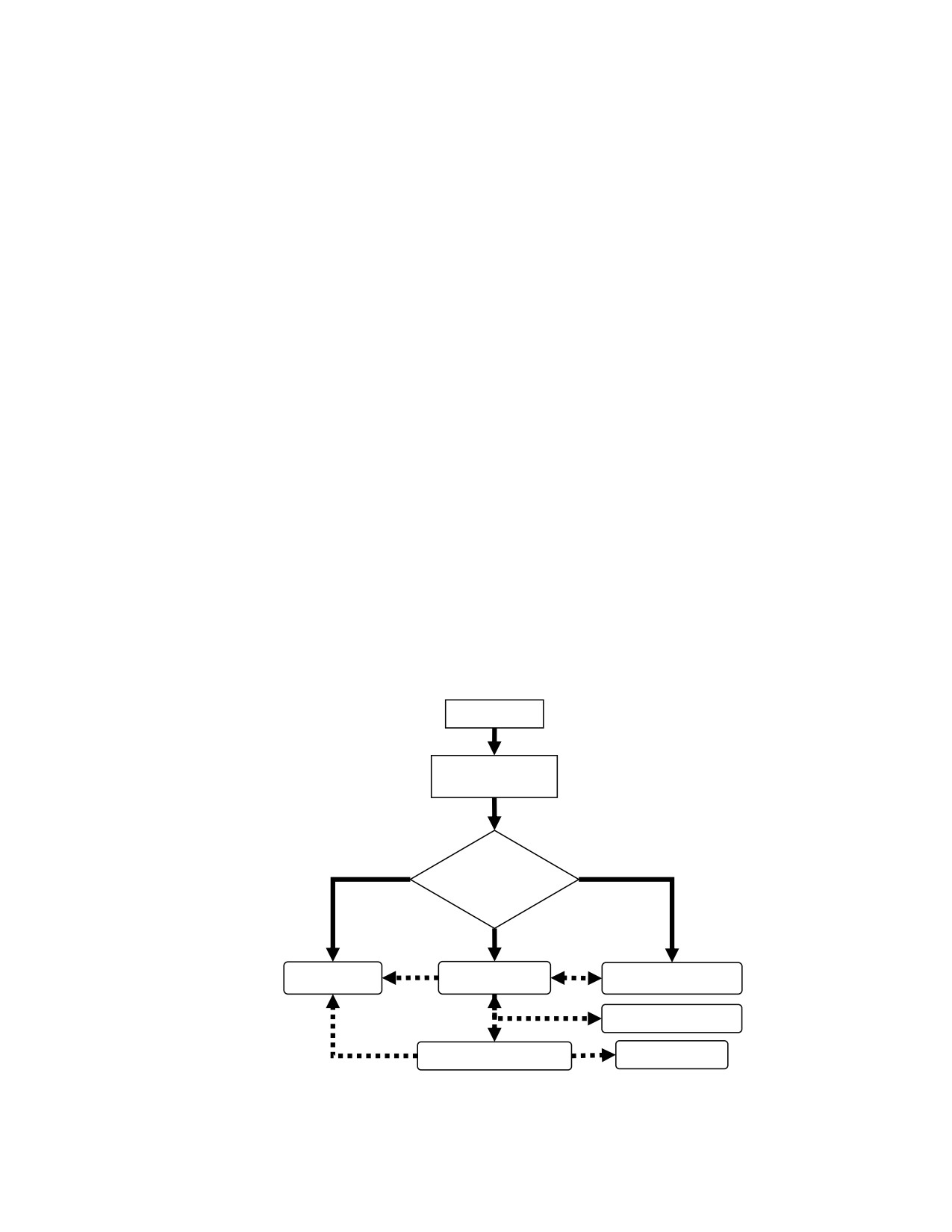
Figure 8 - 1 illustrates the handling process for CPERS in NA5CRO.
Capture
Tactical
Questioning
Processing
and
Evaluation
Release
Detention
Interrogation
Extradition
Legal Proceedings
Incarceration
Figure 8 - 1. CPERS Handling Process in a NA5CRO
8 - 4
ORIGINAL
NATO/PfP UNCLASSIFIED
NATO/PfP UNCLASSIFIED
0807 CPERS Suspected of Committing or Conspiring to Commit Terrorist Acts, War
Crimes, Crimes Against Humanity or Other Crimes
1.
If a CPERS is suspected of having committed, been involved in, or having knowledge of
terrorist acts, crimes against humanity, war crimes or other crimes, the Legal Branch and Force
Provost Marshal (Military Police Officer) will be notified and will be involved as soon as possible.
An uncontaminated, unbroken chain of custody/evidence is imperative to ensure a fair hearing if the
CPERS is brought to trial. (Guidance is provided in Annex F.) The individual and all pertinent
records, documents, photographs, and items pertaining to the alleged crime will be segregated from
the other CPERS. The CPERS will be held in a separate facility (if possible) and will be given a
CAPTAG, as shown in Annex A of this document. The tag will indicate in the additional remarks
section the suspicion of involvement in or knowledge of terrorist acts, crimes against humanity, war
crimes and other crimes. All associated documents and items will be tagged and processed in
accordance with Chapters 5 and 6 of this Publication. All documents and other items will accompany
the CPERS as he is processed through the system until handover to the legal authorities. The
documents and other items will be guarded. As soon as possible a “chain of evidence“ will be
established by NATO forces and maintained by the CPERS administration system, and all other
concerned authorities until handover has been completed.
2.
The capturing unit will notify the higher echelon’s headquarters as soon as possible of the
CPERS’s capture. If appropriate, preliminary questioning may be carried out by the capturing unit to
obtain information of immediate value. Tactical questioning should subsequently be conducted by
qualified personnel. Any incriminating information divulged by the CPERS should be reported as
well. However, this information may not necessarily be admissible as evidence. Subsequent
interrogation should, therefore, be conducted by appropriate law enforcement agencies and judicial
authorities. The CPERS will be processed through the system as outlined in this Publication, until
such time as higher authority determines that other procedures are required. The NATO Force
Commander will contact higher (i.e. NATO) authority, who will determine whether the CPERS is to
be turned over to civilian authority and whether a full investigation is warranted. It may be appropriate
for him to appoint an officer (e.g. the Force Provost Marshal (Military Police Officer) or the Legal
Advisor) to liaise with the competent international authorities.
0808 Additional Procedures
1.
Reporting. All cases of detention are to be reported through the chain of command in
accordance with the procedures outlined in this Allied Joint Publication and with the directives issued
by the commander of NATO force or command conducting the NA5CRO. All the particulars and
details of the detention should be included in the report in order that the status of the CPERS and his
continued detention can be reviewed.
2.
Release. Guidelines for the release of the CPERS should be issued by the commander of
NATO force or command conducting the NA5CRO. Generally, a CPERS may only be released by the
Commander after consultation with the Force Provost Marshal and Legal Branch.
3.
Records. The Military Police, or other element as ordered by the Commander, is at all times to
maintain and store a full record of the detention, including the medical record and the medical release
form, and a record of the procedures followed during the period of custody. All circumstances relating
to the apprehension and detention of the CPERS must be recorded and reported up the chain of
command, including:
8 - 5
ORIGINAL
NATO/PfP UNCLASSIFIED
NATO/PfP UNCLASSIFIED
a. When and why a person is detained.
b. When a person is searched.
c. When items are confiscated.
d. When a person is questioned.
e. When a person is released.
4.
Segregation. POWs are to be separated in accordance with GC3. Other CPERS shall be
segregated according to citizenship. As the circumstances require, these CPERS may be further
segregated in the following categories:
a. Ethnic or religious groups.
b. CPERS suspected of having committed, been involved in, or having knowledge of terrorist
acts, crimes against humanity, war crimes and other crimes. (These CPERS should be
segregated from each other as well as from other CPERS.)
c. Members of warring factions.
d. Within these categories, males shall be segregated from females.
e. Other CPERS as necessary (e.g. mentally disturbed or disabled CPERS, children, etc.).
0809 Media Operations
1.
The increased ability of the international media to focus on the treatment of CPERS could lead
to adverse publicity and pressure and jeopardise military and law enforcement operations. The section
responsible for media operations within the NATO force or command's headquarters should be
involved in the CPERS planning process and kept informed of CPERS operations and data.
2.
Exposure of CPERS to the media must not violate the provisions of the GCs, in particular
GC3, Articles 13 and 14, or other applicable international law.
8 - 6
ORIGINAL
NATO/PfP UNCLASSIFIED
NATO/PfP UNCLASSIFIED
ANNEX A
Capture Tag
A001 General
1.
The need to ensure that CPERS, POWs as well as other CPERS, their effects, their
equipment and documentation are cross-related/identified is important to the intelligence and
law enforcement effort. Therefore, a means of preserving the link between the CPERS and
his equipment should be established at the earliest practicable moment after capture.
2.
The CAPTAG, is shown at Appendix 1 to this Annex. However, this degree of
administration may be impossible in confused war conditions and where linguistic difficulties
arise. The CAPTAG should be completed as fully as possible and at the earliest stage
possible. The administration of the CAPTAG system must not be allowed to interfere with the
speedy exploitation of the intelligence potential of the CPERS. An incomplete CAPTAG
and/or capture report, and early transfer, is preferable to a CPERS being held at the point of
capture until time is available for the administrative procedures to be fully completed.
3.
The CAPTAG should not be used to label CMAT and CDOC which are not associated
with an individual. The procedures for dealing with such items are contained in Chapters 5
and 6.
4.
The CAPTAG is in three parts:
a. Top Marked - PART A. This shall be provided to the captive in a manner which ensures,
as far as practicable, that interchange between CPERS is difficult. While specific
arrangements will be left to the discretion of the capturing unit, the ideal arrangement
would be to attach the tag to the captured person’s body directly by use of a plastic wrist or
leg band rather than to attach it to the captive’s clothing.
b. Middle Marked - PART B. This shall either remain attached to PART A, or be
detached and held by the prisoner guard/escort, and turned over to the first
interrogation unit or element located at the collecting point or CPERS holding
facility. Use of PART B is at the discretion of the NATO or national forces having
custody of CPERS.
c. Bottom Marked - PART C. This shall be attached to the documents or effects
found in the possession of the CPERS and turned over to the prisoner
guard/escort. Where possible, these items shall be placed in a single container
and sealed in order that the items may not become detached from the tag.
5.
An example of a CAPTAG is set out at Appendix 1 to this Annex.
6.
It shall be the responsibility of the capturing unit to cross-refer the CAPTAG to the
Group Capture Report (see Annex B) wherever possible.
7.
Capture Tag Serial Numbers. The CAPTAG shall be clearly marked with a serial
number which shall be in the following format.
A - 1
ORIGINAL
NATO/PfP UNCLASSIFIED
NATO/PfP UNCLASSIFIED
a. Nationality of Capturing Unit. In accordance with the identification letters set out in
STANAG 1059 - Codes for Geographical Entities. (See Annex W.)
b. A serial number allocated in numerical sequence by the capturing unit. Nations and
NATO commands are responsible for allocating blocks of serial numbers to
formations/units under their command.
8.
The Capture Tag Serial Number shall be used as a temporary identification only. CPERS
will be issued an Internment Serial Number (INTERNSN) when they arrive at the Holding Area or
other CPERS holding facility. (See Annex J.)
A - 2
ORIGINAL
NATO/PfP UNCLASSIFIED

NATO/PfP UNCLASSIFIED
APPENDIX TO ANNEX A
Capture Tag Format
(Reinforced Section)
O
O
ATTACH TO CAPTURED PERSON (CPERS)
PART A
REMARKS:
CAPTURE SERIAL NUMBER OF TAG
DTG OF CAPTURE
INCLUDE ANY INFORMATION WHICH MAY
LOCATIONS OF CAPTURE
ASSIST THE INTELLIGENCE EFFORT, E.G.,
CPERS NAME
CIRCUMSTANCES OF CAPTURE.
CPERS RANK
CPERS SERVICE NO
ASSOCIATED PERSONS CAPTURED AT THE
CPERS DATE OF BIRTH
SAME TIME/LOCATIONS, WITH CPERS UNIT
CPERS NATIONALITY
ETC.
POWER SERVED BY CPERS
CAPTURING UNIT
PART C ATTACHED TO EQUIPMENT OR
DOCUMENTS
YES/NO
COMMENTS OR REMARKS ON REVERSE
OF PART B
YES/NO
PART B
ADDITIONAL COMMENTS OR REMARKS, AS
REQUIRED
CAPTURE SERIAL NUMBER OF TAG
DTG OF CAPTURE
LOCATIONS OF CAPTURE
CPERS NAME
CPERS RANK
CPERS SERVICE NO
CPERS DATE OF BIRTH
CPERS NATIONALITY
POWER SERVED BY CPERS
CAPTURING UNIT
(PERFORATION)
PART C
(REINFORCED SECTION)
CAPTURE SERIAL NUMBER OF TAG
ATTACH TO CPERS EQUIPMENT OR
DTG OF CAPTURE
DOCUMENTS
LOCATIONS OF CAPTURE
CPERS NAME
CPERS RANK
CPERS SERVICE NO
ENSURE ALL DOCUMENTS/EQUIPMENT ARE
CPERS DATE OF BIRTH
SECURE IN ONE PACKAGE MARKED WITH X IN
CPERS NATIONALITY
BOX BELOW, IF OF PARTICULAR INTELLIGENCE
POWER SERVED BY CPERS
IMPORTANCE.
CAPTURING UNIT
A - 1 - 1
ORIGINAL
NATO/PfP UNCLASSIFIED
NATO/PfP UNCLASSIFIED
INTENTIONALLY BLANK
A - 1 - 2
ORIGINAL
NATO/PfP UNCLASSIFIED
NATO/PfP UNCLASSIFIED
ANNEX B
Group Capture Report
B001 GENERAL
1.
The capturing unit unit will complete a GROUPCAPREP at the time of capture
whenever circumstances allow. The GROUPCAPREP shall alert the CPERS handling
organisation to facilitate the planning, movement, care and disposition of CPERS.
2.
A copy of the GROUPCAPREP should be held by the escort accompanying the
CPERS, and this copy should be handed to the authority receiving the CPERS. It should also
list the tag numbers of the CPERS in the group, and may also contain any remarks by the
capturing unit or the escort on the behavior or conduct of individuals at capture or during
evacuation
3.
Capturing units should complete the GROUPCAPREP as well as the capture tag (in
accordance with Appendix 1 to Annex B) as fully as circumstances allow but should not delay
the transfer of CPERS to CPERS handling facilities because it has not been possible to
complete them. The guiding principle is that an incomplete GROUPCAPREP and early
transfer to next echelon’s CPERS handling facility is preferable to a full report and late
transfer. Where an incomplete GROUPCAPREP is sent, amplifying or follow-up reports
should be sent as soon as circumstances allow.
4.
Where the capturing unit has the ability to categorise CPERS, this should be done and
the category noted in the GROUPCAPREP.
B - 1
ORIGINAL
NATO/PfP UNCLASSIFIED
NATO/PfP UNCLASSIFIED
INTENTIONALLY BLANK
B - 2
ORIGINAL
NATO/PfP UNCLASSIFIED
NATO/PfP UNCLASSIFIED
APPENDIX TO ANNEX B
Sample Format of a Group Capture Report
(The GROUPCAPREP should be as complete as circumstances allow. It should ideally
contain the following information).
1.
Designator of Capturing Unit:
2.
Date/Time Group of Capture:
D
D
T
T
T
T
Z
M
M
M
Y
Y
3.
Location of Capture:
a.
UTM/Grid Reference.
N
N
A
A
A
N
N
N
N
N
N
b.
Latitude/Longitude
N
N
N
N
N
N
A
■
N
N
N
N
N
N
N
A
4.
Numbers of Captured Persons (CPERS): (Use one-up numerics, i.e. OM0001,
OM0002).
a.
Officers-Male
O
M
b.
Officers-Female
O
F
c.
NCOs-Male
N
M
d.
NCOs-Female
N
F
e.
Other Ranks-Male
S
M
B - 1 - 1
ORIGINAL
NATO/PfP UNCLASSIFIED
NATO/PfP UNCLASSIFIED
f.
Other Ranks-Female
S
F
g.
Others (Description)-Male
C
M
h.
Others (Description)-Female
C
F
5.
Captured Documents (CDOCs): (Numbers, type, nationality).
6.
Captured Materiel (CMAT): (Numbers, type, nationality).
7.
Circumstances of Capture: (include wherever possible direction of movement, size of
force, speed of movement, etc.).
8.
Location at Time of Report.
9.
Evacuation Intentions: (To where, when and by what means).
B - 1 - 2
ORIGINAL
NATO/PfP UNCLASSIFIED
NATO/PfP UNCLASSIFIED
ANNEX C
Special Provisions for the Handling of Persons Captured at Sea
C001. General Principles. Persons captured at sea—be they from enemy ships or destroyed
aircraft—are to be dealt with under the same principles as detailed in Chapter 2.
C002. After an Engagement at Sea. After each engagement at sea GC2 places a duty on all
Parties to the conflict to take all possible measures to, whenever circumstances permit, search for and
rescue those who have been wounded and shipwrecked as a result of the action.
C003. Hospital Ships. A belligerent warship may approach a military or civil hospital ship and free
from it those of its own forces held there as POWs. It may also capture those members of an opposing
force who are being treated on the hospital ship. These actions may only be carried out if the wounded
and sick are medically capable of being moved and if the capturing warship can provide suitable
medical care.
C004. Neutral Ports. Unless other arrangements are made between the belligerents and the neutral
power, POWs who are landed at a neutral port will be interned by the neutral power and prevented
from taking any further part in the conflict.
C005. CPERS Documentation. The capturing ship is to record details of each CPERS and
forward them up the chain of command as soon as possible. This information will then be transmitted
through the national or NATO appropriate agency to the Protecting Power or, if so designated, the
ICRC.
C006. Reports. Ships capturing POWs and other CPERS are to forward a GROUPCAPREP through
their chain of command as soon as possible.
C007. Tactical Questioning and Interrogation. Tactical questioning may be conducted at sea in
order to obtain information of immediate value and to determine whether CPERS should be subject to
further interrogation. Interrogation may be conducted onboard vessels until evacuation to more
suitable facilities ashore is possible.
C008. Evacuation of CPERS. Consistent with international law, CPERS can only be held
temporarily on board a naval vessel. CPERS and their associated documentation are to be transferred
to a CPERS handling facility on land as soon as possible. During the transfer from the ship they are to
be escorted by military police or trained guards where possible. The escort for such transfers may be
from either the organisation handling CPERS or another military unit depending on the circumstances
prevailing at the time.
C009. Transfer of CPERS Between Ships. CPERS taken aboard by minor war vessels, ships
with small ships' companies and auxiliary ships with limited military personnel are, where possible, to
be transferred to major units where the infrastructure will enable more effective CPERS handling.
C0010. Guidelines for Guarding and Handling CPERS at Sea. It is difficult to be
prescriptive with guidance on guarding and handling of CPERS at sea, as each class of ships'
capability will differ, as will the size of the crew and its skills. As part of his military decision making
C - 1
ORIGINAL
NATO/PfP UNCLASSIFIED
NATO/PfP UNCLASSIFIED
process, the Maritime Component Commander or the amphibious task force commander will need to
consider the possibility of taking prisoners in his plan. This will typically be the responsibility of the
Force or Group Logistic Co-ordinator. At a lower level individual units deployed as part of the Task
Force will be required to develop contingency plans for dealing with CPERS. These plans should
cover accommodation, feeding, exercise and medical treatment of CPERS held onboard. Where
possible CPERS should be given the same standard of accommodation, food and facilities as those of
the Detaining Power. However, practically it may be impossible to give CPERS domestic
accommodation onboard and they may have to be held in vehicle decks and hangers until evacuation
ashore can be arranged.
C0011. Removal of CPERS to Maritime Units in Amphibious Operations. CPERS taken
by amphibious forces deployed alongside land forces are to be processed through the land forces
CPERS handling organisation. However, CPERS taken during amphibious raids or in the initial stages
of an amphibious landing may need to be brought back to maritime units when:
a. The landing force is withdrawn to sea, and no assets left ashore and the operation is
terminated.
b. Where only a limited beachhead has been established and the retention of CPERS in the AO
would put them at significant risk from the continuing battle.
The removal of large numbers of CPERS to sea may overwhelm the capacity of the amphibious task
force to deal effectively with them. A decision may have to be taken as to how many CPERS and of
what category are to be held or released.
C - 2
ORIGINAL
NATO/PfP UNCLASSIFIED
NATO/PfP UNCLASSIFIED
ANNEX D
Sample Format of a Tactical Questioning Report
CPERS CATEGORY: A B C D
CPERS NUMBER:
EVACUATION DATE
SURNAME:
FIRST NAME:
OTHER NAMES:
GENDER: MALE FEMALE
SERVICE/ ID NO:
DATE OF BIRTH:
PLACE OF BIRTH:
NATIONALITY:
LANGUAGES:
MARITAL STATUS: SINGLE MARRIED DIVORCED WIDOW(-ER)
STATUS: MILITARY / CIVILIAN / PARAMILITARY / OTHER:
SCREENER:
SCREENING DTG:
APPROACHES:
BRANCH: ARMY AIR FORCE NAVY MARINES/NAVAL INFANTRY OTHER SERVICE:
CONSCRIPTED: YES NO
RANK:
ADVERSARY UNIT DESIGNATION:
DUTY POSITION:
JOB:
SKILLS:
EXPERIENCE:
DTG:
CAPTURING UNIT:
PLACE:
DOCUMENTS:
CIRCUMSTANCES:
WEAPONS/EQUIPMENT/MATERIEL:
CPER NUMBER:
OCCUPATION:
ETHNICITY:
PLACE OF RESIDENCE:
ORGANISATION:
D - 1
ORIGINAL
NATO/PfP UNCLASSIFIED
NATO/PfP UNCLASSIFIED
DUTIES:
SKILLS:
PHYSICAL CONDITION:
EDUCATION:
INTELLIGENCE: ABOVE AVERAGE AVERAGE BELOW AVERAGE-
MENTAL STATE:
LEVEL OF COOPERATION: HIGH MEDIUM LOW NONE
INTELLIGENCE VALUE:
HIGH MEDIUM LOW NONE (Explain in Remarks.)
ON WATCH OR WANTED LIST: YES NO
D - 2
ORIGINAL
NATO/PfP UNCLASSIFIED
NATO/PfP UNCLASSIFIED
ANNEX E
Preliminary Technical Report (PRETECHREP)
1.
To be submitted by accelerated intelligence reporting procedures immediately following the
acquisition of significant equipment.
2.
Only use those letters for which information is available.
___________________________________________________________________
a. DTG of report.
b. Rank, name and unit of person submitting report.
c. Equipment
(1) Type5.
(2) Name.
(3) Quantity.
d. Nationality and designation of unit or organisation to which the equipment belongs (using
national identifying letters in accordance with STANAG 1059—see Annex W).
e. Technical characteristics of immediate tactical value.
f. Locations.
(1) Capture
DTG and location (geographic co-ordinates or UTM grid reference including grid zone
designation and 100,000 m square identification) of capture.
(2) Present
Present location (geographic co-ordinates or UTM grid reference including grid zone
designation and 100,000-m square identification) of captured equipment.
g. Description/characteristics of equipment as applicable:
(1) Country of manufacture (using national identifying letters in accordance with STANAG
1059—see Annex W).
5 Term to be in accordance with AIntP-3. Refer to STANAGs pertaining to designation of aircraft and ships.
E - 1
ORIGINAL
NATO/PfP UNCLASSIFIED
NATO/PfP UNCLASSIFIED
(2) Manufacturer and factory of origin.
(3) Dimensions, weight, caliber, etc.
(4) Condition, cause of failure.
h. Description/characteristics of unusual equipment subsystems as applicable6:
i.
Details of associated technical documents as appropriate.
j.
Recommended disposal.
k. Imagery of equipment or subsystems.
l.
Other information.
6 To be repeated as often as necessary.
E - 2
ORIGINAL
NATO/PfP UNCLASSIFIED
NATO/PfP UNCLASSIFIED
ANNEX F
Guidelines for Handling Evidence
F001 General
This Appendix provides general guidelines for the handling of CMAT and CDOCs to be used as
evidence in legal proceedings against CPERS suspected of crimes against humanity, terrorism, war
crimes and other crimes. The detailed procedures for identifying, handling, storing, transferring,
releasing and disposing of CMAT and CDOCs used as evidence should follow accepted international
legal standards and may be set down in national manuals or regulations or in Standing Operating
Procedures for a NATO force.
F002 Evidence Custody
1.
CMAT and CDOCs constituting evidence should be reported as soon as possible by the
capturing unit or person to the military police or other personnel specially trained and authorised to
handle evidence in order to ensure proper handling.
2.
It is the responsibility of all military police or other law enforcement personnel to take every
precaution to preserve the integrity of evidence in its original condition. Evidence must be entered into
the custodial system as soon as possible after its collection, seizure, or surrender.
3.
The Force Provost Marshal should establish and operate an evidence custodial system. This
custodial system could consist of:
a. An evidence custodian (designated in writing by the Force Provost Marshal).
b. An alternate evidence custodian (designated in writing by the Force Provost Marshal).
c. Evidence storage facilities.
d. An evidence log.
e. An active evidence custody record or file.
f. A final evidence disposition record or file.
4.
The evidence custodian or, in his absence the alternate evidence custodian, has responsibilities
which cannot be further delegated. He should ensure that:
a. Evidence is properly inventoried, tagged, packaged, and marked prior to acceptance for
storage. The evidence tag should include the name, date of birth—and if applicable—the
rank and service number of the associated CPERS. The tag should also include an
identifying number, such as the INTERNSN, that connects the evidence to the CPERS.
b. Evidence custody documents are properly completed by military police personnel
delivering the evidence for safekeeping prior to acceptance for storage.
F - 1
ORIGINAL
NATO/PfP UNCLASSIFIED
NATO/PfP UNCLASSIFIED
c. Evidence is properly safeguarded.
d. The evidence log, active evidence custody record and final evidence disposition files are
properly maintained.
e. Inventories of evidence holdings are conducted regularly.
f. Evidence is disposed of in accordance with proper national or NATO force procedures.
F003 Evidence Submission
1.
The capturing unit or person should tag the CMAT or CDOC as follows:
National identifying letters of capturing unit as prescribed in STANAG 1059. (See Annex W.)
Designation of capturing unit including service.
DTG of capture.
Location of capture (geographic coordinates or UTM grid reference including grid zone
designation and 100,000-metre square identification).
Captured from Unit (enemy or warring faction) (including national identifying letters in
accordance with STANAG 1059—see Annex W).
Summary of circumstances of capture.
Associated CPERS.
The law enforcement person first assuming custody of evidence will subsequently mark the evidence
itself for future identification as evidence. If such marking is not possible, the evidence will be put in a
container that can be marked. The marking should consist of time and date of acquisition and the rank
and name of the person who assumed custody of the evidence. When any person submits evidence to
the evidence custodian, it shall be properly tagged, in appropriate containers if needed.
2.
All evidence being submitted shall be carefully examined, counted and weighed, as appropriate,
by the accepting custodian. The submitting individual must ensure those items being retained have
some evidentiary value. Any items which do not have evidentiary value will be promptly returned or
disposed of by the submitting individual, in accordance with authorised procedures.
The evidence custodian should not accept items that are not evidence nor should he accept evidence
which is not properly tagged and accompanied by the stipulated documentation such as a custody
receipt. Each item of evidence should therefore have a case control number or an equivalent designator
identifying the police report that pertains to the evidence seized.
F004 Evidence Storage Facilities
All property received as evidence will be physically safeguarded and stored in a separate and distinct
"evidence room." The evidence room should be of sufficient size to allow for the handling, storage,
and processing of volumes of evidence consistent with the size of the law enforcement operation. It
must also provide for the secure storage of the evidence. When a room has been designated as an
evidence room, other equipment and property, personal or official, shall not be stored in it under any
circumstances.
F - 2
ORIGINAL
NATO/PfP UNCLASSIFIED
NATO/PfP UNCLASSIFIED
F005 Evidence Inventory
1.
When evidence is first received into custody by law enforcement personnel, whether
confiscated during an investigation or received from a unit or command representative, the receiving
party must inventory the evidence personally. Subsequently, when evidence is transferred between
parties for any reason, the inventory must be verified by the receiving individual unless it has been
placed in a sealed container by law enforcement personnel. Money and controlled substances will be
verified even if in a sealed container.
2.
When an inventory is taken, it shall be accomplished by the evidence custodian, and a
disinterested officer outside of the provost marshal office. An entry shall be entered into the evidence
log reflecting the inventory and the participating personnel.
F006 Transfer and Shipment of Evidence
Physical evidence coming into the possession of military law enforcement personnel will, from time to
time, require its transfer and shipment to another agency where the chain-of-custody must be
maintained. Shipment shall be made by reliable and secure means. Documentation proving an
unbroken chain-of-custody shall be maintained.
F007 Disposal of Evidence
1.
The final disposal of evidence requires authorisation as follows:
a. Approval for the final disposal of evidence shall be obtained from appropriate authority,
and entered in the final disposal section of the appropriate documentation, such as an
evidence custody receipt.
b. Obtaining authorisation for disposal of evidence will be accomplished by the evidence
custodian.
c. Any evidence which was used in any court action shall not normally be disposed of until
the initial trial and subsequent appeals have been completed. Authorisation for disposal
must be obtained from the commander, the appropriate legal officer or his representative.
d. Any evidence which is entered into the evidence custody system and which is not utilised in
judicial or administrative action may be disposed of upon authorisation from the provost
marshal or his designated representative.
2.
Specific guidelines for evidence disposal are as follows:
a. Evidence which is obtained during the course of an investigation and is the personal
property of an individual shall, whenever possible, be returned to that person, with the
exception of items, the mere possession of which is unlawful. Such items would include
narcotics, unlawfully obtained drugs, illegal firearms, explosives, counterfeit currency, or
counterfeit identification. When personal property is returned to the owner or his authorised
representative, the individual receiving the property will be required to sign for it.
b. Evidence which, by its nature, cannot be returned to the owner or entered into a national
supply system for disposal, such as narcotics, illegal firearms or other contraband, shall be
F - 3
ORIGINAL
NATO/PfP UNCLASSIFIED
NATO/PfP UNCLASSIFIED
destroyed. Such destruction shall be accomplished by or in the presence of the evidence
custodian and either a Staff Non-commissioned Officer or Commissioned Officer assigned
to the provost marshal’s office. Such destruction shall be of a nature so as to make the
evidence unusable for any lawful or unlawful purpose other than residual scrap.
F - 4
ORIGINAL
NATO/PfP UNCLASSIFIED
NATO/PfP UNCLASSIFIED
ANNEX G
Holding Facilities for Captured Persons
G001 General
1.
The GC3 provides very specific requirements for the construction and operation of Holding
Areas and Facilities for POWs. In summary, they require that:
a. POWs, and by inference, other CPERS are only to be detained in facilities which are based
on land and in circumstances which guarantee the maintenance of adequate standards of
hygiene and health.
b. POWs are not normally to be detained in prisons.
c. POWs are to be quartered under conditions as favourable as those for the forces of the
Detaining Power that are billeted in the same area. These conditions shall make allowance
for the habits and customs of the POWs and must be in no way prejudicial to their health.
This requirement applies particularly to the arrangements made for POW dormitories.
d. Accommodation is to be protected from damp, adequately heated and lighted, particularly
at night and protected against fire. Latrine facilities for use both by day and night are to be
provided. Baths and showers are to be provided together with sufficient supplies of water
for personal toilet and laundry. Adequate facilities are to be provided for messing.
e. A medical facility capable of accommodating sick POWs is to be provided. Adequate
premises and the necessary equipment for POWs to take exercise are also required
whenever military considerations permit.
f. POW Holding facilities are to be marked so as to be easily identifiable from the air by day.
2.
Collecting Points, Holding Areas and Holding Facilities should be sited so that CPERS are not
able to observe sensitive installations or operational activities of friendly forces.
3.
With the exception of initial collecting points, construction of all CPERS holding facilities is an
engineer responsibility. The tasking of engineer support is the responsibility of the operations staff and
the provision of construction materials is a logistics responsibility. Since the construction of CPERS
holding facilities requires considerable resources, planning and allocation of resources should be
initiated as early as possible.
4.
Existing structures should be used when possible to reduce construction requirements.
G - 1
ORIGINAL
NATO/PfP UNCLASSIFIED
NATO/PfP UNCLASSIFIED
G002 Collecting point
1.
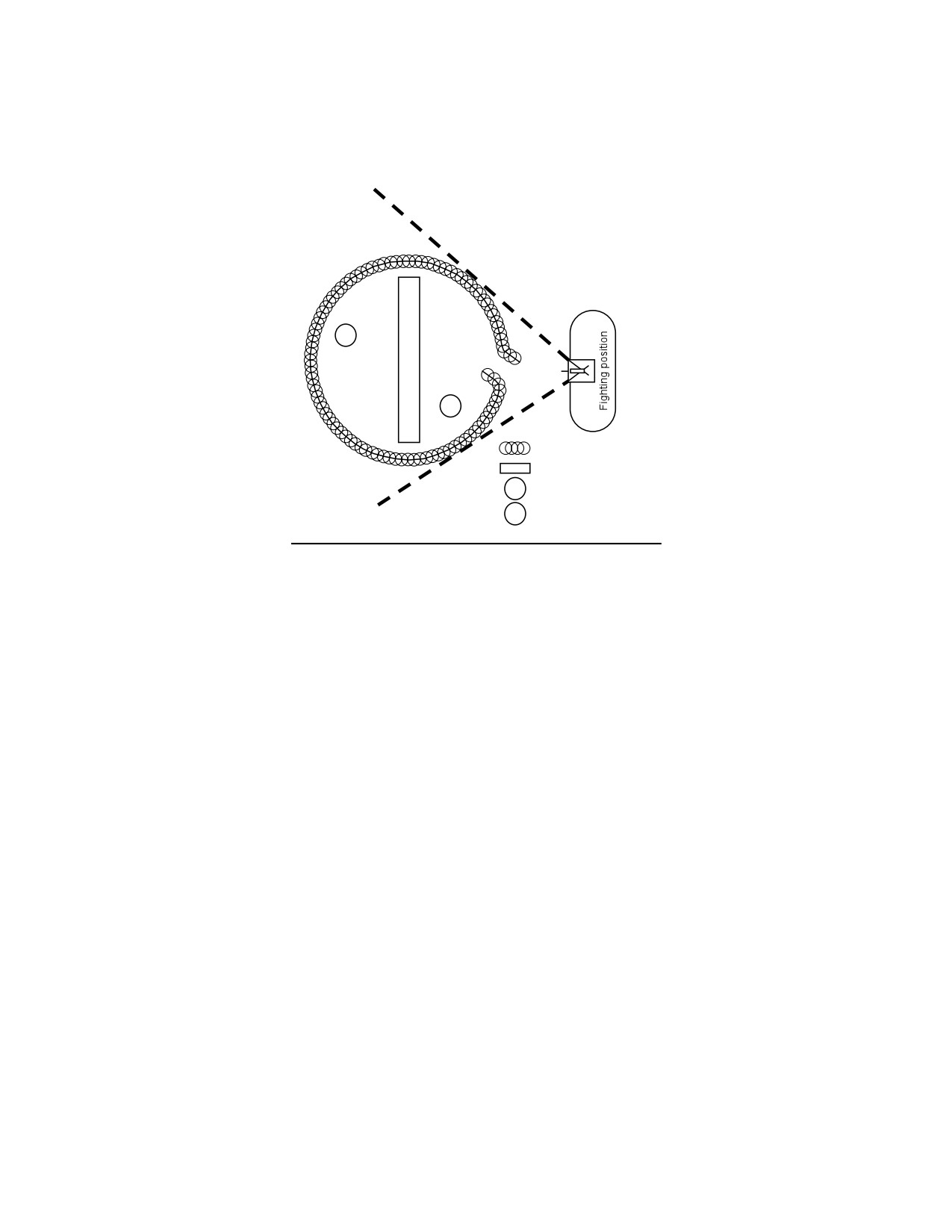
Figure G-1 shows an example layout of an initial collecting point.
W
L
Concertina
Trench or cover
W
Water can or lister bag
L
Figure G-1: Example of an Initial Collecting Point.
2.
Function. The Collecting Point is a facility where individual CPERS and small groups of
CPERS are consolidated into larger groups before being moved up the CPERS handling chain. While
it is not possible to set firm limits for the time a CPERS will remain in a Collecting Point, the aim
should be for them to be moved within 24 hours of their arrival.
3.
Siting. The Collecting Point is to be established at battalion or brigade level, but may also be
established at any appropriate command level. A central collecting point may be established at
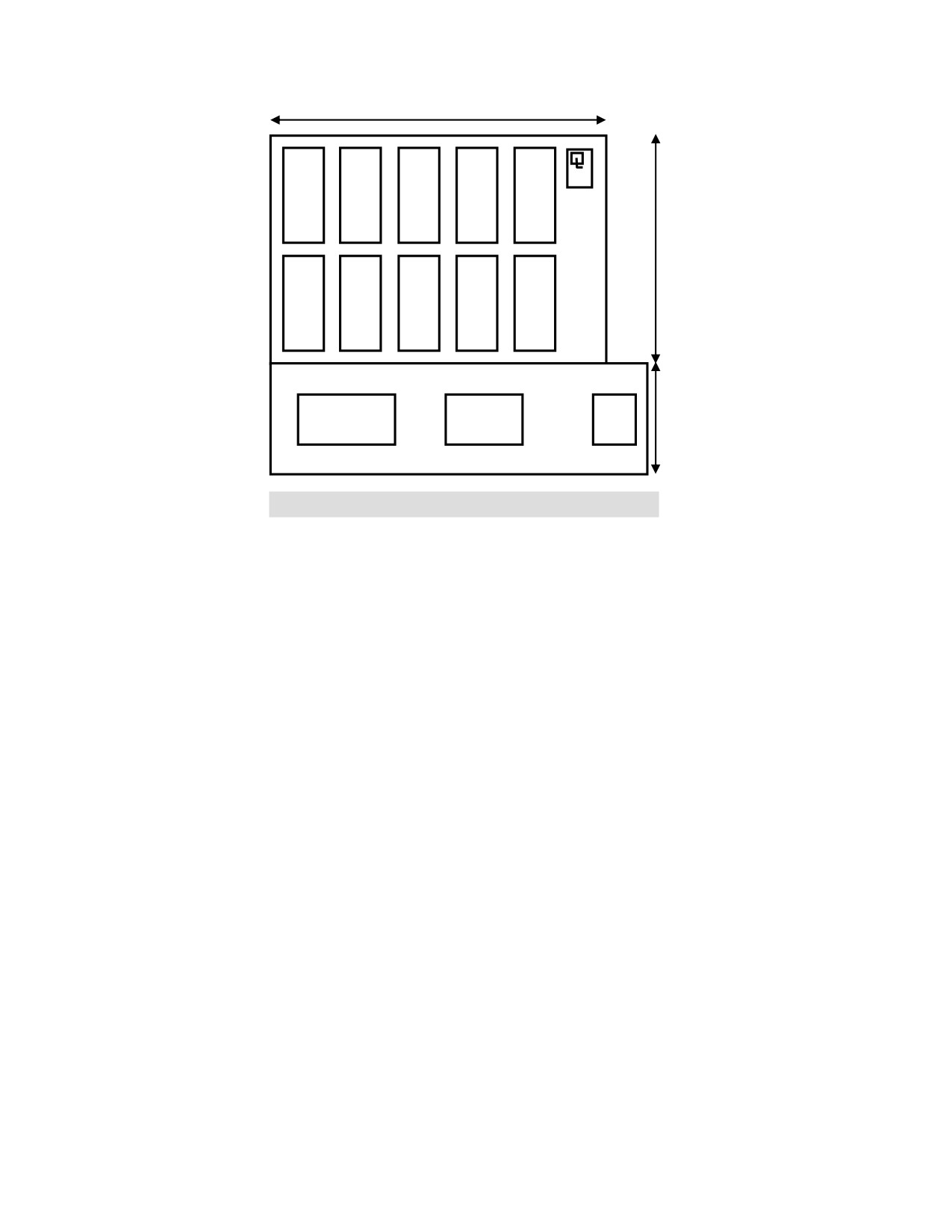
division level. An example is shown in Figure G-2. It is likely that there will be one Collecting Point
in each brigade area although this will depend on the overall size of the Area of Operations (AO).
Proximity to the Main Supply Route (MSR) will speed up the evacuation process. Collecting Points
must be able to move with little or no notice.
4.
Construction. The Collecting Point should, where possible, be based on an existing building.
This increases the shelter available for CPERS and reduces the need for engineer support to erect
perimeter wire and overhead shelter (CPERS can be made to dig for their own protection). There is no
formal design for a Collecting Point but it must be built to suit the climate, the weather and the
operational situation.
G - 2
ORIGINAL
NATO/PfP UNCLASSIFIED
NATO/PfP UNCLASSIFIED
50 m
x x
x
x
x
x
x
x
x
x
x
x
x
x
30 m
x
x
x x
Inter-
Guard Force
POW
rogation
10 m
reception
Unit
x
Road
Figure G-2: Example of a Central Collecting Point (200 man capacity).
5.
The size and configuration of compounds and the placement of internal facilities, field
registration and processing sites, intelligence screening sites, close-confinement areas for disruptive
captives and medical facilities vary depending on the situation.
6.
Construction supplies include general purpose medium-size tents (approximately 20 captives
per tent), concertina wire, barbed or razor wire, screening materials, long and short pickets, staples,
anchors and water cans.
7.
The Interrogation Unit must be located far enough from the CPERS to perform its function
effectively and should be screened from the CPERS, including routes in and out of the interrogation
area.
G003 Holding Area
1.
Function. The CPERS Holding Area is an intermediate stage in the evacuation of CPERS to
their final destination in a CPERS long-term holding facility. The CPERS Holding Area can
accommodate more CPERS than Collecting Points and ideally CPERS should not stay for more than
72 hours. CPERS will require segregation in accordance with the procedures outlined in Chapters 2
and 3 of this publication.
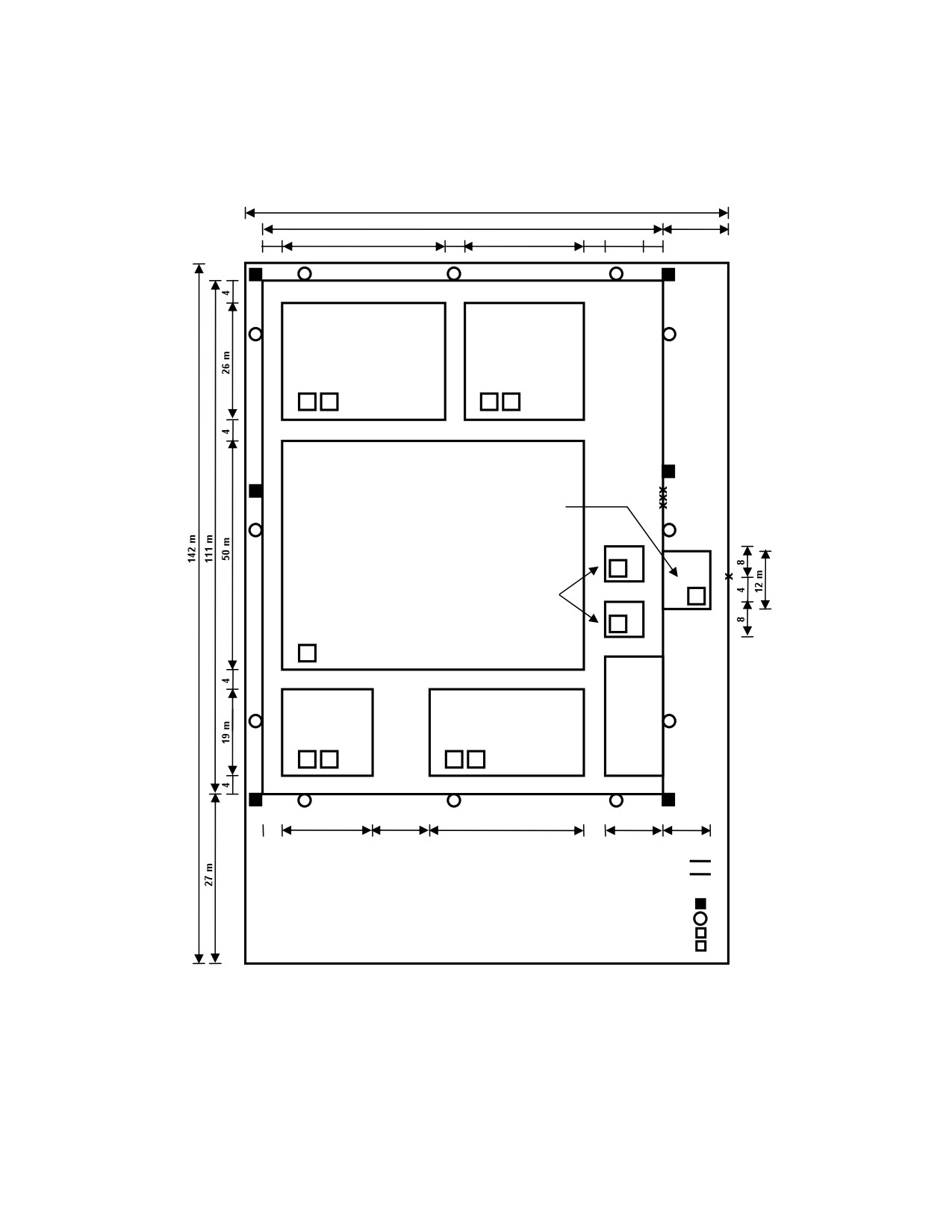
Figure G-3 shows an example layout of a holding area.
2.
Numbers. The CPERS Holding Area should be built on a modular basis. For planning
purposes the CPERS Holding Area should be capable of accommodating 500 CPERS in transit to a
CPERS long-term holding facility.
G - 3
ORIGINAL
NATO/PfP UNCLASSIFIED
NATO/PfP UNCLASSIFIED
3.
Siting. The CPERS Holding Area should be sited so that it will support CPERS operations and
facilitate transit to a CPERS long-term holding facility. The holding area will normally be established
away from an area of immediate danger in a location with access to a MSR.
106 m
88 m
14 m
4
36 m
4
28 m
4
8
4
Other Ranks
Officers
11 x Tent (18 x 24)
7 x Tent (18 x 24)
L
A
L
A
xx
xx
xx
Interrogation Unit
1 x Tent (18 x 24)
Exercise Area
xx
xx
L
POWs awaiting
interrogation
L
and defectors
xx
1 x Tent (12 x 12)
L
L
xx
POW
xx
xx
admin
(e.g.
Females
NCO's
feeding)
4 x Tent
8 x Tent (18 x 24)
3 x Tent
(18 x 24)
(18 x 24)
L
A
L
A
4
20 m
12 m
36 m
4
15 m
10 m
4
Facility HQ and Staff Lines
Legend
Staff Cccommodation - 17 x Tent (12 x 24)
Cattle Fence
x
Medical Centre - 1 x Tent (18 x 24)
Type 1 Cat Wire
xx
Cook House - 1 x tent (18 x 24)
Highwire Fence (with single strand 0.3 m
xxx
Latrines & Ablutions
off ground 2 m inside)
Guard Tower
Security Lighting
Latrines
L
Ablutions
A
Figure G-3: Example of a Holding Area (500 man capacity).
G004 Long-Term Holding Facility
1.
The Long-Term Holding Facility is the final stage in the CPERS handling process. It is a
purpose built facility capable of accommodating large numbers of CPERS for an indefinite period.
G - 4
ORIGINAL
NATO/PfP UNCLASSIFIED
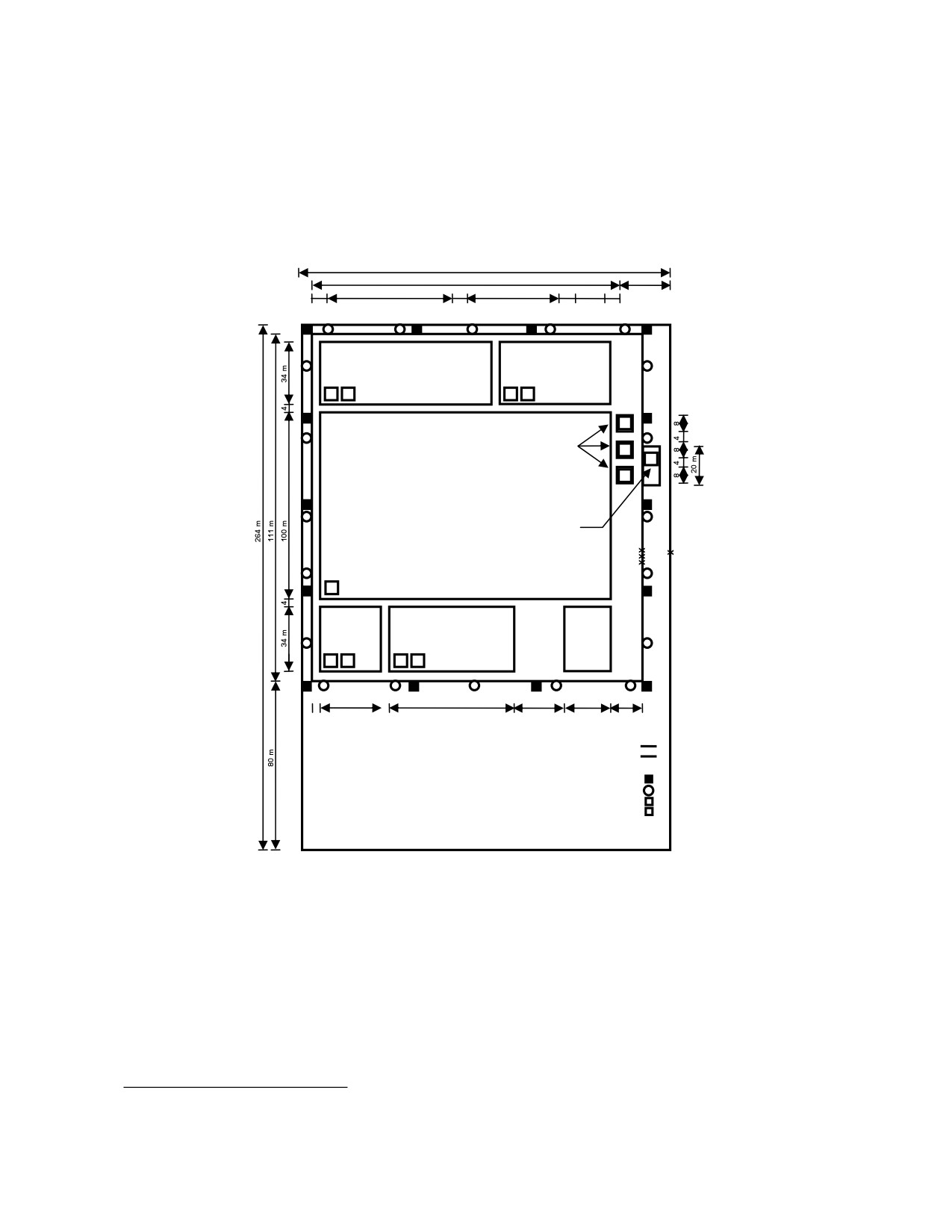
NATO/PfP UNCLASSIFIED
The essential difference between the CPERS Holding Area and the Long-Term CPERS Holding
Facility is the nature of its construction. Figure G-4 shows an example layout of a long-term holding
facility for POWs. A Long-Term Holding Facility for other CPERS should contain facilities for
segregation according to type or status. Prisons7 and other suitable buildings may be used to
accommodate these CPERS. The Long-Term Holding Facility provides more durable accommodation
and generally more solid construction methods for perimeter fences, guard towers, interrogation
facilities and administrative offices.
194 m
176 m
14 m
4
92 m
4
60 m
4
8
4
Other Ranks
Officers
44 x Tent (18 x 24)
44 x Tent (18 x 24)
L
A
L
A
xx
xx
xx
xx
L
POWs awaiting
interrogation
xx
and defectors
xx
L
1 x Tent (12 x 12)
L
xx
L
Exercise Area
Interrogation Unit
1 x Tent (18 x 24)
L
xx
xx
xx
POW
Females
NCO's
admin
13 x Tent
32 x Tent (18 x 24)
(e.g.
feeding)
(18 x 24)
9 x Tent
L
A
L
A
(18 x 24)
4
34 m
4
68 m
32 m
28 m
16 m
Facility HQ and Staff Lines
Legend
Staff Cccommodation - 17 x Tent (12 x 24)
Cattle Fence
x
Medical Centre - 1 x Tent (18 x 24)
Type 1 Cat Wire
xx
Cook House - 1 x tent (18 x 24)
Highwire Fence (with single strand 0.3 m
xxx
Latrines & Ablutions
off ground 2 m inside)
Guard Tower
Security Lighting
Latrines
L
Ablutions
A
Figure G-4: Example of a POW Long-Term Holding Facility.
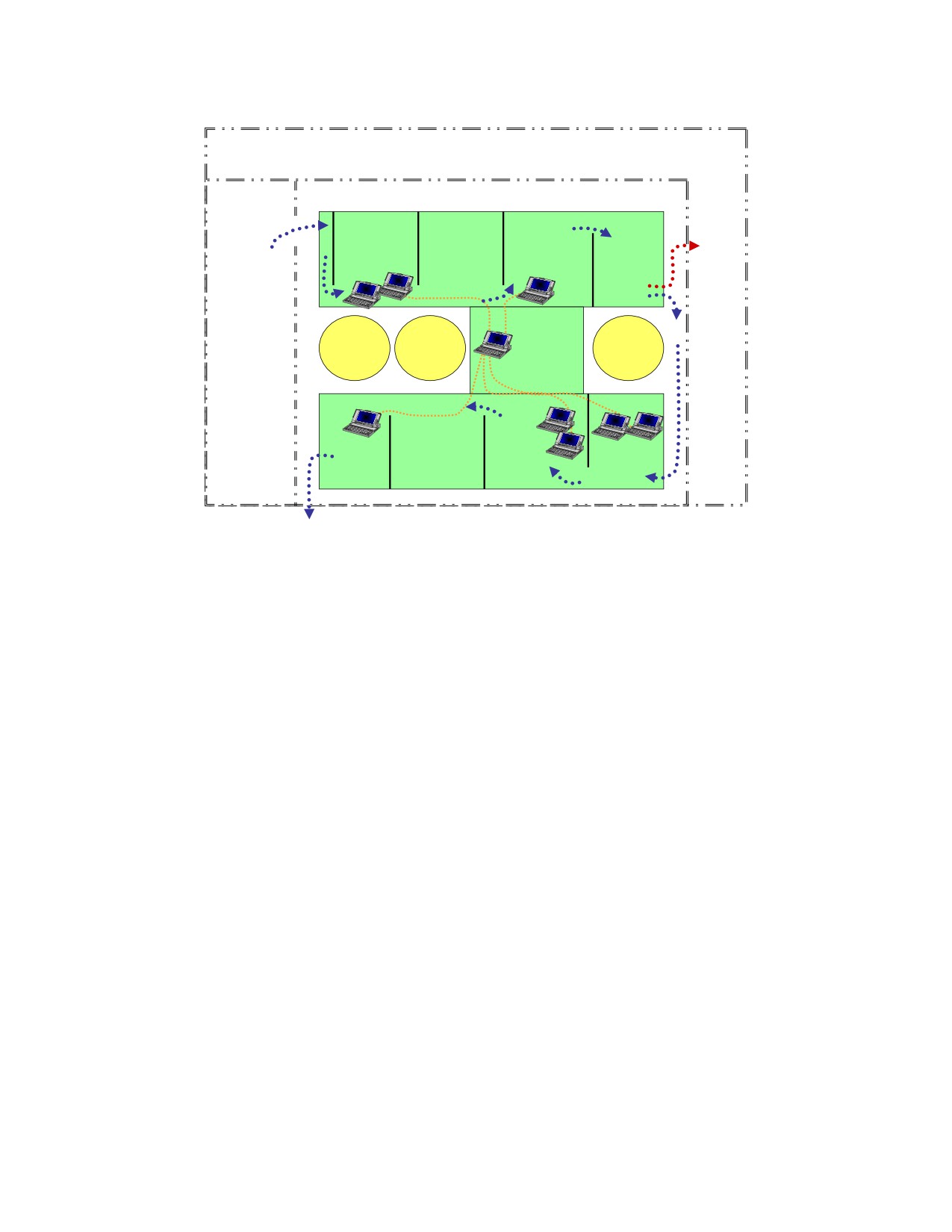
G005 Facilities for Processing CPERS
1.
The processing of CPERS as described in Chapter 3 of this Publication will usually take place
at a holding area or may also be completed at a long-term facility. Figure G-5 shows an example of the
layout of a CPERS processing facility.
7 The psychological impact on the local population and CPERS of using prison facilities that have been the site
of grievous human rights violations should be considered.
G - 5
ORIGINAL
NATO/PfP UNCLASSIFIED
NATO/PfP UNCLASSIFIED
PROPERTY
PRE-SCREENING
DISPOSAL
(TRIAGE):
-MEDICAL
STATION 1
STATION 2
STATION 3
STATION 4
-INTELLIGENCE
Detailed Search
Undress
Property Turn-In
Shave
Height, Weight
Medical or
in Line
Clothing
Intelligence
Hand Receipt
Haircut
DNA, Medical
Issue
Pullouts
INTERNSN Issue
Shower
Evaluation
-Jumpsuit
Delouse
-Shoes
WAITING
(WET AREA)
AREA
NETWORK
HOST
PROPERTY
SUPPLY
CLOTHING
Command &
HOLDING
ISSUE
ISSUE
Control
AREA
AREA
AREA
Administrative Area
STATION 8
STATION 7
STATION 6
STATION 5
Photo
Return of Author-
Record
Fingerprint
Admin Information
ised Property
Review
ID Card Issue
-Family Information
TO HOLDING
Supply Issue
Intelligence
-Education
AREA OR
Screening
Finance
FACILITY
Figure G-5: Example of a CPERS Processing Facility.
G006 Planning Factors for Holding Areas and Long-Term Holding Facilities
1. The following factors should be taken into consideration when selecting a particular area for the
establishment of a holding area or a long-term holding facility:
a. Whether there are any features of the ground such as marshes or swamps that might
promote conditions affecting the health of CPERS.
b. Sufficient water supplies to meet the needs of the long-term holding facility.
c. The availability of suitable electrical power supplies.
d. Existing buildings or structures which can be adapted, thus avoiding unnecessary
construction work.
e. The availability of local construction materials.
f. Proximity to potential target areas.
g. Proximity to existing infrastructure such as road (MSR), rail or airhead.
h. Additional logistic support which the establishment of a holding area or facility in the Area
of Operations will require.
i.
The attitude of the local population.
G - 6
ORIGINAL
NATO/PfP UNCLASSIFIED
NATO/PfP UNCLASSIFIED
j.
The threat of guerrilla or terrorist activity in the area.
k. The general attitude of the CPERS, i.e. aggressive and uncooperative or subdued and
cooperative.
l.
The influence of the terrain on construction, access and security.
m. Any climatic considerations.
G007 Construction Recommendations
1.
The construction of holding areas and long-term holding facilities is an engineer task. The
following are the construction standards that are considered to be necessary in order to satisfy security,
sanitation and safety requirements for holding facilities:
a.
Fences. Perimeter fencing is to consist of:
(1) A double barbed wire fence around the perimeter of each of the one or more enclosures,
which make up the holding area or long-term holding facility.
(2) Top guards with two or more strands of barbed wire at the top of the outside perimeter
fence.
(3) A 4-meter lane, free of any vegetation between the inside and outside perimeter fences.
b.
Guard Towers. Towers are to be sited around the perimeter of each enclosure constructed
to meet the following requirements:
(1) Of sufficient height to permit unobstructed observation of the section of perimeter
which they are sited to cover.
(2) Placed immediately outside the perimeter and where the perimeter is a double fence,
sited in such a manner as to allow an unrestricted view of the lane between the fences.
(3) Low enough to allow an adequate field of fire.
(4) Spaced to provide optimum observation. In conditions of poor visibility, extra guard
posts may have to be established between towers outside the outer perimeter fence.
(5) Of sufficient size to allow the mounting of crew served automatic weapons.
(6) Fitted with retractable ladders.
c.
Lighting. Generators (including stand-by equipment) and lighting sets are to be provided
to enable the following lighting requirements to be met:
(1) Sufficient lighting of fences or walls to enable the detection of CPERS attempting to
escape at night.
(2) Sufficient lighting at strategic points within the holding area or facility to enable
security to be maintained at night within the compound.
G - 7
ORIGINAL
NATO/PfP UNCLASSIFIED
NATO/PfP UNCLASSIFIED
(3) All light fittings to be protected against breakage where necessary.
(4) All lighting to be shaded so that tower and other perimeter guards are not dazzled.
d.
Access for Vehicles. Construction work is to be carried out to allow:
(1) Full vehicular access to the inside of the compound.
(2) Vehicle patrols full access to the perimeter fence along its complete length.
e.
Communications. Telephone communications are to be established between perimeter
towers and other guard posts and the compound headquarters or operations centre. A
secondary means of communication, possibly by radio, is also to be in place.
f.
Separation. A four-compound (2000 CPERS) facility is the maximum size of any one
enclosure. If it is assessed that the holding requirement is likely to exceed this figure,
further enclosures will be established.
g.
Waste Disposal. An important aspect of the construction and management of CPERS
facilities is the requirement for an efficient waste disposal system. This must be considered
under two headings:
(1) Human Waste. A system must be put in place at the outset of construction for
disposing of the human waste from latrines in compounds and enclosures. For anything
other than the initial collecting point, the deep trench latrine will not suffice and a more
effective form of latrine must be provided. Depending on the resources available, this
will range from simple chemical toilet to a fully fledged disposal system equipped with
flushing lavatories and connected to either a local sewage system or to cess pits. Failure
to make provision for disposal of human waste will almost inevitably lead to the rapid
spread of disease among the CPERS.
(2) Other Waste. Arrangements must be made for the collection and disposal of the waste
and rubbish resulting from the wide range of activities taking place in detention
facilities. The amount of rubbish generated in a holding area for 2,000 CPERS each day
will be considerable and unless an organised system of rubbish collection and disposal
is set up from the first occupation of the facility, environmental and health problems
will arise.
(3) Waste Collection. The GC3 allows the use of POWs for tasks connected with camp
maintenance. The operation of sewage systems and waste disposal are tasks which fall
within this category provided that POWs employed on them are given appropriate
training and suitable protective equipment and clothing.
h.
Fire Precautions. Fire fighting equipment must be provided in all CPERS facilities to the
same standard as that required for own forces accommodated in similar conditions. Where
piped water is not readily available, there may be a requirement for emergency water supply
tanks or reservoirs to be constructed close to the detention compound or enclosure.
i.
Marking of Holding Areas and Facilities. GC3 provides protected status to POW
facilities. Roofs and walls of holding areas and long-term holding facilities for POWs are to
G - 8
ORIGINAL
NATO/PfP UNCLASSIFIED
NATO/PfP UNCLASSIFIED
be clearly marked with the letters “PW” or “PG” (Prisonnier de Guerre) so as to be visible
from both ground and air.
j.
Facilities. The following facilities are to be provided in each long-term holding facility:
(1) A facility command post and administration office.
(2) A medical centre.
(3) A facility for the storage and issue of clothing and equipment and where appropriate the
operation of a POW Canteen.
(4) A facility for the conduct of religious services and intellectual pursuits for POWs.
Each separate compound within the long-term holding facility will have the following
facilities:
(5) Accommodations.
(6) Kitchen and Messing Facilities.
(7) Bath and washing facilities.
(8) Latrines.
G008 Interrogation Facility
1.
The facility must provide the requisite number of rooms to service the volume of interrogations.
The rooms must be large enough to comfortably contain a minimum of four persons with appropriate
lighting and climate control with a table and chairs. Furthermore, they should be soundproof so that
CPERS undergoing interrogation cannot hear or be heard by other CPERS in the facility. Adequate
screening to obscure observation of the approaches to and from the interrogation facility is required.
Latrine facilities must be located in close proximity to the interrogation facility (within the screened
area). The interrogation facility should have space for guards and medical personnel, since they must
be available at all times during interrogations in very close proximity to the interrogation rooms. The
facility should also have rooms for observation through two-way mirrors or by means of surveillance
cameras.
2.
The interrogation facility should be located far enough from the CPERS holding area or facility
that observation of interrogation operations and movement of CPERS to and from the interrogation
facility is not possible.
3.
The interrogation facility should also contain a suitable room for the operations and analysis
cell. This room should have adequate space for necessary files, map boards, computers and
workstations and be located with discretion to the interrogation rooms.
4.
Also, the interrogation facility should have office space for the interrogators, storage space for
CPERS effects, CMAT and CDOCs that are used in the interrogations.
5.
Access control into the interrogation facility (by guards) must be tightly observed.
6.
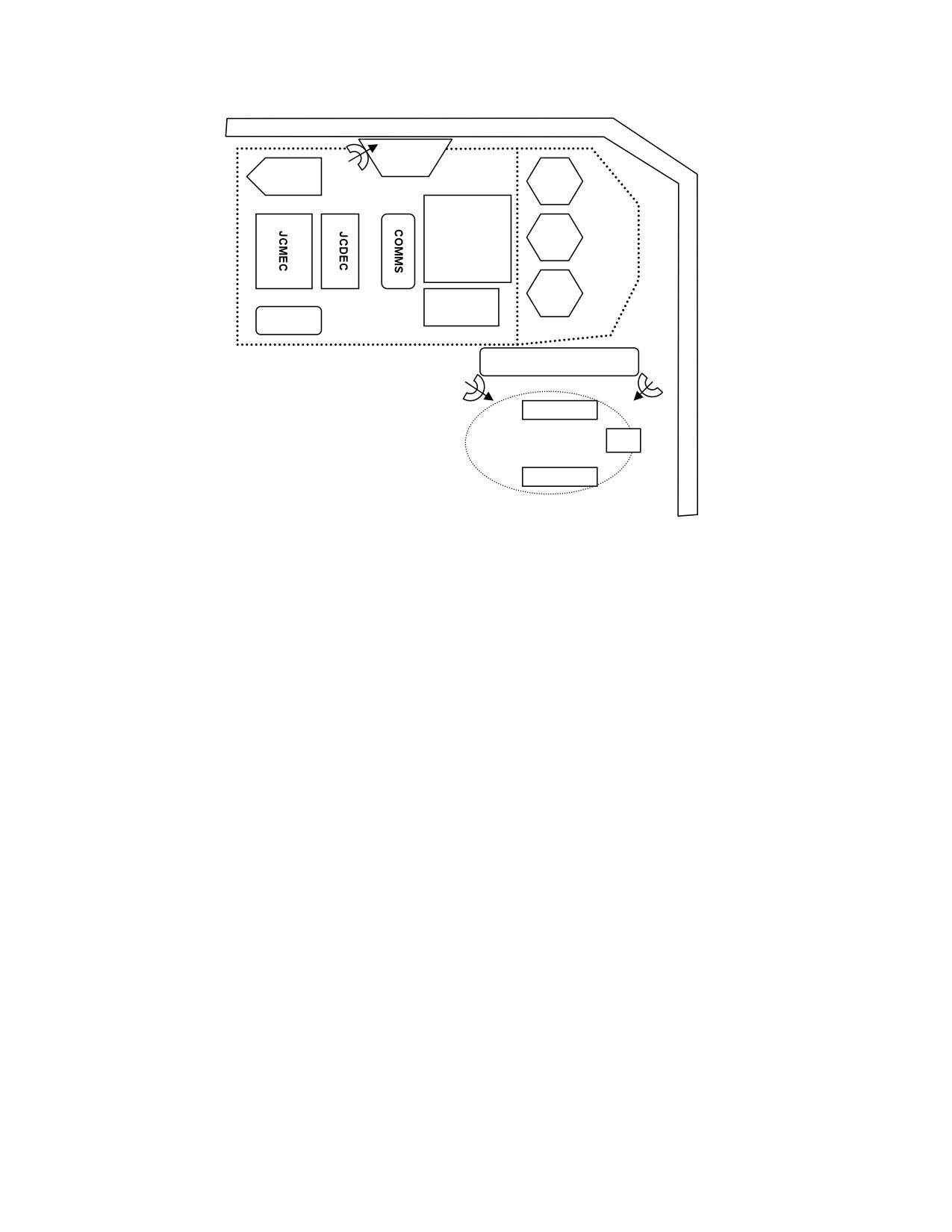
An example of the layout of an interrogation facility is shown in Figure G-6.
G - 9
ORIGINAL
NATO/PfP UNCLASSIFIED
NATO/PfP UNCLASSIFIED
MSR
ACCESS
POINT
REPRO
INTG
VAN
1
INTG
OPS
INTG
&
2
ANALYSIS
INTG
CI OPS
3
(J2X)
GEN
GUARD FORCE
INTERROGATION
HOLDING
L
AREA
Figure G-6: Example of an Interrogation Facility
G - 10
ORIGINAL
NATO/PfP UNCLASSIFIED
NATO/PfP UNCLASSIFIED
ANNEX H
Escorts and Guards
H001 Introduction
1.
From the moment of capture to the time when released from captivity, the CPERS will
be escorted or guarded by members of the armed forces of the Detaining Power. The
procedures for escorting and guarding CPERS must be well known by those who carry out
these tasks in order to prevent CPERS from escaping from custody.
2.
As the ultimate method of preventing a CPERS from escaping may be the use of lethal
force, it is essential that an effective system for escorting and guarding CPERS should be in
place in order to prevent the need for lethal force.
3.
The purpose of this annex is to set out principles for the escorting and guarding of
CPERS.
H002 Definitions
1.
The terms escort and guard are defined as follows:
a. Escort. An escort is an individual or a formed body of military personnel whose
task it is to prevent the escape of CPERS in the course of their movement from one
CPERS facility to another.
b. Guard. A guard is an individual or a formed body of military personnel whose task
it is to prevent the escape of CPERS from CPERS facilities and to maintain
discipline among the CPERS within the facility.
H003 The Escort
1.
Role of the Escort. The role of the escort is to prevent CPERS from escaping in the
course of their movement from CPERS facility to another. The responsibility of an escort
begins at the dispatching facility and ends when they are handed over.
2.
Provision of the Escort. The escort may be detached from the capturing unit, or from
other units as designated by CJ3 at Force HQ.
3.
The Size of Escorts. The basic principle of escorting is that the minimum escort
should consist of no less than the basic 4 man team.
4.
Planning the Move. The basic information required for the planning process is as
follows:
a. The Number of CPERS to be escorted. This will determine the size of the escort.
H - 1
ORIGINAL
NATO/PfP UNCLASSIFIED
NATO/PfP UNCLASSIFIED
b.
Availability of Restraints. The availability of means of restraint (e.g. handcuffs)
may reduce the need for escorts. However, the use of such means of restraint must
be in accordance with provisions of GC3 and other applicable international law.
c.
The Condition and Morale of the CPERS. Tired and co-operative captives do not
need as many escorts as those who are fresher and better motivated. Some
CPERS e.g. from special operations forces, may require a proportionally larger
escort than other CPERS.
d.
The Method of Movement. Movement on foot offers more opportunities for escape
than vehicle movement. Certain types of movement such as movement by truck,
train and air require specific precautions to be taken by the escort.
e.
The Terrain. The terrain across which the CPERS are to be moved will influence
the numbers in the escort and the method of escorting the CPERS. Close terrain
will require more escorts than desert.
f.
Enemy Activity. Any likelihood of enemy interference with the move will require an
escort capable of taking offensive action to protect itself while still accomplishing its
mission.
g.
The Location of Other Units on the Route. Before departure, the escort should
familiarise itself with the location of units on its planned route in order to be able to
seek assistance or make rest stops in the course of the journey.
h.
The Communication Plan. The escort is to be in communication at all times with
the headquarters of the formation through whose AO it is moving.
5.
CPERS Transport. It is unlikely that there will be dedicated transport for the
evacuation of CPERS. Their movement will be based on the return journeys of vehicles and
aircraft delivering combat supplies forward to the general area from which the CPERS are to
be moved. Transport arrangements will be co-ordinated by the J1/G1 and J4/G4 staffs at the
formation headquarters concerned. The movement of CPERS on foot will only be carried out
where there is no transport available and immediate evacuation is essential for operational or
security reasons.
6.
Briefing of CPERS. CPERS should be briefed through an interpreter before the move
takes place. The briefing is to include:
a. The meaning of basic directions such as “Stop!”, “Go!”, “Lie Down!”, “Hands Up!”
etc.
b. The escort’s orders for opening fire (providing the ROE permits firing upon
escaping CPERS).
c. That the ‘Silence Rule’ applies at all times throughout the move (No talking to the
escort, no talking to each other).
d. The actions which CPERS are to take in the case of an emergency.
7.
Briefing of the Escort. Before the move takes place the escort is to be briefed. This
briefing is to include:
H - 2
ORIGINAL
NATO/PfP UNCLASSIFIED
NATO/PfP UNCLASSIFIED
a. The destination, method of movement and route for the evacuation.
b. The understanding by the escort of its responsibility for the CPERS and the need to
safeguard them.
c. The requirement for CPERS to follow orders and instructions.
d. The need for all members of the escort to be aware of potential opportunities for
the CPERS to escape in the course of the move and of measures to prevent this
happening.
e. The understanding that CPERS are only to be spoken to when it is necessary to
give orders and maintain control.
f. What the appropriate actions are in the event of an enemy attack or other
emergency.
g. What actions are to be taken to prevent escape attempts.
h. The rules for opening fire or the use of force.
8.
CPERS Documentation. The escort commander is to ensure that he is provided with:
a. A nominal roll of the CPERS who are to be escorted.
b. The appropriate CPERS documentation.
H004 The Guard
1.
Role. The role of the Guard is to prevent the escape of CPERS from a CPERS facility,
to maintain discipline and to provide security within such facilities. Guards will also have a
subsidiary role in the day to day administration of the facility. The commander of the Guard
Force is responsible for ensuring that the Guard personnel under his command perform their
duties in a professional and detached manner. He must also ensure that the Guard Force is
not pressured or subverted in the performance of their duties.
2.
Provision of the Guard Force. The Guard Force is to be found from all or part of a
formed unit or units, designated at the outset of operations by CJ3 at Force HQ. The
designated unit or units are to have no other task apart from the provision of guards for
CPERS facilities.
3.
Organisation of the Guard Force. The Guard Force is to be composed of four
elements:
a. External Guards. External guards secure the perimeter of the facility by manning
guard towers and gate posts. Their main role is to ensure that CPERS remain
confined inside the facility but they also have the subsidiary role of protecting the
facility against attack or attempts to infiltrate the area from outside.
H - 3
ORIGINAL
NATO/PfP UNCLASSIFIED
NATO/PfP UNCLASSIFIED
b. Internal Guards. Internal guards maintain segregation and order within the facility
and restrict access to areas where the possibility of escape may exist such as
buildings sited close to the perimeter of the compound.
c. Roving Sentries. Roving sentries, operating in pairs, carry out random patrols
within the perimeter of the compound.
d. The Quick Reaction Force (QRF). The roles of the QRF will include:
(1) Reinforcing the external and internal guards where necessary.
(2) Defending the perimeter against outside attack.
(3) Pursuing and re-capturing escaped CPERS in the immediate area of the facility.
(4) Resolving any internal breakdown of CPERS discipline.
e. Dogs. Wherever possible, the guard force is to be augmented with trained dogs
and handlers. The dogs should include at least one tracker dog in their number.
H005 Control of CPERS
1.
General. The effective control of CPERS in holding areas and camps is essential to
the conduct of humane internment operations within the requirements of the GCs. Effective
CPERS control can be achieved through a combination of:
a. Forward Planning. Staffs must ensure that plans exist for adequate CPERS
facilities, escorts, guard forces, transport and general administration and that these
plans can be implemented speedily and efficiently.
b. Abiding by the Geneva Conventions. NATO personnel at each stage in the
CPERS handling process from the point of capture to the CPERS Holding Facility
must scrupulously abide by, and be seen to be abiding by, the detailed
requirements of the GCs.
c. An Effective System of CPERS Discipline. There are a number of components
that constitute an effective system of CPERS discipline.
(1) A Definitive CPERS Regime. There is a requirement for a framework on which
CPERS can base an ordered life style and a system of discipline. This is
provided in CPERS facilities by:
(a) Establishing a disciplinary policy and implementing it in a firm but equable
manner.
(b) Promulgating the rules, regulations, instructions and orders which CPERS
are expected to obey in the CPERS’ own language.
(c) Providing CPERS with copies of the GCs in their own language.
H - 4
ORIGINAL
NATO/PfP UNCLASSIFIED
NATO/PfP UNCLASSIFIED
H006 Conclusion
The efficient escorting and guarding of CPERS is the key to the conduct of an effective and
humane CPERS internment system. The brief guidelines set out in this annex should enable
those involved in the escorting and guarding of CPERS to make a quantifiable contribution to
the successful conduct of operations. It is stressed that the NATO Military Police are high
value, limited assets and must not be used to guard ordinary CPERS.
H - 5
ORIGINAL
NATO/PfP UNCLASSIFIED
NATO/PfP UNCLASSIFIED
INTENTIONALLY BLANK
H - 6
ORIGINAL
NATO/PfP UNCLASSIFIED
NATO/PfP UNCLASSIFIED
APPENDIX TO ANNEX H
Guidelines for the Movement of Captured Persons
GENERAL INSTRUCTIONS
1. Segregate CPERS by category, maintain segregation as far as is possible throughout
journey.
2. Search captives and baggage before loading in any transport.
3. If the use of restraints is specifically authorised, CPERS’ hands may be secured in front of
them
using ‘Plasticuffs’.
4. If food is provided, do not allow the use of metal cutlery and can openers.
ON FOOT
Type of
CPERS
Escorts
Location of Escorts
Formation
Numbers
Required8
Front, rear and flanks and in accompanying
Marching
300 - 500
40
transport.
Column
WHEELED VEHICLES
Type of
CPERS
Escorts
Location of Escorts
Transport
Load
Required
Light Utility
8
2
One in vehicle cab, other in following vehicle.
Truck
Medium
Utililty
10
2
One in vehicle cab, other in following vehicle.
Truck
4/8-Tonne
One in vehicle cab, the others in following
25
3
Cargo
vehicle.
14-Tonne
One in vehicle cab, the others in following
40
4
Cargo
vehicle.
One at front of vehicle, two at rear of vehicle,
Military Bus
54
5
two in following vehicle.
For Vehicle Movement. The following special instructions apply:
a. The proportion of escort to vehicles carrying CPERS is dependent on the size of
the
vehicle and numbers of CPERS. The proportion may be increased at night or in bad
visibility.
b. Drivers are to be fully briefed on routes, speeds and actions in the event of attack
or
escape of CPERS.
8 The numbers of escorts detailed under the various categories are for planning guidance.
H - 1 - 1
ORIGINAL
NATO/PfP UNCLASSIFIED

NATO/PfP UNCLASSIFIED
RAIL
Type of
CPERS
Escorts
Location of Escorts
Transport
Load
Required
Freight Car
25
3
In mesh enclosure in centre of wagon.
Passenger
50
10
At either end of the coach.
Car
For Train Movement. The following special instructions apply:
a. Escorts are to be briefed to dismount at halts and to secure a perimeter around
the train.
b. Where CPERS are in passenger coaches, Escorts are to ensure that windows are
locked
closed and are to carry out periodic checks of windows.
AIRCRAFT9
Type of
CPERS
Escorts
Location of Escorts
Transport
Load
Required
Lynx or
7
2
equivalent
Sea King or
12 - 14
2 - 3
equivalent
Merlin or
25 - 30
3 - 4
equivalent
Puma or
Escorts to guard exits and prevent CPERS
14
3
equivalent
access to flight deck.
Chinook or
36
4
equivalent
C-130
Hercules or
100
12
equivalent
For Aircraft Movement. The following special instructions apply:
a. Load CPERS and escorts under instructions from aircrew or ground staff.
b. Before loading remove from aircraft any equipment which could be used as a weapon.
c. Before departure, inform CPERS in their own language that the area of the flight
deck/controls is out of bounds to them at all times.
d. Order CPERS to keep seat belts fastened throughout flight.
e. Designate specific lavatories for the use of CPERS and remove locks from lavatory doors.
If practicable, remove doors.
SHIPS
9 Note that aircraft load limits may vary with different aircraft types.
H - 1 - 2
ORIGINAL
NATO/PfP UNCLASSIFIED
NATO/PfP UNCLASSIFIED
GC 3 prohibits the establishment of CPERS holding facilities at sea. Ships are,
therefore, most likely to be used to remove CPERS from the area of operations
and/or to repatriate them on cessation of hostilities. Clearly the type of vessel used
and the number of CPERS embarked will determine the size of the guard force, and
how they will be deployed. CPERS being repatriated are less likely to be aggressive
than those being removed from the area of operations while hostilities are
continuing. Warships are unlikely to be tasked
with such an activity; the most likely type of ship is a passenger vessel taken up from
trade. There is the possibility that officials from an organisation such as the ICRC will
be permitted onboard vessels repatriating CPERS. In such circumstances national
authorities or the NATO Joint Forces Command will give guidance as to the formal
relationship between such personnel and the Guard Commander. The national force
commander or the CJTF Commander will detail the military guard force. The Captain
or Ship’s Company of the vessel should not be used for the supervision and
handling of CPERS.
For ship movement. The following specific instructions apply:
a. Wherever possible CPERS are to be kept in domestic areas which have only one
entry/exit route.
b. When possible CPERS are to have a period of recreation on the upper deck each
day. Numbers undertaking recreation at any one time are to be commensurate with
the size of the guard force available. CPERS recreation is to be taken separately
from the Ship's Company.
c. If CPERS meals are taken in a Ship's Dining Hall, they are to be taken separately
from the Ship's Company. It may be that the CPERS administration will determine
that meals are taken within accommodation areas.
H - 1 - 3
ORIGINAL
NATO/PfP UNCLASSIFIED
NATO/PfP UNCLASSIFIED
INTENTIONALLY BLANK
H - 1 - 4
ORIGINAL
NATO/PfP UNCLASSIFIED
NATO/PfP UNCLASSIFIED
ANNEX I
Summary of Geneva Conventions Which Should Be
Communicated to Prisoners of War
Pertinent
Articles
of
III Convention
1.
The purpose of the Geneva Conventions of 1949 is to determine the
treatment of victims of war and to relieve and reduce suffering thereby.
There are four conventions:
I
- wounded and sick in the armed forces in the field
II
- wounded, sick, and shipwrecked in the armed forces at sea
III
- treatment of prisoners of war
IV - protection of civilians in time of war.
2.
Whichever nation captures you is responsible for your care. Your
(12)
individual captor is aware that he is responsible to his nation for your well-
being.
3.
You have and will retain individual privileges under the 3rd
(17)
Convention according to your status and rank if you abide by the rules of
the Convention and state your true surname, first names and rank, date of
birth, and service number.
4.
You will be treated humanely and respectfully as detailed in the 3rd
(13, 14)
Convention. If you are wounded, injured or sick you will receive medical
treatment.
5.
You will be removed from dangerous areas as soon as possible and
(19)
every effort will be made to protect you from harm.
6.
You will not be humiliated or abused.
(3, 13, 14)
7.
You will be disarmed and have all warlike military equipment
(18)
removed from you except articles required to protect you from harm and to
help you maintain your health. You may keep your identification
documents, gas mask, NBC clothing, water bottle, and while in the combat
zone, your personal protective equipment. You will receive sufficient
clothing and blankets to protect you from the environment.
8.
You will be supplied with food and potable water sufficient in quantity
(20, 26)
and quality. Your captor will consider any dietary requirements due to your
I - 1
ORIGINAL
NATO/PfP UNCLASSIFIED
NATO/PfP UNCLASSIFIED
Pertinent
Articles
of
III Convention
racial, religious or environmental requirements.
9.
Your personal documents and effects may be removed temporarily
(18)
but will accompany you and be returned later after examination. Your
identification documents will be shown for examination and administrative
purpose to your captor upon demand.
10. You will be segregated according to your nationality, sex, rank and
(16)
physical condition but you will not be treated any differently by this action.
11. You will be allowed to write to your family and to the Central POW
(70)
Information Agency informing them of your capture, address and state of
health.
12. You will be allowed to receive correspondence, plus parcels, and
(71, 72)
send at least two letters and four post cards per month.
13. You will be allowed to address complaints and requests to the
(78)
military authorities of your captor.
I - 2
ORIGINAL
NATO/PfP UNCLASSIFIED
NATO/PfP UNCLASSIFIED
AJP-2.5(A)
NATO/PfP UNCLASSIFIED
NATO-UNCLASSIFIED
AJP 3.1
ALLIED JOINT MARITIME
OPERATIONS
April 2004
0410LP1073749
ORIGINAL
NATO-UNCLASSIFIED
NATO-UNCLASSIFIED
AJP 3.1
INTENTIONALLY BLANK
II
ORIGINAL
NATO-UNCLASSIFIED
NATO-UNCLASSIFIED
AJP 3.1
January 2008
PUBLICATION NOTICE
ROUTING
1.
Change 1 to AJP-3.1, ALLIED JOINT MARITIME OPERATIONS, is available in
the Navy Warfare Library. The effective date will be promulgated by the Com-
mander, Navy Warfare Development Command, for U.S. Navy holders.
2.
AJP-3.1 outlines the basic principles, doctrine, and practices of North Atlantic
Treaty Organization (NATO) maritime forces in a joint environment. It is in-
tended to influence thinking and provide guidance to NATO joint and maritime
staffs about the application of maritime power in Allied joint operations. Al-
though intended primarily for NATO forces, AJP-3.1 also applies to operations
within the framework of a combined joint task force in a multinational force of
NATO and non-NATO nations.
3.
Change 1 updates descriptions of NATO doctrine for amphibious operations,
maritime interdiction operations (MIO), and naval cooperation and guidance for
shipping (NCAGS) that were finalized subsequent to ratification of the original
edition of AJP-3.1. Change 1 also incorporates updates stemming from changes
to supporting Allied joint doctrine for air and information operations and cor-
rects editorial shortcomings identified in the original edition.
Navy Warfare Library Custodian
Navy Warfare Library publications must be made
readily available to all users and other interested
personnel within the U.S. Navy.
Note to Navy Warfare Library Custodian
This notice will assist you in providing information to cognizant personnel. It is not accountable.
IIa
CHANGE 1
NATO-UNCLASSIFIED
NATO-UNCLASSIFIED
AJP 3.1
INTENTIONALLY BLANK
IIb
CHANGE 1
NATO-UNCLASSIFIED
NATO-UNCLASSIFIED
AJP 3.1
III
ORIGINAL
NATO-UNCLASSIFIED
NATO-UNCLASSIFIED
AJP 3.1
INTENTIONALLY BLANK
IV
ORIGINAL
NATO-UNCLASSIFIED
NATO-UNCLASSIFIED
AJP 3.1
V
ORIGINAL
NATO-UNCLASSIFIED
NATO-UNCLASSIFIED
AJP 3.1
INTENTIONALLY BLANK
VI
ORIGINAL
NATO-UNCLASSIFIED
NATO-UNCLASSIFIED
AJP 3.1
RECORD OF CHANGES
Identification of
Date Entered
NATO Effective Date
By Whom Entered
Change,
(Signature; Rank,
Reg. No. (if any),
Grade or Rate;
and Date
Name of Command)
Change 1
Jan 2008
On receipt
COMNAVWARDEVCOM
NEWPORT, RI USA
VII
ORIGINAL
NATO-UNCLASSIFIED
NATO-UNCLASSIFIED
AJP 3.1
RECORD OF CHANGES
Identification of
Date Entered
NATO Effective Date
By Whom Entered
Change,
(Signature; Rank,
Reg. No. (if any),
Grade or Rate;
and Date
Name of Command)
VIII
ORIGINAL
NATO-UNCLASSIFIED
NATO-UNCLASSIFIED
AJP 3.1
RECORD OF RESERVATIONS
CHAPTER
RECORD OF RESERVATIONS BY NATIONS
Chapter 1
USA
Chapter 2
GRC
IX
CHANGE 1
NATO-UNCLASSIFIED
NATO-UNCLASSIFIED
AJP 3.1
RECORD OF RESERVATIONS
NATION
SPECIFIC RESERVATIONS
GRC
Para 0250.5c. The text of the paragraph is not acceptable to
Greece. There are cases when MCC might not be able to exercise
the OPCON of CATF (e.g., geographic constraints). Nevertheless,
MCC is the only appropriate commander to decide whether this is
possible or not. In any case, the OPCON should be exercised
through MCC, since the MCC is considered to be an insepara-
ble component of the chain of command. Therefore, paragraph
0250.5c has to be revised as, quote “The CATF is under OPCON
of the JFC through MCC. This may be appropriate when the MCC
decides that it is impractical to exercise the OPCON of the CATF.
In this case, C2 arrangements between the CATF and other com-
ponent commanders must be clearly defined to ensure effective
execution and coordination of operations within the battlespace.”
USA
The United States does not concur with the phrases “land effect”
and “effect on land.” AJP 3.1 introduces them in paragraph 0127,
subparagraph 3; in paragraph 0140, subparagraph 1; and in para-
graph 0140, subparagraph 6b; to describe the objective of allied
power projection of maritime forces and the conduct of maritime
offensive combat operations.
“Land effect” and “effect on land” are neither defined in allied joint
doctrine, nor is the effects-based approach to planning associated
with creating such an effect adequately described in allied joint
doctrine.
X
CHANGE 1
NATO-UNCLASSIFIED
NATO-UNCLASSIFIED
AJP 3.1
TABLE OF CONTENTS
Page
No.
CHAPTER 1 — CHARACTERISTICS OF MARITIME POWER
SECTION I — THE MARITIME ENVIRONMENT
0101
Maritime Environment
1-1
0102
The Sea
1-1
0103
Multidimensional Maritime Battlespace
1-2
SECTION II — MARITIME FORCE CHARACTERISTICS
0110
Concepts of Maritime Power
1-3
0111
Inherent Characteristics of Maritime Forces
1-3
0112
Essential Operational Capabilities of Maritime Forces
1-4
SECTION III — ROLES OF MARITIME FORCES AND TYPES OF MARITIME OPERATIONS
0120
Roles of Maritime Forces
1-8
0121
Types of Maritime Operations
1-9
0122
Surveillance and Reconnaissance
1-9
0123
Coastal Defence Operations
1-9
0124
Protection of Shipping
1-9
0125
Sea Control Operations
1-10
0126
Maritime Power Projection Operations
1-11
0127
Maritime Support to Joint Air Defence
1-12
0128
Other Maritime Operations
1-12
SECTION IV — OPERATIONS IN THE LITTORALS
0130
Operations in the Littorals
1-14
0131
Environment in the Littorals
1-14
0132
Employment in the Littorals
1-15
0133
Offensive Employment in the Littorals
1-15
0134
Areas of Thorough Planning Considerations — Offensive
1-17
0135
Defensive Employment in the Littorals
1-19
0136
Areas of Thorough Planning Considerations — Defensive
1-20
0137
Shaping Operations
1-20
0138
Operations in a Nuclear, Biological, and Chemical Environment
1-20
SECTION V — MARITIME WARFARE AREAS
0140
Maritime Power Projection Warfare Areas
1-22
0141
Anti-air Warfare
1-22
0142
Antisubmarine Warfare
1-22
0143
Antisurface Warfare
1-22
0144
Naval Mine Warfare
1-23
0145
Amphibious Warfare
1-23
XI
CHANGE 1
NATO-UNCLASSIFIED
NATO-UNCLASSIFIED
AJP 3.1
Page
No.
0146
Strike Warfare
1-23
0147
Naval Cooperation and Guidance for Shipping
1-24
0148
Electronic and Acoustic Warfare
1-24
CHAPTER 2 — COMMAND AND CONTROL
SECTION I — THE COMMAND SYSTEM
0201
Scope
2-1
0202
Authority
2-1
0203
Command
2-1
0204
Delegation of Authority
2-2
0205
Chain of Command
2-2
0206
Methods of Control
2-2
SECTION II — COMMAND AND CONTROL OF MARITIME FORCES
0210
Operational Command
2-4
0211
Operational Control
2-4
0212
Change of Operational Control
2-4
0213
Transfer of Authority
2-4
0214
Joint Force Commander
2-4
0215
Maritime Component Commander
2-5
0216
Tactical Command
2-8
0217
Officer in Tactical Command
2-8
0218
Tactical Control
2-9
SECTION III — SPECIFIC COMMAND CONSIDERATIONS
0220
Commanders of Allied Forces
2-10
0221
National Caveats
2-10
0222
Command during Task Force Operations
2-10
0223
Command of Maritime Air Operations
2-10
0224
Command in Submarine Operations
2-10
0225
Command of Naval Cooperation and Guidance for Shipping
2-10
SECTION IV — COMMAND DURING SUPPORT OPERATIONS
0230
Support Situations
2-12
0231
Support Operations — Situation A
2-12
0232
Support Operations — Situation B
2-12
0233
Support Operations — Situation C
2-13
0234
Other Support Operations
2-13
SECTION V — TACTICAL COMMAND AT SEA
0240
Introduction
2-15
0241
Command of Large Forces
2-15
0242
Delegation of Command Functions
2-15
0243
Command and Control Options
2-16
XII
CHANGE 1
NATO-UNCLASSIFIED
NATO-UNCLASSIFIED
AJP 3.1
Page
No.
0244
Officer in Tactical Command Responsibilities
2-17
0245
Delegation of Authority
2-20
0246
Delegation Considerations
2-20
SECTION VI — COMMAND AND CONTROL OF AMPHIBIOUS FORCES
0250
Command of Amphibious Forces
2-23
0251
Parallel Chains of Command in the Amphibious Task Force
2-24
0252
Designation of Commanders
2-24
0253
Relationships during Planning of Amphibious Operations
2-24
0254
Command during Amphibious Operations
2-24
0255
Consultation between Commanders
2-25
CHAPTER 3 — PLANNING AND EXECUTION OF MARITIME OPERATIONS
SECTION I — PLANNING CONSIDERATIONS
0301
General
3-1
0302
Principles of Joint Maritime Operations
3-1
0303
Maritime Operations across the Spectrum of Conflict
3-2
SECTION II — ORGANIZATION AND EMPLOYMENT OF FORCES
0310
General
3-5
0311
Task Organization
3-5
0312
Task Organization — Task Force Numbers
3-6
0313
Task Organization — Task Designators
3-6
0314
Submarine Operations
3-7
0315
Maritime Air Operations
3-7
0316
Maritime Electronic and Acoustic Warfare
3-7
0317
Delegation to Warfare Commanders
3-7
0318
Formation of Functional Groups
3-8
0319
Delegation to Coordinators
3-8
0320
Maritime Operations in a Naval Mine Environment
3-8
0321
Naval Mine Countermeasures Planning Factors
3-8
0322
Amphibious Operations
3-9
0323
Types of Amphibious Operations
3-9
0324
Composition and Organization of Amphibious Forces
3-10
0325
Sequence of Amphibious Operations
3-11
0326
Spare
3-14
0327
Termination of Amphibious Operations
3-14
SECTION III — MARITIME PLANNING AND EXECUTION SYSTEM
0330
Commander Estimate of the Situation
3-16
0331
Operation Plan
3-16
0332
Execution Directive
3-16
XIII
CHANGE 1
NATO-UNCLASSIFIED
NATO-UNCLASSIFIED
AJP 3.1
Page
No.
CHAPTER 4 — INFORMATION OPERATIONS IN THE MARITIME ENVIRONMENT
SECTION I — GENERAL
0401
Scope
4-1
0402
Definition and Extent
4-1
0403
Maritime Dimension of Information Operations
4-1
0404
Maritime Information Operations
4-2
0405
Maritime Offensive and Defensive Information-Network Operations
4-3
SECTION II — NON-MILITARY CAPABILITIES
0410
Non-military Activities Supporting Information Operations
4-5
0411
Maritime Application of Non-military Activities Supporting
Information Operations
4-5
SECTION III — MILITARY CAPABILITIES
0420
Command and Control Warfare
4-7
0421
Military Capabilities within Command and Control Warfare
4-7
0422
Military Capabilities Supporting Command and Control Warfare
4-8
0423
Maritime Application of Command and Control Warfare
4-8
0424
Measuring the Effectiveness of Maritime Information Operations
4-10
CHAPTER 5 — MARITIME LOGISTICS AND SUPPORT
0501
General
5-1
0502
Logistic Principles
5-1
0503
NATO Logistic Support Concept
5-2
0504
Maritime Component Logistic Support Concept
5-3
0505
Logistic Support Functional Areas
5-4
0506
Amalgamation between Multinational Joint Logistic Centre
and Multinational Logistic Command
5-5
0507
Logistic Reporting
5-5
LIST OF ABBREVIATIONS
Abbreviations-1
GLOSSARY
Glossary-1
REFERENCE PUBLICATIONS
Reference-1
LIST OF EFFECTIVE PAGES
LEP-1
XIV
CHANGE 1
NATO-UNCLASSIFIED
NATO-UNCLASSIFIED
AJP 3.1
LIST OF ILLUSTRATIONS
Page
No.
CHAPTER 1 — CHARACTERISTICS OF MARITIME POWER
Figure 1-1.
Employment in the Littorals
1-15
CHAPTER 2 — COMMAND AND CONTROL
Figure 2-1.
Maritime Component Command Relationships to JFC
and Other Components
2-7
Figure 2-2.
Maritime Component Command Relationships
2-8
Figure 2-3.
Levels of Command and Control within the OTC
Warfare Organization
2-17
CHAPTER 3 — PLANNING AND EXECUTION OF MARITIME OPERATIONS
Figure 3-1.
Maritime Operations across the Spectrum of Conflict
3-3
Figure 3-2.
Phases of an Amphibious Operation
3-12
CHAPTER 5 — MARTIME LOGISTICS AND SUPPORT
Figure 5-1.
Logistic Support Command and Control Concept
5-4
Figure 5-2.
Amalgamation between MJLC and MNLC
5-5
REFERENCE PUBLICATIONS
Maritime Publication Relationship Matrix
Reference-2
XV
ORIGINAL
NATO-UNCLASSIFIED
NATO-UNCLASSIFIED
AJP 3.1
LIST OF TABLES
Page
No.
CHAPTER 1 — CHARACTERISTICS OF MARITIME POWER
Table 1-1.
Offensive Employment in the Littorals
1-16
Table 1-2.
Defensive Employment in the Littorals
1-19
XVI
ORIGINAL
NATO-UNCLASSIFIED
NATO-UNCLASSIFIED
AJP 3.1
FOREWORD
Allied Joint Publication (AJP) 3.1, Allied Joint Maritime Operations, outlines the basic principles,
doctrine, and practices of North Atlantic Treaty Organization (NATO) maritime forces in a joint
environment. It is intended to influence thinking and provide guidance to NATO joint and maritime
staffs about the application of maritime power in Allied joint operations. AJP-3.1 derives its authority
from and complements AJP-3, Allied Joint Operations, which presents NATO doctrine for planning
and conducting joint operations. AJP-3 provides overarching doctrine on Allied joint operations, while
AJP-3.1 focuses on the unique characteristics and employment considerations for maritime forces in
joint operations. It addresses the fundamental factors that influence the employment of maritime
power and the key aspects of command and control from the command perspective. Although intended
primarily for NATO forces, AJP-3.1 also applies to operations within the framework of a combined
joint task force in a multinational force of NATO and non-NATO nations.
XVII
ORIGINAL
NATO-UNCLASSIFIED
NATO-UNCLASSIFIED
AJP 3.1
INTENTIONALLY BLANK
XVIII
ORIGINAL
NATO-UNCLASSIFIED
NATO-UNCLASSIFIED
AJP 3.1
CHAPTER 1
Characteristics of Maritime Power
SECTION I — THE MARITIME ENVIRONMENT
0101 Maritime Environment
1.
Maritime power, in the broadest sense, is military, political, and economic power exerted
through the use of the sea, and exercised by sea, air, and land resources. Maritime power has
traditionally been employed to control the sea lines of communications (SLOC) for the general
economic welfare or survival of sea-dependent states, and for support of allied, joint, and combined
operations on land. Maritime power has long been used to project power ashore through amphibious
operations and carrier-based aircraft. Power projection capabilities have been greatly expanded with
the advent of sea-based missiles and improved gun systems.
2.
NATO maritime doctrine is concerned specifically with the application of sea power at and
from the sea. NATO maritime forces, under most circumstances, will operate at the strategic and
operational levels alongside the other components. This section examines the features of the maritime
environment that shape the employment of allied maritime forces in a joint environment.
3.
In accordance with rights and jurisdictions recognised under international law, the preponderance
of the sea and airspace above it remains essentially neutral and uninhabited. Maritime operations,
therefore, contrast with land operations in that the sea cannot be possessed in the same way as land.
Nations may have interpretations of international law that differ subtly or materially from those of
other allies, partners or adversaries.1 The maritime force commander must be cognisant of national
differences in interpretation and the impact that may have on operations.
0102 The Sea
1.
Coverage. The sea covers over 70 percent of the Earth’s surface, and provides a fluid
medium for the efficient transport of large and bulky items. In addition, the sea is increasingly
exploited for its economic resources.
2.
Influence. Approximately 90 percent of the world’s population lives within 300 n.m. of a
coastline. An estimated 80 percent of the world’s major cities and a majority of financial centres are
within 100 n.m. of a coastline. Thus, the sea provides vital strategic access.
3.
Physical Environment. Sea areas can range from large open oceans to the more confined
waters of coastal regions. Environmental conditions will affect the ability of maritime forces to
conduct operations. However, skilful seamanship and tactics can help to minimize these effects, and
the inherent mobility of maritime forces may allow them to move to an area where the conditions are
more favourable. A good knowledge of the environments in which maritime forces operate is
essential. There is, therefore, a need for maritime forces to maintain expertise in oceanography and
meteorology.
1 For example, interpretation of hostile intent, innocent passage, or claimed territorial waters.
1-1
CHANGE 1
NATO-UNCLASSIFIED
NATO-UNCLASSIFIED
AJP 3.1
4.
International Law. Maritime forces generally may exercise unrestricted freedom of
navigation and overflight in international waters and airspace. NATO maritime forces can legally
operate close to the territorial waters of a nation without prior approval of the government concerned.
This gives them an unrivalled freedom of navigation to position relatively close to shore. A
commander should always maintain situational awareness with regard to operating forces and the
lawful and excessive legal boundaries and demarcations of the seas, airspace and land territory
claimed by coastal states. When time permits, a commander should seek the advice of a legal advisor
during the planning and conduct of Allied joint maritime operations.
0103 Multidimensional Maritime Battlespace
1.
NATO maritime forces operate above, on, and below the sea throughout the joint operations
area (JOA). The oceans and the littoral2 provide three-dimensional space in which maritime forces can
operate and manoeuvre at a time of political choosing, and an international arena for the demonstration
of capability and the will to use force. However, a threat can come from any direction. The recognised
maritime picture (RMP), including the adversary’s positions and movements, is established through
three-dimensional surveillance. All assets, including space- and air-based sensors, which can cover
large areas quickly, must be used to maintain a continuous information flow. The sea, however, is
largely opaque to many sensors. It can, therefore, be used as a hiding place, as demonstrated by the
effectiveness of sea mines and submarines. NATO maritime commanders must always consider these
vulnerabilities when positioning maritime forces to support allied operations ashore.
2.
Surface warships can be located by satellite or air surveillance. However, their mobility often
makes them hard to locate and track with the precision necessary for engagement, especially if they do
not give away their identity through emissions.
3.
Activities closer to shore involve limitations on the freedom of movement or direction of
approach, and the possible need to pass through geographical or adversarial created chokepoints. This
will limit the options of a NATO commander, give warning of possible movement, and provide
opportunities for the positioning of hostile forces at key locations. Surveillance and weapon systems
must deal with the complicated conditions close to shore and the different environment over the land.
allied maritime forces must be capable of conducting military operations in open ocean and the littorals.
4.
Maritime forces are most effective when they form a part of a larger joint force. The
commander’s concept of operations capitalises on the ability to use open ocean and the littorals to
manoeuvre to a positional advantage, thus supporting attainment of the joint force commander’s
(JFC’s) objectives. Additionally, maritime forces conducting amphibious or strike operations may be
the only way for land forces to obtain access. Even when this is not the case, land forces may be
prevented from achieving their objectives without maritime forces to safeguard their lines of
communication and resupply.
0104 - 0109 Spare
2 The littoral means: In military operations, a coastal region consisting of the seaward area from the open ocean to the shore
that must be controlled to support operations ashore, and the landward area inland from the shore that can be supported and
defended directly from the sea. Control of the area in the littorals is often essential to dimensional superiority. Maritime
operations in the littorals can support other components of the joint force in many ways that are described later in this
publication. One example is the seizure of an adversary’s port, naval base or coastal air base to allow entry of other joint
force elements. (This definition does not have any implication on rules of international law of the sea and rights and duties of
states arising from rules of international law of the sea.)
1-2
CHANGE 1
NATO-UNCLASSIFIED
NATO-UNCLASSIFIED
AJP 3.1
SECTION II — MARITIME FORCE CHARACTERISTICS
0110 Concepts of Maritime Power
1.
Maritime operations include any actions performed by forces on, under, or over the sea to gain
or exploit command of the sea, sea control or sea denial, and/or to project power from the sea. In a
joint environment, maritime forces do more than simply pursue the maritime objectives of the JFC’s
campaign. Their utility lies in being able to contribute effectively as a component of a joint operation,
whose main effects will invariably be focused ashore. Maritime operations can influence land and air
operations by poising at sea and acting as a coercive force, reducing the need for host-nation support
(HNS), manifesting deterrence, enabling access to the JOA, providing battlespace dominance,
projecting power ashore and providing sustainable logistics.
2.
Maritime operations contribute to all three NATO military missions: Article 5 Collective
Defence, Non-Article 5 Crisis Response Operations (NA5CRO), and Consultation and Cooperation.
They can encompass demonstrations of force and humanitarian assistance, warfighting operations at
sea, protection of SLOCs, strikes against an adversary’s maritime, air and land forces, amphibious
operations, information operations (INFO OPS), and other activities throughout the range of military
operations to attain JFC and national objectives.
0111 Inherent Characteristics of Maritime Forces
Maritime forces possess the following inherent characteristics:
a. Poise. The ability to poise navy, amphibious, air, land, and special operations forces
(SOFs) in international waters avoids the political complications and military risks of
deploying forces ashore.
b. Readiness. One of the strengths of maritime forces lies in their immediate availability
to respond to contingencies. Preparedness for warfighting closely parallels many non-
warfighting military functions, such as presence, logistic and health service support. By
maintaining proficiency in the capabilities necessary to resolve major conflicts, maritime
forces can provide a wide range of services in support of peacetime operations in benign
environments and throughout the full spectrum of conflict.
c. Flexibility. The inherent flexibility of maritime forces permits political leaders and
commanders to shift focus, reconfigure and realign forces quickly to handle a variety of
contingencies by providing a wide range of weapons systems, military options, and
logistic/administrative skills. Maritime forces offer presence without occupation and
deterrence without commitment. In tasks ranging from forcible entry and strike operations to
noncombatant evacuation operations (NEOs), disaster relief and humanitarian assistance,
maritime forces can control the seas and provide diplomatic leverage in peace or time of
crisis. The strategic, operational and tactical command and control (C2), and intelligence,
surveillance and reconnaissance capabilities of maritime forces provide for a uniquely
controllable force to complement diplomatic efforts.
d. Self-Sustainment. The degree of self-sustainment achieved by maritime forces will be
determined by the nature of the operation and the types of units committed by the
participants. NATO maritime forces, with their ability to conduct replenishment at sea, are
capable of operating in forward areas without significant land-based supply structures for
1-3
CHANGE 1
NATO-UNCLASSIFIED
NATO-UNCLASSIFIED
AJP 3.1
prolonged periods. Maritime forces have their organic C2 capabilities, which can be used
with flexibility for many tasks.
e. Mobility. Mobility enables maritime forces to respond from over the horizon, becoming
selectively visible and threatening to adversaries, as the situation requires. Maritime forces,
with their inherent strategic and tactical mobility, provide the JFC with the ability to monitor
a situation, remain poised on station for a sustained period, and respond to a crisis rapidly. If
diplomatic, political or economic measures succeed in stabilising a situation, maritime forces
can quickly be withdrawn without further action ashore. Maritime forces can also respond to
indications of pending crises by relocating rapidly from one end of a JOA to another, or from
one strategic area to another, usually independent of fixed logistics. In combat, the ability to
manoeuvre maritime forces quickly provides commanders with a significant tactical and
operational advantage.
0112 Essential Operational Capabilities of Maritime Forces
1.
NATO forces must possess seven essential operational capabilities to carry out the three
military missions of Alliance strategy. (See Article 0110, paragraph 2.) Maritime force characteristics
contribute to each of these capabilities. They are: effective engagement, effective intelligence,
deployability and mobility, timely force availability, effective C2, logistic sustainability, and
survivability and force protection.
2.
Effective Engagement.
a. Maritime forces can establish long-term presence, crisis response, and extended
deterrence within and beyond the NATO area of responsibility, while minimising the need
for HNS and force protection in comparison to forces stationed ashore. In low-intensity
operations, their presence and benign engagement (for example, in defence diplomacy or
disaster relief) may be sufficient in themselves to meet political objectives with minimal
complication. At higher levels of intensity, building on a range of capabilities that enable
secure JOA access and freedom of navigation, they can rapidly exploit the sea to complement
and support manoeuvre on the ground, thereby complicating and constraining an adversary’s
military options. This will add to the JFC’s range of choices for intervention, while avoiding
irrevocable commitment and premature reliance on a complex exit strategy.
b. The mere presence of a maritime force can be a significant factor in preventing or
containing conflict. The early effect of ready, mobile forces can be decisive. If conflict
nevertheless occurs, maritime presence can compel an adversary to defend a broader front,
while allowing the Allies to concentrate their maritime forces at a time and place of their
choosing. Once a decision has been made to engage, approach from the sea and/or applied
pressure on the maritime flank of the JOA can help define and exploit the JOA to NATO
advantage, and to establish a more favourable ground and air situation for the main point of
joint effort ashore. Maritime forces can project power into the JOA at graduated levels of
intensity to achieve discrete effects required by the JFC in synergy with other components of
the joint force. Furthermore, maritime platforms offer relatively protected bases from which
to command and control the allied engagement effort, and to support complementary INFO
OPS, public information (PI), and civil-military cooperation (CIMIC) activities.
1-4
CHANGE 1
NATO-UNCLASSIFIED
NATO-UNCLASSIFIED
AJP 3.1
3.
Effective Intelligence.
a. Effective intelligence is a crucial enabler that allows commanders at all levels to identify
operational risks, threats, and opportunities and provides essential support to joint
contingency and operational planning. Intelligence assets designed to provide indications and
warnings (I&W), which in turn drive timely force availability, logistics considerations,
survivability and force protection, have particular utility in the preliminary stages of crisis
response. To be effective, intelligence support must include emphasis on relevant forward
areas, possibly beyond Alliance borders, in order to identify, monitor and analyse potentially
threatening developments.
b. The fusion of all-source intelligence data produces the common operational picture
(COP). Joint staffs have a key and continuous responsibility to produce the COP required by
a JFC. The maritime contribution to the COP is the RMP. The RMP, typically from forward-
deployed maritime platforms, is derived from scouting (surveillance and reconnaissance),
signals intelligence
(SIGINT), human intelligence (HUMINT), and acoustic intelligence
(ACINT). For example, the ability of forward-deployed submarines to provide I&W can act
as a valuable force multiplier, providing early indication of the need to deploy follow-on
elements of a joint force.
c. Many intelligence sources are under national rather than Alliance control and are subject
to restrictions on releasability and access. A primary consideration in the delivery of effective
intelligence is not only the means by which data is gathered, but also the process for fusing,
analysing and distributing data to provide a comprehensive, continuous and accurate
intelligence picture to the JFC. The prospect of future Alliance engagement beyond the area
of responsibility reinforces the need to further develop maritime support to strategic,
operational, and tactical intelligence gathering, dissemination, and exploitation.
4.
Deployability and Mobility.
a. Sea-based forces are globally mobile and deployable. They are able to exploit freedom of
navigation, transiting to and arriving in the JOA in fully operational mode to establish a
scalable, sustained military presence, and to demonstrate finely measured political intent.
Early arrival in the JOA provides a potentially significant psychological and political impact
for allied forces, lending credible weight to manage and contain crises. They may be
particularly valuable in the preliminary stages of an emerging crisis, where early influence,
coercion or military intervention may help to prevent deterioration into conflict. Once in the
JOA with significant force, the maritime component offers the JFC a range of options to
influence the operation, from sea-based command and presence at one end of the spectrum,
to power projection at the other.
b. The principal prerequisites for these roles include: high readiness, long-range deployability,
self-sustainment, interoperability, role-versatility, integral force protection, and self-
contained command facilities. A wide range of maritime forces, from a single unit to a full
NATO expanded task force (NETF) or a combined joint task force (CJTF) supported by a
sea-based joint C2 system, provide the capability required for rapid and flexible operational
manoeuvre. Deployability and mobility also embrace the ability of strategic sealift to move
freely and flexibly into and within the JOA. The natural advantages enjoyed by maritime
forces can thus be exploited to support the broader joint campaign.
1-5
CHANGE 1
NATO-UNCLASSIFIED
NATO-UNCLASSIFIED
AJP 3.1
5.
Timely Force Availability. Force generation requirements vary from smaller forces that are
configured for humanitarian assistance operations and available to deploy on short notice to more
capable and substantial forces, including headquarters (HQ) forces, deployed in support of the joint
campaign. Future security challenges are unpredictable and demand speed and flexibility of response,
a state of balanced readiness, and capabilities to face a wide range of contingencies. Timely force
availability encapsulates these qualities and provides essential military support to political decision-
making in crisis. NATO maritime forces currently offer considerable flexibility in terms of capability,
platform versatility, readiness and well-practised multinational cooperation and interoperability. These
qualities enable mission-oriented task forces (TFs) and task groups (TGs) to be formed relatively
quickly and efficiently. Standing naval forces (SNFs) are already formed and available for these tasks.
In this way, maritime forces can be deployed and pre-positioned, without commitment, in the earliest
stages of crisis management.
6.
Effective Command and Control.
a. Effective C2, properly supported by a joint operations planning process, is essential to the
success of future NATO joint operations. It relies on cohesion and interoperability at and
between military strategic, operational, and tactical levels. At the military strategic level,
political imperatives and the Alliance’s core mission of collective defence have determined
many of the characteristics of NATO existing C2 structure (the NATO command structure)
and planning policy as described in Military Committee (MC) 133/3. The responsiveness of
this structure to wider missions will be improved by further evolution of existing systems
and processes, and the development of new approaches, including the CJTF concept. In
particular, these should address the requirement for the efficient C2 of deployed, joint
maritime forces operating external to the reach of the NATO command structure and include
efficient access to the use of civilian communications in crisis response operations (CRO).
b. Maritime units can rapidly provide operational level C2 facilities for the JFC during the
initial stages of an operation, where speed of reaction and the effective collation,
management and use of information are paramount. Effective C2 at the joint operations level
demands high-speed, high-data-rate communications networks and reliable long haul, rear-link
systems in sufficient numbers and capacity. Such capabilities exist only on a few select maritime
platforms.
7.
Logistic Sustainability.
a. Maritime forces are in themselves largely self-sustaining with organic logistic support that
enables them to operate independently of HNS for prolonged periods, thus allowing the JFC
considerable freedom of action in deployment and employment options for maritime forces.
Such independence will be particularly valuable in the early stages of a land campaign when
logistic resupply may not be fully established. Early deployment of maritime forces can
contribute significantly to a graduated and optimised logistic footprint ashore and enable
leaner land and air forces by the provision of a logistically self-sustaining, sea-based power
projection capability.
b. Since JOAs in the case of CRO might need to be established beyond NATO area of
responsibility, the majority of logistic support by volume will need to be transported by sea.
This may also apply to combat and combat support personnel entering the JOA behind the
initial echelons of the joint force. Safe and timely delivery of such support will require
secure SLOCs, protected maritime holding areas in and outside the JOA, and secure means
of delivery; either through established seaports of debarkation (SPODs) or by joint logistics
1-6
CHANGE 1
NATO-UNCLASSIFIED
NATO-UNCLASSIFIED
AJP 3.1
over-the-shore transit systems where adequate SPOD facilities do not exist. Accordingly,
NATO needs guaranteed short-notice access to substantial volumes of logistic shipping,
along with escort forces and mine countermeasure (MCM) and local maritime defensive
forces, in order to dominate the destination points in the JOA.
8.
Survivability and Force Protection.
a. The survivability of joint forces is a crucial consideration in strategic planning and
decision-making, with implications that extend well beyond the military mission and into
issues such as public support, political cohesion, and other areas that could be exploited by
an adversary. Maritime forces can contribute significantly to the wider protection of joint
forces in the JOA. In particular, maritime fire support and air power, intelligence,
surveillance, target acquisition and reconnaissance, reinforcement operations and theatre
ballistic missile defence, will offer the JFC significant additional force defence.
b. Maritime forces will normally enjoy a high degree of survivability using organic means.
Additionally, operating with the natural protection of the sea reduces their vulnerability to
asymmetric warfare and nuclear, biological, radiological, and chemical threats. However, as
expeditionary operations prompt greater use of the littorals, and as weapon sophistication and
weapons of mass effect and mass destruction proliferate, with the exception of submarines,
the inherent protection afforded to maritime forces will diminish. The achievement of sea
control, as an important factor in effective engagement from the sea, will invariably be time
consuming and resource intensive in any scenario where adversarial capabilities, aimed at
sea-denial or access-denial, can be effectively employed.
0113 - 0119 Spare
1-7
CHANGE 1
NATO-UNCLASSIFIED
NATO-UNCLASSIFIED
AJP 3.1
SECTION III — ROLES OF MARITIME FORCES AND TYPES OF MARITIME OPERATIONS
0120 Roles of Maritime Forces
1.
Maritime power provides the JFC a long-term, flexible presence and fighting capability that
can be employed throughout the spectrum of conflict from benign to high-intensity warfighting. Allied
maritime forces can exploit the vast area of the sea and influence events ashore through deployment,
concentration and manoeuvre.
2.
Maritime operations include any actions performed by forces on, under or above the sea to gain
or exploit command of the sea, sea control, or sea denial and/or to project power from the sea.
a. Command of the Sea. Command of the sea gives maritime forces the freedom to use
the sea and to deny its use to an adversary. Total command of the sea, in the sense that
maritime forces are unchallenged anywhere and that an adversary is unable to carry out any
maritime operations, can be achieved only by the destruction or elimination of the
adversary’s maritime forces. It is more practicable to limit the objective of command of the
sea in time or place. This is referred to as sea control.
b. Sea Control. Sea control allows the use of the sea in specified areas for specified
periods of time. The early achievement and retention of a level of sea control is a likely
requirement across the entire range of military operations and will be a probable prerequisite
of an Allied joint campaign or operation. The level of sea control required will be a balance
between the desired freedom of action and the degree of acceptable risk. Sea control
comprises the control of the surface and subsurface environments and the airspace above the
area in which control is required. The minimum requirement for control of the airspace is to
secure and maintain a favourable air situation, but air superiority will be a requirement for
robust sea control where an adversary’s challenge from the air is likely to occur.
c. Sea Denial. Sea denial is exercised when one party, unable to control a maritime area,
denies another control of the same area. Sea denial is not a concept distinct from sea control,
as denial of an adversary’s freedom of action is an aspect of sea control. However, the
concept is applicable only when full sea control is not exercised by choice or necessity. At
the operational level, a zone of sea denial may be used as part of the outer defence of a force
or area, or as a way of containing opposition forces. At the strategic level, sea denial can be
used in warfare by sustained attack on an adversary’s shipping to prevent reinforcement and
sap national morale and the ability to wage war.
d. Maritime Power Projection. Maritime power projection is the use of, or threat of the
use of, maritime power to influence events on land. It exploits sea control to achieve access
to the littorals and to deliver power ashore in the forms of amphibious forces, organic
aircraft, land attack weapons and SOF. Forces engaged in maritime power projection will
also contribute to INFO OPS. Maritime power projection is a concept that has broad
application during crisis management and in hostilities. Maritime forces remain one of the
most politically acceptable and versatile forms of military presence, since they are able to
demonstrate the Alliance’s resolve and political intent without violating an adversary’s, or
potential adversary’s, territorial waters or airspace. During hostilities, maritime forces use
the sea to provide access to territory that is less accessible to land forces or to create a
forward operating base (FOB) for other components.
1-8
CHANGE 1
NATO-UNCLASSIFIED
NATO-UNCLASSIFIED
AJP 3.1
3.
In joint operations, maritime forces can be employed in the littorals for the conduct of power
projection operations to achieve force protection or to assist in the provision of force protection and
support missions. Maritime power projection, including amphibious operations, integrates ships and
aircraft and ranges from benign operations with negligible military threat (such as presence and
surveillance), through operations in times of tension (such as CRO), to warfighting operations at sea
(such as protection of SLOCs, where defence against threat has to be three-dimensional). Amphibious
operations integrate ships, submarines, aircraft, and landing forces (LFs) in a concerted joint military
effort in an environment ranging from permissive to hostile.
4.
Conflicts at sea rarely exist in isolation from land operations or the pursuit of territorial
objectives. Even when the maritime component is operationally dominant, the ultimate outcome in the
JOA is likely to depend on success ashore. Maritime operations can influence land operations by
deterrence, providing access to the JOA, assisting in providing battlespace dominance, projection of
power ashore and provision of sealift and sea-basing. Maritime operations encompass and contribute
to the full range of joint operations, through the application of naval and air forces and, during
amphibious operations, the projection and support of amphibious and land forces. Land-based forces
can support maritime operations with intelligence, surveillance, target acquisition, reconnaissance,
fires and force protection, INFO OPS, logistics and air assets.
0121 Types of Maritime Operations
For the purpose of this publication as joint doctrine, a useful distinction can be made between
applications of maritime power from the sea, which equates broadly to power projection operations,
and at sea, of which sea control operations are the essence. Power projection operations have a natural
close relation to joint operations, whereas sea control operations are purely naval in nature, but
contribute to joint objectives. Articles 0122 thru 0128 describe the operations that could normally be
assigned to a maritime force commander in an allied defence plan, contingency plan, operation plan
(OPLAN) or other operational directive.
0122 Surveillance and Reconnaissance
Surveillance and reconnaissance, also known as scouting, is a basic maritime task involving the
locating, identifying and tracking of aircraft, surface vessels and submarines and, where relevant,
shore facilities. Implicit to all operational maritime tasks, surveillance and reconnaissance forms the core
activity for many operations in response to a crisis, such as maritime interdiction operations (MIO), and
missions in support of peace. In the context of CRO, for some missions this may be the sole tasking for
allied maritime forces.
0123 Coastal Defence Operations
Coastal defence encompasses those tasks related to protecting friendly ports and seaward approaches
from adversary intrusion. This threat may be posed by overt actions of an amphibious or naval force,
or covert actions of SOFs or terrorists. Shore-based installations often contribute to coastal defence.
Maritime forces with their inherent mobility and flexibility can contribute, depending on the threat, to
surveillance and reconnaissance operations, barrier operations against submarines and/or surface
forces and sea minelaying operations.
0124 Protection of Shipping
A NATO commander who is tasked with the protection of shipping has to make an important choice
between a deterrent concept, perhaps employing distant or close escort, and the establishment of
1-9
CHANGE 1
NATO-UNCLASSIFIED
NATO-UNCLASSIFIED
AJP 3.1
robust sea control across a wider area. This decision involves the following factors:
a. Sea Control. If the threat to shipping is sufficiently great, protection will require
mobile or static sea control methods or a combination of both. Merchant shipping may
benefit from a wider sea control plan that will offer protection in the waters through which it
will pass; or a specific sea control operation may be devoted to the sea lanes under threat
using accompaniment, active protection, convoying or defended lanes. Both concepts can of
course be used within a wider sea control plan if resources permit.
b. Distant and Close Escort. If there is regional tension, or where there is a threat of
piracy or attack by irregular forces, destroyers, frigates, and other vessels can be on hand in
the JOA to deter attack. When the threat is greater, distant or close escort provides more
specific protection. Allied maritime forces can provide surveillance against threats. Naval
vessels can be positioned in the vicinity of concentrations of merchant shipping (distant
escort) or accompany selected ships (close escort). While conducting both close and distant
escort, allied maritime forces offer a measure of defence; but the concept is to deter attack by
the threat of reprisals. It will rarely be possible to escort and defend every vessel, although it
is possible to fit portable defensive systems (and embark military protection parties) to some
merchant ships to enhance their defensive capability.
c. Naval Cooperation and Guidance for Shipping. In periods of crisis where there is
a significant risk to maritime trade, NATO may offer specific protection to sealift and
merchant shipping through special procedures. Participation would be voluntary by ships’
owners and operators within a clearly defined geographical area under naval cooperation and
guidance for shipping (NCAGS). In the higher end of the threat scale, the NCAGS may
organize routing of shipping while under risk of attack. Under certain situations, allied forces
may be called upon to protect ships of many nationalities carrying cargoes of interest to the
Alliance.
d. Convoying. Convoying is an important and tested method of reducing the scale of the
sea control problem when there are risks to maritime trade or NATO sealift shipping.
Gathering shipping into convoys reduces the area and time over which sea control must be
exercised for their protection. Convoying may complicate the attacker’s task in finding
targets and concentrates escorting forces so that they can take action against the attackers at
an opportune time. Convoying is disruptive to trade. The strategic or operational decision to
convoy requires a careful risk/benefit assessment including the prospect of drawing the
enemy into decisive action.
0125
Sea Control Operations
Sea control operations are static and conducted using long-range surveillance and airborne weapon
delivery systems over large areas of sea. Their targets are principally enemy aircraft, ships, and
submarines that are in transit to attack positions. Careful coordination of C2 is required to allow a
mobile force, under afloat command with its layered defences of moving close and distant screens, to
pass through areas of operations under the control of NATO commanders ashore without mutual
interference and fratricide.
a. Establishment and Maintenance of a Recognised Maritime Picture. In all
maritime operations, ranging from peacetime through increasing tension to hostilities, it is
necessary to establish and maintain a picture of the surface, air, and subsurface situation. In
peacetime, this is normally under national responsibility. In accordance with MC
367,
1-10
CHANGE 1
NATO-UNCLASSIFIED
NATO-UNCLASSIFIED
AJP 3.1
surveillance coordination centres coordinate NATO surveillance operations in order to
optimise the information obtained for the dissemination of the RMP.
b. Shaping Operations. Shaping operations are conducted before the arrival of a main
force, particularly a power projection force, in its area of operations. They shape the
battlespace to enable Alliance operations and could include neutralising enemy sea denial
forces such as submarines and sea mines. Shaping operations in the littorals may take a
considerable time to achieve clearance to acceptable levels of risk. Although they may be
conducted as part of a deception plan, shaping operations should not compromise operational
or tactical surprise.
c. Barrier Operations. Barriers of sea control forces can be set up where geographic,
oceanographic features, or operational constraints will channel or concentrate attacking
enemy forces.
d. Layered Defence. Moving layers of air and antisubmarine defence are organised about
a unit, formation of high value, or sea area of importance in screens and patrol areas. Specific
units or formations within the screens are allocated sectors or zones of responsibility. Sectors
or zones ensure economy of effort and prevent mutual interference.
e. Exclusion Zones. Exclusion zones have been justified, in part, as a reasonable
measure to contain the geographic area of a conflict or to keep neutral shipping at a safe
distance from the areas of actual or potential hostilities. To the extent that such zones serve to
warn neutral vessels away from belligerent activities and reduce their exposure to collateral
damage and incidental injury, and to the extent that they do not unreasonably interfere with
legitimate neutral commerce, they are undoubtedly lawful. However, the establishment of
such a zone does not relieve the proclaiming belligerent of the obligation under the law of
armed conflict to refrain from attacking vessels and aircraft that do not constitute legal
targets.
0126
Maritime Power Projection Operations
1.
Maritime combat power can be projected ashore by sea-based attack aircraft, submarine and
surface-launched cruise missiles, naval fire support, amphibious forces, and SOF. Operations against
the land will usually be joint operations, requiring effective cooperation and a clearly understood
command structure.
2.
Maritime Air Strikes.3 Maritime forces can contribute to attacks against targets ashore using
carrier-based strike aircraft or sea-launched cruise missiles. In maritime operations, particularly in the
littorals, air forces work in close cooperation with maritime forces to ensure the most effective use of
available air assets in strike roles. Air strike operations are divided into:
a. Major Strike. A major strike is a coordinated attack by a large number of aircraft,
fighter sweep/escort, combat air patrol, and support aircraft, all deployed in a single or
multiple packages.
b. Limited Strike. A limited strike is similar to a major strike, but with a smaller number
of aircraft. This type of strike is preferred for sustained operations, or when the requirement
is to get a moderate number of aircraft to the objective in the shortest possible time.
3 In this context, the term strike is used in the conventional weapons sense.
1-11
CHANGE 1
NATO-UNCLASSIFIED
NATO-UNCLASSIFIED
AJP 3.1
3.
Amphibious Operations. An amphibious operation is a military operation launched
R
from the sea by a naval and landing force embarked in ships or craft, with the principal purpose of
projecting the LF ashore tactically into an environment ranging from permissive to hostile.
Amphibious operations can be demonstrations, raids, assaults and withdrawals. Amphibious forces
supported by organic aircraft can contribute to a ground campaign by specific manoeuvre operations
from the sea such as envelopment, turning movements, or infiltration, and by interdiction of key
vulnerabilities ashore. By poising, power projection forces afloat can provide land effect at the
operational level. An uncommitted, credible amphibious force will always be a factor in an
adversary theatre commander’s estimate and may cause the commander to deploy a disproportionate
number of forces to defend the littorals, making them unavailable for other operations. Raids or
demonstrations can enhance the effect of surprise and distraction. Chapter 3 describes amphibious
operations in greater detail.
4.
Special Operations Forces. Maritime SOFs are specially organised, trained and equipped
to operate in the naval environment. They can be covertly inserted ashore using an air, surface or
subsurface unit to conduct activities such as reconnaissance and surveillance, direct action, support
and influence operations, or combat search and rescue (CSAR).
0127 Maritime Support to Joint Air Defence
1.
In joint operations, the air defence commander (ADC), controls all air defence efforts. The air
component commander (ACC) and ADC are designated by the JFC and may be the same individual or
maritime commanders. It is of great importance that the C2 relationship between the ADC and officer
in tactical command
(OTC)/anti-air warfare commander (AAWC) is clear to all involved. The
exchange of liaison staff between air and maritime forces is essential to this purpose.
2.
Maritime forces contribute to joint air defence by providing ship-borne surveillance and
warning, airborne early warning (AEW), electronic warfare (EW), and C2 and weapons platforms
(surface-to-air missiles and fighter aircraft). Depending on the availability of assets and overall
priorities, these capabilities may be completely committed to joint air defence or alternatively may be
made available to the joint ADC, if this does not conflict with their primary tasking. Procedures for
this cooperation are termed coordinated air/sea procedures and are found in AJP-3.3.3, Air Maritime
Coordination Handbook. This publication also provides guidance on the air/sea liaison structure.
0128 Other Maritime Operations
1.
Maritime Interdiction Operations. Maritime interdiction operations are conducted to
enforce prohibition on the maritime movement of specified persons or material within a defined
geographic area. They encompass seaborne enforcement measures to interdict the movement of
certain types of designated items into or out of a nation or specific area.
2.
Embargoes and Quarantine. An embargo means a prohibition on the entry or exit of
shipping into and out of a country. Today, the term is sometimes associated with the United Nations
Security Council Resolution sanctions that prohibit the movement of specific cargoes in and out of a
country. Quarantine is an expression used loosely to mean a restriction on the exit or entry of certain
types of cargo. Enforcement of embargoes and quarantines involve maritime interdiction force
operations.
3.
Blockade. Blockade is considered an act of war that prevents access to, or departure from, a
defined area of an enemy’s coast and waters, for all shipping and air traffic. It can be used
operationally as a method of achieving full sea control or sea denial through containment.
1-12
CHANGE 1
NATO-UNCLASSIFIED
NATO-UNCLASSIFIED
AJP 3.1
Strategically, it may also be used as an extreme form of sanctions enforcement and, during full
hostilities, a method of preventing reinforcement, resupply, and maritime trade, thereby depriving an
opponent of national materiel and moral resources to continue hostilities. To be recognised under
international law, a blockade must have been declared and notified to all concerned, and be applied
impartially to ships of all nations. A blockading force has the legal right to seize in prize any merchant
ship, enemy or neutral, which attempts to run the blockade either inwards or outwards. The blockade
can be either close, denying an opponent access to or from ports, or distant, denying the access
through a sea area which all ships must pass in order to reach the opponent’s territory.
0129 Spare
1-13
CHANGE 1
NATO-UNCLASSIFIED
NATO-UNCLASSIFIED
AJP 3.1
SECTION IV - OPERATIONS IN THE LITTORALS
0130 Operations in the Littorals
Maritime operations include any actions performed by forces above and under the sea to gain or
exploit command of the sea, sea control or sea denial, and/or to project power from the sea. The
oceans and the littorals provide three-dimensional space in which maritime forces can operate and
manoeuvre, and an international arena for the demonstration of capability and the will to use force.
Allied maritime forces must be capable of conducting military operations in open ocean and in the
regions of the littorals of the world.
0131 Environment in the Littorals
Operations in the littorals are affected by a unique set of environmental conditions. The following
paragraphs highlight some of these special conditions, particularly in contrast to open sea operations,
and their requirements in operational planning.
a. Geography. The geographical scope of the coastline ranges from clear and/or flat to
jagged and rugged coastline up to an archipelago-like environment. If operating close or
within the hostile coast, the topography degrades detection ranges and reduces the reaction
time available for evaluation, decision and response. In addition to land-based defence, the
more irregular the coastline, the more maritime forces can thoroughly defend it. For the
offensive force, the defensive measures of the opponent remain covered to a great extent. In
fjord environment, with mountainous landscape, the height of radar and electro-optical
sensors favours the detection range of the defenders. Land-based defence might be based on
fortified installations. Mountainous environment hampers electromagnetic propagation;
however, a defender may install landline communications to overcome that shortfall. Fjord
inshore areas may be very narrow, thus restricting freedom of movement, employability of
weapons, force and self-defence. The closer a TG/TF operates towards a coastline, the
greater the shore-based threat up to single combatants armed with hand-held weapons.
Picture compilation gets more complicated, as density of traffic and complexity of
environment increase, and situations develop more rapidly producing decreasing reaction
times.
b. Hydrography. Mine threat is high in the littorals. Underwater target detection is
hampered by ground, coast and layer reflections. The use of underwater weapons may be
restricted by shallow water. Low water depth enables the installation of fixed-passive
surveillance means. Access to the beaches for amphibious operations needs good knowledge.
c. Atmosphere. Atmospheric changes
(layers and humidity) may occur and effect
complex electromagnetic propagation conditions. It is necessary to carefully observe the
atmosphere to identify the actual propagation conditions and subsequently the detection
ranges of sensors.
d. Population. Dense population in areas of the littorals causes immense electronic signal
heaviness, resulting in interception difficulties. Land targets require high position accuracy
weapons and careful consideration of the collateral damage they may cause.
e. Military Factors. Offensive employment in the littorals exposes forces to land, air and
maritime threats. Forces must be able to counter all these threats. The closer they operate to
or within the coast, the smaller the size of employable units. That means that those units are
1-14
CHANGE 1
NATO-UNCLASSIFIED
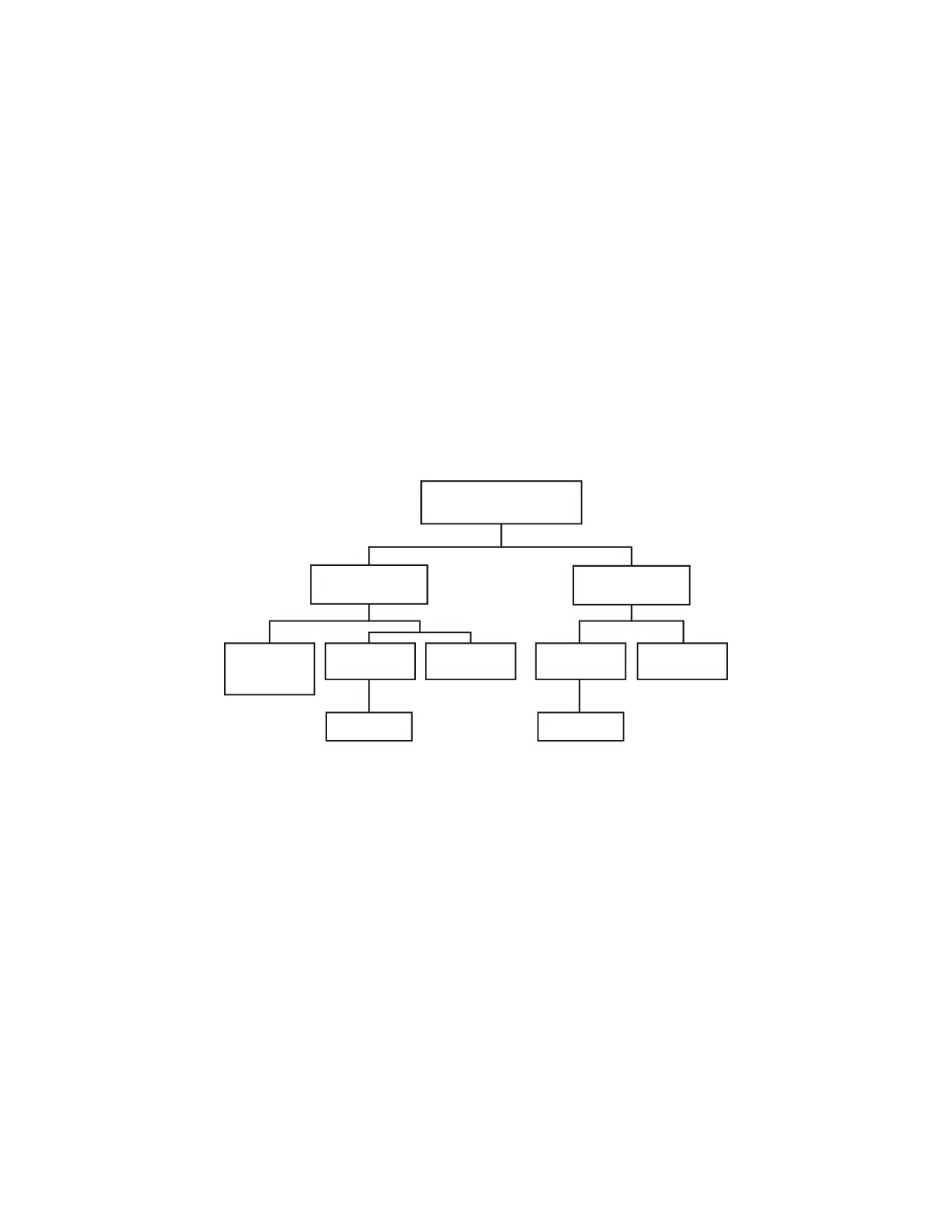
NATO-UNCLASSIFIED
AJP 3.1
more dependent on closely located and more frequent logistic support and that logistic
support in a hostile area is highly threatened. In general, coastal areas are advantageous to
the defender. Any kinds of sea mines are likely to be laid in those waters and pose a threat to
submarines and surface ships. Coastal defence systems, such as radar stations and/or
batteries, armed with surface-to-surface missiles, guns or torpedoes, are often positioned at
chokepoints. Fast patrol boats are a significant threat due to their high mobility, ease of
concealment and potent weapons systems on small platforms. Helicopters are also versatile
threats in warfare in the littorals and may be used for reconnaissance, identification or third
party targeting, as well as a weapon platform for air-to-surface missiles. Additionally, a
submarine operating in the vicinity of a coast may pose a serious threat to operations. The
most dangerous threat is a combination of the above systems operating in coordination.
0132 Employment in the Littorals
Figure 1-1 illustrates offensive or defensive employment in the littorals for projecting power from the
sea or gaining or exploiting sea control or sea denial.
Employment in
the Littorals
Offensive
Defensive
Employment
Employment
Maritime
Command
Sea
Command
Sea
Power
of the Sea
Denial
of the Sea
Denial
Projection
Sea Control
Sea Control
Figure 1-1. Employment in the Littorals
0133 Offensive Employment in the Littorals
1.
Typical examples for an offensive employment in the littorals are employments to exercise sea
control as an enabling measure for maritime power projection, to exercise sea control for the purpose
of protecting SLOCs along a hostile coast, to prevent hostile action from a hostile coast towards the
sea, to provide cover to an evacuation operation, or to support a maritime interdiction operation. A
common basis is to operate against a neutral to hostile coast where no support is expected from the
shore.
2.
If there is a need to operate a force in the littorals of an adversary, shaping operations to
eliminate hostile (sea denial) forces should be carried out. This may compromise operational and
tactical surprise. A combination of MCM forces to ensure safe passage, fighter-bomber aircraft and/or
helicopters equipped with air-to-surface weapons, FOBs, submarines, amphibious and SOFs operating
1-15
CHANGE 1
NATO-UNCLASSIFIED
NATO-UNCLASSIFIED
AJP 3.1
in coordination is the best maritime means to oppose threats in the littorals. Table 1-1 illustrates
typical required actions in an offensive employment in the littorals aiming at exercising sea control.
Table 1-1. Offensive Employment in the Littorals
Required Action
Means
Intelligence
Air and space reconnaissance and surveillance
Destroy/Neutralize/Deter Shore-Based Threats
Air interdiction and maritime air strikes
Tactical Scouting
Tactical air reconnaissance and surveillance by
maritime units and supporting air operations
Clearing Minefields
MCM force
Protecting MCM Force
AAW; DCA;
Antisurface operations by maritime units;
ASFAO
Destroy/Neutralize/Deter Hostile Forces
ASUW/ASW;
Afloat (Surface and Subsurface)
ASFAO in the maritime environment (AMC)
Destroy/Neutralize/Deter Hostile Shore
Naval fire support; Close air support;
Facilities
ASFAO in the land environment; SOF
Protecting Forces Against Air Threat
Offensive counter-air operations;
DCA; AAW; ASFAO
Occupying Key Positions/Areas
Naval units
Combat Service Support
Support ashore/afloat
a. Intelligence. Maritime operations need current and adequate intelligence, well in
advance, through air and space reconnaissance and surveillance concerning a possible land-
based or mine threat and the specific EW environment.
b. Destroy/Neutralize/Deter Shore-Based Threats. Air interdiction and maritime air
strike operations may be needed prior to the offensive employment of sea control forces in
the littorals to eliminate or reduce threats to friendly maritime forces operating there.
c. Tactical Scouting. Scouting by air and other means is necessary to gain a surface
situation picture and provide target information. The aim is to locate and identify threats and
targets at sea, ashore and above the ground/sea. Since the results of ship-borne sensors are
limited, locating and identifying threats and targets ashore requires, apart from ship-borne
sensors, airborne capabilities that might be provided by organic assets or by supporting air
operations (tactical air reconnaissance and surveillance).
d. Clearing Minefields. Whenever possible, enemy minefields, if detected, should be
cleared to provide freedom of movement to maritime forces.
1-16
CHANGE 1
NATO-UNCLASSIFIED
NATO-UNCLASSIFIED
AJP 3.1
e. Protecting Mine Countermeasure Force. If an MCM force is employed, sufficient
protection should be given to that force. In addition to the protecting effect of offensive and
defensive counter-air (DCA) operations, anti-air warfare (AAW), antisurface operations by
maritime units, and antisurface force air operations (ASFAO) contribute to that protection.
f. Destroy/Neutralize/Deter Hostile Forces Afloat
(Surface and Subsurface).
Antisurface warfare (ASUW) and antisubmarine warfare (ASW), supported by ASFAO in the
maritime environment, is to be exercised.
g. Destroy/Neutralize/Deter Hostile Shore Facilities. Naval fire support, close air
support and ASFAO in the land environment (i.e., the air attack support element of an
amphibious force) might be employed to eliminate coastal threats posed by shore-based
weapons, command, control, communications, computers, and intelligence (C4I) systems,
and other facilities.
h. Protecting Forces Against Air Threat. Protection against the air threat is vital
when operating towards a hostile coast or within the hostile coastal waters, where building
up an air threat favours the opponent. Offensive and DCA operations, as well as AAW,
contribute to this protection.
i. Occupying Key Positions/Areas. Once the littorals and coastal areas have been
sanitized, key/chokepoint/areas at sea might be physically occupied in order to deny hostile
infiltration in the sanitized area.
j. Combat Service Support. Combat service support is the support provided to maritime
forces, primarily in the field of administration and logistics. In principle, the maritime
logistics and support regulations are valid. Protection of logistic and supply units is vital. The
more the operation shifts to operation close to or within the coast, the smaller the size of
employable combat units
(with considerably reduced endurance compared to ships).
Therefore, those units are more dependent on closely located logistic support. Attention
should be given to establishing an instant support on the battlefield with small and fast
support units, capable of providing petroleum, oil(s) and lubricants, ammunition, spare parts
for instant repair, and food and crew-exchange. The small support units will be replenished at
open sea or nearby friendly harbours. This option is preferred, instead of having the small
combat units’ shuttle between forces at open sea for replenishment and the battlefield close
to shore.
0134
Planning Considerations — Offensive
1.
Communications and Information Systems. Timely and efficient CIS are essential to
effectively coordinate and execute employment in the littorals. As the geography may disrupt
electromagnetic propagation, robust communications planning is necessary, considering the use of the
whole frequency spectrum, relay stations (airborne to gain height might be necessary) and back-up
circuits in order to provide redundancies in case of communications failure.
2.
Picture Compilation. In all maritime operations, it is necessary to establish and maintain a
picture of the surface, air, and subsurface situation (i.e., the RMP). Operations in the littorals include
maintaining the picture of the ground situation in the area of operations as well. The complexity of the
environment close to the coast, the limited availability of the electromagnetic spectrum, and high
density of shipping hamper picture compilation.
1-17
CHANGE 1
NATO-UNCLASSIFIED
NATO-UNCLASSIFIED
AJP 3.1
3.
Gathering Information. During operations in the littorals, extensive use of standoff,
airborne, and highly mobile sensors are recommended to overcome the disadvantages of environment
and threat. Gathering information on land targets may as well be supported by the use of electro-
optical and infrared sensors, electronic warfare support measures
(ESM), and imaging radars.
Selecting a short revisiting cycle is necessary in order to detect mobile targets. Employment of SOFs
for rescue ashore may be considered as well as launching INFO OPS against hostile information
equipment. In general, employment of a diversity of sensors (radar, tactical SIGINT) is recommended
in order to reduce the effects of the vulnerability of each sensor in an environment that favours the
opponent.
4.
Transfer of Information. Transferring information via data link is preferable. The more joint
assets are employed and the number of participating units increase, the more complex the evaluation,
correlation and coordination of the recognized maritime picture. Having all assets in one net at the same
time makes the use of the tactical data system (TDS) preferable. However, there are some shortfalls. For
example, the equipment of the different assets might vary and might not be interoperable; the capacity of
the TDS might not allow for the necessary number of participants; and the correlation of the received
information might become too complex. Therefore, a core data net, including all units afloat, should be
considered. The importance to execute the duty of force track coordination is stressed. Collocated to the
task force commander should be a picture coordination element of the littorals, receiving all picture
compilation information from all participating assets, equipped with all information exchange and
display devices in use within the TF in the littorals. It should be tasked to evaluate, correlate and
coordinate incoming information and to deliver essential information into the various information
exchange circuits and nets. The aim is to maintain the highest degree of situational awareness within the
entire force.
5.
Situational Awareness and Weapon Employment. The closer the force operation in
the littorals is to the hostile coast, the more complex the environment becomes, and the more essential
the need to coordinate the whole operation by means of area coordination. This coordination is
paramount in order to provide very good situational awareness and deconflict friendly forces to avoid
fratricide engagements. Protection against air threats needs to be coordinated by zones. (See AJP-3.3
series.) For the employment of the surface forces, a method of area coordination for prevention of
mutual interference and deconflicting in the littorals (e.g., see PLAN CASTLE in Allied Tactical
Publication (ATP) 31, NATO Above Water Warfare Manual) should be used, taking into account
established zones for protection against air threats. If forces are operating ashore (i.e., SOF, spotter
etc.), fire support coordination measures such as establishing no-fire, free-fire, restrictive-fire areas or
fire support coordination lines, should be implemented and well synchronized with air zone and
surface area coordination. Collocated to the picture coordination element in the littorals should be a
joint area/zone coordinator, tasked to establish, activate or deactivate zones and areas, based on
information gained from the picture coordination element. The aim is to provide quick response to the
development of the situation for the purpose of effective engagement, situational awareness and safety
of forces.
6.
Command and Control Issues. An important factor in successful employment in the
littorals is adequate liaison between employed joint assets. The liaison structure required during an
operation must be addressed as part of the operational planning process. The supporting force
should carefully consider the targeting cycle if the operation is supported by non-organic air assets
(e.g., DCA, ASFAO).
7.
Electronic Warfare. The expected density of the electromagnetic environment and the
techniques employed from ashore requires specifically tailored ESM/electronic countermeasures
1-18
CHANGE 1
NATO-UNCLASSIFIED
NATO-UNCLASSIFIED
AJP 3.1
(ECM) equipment and a very high degree of coordination and specific EW tactics. The area of EW in
the littorals is discussed in greater detail in AJP-3.6, Allied Joint Electronic Warfare Doctrine.
0135 Defensive Employment in the Littorals
1.
Typical examples for defensive employment in the littorals might be national defence or the
defence of allied territory against an amphibious attack, the defence against embargoes of SLOCs, or
the disruption of sea control/denial operations of an adversary in adjacent waters. The common basis is
to operate from a coastline or a friendly coast, possibly supported by maritime action from the high
seas. Table 1-2 reflects typical actions in a defensive employment in the littorals aimed at exercising
sea control.
Table 1-2. Defensive Employment in the Littorals
Required Action
Means
Intelligence
Air and space reconnaissance and surveillance
Tactical Scouting
Tactical air reconnaissance and surveillance by
maritime units and supporting air operations
Clearing Minefields
MCM force
Blocking Coastal Areas by Mining
Naval or aerial mining
Protecting MCM Force
AAW; DCA;
Ground-based air defences;
Antisurface operations by maritime units;
ASFAO
Destroy/Neutralize/Deter Hostile Forces
ASUW/ASW;
Afloat (Surface and Subsurface)
ASFAO in the maritime environment (AMC)
Protecting Forces Against Air Threat
Ground-based air defences;
Offensive counter-air operations;
DCA;
AAW; ASFAO
Occupying Key Positions/Areas
Naval units
Combat Service Support
Support ashore/afloat
2.
The main difference between offensive and defensive employment in the littorals is the truly
joint nature of defensive employment, involving all services in picture compilation and engagement of
the enemy. In defensive employment, the advantage of the operation rests within the maritime forces.
As more land and air forces participate in defensive employment than in offensive employment
operations, the coordination requirement remains, but is far more extensive. The following comments
address defensive actions and are exceptions to subjects addressed by offensive employment in the
littorals.
1-19
CHANGE 1
NATO-UNCLASSIFIED
NATO-UNCLASSIFIED
AJP 3.1
a. Tactical Scouting. Approaching from the sea, threats and targets are to be located and
identified. Land-based assets are to be included apart from the use of ship-borne sensors and
airborne capabilities.
b. Protecting Forces Against Air Threat. Ground-based air defences make additional
contributions.
c. Occupying Key Positions/Areas. Once the littorals and coastal areas are under sea
control, key/chokepoint/areas at sea might be physically occupied or secured by employing
land-based surveillance and weapon systems in order to deny hostile infiltration in the
sanitized area.
d. Combat Service Support. Land-based support is possible.
0136 Planning Considerations — Defensive
1.
Communications and Information Systems. CIS may overcome geographic restrictions
through the use of land-based communications transmitting and receiving stations and by the use of
landlines.
2.
Picture Compilation. An integrated system of sensors and information distribution devices
might be installed, using all means of services. The need of a core data net, including all units afloat
and the importance to execute the duty force track coordination, is stressed. In view of extensive land-
based support, establishment of a picture coordination element in the littorals, receiving all picture
compilation information from all participating assets, has to be considered. It should be equipped with
all information exchange and display devices in use within the TF, and, tasked to evaluate, correlate
and coordinate incoming information, and to deliver essential information into the various information
exchange circuits and nets.
3.
Situational Awareness and Weapon Employment. As land-based surveillance and
weapon systems employment is used, coordination is stressed to provide the best degree of situational
awareness and deconfliction of friendly forces, and prevent fratricide engagements. Situational
awareness is the key for success.
0137 Shaping Operations
These are operations conducted before the arrival of a main force, particularly a power projection
force in its area of operations, to shape the battlespace to enable Alliance operations. Shaping
operations aim to prepare the entire battlespace for follow-on operations and include both sea control
operations to neutralise enemy sea denial forces such as submarines and sea mines, power projection
operations such as maritime air strikes, some types of amphibious operations, and special operations.
Shaping operations in the littorals may take a considerable time to complete to achieve clearance to
acceptable levels of risk. Care should be taken not to compromise operational or tactical surprise by
shaping operations, although they may be employed as part of a deception plan.
0138 Operations in a Nuclear, Biological, and Chemical Environment
1.
Many countries and some terrorist organizations have, or are seeking to acquire, nuclear,
biological and chemical (NBC) weapons. Maritime forces may be targeted directly or be exposed to a
downwind spread of an N, B or C hazard from land targets. Additional hazards may be encountered,
including radiological contamination from so-called “dirty” weapons that use radioactive material
1-20
CHANGE 1
NATO-UNCLASSIFIED
NATO-UNCLASSIFIED
AJP 3.1
spread using conventional explosives, and toxic materials such as those arising from commercial
accidents or damage to industrial facilities during conflict.
2.
The greatest threat to allied maritime forces will occur in the littorals, during passage through
navigational choke points and when in harbour. The direct effects of nuclear explosions will be
immediately apparent, while N, B or C contamination must be detected using all means available.
Survival will depend on accurate threat information, sound preparation, training, and the immediate
application of individual and collective protection.
3.
Evasive manoeuvring should be used to avoid, to the maximum practicable degree, the
immediate and residual hazards resulting from nuclear detonations and chemical and biological
attacks, although modern warships have closed working and living quarters (citadels) that enable them
to continue the majority of their operations in a contaminated environment. Precautions for the
passage of a contaminated area should be stated well in advance.
4.
Nuclear and Radiological Hazards. The effects of a nuclear weapon will depend upon its
size and whether it is a surface, sub-surface, air or exo-atmospheric burst. Effects will include light,
blast, heat, initial gamma radiation and electromagnetic pulse. Maritime forces may also be affected by
underwater shock or base surge. Fallout will be a consideration downwind for a surface burst. ATP-45,
Reporting Nuclear Detonations, Biological and Chemical Attacks, and Predicting and Warning of
Associated Hazards and Hazard Areas (Operators Manual), provides further information on plotting,
warning and reporting. Guidance for maritime tactics is provided in ATP-1 Volume I, Allied Maritime
Tactical Instructions and Procedures. Enhanced radiation weapons are designed to maximise prompt
radiation output at the expense of other effects and radiological weapons are specifically designed to
disseminate radioactive material, possibly using conventional explosive. These hazards need to be
managed using the same principles as the radioactive hazards arising from nuclear weapons.
5.
Chemical Hazards. Chemical warfare agents and commercial toxic substances can produce
incapacitating or lethal effects through inhalation, ingestion or absorption through the skin. Chemical
Warfare agents may be delivered against maritime forces at sea by aircraft, bombs, shells or missiles
that may release vapour or spray in the vicinity of the target or breach the citadel of a unit directly.
There are significant differences between vapour and liquid agents. A persistent liquid will have long
lasting effect and deny access to affected areas until decontamination can be achieved.
6.
Biological Hazards. Biological warfare is of considerable concern in view of its widespread
effects and ease of manufacture of agents with high lethality. Weaponisation is difficult but simple
spray systems, including crop-spraying aircraft, are effective. The very limited availability of
biological detectors means that medical vigilance and trend analysis in conjunction with medical
countermeasures offers the best response. Incubation times favour strategic rather than tactical use and
the difficulty of identifying the source could allow the aggressor to avoid detection. Maritime forces
should be particularly vigilant for signs of biological contamination following periods in harbour,
where the covert delivery of agents is significantly simpler.
0139 Spare
1-21
CHANGE 1
NATO-UNCLASSIFIED
NATO-UNCLASSIFIED
AJP 3.1
SECTION V — MARITIME WARFARE AREAS
0140 Maritime Power Projection Warfare Areas
Maritime missions and tasks encompass a full range of activities requiring the application of naval and
R
maritime air combat power. Sea control includes operations that locate, classify and track surface
vessels, submarines and aircraft, and, if necessary, apply force against them. It may also include
cooperation with merchant shipping and blockades or embargoes against commercial and military
shipping. Power projection, on the other hand, involves using maritime offensive combat power to
achieve decisive effect on land. Fundamental to all maritime operations is the ability to use force at sea
and against the land. This ability to use force is categorised into distinct warfare functions or warfare
areas. During NATO operations, the degree of effort in each warfare area will depend on the size and
scope of the maritime operation, and the military threat against allied forces.
0141 Anti-air Warfare
AAW in the maritime environment, part of air defence at sea, is the term used for the defence of
friendly forces against the threat of aircraft and airborne weapons, whether launched from air, surface,
or subsurface platforms. AAW is the maritime term for DCA operations and is part of the joint air
defence system. Maritime units execute AAW as part of the overall air defence effort, as coordinated
by the ADC. AAW is based on the principles of defence in depth and layered defence, defeating air
attacks at the maximum possible distance from maritime forces, using organic and shore-based
aircraft, long and medium range surface-to-air missile systems, point defence missile systems, guns,
close-in weapons systems and decoys and jammers. These layers are necessary to gain early warning,
counter the adversary’s surveillance and targeting effort, destroy attacking aircraft before they can
release their weapons, and to destroy or decoy missiles before they can hit friendly forces. Maritime
units execute AAW simultaneously with other maritime operations, such as mine warfare and
amphibious operations. Both in planning and execution, liaison exchange, and subsequently close
coordination, between maritime and air components is essential. Critical items of coordination are a
clearly understood command structure, information exchange and weapon coordination.
0142 Antisubmarine Warfare
ASW comprises operations with the intention of denying the opponent the effective use of submarines.
The ASW protection of a force depends on defence-in-depth and close coordination between ships,
helicopters, maritime patrol aircraft
(MPA), shore-based facilities and friendly submarines. The
complexity of such coordination, and the special environmental factors involved makes the submarine
threat one of the most difficult problems to counter. Organic submarines provide the JFC a range of
options for strategic and tactical employment. They can operate in high threat areas, which might be
untenable to other maritime forces, and are capable of sustained independent operations in pursuit of
sea denial or as part of a larger TG in sea control operations. ASW capable nuclear and conventional
submarines may be employed to enhance the mix of surface and air forces in ASW operations, and
these composite ASW forces form the forward forces for ASUW operations. Submarines are most
commonly used to provide I&W and reconnaissance in advance of hostilities. Subsequently they can
be used to interdict SLOCs for sea denial, or to enforce sea control when acting as part of a larger TG.
1-22
CHANGE 1
NATO-UNCLASSIFIED
NATO-UNCLASSIFIED
AJP 3.1
0143 Antisurface Warfare
ASUW is defined as the actions necessary to detect, identify and counter an adversary’s surface
capability. ASUW operations, which may include sea control and sea denial operations, disruption of
SLOCs, defence of friendly forces from surface attack, or a combination of all, seek to ensure that the
necessary actions are conducted in a timely fashion, denying any adversary the ability to employ
forces in an effective manner. It is normally controlled by the antisurface warfare commander
(ASUWC) utilising organic and shore-based aircraft, and ships, and may be supported by submarines.
In the littorals, fast attack craft and fast inshore attack craft that are operated by many nations, pose a
particular threat to allied operations. Groups of friendly fast attack craft, together with armed
helicopters may offer a viable solution to counter this threat, particularly when combined with larger
units offshore providing advanced C2, supporting fire with long-range weapons and helicopter support
facilities.
0144 Naval Mine Warfare
Mine warfare is divided into two areas: laying of mines and actions to counter the threat of an
adversary’s mines (referred to as MCM). Minelaying, or the threat of mining, can either be protective,
defensive or offensive. Protective sea minefields are laid inside friendly waters with the aim of
protecting friendly forces or shores. Defensive sea minefields are laid in international waters, straits or
other chokepoints with the aim of restricting or channelling any adversary’s movements. Offensive sea
minefields are laid in adversary waters or water under enemy control in order to force the adversary to
take action such as closing ports or rerouting shipping, thus disrupting military and economic supply
and naval deployments. MCM in general includes all measures for countering sea mines by reducing
or preventing danger or damage to ships and personnel. This may involve actions taken to prevent an
adversary from successfully laying sea mines by attacking adversary’s minelayers, laying allied sea
minefields or damaging facilities required for the support of adversary’s minelaying, such as
employment of MCM units, routing of shipping around high threat areas or through cleared routes,
and those actions taken to reduce ship’s magnetic, acoustic and pressure signatures.
0145 Amphibious Warfare
Amphibious warfare incorporates virtually all types of ships, submarines, aircraft, weapons, and LFs
in a concerted military effort launched from the sea by a naval and landing force embarked in ships or
craft, with the principal purpose of projecting the LF ashore tactically into an environment ranging
from permissive to hostile. The inherent naval character of an amphibious operation is reflected in the
principles that govern the organization of the forces involved, and the conduct of an operation.
1. Amphibious forces offer great operational mobility together with both political and
military flexibility. Because they do not require specific points of entry such as ports or
airfields, they pose significant operational problems for an adversary. However, amphibious
operations are complex and require detailed planning, training and specialist equipment.
2. Amphibious forces require defence of shipping (ASW, AAW, ASUW and NMW) and
R
control of ship-to-objective movement either by surface craft and/or helicopters. Amphibious
forces supported by organic aircraft can contribute to the land campaign by specific
manoeuvre operations from the sea such as envelopment, turning movements, or infiltration4
4 Infiltration - a technique and process in which a force moves as individuals or small group over, through, or around enemy
positions without detection.
1-23
CHANGE 1
NATO-UNCLASSIFIED
NATO-UNCLASSIFIED
AJP 3.1
and by interdiction of key vulnerabilities ashore. Refer to Article 0323 for details on the
different types of amphibious operations. By poising, power projection forces afloat can
provide land effect at the operational level. Raids and/or demonstrations can enhance the
effect of surprise, distraction and confusion within the adversary commander’s decision
cycle.
0146 Strike Warfare5
Strike Warfare consists of those maritime operations to destroy or neutralise enemy targets ashore,
including attacks against strategic or tactical targets such as manufacturing facilities and operating
bases from which the enemy is capable of conducting or supporting air, surface, or subsurface
operations against friendly forces. Maritime forces can contribute to strikes against targets ashore
using sea-based aircraft, sea-launched and/or subsurface-launched cruise missiles, and naval guns. In
maritime operations, particularly in the littorals, air forces work in close cooperation with naval forces
to ensure the most effective use of available air assets in strike roles.
0147 Naval Cooperation and Guidance for Shipping
The purpose of NCAGS is to cooperate with merchant shipping in periods of crisis and conflict,
including crisis response shipping and neutral shipping under charter to allied nations, in order to
enhance their safety and deconflict shipping from military operations. (See ATP-2, Naval Cooperation
and Guidance for Shipping (NCAGS) Manual.)
0148 Electronic and Acoustic Warfare
The three divisions of electronic and acoustic warfare (EAW) are parallel and complementary. All
military forces make extensive use of the electromagnetic and acoustic spectrums. Most maritime
operations seek to dominate the use and exploitation of these spectrums. Naval ships and aircraft are
equipped with a variety of systems that utilise or exploit the electromagnetic and acoustic spectrums.
The coordination of these systems in a joint force requires a detailed plan to manage use of the
spectrums, control emissions, ensure comprehensive monitoring and avoid mutual interference. (See
AJP-3.6.)
1. Electronic warfare comprises three divisions:
(a) Electronic Warfare Support Measures. ESM involves actions taken to search
for, intercept and identify electromagnetic emissions and locate their sources for the
purpose of immediate threat recognition. ESM provides a source of information required for
immediate decisions involving ECM, electronic protective measures (EPM), and other
tactical actions. (See Allied Administrative Publication (AAP) 6, NATO Glossary of Terms
and Definitions.)
(b) Electronic Countermeasures. ECM involves actions taken to prevent or reduce
an adversary’s effective use of the electromagnetic spectrum through the use of
electromagnetic energy in the form of electronic jamming, electronic deception, and
electronic neutralisation. (See AAP-6.)
5 In this context, the term “strike” is used in the conventional weapons sense.
1-24
CHANGE 1
NATO-UNCLASSIFIED
NATO-UNCLASSIFIED
AJP 3.1
(c) Electronic Protective Measures. EPM involves actions taken to ensure friendly
effective use of the electromagnetic spectrum despite the adversary’s use of electromagnetic
energy, through the use of active and passive electronic protective measures. (See AAP-6.)
2. Acoustic warfare also is subdivided into three divisions:
(a) Acoustic Warfare Support Measures. AWSM involves the search, interception,
location, recording and analysis of radiated underwater acoustic energy for the purpose of
exploiting such radiation. The use of AWSM involves no intentional underwater acoustic
emission and is generally not detectable. (See AAP-6.)
(b) Acoustic Countermeasures. ACM prevents or reduces the use of the acoustic
spectrum by an adversary and involve intentional underwater acoustic emissions for
deception and jamming. (See AAP-6.)
(c) Acoustic Protective Measures. APM ensures the effective friendly use of the
acoustic spectrum by countering hostile acoustic warfare measures. APM involves anti-
acoustic warfare support measures and anti-acoustic warfare countermeasures, and may not
involve underwater acoustic emissions. (See AAP-6.)
3. Emission Control. EMCON is the frequency management of emitted electromagnetic
or acoustic energy to deconflict and coordinate all emissions throughout a maritime force,
with particular concern that safety frequencies are adequately assigned. To best exploit its
potential, EAW policies and activities must be harmonised with other warfare areas and
force/component commands. After coordination with the JFC’s electronic warfare
coordination cell, the maritime component commander (MCC) promulgates emission policy.
All requirements are then incorporated into an EMCON plan that is promulgated by an
operation order (OPORD) or signal.
4. EAW Tasking. The objective of EAW tasking is to ensure that all emissions likely to be
intercepted are covered by detection and analysis facilities, and active assets such as radars,
active sonars, jammers, decoys, etc., are deployed, briefed and pretuned to counter the threat.
The overall tasking policy has to consider the equipment availability and should be adjusted
to meet changes in the tactical situation.
1-25
CHANGE 1
NATO-UNCLASSIFIED
NATO-UNCLASSIFIED
AJP 3.1
INTENTIONALLY BLANK
1-26
CHANGE 1
NATO-UNCLASSIFIED
NATO-UNCLASSIFIED
AJP 3.1
CHAPTER 2
Command and Control
SECTION I— THE COMMAND SYSTEM
0201 Scope
As a system, maritime C2 has three components — the C2 organization, information, and C2 support.
The C26 organization encompasses the commander and the chain of command that connects superior
commanders with subordinate commanders. Information is the lifeblood of the entire C2 system. It
includes the people, equipment, and facilities that provide information to commanders and
subordinates. This chapter describes the organizational aspects of maritime C2.
0202 Authority
1.
Person. An authority is a person vested with the power to make decisions and issue orders.
2.
Individual Power. Authority is also the individual power to make decisions and issue
related orders imposing those decisions. Such power may be limited in scope, time, and location.
3.
Responsibility. Authority automatically confers the responsibility to carry out tasks and
report results to the assigning authority.
0203 Command
1.
Command is defined as the authority vested in an individual of the armed forces for the
direction, coordination, and control of military forces. (See AAP-6.) The aim of command is to
achieve the maximum operational and/or administrative efficiency.
a. Direction. The process of planning decision-making, establishing priorities, formulating
policies, and imposing decisions.
b. Coordination. The establishment in operations, according to a changing situation, of
an orderly correlation in time and place of planned actions in order to achieve the best
overall result. In the maritime environment, the term coordination may include certain
specified control functions.
c. Control. Authority exercised by a commander over part of the activities of subordinate
organizations, or other organizations not normally under command, which encompasses the
responsibility for implementing orders or directives. All or part of this authority may be
transferred or delegated.
2.
Exercising command presupposes the existence of a chain of command and a C2 system. Some
functions arising from direction, coordination, or control may be delegated to subordinates. This is
normally done in large or widely dispersed forces where decentralised decision-making is required.
However, a centralised command is the most direct way a commander uses experience and ability.
6 Certain AAP-6 definitions that appear in this chapter are expanded to clarify their meaning within the context of maritime
command.
2-1
ORIGINAL
NATO-UNCLASSIFIED
NATO-UNCLASSIFIED
AJP 3.1
0204 Delegation of Authority
Delegation of authority is the action by which a commander assigns authority commensurate with the
assigned task to a subordinate commander. While ultimate responsibility cannot be relinquished,
delegation of authority carries with it the imposition of a measure of responsibility. The extent of the
authority delegated must be clearly stated. (See AAP-6.) Delegation to a subordinate commander
creates a new responsibility for a specific task. Subordinates should be kept aware of the policies and
intentions of their superiors, so that they can act accordingly when faced with unexpected
circumstances. A subordinate should never await instructions beyond the time for action.
0205 Chain of Command
The chain of command is the succession of commanding officers from a superior to a subordinate
through which command is exercised.
(See AAP-6.) The chain of command establishes the
interdependencies that exist at various levels between a superior and subordinate. Command functions
may be exercised at any one of these levels. The organization (task, type, or warfare) adopted for the
forces employed automatically defines the chain of command.
0206 Methods of Control
1.
Historically, in striking a balance between orchestrating operations and granting freedom of
action to subordinates, commanders have used two methods of control — detailed control and mission
command mission type orders.
a. Detailed Control. When using detailed control, a commander manages with a tight
rein. Command and control is centralized. Orders and plans are explicit, as when a formation
of ships is conducting tactical manoeuvring. Such control emphasizes vertical information
flow, with information flowing up and orders flowing down the chain of command. Detailed
control is often the preferred method when time is not a critical factor, when procedures must
be closely adhered to for safety reasons, or when restrictive rules of engagement (ROE)
demand close monitoring and extensive reporting of events. Detailed control, however,
neither works well in a rapidly changing situation; nor does it function well when the vertical
flow of information is disrupted. Therefore, it is not the preferred method of control under
conditions of great uncertainty and time constraints.
b. Mission Command. In contrast, mission command seeks to cope with the effects of
uncertainty and time by creating a system that can respond quickly in combat. Rather than
seeking certainty prior to making decisions, a commander lowers the degree of certainty
needed before deciding to act. When using mission command, a commander controls with a
loose rein. Command and control is decentralised and flexible. Orders and plans are succinct.
In addition to keeping the commander informed, mission command emphasizes horizontal
information flow among subordinate commands. The commander guides the actions of
subordinates by imparting an understanding of mission requirements, and allowing them
freedom of action. Unity of effort is not attained by conformity imposed from above, but
grows instead from spontaneous cooperation among all elements of the force. By
decentralising decision-making authority, the tempo of operations is heightened and the
force's ability to deal with rapidly changing situations is improved. Moreover, because it
relies on implicit understanding of mission requirements, mission command is much less
vulnerable to disruption than detailed control. Mission command has the following key
elements:
2-2
ORIGINAL
NATO-UNCLASSIFIED
NATO-UNCLASSIFIED
AJP 3.1
(1) Orders given in a manner that ensures that subordinates understand the commander’s
intentions, the mission, and the context of the mission.
(2) Telling subordinates what affect they are to achieve and the reason why it needs to be
achieved.
(3) Allocating sufficient resources to subordinates to carry out their missions.
(4) Using a minimum of control to avoid limiting subordinate freedom of action.
(5) Allowing subordinates to decide within their delegated freedom of action how to best
achieve their missions.
c. Command by Veto. In many aspects of maritime warfare, it is necessary to preplan the
actions of a force to an assessed threat and to delegate some command functions to a
subordinate. Once such functions are delegated, the subordinate is to take the required action
without delay, always keeping the commander informed of the situation. The commander
retains the power to veto any particular action.
2.
In practice, no commander will rely solely on either detailed control, mission command or
command by veto. The type of control used will depend on the nature of the operation or task, the
environment, the nature and capabilities of the enemy, and, perhaps most of all, the qualities of the
force. Detailed control may be more appropriate in performing specific, precise tasks of a procedural
or technical nature, such as controlling airspace, but it is less effective in the conduct of high-tempo
operations where judgment, creativity, and initiative are required. Mission command is the more
demanding, as it requires the highest standard of interoperability and understanding of the
commander’s intent.
0207 - 0209 Spare
2-3
CHANGE 1
NATO-UNCLASSIFIED
NATO-UNCLASSIFIED
AJP 3.1
SECTION II -- COMMAND AND CONTROL OF MARITIME FORCES
0210 Operational Command
OPCOM is the authority granted to a commander to assign missions or tasks to subordinate
commanders, to deploy units, to reassign forces, and to retain or delegate operational and/or tactical
command (TACOM) as may be necessary. It does not include responsibility for administration or
logistics. It may also be used to denote the forces assigned to a commander. A strategic commander
(SC) normally maintains OPCOM. (See AAP-6.)
0211 Operational Control
OPCON is the authority delegated to a commander to direct forces assigned so that the commander
may accomplish specific missions or tasks which are usually limited by function, time, or location; to
deploy units concerned, and to retain or assign tactical control (TACON) of those units. It does not
include authority to assign separate employment of components of the units concerned. Neither does
it, of itself, include administrative or logistic control. (See AAP-6.)
0212 Change of Operational Control
CHOP is the date and Greenwich Mean Time (GMT) at which the responsibility for OPCON of a
force or unit passes from one operational control authority (OCA) to another. (See AAP-6.) When it is
intended that a force or unit CHOP, the operation order should state in explicit terms the manner of
execution for the CHOP. This may be done in terms of GMT, position, or boundary crossing. Subject
to the EMCON plan, units executing CHOP should report to both OCAs and to the authority vested
with OPCOM over the force or unit. When a CHOP occurs, task organization commanders should
inform the OCA of changes in the composition of their forces and major deviations from their normal
capabilities.
0213 Transfer of Authority
Within NATO, transfer of authority (TOA) is an action by which a member nation or NATO
command gives OPCOM or OPCON of designated forces to a NATO command. (See AAP-6.)
0214 Joint Force Commander
1.
The JFC will normally have OPCON of maritime forces and exercises that control by
delegating the appropriate level of authority to the maritime component commander.
2. The JFC:
a. Exercises C2 as delegated by the SC (normally OPCON) over all force components
provided. The JFC should also exercise coordinating authority over all forces remaining
under national control that are operating in or transiting to the JOA. Coordinating authority
should be granted, as a minimum, for area security, for positioning and reporting, movement
control, and ROE.
b. Plans and executes the operation to accomplish operational objectives. Issues directives
and guidance to component commanders, approves their OPLAN and coordinates their
operations. The operational objectives contained in the directives should be clear and
2-4
CHANGE 1
NATO-UNCLASSIFIED
NATO-UNCLASSIFIED
AJP 3.1
concise, applicable, attainable and measurable (an indicator of the success required, not
necessarily quantifiable).
c. Plans and orchestrates the operation to accomplish objectives. Assigns, within the limits
of command/control authority, tasks to component commanders, coordinates their operations
and approves their missions. The JFC needs to clearly state intentions, designate the
objectives to be achieved and provide the resources and authority required by the forces to
accomplish their tasks. In addition, the JFC should grant forces as much latitude as possible.
d. Designates the airspace control authority (ACA) and appoint the ADC.
e. Seeks approval of the campaign plan either by the SC or regional commander (RC).
f. Establishes the targeting priorities via a joint targeting coordination board (JTCB) and
approves the joint integrated prioritised target list, within the limit of delegated target
approval authority, in the respect of SCs and component commanders nominations.
g. Appoints supporting commanders for specific tasks, as appropriate. These may be defined
by time, activity or location.
h. Synchronises operations and activities to build consensus and achieve unity of effort with
other military forces, local government officials, and non-governmental organizations in the
JOA.
i. Establishes liaison with the commands and authorities operating in support of the
campaign or independently in the JOA, as well as between the components of the force.
j. Develops CIMIC policy in the JOA in accordance with the general instructions of the SC.
0215
Maritime Component Commander
1.
Maritime operations include any actions performed by forces on, under or over the sea to gain
or exploit command of the sea, control of the sea or sea denial, and to project power from the sea. The
MCC is responsible for the maritime aspects of the JFC’s mission.7 The MCC coordinates operations
with other component commanders, ensures unity of effort, and establishes liaison accordingly. If not
the joint force air component commander (JFACC), the MCC ensures that land and sea-based
maritime air assets, above what is needed to fulfill the maritime mission, are made available to the
JFACC, and are integrated into JFACC operations. The MCC should establish a maritime liaison
element within the joint air operations centre (AOC), if appropriate. Retained maritime air assets also
need to be coordinated with the JFACC for inclusion into the air operations directive.
2.
The MCC:
a. Plans and executes maritime operations and employs designated maritime forces in
support of the JFC’s concept of operations.
b. Exercises OPCON and/or TACOM/TACON over forces assigned to him.
c. Advises the JFC on the proper employment of all forces under MCC control.
7 AJP-01 uses the term joint force maritime component commander to refer to the C2 of maritime forces by the maritime
component commander.
2-5
CHANGE 1
NATO-UNCLASSIFIED
NATO-UNCLASSIFIED
AJP 3.1
d. Selects units for assignment to subordinate TF/TGs according to capabilities, JFC´s
intention, and required missions.
e. Acts as a supporting commander within the designated maritime area of operations unless
otherwise directed by the JFC. Synchronises and integrates movement and manoeuvre,
firepower, and interdiction within the designated area of operations. Provides support to
other component commanders.
f. Provides to the JFC a recommendation on target priorities within the targeting cycle.
Serves as a member of the JTCB, if established, and designates the target priorities, required
effects, and timing within the maritime area of operations.
g. Requests required logistic support from the JFC.
h. Provides the CIS services that are required for the C2 of subordinate formations.
i. Supports JFC INFO OPS by developing INFO OPS requirements that support maritime
operations and synchronising the maritime force assets when directed.
j. Establishes combat identification standing operating procedures and other directives based
on JFC guidance.
k. Coordinates air maritime coordination (AMC) procedures with the JFACC.
l. Coordinates targeting and combat assessment with the JFC and other component
commanders.
m. Conducts liaison with the ACA for air space control and the ADC for air defence matters,
particularly for the naval TG air defence area of interest. (Refer to AJPs 3.3, 3.3.5 and 3.3.7
for further discussion of the roles of the JFACC/ACA/ADC.)
n. Ensures that cross-component support is provided as directed by the JFC and agreed by
the respective national contingent commander.
o. Provides liaison support to the JFC staff.
p. Evaluates the results of maritime operations to include the effectiveness of interdiction
operations and forwards these results to the JFC to support the overall combat assessment
effort.
q. Keeps the JFC and other component commanders informed of the situation, with
emphasis on developments that may require changes in the concept of operations or the need
for additional resources.
r. Conducts PI activities as directed by the JFC.
s. Maintains liaison with the submarine operating authority (SUBOPAUTH).
3.
Figure 2-1 illustrates MCC relationships to JFC and other components. TACOM/TACON of all
or part of these forces can be delegated to an OTC for each selected task force, group, or unit. The OTC
2-6
CHANGE 1
NATO-UNCLASSIFIED
NATO-UNCLASSIFIED
AJP 3.1
may retain TACOM/TACON authority or may delegate certain functions to subordinate commanders.
The OTC is always responsible for accomplishing the mission of the force. Section VI, Articles 0250
thru 0255, provides a description of C2 amphibious operations. Figure 2-2 provides an example of MCC
relationships. The authority and delegated functions for the execution of the OTC’s policy can be
delegated to a composite warfare commander (CWC).
Joint Force
Commander
Joint Force Special
Joint Force Land
Joint Force Air
Joint Force Maritime
Ops Component
Component
Component
Component
Forces/Capability
Forces/Capability
Forces/Capability
Forces/Capability
made available
made available
made available
made available
Operational Control
Command Relationships determined by JFC
Note: Other components may exist as determined by the JFC.
Figure 2-1. Maritime Component Command Relationships to JFC and Other Components
2-7
CHANGE 1
NATO-UNCLASSIFIED
NATO-UNCLASSIFIED
AJP 3.1
TF 333
MARITIME COMPONENT OF ALLIED/JOINT FORCE
TG 333.1
TG 333.2
TG 333.3
TG 333.4
AMPHIBIOUS
ADVANCE
CARRIER
SUBMARINES
GROUP
GROUP
GROUP
TU 333.1.1
TU 333.1.2
TU 333.3.1
TG 333.3.2
TU 333.3.3
AMPHIBIOUS
LANDING
CARRIERS
SCREENING
LOGISTIC
SHIPS
FORCE
UNITS
SHIPPING
TE 333.1.1.1
TE 333.1.1.2
TE 333.3.2.1
TE 333.1.1.3
TE 333.3.2.2
DETACHED
DETACHED
ELEMENTS
ELEMENTS
Figure 2-2. Maritime Component Command Relationships
Note. This diagram is only an example (e.g., submarines may not come under the OPCON of
the maritime component command).
0216 Tactical Command
TACOM is the authority delegated to a commander to assign tasks to forces for the accomplishment of
the mission assigned by higher authority. It involves responsibility for the conduct of the tasks
pertaining to the mission, that is issuing detailed orders and ensuring their correct execution. It also
involves responsibility for the general safety of assigned units, although ultimate responsibility
remains with the commanding officers. TACOM of units temporarily attached does not include
authority to give them tasks inconsistent with the mission previously allocated to them. TACOM of
forces also includes retention or assignment of TACON.
0217 Officer in Tactical Command
The OTC is the senior officer present who is eligible to assume command, or the officer to whom
TACOM is delegated. (See AAP-6.) When a task organization is established, the OTC shall be named
in the order creating it. If the OTC is unable to exercise command, the next senior officer present in
the task organization will assume and retain command unless otherwise ordered. When a task
organization has not been established and the higher authority has not selected the OTC, the senior
2-8
CHANGE 1
NATO-UNCLASSIFIED