Technology of watch production - part 70
 

  Index      Books     Technology of watch production (Tarasov) 1964 year


Search            


Content   ..  68  69  70  71   ..


Technology of watch production - part 70


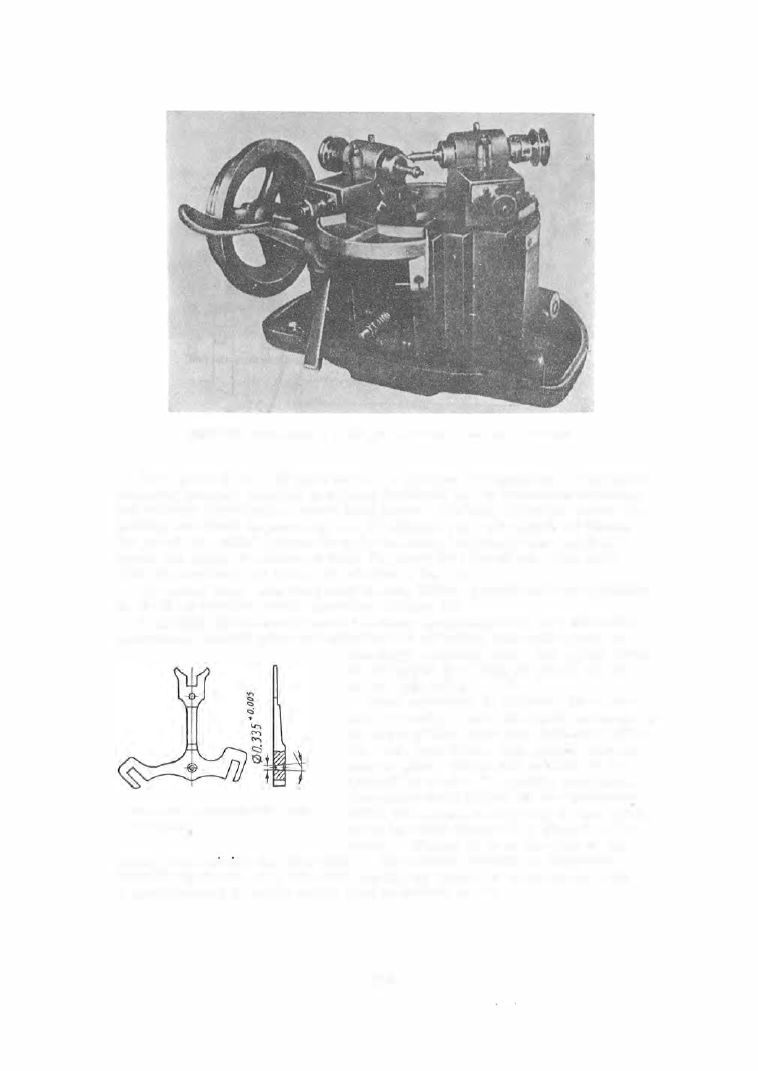
FIGURE 29.  S-48  machine  for  milling the pallet-stone slots in the  pallet  lever 

T h e   g u a r d  p i n   (Figure  3 5 )  has  a  complex c onfiguration .  The  manu­

facturing process  consists  in turning blanks  on  lA l OP  automatic  m achines 

and  contour-blanking in  a  bench hand press .  The  ring  (2 )  which  se rves  for 

holding  the  blank  is put on the  die  ( 1 )  (Figure  36 ).  The punch ( 3 )  blanks 

the  guard  pin,  which passes  through  the  die  and falls  into  the  t rough  (4 ) .  

Chips  and  scrap a r e  removed from  the  press b y  a  jet of air .   The  guide 

cleat 

5 )  positions  the  punch  ( 3 )  relative  to  the  die  (1 ). 

The  pallet lever with  the  polished slots  is  face- ground  and  face - polished 

in  the S- 1 5  machine  (tenth operation)  (Figure  3 3 ) .  

I n  addition  t o  the  above - listed ten basic  operations  there  are  deburring 

operations,  chucking for face  grinding and  polishing, and  s ubsequent  un­

0°50' 

FIGURE  30.  Calibration of the  arbor 

hole in a  die 

chucking,  washing,  etc .  The  pallet  lever 

is  subjected  to  a  total  of  about  4 0  dif­

ferent  operation s .  

E ach  operation  is  followed  b y   a  ran ­

dom  inspection,  and  the  basic  parameters 

of  every  pallet  lever  are  inspected  after 

the  final  operation .  The  mutual  dispos i­

tion  of  slots,  holes  and  contour  is in­

spected by m eans  of a  profile  projector. 

The pallet leve r  is laid  on  the

· 

projector 

table ,   and the  glass  drawing  of  the pallet 

lever (greatly enlarge d )   is  placed  on the 

s creen.  Figure  34  is  a  drawing  of  the 

pallet  lever 

vmg  the  tolerances .  The  s urface  quality  is  inspected 

visually  by m eans  of  a  5X - 1 OX  magnifying  glass .  A  mic roscope  with 

a  magnification of  1 6X to  32X  is  used  in  dubious  cases . 

2 7 7  

FIGURE  31.  S-131  machine for polishing the impulse pin slot in the pallet fork 

Technical data,  S-131 machine 

Maximum angle of oscillation of the  chuck,  degrees 
Maximum polishing radius,  mm 

. . . • . . . • . . . . . . • • . . . 

Axial travel of the  work spindle,  mm 

. . • . • . • . • . . • • . • .  

Polishing-wheel diameter,  mm 

. . . • . . • . . . . . . . . • • . • .  

Polishing-wheel speed,  rpm 

• . . . . • • • • . . . . . . • • • • . . .  

Cross travel of the polishing-wheel head,  mm 

. . . . • . • . . •  

Longitudinal travel of the polishing-wheel head,  mm 

Production rate,  parts/shift 

• . . . . . • . . . . . . . • . • . • . . •  

Section AA 

60 


40- 50 

3500 

0.18 

10 

2500 

FIGURE 32.  Polishing the impulse  pin 
slot (fork) 

FIGURE 33.  Grinding and 

polishing of the  upper face 

2 7 8  

FIGURE  34.  Drawing of a wristwatch pallet  lever for  a profile projector 

FIGURE  35.  Guard pin: 

a-blank;  b-after contouring. 

2 7 9  

FIGURE 3 6 .   Bench press for blanking 
guard pins 

THE  BALANCE 

The  balance  assembly  (balance - hairspring,  Figure  3 7 )  is  the  most criti­

cal part  in  the watch movement. 

The  balance and hairspring in pocket- and wristwatches  perform  1 8 , 000 

half-oscillations  in an hour,  or 4 3 2 , 000 half- o scillations 

in 

24  hours.  A s ­

s uming that the  watch accuracy i s  3 0  sec p e r  day,  the  relative  daily  error 

will  be 

X  1 00 %  =  0 . 03 5 %. 

The  hairspring works  continuously for  many years  with  reversing cyclic 

load,  and  must p reserve  its  elasticity unde r  these conditions . 

The  period of  the  balance  oscillations  is  expressed by  the  formula 

where 

period,  s ec; 

= moment  of inertia of the balance ,   g .   mm.  sec2; 

moment of  the  hairspring per  1  radian  of torsioning,  in  g.  mm 

In turn, 

where 

m  = 

the  balance  mass; 

=  the  radius  of gyration of the balance .  

The  most advanta.::;eous  arrangement i s  a  small mass  and  a  large  radius 

of  gyration.  To  achieve  this ,   the  dim ensions  of the  outer balance  rim  are 

made  as large  as possible ,   and the main  met­

al  mass  is  concentrated in  this  rim .  The 

moment of  inertia of the  rim  with  its  sc rews 

is  roughly  90 "/o  of the total mom ent  of inertia 

of  the  balance  with  staff  and  central  a rm .  
Figure  3 8  is  a  drawing of the  balance  rim  of 

"Pobeda "  wristwatche s .   Its  outer  diameter 

is  9 . 52 mm,  and its  thickness 0 . 36 m m .   Six­

teen compensation  s c rews  are placed about 

its  circumferenc e .   The  number of sc rews 

varies  between  1 2   and  1 8  in  other watch brands . 

A  larger numbe r  of  s c rews  increases the 

FIGURE 37.  Balance with hairspring 

balance  compensation,  but  also p roportionally 

increases  the  work  expenditure  on balance  manufacture .  A  balance  with  a 

l arge  number of  screws  ( 1 6 - 1 8 )  is  therefore  used in  very accurate  watches 

( 1 0- 3 0  sec  error in 24 hour s ) .  

I n  alarm  clocks ,  which  have  a  daily  error o f  1 . 5 - 2 . 5  min,  the  balance 

has  no  screws .  If  the  moment  of  inertia 

J, 

is  to  be  constant,  the  radius  of 

gyration 

must be  held within  narrow limit s .   The  balance  rim  is  therefore 

m anufactured  with  0 . 0 1 - 0 . 02 mm tolerance  on  the  inner  and outer diameters 

and the ecc entricity  between the rim  diameters  does  not exceed  0 . 02 m m .  

Good balance  compensation  requires  a  constant moment o f  inertia  and the 

coincidence  of  the  center of gravity and  the  geometrical  center of  the  balance 

rim .  The  m ain factor causing noncoincidence  of  the  two  cente rs  is the 

run-out  of the  rim  relative  to  the  axis  of  revolution.  A ccordingly,  the  total 

run- out  of the  balance  outside  and inside diameters must not exceed 0 . 02 m m .  

2 80 


Content   ..  68  69  70  71   ..