содержание .. 3 4 5 6 ..
Английский язык (с ответами). Всероссийская олимпиада школьников в Москве (2013-2009 год) - часть 5
XIV Всероссийская олимпиада школьников по английскому языку
2013 г.
заключительный этап
стр. 3 из 7
Date: 06/19/2012
Subject: Re: A talk in October?
Hi Lisa,
Thanks for your
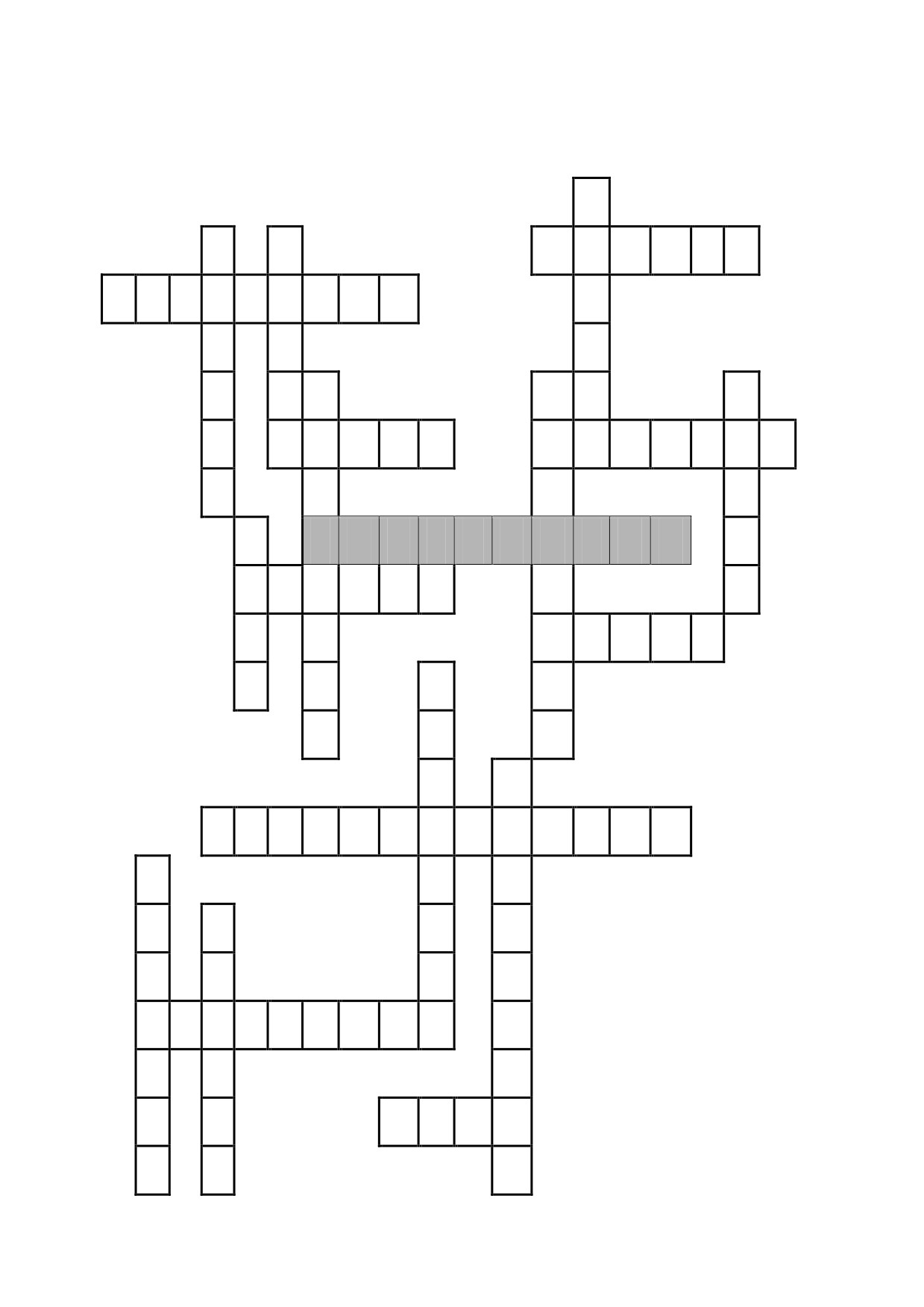
(25)(down)
_____
(invitation) to talk at the conference in
Manchester. Sorry, but I won’t be able to make it as I’ve already gotten a busy
(26)(down) ________ (timetable) for this (27)(down) ______ (autumn) semester in
the Language Center. If you want, I can see if I can find someone to step in.
Please (28)(across) ______ free to let me know about any other stuff you are doing in
the future. I prefer something where you need to wear jeans and sneakers, but not a
(29)(down) ______ (dinner jacket)!
(30)(across) ______ (Well), sorry again for not coming and I hope it doesn’t put you
out too much.
Best,
James
XIV Всероссийская олимпиада школьников по английскому языку
2013 г.
заключительный этап
стр. 4 из 7
25
29
18
30
N
A
24
U
R
15
11
13
16
E
12
R
27
0I
N
V
I
T
A
T
I
O
N
23
C
22
C
26
21
20
N
17
14
19
O
E
28
L
XIV Всероссийская олимпиада школьников по английскому языку
2013 г.
заключительный этап
стр. 5 из 7
Task 3
For questions 31 - 40 fill in the gaps with the words, DERIVED FROM or RELATED
TO the words on the right. Put the words in the correct grammar form. Put only ONE
WORD in each gap. There is an example (0) for you.
There exist different sorts of (0) collections in the world. People
COLLECT
collect a large (31) ______ of objects: stamps, postcards, dolls. Some
VARY
people collect objects which are connected with (32)_______ events
MEMORY
or with famous people. Some people collect kitchen utensils or
similar
(33) __________ items, such as spoons, plates or glasses.
HOUSE
Kevin Baker from Cardiff has 10 000 eggcups at home. Not
(34) ________ , his favourite eggcup is one in the shape of a typical
SURPRISE
(35) ________. Kevin’s hobby began several years ago, after he
WALES
lent an elephant eggcup to his granddaughter who took such a
(36) ________ to it that she insisted on keeping it. Kevin saw a few
LIKE
eggcups he liked at a (37) _______ at a local shop, and started
SELL
collecting them
Others like Kevin’s eggcups too. “I’ve just bought a (38) ______
PLACE
for one of my favourites, which mysteriously (39) ________ last
APPEAR
week,” he said. Nowadays he locks the cupboard with the eggcups
to (40) _______ that nobody can steal them.
SURE
Task 4
For questions 41 - 50, read the text about the 19th century British novelists and fill in
the gaps with the appropriate names and titles from the box. There are some extra
names and titles in the box.
NINETEENTH-CENTURY BRITISH NOVELISTS
Writers: Jane Austen, Charlotte Brontë, William Wilkie Collins, Charles Dickens, Sir Walter
Scott, Robert Louis Stevenson, William Makepeace Thackeray, Oscar Wilde
Literary works: Ivanhoe, Jane Eyre, King Lear, The Lady in White, Oliver Twist, The
Picture of Dorian Gray, Pride and Honour, Pride and Prejudice, Vanity Fair , The Woman in
White
XIV Всероссийская олимпиада школьников по английскому языку
2013 г.
заключительный этап
стр. 6 из 7
The 19th century in British literature was marked by the triumph of the novel. (41)
_______ brought the novel of family life to its highest point of perfection. Her works were
untouched by the ugliness of the outside world; she kept the action to scenes familiar to her
through her own experience. Though she wrote her books in troubled years which included
the French revolution, her novels are calm pictures of society life. She understood the
importance of the family in human affairs and, though two of her brothers were in the navy,
she paid little attention to the violence of nations.
The title given to her first novel was Elinor and Marianne (1795), but this was later
rewritten and published as Sense and Sensibility (1811). In 1796 she started First Impressions,
which was later published as (42) _______ (1813). Mansfield Park appeared in 1814 and
Emma in 1816. Northanger Abbey (1818) and Persuasion (1818) were published in the same
year and were her last novels.
Before he turned to the historical novel, (43) _______ wrote historical verse — a kind
of verse that formed for him a suitable introduction to the prose that he wrote later.
The writer soon discovered that he could not write poetry as good as Byron's, and so
he turned away from it; but as a historical novelist he has no rival. He read the older
novelists, and began to write Waverley in 1805. It appeared in 1814, and for the next
eighteen years he wrote novel after novel. In 1826 he lost all his money through the business
failure of his publisher and printer. He owed £100,000, but refused the money with which
his friends offered to help him. He sat down to pay the immense debt by writing, but died
before he could do so. In spite of that, his books brought in enough money after his death to
pay off his debts. Among his best-known novels are (44) _____ (1819), Kenilworth (1821),
Quentin Durward (1823), The Talisman (1825), Woodstock (1826), and The Fair Maid of
Perth (1828).
(45) ______ is generally considered to be one of the greatest English novelists. He
began with The Pickwick Papers (1836-7), which came out in parts and gave English
literature some of its most charming and amusing characters. Sometimes his novels were
written partly with the purpose of improving social conditions. (46) _____ (1837-8), the
story of a poor boy's cruel treatment and miserable adventures, includes descriptions of
hunger, stealing, murder and hanging. David Copperfield (1849-50) is based on the writer's
own life, which had a sad beginning. It is one of the most popular of his novels, but it cannot
be called cheerful.
His prose varies in quality, but he is nearly always readable. In his different novels he
describes and attacks many kinds of unpleasant people and places
- bad schools and
schoolmasters, government departments, bad prisons and dirty houses. His characters
include thieves, murderers, men in debt, stupid and unwashed men and women, hungry
children, and those who do their best to deceive the honest. Although many of his scenes are
terribly unpleasant, he usually keeps the worst descriptions out of his books; therefore, the
reader does not throw the book into the fire, but continues to read.
(47) _______ studied and described the nobility instead of the poor. His best-known
book, (48) _____ (1847-8), describes the adventures of two girls of different sorts: Rebecca
(Becky) Sharp, a clever, brave and poor girl without a conscience; and Amelia Sedley, the
gentle daughter of a rich Londoner.
He was not a romantic, and he did not produce his characters for the purpose of
expressing violent feelings. From this point of view, his novel was very different from
Shakespeare’s, for example. However, he could describe strange qualities in human beings,
and he could also show life's cruelties and people's weaknesses. He wrote as an educated
XIV Всероссийская олимпиада школьников по английскому языку
2013 г.
заключительный этап
стр. 7 из 7
man. Some of the characters in one novel are related to those in another. This gives an
appearance of reality to the families concerned; yet many people find him hard to read. He is
suspected of being very conscious of the importance of noble rank and good family, and this
is looked on as a fault in the twenty first century.
Practically the first English novelist to write detective stories was (49) ________. The
book (50) ________ (1860) is a complicated story about Walter Hartright, a drawing-master,
who teaches a rich girl, Laura Fairlie. A famous character in the book is the fat, calm and evil
Count Fosco, who is at last killed by a member of a secret society.
TRANSFER ALL YOUR ANSWERS TO YOUR ANSWER SHEET

XIV Всероссийская олимпиада школьников по английскому языку
2013 г.
заключительный этап
Participant’s ID number
Write your own version of the story based on the picture.
Remember to:
- include a title;
- describe events in an entertaining way;
- include elements of direct speech, description of feelings and emotions;
- make an unexpected ending.
Write 220 - 250 words.
Time: 60 minutes
YOU CAN USE THE REVERSE SIDE
___________________________________________________________________________
___________________________________________________________________________
___________________________________________________________________________
___________________________________________________________________________
___________________________________________________________________________
___________________________________________________________________________
___________________________________________________________________________
___________________________________________________________________________
___________________________________________________________________________
___________________________________________________________________________
___________________________________________________________________________
___________________________________________________________________________
___________________________________________________________________________
___________________________________________________________________________
___________________________________________________________________________
___________________________________________________________________________
___________________________________________________________________________
___________________________________________________________________________
___________________________________________________________________________
___________________________________________________________________________
___________________________________________________________________________
___________________________________________________________________________
___________________________________________________________________________
___________________________________________________________________________
___________________________________________________________________________
___________________________________________________________________________
___________________________________________________________________________
___________________________________________________________________________
___________________________________________________________________________
___________________________________________________________________________
___________________________________________________________________________
___________________________________________________________________________
___________________________________________________________________________
___________________________________________________________________________
___________________________________________________________________________
___________________________________________________________________________
___________________________________________________________________________
___________________________________________________________________________
___________________________________________________________________________
___________________________________________________________________________
___________________________________________________________________________
___________________________________________________________________________
___________________________________________________________________________
___________________________________________________________________________
___________________________________________________________________________
___________________________________________________________________________
___________________________________________________________________________
XIV Всероссийская олимпиада школьников по английскому языку
2013 г.
IV (заключительный) этап
Карточка участника
Speaking
Set 1 Student 1
PREPARATION: Prepare a video tour presentation
You are given 15 minutes to get prepared. During the preparation time:
watch video clip № 1, The Smithsonian National Museum of Natural History (you will
be able to hear the original sound track during the preparation time) and
use the FACT FILE to be able to speak about your museum.
Include information on
museum specialization
year of establishment
admission fees
number of visitors
in your presentation.
PRESENTATION: Make your video tour presentation and discuss your
partner’s presentation
Task 1
Imagine you are a “guide” (“гид-экскурсовод”) who gives a "foreigner"
(your partner) A VIDEO TOUR of the Smithsonian National Museum of
Natural History.
1. Make your VIDEO TOUR presentation:
Narrate the video clip, coordinating your narration with the action on the screen
(you won’t be able to hear the original sound track during the presentation).
You are NOT allowed to repeat word for word what you heard in the video clip
during the preparation time.
You are NOT allowed to read from your notes during your presentation.
(Monologue; Time: 3-4 minutes, depending on the episode length)
2. After that answer 3 QUESTIONS from your partner, who wants to get
ADDITIONAL FACTS and INFORMATION not mentioned in your
presentation.
(Dialogue; Time: 2 minutes)
Task 2
Now you are “a foreigner”. Listen to the video tour presentation of your
partner, ask
3 QUESTIONS about your partner’s museum to get
ADDITIONAL INFORMATION .
(Dialogue; Time: 2 minutes)
YOUR ANSWERS WILL BE RECORDED
XIII Всероссийская олимпиада школьников по английскому языку
2012 г.
региональный этап
стр. 1 из 14
Listening & Reading
Time: 1 hour 40 minutes
Listening
Task 1
You will hear some passages of an audio guide for a walking tour in Bath, called ‘In the footsteps of
Jane Austen’. For items 1-10 decide whether the statements are True (A) or False (B) according to
the text you hear. You will hear the text twice.
1. Jane Austen spent in Bath more than 10 years.
2. The early 19th century official Bath guide claimed that Bath provided the best places
for visitors to stay in Europe.
3. The temperatures of Bath natural spring waters vary from
50 to
100 degrees
centigrade.
4. Bath spring waters were discovered by the Romans.
5. The baths were restored in the 19th century.
6. The facade of the Abbey Church represents a dream of Angels ascending Heaven
headfirst.
7. Queen Anne visited Bath at the end of 17th century.
8. The architect John Wood decided to build his buildings with only Bath stone.
9. The Pump-room was described by Jane Austen in Northanger Abbey.
10. Nowadays one can still taste spa water in the Pump Room.
Task 2
For items 11-15 listen to another passage and choose an option from A, B or C. You will hear the
text twice.
11. The Assembly Rooms used to be
A) government buildings.
B) a meeting place for upper classes.
C) a residence of John Woods the Younger.
12. Which of the following is NOT mentioned as an Upper Rooms activity?
A) Dancing
B) Gambling
C) Chess playing
13. Beau Nash set operation times for the Upper Rooms as
A) 6 pm - 11pm
B) 6 am - 11 pm
C) 11 am - 6 pm
XIII Всероссийская олимпиада школьников по английскому языку
2012 г.
региональный этап
стр. 2 из 14
14. What is said about tea in Jane Austen’s times?
A) It had been only recently introduced.
B) It was the most common refreshment.
C) It was not yet fashionable.
15. The Museum of Costume is dedicated to …
A) costumes of Jane Austen period.
B) old costumes.
C) history of costume from old to modern times.
Integrated listening and reading
Task 3
Read the text on the ability of apes to acquire language, then listen to a part of the
lecture on the same topic. You will notice that some ideas coincide and some differ in them.
Answer questions 16-25 by choosing A if the idea is expressed in both materials, B if it can be
found only in the audio-recording, C if it can be found only in the reading text, and D if neither of
the materials expresses the idea.
Now you have 7 minutes to read the text and then to look through the statements
16 to 25. Then you will listen to a part of the lecture on the same topic. You will hear the lecture
twice.
ARE APES ABLE TO ACQUIRE LANGUAGE?
Investigations made at laboratories in the various parts of the world indicate that apes are
capable of understanding language and using linguistic responses at the level of young children.
Just because these animals do not have the physical apparatus for producing the speech, we should
not assume that they cannot understand and learn language. According to researchers who have
worked closely with apes, when these animals are given other means to communicate, they do
indeed show sophisticated communicative abilities. These researchers provide evidence of gorillas
using signs to show humor, to insult, to threaten, to produce metaphorical language, and to engage
in fantasy play.
Koko, a lowland gorilla, seems to have understood a poem written about her. Tests of
Koko’s auditory comprehension showed that she was able to distinguish between words such as
‘funny’, ‘money’, and ‘bunny’. Similar claims have been made for Michael, a male companion of
Koko’s, who also learned to discriminate between many sounds.
Washoe, an adult chimpanzee raised as if she were a deaf child, was able to translate words
she heard into American Sign Language. Another study consisted of teaching a chimpanzee named
Kanzi how to communicate using a keyboard of symbols. This study compared the series of stages
that a human child goes through with those of Kanzi. Kanzi moved through these stages in much
the same way as children, up to a particular stage of development, and in fact, did better than a
young child on a test that measured only the ability to comprehend given requests.
16. Emotional attachment to an animal can influence the researcher’s conclusions.
17. Apes have no physical apparatus for producing speech.
XIII Всероссийская олимпиада школьников по английскому языку
2012 г.
региональный этап
стр. 3 из 14
18. Chimpanzees and gorillas showed the ability to comprehend human language.
19. There are many studies into apes’ acquisition of language.
20. A lot is known about the origins of human communication.
21. Animals cannot comment spontaneously on interesting phenomena.
22. There is no evidence that gorillas can distinguish between sounds.
23. Some scientists believe that animals can use language creatively.
24. Apes’ linguistic performance is similar to that of young children.
25. Brain scanning techniques may help compare what is going on in the brain of a human being
and ape when they are involved in sending and receiving signals.
Reading
Task 4
For questions 26-30, read the article and chose the best variant from A, B, C or D, according to the
text of the article.
How about living in the Middle Ages?
In view of the stress to which we are subjected, it is remarkable that we tend to live longer than
our medieval ancestors. They would not have known what to make of the word "stress" unless it was used in
the context of shipbuilding, architecture or the weaving of cloth.
Consider the limits of their experience. For them, as for us, the sun was the most blinding of lights.
But after this natural phenomenon there was nothing brighter than a fire in the hearth, a brazier and, finally, the
candle.
The working day must have been considerably shorter and the eye only subjected to the strain of
trying to work by flickering candlelight. Even an eight-minute mile could not have been possible in their
wildest dreams, and fun and games were limited to maypoles for the poor and jousting for the rich.
If you had given a medieval man a modern car as a form of transport, he would have panicked at
first. But if he had a foolhardy nature, he might have coaxed it up to 30 kilometres per hour before crashing it
into some obstacle.
Even after many lessons his reflexes would have been utterly unable to cope with the new
frontiers of possibility. As for attaining the legal speed limit, the crash would merely have come sooner.
The fastest thing he would ever have been liable to see was the flight of an arrow or, perhaps, a
shooting star at night - but that was so unreal as to be merely decorative. In the realm of noise there was thunder
and brass instruments in the cathedral, but nothing to match the total lack of silence we suffer from today.
The sirens of fire brigades and police, with their evil cadences, would have struck panic in the
medieval heart. As for the sheer assault on the nerves practised by certain discotheques, in which the volume is
accompanied by psychedelic lighting - that stammering, stuttering abuse of the optic nerves - the poor friar of
long ago would have believed himself prematurely in a hell, out of range of even Dante's imagination.
Television would have proved painful to him also, the succession of images being far too rapid for
his comprehension. His eye would be attuned to static religious pictures or to irreverent statues, high up on
church towers, depicting well-known clerical figures as gargoyles.
But these objects allow themselves to be dwelt upon by the tranquil gazer. His eye would have
wandered at its own pace over the hidden detail, not been bludgeoned into involuntary surrender by a mad
montage of abstractions. In other words, we probably absorb more images in a day than our ancestor would
have managed in a year, most of them ill-digested, lingering in the mind only as subliminal worry-beads,
XIII Всероссийская олимпиада школьников по английскому языку
2012 г.
региональный этап
стр. 4 из 14
recurring every now and then in the hopeless quest for interpretation.
There's no doubt about it - our bodies and our senses are pummelled in a way which would have
been intolerable 600 years ago. And yet they surrendered to contagion and unhealthy living far more readily
than we do.
For that reason, perhaps, death was perceived as a necessary adjunct to life. The concepts of
heaven and hell, being devoutly believed in, lent a certain degree of morality to life and made death inevitable,
sooner rather than later. Homeopathic medicine and herbalism were already far in advance of conventional
medicine, but there was certainly a tendency towards fatalism which encouraged a gloomy acceptance of the
worst.
There never seems to have been the almost hysterical flight before death which is apparent today,
both in the sad bravery of those condemned by Aids and in the struggles of brilliant surgeons in the transplant
of more and more unlikely organs into the bodies of the barely living.
Naturally, all this speaks highly for the resilience and the ingenuity of the human animal. In its
contemporary form this animal is unwilling to accept the resignation of past times, and works overtime to
negate the implacable rules of nature. There is no telling whether this tendency will continue.
Certainly the increased activity of today has prolonged youth far into what was once considered
advanced middle age, and middle age stretches far into what was thought of as the ultimate years of life's span.
Exercise, the voluntary exhaustion of the human mechanism, is partly due to the speed of life and the need for
lightning reactions. The new preoccupations with diet and physical well-being, expressed in many ways from
cuisine minceur to that orgy of hopping and skipping enjoying the typical pseudo-scientific name of aerobics,
are valid reflections of the preoccupations of today.
And what lies ahead? Certain hand-picked individuals have already been introduced to the
challenge of weightlessness. Eventually this may be a more general requirement, as the inhabitants of the Earth
emigrate from the planet in search of pristine verities.
Incidentally, one genius this technique might have helped materially is Michelangelo, who could
have knocked off the ceiling of the Sistine Chapel in a trice, instead of the age it actually took him. Many
readers will still vividly remember Roger Bannister's cracking of the four-minute mile. Nowadays runners
unable to qualify for the Olympics can manage this on occasions.
Even that briefest of distances, the 100 metres, is under permanent assault. These are all marks of
human evolution, as is the development of sports equipment and other scientific aids to make the unbelievable
possible.
And yet there must be limits to the speed of human reactions. It is a wonderful irony that speeds in
the stratosphere are such that total immobility sets in, enabling astronauts to climb out into space and
disentangle crossed wires.
The accidents involving formation fliers and individual warplanes suggest that the border between
daring and foolhardiness is, at present, just too vague to chance. Human beings are under enormous pressure,
not only from the stunning acceleration of technical development, but also from a gathering nostalgia for a past
which seems so clear, so natural and so untroubled.
Is this so? How would you have enjoyed having a toothache in the 12th century? The dentist
always came with a drummer to drown the patient's cries.
There's a lot to be said for the times we live in, especially once discotheques are not compulsory.
26. Life in the past wasn’t as stressful as life today because
A. people led healthier lives.
B. people died younger.
C. people’s experience of life was smaller.
D. people’s diet was poorer.
27. Life today
XIII Всероссийская олимпиада школьников по английскому языку
2012 г.
региональный этап
стр. 5 из 14
A. is immoral.
B. accepts the rules of nature.
C. does not accept death easily.
D. is hysterical and exhausting.
28. Why are people more concerned about their physical well-being today?
A. They want to prove they can live longer that their ancestors.
B. Because they are unwilling to resign themselves to the rules of nature.
C. Because it is natural instinct.
D. Because they don’t believe in heaven and hell.
29. The writer believes that people today
A. live too long.
B. will continue to evolve until they meet the limits of human reactions.
C. have a dangerous lifestyle.
D. will have to achieve weightlessness.
30. What is the writer’s attitude to life in the past?
A. Life was easier that it is today.
B. People were happier because they were not under so much pressure.
C. Life was not as good as present nostalgia would have us believe.
D. Religion did not help people accept the future.
Task 5
For items 31-40 read the text below and complete it with the clauses A-K, there is one extra
clause you don’t need to use.
DO YOU GET ENOUGH SLEEP?
Despite evidence _______ (31) how sleep can affect our health, a large number of people suffer
from a lack of it. Many adults get less than six hours of sleep a night. In fact, most of us need
seven to eight hours, __________(32).
CAN SLEEP AFFECT YOUR WEIGHT?
Apparently, it can. Sleep affects the hormones controlling appetite. According to one study,
people _____________ (33) are more likely to be overweight.
WILL SLEEP MAKE ME MORE INTELLEGENT?
No, but sleeping on a problem can help solve it. When we sleep, the brain puts the day’s
memories into ‘files’, ___________(34). In tests ____________(35), researchers showed each
group a list of related words. Both groups were asked to remember the words
____________(36) after a period of time ____________(37) and the other was awake. The
people __________(38) remembered more words. When they were asked to remember the ideas
linking the words, the group ________________(39) forgot 25% more than the group who had.
XIII Всероссийская олимпиада школьников по английскому языку
2012 г.
региональный этап
стр. 6 из 14
WHAT SHOULD I DO IF I CAN’T SLEEP WELL?
See your doctor. Your difficulties may result from a problem ____________(40).
A. conducted on two groups of people
B. he or she can help you with
C. in which one group slept
D. that shows
E. they had seen
F. which is recommended average
G. which we can then access
H. who get less than eight hours a night
I. who had had a good night’s sleep
J. who had not slept
K. which is not enough
TRANSFER ALL YOUR ANSWERS TO YOUR ANSWER SHEET
XIII Всероссийская олимпиада школьников по английскому языку
2012 г.
региональный этап
стр. 7 из 14
Listening comprehension
You will hear some passages of an audio guide for a walking tour in Bath, called In the
footsteps of Jane Austen. For items 1-10 decide whether the statements are True (A) or False
(B) according to the text you hear. You will hear the text twice.
(Intro Music)
Welcome to Bath! A UNESCO World heritage site since 1987.
From the Roman times to the present day visitors have been drawn to this beautiful city. Amongst
Bath’s famous visitors was Jane Austen who made it her home for six years. Two of her novels,
Northanger Abbey and Persuasion are mostly set in Bath. She describes life in the city in her letters
and novels capturing the importance of being part of the social scene here. In Northanger Abbey she
writes, “They arrived in Bath. Catherine was all eager delight -- her eyes were here, there,
everywhere, as they approached its fine and striking environs, and afterwards drove through those
streets which conducted them to the hotel. She was come to be happy, and she felt happy already”.
The official Bath Guide of 1800 boasts, “It has become one of the most agreeable as well as most
polite places in the kingdom owing chiefly to the elegant neatness of its buildings and the
accommodations for strangers which are superior to those of any city in Europe.” The wealthy, the
gentry and the hangers on all came here. But Bath exists because of its natural hot spring waters.
These waters gush out of the earth at a constant rate of a quarter of a million gallons or a million
litres a day and at a constant temperature of 46,5 degrees centigrade or 120 degrees Fahrenheit, a
phenomenon unique in Britain. The Celts first discovered the hot springs and they dedicated the
waters to their goddess Sulis. Then the Romans arrived in 44AD and created a sophisticated series
of baths surrounded by a small town which they called Aquae Sulis. After 300 years they deserted
the baths which fell in disrepair. They were later restored in the late 1800ds and are now open to
visitors. The entrance to the Roman Baths marked on your map is in the Abbey churchyard. In the
middle ages a small town grew up around a monastery which provided hospitality for people
coming here to take the waters for their health. Central to the monastery was a beautiful Abbey
which was the third church on this site dating from 1499. Look up at its highly decorated façade
which tells a story of a dream in which angels on the ladders at each side go up and down to
heaven. You can tell which ones are coming down as they are descending headfirst.
After 1702 Bath would never be the same again. Queen Anne came here to take the waters and after
her visit the little town flourished and grew all through the 18th century. Three men were mainly
responsible for its creation. They were Beau Nash who became the master of ceremonies and took
charge of the social scene, John Wood -architect and creator of some Bath’s most beautiful
buildings and Ralph Allen who became mayor and declared that all buildings were to be made of
Bath stone that came from the local quarry which he happened to own. You can see this stone as you look
around you.
You can also see the Pump-Room which is marked on the map. This elegant room where the spa water can be
sampled from the 18th century pump was pivotal to life in Bath at Jane Austen times. This is from Northanger
Abbey, “they set off in good time for the pump-room, where the ordinary course of events and
conversation took place; Mr. Allen, after drinking his glass of water, joined some gentlemen to talk
over the politics of the day and compare the accounts of their newspapers; and the ladies walked
about together, noticing every new face, and almost every new bonnet in the room.” If you attended
the pump-room your name was listed in the visitor’s book and socially you had arrived. Today it’s
open for refreshments and you can still sample a glass of the spa water. To continue the tour, stand
with your back to the Abbey. Walk straight on and underneath the colonnades. Turn left and take
the first right into Bath street.
(pause 30 seconds)
Now listen to the text again.
(text repeated)
You have 30 seconds to finish the task.
XIII Всероссийская олимпиада школьников по английскому языку
2012 г.
региональный этап
стр. 8 из 14
(pause 30 seconds)
For items 11-15 listen to another passage and choose an option from A, B or C. You will hear
the text twice.
You should now be standing outside the Assembly Rooms designed by John Wood the Younger,
which served as a gathering place for high society living in this part of town. The Assembly rooms
previously known as the Upper Rooms were the scene of evening gatherings for dancing, gambling,
card playing and refreshment which would have started around 6 pm and finish strictly at 11 pm.
This timing had been set by Bath’s original and famous master of ceremonies Beau Nash. It is
referred to often in Jane Austen. “Have you yet honoured the Upper Rooms?”, asks the dashing
Henry Tilney of Catherine in Northanger Abbey. “Yes, Sir, I was there last Monday”, she replies.
Jane Austen herself went there many times and writes in a letter to her sister Cassandra, “I dressed
myself as well I could and had all my finery much admired at home. Before tea it was a rather dull
affair but after tea we cheered up. Tea newly introduced as a fashionable and expensive drink was
the main refreshment taken during that period. Jane’s mother also gives an interesting glimpse when
she writes “The ball on Monday was not very full one. Not more than a thousand” Rebuilt after
bomb damage in World War II the three elegant Georgian rooms which make up the Assembly
Rooms have many uses today including as a concert venue during Bath Music Festival and a
location for wedding parties. In the basement is the Museum of Costume displaying not only the
latest fashions with the dress of the year, but also historic fashion including examples of silks and
muslins like those described by Jane Austen. The Museum is open to visitors. In Persuasion Sir
Walter Elliot lived in this part of town renting “a very good house in Camden place a lofty dignified
situation, such as becomes a man of consequence;
(pause 30 seconds)
Now listen to the text again.
(text repeated)
You have 30 seconds to finish the task and transfer all answers to the answer sheet.
(pause 30 seconds)
Integrated task
Read the text on the ability of apes to acquire language and then listen to a part of the lecture on the
same topic. You will notice that some ideas coincide and some differ in them. Answer questions 16-
25 by choosing A if the idea is expressed in both materials, B if it can be found only in the audio-
recording, C if it can be found only in the reading text, and D if neither of the materials expresses
the idea.
Now you have 7 minutes to read the text and then to look through the statements 16 to 25.
(Pause 7 mins)
Now listen to a part of the lecture on the same topic. You will hear the text twice.
Some scientists claim that apes, like humans, also use languages. There are many studies
into ape acquisition of language, some famous, such as the Koko studies. But are these animals
really acquiring language? We really haven’t done enough research to address the question of how
and when humans started using language, but we can compare human and ape communicative
abilities to determine whether the claims about ape language are valid.
First, for behavior to be called ‘language’, it must be communicative; in other words, the
signers must be able to use language creatively. They should be able to take turns in conversation,
must sign spontaneously rather than as a response to drilling or coercion, and must be able to
comment on interesting phenomena. If you think about the apes have accomplished in
communicating, these criteria have not been met.
However, according to the proponents of ape communication, the animals do meet these
criteria. They maintain that those of us who question the validity of this research have never worked
with apes. However, we wonder how much influence their probable emotional attachment to an
XIII Всероссийская олимпиада школьников по английскому языку
2012 г.
региональный этап
стр. 9 из 14
animal has on the conclusions they reach.
Is there a solution in sight that would put an end to this controversy? Yes, there might be.
Studies are being undertaken at the neurophysiological level. Through the use of modern brain-
scanning techniques such as MRI, we may be able to get a better picture of the brain activity of a
healthy human during communication and an ape while supposedly communicating. A comparison
of these scans should give un an insight into whether apes really do communicate.
You’ll hear the text again in 45 seconds.
(Pause 45 seconds)
Now listen to the text again
(Text repeated)
Now you have five minutes to finish the task and transfer your answers to the answer sheet.
(Pause 5 mins)
This is the end of the integrated part; turn to the reading section of the test.
XIII Всероссийская олимпиада школьников по английскому языку
2012 г.
региональный этап
стр. 10 из 14
Use of English
Time: 30 minutes
Task 1
For questions 1-10, read the text below and choose A, B, C or D to fill in the gaps.
J.K. Rowling is the author of a successful series of books. She uses the
initials J.K. because her publishers thought that a book by a woman might not appeal
_________ (1) boys.
Rowling was born in 1965 and brought up in England and South Wales.
After she finished university, she got a job in London.
In 1990, while she was traveling from Manchester to London, her train was
held _________ (2) and during the four-hour delay she got the idea of writing about a
young wizard. In 1991 she ________ (3) to Portugal, where she had a job teaching
English, and she ___________ (4) the manuscript for the first Harry Potter book with
her. She returned to Britain in 1993 and carried _______ (5) writing it.
Rowling completed Harry Potter and The Philosopher’s Stone in 1995.
Twelve publishers turned _________ (6) before Bloomsbury agreed to publish it. The
decision was apparently
________ (7) by the young daughter of the company’s
chairman, who loved the first chapter of the book.
In 1995 Bloomsbury advised Rowling that she had little chance _________
(8) making money writing children’s books. Today she has a fortune of around $ 1
billion. Rowling believes that people who have a lot of money should ________ (9)
sure they use it responsibly. For this reason, she has given ________(10) millions of
dollars to charitable causes.
1
A for
B of
C on
D to
2
A up
B on
C in
D back
3
A arrived
B left
C reached
D went
4
A brought
B fetched
C came
D took
5
A off
B on
C over
D through
6
A it down
B down it
C it up
D up it
7
A had
B done
C given
D made
8
A to
B for
C of
D about
9
A do
B make
C have
D get
10
A away
B back
C in
D out
XIII Всероссийская олимпиада школьников по английскому языку
2012 г.
региональный этап
стр. 11 из 14
Task 2
For questions 11-16, read the text below and choose A, B, or C to fill in the gaps.
I went to a new Italian restaurant last night. It claimed to _______(11) for everyone’s
tastes. I went there with my brother. We both have a ________(12) preference for
Italian food. We also both have a ________(13) liking for sitting out-of-doors and this
restaurant had a lovely garden. Unfortunately, the food did not _______(14) us quite so
much pleasure. Although the staff gave us a very warm welcome when we arrived, they
didn’t seem to ________(15) much pride in their service or their cooking. I certainly
don’t much relish the ________(16) of going there again.
11
A cater
B cook
C feed
12
A large
B heavy
C strong
13
A peculiar
B special
C particular
14
A make
B give
C pass
0
Errare humanum est.
E1
B do
C make
17
Tempora mutantur etn
nos mutamur in illis.al
C thought
18
Repetitio est mater studiorum.
19
Scientia est potentia.
20
Vivere est cogitare.
Task 3
For questions 17-20 restore famous English phrases first matching their beginnings
(A-E) with the endings (1-6), there is one odd ending you don’t need to use, and
then match the phrases with their Latin equivalents. There is an example (0) for
you.

XIII Всероссийская олимпиада школьников по английскому языку
2012 г.
региональный этап
стр. 12 из 14
Participant’s ID number
Writing
Write your own version of the story based on the picture. Describe events in an
entertaining way.
You should write 220 - 250 words.
Time: 60 minutes
________________________________________________________________________________
________________________________________________________________________________
________________________________________________________________________________
________________________________________________________________________________
________________________________________________________________________________
________________________________________________________________________________
________________________________________________________________________________
________________________________________________________________________________
________________________________________________________________________________
________________________________________________________________________________
________________________________________________________________________________
________________________________________________________________________________
________________________________________________________________________________
YOU CAN USE THE OPPOSITE SIDE
XIII Всероссийская олимпиада школьников по английскому языку
2012 г.
региональный этап
стр. 13 из 14
Карточка участника
Speaking
Set 1
Student 1
Task 1
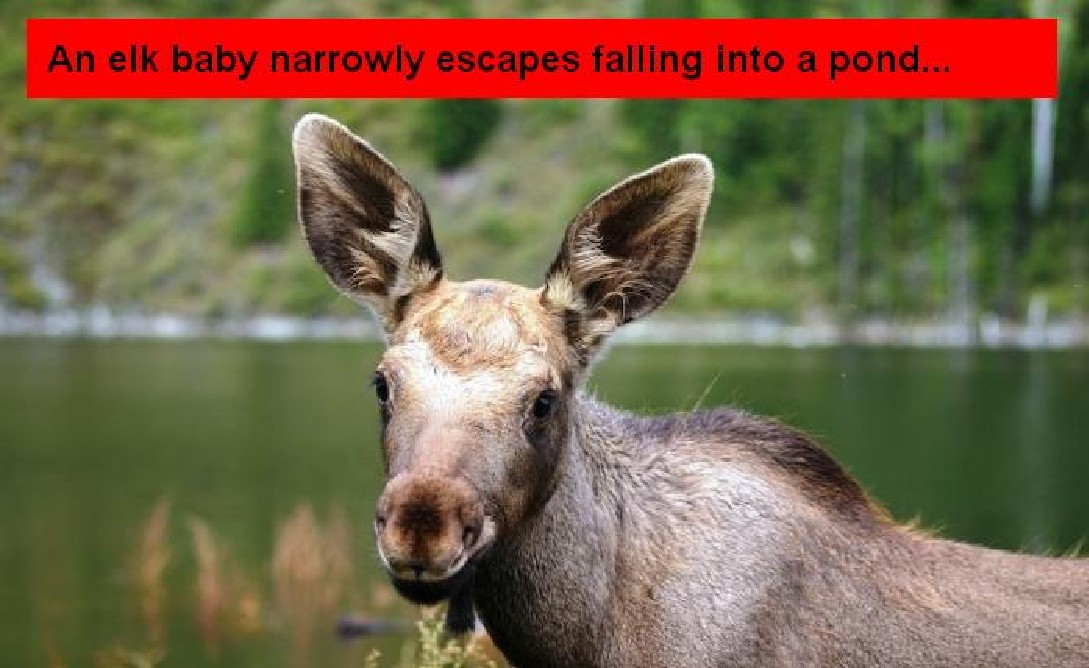
Imagine you are a newscaster in a TV studio. Make 3 mini TV reports of the
news, based on the headlines of 3 photographs for the TV news programme “A
ROUND UP OF THIS WEEK TOP STORIES FROM THE ANIMAL KINGDOM” (Use Set 1 photos).
(Monologue; Time: 1, 5 - 2 minutes)
Then establish contact with a bystander correspondent (your partner), who is at the
Zoo right now and is an eyewitness of these events. Ask him/her “on air” 3 questions
to get additional details which were not mentioned in your stories.
(Dialogue; Time: 2 minutes)
Task 2
Now you are a bystander correspondent. Listen to the presentation of your partner,
based on the news headlines of 3 photographs from Set 2, answer 3 questions from
the TV newscaster to give some more exciting details on what is going on in the Zoo.
(Dialogue; Time: 2 minutes)
YOUR ANSWERS WILL BE RECORDED
XIII Всероссийская олимпиада школьников по английскому языку
2012 г.
региональный этап
стр. 14 из 14
Карточка участника
Speaking
Set 2
Student 2
Task 1
Imagine that you are a bystander correspondent. Listen to the presentation of your
partner, based on the news headlines of 3 photographs from Set 1, answer 3 questions
from the TV newscaster to give some more exciting details on what is going on in the
Zoo.
(Dialogue; Time: 2 minutes)
Task 2
Now you are a newscaster in a TV studio. Make 3 mini TV reports of the news,
based on the headlines of 3 photographs for the TV news programme “A ROUND UP
OF THIS WEEK TOP STORIES FROM THE ANIMAL KINGDOM” (Use Set 2 photos).
(Monologue; Time: 1, 5 - 2 minutes)
Then establish contact with a bystander correspondent (your partner), who is at the
Zoo right now and is an eyewitness of these events. Ask him/her “on air” 3 questions
to get additional details which were not mentioned in your stories.
(Dialogue; Time: 2 minutes)
YOUR ANSWERS WILL BE RECORDED


XIII Всероссийская олимпиада школьников по английскому языку
2012 г.
региональный этап
стр. 1 из 2
Listening & Reading
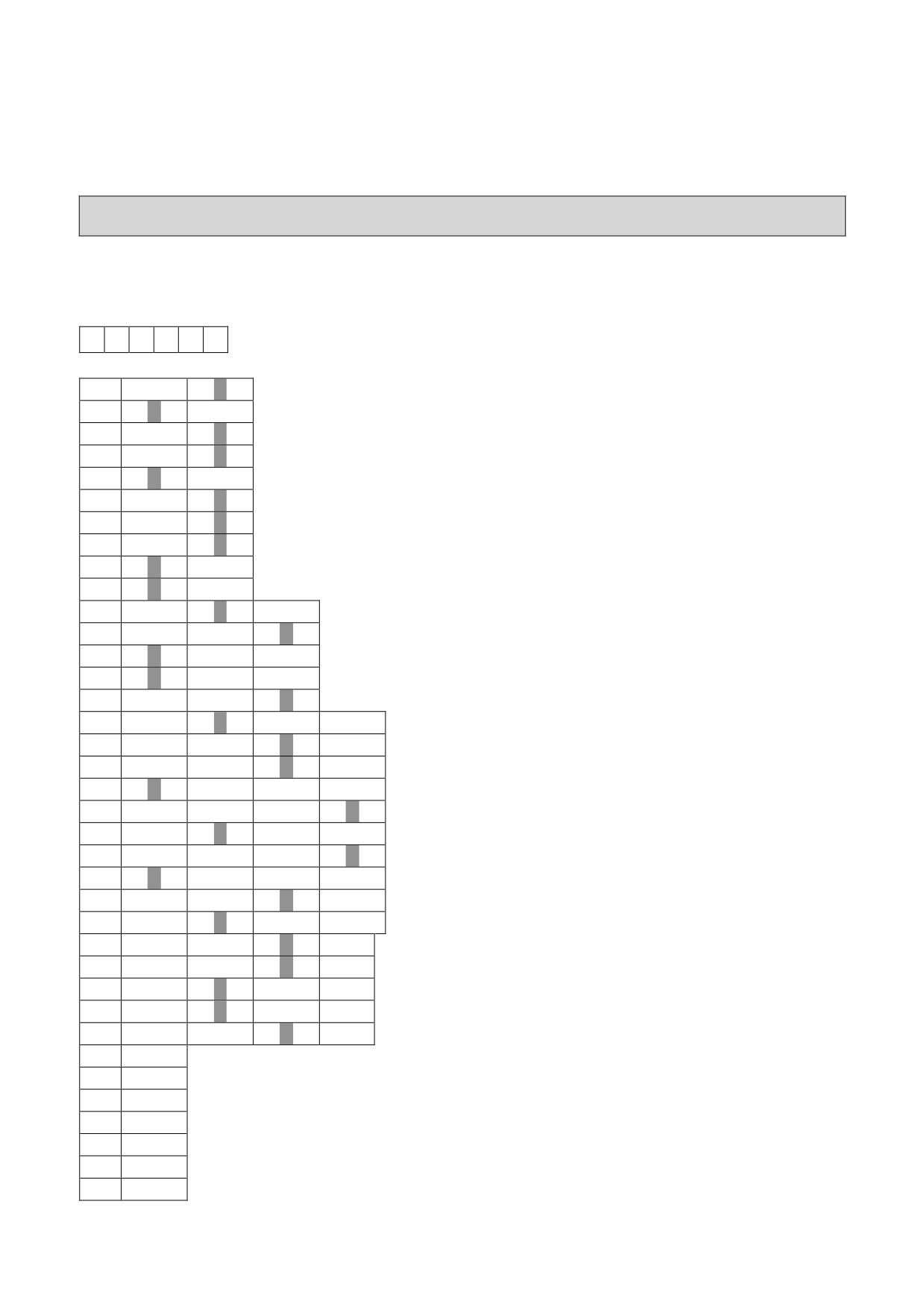
KEYS
ID NUMBER
1
A
B
2
A
B
3
A
B
4
A
B
5
A
B
6
A
B
7
A
B
8
A
B
9
A
B
10
A
B
11
A
B
C
12
A
B
C
13
A
B
C
14
A
B
C
15
A
B
C
16
A
B
C
D
17
A
B
C
D
18
A
B
C
D
19
A
B
C
D
20
A
B
C
D
21
A
B
C
D
22
A
B
C
D
23
A
B
C
D
24
A
B
C
D
25
A
B
C
D
26
A
B
C
D
27
A
B
C
D
28
A
B
C
D
29
A
B
C
D
30
A
B
C
D
31
D
32
F
33
H
34
G
35
A
36
E
37
C
XIII Всероссийская олимпиада школьников по английскому языку
2012 г.
региональный этап
стр. 2 из 2
38
I
39
J
40
B
XIII Всероссийская олимпиада школьников по английскому языку
2012 г.
региональный этап
стр. 1 из 1
Use of English
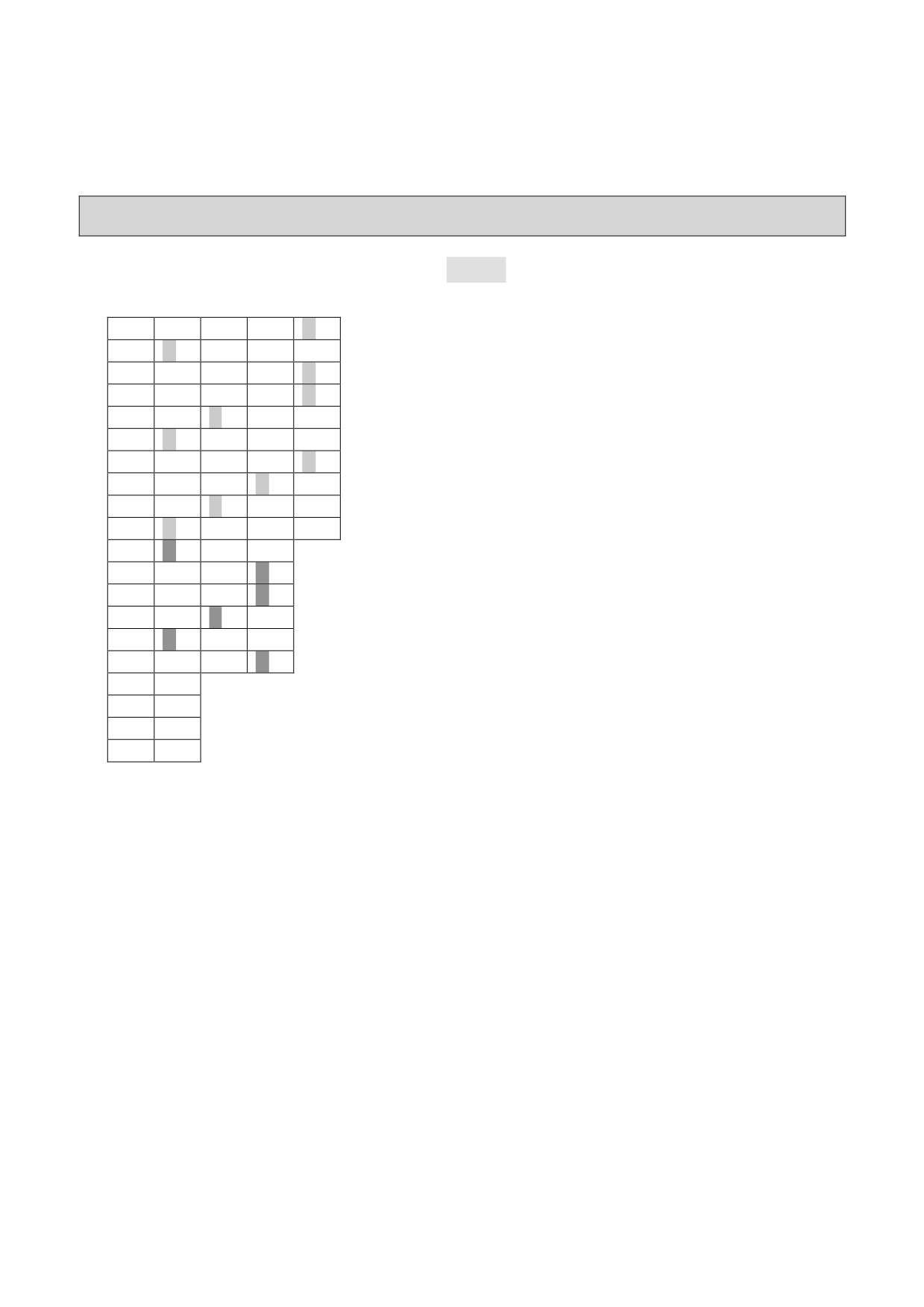
KEYS
1
A
B
C
D
2
A
B
C
D
3
A
B
C
D
4
A
B
C
D
5
A
B
C
D
6
A
B
C
D
7
A
B
C
D
8
A
B
C
D
9
A
B
C
D
10
A
B
C
D
11
A
B
C
12
A
B
C
13
A
B
C
14
A
B
C
15
A
B
C
16
A
B
C
17
A3
18
C6
19
D2
20
B5
Шкала критериев оценивания заданий в разделе «Письменная речьª
Максимальное количество баллов: 20
Внимание! При оценке 0 по критерию "Содержание" выставляется общая оценка 0.
ОФОРМЛЕНИЕ максимум 10 баллов
БАЛЛЫ
СОДЕРЖАНИЕ
Общая итоговая оценка выводится на основании критериев, приведенных в
за
таблице: композиция, лексика, грамматика, орфография и пунктуация
содержание
Итого: максимум 10 баллов
Композиция
Лексика
Грамматика
Орфография и
письменного
(максимум 2
(максимум 3 балла)
(максимум 3 балла)
пунктуация
высказыван
балла)
(максимум 2
ия)
балла)
Коммуникативная задача полностью
9-10 баллов
3 балла
3 балла
выполнена - содержание раскрыто полно
Участник демонстрирует
Участник демонстрирует
и точно. Участник демонстрирует
богатый лексический
грамотное и уместное
умение описывать имевшие место или
запас, необходимый для
употребление
вымышленные события, проявляя при
раскрытия темы, точный
грамматических структур в
этом творческий подход и
выбор слов и адекватное
соответствии с
оригинальность мышления. Сюжет
владение лексической
коммуникативной задачей.
понятен, динамичен и интересен,
Работа не имеет ошибок с
сочетаемостью.
полностью отражает содержание
Работа не имеет ошибок с
точки зрения
картинки. Начало и конец рассказа
грамматического
точки зрения лексического
полностью вписываются в сюжет и
оформления.
оформления.
соответствуют заданному жанру и
стилю. Рассказ включает элементы
диалогической речи. Передает чувства и
эмоции автора и/или героев. Конец
рассказа имеет элементы обобщения.
Объем работы либо соответствует
заданному, либо отклоняется от
заданного не более чем на 10% (в
сторону увеличения - больше 275 слов
либо уменьшения -меньше 200 слов).
8-7 баллов
Коммуникативная задача выполнена -
2 балла
2 балла
2 балла
2 балла
текст рассказа соответствует заданным
Работа не имеет
Участник демонстрирует
Участник демонстрирует
Участник
параметрам. Участник демонстрирует
ошибок с точки
богатый лексический
грамотное и уместное
демонстрирует
умение описывать имевшие место или
зрения композиции.
запас, необходимый для
употребление
уверенное владение
вымышленные события. Сюжет
Соблюдена логика
раскрытия темы, точный
грамматических структур.
навыками орфографии
понятен и динамичен, полностью
высказывания.
выбор слов и адекватное
В работе имеются 1-2
и пунктуации.
отражает содержание рассказа. Начало и
Средства
владение лексической
незначительные (негрубые)
Работа не имеет
конец рассказа полностью вписываются
логической связи
грамматические ошибки, не
ошибок с точки зрения
сочетаемостью.
в сюжет и соответствуют заданному
присутствуют.
затрудняющие понимание.
орфографии. В работе
В работе имеются 1-2
жанру и стилю. Передает чувства и
Текст правильно
незначительные
могут быть 1-2
эмоции автора и/или героев. Конец
разделен на абзацы.
пунктуационные
(негрубые) лексические
рассказа имеет элементы обобщения.
ошибки, не
ошибки, не затрудняющие
Однако рассказу не хватает
затрудняющие
понимание текста.
оригинальности. Рассказ включает
понимание.
элементы диалогической речи.
Объем работы либо соответствует
заданному, либо отклоняется от
заданного не более чем на 20% (в
сторону увеличения -больше 300 слов
либо уменьшения -меньше 186 слов).
6-5 баллов
Коммуникативная задача в целом
выполнена, однако имеются отдельные
нарушения целостности содержания
рассказа. Сюжет понятен, но не имеет
динамики развития, связан с картинкой,
но лишь частично отражает ее
содержание. Начало и конец
написанного не полностью сочетаются с
содержанием рассказа. Рассказ не
передает чувства и эмоции автора и/или
героев. Конец рассказа не имеет
элементов обобщения. Рассказ включает
элементы диалогической речи. Рассказ
соответствует заданному жанру и стилю.
Объем либо соответствует заданному,
либо менее 70% от заданного - меньше
154 слов, либо больше 300 слов.
4-3 балла
Коммуникативная задача выполнена
1 балл
1 балл
1 балл
1 балл
частично. Содержание письменного
В целом текст имеет
В целом лексические
В тексте присутствуют
В тексте присутствуют
текста не полностью соответствует
четкую структуру.
средства соответствуют
несколько (3-7)
орфографические (1-4)
заданным параметрам. Сюжет не всегда
Текст разделен на
заданной теме, однако
грамматических ошибок, не
и/или пунктуационные
понятен, тривиален, не имеет динамики
абзацы. В тексте
имеются неточности
затрудняющих общего
ошибки (3-4), которые
развития, лишь отдаленно связан с
присутствуют
(ошибки) в выборе слов и
понимания текста.
не затрудняют общего
картинкой. Участник не владеет
связующие
лексической сочетаемости
понимания текста.
стратегиями описания событий и героев.
элементы.
(3-7), которые не
Конец рассказа не имеет элементов
Допустимы
затрудняют понимания
обобщения. Рассказ не включает
незначительные
текста и /или
элементы диалогической речи. Рассказ
нарушения в
используется стандартная,
не полностью соответствует заданному
структуре и/или
однообразная лексика.
жанру и стилю.
логики или
Или: Объем работы менее 60% от
связности текста.
заданного - меньше 132 слов.
2-1
Коммуникативная задача не выполнена.
Содержание текста не отвечает
заданным параметрам. Рассказ не связан
с картинкой. Рассказ не соответствует
заданному жанру и стилю. Рассказ не
получился, цель не достигнута.
Или: Объем менее 50% от заданного -
меньше 110 слов.
0
Объем письменных текстов менее 40%
0 баллов
0 баллов
0 баллов
0 баллов
(88 слов), цели и задачи
Текст не имеет
Участник демонстрирует
В тексте присутствуют
В тексте присутствуют
коммуникативного задания не
четкой логической
крайне ограниченный
многочисленные ошибки
многочисленные
достигнуты.
структуры.
словарный запас и /или в
(более 7) в разных разделах
орфографические
Отсутствует или
рассказе имеются
грамматики, в том числе
(более 4) и/или
неправильно
многочисленные ошибки
затрудняющие его
пунктуационные
выполнено абзацное
(более 7) в употреблении
понимание.
ошибки (более 4), в том
членение текста.
лексики, в том числе
числе затрудняющие
Имеются серьезные
затрудняющие понимание
его понимание.
нарушения
текста.
связности текста
и/или
многочисленные
ошибки в
употреблении
логических средств
связи.
Шкала критериев оценивания заданий в разделе «Устная речьª
Максимальное количество баллов: 20
Внимание! При оценке 0 по критерию "Содержание" выставляется общая оценка 0.
Взаимодействие с собеседником и оформление речи (максимум 10 баллов)
БАЛЛЫ
СОДЕРЖАНИЕ
Взаимодействие с
Лексическое
Грамматическое
Фонетическое
за
(Монолог)
собеседником
оформление речи
оформление речи
оформление речи
содержание
(максимум 10 баллов)
(максимум 4 балла)
(максимум 2 балла)
(максимум 2 балла)
(максимум 2 балла)
9 - 10
Коммуникативная задача полностью
выполнена: цель общения успешно
достигнута, тема раскрыта в
4 балла
заданном
объеме.
Участник
Участник
способен
демонстрирует умение развернуто,
логично
и
связно
задавать
интересные
логично и точно высказываться на
вопросы по теме мини
заданную тему, уместно использует
презентации. Все три
все
картинки.
Участник
вопроса
заданы.
высказывает
интересные
и
Участник правильно и
оригинальные мысли, относящиеся
оригинально отвечает на
к обсуждаемой теме, пользуется
все
вопросы
информацией представленной в
собеседника, показывая,
сжатом виде в заголовках, грамотно
что
он
является
ставит проблему, анализирует,
очевидцем событий.
сравнивает и обобщает данные
представленные
в
задании,
аргументирует свою точку зрения,
делает выводы.
7 - 8
Коммуникативная задача полностью
выполнена: цель общения успешно
достигнута, тема раскрыта в
заданном
объеме.
Участник
демонстрирует умение развернуто
и логично высказываться на
заданную тему, уместно используя
все картинки. Высказывает свои
мысли, относящиеся к обсуждаемой
теме,
умело
пользуется
информацией представленной в
сжатом виде в заголовках. Однако
выступление
не
отличается
живостью и оригинальностью, не
соответствует заданному жанру
новостного репортажа.
5 - 6
Коммуникативная задача выполнена
3 балла
не полностью: цель общения в
В целом участник
основном достигнута, однако тема
способен логично и
связно задавать вопросы
раскрыта не в полном объеме:
и давать правильные
использованы не все картинки,
ответы. Все три вопроса
часть заголовков интерпретирована
заданы. Однако вопросы
не в полном объеме или с
и 3 ответа на них не
ошибками. Выделена проблема, есть
отличаются
вывод.
оригинальностью, в
ответах нет живости и
нет указаний на то, что
корреспондент находится
на месте событий.
3 - 4
Коммуникативная задача выполнена
частично: цель общения достигнута
2 балла
2 балла
2 балла
2 балла
не полностью, тема раскрыта в
Участник способен
В речи участника нет
В речи участника нет
В речи участника нет
ограниченном объеме: проблема не
задать 3 вопроса и
лексических ошибок;
грамматических ошибок;
фонетических ошибок.
ответить на 3 вопроса
словарный запас
речь участника богата
Беглый темп речи.
поставлена. Использована только
собеседника, однако
участника богат,
разнообразными
одна
картинка
или
задает вопросы, ответы
разнообразен и адекватен
грамматическими
прокомментирован только один
на которые прозвучали в
поставленной задаче.
конструкциями.
заголовок.
речи собеседника либо
при поддержании беседы
дает не вполне
соответствующие
содержанию и логике
ответы. Или допускает
отдельные фактические
ошибки.
1 - 2
Коммуникативная
задача
не
1 балл
1 балл
1 балл
1 балл
выполнена: цель общения
не
Участник задает не 3
Словарный запас
В речи участника
Речь участника в целом
достигнута,
содержание
не
вопроса, а меньше. Не
участника в основном
присутствуют
понятна, участник
может ответить на все
соответствует
грамматические ошибки
допускает отдельные
соответствует
коммуникативной
вопросы собеседника.
поставленной задаче,
(1-3), не затрудняющие
фонетические ошибки, не
задаче. Заметно отклонение от
ИЛИ: Участник не
однако имеются ошибки
понимания, или
затрудняющие
темы.
способен самостоятельно
(1-3) в его употреблении,
используются
понимания. Темп
задавать вопросы и
которые не влияют на
однообразные
несколько замедлен.
отвечать на вопросы
понимание
грамматические
партнера адекватно. В
высказывания.
конструкции.
значительной степени
зависит от помощи со
стороны собеседника.
0
Отказ от ответа
0 баллов
0 баллов
0 баллов
0 баллов
Отказ от выполнения
В речи участника
В речи
участника
Понимание
речи
задания по диалогу.
присутствуют
присутствуют
участника затруднено из-
многочисленные
многочисленные
за большого количества
лексические ошибки
грамматические ошибки
фонематических ошибок,
(больше 3х), в том числе
(больше 3х), в том числе
медленный темп речи.
затрудняющие
затрудняющие
понимание. Словарного
понимание.
запаса не хватает для
общения в соответствии с
заданием.
XIII Всероссийская олимпиада школьников по английскому языку
2012 г.
заключительный этап
стр. 1 из 6
Listening & Reading
Time: 60 minutes
Listening
Task 1
You will hear a passage about jokes. For items 1-10 decide whether the statements are True (A) or
False (B) according to the text you hear. You will hear the text ONCE.
1. People from different countries easily agree about what is funny.
A. True B. False
2. Some cultures don’t have jokes.
A. True B. False
3. In many cultures there are jokes about stupid persons.
A. True B. False
4. Taboo subjects may vary in different countries.
A. True B. False
5. The joke about the hunters is a ‘black’ one.
A. True B. False
6. The narrator finds the joke about the hunters extremely funny.
A. True B. False
7. The scientists think that the joke about Sherlock Holmes and Dr Watson is the
funniest.
A. True B. False
8. The narrator rather likes the Sherlock Holmes and Dr Watson joke.
A. True B. False
9. Surprising endings are important for good jokes.
A. True B. False
10. Scientists will once be able to find the best ever joke.
A. True B. False
XIII Всероссийская олимпиада школьников по английскому языку
2012 г.
заключительный этап
стр. 2 из 6
Task 2
For items 11-15 listen to a passage about a London area and choose an option from A, B or C. You
will hear the text twice.
11. According to the presenter, this area at first appears to be…
A. picturesque
B. dull
C. intriguing
12. What is said about the church which is going to be presented?
A. It’s very popular. B. It’s the oldest in London.
C. It’s very enigmatic.
13. The names of the Royal Gold Medal for Architecture winners are carved on the
A. stairs
B. wall
C. portals
14. The presenter claims that the winners of the Royal Gold Medal for Architecture
A. have formed the modern world.
B. designed the streets of Oxford Circus.
C. were not really important.
15. Which of the following is TRUE about the architect David Chipperfield?
A. He never married.
B. He is the director of the Royal Institute of Architects.
C. He lives in Portland Place.
Integrated listening and reading
Task 3
Read the text about the ancient art of finding underground water - dowsing, then listen
to a part of a lecture on the same topic. You will notice that some ideas coincide and some differ in
them. Answer questions 16-25 by choosing A if the idea is expressed in both materials, B if it can
be found only in the audio-recording, C if it can be found only in the reading text, and D if neither
of the materials expresses the idea.
Now you have 7 minutes to read the text about dowsing.
Dowsing
Dowsing is the millennia-old practice of finding hidden things. The most well-known
activity of dowsing involves the use of a device such as a forked stick to locate underground water.
To this end, the dowser walks slowly back and forth over an area of ground holding the dowsing
tool out in front with both hands. It is said that the dowser, by concentrating carefully, is somehow
able to feel the energy of the flowing underground streams vibrating through the rod at certain
frequencies, and thus is able to tell precisely where to dig or drill to find water. Sometimes the
dowsing tool will twist and jerk or suddenly point downward. Some dowsers hold two L-shaped
XIII Всероссийская олимпиада школьников по английскому языку
2012 г.
заключительный этап
стр. 3 из 6
rods, one in each hand. In this case, when he or she walks over the area of underlying water, the
rods cross over indicating the place where digging should commence.
In recent years dowsing has gained in popularity not only as a method for finding
underground water, but also for trying to uncover other objects including buried treasure, oil, or
even dead bodies. A recent application has been the search for what some consider harmful energy
fields in an attempt to avoid them. Even large businesses and official organizations pay dowsers for
their detection skills. Although no one is completely sure how dowsing works, the testimonials of
satisfied customers bear witness to the success of this ancient art.
Now listen to a part of the lecture on the same topic and then do the task (16-25),
comparing the text above and the lecture. You will hear the lecture twice.
16. It is important to verify hypotheses with strong evidence.
17. Many people believe in dowsing.
18. Successful dowsing is sheer luck.
19. The ancient art of dowsing has become more popular nowadays as individuals and
companies are willing to pay for detecting oil or uncovering buried objects.
20. Some physicists can explain why two L-shaped rods cross over underground streams or
hidden treasures.
21. If you dig or drill to find water on certain days you may be even more successful than
when using a dowsing device.
22. Modern instruments used in experiments have failed to detect the hidden forces felt by
dowsers.
23. From scientific point of view, dowsing is similar to detecting weak radio signals coming
from the space.
24. Some people try to determine the quality of the area and the energy it emanates with the
help of dowsers.
25. Underground water is commonly assumed to give off invisible vibration.
XIII Всероссийская олимпиада школьников по английскому языку
2012 г.
заключительный этап
стр. 4 из 6
Reading
Task 4
For questions 26-29, read the article and choose the best variant from A, B, C or D, according to the
text of the article.
America’s oldest art?
Set within treacherously steep cliffs, and hidden away in the secluded valleys of northeast
Brazil, is some of South America’s most significant and spectacular rock-art. Most of the art so far
discovered from the ongoing excavations comes from the archeologically-important National Park
of the Serra da Capivara in the state of Piaui, and it is causing quite a controversy. What is the
reason for the uproar? The art is being dated to around 25,000 or perhaps, according to some
archeologists, even 36,000 years ago. If correct, this is set to challenge the widely held view that the
Americas were first colonized from the north, via the Bering Strait from eastern Siberia at around
10,000 BC, only moving down into Central and South America in the millennia thereafter.
Prior to the designation of 130,000 hectares as a National Park, the rock-art sites were
difficult to get to, and often dangerous to enter. In ancient times, this inaccessibility must have
heightened the importance of the sites, and indeed of the people who painted on the rocks. Wild
animals and human figures dominate the art, and are incorporated into often-complex scenes
involving hunting, supernatural beings, fighting and dancing. The artists depicted the animals that
roamed the local ancient brushwood forest. The large mammals are usually painted in groups and
tend to be shown in a running stance, as though trying to escape from hunting parties. Processions -
lines of human and animal figures - also appear of great importance to these ancient artists. Might
such lines represent family units or groups of warriors? On a number of panels, rows of stylised
figures, some numbering up to 30 individual figures, were painted using the natural undulating
contours of the rock surface, so evoking the contours of the surrounding landscape. Other
interesting, but very rare, occurrences are scenes that show small human figures holding on to and
dancing around a tree, possibly involved in some form of a ritual dance.
Due to the favourable climatic conditions, the imagery on many panels is in a remarkable
state of preservation. Despite this, however, there are serious conservation issues that affect their
long-term survival. The chemical and mineral qualities of the rock on which the imagery is painted
is fragile and on several panels it is unstable. As well as the secretion of sodium carbonate on the
rock surface, complete panel sections have, over the ancient and recent past, broken away from the
main rock surface. These have then become buried and sealed into sometimes-ancient floor
deposits. Perversely, this form of natural erosion and subsequent deposition has assisted
archeologists in dating several major rock-art sites. Of course, dating the art is extremely difficult
given the non-existence of plant and animal remains that might be scientifically dated. However,
there are a small number of sites in the Serra da Capivara that are giving up their secrets through
good systematic excavation. Thus, at Toca do Boqueirao da Pedra Furada, rock-art researcher Niéde
Guidon managed to obtain a number of chronological periods. At different levels of excavation, she
located fallen painted rock fragments, which she was able to date to at least 36,000 years ago.
Along with the painted fragments, crude stone tools were found. Also discovered were a series of
XIII Всероссийская олимпиада школьников по английскому языку
2012 г.
заключительный этап
стр. 5 из 6
scientifically datable sites of fireplaces, or hearths, the earliest dated to 46,000 BC, arguably the
oldest dates for human habitation in the Americas.
However, these conclusions are not without controversy. Critics, mainly from North
America, have suggested that the hearths may in fact be a natural phenomenon, the result of
seasonal brushwood fires. Several North American researchers have gone further and suggested that
the rock-art from this site dates from no earlier than about 3,730 years ago, based on the results of
limited radiocarbon dating. Adding further fuel to the general debate is the fact that the artists in the
area of the National Park tended not to draw over old motifs (as often occurs with rock-art), which
makes it hard to work out the relative chronology of the images or styles. However, the diversity of
imagery and the narrative the paintings create from each of the many sites within the National Park
suggests different artists were probably making their art at different times, and potentially using
each site over many thousands of years.
With fierce debates thus ranging over the dating, where these artists originate from, is also
still very much open to speculation. The traditional view ignores all the early dating evidence from
the South American rock-art sites. In a revised scenario, some paleo-anthropologists are now
suggesting that modern humans may have migrated from Africa using the strong currents of the
Atlantic Ocean some
60,000 years or more ago, while others suggest a more improbable
colonization coming from the Pacific Ocean. Yet, while either hypothesis is plausible, there is still
no supporting archaeological evidence between the South American coastline and the interior.
Rather, it seems possible that there were a number of waves of human colonization of the Americas
occurring possibly over a 60,000 - 100,000 years period, probably using the Bering Strait as a land-
bridge to cross into the Americas.
Despite the compelling evidence from South America, it stands alone: the earliest secure
human evidence yet found in the state of Oregon in North America only dates to 12,300 years BC.
So this is a fierce debate that is likely to go on for many more years. However, the splendid rock-art
and its allied archaeology of northeast Brazil, described here, is playing a huge and significant role
in the discussion.
26. The question mark at the end of the title is used to emphasise that
A the figures of wild animals and human beings cannot be called ‘art’ in the modern sense of the
word.
B South and North Americas are competing for having been populated earlier in the history of
mankind.
C the time when the rock-art was created has not yet been determined with compelling evidence.
D critics from North America claim that some oldest findings such as hearths may in fact be a
natural phenomenon.
27. According to the first paragraph, the rock-art in Serra da Capivara may revolutionise accepted
ideas about
A the way primitive people lived in North America.
B the date when the earliest people arrived in South America.
C the origin of the people who crossed the Bering Strait.
D the variety of cultures which developed in South America.
28. How did the ancient artists use the form of the rock where they painted?
A To mimic the shape of the countryside nearby.
B To emphasise the shape of different animals.
C To give added light and shade to their paintings.
D To give the impression of distance in complex works.
XIII Всероссийская олимпиада школьников по английскому языку
2012 г.
заключительный этап
стр. 6 из 6
29. In the fourth paragraph, what does the writer say is unusual about the rock-artists of Serra da
Capivara?
A They had a very wide range of subject-matter.
B Their work often appears to be illustrating a story.
C They tended to use a variety of styles in one painting.
D They rarely made new paintings on top of old ones.
For questions 30-36 choose
A (YES)
if the statement agrees with the claims of the writer
B (NO)
if the statement contradicts the claims of the writer
C (NOT GIVEN)
if it is impossible to say what the writer thinks about this
30. Archaeologists have completed their survey of the rock-art in Piaui.
31. The location of the rock-art suggests that the artists had a significant role in their society.
32. The paintings of animals show they were regarded as sacred by the ancient humans.
33. Some damage to paintings is most likely due to changes in the weather of the region.
34. The fact that some paintings were buried is useful to archaeologists.
35. The tools found near some paintings were probably used for hunting animals.
36. The North American researchers have confirmed Niéde Guidon’s dating of the paintings.
For questions 37-40 complete each sentence with the correct ending, A-F, below.
37. Materials derived from plants or animals
38. The discussions about the ancient hearths
39. Theories about where the first South Americans originated from
40. The findings of archaeologists in Oregon
A are giving rise to a great deal of debate among paleo-anthropologists.
B do not support the earliest dates suggested for the arrival of people in America.
C are absent from rock-art sites in the Serra da Capivara.
D have not been accepted by academics outside America.
E centre on whether or not they are actually man-made.
F reflect the advances in scientific dating methods.
TRANSFER ALL YOUR ANSWERS TO YOUR ANSWER SHEET
XIII Всероссийская олимпиада школьников по английскому языку
2012 г.
заключительный этап
стр. 1 из 5
Use of English
Time: 60 minutes
Task 1
For questions 1-15, choose from options A or B to complete the notice below. There
is an example (0) for you.
NOTICE
MEETING OF SAVE THE WORLD 0_on___ 30 NOVEMBER
PLACE: LECTURE ROOM 1, NEW COLLEGE, TINTON
TIME: 6.30 PM
World peace is now under real 1________ . Countries are continuing to invest vast amounts of
money 2______ manufacturing arms. 3______ arms were sold this year than in any previous year.
4________ , far less money should be spent on weapons of all kinds. Famine and disease are major
problems 5________ . We should spend our money 6_______ hospitals and medicine. We can do
little to help people in times of famine and hardship if we 7_________ proper medical supplies and
trained nurses. Save the World has already 8_________ a great deal to help people in many parts of
the world. But there is still a great need 9 ____ more help. If there is a nuclear war, everyone will be
10_______ . 11________ will be safe. Everybody 12_________ to act now before it is too late. If
you’re serious 13________ reducing the risk of war, join us now. Then we shall be able to succeed
14_________ peace and international understanding to the world. 15________ , we need your
support and help.
0
A at
B
on
1
A danger
B
threat
2
A in
B
on
3
A More
B
More of
4
A According to our opinion
B
In our opinion
5
A these days
B
in these days
6
A for
B
on
7
A lack
B
are lacking
8
A made
B
done
9
A of
B
for
10
A touched
B
affected
11
A None
B
Nobody
12
A has
B
have
13
A in
B
about
14
A to bring
B
in bringing
15
A Shortly
B
In short
XIII Всероссийская олимпиада школьников по английскому языку
2012 г.
заключительный этап
стр. 2 из 5
Task 2
For questions 16 - 25 fill in the gaps with the words, derived from the words on the
right. Put the words in the correct grammar form. There is an example (0) for you.
It must be said that Dover was not 0. vastly improved by daylight,
VAST
but I liked it. I liked its small scale and cosy air, and the way
everyone said ‘Good morning’, and ‘Hello’, and ‘Dreadful weather
– but it must 16 ______ up’, to each other, and the sense that this
BRIGHT
was just one more in a very long series of quiet, well-ordered,
pleasantly 17 __________days. Nobody in the whole
EVENT
Dover would have any particular reasons to remember 21 March
1973, except for me and a 18 __________of children born that day.
HAND
I didn’t know how early one could decently begin asking for a
room in England, so I thought I would leave it till mid-morning.
With time on my hands, I made a thorough search for a guesthouse
that looked 19 ______ and quiet, friendly and not too costly,
ATTRACT
and at the stroke of ten o’clock presented myself on the doorstep of
the one I had carefully selected, taking care not to 20 ________ the
COMPOSE
milk bottles.
It was a small hotel that was really a guesthouse. I don’t
remember its name, but I well remember the 21 _________. She
PROPRIETOR
showed me to a room, then gave me a tour of the facilities
and 22 _______ the many complicated rules for residing there. This
LINE
was all 23 __________ new to me. Where I came from, one got a
BEWILDER
room in a motel, spent ten hours making a lavish and possibly
24 __________mess of it, and left early the next morning without a
REPAIR
slight desire to 25 ________ it later. This was like joining the army.
CALL

XIII Всероссийская олимпиада школьников по английскому языку
2012 г.
заключительный этап
стр. 3 из 5
Task 3
For questions 26-35 read the informal summary of the magazine article. Solve
the crossword puzzle by changing the highlighted phrasal verbs with their formal
equivalents. The (0) and (26 down) in the beginning of the text have been done as examples
to help you.
When anger is healthy
We know bottling up anger can be unhealthy. But how can we 0 (down) let out our anger
without seeming foolish? Expressing anger and losing your temper are different things. One is
healthy and helps us to 26 (down) keep away from stress, the other is dangerous. We 26 (across)
look up to people who express anger calmly, but those who lose their temper 27 (down) come
across as immature and aggressive.
Mandy Dickson set up a one-day anger workshop which helps people learn about and 28
(down) deal with their anger. She points out that anger is natural and nothing to be ashamed of, but
we should recognise it and 29 (across) look into its true causes. Then we can 30 (across) face up
to it, and begin to do something positive. Participants 31 (down) fill in a questionnaire about things
that make them angry. They compare their responses and often 32 (down) find out that the causes
are other feelings such as fear or grief. In some cultures it isn’t acceptable to 33(down) act out
these feelings in public. Men in particular are supposed to 34 (across) cover up these feelings.
Once we know the causes of anger, we must learn how to deal with situations which induce
them. Anger is often caused by the feeling that you have been let down by other people. So the most
important way to 35 (across) cut down the number of anger-producing situations is to tell people
exactly how we feel. It really all comes down to communication.
34
33
26
27
28
0 r
a
v
e
32
31
o
l
29
i
e
d
a
s
e
35
30
XIII Всероссийская олимпиада школьников по английскому языку
2012 г.
заключительный этап
стр. 4 из 5
Task 4
For questions 36-40, first, find linkers and conjunctions, hidden in the sentences below
(A-F), then put them in the appropriate gaps in the news stories. 0 is done as an example.
A.
His head was full of radical thoughts about changing the world.
B.
His doctor told him to run less than an hour a day.
C.
Jane was small and he threw her easily over the fence.
D.
First take milk and mix it with chocolate, then cereals and strawberries should be added.
E.
The truth usually seems less attractive than a lie.
F.
Let’s ask some other wise men.
Example:
Students prohibited from attending political meetings
The government is considering introducing measures to keep students from attending
political rallies. They are concerned about the damage caused during the demonstrations
held by students in recent months, 0. C- whereas student activists claim that their protest
has been orderly and peaceful.
Fifty injured in rail crash
The Vienna-Athens express crashed into a goods train yesterday. There was wreckage
everywhere along the track, making it difficult for rescuers to pull people from the
carriages. Moreover, a lot of local people came to look at the scene out of curiosity,
____36_____hindering the rescue operation.
Rice scarce in many villages
As a result of severe drought, there is an acute shortage of rice in most of the country.
The whole region lacks other natural resources, and there are fears that thousands of
people may starve, _____37______the government takes measures to remedy the
situation.
British film receives top award at Cannes festival
A small British film company has succeeded in winning first prize at this year’s Cannes
film festival. The last time this happened, the British film industry received new support
from a number of foreign investors, ______38______ great progress has been achieved
recently in introducing new technology in film production.
Prince and Princess pay second visit to Egypt
The Prince and Princess of Dornoch left for Egypt again yesterday, their second visit this
year. The purpose of the trip is to open the World Archeology Conference and to see the
ancient pyramids at Giza. The Princess says: “Unfortunately, this will be a very short
two-day visit. We have to leave on Friday, _______39_______we’ll miss my sister’s
wedding in Essex.”
XIII Всероссийская олимпиада школьников по английскому языку
2012 г.
заключительный этап
стр. 5 из 5
More spend money on cars and luxuries
According to a statistical survey conducted in Singapore last month, an increasing
number of people are buying cars and luxuries, ______40______ the corresponding
industries haven’t reached the level of sales of the 2000s yet.
TRANSFER ALL YOUR ANSWERS TO YOUR ANSWER SHEET

XIII Всероссийская олимпиада школьников по английскому языку
2012 г.
заключительный этап
Participant’s ID number
Writing
Write your own version of the story based on the picture. Describe
events in an entertaining way.
You should write 220 - 250 words.
Time: 60 minutes
___________________________________________________________________________
___________________________________________________________________________
___________________________________________________________________________
___________________________________________________________________________
___________________________________________________________________________
___________________________________________________________________________
___________________________________________________________________________
___________________________________________________________________________
___________________________________________________________________________
___________________________________________________________________________
___________________________________________________________________________
___________________________________________________________________________
___________________________________________________________________________
___________________________________________________________________________
YOU CAN USE THE OPPOSITE SIDE
XIII Всероссийская олимпиада школьников по английскому языку
2012 г.
IV (заключительный) этап
Карточка участника
Speaking
Set 1
Student 1
Task 1
Imagine you are
“a bystander correspondent”
(“репортер с места
событий”). Make 2 MINI TV REPORTS of the news reported live, based on
2 TV spots (ролик для телепередачи) № 1, № 2 for EURONEWS.
Use Set 1 TV spots:
Newscast 1 - Hugs with Lions
Newscast 2 - Protests in Greece
(Monologue; Time: 1, 5 - 2 minutes, depending on the episode length)
Then answer 2 QUESTIONS of your partner - “a newscaster” (“ведущий
новостей в студии”) who wants to get ADDITIONAL DETAILS which were
not mentioned in your reports for the news programme.
(Dialogue; Time: 2 minutes)
Task 2
Now you are “a newscaster” in a TV studio. Listen to the presentation of your
partner, based on the events in TV spots № 3 and № 4 from Set 2, ask your
partner - “the bystander correspondent” 2 QUESTIONS about TV news
presented to get ADDITIONAL INFORMATION on what is going on at the
reporting site.
Use Set 2 TV spots:
Newscast 3 - British Queen’s 60 Years of Reign
Newscast 4 - Zookeepers’ Training
(Dialogue; Time: 2 minutes)
YOUR ANSWERS WILL BE RECORDED
XIII Всероссийская олимпиада школьников по английскому языку
2012 г.
IV (заключительный) этап
Карточка участника
Speaking
Set 2
Student 2
Task 1
Imagine you are “a newscaster in a TV studio” (“ведущий новостей в
студии”). Listen to the presentation of your partner, based on the events in
TV spots (ролик для телепередачи) № 1 and № 2 from Set 1. Ask your
partner - “the bystander correspondent” (“репортер с места событий”)
2 QUESTIONS about TV news presented to get ADDITIONAL
INFORMATION on what is going on at the reporting site.
Use Set 1 TV spots:
Newscast 1 - Hugs with Lions
Newscast 2 - Protests in Greece
(Dialogue; Time: 2 minutes)
Task 2
Now you are “a bystander correspondent”. Make 2 MINI TV REPORTS of
the news reported live, based on 2 TV spots № 3, № 4 for EURONEWS.
Use Set 2 TV spots:
Newscast 3 - British Queen’s 60 Years of Reign
Newscast 4 - Zookeepers’ Training
(Monologue; Time: 1, 5 - 2 minutes, depending on the episode length)
Then answer 2 QUESTIONS of your partner - “a newscaster” who wants to
get ADDITIONAL DETAILS which were not mentioned in your reports for
the news programme.
(Dialogue; Time: 2 minutes)
YOUR ANSWERS WILL BE RECORDED
XIII Всероссийская олимпиада школьников по английскому языку
2012 г.
заключительный этап
стр. 1 из 2
Listening & Reading
KEYS 1
ID NUMBER
1
B
2
B
3
A
4
A
5
A
6
B
7
B
8
A
9
A
10
B
11
B
12
C
13
B
14
A
15
C
16
B
17
A
18
B
19
C
20
D
21
D
22
B
23
D
24
C
25
A
26
C
27
B
28
A
29
D
30
B
31
A
32
C
33
B
34
A
35
C
36
B
37
C
38
E
39
A
40
B
XIII Всероссийская олимпиада школьников по английскому языку
2012 г.
заключительный этап
стр. 1
Use of English
KEYS 1
ID NUMBER
1
B
2
A
3
A
4
B
5
A
6
B
7
A
8
B
9
B
10
B
11
B
12
A
13
B
14
B
15
B
16
brighten
17
uneventful
18
handful
19
attractive
20
discompose
21
proprietress
22
outlined
23
bewilderingly
24
irreparable
25
recall
26
admire
27
appear
28
manage
29
investigate
30
confront
31
complete
32
discover
33
demonstrate
34
hide
35
reduce
36
E- thus
37
B- unless
38
D- hence
39
F- otherwise
40
A - although
XII Всероссийская олимпиада школьников по английскому языку
2011 г.
региональный этап
стр. 1 из 4
Listening & Reading
Time: 1 hour 45 minutes
Task 1
Listening
For items 1-10 listen to part of a lecture about archeology. To do items 1,3,5,7, and 9 complete the
sentences using no more than 2 words (a number is considered as one word). To do items 2,4,6,8,
and 10 decide whether the statement is True (A) or False (B).
According to the text,
1. archeology is a part of _________ .
2. archeologists and historians always work together.
3. archeologists say that the first humans began to move from Africa almost ________ years
ago.
4. the 1984 discovery was made by a man from Manchester.
5. the man found in the bog had died almost ________ years before.
6. the conditions in the bog helped to keep the body undamaged.
7. the “Lindow man” was killed in _______ ways.
8. the archeologists think that the “Lindow man” was thought to be a Celtic god.
9. archeologist Anne Ross thinks that the man’s death is related to the event of _________.
10. one can see the “Lindow man” in a London museum.
Task 2
Integrated listening and reading
Listen to part of a lecture on the ability of animals to anticipate earthquakes, then read the text on
the same issue. You will notice that some ideas coincide and some differ in these texts. Answer
questions 11-24 by choosing A if the idea is expressed in both materials, B if it can be found only in
the audio-recording, C if it can be found only in the reading text, and D if neither of the materials
expresses the idea.
Mark A, B, C or D on your answer sheet:
A if the idea is expressed in both materials,
B if it can be found only in the audio-recording,
C if it can be found only in the reading text, and
D if neither of the materials expresses the idea.
Can animals predict earthquakes?
The belief that animals can sense an earthquake before it occurs has been held since at least
XII Всероссийская олимпиада школьников по английскому языку
2011 г.
региональный этап
стр. 2 из 4
the ancient Greeks. Countries such as China and Japan, which suffer frequently from the
devastation brought about by seismic disturbances, have a long history of attempting to use animals
to predict earthquakes.
Apparently animals of all kinds act in peculiar ways just prior to an earthquake. Many
animals have more sensitive auditory capacities than humans, and perhaps because of this, react to
ultrasound originating from fracturing rock. Some researchers have also pointed out that some
animals can pick up variations in the earth's magnetic field occurring near the epicenters of seismic
events. Examples of unusual animal behavior include dogs barking for hours and wild animals
appearing confused or losing their natural fear of people. Some people claim that even fish, reptiles,
and insects engage in abnormal behavior at this time. Catfish, for example, are reputed to jump out
of the water onto the land, and snakes have been seen leaving the nests where they were
hibernating. Such strange behavior occurs from just moments before to a couple of weeks in
advance of the quake.
A famous example of the successful use of animal behavior to predict a quake occurred in
China in 1975 when the authorities ordered the evacuation of the city of Haicheng, just a few days
before a 7.3 magnitude quake, thus saving the lives of thousands of people.
11 People tend to forget about the odd behavior of animals if it is not followed by anything
extraordinary.
12 There is a belief that animals can be used for predicting earthquakes.
13 One of the reasons why some animals feel an approaching earthquake may be their
ultrasonic sensitivity.
14 Some animals have organs of senses superior to humans’.
15 Successful evacuation in China was possible because of the foreshocks that occurred prior
to the major earthquake.
16 Successful evacuation mainly depends on how authorities organize it.
17 Devastation brought about by seismic disturbances has been most severe in Japan.
18 Many animals behave in a strange way in advance of an earthquake.
19 People are often mistaken when they claim that their pets have anticipated a catastrophic
event.
20 Fish, reptiles and insects are said to behave abnormally before seismic events.
21 Rats usually leave the city several days before a quake strikes.
22 Some of the impressive animal stories are imagined by people.
23 Animals helped to save the lives of thousands of people in 1975.
24 Research in California has shown that animals feel variation in the Earth magnetic field.
XII Всероссийская олимпиада школьников по английскому языку
2011 г.
региональный этап
стр. 3 из 4
Task 3
Reading
Read the text and fill in the numbered gaps (25 - 30). For each gap, choose which of the paragraphs
A-G below the text best fits into it. There is one extra paragraph, which does not fit in any of the
gaps. Transfer your answers to the answer sheet.
How an ancient custom became big business
Chewing gum contains fewer than ten calories per stick, but it is classified as a food and must
therefore conform to the standards of the American Food and Drug Administration.
Today's gum is largely synthetic, with added pine resins and softeners which help to hold the flavor
and improve the texture.
25_____________
American colonists followed the example of the American Indians of New England and chewed the
resin that formed on spruce trees when the bark1 was cut. Lumps of spruce for chewing were sold in
the eastern United States in the early 1800s making it the first commercial chewing gum in the
country.
Modern chewing gum has its origins in the late 1860s with the discovery of chicle, a milky
substance obtained from the sapodilla tree of the Central American rainforest.
26____________
Yet, repeated attempts to cultivate sapodilla commercially have failed. As the chewing gum market
has grown, synthetic alternatives have had to be developed.
27___________
Most alarming is the unpleasant little chicle fly that likes to lodge its eggs in the tapper’s ears and
nose.
Braving these hazards2, barefooted and with only a rope and an axe, an experienced chiclero will
shin3 a mature tree in minutes to cut a path in the bark for the white sap to flow down to a bag
below
28___________
Yet, punishing though this working environment is, the remaining chicleros fear for their
livelihood.
Not so long ago, the United States alone imported 7,000 tons of chicle a year from Central America.
Last year just 200 tons were tapped in the whole of Mexico's Yucatan peninsula. As chewing gum
1 bark = external covering of woody plants
2 hazard = risk
3 to shin = to climb
XII Всероссийская олимпиада школьников по английскому языку
2011 г.
региональный этап
стр. 4 из 4
sales have soared, so the manufacturers have turned to synthetics to reduce costs and meet demands.
29______________
Plaque acid, which forms when we eat, causes this. Our saliva4, which neutralizes the acid and
supplies minerals such as calcium, phosphate and fluoride, is the body's natural defense. Gum
manufacturers say 20 minutes of chewing can increase your salivary flow.
30 ________________
In addition, one hundred and thirty-seven square kilometers of America is devoted entirely to
producing the mint that is used in the two most popular chewing gums in the world.
A Gum made from this resulted in a smoother, more satisfying and more elastic chew, and soon a
whole industry was born based on this product.
B Meanwhile, the world's gum producers are finding ingenious5 ways of marketing their products.
In addition to all the claims made for gum - it helps you relax, peps you up and eases tension
(soldiers during both world wars were regularly supplied with gum) - gum’s greatest claim is that it
reduces tooth decay.
C Research continues on new textures and flavors. Glycerin and other vegetable oil products are
now used to blend the gum base. Most new flavors are artificial - but some flavors still need natural
assistance.
D This was not always the case, though. The ancient Greeks chewed a gum-like resin obtained
from the bark of the mastic tree, a shrub found mainly in Greece and Turkey. Grecian women,
especially, favored mastic gum to clean their teeth and sweeten their breath.
E Each chiclero must carry the liquid on his back to a forest camp, where it is boiled until sticky
and made into bricks. Life at the camp is no picnic either, with a monotonous and often deficient
maize-based diet washed down by a local alcohol distilled from sugar cane.
F The chicleros grease their hands and arms to prevent the sticky gum sticking to them. The gum
is then packed into a wooden mould, pressed down firmly, initialed and dated ready for collection
and export.
G Today the few remaining chicle gatherers, chicleros, eke out a meager6 and dangerous living,
trekking for miles to tap scattered sapodilla in near-100% humidity. Conditions are appalling:
highly poisonous snakes lurk ready to pounce and insects abound.
TRANSFER ALL YOUR ANSWERS TO YOUR ANSWER SHEET
4 saliva = fluid secreted in the mouth
5 ingenious = inventive
6 meager - poor
XII Всероссийская олимпиада школьников по английскому языку
2011 г.
региональный этап
стр. 1 из 1
Listening & Reading
ANSWER SHEET
ID NUMBER
In questions 2,4,6,8, and 10 mark
A if the statement is True or B if the statement is False.
1
2
A
B
3
4
A
B
5
6
A
B
7
8
A
B
9
10
A
B
In questions 11-24 mark
A if the idea is expressed in both materials,
B if it can be found only in the audio-recording,
C if it can be found only in the reading text, and
D if neither of the materials expresses the idea.
11
A
B
C
D
12
A
B
C
D
13
A
B
C
D
14
A
B
C
D
15
A
B
C
D
16
A
B
C
D
17
A
B
C
D
18
A
B
C
D
19
A
B
C
D
20
A
B
C
D
21
A
B
C
D
22
A
B
C
D
23
A
B
C
D
24
A
B
C
D
25
26
27
28
29
30
XII Всероссийская олимпиада школьников по английскому языку
2011 г.
региональный этап
стр. 1 из 4
Use of English
Time: 30 minutes
Task 1
For questions 1-7, read the text below and choose A, B or C to fill in the gaps.
How to stay famous by using the press
Read all the tabloids and the (1) ____ magazines? Can you find something about you that
isn’t quite true? If you can, (2)____ a press conference and tell people how hurt you are by
what has been written about you. And then announce your intention to (3)_____ for libel.
It’s almost always good to hit the headlines, but you don’t want to make the (4)___ page too
often. The public will become bored if you receive too much (5)_______.
Make a large and ‘anonymous’ charitable donation. And then make sure the tabloids run a
story about you being the ‘anonymous’ donor. (6)____ a press release immediately, saying
that you wish no one knew about it. After all, you say, never seek (7)____.
1
A. sparkly
B. shiny
C. glossy
2
A. grab
B. hold
C. take
3
A. charge
B. arrest
C. sue
4
A. face
B. front
C. first
5
A. treatment
B. coverage
C. reporting
6
A Issue
B Provide
C Give out
7
A fame
B familiarity
C publicity
Task 2
For questions 8-12 complete the sentences below using the CORRECT GRAMMAR
FORM of the phrasal verbs in the box. There are three odd phrasal verbs which you do
not need to use. There is an example (0) done for you.
make up take back send off bring round
go up take off
get by come across come
around
0.
Ronaldo was sent off during yesterday’s football match.
8. If you ___________ my glasses, please let me know as I can’t see anything without them!
9.
Train fares ______________ twice already this year. It’s really outrageous.
10.
Please _____________ what you just said and apologize to Jack.
XII Всероссийская олимпиада школьников по английскому языку
2011 г.
региональный этап
стр. 2 из 4
11.
Don’t believe anything Alison says. She’s always _______________ stories.
12.
The doctors managed to _______________ David ______________ after the accident,
but he had to stay in hospital for a while to recover from the consequences.
Task 3
For questions 13-22 solve the clues and complete the puzzle. Sentence (0) has been done
for you as an example.
0. Erupting volcano has discharged massive quantities of dust, steam and gases into the
atmosphere.
13. The ozone ____________ prevents harmful ultraviolet light from the sun from
reaching the Earth.
14. If you wear a fur coat in public you risk coming under attack from ___________
right activists.
15. Rain which contains large amounts of harmful chemicals as a result of burning
substances such as coal and oil is known as ___________ rain.
16. A long period when there is little or no rain is called ___________ .
17. ___________ is a large amount of water covering an area that is usually dry.
18. An increase in the amount of waste gases in the atmosphere which is believed to be
the cause of a gradual warming of the surface of the Earth is called the
_____________ effect.
19. The general weather conditions usually found in a particular place is called
___________.
20. The scientific study of the relationships between the air, land, water, animals and
plants is known as ___________.
21. If you don’t do more to protect pandas or any other endangered species they’ll soon
be ____________ .
22. Damage caused to water, air, soil and biosphere by harmful substances or waste is
called ___________.
содержание .. 3 4 5 6 ..