Amtrak. Service Standards Manual for Train Service and On-Board Service Employees (Version 6, 2011) - page 18
A. Electrical Distribution System
1. Overview
a) The car’s electrical systems and subsystems utilize
various voltages for their operation.
b) Head End Power (HEP) is supplied at 480 VAC,
3 phase, 60 HZ from a source that is usually
the locomotive.
c) Power is distributed from the locomotive to the
train’s cars by means of jumper cables trainlined
between coupled cars and locomotives.
d) The 480 VAC power is used to power some of the
electrical components directly, while other systems
and subsystems use lower voltages that are usually
stepped down by means of transformers.
2.
Basic Equipment Protection
a)
Normally, high voltage circuit breakers for heating
and cooling are located in electrical boxes outside
the car, while low voltage circuit breakers are
found inside each car’s electrical locker.
b) Circuit breakers serve two functions:
• On/Off control
• Automatic circuit overload protection
c)
When a circuit breaker trips from overload, it will
be partially between the ON and OFF position.
To reset, move the breaker to the OFF position
first, and then back to the ON position.
d) Ground fault interrupt (GFI) circuits are another
type of protection for overloads. These types of
circuits provide 120-volt power to electrical outlets
in restrooms, Lounges and private Sleeping Car
accommodations. If the GFI trips, power loss will
occur at all outlets on the circuit. Reset by pressing
the RESET button on the GFI receptacle. If the
GFI receptacle continues to trip, remove all plugs
from the affected outlets, because a defective
appliance may be at fault.
3.
Signage
Each door and cover plate protecting high voltage
equipment must be marked “Danger-High Voltage”
or with the word “Danger” and the normal voltage
carried by the parts so indicated.
Service Standards Manual No. 6
12-1
B.
HVAC (Heating, Ventilation
and Air Conditioning)
1.
HVAC
HVAC is an integrated system of heating, air
conditioning and fresh air ventilation designed to
automatically select cooling and heating to maintain
an interior temperature of 72 to 76 degrees. However,
the interior temperature may go outside this range
due to extreme ambient temperature conditions.
2.
Temperature Controls
Should a fire occur on a car, immediately shut OFF one
of these switches to reduce the spread of smoke and fire.
a) All Amtrak passenger cars are equipped with
emergency fan switches.
b) When both switches are ON, the car’s heating
and cooling systems operate normally.
c) When either switch is positioned to OFF, the car’s
blower fans are shut off and the heating/cooling
system is disabled.
d) A cover plate usually protects this switch.
3.
Temperature Control Panel
a)
The panel is located in a car’s electrical locker.
b) The system operates automatically when the
selector switch is set to ON or NORMAL.
c)
On most cars, there is a three-position selector
switch with the following positions:
• ON or NORMAL - normal heating and cooling
• OFF - no heating or cooling and no fan except
for ventilation and protective heat
• LAYOVER - no cooling, floor heat only to
approximately 55 degrees to prevent freezing.
d) Indicating light(s) will be illuminated when the
HVAC system is cycling in “normal” or “override”
modes. This system does not function when ambient
temperature is below 45 degrees.
e)
Override Mode - A manual override is provided
if there is a failure in the automatic temperature
control system. On most cars, pressing the manual
override button will by-pass the automatic tem-
perature control for 30 minutes. An OVERRIDE
light indicates when the system is in override
mode. Because it requires close attention to avoid
extreme car temperatures, operating in override
should be minimized. Depending upon the type
12-2
Equipment
of car, the override feature functions in both
cooling and heating modes.
4.
Operation of Air Conditioning Systems
All defects with the air conditioning system must be
entered on the “Record of Defect and Repair - MAP
21A” (NRPC 2775) and reported to the CNOC
Mechanical Desk and to the Foreman upon arrival at
the destination.
a) Heat circuit breakers must remain on and should
not be turned off if the air conditioner is running.
b) If the air conditioning system fails and is not
operating, the heat circuit breakers must be
turned off to reduce the heat input into the car.
c) If the heat circuit breakers are turned off, YOU
must report this on the “Record of Defect and
Repair - MAP 21A” (NRPC 2775)
C.
Lighting
1.
General
a) Both incandescent and fluorescent lighting
illuminates cars.
b) Primary control of all lighting is by switches and
circuit breakers located in each car’s electrical
locker.
c) Secondary control switches are provided to
passengers for individual reading lights in both
Coach and Sleeper Car accommodations.
d) There are several other lighting circuits like ceiling
lights, cove lights, rest room lights, vestibule and
aisleway signage, etc.
e) Some switches are located in the Public Address
(PA) system boxes in Amfleet car vestibules.
2.
Emergency Lighting
a) Battery-powered emergency lighting comes on
automatically when the main power source
(480v) is interrupted.
b) Emergency lighting is provided to such areas
as vestibules, food service areas, rest rooms and
individual Sleeping Car accommodations.
c) As the batteries discharge, relays disconnect
some car circuits, including lighting, to conserve
battery voltage, allowing more important circuits
to remain on longer.
Service Standards Manual No. 6
12-3
3.
Standard Lighting Levels for Acela Express
Lighting levels on high-speed trainsets must be
maintained during trainset operation as prescribed
below:
a) Lighting Level 2 is the standard level to be used
during daylight hours (7:00am to 5:00pm) on all
cars except the Quiet Car.
b) At 5:00pm, Lighting Level 2 must be changed to
Level 3 in all cars operating in revenue service.
c) Lighting Level 3 is the only authorized setting for
Acela Quiet Cars.
d) Lighting Level 1 is for maintenance purposes
only, and is not to be used on any train in revenue
service. No other lighting levels are authorized
for Acela Express revenue service.
D. Communication System
1.
Public Address (PA) & Intercom Overview
a) Using the PA and intercom system, announcements
can be made throughout the train or locally. The
intercom system also allows for private two-way
conversations.
b) The PA control panel and handset can be found
at or near the “B” end vestibule on most single
level cars, and at or near the lower level
vestibules on most Superliner cars.
2.
Making Announcements via the PA System
a) Power switch must be ON at the CCU
(Communication Control Unit).
b) Set the TRAIN - LOCAL switch to:
• TRAIN for broadcast to all cars
• LOCAL for broadcasting only in that car.
c) Set mode switch to PA.
d) Depress switch-bar in the handset to talk.
e) Replace the handset and leave power ON.
3. Using Intercom System
a) Page the individual you wish to speak with over
the PA system.
b) Tell them to pickup the intercom.
c) Set the mode switch to IC.
d) When the person answers, depress the switch-bar
in the handset to speak and release to listen.
e) On Superliner Dining Cars, an additional feature
12-4
Equipment
allows communication between a workstation
and the food preparation area.
f) Remember to be brief and professional in your
conversation. An unknown defect in the system
could cause your conversation to be overheard in
other parts of the train.
E.
Entertainment System
Certain Food Service and Sleeping Car accommodations
are equipped with entertainment systems.
Entertainment system components can consist of a
continuous loop tape player for music, videocassette
player, television monitors or CD players, or a
combination of these items. Specific controls and
procedures are available in most cars’ operating
manuals. Consult your supervisor for the correct
manual(s).
F.
Water System
1.
General
a) Provides potable water for drinking, washing
and sanitation purposes.
b) Water is stored in tanks that are filled only
at designated watering points.
2.
Types
a) Gravity-fed water systems feed from overhead
tanks.
b) Pressurized water systems use the compressed air
from the train’s main reservoir air system to push
the water to faucets and toilets.
• If there is no main reservoir air pressure, water
will not flow with these types of systems.
• If air rushes from the faucet when it is turned
on, then there is no water in the tank.
3.
Potable Water System Filling Procedures
Employees should refer to Chapter 3, “FDA Rules
and Inspection”, for hygienic standards and filling
procedures if it becomes necessary to fill tanks in
an emergency situation.
G. Side Door Trainline Test
The Conductor, or a member of the train crew designated
by the Conductor, will test the continuity and proper
operation of trainlined side-entry doors on cars so
equipped, by performing the following steps.
Service Standards Manual No. 6
12-5
1.
Acela Express Equipment
Perform the following steps, and then proceed to
number 2. “All Other Equipment” in this section.
a) Before trainlining all doors to open on standing
equipment, check to make sure that no other
individual doors are open.
b) If individual doors are open, close the door using
the crew switch at the open door location using
either a single crew key command or a single
push button command.
c) Only after all doors have been closed, can the
side doors be safely trainlined to open.
2.
All Other Equipment
a) When in position from either end of the train
consist, key side doors open on the side of the
train opposite from the boarding platform at the
initial terminal.
b) Walk through the train verifying that all doors
have opened on the activated side, and closed on
the boarding platform side.
c) Key the doors closed, and then key doors open
for the platform side of the train.
d) Walk back through the train verifying that doors
have opened on the side now activated, and are
closed on the opposite side.
e) Prior to starting the train, the train crew must
ensure that all doors are closed prior to departure.
f) Any variance from normal trainlined door
operation resulting from this inspection should
be reported to the proper Mechanical Department
personnel at the initial terminal prior to the
train’s departure.
g) Where instances are found of unintended door
openings during the trainlined door inspection,
and the problem cannot be corrected at the initial
terminal, trains crews must only key and operate
side-entry doors locally, and refrain from any train-
lined door operation for the duration of the trip.
h) At initial terminal locations where train equipment
is delivered to the passenger station by a yard or
pin-up crew, the aforementioned inspection
procedures must be performed by these crews at
the primary equipment servicing location rather
than at the station, unless otherwise specified by the
Division, to avoid delay to the train. In such cases,
12-6
Equipment
the yard or pin-up Conductor must communicate to
the road Conductor the results of the inspection and
the operating condition of the trainlined doors.
i) When inspecting train lined door operation on
bi-level equipment, such inspections may be made
from the ground or station platform.
j) Trainlined door inspections on equipment under
blue signal protection must not be made under any
circumstances unless permission has been received
from the person in charge of the workers.
H. Side Door Operating Procedure for
Acela Express Trainsets
Operate Acela side doors using only the standard
operating procedure exactly as described in this section.
Parts 2 and 3 detail normal, in-service side door
operations. Parts 4 and 5 covers local door operations
using the crew key switch and are advisable for crew
boarding, stores loading, or single door operation.
Number 6 explains how to reset the side doors.
1. General Guidelines
a)
Acela side doors must only be operated using the
Door Control Station (DCS) or the Exterior Crew
Key switch and the proper Door Operating
Procedures. Acela Side Door Operation Procedures
are to be strictly adhered to by all persons authorized
to operate Acela side doors. Deviations from the
Acela Side Door Operation Procedures will result
in door faults and train delays, and are, therefore,
not permitted.
b)
NEVER close a local door by toggling any of the
micro switches located in the side door panel. This
action will close the local door, and provide a
“healthy” indication on the Door Control Station;
However, when a micro switch is toggled to close a
local door, that door will be rendered inoperable
(will not open) and the user will not receive any
indications that the door is in fault. Never toggle the
micro switches.
c)
Emergency handles are only authorized for use in
emergency situations or when all other methods
of opening the door have failed. NEVER use
the emergency handle to open a side door for
convenience or non-emergency activity (e.g., when
yard switching, station activity or when maintenance
Service Standards Manual No. 6
12-7
is being performed). The emergency door handle
release is not designed to withstand use as a regular
means of opening a side door.
d) All door faults and failures must be recorded on a
Record of Defect and Repair -MAP 21A (NRPC
2775). Include the following information.
• Car number.
• Door number (located on the back of the DCS
Panel).
• Station stop location.
• Brief description of the fault. (indicate if the door
failed to open or failed to close and what steps
were taken to resolve the issue, if any)
2.
Trainline Open Sequence
a) After the Trainset comes to a complete stop, insert
an Amtrak coach key into the Door Control
Station (DCS) keyhole. (Only one DCS can be
active at any time on one side of the train. Multiple
DCS activations will cause a door fault.)
b) Turn the key to the ON position.
c) Ensure that the green “DCS Active” LED is
illuminated. The DCS Active light indicates that this
DCS is now the master, or controlling DCS from
which the side doors on one side of the train may
be controlled.
d) Depress the local OPEN button one time and hold
for two full seconds then release. Once the local
door is fully open, train-line the desired doors open.
Select the door open direction(s) (forward and/or
rearward) and depress the train-line OPEN
button(s) one time and hold for two full seconds.
The requested doors will open.
e) If one or two side doors fail to open after a few
seconds, another train-line command may be
issued. If those doors still remain closed, allow
those doors to stay closed until a member of the
crew can open them locally (Refer to step 4 “Local
Door Open Sequence”) or perform step 6 “Side
Door Reset Procedure”.
f) Once the desired doors are observed to be fully
open, the Amtrak coach key may be rotated to the
OFF position and removed from the DCS. If the
key is removed before the desired doors are fully
open, the doors may respond by either remaining
closed or by closing rapidly and without warning.
12-8
Equipment
Once closed, each affected door will enter a fault
state and require the step 6 “Side Door Reset
Procedure” to be performed in order to restore
operability.
3.
Trainline Close Sequence
a)
Insert an Amtrak coach key into the Door Control
Station (DCS) keyhole. (Only one DCS can be
active at anytime on one side of the train. Multiple
DCS activations will cause a door fault.)
b)
Turn the key to the ON position.
c)
Ensure that the green “DCS Active” LED is
illuminated.
d)
Depress the train-line CLOSE button(s) for the
desired direction(s) (forward and/or rearward)
one time and hold for two full seconds. A verbal
warning announcing the closure of doors will sound
prior to the doors closing. Forward and rearward
doors must be closed before the local door.
e)
Verify that all train-line doors have closed, and that
each red external “Door Open Indicator”
lamp is extinguished at each door location. If a door
remains open, or reopens continuously, instruct a
member of the crew to close the door locally or
perform step 6 “Side Door Reset Procedure”.
f)
Once all doors are observed to be closed and the
platform is clear, you may close the local door by
pressing the local CLOSE button.
g)
After the local door is fully closed, turn the DCS
to the OFF position and remove the coach key.
4. Local Door Open Sequence
a) Insert an Amtrak coach key into CREW keyhole.
b) Turn the key to OPEN position.
c) Return the key to neutral position.
d) The local door will OPEN. There will be no
audio announcement.
5. Local Door Close Sequence
a) Insert an Amtrak coach key into CREW keyhole.
b) Turn the key to CLOSE position.
c) Return the key to neutral position.
d) The local door will CLOSE. There will be no
verbal announcement, however, a tone will sound
and the red, interior and exterior door indication
lights will flash for the local door.
Service Standards Manual No. 6
12-9
6.
Side Door Reset Procedure
a) Insert an Amtrak coach key into the DCS
Keyhole.
b) Rotate the key clockwise to the “ISOL”
(ISOLATED) position.
c) Depress the Lamp Test Pushbutton.
d) Rotate the door key clockwise back to “OFF”.
e) Insert the Door Key into the CREW keyhole and
rotate clockwise to the “CLOSE” position, then
counterclockwise back to center. Door will close
or functionality should be restored.
f) If the door remains inoperable, refer to the
“Enroute Troubleshooting Guide” for door
lock-out procedure.
I.
Side Door Operating Procedure for
Amfleet I Equipment
It is extremely important that only ONE crew member
“KEY” the doors open and closed each time this
function is performed to prevent system confusion
from multiple signals.
1.
General
a) Make sure the door control switches, located inside
the electrical locker are turned to NORMAL to
allow for automatic operation using a key inserted
in the door controller by each side door.
b) All doors, or one individual door, on either side
of a consist can be opened and closed using a
standard coach key at the master door controller,
which is located next to each side door in each
vestibule.
c) All end doors and side doors must operate safely
as intended. If a door is out of service, it must
have a notice displayed directly on the defective
door, indicating that the door is defective. All cars
must have at least one operative and accessible
door available on each side of the car, or the car
must be taken out of service.
2.
Opening Procedures - High Platform
a) Insert key into the master door controller on the
platform side of the train. Turn key to activate
controller.
b) Press the OPEN button(s) for the zone(s) of the
doors to be opened. Arrow symbol indicates the
12-10
Equipment
direction or zone of doors being opened.
c) Press THIS DOOR ONLY button to open local
door only. All other doors should remain closed.
d) Press the CLOSE button(s) for zone(s) of doors
to be closed.
e) If the blue light(s) (blue light on the panel
indicates doors are closed in each zone) on the
panel does not come on, check for RED outside
signal light along the side of the consist. A RED
light signifies the location of an open door.
f) When all doors except the local door are known
to be closed, then close the local door by pressing
THIS DOOR ONLY button.
3.
Closing Procedures - High Platform
After customers are boarded, station work is complete
and signals have been passed between train crew
members, proceed as follows:
a) Train crew members stationed near the opposite
ends of the train will be responsible for observing
the automatic side doors have “trainlined” closed
before the signal is given to move the train.
b) The person “keying” the doors to close will look
to see if the RED lights above the other door
ways have extinguished.
c) The person near the opposite end of the consist,
with automatic door operation features; will listen
for the bell sound associated with the opening
or closing of the side doors. (This indicates the
door closed signal has traveled through the
intermediate cars.)
d) The person near the opposite end of the consist,
with automatic door operation features; will look
to see that the RED lights above the other open
doorways have extinguished.
e) Once assured that these functions are working
properly, members of the train crew will signal
each other that it is clear to proceed before
communicating that message to the engineer.
f) If there is any indication that a door has not
closed, it must be investigated before the train is
signaled to proceed.
4.
Emergency Opening of Vestibule Side Doors
a) The vestibule side door can be opened manually
from inside the car by pulling down on the RED
Service Standards Manual No. 6
12-11
emergency handle that is accessible through the
hand-hole in the side door motor cover, located
above each side door.
b) When the emergency handle is all the way down,
the door mechanism will disengage, allowing the
door to be opened manually.
c) After using the emergency handle, push up firmly
to engage the door mechanism and close the door.
d) If the RED light on either door controller panel
is lit, one of the vestibule side doors is not fully
closed, and must be secured before the train is
authorized to proceed.
5.
Emergency Closing of Vestibule Side Doors
a) If a vestibule side door does not close electrically,
it may be necessary to disable it by manually
locking the door closed.
b) Manually lock the side entrance doors as follows.
• Manually close the door.
• Open the overhead door motor access panel.
• The manual lock lever is located near the
(usually RED) emergency door release handle.
• Move the manual lock against the door leaf
holding it closed.
6.
Door Seals
a) Some vestibule side doors are equipped with air
seals, which inflate with air and seal the side
doors to prevent against outside elements.
b) Both doors in the vestibule must be fully closed
before the seals will inflate.
c) Proper door seal operation is contingent upon
the emergency handle being properly seated.
d) It may be necessary to reseat the emergency
handle by fully extending the handle downward
and then exerting an upward force so that it
fully engages.
e) If you still hear main reservoir air pumping to the
door seal, make sure the handle is fully seated.
J.
Body End Doors
1.
Normal Operation
a) Most cars have automatic sliding body end doors
at each end.
b) The doors are operated by touch plates on either
side of the door for hand or foot actuation.
12-12
Equipment
c) Doors normally remain open for approximately
15 seconds.
d) If an obstruction is encountered while the door is
closing, the leading edge sensor strip is designed
to re-open the door. When this occurs, the door
opening cycle will restart.
2. Manual/Emergency Operation
a) Body end doors are equipped with either a
two- or three-position switch to control the
door’s operating modes.
b) In the normal position, the door operates
normally through the touch plates.
c) In the manual position, the door is electrically
disabled and can be operated manually.
d) In the open position, body end doors are held open
electronically until the switch is re-positioned.
K. Sanitary Facilities Retention System
1.
Description
For further details and features on sanitary facilities,
see your immediate supervisor to obtain an operating
manual for the equipment in question.
All Amtrak passenger cars are equipped with
retention toilets. Waste is stored in collection tanks
mounted on cars. Each car’s sanitary facilities have
various circuit breakers that control the system and
are located in the electric locker. Some equipment
has indicators for system warnings or malfunctions.
• Yellow indicating lights warning of potential
problems.
• Red indicating lights warning of conditions that
have shut down the system.
2.
Out-of-Service Toilets
a) Some systems are equipped with a toilet “out of
service” light that illuminates when the waste
collection system is shutdown for any reason. The
system is not operational when this light is ON.
b) If the system is disabled on cars without this feature,
lock toilet doors to prevent bathroom use. Also
post an approved OUT OF SERVICE sign on the
malfunctioning restroom door and record on a
“Record of Defect and Repair - MAP 21A”
(NRPC 2775).
Service Standards Manual No. 6
12-13
L.
High Speed Trainset (HST) Tilting Fault
“Car Not Centered”
On High Speed Trainset (HST), the tilting system has a
Level 1 fault that may occur, “Car Not Centered”. If this
fault occurs the following instructions must be follow:
1.
Level 1 Fault
Conductors must be aware if the Engineer receives a
level 1 Fault on the Primary Operating Screen “Car Not
Centered”. The following instructions must be adhered
to when the Level 1 fault “Car Not Centered” occurs:
a) A 20 MPH maximum speed restriction will be
imposed.
b) Engineer must stop the HST on tangent track as
soon as safe operating conditions permit.
c) The alarm block on Multi Function Display
(MFD-1) will display the fault “Car Not
Centered” car number XXXX.
d) The “Car Not Centered” tool is stored on each
Power Car in the tool bag. The tool bag is located in
the coat locker, on the right side aisle of the machine
room directly behind the Engineer’s cab door.
e) After notifying the Dispatcher of the “Car Not
Centered” fault, and receiving the required
protection. Go to the affected Trailer Car (Coach)
that triggered the “Car Not Centered” alarm, and
check either side of the truck with both the Must
Fit (GO) Gauge and the Must Not Fit (NO GO)
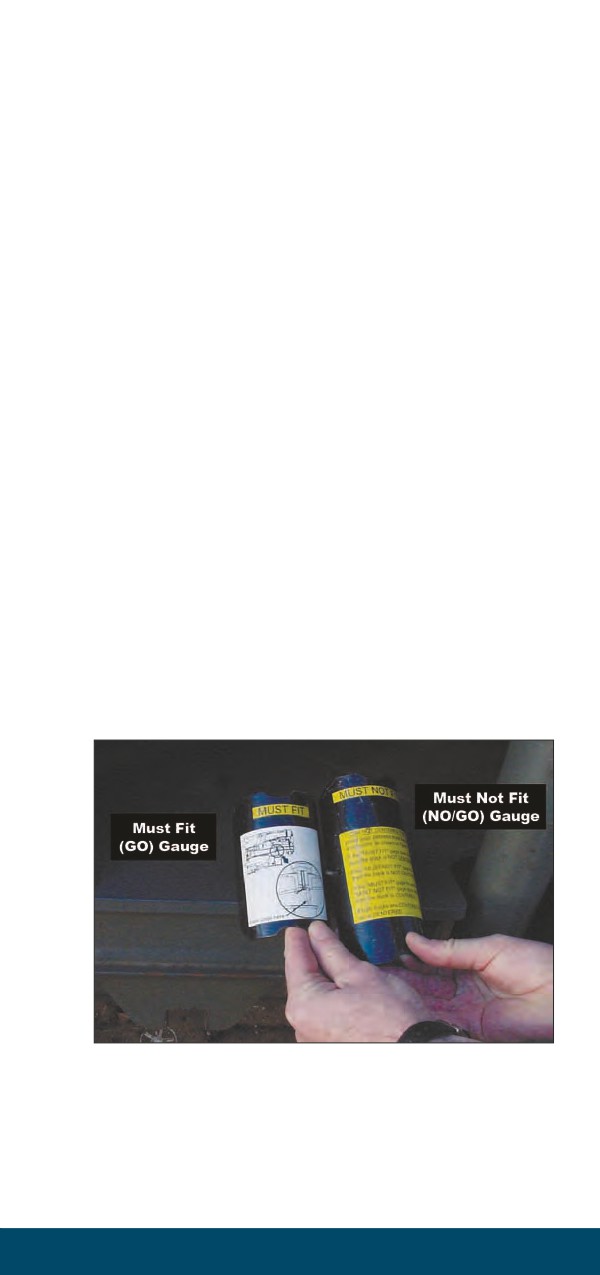
Gauge. (Refer to Figure 12-1)
f) On the affected Trailer Car (Coach) insert the Must
Fit (GO) Gauge between the truck frame and
bolster. If the Must Fit (GO) Gauge does not fit,
the car is NOT Centered. (Refer to Figure 12-2)
g) Insert the Must Not Fit (NO GO) Gauge
between the truck frame and bolster. If the gauge
fits, this also confirms that the car is NOT centered.
Both gauges must be used in the vertical position.
It will be visible to the eye that the car is NOT
centered and is slightly tilted, compared to the
rest of the cars in the Trainset.
h) Check both trucks on the affected car with the
(GO/NO GO) gauges.
i) Go to the electric locker on the affected car,
break the seal on the Centering Detection
Switch, and move it to the cutout position. This
will release the train speed restriction of 20
MPH. (Refer to Figure 12-3)
12-14
Equipment
2.
Car Not Centered
If the car is NOT centered, the train will proceed at
Train Type “C” speeds. The tilt will not function due
to the fault. If the car is not centered and seating
capacity permits, the Conductor will offer passengers
seating in another car to avoid discomfort related to
off center car condition.
3.
Car Is Centered
If the car IS centered, operate according to Train
Type “B” speeds. The tilt will not function due to the
fault. 4. The sub system status of the tilting system on
the affected car must be checked to ensure that the
centering detection C/O block is highlighted. The
Conductor must check on MFD-B, and Engineer
must check on MFD-2. 5. Engineer will also have a
message on the MFD-1 Alarm section that centering
detection is cut out on the affected car.
4.
Reporting
a) Report the condition to the Dispatcher and operate
at Train Type “B” speeds if car is centered or operate
at Train Type “C” speeds if the car is not centered.
b) Engineer must report these conditions on the
“Equipment Condition Report - MAP 100” (NRPC
2947), and Conductors are required to report the
conditions on the “Record of Defect and Repair -
MAP 21A” (NRPC 2775).
Figure 12-1 - Must Fit (GO) Gauge and Must Not Fit (No/Go) Gauge
Service Standards Manual No. 6
12-15
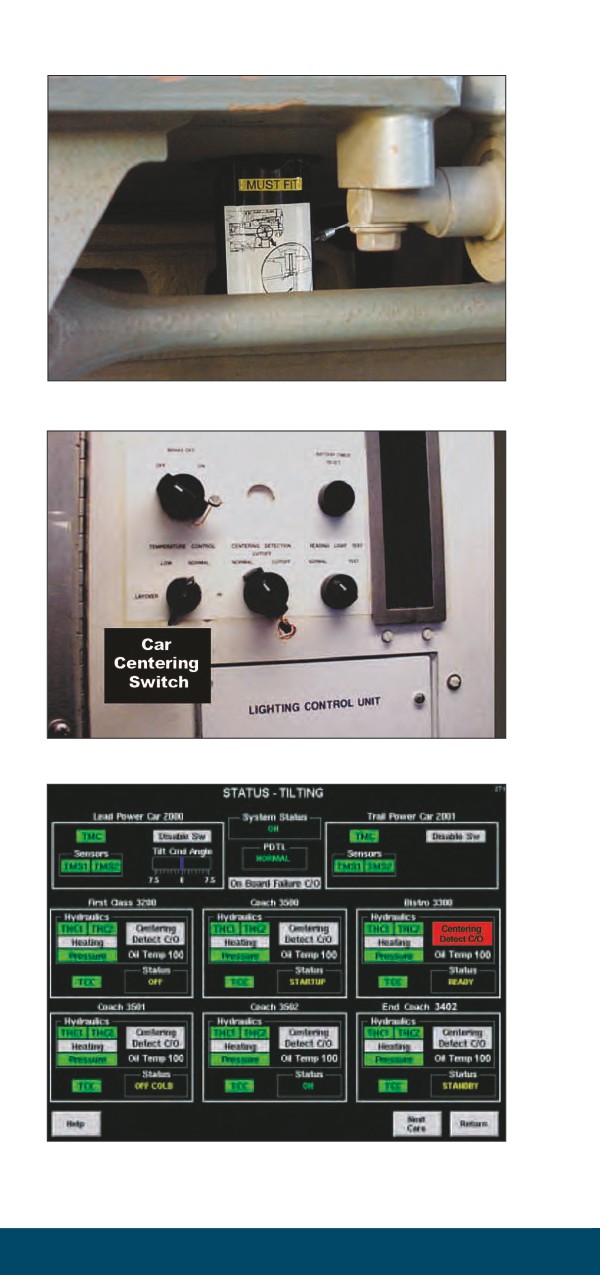
Figure 12-2 - Must Fit (GO) Gauge between Truck Frame and Bolster
Figure 12-3 - Passenger Car Electronic Locker
Figure 12-4 - Multi Function Display (MFD) - Centering Detect C/O in Red
12-16
Equipment
M. Acela Express High Speed Trainset (HST)
120 Volt Convenience (At-Seat) Outlets
1.
Steps for Defective Outlets
In the event a passenger reports a defective 120 volt
convenience (at-seat) outlet; the following steps
must be taken:
a) Ask the passenger if he/she would like to relocate
to a seat location that has an operating outlet.
b) If all seats are occupied, operational outlets may
be available in the Café Car.
c) Use the “Outlet Defect Chart” to determine the
type of defect and action required.
d) Immediately report the defect to the CNOC
24-Hour Mechanical Desk by entering 03 on the
on-board Conductor’s Office phone. This will
connect you to the CNOC 24-Hour Operations
Desk. When prompted, enter extension 2082
for the Mechanical Desk. The ATS number is
734-2082. Train crews may also dial direct with
a cell phone to (800) 424-0217 ext. 2082.
e)
The Mechanical Desk will need the following
information:
•
Detailed description of the defect. (Use the
Defect Description to Report from the “Outlet
Defect Chart” as a guide)
•
If needed, include circuit breaker information.
(Outlet circuit breakers are located in the A end
Electric Locker of each Coach Car. The breakers
are identified as 120 v conv receptacle left or 120 v
conv receptacle right)
•
Train number.
•
Car number.
•
Seat number.
f)
Record the problem in the “Record of Defect
and Repair - MAP 21A” (NRPC 2775).
g)
Relieving crews should be briefed on defective
outlet locations throughout the train and what
actions have taken place.
h) New passengers boarding the train should be
notified as to which outlets are not working.
Service Standards Manual No. 6
12-17
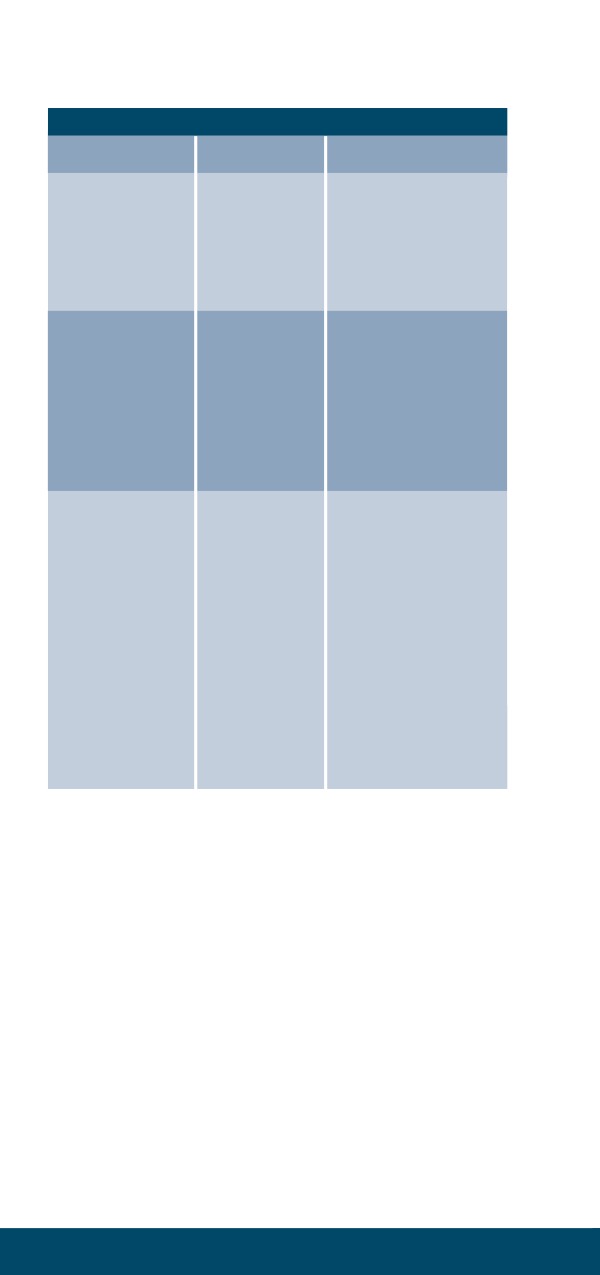
1. Acela Express Outlet Defect Chart
OUTLET DEFECT CHART
Outlet Defect
Circuit
Defect Description
Breaker Position
to Report
Outlet has stopped
Do not turn off
Report any comments by
working or has intermit-
circuit breaker.
passenger (i.e. intermittent
tent power with
power, electrical shock, damage
remaining outlets on
to electrical device, electrical
same side of car still
arcing, etc.) along with any
functioning.
other observations. Identify
outlet location by seat number.
Outlet shocked
Turn off circuit
Identify circuit breaker that has
passenger or damaged
breaker.
been turned off. Report any
electrical device with
DO NOT RESET.
comments by passenger (i.e.
remaining outlets on
intermittent power, electrical
same side of car still
shock, damage to electrical
functioning.
device, electrical arcing, etc.)
along with other observations.
Identify outlet location by seat
number.
Defective outlet along
If circuit breaker has
Identify circuit breaker that has
with all outlets on the
tripped, leave it
been turned off or tripped.
same car side has
tripped. If circuit
Identify circuit breaker that has
stopped working.
breaker is still on,
been turned off. Report any
turn it off.
comments by passenger (i.e.
DO NOT RESET.
intermittent power, electrical
It is critical that this
shock, damage to electrical
circuit breaker
device, electrical arcing, etc.)
remain in the
along with other observations.
tripped position.
Identify outlet location by seat
Under no circum-
number.
stance will authori-
zation be given to
train crews to reset
this breaker.
When the train arrives at the terminal, a qualified electrical
technician will investigate the problem and make repairs.
If the technician cannot fix the problem, due to time
restraints (station turns, etc.), he/she will defer the repair
until the train returns to the maintenance facility at the
end of the day. ONLY A QUALIFIED ELECTRICAL
TECHNICIAN CAN PUT THE OUTLETS BACK IN
SERVICE.
12-18
Equipment
N. Bedroom Occasional Seat -
Operating Instructions
The Bedroom Occasional Seat is located in bed-
rooms on Superliner I, Superliner II and Viewliner
Sleeping Cars. The Bedroom Occasional Seat is
mounted on a post which is permanently attached to
the outside wall of the car, adjacent to the folding
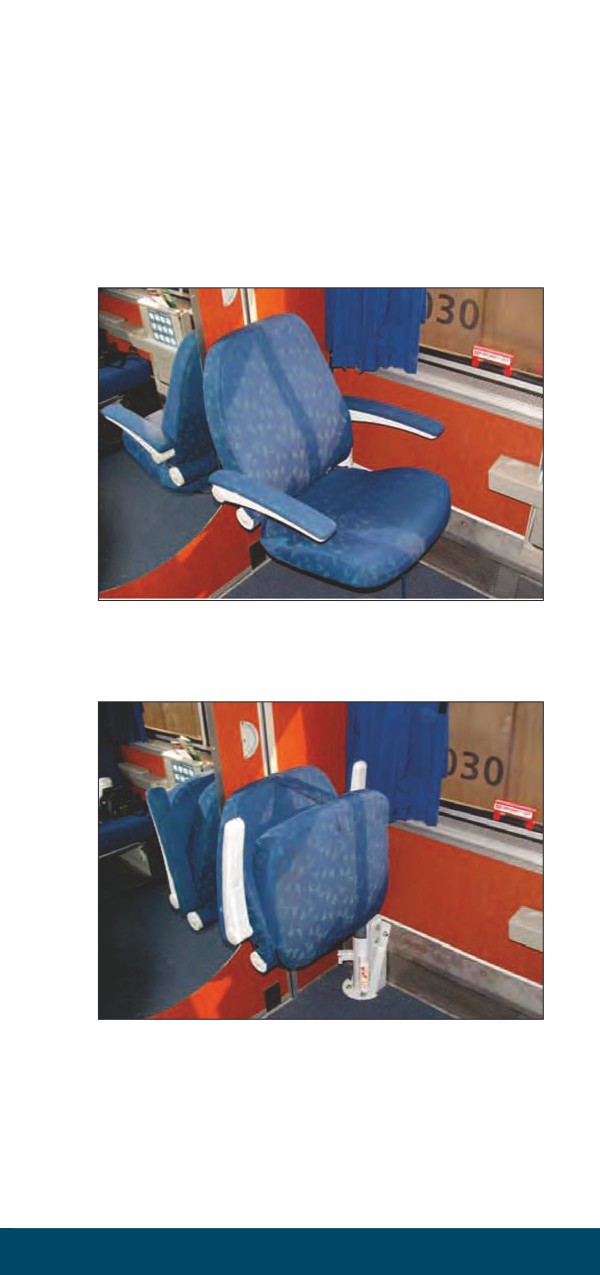
room partition. Refer to Figure 12-5.
Figure 12-5 - Location of Bedroom Occasional Seat
To store the Occasional Seat, fold up the seat bottom
cushion and the armrests as shown in Figure 12-6.
Figure 12-6 - Bedroom Occasional Seat in the Folded Position
Secure the fabric strap over the cushions by attaching
it to the Velcro on the seat back. This will assist in
keeping the cushion folded as shown in Figure 12-7.
Service Standards Manual No. 6
12-19
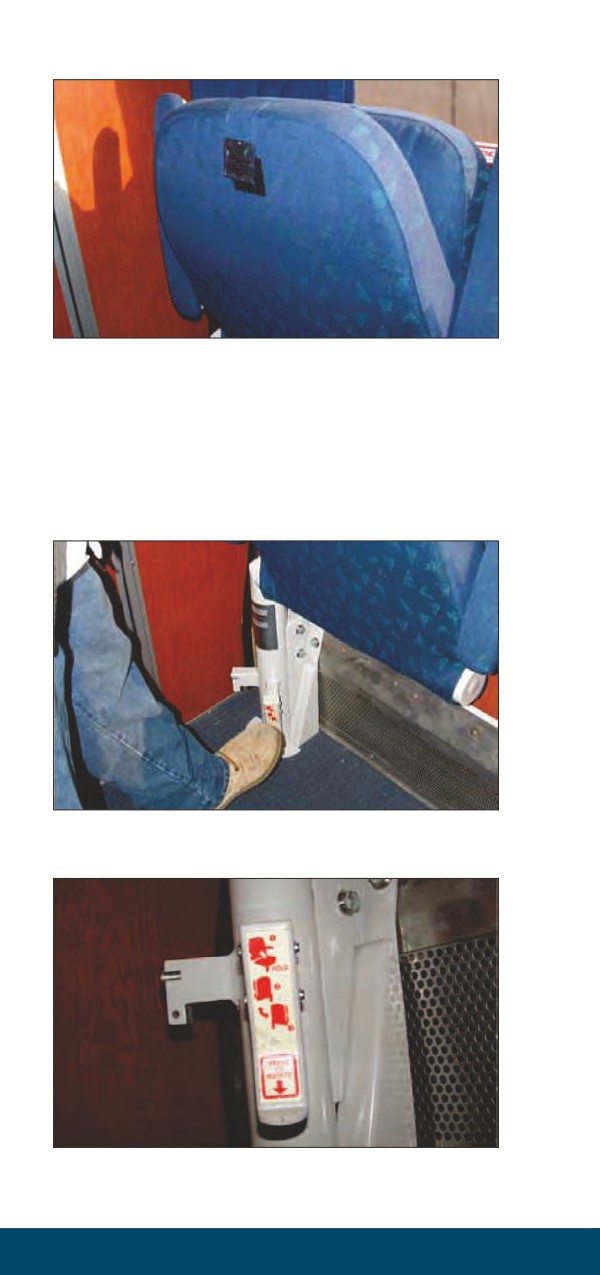
Figure 12-7 - Velcro Fabric Strap Securing Seat Cushion in Folded Position
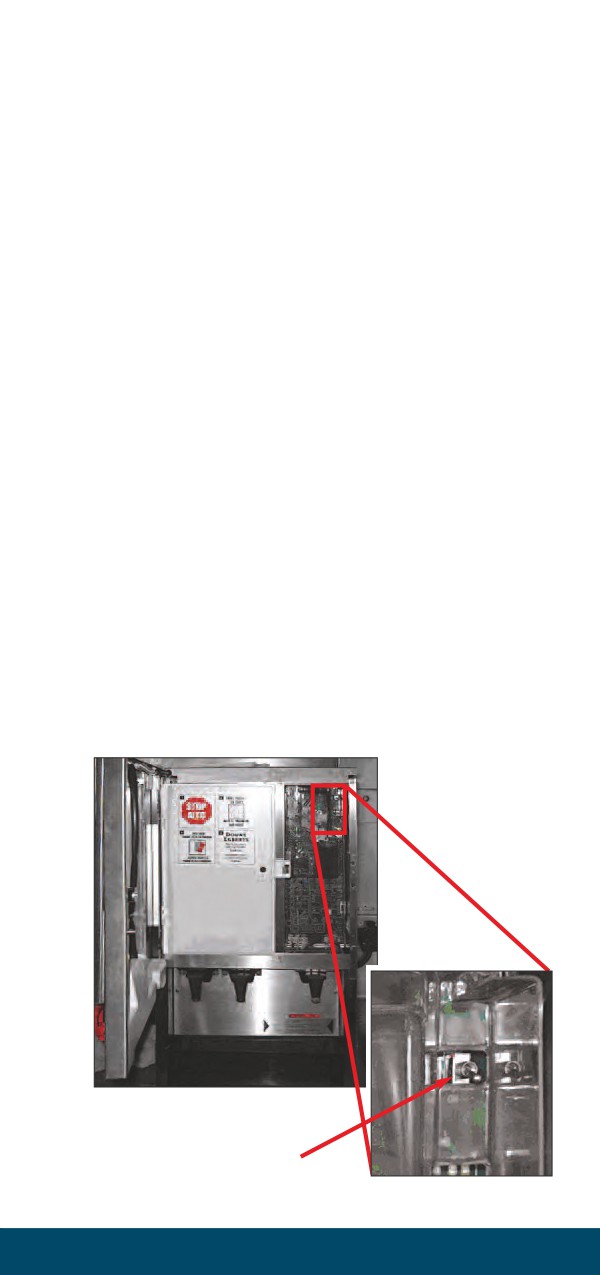
Release the rotation latch at the bottom of the seat
mounting post (press in on the bottom of the latch
lever with your shoe), and rotate the seat against the
outside wall of the car as shown in Figures 12-8 and
12-9. The seat assembly will latch when it is against
the side wall.
Figure 12-8 - Foot Operated Latch to Secure or Release the Bedroom Occasional
Seat from Against the Wall
Figure 12-9 - Close-up View of the Foot Operated Latch Mechanism
12-20
Equipment
To release and open the Bedroom Occasional Seat,
reverse the aforementioned procedure. The Bedroom
Occasional Seat can be safely operated by Sleeping
Car passengers. The bottom cushion/armrests can be
raised or lowered as desired.
O. Coffee Makers
1.
Douwe Egberts 300 Coffee Maker
The following safety instruction must be followed
when operating the coffee maker.
a) Immediately turn the heater switch to the
OFF (UP) position when any of the following
conditions occur.
• Coffee maker malfunctions.
• Coffee maker will be unattended for more
than 15 minutes, especially when there is no
OBS personnel present in the Food Service
Car.
• Train has arrived at final station.
• Loss of supply water.
• Loss of supply water air pressure (main
reservoir air).
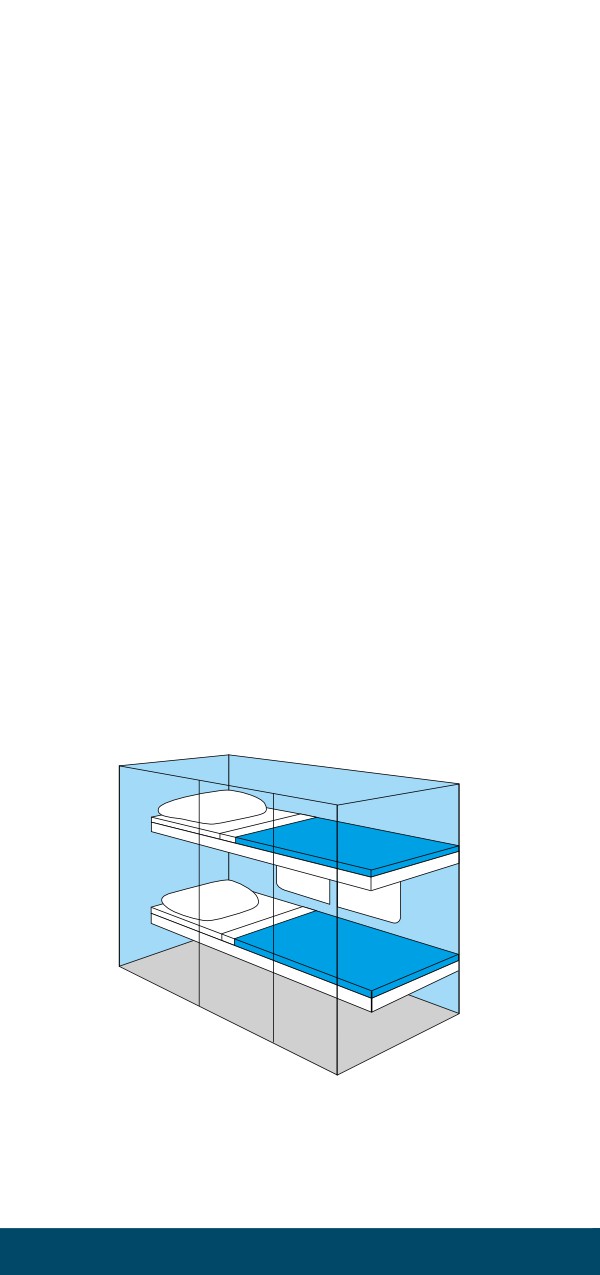
The heater switch is the unmarked toggle switch
located just inside the front access door on the
upper right corner of the circuit board. (Refer to
Figure 12-10) Turning the heater switch to the off
position will prevent the water heating element
from operating, but still allows the coffee syrup
cooler to remain active.
Figure 12-10 - Location of heater switch
Down position is “ON”
Toggle is shown in the “ON” position
Service Standards Manual No. 6
12-21
b) If coffee maker has been turned off due to a
malfunction, follow these steps.
• Contact the CNOC 24 hour Mechanical Desk
at 800-424-0217 ext. 2082/2083, Bell 302-683-
2082/2083 or ATS 734-2082/2083 and describe
the malfunction if known (e.g. syrup cooler or
coffee/hot water maker).
• The CNOC 24 hour Mechanical Desk will
determine if the coffee maker can be reset
and will instruct the employee on how to safely
reset the coffee maker. (The coffee maker is
equipped with a safety feature that shuts off the
unit if there is a boil over or if the water sloshes
over due to train movement).
• Record the defect in the “Record of Defect
and Repair - MAP 21A” (NRPC 2775).
c)
Additional safety instructions to follow when
operating the coffee maker.
• Never store any paper or flammable material
on the top cover of the unit.
• Never open the top cover unless instructed by
CNOC.
• Always ensure the top cover is properly closed
and secured in place to prevent it from making
undesired contact with the electronics inside
the unit.
P.
Superliner Sleeping Accommodations
1.
Superliner Roomette
Dimensions:
3’6” x 6’6” (1.1m x 2m)
Lower Berth:
2’4” x 6’6” (.72m x 2m)
Upper Berth with Steps:
2’0” x 6’2” (.61m x 1.9m)
Accommodates 2 adults • Capacity for 2 small tote bags
Restrooms and a shower are nearby
12-22
Equipment
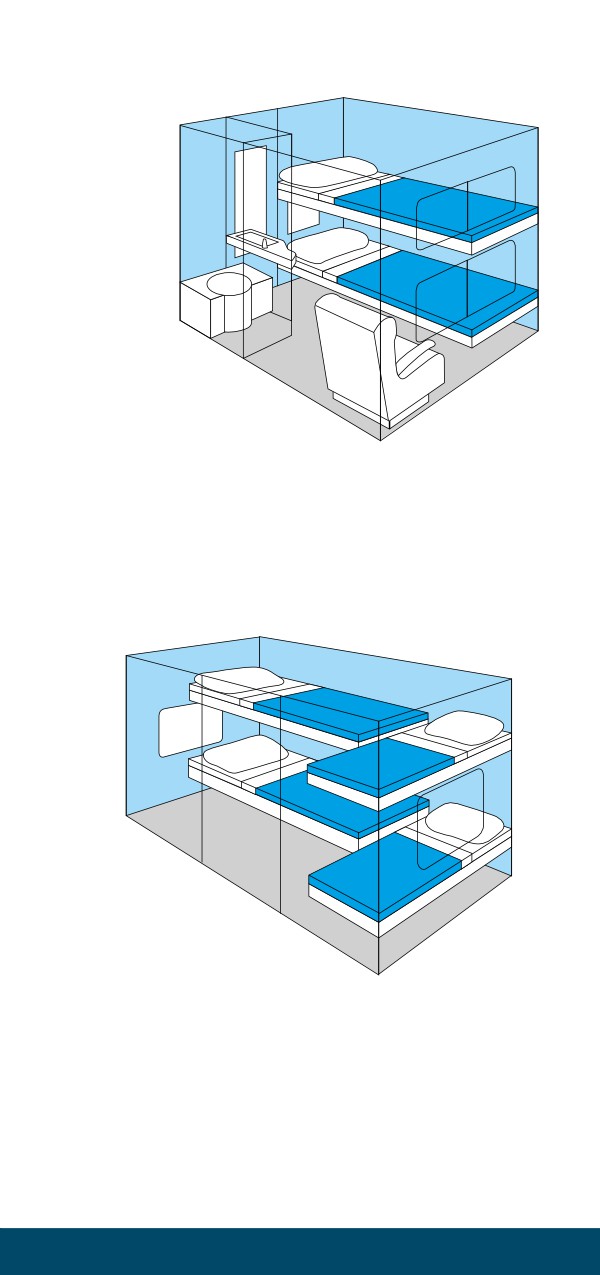
2. Superliner Bedroom
Dimensions:
6’6” x 7’6” (2m x 2.3m)
Lower Berth::
3’4” x 6’3” (1m x 1.9m)
Upper Berth with Ladder:
2’4” x 6’2” (.72m x 1.9m)
Accommodates 2 adults • Capacity for 2 suitcases
In-room toilet and shower
Some Bedrooms can be combined to make a Suite for 4 people.
3. Superliner Family Bedroom
Dimensions:
5’2” x 9’5” (1.6m x 2.9m)
2 Adult Berths with Ladder:
Upper Berth - 2’4” x 6’2” (.72m x 1.9m)
Lower Berth - 3’4” x 6’3” (1m x 1.9m)
2 Child Berths:
Upper Berth - 2’0” x 4’7” (.61m x 1.4m)
Lower Berth - 2’3” x 4’9” (.69m x 1.5m)
Accommodates 2 adults and 2 small children
Capacity for 2-3 suitcases • Restrooms and a shower are nearby
Service Standards Manual No. 6
12-23
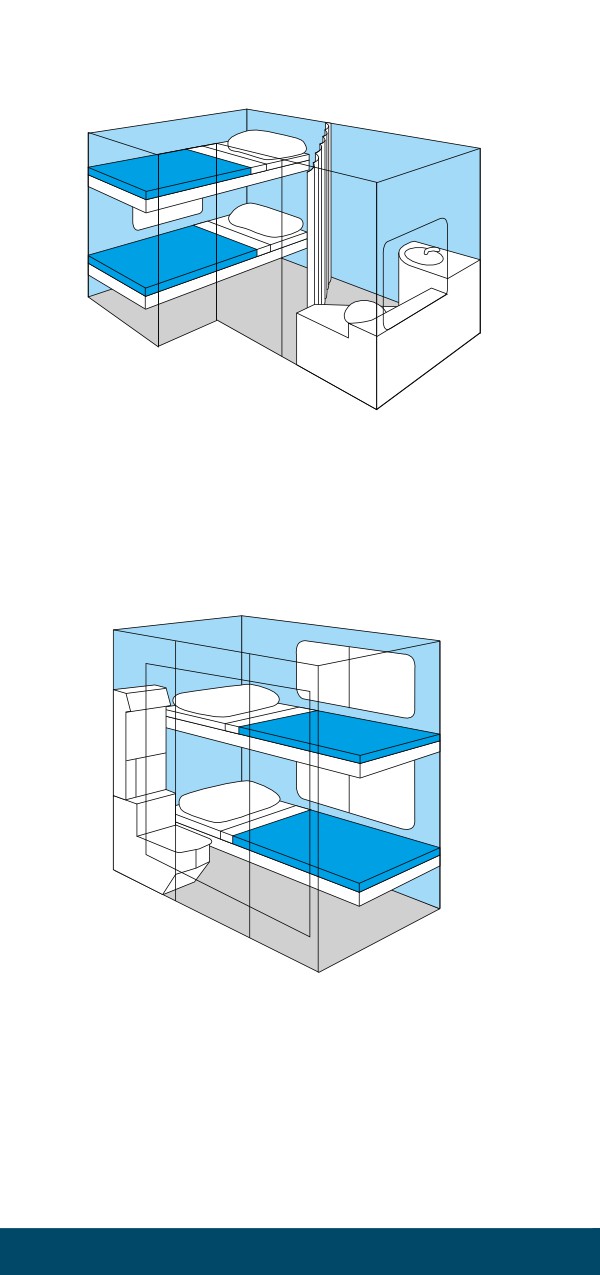
4. Superliner Accessible Bedroom
Dimensions:
6’9” x 9’5” (2m x 2.9m)
Lower Berth:
2’4” x 6’6” (.72m x 2m)
Upper Berth with Ladder:
2’0” x 6’2” (.72m x 1.9m)
Accommodates 2 adults • Capacity for 2 suitcases
In-room toilet and shower
Q. Viewliner Sleeping Accommodations
1. Viewliner Roomette
Dimensions:
3’6” x 6’8” (1.1m x 2m)
Lower Berth:
2’4” x 6’6” (.72m x 2m)
Upper Berth with Steps:
2’4” x 6’2” (.72m x 1.9m)
Accommodates 2 adults • Capacity for 2 small suitcases and
garment bag • In-room toilet
12-24
Equipment
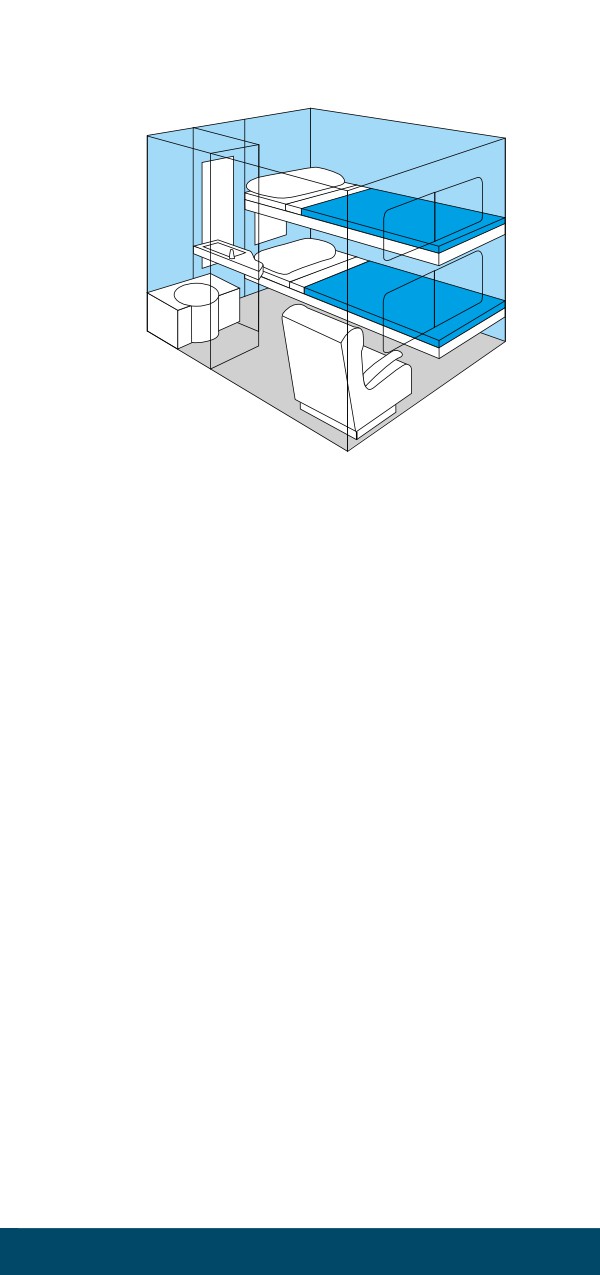
2.
Viewliner Bedroom
Dimensions:
6’8” x 7’1” (2m x 2.2m)
Lower Berth:
3’4” x 6’0” (1m x 1.8m)
Upper Berth with Ladder:
2’4” x 6’2” (.72m x 1.9m)
Accommodates 2 adults • Capacity for 2 suitcases
In-room toilet and shower
3. Viewliner Bedroom Suites
Combine two bedrooms to create a suite for four, with
two sofas that convert to wide lower berths. Comfortable
upper berths fold down from the wall. Includes private
sinks and vanity and two fully-enclosed private showers
and toilets.
Service Standards Manual No. 6
12-25
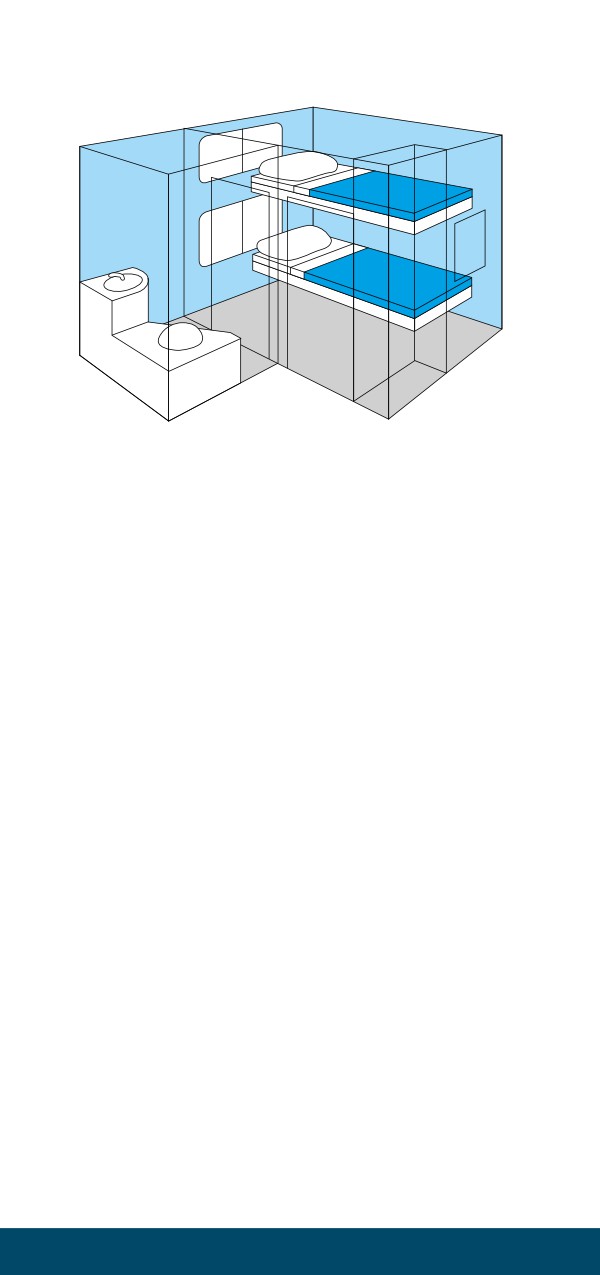
4. Viewliner Accessible Bedroom
Dimensions:
6’8” x 7’1” (2m x 2.2m)
Lower Berth:
3’4” x 6’0” (1m x 1.8m)
Upper Berth with Steps:
2’4” x 6’2” (.72m x 1.9m)
Accommodates 2 adults • Capacity for 2 small suitcases and
garment bag • In-room toilet and shower
12-26
Equipment
Important Phone Numbers
(Unless noted, these numbers are for internal use only and
are not to be shared with passengers or the public)
A.Amtrak Police - Nationwide (Toll Free) (800) 331-0008
B.
Operations
1.
Rate Desk
(800) 205-0711
(On-Board Upgrades, to OS Trains, etc.)
2.
CNOC 24-Hour Operations Desk &
(800) 424-0217
Standee Hotline
3.
CNOC 24-Hour Operations Customer Services Desk
ATS 734-2299
(302) 683-2299
4.
CNOC Space & Equipment Desk
ATS 734-2104
(302) 683-2104
5.
CNOC Mechanical Desk
ATS 734-2082/2083
(800) 424-0217 ext. 2082/2083
(302) 683-2082/2083
6.
Philadelphia CETC
ATS 728-2226
215-349-2226
7.
Major Off-Corridor Delay-Input Offices Toll Free Fax
• CNOC Delay Reporting Office: (877) 714-8378
• Oakland Operations: (866) 247-2684
8.
U.S. Naval Observatory Time at Boulder, CO
ATS 729-4116
(866) 493-5252
ATS 777-4000
C.
Services
1.
Reservations Call Center
(800) 872-7245
2.
AmPlan Help Line (for Agreement Emp.)
(800) 481-4887
3.
Dispute Resolution Hotline
(877) 351-8338
4.
Inspector General
ATS 777-4600
(202) 906-4600
5.
The Pass Bureau
ATS 777-3745
(800) 424-0224
6.
Amtrak Information Hot Line
(877) AMTRAK1
(877) 268-7251
7.
Amtrak Media Relations ATS 777-3860
(202) 906-3860
8.
Fidelity Investments
(800) FIDELITY
D.
Medical & Public Health
1.
Director Health Services (HR)
ATS 777-3258
(202) 906-3258
2.
Director Public Health Standards
ATS 777-3943
(202) 906-3943
FAX
ATS 777-2117
(202) 906-2117
E. EAP Counselors
1.
Senior Director EAP/Health Services-Washington, DC
ATS 777-3258
(202) 906-3258
Service Standards Manual No. 6
13-1
2.
EAP Manager-Washington, DC
ATS 777-3275
(202) 906-3275
3.
Washington, DC
ATS 777-3447
(202) 906-3447
4.
New York
ATS 521-7655
(212) 630-7655
5.
Boston
ATS 580-7894
(617) 345-7894
6.
Philadelphia
ATS 728-1487
(215) 349-1487
7.
Jacksonville
ATS 865-5133
(904) 766-5133
8.
Chicago
ATS 823-5254
(312) 880-5254
9.
Los Angeles
(800) 453-9557
F. Operation Redblock
(800) 44R-BLOC (72562)
1.
Director
ATS 777-3258
(202) 906-3258
G. National Park Service Partnership - Trails & Rails
1.
Coordinator
(314) 962-5399
H. Crew Management T&E Payroll & Assignment
1.
CNOC Train & Engine Payroll Department
(888) 818-2024
2.
CNOC Assignment Department
(877) 850-2260
I.
Crew Management T&E Dispatch
All phone conversations with Crew Management are recorded.
1.
T&E
(800) 828-CREW (2739)
2.
Office Assistant
(NEC)
ATS 734-2288
(302) 683-2288
(Off Corridor)
ATS 734-2286
(302) 683-2286
Desk 1 - New England Northeast Division-East
New Haven, New York (Zone 1),
Boston, Springfield, Portland,
ME Brattleboro (Zone 1 & 3) ATS 734-2131
(302) 683-2131
Desk 2 - Northeast Division-West
New York (Zone 2)
ATS 734-2132
(302) 683-2132
Desk 3 - Mid Atlantic Division and New York Division-East
Philadelphia, Harrisburg (Zone 2),
Albany, Buffalo
ATS 734-2133
(302) 683-2133
Desk 4 - Mid Atlantic Division and South
Washington (Zone 2), Washington
Terminal, Baltimore
ATS 734-2134
(302) 683-2134
Desk 5 - Central Division
Chicago, Indianapolis, Carbondale, Quincy,
St. Louis, Milwaukee, Harrisburg (Zone 4),
Toledo, Detroit, Memphis, Kansas City
and St. Cloud
ATS 734-2135
(302) 683-2135
13-2
Phone Numbers
Desk 7 - Southern Division
Washington, Richmond, VRE, Raleigh, Charlotte,
Pittsburgh, Florence, Miami, Jacksonville, Lorton,
Hunting and Sanford
ATS 734-2137
(302) 683-2137
Desk 8 - Pacific Division
Seattle, Spokane, Sacramento, Portland, OR,
Shelby, Oakland, Merced
ATS 734-2138
(302) 683-2138
Desk 11 - Southwest Division
New Orleans, Atlanta, Meridian,
Salt Lake City, Albuquerque, San Antonio,
Little Rock, Denver, Reno, La Junta,
Omaha, Lincoln, Ft. Worth
ATS 734-2111
(302) 683-2111
Desk 12 - Pacific Division and Southwest Division
Los Angeles (Zone 12 & 12A), San Luis
Obispo, San Diego, El Paso, San Jose,
Gilroy, San Francisco
ATS 734-2112
(302) 683-2112
J.
Crew Management On Board Services
(800) 52-CREWS (27397)
All phone conversations with Crew Management are recorded.
OBS Desk
LAX/SAN Desk
ATS 734-2311
(302) 683-2312
WAS/BOS/RGH Desk
ATS 734-2312
(302) 683-2312
NYP/ALB Desk
ATS 734-2313
(302) 683-2313
SEA/OAK/NOL Desk
ATS 734-2314
(302) 683-2314
CHI/MSP/FTW Desk
ATS 734-2315
(302) 683-2315
MIA/JAX/LOR Desk
ATS 734-2317
(302) 683-2317
AFTERNOON Desk
ATS 734-2316
(302) 683-2316
OVERNIGHT Desk
ATS 734-2128
(302) 683-2128
K. OBS Crew Bases
Crew Base
Boston, MA
ATS 580-7472
(617) 345-7472
Chicago, IL
ATS 821-3378
(312) 655-3378
ATS 821-3380
(312) 655-3380
ATS 821-3384
(312) 655-3384
Jacksonville, FL
ATS 865-5415
(904) 766-5415
Lorton, VA
ATS 741-3646
(703) 690-3646
ATS 741-5728
(703) 690-5728
Crew Base
ATS
Bell
Los Angeles, CA
ATS 761-6961
(213) 683-6961
Miami, FL
ATS 864-1214
(305) 835-1214
New York, NY
ATS 521-7290
(212) 630-7290
Service Standards Manual No. 6
13-3
New Orleans, LA
ATS 868-1676
(504) 528-1676
ATS 868-1618
(504) 528-1618
Oakland, CA
ATS 764-5623
(510) 433-5623
Raleigh, NC
ATS 826-3346
(919) 838-3346
Seattle, WA
ATS 766-4157
(206) 382-4157
Washington, DC
ATS 777-2815
(202) 906-2815
L. Amtrak Claims Offices
Law Department/Claims
Director
ATS-777-3697
(202) 906-3697
Director, Occupational
ATS-777-3459
(202) 906-3459
Administrative Assistant
ATS-777-2440
(202) 906-2440
Law Department - 3E
60 Massachusetts Avenue, NE, Washington, DC 20002
Passenger Claims
Manager
ATS 777-2995
(202) 906-2995
FAX
ATS 777-3761
(800) 477-9861
Toll free number to be given to
passengers with injuries
(800) 424-7960
Law Department - 3E
60 Massachusetts Avenue, NE, Washington, DC 20002
Washington Terminal
Manager
ATS 777-3694
(202) 906-3694
R.E.A. Building
900 Second Street, NE, Washington, DC 20002
Albany, NY
Director
ATS 564-5715
(518) 462-5715
Claims Representative
ATS 564-5755
(518) 462-5755
525 East Street, Rensselaer, NY 12144
Baltimore, MD
Manager
ATS 729-4224
(410) 291-4224
Penn Station - Room 311
1500 N. Charles Street, Baltimore, MD 21201
Beech Grove, IN
Manager
ATS 825-0482
(317) 263-0482
202 Garstang Street, Beech Grove, IN 46107
Boston, MA
Claims Representative
ATS 580-7628
(617) 245-7628
253 Summer Street, Suite 201, Boston, MA 02210
Chicago, IL
Director
ATS 823-5248
(312) 880-5248
525 W. Van Buren Street, 2nd Floor, Chicago, IL 60607
13-4
Phone Numbers
Jacksonville, FL
Manager
ATS 861-6658
(904) 245-6658
8301 Cypress Plaza Drive, Suite 107A, Jacksonville, FL 32256
Los Angeles, CA
Manager
ATS 761-6885
(231) 891-6885
Los Angeles Union Station, Room 216
810 N. Alameda Street, Suite 216, Los Angeles, CA 90012
New Haven, CT
Manager
ATS 561-6030
(203) 773-6030
New Haven Station
50 Union Avenue, 4th Floor, New Haven, CT 06519
New Orleans, LA
Claims Representative
ATS 868-1600
(504) 528-1600
1001 Loyola Avenue, Room 200A, New Orleans, LA 70113
New York, NY
Senior Director
ATS 521-6190
(212) 630-6190
400 W 31st Street, 4th Floor, New York, NY 10001
Oakland, CA
Director
ATS 764-5659
(510) 238-5659
530 Water Street, 5th Floor, Oakland, CA 94607
Corporate Secretary
ATS 764-2631
(510) 238-2631
Jack London Station
245 Second Street, 2nd Floor, Oakland, CA 94607
Philadelphia, PA
Senior Director
ATS 728-1005
(215) 349-1005
30th Street Station - 3N
30th & Market Streets - Box 26, Philadelphia, PA 19104
Wilmington, DE
Manager, RCD1
ATS 734-2254
(302) 683-2254
Claims Representative, RSDU ATS 734-2044
(302) 683-2044
CNOC
15 Poplar Street, Wilmington, DE 19801
M. Amtrak Websites
1.
Amtrak Internet Access Address:
2.
Amtrak Intranet Access Address:
3.
Amtrak Customer Services:
Service Standards Manual No. 6
13-5
A
Alarm
Acela
Absence
Fire Detection
7, 6-23, 8-206
1-48 to 1-49
AC Control Cabinet
Tilting Fault
1-48
12-14 to 12-17
AED
Accessible
2-4
Accommodations
8-57
Alcohol
Bedroom
7-18 to 7-23, 7-29
8-60, 8-61, 8-69, 8-70, 8-71, 8-96, 8-97,
Accounting
8-101, 11-5, 11-8, 11-22, 12-24, 12-26
6-49, 8-155, 8-165
Car
And Drugs
11-7
8, 1-45, 1-97, 6-25, 6-40, 7-2, 8-118
Seat
Prevention
1-31, 8-37, 8-38, 8-67, 10-21, 11-9, 11-10
8
Sleeping Car
Signage
8-63, 8-64, 8-96, 8-101
10-37
Space
Americans with Disabilities Act (ADA)
8-63, 11-22
1, 6-7, 11-1 to 11-33
Accident
Delay Code
1-10, 1-75, 8-82, 8-135
7-59
Grade Crossing
Amfleet
1-38, 1-44, 1-45, 1-46, 1-77
1-48, 1-56, 1-70 to 1-73, 3-5, 10-31 to 10-32,
Investigation
12-3, 12-10
1-37, 2-24, 2-33 to 2-35
Reporting
Amtrak Cascades
2-23, 2-24, 8-135
3-13, 4-6, 4-18, 6-34, 6-52, 7-74, 8-173, 9-6,
Victim
10-13
2-12
Announcement
Acela
1, 1-29, 1-32, 1-33, 1-40, 1-43, 6-9, 6-18, 6-29
120 Volt Convenience (At-Seat) Outlets
Acela Door
12-17 to 12-18
12-09
Beverages
ADA
7-23 to 7-25
8-78, 11-18, 11-21
Blower System
All
1-48
10-1 to 10-19
Business Class Service Accounting
Attendant
8-165, 8-169, 8-170
6-72, 6-73, 6-84 to 6-86, 6-88, 10-18
Doors
Automated
12-7 to 12-10
10-6
Employee Deadheading
Canadian Customs Tag
7-16, 8-67
4-3
Employee in Cab
Complementary Service
7-16
9-5, 9-7, 9-9, 9-11
Equipment Substitution
Conductor
8-125, 10-8
6-18, 6-29, 6-36, 6-38, 6-39, 6-41, 7-11, 8-8,
Evacuation
8-12, 8-74, 8-125, 9-5, 10-1, 10-3 to 10-15
1-70, 1-71, 1-72
Door
Evac-Chair
6-38, 10-11
1-73 to 1-75
Emergency
Fares
1-46, 1-47, 1-50, 1-69, 1-91, 1-93, 2-1,
8-56
10-10, 10-11
Fire Detection Alarm
Fire
1-48
1-48
Folding Stairs
Food Service
1-62 to 1-68
6-47 to 6-49, 6-55, 6-57, 6-59, 7-24 to 7-28,
Lighting
7-34, 7-36, 10-15 to 10-17
12-3
NEC Cleaner
Members of Congress Frequent
6-93
Passenger Identification Card
Public Address (PA)
8-115, 8-116
12-4
Non-Amtrak Food
Quiet Car
7-29
10
Passenger Transfer between Trains
ARAMARK
1-50 to 1-68
2, 3
Restricted Trains
8-59
Arrow
Seat Position
2, 11, 12, 4-15, 7-47
6-40
Delay Reports
Senior Citizen Discount
7-52, 7-54, 7-55, 7-62, 7-65, 7-69, 7-70,
8-63
7-72, 7-73
Service Adjustments
Health
8-125
2-17, 2-18
Service Recovery
Rodent Infestation
9-4
3-8
USA Rail Passes
Ticket
8-49
8-17, 8-18, 8-24, 8-25, 8-27, 8-44, 8-49,
8-51, 8-52, 8-57, 8-59, 8-61, 8-63, 8-75,
Airline Tickets
8-80, 8-82, 8-135
8-23
Service Standards Manual No. 6
1
Ticket Signature Enforcement
Bicycle
8-18, 8-19
Folding
4-5
Assistant Conductor Responsibilities
Regular
6-16, 6-33, 6-42, 8-1, 8-5, 8-15
4-5 to 4-7, 4-18, 4-19
Attendant Call Button System
Biohazard
6-35
2-21, 2-22
Block Training
B
6-27
Baggage
Boarding
1-23, 1-85, 4-1 to 4-20, 6-77, 6-78, 6-85, 6-86,
1-28
7-9, 8-78, 8-80, 8-115, 11-9
Advisory
Airline Passengers
8-121
4-4
ADA Issues
Announcement
11-9, 11-20 to 11-23, 11-31, 11-32
1-91, 1-93, 10-7, 10-10
Diagram
Bicycles
6-75, 6-85, 6-86, 6-87
Folding
Groups
4-5
7-8
Regular
Loading Numbers
4-5 to 4-7, 4-18, 4-19
7
Car
Pass (Auto Train)
6-39, 7-46, 8-117
8-68
Carry-On
Passengers
1-52, 1-54, 1-98, 4-1 to 4-7, 6-40, 6-72,
8-11, 8-12
3, 6-15, 6-20, 6-36, 6-40, 6-74, 6-83, 6-85,
8-20
Checked
Plan
4-7 to 4-20, 6-39, 7-3
7-8
Claims
Pre-Boarding
1-39
11-3, 11-29
Delay Codes
Trains
7-57, 7-58, 7-67
11-20
Firearms
Trap Door
1-98, 4-4, 4-8 to 4-17
1-26
Golf Clubs
Unstaffed Station
4-19
8-21, 8-22
Handling
Wheelchair
4-1 to 4-20
1-18, 1-19 11-3, 11-9, 11-26
Identification Tags
4-2 to 4-3, 4-16, 4-19, 6-17, 6-20, 6-21,
Bomb Threat
6-34, 6-52, 6-71, 6-77, 6-81, 6-85
3, 1-83 to 1-84
Kayaks
Delay Code
4-19
7-60, 7-63
Lost
Breathing
6-39, 7-9
Difficulty
Military
1-87, 2-7, 2-8
4-4
Over
Parcel Check
2-15, 2-16
4-20
Rapid
Pass Rider
2-6
4-20
Rescue
Scouting Organizations
2-6, 2-7
4-19 to 4-20
Stopped
Ski Equipment
2-11
4-19
Snowboards & Surfboards
Bus
4-19
6-22, 6-26, 9-18, 9-19, 11-26
Transfer
Connections
1-23, 1-52, 1-54, 6-78
8-130
Wheelchairs, Scooters and Segway
Delay Code
4-6, 4-8, 4-17, 4-18, 11-8
7-59, 7-70
Firearms
Berth
4-13
1-28, 8-69 to 8-71
Services
Bed Making
8-27, 8-72
6-83, 6-88, 6-92, 7-42 to 7-45
Unaccompanied Minor
Drawings
7-9
12-22 to 12-26
Safety
Business Class
1-28, 6-81, 6-83, 6-88
7-12, 8-48, 8-54, 8-59, 8-66, 8-123, 8-125,
Stool
8-126, 8-133, 11-7
1-28, 6-81, 7-43
Accounting
8-169, 8-170
Beverage
Beverages
Alcoholic
7-24
7-18 to 7-23, 7-29, 8-165
Cart Service
Non-Alcoholic
7-24 to 7-25
7-23, 7-24, 7-29, 8-172, 8-183, 8-186,
Complimentary Service
8-187, 9-8, 9-13
8-165
Bi-Level
11-7, 12-7
2
Index
Fares
Complimentary
8-37, 8-54, 8-55, 8-73, 8-89
Beverage
Manifest
6-54, 6-81, 6-84, 6-87, 7-23, 7-24, 7-29,
6-51, 6-54
7-45, 8-164, 8-165, 9-19
Military
Business Class
8-59
8-169, 8-170
Rail Pass
Cash Register Procedures
8-48, 8-49
8-192, 8-193
Sign
Coupons
10-21
8-173
Ticket
Meal
8-37, 8-41, 8-49, 8-99
2, 8-72, 8-183, 8-184, 8-186, 8-188, 9-3 to
Type of Service
9-16, 9-19
8-66, 8-67, 8-68
On-Board Guides
Business Travel (BT)
7-30, 8-185, 8-186
2, 6-91, 7-30, 8-133, 8-183, 8-184, 8-185,
Service
8-187
6-44, 6-51, 6-52, 6-84, 6-86, 7-24, 8-164,
8-170, 8-171, 8-186, 8-202
Accounting
C
8-121, 8-165 to 8-168
Canada
Recovery
Checked Baggage
1-43, 6-29, 6-72, 6-82, 8-172, 9-1, 9-3
4-3 to 4-4, 4-8, 4-16
to 9-19, 10-13 to 10-15
Fares
Red Star Program
8-51, 8-53, 8-57, 8-59, 8-60, 8-68, 8-92
8-173, 8-174
Major Station Stops
Comprehensive Sanitation Plan
10-2
3-1, 3-8
Tickets
8-51, 8-52, 8-57
Conductor Responsibilities
USA Rail Pass
6-28 to 6-42
8-48, 8-49
Cooking Temperatures
Canadian
3-12
Border
Credit Card (See Payment Card)
6-28, 8-51, 8-52, 8-68, 8-92
Currency
4-16, 6-22, 6-43, 6-51, 6-56, 6-58, 8-15, 8-18,
7-1, 8-104, 8-105, 8-140, 8-194
8-20, 8-44, 8-85, 8-88, 8-89, 8-90, 8-93, 8-98,
8-105, 8-108, 8-109, 8-111, 8-137, 8-139,
Customs Tag
8-140, 8-142, 8-165, 8-174, 8-186, 8-194,
4-3, 4-4, 6-34, 6-52, 10-14, 10-15
8-197, 8-199, 8-200, 8-201, 8-204
Identification
Announcement
8-9, 8-10
10-4, 10-5, 10-17
Maple Leaf
Device
8-60, 8-68, 8-92, 8-93
12, 6-43, 6-50, 6-51, 6-56, 6-57, 6-58, 6-59,
Capitol Corridor
8-106, 8-107, 8-195, 8-200
3-13, 4-6, 4-19, 7-23, 7-27, 7-74, 8-26, 8-86,
Transactions
8-172, 8-173, 9-8
6-43, 6-51, 6-56, 6-58, 8-106, 8-107, 8-195,
8-196, 8-200
Cardboard Trash Containers
Un-acceptable
3-5 to 3-6
8-107
Casket
Crew
7-46
Base Phone Numbers
Charge Back
13-1 to 13-3
8-18
Luggage Identification Tags
6-20 to 6-21
Check
Management Phone Numbers
8-196, 8-197, 8-204
13-3 to 13-4
CNOC (Consolidated National
Customer Service Tips
Operations Center)
6-1 to 6-15
3
Mechanical Desk Phone Number
13-1
D
Phone Number
Deadhead
13-1
COTS
Commissions
8-85, 8-98, 8-107, 8-108
6-22
Employee
4, 1-38, 5-14, 6-27, 6-91, 7-16, 7-25, 8-43,
Communication System
8-67, 8-185, 8-187
10-3, 12-4
Equipment
Commuter
4, 7-70, 7-71, 8-118
8, 1-84, 6-33
Debit
Delay
8-91, 8-149, 8-170, 8-171, 8-183, 8-186
7-56, 7-59, 7-60
Card
Equipment
5, 8-105, 8-107, 8-194, 8-197
1-76
Notice
Ticket
8-203 to 8-206
8-27, 8-28 to 8-41, 8-82, 8-84, 8-135
Timetable
Deceased
6-33
7-7, 8-115
Service Standards Manual No. 6
3
Defective
En Route
AED
11-27
2-4
Evacuation
Car
1-69 to 1-77
7-58, 7-59
End Doors
Door
1-70 to 1-72
6-38, 12-10
Tunnels
Engine
1-75 to 1-77
7-60
Wheelchair
Outlet
1-73 to 1-75
12-1, 12-17 to 12-18
Windows
PA
1-72 to 1-73
6-38
Fire
Refrigerators/Freezers
1-48 to 1-49
3-2
Food Provisioning
Road Crossing Protection
3-3
7-59
General Instructions
Toilet
1-39, 1-41
3-5
Grade Crossing
1-44 to 1-46
Delay
HEP Failure
Code
1-42 to 1-44
7-51 to 7-75
Meals
Report Form
9-13 to 9-16
7-51, 7-52, 7-68, 7-70, 7-71
Passenger Transfer
Derailment
1-50 to l-62
1-1, 1-38, 1-41, 1-75, 1-77, 4-12, 6-18
Passenger Transfer Bridge G2
Announcements
1-52 to l-62
10-9
Preparedness
Delay Codes
1-37 to 1-80
7-60
Training
1-37 to 1-38
Disability
Service Disruption
8-68, 11-1 to 11-33
1-46 to 1-47
Companion
Signage
8-54, 8-56
1-33
Discount Fare
Trespasser Strike
8-54, 8-57
1-44 to 1-46
Identification
8-56
Evacuation
Meals
1-39 to 1-77
6-88
Announcements
Service Recovery
10-10 to 10-11, 10-12
9-19
Emergency
1-69 to 1-71
Discrepancies
EVAC-CHAIR
6-45, 6-46, 6-54, 6-59, 6-67, 6-72, 8-158,
1-73 to 1-75
8-159, 8-160
Non-Emergency
Dishwashing Machine
1-50 to 1-68
3-4 to 3-5
Displaced Passengers
F
3-8, 7-7, 8-120, 9-16
Family Bedroom
Douwe Egberts 300 Coffee Maker
12-23
12-21, 12-22
Fare
Accommodation Charges
E
8-54, 8-67, 8-68, 8-69, 8-72, 8-95, 8-96,
8-99, 8-100 to 8-103, 8-115, 8-120, 8-127,
Earphone
8-131
6-22, 10-12
Acela Express
Earpiece
8-56, 8-67
10, 6-29, 7-47
Adjustment
7-6, 7-7, 8-120 to 8-126
Electrical
Advance Pay
Acela
8-19 to 8-22
12-17 to 12-18
Block
Distribution System Overview
8-45, 8-112
12-1
Business Class
Doors
8-68, 8-99
12-6 to 12-13
Canada
Locker
8-92
6-27, 12-1, 12-2, 12-3, 12-10
Children
Volt Outlets
8-12, 8-13, 8-54, 8-55, 8-57, 8-66, 8-75,
6, 12-17 to 12-18
8-77, 8-120
Emergency
Codes
Announcement
8-53, 8-89
1-91, 1-93, 10-10, 10-18
Commuter
Derailment
8-23 to 8-36
1-41 to 1-42
Companion
Door Operation
8-58, 8-60
12-6 to 12-13
Condition of Carriage
Equipment
6-40, 7-2
1-32
4
Index
COTS
2-26, 2-29, 2-31, 6-35
8-13, 8-16, 8-17, 8-37, 8-46, 8-54, 8-80,
Aid Kit
8-85 to 8-104, 8-107 to 8-114, 8-130,
2-3, 6-35
8-137, 8-139, 8-140, 8-142
Class
Discount
Accommodation
8-54 to 8-66
8-55, 8-67, 8-125
Dispute
Beverages
8-115
7-23 to 7-25
Evasion
Service
8-29, 8-35
8-66, 8-67, 8-72, 8-73, 8-99, 8-122,
Groups
8-123, 8-125
7-8, 8-115
Signage
Military Furlough
10-25
8-54, 8-57, 8-59
Food
Mobility Impaired
Borne Illnesses
8-60, 8-68, 8-96
2-2
Multi-Ride
Contamination
8-39 to 8-41, 8-57
Musical Instruments
3-1, 3-11
Handling
8-117
On-Board Fare
3-1
Preparation
8, 8-16, 8-17, 8-20, 8-41, 8-73, 8-95, 8-130
Pass
3-1, 3-2, 3-9, 3-11, 5-12
Service
4-12, 8-100, 8-102
Announcement
Passengers with Disabilities
10-15 to 10-17
8-60, 11-32
Beverage
Private Car Passenger
8-43, 8-117, 8-118
7-18 to 7-25
Crew Members Eating
Railroad Request for Employee
7-25 to 7-26
Transportation
Dining Car Procedures
8-45 to 8-46, 8-107
7-26
Refund
Hours
7-6, 7-7, 7-10, 8-115, 8-123 to 8-125
7-26 to 7-28
Rules
Ice
8-40, 8-110, 8-127
7-28
Senior Citizen
In Room Meal Service
8-62, 8-63
7-28 to 7-29
Stopovers
Non-Amtrak Food and Beverage
8-58, 8-127, 8-128
7-29
Structure
Simplified Dining
8-53
7-33 to 7-34
Transfer
Staggered Seating
8-131
7-34 to 7-42
Unaccompanied Minor
7-12, 7-13, 8-55, 8-64, 8-65
Forms
Uncollected Fare Report
Accident Investigation Report
8-131, 8-132
(NRPC 405)
USA Rail Pass
2-24, 2-33 to 2-35
8-48 to 8-50
Baggage Identification Tag (NRPC 347)
Waivers
2-33 to 2-35
8-130, 8-131
Bank Bag Claim Check (NRPC 951)
Yield Management
8-150
8-53
Bomb Threat Call Check List
(NRPC 1373)
FDA
1-83, 1-84
5, 3-1 to 3-15
Critical Violation
Business Class Service Accounting
(NRPC 3236)
3-11
Inspection
8-165, 8-169, 8-170, 8-202
Café/Lounge, Food & Beverage Sales
3-9, 3-10
Reports (NRPC 695)
Federal
8-151, 8-152
Railroad Administration
Canadian Customs Tag (NRPC 3088)
6, 1-37, 1-45, 2-3, 2-23
4-3 to 4-4
Regulations
Cart Service, Food & Beverage Sales
3, 1-44, 1-45, 1-78
Reports (NRPC 3256)
8-151, 8-153, 8-157
Fire
1-48, 1-75, 12-2
Chef/LSA Enroute Condemnation
Alarm
Report (NRPC 3143)
1-48
8-174 to 8-178
Change In On Train Inventory
Extinguisher
1-21, 1-41, 1-49, 6-35
(NRPC 125)
Suppression System
8-160 to 8-164
1-49
Coach Tickets Envelope (Long Haul)
(NRPC 218)
Firearms
8-83, 8-84
1-97, 1-98, 4-4, 4-8 to 4-17, 6-25, 6-42, 7-3,
Coach Tickets Envelope (Short Haul)
7-67
(NRPC 183)
Long Gun Case
8-84
4-8 to 4-15, 6-39, 6-42, 7-46, 8-135
Complimentary Service Accounting
First
(NRPC 3157)
Aid
8-165 to 8-167, 8-171, 8-172, 8-186, 8-192
1-10, 1-44, 2-1, 2-2 to 2-6, 2-17, 2-20,
Service Standards Manual No. 6
5
Conductor Carry Authorization
Pass Abuse Incident Report
(NRPC 2983)
(NRPC 1502)
8-25, 8-28, 8-47, 8-48
7-5, 8-67, 8-135
Conductor/Asst. Conductor Sales Report
Passenger Incident Report (NRPC 3200)
(NRPC 193)
7-3, 7-4, 7-5, 8-113, 11-14
7-1, 8-86, 8-87, 8-91, 8-97, 8-108, 8-111
Passenger Receipt Book (NRPC 3076)
to 8-113, 8-120, 8-137 to 8-142, 8-144,
6-56, 6-58, 8-190
8-145
Personnel Action Request (NRPC 2000)
Conductor’s/Asst. Conductor’s On-Board
8-150, 8-206
Ticket Stock (COTS)
POS Trains, Food & Beverage Sales
4, 8-37, 8-85 to 8-103, 8-144, 8-145
Reports (NRPC 3276)
Credit Notice - Food and Beverage
9. 6-52, 8-151, 8-153, 8-167, 8-170 to
Service (NRPC 127C)
8-174, 8-193, 8-196, 8-201
8-203
Private Car Passenger Record
Debit Notice Protest (NRPC 2740)
(NRPC 3160)
8-203, 8-205
8-43, 8-117 to 8-119, 8-135
Diner/Lounge Combination, Food &
Record of Defect and Repair - MAP
Beverage Sales Reports (NRPC 3255)
21A (NRPC 2775)
8-151, 8-152, 8-181
7, 1-27
Dining Car Abstract Sheet
Record of Tickets Honored But Not
8-155, 8-180 to 8-183
Lifted (NRPC 157)
Dining Car Report (NRPC 131)
8-31, 8-33, 8-35, 8-81, 8-82, 8-113, 8-128,
8-151, 8-152, 8-183, 8-196, 8-201
8-135
Employee Injury/Illness Report
Self-Certification of Mobility Impairment
(NRPC 260)
(NRPC 3055)
2-24, 2-28 to 2-31, 3-11
8-60 to 8-62, 11-22 to 11-23
Enroute Monitoring Report
Service Adjustment (NRPT 27)
(NRPC 2908)
7-6, 7-7, 8-120 to 8-126, 8-188, 9-17
3-15
Special Assistance Seat Check
Equipment Condition Report - MAP
(NRPC 3242)
100 (NRPC 2947)
6-29, 6-75, 7-10, 8-76, 8-78, 8-79, 9-19,
12-15
11-4, 11-10, 11-11
Express Waybill (NRPC 147)
Temporary Train Authorization Permit
8-115
(NRPC 2889)
First Class/Club Car, Food & Beverage
7-14, 7-17, 8-43, 8-67
Sales Reports (NRPC 3275)
Train Earning Reports Envelope
8-151, 8-153, 8-170, 8-171
(NRPC 158)
First Class Tickets Envelope
4-10, 6-42, 7-1, 7-6, 8-6 to 8-9, 8-16, 8-21,
(Long Haul) (NRPC 219)
8-23, 8-39, 8-42, 8-47, 8-50, 8-55, 8-61,
8-83, 8-84
8-67, 8-81 to 8-84, 8-118, 8-122, 8-124,
First Class Tickets Envelope
8-127, 8-132 to 8-137
(Short Haul) (NRPC 181)
Train Fare Penalty Waiver (NRPC 2429)
8-84, 8-85
8-130, 8-131
Food and Beverage Service Remittance
Transfer Out Form (896)
Receipt (NRPC 124)
6-43, 6-45, 6-50, 6-51, 6-54, 6-57, 6-58,
8-200, 8-201
6-60, 6-61, 6-64, 8-151, 8-154 to 8-168,
Food & Beverage Shortage Notice -
8-170, 8-174, 8-196 to 8-199, 8-202, 9-5
Debit (NRPC 127D)
to 9-8, 9-12, 9-13
8-203 to 8-205
Trip Report (NRPC 2039)
Food Service Out Of Order Label
6-36 to 6-37
(NRPC 2926)
Unaccompanied Minor Notification and
6-44, 6-52, 6-61, 6-65, 7-31
Release (NRPC 770)
Initial Job Briefing Check List
7-12, 8-64 to 8-66
(NRPC 3243)
Unaccompanied Minor Wristband
6-29 to 6-30
(NRPC 3150)
Initial Job Briefing Check List for Yard
7-13, 8-64 to 8-65
Crews (NRPC 3272)
Uncollected Fare Report (NRPC 3008)
6-30 to 6-32
8-6, 8-81, 8-131, 8-132
LSA Temperature Monitoring Report
Unusual Occurrence Report
(NRPC 3220)
(NRPC 2673)
3-13 to 3-14
1-77
Medical Information and Consent
(NRPC 488)
FRA
2-32 to 2-33
6, 1-37, 1-41, 1-45, 2-3, 2-29, 7-16
Non-Employee Injury/Illness Report”
Freezer
(NRPC 3116)
Malfunctions
1-41, 2-18, 2-24, 2-25 to 2-27
3-2, 3-3
Non-Meal Check First Class Revenue
Personal Food
Item Accounting (NRPC 3269)
3-12
8-165, 8-167 to 8-169
OBS Unscheduled Time/Train
Authorization (NRPC 3075)
G
6-36
Group
On-Board Communication
7-8
(NRPC 333AB)
Check Acceptance
7-50
7-2, 8-196, 8-197, 8-200, 8-202
On-Board Passenger Record
Food Service
(NRPC 3085)
6-43, 6-45, 6-47, 6-48, 6-54, 8-160
8-41 to 8-44, 8-55, 8-82, 8-118, 8-135
Reservation
Operation Heartsaver, Employee
8-12
Responder Report (NRPC 3245)
Seating
2-24, 2-35 to 2-37
6-74, 7-8
6
Index
Signage
Passenger
6-71, 10-22, 10-23
1-29, 1-41, 1-42
Tickets
Personal
8-15, 8-42, 8-56, 8-115
1-5, 1-21, 1-39
Prevention
1-50
H
Reporting
Harassment
2-18, 2-23 to 2-37
2-23, 2-24
Intercom
Hazardous
7, 6-38, 10-3, 12-4
Food
Internet
3-2, 3-12, 7-30
8-19, 8-44, 8-104, 13-5
Waste
2-22, 2-23
Intranet
2-35, 8-104, 12-2, 13-5
High-Level
Equipment
Intoxicated
11-26
7-18, 8-108
Platforms
Inventory
1-71
1-47, 4-10, 6-44, 6-45, 6-49, 6-50, 6-54, 6-57,
Host Railroad and Amtrak Joint Security
6-59, 6-60, 6-62, 6-64 to 6-67, 6-69, 7-31, 8-1,
Procedures
8-100, 8-102, 8-103, 8-104, 8-128, 8-149, 8-154
6, 1-89 to 1-93
to 8-162, 8-164, 8-165, 8-178, 8-181, 8-189,
Hours of Service
8-194, 8-198, 8-199, 8-202, 8-203, 9-13
7-26 to 7-28
Invoice
Hoyer Lift
8-85, 8-111
4-8, 4-18
Human Resources Department
J
6
Job Briefing
HVAC
1-5, 1-28, 1-39, 1-50, 1-91, 6-1, 6-28, 6-29
to 6-31, 6-41, 6-48, 6-68, 7-48, 7-53, 7-68,
7, 1-48, 6-35, 6-86, 12-2
8-7, 8-9, 8-76
Hygiene
2-21, 3-11, 3-12, 6-40, 7-2, 12-14
L
L.A.S.T.
I
9-2
Identification
Late
7, 7-1, 7-9, 7-18, 8-8, 8-15, 8-21, 8-48, 8-50,
8-56, 8-79, 8-80, 8-110
Arrival
6-49, 7-26, 7-53, 8-131
Amtrak Police
7-15
Boarding
6-74, 6-85
Acceptable Forms
Crew
7-9, 8-9 to 8-12, 8-47, 8-56, 8-59
7-60
Announcements
Delay Codes
1-91, 10-4 to 10-5, 10-10
7-60, 7-68
Crew Luggage Identification Tags
Departure
6-20 to 6-21
Medical
7-54, 9-2
Remittance
2-1, 2-15
Members of Congress
8-144
Train
8-115 to 8-116
6-93, 8-47, 8-130, 8-131, 8-162, 8-165,
Military
8-167, 8-168, 9-7, 9-8, 9-10, 9-11, 9-13,
7-9, 8-10
9-15, 9-16, 9-18
Photo
1-92, 5-13, 6-17, 6-28, 8-8, 8-9 to 8-12,
Law Department
8-43, 8-80, 8-85
13-4
Tags
Layover
4-2 to 4-3, 4-16, 4-19, 6-17, 6-20, 6-21,
7, 1-48, 6-21, 6-44, 6-45, 6-53, 12-2
6-34, 6-52, 6-71, 6-77, 6-81, 6-85
Accommodations
Unaccompanied Minor
6-21, 6-45, 6-53
7-13, 8-65
Announcement
Illness
10-12
1-10, 1-37, 2-16 to 2-23, 6-35, 7-49, 8-123,
Locomotive
8-129, 8-130, 10-9, 11-2
5, 12, 1-93, 6-16, 6-32, 6-34, 7-14, 7-16, 7-44,
Blood-borne
2-2, 2-16 to 2-17
8-25, 8-117, 12-1
Delay Codes
Food-borne
2-16, 2-19, 3-11
7-51, 7-67, 7-68
Failure
Reporting
1-42, 1-51, 9-2
2-18, 2-19, 2-23 to 2-31
Hazards
Infectious
1-76, 1-77, 12-1
2-19 to 2-23
Low Level Platforms
Injury
1-30, 4-17, 4-18, 11-26
2-1 to 2-16, 8-129, 8-130
LSA
Carrying
1, 7
11-25
Accounting
Delays
8-149 to 8-206
7-60
Announcements
Service Standards Manual No. 6
7
10-15 to 10-17
2-23 to 2-37
Beverages
Medicare Card
7-18 to 7-23, 7-29, 8-165, 8-172, 8-183,
8-62
8-186, 8-187, 9-8, 9-13
Canadian Currency
Military
8-194
Discount
Job Briefing
8-58, 8-59, 8-99
1-28
Identification
Responsibility
7-9, 8-10
3-2, 3-13 to 3-15, 6-16, 6-43 to 6-61,
Passenger
7-18 to 7-29, 7-33 to 7-42, 9-5 to 9-16
4-4
Service Disruptions
Ticket
1-47, 1-50
8-54, 8-57
Uniform
Minor
5-6 to 5-9
8-64, 8-65, 8-66
Luggage
See Unaccompanied Minors
Announcement
Misconduct
10-4, 10-5, 10-7, 10-14
7-5
Handling
1-21, 1-29, 1-46, 1-51 to 1-55, 4-1 to
Mobility
4-20, 6-16, 6-42, 6-73, 6-74, 6-77, 6-85,
1-50, 11-25
6-91, 7-8, 8-38, 8-80
Aids
Rack
4-17, 4-18, 11-6 to 11-10
1-14, 1-21, 1-30, 1-71, 3-6, 4-2, 4-5, 4-19,
Assistance
6-27, 6-73, 6-79, 10-4, 10-5, 10-7, 10-14,
4-18, 11-8
11-29
Fares
Storage
8-54, 8-57, 8-58, 8-60, 8-61, 8-96, 8-101
1-30, 1-31, 6-73, 7-8
Impaired
1-73, 8-58, 8-60 to 8-62, 8-95, 8-96,
11-21, 11-22
M
Reserved Seating
Main
8-68
Circuit Breakers
Restrictions
1-76
9-19
Reservoir
Self-Certification of Mobility
12-5, 12-13
Impairment (NRPC 3055)
Transformer
8-60 to 8-63, 11-22 to 11-23
1-76
Sleeping Accommodations
8-95, 8-96, 8-101
Manifest
4, 7, 11, 1-32, 4-9, 4-10, 4-12, 4-14, 6-17,
Multi-Ride
6-34, 6-41 to 6-45, 6-51, 6-54, 6-71, 6-72,
8-14, 8-15, 8-33, 8-39, 8-40, 8-41, 8-57,
6-80, 6-82, 6-85, 6-86, 6-87, 6-80, 6-82, 6-85,
8-73, 8-75
6-86, 6-87, 6-90, 7-8, 7-27, 7-46, 7-68, 8-6,
8-15, 8-38, 8-42, 8-43, 8-78, 8-91, 8-95, 8-96,
8-99 to 8-102, 8-117, 8-127, 8-135, 10-8
N
Meal
Nametag
Check
5-4, 5-6, 5-9, 5-12, 5-17, 5-20
6-44, 6-49, 6-63 to 6-66, 6-68, 7-30, 7-32,
National Park Service
7-34, 7-36, 7-42, 8-155, 8-165 to 8-170,
7-30, 8-43, 8-165, 8-185, 13-2
8-172, 8-179 to 8 -188, 8-202, 9-14, 9-16
Period
NEC En Route Cleaner
6-48, 6-49, 6-63, 6-64, 6-69, 7-25, 7-26,
6-93
7-31 to 7-36, 8-174 to 8-176, 8-180 to
8-183, 8-186, 8-187, 9-11, 9-13, 10-16
O
Mechanical
On-Board Guides
Defects
7-30, 8-44, 8-165, 8-185
6-19, 6-50, 6-57, 6-60, 6-64, 6-66, 7-50
Delay
On-Time Performance
7-56, 7-67, 7-68
9, 7-63
Desk
Overages/Shortages
13-1
6-54, 6-59, 6-62, 6-67, 6-82, 8-139, 8-140,
Failure
8-142, 8-143, 8-151, 8-155 to 8-159, 8-161,
1-42, 2-4, 2-17, 3-3
8-203, 8-204
Medic Alert
2-15, 12-17
P
Medical
PA
11
9
Announcement
Announcement
10-9, 10-12
10, 2-1, 6-9, 6-86, 6-88, 10-1, 10-3
Assistance
System
1-40, 2-1, 2-2, 11-30
6-46, 12-3, 12-4
Attention
1-10, 2-1, 3-11
Pacific Surfliner
Conditions
3-13, 4-2, 4-5, 4-8, 4-19, 7-27, 7-31, 8-26,
1-44, 1-50, 2-5 to 2-23, 4-2, 11-12
9-6, 10-13
Leave
8-206
Pantograph
Phone Numbers
9, 1-76, 1-77
13-1
Down Switch
Report-Injury/Illness
1-76
Pole
8
Index
1-76
1-50, 7-63
Announcement
Pantry
1-50, 1-91, 1-93, 10-10 to 10-11, 10-18
6-49, 6-69, 7-32, 8-180
Delay Code
Paperless Time Ticket
7-60
10, 8-140, 8-141
Phone Number
13-1
Pass
Abuse
Potable Water
7-5, 8-67, 8-135
12-5
Acela
8-67
Q
Bureau
13-1
Quiet Car
California Rail Pass
10, 6-40, 8-126, 10-05, 10-31, 10-32, 12-4
8-26 to 8-28
Quik-Trak
Commuter
8-7, 8-18, 8-19, 8-20, 8-21, 8-25, 8-44, 8-133
8-29, 8-36
Employee
6-26
R
Member of Congress
Radio
8-115 to 8-116
7, 1-41, 1-85, 1-86, 4-11, 7-59, 7-60, 7-74
Personal
8-183
Rail Pass (see Pass)
Privileges
Random On-Board ID Verification
1-39
Procedures
Red, White & Blue
8-7 to 8-9
8-57
Riders
Receipt
1-40, 4-11, 4-20, 8-43, 8-100, 8-102,
Bomb Threat
8-122, 8-184
1-83, 1-84
Checked Baggage
Unaccompanied Minor
4-15
7-12
Cash Register/POS
USA Rail
6-56, 8-107, 8-165, 8-171, 8-173, 8-174,
8-48 to 8-51, 8-57, 8-72
8-193
Passenger
Payment Cards
Boarding En Route
8-196
6-89, 10-32
Refund
Complaints
8-115
6-20
Ticket
Receipt
4, 13, 4-3, 7-24, 8-8, 8-13, 8-14, 8-19, 8-24,
4, 6-52, 6-56, 6-58, 8-90, 8-93, 8-97,
8-74, 8-75, 8-85, 8-86, 8-90, 8-93, 8-97,
8-108, 8-110 to 8-113, 8-190
8-102, 8-124, 8-134, 8-170, 8-190, 8-191,
Removal
10-4, 10-5, 10-14
4-11, 4-12, 7-3, 7-4, 7-63, 8-77, 8-85,
Recycle
8-98, 8-108, 8-111, 9-2
10-34
Safety Instruction Card
1-41, 6-35, 10-12
Refrigeration
Service Representative
2-17, 3-3, 3-10, 3-13, 6-46, 6-49, 6-55,
2-2, 8-109
6-63, 6-69, 7-29, 7-31
With Disabilities
Refrigerator
11-1 to 11-33
Malfunctions
Passport
3-2, 3-3, 7-31
8-10, 8-62, 10-4, 10-5
Personal Food
3-12
Payment Card (see Credit Card)
8-105 to 8-107, 8-194 to 8-197
Refund
Amtrak Customer Refunds
Payment Due
8-54, 8-115
8-15, 8-45, 8-46
Fare Adjustment
COTS Form
7-6, 7-7, 7-10, 8-20, 8-115, 8-123 to 8-125
8-85, 8-90, 8-98, 8-107, 8-108, 8-109,
Sales
8-110, 8-111, 8-117, 8-140, 8-142
8-173, 8-174, 8-190, 8-191
Payroll
Service Adjustment
Deduction
8-63, 8-123 to 8-125, 9-18
8-150, 8-187, 8-204
Sleeping Car
Department
8-100, 8-188
13-2
Ticket
7-10, 8-16, 8-20, 8-22, 8-100, 8-115, 8-117
Point of Transfer
8-131
Remittance
8-5, 8-111, 8-120, 8-137, 8-139, 8-143 to
Point-of-Sale (POS)
8-145, 8-154, 8-157, 8-193, 8-197 to 8-202,
8, 9, 12, 6-52, 6-55, 6-56, 8-151, 8-153,
8-206
8-167, 8-170, 8-171, 8-172, 8-173, 8-174,
8-193, 8-194, 9-8, 9-9
Reservation
8-44, 8-53, 8-54, 8-64, 8-68, 8-91, 8-94,
Police
8-95, 8-122, 9-17, 9-18, 11-10
1-46, 1-50, 1-83, 1-85 to 1-89, 1-97, 2-2, 2-20,
Airline
4-12, 4-16, 6-21, 6-79, 7-2 to 7-4, 7-6, 7-15,
8-23, 8-24
7-48, 7-63, 8-8, 8-10, 8-11, 8-14, 8-17, 8-43,
Call Center
8-67, 8-74, 8-79, 8-86, 8-87, 8-108, 8-149,
10, 11-3, 13-1
8-150, 9-1
Dining Car
Activity
6-48, 6-72, 6-82, 7-25, 7-45, 10-15, 10-16
Service Standards Manual No. 6
9