Harley Davidson 2009 Goldwing GL1800 Airbag Suppliment
2009
GL1800
GOLDWING
OWNER’S MANUAL
AIRBAG SUPPLEMENT
lass="cls_003">
Introduction
Congratulations on choosing a GOLDWING motorcycle.
Your GOLDWING is a very special model, as it is the first production
motorcycle in the world equipped with an airbag.
As the ultimate GOLDWING, your vehicle also includes a sophisticated audio
system, an anti-lock brake system (ABS), Tire Pressure Monitoring System
(TPMS), a multi information display, a navigation system, and a comfort
package.
This booklet is a supplement to your owner’s manual. The first section explains
what the airbag is designed to do, how the motorcycle airbag system works,
what special precautions you should take, and when you need to have the system
checked by a dealer.
The rest of this supplement follows the organization of the owner’s manual,
showing you where all your operational, audio, and service controls are located.
Before operating your GOLDWING, please read your owner’s manual and this
supplement carefully. If you have any questions or need special service,
remember that Honda dealers know your vehicle best, and they are the only ones
qualified to service your airbag system.
Event Data Recorders
This vehicle is equipped with one or more devices commonly referred to as
event data recorders. These devices record airbag deployment data, and the
failure of any airbag system component. This data belongs to the vehicle
owner and may not be accessed by anyone else except as legally required or
with the permission of the vehicle owner.
Introduction
lass="cls_003">
A Few Words About Safety
Your safety, and the safety of others, is very important. And operating this
motorcycle safely is an important responsibility.
To help you make informed decisions about safety, we have provided operating
procedures and other information on labels, in the owner’s manual, and in this
supplement. This information alerts you to potential hazards that could hurt you
or others.
Of course, it is not practical or possible to warn you about all hazards associated
with operating or maintaining a motorcycle. You must use your own good
judgment.
You will find important safety information in a variety of forms, including:
Safety Labels
-- on the motorcycle.
Safety Messages
-- preceded by a safety alert symbol
and one of three
signal words:
DANGER, WARNING, orCAUTION
These signal words mean:
You WILL be KILLED or SERIOUSLY HURT
if you don’t follow instructions.
You CAN be KILLED or SERIOUSLY HURT
if you don’t follow instructions.
You CAN be HURT if you don’t follow
instructions.
Safety Headings
-- such as Important Safety Reminders or Important Safety
Precautions.
Instructions
-- how to use this motorcycle correctly and safely.
This airbag supplement and your owner’s manual are filled with important
safety information -- please read them carefully.
Safety Messages
lass="cls_003">
Contents
The Motorcycle Airbag
1
Important Safety Precautions
3
Airbag System Components
4
How The Airbag System Works
6
Airbag System Service
7
Safety Labels
8
Instruments & Controls
9
Operation Component Locations
10
Gauges & Indicators
11
Operation Controls & Features
12
Headlight Beam Adjustment Switch
13
Audio Systems
15
Audio Component Locations
15
Audio Systems Controls
16
Servicing Your Honda
17
Maintenance Component Locations
17
Contents
lass="cls_003">
The Motorcycle Airbag
This section of your owner’s manual supplement describes the components of
your motorcycle airbag system and explains how the airbag is designed to work.
It also discusses how to care for a motorcycle equipped with an airbag, and
offers some important safety precautions.
The airbag system is an integral part of your motorcycle and is covered by your
new vehicle warranty.
The most important things you need to know about your airbag are:
The airbag has a limited but very important role.
The airbag can reduce the
severity of injuries and help save your life in certain severe frontal impacts. It
cannot prevent all injuries or deaths that can occur in a crash, and some
crashes are too severe for any safety feature or system to prevent death.
The airbag is designed to deploy in a severe head-on or nearly head-on
frontal impact.
The impact can be with another vehicle or an object, such as
a concrete highway barrier. A severe frontal impact is one in which the rider
would be thrown forward off the front of the motorcycle.
The airbag might deploy in a severe angled f rontal collision, or in a
sideswipe, or if the motorcycle underrides the rear of another vehicle.
However, because there are many variables in a collision, the airbag might not
be able to reduce the severity of injuries to the rider.
The airbag might deploy if the f ront tire drops into a sharp depression,
such as a pothole, or strikes a hard raised object, such as a curb. A brief
high rate of deceleration can cause the airbag to deploy, even though it would
not be needed.
(cont’d)
The Motorcycle Airbag
1
The Motorcycle Airbag
The airbag is designed to help protect the rider.
It is not designed to help
protect a passenger.
The airbag is not intended to replace a helmet.
Helmets have proven
effective in reducing the severity of head injuries in all types of crashes. So
always wear a helmet, and make sure a passenger wears one as well.
What you should do: Follow all recommendations in this supplement and in
your owner’s manual.
2
The Motorcycle Airbag
lass="cls_003">
Important Safety Precautions
Do not install or temporarily attach any items, such as a map holder, over
the airbag cover or in the area between the rider’s seat and the handlebars.
This could prevent the airbag from deploying properly, or cause items to be
propelled by the airbag and possibly hurt someone.
Do not install any items on the f orks.
This could interfere with the proper
operation of the crash sensors.
Do not tamper with any system components, including the yellow wires or
connectors. Doing so could prevent the airbag system from operating
properly or cause unintended airbag deployment and possibly serious injury.
Do not attempt to remove any airbag componentsʵeven temporarily.
This could result in unintended airbag deployment and injury.
The Motorcycle Airbag
3
lass="cls_003">
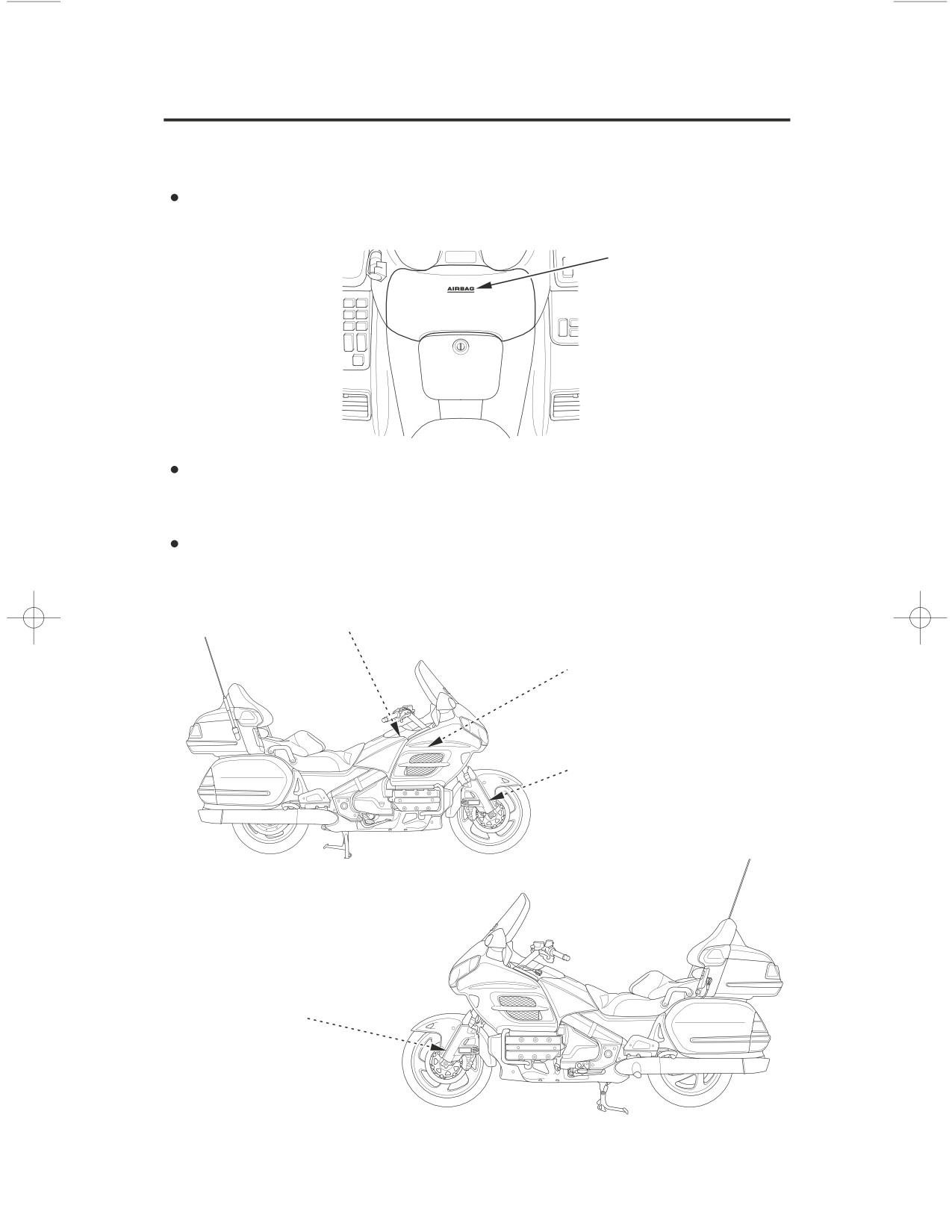
Airbag System Components
Your motorcycle airbag system includes:
An airbag that is stored forward of the rider’s seat, under a cover marked
‘‘AIRBAG.’’
‘‘AIRBAG’’
Four crash sensors; two on the left fork and two on the right fork. The sensors
measure the rate of deceleration during a frontal impact.
A control unit that evaluates data from the crash sensors and determines
whether or not the airbag should deploy.
AIRBAG
CONTROL UNIT
TWO CRASH
SENSORS
TWO CRASH
SENSORS
4
The Motorcycle Airbag
lass="cls_003">
Airbag System Components
A sophisticated electronic system that continually monitors information about
the sensors, the control unit, and the airbag inflator whenever the ignition is in
the ON position.
An indicator on the instrument panel that alerts you to a possible problem
with the airbag system (see page 11for more information).
Emergency backup power in case your vehicle’s electrical system is
disconnected in a crash.
The Motorcycle Airbag
5
lass="cls_003">
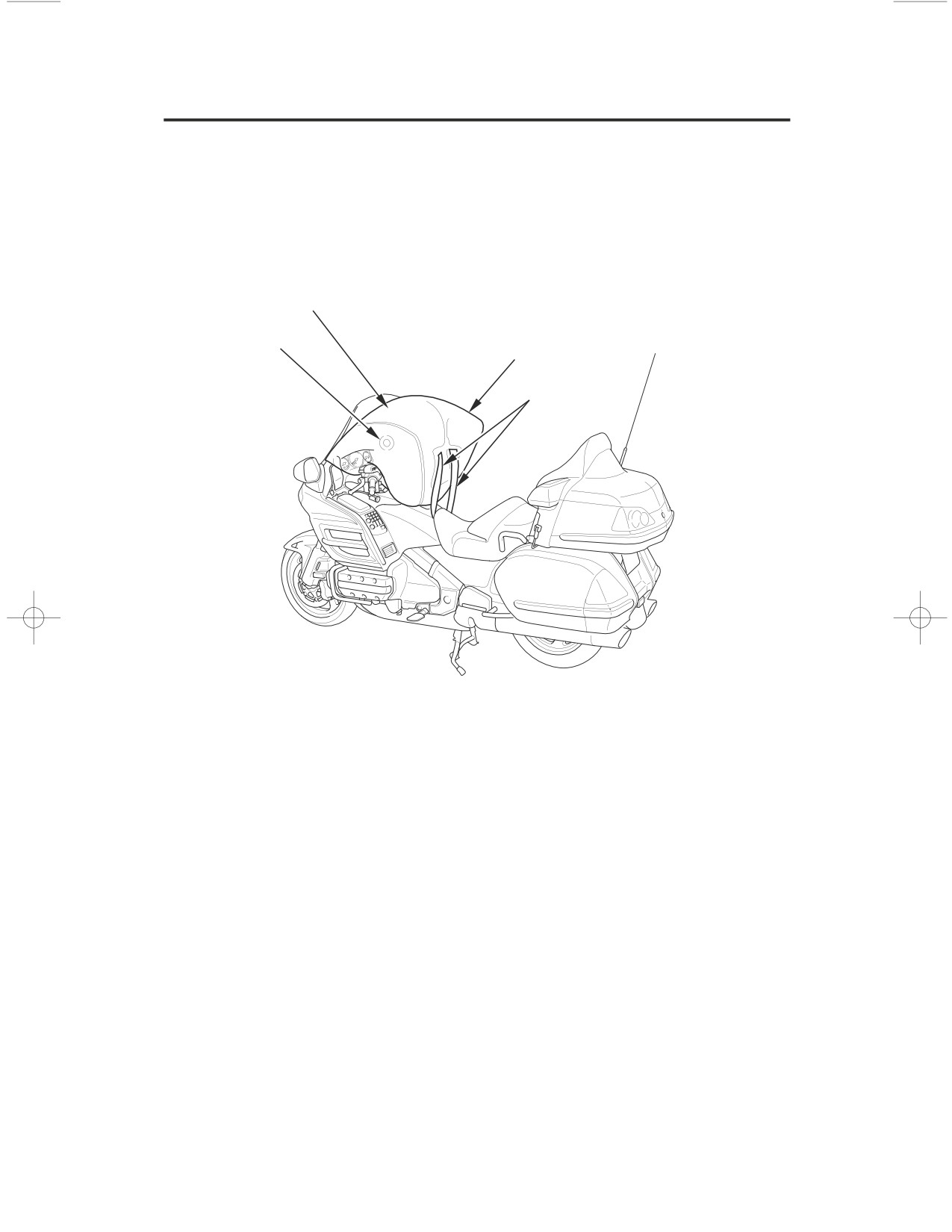
How The Airbag System Works
If you ever have a frontal impact, sensors will detect the vehicle’s deceleration
and send that information to the control unit. If the rate of deceleration is high
enough, the control unit will signal the airbag to instantly inflate. Tethers help
keep the airbag upright.
AIRBAG
VENT
VENT
TETHERS
As the rider’s head and upper body press into the airbag, the bag immediately
begins deflating, through vents located at the top of the bag. The airbag slows
down the rider’s forward movement and absorbs some of the rider’s kinetic
energy.
When the rider eventually separates from the vehicle and contacts the opposing
object or the ground, the forward speed of the rider and the resulting force of the
impact will be much lower than they would be without the airbag.
6
The Motorcycle Airbag
lass="cls_003">
Airbag System Service
Your airbag system is well protected from the elements. There is no need to take
any special precautions to protect it from rain, snow, or temperature extremes.
The airbag system is also virtually maintenance free, and there are no parts you
can safely service. However, you must have your motorcycle checked by a
Honda motorcycle dealer if:
The airbag indicator alerts you to a potential problem with the system.
The
indicator, located in the instrument panel, should come on briefly when you
turn the ignition switch to the ON position. If it does not come on, or it comes
on and stays on, or it comes on while you are riding, the airbag may not
deploy when you need it.
The airbag ever inf lates. Any airbag that has deployed must be replaced
along with the control unit and other related parts. Do not try to remove or
replace the airbag by yourself. This must be done by a Honda dealer.
The Motorcycle Airbag
7
lass="cls_003">
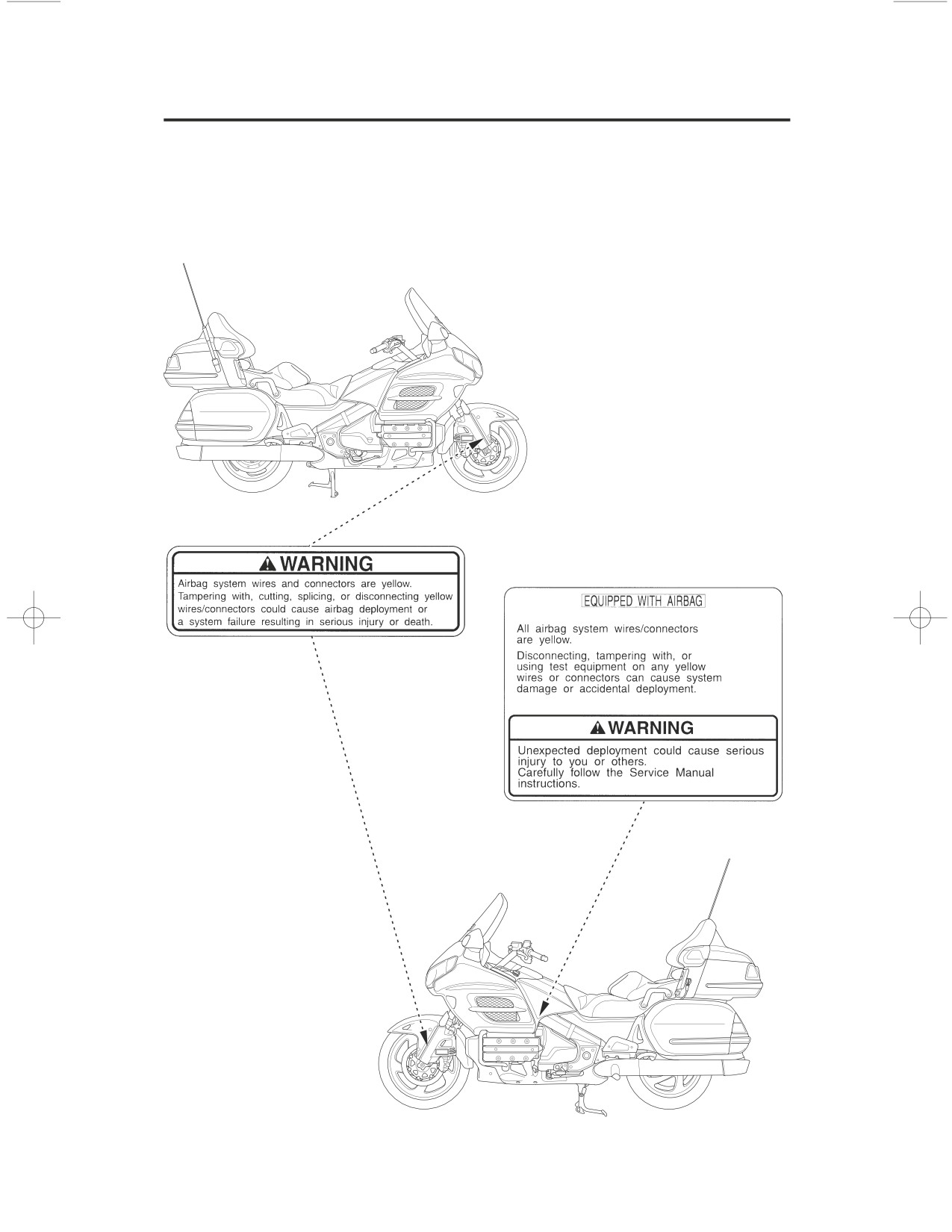
Safety Labels
Your motorcycle has two labels with important information about your airbag
system. Motorcycle owners are encouraged not to attempt servicing the airbag
system. Please refer to the safety label pages in your owner’s manual for
information about additional safety labels on your vehicle.
8
The Motorcycle Airbag
lass="cls_003">
Instruments & Controls
This section shows the location of all controls, gauges and indicators you would
normally use before or while riding your motorcycle.
This supplement includes information only for operating items that are unique to
your GOLDWING model. For all other controls and features, please refer to
your owner’s manual.
Instruments & Controls
9
lass="cls_003">
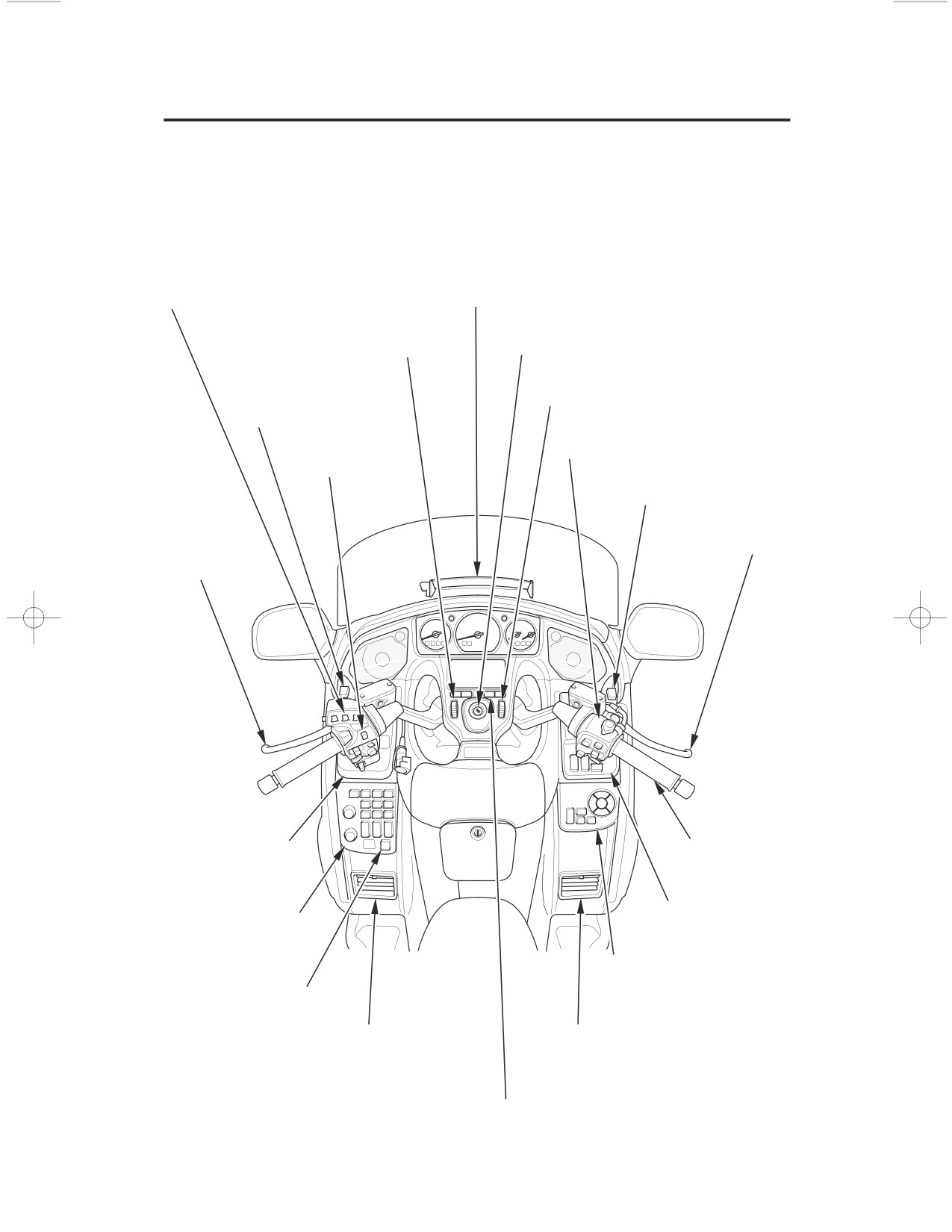
Operation Component Locations
Most controls on your GOLDWING are in the same locations as they are on
other models equipped with the navigation system. However, in order to provide
adequate space for storing and deploying your airbag, some controls have been
moved from the center of the vehicle to the fairing panels and handlebars.
audio system controls
windscreen ventilation louver
front seat heater switch
ignition switch
windscreen height
handgrip heater switch
lever
left handlebar
right handlebar controls
controls
windscreen height lever
front brake lever
clutch lever
left fairing
throttle grip
pocket
audio system
right fairing panel
controls
controls
navigation system
controls
hazard switch
left side ventilation
right side ventilation
louver
louver
multi information display controls
10
Instruments & Controls
lass="cls_003">
Gauges & Indicators
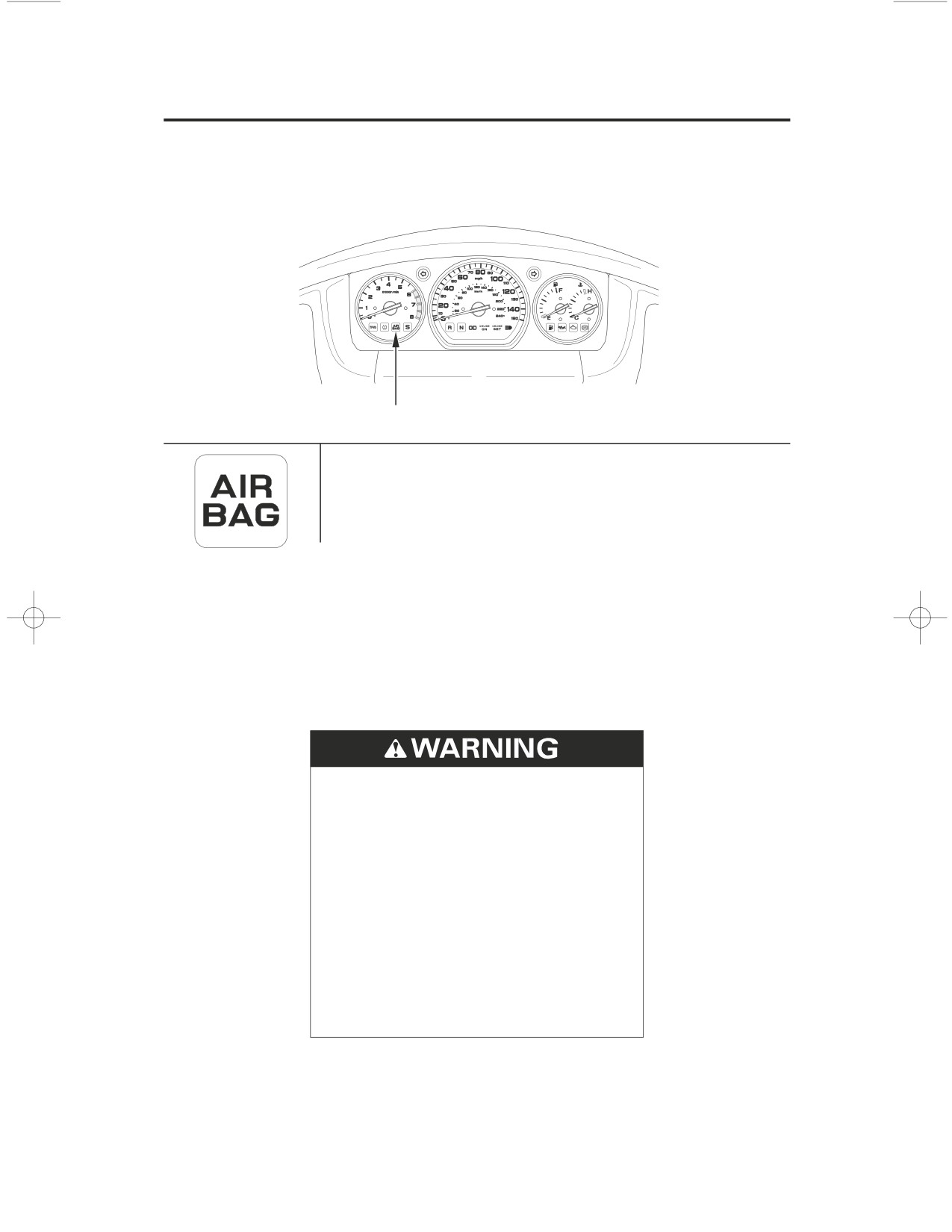
The instrument panel on your vehicle includes an airbag indicator, as shown and
described below. Please refer to your owner’s manual for locations and
explanations of the other gauges and indicators on the instrument panel.
airbag indicator
airbag indicator (red)
This indicator lights when there may be a problem with your airbag system. It
should also light for a few seconds and then go off when the ignition switch is
turned to the ON position. If the indicator does not come on, or comes on and
stays on, or comes on while you are riding, have your motorcycle inspected as
soon as possible as the airbag may not deploy when it could help save your life.
Ignoring the airbag indicator can
result in serious injury or death
in a severe frontal impact if the
airbag system does not work
properly.
Have your vehicle checked by a
dealer as soon as possible if the
airbag indicator alerts you to a
possible problem.
Instruments & Controls
11
lass="cls_003">
Operation Controls & Features
Fairing Panel Controls & Features
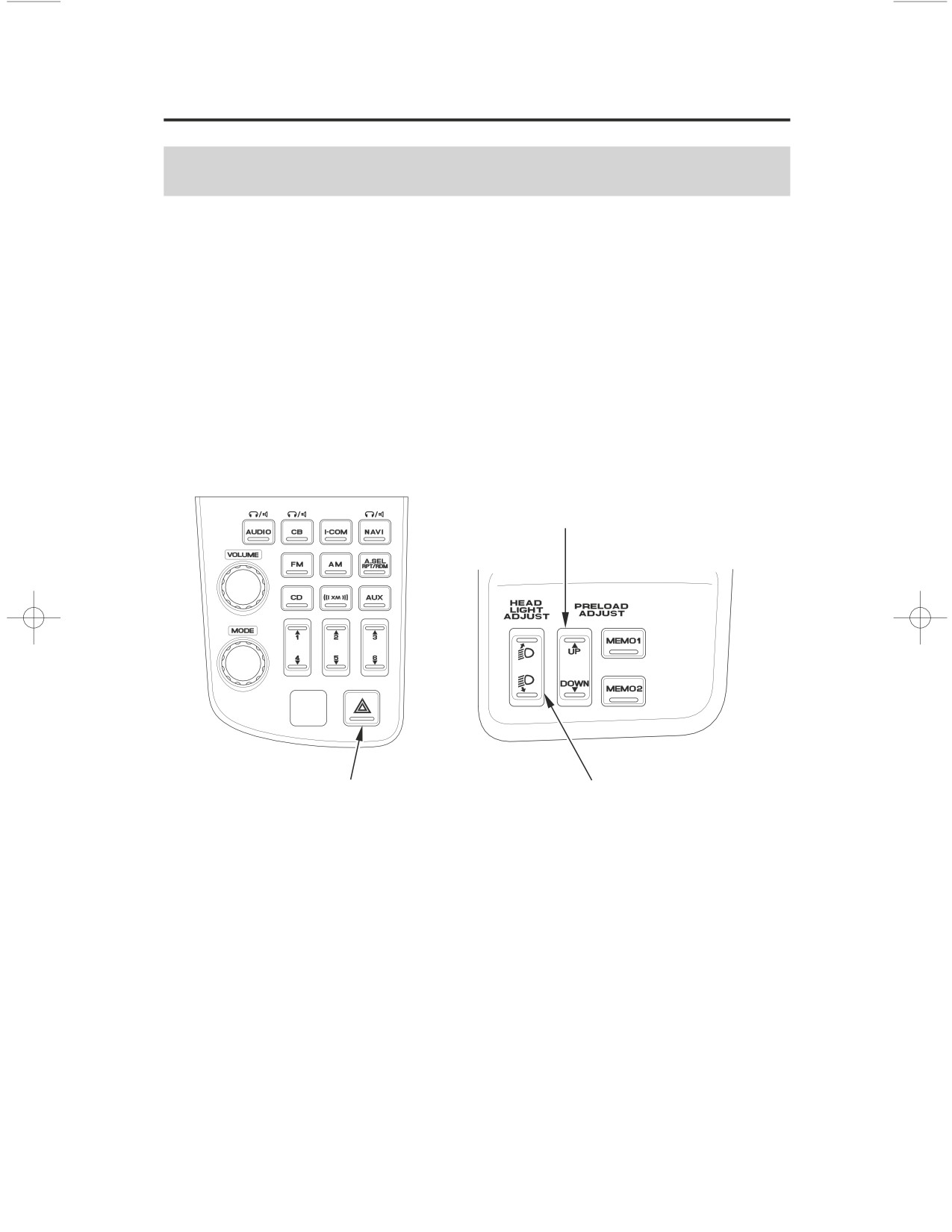
On your GOLDWING, the Hazard Warning System Switch is located on the left
fairing panel (see page 16 for the other left fairing panel controls). The right
fairing panel on your vehicle includes the Headlight Beam Adjustment Switch
and the Rear Suspension Spring Pre-load Adjustment Switch.
Instructions for operating the Headlight Beam Adjustment Switch are on page
13 . Please refer to your owner’s manual for more information about the other
switches.
LEFT SIDE
RIGHT SIDE
rear suspension spring pre-load
adjustment switch
hazard warning system switch
headlight beam adjustment switch
12
Instruments & Controls
lass="cls_003">
Operation Controls & Features
Headlight Beam Adjustment Switch
The adjustment switch is used to raise or lower the height of the headlight beam.
You can confirm the headlight beam position by referring to the multi
information display.
If you carry a heavier or lighter than normal load, you may need to adjust your
headlight beam so you can better see the road ahead and don’t blind oncoming
drivers. Obey local laws and regulations concerning headlight adjustment.
To operate, adjust the Headlight Beam Adjustment Switch when the engine is
started and your motorcycle is stopped.
The headlight beam adjustment has 11 positions (from 0 to 10) for different
riding conditions. (Standard position is 10.)
Instruments & Controls
13
lass="cls_003">
Operation Controls & Features
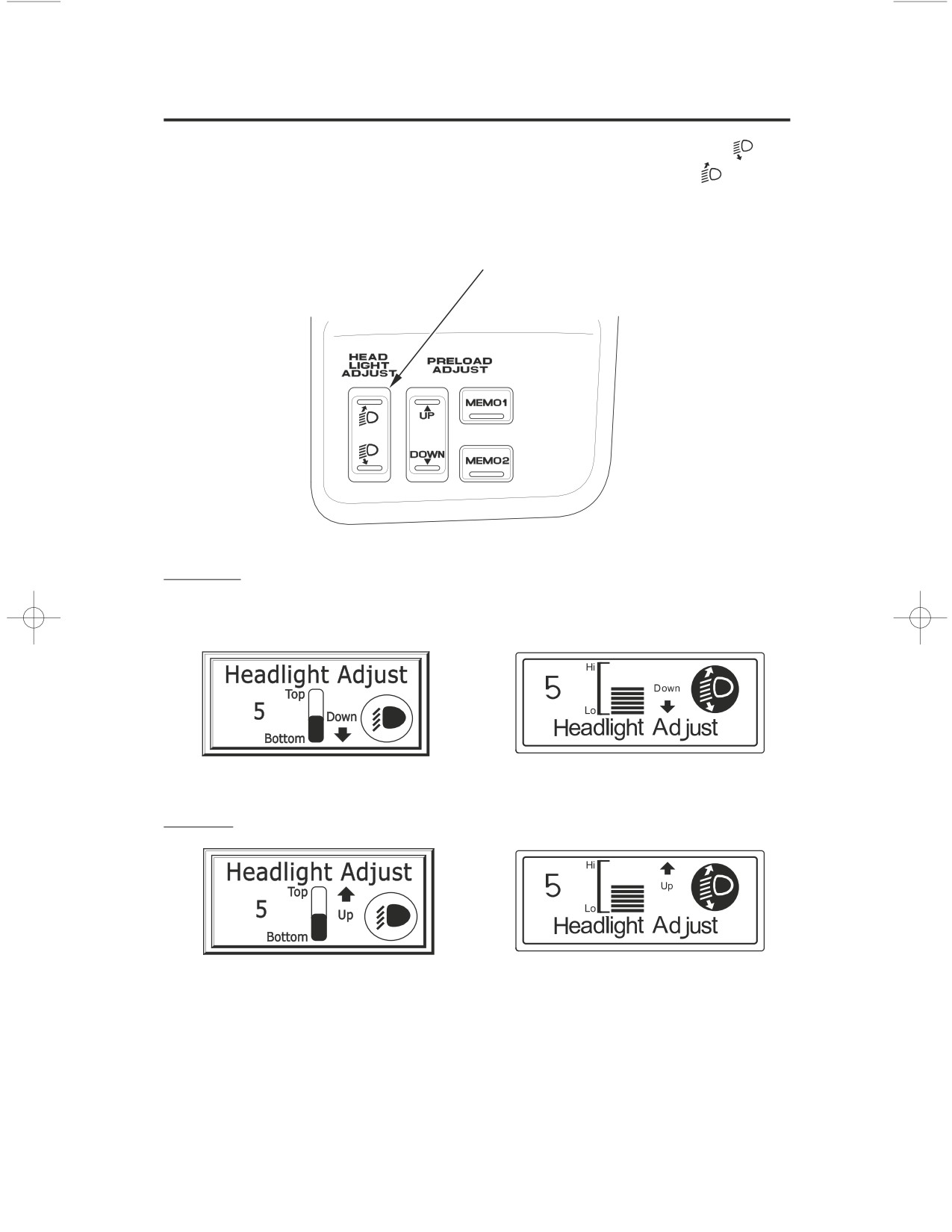
To lower the beam, push the Headlight Beam Adjustment Switch down (
).
To raise the beam, push the Headlight Beam Adjustment Switch up (
).
RIGHT SIDE
headlight beam adjustment switch
To Lower
For USA
For Canada
To Raise
When approximately 5 seconds pass without operating the Headlight Beam
Adjustment Switch, the display automatically returns to the previous display.
14
Instruments & Controls
lass="cls_003">
Audio Systems
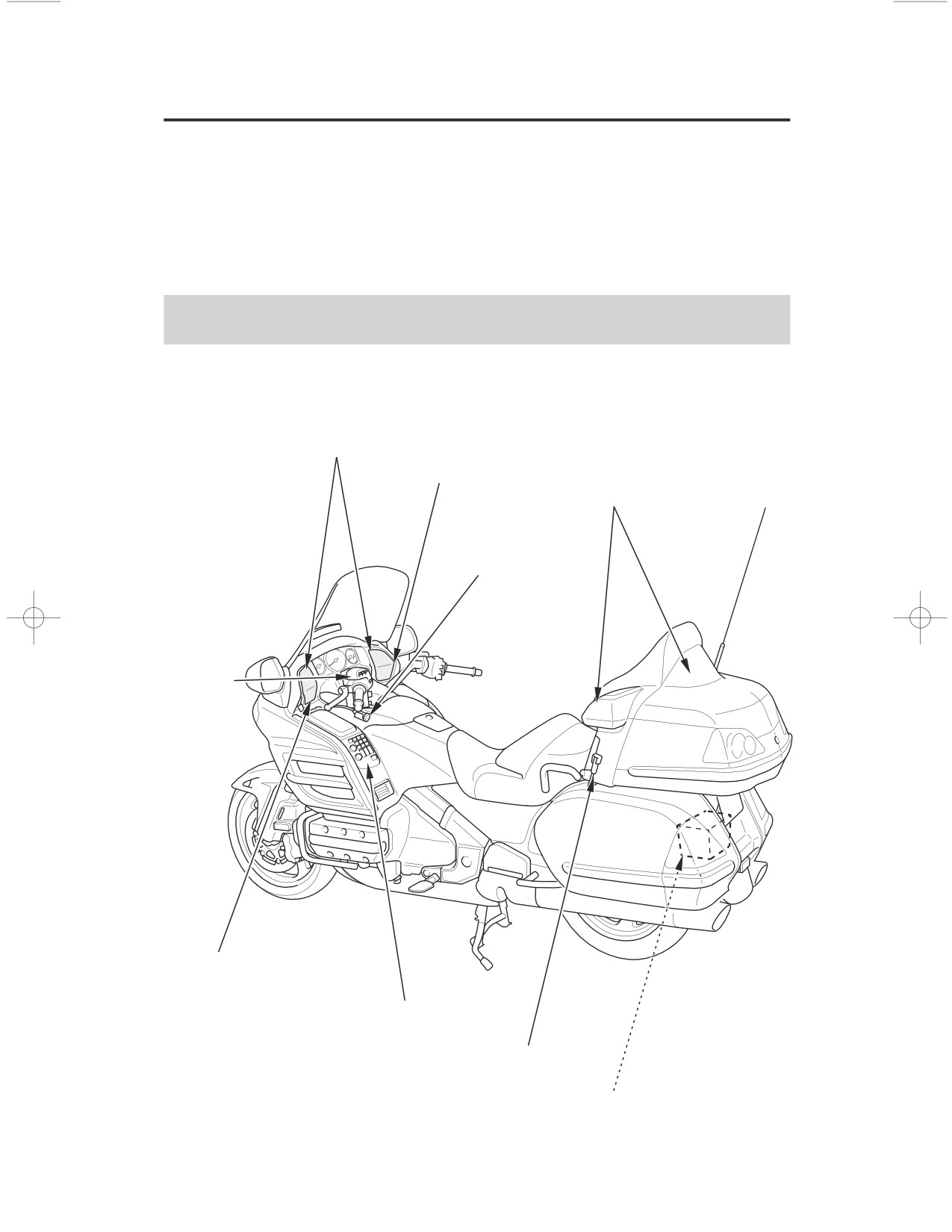
This section shows the locations of all controls and components of your audio
systems, including your radio, intercom, and navigation systems. The only
difference between your GOLDWING model and others is that some controls
are on the left fairing panel. Please refer to your owner’s manual for operational
instructions.
Audio Component Locations
tweeters
front speaker
rear speakers
front headset
terminal
audio
system
controls
front speaker
audio system controls
rear headset terminal
external amplifier
Audio Systems
15
lass="cls_003">
Audio Systems
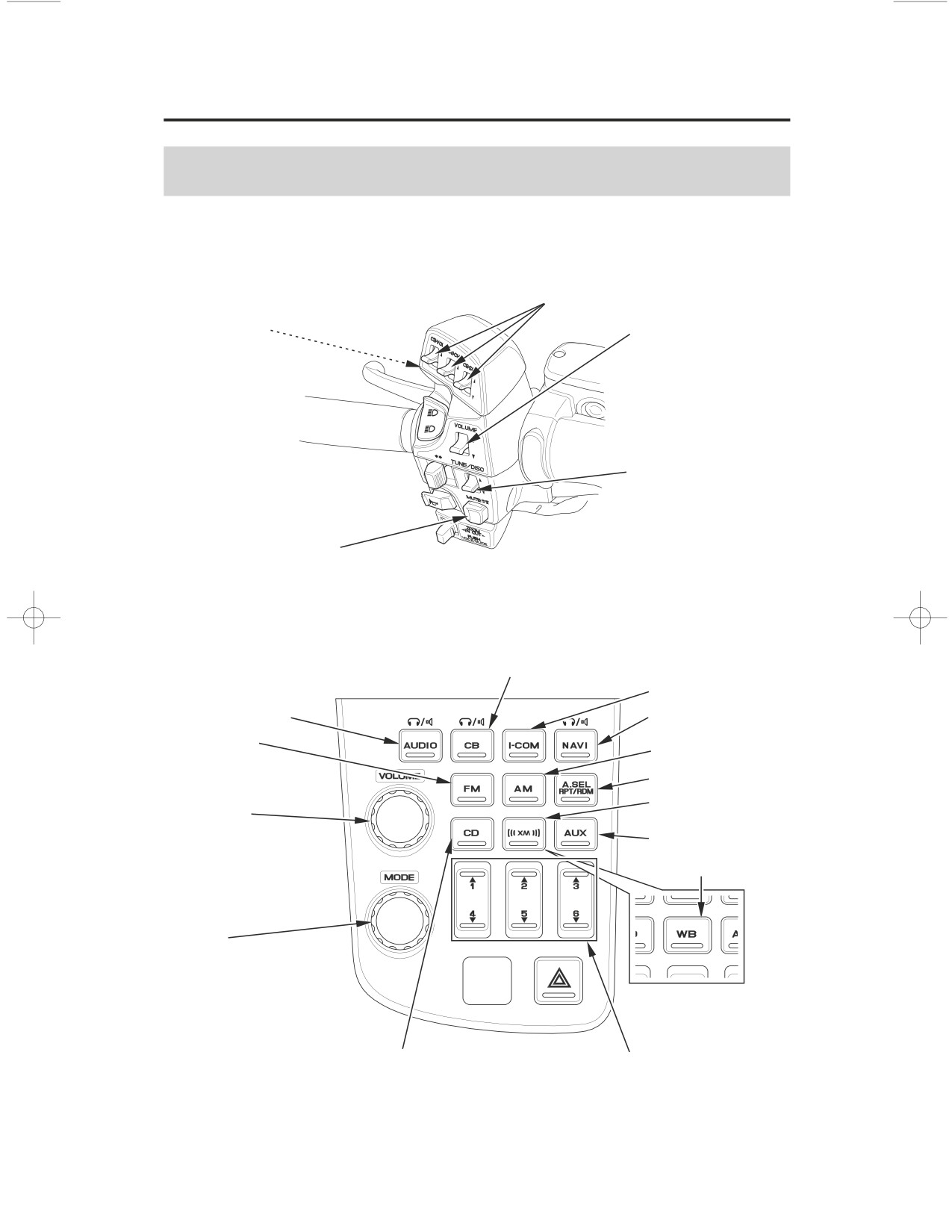
Audio Systems Controls
LEFT HANDLEBAR CONTROLS
CB radio levers
(for accessory CB radio)
TALK lever
VOLUME lever
(for accessory
CB radio)
TUNE/DISC lever
MUTE button
LEFT FAIRING PANEL CONTROLS
CB button (for accessory CB radio)
I-COM button
AUDIO button
NAVI button
FM button
AM button
A.SEL button
XM button
VOLUME
knob/button
AUX button
WB button
MODE
knob/button
For Canada only
CD button (for accessory CD changer)
preset buttons
16
Audio Systems
lass="cls_003">
Servicing Your Honda
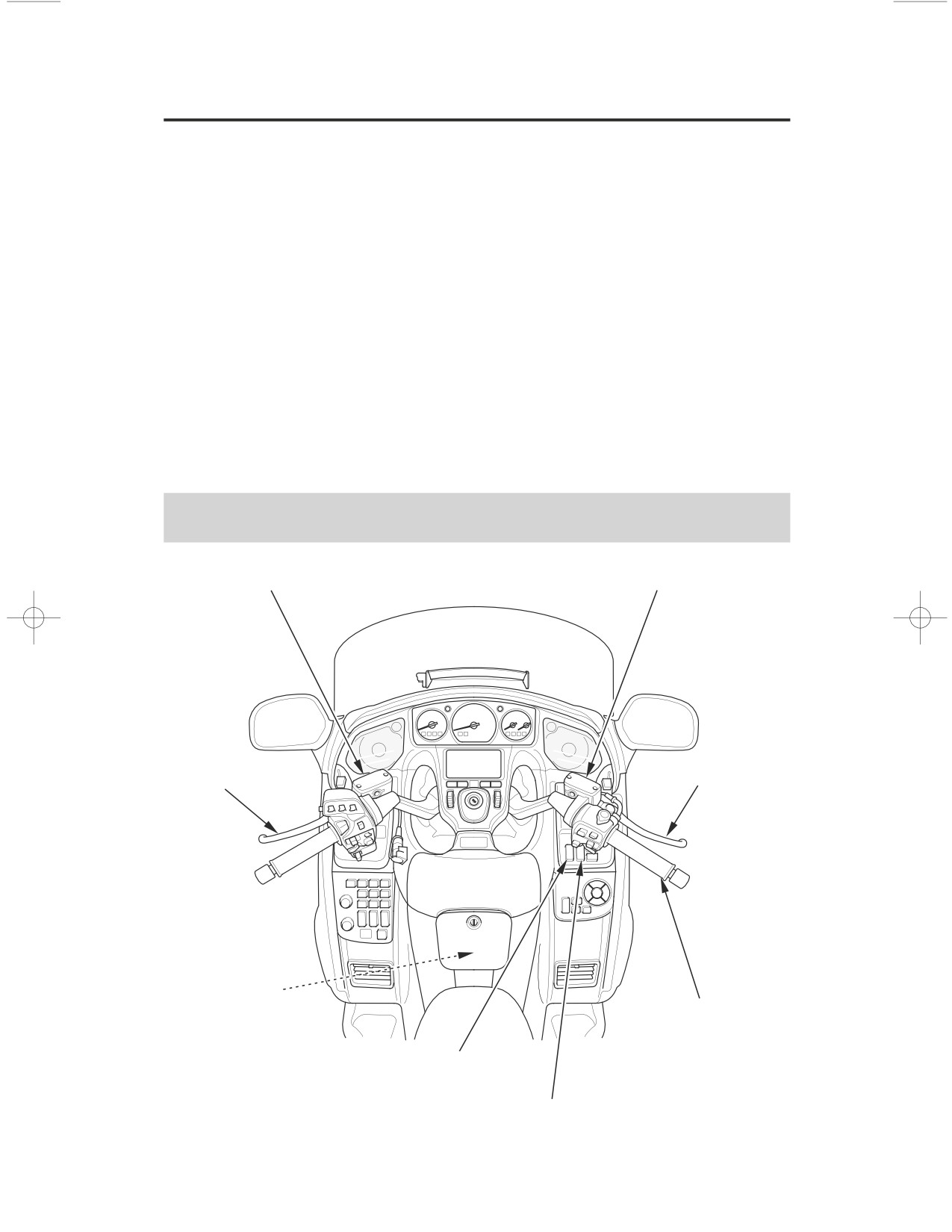
The location of service-related components on your vehicle are the same as on
all other GOLDWINGS, except for the rear suspension spring pre-load
adjustment switch and the headlight beam adjustment switch, which are located
on the right fairing panel. Please refer to your owner’s manual for information
on how to adjust these controls, and for all other instructions on how to keep
your motorcycle in good and safe operating condition.
Remember, there are no airbag system parts that you can safely service.
While performing routine maintenance, do not remove or tamper with any
airbag system components, including the yellow wiring and connectors. Doing
so could prevent the airbag from operating properly or cause it to deploy
unexpectedly. If an airbag system component needs to be removed in order to
reach a serviceable part, it must be done by a Honda dealer.
Maintenance Component Locations
clutch fluid reservoir
front brake fluid reservoir
clutch lever
front brake lever
fuel fill cap
throttle grip
Headlight beam adjustment switch
rear suspension spring pre-load adjustment switch
Servicing Your Honda
17
lass="cls_003">